Scholarship@Western
Scholarship@Western
Electronic Thesis and Dissertation Repository
8-13-2013 12:00 AM
A Baseline Assessment of University Students’ Vitamin D
A Baseline Assessment of University Students’ Vitamin D
Knowledge
Knowledge
Shaunessey Boland
The University of Western Ontario Supervisor
Dr. Jen D. Irwin
The University of Western Ontario
Graduate Program in Health and Rehabilitation Sciences
A thesis submitted in partial fulfillment of the requirements for the degree in Master of Science © Shaunessey Boland 2013
Follow this and additional works at: https://ir.lib.uwo.ca/etd
Part of the Public Health Education and Promotion Commons, and the Translational Medical Research Commons
Recommended Citation Recommended Citation
Boland, Shaunessey, "A Baseline Assessment of University Students’ Vitamin D Knowledge" (2013). Electronic Thesis and Dissertation Repository. 1504.
https://ir.lib.uwo.ca/etd/1504
This Dissertation/Thesis is brought to you for free and open access by Scholarship@Western. It has been accepted for inclusion in Electronic Thesis and Dissertation Repository by an authorized administrator of
A BASELINE ASSESSMENT OF UNIVERSITY STUDENTS’ VITAMIN D KNOWLEDGE
(Thesis format: Monograph)
by
Shaunessey Boland
Graduate Program in Health and Rehabilitation Sciences
A thesis submitted in partial fulfillment of the requirements for the degree of
Master of Science
The School of Graduate and Postdoctoral Studies Western University
London, Ontario, Canada
© Shaunessey Boland 2013
ii
Abstract
Vitamin D is necessary for many aspects of health and development yet 25% of
Canadians are not getting enough;university-aged students are at particularly high risk
of insufficiency. It seems program development is needed to help university students in
acquiring adequate vitamin D. The purpose of this study was to acquire a baseline
assessment of university students’ vitamin D-related knowledge to help inform future
program development. Subjects were asked to complete a Vitamin D Knowledge
Survey which assessed knowledge on aspects such as vitamin D sources, health
benefits, and recommended intake. A Vitamin D Knowledge Score was computed for
the 1,088 student participants, who earned an average of 27%, indicating a significant
vitamin D knowledge deficiency. Subjects scored with 25% accuracy on vitamin D
source knowledge, 34% on factors affecting vitamin D levels, and 23% on health effects
of vitamin D. Only 8% of participants identified the recommended vitamin D intake, and
14% correctly identified the amount of time in the sun required to produce adequate
vitamin D. Results suggest that vitamin D knowledge is significantly related to age,
ethnicity and area of academic study, as well as knowledge origin. Vitamin D usage is
also related to vitamin D knowledge. This is the first study to date to assess the vitamin
D knowledge of university students, and it is clear that those surveyed are largely
unaware of this important nutrient. Potential interventions should be considered as a
next step to ensure this segment of the population is acquiring adequate vitamin D.
Keywords: vitamin D, vitamin D insufficiency, vitamin D deficiency, vitamin D
knowledge, vitamin D knowledge assessment, vitamin D knowledge survey, health
iii
Acknowledgements
I would like to thank my graduate advisor, Dr. Jen Irwin, for her continual support
and encouragement throughout the challenging process of thesis development. She has
been an incredible mentor and has provided me with the inspiration and strength to
continue forward, despite the personal challenges I faced. Her understanding and
commitment to my progress is simply undeniable.
I would also like to thank my advisory committee, Dr. Andrew Johnson and Dr.
Don Morrow, for their support and guidance. A special thanks to Dr. Johnson for his
expertise in statistical analyses. He has truly taught me all that I know about statistics
from undergrad to graduate studies. Thank you, AJ.
Lastly, I would like to thank all my family and friends who truly believed in me and
supported me throughout my graduate studies. Specifically, I would like to thank
Brandon for his never ending support and encouragement and his dedication to
iv
Table of Contents
Page
Abstract ... ii
Acknowledgements ... iii
Table of Contents ... iv
List of Tables ... vi
List of Appendices ... vii
Chapter 1: Introduction to the Vitamin D Problem ... 1
Vitamin D and University Students ... 2
Vitamin D Program Planning for University Students ... 4
Chapter 2: Literature Review ... 8
Health Benefits of Vitamin D ... 8
Vitamin D and Toxicity ... 16
Dietary Reference Intakes for Vitamin D ... 17
Status of Vitamin D in Canada ... 18
Methods of Vitamin D Intake ... 25
Knowledge of Vitamin D ... 29
This Study’s Purpose and Research Questions ... 31
Chapter 3: Method... 33
Procedure and Participants ... 33
v
Data Analysis ... 38
Chapter 4: Results... 40
Vitamin D Knowledge ... 40
Vitamin D Knowledge Score Associations ... 46
Chapter 5: Discussion ... 54
Vitamin D Knowledge ... 54
Limitations of the Present Study ... 63
Conclusions and Future Recommendations ... 64
References ... 66
Appendices ... 87
vi
List of Tables
Table 1: The 2011 Vitamin D Dietary Reference Intakes by Life Stage ... 21
Table 2: Demographic Characteristics of Survey Participants ... 43
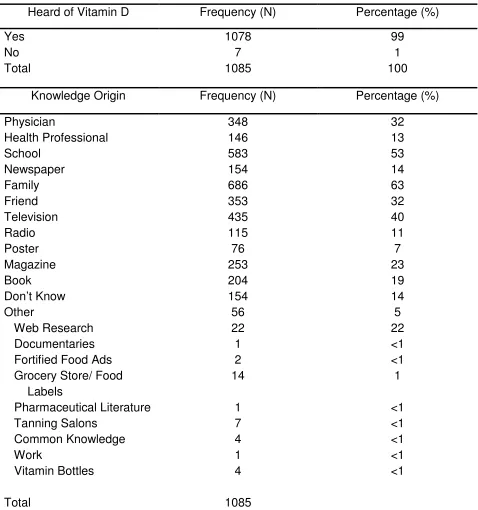
Table3: Vitamin D Knowledge and Knowledge Origin ... 44
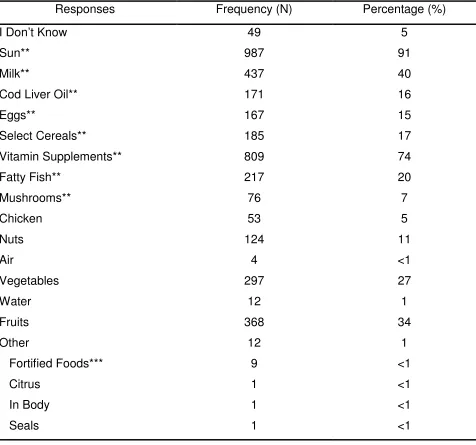
Table 4: Distribution of Responses for Knowledge of Vitamin D Sources ... 45
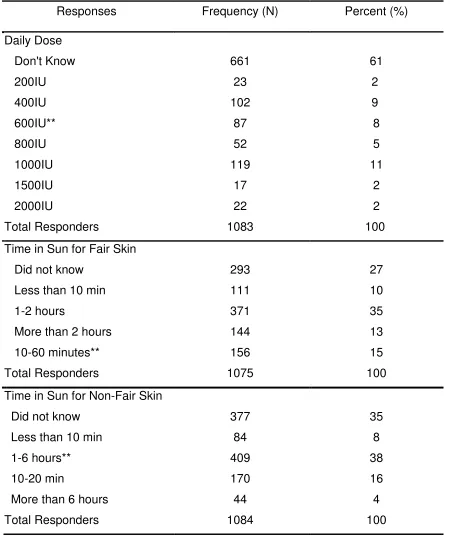
Table 5: Distribution of Responses for Knowledge on Daily Recommended Intake and Time Needed in Sun to Produce Adequate Vitamin D ... 49
Table 6: Distribution of Responses on Knowledge of Factors that Affect Vitamin D Levels ... 50
Table 7: Distribution of Responses for Vitamin D Health Benefits ... 51
vii
List of Appendices
Appendix A: Western University Office of Research Ethics Approval Certificate ... 87
Appendix B: Email Script for Recruitment ... 88
Appendix C: Letter of Information ... 89
Appendix D: Vitamin D Knowledge Survey ... 91
Chapter 1
Introduction to the Vitamin D Problem
Vitamin D deficiency is a worldwide epidemic and yet, it is a problem that is
largely unknown by the majority of citizens (Holick, 2005; Holick & Chen, 2008).
Currently, over 1 million Canadians are vitamin D deficient (Langlois, Greene-Finestone,
Little, Hidiroglou, & Whiting, 2010; Whiting, Langlois, Vatanparast, & Greene-Finestone,
2011). In addition to its importance for bone health (Heaney, 2007), recent evidence
suggests that vitamin D is also useful in promoting musculoskeletal health (Heaney,
2007; Holick, 2007a) and immune functioning (Holick, 2007a; van Etten & Mathieu,
2005; White 2008) as well as preventing and managing cardiovascular disease
(Giovannucci, Liu, Hollis, & Rimm, 2008), several types of cancer (Gorham et al., 2007,
Holick, 2007a/b) and many other diseases (Annweiler, et al., 2010; Hoang et al., 2011;
Holick, 2007a). Although many researchers have increased their attention to vitamin D
and the variety of health benefits with which it has been recently associated, rates of
deficiency continue to be problematic (Holick, 2007a; Holick, & Chen 2008). The
Institute of Medicine (IOM; 2011) recently increased the Recommended Dietary
Allowance (RDA) of vitamin D from 400 to 600 International Units (IU) and
approximately 25-67% of Canadians are not meeting the new vitamin D mandate
(Whiting et al., 2011). Furthermore, about 13% of Canadians are not even getting the
400IU of vitamin D required to maintain proper bone health (IOM, 2011; Langlois et al.,
2010; Whiting et al., 2011). These findings are alarming because vitamin D is relatively
easy to access from inexpensive supplements (Deluca, 2004; Holick, 2007a), the sun
the fact that young adults, aged 20-39 years, are at highest risk of deficiency (Whiting et
al., 2011). The health behaviours of young adults are of primary concern, as they are
forming lifelong behaviours that will contribute to the quality of their lives for many years
to come (Von Ah, Ebert, Ngamvitroj, Park, & Kang, 2005).
Vitamin D and University Students
Although no study to date has assessed the vitamin D levels of university
students, 74% of university students fall within the age range of those most at risk of
deficiency (Statistics Canada, 2010). Therefore many are likely not receiving sufficient
levels of vitamin D. Furthermore, university students are a population known to have
lower health scores than their non-student counterparts (Stewart-Brown, et al., 2000)
and thus, they are a population at particularly high risk for poor health outcomes. As
such, university students are in need of health promotion programming to better their
health, including decreasing vitamin D deficiency. University students typically have
more freedom and control over their lifestyles than prior to attending school, making the
university years an appropriate time to develop healthy lifestyle patterns and behaviours
(Dinger & Waigandt, 1997). Moreover, most university students are at an ideal age to
create long term positive change when it comes to vitamin D, as their bones are still
building mass (Nilsson, Ohlsson, Odén, Mellström, & Lorentzon, 2012), they are
reportedly interested in learning about nutrition (Katz, Davis, & Scott-Findlay, 2002) and
enhancing their dietary habits (Tucker & Irwin, 2011). As such, university students are a
primary target for vitamin D deficiency prevention and intervention programs to promote
their long-term wellbeing. Targeting younger populations for health behavioural change
development of healthy behaviours earlier in life will help to protect from disease
development and progression later in life (von Bothmer & Fridlund, 2005).
In fact, adequate vitamin D earlier in life has been shown to help prevent
osteoporosis (National Institute of Health, 2012, Osteoporosis Society of Canada, 2008;
2012), multiple sclerosis (Munger, Levin, Hollis, Howard, & Ascherio, 2006; Simpson et
al., 2010) cardiovascular disease (Giovannucci, 2008; Zitterman, 2006), rheumatoid
arthritis (Merlino et al., 2004), some types of cancer (Li et al., 2007; Lin et al., 2007) and
several other diseases later in life. The Canadian Paediatric Society has stated that
ensuring adequate vitamin D throughout the life course is needed to prevent associated
adult and childhood diseases (2007). Even maternal vitamin D during pregnancy may
have lifetime implications for the child (Canadian Paediatric Society, 2007), including
reduced bone density (Javaid et al., 2006), increased occurrence of asthma (Carmago
et al., 2007) and susceptibility to type 1 diabetes (EURODIAB Study, 1999).
As leaders of the future, university students represent the next generation of
professionals and parents who will influence the progression of future health education
programs, policy development, and the formation of social norms and beliefs about
health and health promoting behaviours (Haase, Steptoe, Sallis, & Wardlem, 2004;
Stewart-Brown et al., 2000; von Bothmer & Fridlund, 2005). Accordingly, university
students are an integral part of future health-related progress and should therefore be
the target for inducing long term change (Irwin, 2004; Racette, Deusinger, Strube,
Vitamin D Program Planning for University Students
From the above-noted review of research, it seems that program development is
needed to help university students in acquiring adequate amounts of vitamin D in order
to sustain wellbeing and promote their long term health. In terms of moving forward with
a suitable health promotion program, it is recommended to start with an assessment of
needs from the perspective of the target population (Green & Kreuter, 1999; 2005;
McKenzie, Neiger, & Thackeray, 2009). As the Generalized Model for Program Planning
stipulates, a needs assessment must first be completed before the health problem can
be properly addressed (McKenzie et al., 2009). A needs assessment is necessary to
determine problem origin, the knowledge, values, and needs of the priority population
and its subgroups, as well as to provide insight on what types of programming are likely
to work, how to best implement them, and to identify what barriers may exist (McKenzie
et al., 2009). Although there are several approaches to health promotion program
development, many of them involve several key elements, as the Generalized Model for
Program Planning outlines. In fact, the Precede-Proceed model of health promotion
programming by Green and Kreuter (2005) also encourages health promotion program
planners to attempt to understand aspects of need, such as the predisposing factor of
knowledge. The Health Belief Model (HBM) and the Expanded Health Belief Model
(EHBM) further suggest that knowledge of health issues and preventive health
behaviour is important for health behavioural change (Burns, 1992; Hochbaum, 1958;
Rosenstock, 1966).
The main tenants behind the HBM and EHBMstipulate a person’s likelihood to
and if he/she believes a specific health practice will reduce that threat. The main
components involved in this decision include: perceived seriousness of the health
threat; perceived susceptibility to the health threat; perceived benefits of the health
behaviour; and perceived barriers to the health behaviour. All of these components are
informed by knowledge (Hayden, 2009). For instance, the perceived seriousness and
susceptibility of the health threat are influenced by information such as risk factors,
warning signs and family history of disease, all of which are influenced by knowledge.
Similarly, perceived benefits and barriers of the health behaviour are informed by
knowledge of the health behaviour itself, as well as knowledge of the disease, success
rates, costs and accessibility. In addition to the above stated constructs, the expanded
model also includes other components that relate to knowledge, such as: cues to action;
motivating factors; and self-efficacy (Burns, 1992). Accordingly, the knowledge a person
has about the health benefits of vitamin D and the problems associated with vitamin D
deficiency may factor into the behaviour of ensuring vitamin D adequacy. For example,
if people valuebone health and believe that vitamin D assists with bone health, they
may be more likely to supplement with vitamin D to ensure the health of their bones. In
addition, people must know where and how to get vitamin D, as well as how much is
required to sustain a given health benefit, which are informed by knowledge. On the
contrary, if people do not know that vitamin D is necessary for proper bone growth and
they do not know where to get vitamin D, they will be less likely to take measures that
ensure vitamin D adequacy. In fact, the HBM and the EHBM have been used to explain
many health behaviours in post-secondary populations. For instance, this model
Harris, & Auld, 2001), healthy eating habits of college students (Deshpande, Basil, &
Basil, 2009) and it helps to explain osteoporosis prevention behaviours in college
students (Edmonds, 2009) and adolescent females (Gammage & Klentrou, 2011).
Although there are many necessary factors to consider when developing any
health promotion program, each program must have a starting point. Because vitamin D
deficiency has been identified as a problem and university students have been identified
as at risk, it is suitable to explore a predisposing factor, knowledge, that can “facilitate or
hinder a person’s motivation to change and can be altered through direct information,”
such as information presented in health promotion programing (McKenzie et al., 2009,
p. 22). This involves assessing university students’ vitamin D-related knowledge.
The common thread among the above discussed theories for health behaviour
and health promotion program planning, is that to best facilitate health-related behaviour
change, program planners need to start with an exploration of the target population’s
needs, which includes understanding their knowledge about the specific issue of
interest (i.e., vitamin D). It is important to note that knowledge is just one aspect of a
needs assessment and that it is not the only factor that impacts behaviour. Although
knowledge is not the only factor that influences behaviour, it does have an effect on
behaviour and is therefore important to consider when developing a health promotion
program (Green & Kreuter, 2005). As von Bothmer and Fridlund (2005) pointed out, it is
crucial to have a thorough understanding of students’ health-related behaviours,
motivation, knowledge and attitudes towards a health behaviour before being able to
create effective and targeted health promotion programs. Therefore, gaining a baseline
crucial first step in program development, and is the purpose of this study. To date, no
other studies have investigated the level of vitamin D knowledge present in a group of
Canadians. The findings from this piece of the needs assessment will provide important
information to determine what next steps will be necessary to promote sufficient levels
Chapter 2
Literature Review
To contextualize the importance of vitamin D, the following review of literature
includes: an overview of various health benefits associated with vitamin D as well as the
potential harms of vitamin D toxicity; the Dietary Reference Intakes (DRI) for vitamin D;
the status of vitamin D in Canada, including a discussion of groups at increased risk of
deficiency as well as supplement usage; methods for obtaining vitamin D; and vitamin D
population-based knowledge levels presently available. Finally, a discussion of the need
for further research and a detailed description of the current study are presented. For
practical reasons, the review of vitamin D and associated health benefits is not intended
to be exhaustive. The health benefits discussed are those most frequently occurring in
recent publications (i.e., within the past decade) and that have repeatedly demonstrated
an association with vitamin D in humans.
Health Benefits of Vitamin D
Over the past decade, researchers have come to recognize that vitamin D does
much more than its essential role in promoting proper bone health, and preventing bone
diseases such as osteomalacia, also known as rickets in children (Holick, 2007a; Vieth
2007). The discovery that vitamin D is actually metabolized into a hormone and that
vitamin D receptors are located in many different kinds of cells in the body, has led
researchers to believe that vitamin D plays a substantial and important role in various
aspects of health (Deluca, 2004; Holick, 2007a; Jones, Strugnell, & DeLuca, 1998).
Although not all researchers are in complete agreement, evidence has been brought
immune functioning as well as preventing and managing cardiovascular disease,
several types of cancer and many other diseases -- these will be discussed further in
the following sections. For sake of clarity, please note that although international units
(IU) and nanomoles per litre (nmol/L) are each presented in the literature discussed
below, IUs refer to amounts of vitamin D ingested whereas nmol/L is the unit used when
discussing vitamin D blood concentrations. Where available, both values are provided
but because people metabolize vitamin D differently, their intake (IU) does not
consistently transfer mathematically to blood concentration (nmol/L). As a rough
estimate, Vieth (2004) reported that each microgram of vitamin D (approximately 40IU)
increases blood concentrations by 1nmol/L, although results have varied from
0.57nmol/L to 2.2nmol/L in other studies as discussed by Heaney, Davies, Chen, Holick
and Barger-Lux (2003). For the sake of simplicity and adequate understanding, it is
reasonable to roughly equate 40IU of vitamin D per day to an increase of 1nmol/L in
blood concentration.
Musculoskeletal health and vitamin D. Vitamin D is best known for the role it
plays in bone health (Holick, 2007a). It assists with the absorption of calcium and
phosphorus into the bones (Deluca, 1988; Heaney, 2007; Holick, 2007a; White, 2008),
making them stronger and preventing bone softening disease such as rickets and
osteomalacia (Health Canada, 2010b, IOM, 2011; McCollum, Simmonds, Becket, &
Shipley, 1922; Park, 1940; Wagner & Greer, 2008). Strong bones also help to promote
overall musculoskeletal health by stabilizing the body and thus reducing risk of injury
(Bischoff-Ferrari et al., 2009; Deluca, 1988; Holick, 2007a). Low vitamin D status has
chronic pain, immobility and disability (Reginster, 2005). For example, a 2009
meta-analysis of randomized control trials (RCTs) revealed that higher doses of vitamin D
(400-1000IU per day) reduced risk of fractures by 20% in older adults (Bischoff-Ferrari
et al., 2009b). In another meta-analysis of RCTs, supplemental doses of 700-1000IU a
day reduced risk of falling by 19% in older adults, although doses less than 700IU (or
concentrations below 60nmol/L) were not associated with reduced risk of falling
(Biscoff-Ferrari et al., 2009a). In addition to decreasing falls, many health professionals
consider adequate vitamin D intake as the first step in preventing and treating
osteoporosis (Rizzoli et al., 2008; Roux et al., 2008), a bone disease affecting over 1.5
million Canadians (Health Canada, 2010a). Although the necessity of vitamin D in
promoting and maintaining overall musculoskeletal health is well documented and
largely agreed upon (Holick, 2007a; IOM, 2011), adequate intake among the population
is still lacking.
Immune health and vitamin D. With regard to the immune system, vitamin D
has demonstrated immunomodulary effects (Di Rosa, Malaguarnera, Nicoletti, &
Malaguarnera, 2011; Toubi & Shoenfeld, 2010; White, 2008). More specifically, it has
been implicated in heightened immune response as well as in the prevention of several
autoimmune-related diseases, such as type 1 diabetes and rheumatoid arthritis, through
suppression and stimulation of certain aspects of the immune system (van Etten &
Mathieu, 2005). For instance, a study conducted in Finland demonstrated that children
receiving 2000 IU of vitamin D per day reduced their chance of developing type 1
diabetes by 80% compared to children receiving significantly less vitamin D (Hypponen,
found that vitamin D supplementation (no value mentioned) also decreased risk of type
1 diabetes (The EURODIAB Study, 1999). Conversely, Simpson and colleagues found
no association between vitamin D and development of type 1 diabetes in children
(2011). Type 2 diabetes, which has recently been tied to innate immunity (Odegaard, &
Chawla, 2012), has also been associated with low vitamin D. For instance, inadequate
vitamin D status was associated with worse insulin resistance and increased risk of type
2 diabetes, as well as higher body fat percentage and higher blood glucose in a recent
study by Garanty-Bogacka and colleagues (2011). Correspondingly, vitamin D was
positively correlated with insulin sensitivity in another study (Alemzadeh, Kichler, Babar,
& Calhoun, 2008). Overall, results of that study implied that obese children and
adolescents with low vitamin D status may be at increased risk of developing impaired
glucose metabolism, and subsequent diabetes (Alemzadeh et al., 2008). In a Canadian
study, low concentrations of vitamin D were associated with other predictors of
diabetes, such as increased risk of metabolic syndrome and insulin resistance (Brenner
et al., 2011). Several other studies have also found a positive association between low
vitamin D status and increased risk of diabetes (e.g., Mattila et al., 2007; Pittas et al.,
2006).
Low vitamin D status has been implicated in increased incidence of several other
autoimmune diseases, such as rheumatoid arthritis (Merlino et al., 2004) and multiple
sclerosis (Ramagopalan et al., 2009), as well as various allergies tied to immune
response (Frieri & Valluri, 2011). For instance, researchers investigating the relationship
between vitamin D and rheumatoid arthritis in a prospective cohort study (n = 29,368)
the disease(Merlino et al., 2004). Furthermore, a RCT revealed that 500IU of vitamin D
was tied to significantly more pain relief in patients with rheumatoid arthritis than in the
other treatment groups (Gopinath & Danda, 2011). In addition, results of a retrospective
study revealed that lower (no value provided/linear model) vitamin D levels were
associated with increased relapse rate in paediatric-onset multiple sclerosis (Mowry, et
al., 2010). Mowry and colleagues (2010) also found that each 24nmol/L increase in
vitamin D was associated with a 34% decrease in risk of relapse. Similar results were
found in a prospective cohort study, in which researchers found that each 10nmol/L
increase in vitamin D was associated with a 12% decreased risk of relapse (Simpson et
al., 2010). Conversely, lower (no value provided/linear model) vitamin D levels were
associated with increased severity of illness (Smolders, Menheere, Kessels,
Damoiseaux, & Hupperts, 2008). In relation to multiple sclerosis, investigators have also
demonstrated that Caucasians with higher vitamin D levels (over 99nmol/L) displayed a
significantly decreased risk of multiple sclerosis in a large prospective, nested case
control study (Munger et al., 2006), although Huang and Xie (2012) found no
association. Lastly, researchers have also demonstrated a positive association between
vitamin D deficiency and prevalence of allergies and allergy symptoms, such as rashes
and sinus infection caused by specific immune response (Frieri & Valluri, 2011). Overall,
the evidence indicates vitamin D has beneficial effects on the immune system and
associated diseases, although there is still more to be learned about these
relationships.
Cardiovascular health and vitamin D. Several studies have demonstrated a
prospective nested case-control study, 18,225 men free of diagnosed cardiovascular
disease were followed for 10 years (Giovannucci et al., 2008). Results of the 10 year
follow-up revealed that men deficient in vitamin D (less than 37nmol/L) were at
increased risk of myocardial infarction, as were men with intermediate levels (up to
56nmol/L) when compared to those with sufficient levels (over 75nmol/L). The results
remained significant even after adjusting for family history of myocardial infarction, body
mass index (BMI), alcohol consumption, physical activity, history of diabetes mellitus,
hypertension, cholesterol level and several other variables known to be associated with
myocardial infarction (Giovannucci et al., 2008). Similarly, other studies have found
inverse relationships between known cardiovascular risk factors and vitamin D levels.
For example, hypertension was found to be inversely associated with vitamin D levels
(Forman, Curhan & Taylor, 2008; Forman et al., 2007). In addition, a recent study
demonstrated that vitamin D levels were inversely associated with all-cause mortality
among adults with hypertension (Zhao, Ford, Li, & Croft, 2012). Similarly, a 2008 study
found that low vitamin D levels (less than 33nmol/L) were independently associated with
all-cause cardiovascular mortality (Dobnig et al., 2008). Currently, a large RCT is
underway in the United States to further investigate the preventative relationship vitamin
D has on cardiovascular disease and cancer (Manson et al., 2012). This study (with an
expected completion of June, 2016) should help to further illustrate and explain the role
vitamin D plays with regard to these illnesses. For now, it is reasonable to conclude that
vitamin D may have a positive effect on the cardiovascular system and a protective
Cancer and vitamin D. Low vitamin D has been connected to poorer outcomes
in several types of cancer. For example, in a large prospective study (n = 10,578),
researchers found that higher intakes of vitamin D (over 548 IU) were moderately
associated with decreased incidence of breast cancer and smaller tumors in
premenopausal women with breast cancer (Lin et al., 2007). Similarly, a 2010
population-based case-control study revealed that vitamin D supplement use was
associated with reduced risk of breast cancer (Anderson, Cotterchio, Vieth, & Knight,
2010). A meta-analysis led to the conclusion that daily intake of 1000-2000 IU of vitamin
D reduced incidence of colorectal cancer in men (Gorham et al., 2007). This
meta-analysis also demonstrated a 50% lower risk of colorectal cancer associated with
vitamin D concentrations over 82nmol/L compared to concentrations less than
30nmol/L, supporting claims that vitamin D assists in cancer prevention. In a study by Li
and colleagues (2007), 14 916 men initially free of cancer were followed for 18 years.
Upon follow up, it was discovered that men with lower concentrations of vitamin D (less
than 62nmol/L) were at significantly increased risk of aggressive prostate cancer. Lastly,
in a review of the literature that investigated the relationship between cancer and
vitamin D, authors found associations between vitamin D and risk of breast cancer,
prostate cancer, and malignant melanoma at the genetic level (Köstner et al., 2009).
The research to date suggests an important relationship between vitamin D intake and
some types of cancer, although research continues to further clarify this role.
Vitamin D and other health benefits. In addition to the health-related
associations described above, low vitamin D has also been linked with a host of other
outcomes for women with HIV (Mehta et al., 2010). During the study, HIV infected
women were followed for approximately 70 months, while information on disease
progression, mortality, and vitamin D status were collected. Results demonstrated that
low vitamin D status (less than 80nmol/L) was significantly related to the progression of
HIV, all-cause mortality, and development of anemia. Low vitamin D has also been
significantly associated with incidence of depressive symptoms, particularly in people
with previous episodes of depression (Hoang et al., 2011). In addition, vitamin D
deficiency (less than 25nmol/L in this study) has been associated with the presence of
mood disorders and cognitive impairment in older adults (Wilkins, Sheline, Roe, Birge, &
Morris, 2006). A 2010 study also found inadequate vitamin D intake to be associated
with cognitive impairment in older women (Annweiler et al.), although healthy young
adults did not show improvements in cognitive function with vitamin D supplementation
(Dean et al., 2011), and a systematic review found the association between vitamin D
and cognition to be inconclusive (Annweiler et al., 2009). Overall, inadequate vitamin D
status has been tied to poorer health outcomes in areas of mental health, cognition and
some diseases. Although researchers have demonstrated a relationship between
vitamin D and various diseases, there is still more to be learned about its relationship
with these diseases and many others.
It’s seems that vitamin D adequacy is necessary throughout the life course, as it
insures adequate bone health and may assist with many other aspects of health as
reviewed above. For those of university-age, adequate vitamin D is important to
maintain proper bone density, help strengthen the immune system and prevent the
is important for university-aged women who are pregnant or considering children, as it
insures several aspects of health for their children both in infancy and throughout the life
course (Canadian Paediatric Society, 2007).
Vitamin D Toxicity
Although vitamin D toxicity is rare, it can occur when highly excessive amounts of
vitamin D are ingested (Holick, 2007a; Vieth, 1999). According to the IOM (2011),
people (aged 1-70 years) should not consume more than 4000 IU per day, as it could
lead to potential adverse effects such as hypercalcemia and hyperphosphatemia
(Holick, 2007a; IOM, 2011). Hyercalcemia refers to elevated calcium in the blood and is
the primary result of vitamin D intoxication, although hyperphosphatemia, or elevated
phosphate, can also occur (Holick, 2007a; Vieth, 2007). Typically, symptoms of toxicity
include mild nausea, dehydration, and lethargy (Blank, Scanlon, Sinks, Lett, & Falk,
1995; Koutkia, Chen, & Holick, 2001). Although the IOM suggests not exceeding 4000
IU of vitamin D per day, some research demonstrates that doses over 10,000 IU per
day have not led to toxicity (Vieth, 1999; 2007). According to Vieth (1999), the majority
of cases of vitamin D toxicity have been associated with blood concentrations well over
200nmol/L (approximately 40,000IU/day) and have led to full recovery. In an article
review, Holick (2007a) indicated that it would take more than 50,000 IU per day to raise
blood levels to that which are associated with adverse health effects.
As research continues, the exact role vitamin D plays in various aspects of health
will become better understood. From the above-reviewed research it is clear that
vitamin D is necessary to create healthy bones and improve musculoskeletal health and
well as prevention of several types of cancer and many other diseases. Therefore,
adequate levels of vitamin D are important to maintain and promote overall health.
Dietary Reference Intakes for Vitamin D
Dietary Reference Intakes (DRIs) are recommendations for nutrient intake
established by Canadian and American scientists through a review process overseen by
the IOM (Health Canada, 2010b). The DRI is an umbrella term that describes four types
of reference values: Estimated Average Requirement (EAR); Recommended Dietary
Allowance (RDA); Adequate Intake (AI); and Tolerable Upper Intake Level (UL). The
EAR is defined as “the average daily nutrient intake level that is estimated to meet the
nutrient needs of half the healthy individuals in a life stage or gender group” (IOM, 2011,
p. 20). The RDA is a value that is estimated to meet or exceed the nutrient needs of
97.5% of the population and is the same value Health Canada recommends for
Canadians aged 1-70 years (Health Canada, 2010b). The AI is a value based on
observed estimates of nutrient intake by a specific group and is used only for children
under the age of one year (for vitamin D), while the UL represents the highest tolerable
intake level that can be consumed without potential risk of adverse effects (IOM, 2011).
Until recently, the DRI of vitamin D in Canada was 200-400IU, depending on age (IOM,
1997). In 2009, the IOM launched a large scale review of the DRIs for vitamin D and
calcium, in response to widespread rates of vitamin D deficiency and many researchers
calling for increases in the DRIs (Yetley et al., 2009). The review was jointly
commissioned by the United States and Canadian governments with the goal of having
citizens benefit from the most up-to-date nutritional advice (Health Canada, 2010b).
and the UL to 4000IU for people aged 1-70 years. As it is generally agreed that the best
way to measure levels of vitamin D is through blood concentrations of its metabolite,
25(OH)D3 (Holick, 2007a), the 2011 DRI’s established by the IOM deemed vitamin D
concentrations below 30nmol/L to be deficient, concentrations of 40nmol/L consistent
with the EAR, and concentrations of 50nmol/L consistent with the RDA. Vitamin D levels
below the RDA are considered insufficient, while vitamin D levels below 30nmo/L are
considered deficient. Lastly, the IOM defined the UL as blood concentrations over
125nmol/L (IOM, 2011; Ross et al., 2011). The vitamin D RDI’s for all ages are
presented in Table 1. Health Canada has recommended Canadians aged 1-70 years
intake 600IU of vitamin D daily (Health Canada, 2010b) to meet the RDA. All DRI’s for
vitamin D have been set assuming minimal sun exposure and are based primarily on
bone health and no other health effects because the exact relationships between
vitamin D and other health benefit are still in the process of being definitively deciphered
(IOM, 2011).
Status of Vitamin D in Canada
In recent years, there has been much discussion on the status of vitamin D in
Canada. One topic of interest has been the resurgence in the occurrence of rickets
(Ward, Gaboury, Ladhani, & Zlotkin, 2008). Many researchers have attributed the rise in
rickets to vitamin D deficiency, as this is the most common cause of rickets (Holick;
2006; Ward et al., 2008). Vitamin D deficiency causes rickets by preventing the efficient
absorption of calcium and phosphorous into the bones which results in skeletal
deficiency and risk of rickets has become a global epidemic and that the vitamin D
status is in need of increased attention both in Canada and worldwide.
Between 2007 and 2009, the Canadian Health Measures Survey (CHMS)
collected blood from 5306 Canadians aged 6 to 79 years across the majority of
provinces/ territories. Vitamin D blood concentrations were assessed. The results were
based on the IOM’s 1997 DRI’s for vitamin D, which were being assessed at the time
because they were thought to be too low (Langlois et al., 2010). The 2010 follow-up
revealed that 4.1% of the population was vitamin D deficient (concentrations below
27.5nmol/L) (Langlois et al.). In addition, just over 10% of this large sample had
concentrations below that considered necessary for proper bone health (below
37.5nmol/L). Furthermore, 65% of Canadians were below the 75nmol/L concentration
that many health researchers recommend for vitamin D adequacy and overall health
(Bischoff-Ferrari, Giovannucci, Willett, Dietrich, & Hughes, 2006;
Dawson-Hughes et al., 2005; Vieth et al., 2007).
Surprisingly, the data demonstrated that vitamin D concentrations were higher for
children and seniors, likely because seniors take more supplements (Whiting et al.,
2011) and children often consume more milk, which is typically fortified with vitamin D.
(Langlois et al., 2010). People aged 20-39 years had the lowest observed
concentrations of vitamin D (Langlois et al., 2010). Females, people who reported
drinking milk at least once a day, and people who self-categorized as “White” had
slightly higher concentrations of vitamin D at all ages, as did people who had their blood
taken in the summer months (the sun is a natural source of vitamin D; Langlois et al.,
corresponds to intakes with no adverse effects (10,000nmol/L), and no one had
concentrations considered to be potentially toxic (defined as 375nmol/L in this study;
Langlois et al., 2010).
After the Canadian government increased the DRIs for vitamin D in 2011, blood
samples from the CHMS were assessed using the new DRIs to investigate adequacy
levels. The analysis revealed that Canadians were even less likely to be getting
adequate amounts of vitamin D with the increased mandate (Whiting et al., 2011).
When vitamin D status was assessed using the new DRIs, Whiting and colleagues
(2011) found that an average of 5.4%, 12.7% and 25.7% of all Canadians in the sample
were below the concentrations of 30-, 40-, 50-nmol/L, respectively. Although the
proportions of citizens below the DRI’s were higher than previously estimated, the main
trends were similar to the previous analysis. People self-identifying as White, females,
the old and the young demonstrated fewer cases of deficiency compared to their
counterparts, as did supplement users. Adults aged 20-39 years still had the highest
rates of deficiency and the largest differences in vitamin D status were found between
people identifying as “White” and “Non-White.” To avoid inaccuracies, the terms “White”
and “Non-White” as used in the study by Whiting and colleagues, will be used when
discussing their findings. People who self-identified as “Non-White” may include those
of South-American, Asian, African, Middle-Eastern, Native American or Native
Canadian ancestry. Groups of people at increased risk of deficiency are explained
Table 1
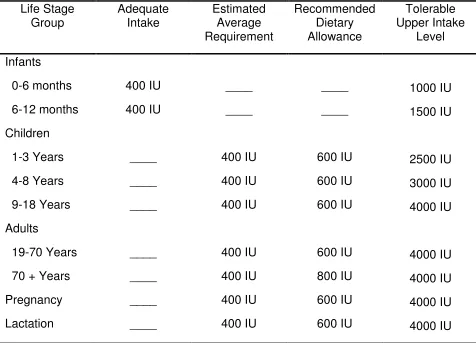
The 2011 Vitamin D Dietary Reference Intakes by Life Stage
Life Stage Group Adequate Intake Estimated Average Requirement Recommended Dietary Allowance Tolerable Upper Intake Level Infants 0-6 months 6-12 months Children 1-3 Years 4-8 Years 9-18 Years Adults 19-70 Years
70 + Years
Pregnancy Lactation 400 IU 400 IU ____ ____ ____ ____ ____ ____ ____ ____ ____ 400 IU 400 IU 400 IU 400 IU 400 IU 400 IU 400 IU ____ ____ 600 IU 600 IU 600 IU 600 IU 800 IU 600 IU 600 IU 1000 IU 1500 IU 2500 IU 3000 IU 4000 IU 4000 IU 4000 IU 4000 IU 4000 IU
Note. Dashes indicate there is no value for the corresponding age group/ type of intake. The Dietary Reference Intakes for vitamin D are set assuming minimal sun exposure and are based primarily on bone health (IOM, 2011). Adapted from Institute of Medicine, 2011, Dietary Reference Intakes for Calcium and Vitamin D, Table S-2: Vitamin D
Groups at increased risk of deficiency. As introduced above, Whiting and
colleagues’ 2011 study revealed that adults aged 20-39, Non-Whites and supplement
non-userswere most at risk of not meeting the vitamin D requirements set out by the
IOM. Adults between 20 and 39 years had significantly higher rates of deficiency in all
categories, especially males. In terms of skin pigmentation, people who self-identified
as Non-White had much higher rates of deficiency than those who self-identified as
White. For example, although 5% of White Canadians were found to be vitamin D
deficient, 16.3% of Non-White Canadians were vitamin D deficient. As for the EAR,
30.5% of Non-White Canadians were below the 40nmol/L cut off, while only 8.7% of
white Canadians were below the cut off. There were no differences in supplement use
found between Whites and Non-Whites, although Non-Whites did report less frequent
consumption of milk. Because it takes longer for vitamin D to synthesize in darker
pigmented skin (Hall et al., 2010) the authors concluded that the vitamin D
concentration differences between Whites and Whites were likely because
Non-Whites are “unable to make sufficient vitamin D from casual sun exposure” putting them
at particularly high risk if they were supplement non-users (Whiting et al., 2011, p. 133).
A 61% majority of Non-White Canadians, in the above-noted study, who did not take
any vitamin D supplements (i.e., oral tablets or drops) were below the 50nmol/L
recommendation, while a much lower minority of 37% of White supplement non-users
were below the recommendation. This illustrates why Non-White, supplement non-users
are identified as having extremely high risk of deficiency. Whiting and colleagues (2011)
(data taken from Statistics Canada, 2008), “having 1 in 5 nonwhite Canadians at risk of
rickets and osteomalacia is a public health concern” (p. 133).
In addition, evidence supports that living at high latitude is another risk factor for
vitamin D insufficiency because living at high latitude decreases the amount of time
available for synthesis of vitamin D (Roth et al., 2005; Rucker, Allan, Fick, & Hanley,
2002). North of the 35th parallel, very little vitamin D can be produced from November to
February and the length of time for vitamin D production further decreases in more
northern areas (Webb, Kline, & Holick, 1988). Beyond the 55th parallel, the possibility for
vitamin D synthesis is little to none from October to April. For this reason, many
professionals urge those living in northern latitudes to supplement with vitamin D
(Canadian Paediatric Society, 2002; 2007; Holick, 2007a; Huotari, & Herzig, 2008;
Rucker, et al., 2002; Webb et al., 1988,). Although Health Canada does not specifically
suggest increased use of supplementation for those in northern communities, the
Canadian Paediatric Society has recommended increasing vitamin D intake to 800IU/
day for children and pregnant or lactating mothers in northern communities during the
winter months (2002; 2007).
With regard to both the analyses from the CHMS data (used by Langlois et al.,
2010 and Whiting et al., 2011), it is worth noting that there was a low response rate of
Non-White respondents. In addition, blood samples were not collected from residents of
First Nations Reserves, crown lands, certain remote regions, members of the Canadian
Forces, and institutions, such as hospitals and long-term care facilities (Langlois et al.,
2010). Some members of these groups are known to be at particularly high risk of
2007), particularly First Nations People (Weiler, Leslie, Krahn, Steinman, & Metge,
2007), people in institutions (Liu et al., 1997) and Non-Whites (Ginde, Liu, & Camargo,
2009; Gozdzik et al., 2008; Yetley, 2008). Accordingly, actual rates of deficiency may be
higher when including groups of people who have previously demonstrated higher risk
of deficiency, such as those listed above. In fact, there are several studies that have
reported higher rates of deficiency than were observed in the CMHS data set (see
Bischoff-Ferrari et al., 2006; Dawson-Hughes et al., 2005; Vieth, 2007; Yetley, 2008).
While considering that actual rates of deficiency may be higher in the Canadian
population, it is also worth considering that the DRI’s for vitamin D established by the
IOM are mainly based on bone health, including risk of rickets/osteomalacia (IOM,
2011; Ross et al., 2011) and not on the amount necessary for overall health promotion
and prevention of illness. For the purpose of this review and the current study, vitamin D
adequacy will be discussed in reference to the IOM/Health Canada recommendations,
unless stated otherwise. It is of worth to note that many researchers advocate for higher
intakes of vitamin D (1000-2000IU) to optimize health and assist with disease
prevention (Bischoff-Ferrari et al., 2006; Dawson-Hughes et al., 2005; Holick, 2007a;
Schwalfenberg, 2007; Vieth, 2011; Vieth et al., 2007). Overall, the above review seems
to suggest that the proportion of Canadians with vitamin D deficiency may be much
higher than currently reported.
Supplement use and vitamin D. Not surprisingly, the analysis made by Whiting
et al. (2011) revealed that supplement users had significantly higher concentrations of
vitamin D year round, whereas non-users demonstrated trends towards higher
IOM-established cut off levels was twice as likely for supplement non-users verses
supplement users in all DRI categories (Whiting et al., 2011). Unfortunately, only about
30% of Canadians reported taking a supplement containing vitamin D (Whiting et al.).
Even fewer people (3%) took a vitamin D specific supplement of 1000IU or more
(Whiting et al.), which is the minimum dose recommended by many professionals
investigating vitamin D (Bischoff-Ferrari et al., 2006; Dawson-Hughes et al., 2005;
Holick, 2007a; Schwalfenberg, 2007; Schwalfenberg, Genuis, & Hiltz, 2010; Vieth et al.,
2007). The majority of those who took higher doses of vitamin D were older adults
(Whiting et al.). Overall, supplement users had higher concentrations of vitamin D
during both the summer and winter months, although differences diminished in summer
months for children and teenagers, potentially because they are exposed to the sun
more than adults (Whiting et al.). Nonetheless, vitamin D supplementation seems to
significantly decrease the occurrence of vitamin D deficiency. Because supplement use,
age, sex and skin pigmentation are strongly related to rates of deficiency, Whiting et al.
have recommended further investigating these factors as they relate to vitamin D status.
Methods of Vitamin D Intake
The three methods to acquire vitamin D include ultraviolet radiation, dietary
intake, and supplementation. In the following section, each method will be discussed, as
well as its potential pros and cons for health and accessibility.
Vitamin D and ultraviolet radiation. Vitamin D is produced in the skin through
ultraviolet radiation (UV; DeLuca, 1988; 2004; Holick, 2007a). More specifically, when
skin is exposed to the sun or other sources of UV, such as tanning beds, it initiates the
photolytic process, which is then slowly turned into vitamin D3. The circulating form of
vitamin D3 is 25-hydroxyvitamin D3 [25(OH)D3], which is what is measured in the blood
to assess vitamin D status. Before the circulating form of vitamin D can be utilized in the
body, it is metabolized into a hormone. The active, hormonal form of vitamin D is called
1-alpha, 25-dihydroxyvitamin D3 [1,25(OH)2D3]. As such, vitamin D, when metabolized,
is actually a hormone and not a vitamin (DeLuca, 1988; 2004; Holick, 2007a) and can
function like a hormone in the body even at the genetic level.
Although people can readily synthesize vitamin D from the sun (DeLuca, 1988;
2004; Holick, 2007a) there are several factors that can reduce the synthesis of vitamin
D into the blood through sun exposure. Living at high latitude (such as in Canada)
decreases synthesis of vitamin D (Roth et al., 2005; Rucker, Allan, Fick, & Hanley,
2002). In the summer, sunscreen use and clothing coverage can also reduce the
amount of vitamin D synthesised because the sun is being blocked from the skin (Mithal
et al., 2009). In the winter, lower UV index, winter clothing, and reduced time outdoors
can prevent synthesis of vitamin D in the skin (Mithal et al., 2009). Pregnancy, lactation,
and high BMI are also associated with lower vitamin D concentrations (Mithal et al.,
2009; Holick, 2007a.). Similarly, concentrations of vitamin D are also negatively
associated with older age (Dixon et al., 2006; Grinde et al., 2009; Mansbach, Ginde,
Camargo, 2009) and darker skin pigmentation (Langlois et al., 2010; Weiler et al., 2007;
Yetley, 2008). As there are many factors that affect how much vitamin D is produced
physiologically in response to UV exposure, it is difficult to specify how much UV
exposure is necessary to produce adequate amounts of vitamin D. As a rough estimate
between 10am and 3pm would be adequate (Holick, 2007a), although it can take 3-6
times longer for people with pigmented skin, such as Asians and Africans (Vieth, 1999).
That being said, it is important to consider that UV overexposure has many known
adverse health effects, which include skin damage, premature aging, skin cancer, and
eye diseases (Health Canada, 2008). Therefore, UV exposure may not be the most
suitable/safest source of vitamin D for much of the population.
Vitamin D and dietary intake. Although people can readily synthesize vitamin D
from the sun when weather conditions permit, it is not as easy to get it from food
sources. In Canada, there are relatively few natural food sources containing Vitamin D.
Mushrooms, egg yolks, and several types of fatty fish are the main natural food sources
of vitamin D (Holick, 2007a; IOM, 1997). Much smaller amounts of vitamin D can also
be found in some types of meat, although it is mainly found in the liver (Centers for
Disease Control and Prevention, 2008). As such, meat is generally not considered a
source of vitamin D. In addition, some foods may be fortified with vitamin D, including
milk, milk substitutes, margarine, some yogurts and orange juices as well as some
breakfast cereals (Holick, 2007a; IOM, 1997; Schwalfenberg, 2007). Dairy sources tend
to be the main dietary sources by which people ingest vitamin D (Vatanparast, Calvo,
Green, & Whiting, 2010; Calvo, Whiting, & Barton, 2004).
Unfortunately, dietary sources alone are insufficient for acquiring adequate
amounts of vitamin D (Whiting et al., 2011). In 2004, Canadians reported consuming an
average of 250IUof vitamin D per day through their diets (Vatanparast et al., 2010),
which is far from the 600-800IU recommended by the IOM. From this study, it seems
dietary intakes are coupled with average sun exposure, about 25% of Canadians
studied in 2011 were still not getting adequate amounts of vitamin D (Whiting et al.).
Furthermore, the diets of people who are vegan, vegetarian, have dairy allergies, or are
lactose intolerant may be associated with vitamin D deficiency, and as such, have been
noted as requiring further research (IOM, 2011).
Vitamin D and supplementation. Another way to get vitamin D is through
various types of supplementation (Holick, 2007a). Although quantity recommendations
vary among health professionals, supplement use is considered a good way to ensure
vitamin D adequacy. Anecdotally (i.e., from the author’s experience), vitamin D tablets
and liquid drops are easily available at local pharmacies and can be purchased without
a prescription for less than $15 Canadian per bottle. Although there are many varieties
of vitamin D supplements, typically vitamin D tablets contain 400, 800, 1000 or 2000IU
(Holick, 2007a), with the label recommending one tablet per day (many popular brands
supply vitamin D tablets in such quantities). That being said, one bottle of vitamin D,
consisting of an average 240 tablets, should last one adult, following the directions on
the label, about 6 months. Vitamin D liquid drops come in doses of 400, 600, and 1000
IU per drop. Each bottle recommends about 1 drop per day orally and contains about
180 drops. Many multivitamins typically contain 400IU of vitamin D (for example,
Centrum® Multivitamins), as well as other vitamins and minerals. As such, vitamin D
supplements are relatively inexpensive, seemingly convenient to use, and do not seem
to have any downside provided the directions are followed. Lastly, vitamin D can be
injected annually in large quantities by a physician (150,000-300,000IU), although this
Among Canadians, factors that most contribute to lower vitamin D status include:
living in a high northern latitude which lessen the time for vitamin D synthesis (Huotari,
& Herzig, 2008; Roth et al., 2005; Rucker et al., 2002; Webb, Kline, & Holick,1988); a
lack of vitamin D-rich dietary choices (Gozdzik et al., 2008; Weiler et al., 2007); and for
some people, having darker skin pigmentation (Gozdzik et al., 2008; Weiler et al.,
2007). As the sun can have damaging health effects (Health Canada, 2008; Holick,
2007a) and is not readily accessible in the winter months for many Canadians, it seems
that more vitamin D fortified foods and supplement use may be key to decreasing
vitamin D deficiency in the Canadian population. Vitamin D insufficiency is an important
health factor in Canada that is necessary to investigate further, especially taking into
account the difficulty in acquiring adequate amounts of vitamin D through dietary intake
and safe sun exposure.
Knowledge of Vitamin D
Considering the widespread rates of vitamin D insufficiency among those
Canadians who have been studied to date, it stands to reason that a lack of related
knowledge about the vitamin and its health benefits may play a role in the deficiency
levels. In accordance with the Health Belief Model (Hochbaum, 1958; Rosenstock,
1966) it is unlikely that people would aim to fix a problem about which they are unaware
and/or in which they do not have a vested interest (Burns, 1992; Hayden, 2009).
Indeed, the few studies that have looked at vitamin D knowledge have found
staggeringly low rates of awareness (Christie & Manson, 2011; Kung & Lee, 2006; Vu,
van der Pols & Whiteman, 2012; Kimlin & Neale, 2010). For example, a qualitative study
including where it comes from and what it does for health (Christie & Manson, 2011).
Although some subjects were aware of the effects vitamin D has on bones, no study
participant was aware of any other beneficial health effects or concerns related to
deficiency. Only those who had been diagnosed with a vitamin D deficiency had
received information on vitamin D from a health professional. When asked about using
sun exposure to get vitamin D, the young women who took part in the Saudi study
stated cultural (i.e., wearing a burka), infrastructural (i.e., lack of useful outdoor space)
and health (i.e., skin cancer risk) reasons for not going in the sun (Christie & Manson,
2011). Unfortunately, the qualitative nature, small sample size (n = 8), and sex
restriction (only female subjects) limit the generalizability of this study. In a telephone
survey study conducted in China, subjects also displayed lack of knowledge and
confusion surrounding the role of vitamin D and its sources (Kung & Lee, 2006). In this
study, nearly 30% of subjects had not even heard of vitamin D. Of those who had heard
of vitamin D, only 32% could correctly identify a function of vitamin D and only 38%
could correctly identify at least one source of vitamin D. The authors found that attitudes
toward sunlight were largely negative and most respondents took measures to avoid the
sun, as they desired lighter skin. Again, potential cultural differences and the age and
sex restrictions (only women over 50 years participated) limit the generalizability of the
study. Lastly, a study in Australia investigating knowledge of vitamin D within an adult
workforce, also found low rates of accurate knowledge of vitamin D, including where it
came from and its health benefits (Vu et al., 2010). In this study, only 69% of subjects
had heard of vitamin D and of the 69%, less than half correctly identified bone health as
knowledge of Canadians, and in particular Canadians deemed to be at high risk, has
been undertaken. As such, it is necessary to specifically investigate what groups of
Canadians at risk (such as university students) know about vitamin D and its health
benefits. Having an understanding of their knowledge level, will help in understanding
the likelihood that university students will/will not engage in vitamin D-seeking
behaviours.
This Study’s Purpose and Research Questions
Considering the aforementioned wide-spread rates of vitamin D insufficiency in
Canada, the recent increases in RDIs, the highly important role vitamin D plays in
musculoskeletal health and the potential for it to contribute to improved immune
functioning, cardiovascular health, and disease prevention, it is necessary to develop an
effective strategy for decreasing rates of deficiency, especially for those at increased
risk. Because university students are among the ages of those most at risk and they are
at a prime age to develop lifelong health behaviours that contribute to their long-term
health, they are deemed to be a suitable target for effective health promotion programs.
First, using the health promotion program planning principles outlined by McKenzie et
al. (2009) and Green and Kreuter (2005), it is necessary to gain a thorough
understanding of students’ vitamin D-related knowledge before being able to create an
effective and tailored health promotion program. As such, the purpose of the current
project was to serve as a baseline assessment of university students’ vitamin D-related
knowledge from a health promotion framework, which is one of the first steps
recommended in the development of health promotion program planning (Green &
identified research gaps by assessing the vitamin D-related knowledge of students at
one large urban Canadian university. The research sub-questions that were asked
through a developed survey tool to fulfill the study's purpose were:
1. What percentage of university students have heard of vitamin D and what do
they know about it, its sources, recommended quantity, and health effects?
2. From where do university students get vitamin D knowledge and what is the
association between knowledge origin and knowledge accuracy?
Hypothesis. It was hypothesized that this study would find low rates of vitamin D
knowledge, including accurate knowledge of vitamin D sources, the quantity of vitamin
D recommended by Health Canada and the associated health benefits of vitamin D. In
addition, it was hypothesized that most students would get their knowledge of vitamin D
from family, school, and possibly through some types of media but that most students
would not be getting their knowledge from their physicians or other health professionals.
Furthermore, it was considered likely that vitamin D knowledge originating from reliable
sources, such as physicians, books, and schools would be more accurate than that from
other sources and students in health sciences based programs would perform better
Chapter 3
Method
Procedure and Participants
Upon receiving ethical approval from Western University’s Research Ethics
Board (Appendix A), an email invitation (Appendix B) including a link to the online
survey was sent to the undergraduate student population at Western University.
Undergraduate university students were selected to strengthen external validity, as a
lower response rate than was achieved was anticipated and therefore, the inclusion of a
small sub-set of graduate students may have threatened external validity. All
undergraduate students at the host university were invited to complete a web-based
survey on vitamin D-related knowledge and values. Only the knowledge portion of the
survey was assessed for the purpose of this study. The survey was administered
through Survey Monkey®, a well-known internet survey website, during a one week
period beginning November 16th, 2012. Due to a higher than expected response rate, a
reminder email was not sent out, as stated in the e-mail invitation. Data collection ended
one week after initial e-mail invite. Prior to taking the survey, a letter of information
(Appendix C) informed participants thatall responses were anonymous and would
remain confidential, that participation was voluntary and that participation in the survey
implied consent. The study consisted of 1,088 Western University undergraduate
students. Participant demographics summarized in Table 2 of the Results section.
Measures
The Vitamin D Knowledge Survey was developed by the researcher for the
vitamin D-related knowledge (Christie & Mason, 2011; Kung & Lee, 2006; Vu et al.,
2010) guided the development of the survey, as did literature about vitamin D deficiency
and sources; as well as the needs assessment strategies discussed by McKenzie and
colleagues (2009) and the program planning strategies discussed by Green and Kreuter
(2005). The survey is discussed in more detail below. A more exhaustive account of the
survey development can be found in the subsequent section, titled “Survey
development”. The survey itself, along with a list of correct responses (for the
knowledge-based questions) can be found in Appendix D.
The Vitamin D Knowledge Survey. This survey was developed to assess the
level of vitamin D-related knowledge university students have. The 9 question,
predominantly multiple-choice survey took approximately 5 minutes or less to complete.
The survey questions assessed the level of knowledge people had with regard to where
vitamin D comes from, what it does for health, how much is recommended, factors that
affect vitamin D levels and the prevalence of vitamin D insufficiency. The first question
is a screening question that asked people if they had heard of vitamin D. Only those
who had heard of vitamin D are asked to complete the rest of the knowledge survey. In
addition, question #2 asked where people heard of vitamin D, as origin of knowledge
may be related to knowledge accuracy. Lastly, demographic information about age,
gender, ethnicity, and academic program of study was collected, as was information on
the intake of vitamin D supplements. The vitamin D knowledge survey questions
enabled the calculation of a knowledge score.
Knowledge score calculation. Questions #3-9 were used to calculate the
questions included in the knowledge score were weighted equally. Each question was
worth one point, for a maximum score of 7 points (100%). Therefore the overall
knowledge score was calculated as a proportion out of 7 points, and multiplied by 100 to
calculate a knowledge score percentage. If a subject got 3.5 answers correct, their
knowledge score was 50% (3.5/7 x 100). When questions included multiple correct
responses, each of the correct responses was worth a fraction of the overall question.
For example, if a question included four correct answers then each correct answer was
worth 0.25 (1/4) points. For every correct answer provided, the knowledge score
increased by the associated value. In addition, equally weighted points were deducted
for incorrect answers to avoid getting a perfect score, while selecting incorrect
responses. The response, “I don’t know” was not factored into the knowledge score.
The following equation illustrates the above scoring principle for calculating the
knowledge score proportion for questions with multiple responses:
(No. of correct responses selected – No. of incorrect responses selected)
Total possible correct responses
Questions #3, 4 and 8 had multiple correct responses; therefore their point
calculation used the above formula. The total number of correct responses for question
#3, 4 and 8 are 8, 11, and 15 respectively. The correct responses for each question are
included at the end of the survey in Appendix D. Questions #5, 6, 7 and 9 were simply
marked as right (1 point) or wrong (0 points). The total points scored for questions #3-9
were added together to get a total “knowledge score” proportion as follows (simply
Sum of points for questions #3-9
Total questions (7)
Survey development.As stated above, the survey was developed to assess
vitamin D knowledge. The following section identifies how the survey questions relate to
the research purposes and details how the questions were selected and formulated. For
the purpose of this study, vitamin D knowledge refers to what subjects know about
vitamin D, its sources, functions, health benefits, recommended dosages and
insufficiency prevalence. To respond to the study’s purpose of assessing university
students’ vitamin D knowledge, items numbered 1-9 were included. Items numbered 1-5
were adapted from previous studies assessing vitamin D knowledge [number 1 was
adapted from Christie and Mason (2011), Kung and Lee (2006), and Vu and colleagues
(2010), while numbers 2 and 3 were adapted from Vu et al. (2010) and number 4 was
adapted from both Kung and Lee (2006) and Vu and colleagues (2010)]. Question #1
assisted in answering the research question, “what percentage of university students
are aware of vitamin D,” while numbers 3-9 identified, “what they know about it, its
sources, recommended quantity, and health effects.” Question #2 corresponds to
answering the research question, “From where do university students get vitamin D
knowledge.” Numbers 5, 8 and 9 were developed specifically for the purpose of this
study. Lastly, number 6 and 7 were partially adapted from Kung and Lee (2006). All
items within the survey were developed for the purpose of this study and with the
guidance of the needs assessment strategies discussed in McKenzie and colleagues’,
“Planning, Implementing, and Evaluating Health Promotion Programs” (2009). Overall,