https://doi.org/10.5194/nhess-18-3343-2018 © Author(s) 2018. This work is distributed under the Creative Commons Attribution 4.0 License.
Forecasting landslide mobility using an SPH model and ring shear
strength tests: a case study
Miao Yu1, Yu Huang2,3, Wenbin Deng2, and Hualin Cheng2
1Faculty of Engineering, China University of Geosciences, Wuhan, Hubei 430074, China 2Department of Geotechnical Engineering, College of Civil Engineering, Tongji University, Shanghai 200092, China
3Key Laboratory of Geotechnical and Underground Engineering of the Ministry of Education, Tongji University, Shanghai 200092, China
Correspondence:Yu Huang ([email protected])
Received: 10 January 2018 – Discussion started: 24 January 2018 Accepted: 1 December 2018 – Published: 19 December 2018
Abstract.Flow-like landslides, such as flow slides and debris avalanches, have caused serious infrastructure damage and casualties for centuries. Effective numerical simulation in-corporating accurate soil mechanical parameters is essential for predicting post-failure landslide mobility. In this study, smoothed particle hydrodynamics (SPH) incorporating soil ring shear test results were used to forecast the long-runout mobility for a landslide on an unstable slope in China. First, a series of ring shear tests under different axial stresses and shear velocities were conducted to evaluate the residual shear strength of slip zones after extensive shear deforma-tion. Based on the ring shear test results, SPH modeling was conducted to predict the post-failure mobility of a previously identified unstable slope. The results indicate that the land-slide would cut a fire service road on the slope after 12 s and cover an expressway at the foot of that slope after 36 s. In the model, the landslide would finally stop sliding about 38 m beyond the foot of the slope after 200 s. This study extends the application of the SPH model from disaster simulations to predictive analysis of unstable landslide. In addition, two sets of comparative calculations were carried out which demon-strate the robustness of the SPH method.
1 Introduction
Flow-like landslides triggered by intense earthquakes or rain-fall, such as debris and rock avalanches, have caused serious infrastructure damage and casualties for centuries (Wang et
al., 2005; Okada et al., 2007). This kind of landslide is com-monly high speed and has a long runout distance. For ex-ample, a large landslide in southern Italy in February 2010 had a runout distance of 1.2 km and necessitated the evac-uation of nearly 2300 people. This landslide was triggered by heavy and prolonged rainfall between August 2009 and February 2010 (Gattinoni et al., 2012). The 2009 Shiaolin landslide in Taiwan, induced by a cumulative rainfall of nearly 1700 mm from Typhoon Morakot, buried Shiaolin Vil-lage and resulted in more than 400 people dead and missing (Tsou et al., 2011). Numerical simulations that incorporate accurate soil mechanical parameters are a powerful tool for simulating landslide runout distances; these simulations can provide fundamental reference information for landside dis-aster mitigation (Žic et al., 2015; Yerro et al., 2016).
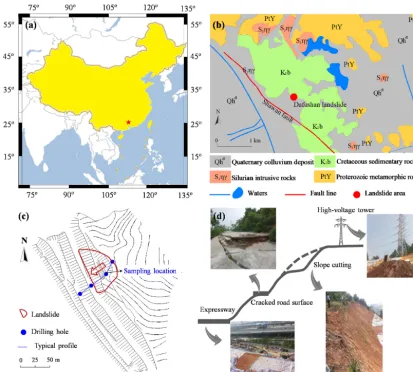
Figure 1. Overview of the Dafushan landslide. (a) Landslide location; (b) geomorphological and geological map of the landslide area;(c)aerial view of the unstable slope;(d)engineering activities on the slope (modified based on Yu et al., 2017, with permission of Springer Nature).
a pure Lagrangian, meshless hydrodynamics method, and it is capable of simulating flow deformation, free surfaces, and deformation boundaries (Liu and Liu, 2003). Several studies have demonstrated the efficiency of the SPH method for the large deformation analysis post landslide. Huang et al. (2014) provided a general view of SPH applications for solving large deformation and failure problems such as dam breaks, slope failure, and soil liquefaction flow. Pastor et al. (2009) applied a depth-integrated, coupled SPH model successfully to sim-ulate catastrophic flow-like landslides that occurred in south-ern Italy in 1998. Cascini et al. (2014) proposed an SPH model to represent two actual flow-type events accurately. Cuomo et al. (2016) used SPH to simulate flow-like land-slides (debris flows and debris avalanches) and discussed the influence of bed entrainment on landslide propagation. Hu et al. (2015) conducted two- and three-dimensional SPH nu-merical simulations of flow-like landslides triggered by the 2008 Wenchuan earthquake in China and proposed that the
SPH method is well suited for modeling free surfaces, mov-ing interfaces, and extensive deformation.
Figure 2.Geology and soil at the Dafushan landslide.(a)Longitudinal geological section of the unstable slope shown in Fig. 1c.(b) Photo-graph of the silty clay landslide soil.
ring shear test to study shear zone development during large displacements. That study pointed out that a ring shear test is the most appropriate test for studying long-travel landslides. Kimura et al. (2014) studied the effect of the shearing rate on the residual strength of landslide soils using ring shear tests. Zhang et al. (2011) used ring shear tests to study the transform mechanism of the slide–debris flow under large de-formations. Li et al. (2017) explored the residual strength of silty sand under different degrees of over consolidations and different shear rates using ring shear tests.
This study presents an effective numerical simulation method, namely SPH, that incorporates accurate soil me-chanical parameters derived from ring shear tests. The aim is to predict the downslope flow after slope failure of a pre-viously identified unstable slope and thereby provide basic information for landside disaster mitigation. First, this paper describes the geomorphological and geological setting, hy-drogeology and rainfall, and triggering factors of the land-slide examined for this case study. These descriptions are based on detailed fieldwork. Next, a series of ring shear tests under several different normal stresses and shear rates were performed to identify the shear strength of the landslide soil. Finally, an SPH-based numerical simulation of the landslide was run to predict the extent of the landslide and track the slide velocity at different times.
2 A case study – the Dafushan landslide 2.1 Geomorphological and geological setting
The Dafushan landslide, located in the Panyu District, Guangzhou city, southern China, was selected for this case study (Fig. 1a). The slope is primarily composed of Creta-ceous silty mudstone, conglomerate, and sandstone overlain by Quaternary silty clay (Yu et al., 2017) (Fig. 1b). The land-slide is creeping from the northeast to the southwest covering an area of about 70 m×40 m (Fig. 1c). The height difference between the toe and the crown is approximately 20 m with an average gradient of 25◦. The Dongxin expressway and a 50 t,
high-voltage power line tower are located at the toe and top of the slope, respectively. In addition, there is a fire response service road that runs along the slope that is affected by the slide (Fig. 1d).
2.2 Landslide triggering factors
The ground was first found to be unstable in May 2013. This instability was manifested mainly by cracks in the ground surface and cracks in the road that lies around the mountain. The road was built for fire response services in May 2011. The relevant departments repaired the damaged road imme-diately to guarantee the normal operation of the road. How-ever, additional evidence of instability was found in the mid-dle of August 2013 after a period of intense rainfall. The road was damaged again, and the trees up the hill began to tilt. Based on preliminary field investigation, the main fac-tors that triggered the landslide were deduced.
2.2.1 Hydrogeology and rainfall
Rainfall is the main supply source of groundwater in the study area. The average annual rainfall is 1635.6 mm. Most of the rain falls between April and September; this rainfall accounts for 81 % of the yearly precipitation. In the rainy sea-son, the groundwater level rises significantly and reduces the shear strength of the soil. Combined with the rainfall flush-ing effect on the slope surface, the stability of the slope is decreased significantly.
2.2.2 Mechanical properties of landslide soil
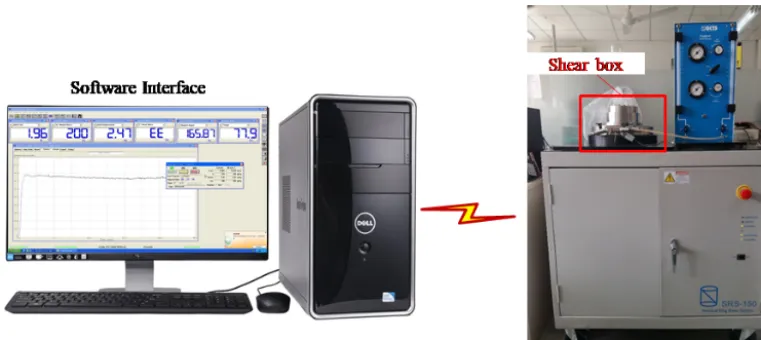
Figure 3.Photograph of the GCTS SRS-150 Residual Ring Shear Testing System and an image of the GCTS software interface.
2.2.3 Human engineering activities
Human engineering activities impaired the natural stability of the slope. Two examples include (a) a cut that was made in the slope in order to build the fire service road and (b) the heavy high-voltage power line tower that increases the down-ward pressure on the slope (Fig. 1d).
3 Ring shear tests
A GCTS Residual Ring Shear Testing System (model SRS-150) produced by Geotechnical Consulting and Testing Sys-tems (GCTS) in 2012 in the USA was used for the ring shear tests conducted for this study (Fig. 3). The SRS-150 is a fully automated electropneumatic and servo-controlled test-ing system used for determintest-ing the residual strength of con-tinuously sheared soil. Shear torques of up to 820 Nm can be applied, consolidation stress can be up to 1000 kPa, and un-limited angular rotation is allowed (Hoyos et al., 2014; Dai et al., 2016). The unit is capable of applying shearing rates of 0.001 to 360◦min−1continuously with zero backlash for replication of true in situ strain rates during failure (Hoyos et al., 2011).
A schematic illustration of a sample in the apparatus is shown in Fig. 4. For testing granular materials, the device accepts ring-shaped samples with a 150 mm outer diameter and a 100 mm inner diameter. The sample is sheared by ro-tating the upper half of the testing unit and keeping the lower half motionless. Two types of shearing modes, either a shear speed control mode or a shear torque control mode, can be chosen.
3.1 Sample preparation and test procedures
The samples studied were samples of the silty clay soil from the Dafushan landslide shown in Fig. 2b. The soil’s physical properties are listed in Table 1.
Figure 4. Schematic cross sections of the ring shear apparatus shown in Fig. 3.
Table 1.Physical properties of a soil from the Dafushan landslide.
Density Dry Water Liquid Plastic Plastic Liquidity
ρ density content limit limit indexIP indexIL (g cm−3) ρd(g cm−3) ω(%) ωL(%) ωP(%)
1.77 1.43 21.4 29.8 17.5 12.3 0.32
Table 2.Consolidation stresses, shearing rates, and saturations for soil specimens subjected to laboratory ring shear tests.
Test Normal stress Shear rate Saturation
σ(kPa) α(◦min−1) (%)
1–1 50 5 100
1–2 100 5 100
1–3 200 5 100
1–4 300 5 100
1–5 400 5 100
2–1 200 1 100
2–2 200 5 100
2–3 200 10 100
2–4 200 20 100
3–1 50 5 0
3–2 100 5 0
3–3 200 5 0
3–4 300 5 0
3–5 400 5 0
rates (1, 5, 10, 20◦min−1) were employed. Test parameters are listed in Table 2.
3.2 Test results and discussion 3.2.1 Axial stress
Figure 5 shows the relationships between shear stress and an-gular displacement under a shear rate of 5◦min−1and axial stresses of 50, 100, 200, 300, and 400 kPa. At the same shear rate, shear strength increases with increasing axial stress. In the initial shear stages, shear stresses increase rapidly along with shear displacement and reach a peak shear strength. The greater the axial stresses, the larger the shear displacement at peak shear strength. When the axial stress is low (e.g., 50 and 100 kPa), the shear stresses do not change after peak shear strength is reached. When the axial stress is high (e.g., 200, 300, or 400 kPa), the shear stresses decrease after peak shear strength but eventually stabilize. This stable strength is the residual shear strength and is the result of strain softening.
The residual strength envelope of the soil can be illustrated by plotting the shear stress against axial stress, as shown in Fig. 6.
Based on the Mohr–Coulomb criterion, the peak and resid-ual shear strengths of the landslide soil were obtained and are listed in Table 3. Because the main trigger for the Dafushan
Figure 5.Shear stress–angular displacement curves for the land-slide soil at a shear rate of 5◦min−1 and different axial stresses for(a)saturated soil and(b)dry soil.
landslide was heavy rain, the residual strength of saturated soil is used for the numerical simulation presented in Sect. 4 of this paper.
3.2.2 Shear rate
Figure 7 shows the relationships between shear stress and an-gular deformation under a normal stress of 200 kPa at shear rates of 1, 5, 10, and 20◦min−1. As the shear rate increases, the residual shear strengths increase slightly, but the peak shear strengths show the opposite reaction. However, the an-gular displacements at peak shear strength increase signifi-cantly, as shown in Table 4.
To analyze the relationship between the residual shear strength of the saturated soil and the shear strain rate, the residual shear stress–shear strain rate curve can be drawn (Fig. 8). The formula for calculating the shear strain rate is
˙
γ=Rω
Table 3.Cohesion and internal friction for landslide soils at peak and residual shear strengths calculated from the Mohr–Coulomb criterion
Soil Peak shear strength Residual shear strength
Cohesion Internal friction Cohesion Internal friction
cr(kPa) angleϕr(◦) cr(kPa) angleϕr(◦)
Saturated soil 0.58 28.05 6.48 24.23
Dry soil 0 31.89 0 30.15
Table 4.Differences in shear strengths and angular displacements for saturated landslide soil at different shearing rates.
Shearing Peak shear Residual Difference between Angular rate strength shear peak and residual displacement at (◦min−1) (kPa) strength shear strength peak shear
(kPa) (kPa) (◦)
1 109.10 99.35 9.75 6.264
5 107.00 99.52 7.48 6.444
10 105.00 100.55 4.45 16.992
20 105.80 100.99 4.81 39.168
Figure 6.Residual strength envelopes for the landslide soils;(a) sat-urated soils,(b)dry soils.
whereγ˙ is the shear strain rate,Ris the average radius of the sample,ωis the angular velocity, andH is the height of the sample.
As shown in Fig. 8, the residual shear strength of the sat-urated soil as determined by these experiments increases lin-early with shear strain rate. This result agrees with the results reported by Li et al. (2013) and Dai et al. (2016). This rela-tionship is similar to the behavior of a viscous fluid and can be expressed by Eq. (2):
τ =ηγ˙+f (σ ) , (2)
Figure 7.Shear stress–angular displacement curves for saturated landslide soil under 200 kPa axial stress.
Figure 8.Residual shear stress–shear strain rate curves for the sat-urated landslide soil.
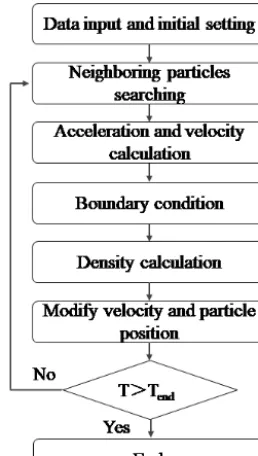
Figure 9.Flow chart for the SPH numerical simulation used in this study.
Figure 10.Longitudinal section of the SPH numerical model of the Dafushan landslide. The particles representing the slide mass are shown in red, and the particles representing the fixed boundary are shown in blue.
4 SPH-based numerical simulation for landslides 4.1 Calculation principles and SPH process methods 4.1.1 Basic SPH concepts
Smoothed particle hydrodynamics is a mesh-free and fully Lagrangian method based on fluid dynamics. In Lagrangian models, the coordinates move with the medium being mod-eled. The continuous medium is discretized into a series of arbitrarily distributed discrete elements (called particles), and field variables (like energy, velocity, density, or any other variable) for each particle can be calculated in the form of SPH (Dao et al., 2013; Huang and Dai, 2014).
The SPH method is built on interpolation theory with two essential approximations. These approximations are smooth-ing and the particle (Huang et al., 2014). The smoothsmooth-ing ap-proximation, also known as kernel apap-proximation, describes
Table 5.Parameters used in the SPH simulation of the Dafushan landslide.
Densityρ(kg m−3) 1770
Residual cohesionc(kPa) 6.48
Residual internal friction Angleϕ(◦) 24.23
Acceleration of gravityg(m s−2) 9.80
a function in a continuous form as an integral representation. The particle approximation means that the value of a func-tion for a particle can be determined by the average value of all the particles in the support domain. The smoothing and the particle approximations can be expressed, respectively, by the following two equations:
hf (x)i =
Z
f x0W x−x0, hdx0, (3)
hf (x)i =
N X
j=1 mj
fj x0
ρj
W x−x0, h, (4)
where the angle brackets represent a kernel approximation,x is the location vector of the particle,x0denotes neighboring particles in the support area,W is the smoothing function,h stands for the smoothing length,stands for the volume of the integral that containsx,mis the mass,ρis the density, andNis the total number of particles.
4.1.2 Governing equations
The Navier–Stokes equations in a computational fluid dy-namics framework are used as governing equations in this study. The equations of continuity and motion in the SPH version can be expressed as
dρi dt =
N X
j=1 mj
uβi −uβj∂Wij ∂xiβ
, (5)
duαi dt =
N X
j=1 mj
"
σiαβ
(ρi)2
+ σ
αβ j
ρj2 #
∂Wij
∂xjβ
+Fi, (6)
whereWij represents the smoothing function of particle i calculated at particlej,tis time,udenotes the velocity vec-tor,σ is the stress tensor,F represents the vector of external force, andαandβ are the coordinate directions.
4.1.3 Model for a landslide simulation
Figure 11.Predicted results in Dafushan landslide with different calculating parameters.
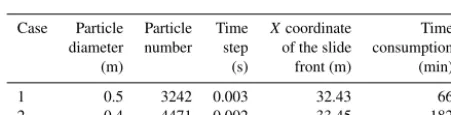
Table 6.Predicted results in Dafushan landslide with different cal-culating parameters.
Case Particle Particle Time Xcoordinate Time diameter number step of the slide consumption
(m) (s) front (m) (min)
1 0.5 3242 0.003 32.43 66
2 0.4 4471 0.002 33.45 182
model for the Dafushan landslide in this study. The relation-ship between shear stress and strain rate can be written as
τ =ηγ˙+τy. (7)
Equation (7) can be modified by combining it with the Mohr– Coulomb yield criterion (Moriguchi et al., 2009):
τ =ηγ˙+σtanφ+c, (8) whereτdenotes the shear stress,ηandτyrepresent the Bing-ham yield viscosity and stress, respectively, γ˙ is the shear strain rate,σ is the pressure,ϕis the friction angle, andcis the cohesion.
For this study, the concept of equivalent viscosity was adopted to better integrate the Bingham model into the SPH framework. The equivalent viscosity can be expressed as η0=η+τy/γ .˙ (9) The maximum value was defined by Uzuoka et al. (1998) as η0=η0+τy/γ˙ when η0< ηmax, (10) η0=ηmax when η0> ηmax, (11) whereηmaxis the maximum value ofη0.
4.1.4 Procedure for the numerical simulation
A flow chart for the SPH numerical simulation is shown as Fig. 9. Details about how the calculations are carried out can
be found in Huang et al. (2014). The accuracy of the SPH program in landslide modeling was also fully validated in Huang et al. (2014).
4.2 Dafushan landslide SPH simulation and results Previous studies have been conducted on the verification analysis of landslides, which proves the accuracy of SPH model is relatively high (Huang et al., 2012; Hu et al., 2015). The error of slide distance can reach 4.6 % (Huang et al., 2012). Meanwhile, this study extends the application of the SPH model in combination with accurate soil parameters de-rived from ring shear tests to predictive analyses of unsta-ble landslides. In addition, two sets of comparative calcula-tions were carried out which demonstrate the robustness of the SPH method.
Based on a terrain model derived from an unmanned aerial vehicle and structure from motion (Yu et al., 2017), an SPH simulation of the failure process of the Dafushan landslide was conducted. Figure 10 is a longitudinal section of the model slide, with the particles in the slide mass shown in red, and the boundary particles shown in blue. The soil par-ticles in the model can be deformed in both the vertical and horizontal directions under gravitational force in the vertical direction.
Figure 12. Longitudinal profiles showing the results of the SPH forecasting model. The panels represent the outline of the Dafushan landslide from the time the slide is initiated att=0 s(a)through the slide finally coming to rest att=200 s(f).
Figure 13.Velocity curve of the front and rear edges of the Da-fushan landslide as predicted by the SPH model.
Figure 14.Displacement curve of the front and rear edges of the Dafushan landslide as predicted by the SPH model.
Figures 12a–f show the flow process of the Dafushan land-slide predicted by the SPH simulation. In Fig. 12, the solid black line represents the bed on which the mass slides, and the red dashed line represents the SPH-modeled ground sur-face. At timet=0, this red line is the ground surface be-fore the slide failure. For times aftert=0, it is the top sur-face of the flowing mass of soil that constitutes the mov-ing landslide mass as predicted by the SPH simulation re-sults. In the model, the time the failed Dafushan landslide lasts, from initiation to the whole landslide mass coming to rest, is 200 s. The model predicts that the landslide would cut the fire service road att=12 s and cover the expressway at t=36 s. When the landslide stops sliding at 200 s, slide ma-terial would cover about a 38 m wide swath of ground beyond the foot of the topographic slope.
velocity of the landslide’s rear edge shows only a single peak. The maximum speed is 1.40 m s−1; this appears 3.8 s after the slide is initiated.
According to Fig. 14, the maximum flow distances of the front and rear edges are up to 95.4 m and 12.3 m, respectively. The front edge of the slide will destroy the fire service road about 10–12 s after the slide starts and reach the highway at t=36 s. Thereafter, the velocity gradually approaches zero as the flow distance increases. The speed of the front flow can be divided into three stages. The flow of the front edge is fastest from 0 to 10 s, slower from 10–45 s, and slowest from 45 to 200 s. However, once signs of failure are observed at the Dafushan landslide site, evacuation of personnel and vehicles within about 38 m of the slope should begin immediately.
5 Conclusions
In this study, the SPH method incorporating soil mechanical parameters derived from ring shear tests is used to predict the flow of a potential landslide that could develop on an unstable slope in Guangzhou city, China. This study provides basic information for landside disaster mitigation. The conclusions are the following.
1. Under the same shear rate, soil shear strength increases with increasing axial stress. For the conditions used in this study, under high axial stress (> 200 kPa) the soil exhibits strain softening.
2. During ring shear tests, as the shear rate increases, the residual shear strengths increase slightly, but the peak shear strengths decrease as the angular displacements at peak shear strength increase significantly.
3. An SPH-based numerical simulation of the potential Dafushan landslide conducted to predict the scope of the landslide and track the slide velocity at different times shows that the landslide would cut the fire service road at t=12 s and cover the expressway att=36 s. And once signs of failure are observed at the Dafushan land-slide site, evacuation of personnel and vehicles within about 38 m of the slope should begin immediately.
Data availability. The data are available from the authors upon re-quest.
Author contributions. MY undertook the work and wrote the manuscript under the supervision of YH. WD and HC helped with test data collection and numerical analysis.
Competing interests. The authors declare that they have no conflict of interest.
Acknowledgements. This work was supported by the National Key R&D Program of China (grant no. 2017YFC1501304); the National Natural Science Foundation of China (grant nos. 41625011 and 41807293); the Key Laboratory of Geotechnical and Underground Engineering of the Ministry of Education, Tongji University (grant no. KLE-TJGE-B1704); the Fundamental Research Funds for National University, China University of Geosciences (Wuhan) (grant no. CUGL170806); and the National Key Technologies R&D Program of China (grant no. 2012BAJ11B04).
Edited by: Mario Parise
Reviewed by: two anonymous referees
References
ASTM Standard D7608-10: Standard test method for torsional ring shear test to determine drained fully softened shear strength and nonlinear strength envelope of cohesive soils (using normally consolidated specimen) for slopes with no preexisting shear sur-faces, ASTM International, West Conshohocken, PA, 2010. Bui, H. H., Fukagawa, R., Sako, K., and Ohno, S.: Lagrangian
meshfree particles method (SPH) for large deformation and fail-ure flows of geomaterial using elastic–plastic soil constitutive model, Int. J. Numer. Anal. Met., 32, 1537–1570, 2008. Casagli, N., Dapporto, S., Ibsen, M. L., Tofani, V., and Vannocci, P.:
Analysis of the landslide triggering mechanism during the storm of 20th–21st November 2000, in Northern Tuscany, Landslides, 3, 13–21, 2006.
Cascini, L., Cuomo, S., Pastor, M., Sorbino, G., and Piciullo, L.: SPH run-out modelling of channelised landslides of the flow type, Geomorphology, 214, 502–513, 2014.
Cuomo, S., Pastor, M., Capobianco, V., and Cascini, L.: Modelling the space–time evolution of bed entrainment for flow-like land-slides, Eng. Geol., 212, 10–20, 2016.
Dai, Z., Huang, Y., Deng, W., Jiang, F., and Wang, D.: Constitutive flow behavior of a municipal solid waste simulant at post-failure: experimental and numerical investigations, Environ. Earth Sci., 75, 1–9, 2016.
Dao, M. H., Xu, H., Chan, E. S., and Tkalich, P.: Modelling of tsunami-like wave run-up, breaking and impact on a vertical wall by SPH method, Nat. Hazards Earth Syst. Sci., 13, 3457–3467, https://doi.org/10.5194/nhess-13-3457-2013, 2013.
Fukuoka, H., Sassa, K., and Wang, G.: Influence of shear speed and normal stress on the shear behavior and shear zone struc-ture of granular materials in naturally drained ring shear tests, Landslides, 4, 63–74, 2007.
Gattinoni, P., Scesi, L., Arieni, L., and Canavesi, M.: The February 2010 large landslide at Maierato, Vibo Valentia, Southern Italy, Landslides, 9, 255–261, 2012.
Hoyos, L. R., Velosa, C. L., and Puppala, A. J.: A servo/suction-controlled ring shear apparatus for unsaturated soils: Develop-ment, performance, and preliminary results, Geotech. Test. J., 34, 413–423, 2011.
Hoyos, L. R., Velosa, C. L., and Puppala, A. J.: Residual shear strength of unsaturated soils via suction-controlled ring shear testing, Eng. Geol., 172, 1–11, 2014.
smoothed particle hydrodynamics, Environ. Earth Sci., 73, 1629– 1640, 2015.
Huang, Y. and Dai, Z. L.: Large deformation and failure simula-tions for geo-disasters using smoothed particle hydrodynamics method, Eng. Geol., 168, 86–97, 2014.
Huang, Y., Zhang, W. J., Xu, Q., Xie, P., and Hao, L.: Run-out analysis of flow-like landslides triggered by the Ms 8.0 2008 Wenchuan earthquake using smoothed particle hydrodynamics, Landslides, 9, 275–283, 2012.
Huang, Y., Dai, Z. L., and Zhang, W. J.: Geo-disaster modeling and analysis: an SPH-based approach, Springer, Heidelberg, 184– 185, 2014.
Kimura, S., Nakamura, S., Vithana, S. B., and Sakai, K.: Shearing rate effect on residual strength of landslide soils in the slow rate range, Landslides, 11, 969–979, 2014.
Li, D. Y., Yin, K. L., Glade, T., and Leo, C.: Effect of over-consolidation and shear rate on the residual strength of soils of silty sand in the Three Gorges Reservoir, Sci. Rep. UK, 7, 5503, 2017.
Li, Y. R., Wen, B. P., Aydin, A., and Lu, N. P.: Ring shear tests on slip zone soils of three giant landslides in the Three Gorges Project area, Eng. Geol., 154, 106–115, 2013.
Liu, G. R. and Liu, M. B.: Smoothed particle hydrodynamics: a meshfree particle method, World Scientific Press, Singapore, 2003.
Lu, C. Y., Tang, C. L., Chan, Y. C., Hu, J. C., and Chi, C. C.: Fore-casting landslide hazard by the 3D discrete element method: A case study of the unstable slope in the Lushan hot spring district, central Taiwan, Eng. Geol., 183, 14–30, 2014.
Marr, J. G., Elverhøi, A., Harbitz, C., Imran, J., and Harff, P.: Nu-merical simulation of mud-rich subaqueous debris flows on the glacially active margins of the Svalbard–Barents Sea, Mar. Geol., 188, 351–364, 2002.
Moriguchi, S., Borja, R. I., Yashima, A., and Sawada, K.: Estimat-ing the impact force generated by granular flow on a rigid ob-struction, Acta Geotech., 4, 57–71, 2009.
Okada, Y., Ochiai, H., Okamoto, T., Sassa, K., Fukuoka, H., and Igwe, O.: A complex earth slide–earth flow induction by the heavy rainfall in July 2006, Okaya City, Nagano Prefecture, Japan, Landslides, 4, 197–203, 2007.
Pastor, M., Haddad, B., Sorbino, G., Cuomo, S., and Drempetic, V.: A depth-integrated, coupled SPH model for flow-like landslides and related phenomena, Int. J. Numer. Anal. Met., 33, 143–172, 2009.
Tika, T. E. and Hutchinson, J. N.: Ring shear tests on soil from the Vaiont landslide slip surface, Geotechnique, 49, 59–74, 1999. Tsou, C. Y., Feng, Z. Y., and Chigira, M.: Catastrophic landslide
induced by typhoon Morakot, Shiaolin, Taiwan, Geomorphology, 127, 166–178, 2011.
Uzuoka, R., Yashima, A., Kawakami, T., and Konrod, J. M.: Fluid dynamics based prediction of liquefaction induced lateral spread-ing, Comput. Geotech., 22, 234–282, 1998.
Van Asch, T. W., Van Beek, L. P. H., and Bogaard, T. A.: Problems in predicting the mobility of slow-moving landslides, Eng. Geol., 91, 46–55, 2007.
Wang, G., Suemine, A., Furuya, G., Kaibori, M., and Sassa, K.: Rainstorm-induced landslides at Kisawa village, Tokushima Pre-fecture, Japan, August 2004, Landslides, 2, 235–242, 2005. Wen, B. P., Aydin, A., Duzgoren-Aydin, N. S., Li, Y. R., Chen, H.
Y., and Xiao, S. D.: Residual strength of slip zones of large land-slides in the Three Gorges area, China, Eng. Geol., 93, 82–98, 2007.
Wu, J. H., Lin, W. K., and Hu, H. T.: Assessing the impacts of a large slope failure using 3DEC: The Chiu-fen-erh-shan residual slope, Comput. Geotech., 88, 32–45, 2017.
Yerro, A., Alonso, E. E., and Pinyol, N. M.: Run-out of landslides in brittle soils, Comput. Geotech., 80, 427–439, 2016.
Yu, M., Huang, Y., Zhou, J. M., and Mao, L. Y.: Modeling of land-slide topography based on micro-unmanned aerial vehicle pho-tography and structure-from-motion, Environ. Earth Sci., 76, 1– 9, 2017.
Zhang, M., Yin, Y., Hu, R., Wu, S., and Zhang, Y.: Ring shear test for transform mechanism of slide–debris flow, Eng. Geol., 118, 55–62, 2011.