Long-Distance Time-Event Relation Extraction
Alessandro Moschitti
QCRI, Qatar Foundation, Doha, Qatar DISI, University of Trento, Povo (TN), Italy
[email protected] [email protected]
Siddharth Patwardhan and Chris Welty IBM T. J. Watson Research Center
Yorktown Heights NY 10598 [email protected]
Abstract
This paper proposes state-of-the-art mod-els for time-event relation extraction (TERE). The models are specifically de-signed to work effectively with relations that span multiple sentences and para-graphs, i.e., inter-sentence TERE. Our main idea is: (i) to build a computational representation of the context of the two target relation arguments, and (ii) to en-code it as structural features in Support Vector Machines using tree kernels. Re-sults on two data sets – Machine Read-ing and TimeBank – with 3-fold cross-validation show that the combination of traditional feature vectors and the new structural features improves on the state of the art for inter-sentence TERE by about 20%, achieving a 30.2 F1 score on inter-sentence TERE alone, and 47.2 F1 for all TERE (inter and intra sentence combined).
1 Introduction
Time-Event Relation Extraction (TERE) is the task of linking event mentions and relation men-tions to occurrences of “time stamps” in text. We define it as follows: given a set of textual expres-sions denoting events and relations, and a set of time expressions in the same text document, find all instances of temporal relations between ele-ments of the two input sets. A relation between an event and a time expression indicates that the event occurs within the temporal context specified by the time expression, for example, the following sentence:
He succeeded James A. Taylor, who stepped down as chairman, president and chief executive in March for health reasons; the appointment took effect Nov. 13.
conveys two different events,successionand step-ping down, linked to the time stamps,Nov. 13and
March, respectively.
In this paper, we focus on the task of linking time expressions to events, i.e., we carry out a classification task, where, for each possible pair of (event/relation, time) in a document, the clas-sifier decides whether there exists a link between the two. In particular, we assume that the event mentions, relation mentions and time expressions are given to us by an external process. There is a large body of work on the above topics and they remain difficult problems, but we use human an-notated mentions and expressions as input to our models since TERE itself is a relatively new prob-lem in this context. Previous work in TempEval-2 (Verhagen et al., 2010) and our work (Hovy et al., 2012) have shown that accurate relation classifiers can be modeled with supervised approaches, pro-vided that the expressions are limited to be in the same sentence. In contrast, there is almost no pre-vious work on inter-sentence TERE (ISTERE), for three main reasons:
• Across a document, the number of time-event pairs to consider is large, as they are quadratic in the number of time and event expressions.
• There are almost no practically useful linguis-tic models that can be applied for capturing inter-sentence relations.
• Defining inter-sentence features is complex: their non-optimal definition in a task such as TERE – where there is a rather high imbalance be-tween positive and negative examples – results in underperforming machine learning models. In this paper, we design novel supervised models for ISTERE based on a structural representation of the pairs of sentences that contain the target
tion arguments. We define methods to deal with time-event relations, where the text fragment indi-cating the time expression, e.g., the appointment took effect Nov. 13of the example above, is sep-arated from the main event, e.g., succession and
stepping down. In particular, our representation is constituted by a pair of shallow syntactic trees (one for each sentence containing the relation ar-guments), where their nodes are enriched with se-mantic labels, i.e., EVENT and TIME. We rely on automatic feature engineering with structural ker-nels (see e.g., (Moschitti, 2008; Moschitti, 2009)) to feed the learning algorithm with meaningful patterns implicitly described by such a representa-tion. Kernels are applied to our shallow syntactic representations of text resulting in a model robust to noise and easily adaptable to new domains and tasks, such as ISTERE.
We tested our models on Machine Reading and TimeBank datasets over three different configura-tions: (i) relation arguments both within the same sentence, (ii) relation arguments in different sen-tences and (iii) relation arguments both, within and across, sentences. Our experiments demon-strate that such approach is very promising, as it improves over the state of the art for ISTERE by up to 20% in F1.
In the remainder of the paper, Sec. 2 surveys the related work, Sec. 3 presents the previous state-of-the-art models for intra-sentence TERE also using structural kernels, Sec. 4 describes our new mod-els for intra/inter TERE, Sec. 5 lays out the ex-periments and, finally, Sec. 6 discusses the results deriving our conclusions.
2 Related Work
The extraction of relations between entities has been a long-standing topic of research, with work spanning more than a couple of decades, e.g., ACE (Doddington et al., 2004) and MUC (Grishman and Sundheim, 1996).
In particular, sentence-level Relation Extraction (RE) has been typically modeled with supervised approaches, using manually annotated data, such as ACE (Kambhatla, 2004). Most work has fo-cused on kernel methods, i.e., string and tree ker-nels (Bunescu and Mooney, 2005; Culotta and Sorensen, 2004; Zhang et al., 2005; Zhang et al., 2006) or their combinations (Nguyen et al., 2009). From the kernel perspective, our approach to TERE is another variant of the general RE work using kernel: we use PTK applied to two-level
shallow syntactic trees, which extracts a sort of hierarchical subsequences. This follows up our rather long research, e.g., tree kernels for mod-eling the relations between syntactic constituents embedded in pairs of text (i.e., question and an-swer passage) for anan-swer re-ranking (Moschitti et al., 2007; Moschitti, 2008; Moschitti, 2009; Mos-chitti and Quarteroni, 2008; MosMos-chitti and Quar-teroni, 2010). A more computationally expen-sive solution based on enumerating relational links between constituents was given in (Zanzotto and Moschitti, 2006; Zanzotto et al., 2009) for the tex-tual entailment task. Some faster versions were provided in (Moschitti and Zanzotto, 2007; Zan-zotto et al., 2010). More efficient solutions based on a shallow tree and relational tags were recently proposed in (Severyn and Moschitti, 2012; Sev-eryn et al., 2013).
Regarding the more specific task of extraction of temporal relations, the typical approaches fol-low similar principles of the above RE methods. Early work was devoted to ordering events with respect to one another, e.g., (Chambers and Juraf-sky, 2008), and detecting their typical durations, e.g., (Pan et al., 2006). The TempEval work-shops (Verhagen et al., 2007) defined the task of (i) extracting temporal relations between events and time expressions and (ii) naming relations like BEFORE, AFTER or OVERLAP. We focus on the first part of the TempEval task, following (Filatova and Hovy, 2001; Boguraev and Ando, 2005; Hovy et al., 2012), where we used the the system and re-sults associated with the latter paper as a baseline of this paper. (Mirroshandel et al., 2011) used syn-tactic tree kernels for event-time links in the same sentence. As we aim at exploring long-distance RE, we consider more robust representations than syntactic trees, i.e., shallow syntactic trees, which we have successfully used in other research, e.g., (Severyn and Moschitti, 2012).
A recent challenge, i2b21 2012, also dealing with ISTERE was carried out in the biomedical domain. We could not directly compare with the challenge’s systems as their results were not avail-able to us during the writing of this paper. Thus, we can only report on work targeting similar tasks, e.g., (Mani et al., 2006) used time relations be-tween events to build a classifier that marks each pair of events with a temporal relation, exploiting temporal closure properties; and (ii) (Kolomiyets
BOW
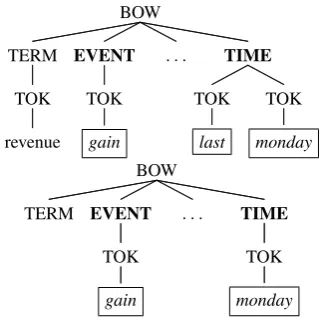
Figure 1: A kernel representations of the baseline model constituted by a bag-of-word (BOW) tree
BOW
Figure 2: E.g. features from STK with BOW tree
et al., 2012) proposed to link events via partial or-dering relations like BEFORE, AFTER, OVER-LAP and IDENTITY.
Finally, a recent work explicitly tackling the IS-TERE task is described in (Do et al., 2012). Their system was based on three classifiers: (i) a local classifier, which processes all pairs of events and time expressions in a document and decides which pairs are linked together; (ii) a classifier between pairs of events, which determines their relations: BEFORE, AFTER, OVERLAP and NO RELA-TION; and (iii) a joint model which, exploiting global constraints, can highly improve the overall ISTERE accuracy. We will further comment on this work in Sec. 6.
3 Baseline Models for TERE
The analysis of previous work has shown that there is almost no models for ISTERE. Therefore to align with prior work, we compare with previ-ous models onstandardTERE (extraction within a sentence). For this purpose, after formally defin-ing the task, we describe the system we used as our baseline, which includes two types of features: (i) those manually designed also called linear fea-tures and (ii) structural feafea-tures generated by tree kernels.
Task Definition. TERE is formally defined as follows: given the sets of expressions E denot-ing events or relation mentions, andT describing
time expressions in the same document: (i) build all pairshe, ti where e ∈ E andt ∈ T; and (ii) classifyhe, tito determine if a time-event relation is held, i.e., ifeoccurs or holds within the tempo-ral context specified byt. In our study, we assume that: (i) a timestamp must be explicitly stated for each event/relation that we consider to be in a tem-poral relation; and (ii) every event/relation is as-sociated with only one time expression whereas a temporal expression can be linked to one or more events or relations.
Feature Vectors. We used system and features defined in our previous work (Hovy et al., 2012), which in turn are based on the work by (Boguraev and Ando, 2005). The feature set can be divided in three different classes: (i) Features associated with events or relations. These are very similar to features typically used to represent the context of entities in traditional relation extraction tasks, which are primarily syntactic features drawn from the parser and for reporting verbs. (ii) Features specific to the temporal expressions. These are pri-marily designed to capture various properties of the temporal expressions. For instance, whether it is a duration, time or date, or whether its pre-modifiers are among those that indicate the type of expression. We include also surface features, such as numeric or non-numeric tokens in the phrase. (iii) Features describing context around both the arguments. These are primarily drawn from the work by Boguraev and Ando, and include features such as n-grams and syntactic/structural patterns. The latter also cover syntactic relations between an event and a temporal expression, ordering of the two in the sentence, etc.
TOP
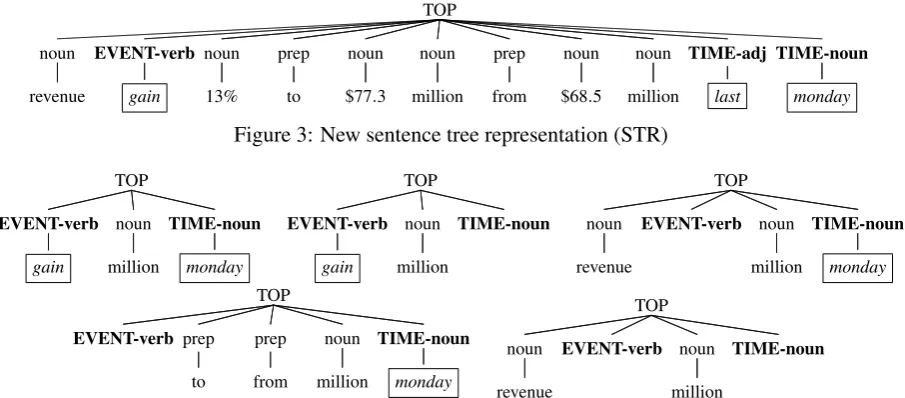
Figure 3: New sentence tree representation (STR)
TOP
Figure 4: Some of the structural features generated by PTK when applied to the STR of Fig. 3
(Moschitti, 2006), which can count any tree frag-ments constituted by connected nodes.
Computational Structures. In (Hovy et al., 2012), we showed that combining manually engi-neered features with tree kernels produces a bet-ter model. We also show that exploiting syntactic information of the sentence containing the rela-tional expressions is not trivial. Thus, we devel-oped a bag-of-words (BOW) tree representation capturing the context of the target time/event ex-pressions. The latter were marked-up with labels such as EVENT (or equivalently RELATION) and TIME. Figure 1 illustrates an example of the tree representations for the sentence:
Revenue gained 13% to$77.3 million from $68.5 million last Monday.
Such BOW tree is constituted by: (i) a root node; (ii) a conceptual level, which specifies the semantic type in the sentence, i.e., TERM, TIME or EVENT expressions; (iii) a token node level (TOK); and the lexical level, list-ing the words of the constituents. PTK ap-plied to such trees generates features, such as [TIME [last][monday]] and [TIME [[monday]] or more interesting features like those shown in Figure 2. For example, such features can learn the pattern: revenue, EVENT gain, ∗, last, TIME.
It should be noted that such a tree represents only one relation. In case a sentence contains more than one event/relation, separate trees for each must be generated (each will be a separate training/test instance). Such trees differ in the po-sition of the EVENT/RELATION nodes (at level
1 of the tree).
Finally, in (Hovy et al., 2012) we showed that this model significantly improves over manually engineered features. However, to exploit syntac-tic information, we defined another separate tree with POS-tag nodes in place of words causing the features coming from different trees to be disjoint. This model cannot be applied for ISTERE as the large number of identical nodes, TERM andTOK
would cause the PTK computational complexity to degenerate toO(n2)(see (Moschitti, 2009)).
4 Models for Inter-Sentence TERE
We describe here our new representation, which is an improvement over our previous models on intra-sentence TERE and, more importantly, can be used for ISTERE.
Intra-Sentence Representation. We improve on the previous work by reformulating the BOW tree as follows:
1. We remove the TERM and TOK levels and we propose only two levels — the POS-tag and the word sequences.
2. The annotation of the target time or event expression is directly performed on the POS-tag node.
For example, Fig. 3 shows the transformation of the trees in Fig. 1 to the new representation. The event gain and the time expression last monday
are marked at POS-tag level2. This also compacts the segmentation of time expressions. As a result, the application of PTK to the new sentence tree
2The POS tagset is the one used in the IBM Watson
TOP
noun
million noun
$4 prep
of noun
operation adj
continuing prep
from noun
profit verb
have
TIME-noun
period
TIME-adj
late
TIME-det
the
Figure 5: A second STR containing a time expression. Together with the one of Fig. 3 containing the event, it forms the representation pair, input to the kernel used for ISTERE.
representation (STR) generates very powerful and compact features, e.g., those described in Fig. 4. The last fragment of the figure suggests that if, in a sentence, there is the nounrevenuefollowed by (i) any word tagged as EVENT, (ii) the noun mil-lionand (iii) any TIME expression, the EVENT is probably associated with such TIME expression. Note that this is not a rule but just a feature receiv-ing a weight from SVMs based on trainreceiv-ing data.
Finally, it should be noted that the average run-ning time of PTK will beO(n), because the new tree does not contain many repeated node labels. This is far more efficient than the PTK applied to BOW trees (see (Moschitti, 2009)).
Inter-Sentence Representation.STR still cannot encode relations whose arguments are located in different sentences. Our approach for this problem is to design two STRs for the sentences contain-ing the two potential arguments of a relation. For example, let us suppose that a time expression of thegain-EVENT in Fig. 3, e.g.,late period, is ex-pressed in the following sentence:The late period has profit from continuing operations of $4 mil-lion.
We produce another STR associated with it, as shown in Fig. 5. This way, we modelhe, tiwith a pair of treeshE, Ti, where e ∈ E andt ∈ T (see Sec. 3). Accordingly, we define the kernel K(p1, p2)over two pairsp1 =hE1, T1iandp2 =
hE2, T2,i as: T K(p1, p2) = PTK(E1, E2) +
PTK(T1, T2).
It should be noted that: (i) the additive combina-tion of kernels is still a valid kernel and it corre-sponds to the merged fragment space of E and T trees; (ii) the kernel product can also be applied but it has shown poor results in previous work (Moschitti, 2004); and (iii) PTK allows for model-ing structural features in two sentences located in different part of the document. Thus, the features will be pairs of tree fragments from E and T. It is worth noting that the pairs of BOW and POS trees used in (Hovy et al., 2012) cause PTK to be too slow for this setting (although they may achieve comparable accuracy).
Additionally, the PTK can be combined with a linear kernel of manually engineered features us-ing an additive operation. If~xi is the vector rep-resentation of the manually engineered features of pi, the kernel combination of PTK and the linear kernel is PTK(pi, pj) +~xi·~xj. The linear features extracted for the EVENT expression in one tence and the TIME expression in the other sen-tence can reconstruct their shared context thanks to the pairs of tree fragments generated by PTK. The next section will empirically verify this hy-pothesis.
5 Experiments
In this section, (i) we compare our model against the state of the art for intra-sentence TERE; and (ii) we test its validity for ISTERE.
5.1 Setup
We used two corpora: Machine Reading Program (MRP) corpus to compare with our previous sys-tem (Hovy et al., 2012) (our baseline) and Time-Bank data (Pustejovsky et al., 2003), which in con-trast to MRP data, enables us to train and test our system with inter-sentence gold standard (GS) an-notation. During testing, we used GS annotations for the timestamps and events, i.e., we only clas-sify which events and time expressions are linked together.
Training Set Validation Set Test Set Pos. Neg. Total Pos. Neg. Total Pos. Neg. Total
DIST=0 1,125 2,754 3,879 155 405 560 162 463 625
DIST>0 900 65,221 66,121 129 9,311 9,440 182 16,600 16,782 DIST≥0 2,025 67,975 70,000 284 9,716 10,000 344 17,063 17,407
Table 1: Distribution of data in the three TimeBank subsets.
While it allows us to compare with previous work, the MRP data is not very well suited for training and testing new systems modeling IS-TERE. Indeed, almost all inter-sentence pairs of time/event contain members that (i) are corefer-ence of either the time or the event and (ii) are typically located in the same sentence. This means that, given an accurate system for intra-sentence TERE and a good coreference resolution system, ISTERE described in the MRP corpus can be eas-ily solved. The combined system is still very com-plex and interesting, but it inevitably falls in the class of coreference resolution problems. Here we aim at studying linguistic phenomena directly con-nected to inter-sentence relations, which go be-yond coreference resolution. For this reason, we also ran experiments on a second corpus described below, which is more suitable to our study.
TimeBank corpus. Distributed by the Linguistic Data Consortium3, it consists of 183 documents – news articles from several news sources that have been annotated with event and time expressions compliant with the TimeML specification4. We di-vided the corpus in three subsets containing rela-tions whose arguments are located in: (i) the same sentence (DIST=0), (ii) more than one sentence (DIST>0) and (iii) both previous cases (DIST≥0). The distribution of positive and negative examples in the training, validation and test sets are reported in Table 1. It is interesting to note that the distribu-tion of positive examples in DIST=0, i.e., the intra-sentence relations, is 30% of all possible pairs. In contrast, such distribution in DIST>0, i.e., inter-sentence relations, drastically reduces to 1.4% of the pairs occurring in a document. This imbalance immediately gives the feeling of the complexity of the ISTERE task.
Learning Model.we used SVM-Light-TK (Mos-chitti, 2006; Joachims, 1999), which enables the use of the Partial Tree Kernel (PTK) (Mos-chitti, 2006). We used the default kernel hyper-parameters and the margin/error trade-off
parame-3
LDC2006T08 at http://www.timeml.org/ site/timebank/documentation-1.2.html
4The inter-annotator agreement numbers are specified in
the referring website
ter to favor replicability of our results, and study instead the cost-factor parameter as it tunes the balance between Precision and Recall, which is very critical for our task (highly skewed datasets).
Measures. We estimated Precision, Recall and F1 with 10-fold cross-validation for MRP experi-ments for comparing with (Hovy et al., 2012). For TimeBank, we drew F1 plots using the random test set described in Table 1. To estimate the final F1 of our models, we used 3-fold cross-validation5 ap-plied to the merged train and test set in the table. In this case the cost-factors were estimated from the validation set (see the table above), which is not part of the merged data used for the 3-fold cross-validation. It should be noted that to cre-ate the folds and the other subsets, we took care to not mix RE pairs between the folds or between training, validation and test set.
5.2 Intra-Sentence TERE: MRP Results
We trained SVMs using PTK applied to STR of single sentences and also combined with linear features. We tested a few parameter values of the Precision/Recall trade-off (cost-factor) on a vali-dation set then, following (Hovy et al., 2012), we ran 10-fold cross-validation. The average F1 was 76.84, which is directly comparable with the out-come we reported in (Hovy et al., 2012), i.e., an F1 of 76.5 (when linear features are used in com-bination with tree kernels). It should be noted that: (i) in (Hovy et al., 2012) we showed that our tem achieved the same accuracy than the best sys-tem of TempEval-2; and (ii) our STR provides the same results of the combination of the two struc-tures we used in the model above.
Additionally, we tested PTK alone and attained an F1 of 74.45. This basically suggests that if we only use tree kernels, we can trade-off several months of work for manual feature engineering for a little bit less accurate system. Those unfamil-iar with structural kernels may think that the time spent for engineering tree representations is com-parable to the one spent for engineering features.
5It is more suitable than a 10-fold setting for deriving the
However, the abstraction provided by the tree ker-nels suggests that the effort required in engineer-ing trees is orders of magnitudes lower. The base-line system using the manually engineered fea-tures was designed at IBM and required several months of manual effort to engineer, code and tune features. Our expert on kernel methods (who is not an expert on TERE) modeled STR in 20 minutes and the implementation only concerned the con-struction of strings representing trees like those in fig. 3 and 5. While this is anecdotal evidence, it is a good indicator of the power of tree kernels.
Furthermore, our experiments show that the combination of tree kernels and feature vectors is much more adaptable to variations of the TERE task and data. This can be observed, for instance, when considering RE from TimeBank.
5.3 Cost-factor role in ISTERE: TimeBank
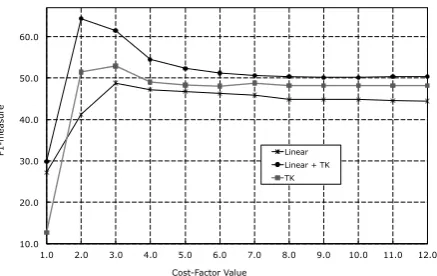
We performed the first experiment using DIST=0 data and three different models, Linear (i.e., only using the manual features), PTK (which in this case only uses one tree) and their additive com-bination, i.e., Linear + PTK. In these experiments, the only critical parameter is the one tuning the Precision/Recall trade off (cost-factor parameter) as the high data imbalance between negative and positive examples can result in imbalanced Preci-sion and Recall. Thus, we plotted the F1 of the above models (derived on the test set) according to a reasonable set of values of such parameter. The result is shown in Fig. 6. We note that (i) PTK pro-duces a better F1 than linear features for any pa-rameter value; (ii) the combination Linear + PTK highly improves on both achieving an interesting F1 of 64.35; (iii) in comparison with MRP, where the best model achieves an F1 of 76.84, the Time-Bank task appears to be more difficult.
We ran an experiment for DIST>0, which con-siders only inter-sentence relations. Fig. 7 shows a similar curve as before, except that manual fea-tures have a higher accuracy than PTK. The F1, however, is rather low, indicating the complexity of the task and the inadequacy of manual features. As predicted in Sec. 4, the combination of inter-sentence structural and manual features highly im-proves on the system F1 achieving a state-of-the-art value of 38.82 for ISTERE. Although, the re-sult does not still guarantee a successful use of the proposed model for real-world applications, it clearly shows a promising research direction.
Finally, we tested DIST≥0, i.e., the complete
10.0 20.0 30.0 40.0 50.0 60.0
1.0 2.0 3.0 4.0 5.0 6.0 7.0 8.0 9.0 10.0 11.0 12.0
F1
-m
ea
su
re
Cost-Factor Value Linear Linear + TK TK
Figure 6: TERE cost-factor impact on DIST=0
10.0 15.0 20.0 25.0 30.0 35.0 40.0
3.0 4.0 5.0 6.0 7.0 8.0 9.0 10.0 11.0 12.0
F1
-m
ea
su
re
Cost-Factor Value Linear Linear + TK TK
Figure 7: TERE cost-factor impact on DIST>0
10.0 15.0 20.0 25.0 30.0 35.0 40.0 45.0 50.0
1.0 2.0 3.0 4.0 5.0 6.0 7.0 8.0 9.0 10.0 11.0 12.0
F1
-m
ea
su
re
Cost-Factor Value Linear Linear+TK TK
Figure 8: TERE cost-factor impact on DIST≥0
DIST=0 DIST>0 DIST≥0
Linear PTK Lin.+PTK Linear PTK Lin.+PTK Linear PTK Lin.+PTK
Prec. 36.7±1.3 57.2±0.7 60.9±3.0 18.5±2.5 29.1±5.5 29.2±4.4 33.8±1.1 34.2±2.5 39.8±2.3 Rec. 89.4±3.2 42.4±1.9 64.0±2.9 55.5±5.0 20.6±8.2 32.3±7.9 57.7±1.1 46.7±1.5 58.4±4.0 F1 52.0±0.9 48.7±1.0 62.3±1.7 27.7±3.4 23.1±5.4 30.2±4.5 42.6±1.0 39.4±1.2 47.2±1.8
Table 2: 3-fold cross-validation results for DIST=0, DIST>0 and DIST≥0 tasks.
5.4 Cross-Validation Results
The previous section demonstrates the superiority of the combined Linear + PTK model over man-ual features for any value of the cost-factor pa-rameter. To assess the significance of this, we carried out 3-cross-fold cross validation. Table 2 shows the average Precision, Recall and F1 over the 3-folds along with the associated standard de-viation (preceded by ±). We note that (i) the relative improvement over the Linear model de-rived on DIST=0, about 20%, confirms the results showed by the plots; and (ii) the relative improve-ment derived on DIST>0 and DIST≥0 is lower, although still remarkable, i.e., up to 9% and 12%, respectively. This is probably due to the fact that 2 folds constitute a training set of 58K instances (for DIST≥0), whereas in the plot experiments the training data contained 70K examples. Evi-dently the more complex patterns needed for long-distance TERE require more training data to ex-press their entire potential. Finally, feature vectors perform better than structural kernels alone but this does not contradict the fact that kernels save potentially large engineering work since: (i) even if the features had been engineered for MRP and used for TimeBank, the effort would have been done in any case whereas kernels almost com-pletely avoid it; and (ii) the combination largely improve on the feature vectors: this may avoid the need of additional work for feature refining.
6 Discussion and Conclusions
Previous work has proposed intra-sentence TERE models based on manually designed features and tree kernels. In this paper, we propose new models for inter-and intra-sentence TERE. We provided a flexible kernel, which improves efficiency and ca-pacity of generating meaningful features. It can be applied to the pairs of all document sentences for modeling ISTERE. This enables the use of all possible pairs of tree fragments from the time and event sentences as features, which improve on the features manually designed in (Hovy et al., 2012). For example, the latter cannot capture the relation with the “document date”, when the time expres-sions occur in the titles. This kind of features can
be added but a study of the problem and engineer-ing effort are required. In contrast, our models can automatically generate such features.
Our experiments on MRP and TimeBank show that our approach provides high accuracy, up to 20% of relative improvement over state of the art. The reason for such impressive results is the adapt-ability and automatic feature engineering proper-ties of tree kernels. Indeed, new data and settings pose new challenges to the RE systems, which re-quire effort in engineering both features and meth-ods. Our approach alleviates such effort as we can use a more general-purpose technology.
In this work, our model has been applied to establish the link between time expressions and events. However, in general, our model could be applied to the complete TERE task, thus also determining the relation types. Interestingly, the model proposed in (Do et al., 2012) is based on the pairwise classifiers we study in this paper. Although, the authors used a different dataset6, which makes an exact comparison with their sys-tems difficult, we note that their local pair clas-sifiers achieved an F1 of 42.13 (no global model, so the same setting as ours) and an F1 of 46.01 using their global model based on ILP. Our local pairwise classifier attained an F1 of 47.2, which can be used as input to the global model to further boost the overall system accuracy.
Finally, the pairwise approach may be consid-ered computationally expensive. However, with modern technology,O(n2)complexity (wherenis
the number of sentences in a document) is feasible. PTK is efficient and can be made faster with recent reverse kernel engineering work (Pighin and Mos-chitti, 2010; Pighin and MosMos-chitti, 2009).
In summary, the main message of this paper is that ISTERE is complex, requiring a significant engineering effort. We have shown that tree ker-nels are adaptable, requiring less effort and im-proving on the state of the art in the full TERE task – relations spanning more than one sentence.
6They annotated a portion of the ACE corpus with (i)
Acknowledgements
This research is partially supported by the EU’s 7th Framework Program (FP7/2007-2013) (#288024 LIMOSINE project) and an Open Collaborative
Research (OCR) award from IBM Research.
References
Branimir Boguraev and Rie Kubota Ando. 2005.
Timeml-compliant text analysis for temporal reason-ing. InProceedings of IJCAI.
R. Bunescu and R. Mooney. 2005. A shortest path
dependency kernel for relation extraction. In
Pro-ceedings of HLT-EMNLP.
N. Chambers and D. Jurafsky. 2008. Unsupervised learning of narrative event chains. InProceedings of ACL-08: HLT.
A. Culotta and J. Sorensen. 2004. Dependency tree kernels for relation extraction. InACL.
Q. Do, W. Lu, and D. Roth. 2012. Joint inference for event timeline construction. Inthe joint EMNLP and CoNLL conference.
G. Doddington, A. Mitchell, M. Przybocki, L.
Ramshaw, S. Strassel, and R. Weischedel. 2004.
The automatic content extraction program – tasks, data and evaluation. InLREC.
D. Ferrucci, E. Brown, J. Chu-Carroll, J. Fan, D. Gondek, A. Kalyanpur, A. Lally, J. W. Murdock, E. Nyberg, J. Prager, N. Schlaefer, and C. Welty. 2010. Building watson: An overview of the deepqa project. AI Magazine, 31(3).
E. Filatova and E. Hovy. 2001. Assigning time-stamps
to event-clauses. Inthe workshop on Temporal and
spatial information processing.
R. Grishman and B. Sundheim. 1996. Message Under-standing Conference - 6: A Brief History. InColing. D. Hovy, J. Fan, A. Gliozzo, S. Patwardhan, and C. Welty. 2012. When did that happen? – linking events and relations to timestamps. InEACL. T. Joachims. 1999. Making large-scale SVM learning
practical. Advances in Kernel Methods – Support
Vector Learning, 13.
N. Kambhatla. 2004. Combining lexical, syntactic, and semantic features with maximum entropy mod-els for information extraction. InACL.
O. Kolomiyets, S. Bethard, and M.-F. Moens. 2012. Extracting narrative timelines as temporal depen-dency structures. InACL.
I. Mani, M. Verhagen, B. Wellner, C. M. Lee, and J. Pustejovsky. 2006. Machine learning of temporal relations. InACL.
S. A. Mirroshandel, M. Khayyamian, and G. Ghassem-Sani. 2011. Syntactic tree kernels for event-time temporal relation learning. HLT.
A. Moschitti and S. Quarteroni. 2008. Kernels on Lin-guistic Structures for Answer Extraction. InACL. A. Moschitti and S. Quarteroni. 2010. Linguistic
Ker-nels for Answer Re-ranking in Question Answering Systems.Information Processing & Management. A. Moschitti and F. M. Zanzotto. 2007. Fast and
ef-fective kernels for relational learning from texts. In
ICML.
A. Moschitti, S. Quarteroni, R. Basili, and S. Man-andhar. 2007. Exploiting syntactic and shallow se-mantic kernels for question/answer classification. In
ACL.
A. Moschitti. 2004. A study on convolution kernels for shallow semantic parsing. InACL.
A. Moschitti. 2006. Efficient convolution kernels
for dependency and constituent syntactic trees. In
ECML.
A. Moschitti. 2008. Kernel methods, syntax and se-mantics for relational text categorization. InCIKM. A. Moschitti. 2009. Syntactic and Semantic Kernels
for Short Text Pair Categorization. InEACL. T.-V. T. Nguyen, A. Moschitti, and G. Riccardi. 2009.
Convolution kernels on constituent, dependency and
sequential structures for relation extraction. In
EMNLP.
F. Pan, R. Mulkar, and J. R. Hobbs. 2006. Learning event durations from event descriptions. In Coling-ACL.
D. Pighin and A. Moschitti. 2009. Reverse engineer-ing of tree kernel feature spaces. InEMNLP. D. Pighin and A. Moschitti. 2010. On reverse feature
engineering of syntactic tree kernels. InCoNLL. J. Pustejovsky, P. Hanks, R. Saur´ı, A. See, R.
Gaizauskas, A. Setzer, D. Radev, B. Sundheim, D. Day, L. Ferro, and M. Lazo. The TIMEBANK Cor-pus.
A. Severyn and A. Moschitti. 2012. Structural
lationships for large-scale learning of answer re-ranking. InSIGIR.
A. Severyn, M. Nicosia, and A. Moschitti. 2013.
Learning adaptable patterns for passage reranking. InCoNLL.
S. Strassel, D. Adams, H. Goldberg, J. Herr, R. Keesing, D. Oblinger, H. Simpson, R. Schrag, and
J. Wright. 2010. The DARPA MRP. InLREC.
M. Verhagen, R. Gaizauskas, F. Schilder, M. Hepple, G. Katz, and J. Pustejovsky. 2007. Semeval-2007 task 15: Tempeval temporal relation identification. Inthe Workshop on Sem. Ev..
M. Verhagen, R. Sauri, T. Caselli, and J. Pustejovsky.
2010. Semeval-2010 task 13: Tempeval-2. Inthe
Workshop on Sem. Evaluation.
F. M. Zanzotto and A. Moschitti. 2006. Automatic Learning of Textual Entailments with Cross-Pair
Similarities. InCOLING-ACL.
F. M. Zanzotto, M. Pennacchiotti, and A. Moschitti. 2009. A Machine Learning Approach to Recogniz-ing Textual Entailment. JNLE.
F. M. Zanzotto, L. Dell’Arciprete, and A. Moschitti. 2010. Efficient graph kernels for textual entailment
recognition.Fundamenta Informaticae, 2010.
M. Zhang, J. Su, D. Wang, G. Zhou, and C. L. Tan. 2005. Discovering relations between named entities from a large raw corpus using tree similarity-based clustering. InProc. of IJCNLP.
M. Zhang, J. Zhang, J. Su, and G. Zhou. 2006. A com-posite kernel to extract relations between entities
with both flat and structured features. In