ABSTRACT
JASROTIA, ASWINI KUMAR SINGH. Construction and Testing of Implant Carrier Particles for Validation of Multiphase Aseptic Processes. (Under the direction of Josip Simunovic and K.P. Sandeep)
Aseptic processing of low-acid foods containing large particles is an emerging technology. Most multiphase process validation methods employ simulated particles to contain residence time tags, thermo-sensitive implants and/or bio-loads for temperature detection, time-temperature integration, and bactericidal efficacy confirmation. Such particles need to have conservative (fast-moving and slow-heating) characteristics to compare them with real food particles for thermal treatment. This study was conducted to fabricate and test (by heat penetration studies) conservative simulated particles which serve as carriers for thermo-sensitive implants and bio-loads in the validation procedure required for aseptic processing of shelf stable low-acid multiphase foods. A custom developed CPD (Conservative Particle Design) software was used to determine the minimum wall thickness (~ 2 mm) and cavity dimensions of ½ inch cubic particles for validation of aseptic processing of foods containing ½ inch cubic potato, carrot and other vegetable pieces. These particles were fabricated from PP (polypropylene) and PMP (polymethylpentene) polymers and they exhibited conservative heat penetration characteristics when compared with various real food particles. Duplicate samples of simulated and real food particles were fitted with
CONSTRUCTION AND TESTING OF IMPLANT CARRIER PARTICLES FOR VALIDATION OF MULTIPHASE ASEPTIC PROCESSES
by
ASWINI KUMAR SINGH JASROTIA
A thesis submitted to the Graduate Faculty of North Carolina State University
in partial fulfillment of the requirements for the Degree of
Master of Science
FOOD SCIENCE
Raleigh 2004
APPROVED BY:
__________________________ ___________________________ Dr. Josip Simunovic Dr. K.P. Sandeep
(Chair of Advisory Committee) (Co-Chair of Advisory Committee)
DEDICATION
To my mother Sudesh Jasrotia
And
To my sisters
BIOGRAPHY
Aswini Kumar Singh Jasrotia was born on April 30, 1979 in Mumbai, India. He originally hails from the beautiful state of Jammu and Kashmir, and grew up in costal cities of Jamnagar and Vishakhapatnam in India. He graduated from Indian Institute of Technology – Kharagpur in 2001, with a Bachelor in Technology (Honors) degree in Agricultural and Food Engineering. He was awarded t he Institute Silver Medal for being the academic topper during his undergraduate studies in the department of Agricultural and Food Engineering at Indian Institute of Technology – Kharagpur. After his graduation he joined Infosys
ACKNOWLEDGEMENTS
There are many people who have been a part of my graduate education as, friends, teachers and colleagues. It is a pleasure to thank each one of them, who made this thesis possible. First of all, I would like to thank my advisor and thesis committee chair Dr. Josip Simunovic who has consistently found time to give expert advice and help in conducting the experiments and steer me clear of fruitless paths in my research. I pay my deep gratitude to Dr. K.P. Sandeep for his constructive criticisms and editorial candor which no doubt has greatly improved the quality of this thesis.
I would like to thank my committee member Dr. John H. van Zanten for his understanding and advice. I have always felt greatly inspired to work with him. I am also greatly indebted to Dr. Kenneth R. Swartzel, for his great motivation and encouragement provided throughout this study.
My sincere thanks are extended to Dr. T.K. Palazoglu for his indispensable involvement in past research work relevant to current study, which laid foundation for successful completion of this research work.
My special thanks go to Jack Canady and Gary D. Cartwright for their help and advice in setting up the equipments most needed for this research work. I am greatly thankful to Bernard Eckhardt for providing all needed help on computer related issues. He was always available for the timely help, which is greatly appreciated.
Institute of technology – Kharagpur, India, for providing guidance and support, important in pursuing my current graduate study.
I am deeply indebted to my family for giving me the love and needed encouragement throughout my studies. Without their support and absolute confidence in me, this study would not have been possible.
TABLE OF CONTENTS
LIST OF TABLES ……….ix
LIST OF FIGURES ………x
1. INTRODUCTION ... 1
2. REVIEW OF LITRATURE... 10
2.1 Aseptic Processing... 10
2.1.1 History of Aseptic Processing... 11
2.1.2 Advantages and Disadvantages of Aseptic Processing... 13
2.2 Aseptic Processing of Particulate Foods... 14
2.2.1 Issues Involved in Aseptic Processing of Particulate foods... 17
2.2.2 Equipment ... 19
2.2.3 Effect of Processing on Product Quality... 24
2.3 Thermal Processing Kinetics and Microbial concerns... 28
2.4 Residence Time Distribution (RTD)... 34
2.4.1 Measurement Techniques of RTD in Two-Phase Flow... 36
2.4.2 Effect of RTD on Sterilization Efficiency ... 38
2.4.3 Factors Influencing RTD ... 38
2.5 Mathematical Modeling ... 40
2.5.1 Steps in Modeling ... 40
2.5.2 Determination of Fluid-to-particle Heat Transfer coefficient (hfp)42 2.5.3 Acceptable features of model... 47
2.7 Developments in techniques for validation of multiphase aseptic processes
... 55
2.8 Objectives ... 64
SYMBOLS... 65
REFERENCES ... 66
3. MANUSCRIPT I:Construction and Testing of Conservative Thermal Properties of Simulated Food Particles for use in Validation of Multiphase Aseptic Processing ... 78
ABSTRACT... 80
INTRODUCTION ... 81
MATERIALS AND METHODS... 86
RESULTS AND DISCUSSION ... 93
CONCLUSIONS... 95
ACKNOWLEDGEMENTS... 96
SYMBOLS... 97
REFERENCES ... 98
4. MANUSCRIPT II:Thermal Characteristics of Simulated Polymer and Food Particles: Criteria for Establishment of Conservative Properties for use in Multiphase Aseptic Process Validation ... 115
ABSTRACT... 117
INTRODUCTION ... 118
MATERIALS AND METHODS... 122
CONCLUSIONS... 132
ACKNOWLEDGEMENTS... 134
SYMBOLS... 135
REFERENCES ... 136
5. CONCLUDING REMARKS... 159
LIST OF TABLES
Table 3.1 Measured F0 values in Data Acquisition Program files compared with the
calculated F0 using temperature data file from Data Acquisition Program ... 104
Table 3.2 Thermophysical properties of polymers and food materials* ... 104 Table 3.3 Process variable inputs to CPD for particle design generation... 104 Table 3.4 Wall thickness and implant weight results for different combinations of food
material and polymers... 104
Table 4.1 Measured F0 values in Data Acquisition Program files compared with the
calculated F0 using temperature data file from Data Acquisition Program ... 142
Table 4.2 Thermophysical properties of polymers and food materials* ... 142 Table 4.3 Process variable inputs to CPD for particle design generation... 142 Table 4.4 Wall thickness and implant weight results for different combinations of food
material and polymers... 142 Table 4.5 Food materials and there physical dimensions used for testing conservative
LIST OF FIGURES
Figure 3.1 Complete experimental setup to acquire real-time time-temperature history and plot temperature and F0 graphs on the monitor (at run-time) ... 105
Figure 3.2 F0 map showing the quarter cube of a particle and the F0 values at different points
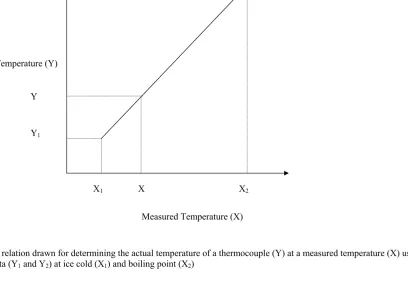
inside the cube... 106 Figure 3.3 Linear relation drawn for determining the actual temperature of a thermocouple
(Y) at a measured temperature (X) using the calibration data (Y1 and Y2) at ice cold (X1)
and boiling point (X2) ... 107
Figure 3.4 Shaded area under the stepwise point function ABCD… which was used by Data Acquisition Program for F0 value calculations ... 108
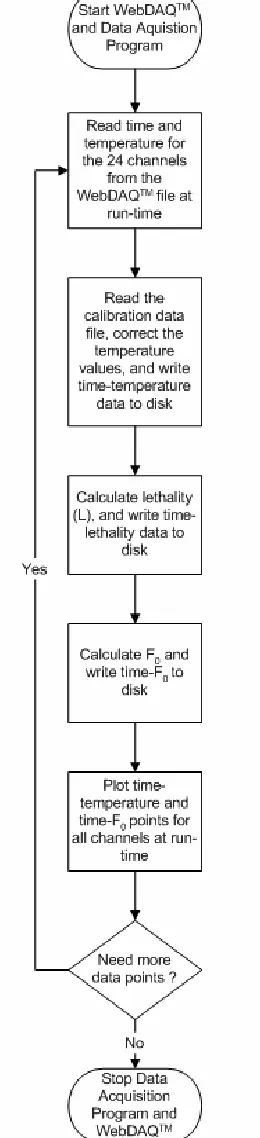
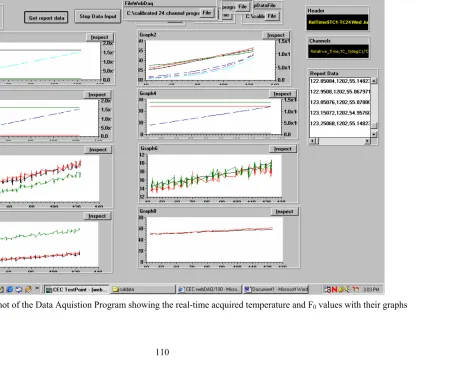
Figure 3.5 Flow diagram showing a brief logic for Data Acquisition Program ... 109 Figure 3.6 A Screen shot of the Data Aquistion Program showing the real-time acquired
temperature and F0 values with their graphs... 110
Figure 3.7 A simulated food particle made of PP, showing the two half of the cube (with cavity) and the cylindrical tube, which are joined to complete the particle ... 111 Figure 3.8 Temperature acquisition data for potato, carrot, PP and PMP under high pressure
and temperature conditions ... 112 Figure 3.9 F0 values for carrot and potato with PP under high pressure and temperature
conditions... 113 Figure 3.10 F0 values for carrot and potato with PMP under high pressure and temperature
Figure 4.1 Complete experimental setup to acquire real-time time-temperature history and
plot temperature and F0 graphs on the monitor (at run-time) ... 144
Figure 4.2 F0 map showing the quarter cube of a particle and the F0 values at different points inside the cube... 145
Figure 4.3 Linear relation drawn for determining the actual temperature of a thermocouple (Y) at a measured temperature (X) using the calibration data (Y1 and Y2) at ice cold (X1) and boiling point (X2) ... 146
Figure 4.4 Shaded area under the stepwise point function ABCD… which was used by Data Acquisition Program for F0 value calculations ... 147
Figure 4.5 Flow diagram showing a brief logic for Data Acquisition Program ... 148
Figure 4.6 A Screen shot of the Data Aquistion Program showing the real-time acquired temperature and F0 values with their graphs... 149
Figure 4.7 A simulated food particle made of PP, showing the two half of the cube (with cavity) and the cylindrical tube, which are joined to complete the particle ... 150
Figure 4.8 F0 values for carrot and potato with PP under high pressure and temperature conditions... 151
Figure 4.9 F0 values for carrot and potato with PMP under high pressure and temperature conditions... 152
Figure 4.10 F0 value comparisons for different foods with respect to PP and PMP... 153
Figure 4.11 F0 value comparisons for different foods with respect to PP and PMP... 154
Figure 4.12 F0 value comparisons for different foods with respect to PP and PMP... 155
Figure 4.14 F0 values for PMP particles of 1 mm wall thickness with different inner diameter
(ID=inner diameter of insert in inches)... 157 Figure 4.15 F0 values for PMP particles of 2 mm wall thickness with different inner diameter
Chapter 1 INTRODUCTION
Aseptic processing and packaging has been an important area of research in food engineering for the past several decades. During aseptic processing, food is sterilized in a heat exchanger such as tubular heat exchanger, helical heat exchanger, scraped-surface heat exchanger, microwave or ohmic-heater. The packaging material is sterilized separately and both the food and the package are brought together during a continuous filling operation. This process allows products once considered perishable (such as milk, soy beverages, juice, and nectars) to be distributed and stored without refrigeration for periods up to six months or more. Most other processes use preservatives and/or refrigeration to achieve a long shelf life.
Aseptic processing has significant quality advantages over conventional thermal techniques such as retort or hot-filling. Retort canning typically requires products to be heated in the container for 20 to 50 minutes. Hot-filling uses the heat of the product to sterilize both the product and the package, a process which takes 1-3 minutes for heating and another 7-15 minutes for cooling. In contrast, aseptically processed liquid foods and beverages are sterilized outside the package using an ultra-high temperature process. The food product is rapidly heated, and then cooled before filling. The product is heated for a certain time (3 to 15 s) and temperature (195-285 °F) which can be tailored to obtain the best quality product, while ensuring safety. This fast heating and cooling process
substantial reduction in the time necessary for sterilization. In-addition, aseptically packaged products exhibit more natural texture, color, and taste. In the U.S., aseptically packaged products include milk, juices, tomato products, soups, broths, tofu, soy
beverages, wines, liquid eggs, whipping cream, and teas. In Europe, a much wider variety of aseptically packaged products are available such as fresh milk, beverages, wine and aseptically processed fruit, vegetables & dairy products.
In canning, the product is sterilized inside a can after it has been packed. The thermal treatment for a canned food product depends on the size of the can. Product in a larger can would therefore need a greater amount of processing time to receive the required lethality. As a result, the quality (nutritional value) of the product would decrease as the size of can increases. In-addition, the desired texture, color, and taste of such a product is lost. The required thermal treatment for such a food product would further increase if it contains particulates, resulting in a further decrease in the quality of the product. However, thermal treatment of a food product during aseptic processing does not depend on the size of the package. Therefore, aseptically processed foods receive more uniform heat treatment than a food processed in a retort. In-addition, overcooking of the product is avoided and quality is retained.
with a finished equilibrium pH greater than 4.6 and a water activity greater than 0.85. These foods include butter, cheeses, grains, seeds, most nuts, dried fruit, fresh eggs, pears, papayas, sweet apples, raspberries, strawberries, bananas, prunes, and raisins. Acidified foods (21 CFR 114.3) are defined as those low-acid foods, which have had their pH reduced to 4.6 or lower by the addition of acids or acid foods. Examples include, pickles, pickled vegetables, salsa, pumpkin butter, sweet potato butter, barbecue sauces, chow-chow, and relishes. Any product that uses a combination of vinegar or other acid, acid foods (such as tomatoes) and vegetables (cucumbers, beets onions, ramps, cabbage, artichokes, cauliflower, squash, peppers (hot or sweet), beans, tropical fruits or any other vegetable) to achieve a pH < 4.6 are acidified foods.
Clostridium botulinum is an anaerobic, gram-positive, spore-forming rod that is
heat resistant and produces a potent neurotoxin (U.S. Food and Drug Administration, 1992). For low-acid foods, the anaerobic conditions that prevail in aseptic processing are ideal for the growth of Clostridium botulinum. However, its growth is inhibited in acid
environments (pH ≤ 4.6). Due to the high heat resistance of the toxin-producing spores of
Clostridium botulinum, this microorganism is considered to be the target microorganism
for commercial sterility of processed foods. Commercial sterility would be achieved for a food if it receives a heat treatment which statistically achieves a 12D reduction for a test organism which is more heat resistant than Clostridium botulinum (type E). "Commercial
sterility of thermally processed food" (21 CFR 113.3) means the condition achieved: (a) By the application of heat which renders the food free of:
(ii) Viable microorganisms, including spores, of public health
significance; or
(b) By the control of water activity and the application of heat, which renders the food free of microorganisms capable of reproducing in the food under normal non-refrigerated conditions of storage and distribution.
The need for a process that is an alternative to the traditional canning process to produce low-acid particulate foods is increasing, since consumers are becoming more demanding about the quality, variety, and convenience of the food they eat. Aseptic processing is one such alternative. The technology and knowledge-base for aseptic processing of liquid foods has been well developed and approved by regulatory agencies. However, solving the issues involved in aseptic processing of low-acid particulate foods has been the area of interest for researchers during the past several years. All food particulates in such a product must receive the required thermal treatment to ensure the safety of the product while minimizing loss in quality. The geometric center of a food particle is the critical point of interest since it is always the slowest heating point. The challenge in such a system is to quantify the thermal treatment received by the food particulate at its center.
To establish an aseptic process for multiphase food products, regulatory agencies require the processor to identify and select a sterilizing F0 value for the product, develop
a conservative model that reliably predicts the total lethality of the heat process,
the past have attempted to measure the temperature at the center of a particle during its thermal treatment in a continuous flow system using different methods. One such method is a thermal memory cell – a unit that has no power source but has a thermal memory. The cell is based on diffusion of a variety of metals through a silicon base. Different metals diffuse at different temperature-dependent rates. Other researchers have used magnetic sensors to measure the changing magnetic field strength of a magnet placed inside a simulated food particle. The magnetic field of a magnet changes along with the change in the temperature of its surroundings. As these simulated particles flow in a continuous system, the magnetic properties change. These changing magnetic fields created around the particle are sensed using magnetic sensors placed outside the tube through which the product flows. Some other researchers have been able to measure the temperature histories within particles which were restricted in free movements. These methods serve as a first step towards can estimating the F0 (lethality) value received at
the center of the food particle and they need to be validated by biological measurement methods.
difficulties in non-invasive measurement of internal temperatures of particle during continuous flow. If the temperature of the cold-spot could be measured at the end of the heater and the hold tube, RTD measurements would be unnecessary.
Other mathematical models have been used to estimate the minimum residence time required under the specific conditions necessary to deliver the produce the desired lethality. The minimum residence time requirement determined by the model had to be coupled with RTD data for designing the holding tube length of the aseptic system. It is necessary to ensure that largest and the fastest traveling particle will have a residence time at least as small as the minimum residence time determined by the model.
Another problem associated with aseptic processing of particulate foods has been the lack of understanding of the heat transfer between fluid and particles during
continuous flow. Determination of fluid-to-particle heat transfer coefficient (hfp) poses a
unique challenge of monitoring the temperature of moving particles without restricting the flow of the particle. Various methods have been developed to solve this problem. This includes both invasive and non-invasive methods. Invasive methods include the
Biological validation of a scheduled process for traditionally processed canned foods is not required if the filed process is based on properly designed heat penetration tests. For aseptically processed particulate products, however, biological validation of the process is necessary because the design of the aseptic process is not based on heat
penetration tests due to the unavailability of the time-temperature history of the product. Biological validation of an aseptic process for a particulate food product involves the use of biological indicators that travel through the system inside a particle.
The National Center for Food Safety and Technology (NCFST) and the Center for Aseptic Processing and Packaging Studies (CAPPS) sponsored a workshop in November 1995 and March 1996 to reach a consensus on concerns that needed to be resolved to develop an aseptic process for multiphase food products. In the NCFST-CAPPS workshop, various methods for determining the RTD measurements were discussed. Some such methods are magnetic methods, magnetic resonance imaging, history methods, ultrasonic methods, and salt tracer method. The workshop also focused on issues related to the lethality received by the “critical particle”. The “critical particle” is the particle that heats up the slowest (due to its low thermal diffusivity) and receives least thermal treatment because it is the fastest or because of a combination of both. The goal is to “prove” that the “critical” part of the critical particle received the required thermal treatment.
They recommended the determination of residence time of 299 particles to determine the fastest particle residence time. Tetra Pak, Inc., used the case study from the workshop as a guideline and filed a thermal process for condensed cream of potato soup (a low-acid particulate food). The company received a no-objection letter from FDA in May 1997. Despite interest in the food industry, many economical issues have not encouraged them to develop such a process. For example fillers which can handle large particles or viscous foods are not economical. In addition, the validation process is not only time consuming (six to nine months) but also expensive (~ US $100, 000). In the validation process, each particle is identified by a magnetic tag contained in the particle and must pass through the entire system before the next one can be inserted to avoid misidentification of the
particles (due to cross-over or overlap). To avoid this huge cost, a Magnetic I. D. / Timed Insertion Particle (MID/TIP) system – that uses multiple magnetic identification tags to determine particle residence times have been developed by researchers.
Thus, based on results from the NCFST-CAPPS workshop it was evident that identification of the “critical pariticle” was essential for sucessful filing (with FDA) of a low-acid particulate food product. the identification particle with slow heating and fast flowing characteristics is important in developing convervative methods to predict the lethality delivered at its center. Monitoring and validating a continuous thermal
sterilization process requires the use of these simulated food particles, which must exhibit conservative flow and thermal characteristics. A conservative design of the carrier
equivalent to or greater than the thermal protection provided by the target food particle to its cold spot (typically its geometric center) under identical heating conditions. Thus, the current study was undertaken with the goal of developing a validated systematic approach for the construction of simulated particles that would assure conservative thermal
behavior (slow-heating behavior) and near-neutral buoyancy (fast-flowing behavior in a particultate food product).
Chapter 2
REVIEW OF LITRATURE
2.1 Aseptic Processing
A typical aseptic process involves sterilization of the product by a heat-hold-cool approach followed by filling and sealing into pre-sterilized containers under aseptic conditions. Product heating in aseptic systems is performed directly (steam infusion and steam injection) or indirectly (plate, tubular, or scraped surface heat exchangers), whereas the containers are sterilized by superheated steam and/or Hydrogen Peroxide (Lopez, 1987).
Aseptic processing originated from the need to solve problems associated with conventional ‘in-container’ sterilization of foods such as low rate of heat penetration to the slowest heating point in the container, the long processing times required to deliver the required lethality, destruction of nutritional and sensory characteristics of the food, low productivity, and high energy costs (Smith et al., 1990). The field of aseptic
processing for liquid foods is well developed, whereas aseptic processing of particulate foods faces many technical issues. In aseptic processing of low-acid particulate foods, some major hurdles are present in process establishment. Unlike a conventional retort process for which heat penetration studies are easily applied for process evaluation, there is no technique is available to measure the center temperature of particles that are
2.1.1 History of Aseptic Processing
Aseptic processing was initiated in 1927 at the American Can Company
(Mitchell, 1988). The result was the development of the heat, cool, fill (HCF)process for liquid and semi-liquid foods. The product was heated to 300 °F in less than 15 s,
immediately cooled and filled into sterile cans (Ball and Olson, 1957). The process was not a commercial success because of the associated high cost of the equipment,
inflexibility with respect to can size, and the frequent problems occurring with the can filing machines.
The Avoset process (which is no longer in operation) was another milestone in the development of aseptic processing. In this process the filling and sealing area were heated to eliminate contamination and further protection was accomplished by ultraviolet lamps (Mitchell, 1988). Sterilization was achieved by direct steam injection to achieve
temperature of 260-280 °F. The product was packaged in containers that were retorted or sterilized by hot air.
containers were sterilized by superheated steam (Mitchell, 1988). The first commercial Dole system was installed in the early 1950s for the production of split pea soup and sauces. Another development in the early 1960s in Europe was the use of hydrogen peroxide to sterilize flexible packaging materials for packaging (Lopez, 1987).
In the U.S., use of hydrogen peroxide to sterilize packaging materials was
approved by the FDA only in February 1981 (Cousin, 1993). This approval provided the opportunity for the use of laminates for consumer packages. Aseptic containers can now be produced in many different sizes and shapes, from small packages to large 100,000 gallon bulk storage tanks. The bag-in-box technology has significantly grown over the years and its thrust has been in units ranging from 2 to 300 gallons.
In the 1960s, TetraPak introduced chemically sterilized packages. Introduction of drink boxes was another important development for aseptic packaging. Drink boxes are one of many aseptic packaging materials available. A drink box combines thin layers of paper, plastic, and aluminum to form a unique, high-performance beverage and liquid-foods container that is compact, lightweight, and tough. Paper (70 %) provides stiffness, strength, and the efficient brick shape to the package. Polyethylene (24 %) on the innermost layer forms the seals that make the package wafer-tight. A protective
2.1.2 Advantages and Disadvantages of Aseptic Processing
Compared to traditional canning, where products are heated in the container for 20 to 50 minutes, aseptic processing involves flash heating and cooling followed by aseptic packaging which substantially reduces the energy-use and nutrient loss associated with conventional sterilization. As a result, aseptically packaged products can retain a higher degree of nutritional value, natural texture, color, and taste while using less energy. Typical organoleptic properties (color and texture) and heat sensitive nutrients are better retained due to the high temperatures and short processing times involved. Compared to canning, aseptic processing can a) destroy microorganisms in a
Though aseptic processing offers better quality and packaging advantages for processed foods, it has some drawbacks. The limitations include higher cost involved with increasing speeds of fillers, higher cost of equipment, and the sophisticated automation required for process control. The workers in an aseptic plant must be better trained and skilled (than for conventional retort processing) in accordance with the laws of the regulatory agencies, which increases the cost for this process significantly. In addition, the use of aseptic process for specific product types and destroying heat-resistant enzymes are some other limitations (Ramaswamy et al., 1997).
2.2 Aseptic Processing of Particulate Foods
Currently, aseptic processing and packaging in North America is primarily limited to liquid foods, but there is considerable interest for the extension of the technology to low-acid liquid foods containing large particulates (Dignan et al., 1989; Heldman, 1989;
Toledo and Chang, 1990; Lund and Singh, 1993).
In the 1980s, FDA received two filings for aseptically produced low-acid foods containing particles. Both filings were withdrawn after discussion between the FDA and the process filers about the establishment of a scheduled process (Larkin, 1997). In 1995, a workshop was held by the National Center for Food Safety and
on RTD of particles, mathematical modeling of the process, biological validation, statistical design and analysis of the RTD data. The consensus statements developed in the workshop were summarized in a series of symposium papers on “Continuous
Multiphase Aseptic Processing of Foods” (Larkin, 1997; Sastry, 1997; Digeronimo et al.,
1997; Damiano, 1997).
The outcome of the CAPPS and NCFST workshop served as a guideline for a study by Tetra Pak Inc. (Palaniappan and Sizer, 1997) and the National Food Processors Association (NFPA), which led to the first FDA no-rejection letter for a multiphase process filing (Larkin, 1997). The product used by Tetra Pak, Inc. was a diced potato soup containing 15% diced fresh potato in a modified starch solution. Using the
following formula, they concluded that 299 particles must be timed in order to determine the residence time of the fastest particle with a 95% confidence level.
N = log (1-C) / log (1-P) (2.1) Where N is the population size, C is the confidence level (95%), and P is the
fastest particle fraction (1%). They used simulated potato particles with embedded magnets, and adjusted the density so that it was less than the density of potato particles and closer to that of the carrier fluid. Since particles having a density similar to the density of the carrier fluid move faster along the holding tube, this would yield a conservative approach in the determination of residence times (less than the residence times of real potato particles). Real potato particles were also included in the RTD study to verify that the simulated particles yielded conservative residence time values.
holding tube, and the pre-cooling unit. The electromotive force generated by the magnet-containing simulated particles was recorded by a data acquisition system, and the
residence times in each section were obtained using the entrance and exit times. A finite difference program was used to calculate the temperatures of the fluid and the particle, and the accumulated lethality values were determined. The model was biologically validated using chicken-alginate cubes inoculated with Clostridium sporogenes PA 3679,
which again had a density that would give residence times smaller than those of real potato particles. The process proved to be safe based on the results of the mathematical model and the biological validation. This study has become a milestone in the history of aseptic processing in the U.S., as it was the first successful filing of an aseptically
processed low-acid particulate food. It will serve as an established protocol for other food processors who want to produce low-acid aseptic products (Palaniappan and Sizer, 1997).
2.2.1 Issues Involved in Aseptic Processing of Particulate foods
The early problems facing the establishment of a process for continuous heat-hold-cool sterilization of low-acid liquid foods containing particulates were: a mechanical means of physical handling in order to maintain proper distribution and particle integrity and the assurance of commercial sterility with minimal quality loss (de Ruyter and Brunet, 1973). The first problem was successfully handled with equipment such as scraped surface heat exchangers (SSHEs) or tubular heat exchangers with a displacement pump (Lee and Singh, 1990). The problem of assuring a commercially sterile product with minimizing loss in quality however remains unsolved.
The real challenge, however, is the establishment of a microbiologically safe process for particulate foods, without sacrificing the essential quality factors. An appropriate thermal process can be determined if accurate time-temperature data measured at the slowest heating point within the largest and fastest particle flowing through the aseptic system is available. Thermal process establishment for liquid foods undergoing aseptic processing is simple because the temperature of the liquid can be measured at the point of interest (Rao, 1992). Heat penetration measurements for a food particle traveling through an aseptic processing system is difficult and not practical at the present time without restricting the free movement of food particles (Sastry, 1986; Lee and Singh, 1990; Heldman, 1992; Lund and Singh, 1993; Maesmans et al., 1994). Due to
al., 1994), moving thermocouple methods (Sastry, 1992; Zitoun and Sastry, 1994a),
liquid crystal technique (Stoforos and Merson, 1991; Balasubramaniam and Sastry, 1994c; Zitoun and Sastry, 1994b), time temperature integrators (Hendrickx et al., 1992)
melting point indicators (Mwangi et al., 1993), and relative velocity methods
(Balasubramaniam and Sastry, 1994b).
These methods apply, with some limitations, to heat transfer in continuous two-phase flow. Biological validation is considered to be the most reliable technique to address safety issues, but the process is tedious and not entirely reliable (Pflug et al.,
1990). In the absence of experimentally determined values of temperature, mathematical modeling is a useful alternative for establishing an aseptic process for particulate fluids (Heldman, 1992). Establishing processes for continuous sterilization of low-acid particulate foods require consideration of the following aspects (Dignan et al., 1989):
1. Identification and selection of an appropriate sterilization value
2. Development of a conservative model to predict the sterilization value achieved (in the holding tube) at the slowest heating location of a given particle
3. Quantitative microbiological validation of the lethality delivered and
4. Identification of critical factors and procedures to be used for controlling these factors.
de Ruyter and Brunet (1973), Manson and Cullen (1974), Dail (1985), Heppell (1985 a, b), Sastry (1986), Chandarana et al. (1990) and Lee et al. (1990 a, b) were
processing of food particulates. The most critical factors in mathematical models were identified as particle size and shape, fluid-to-particle heat transfer coefficient, and the residence time distribution (RTD) in the heat exchangers and the holding tube (Dignan et al., 1989; Heldman, 1989, 1992; Rao, 1992). In a continuous flow system, not all
particles of the product remain in the processing equipment for the same time. The particles or parts close to the wall (boundary layer) flow at a much slower speed than those traveling near the center of the pipe (Danckwerts, 1953). Therefore, there is a distribution of residence times through the heat-hold-cool sections of the aseptic system, with portions of the total flow spending either less or more time than the mean residence time (Burton, 1988).
2.2.2 Equipment
The main components of an aseptic processing system are a product supply tank, sanitary pump, deareator, heat exchanger, holding tube, aseptic surge tank, back pressure device, flow diversion valve, and a sterilized packaging zone. Positive displacement pumps such as rotary or reciprocating pumps are used in aseptic processing depending on the pressure drop across the system, viscosity of the product, and type and size of
particles. With small particle sizes (< 1/8 ") and low pressure drops (< 150 psi), a rotary positive displacement pump is preferred. When the product contains particulates up to 3 '' in size, a reciprocating piston pump is preferred (Lund and Singh, 1993).
fouling in heat exchangers and maintains constant filling conditions by preventing foaming (Carlson, 1996). The back pressure valve provides a pressure higher than the boiling pressure of the product. An aseptic surge tank provides sterile product to the packaging unit. If a problem is encountered in sterilization process, packaging can be carried on independently using the product stored in the tank. In-addition, when the fillers are not working, the sterilized product can be stored in the aseptic surge tank.
Direct heating or cooling or indirect heating or cooling are applied for heating or cooling the product. In direct heating, the product is sterilized with steam either by steam injection or steam infusion. A steam injector is used to inject steam to sterilize the
product in steam injection method. In steam infusion method, the product is dispersed into the steam by spraying or by falling sheets (Lund and Singh, 1993). In direct heating, heat transfer occurs due to condensation of the steam which results in some dilution of the product. This brings the need for an additional operation, flash cooling, to remove the excess water. The advantages of direct heating are very rapid heating of the product and dearation of the product in flash cooling. However, high cost of the equipment,
requirement for an additional operation, and the risk of losing desirable volatiles are the disadvantages of direct heating. In indirect heating, plate heat exchangers, tubular heat exchangers, and scraped surface heat exchangers are used.
Plate heat exchangers are inexpensive and easier to clean. These types of heat exchangers can also be used for preheating or precooling of the product. Plate heat exchangers are used for liquid products with low viscosity (juices and juice drinks). For viscous products and products containing large particles, one should not use a plate heat exchanger
because of the high pressure drop involved in pumping viscous fluids. In addition,
particles can build up between the plates and block the flow passages (Mitchell, 1988). In tubular heat exchangers, the product and heating or cooling medium are separated by concentric tubes. These heat exchangers can be double tube or triple tube types. Tubular heat exchangers can handle more viscous products than plate exchangers. Tubular heat exchangers have only a few gaskets and no moving parts, thereby minimizing the maintenance costs and enhancing microbial safety (Lund and Singh, 1993). However, high pressure drops, low rates of regeneration, and tendency for fouling are the drawbacks of tubular heat exchangers (Bhamidipati and Singh, 1995). Tubular heat exchangers are more versatile than plate heat exchangers in that they can be used for products that are more viscous than juices and juice drinks. Shell-and-tube or tube-in-tube heat exchangers are two types of heat exchangers that are used in the food industry.
study it has been shown that significant damage to the particles could occur due to mechanical effects in a SSHE when combined with the thermal effects, i.e. softening of the product texture. Therefore, a compromise is made so as to obtain the maximum heat transfer possible with an acceptable level of particle damage (Carlson, 1991). Another problem related with the use of scraped surface heat exchangers is the non-uniform particle density distribution in vertical scraped surface heat exchangers.
Coiled heat exchangers are have the ability to provide high heat exchange rates, improved mixing of the product, and thus uniformity of heating. In helical coils, a flow in radial direction, called secondary flow, develops due to centrifugal force. The secondary flow helps mixing of fluid elements in the radial direction. Due to more kinetic energy dissipation in helical tubes, secondary flow, and thus the pressure drop, increases. Investigating the pressure drop and related pumping requirements before using helical heat exchangers is thus critical (Coronel and Sandeep, 2003).
The most important section of an aseptic processing system is the holding tube since commercial sterility is achieved in this section. External heat cannot be applied at any point along the holding tube. The holding tube must be sloped upwards at least 0.25'' per foot of the tube in order to avoid air pockets and help drainage of the product back to the heat exchanger (Lund and Singh, 1993). The regulatory agency gives credit for the lethality (F0) accumulated only in holding section. A back pressure device is used to
and used as the process temperature when determining the adequacy of the process. To ensure safety, and to get the credit for required lethality of microorganisms, the processor should consider only the time that the product spends in the holding tube and the
temperature at the holding tube exit. Thus, the heat received by the product in the hat exchanger can only be a safety measure. It has been shown that such an approach results in significant over-processing, as the thermal treatment received in the heat exchanger will cause a temperature distribution within the particles leaving the heat exchanger (Chandarana and Gavin, 1989). Thus, holding tube design must take into account this thermal contribution which otherwise would result in poorer product quality due to unnecessarily long holding times.
After the holding section, the product passes on to the cooling section where it is cooled prior to filling into sterile containers in an aseptic environment. Heat, radiation, and chemicals, and their combination might be used to sterilize the package. Hydrogen peroxide (H2O2) is the only chemical allowed by FDA that can be used to sterilize
packages. H2O2 is used in concentrations varying from 25 - 35 %. The packaging material
is either sprayed with H2O2 or dipped in a H2O2 bath. H2O2 residual in the packaging
2.2.3 Effect of Processing on Product Quality
Producing a microbial safe product with a high quality is the goal of an aseptic process. In aseptic processing, quality factors such as color, flavor, texture, and
nutritional value are preserved as high temperatures are used for a short period of time, unlike conventional processing where the food is exposed to lower temperatures for a longer period of time. Better quality is achieved since a high temperature-short time (HTST) treatment destroys microorganisms at a higher rate than the degradation of quality attributes. Theoretically this can be explained by the fact that thermal degradation reactions of vitamins or pigments have higher decimal reduction times (D value) and higher thermal resistance constants (z value) compared to microbial inactivation.
Chlorophylls, carotenoids, anthocyanins, and betalains constitute most of the pigments present in foods. Decomposition of chlorophyll to pheophytin and further to pyropheophytin results in an olive-brown color. In order to retain the original color in retort and aseptic processing of green vegetables, addition of zinc was shown to be
processed products in a far greater way (Schwartz, 1992). For example, poor oxygen barrier properties of aseptic packages causes oxidation of vitamin C and pro-vitamin A carotenoids. Also, hydrogen peroxide that might have remained in the container after packaging can result in loss of color, especially in products containing anthocyanins. Thus, packaging aseptically processed foods with minimal headspace and storing them at low temperature reduces color losses (Schwartz, 1992). In-addition, temperature abuse can cause vitamin C degradation during storage of the product (Sizer et al., 1988).
Carbohydrates may undergo Maillard browning reactions, gelatinization of starch, and starch retrogradation. Non-enzymatic browning (Maillard) reactions occurs between a reducing sugar and an amine group (from proteins) during aseptic processing and storage, with the extent of browning depending of the type of sugar (monosaccharide or disaccharide ) and the heat treatment. Enzymatic browning can be controlled to some degree by careful batching of the raw ingredients prior to aseptic processing (Schwartz, 1992). Lipids are sensitive to oxygen and may develop textural and flavor changes due to oxidation reactions.
Heat treatment results in protein denaturation which is a desirable characteristic as enzymes causing loss in quality are deactivated. The nutritional property of a protein is not affected by its denaturation (Schwartz, 1992). Enzymes can cause off-flavor
acid oxidase and thiaminase). Peroxidase is highly temperature resistant and is therefore used as an indicator of adequate heat treatment. Heat treatment may partially denature the structure of an enzyme which results in reactivation of the enzymes during storage of the product. Peroxidase exhibits such a property during storage of aseptically processed peas in starch slurry (Schwartz, 1992). Amylase, which is responsible for thinning of starch based products, is another such heat resistant enzyme and is produced by
microorganisms. Therefore, microbial load and enzyme structure are important in designing a process. In particulate products, heat resistant enzymes might be contained within the tissues of particles, and thus a stronger treatment to deactivate those enzymes may be necessary.
High heat treatments can result in off-flavor development. For example, the cooked flavor, in UHT milk, is why consumers choose pasteurized milk over aseptically processed milk (Schwartz, 1992). In aseptic processing of orange juice, some essential volatiles are lost during the vacuum concentration operation. Lost aroma and essential oils are then added prior to aseptic packaging. It was found that the main factor causing quality loss during storage of aseptic orange juice was not the interaction of the food with the packaging material, but the oxidation reaction and chemical degradation of flavoring components (Sizer et al., 1988). However, Schwartz (1992) reported that the loss of
A review study by David (1992) summarized the differences in nutrient (ascorbic acid and thiamin) retention between retorted and aseptically processed soups. It was observed that 91 % of ascorbic acid was retained in aseptically packed tomato soup, whereas 59 % of ascorbic acid remained in conventionally packed product. In addition, to the retention of thiamin (82 %) was higher in aseptically packed chicken soup when compared to a similar product (27 %).
Fluid-to-particle heat transfer coefficient (hfp) is a critical factor in aseptic
processing of particulate foods to determine the extent of microbial destruction and nutrient degradation. A conservative mathematical model (Palazoglu and Sandeep, 2002) was developed to determine the effect of hfp on lethality and nutrient retention. This study
involved a computer program that could be used to calculate the lethality accumulated and the volume average nutrient (thiamine and lysine) retention during the heat treatment of food particles. For small particles (r ≤ 0.0075 m), even for an infinite hfp, thiamine
retention was acceptable. However, for larger particles, increasing hfp above a certain
value resulted in reducing the overall nutrient content. It was reasoned that near-surface regions of the particles reached higher temperatures resulting in a decrease in the volume-average nutrient retention.
accessed. It was found that for large particles, the retention of thiamine and peroxidase was lower when compared to those for smaller size particles. In addition, it was observed that some spoilage enzymes could remain active within smaller particles due to the lower surface area available for enzyme inactivation. A study conducted by Storofos (1992) discussed the effects of various product and processing parameters on process
optimization based on maximum nutrient retention. It was found that in small particles (diameter < 0.0127 cm) more thiamine was retained after processing when compared to large particles. In addition, upon decreasing fluid viscosity, thiamine retention increased. This increase may be due to the higher Reynolds number which results in higher heat transfer coefficients, and shorter processing times to accumulate the required lethality. No effect of particle concentration on thiamine retention was observed.
Inactivation of Clostridium botulinum, (target microorganism for low-acid foods)
has an activation energy of 70 kcal/mole. Some of the reactions important in terms of food quality have the following activation energies -- Thiamine degradation: 27 kcal/mole, Vitamin A degradation: 14.6 kcal/mole, Maillard browning: 27 kcal/mole. These low activation energies indicate that these reactions are less temperature sensitive, i.e. the higher the temperature, the less damage product will receive (Nielsen et al.,
1993).
2.3 Thermal Processing Kinetics and Microbial concerns
population of viable spores is subjected to a constant temperature, T, the rate of death of spores generally follows a first-order chemical reaction in which the reactant (viable spores) decreases exponentially or logarithmically with time t, and is given by (David, 1996): T dN k N dt − = (2.2)
This is equivalent in terms of common logarithms (to base 10) to:
10
T d(log N) 1
dt D
− =
(2.3)
where DT =2.303/KT. The heat resistance parameter DT is a characteristic of the type
of spore, pH and water activity (aw) of the heating medium, and laboratory protocol and
procedures under consideration and is found experimentally to vary with temperature according to:
ref ref
(T T) / z
T T
D =D .10 − (2.4)
where DTis the D value at temperature T, Tref is an arbitrary reference temperature,
ref
T
D is the D value at Tref and z is a temperature dependent characteristic of the
microorganism assumed to be constant over normal processing conditions. The
temperature during the heating process can be know as function of time, T(t). When the initial and final count of the target microorganism is known (Ni and Nf), the thermal
process can be evaluated over the starting and the end time (ti and tf). The integral
f
ref
ref ref
i
t
(T(t) T ) / z z
T T i f
t
F =D (log N −log N )=
∫
10 − dt (2.5)F value of a heat process is the heating time at a specific temperature to achieve a required reduction in population of microorganisms. Here, Nf is a “safe” probabilistic
final concentration of spores established from public healthy or economic spoilage rate considerations. The definition of a required F value and the process F value can thus be stated as:
ref ref
z
T req'd req 'd T i f
(F ) =F =D (log N −log N ) (2.6)
f
ref ref
i
t
(T(t) T ) / z z
T process process t
(F ) =F = 10 − dt
∫
(2.7)Here F value at temperature T indicates that the entire integrated time-temperature effect on the spores is equivalent to the F value at the single temperature Tref . Common
reference temperatures are 250 °F for low-acid foods and 212 or 200 °F for high-acid and intermediate or acidified products (David, 1996). The lethality (L) of a thermal process is the ratio of the process F value to the required F value. Therefore:
ref
ref
z T process
z T req 'd (F ) L
(F )
= (2.8)
Lethality must be at least unity for commercial sterility (Merson and Leonard, 1979). Traditionally, for C. botulinum spores, researchers have experimentally used Ni less than
or equal to 1012 spores per milliliter with end point of Nf less than one spore per milliliter
or probability of non-sterile unit given a D250oFof 0.1 to 0.2 min and a z of 18 °F, giving
rise to the 12D requirement for Clostridium botulinum:
ref
12 req 'd T
Clostridium botulinum is an anerobe and is the target organism for canned foods because
1) when it grows, it can produce a deadly toxin, 2) It can be isolated from soil or water, and is present practically universially, and 3) it can produce spores, which are notably tolerant to heat, chemicals, and irradiation (Gavin and Weddig, 1995).
A thermal treatment process can only be optimized by integrating microorganism and nutrients/enzyme destruction kinetics with residence time distribution and heat transfer modeling (Ramaswamy et al., 1997). One of the earliest works in this area is by
Manson and Cullen (1974). In this study, a single point F value, integrated F value within the particulate, and total F value of the container were numerically computed for a system of swept surface heat exchangers. Effects of residence time, flow behavior index of the fluid, particle size, and particle concentration were found to be important in determining process lethality.
Sandeep et al. (1999) developed a finite difference program to compute the
lethality of a process by taking residence times, particle concentration, and kinetics of the microbial reaction into consideration. Overall heat transfer coefficient and temperatures of the fluid and particles were calculated using another computer program. The effects of hfp, residence time distribution (RTD), particle size, and concentration on overall heat
transfer coefficient and fluid temperature were determined. It was concluded that an increase in particle size decreased the process F0 value due to the longer time required to
diffusivity, and hence a lower heating rate of the mixture. Wider RTD of particles resulted in lower F0 values. It was pointed out that narrow RTD translated into a more
uniform process and hence a higher value of lethality. As fluid-to-particle heat transfer coefficient increased, the center of the particle achieved the required time-temperature combination faster and more lethality was accumulated.
Bhamidipati and Singh (1994) studied the role of thermal time distributions on process effectiveness. A mathematical model was developed to obtain the temperatures and lethality values for fluid elements at different locations in a tubular heat exchanger. It was pointed out that although the lowest F0 value is important in terms of process safety,
the entire lethality distribution will give the information on destruction of nutrients. According to the results, at higher temperatures, spread of the thermal time distribution was higher which resulted in low nutrient retention. It was also found that the smaller the radius of the tube, the narrower the distribution and higher the degree of nutrients
retained.
Yang et al. (1992) modeled the lethal effects of heat accumulated at the center of
particles. Temperatures of the fluid and particle and lethality at the coldest point of particles were calculated based on residence time data. However, the analysis was not applied for multiple particle systems. Distribution of F0 at the center was found to be
wider as the hfp decreased, which did not agree with the results of the study by
Chandarana and Gavin (1989) compared three approaches to scheduling a commercial process for aseptically processed heterogeneous foods. These approaches – total system, F0 hold, and hold only were considered. By using an explicit finite
difference method, a mathematical model was developed to calculate fluid and particle temperatures and the lethality values accumulated at the center of particles. As far as the hold tube length calculations were concerned, the “total” and “F0 hold” approaches did
not result in significant differences. However, “hold only” approach resulted in a requirement of a longer tube length, since the temperature change and lethality
accumulated in the heat exchanger were disregarded. In this approach, the F0 at the center
of a particle could go up to 78 minutes for a target value of 6.0 minutes which would result in over processing of the particles. However, as particle size increased, this effect was less pronounced.
In another study by Chandarana et al. (1989) the “F0 hold” approach was used for
a thermal process establishment. In this approach, it was accepted that the particle does not accumulate lethality in the heat exchanger but there is a temperature rise. By a mathematical model, effects of particle loading, particle shape, and thermal diffusivity of particles on lethality were studied. Two significant factors -- residence time distribution and hfp were taken into consideration. The effects of these factors were modeled.
Resulting required length of holding tubes to reach a predetermined target F0 value at the
David and Shoemaker (1985) designed a transducer, consisting of a thermocouple and an amplifier, to measure and collect lethality rates of a thermal process. A
computerized data acquisition system was used to evaluate the transducer. Output from the transducer was recorded with a strip chart recorder and the area under the recorded curve was integrated to determine the F value of the process. Both the hardware and software of this system was easier to modify for different experimental setups than other commercial data loggers. However, its use for continuous systems needs further
investigation.
Gratzek and Toledo (1993) determined the optimum process temperatures for maximum product quality. Enzyme destruction kinetics and volume-averaged cook values were modeled by Simpson’s numerical integration technique. The overall cook value was found to decrease with decreasing particle size and increasing temperature. Optimum processing temperature increased as particle size decreased when enzyme inactivation was not considered. When peroxidase inactivation was taken into account, the temperatures for optimum cook values were lower for smaller particles.
2.4 Residence Time Distribution (RTD)
different elements spend in the system and the lethality of the process can be predicted according to the lethality received by each volume element of the product (Chambers and Nelson, 1993).
Residence time distribution (RTD) of particles in a continuous flow system is one critical factor in aseptic processing. Some particles in such a system remain longer than others, which is attributed to the slow moment of the particles close to wall or in a dead space when compared to those traveling along the centerline (Ramaswamy et al., 1995b).
Residence time distribution of particles must be as narrow as possible in order to reduce the degree of over-processing and obtain a uniformly heated product.
Particle properties such as shape, size, and particle density affect its residence in a continuous system. If the particle and carrier fluid densities are similar, the particle is suspended and moves along the center of the tube, where the fluid velocity is the highest. A denser particle would stay longer in the holding tube as it would be dragged along the bottom wall.
2.4.1 Measurement Techniques of RTD in Two-Phase Flow
There are several studies which can be used to determine the residence time distribution of liquid or multiphase media. Reasons for measurement of RTD include determination of the fastest-moving particle, which is necessary for (a) designing a process using mathematical modeling to ensure commercial sterility, and (b) biological validation of a model. The biological test must contain a sample particle that represents the fastest-moving particle (Larkin, 1997).
RTD measurements are required because of the difficulty in non-invasive
measurements of internal temperatures of particles during continuous flow. If a technique could be developed to measure the temperature of the slowest heating at the end of the heating and the holding tube for a multiphase continuous system, RTD measurements would be unnecessary (Larkin, 1997). Several methods were approved for determining the RTD of particles in a multiphase food in the NCFST-CAPPS workshop (CAPPS and NCFST Workshop, 1995, 1996). Among various types of methods used in determination of RTD some are optical methods, magnetic methods, magnetic resonance imaging, history methods (chemical markers and thermal memory cell), ultrasonic methods (doppler scattering), and salt tracers.
law of electromotive induction). In this method, small magnets are embedded in particles to detect their presence at inlet and outlet of the system. Copper coils were wrapped around stainless steel tubing at the detection points. Passage of a magnet through the coils causes a sudden change in the EMF signal which is recorded by a data acquisition
system. The elapsed time between the signal at the entry and the exit of the tube is sthe residence time of the particle. This method is however inapplicable to multiple particle systems due to its incapability to differentiate between multiple particles passing through the coils at the same time.
Magnetic resonance imaging has been used for flow visualization in food systems (Manavel et al., 1993). In ultrasonic methods, RTD of particles is determined by Doppler
scattering of ultrasound waves by the moving particles. In the salt tracer method, RTD is detected by electrical conductivity measurements similar to approaches applied in chemical engineering for pure fluids.
In several multiphase studies, simulated food particles such as polystyrene spheres, alginate beads, and rubber cubes have been used (Sandeep and Zuritz, 1995; Palazoglu and Sandeep, 2002, 2004; Fairhurst et al., 1999; Dutta and Sastry, 1990a, b).
Real food particles such as carrot and potato cubes (Ramaswamy et al., 1992; Alhamdan
and Sastry, 1997; Abdelrahim et al., 1997) have also been used for multiphase studies.
texture and nutritional qualities would result (Chandarana and Unverferth, 1996). This study concentrated on an aseptic processing system consisting of a horizontal SSHE heater and cooler, and a stainless steel holding tube. The system operating temperatures were as high as 135 -140 oC, at which the residence time data was collected. Although a high particle concentration (15 % w/w) was used, no channeling or leapfrog effects were observed. The residence time data fit both Gamma and Lognormal probability
distributions. These distributions allowed estimating the residence time of the fastest moving particle.
2.4.2 Effect of RTD on Sterilization Efficiency
The effect of RTD on lethality can be expressed by the following equation (Chambers and Nelson, 1993)
m
in 0
M
exp( k t) E(t) dt M
∞
=
∫
− (2.10)Where M and Min are the spore concentrations after a time t and at initial time,
respectively, km is the rate constant for spore destruction, and E(t) is the residence time
distribution.
2.4.3 Factors Influencing RTD
The RTD of food particles is affected by factors related to the particles
Particles similar in density to the carrier fluid spend more time in the center of the flow and have shorter residence times. At the same conditions, for cube, a cylinder, and a sphere which have the same characteristic dimensions, the required length of the holding tube flows the order of cube > cylinder > sphere (Chandarana et al. 1989). In addition,
smaller particulates require significantly shorter holding tubes. Reducing the particulate heat penetration distance in at least one dimension often results in significantly lower processing requirement (Mason and Cullen, 1974).
Sandeep et al. (1997a, 1997b, 1999) and Sandeep and Zurtiz (1991, 1993, 1995)
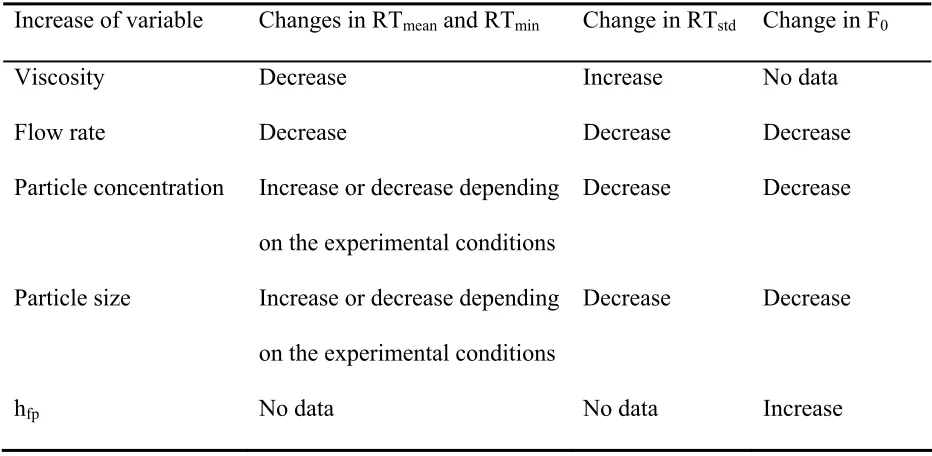
studied the influence of flow rate, particle size and particle concentration on residence time distrubnution. Their results are summarized in Table 1.
Table 1. The effect of different parameters on RTmean, RTmin, RTstd, and F0*
Increase of variable Changes in RTmean and RTmin Change in RTstd Change in F0
Viscosity Decrease Increase No data
Flow rate Decrease Decrease Decrease
Particle concentration Increase or decrease depending on the experimental conditions
Decrease Decrease
Particle size Increase or decrease depending on the experimental conditions
Decrease Decrease
hfp No data No data Increase
2.5 Mathematical Modeling
Since particle temperatures cannot be measured during continuous flow, mathematical modeling helps to deign the holding tube required for desired thermal processing. Modeling helps in overcoming the trial and error process for determining the hold tube size. With out modeling there could be substantial increase in cost of the experiments. In-addition, trial and error method can lead to inadequately simulated commercial practice, leading to disastrous consequences. Modeling simplifies identifying product and process parameters, which have a critical influence on the safety of the processed product. Thus critical control points can be determined while by varying the product and system parameters in the simulation (Sastry, 1997). Mathematical model can detect any unusual behavior during processing by comparing real physical behavior to the model. In addition, mathematical model assist in adjustments needed to correct process validation when a deviation occurs.
2.5.1 Steps in Modeling
A mathematical model is desired to know parameters such as the particle and fluid velocities, particle positions, orientations, and fluid particle temperature
distributions. This is however not feasible due to the limited understanding of the basic physics, lack of precise knowledge of all initial conditions, and limitations in
Most mathematical models (Sastry, 1986; Chandarana and Gavin, 1989), involve the following steps:
1. Prediction of Fluid Temperature: An energy balance on the fluid phase can be used to predict the fluid temperature. Energy enters or leaves the system via the walls and heat exchanger in form of heat.
2. Prediction of Representative Particle Temperature: The heat conduction equation is solved for a particle that is considered the representative of the system. This would be the slowest heating particle in the system. If the lethality for this particle is achieved then rest of the particles in the system can be considered to have acquired the required thermal treatment.
3. Iteration: Since the fluid temperature in step 1 is dependent on the particle temperature predicted in step 2 and vice versa, steps 1 and 2 are iterated until the temperature converges.
2.5.2 Determination of Fluid-to-particle Heat Transfer coefficient (hfp)
Aseptic processing of particulate foods has been hindered due to lack of the understanding of heat transfer between fluid and the particles in a continuous thermal processing system. The understanding becomes critical as it poses a difficult task of measuring the fluid-to-heat transfer coefficient without restricting the moment of the particles (Zareifard and Ramaswamy, 1999). Heat transfer from the fluid to the particles is a function of the thermal and rheological properties of the fluid and relative motion between the particle and the fluid. The boundary layer between the particle and the fluid is represented by a convective heat transfer coefficient (hfp) at the interface (Chandarana
et al., 1989). The value of hfp depends on many factors such as fluid viscosity and
temperature, fluid-to-particle relative velocity, particle size, shape and location (Ramaswamy et al., 1997).
Ramaswamy and Zareifard (2000) used a calorimetric technique to evaluate the effects of flow rate, viscosity, particle size, and temperature on fluid-to-particle heat transfer coefficient in a holding tube. A calorimeter was used to determine the bulk average temperature of a particle. Knowing the medium temperature, initial particle temperature, residence time, and the bulk temperature of the particle, fluid-to-particle heat transfer coefficient was calculated. An interesting result of this study was the effect of temperature on hfp. It was observed that as the temperature increased hfp decreased.
The reason behind this was attributed to the fact that at lower temperature ranges (50 - 70
oC), particle velocity decreased as temperature increased due to a decrease in fluid
Various techniques have been used to estimate hfp under flow conditions. The
methods that resist the particle motion are termed invasive methods, while non-invasive methods involve free flow of a particle. Invasive methods include the thermocouple (Zuritz et al., 1987), and the moving thermocouple (Sastry et al., 1990) technique. In the
thermocouple method, temperature of a stationary particle in a flowing stream is
measured, whereas in the moving thermocouple, a particle with a thermocouple attached is moved through the system at predetermined velocities. Both methods provide the opportunity of recording the particle temperature and using opaque carrier fluids.
However, since the thermocouple attached to the particle restricts the particle movement, the hfp calculated will deviate from its real value (Masesmans et al., 1992; Sastry and
Cornelius, 2002).
Non-invasive methods consist of the relative method (Balasubramaniam and Sastry, 1994b), microbiological method (Hersom and Shore, 1981), use of time-temperature integrators (Weng et al., 1992), remote temperature sensor method
(Balasubramaniam and Sastry, 1996b), liquid crystal method (Stoforos and Merson, 1991), melting point indicator method (Mwangi et al. 1993), and phase change technique.