Development and an Automated Writing Evaluation Program. (Under the direction of Margareta Thomson).
Process-based approaches to writing tend to overlook the self-regulatory skills and motivational beliefs required for proficient writing (Harris, Santangelo, & Graham, 2008) and do not provide the support many students need to develop into effective writers (Graham, Harris, & Mason, 2005; Harris, Graham, & Mason, 2006). Additionally, restricted writing opportunities preclude the sustained deliberate practice students need to develop expertise in writing (Kellogg & Whiteford, 2009). This study examined an intervention that incorporated the self-regulated strategy development model (SRSD, Graham & Harris, 1993) with the automated writing evaluation (AWE) program NC Write. An embedded quasi-experimental mixed methods design was used to determine the impact of the intervention on students’ argumentative writing performance, knowledge, and self-efficacy. Middle school students (N=829) participated in one of three conditions: NC Write + traditional writing instruction, NC Write + SRSD instruction, or a comparison condition.
Results of multi-level models that controlled for pretest performance and predicted posttest performance averaging across students and within teachers showed that students in the NC Write + SRSD instruction condition produced posttest essays that were of a higher quality, longer, and included more basic elements of argumentative essays than students in the other two conditions. Students in the NC Write + traditional writing instruction condition produced higher-quality essays than students in the comparison condition at posttest.
Additional multi-level models were specified to include all essays written by treatment condition students and examine the shape of growth in writing performance. Results showed that students’ growth in writing quality, essay length, and essay elements was best represented by a quadratic growth model. On average, students’ growth in writing performance reached a plateau following the fourth essay written during the intervention. Differences in rates of change and deceleration in writing quality, essay length, and essay elements were not significantly different between the two treatment conditions.
Survey results showed students and teachers held generally favorable opinions of NC Write. Interview results determined that NC Write as well as the overall writing intervention had acceptable social validity. Qualitative data analysis revealed that NC Write provided a framework for deliberate writing practice. In this framework students’ growth in writing performance is supported by a cycle of learning, practice, and feedback. NC Write enabled deliberate practice by affording writing quality feedback, efficiency, and evidence of growth, and supporting teachers’ writing instruction and students’ intrinsic motivation. Limitations of the framework included some aspects of feedback, limited lesson data, and lack of a
by
Corey John Palermo
A dissertation submitted to the Graduate Faculty of North Carolina State University
in partial fulfillment of the requirements for the Degree of
Doctor of Philosophy Curriculum & Instruction
Raleigh, North Carolina 2017
APPROVED BY:
______________________________ ______________________________ Dr. Margareta Thomson Dr. John L. Nietfeld
Committee Chair
______________________________ ______________________________ Dr. Jessica DeCuir-Gunby Dr. Andrew McEachin
BIOGRAPHY
Corey Palermo began his educational career as a lateral entry teacher in the North Carolina public school system. He completed his North Carolina teaching certification coursework at North Carolina Central University in 2006. Mr. Palermo’s interest in
ACKNOWLEDGEMENTS To my wife, Ashley, for years and years of patience. Also to my family for the support and encouragement.
Thanks to Dr. Margareta Thomson and Dr. John L. Nietfeld for their mentoring, support, and friendship.
Thanks to the other the members of my committee, Dr. Jessica DeCuir-Gunby, Dr. Andrew McEachin, and Dr. Meg Blanchard, for their constructive feedback and support.
TABLE OF CONTENTS
LIST OF TABLES ... vi
LIST OF FIGURES ... vii
CHAPTER ONE: INTRODUCTION ...1
Study Purpose ...3
CHAPTER TWO: LITERATURE REVIEW ...4
Self-Regulated Learning ...4
Assumptions of a Self-Regulated Learning Perspective ...6
Self-Regulated Learning ...10
Importance of Self-Regulated Learning ...19
Self-Regulation in Writing ...24
Self-Regulated Learning Interventions ...28
The Self-Regulated Strategy Development (SRSD) Model ...32
Theoretical Perspective ...33
Scope of Model ...34
SRSD Writing Intervention Effects ...36
Feedback ...48
Levels of Feedback ...51
Effects of Feedback ...53
Feedback in Writing ...56
Automated Feedback ...61
Overview of the Present Study ...71
CHAPTER THREE: METHODS ...76
Participants ...76
Study Context: NC Write ...79
Time Frame and Conditions ...86
Instruments and Measures ...87
Procedures ...94
Subjectivity Statement ...111
CHAPTER FOUR: RESULTS ...113
Preliminary Analyses ...114
Main Analyses Overview ...116
RQ1: What changes in students’ writing performance, knowledge, and self-efficacy are associated with NC Write + traditional writing instruction and NC Write + SRSD instruction? ...118
RQ2: What is the shape of growth in students’ writing quality, essay length, and essay elements associated with NC Write + traditional writing instruction and NC Write + SRSD instruction? ...131
RQ3: What are students’ and teachers’ perceptions of the events, value, and strengths and weaknesses associated with NC Write? ...143
Overview of Findings ...165
Limitations of the Present Study ...174
Recommendations for Future Research ...176
REFERENCES ...178
APPENDICES ...203
Appendix A: Research Design Overview ...204
Appendix B: Study Information Email ...205
Appendix C: Pre-/Posttest Directions ...207
Appendix D: Writing Prompts ...209
Appendix E: Sample Scoring Rubric ...211
Appendix F: Writing Knowledge Questions ...212
Appendix G: Writing Self-Efficacy Instrument ...213
Appendix H: Achievement Goals Questionnaire ...214
Appendix I: Survey of Writing Practices ...215
Appendix J: NC Write Surveys ...218
Appendix K: Interview Guides ...220
Appendix L: Coding Scheme ...224
LIST OF TABLES
Table 2.1 Phases and areas for self-regulated learning (Pintrich, 2004)...8
Table 2.2 SRSD instructional stages ...35
Table 2.3 Average effect sizes for SRSD studies at different grades, genres, and instructors (Graham & Harris, 2003)...45
Table 3.1 Participant demographics ...78
Table 4.1 Factor loadings for writing self-efficacy items ...115
Table 4.2 Results from AGQ confirmatory factor analysis ...116
Table 4.3 Means and standard deviations for study variables by condition and time of testing ...117
Table 4.4 Unstandardized coefficients (and standard errors) of multilevel models of writing quality ...121
Table 4.5 Unstandardized coefficients (and standard errors) of multilevel models of essay length ...123
Table 4.6 Unstandardized coefficients (and standard errors) of multilevel models of essay elements ...125
Table 4.7 Unstandardized coefficients (and standard errors) of multilevel models of substantive processes knowledge ...127
Table 4.8 Unstandardized coefficients (and standard errors) of multilevel models of essay element knowledge ...129
Table 4.9 Unstandardized coefficients (and standard errors) of multilevel models of writing self-efficacy ...131
Table 4.10 Unstandardized coefficients (and standard errors) of multilevel growth models of writing quality ...136
Table 4.11 Unstandardized coefficients (and standard errors) of multilevel growth models of essay length ...139
Table 4.12 Unstandardized coefficients (and standard errors) of multilevel growth models of essay elements ...142
Table 4.13 Student perceptions of NC Write at posttest ...144
Table 4.14 Teacher perceptions of NC Write post-intervention ...145
LIST OF FIGURES
Figure 2.1 2 × 2 achievement goal framework (Elliot & MacGregor, 2001) ...11
Figure 3.1 Student essay annotated with spelling and grammar feedback ...81
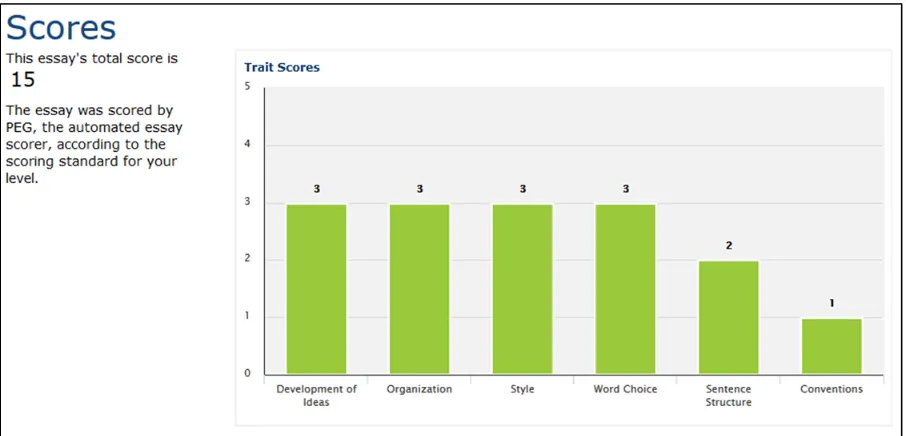
Figure 3.2 Essay total and trait-specific scores ...81
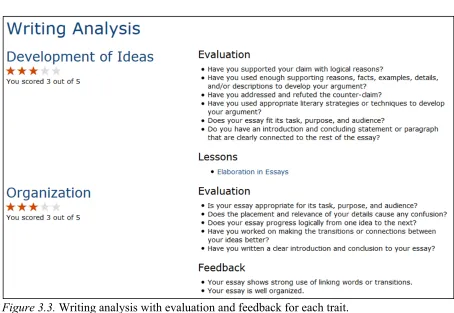
Figure 3.3 Writing analysis with evaluation and feedback for each trait ...82
Figure 3.4 Lessons in NC Write ...83
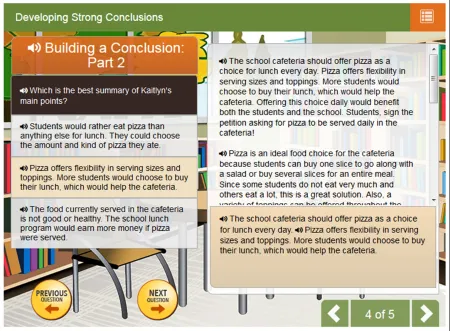
Figure 3.5 Summary lesson interaction ...84
Figure 3.6 Drop-down lesson interaction ...85
CHAPTER ONE Introduction
Researchers have noted the importance of writing well for general academic success, civic involvement, and participation in a global economy (Graham & Perin, 2007b). The Common Core State Standards (CCSS; National Governors Association Center for Best Practices, Council of Chief State School Officers, 2010) includes writing standards aimed at ensuring students master a range of skills and applications each year. The CCSS give
significant emphasis to not only learning to write but also writing to learn (Graham, McKeown, Kiuhara, & Harris, 2012).
Concerns have been raised about the current quality of students’ writing. The National Assessment of Educational Progress (NAEP) writing assessment was computer administered for the first time in 2011 to students in middle and high school. Results showed the majority of students—approximately 74% in eighth grade and 73% in twelfth grade— performing at the Below Basic and Basic levels in writing, indicating only partial mastery of the knowledge and skills necessary for proficient writing at the respective grades (National Center for Education Statistics, 2012). These concerns and results highlight a clear need for interventions aimed at improving students’ writing proficiency.
aware of the limitations associated with such strategies. Though writing instruction in the United States has reflected a shift from a product to a process approach to writing, research suggests that this approach does not provide the amount of support and scaffolding that many students need to develop into effective writers (Graham, Harris, & Mason, 2005; Harris, Graham, & Mason, 2006). Specifically, current process-based approaches to writing instruction, such as the Writers’ Workshop model, do not include the necessary supports to foster the development of self-regulatory skills and motivational beliefs required for proficient writing (Harris, Santangelo, & Graham, 2008).
Study Purpose
The purpose of the present study is to investigate the effects of a writing intervention that incorporates the self-regulated strategy development (SRSD; Graham & Harris, 1993) model with the automated writing evaluation program NC Write on students’ writing quality, knowledge, and self-efficacy. NC Write provides students and teachers with access to writing prompts, electronic graphic organizers, automated scoring, instant feedback, and interactive lessons. Students in one treatment condition use the writing program and receive traditional writing instruction from their teacher; students in a second treatment condition use the
CHAPTER TWO Literature Review
Self-Regulated Learning
The capability to regulate our own behavior has been described as possibly the most important quality of humans (Zimmerman, 2000). Self-regulated learning (SRL) considers regulation, and self-regulation, in the full range of learning contexts, such as the classroom, study setting, or workplace (Pintrich, 2000a; Winne & Hadwin, 1998). SRL is generally considered to encompass the cognitive, motivational, behavioral, and contextual components affecting goal-directed learning, and researchers have proposed that SRL mediates the relations among the learner, the environment, and achievement (Pintrich, 2000a). In this regard SRL is inherently contextual (Winne, 2010), and as an active, constructive process SRL involves monitoring, regulation, and control of these components in order to achieve learning goals. SRL is most commonly conceptualized as a cyclical or recursive process, as present performance offers the learner feedback in the form of constantly varying personal, behavioral, and environmental factors that can be considered in order to adjust future performance (Zimmerman, 2000).
As described by researchers SRL is thus a considerable construct; indeed, Paris and Paris (2001) refer to the “broad and indefinite scope of SRL” (p. 89) considered by
cognitive (Pintrich, 2000a; Zimmerman, 2000), and situated (Boekarts, 2006). Some researchers (e.g., Hadwin, Järvelä, & Miller, 2011; Zeidner, Boekaerts, & Pintrich, 2000) have criticized the profligacy of theoretical perspectives, arguing that this has resulted in confusion about the primary attributes and components of SRL, and has even precluded a common definition of SRL. Regardless, as a theoretical framework SRL has become
influential in both psychological and educational research (Azevedo, Johnson, Chauncey, & Burkett, 2010), and has been extended to other fields of study, such as work-related
knowledge and skills (e.g., Sitzman & Ely, 2011).
SRL researchers theorize that learners are more likely to increase their knowledge when they approach learning tasks strategically and actively manage their learning (Pintrich, 2000a; Winne & Hadwin, 1998, 2008; Zimmermann, 2000, 2011). Boekaerts (2011)
proposed that SRL can be used by learners for task-focused activities such as expanding knowledge and skills, for self-focused activities such as preventing threat and harm, and to protect commitment to the task. SRL is associated with such positive outcomes as academic success, learning motivation, problem solving abilities, and transfer of skills (Pintrich, 2000a; Zimmerman, 2001). Winne (2011) argued that learning is an effortful activity that has the potential for continuous self-regulation because cognitive resources are required to (1) find information that is unknown or cannot be recalled; (2) manage and represent information during learning; and (3) monitor cognition, knowledge, and information through
Assumptions of a Self-Regulated Learning Perspective
Though various models of SRL have been proposed representing a range of theoretical perspectives, they are grounded in shared assumptions about regulation of
learning (Pintrich, 2000a). One assumption of SRL models is that learners actively construct meaning, goals, and strategies based on internal (self) and external (environmental)
information. This assumption is aligned with constructivist views of learning.
A second assumption of SRL models is that learners have the potential to monitor, regulate, and control aspects of their cognition, motivation, and behavior as well as some aspects of their environments. A number of researchers (e.g., Greene & Azevedo, 2007; Pintrich, 2000a; Zimmerman, 2000) have argued that monitoring is a definitive quality of SRL. This is not to suggest that learners will monitor, regulate, and control these
components; in addition to contextual factors there are biological, developmental, and other differences across learners that can constrain the extent to which they are able to self-regulate (Pintrich 2000a, 2004).
Third, models of SRL share the assumption that learners set their own goals, monitor progress towards those goals, and adapt and regulate their cognition, motivation, and
goal orientations which describe more generally why learners pursue tasks (Dweck &
Leggett, 1988; Zimmerman & Kitsantas, 1997). Pintrich (2000a) noted that by examining the “why,” models of SRL incorporate the achievement motivation literature and support a consideration of how the purpose for task engagement affects a learner’s self-regulation. Having goals as standards to support self-evaluation is fundamental to successful SRL, as discrepancies between goals and current performance provide the impetus for strategy change (Hadwin et al., 2011; Muis, 2007).
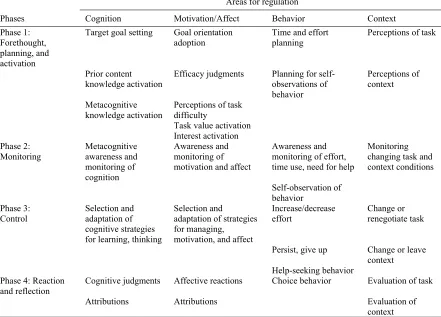
A final commonality across models of SRL is that they depict phases or stages of self-regulation that reflect the processes of planning, monitoring, controlling, and reflection (Pintrich, 2004). Models of SRL tend to have a general chronological structure, while also allowing for recursive and cyclical movement through phases. For instance, Pintrich (2000a, 2004) proposed a four phase model consisting of (1) forethought, planning, and activation, (2) monitoring, (3) control, and (4) reaction and reflection, but noted that these phases should not be interpreted to be firmly hierarchical or linear in structure. This model illustrates how Table 2.1
Phases and Areas for Self-Regulated Learning
Areas for regulation
Phases Cognition Motivation/Affect Behavior Context
Phase 1: Forethought, planning, and activation
Target goal setting Goal orientation
adoption Time and effort planning Perceptions of task
Prior content
knowledge activation Efficacy judgments Planning for self-observations of behavior
Perceptions of context Metacognitive
knowledge activation
Perceptions of task difficulty
Task value activation
Interest activation
Phase 2:
Monitoring Metacognitive awareness and monitoring of cognition
Awareness and monitoring of motivation and affect
Awareness and monitoring of effort, time use, need for help
Monitoring changing task and context conditions
Self-observation of
behavior Phase 3:
Control Selection and adaptation of cognitive strategies for learning, thinking
Selection and
adaptation of strategies for managing, motivation, and affect
Increase/decrease
effort Change or renegotiate task
Persist, give up Change or leave context
Help-seeking behavior
Phase 4: Reaction and reflection
Cognitive judgments Affective reactions Choice behavior Evaluation of task
Attributions Attributions Evaluation of
context
Note. Adapted from “A Conceptual Framework for Assessing Motivation and
these phases work across the regulation of cognition, motivation, behavior, and context (see Table 2.1). Wolters et al. (2003) note that while the Pintrich model functions as a theoretical framework for SRL, not all learning provides the opportunity for such explicit SRL as suggested by the model.
Other researches have conceptualized the structure of SRL similarly. For example, Boekaerts (2006) presented a Dual-Processing Self-Regulation model, characterizing SRL as “a set of dynamic, interacting regulation processes” (Boekaerts, 2011, p. 409). Zimmerman’s current model (Zimmerman & Moylan, 2009) comprises forethought, performance, and self-reflection as interrelated, cyclical phases of SRL. Winne and Hadwin’s (1998) model of SRL is described as a “recursive, weakly sequenced system” (p. 281) which includes the stages of (1) task definition, (2) goal setting and planning, (3) enactment, and (4) adaptation; these stages are shown to be influenced by the common facets of conditions, operations, products, evaluation, and standards across stages.
Self-Regulating Learning
Regulation of cognition. The cognitive components of SRL consist of both cognitive strategies and metacognition. Knowledge of cognition and regulation of cognition comprise metacognition (Brown, 1978). Knowledge of cognition includes declarative, procedural, and conditional knowledge (Paris, Cross, & Lipson, 1984), while regulation of cognition includes the subcomponents of planning, monitoring, and evaluation (Schraw & Mossman, 1995). Though experts can develop automaticity in regulating their learning such that SRL is not always deliberate and metacognitive (Winne, 1997), metacognitive monitoring is a primary component of SRL (Winne, 2001), and researchers have demonstrated that metacognition is important for SRL (Hadwin & Webster, 2013; Zimmerman, 2002).
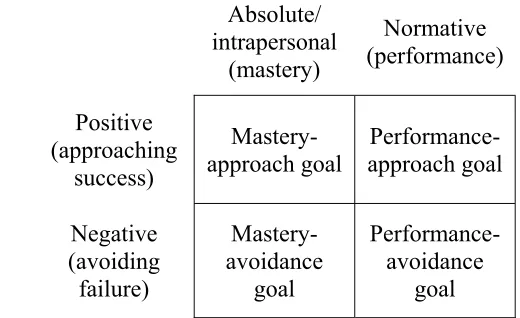
Definition Absolute/ intrapersonal (mastery) Normative (performance) Valence Positive (approaching success) Mastery-approach goal Performance-approach goal Negative (avoiding failure) Mastery-avoidance goal Performance-avoidance goal
Figure 2.1. 2 × 2 achievement goal framework (Elliot & McGregor, 2001).
In a self-regulated form, the activation of prior knowledge is a deliberate act of the learner in considering known content and metacognitive strategies that are relevant to a particular task. For instance, a learner could consider that a rehearsal strategy would be sufficient to remember an arbitrary piece of information for a short time, or that an elaboration strategy would be appropriate to encode more complex information.
Cognitive monitoring depends in large part on metacognition. Metacognitive
knowledge that are likely to be metacognitively monitored, including whether an answer is complete, the degree to which an answer is judged familiar, and an answer’s coherence.
Cognitive control depends on accurate judgments of performance (Boekaerts & Rozendaal, 2010) as monitoring provides the information necessary to support regulation. Thus, while models of SRL generally depict metacognitive monitoring and control as discrete processes, they are conceptualized as being strongly influenced by metacognitive monitoring (e.g., Pintrich, 2000a; Winne & Hadwin, 1998). Conditional knowledge of strategy use is a large part of cognitive control. Students who have procedural and
conditional knowledge of a variety of strategies can regulate their cognition by determining which strategy to use—and why—and determining whether to continue use of an effective strategy or discontinue use of an ineffective one. For example, based on monitoring of learning efforts, a student might control and regulate cognition by continuing use of a particular strategy or switch strategies in an effort to improve progress towards the goal.
Finally, cognitive reaction and reflection is grounded in judgments of task
attribute failure to a personal characteristic and give up, possibly suffering negative emotions and lowered self-efficacy (e.g., Zimmerman & Kitsantas, 1997). Bandura (1997) defined self-efficacy in terms of beliefs about one’s ability to achieve a goal. Self-efficacy is context-specific and thus the level, generality, and strength of self-efficacy can vary by task
(Zimmerman, 1995).
Regulation of motivational beliefs, affect, and emotions. Learners can additionally regulate their motivational beliefs, affect, and emotions. Researchers have identified self-efficacy beliefs, goal orientations, task interest/value beliefs, and outcome attributions as components of achievement motivation. However, SRL researchers have addressed the role motivation plays in SRL to varying degrees. For example, Pintrich’s (2000a) model is grounded in motivational as well as cognitive processes, while motivational regulation is ambiguous in Winne and Hadwin’s (1998) model of SRL. Some authors have thus argued that the regulation of motivation has been underemphasized in the SRL literature (Pintrich, 2000a; Wolters, 2003), and the scarcity of emotion regulation research has also been
Motivational planning and activation involves learners’ judgments and beliefs about the learning task and themselves. Students can consider task-relevant self-efficacy beliefs, their expectations of and value associated with the task (c.f., Eccles et al., 1983; Wigfield & Eccles, 2000; Wigfield, Tonks, & Eccles, 2004), perceptions of task difficulty, and any relevant affective and emotional factors, such as interest or anxiety, as these relate to their understanding of the task.
Monitoring of motivational beliefs, affect, and emotions involves learners’ awareness of these factors in the context of task goals. During task enactment learners can be self-aware of current levels of efficacy, consider present perceptions of task value and difficulty, and attend to prevailing levels of affective and emotional components, such as interest,
disappointment, pride, etc., as these relate to the learning task. These evaluations may suggest realistic present states given the task context, or may reveal disconnects between these factors and learning goals.
themselves they are not prepared for the demands of a task using defensive pessimism. Students may also use maladaptive strategies to control motivation, such as
self-handicapping, by decreasing effort or procrastinating (Wolters, 2003). Emotional control can be seen in the form of adaptive (focus on the positive, reduce tension) and maladaptive (worry, ignore the problem) coping strategies. Learners can control emotions and negative affect by suppressing or expressing emotions, self-denying information or self-distracting away from the task causing the emotional reaction, re-appraising the task, or acquiring and providing social supports (Boekaerts, 2011).
Motivational reaction and reflection involves learners’ emotional reactions to the results of task performance as well as attributions for success or failure. Attributions associated with task performance can be associated with a range of complex emotions. Pekrun et al. (2007) define achievement emotions as emotions directly associated with an achievement activity or outcome of the activity. The authors classify achievement emotions according to whether they are positive (pleasant) or negative (unpleasant) and further to the degree of activation. For example, in reacting to a passing grade on an exam, a student might experience an activating positive emotion (pride), or a deactivating positive emotion (relief). By controlling their attributions, learners can maintain efficacy and motivation for
subsequent tasks (Pintrich, 2000a).
regulation as directly related to regulation of the self. Therefore, regulation of behavior is not consistently included across models of SRL. Pintrich (2000a) argued that since behavior can be observed, monitored, and controlled, it is self-regulatory in nature.
Behavioral planning includes planning for the time and effort one will devote to a task (Pintrich, 2000a). Learners can use time management strategies to allocate time across tasks, and during such planning learners can also consider how they intend to allocate their effort across tasks. Learners may plan for self-observation of their own behavior in order to have a strategy in place for collecting behavioral data during task enactment and to support behavioral monitoring and control.
Behavioral monitoring can be in the form of record-keeping (e.g., logs, diaries), tracking of tasks completed, or output. Self-recordings (Zimmerman, 2000) can be examined in the context of learning goals to evaluate patterns in time and effort expense as well as progress toward goals. Zimmerman (2000) cautioned that complex performances can be quite difficult to monitor accurately due to the amount of information available. Thus it is
important to monitor the right data—and interpret these data accurately—to support regulation of strategy use or effort.
regulation of behavior, and this relation has also been documented empirically (e.g., Marchand & Skinner, 2007; Thompson & Richardson, 2001; Wigfield, Eccles, Schiefele, Roeser, & Davis-Kean, 2006). Both adaptive and maladaptive motivational strategies impact a learner’s effort and thus have implications for behavioral regulation. For example, students can regulate their behavior by employing a self-handicapping behavior such as
procrastination which will regulate behavior (through decreased effort) and motivation (by protecting self-worth).
Behavioral reaction and reflection is most accurately characterized as a cognitive rather than behavioral activity, and reflecting on behavior is an important part of SRL (Pintrich, 2000a). Behavioral reaction and reflection is grounded in judgments of task performance, considering behavioral aspects such as time management and effort expense. These judgments have implications for future task enactment, as learners make decisions about which tasks to engage in and how to approach those tasks (Pintrich, 2000a).
In formal educational contexts, contextual forethought, planning, and activation involve students’ perceptions of teacher expectations and practices, as well as norms
associated with the classroom context and task. Pintrich (2000a) notes that such perceptions may be inaccurate, grounded in stereotypes or other beliefs. Outside of the classroom environment students have greater opportunity to structure their learning contexts—and likely more autonomy to do so than in formal educational settings—and could, for example, organize a study space free from distractions in their homes.
Contextual monitoring involves awareness of aspects of the context relevant to learning tasks. In a formal educational context, it is salient for students to understand classroom rules and policies, particularly those related to task evaluation or reporting of performance such as assessment and grading practices. In informal or individual learning environments, students can consider environmental characteristics as related to task goals. For example, a student may develop an understanding that the local library is not an ideal study setting due to high traffic or noise levels.
Students can afford to control the task and context based on monitoring efforts. Pintrich (2000a) suggests that contextual factors are more difficult to regulate than personal factors. However, in classroom settings students can be involved to varying degrees in the design and administration of rules, policies, and individual tasks so they have opportunities to regulate these aspects of the context. The degree to which a student is able to control or regulate the context depends on the beliefs and pedagogy of the teacher, with a student-centered classroom generally offering greater opportunities for student control than a
one another to use a regulatory process or strategy (Hadwin, Järvelä, & Miller, 2011), such as reminding each other to self-evaluate their work using a rubric. In individual learning
environments, students have greater autonomy to manipulate the environment based on monitoring efforts so that it is conducive to the pursuit of learning goals. This could include restructuring the environment to better organize materials needed for a task or to adjust or relocate the environment to reduce distractions.
Contextual reflection involves assessment of the learning environment as related to task performance, in addition to general evaluations of environmental conditions (Pintrich, 2000a). In formal educational contexts, students can be involved in periodic reflections on class—and classroom—success and areas for improvement, and may offer unsolicited feedback. Learners may also critique the private settings in which they study or complete assignments in light of their performance to determine what might be adjusted during future planning.
Importance of Self-Regulating Learning
complex topics in online environments (Jacobsen, 2008), and “an important survival tool” (Bjork, Dunlosky, & Kornel, 2013, p. 418) for success in modern learning contexts.
The construct of SRL has received extensive research by respected educational psychologists, and empirical results have supported the evolution of theory and been of practical use to educators and learners (Boekaerts, 1999). Studies showing that students’ academic achievement could not be fully explained by their skills and abilities alone piqued interest in examining SRL in educational contexts to explain achievement differences (Zimmerman, 2001). Researchers have come to understand the importance of SRL by
examining the impacts of SRL on academic outcomes, strategy use, achievement motivation, as well as by examining the development of SRL.
A wide range of studies have documented the impact of SRL on academic
achievement (c.f., Boekaerts, Pintrich, & Zeidner, 2005; Dignath & Büttner, 2008; Dignath, Buettner, & Langfeldt, 2008; Efklides, 2011). SRL has also been associated with a variety of academic and learning outcomes. Self-regulated learners have greater engagement in learning and information retention (Delen et al., 2014). SRL has been associated with deep conceptual
understanding due to learners’ cognitive and motivational investment in learning (Zohar &
Ben-David, 2009). Some research has suggested there may be a stronger impact of SRL on
achievement for students with learning disabilities (Graham & Perin, 2007a; Ruban,
McCoach, McGuire, & Reis, 2003). Recent co-regulated learning research has suggested
potential benefits for a learner’s SRL activity and capacity as a result of regulating learning
with peers and in larger social environments, though limited empirical work has been done in
SRL has also been linked to strategy use. Self-regulated learners set hierarchal goals related to both process and product (Zimmerman, 2000). Self-regulated learners, like experts, spend a greater amount of time planning, which results in their higher achievement
(Zimmerman, 2008). Students who plan for and implement a strategy are more likely to attribute failure to strategy use rather than to their own ability (Cleary & Zimmerman, 2001; Zimmerman & Kitasantas, 1997). The use of time management strategies has been observed with high-achieving self-regulated learners (Zimmerman & Martinez-Pons, 1986). The effective use of monitoring strategies can allow for improved SRL (Zimmerman & Moylan, 2009) and improved performance (Thiede, Anderson, & Therriault, 2003; Nietfeld, Cao, & Osborne, 2006). Researchers have also demonstrated the impact of assessment opportunities on self-monitoring and subsequent SRL (Thiede, Redford, Wiley, & Griffin, 2012). Interest enhancement strategies used by self-regulated learners have been associated with greater effort, use of metacognitive strategies, and task value (Wolters, 1999; Wolters & Rosenthal, 2000). High-achieving, mastery-oriented self-regulated learners are most likely to
demonstrate adaptive help-seeking behaviors (Karabenick & Newman, 2006; Roll, Aleven, McLaren, & Koedinger, 2011; Ryan, Patrick, & Shim, 2005). Reflecting on general findings related to SRL and strategy use, Bjork et al. (2013) criticize the over-appreciation of
individual differences and under-appreciation of the role of effort and practice.
Researchers have also examined the relations between SRL and motivation. There is
beliefs have been associated with strategic planning (Cleary & Zimmerman, 2001;
Zimmerman & Martinez-Pons, 1990). Students with higher levels of self-efficacy tend to set higher and more specific goals (Cleary & Zimmerman, 2001), and self-efficacy has been shown to have a causal effect on goal setting (Locke & Latham, 1990; Zimmerman & Bandura, 1994). Furthermore, higher levels of self-efficacy are related to task choice, energy expenditure, and persistence, and negatively related to procrastination (Wolters, 2003; Zimmerman & Cleary, 2006). The relations between self-efficacy and evaluations of
performance or progress have been demonstrated empirically (e.g., Zimmerman & Kitsantas, 1999). Self-efficacy has been conceptualized as an antecedent to achievement goals (Elliot & Church, 1997), and reciprocally related to causal attributions (Zimmerman & Cleary, 2006).
The adoption of mastery goals has been associated with a wide range of self-regulatory and learning benefits: cognitive organization and elaboration strategy use,
comprehension and progress monitoring, intrinsic motivation, positive self-efficacy, adaptive attributions, persistence and recovery from setbacks, achievement, and overall greater self-regulation (Bernacki, Byrnes, & Cromely, 2012; Grant & Dweck, 2003; Elliot, 1999; Senko, Hulleman, & Harackiewicz, 2011; Wigfield et al., 2006; Wolters, 2004). A performance-approach orientation is generally understood as more adaptive than a performance-avoid orientation (Friedel, Cortina, Turner, & Midgley, 2007), though findings examining
performance goals have been mixed. Performance goals in general have been associated with the use of self-handicapping strategies (Urdan, 2004); however, the adoption of performance-approach goals has been shown to be related to some desirable traits, including
motivational components, task value and interest can prompt student engagement and
academic outcomes, and have been shown to be related to the use of SRL (Pintrich & Zusho, 2002; Schunk, Pintrich, & Meece, 2008).
Researchers have also examined emotions as related to SRL. Positive affect is related to effort and strategy use (Linnenbrink & Pintrich, 2002, 2004), while negative activity and outcome emotions have been shown to negatively predict SRL (Pekrun, Goetz, Frenzel, Barchfeld, & Perry, 2011). Positive emotions are an important determinant of students’ SRL and academic success (Mega, Ronconi, & De Beni, 2014; Pekrun et al, 2009). Emotional control can be used to reduce test anxiety, though studies examining the relations between motivational control strategies and academic achievement have shown mixed results (Zeidner, 1998).
The development of SRL has received limited examination. Early evidence suggested that young students have difficulty regulating their learning, and showed developmental shifts in SRL knowledge and abilities throughout the elementary years (Paris & Newman, 1990). However, additional evidence has suggested that even young students are capable of regulating their learning to some extent (Perry, Phillips, & Dowler, 2004; Perry, VandeKamp, Mercer, & Nordby, 2002). Pintrich and Zusho (2002) discussed how development of SRL is influenced by cognitive and motivational factors germane to the learning context.
suggest the paradoxical conclusion that just as students are becoming cognitively able to self-regulate, their motivational beliefs and some aspects of the school context conspire to deflect them away from self-regulation activities” (p. 278).
Self-Regulation in Writing
The act of writing has historically been conceptualized as a recursive process that requires self-regulation, in particular cognitive monitoring (c.f., Bereiter & Scardamalia, 1987; Flower & Hayes, 1980). However, early models of writing have focused on describing cognitive processes as they relate to writing competence (Zimmerman & Kitsantas, 2007). Considering the importance of SRL in translating competence into performance, Zimmerman and Kitsantas (2007) characterize writing as “a social cognitive process wherein writers must be willing to devote personal time and effort to revise text drafts until they communicate effectively” (p. 53). The high cognitive demands and complexity of writing require that students have self-regulatory skills to write well (Graham & Harris, 2000; Zimmerman & Kitsantas, 2007).
writing output or quality against a previously defined goal or by self-imposing consequences, perhaps in the form of a reward after completion of part of the task, be it a writing
assignment, certain number of pages, or chapter. Additionally, a writer may use self-verbalizations in the form of self-questioning or produce self-instructions to refer to during the writing process. Finally, a writer may regulate the context in the form of his or her environment by manipulating the physical space or making available resources either to incorporate or to employ as models. Writers monitor and control environmental, behavioral, and personal processes based on perceptions of feedback and motivational aspects relevant to the writing task (Zimmerman & Risemberg, 1997). Researchers have provided numerous examples of writing self-regulation strategies used and discussed by famous novelists, poets, and professional writers (see Zimmerman & Kitsantas, 2007; Zimmerman & Risemberg, 1997). Furthermore, studies of professional writers have shown expert writing performance to include SRL behaviors, such as prewriting and revision strategies to manage cognitive load, environmental structuring to reduce distraction, and emotional regulation to support persistence (Kellogg, 2006).
It thus comes as no surprise that researchers have found links between SRL and effective writing (e.g., Graham & Harris, 2000; Zimmerman & Kitsantas, 1999).
The use of mental imagery has shown positive impacts on writing quality (Jampole, Matthews, & Konopak, 1994). Hacker, Keener, and Kircher (2009) emphasized the importance of metacognitive monitoring and control for writing, arguing that writing is applied metacognition. Empirical research has demonstrated the impact of metacognition on writing performance (Schunk & Zimmerman, 2007; Zimmerman & Bandura, 1994).
Observational learning about writing prompts SRL strategy use (Braaksma, Rijkaarsdam, Van den Bergh, & van Hout-Wolters, 2004), and has been shown to have a positive impact on writing performance (Zimmerman & Kitsantas, 2002).
Self-efficacy has also been shown to be a powerful predictor of writing performance. Writing self-efficacy mediates the relations between writing apprehension and achievement, and explains variance in writing performance controlling for initial writing performance, grade, and gender (Pajares, Britner, & Valiante, 2000; Zimmerman & Bandura, 1994). On average, females are found to have higher writing self-efficacy than males (Andrade, Wang, Du, & Akawi, 2009; Pajares, Miller, & Johnson, 1999). Self-efficacy is thought to be closely linked to interest (Ainley, Hidi, & Berndorff, 2002; Zimmerman & Kitsantas, 1999).
model of writing self-efficacy, comprised of self-efficacy for ideation, conventions, and writing self-regulation.
Researchers have documented connections between both goal setting strategies and goal orientation and writing self-efficacy. For example, Schunk and Schwartz (1993) found that students who set process goals aimed at effective strategy use reported higher levels of writing self-efficacy than students who set general goals. Students who additionally received feedback reported the highest levels of self-efficacy at posttest (Schunk & Schwartz, 1993). Pajares, Britner, and Valiante (2000) found that performance-approach goals were associated with general writing self-efficacy and self-efficacy related to using self-regulatory strategies for 7th and 8th grade students but not younger children, leading the authors to conclude that performance-approach goals may be more facilitative as students progress through middle school.
Finally, despite the limited longitudinal research examining the development of SRL skills and abilities in writing, the available evidence suggests that writers’ SRL improves with age and task experience (Graham & Harris, 2000; Pintrich & Zusho, 2002). For example, researchers have documented improvements in writing planning (Bereiter & Scardamalia, 1987) and conceptualizations of writing (Graham, Schwartz, & MacArthur, 1993) over time.
SRL-based strategy instruction (ES=1.14), among other treatments. Graham et al. (2012) examined writing interventions conducted with elementary grade students and reported positive effects on writing quality associated with creativity/imagery instruction (ES=0.70), product goals (ES=0.76), and strategy instruction (ES=1.02), among others. The authors determined that the addition of SRL instruction to strategy instruction further increased writing quality (ES=0.50). Graham and Harris (2000) proposed that overall, teaching students SRL strategies improves their writing performance.
Self-Regulated Learning Interventions
Given the diverse representation of theoretical perspectives in models of SRL, Paris and Paris (2001) argued that theoretical foundations of SRL are less important to educators than practical applications for teaching and learning. This can be seen in the breadth of interventions aimed at improving students’ SRL. The majority of the SRL research has been conducted with students in the upper elementary grades through college (Perry et al., 2004), thought recent intervention studies have shown that elementary grade students can be taught to effectively regulate their learning (Dignath et al., 2008).
instruction to more balanced models that situate strategy instruction that includes procedural and conditional knowledge about strategies in learning contexts conducive to the
development of SRL (Boekaerts & Corno, 2005; Lin, 2001). For example, Spörer and Schünemann (2014) showed positive effects of strategy implementation and outcome regulation procedures in a reciprocal teaching context. In the context of an elementary writing program, Harris, Graham, and Mason (2006) documented impacts of a strategy training intervention that included self-regulatory knowledge and process instruction as well as procedures to support students’ motivation on students’ writing performance and
knowledge.
Recent efforts have focused on designing computer-based learning environments (CBLEs) that scaffold students’ SRL and metacognition (Azevedo, Johnson, Chauncey, & Burkett, 2010; Roscoe, Segedy, Sulcer, Jeong, & Biswas, 2013), based on the importance of incorporating conceptual, procedural, metacognitive, and strategic scaffolds to help students achieve learning goals (Azevedo & Hadwin, 2005). When sufficient scaffolds are not in place in CBLEs students have difficulty regulating their learning, which ultimately constrains their conceptual understanding (Azevedo, Moos, Greene, Winters, & Cromley, 2008). The freedom to control learning that CBLEs offer students is a double-edged sword; while it helps to maintain student engagement in complex tasks, students may not engage with aspects of CBLEs designed to support SRL (for a review see Roscoe et al, 2013). Students may game CBLEs intentionally or unintentionally, completing learning tasks by
Despite the design challenges, researchers have successfully supported students’ SRL and performance in CBLEs using a range of interventions such as interactive videos (Delen et al., 2014), open-ended teachable agent systems (Leelawong & Biswas, 2008), and interim testing experiences (Soderstrom & Bjork, 2014). The extant research examining SRL in CBLEs is focused at the undergraduate level, though there are an increasing number of CBLEs being designed to support younger students’ SRL. Tsai, Shen, and Fan (2013) examined online SRL studies published in selected journals from 2003-2012 and found that only 10.8% sampled elementary and middle school students. Additionally, the majority of the research in this field has been purely quantitative. Tsai et al (2013) reported that of the same studies, only 4.3% were qualitative and 19.6% were mixed-methods, suggesting a need for more diverse methodologies to investigate how to improve students’ SRL in the context of CBLEs.
Three recent meta-analyses have described the overall effectiveness of SRL
Dignath and Büttner (2008) examined 74 studies conducted in both elementary and middle schools and calculated an overall weighted average effect size of SRL interventions on academic performance, strategy use, and motivational outcomes of 0.69. Interventions for elementary school students had the greatest impact on academic performance and strategy when they were based on social-cognitive theories and emphasized motivational aspects of SRL, while interventions for middle school students had the greatest impact on academic performance and strategy use when they were based on metacognitive theories. Interventions had greater effects for strategy use when they supported students’ procedural and conditional knowledge of strategies. Dignath and Büttner (2008) found weighted effect sizes for
cognitive, metacognitive, and motivational strategy use were higher in middle school (0.88) than elementary school (0.72) settings. The authors also found that SRL interventions achieved lower effects in reading/writing contexts compared to math and other subjects. These findings may be explained by younger students’ difficulty applying metacognitive strategies to cognitively demanding contexts like reading and writing in which they tend to be inexperienced (Alexander, Graham, & Harris, 1998).
strategies focused on planning and task value overall effective, hypothesizing that such interventions addressed motivational aspects of learning.
A short list of best practices can thus be drawn from the SRL intervention literature. Interventions should combine cognitive, metacognitive, and motivational strategy training (Boekaerts & Corno, 2005; Dignath et al., 2008). They should include appropriate scaffolds to support SRL, in particularly in CBLEs, and should provide students with feedback about learning strategies. Finally, interventions should offer opportunities for students to achieve multiple goals in the context of complex tasks (Perry et al., 2002, 2004).
The Self-Regulated Strategy Development (SRSD) Model
The Self-Regulated Strategy Development (SRSD) model (Graham & Harris, 1993) was designed to help students develop both the cognitive and self-regulatory skills necessary for proficient performance in an academic domain. SRSD acknowledges skill development as a complex task that affects students’ content knowledge, strategic knowledge, and motivation, in line with current theories of learning (Alexander, Graham, & Harris, 1998). Based on this premise, SRSD reflects many of the best practices drawn from the SRL intervention literature, in that it combines different types of strategy instruction to support students’ development of knowledge and SRL procedures in the context of complex academic tasks. SRSD has been used in a number of content areas, including math, reading, and writing (Wong, Harris, Graham, & Butler, 2003). The SRSD writing model is the focus of the remainder of this section.
self-regulation, and be supported in the development of their self-regulatory knowledge and abilities throughout writing instruction, in order to develop the ability to regulate their learning independently. Additionally, the SRSD model is designed to address students’ motivational beliefs, by supporting their self-efficacy and encouraging adaptive attributions. Instructional application of the SRSD writing model emphasizes active learning supported by appropriate scaffolds, valuing of writing and the relations between effort and writing quality, and an instructional environment that prioritizes writing by providing numerous
non-threatening writing opportunities, modeling adaptive beliefs, and providing students with feedback. SRSD is characterized as responsive instruction (Harris et al., 2008b), as strategies and instructional components are intended to be adapted to meet students’ learning needs. Additionally, SRSD is designed to be criterion-based, in that students demonstrate
proficiency with strategy use and self-regulatory procedures at each stage of instruction before proceeding to the next.
Theoretical Perspective
The original conception of the SRSD model was largely informed by the
(Harris et al., 2008b). As Harris et al. (2008b) explain, “an underlying premise of SRSD is the necessity to integrate diverse, validated pedagogical approaches, regardless of whether their theoretical bases are viewed by some as discordant” (p. 399). SRSD has thus evolved to reflect a wide variety of theoretical perspectives, including social cognitive, information processing, and sociocultural, and continues to be informed by emerging research related to instructional practices, the development of academic knowledge and skills, learner
characteristics, writing expertise, and self-regulation (Harris et al., 2008b). Scope of Model
The SRSD model for writing includes (1) explicit instruction in narrative, expository, and opinion/persuasive writing purposes presented over six stages of instruction (described below); (2) explicit instruction in SRL strategies; and (3) development of positive attitudes towards writing and writing self-efficacy (Harris, Graham, & Mason, 2003; Santangelo, Harris, & Graham, 2007). The self-regulatory skills targeted by SRSD instruction include goal setting, self-monitoring, self-assessment, self-instruction, self-reinforcement, imagery, and managing the writing environment (Harris et al., 2008b). The emphasis on
self-regulatory skills provides students with tools to them help manage their use of writing strategies and the writing task and allows students to collect evidence of their own writing growth (Harris et al, 2006).
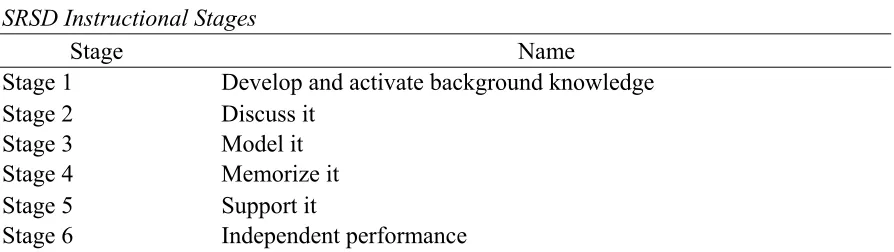
increased time to provide background knowledge and teach the strategy prior to modeling strategy use (Lane et al., 2008). The SRSD instructional stages are presented in Table 2.2. Scaffolded support is faded across the stages of instruction in a gradual release of
responsibility, so that students apply a strategy independently by the end of instruction.
Table 2.2
SRSD Instructional Stages
Stage Name
Stage 1 Develop and activate background knowledge
Stage 2 Discuss it
Stage 3 Model it
Stage 4 Memorize it
Stage 5 Support it
Stage 6 Independent performance
appropriately?”), and self-control (“I can do this if I complete one part at a time”) are also modeled, and students can develop personalized self-instructions. The goal of the next stage of instruction is for students to commit the strategy to memory, both in terms of the strategy process and self-statements they have associated with it. Next, students practice use of the strategy with faded support until they are able to demonstrate proficient strategy use. The focus of the final stage of instruction, where students are using the strategy independently, is on evaluation of strategy use and writing performance. SRSD instruction encourages the maintenance and generalization of writing and self-regulatory strategies in a number of ways, such as by having students identify opportunities to use strategies in other settings and
evaluate the success of strategy use (Harris et al., 2008b). SRSD Writing Intervention Effects
using grade-specific low, middle, and high anchor papers. Quality scores are derived as the average of two raters’ scores. Length is measured by the number of words in a composition; composing time may also be captured. Elements comprise genre elements in story writing (e.g., main characters, characters’ actions to achieve goals, consequences of actions, etc.), and basic elements of persuasive writing, including the premise, reason, examples, and conclusion. Elements are scored awarding a 0 if the element is absent and 1 if it is present, with the exception of the persuasive writing elements of reasons and examples, which are scored awarding a 1 for each unique reason and example present. Story grammar has been measured similarly to elements, assessing both the presence and overall quality of elements.
Writing knowledge surveys have been used as pre- and post-measures of students’ knowledge about good writing and the behaviors of good and poor writers as well as
knowledge about planning. Additional open-ended items have been used to assess students’ genre knowledge (see Graham et al., 1993; Graham et al., 2005). These items tend to be administered to students verbally. Student responses are divided into unique idea units, and classified according to whether they relate to production procedures, substantive processes, motivation, abilities, and/or other for writing knowledge, and production procedures,
elements, and/or other for genre knowledge. A variety of writing self-efficacy measures have been employed in SRSD research. Graham et al. (1993) developed a 10-item writing self-efficacy measure; this scale has been employed in a number of SRSD studies, and has been adapted based on study contexts (e.g., Graham et al., 2005). This instrument is administered to students verbally, and students record their responses on 4-point Likert scales. The Writing Skills Self-Efficacy Scale (Pajares & Valiante, 1999) has also been used to assess students’ self-efficacy at pre- and posttest. Additionally, teachers have rated students’ intrinsic motivation and effort before and after an intervention, following procedures described by Gottfried (1990) and MacIver, Stipek, and Daniels (1991), respectively. Teachers rate both on 11-point scales, and do not have access to their pretest ratings when making posttest ratings.
teacher interviews and observations. The purpose of these data is to determine participants’ perceptions of the events, value, and strengths and weaknesses associated with interventions (Graham & Harris, 2014). However, as suggested by the nature of the measures described above, the published SRSD writing studies have a heavy quantitative focus and there are few examples of mixed methods designs (for exceptions see Mason, Kubina, Kostewicz, Cramer, & Datchuk, 2013; Mckeown, 2012; Zumbrunn & Bruning, 2013). Thus, the SRSD research literature could be enriched by additional mixed methods studies which incorporate a diverse variety of measures and perspectives with the goal of further improving SRSD treatments and better understanding the effects of SRSD interventions in terms of learners’ writing performance, knowledge, self-regulatory strategy use, motivational beliefs, and the social validity of interventions.
The SRSD writing model has been successfully implemented in a variety of
instructional contexts, including elementary and middle school whole-classroom instruction, small groups, and one-on-one settings (Graham & Harris, 2003). Previous studies have suggested that students develop proficiency with strategy use after 8-12 lessons of
approximately 30–40 minutes each; lessons are generally taught three to five days per week (Graham & Harris, 2003; Harris et al., 2008b). Results of previous SRSD research have suggested that struggling writers in particular do not demonstrate significant improvements in writing performance until the final stage of instruction (Harris et al., 2008b).
middle school students (Festas et al., 2015, Graham & Harris, 2003; Harris et al., 2006), high school students (Jacobson & Reid, 2012) and adults (Berry & Mason, 2012). SRSD has shown to be effective for gifted writers (Albertson & Billingsley, 1997), regularly achieving writers (De La Paz & Graham, 2002), struggling writers (Harris et al., 2006), students with learning disabilities (De La Paz, 1999), students with autism spectrum disorders (Asaro-Saddler, 2014), and students with behavioral and emotional disabilities (Ennis, Jolivette, Terry, Fredrick, & Alberto, 2015). There is some evidence that the effects of SRSD may be most pronounced for lower-performing students (Graham & Perin, 2007b). Significant gains resulting from the SRSD model of instruction have been documented in the areas of (1) writing quality, (2) writing knowledge, (4) writing self-efficacy (4) approach to writing, and (5) inclusion of genre elements. Furthermore, SRSD interventions have shown to improve students’ strategy use, including those related to planning, organizing, revising, and self-monitoring (Harris et al., 2008b). There is some evidence for the impact of SRSD instruction on students’ intrinsic motivation and effort (Harris, Graham, & Adkins, 2015), though to date these measures have been based on teacher perceptions. Researchers have also documented maintenance effects over time and found generalization effects of SRSD instruction across different settings, teachers, and writing media.
condition, and the treatment effects associated with story writing continued at maintenance. The authors did not find incremental effects of the peer support component added to SRSD instruction on writing quality or knowledge about good writing and the behaviors of good and poor writers; nonetheless, they did find that peer support impacted students’ knowledge about planning and resulted in transfer effects to personal narrative and informative writing.
Brunstein and Glaser (2011) employed a path-analytic model in an effort to identify the mediators of SRSD writing strategies and writing performance. The authors assigned fourth grade students to SRSD and strategy-only conditions; the latter only differed from the SRSD condition in that it did not include self-regulatory supports. Students in the SRSD condition demonstrated greater writing knowledge, higher writing self-efficacy, and greater use of planning and strategy-related revisions, and wrote higher-quality stories than students in the strategy-only condition at both posttest and maintenance. Path analyses showed that the addition of self-regulatory supports to strategy instruction most directly improved students’ story planning, which supported students’ deep-level revisions to text and ultimately impacted the quality of their stories. Both writing knowledge and self-efficacy also predicted story planning, and thus had an indirect impact on story quality. Brunstein and Glaser’s (2011) findings illustrate how SRSD interventions influence students’ declarative and procedural knowledge in addition to their motivational beliefs and how these variables work together to impact writing performance.
showed that planning and sentence combining instruction positively impacted students’ respective use of those skills and was associated with longer and higher-quality opinion essays compared to the control condition. At posttest, stronger effect sizes were seen for planning than sentence combining, and planning instruction effects generalized to summary writing while the effects of sentence combining instruction did not. Though there had been no relations between self-efficacy and writing quality for any of the conditions at pretest the authors found moderate correlations between writing self-efficacy and writing quality for both treatment conditions at posttest. Limpo and Alves (2013) hypothesized that the strategy instruction, and the focus on monitoring in particular, resulted in more accurate self-perceptions of students’ ability and helped to bring students’ self-efficacy beliefs more in line with their actual performance.
Ennis et al. (2015) used a piecewise hierarchal linear model (HLM) to investigate the impact of SRSD instruction for persuasive writing on the writing performance and academic engagement of middle and high school students at risk for emotional and behavioral
Finally, Hacker et al. (2015) used a quasi-experimental design to compare the effects of SRSD instruction conducted in one school to the effects of traditional writing instruction conducted in another school. Seventh grade students in both schools were preparing for a high-states persuasive writing assessment. Essays written online at pretest, posttest, and maintenance time points were assigned writing quality scores by the Project Essay Grade (PEG) scoring engine and growth was analyzed using HLM. Results showed no difference between the writing quality scores of student in the SRSD and comparison conditions at posttest, but students in the SRSD condition produced higher-quality essays at maintenance.
While the aforementioned studies provide evidence of the effectiveness of SRSD instruction for particular students in particular contexts, the overall effectiveness of SRSD has been verified in several meta-analyses (i.e., Graham, 2006, Graham & Harris, 2003; Graham et al., 2012; Graham & Perin, 2007a). Each of these meta-analyses examined the impacts of SRSD writing instruction on writing performance. Graham and Harris (2003) examined SRSD studies exclusively, focusing on impacts of the writing intervention model for students with learning disabilities (LD). Graham (2006), Graham and Perin (2007a), and Graham et al. (2012) examined writing intervention studies more broadly to examine impacts of instruction on writing performance. This allowed for comparing the reported effects of SRSD studies to those of non-SRSD studies; however, limitations associated with coding studies based on whether they used the SRSD model have been described in the literature. As described above, the SRSD model provides a framework for instruction and is not
such as scaffolded instruction and interactive learning. Distinguishing characteristics of non-SRSD studies are that they are not criterion-based and do not emphasize SRL (Graham, 2006; Graham & Perin, 2007a).
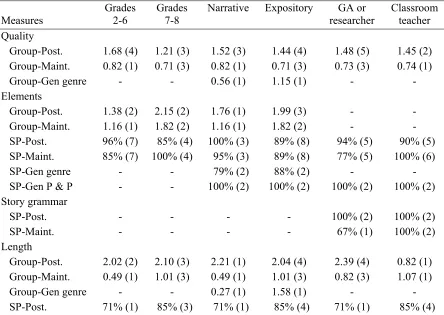
Graham and Harris’ (2003) meta-analysis comprised the SRSD writing intervention studies conducted through 2002, all of which were conducted in grades 2–8. Based on an examination of planning strategies, the authors reported effect sizes for group designs of 1.47 for quality, 1.87 for elements, and 2.07 for length. Additionally, for single-subject designs, the average percentage of non-overlapping data (PND) points (see Scruggs & Mastropieri, 2001), was 97% for quality, 92% for elements, 100% for story grammar (all very effective treatments), and 82% for length (effective treatments). Graham and Harris (2003) also concluded that SRSD planning strategy instruction is effective for helping students with LD improve their writing, based on average effects sizes for group designs of 1.14 for quality, 1.86 for length, and 2.15 for elements, and average PNDs of 89 or higher for all variables. SRSD revising strategy instruction was found to have moderate to strong impacts on both the total number of revisions and the number of substantive revisions made by students.
Table 2.3
Average Effect Sizes for SRSD Studies at Different Grades, Genres, and Instructors
Measures
Grades 2-6
Grades 7-8
Narrative Expository GA or researcher
Classroom teacher Quality
Group-Post. 1.68 (4) 1.21 (3) 1.52 (3) 1.44 (4) 1.48 (5) 1.45 (2) Group-Maint. 0.82 (1) 0.71 (3) 0.82 (1) 0.71 (3) 0.73 (3) 0.74 (1)
Group-Gen genre - - 0.56 (1) 1.15 (1) - -
Elements
Group-Post. 1.38 (2) 2.15 (2) 1.76 (1) 1.99 (3) - - Group-Maint. 1.16 (1) 1.82 (2) 1.16 (1) 1.82 (2) - - SP-Post. 96% (7) 85% (4) 100% (3) 89% (8) 94% (5) 90% (5) SP-Maint. 85% (7) 100% (4) 95% (3) 89% (8) 77% (5) 100% (6)
SP-Gen genre - - 79% (2) 88% (2) - -
SP-Gen P & P - - 100% (2) 100% (2) 100% (2) 100% (2) Story grammar
SP-Post. - - - - 100% (2) 100% (2)
SP-Maint. - - - - 67% (1) 100% (2)
Length
Group-Post. 2.02 (2) 2.10 (3) 2.21 (1) 2.04 (4) 2.39 (4) 0.82 (1) Group-Maint. 0.49 (1) 1.01 (3) 0.49 (1) 1.01 (3) 0.82 (3) 1.07 (1)
Group-Gen genre - - 0.27 (1) 1.58 (1) - -
SP-Post. 71% (1) 85% (3) 71% (1) 85% (4) 71% (1) 85% (4)
Note. Narratives include stories or personal narratives. Expository included opinion and explanation essays. Group, group design; SP, single-participant design; Post., post-test; Maint., maintenance; Gen. genre, generalization to genre; Gen. P & P, generalization to a different person or place. Adapted from “Students with learning disabilities and the process of writing: A meta-analysis of SRSD studies,” by S. Graham & K. R. Harris, 2003,
Handbook of learning disabilities, p. 340. New York: Guilford Press.
size for the SRSD studies at maintenance was 1.15; unfortunately, too few non-SRSD studies collected maintenance data to support comparisons. Single-subject SRSD designs did not differ significantly from non-SRSD single-subject studies in their effects, however. The author concluded that the effects of writing strategy instruction in general appear robust— given the overall impact seen across students, grades, genres, cognitive process and strategies taught—and the SRSD model appears to be a particularly effective writing intervention.
In an effort to determine which instructional practices improve the quality of students’ writing, Graham and Perin (2007a) conducted a meta-analysis of grade 4–12 writing
intervention studies. The authors included all studies previously contained in the Graham and Harris (2003) and Graham (2006) meta-analyses, in addition to other high-quality
experimental and quasi-experimental design studies, for a total of 154 effect sizes. They found the SRSD model to have a strong, positive effect on students’ writing, and reported an average weighted effect size of 1.14 for SRSD studies compared to 0.62 for non-SRSD studies. They concluded that strategy instruction in general had a strong impact on writing quality (ES=0.82), and was particularly beneficial for struggling writers and when delivered via the SRSD model. The authors called for additional research to determine why the SRSD model of writing instruction is associated with such large effect sizes.
able to test the effect of adding self-regulation instruction to strategy instruction from results of both SRSD and non-SRSD studies, and calculated a weighted effect size of 0.50. Graham et al. (2012) posited that this empirical evidence for the added benefit of teaching students how to regulate their writing strategy use helps to explain the larger effects that have been associated with SRSD interventions compared to writing instruction that does not include support for students’ SRL.
Despite the positive effects of writing interventions including those based on the SRSD model described above, researchers have called for improvements to the writing intervention research. The quality of the writing intervention research has been found to vary widely, and has criticized as being weak overall (Graham & Perin, 2007a; Graham et al., 2012; Graham & Harris, 2014). For example, Graham and Perin (2007a) point out the need for random assignment, controls for teacher effects, pretests to determine group equivalence, and measures of treatment fidelity to improve measures of writing instruction effectiveness. The writing intervention literature is replete with studies employing weak comparison conditions (Graham & Perin, 2007a), as effects may be confounded by differences in instructional time, type of writing assignment, or instructor experience between treatment and control conditions (Graham & Harris, 2014). Researchers should take steps to control for bias when evaluating responses, for example by having students use word processing
however, this assumption is violated when classes are assigned to conditions and students used as the unit of a