AN ENHANCED PERFORMANCE MODEL FOR METAMORPHIC COMPUTER VIRUS CLASSIFICATION AND DETECTION
BABAK BASHARIRAD
A thesis submitted in fulfilment of the requirements for the award of the degree of
Doctor of Philosophy (Computer Science)
Faculty of Computing Universiti Teknologi Malaysia
iii
DEDICATION
To My MOTHER, who supported me as a firm mountain overall duration of my life,
Thanks for your cares and inspirations, Mom
To My FATHER, for his love, cares and encouragement
With Special Thanks
To My BELOVED WIFE, NAHID, who accommodated me in all circumstances, helped
me to grow spiritually and intellectually, Thanks for your love and patience
To My WONDERFUL SON, MANI, who is all my life, His love inspired me to work hard
ACKNOWLEDGEMENT
I would like to express my deepest gratitude to my dear supervisor Assoc. Prof. Dr. Maslin Masrom for her valuable guidance, patience, and encouragements. This research would never have been completed without her advices and supports. She always was ready to spend her time to counsel me, and to improve the thesis report, patiently and cordially.
v
ABSTRACT
Metamorphic computer virus employs various code mutation techniques to change its code to become new generations. These generations have similar behavior and functionality and yet, they could not be detected by most commercial antivirus because their solutions depend on a signature database and make use of string signature-based detection methods. However, the antivirus detection engine can be avoided by metamorphism techniques. The purpose of this study is to develop a performance model based on computer virus classification and detection. The model would also be able to examine portable executable files that would classify and detect metamorphic computer viruses. A Hidden Markov Model implemented on portable executable files was employed to classify and detect the metamorphic viruses. This proposed model that produce common virus statistical patterns was evaluated by comparing the results with previous related works and famous commercial antiviruses. This was done by investigating the metamorphic computer viruses and their features, and the existing classifications and detection methods. Specifically, this model was applied on binary format of portable executable files and it was able to classify if the files belonged to a virus family. Besides that, the performance of the model, practically implemented and tested, was also evaluated based on detection rate and overall accuracy. The findings indicated that the proposed model is able to classify and detect the metamorphic virus variants in portable executable file format with a high average of 99.7% detection rate. The implementation of the model is proven useful and applicable for antivirus programs.
ABSTRAK
vii
TABLE OF CONTENTS
CHAPTER TITLE PAGE
DECLARATION ii
DEDICATION iii
ACKNOWLEDGEMENT iv
ABSTRACT v
ABSTRAK vi
TABLE OF CONTENTS vii
LIST OF TABLES xii
LIST OF FIGURES xvii
LIST OF ABBREVIATIONS xxiv
LIST OF APPENDICES xxv
1 INTRODUCTION 1
1.1 Introduction 1
1.2 Background of the Study 4
1.3 Problem Statement 7
1.4 Purpose of the Study 8
1.5 Objectives of the Study 8
1.6 Significance of the Study 8
1.7 Scope of the Study 9
1.8 Structure of the Thesis 9
2 LITERATURE REVIEW 11
2.1 Introduction 11
2.2 Evolution of Viruses According to Concealment Strategy 12
2.2.1 Encrypted Virus 16
2.2.2 Oligomorphic Virus 20 2.2.2.1 A Case Review: Win95.Memorial 22
2.2.3 Polymorphic Virus 23
2.2.3.1 Polymorphic Mechanism 24
2.2.3.2 A Case Study on DOS Polymorphic Virus:
The 1260 25
2.2.3.3 A 32-bit Polymorphic Virus:
Win95.Marburg 27
2.2.4 Metamorphic Virus 27
2.2.4.1 An Overview of Techniques and
Mechanism 30
2.2.4.2 A Simple Metamorphic Virus 34 2.3 Code Obfuscation in Metamorphic Viruses 36
2.3.1 Garbage Code Insertion 37
2.3.2 Register or Variable Usage Exchange 39
2.3.3 Instruction Replacement 40
2.3.4 Instruction Permutation 42
2.3.5 Code Transposition 43
2.4 Detection Techniques for Metamorphic Viruses 44
2.4.1 Geometric Detection 45
2.4.2 Wildcard String and Half-Byte Scanning 46
2.4.3 Code Disassembling 47
2.4.4 Code Emulation 49
2.4.4.1 Searching Patterns using Negative or
Positive Features 50
2.4.4.2 Emulator-Based Heuristics 50
2.4.4.3 Dummy Loops Detection 51
2.4.4.4 Stack Decryption Detection 51 2.4.5 Code Transformation Detection 52
2.4.6 Subroutine De-permutation 56
2.4.7 Regular Expressions and DFA 57
2.5 Static vs. Dynamic Virus Detection 61
2.6 Classification 61
2.6.1 Supervised vs. Unsupervised Learning 64
2.6.2 Sequence Classification 65
ix
2.7 Hidden Markov Model 67
2.7.1 A Simple Example 67
2.7.2 Notation 69
2.7.3 The Three Main Problems in HMM 72
2.7.4 Algorithms 73
2.7.4.1 Forward Algorithm: The Likelihood of
Observing a Sequence 73
2.7.4.2 Viterbi Algorithm: The Most Probable
Sequence of States 76
2.7.4.3 The Baum-Welch Algorithm: Finding
Parameters of the Optimal Model 77 2.8 Hidden Markov Model-based Classification 81
2.9 Related Works 82
2.10 Gap of the Study 89
2.11 Summary 90
3 RESEARCH METHODOLOGY 92
3.1 Introduction 92
3.2 Research Paradigm and Methodology 92
3.3 Research Framework 98
3.3.1 Independent Variables 98
3.3.2 Mediating Variables 98
3.3.3 Dependent Variables 100
3.4 Research Design 100
3.5 Proposed Method 102
3.5.1 HMM Module 105
3.5.1.1 Training Process 106
3.5.1.2 Classifying Process 108
3.5.2 Data Set 109
3.5.3 Feature Extraction (PE Analyzer) 110
3.6 Evaluation of Proposed Method 111
3.6.1 Performance Measurement 112
3.6.2 Five-Fold Cross Validation 115
3.7 Instrumentation 116
3.8 Assumptions and Limitations 117
4 EXPERIMENTAL DESIGN 119
4.1 Introduction 119
4.2 Experimental Setup 119
4.2.1 Testbed 120
4.2.2 Hardware 122
4.2.3 Software 123
4.3 Feature Extraction by Developing PE Analyzer Module 124 4.3.1 Format of Portable Executable Files 126
4.3.1.1 MS DOS Header 128
4.3.1.2 PE Header 129
4.3.1.3 Optional Header 130
4.3.1.4 Section Header 131
4.3.1.5 Sections 132
4.3.2 Code Segment Extractor 133
4.3.3 Opcode Sequence Generator 137
4.4 Data Set 139
4.5 Hidden Markov Model Training 142
4.5.1 Underflow problem and Scaling the Algorithm 143 4.6 Classification Test Implementation 145
4.6.1 Threshold Criteria 145
4.7 Summary 147
5 RESULTS AND ANALYSIS 148
5.1 Introduction 148
5.2 Results 148
5.3 Impact of Threshold on False Alarms 152
5.4 Performance Measurements 157
5.5 Threshold 159
5.6 Evaluation and Justification 161
5.6.1 Comparison of the Performance with the Previous
Works 162
5.6.1.1 Comparison of all 20 Models Performances 162 5.6.1.2 Comparison of Average Measures 166 5.6.2 Justification by Commercial Antivirus Scanners 169
xi
6 DISCUSSION AND CONCLUSIONS 174
6.1 Introduction 174
6.2 Discussion and Conclusions 175
6.3 Contribution and Importance of the Study 177
6.4 Future Recommendations 179
REFERENCES 180
LIST OF TABLES
TABLE NO. TITLE PAGE
2.1 Timeline of Malware Evolution History – Chronology of
Events 14
2.2 Examples for Static Encryption Key (Aycock, 2006) 19
2.3 Examples for Static Encryption Key 20
2.4 An Example of Decryptor for Win95.Memorial (Szor,
2005) 22
2.5 A Slightly Different Decryptor of Win95.Memorial (Szor,
2005) 23
2.6 Decryptor of 1260 (Szor, 2005) 26
2.7 An Instance of the Decryptor of Win95.Marburg (Szor,
2005) 28
2.8 Win95.Regswap Exploits Dissimilar Registers in Various
Copies (Szor and Ferrie, 2001a) 35
2.9 Examples of Dead Codes (Borello and Me, 2008) 37 2.10 Examples of Dead Codes (Rad and Masrom, 2010) 38 2.11 Version 1 of Win32.Evol (Rad and Masrom, 2010) 38 2.12 Version 2 of Win32.Evol (junk insertion) (Rad and
Masrom, 2010) 39
2.13 Version 1 of Win95.Regswap (Szor, 2000; Szor and Ferrie,
2001a) 40
2.14 Version 2 of Win95.Regswap (Szor, 2000; Szor and Ferrie,
2001a) 40
2.15 Version 1 of Win95.Bistro (Szor, 2005) 41
2.16 Version 2 of Win95.Bistro (Szor, 2005) 42
xiii 2.18 Win95.Regswap Exploits Different Registers in Various
Copies (Finones and Fernandez, 2006) 47
2.19 Sample Detection of Win95.Puron (Szor and Ferrie, 2001a) 48 2.20 A Sample Version of ACG Metamorphic Virus (Szor and
Ferrie, 2001a) 49
2.21 Some Examples of Instructions Transformation Mapping
by Simile (Finones and Fernandez, 2006) 53 2.22 Two Different Versions of Simile (Finones and Fernandez,
2006) 55
2.23 Process of Rebuilding a Permutated Virus Body (Finones
and Fernandez, 2006) 57
2.24 Summary of More Related Works Previously Done 84 2.25 Critical Comparison of Previous Related Works 88 4.1 COFF Header (Microsoft Corporation, 2013) 130 4.2 Section Header (Microsoft Corporation, 2013) 131 5.1 LLPO Values of Data set # 1, with 2 States 150 5.2 LLPO values of Data Set # 1, with 3 States 151 5.3 Comparison of the Minimum LLPO for the NGVCK
Family Virus Samples and Maximum LLPO of the other
Benign and Non-Family Virus Files 152
5.4 Number of FPs and FNs, for Data Test Set #2, with N=3 156 5.5 Detection Rate (DR), False Positive Rate (FPR), and
Overall Accuracy (OA) for Different Thresholds in the
Range of [-4.2, -2.4], Test Set #2, N=3 158 5.6 Threshold Values to Obtain a Detection Rate Higher than
90% 160
5.7 Measure Values for all Models at Threshold = -3.8 161 5.8 Comparison of the Measures of Our Results with the
Results of Wong (2006) and Govindaraj (2008) 163 5.9 Comparison of the average measures of four recent related
works 167
5.10 Results of Commercial Antivirus Scanners for some
5.11 The Complete Results of Commercial Antivirus Scanners
for 40 NGVCK Virus Variants in the Data Test # 1 171 5.12 The Result of the Proposed HMM-based Detector with a
Threshold = -3.8 172
xv B.7 Number of FPs and FNs, for Data Test Set #2, with N=4 225 B.8 Number of FPs and FNs, for Data Test Set #2, with N=5 226 B.9 Number of FPs and FNs, for Data Test Set #3, with N=2 227 B.10 Number of FPs and FNs, for Data Test Set #3, with N=3 228 B.11 Number of FPs and FNs, for Data Test Set #3, with N=4 229 B.12 Number of FPs and FNs, for Data Test Set #3, with N=5 230 B.13 Number of FPs and FNs, for Data Test Set #4, with N=2 231 B.14 Number of FPs and FNs, for Data Test Set #4, with N=3 232 B.15 Number of FPs and FNs, for Data Test Set #4, with N=4 233 B.16 Number of FPs and FNs, for Data Test Set #4, with N=5 234 B.17 Number of FPs and FNs, for Data Test Set #5, with N=2 235 B.18 Number of FPs and FNs, for Data Test Set #5, with N=3 236 B.19 Number of FPs and FNs, for Data Test Set #5, with N=4 237 B.20 Number of FPs and FNs, for Data Test Set #5, with N=5 238 C.1 DR, FPR, and OA for Different Thresholds in the Range of
[-4.2, -2.4], Test Set #1, N=2 240
C.2 DR, FPR, and OA for Different Thresholds in the Range of
[-4.2, -2.4], Test Set #1, N=3 241
C.3 DR, FPR, and OA for Different Thresholds in the Range of
[-4.2, -2.4], Test Set #1, N=4 242
C.4 DR, FPR, and OA for Different Thresholds in the Range of
[-4.2, -2.4], Test Set #1, N=5 243
C.5 DR, FPR, and OA for Different Thresholds in the Range of
[-4.2, -2.4], Test Set #2, N=2 244
C.6 DR, FPR, and OA for Different Thresholds in the Range of
[-4.2, -2.4], Test Set #2, N=3 245
C.7 DR, FPR, and OA for Different Thresholds in the Range of
[-4.2, -2.4], Test Set #2, N=4 246
C.8 DR, FPR, and OA for Different Thresholds in the Range of
C.9 DR, FPR, and OA for Different Thresholds in the Range of
[-4.2, -2.4], Test Set #3, N=2 248
C.10 DR, FPR, and OA for Different Thresholds in the Range of
[-4.2, -2.4], Test Set #3, N=3 249
C.11 DR, FPR, and OA for Different Thresholds in the Range of
[-4.2, -2.4], Test Set #3, N=4 250
C.12 DR, FPR, and OA for Different Thresholds in the Range of
[-4.2, -2.4], Test Set #3, N=5 251
C.13 DR, FPR, and OA for Different Thresholds in the Range of
[-4.2, -2.4], Test Set #4, N=2 252
C.14 DR, FPR, and OA for Different Thresholds in the Range of
[-4.2, -2.4], Test Set #4, N=3 253
C.15 DR, FPR, and OA for Different Thresholds in the Range of
[-4.2, -2.4], Test Set #4, N=4 254
C.16 DR, FPR, and OA for Different Thresholds in the Range of
[-4.2, -2.4], Test Set #4, N=5 255
C.17 DR, FPR, and OA for Different Thresholds in the Range of
[-4.2, -2.4], Test Set #5, N=2 256
C.18 DR, FPR, and OA for Different Thresholds in the Range of
[-4.2, -2.4], Test Set #5, N=3 257
C.19 DR, FPR, and OA for Different Thresholds in the Range of
[-4.2, -2.4], Test Set #5, N=4 258
C.20 DR, FPR, and OA for Different Thresholds in the Range of
xvii
LIST OF FIGURES
FIGURE NO. TITLE PAGE
Storage and Sharing of Information in Modern Digital 1.1
World 1
Symantec Corp. Status of Enterprise Security in 2010: 1.2
―Most Significant Risks and Cyber Attacks in Last Year‖
(Symantec, 2010) 2
Encrypted Virus (a General Format) (Aycock, 2006) 17 2.1
Oligomorphic Virus Structure 21
2.2
Polymorphic Virus Structure 25
2.3
Metamorphic Virus Propagation 29
2.4
Stages of Program Transformation in a Mutation Engine 2.5
(Lakhotia et al., 2004) 31
Structure of a Metamorphic Engine (Walenstein et al., 2.6
2007) 32
Production of a Metamorphic Binary From Sources of 2.7
Original Program and Sources of Metamorphic Engine
(Borello et al., 2009) 35
Example of Code Transposition in Different Generations 2.8
(Szor and Ferrie, 2001a) 43
Mutation Successive Steps Executed by Win32.Similie 52 2.9
Subroutine De-permutation (Finones and Fernandez, 2006) 56 2.10
DFA Building Process (Finones and Fernandez, 2006) 59 2.11
DFA Simulation Process (Finones and Fernandez, 2006) 60 2.12
The process of Supervised Machine Learning (Kotsiantis, 2.13
2007) 65
An Example of Hidden Markov Model 68
Hidden Markov Model (Stamp, 2012) 70 2.15
Inductive Forward Procedure to Calculate ( ) 2.16
from ( ) (Rabiner, 1989) 75
Inductive Backward Procedure to Find ( ) from ( )
2.17
(Rabiner, 1989) 78
Variables and Sequence of Necessary Operations for 2.18
Calculation of the Joint Probability ( ) (Rabiner, 1989) 79
Gap of the Study 89
2.19
Research Framework 99
3.1
Research Design 101
3.2
High-Level Architecture of the Proposed Solution 102 3.3
Architecture of Proposed Solution 104
3.4
Two phases of Hidden Markov Model 106
3.5
Training Process and Specifying Threshold Value for 3.6
Classification 108
Classification Process 109
3.7
A Well Balanced Protection (Vrabec and Harley, 2010) 112 3.8
True and False Detection 113
3.9
5-fold Cross Validation (Bramer, 2007) 116 3.10
Sections of PE files (‗.text‘, ‗.data‘, ‗.rsrc‘, and 4.1
‗.reloc‘) (Singh, 2009) 126
General Layout of Portable EXE File (Microsoft 4.2
Corporation, 2013) 127
PE DOS Header (Singh, 2009) 129
4.3
PE Header (Singh, 2009) 129
4.4
Layout of PE File (Pietrek, 1994) 133
4.5
Code Segment Extractor 134
4.6
A Screen Capture of Header of a Sample PE File 4.7
(―dinotify.exe‖), in Binary Format, using UltraEdit
xix A Screen Capture of a Piece of the Code Segment of a
4.8
Sample PE File (―dinotify.exe‖), in Binary Format, using
UltraEdit Professional Text/Hex Editor 135 Flowchart of PE Code Section Extraction (Govindaraj,
4.9
2008) 136
Opcode Sequence Generator 137
4.10
A Screen Capture of Instructions Opcode of the Code 4.11
Segment of a Sample PE file (―dinotify.exe‖), in Binary
Format, using Turbo Debugger 32 138
A Screen Capture of the Opcode Sequence for a PE 4.12
Program (―dinotify.ops‖), using UltraEdit Professional
Text/Hex Editor 138
Physical Distinction of Data Collection 140 4.13
Five-Fold Data Groups for Cross-Validation 141 4.14
Flowchart of generating Hidden Markov Models 143 4.15
Separation of LLPO scores for data set #1, N=2 150 5.1
Separation of LLPO Scores for Data Set #1, N=3 151 5.2
False Positives Produced for Data Set #4, N=3, Threshold = 5.3
-3.90922, FP = 5, FN=0 153
False Positives and False Negatives Produced for Data Set 5.4
#4, N=3, Threshold = -3.69471, FP = 1, FN=5 154 The Tradeoff between FPs and FNs Changing by Different
5.5
Thresholds in the Range [-5,-2], for Data Test Set #2, with
N=3 156
Comparison of Detection Rate (DR), False Positive Rate 5.6
(FPR), and Overall Accuracy (OA) for Different
Thresholds in the Range of [-5, -2], Test Set #2, N=3 158 Comparison of Detection Rate with the Previous Works 163 5.7
Comparison of False Positive Rate with the Previous 5.8
Works 164
Comparison of False Negatives with the Previous Works 165 5.9
Comparison of Overall Accuracy with the Previous Works 166 5.10
Comparison of False Positive Rate with the Previous 5.12
Works 168
Comparison of Overall Accuracy with the Previous Works 169 5.13
A.1 Separation of LLPO Scores for Data Set #1, N=4 200 A.2 Separation of LLPO Scores for Data Set #1, N=5 201 A.3 Separation of LLPO Scores for Data Set #2, N=2 202 A.4 Separation of LLPO Scores for Data Set #2, N=3 203 A.5 Separation of LLPO Scores for Data Set #2, N=4 204 A.6 Separation of LLPO Scores for Data Set #2, N=5 205 A.7 Separation of LLPO Scores for Data Set #3, N=2 206 A.8 Separation of LLPO Scores for Data Set #3, N=3 207 A.9 Separation of LLPO Scores for Data Set #3, N=4 208 A.10 Separation of LLPO Scores for Data Set #3, N=5 209 A.11 Separation of LLPO Scores for Data Set #4, N=2 210 A.12 Separation of LLPO Scores for Data Set #4, N=3 211 A.13 Separation of LLPO Scores for Data Set #4, N=4 212 A.14 Separation of LLPO Scores for Data Set #4, N=5 213 A.15 Separation of LLPO Scores for Data Set #5, N=2 214 A.16 Separation of LLPO Scores for Data Set #5, N=3 215 A.17 Separation of LLPO Scores for Data Set #5, N=4 216 A.18 Separation of LLPO Scores for Data Set #5, N=5 217 B.1 The Tradeoff between FPs and FNs Changing by Different
Thresholds in the Range [-5,-2], for Data Test Set #1, with
N=2 219
B.2 The Tradeoff between FPs and FNs Changing by Different Thresholds in the Range [-5,-2], for Data Test Set #1, with
N=3 220
B.3 The Tradeoff between FPs and FNs Changing by Different Thresholds in the Range [-5,-2], for Data Test Set #1, with
xxi B.4 The Tradeoff between FPs and FNs Changing by Different
Thresholds in the Range [-5,-2], for Data Test Set #1, with
N=5 222
B.5 The Tradeoff between FPs and FNs Changing by Different Thresholds in the Range [-5,-2], for Data Test Set #2, with
N=2 223
B.6 The Tradeoff between FPs and FNs Changing by Different Thresholds in the Range [-5,-2], for Data Test Set #2, with
N=3 224
B.7 The Tradeoff between FPs and FNs Changing by Different Thresholds in the Range [-5,-2], for Data Test Set #2, with
N=4 225
B.8 The Tradeoff between FPs and FNs Changing by Different Thresholds in the Range [-5,-2], for Data Test Set #2, with
N=5 226
B.9 The Tradeoff between FPs and FNs Changing by Different Thresholds in the Range [-5,-2], for Data Test Set #3, with
N=2 227
B.10 The Tradeoff between FPs and FNs Changing by Different Thresholds in the Range [-5,-2], for Data Test Set #3, with
N=3 228
B.11 The Tradeoff between FPs and FNs Changing by Different Thresholds in the Range [-5,-2], for Data Test Set #3, with
N=4 229
B.12 The Tradeoff between FPs and FNs Changing by Different Thresholds in the Range [-5,-2], for Data Test Set #3, with
N=5 230
B.13 The Tradeoff between FPs and FNs Changing by Different Thresholds in the Range [-5,-2], for Data Test Set #4, with
N=2 231
B.14 The Tradeoff between FPs and FNs Changing by Different Thresholds in the Range [-5,-2], for Data Test Set #4, with
N=3 232
B.15 The Tradeoff between FPs and FNs Changing by Different Thresholds in the Range [-5,-2], for Data Test Set #4, with
N=4 233
B.16 The Tradeoff between FPs and FNs Changing by Different Thresholds in the Range [-5,-2], for Data Test Set #4, with
B.17 The Tradeoff between FPs and FNs Changing by Different Thresholds in the Range [-5,-2], for Data Test Set #5, with
N=2 235
B.18 The Tradeoff between FPs and FNs Changing by Different Thresholds in the Range [-5,-2], for Data Test Set #5, with
N=3 236
B.19 The Tradeoff between FPs and FNs Changing by Different Thresholds in the Range [-5,-2], for Data Test Set #5, with
N=4 237
B.20 The Tradeoff between FPs and FNs Changing by Different Thresholds in the Range [-5,-2], for Data Test Set #5, with
N=5 238
C.1 Comparison of DR, FPR, and OA for Different Thresholds
in the Range of [-5, -2], Test Set #1, N=2 240 C.2 Comparison of DR, FPR, and OA for Different Thresholds
in the Range of [-5, -2], Test Set #1, N=3 241 C.3 Comparison of DR, FPR, and OA for Different Thresholds
in the Range of [-5, -2], Test Set #1, N=4 242 C.4 Comparison of DR, FPR, and OA for Different Thresholds
in the Range of [-5, -2], Test Set #1, N=5 243 C.5 Comparison of DR, FPR, and OA for Different Thresholds
in the Range of [-5, -2], Test Set #2, N=2 244 C.6 Comparison of DR, FPR, and OA for Different Thresholds
in the Range of [-5, -2], Test Set #2, N=3 245 C.7 Comparison of DR, FPR, and OA for Different Thresholds
in the Range of [-5, -2], Test Set #2, N=4 246 C.8 Comparison of DR, FPR, and OA for Different Thresholds
in the Range of [-5, -2], Test Set #2, N=5 247 C.9 Comparison of DR, FPR, and OA for Different Thresholds
in the Range of [-5, -2], Test Set #3, N=2 248 C.10 Comparison of DR, FPR, and OA for Different Thresholds
in the Range of [-5, -2], Test Set #3, N=3 249 C.11 Comparison of DR, FPR, and OA for Different Thresholds
in the Range of [-5, -2], Test Set #3, N=4 250 C.12 Comparison of DR, FPR, and OA for Different Thresholds
xxiii C.13 Comparison of DR, FPR, and OA for Different Thresholds
in the Range of [-5, -2], Test Set #4, N=2 252 C.14 Comparison of DR, FPR, and OA for Different Thresholds
in the Range of [-5, -2], Test Set #4, N=3 253 C.15 Comparison of DR, FPR, and OA for Different Thresholds
in the Range of [-5, -2], Test Set #4, N=4 254 C.16 Comparison of DR, FPR, and OA for Different Thresholds
in the Range of [-5, -2], Test Set #4, N=5 255 C.17 Comparison of DR, FPR, and OA for Different Thresholds
in the Range of [-5, -2], Test Set #5, N=2 256 C.18 Comparison of DR, FPR, and OA for Different Thresholds
in the Range of [-5, -2], Test Set #5, N=3 257 C.19 Comparison of DR, FPR, and OA for Different Thresholds
in the Range of [-5, -2], Test Set #5, N=4 258 C.20 Comparison of DR, FPR, and OA for Different Thresholds
LIST OF ABBREVIATIONS
CFG - Control Flow Graph
DFA - Deterministic Finite Automaton DOS - Disk Operating System
DR - Detection Rate
EPO - Entry Point Obfuscation/Obscuring
FN - False Negative
FP - False Positive
FPR - False Positive Rate
GD - General Decryption
HMM - Hidden Markov Model
LLPO - Log Likelihood Per Opcode
NGVCK - Next Generation Virus Creation Kit
OA - Overall Accuracy
OS - Operating System
PE - Portable Executable
RPME - Real Permutation Engine
TN - True Negative
TP - True Positive
VCL - Virus Creation Lab
Sens - Sensitivity
xxv
LIST OF APPENDICES
APPENDIX TITLE PAGE
A Tables and Scatter Plots of LLPO values for all 20
HMMs 199
B Comparison Tables and Scatter Plots of False Negatives, False Positives, True Negatives, True
Positives 218
C Comparison Tables and Scatter Plots of Detection
Rate, False Positive Rate, and Overall Accuracy 239
D Source Code of ―Feature Extraction‖ in C++ 260
E Source Code of ―Proposed Model‖ in MATLAB 268
F List of Publications 275
CHAPTER 1
INTRODUCTION
1.1 Introduction
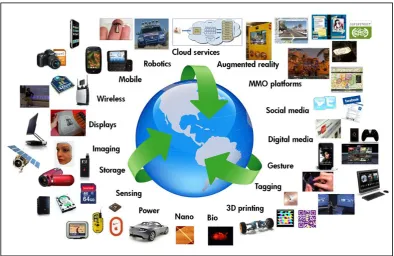
These days, data are stored and shared in the digitally linked storage devices in the modern electronic world. The way we study, buy, play, work, earn money and live has become very different. The large majority of business transactions, which include extremely important and sensitive information, are performed via computers and over the digital networks and the internet. Therefore, it is imperative to care for information safety as a concern of dominant significance. Some digital applications, data processor and electronic storage devices, which can be connected through computer networks, are displayed in Figure 1.1.
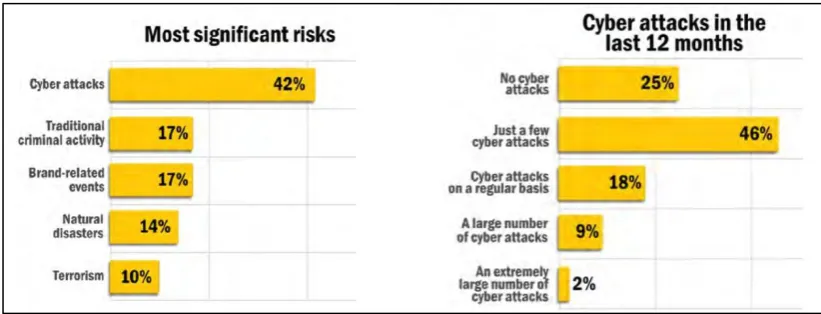
2 Hence, we expose the safety and secrecy of private and personal information to danger in this way. We can see, even in this new kind of data storage and accessing system, information is even being stolen. We hear all the time, people‘s personal information and money are stolen. Even worse, malicious programs wipe out valuable information and wealth of companies and organizations. Because the current digital world comprises multi-faceted vulnerabilities, the important issue is to protect data from being damaged or removed by malware programs. The destruction induced by malicious codes is more dangerous in today‘s modern society, where personal and social communications and commercial business strongly depend on digital networks. In the latest study conducted by Symantec Corp., it is shown that the security is the top issue for 42 percent of organizations. In the past 12 months, 75 percent of organizations have suffered from computer network attacks that cost the enterprise commerce an average of 2 million dollars yearly. The result of the study is presented in Figure 1.2 (Symantec, 2010).
Symantec Corp. Status of Enterprise Security in 2010: ―Most Figure 1.2
Significant Risks and Cyber Attacks in Last Year‖ (Symantec, 2010)
prevent wider proliferation of malware. The most important reason is that existing antivirus products mostly work based on byte-to-byte comparison of files, where binary string sequences extracted from the analyzed viral files are exploited as signatures (Wang et al., 2003; Zhang, 2008). If a given file contains corresponding signatures existed in the patterns database, then it is accepted as a viral program, Therefore, there is a weakness in finding previously non-accurately analyzed viruses (Mori, 2004; Xu et al., 2013).
On the other hand, research and practical investigation in computer virology is still a contentious issue (Filiol et al., 2006; Marpaung et al., 2012). There is an extensively misconceived standpoint, which argues that research on computer virus and related areas not only is not productive, but also is potentially dangerous. The reason for this view is that the proponents of this opinion posit that it may lead to the growth of more overwhelming and harmful techniques of viral infection. They also believe that it is only waste of time, since fighting against the computer viruses is restricted to the found, analyze, extracted and identified signature of virus, the usual cycle of the antivirus software production (Filiol et al., 2006).
For this reason, only a few research groups and laboratories in organizations and universities worldwide investigate malware and study computer virology (Bonfante et al., 2006). Lack of knowledge in this subject has resulted in small number of significant scientific findings in this field have been obtained for this belief, while a logical and accurate view on the problem shows that more researches and practical examinations on the issue of computer virology are really vital and crucial (Filiol et al., 2006; Mansfield-Devine, 2013).
In order to protect our systems in an efficient way and predict computer malware risks before they practically appear as tools for attackers and virus creators, we need to profoundly, understand the threat we are facing (Mansfield-Devine, 2013).
4 be complicated and sensitive, outdated defense and protection methods and models become even more inadequate (Filiol et al., 2006).
When we deal with metamorphic viruses, the problem becomes even worse (Singhal and Raul, 2012). Metamorphic viruses propagate by creating new transformed instances of its code (Leder et al., 2009). In other words, for a signature-based detector, metamorphic variants are considered as new viruses (Han et al., 2011b). Metamorphic viruses are created, propagated and spread more and more, because with virus creation kits and automatic metamorphic engines it is not necessary to be an expert and spend much time to create new malware. Consequently, the time needed for analyzing and reverse engineering of viral codes to extract new signatures is even more prolonged, and the size of database is becoming bigger.
In this study, a machine learning-based method, which uses an enhanced Hidden Markov Model is developed and implemented to analyze, classify and detect metamorphic computer viruses. This chapter concentrates on the background of the study, statement of the problem, research questions and objectives of the study. Then, the objectives of the research are presented, in more details. Next, the scope of the study, and in the last section, the significance of the research is explained.
1.2 Background of the Study
Early computer viruses were broadly spread in the 1980s, as a sequence of wide usage of personal computers and Microsoft‘s new operating system (Sanok Jr., 2005; Makowsky, 2009). In late 1992, the reported number of malware spread in the cyber world was about 2,300 maximally, while this number reached to 60,000 known viruses until 2002, and in 2008, more than 100,000 computer viruses were detected and reported (Al Daoud et al., 2008). Unfortunately, the number of computer viruses and other varieties of malware are growing, tremendously.
digital news daily. There are new ways and causes, which motivate computer experts to work on new kinds of these programs, and consequently, information security researches should concentrate on this area to find the new methods to be able and to improve defensive systems against them. Computer networks, Internet and web-based applications are the main streams in spreading such codes over the electronic world and they help virus authors to share their malware programs, computer by computer.
To be safe from harms of various malicious codes, antivirus software producers utilize different methodologies to protect computer systems. They employ scanning methods to detect the file signature. Scanning methods usually consist of scanning email attachments, scanning downloaded files, and static file scanning. In addition, they make use of scanning by heuristic methods and General Decryption to fight against with modern and more complicated and advanced computer viruses (Sanok Jr., 2005).
A computer virus is usually a part of a saved program, which when it is run is able to generate a duplication of itself in another saved program (Cohen, 1987; Agapow, 1993; Cohen and Cohen, 1994; Johansson, 1994; Colombell, 2002; Rajala, 2004; Aycock, 2006; Khosrow Pour, 2007; Alsagoff, 2008). During the procedure of reproduction, virus can modify its code in many various methods. It is important to mention that the term ―virus‖ is sometimes incorrectly used to describe different kinds of computer malware. A genuine virus is able to replicate itself and spread from a computer to another, usually via different forms of executables, but this ability is not contained in other kinds of malware, such as worm, trojans, and spywares. In this report, these terms are employed.
6 keeping away from the signature detection of static scanning engines used in antivirus softwares. Therefore, the main function and purpose of the malware do not vary by this conversion, but all others may change.
In practice, metamorphic computer viruses effectively change some sequences of their instructions with syntactic or semantic corresponding instructions sequences, in consecutive offspring (Webster and Malcolm, 2006). Thus, although their code format actually looks different, the behaviors of all generations are similar. Typically, it is performed to prevent detection methods based on static analysis, which are normally used by antivirus software engines. Thus, static code scanning method to detect metamorphic viruses is not applicable; instead, heuristic analysis can be exploited to find unknown variants of a metamorphic virus.
1.3 Problem Statement
Since signature detection is the most commonly used detection strategy, virus writers have developed many techniques to evade such detection (Shanmugam et al., 2013). Metamorphic computer viruses change their code as they spread, with the intention of preventing detection by static signature-based virus scanners (Konstantinou, 2008; Leder et al., 2009; Murad et al., 2010; Santos et al., 2010; You and Yim, 2010; Xu et al., 2013). In order to achieve this goal, metamorphic viruses employ different code mutation methods to contest intense static analysis (Tabish et al., 2009; Runwal et al., 2012). They are able to defeat dynamic analyzers, as well,
when they sense they are running and examining in an environment, like an emulator, which is monitoring their behaviors (O'Kane et al., 2011).
Detection of metamorphic computer viruses is not easy, because their authors have the knowledge of the feeblenesses of antivirus scanners. Static and dynamic analysis methods bring the limitations for antivirus scanners (Lee et al., 2011). Metamorphic and obfuscation techniques make virus finding by means of signature scanning practically impossible (Santos et al., 2010; Han et al., 2011b; O'Kane et al., 2011; Toderici and Stamp 2012). To detect a metamorphic computer virus, some other more complicated techniques such as inspecting the structure of the file, testing the behavior of the program, or machine learning methods must be used (Desai and Stamp, 2010 ). In other words, antivirus software should use heuristic techniques rather than string scanning to analyze and detect this kind of viruses (Konstantinou, 2008; Kasina et al., 2010). Given this situation, it is highly required that researchers in information security area make serious efforts in studying the metamorphism (Xufang et al., 2011). Today, a few researches are carried out to develop and implement new methods in order to improve the weakness of antivirus software‘s against the modern techniques which are exploited by metamorphic virus authors (Santos et al., 2011). In response to this concern, this study was set up to investigate this issue further.
8 1 What are the metamorphic computer viruses and their features?
2 What are the metamorphic computer virus classification and detection methods?
3 How metamorphic computer viruses can be reliably and effectively classified and detected?
4 How to improve the existing classification and detection methods? 5 How the performance of proposed model can be tested and evaluated?
1.4 Purpose of the Study
The purpose of this research is to propose and develop an enhanced model to classify and detect metamorphic viruses in format of portable executable. The performance of proposed model would also be evaluated and justified.
1.5 Objectives of the Study
The specific objectives of this study are:
i. To investigate the metamorphic computer viruses and their features. ii. To analyze the existing metamorphic computer viruses classification and
detection methods.
iii. To propose a new model for metamorphic computer virus classification and detection.
iv. To evaluate the performance of the proposed model.
1.6 Significance of the Study
exploited by antivirus software vendors. They can use the proposed model to improve antivirus products in defending against metamorphic computer viruses.
1.7 Scope of the Study
The focus of this study is on applying an enhanced form of Hidden Markov Model, particularly on the Portable Executable files. This study is to train the proposed model on the binary format of PEs, directly. The proposed model is applied on metamorphic virus family to involve the statistical features of the family.
The metamorphic viruses chosen for the data set used in the experiments in this study include Next Generation Virus Creation Kit (NGVCK) virus family. The NGVCK virus family have been chosen, because based on the study done by Wong (Wong, 2006), the NGVCK virus family is able to create viruses that share only a few percent of similarity. It means the NGVCK is the most powerful morphing engine to create the metamorphic virus.
1.8 Structure of the Thesis
In Chapter 1, an introduction to digital security and computer virology is given. A brief description of the metamorphic computer virus is provided. The problem statement, purpose and objectives of the study are presented.
In Chapter 2, a literature review on evolution of the computer virus concealment strategies, code obfuscation techniques, metamorphic computer virus detection techniques are given. In addition, some definitions of classification are introduced and Hidden Markov Model is explained, in details. In the last part of chapter 2, some of more related recent works are reviewed and gap of the study is presented.
10 evaluation are explained in details. At the end of chapter 3, instrumentation, assumptions and limitations of the study are presented.
Chapter 4 focuses on the experimental design. This chapter contains experimental setup, feature extraction, data set and implementation of the model.
In Chapter 5, the results of the experiments are given; the analysis of the proposed model and the threshold value are presented. Moreover, evaluation and justification of the proposed model based on a comparative study between the proposed model and four more related recent works are also given and discussed. The results of the proposed model are also compared with 44 famous commercial antiviruses.
REFERENCES
Agapow, P.-M. (1993). Computer viruses: the inevitability of evolution. In Green, D. and Bossomaier, T. (Ed.) Complex systems: from biology to computation. (pp. 46-54). Amsterdam: IOS Press.
Agrawal, R., Grosky, W. and Fotouhi, F. (2009). Virus detection and removal service architecture in digital ecosystems. Proceedings of the 3rd IEEE International Conference on Digital Ecosystems and Technologies (DEST '09). 1-3 June 2009.
Istanbul, pp. 301-305.
Al Daoud, E., Jebril, I. H. and Zaqaibeh, B. (2008). Computer Virus Strategies and Detection Methods. International Journal of Open Problems in Computer Science and Mathematics. 1(2), pp. 29-36.
Alon, J., Sclaroff, S., Kollios, G. and Pavlovic, V. (2003). Discovering clusters in motion time-series data. Proceedings of the Computer Vision and Pattern Recognition, 2003. Proceedings. 2003 IEEE Computer Society Conference on.
18-20 June 2003. pp. I-375-I-381 vol.371.
Alsagoff, S. N. (2008). Malware self protection mechanism. Proceedings of the Information Technology, 2008. ITSim 2008. International Symposium on. 26-28 Aug. 2008. pp. 1-8.
Amaral, J. N., Buro, M., Elio, R., Hoover, J., Nikolaidis, I., Salavatipour, M., Stewart, L. and Wong, K. (2011). About Computing Science Research Methodology.
Arlot, S. and Celisse, A. (2010). A survey of cross-validation procedures for model selection. Statistics Surveys. 4, pp. 40-79.
Arnold, W. and Tesauro, G. (2000). Automatically generated Win32 heuristic virus detection. 10th Virus Bulletin International Conference (VB2000). 28-29 September 2000. Orlando, FL, USA, pp. 51-60.
181 Aycock, J. (2006). Computer Viruses and Malware. New York, NY, USA: Springer. Bailey, M., Oberheide, J., Andersen, J., Mao, Z., Jahanian, F. and Nazario, J. (2007).
Automated Classification and Analysis of Internet Malware. In Kruegel, C.,
Lippmann, R. and Clark, A. (Ed.) RAID'07 Proceedings of the 10th international conference on Recent advances in intrusion detection. (pp. 178-197).
Springer-Verlag Berlin, Heidelberg.
Bailey, M. W., Coleman, C. L. and Davidson, J. W. (2008). Defense against the dark arts. SIGCSE Bulletin. 40(1), pp. 315-319.
Baldi, P., Brunak, S., Chauvin, Y., Andersen, C. A. F. and Nielsen, H. (2000). Assessing the accuracy of prediction algorithms for classification: an overview. Bioinformatics. 16(5), pp. 412-424.
Basili, V. R. (1993). The Experimental Paradigm in Software Engineering. Proceedings of the International Workshop on Experimental Software
Engineering Issues: Critical Assessment and Future Directions. pp. 3-12.
Bates, J. (1990). WHALE... A Dinosaur Heading For Extinction. Virus Bulletin, pp. 17-19.
Beaucamps, P. (2007). Advanced Polymorphic Techniques. International Journal of Computer Science. 2(3), pp. 194-205.
Benny (1999). Theme: Metamorphism. 29A E-Magazine, No. 4.
Bicego, M., Cristani, M., Murino, V., Pękalska, E. and Duin, R. W. (2009). Clustering-Based Construction of Hidden Markov Models for Generative
Kernels. In Cremers, D., Boykov, Y., Blake, A. and Schmidt, F. (Ed.) Energy
Minimization Methods in Computer Vision and Pattern Recognition. Series of
Lecture Notes in Computer Science (pp. 466-479). Springer Berlin Heidelberg.
Bicego, M., Murino, V. and Figueiredo, M. A. T. (2004). Similarity-based Classification of Sequences using Hidden Markov Models. Pattern Recogn. 37(12), pp. 2281-2291.
Bicego, M., Murino, V. and Figueiredo, M. T. (2003). Similarity-based Clustering of Sequences using Hidden Markov Models. In Perner, P. and Rosenfeld, A. (Ed.)
Machine Learning and Data Mining in Pattern Recognition. Series of Lecture
Notes in Computer Science (pp. 86-95). Springer Berlin Heidelberg.
Birney, E. (2001). Hidden Markov Models in biological sequence analysis. IBM Journal of Research and Development. 45(3.4), pp. 449-454.
Bolan, C. and Mende, D. (2004). Computer Security Research: Approaches and Assumptions. Proceedings of the 2nd Australian Information Security Management Conference. p. 115.
Bonfante, G., Kaczmarek, M. and Marion, J. Y. (2005). Toward an Abstract Computer Virology. In Hung, D. V. and Wirsing, M. (Ed.) Proceedings of Second
International Colloquium on Theoretical Aspects of Computing – ICTAC 2005.
(pp. 579-593). Hanoi, Vietnam: Springer Berlin / Heidelberg.
Bonfante, G., Kaczmarek, M. and Marion, J. Y. (2006). On Abstract Computer Virology from a Recursion Theoretic Perspective. Journal in Computer Virology. 1(3), pp. 45-54.
Bontchev, V. (1996). Possible Macro Virus Attacks and how to prevent them. Computers & Security. 15(7), pp. 595-626.
Bontchev, V. (1998). Macro Virus identification problems. Computers & Security. 17(1), pp. 69-89.
Bontchev, V. (1999). The problems of wordmacro virus upconversion. Computers & Security. 18(3), pp. 241-255.
Borello, J., Filiol, É. and Mé, L. (2009). Are current antivirus programs able to detect complex metamorphic malware? An empirical evaluation. Proceedings of the 18th Annual EICAR Conference. 11-12 May 2009. Berlin, Germany, pp. 45–63.
Borello, J. M. and Me, L. (2008). Code obfuscation techniques for metamorphic viruses. Journal in Computer Virology. 4(3), pp. 211-220.
Bosch, A. v. d. (2010). Hidden Markov Models In Sammut, C. and Webb, G. I. (Ed.) Encyclopedia of Machine Learning. (pp. 493-495). New York: Springer US.
Bramer, M. (2007). Principles of Data Mining. London: Springer.
Breon, R. and Katano, K. (1999). Microsoft Office 97 Executable Content Security Risks and Countermeasures. Architectures and Applications Division of the Systems and Network Attack Center (SNAC), National Security Agency.
Bridwell, L. and Tippett, P. (2001). ICSA Labs 7th Annual computer virus prevalence survey 2001. ICSA Labs, A Division of TruSecure Corporation. Herndon, VA, USA.
Bruschi, D., Martignoni, L. and Monga, M. (2006). Detecting Self-mutating Malware Using Control-Flow Graph Matching. In Büschkes, R. and Laskov, P. (Ed.)
Detection of Intrusions and Malware & Vulnerability Assessment. Series of
183 Bruschi, D., Martignoni, L. and Monga, M. (2007). Code normalization for
self-mutating malware. IEEE Security & Privacy, 5/2, pp. 46-54.
Burset, M. and Guigó, R. (1996). Evaluation of gene structure prediction programs. Genomics. 34(3), pp. 353-367.
Cheetancheri, S. G. (2004). Modelling a Computer Worm Defense System. Master, Office of Graduate Studies, University of California Davis.
Chen, C., Wang, Y., Chang, Y. and Ricanek, K. (2012). Sensitivity analysis with cross-validation for feature selection and manifold learning. Proceedings of the 9th international conference on Advances in Neural Networks - Volume Part I.
Shenyang, China, pp. 458-467.
Chen, T. (2003). Trends in viruses and worms. The Internet Protocol Journal. 6(3), pp. 23-33.
Chen, T. and Robert, J. (2004). The Evolution of Viruses and worms. Statistical methods in computer security.
Chouchane, M. R. and Lakhotia, A. (2006). Using engine signature to detect metamorphic malware. Proceedings of the Proceedings of the 4th ACM Workshop on Recurring Malcode, WORM'06. Co-located with the 13th ACM
Conference on Computer and Communications Security, CCS'06. pp. 73-78.
Christodorescu, M. and Jha, S. (2003). Static analysis of executables to detect malicious patterns. Proceedings of the 12th USENIX Security Symp. (SSYM'03). pp. 169-186.
Christodorescu, M. and Jha, S. (2004). Testing malware detectors. Proceedings of the ISSTA 2004 - Proceedings of the ACM SIGSOFT International Symposium on
Software Testing and Analysis. pp. 34-44.
Cohen, F. (1987). Computer Viruses: Theory and Experiments. Computer & Security. Vol. 6, pp. 22-35.
Cohen, F. and Cohen, F. (1994). A short course on computer viruses. New York, NY, USA: John Wiley & Sons, Inc.
Cohen, L., Manion, L. and Morrison, K. (2000). Research methods in education. Routledge.
Collis, J. and Hussey, R. (2009). Business Research: A Practical Guide for Undergraduate and Postgraduate Students. Palgrave Macmillan.
Colombell, M. (2002). The legislative response to the evolution of computer viruses. Rich. JL & Tech. 8(3).
Cooil, B., Winer, R. S. and Rados, D. L. (1987). Cross-validation for prediction. Journal of Marketing Research. 24(3), pp. 271-279.
Costa, E., Lorena, A., Carvalho, A. and Freitas, A. (2007). A review of performance evaluation measures for hierarchical classifiers. Proceedings of the Evaluation Methods for Machine Learning II: papers from the AAAI-2007 Workshop. pp.
1-6.
Creswell, J. W. (2008). Research design: Qualitative, quantitative, and mixed methods approaches. SAGE Publications, Incorporated.
Daume, H. (2012). A Course in Machine Learning.
Desai, P. (2008). Towards An Undetectable Computer Virus. Master Thesis, Faculty of the Department of Computer Science, San Jose State University, San Jose, CA. Desai, P. and Stamp, M. (2010 ). A highly metamorphic virus generator. International Journal of Multimedia Intelligence and Security 1(4), pp. 402 - 427.
Deshpande, S. (2012). Eigenvalue Analysis for Metamorphic Detection. Master Thesis, Faculty of the Department of Computer Science, San Jose State University, San Jose, CA.
Dietterich, T. G. (2002). Machine Learning for Sequential Data: A Review. Proceedings of the Joint IAPR International Workshop on Structural, Syntactic,
and Statistical Pattern Recognition. pp. 15-30.
Dodig-Crnkovic, G. (2002). Scientific methods in computer science. Proceedings of the Conference for the Promotion of Research in IT at New Universities and at
University Colleges in Sweden, Skövde, Suecia. pp. 126-130.
Dugad, R. and Desai, U. (1996). A tutorial on hidden markov models. Techn. Report SPANN-96-1, Signal Processing and Artificial Neural Networks Laboratory
Department of Electrical Engineering Indian Institute of Technology—Bombay
Powai, Bombay. 400, p. 076.
185 Durand, J. and Atkison, T. (2012). Applying random projection to the classification of malicious applications using data mining algorithms. Proceedings of the 50th Annual Southeast Regional Conference. Tuscaloosa, Alabama, pp. 286-291.
Durbin, R., Eddy, S. R., Krogh, A. and Mitchison, G. (1998). Biological sequence analysis: probabilistic models of proteins and nucleic acids. Cambridge university press.
Dwan, B. (2000). The Computer Virus -- From There to Here.: An Historical Perspective. Computer Fraud & Security. 2000(12), pp. 13-16.
Elliott, R., Aggoun, L. and Moore, J. (1995). Hidden Markov models: estimation and control. Springer.
Ellis, T. J. and Levy, Y. (2009). Towards a guide for novice researchers on research methodology: Review and proposed methods. Issues in Informing Science and Information Technology. 6, pp. 323-337.
Feitelson, D. G. (2006). Experimental computer science: The need for a cultural change. Unpublished note, The Hebrew University of Jerusalem.
Feitelson, D. G. (2007). Introduction to Experimental Computer Science. Communications of the ACM. 50(11), pp. 24-26.
Fieguth, P. (2011). Hidden Markov Models. In Statistical Image Processing and Multidimensional Modeling. Series of Information Science and Statistics (pp.
215-239). Springer New York.
Filiol, E. (2005). Computer viruses: from theory to applications. Paris: Springer. Filiol, E. (2007). Metamorphism, formal grammars and undecidable code mutation.
International Journal of Computer Science. 2(1), pp. 70-75.
Filiol, E., Helenius, M. and Zanero, S. (2006). Open Problems in Computer Virology. Journal in Computer Virology. 1(3), pp. 55-66.
Fine, S., Singer, Y. and Tishby, N. (1998). The Hierarchical Hidden Markov Model: Analysis and Applications. Machine Learning. 32(1), pp. 41-62.
Finones, R. G. and Fernandez, R. T. (2006). Solving the metamorphic puzzle. Virus Bulletin, pp. 14-19.
Flach, P. (2012). Machine learning: the art and science of algorithms that make sense of data. Cambridge University Press.
Freeman, E. A. and Moisen, G. G. (2008). A comparison of the performance of threshold criteria for binary classification in terms of predicted prevalence and kappa. Ecological Modelling. 217(1–2), pp. 48-58.
Gao, P. (2012). A Measurement Approach to Binary Classifications and Thresholds. Chicago Booth Research Paper. (12-51).
Gavrilut, D., Cimpoesu, M., Anton, D. and Ciortuz, L. (2009). Malware detection using machine learning. Proceedings of the Computer Science and Information Technology, 2009. IMCSIT '09. International Multiconference on. 12-14 Oct. 2009. pp. 735-741.
Govindaraj, S. (2008). Practical Detection of Metamorphic Computer Viruses. Master Thesis, Faculty of the Department of Computer Science, San Jose State University, San Jose, CA.
Govindaraju, A. (2010). Exhaustive Statistical Analysis for Detection of Metamorphic Malware. Master Thesis, Faculty of the Department of Computer
Science, San Jose State University, San Jose, CA.
Han, J. and Kamber, M. (2006). Data mining: concepts and techniques. (Second Edition). San Francisco: Morgan Kaufmann Publishers.
Han, J., Kamber, M. and Pei, J. (2011a). Data Mining: Concepts and Techniques Third Edition. Elsevier.
Han, K. S., Kang, B. and Im, E. G. (2011b). Malware classification using instruction frequencies. Proceedings of the 2011 ACM Symposium on Research in Applied Computation. Miami, Florida, pp. 298-300.
Hand, D., Mannila, H. and Smyth, P. (2001). Principles of data mining. The MIT press.
Highland, H. (1997). A history of computer viruses--Introduction. Computers & Security. 16(5), pp. 412-415.
Hruska, J. (2002). Virus detection. Proceedings of the European Conference on Security and Detection, 1997 (ECOS 97). 28-30 Apr 1997. London, UK, pp.
128-130.
Hughes, L. and DeLone, G. (2007). Viruses, worms, and trojan horses: Serious crimes, nuisance, or both? Social science computer review. 25(1), pp. 78-89. Ian H. Witten, Eibe Frank and Hall, M. A. (2011). Data Mining: Practical machine
187 Jacobs, R. (1991). Tequila - A Cocktail of Viral Tricks. Virus Bulletin, June 1991,
pp. 16-17.
Jain, A. K., Duin, R. P. W. and Jianchang, M. (2000). Statistical pattern recognition: a review. Pattern Analysis and Machine Intelligence, IEEE Transactions on. 22(1), pp. 4-37.
Jensen, R. S. (2002). Immune system for virus detection and elimination. Master Thesis, Department of Informatics and Mathematical Modelling, Technical University of Denmark (DTU).
Johansson, K. (1994). COMPUTER VIRUSES: The Technology and Evolution of an Artificial Life Form.
Jordan, M. (2002). Dealing with Metamorphism. Virus Bulletin, October 2002, pp. 4-6.
Josse, S. (2007). Secure and advanced unpacking using computer emulation. Journal in Computer Virology. 3(3), pp. 221-236.
Karlof, C. and Wagner, D. (2003). Hidden Markov Model Cryptanalysis. In Cryptographic Hardware and Embedded Systems - CHES 2003. Series of Lecture
Notes in Computer Science (pp. 17-34). Springer Berlin / Heidelberg.
Karnik, A., Goswami, S. and Guha, R. (2007). Detecting obfuscated viruses using cosine similarity analysis. AMS 2007: First Asia International Conference on Modelling & Simulation Asia Modelling Symposium, Proceedings. pp. 165-170.
Kasina, A., Suthar, A. and Kumar, R. (2010). Detection of Polymorphic Viruses in Windows Executables. In Ranka, S., Banerjee, A., Biswas, K. K., Dua, S.,
Mishra, P., Moona, R., Poon, S.-H. and Wang, C.-L. (Ed.) Contemporary Computing. Series of Communications in Computer and Information Science (pp.
120-130). Springer Berlin Heidelberg.
Kaspersky, E. (1996). Zhengxi: Saucerful of Secrets. Virus Bulletin, April 1996, pp. 8-10.
Keller, B. and Lutz, R. (2002). Improved Learning for Hidden Markov Models Using Penalized Training. In O‘neill, M., Sutcliffe, R., Ryan, C., Eaton, M. and
Griffith, N. (Ed.) Artificial Intelligence and Cognitive Science. Series of Lecture Notes in Computer Science (pp. 153-166). Springer Berlin / Heidelberg.
Khosrow Pour, M. (2007). Dictionary of Information Science and Technology. Hershey, PA, USA: Idea Group Reference.
Kiltz, S., Lang, A. and Dittmann, J. (2008). Malware: Specialized Trojan Horse. In Janczewski, L. and Colarik, A. (Ed.) Cyber warfare and cyber terrorism. (pp. 154-160). IGI Global.
Kim, M. and Pavlovic, V. (2010). Sequence classification via large margin hidden Markov models. Data Mining and Knowledge Discovery. pp. 1-23.
Kohavi, R. (1995). A study of cross-validation and bootstrap for accuracy estimation and model selection. Proceedings of the 14th international joint conference on Artificial intelligence (IJCAI'95). 20-25 August 1995. Montréal, Québec, Canada,
pp. 1137-1143.
Konstantinou, E. (2008). Metamorphic Virus: Analysis and Detection. Master Thesis, Department of Mathematics, Royal Holloway, University of London, Egham, England.
Kotsiantis, S. B. (2007). Supervised Machine Learning: A Review of Classification Techniques. Proceedings of the 2007 conference on Emerging Artificial Intelligence Applications in Computer Engineering: Real Word AI Systems with
Applications in eHealth, HCI, Information Retrieval and Pervasive Technologies.
pp. 3-24.
Krogh, A. (1998). An introduction to hidden Markov models for biological sequences. Computational Methods in Molecular Biology. pp. 45-63.
Kumar, R. (2010). Research methodology: a step-by-step guide for beginners. Sage Publications Limited.
Lakhotia, A., Kapoor, A. and Kumar, E. (2004). Are metamorphic viruses really invincible? Virus Bulletin, December 2004, pp. 5–7.
Lakhotia, A. and Singh, P. K. (2003). Challenges in getting 'formal' with viruses. Virus Bulletin, September 2003, pp. 15-19.
Lammer, P. (1990). Jonah's Journey. Virus Bulletin, November 1990, p. 20.
Leder, F., Steinbock, B. and Martini, P. (2009). Classification and detection of metamorphic malware using value set analysis. Proceedings of the 4th International Conference on Malicious and Unwanted Software (MALWARE).
13-14 Oct. 2009. pp. 39-46.
189 on Ubiquitous Information Management and Communication. Seoul, Korea, pp.
1-4.
Leedy, P. D. and Ormrod, J. E. (2009). Practical research: planning and design. (9th). Pearson
Li, C. and Biswas, G. (1999). Clustering sequence data using hidden Markov model representation. Proceedings of the AeroSense'99. pp. 14-21.
Li, Z., Wu, Z., He, Y. and Fulei, C. (2005). Hidden Markov model-based fault diagnostics method in speed-up and speed-down process for rotating machinery. Mechanical Systems and Signal Processing. 19(2), pp. 329-339.
Lin, D. (2009). Hunting for Undetectable Metamorphic Viruses. Master Thesis, Faculty of the Department of Computer Science, San Jose State University, San Jose, CA.
Lin, D. and Stamp, M. (2010). Hunting for undetectable metamorphic viruses. Journal in Computer Virology. pp. 1-14.
Liu, L. and Zsu, M. T. (2009). Encyclopedia of Database Systems. Springer Publishing Company, Incorporated.
Ludwig, M. (1995). The Giant Black Book of Computer Viruses. Arizona: American Eagle Publications.
Lyne, J. (2013). Security Threat Report 2013, New platforms and changing threats. SOPHOS.
Makowsky, J. (2009). Computer Risks and Insurability of Software. Unpublished note, Technion - Israel Institute of Technology.
Mamitsuka, H. (1997). Supervised learning of hidden Markov models for sequence discrimination. Proceedings of the first annual international conference on Computational molecular biology. Santa Fe, New Mexico, USA, pp. 202-208.
Mansfield-Devine, S. (2013). Security review: the past year. Computer Fraud & Security. 2013(1), pp. 5-11.
Marinescu, A. (1999). ACG in the Hole. Virus Bulletin, July 1999, pp. 8-9.
Marpaung, J. A., Sain, M. and Lee, H.-J. (2012). Survey on malware evasion techniques: state of the art and challenges. Proceedings of the Advanced Communication Technology (ICACT), 2012 14th International Conference on.
pp. 744-749.
Maxion, R. A. (2009). Experimental Methods for Computer Science Research. Proceedings of the Dependable Computing, 2009. LADC '09. Fourth
Latin-American Symposium on. 1-4 Sept. 2009. pp. 136-136.
McBrewster, J., Miller, F. and Vandome, A. (2009). Computer Virus: Timeline of computer viruses and worms, Computer program, Malware, Adware, Spyware,
Computer worm, Trojan horse (computing), Elk Cloner,... Polymorphic code,
Metamorphic code. Alphascript Publishing.
Medlock, B. (2008). Investigating classification for natural language processing tasks. VDM Verlag.
Michie, D., Spiegelhalter, D. and Taylor, C. (1994). Machine learning, neural and statistical classification. Ellis Horwood.
Microsoft Corporation (2013). Microsoft Portable Executable and Common Object File Format Specification.
Miller, L. (1994). Stealth, Polymorphism and Other Strange Words. CHIPS Magazine. p. 48.
Mishra, P. (2003). Taxonomy of Uniqueness Transformations. Master Thesis, The Faculty of the Department of Computer Science, San Jose State University, San Jose, CA.
Morar, J. and Chess, D. (2000). Can Cryptography Prevent Computer Viruses? 10th Virus Bulletin International Conference (VB2000). 28-29 September 2000. Orlando, FL, USA, pp. 127-138.
Mori, A. (2004). Detecting Unknown Computer Viruses - A New Approach. Proceedings of the International Symposium, ISSS 2003. Tokyo, Japan, pp.
226-241.
Mouret, M., Solnon, C. and Wolf, C. (2009). Classification of Images Based on Hidden Markov Models. Proceedings of the Content-Based Multimedia Indexing, 2009. CBMI '09. Seventh International Workshop on. 3-5 June 2009. pp. 169-174.
Murad, K., Shirazi, S., Zikria, Y. and Ikram, N. (2010). Evading Virus Detection Using Code Obfuscation. In Kim, T.-H., Lee, Y.-H., Kang, B.-H. and Slezak, D.
(Ed.) Future Generation Information Technology. Series of Lecture Notes in Computer Science (pp. 394-401). Springer Berlin / Heidelberg.
191 Myers, M. D. (1997). Qualitative research in information systems. Management
Information Systems Quarterly. 21, pp. 241-242.
Myers, M. D. (2008). Qualitative Research in Business & Management. SAGE Publications Limited.
Nachenberg, C. (1997). Computer Virus-Coevolution. Communications of the ACM. 50(1), pp. 46-51.
Nachenberg, C. (1998). Understanding heuristics: Symantec‘s bloodhound technology.
Nikishin, A. and Pavluschick, M. (1999). pOLEmorphism. Virus Bulletin, June 1999, pp. 14-15.
O'Kane, P., Sezer, S. and McLaughlin, K. (2011). Obfuscation: The Hidden Malware. Security & Privacy, IEEE. 9(5), pp. 41-47.
Orlikowski, W. J. and Baroudi, J. J. (1991). Studying information technology in organizations: Research approaches and assumptions. Information systems research. 2(1), pp. 1-28.
Panuccio, A., Bicego, M. and Murino, V. (2002). A Hidden Markov Model-Based Approach to Sequential Data Clustering. Proceedings of the Joint IAPR International Workshop on Structural, Syntactic, and Statistical Pattern
Recognition. pp. 734-742.
Paquette, J. (2000). A history of viruses. SecurityFocus, January. 16, p. 2004. Pearce, S. (2003). Viral polymorphism. Unpublished note, SANS Institute.
Peisert, S. and Bishop, M. (2007). How to Design Computer Security Experiments. In Futcher, L. and Dodge, R. (Ed.) Fifth World Conference on Information Security Education. Series of IFIP — International Federation for Information Processing
(pp. 141-148). Springer US.
Perriot, F. and Ferrie, P. (2004). Principles and practise of x-raying. 14th Virus Bulletin International Conference (VB2004). 29 September - 1 October 2004. Fairmont Chicago, Illinois, USA, pp. 51–56.
Perriot, F., Ször, P. and Ferrie, P. (2003). Striking similarites: Win32/simile and metamorphic virus code. Symantec Corporation.
Pietrek, M. (1994). Peering Inside the PE: A Tour of the Win32 Portable Executable File Format. Microsoft Systems Journal.
Polk, W. T., Bassham, L. E., Wack, J. P. and Carnahan, L. J. (1995). Anti-virus tools and techniques for computer systems. Park Ridge, NJ, USA: Noyes Publications.
Poritz, A. (2002). Hidden Markov models: A guided tour. Proceedings of the 1988 IEEE International Conference on Acoustics, Speech, and Signal Processing,
1988. ICASSP-88. 11-14 Apr 1988 New York, NY pp. 7-13.
Priyadarshi, S. (2011). Metamorphic Detection via Emulation. Master Thesis, The Faculty of the Department of Computer Science, San Jose State University, San Jose, CA.
Rabiner, L. and Juang, B. (1986). An introduction to hidden Markov models. IEEE ASSp Magazine. 3(1), pp. 4-16.
Rabiner, L. R. (1989). A Tutorial on Hidden markov Models and Selected Applications in Speech Recognition. Proceedings of the IEEE. 77(2), pp. 257-286.
Rad, B. B. and Masrom, M. (2010). Metamorphic Virus Variants Classification Using Opcode Frequency Histogram. Proceedings of the 14th WSEAS International Conference on COMPUTERS. July 23-25, 2010. Corfu Island, Greece, pp. 147-155.
Rad, B. B., Masrom, M. and Ibrahim, S. (2011). Evolution of Computer Virus Concealment and Anti-Virus Techniques: A Short Survey. International Journal of Computer Science Issues (IJCSI). 8(1), pp. 113-121.
Rajala, J. B. (2004). Computer Virus Protection. THE Journal (Technological Horizons In Education). 31(9), pp. 22-23.
Rodriguez, J. D., Perez, A. and Lozano, J. A. (2010). Sensitivity Analysis of k-Fold Cross Validation in Prediction Error Estimation. IEEE Trans. Pattern Anal. Mach. Intell. 32(3), pp. 569-575.
Roll-Hansen, N. (2009). Why the distinction between basic (theoretical) and applied (practical) research is important in the politics of science.
Runwal, N., Low, R. M. and Stamp, M. (2012). Opcode graph similarity and metamorphic detection. Journal of Computer Virology. 8(1-2), pp. 37-52.
Russell, S. and Norvig, P. (2009). Artificial intelligence: a modern approach. Prentice Hall.