1326
Canadian Family Physician • Le Médecin de famille canadien Vol 53: AUGUST • AoûT 2007Résumés de recherche
Résumé imprimé, texte sur le web
Ajouter de la «valeur» aux guides de pratique clinique
James P. McCormack
PharmDPeter Loewen
PharmDRÉSUMÉ
OBJECTIF
Déterminer dans quelle mesure les guides de pratique clinique canadiens (GPC) sur les problèmes chroniques communs (p. ex., diabète, dyslipidémie, hypertension et ostéoporose) traitent de l’importance des valeurs et des préférences des patients dans la prise de décisions thérapeutiques, et fournissent des renseignements quantitatifs permettant une prise de décisions détaillée, éclairée et partagée.CONCEPTION
Étude rétrospective par observation.PRINCIPALES MESURES DES RÉSULTATS
La présence ou l’absence de mentions précises de l’importance de tenir compte des valeurs et des préférences des patients dans la prise de décisions thérapeutiques; le nombre (relatif ou absolu) et le genre de descriptions quantitatives des avantages et des inconvénients; le nombre des interventions pour lesquelles on peut déterminer de manière quantitative la probabilité qu’un patient donné obtiendra un résultat avec ou sans l’intervention thérapeutique; et le nombre de descriptions de coûts spécifiques ou comparatifs du traitement.RÉSULTATS
Trois des 5 GPC mentionnaient que les valeurs et les préférences des patients devraient influencer les décisions de traitements. Aucun des GPC ne recommandait que les avantages et les inconvénients des thérapies soient discutés avec les patients. Parmi les 63 mentions quantitatives des effets thérapeutiques des interventions, 81% étaient présentées en termes relatifs et 19% répondaient à nos critères d’applicabilité à la prise de décisions par les patients à titre individuel. Deux des 5 GPC n’indiquaient aucun inconvénient et 3 des 5 GPC ne mentionnaient pas le coût.CONCLUSION
Cinq GPC canadiens renommés accordaient peu d’attention à la question des valeurs et des préférences des patients dans la prise de décisions thérapeutiques, même si ces facteurs revêtent une importance fondamentale dans la pratique fondée sur des données scientifiques. Ces 5 GPC offraient des renseignements quantitatifs limités sur les avantages et les inconvénients, et ne devraient donc pas être utilisés par les cliniciens pour faire participer véritablement les patients à une prise de décisions éclairée.POINTS DE REPÈRE DU RÉDACTEUR
•
La médecine fondée sur des données scientifiques
n’est pas seulement un synopsis des données de
recherche; elle devrait intégrer les données
pro-bantes aux valeurs du patient et à l’expérience
cli-nique des cliniciens.
•
Pour que les guides de pratique clinique
permet-tent une véritable participation des patients aux
décisions thérapeutiques, ils devraient présenter des
renseignements et des outils dont peuvent se servir
les cliniciens pour conseiller leurs patients sur les
risques et les avantages des options thérapeutiques
à leur disposition.
•
Dans cette étude, on a observé que 5 guides de
pratique clinique canadiens renommés ne
don-naient pas assez de renseignements pour une prise
de décisions complète et partagée, mais les auteurs
ont présenté une série de recommandations qui
peuvent servir dans l’élaboration de futurs guides
de pratique clinique.
Cet article a fait l’object d’une révision par des pairs.
Le texte intégral est accessible en anglais à
www.cfpc.ca/cfp.
Research Abstracts
Print short, Web long
Adding “value” to clinical practice guidelines
James P. McCormack
PharmDPeter Loewen
PharmDABSTRACT
OBJECTIVE
To determine the degree to which current Canadian clinical practice guidelines (CPGs) for common chronic conditions (ie, diabetes, dyslipidemias, hypertension, and osteoporosis) discuss the importance of patients’ values and preferences in therapeutic decision making, and provide quantitative information that would allow for comprehensive shared informed decision making.DESIGN
Retrospective, observational review.MAIN OUTCOME MEASURES
The presence or absence of specific mentions of the importance of incorporating patients’ values and preferences into therapeutic decision making; the number and type (relative or absolute) of quantitative descriptions of benefit or harm; the number of interventions for which a means of quantitatively determining the probability that an individual patient will experience an end point without and withimplementation of the therapeutic intervention; and the number of descriptions of specific or comparative costs of treatment.
RESULTS
Three of 5 CPGs mentioned that patients’ values or preferences should influence treatment decisions. None of the CPGs recommended that benefits and harms of therapies be discussed with patients. Of the 63 quantitative mentions of therapeutic effects of interventions, 81% were presented using relative terms and 19% met our criteria for applicability to decision making for individual patients. Two of the 5 CPGs did not enumerate any harms. Three of the 5 CPGs made no mention of cost.CONCLUSION
Five prominent Canadian CPGs paid little attention to the issue of patients’ values and preferences in therapeutic decision making, even though these issues are fundamental tenets of evidence-based practice. These 5 CPGs provided limited quantitative information on benefits and harms and therefore could not be used by clinicians to truly involve patients in informed decision making.EDITOR’S KEY POINTS
•
Evidence-based medicine is not just a synopsis of
research evidence; it should integrate the evidence
with patients’ values and clinicians’ clinical expertise.
•For clinical practice guidelines to permit meaningful
involvement of patients in therapeutic decision
making, the guidelines should include information
and tools that allow clinicians to counsel their
patients about risks and benefits of available
therapeutic options.
•
While this study found that 5 prominent Canadian
guidelines did not provide enough information for
comprehensive, shared decision making, the authors
have provided a series of recommendations for use
in developing future guidelines.
This article has been peer reviewed.
Full text is available in English at
www.cfpc.ca/cfp.
Vol 53: AUGUST • AoûT 2007 Canadian Family Physician • Le Médecin de famille canadien
2001:e.1
Adding “value” to clinical practice guidelines
Research
C linical practice guidelines (CPGs) are intended to assist clinicians in making decisions about indi-vidual patient management.1 Clinicians often rely on CPGs for therapeutic decision making, and numer-ous professional societies and patient advocacy groups actively disseminate CPGs.2,3 Many contemporary CPGs include a process by which evidence from the primary literature is incorporated into their recommendations and, as such, even if not explicitly stated, are portrayed as evidence-based.4
Evidence-based medicine is not just a synopsis of research evidence. Evidence-based medicine has been defined as “the integration of best research evidence with clinical expertise and patients’ values.”5 The third component of this definition, patients’ values, has been further defined as “the unique preferences, con-cerns and expectations each patient brings to a clinical encounter and which must be integrated into clinical decisions if they are to serve the patient.”6 Guidelines created to aid in the development of CPGs suggest CPGs “should discuss the role of patient preferences for different courses of health care for those conditions or technologies in which patients’ values and preferences may be important decision-making factors”7 and they should “…describe the role of patient preferences when a recommendation involves a substantial element of personal choice or values.”4
Incorporating patients’ preferences is particularly important when deciding on long-term treatment of asymptomatic (at least often initially) conditions, such as diabetes, dyslipidemia, hypertension, and osteopo-rosis. This is illustrated by the cognitive dissonance that appears to occur between CPGs and patients’ and cli-nicians’ preferences. For instance, less than one third of patients with or without a history of heart disease expressed the willingness to take a “safe” drug if the absolute chance of reducing a heart attack over 5 years was ≤5%.8 However, using statins even in post–myocar-dial infarction patients produces less than a 5% abso-lute reduction in the chance of a heart attack over 5 years.8 Another study involving interviews with health professionals and lay people found preferences for drug therapy to prevent heart attacks were incongruent with recommendations in “evidence-based” guidelines.9
To enable clinicians to incorporate patients’ preferences into the decision-making process for such conditions as
diabetes, dyslipidemia, hypertension, and osteoporosis, CPGs need to provide a means to estimate an individual’s baseline risk of an event of interest (eg, risk of myocardial infarction over 10 years). In addition, CPGs should provide a synopsis of the evidence for therapeutic options with detail, in quantitative terms, of the magnitude of thera-peutic and harmful effects for each option and some idea of the costs. Finally, approaches for using the evidence to quantitatively determine the probability that the patient will experience an end point without and with therapy, and for quantifying the harms associated with that therapy should be provided. Clinical practice guidelines, particularly those that profess or aspire to be “evidence-based,” are an ideal mechanism for communicating these essential data so cli- nicians can integrate this information with their own clini-cal expertise when incorporating their patients’ values and preferences into evidence-based decision making.
We analyzed the current Canadian CPG documents for diabetes, dyslipidemias, hypertension, and osteopo-rosis to determine the degree to which they mentioned the importance of patients’ values and preferences in therapeutic decisions. In addition, we assessed whether the CPGs acknowledged the importance of discussing risks and benefits with patients, and the degree to which they presented clinicians with the tools and data that would enable them to engage patients in informed dis- cussions about the benefits and harms of available ther-apeutic options.
METHODS
For the CPG selection, diabetes, dyslipidemias, hyperten-sion, and osteoporosis were chosen as the conditions of interest. This choice was based on the high preva-lence of these conditions in the Canadian population, their frequent asymptomatic nature, and the availabil-ity of numerous pharmacologic and nonpharmacologic interventions aimed at decreasing the chance of clinical sequelae of the conditions.
Several CPG documents were analyzed concerning diabetes, dyslipidemias, dyslipidemia in diabetes, hyper-tension, and osteoporosis.
• Diabetes: the Canadian Diabetes Association devel-oped the 2003 CPGs for prevention and management of diabetes in Canada.10
• Dyslipidemias: the Canadian Cardiovascular Society developed the 2006 CPGs for diagnosis and treat-ment of dyslipidemia and prevention of cardiovas-cular disease.11
• Dyslipidemia in diabetes: the Canadian Diabetes Association developed the 2006 CPGs for dyslipidemia
in adults with diabetes.12
• Hypertension: the Canadian Hypertension Education Program developed the 2006 recommendations for management of hypertension.13-16
• Osteoporosis: the Scientific Advisory Council of the Osteoporosis Society of Canada developed the 2002 clinical practice guidelines for the diagnosis and man-agement of osteoporosis in Canada.17
Data collection
Both authors searched the complete contents of the CPGs, including the appendices, for any mention of patients’ values, preferences, or participation in informed deci-sion making. All quantitative reports of benefits and harm mentioned and any discussions of costs were col-lated. Next the authors compared their individual results and resolved any discordance through discussion and reference to the source documents until they reached consensus.
All mentions of or recommendations surrounding the issues of patient values, preferences, or participation in informed decision making were captured.
The CPGs were reviewed to see if a patient-specific technique or tool for estimating baseline risk was pro-vided, and what specific clinical end points the tools calculated. In addition, mentions of the potential limita-tions of these tools were also collected.
Analysis
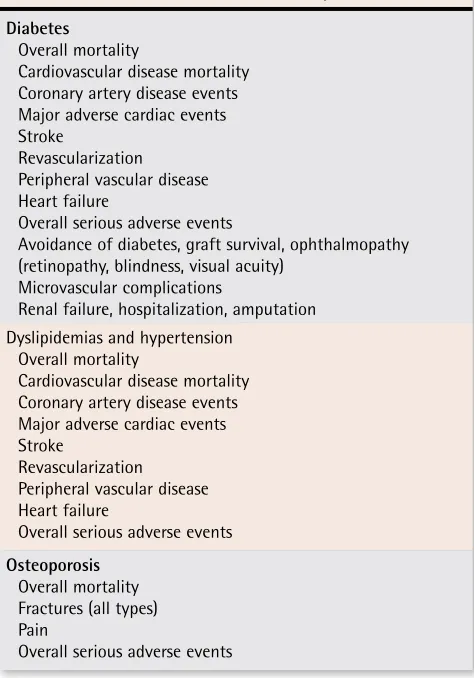
Potential benefit. Each instance of the magnitude of benefit described in the context of a therapeutic intervention was captured and the type of measure was tabulated: use of relative measures (relative risk reduction [RRR], relative risk [RR], odds ratio [OR], hazard ratio [HR]) or absolute measures (absolute risk reduction [ARR], number needed to treat or harm [NNT or NNH], events prevented or caused per 1000 patients treated). Only magnitudes for the clinical consequences of the conditions studied were con-sidered relevant end points for this study. Effects of interventions on surrogate end points, such as lipid levels, bone mineral density, hemoglobin A1c, or blood pressure readings, were not included in the analy-sis. These were deemed less relevant to patients’ val-ues than clinical outcomes because the sole reason for treatment based on these surrogate markers is to decrease the incidence of specific negative clinical outcomes (Table 1).
Potential harm. All measures of harms associated with therapy were documented. Because cost of therapy is potentially important in decision making, all mentions of the costs or comparative costs of specific therapies were documented.
End points. The end points of primary interest for each CPG were as follows:
1. the presence or absence of specific mentions of the importance of incorporating patients’ values and pref-erences into therapeutic decision making;
2. the number and type (relative or absolute) of quantifi-cation of benefit or harm;
3. the number of interventions for which a means of quantifying the probability that an individual patient will experience an end point with or without the ther-apeutic intervention; and
4. the number of descriptions of specific or comparative costs of treatment.
To be considered for the third end point, 1 of 2 condi-tions was required:
• a risk-estimation tool must have been provided along with presentation in relative terms (RR, RRR, OR, HR) of the effect of a therapeutic intervention correspond-ing to the specific end point(s) estimated by the risk-estimation tool*; or
• the absolute incidence of a relevant end point in patients not receiving and receiving a therapeutic intervention accompanied by a description of the patient population in the study sufficient for a clini-cian to determine the degree of similarity to a patient to be treated.
Presentation solely of absolute risk reduction (ARR) was deemed insufficient, as were RR, RRR, HR, or OR in the absence of a risk-estimation tool or baseline risk-level data.
Table 1. Outcomes relevant in the analysis
Diabetes
Overall mortality
Cardiovascular disease mortality Coronary artery disease events Major adverse cardiac events Stroke
Revascularization
Peripheral vascular disease Heart failure
Overall serious adverse events
Avoidance of diabetes, graft survival, ophthalmopathy (retinopathy, blindness, visual acuity)
Microvascular complications
Renal failure, hospitalization, amputation Dyslipidemias and hypertension
Overall mortality
Cardiovascular disease mortality Coronary artery disease events Major adverse cardiac events Stroke
Revascularization Peripheral vascular disease Heart failure
Overall serious adverse events
Osteoporosis
Overall mortality Fractures (all types) Pain
Vol 53: AUGUST • AoûT 2007 Canadian Family Physician • Le Médecin de famille canadien
2001:e.3
Adding “value” to clinical practice guidelines
Research
RESULTS
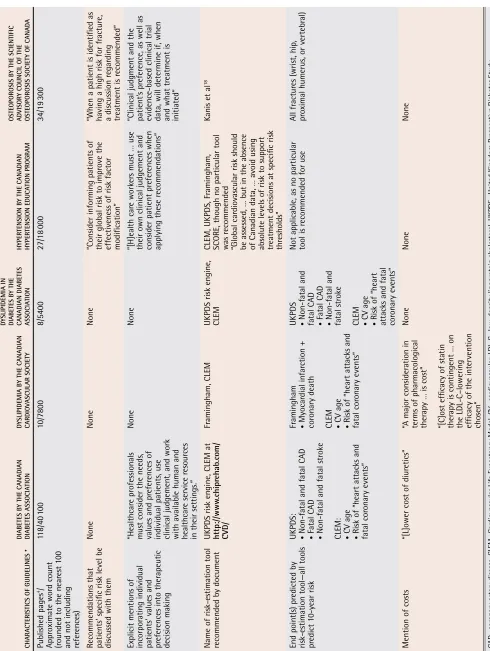
The 5 guidelines made up 90 600 words and 197 pages in total (Table 218).
Importance of incorporating patients’ values and preferences into therapeutic decision making. All the relevant text discussing patients’ values and prefer-ences found in the CPGs is listed in Table 2.18 Three of the 5 CPGs mentioned that patients’ values or pref-erences should influence treatment decisions (Table 2). None of the CPGs recommended that benefits and harms of therapies be discussed with patients; how-ever in 2 CPGs, there was some mention of discussing risk levels with patients (Table 2). A total of 99 words were found to be relevant to the issues of patients’ values and preferences—approximately 0.1% of the total words in the guidelines.
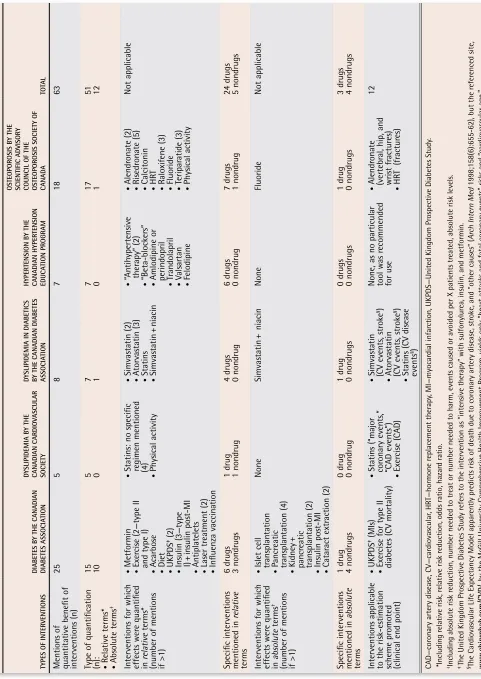
Measures of benefits or harms. There were a total of 63 quantifications of therapeutic effects of inter-ventions; 81% (51/63) were presented using rela-tive terms (Table 3). Of the 63, 47 were quantitative descriptions of drug benefits, 94% (44/47) in relative terms. The other 16 quantitative descriptions were for nondrug therapies, 44% (7/16) in relative terms. Thirty-six specific therapeutic interventions (27 drug, 9 nondrug) had at least one quantitative mention of benefit in the CPGs.
With respect to harms of therapy, 2 of the CPGs (hypertension, dyslipidemia in diabetes) provided no quantification of any harms (Table 4). In the 3 CPGs that did report harm (diabetes, osteoporosis, dyslipid-emia), there were a total of 35 quantifications of harms. In contrast to the 81% of benefits presented in relative terms, 17% (6/30) of harms were presented in relative terms. Particularly notable was the absence of discus-sion or presentation of risks associated with widely used therapies. For example, the diabetes CPGs did not mention lactic acidosis associated with metformin. The hypertension CPGs—other than for thiazides (hypokale-mia), and mentions of hypotension, hyperkalemia, and worsening renal function for angiotensin-converting enzyme inhibitors and angiotensin receptor blockers— made no mention of any side effects.
Information we need
We offer the following recommendations to creators of
therapeutic clinical practice guidelines (CPGs) for chronic
conditions to maximize their utility.
1. Remind clinicians of the importance of incorporating
patients’ values and preferences into therapeutic
deci-sions and provide examples of how this could be done.
2. Remind clinicians of the importance of involving
patients in decisions should patients wish this.
3. Provide clinicians with a simple and practical tool to
estimate patients’ risk of experiencing a clinically
rel-evant event over relrel-evant time frames. In addition, CPGs
should discuss in detail the potential limitations of such
tools and, if there is evidence available, how closely the
estimates relate to the population for which the
guide-lines are intended.
4. When describing the evidence for efficacy of
interven-tions, include a description of the patient population
studied so its applicability to the patient at hand can
be judged.
5. When describing the evidence for efficacy of interventions,
include clear estimates of the effects in relative terms
(where an individualized risk-estimation tool is available)
or describe the absolute magnitude of the effect,
includ-ing the time frame over which it occurred (when no
indi-vidualized risk-estimation tool is available).
6. Provide a table of results for all therapies (with all
rel-evant clinical end points), in both relative and absolute
terms, and indicate when there is no information or
when the data do not apply to specific patient subsets.
7. When describing the evidence for efficacy of
interven-tions, ensure that the end points discussed are directly
relevant to the risk-estimation tool promoted in the CPG.
8. When describing the harms of interventions, include
quantitative estimates of harms (preferably in absolute
terms) for common adverse effects (even if minor) and
serious adverse effects (even if rare), and, if possible,
include a comparison with placebo so that clinicians
can put the information into context for patients.
9. Explicitly state the values and preferences that underlie
recommendations in which there are important inherent
tradeoffs of efficacy, safety, cost, or convenience.
10. Provide clinicians with estimates of the potential costs
of therapies or with comparisons between therapies.
11. Recommend that clinicians discuss the risks and
ben-efits of the available therapies with patients before
prescribing decisions are made, and provide examples
of how this could be done.
12. Focus CPGs more on individualized risk assessment,
clini-cally important effects of interventions, and shared decision
making and less on specific breakpoints for surrogate
out-comes (cholesterol, blood pressure, glucose, bone density).
*For example, if one could estimate the 10-year baseline risk
Individualizing the magnitude of the benefit. Four of the 5 CPGs recommended the use of a specific risk-estimation tool (Table 218), although none provided explicit instructions on how to use the tool or how to communicate this information to patients. The clinical end points for which the tools calculated a 10-year risk are listed in Table 2.
Of the relative mentions of benefit, 24% (12/51) were for end points that could be calculated using the rec-ommended risk-estimation tool. None of the absolute mentions of benefit had associated with it a description of the studied population sufficient to allow extrapola-tion to a specific patient. Hence, of the 63 quantifications of benefit of interventions, 12 (19%) met our criteria for making individualized patient decisions.
Costs of treatments. In 3 of the 5 guidelines, there was no mention of costs (Table 218). Overall, there were 3 mentions of the cost of therapy, only one of which involved a specific intervention in relation to other ther-apeutic options (Table 2).
INTERPRETATION
This analysis revealed that little attention was paid to the issue of patients’ values and preferences for thera-peutic decision making in 5 nationally prominent CPGs. In addition, the limited quantitative information provided typically could not be used to inform patients about the benefits and harms of treatments.
Among the CPGs for common chronic conditions ana-lyzed, only 3 explicitly acknowledged the importance of incorporating patients’ values and preferences into ther- apeutic decision making. Although 4 of the 5 CPGs pro-moted a scheme for estimating an individual’s risk of clinical events, these tools could be used with only 24% of the interventions that were quantified.12
The relevance of the deficiencies identified can be illustrated by way of example. Using the dyslipid-emia in diabetes CPGs,12 clinicians could employ the United Kingdom Prospective Diabetes Study (UKPDS) risk engine to estimate patients’ 10-year risk of stroke. With this information and the Heart Protection Study data presented in the CPG, clinicians can explain to patients that they have a 5% risk of stroke within 10 years without statin therapy and a 3.75% risk if they take simvastatin for those 10 years (based on a 25% RRR in stroke). Hence, patients have an estimated (though how to make the estimation is not discussed in the CPG) 1 in 80 chance of avoiding a stroke (based on the cal-culated ARR of 1.25%) if they take simvastatin for the next 10 years. However, no information concerning the patient’s baseline risk of cardiovascular disease (CVD) or overall mortality (including CVD mortality), or the effects of statin therapy on these end points could be
delivered based on the CPG. No relevant benefit or risk information about diet, exercise, or many of the other drug options is contained in this CPG. Therefore, far less information is contained in the dyslipidemia in diabetes CPG than is required for clinicians to describe the ben-efits and risks of statin therapy and alternatives appro-priately so that clinicians and patients can make a truly informed decision.
Similar examples involving thiazides, ß-blockers, or angiotensin-receptor blockers for hypertension, involv-ing diet, acetylsalicylic acid, or glucose-lowering agents for type II diabetes, involving diet or atorvastatin for dyslipidemia could be cited based on this analysis.
With some exceptions (myopathy and increased liver enzymes with statins, hypoglycemia with insulins and insulin secretagogues, increased low-density lipoprotein with gemfibrozil, venous thromboembolism with raloxi-fene, a number of adverse effects with calcitonin and hormone replacement therapy), little quantitative infor-mation related to the harms of drugs was provided.
There are 79 drugs available in Canada for use in the 4 conditions studied (hypertension, 40; dyslipidemia,13; diabetes, 14; osteoporosis, 8; antiplatelet agents, 4).19 For only atorvastatin, simvastatin, statins (as a group), alendronate, and hormone replacement could one use the information presented in the guidelines to estimate a potential benefit. A potential harm could be quanti-fied only for insulin, insulin secretagogues (as a group), gemfibrozil, calcitonin, hormone replacement, raloxi-fene, and statins (as a group).
Missing points
An important deficiency identified in most of the CPGs recommending a risk-estimation tool was little discus- sion of the limitations of the tools themselves. An excep-tion was the hypertension guidelines and to a small degree the dyslipidemia guidelines. Relevant points that were generally missing from the CPGs included patients to whom the tools should not be applied, precision of the estimates, and the differences between periods over which risk is predicted and the duration of clinical trials that form the basis for risk-modification estimates. For example, numerous limitations of the Framingham risk calculator have been described.20 It is important for cli-nicians to know about these limitations so they do not use the tool for patients to whom it does not apply or where the absolute risk estimates might not be appro-priate for a specific population (eg, using Framingham data for a diabetic patient or one who already has coro-nary artery disease [CAD]).
Vol 53: AUGUST • AoûT 2007 Canadian Family Physician • Le Médecin de famille canadien
2001:e.5
Adding “value” to clinical practice guidelines
Research
Ta
bl
e 2
. Gener
al
char
acteri
stics
of
the
clinical
pr
actice
guideline
document
s
Ch ARAC te RI st IC s O f G u ID eLI nes * DIA betes b y the CA n ADIA n DIA betes Ass OCIA tIO n Dys LIPID eMIA b y the CA n ADIA n CARDIO vA sC u LAR s OCI ety Dys LIPID eMIA In DIA betes b y the CA n ADIA n DIA betes Ass OCIA tIO n h yP eR tens IO n b y the CA n ADIA n hy Pe Rtens IO n e Du CA tIO n PROGRAM Oste OPORO sI s by the s
CI ent If IC AD vI sOR y CO un CIL O f the O ste OPORO sI s s OCI ety O f CA n ADA Published pages †/ Appr oximate wor d count (r ounded to the near est 1 00 and not including refer ences) 118/40 1 00 10/7800 8/5400 27/18 000 34/19 300 Recommendations that patients’ specific risk level be discussed with them None None None “Consider informing patients of their global risk to impr ove the effectiveness of risk factor modification” “When a patient is identified as having a high risk for fr actur e, a discussion r egar ding tr eatment is r ecommended” Explicit mentions of incorpor ating individual patients’ values and pr efer ences into ther apeutic decision making “Healthcar e pr ofessionals must consider the needs, values and pr efer ences of individual patients, use clinical judgement, and work with available human and healthcar e service r esour ces in their settings.” None None ”[H]ealth car e worker s must … use their own clinical judgement and consider patient pr efer ences when applying these r ecommendations” “Clinical judgment and the patient’ s pr efer ence, as well as evidence-based clinical trial data, will determine if, when and what tr eatment is initiated” Name of risk-estimation tool recommended by document UKPDS risk engine, CLEM at http://www .chipr ehab .com/ Cv D/ Fr amingham, CLEM UKPDS risk engine, CLEM CLEM, UKPDS, Fr amingham, SCORE, though no particular tool was r ecommended “Global car diovascular risk should be assessed, … but in the absence of Canadian data, … avoid using absolute levels of risk to support tr eatment decisions at specific risk thr esholds” Kanis et al 18 End point(s) pr edicted by risk-estimation tool—all tools pr edict 1 0-year risk
UKPDS: • Non-fatal
and fatal CAD • Fatal CAD • Non-fatal and fatal str oke
CLEM: • CV
age • Risk of “heart attacks and fatal cor onary events” Fr amingham • Myocar dial infar ction + cor onary death
CLEM • CV
age • Risk of “heart attacks and fatal cor onary events”
UKPDS • Non-fatal
and fatal CAD • Fatal CAD • Non-fatal and fatal str oke
CLEM • CV
Ta
bl
e
3
. Quantification of benefit
ty Pes O f I nte Rvent IO ns DIA betes b y the CA n ADIA n DIA betes Ass OCIA tIO n Dys LIPID eMIA b y the CA n ADIA n CARDIO vA sC u LAR sOCI ety Dys LIPID eMIA In DIA bet IC s by the CA n ADIA n DIA betes Ass OCIA tIO n h yP eR tens IO n b y the CA n ADIA n hy Pe Rtens IO n eD u CA tIO n PROGRAM Oste OPORO sI s b y the sCI ent If IC AD vI sOR y CO un CIL O f the O ste OPORO sI s s OCI ety O f CA n ADA tO tAL Mentions of quantitative benefit of interventions (n) 25 5 8 7 18 63 Type of quantification
(n): • Relative
terms* • Absolute terms † 15 10
5 0 7 1 7 0
17 1 51 12 Interventions for which effects wer e quantified in r elative terms* (number of mentions if >1) •
Metformin • Exer
cise (2—type II and type I) •
Acarbose • Diet • UKPDS
‡ (2)
• Insulin (3—type I) + insulin post-MI •
Antiplatelets • Laser
tr eatment (2) • Influenza vaccination • Statins: no specific regimen mentioned
(4) • Physical
activity • Simvastatin (2) • Atorvastatin (3) •
Statins • Simvastatin
+ niacin • “Antihypertensive ther apy” (2) • “Beta-blocker s” • Amlodipine or
perindopril • T
randolapril • V alsartan • Felodipine • Alendr onate (2) • Risedr onate (5) •
Calcitonin • HRT • Raloxifene
(3)
•
Fluoride • Teripar
atide (3) • Physical activity Not applicable Specific interventions mentioned in r elative terms 6 drugs 3 nondrugs 1 drug 1 nondrug 4 drugs 0 nondrug 6 drugs 0 nondrug 7 drugs 1 nondrug 24 drugs 5 nondrugs Interventions for which effects wer e quantified in absolute terms † (number of mentions if >1) • Islet cell tr ansplantation • P ancr eatic tr ansplantation (4) • Kidney + pancr eatic tr ansplantation (2) • Insulin post-MI • Catar act extr action (2) None Simvastatin + niacin None Fluoride Not applicable Specific interventions mentioned in absolute terms 1 drug 4 nondrugs 0 drug 0 nondrug 1 drug 0 nondrugs 0 drugs 0 nondrugs 1 drug 0 nondrugs 3 drugs 4 nondrugs Interventions applicable to the risk-estimation scheme pr omoted (clinical end point) • UKPDS
‡ (MIs)
• Exer cise for type II diabetes (CV mortality) • Statins (“major cor onary events,” “CAD events”) • Exer cise (CAD) •
Simvastatin (CV
events,
str
oke
§)
•
Atorvastatin (CV
events, str oke §) • Statins (CV disease events §) None, as no particular tool was r ecommended for use • Alendr onate (vertebr al, hip, and wrist fr actur es) • HRT (fr actur es) 12 CAD—cor onary artery disease, CV—car diovascular , HRT—hormone replacement ther apy , MI—myocar dial infar ction, UKPDS—United Kingdom Pr ospective Diabetes Study . *Including relative risk, relative risk reduction, odds ratio, hazar d ratio. †Including absolute risk reduction, number needed to tr eat or number needed to harm, events caused or avoided per X patients tr eated, absolute risk levels.
‡ The
Vol 53: AUGUST • AoûT 2007 Canadian Family Physician • Le Médecin de famille canadien
2001:e.7
Adding “value” to clinical practice guidelines
Research
otherwise.21,22 Others might contend that clinicians con-sider patients’ values routinely and do not need to be told to do so by CPGs. While this might be partially true, our analysis revealed that, even if clinicians wanted to individualize the benefits and risks of commonly pre-scribed therapies (ie, by estimating the patient’s risk of an event without the therapy, and the patient’s chance of benefit and harm while using the therapy) so as to involve patients in a truly informed decision, the CPGs generally do not even recommend individualization, let alone provide the required data or guidance on how to do so. We are unaware of a routinely used alternative source of this type of information.
Not all patients wish to be involved in discussing the benefits and harms of therapies available to them23,24; however, inclusion of the elements discussed in our analysis could improve clinicians’ understanding of the magnitude of the benefit and harm and would aid clini-cians making decisions on behalf of their patients.
Our analysis has some limitations. Quantitative effects of interventions on several clinically relevant end points were included in some of the CPGs but were not credited in our analyses (eg, following solid organ transplant for diabetes, post–myocardial infarction insulin in diabetes) because we deemed the patient population to be unsuitable for the risk-estimation tool promoted in the CPG. This would lead to a slight underestimate of the absolute number of interventions for which quantitative effects were described. We also excluded several mentions of CVD from our estimate of interventions applicable to the risk-estimation tools promoted because the tools were designed to estimate
the more limited end point of CAD. Cardiovascular dis-ease includes stroke or transient ischemic attack, while CAD does not. For the hypertension guidelines, we analyzed only the currently published version of the guidelines, in which there were many references to supporting evidence published in previous versions of the guidelines. It could be argued that our strategy ignored efforts to provide clinicians with quantitative data applicable to individual treatment decisions in these older documents or that we held the guideline writers to an impossible standard of annually reiterat-ing all previous results. We believe, however, that cli-nicians treating patients expect a guideline document to be relatively self-contained and expect all summary information required to make evidence-based treat-ment decisions be readily at hand. Clinicians faced with a need or opportunity to make an individualized treatment decision are unlikely to seek multiple older versions of the guidelines. This issue could be rem-edied by providing tables in the current versions of the CPGs summarizing quantitative risk reduction and harm information for the various treatments discussed.
Conclusion
Five prominent Canadian CPGs paid little attention to the issue of patients’ values and preferences in thera-peutic decision making despite the issue’s importance as a fundamental tenet of evidence-based practice. These 5 CPGs provided limited quantitative informa-tion on benefits and harms; therefore, they cannot effectively be used by clinicians to involve patients in informed decision making.
Table 4. Quantification of harm: Two studies (the Canadian Diabetes Association study of dyslipidemia in diabetes and
the Canadian Hypertension Education Program study of hypertension) did not quantify harms.
tyPes Of InteRventIOns DIAbetes by the CAnADIAn DIAbetes AssOCIAtIOn
DysLIPIDeMIA by the CAnADIAn CARDIOvAsCuLAR sOCIety
OsteOPOROsIs by the sCIentIfIC ADvIsORy COunCIL Of the OsteOPOROsIs sOCIety
Of CAnADA tOtAL
Mentions of quantitative harm
of interventions (n) 11 6 18 35
Type of quantification (n): • Relative terms*
• Absolute terms†
0
11 0 6 6 12 6 29
Interventions for which adverse effects were quantified in relative terms* (number of mentions if >1)
None None • HRT (5)
• Raloxifene
Not applicable
Interventions for which adverse effects were quantified in
absolute terms† (number of
mentions if >1)
• Insulin (6)
• Insulin secretagogues (2)
• Islet transplantation (2) • Gemfibrozil
Statins (6) • Calcitonin (9) • HRT (2) • Raloxifene
Not applicable
HRT—hormone replacement therapy.
*Including relative risk, relative risk reduction, odds ratio, hazard ratio.
†Including absolute risk reduction, number needed to treat or number needed to harm, events caused or avoided per X patients treated,
Contributors
Both authors made substantial contributions to concept and design of the study, interpretation of data, and critical revision of the article for intellectual content, and gave final approval to the version to be published.
Competing interests
None declared
Correspondence to:Dr James P. McCormack, Faculty
of Pharmaceutical Sciences, 2146 East Mall, University of British Columbia, Vancouver, BC V6T 1Z3; telephone 604 603-7898; e-mail [email protected]
References
1. Haines A, Jones R. Implementing findings of research. BMJ 1994;308(6942):1488-92.
2. Welcome [website]. Rockville, MD: National Guideline Clearinghouse; 2007. Available from: http://www.guidelines.gov. Accessed 2007 July 23. 3. Clinical Practice Guidelines [website]. Ottawa, ON: CMAJ; 2007. Available
from: www.cmaj.ca/misc/service/guidelines.shtml. Accessed 2007 July 23. 4. Shiffman RN, Shekelle P, Overhage JM, Slutsky J, Grimshaw J, Deshpande AM.
Standardized reporting of clinical practice guidelines: a proposal from the Conference on Guideline Standardization. Ann Intern Med 2003;139(6):493-8. 5. Sackett DL, Straus SE, Richardson WS, Rosenberg W, Haynes RB.
Evidence-based medicine: how to practice and teach EBM. 2nd ed. London, Engl: Churchill Livingstone; 2000.
6. University Health Network. What is EBM? In: University Health Network. Centre for Evidence-Based Medicine. Toronto, Ont: University Health Network; 2004. Available from: http://www.cebm.utoronto.ca/intro/wha-tis.htm. Accessed 2006 February 8.
7. Field MJ, Lohr KN, editors. Guidelines for clinical practice: from development to use. Washington, DC: National Academy Press; 1992.
8. Trewby PN, Reddy AV, Trewby CS, Ashton VJ, Brennan G, Inglis J. Are preven-tive drugs preventive enough? A study of patients’ expectation of benefit from preventive drugs. Clin Med 2002;2(6):527-33.
9. Lewis DK, Robinson J, Wilkinson E. Factors involved in deciding to start pre-ventive treatment: qualitative study of clinicians’ and lay people’s attitudes. BMJ 2003;327(7419):841-7.
10. Canadian Diabetes Association, Clinical Practice Guidelines Expert Committee. Canadian Diabetes Association 2003 clinical practice guidelines for the prevention and management of diabetes in Canada. Can J Diabetes 2003;27(Suppl 2):S1-S163.
11. McPherson R, Frolich J, Fodor G, Genest J. Canadian Cardiovascular Society position statement—recommendations for the diagnosis and treatment of dyslipidemia and prevention of cardiovascular disease. Can J Cardiol 2006;22(11):913-27.
12. Canadian Diabetes Association Clinical Practice Guidelines Expert Committee. Dyslipidemias in adults with diabetes. Can J Diabetes 2006;30:230-40.
13. Hemmelgarn BR, McAlister FA, Grover S, Myers MG, McKay DW, Bolli P, et al. The 2006 Canadian Hypertension Education Program recommendations for the management of hypertension: part I—blood pressure measurement, diagnosis and assessment of risk. Can J Cardiol 2006;22(7):573-81. 14. Khan NA, McAlister FA, Rabkin SW, Padwal R, Feldman RD, Campbell NR,
et al. The 2006 Canadian Hypertension Education Program recommenda-tions for the management of hypertension: part II—therapy. Can J Cardiol 2006;22(7):583-93.
15. Grover SA, Hemmelgarn B, Joseph L, Milot A, Tremblay G. The role of global risk assessment in hypertension therapy. Can J Cardiol 2006;22(7):606-13.
16. Touyz RM, Canadian Hypertension Education Program. Highlights and sum- mary of the 2006 Canadian Hypertension Education Program recommenda-tions. Can J Cardiol 2006;22(7):565-71.
17. Brown JP, Josse RG, Scientific Advisory Council of the Osteoporosis Society of Canada. 2002 clinical practice guidelines for the diagnosis and manage-ment of osteoporosis in Canada. CMAJ 2002;167(Suppl 10):S1-S34. 18. Kanis JA, Johnell O, Oden A, Dawson A, De Laet C, Jonssen B. Ten year
probabilities of osteoporotic fractures according to BMD and diagnostic thresholds. Osteoporos Int 2001;12:989-95.
19. Gray J, editor. Therapeutic choices. 4th ed. Ottawa, Ont: Canadian Pharmacists Association; 2003.
20. Grundy SM, Pasternak R, Greenland P, Smith S, Fuster V. AHA/ACC scientific statement: Assessment of cardiovascular risk by use of
multiple-risk-factor assessment equations: a statement for healthcare profes-sionals from the American Heart Association and the American College of Cardiology. J Am Coll Cardiol 1999;34(4):1348-59.
21. Hirsh J, Guyatt G, Albers GW, Schünemann HJ. The seventh ACCP confer-ence on antithrombotic and thrombolytic therapy: evidence-based guidelines. Chest 2004;126:172S–3S.
22. Singer DE, Albers GW, Dalen JE, Go AS, Halperin JL, Manning WJ. Antithrombotic therapy in atrial fibrillation: the seventh ACCP conference on antithrombotic and thrombolytic therapy. Chest 2004;126:429S–56S. 23. Taylor I. Some patients are happy for doctors to make decisions. BMJ
2000;320(7226):58.
24. Harrison A. Choice is a gift from the patient to the doctor, not the other way around. BMJ 2000;320(7238):874.