R E S E A R C H A R T I C L E
Open Access
Audit-identified avoidable factors in maternal and
perinatal deaths in low resource settings: a
systematic review
Hasan S Merali
1*, Stuart Lipsitz
2, Nathanael Hevelone
2, Atul A Gawande
2,3, Angela Lashoher
4, Priya Agrawal
5and
Jonathan Spector
5,6Abstract
Background:Audits provide a rational framework for quality improvement by systematically assessing clinical practices against accepted standards with the aim to develop recommendations and interventions that target modifiable deficiencies in care. Most childbirth-associated mortality audits in developing countries are focused on a single facility and, up to now, the avoidable factors in maternal and perinatal deaths cataloged in these reports have not been pooled and analyzed. We sought to identity the most frequent avoidable factors in childbirth-related deaths globally through a systematic review of all published mortality audits in low and lower-middle income countries.
Methods:We performed a systematic review of published literature from 1965 to November 2011 in Pubmed, Embase, CINAHL, POPLINE, LILACS and African Index Medicus. Inclusion criteria were audits from low and lower-middle income countries that identified at least one avoidable factor in maternal or perinatal mortality. Each study included in the analysis was assigned a quality score using a previously published instrument. A meta-analysis was performed for each avoidable factor taking into account the sample sizes and quality score from each individual audit. The study was conducted and reported according to PRISMA guidelines for systematic reviews.
Results:Thirty-nine studies comprising 44 datasets and a total of 6,205 audited deaths met inclusion criteria. The analysis yielded 42 different avoidable factors, which fell into four categories: health worker-oriented factors, patient-oriented factors, transport/referral factors, and administrative/supply factors. The top three factors by attributable deaths were substandard care by a health worker, patient delay, and deficiencies in blood transfusion capacity (accounting for 688, 665, and 634 deaths attributable, respectively). Health worker-oriented factors accounted for two-thirds of the avoidable factors identified.
Conclusions:Audits provide insight into where systematic deficiencies in clinical care occur and can therefore provide crucial direction for the targeting of interventions to mitigate or eliminate health system failures. Given that the main causes of maternal and perinatal deaths are generally consistent across low resource settings, the specific avoidable factors identified in this review can help to inform the rational design of health systems with the aim of achieving continued progress towards Millennium Development Goals Four and Five.
Keywords:Maternal, Fetal, Neonatal, Perinatal, Avoidable, Factors, Death, Mortality
* Correspondence:[email protected] 1
The Hospital for Sick Children, 555 University Avenue, Toronto, ON M5G 1X8, Canada
Full list of author information is available at the end of the article
© 2014 Merali et al.; licensee BioMed Central Ltd. This is an Open Access article distributed under the terms of the Creative Commons Attribution License (http://creativecommons.org/licenses/by/2.0), which permits unrestricted use, distribution, and reproduction in any medium, provided the original work is properly credited. The Creative Commons Public Domain Dedication waiver (http://creativecommons.org/publicdomain/zero/1.0/) applies to the data made available in this article, unless otherwise stated.
Background
Devising strategies that measurably improve maternal and newborn care in low resource settings is an urgent global priority [1,2]. Nearly 300,000 maternal deaths [3], 3 million newborn deaths [4], and 1 million intrapartum-related stillbirths [5], take place each year in grossly dispro-portionate geographic patterns. Given that there are many countries with very low childbirth-related mortality rates, it is clear that high childbirth-related mortality burdens are not inevitable. Rational bolstering of health systems saves lives, even in lower income settings where resources are limited.
The major complications that result in maternal, new-born, and fetal deaths are well described. For mothers, these are traditionally categorized as excessive hemorrhage, infection, hypertensive disorders, and obstructed labor [6]. For babies, these are intrapartum-related events (previously called birth asphyxia), infection, and complications of prematurity [7]. Avoidable stillbirths are largely attributed to inadequate intrapartum care [5]. These categories pro-vide an important orientation to the general causes of childbirth-related deaths and as such are fundamental to establishing a basis for strengthening health systems. However, a limitation of these somewhat broad categori-zations is insight into where exactly deficiencies in clinical care are occurring, information that is critical to the design and implementation of effective health system improve-ments. For example, a maternal death from hemorrhage can result from absent prophylactic oxytocin, undetected bleeding, and/or inaccessible blood transfusion capability— three different types of system failures that necessitate different intervention approaches to prevent failure re-currence. Targeted health system strengthening relies on a systematic analysis of the events that lead to deaths in order to determine if avoidable breakdowns in medical care are present. If such deficiencies exist, fully character-izing them and pinpointing precisely where in the clinical care continuum they occur provides clinicians, policy-makers, and other stakeholders with information needed to effectively address them.
Audits are tools that provide a logical framework for quality improvement by systematically assessing clinical practices against accepted standards [8]. Mortality audits have demonstrated success in helping to reduce childbirth-related deaths in lower income countries [9-11]. Since the main causes of maternal and perinatal deaths are consistent across lower income countries, it stands to reason that there are also similarities in the avoidable factors associated with those deaths.
Most maternal and perinatal death audits have been restricted to a single facility or region with no widely utilized centralized mechanism for aggregating data from across countries [12-14]. Up to now, the avoidable factors in deaths cataloged in these reports have not been
comprehensively pooled and analyzed. We sought to iden-tify the most frequently reported factors in avoidable childbirth-related deaths globally through a systematic re-view of all published reports of mortality audits in low and lower-middle income countries. Our main objectives were to identify those factors that repeatedly account for high proportions of avoidable maternal and perinatal deaths in individual audits as well as to identify the avoidable factors that contribute to the most deaths overall.
Methods Eligibility
Studies from low and lower-middle income countries were considered, using World Bank criteria for stratifi-cation of country by gross national income (GNI) per capita [15]. Studies were eligible if they performed an audit of maternal or perinatal deaths using medical records, meetings of health workers, and/or interviews of health workers or patient families. Studies had to explicitly identify at least one avoidable factor in a maternal or perinatal death, and studies had to utilize definitions for maternal and perinatal deaths that were reasonably similar to those used by WHO. Maternal deaths are defined by WHO as“the death of a woman while pregnant or within 42 days of termination of pregnancy, irrespective of the duration and site of the pregnancy, from any cause related to or aggravated by the pregnancy or its management but not from accidental or incidental causes”[16]. The perinatal period, as defined
by the WHO, “commences at 22 completed weeks
(154 days) of gestation and ends seven completed days after birth” [17]. Perinatal mortality refers to stillbirths and newborn deaths in the first week of life [17]. For the purpose of this analysis, a factor in an“avoidable death” was defined as one that was assessed to be directly related to the death; in other words, if the factor had been avoided than the death would probably not have occurred [18]. Audits that did not report specific avoidable causes in ma-ternal and/or perinatal deaths were excluded. Two investi-gators (HSM and JS) determined the eligibility of the articles independently and any discrepancy was resolved by a discussion between these two investigators.
Search strategy
We performed a systematic search of published literature from 1965 to November 2011 in Pubmed, Embase, CINAHL, POPLINE, LILACS and African Index Medicus. The search strategy included various combinations of exploded and focused MeSH headings and keyword searching using the terms Perinatal, Maternal, Mothers, Neonatal, Newborn, Infant, Mortality, Audit, Clinical Audit, Death, Fatal Outcome, Avoidable, Preventable, and Developing Countries. A previously described “snowball” search strategy was also performed in which papers were
Meraliet al. BMC Pregnancy and Childbirth2014,14:280 Page 2 of 12
identified through bibliographies of key studies [19]. We also attempted to identify additional relevant studies, in particular non-published datasets, through queries to experts and international organizations concerned with maternal and perinatal health. Articles in all languages were considered and translated when necessary.
Quality scoring
Each article that met inclusion criteria was assigned a quality score in order to impose a weighing scheme ac-cording to the quality of the study. The score, developed to analyze the quality of obstetrical care in low and middle income countries [20], utilizes a numerical scale ranging from zero (lowest quality) to nine (highest quality). Calcu-lation of the quality score was conducted by assessing the following criteria: selection of audit cases (maximum 3 points), quality control during the audit process (max-imum 4 points), and reliability of the audit (max(max-imum 2 points) (See Nine-point clinical audit quality criteria). Two investigators (HSM and JS) independently scored each audit by assigning one point for each criterion met by the article. If there was a discrepancy between the scores of the two investigators, the two scores were aver-aged to arrive at a final score.
Nine-point clinical audit quality criteria adapted from Pirkleet al.[20].
Selection of cases
Description of study population with clear case definition Description of sampling strategy
Consideration of missing cases Data quality control
Criterion-based clinical audit pilot or pre-tested Description of staff profile
Training of staff
Data entry validity checks Reliability
Standardized data collection form
Inter-observer/inter-site variability assessed
Statistical analysis and reporting
A meta-analysis was performed for each avoidable factor identified. First, we calculated the percent of studies where the factor was determined to be a cause of a ma-ternal or perinatal death. Next, for those studies where the factor was determined to be a cause of death, a “pooled” or combined estimate of the percentage of deaths in those studies due to the factor was calcu-lated. The pooled estimate was calculated using a weighted average of the estimates from the individual studies via accepted meta-analysis techniques [21,22], in which the study is treated as a random effect. We estimated the weighted averages, confidence intervals
for the weighted averages, and the variance of the random study effect using an iteratively reweighted least squares approach [21]. The weights used in the iteratively reweighted least squares approach takes into account the sample size from each individual study, the variance of the random study effect, and the quality score of each study. This approach is semi-parametric in that is gives unbiased estimates regardless of the type of outcome variable (continuous, categorical or percentages). Finally, we determined the total number of attributable deaths for each avoidable factor. The study was conducted and reported according to PRISMA guidelines [23], (See Additional file 1). All analyses were performed using SAS/ STAT 9.3 (SAS Institute, Cary, NC, 2011).
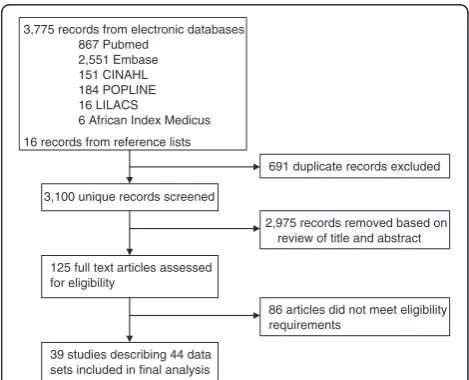
Results Search results
The search returned 3,775 results and an additional 16 papers were added from reference lists. There were 691 duplicate entries and 2,975 were subsequently removed after abstract screening. The full texts of the 125 remaining articles were reviewed and 39 met inclusion criteria (Figure 1). These 39 studies included a total of 44 datasets since five studies included multiple datasets; one study included datasets from two different time pe-riods [24], one study included datasets from two different countries [25], and two studies included datasets from both maternal and perinatal populations [24,26]. Two other studies analyzed deaths from different time periods [27,28] but the time periods were contiguous in these studies and so they were considered as one dataset each. We were unable to identify unpublished audits of ma-ternal and newborn deaths that met inclusion criteria. Therefore, only published data were used. We summarized
3,775 records from electronic databases 867 Pubmed
2,551 Embase 151 CINAHL 184 POPLINE 16 LILACS
6 African Index Medicus 16 records from reference lists
3,100 unique records screened
691 duplicate records excluded
2,975 records removed based on review of title and abstract
125 full text articles assessed for eligibility
86 articles did not meet eligibility requirements
39 studies describing 44 data sets included in final analysis
Figure 1Literature search flowchart.
Meraliet al. BMC Pregnancy and Childbirth2014,14:280 Page 3 of 12
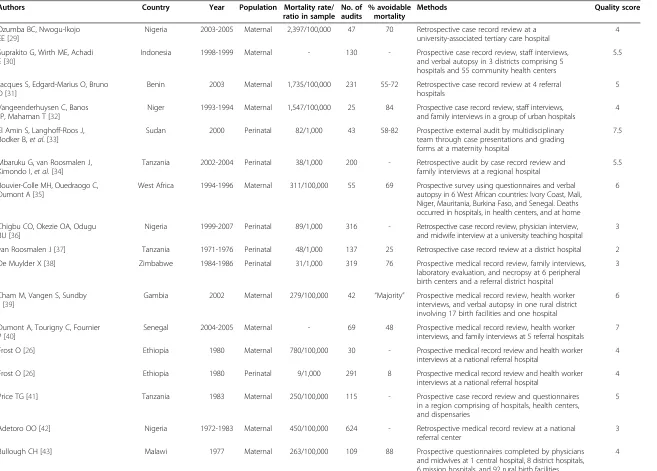
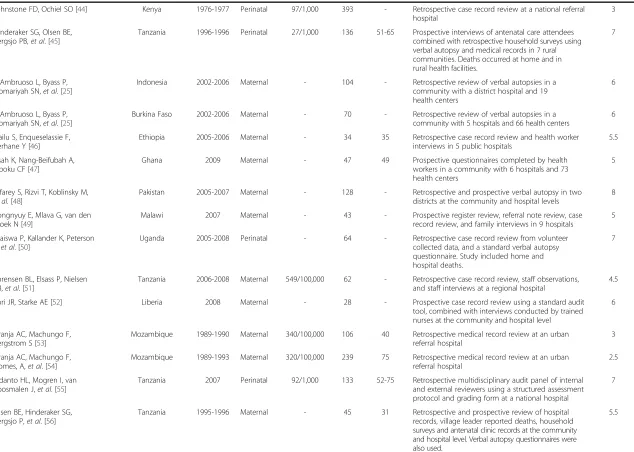
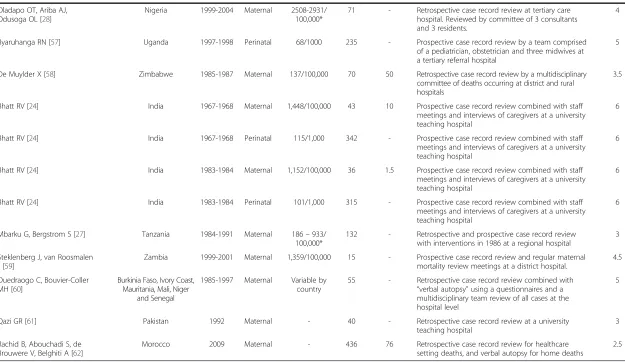
the datasets and categorized them by type of measure ex-amined [24-62] (Table 1).
Dataset characteristics
Forty-four datasets were included in the study, comprising a total of 6,205 audited deaths. The majority of the data-sets, 82%, came from African studies. Two datasets (4.5%) were from Pakistan [48,61], two (4.5%) from Indonesia [25,30], and four (9.1%) from India [24]. Of note, the four datasets from India were obtained from the same investi-gation [24]. The oldest dataset was from 1967 [24] and the most recent datasets were from 2009 [47,62]. Thirty-one of the 44 datasets (70.5%) examined maternal deaths while the other 13 datasets (29.5%) examined perinatal deaths. Study methods varied and there were an equal number of datasets that employed prospective methods (45.5%) as those that used retrospective methods (45.5%). Four of the datasets [27,45,48,56] (9.1%) used a combined retrospective and prospective methodology. The majority of the datasets, 72.7%, described hospital populations, while the remaining 27.3% described both hospital and community populations. Many of the studies reported the maternal mortality rate and perinatal mortal-ity rate from their audited populations, and these varied between studies. Just under half of the studies (47.7%) esti-mated the percentage of deaths that were thought to be avoidable in the sample audited, and this ranged from 1.5% to 88%. Quality scores for the audits ranged between 2–8 (See Table 1).
Avoidable factors
Overall there were 42 avoidable factors in maternal and perinatal deaths identified from the 44 datasets. These 42 factors fell into four general categories: health worker-oriented factors were the most common, account-ing for 28 (66.7%) of the 42 factors; the next most com-mon, in descending order of frequency, were patient-oriented factors (14.3%), administrative/supply factors (11.9%), and transport/referral factors (7.1%). All of the factors are summarized by category in Table 2 (within each category, factors are listed in order of relative num-ber of attributable deaths).
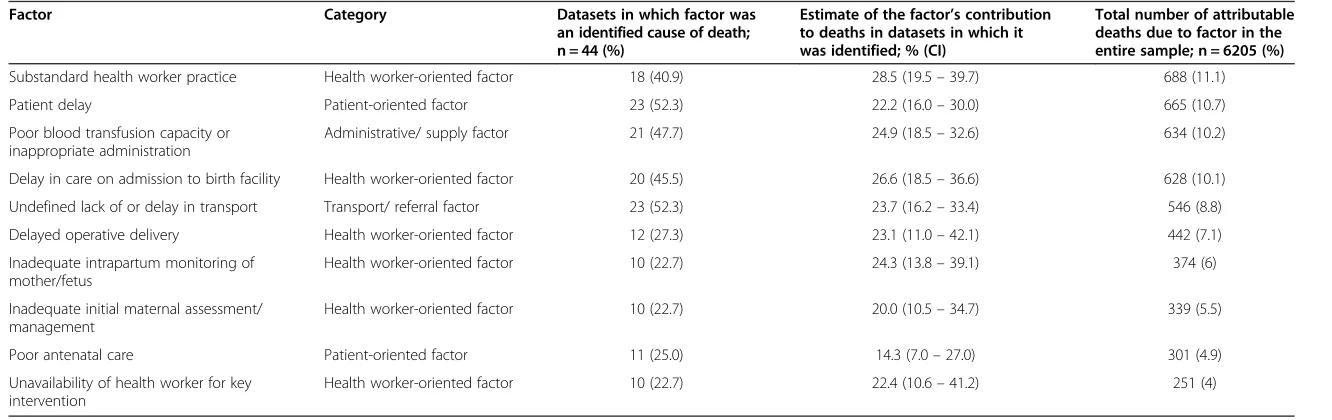
The top 10 avoidable factors, listed in order of attribut-able deaths, are shown in Tattribut-able 3. The number of deaths attributable to these factors ranged between 251–688 of the total sample of 6,205 audited deaths. Each of the top 10 avoidable factors was reported in a maternal or peri-natal death in 10–23 (22.7% - 52.3%) of the datasets. The most common factors reported overall were patient and transport delays, each of which was a reported factor in 52.3% of the datasets. Health care worker-oriented factors were the most common category of factors among the top 10 factors, accounting for six out of ten factors. Substand-ard health worker practice was responsible for the most
deaths (688 deaths), and we estimated that this factor con-tributed to 28.5% of the deaths in datasets where it was identified as an avoidable factor (See Additional file 2).
Discussion
To our knowledge, this is the first systematic review of avoidable factors in global maternal and perinatal deaths identified by mortality audits. Numerous avoidable factors were identified and found to be related to the behaviors and practices of both health workers and patients, as well as to administrative, supply, referral and transport prob-lems. Chronologically, factors took place across the con-tinuum of childbirth from the antenatal period, through labor and delivery, and into the postpartum and postnatal periods, though the majority of factors were clustered in the intrapartum period.
The most important avoidable factor by attributable deaths was substandard practice by health workers. While it would have been beneficial for audits to describe more precisely the specific substandard practices, there remains value in knowing that the majority of deaths were thought to have been avoidable if health workers performed better. This has implications for current strategies focused on assuring the presence of skilled health workers at every delivery, including campaigns that incentivize women to deliver in health facilities [63-66]. Our data are consist-ent with the idea that the presence of health workers at deliveries does not alone ensure the safe care of women and newborns. Adequate health worker training is vital and, presumably, so too are refresher courses and patient safety and quality initiatives that help to ensure that mini-mum standards of care are reliably delivered by health workers at each and every birth. While the audits specif-ically refer to substandard health worker practice, future work might include efforts to better understand how health care workers are supported or disempowered by the larger health system.
The second most important avoidable factor by at-tributable deaths was patient delay. Cultural issues and failure by women and their communities to recognize danger signs proved to be significant factors in mater-nal and perinatal deaths. Detailed descriptions of the specific reasons for patient delay in the studies in-cluded delays due to decision-making control by the ‘head of household,’childcare concerns for other chil-dren in the family, mistrust of the health system, and peer pressure by other members of the community. The data suggest that education in the antenatal period should not be reserved for women alone, but also made available to other members of her family and even the community-at-large, parties which may exert influ-ence over the timing of the woman’s presentation to skilled care. This is supported by a recent study in Kenya that also found strong a strong link between
Meraliet al. BMC Pregnancy and Childbirth2014,14:280 Page 4 of 12
Table 1 Summary of study datasets (n = 44)
Authors Country Year Population Mortality rate/
ratio in sample No. of audits
% avoidable mortality
Methods Quality score
Ozumba BC, Nwogu-Ikojo EE [29]
Nigeria 2003-2005 Maternal 2,397/100,000 47 70 Retrospective case record review at a
university-associated tertiary care hospital
4
Suprakito G, Wirth ME, Achadi E [30]
Indonesia 1998-1999 Maternal - 130 - Prospective case record review, staff interviews,
and verbal autopsy in 3 districts comprising 5 hospitals and 55 community health centers
5.5
Jacques S, Edgard-Marius O, Bruno D [31]
Benin 2003 Maternal 1,735/100,000 231 55-72 Retrospective case record review at 4 referral
hospitals
5
Vangeenderhuysen C, Banos JP, Mahaman T [32]
Niger 1993-1994 Maternal 1,547/100,000 25 84 Prospective case record review, staff interviews, and family interviews in a group of urban hospitals
4
El Amin S, Langhoff-Roos J, Bodker B,et al. [33]
Sudan 2000 Perinatal 82/1,000 43 58-82 Prospective external audit by multidisciplinary
team through case presentations and grading forms at a maternity hospital
7.5
Mbaruku G, van Roosmalen J, Kimondo I,et al. [34]
Tanzania 2002-2004 Perinatal 38/1,000 200 - Retrospective audit by case record review and
family interviews at a regional hospital
5.5
Bouvier-Colle MH, Ouedraogo C, Dumont A [35]
West Africa 1994-1996 Maternal 311/100,000 55 69 Prospective survey using questionnaires and verbal autopsy in 6 West African countries: Ivory Coast, Mali, Niger, Mauritania, Burkina Faso, and Senegal. Deaths occurred in hospitals, in health centers, and at home
6
Chigbu CO, Okezie OA, Odugu BU [36]
Nigeria 1999-2007 Perinatal 89/1,000 316 - Retrospective case record review, physician interview, and midwife interview at a university teaching hospital
3
van Roosmalen J [37] Tanzania 1971-1976 Perinatal 48/1,000 137 25 Retrospective case record review at a district hospital 2
De Muylder X [38] Zimbabwe 1984-1986 Perinatal 31/1,000 319 76 Prospective medical record review, family interviews,
laboratory evaluation, and necropsy at 6 peripheral birth centers and a referral district hospital
3
Cham M, Vangen S, Sundby J [39]
Gambia 2002 Maternal 279/100,000 42 “Majority” Prospective medical record review, health worker interviews, and verbal autopsy in one rural district involving 17 birth facilities and one hospital
6
Dumont A, Tourigny C, Fournier P [40]
Senegal 2004-2005 Maternal - 69 48 Prospective medical record review, health worker
interviews, and family interviews at 5 referral hospitals
7
Frost O [26] Ethiopia 1980 Maternal 780/100,000 30 - Prospective medical record review and health worker
interviews at a national referral hospital
4
Frost O [26] Ethiopia 1980 Perinatal 9/1,000 291 8 Prospective medical record review and health worker
interviews at a national referral hospital
4
Price TG [41] Tanzania 1983 Maternal 250/100,000 115 - Prospective case record review and questionnaires
in a region comprising of hospitals, health centers, and dispensaries
5
Adetoro OO [42] Nigeria 1972-1983 Maternal 450/100,000 624 - Retrospective medical record review at a national
referral center
3
Bullough CH [43] Malawi 1977 Maternal 263/100,000 109 88 Prospective questionnaires completed by physicians
and midwives at 1 central hospital, 8 district hospitals, 6 mission hospitals, and 92 rural birth facilities
4
Merali
et
al.
BMC
Pregnancy
and
Childbirth
2014,
14
:280
Page
5
o
f
1
2
http://ww
w.biomedce
ntral.com/1
Table 1 Summary of study datasets (n = 44)(Continued)
Johnstone FD, Ochiel SO [44] Kenya 1976-1977 Perinatal 97/1,000 393 - Retrospective case record review at a national referral
hospital
3
Hinderaker SG, Olsen BE, Bergsjo PB,et al. [45]
Tanzania 1996-1996 Perinatal 27/1,000 136 51-65 Prospective interviews of antenatal care attendees combined with retrospective household surveys using verbal autopsy and medical records in 7 rural communities. Deaths occurred at home and in rural health facilities.
7
D’Ambruoso L, Byass P, Qomariyah SN,et al.[25]
Indonesia 2002-2006 Maternal - 104 - Retrospective review of verbal autopsies in a
community with a district hospital and 19 health centers
6
D’Ambruoso L, Byass P, Qomariyah SN,et al.[25]
Burkina Faso 2002-2006 Maternal - 70 - Retrospective review of verbal autopsies in a
community with 5 hospitals and 66 health centers
6
Hailu S, Enqueselassie F, Berhane Y [46]
Ethiopia 2005-2006 Maternal - 34 35 Retrospective case record review and health worker
interviews in 5 public hospitals
5.5
Issah K, Nang-Beifubah A, Opoku CF [47]
Ghana 2009 Maternal - 47 49 Prospective questionnaires completed by health
workers in a community with 6 hospitals and 73 health centers
5
Jafarey S, Rizvi T, Koblinsky M,
et al.[48]
Pakistan 2005-2007 Maternal - 128 - Retrospective and prospective verbal autopsy in two
districts at the community and hospital levels
8
Kongnyuy E, Mlava G, van den Broek N [49]
Malawi 2007 Maternal - 43 - Prospective register review, referral note review, case
record review, and family interviews in 9 hospitals
5
Waiswa P, Kallander K, Peterson S,et al. [50]
Uganda 2005-2008 Perinatal - 64 - Retrospective case record review from volunteer
collected data, and a standard verbal autopsy questionnaire. Study included home and hospital deaths.
7
Sorensen BL, Elsass P, Nielsen BB,et al. [51]
Tanzania 2006-2008 Maternal 549/100,000 62 - Retrospective case record review, staff observations, and staff interviews at a regional hospital
4.5
Lori JR, Starke AE [52] Liberia 2008 Maternal - 28 - Prospective case record review using a standard audit
tool, combined with interviews conducted by trained nurses at the community and hospital level
6
Granja AC, Machungo F, Bergstrom S [53]
Mozambique 1989-1990 Maternal 340/100,000 106 40 Retrospective medical record review at an urban referral hospital
3
Granja AC, Machungo F, Gomes, A,et al. [54]
Mozambique 1989-1993 Maternal 320/100,000 239 75 Retrospective medical record review at an urban referral hospital
2.5
Kidanto HL, Mogren I, van Roosmalen J,et al. [55]
Tanzania 2007 Perinatal 92/1,000 133 52-75 Retrospective multidisciplinary audit panel of internal and external reviewers using a structured assessment protocol and grading form at a national hospital
7
Olsen BE, Hinderaker SG, Bergsjo P,et al. [56]
Tanzania 1995-1996 Maternal - 45 31 Retrospective and prospective review of hospital
records, village leader reported deaths, household surveys and antenatal clinic records at the community and hospital level. Verbal autopsy questionnaires were also used.
5.5
Merali
et
al.
BMC
Pregnancy
and
Childbirth
2014,
14
:280
Page
6
o
f
1
2
http://ww
w.biomedce
ntral.com/1
Table 1 Summary of study datasets (n = 44)(Continued)
Oladapo OT, Ariba AJ, Odusoga OL [28]
Nigeria 1999-2004 Maternal 2508-2931/
100,000*
71 - Retrospective case record review at tertiary care hospital. Reviewed by committee of 3 consultants and 3 residents.
4
Byaruhanga RN [57] Uganda 1997-1998 Perinatal 68/1000 235 - Prospective case record review by a team comprised
of a pediatrician, obstetrician and three midwives at a tertiary referral hospital
5
De Muylder X [58] Zimbabwe 1985-1987 Maternal 137/100,000 70 50 Retrospective case record review by a multidisciplinary
committee of deaths occurring at district and rural hospitals
3.5
Bhatt RV [24] India 1967-1968 Maternal 1,448/100,000 43 10 Prospective case record review combined with staff
meetings and interviews of caregivers at a university teaching hospital
6
Bhatt RV [24] India 1967-1968 Perinatal 115/1,000 342 - Prospective case record review combined with staff
meetings and interviews of caregivers at a university teaching hospital
6
Bhatt RV [24] India 1983-1984 Maternal 1,152/100,000 36 1.5 Prospective case record review combined with staff
meetings and interviews of caregivers at a university teaching hospital
6
Bhatt RV [24] India 1983-1984 Perinatal 101/1,000 315 - Prospective case record review combined with staff
meetings and interviews of caregivers at a university teaching hospital
6
Mbarku G, Bergstrom S [27] Tanzania 1984-1991 Maternal 186–933/
100,000*
132 - Retrospective and prospective case record review with interventions in 1986 at a regional hospital
3
Steklenberg J, van Roosmalen J [59]
Zambia 1999-2001 Maternal 1,359/100,000 15 - Prospective case record review and regular maternal
mortality review meetings at a district hospital.
4.5
Ouedraogo C, Bouvier-Coller MH [60]
Burkinia Faso, Ivory Coast, Mauritania, Mali, Niger
and Senegal
1985-1997 Maternal Variable by country
55 - Retrospective case record review combined with “verbal autopsy”using a questionnaires and a multidisciplinary team review of all cases at the hospital level
5
Qazi GR [61] Pakistan 1992 Maternal - 40 - Retrospective case record review at a university
teaching hospital
3
Rachid B, Abouchadi S, de Brouwere V, Belghiti A [62]
Morocco 2009 Maternal - 436 76 Retrospective case record review for healthcare
setting deaths, and verbal autopsy for home deaths
2.5
*2 calculations covering two different time periods within a continuous time period.
Merali
et
al.
BMC
Pregnancy
and
Childbirth
2014,
14
:280
Page
7
o
f
1
2
http://ww
w.biomedce
ntral.com/1
women’s structure of social support and likelihood of institutional delivery [67].
The third most important avoidable factor by attribut-able deaths related to blood transfusion capacity. Specific reasons cited included lack of accessibility to a blood bank, lack of materials for blood collection, blood safety concerns, recruitment of donors, and lack of infrastruc-ture. One typical example of limited blood transfusion capacity was noted in the study by Adetoro [42], in which it was described how the blood bank at their hospital is open only for 8 hours daily. At all other times, blood must
be retrieved from the blood bank of a larger hospital, lo-cated 4 kilometers away. Not only was distance an issue, but the authors also found that the larger hospital’s blood bank frequently suffered a lack of blood supply, and husbands and other relatives were unwilling to donate blood when asked.
The main limitation of this systematic review derives from limitations of the individual audits. As mentioned above, the assessment of avoidable factors in many cases would have benefited from a greater degree of granularity. For instance, factors such as “substandard health worker Table 2 Summary of the 42 avoidable factors, listed by category and in descending order of attributable deaths
Health worker-oriented factors Patient–oriented factors Administrative/supply factors Transport/ referral factors
Substandard health worker practice Patient delay Poor blood transfusion capacity
or inappropriate administration
Unidentified lack or delay in transport
Delay in care on admission to birth facility Poor antenatal care Medication shortage Poor transport between
facilities
Delayed operative delivery Use of herbal medicine General supply/ equipment shortage Poor transportation from
home to facility
Inadequate intrapartum monitoring of mother/fetus
Cultural inhibitions causing delay in seeking care
Unsanitary environment
Inadequate initial maternal assessment and management
Financial constraints Inadequate operating theatre facilities
Unavailability of health worker for key intervention
No knowledge of danger symptoms
Poor communication between health workers
Missed or unskilled breech delivery
Substandard health worker antenatal care practices
Inadequate monitoring of mothers in hypovolemic or septic shock
Poor neonatal resuscitation
Inadequate management of hypertensive related disorders
Failure to diagnose/ treat neonatal infection
Failure to diagnose preterm labor
Failure to diagnose/ treat syphilis
Health worker related referral delay
Inadequate management of 3rdstage of labor Poor postpartum maternal monitoring
Inappropriate indication for operative delivery
Inadequate partogram usage
Failure to diagnose/treat maternal/fetal infection
Anesthesia complications during operative delivery
Inadequate response to poor labor progress
Inadequate action taken for fetal distress
Inadequate assessment of fetal distress
Inadequate assisted vaginal delivery
Inappropriate discharge when patient not well
Health worker industrial strike
Meraliet al. BMC Pregnancy and Childbirth2014,14:280 Page 8 of 12
Table 3 Top 10 audit-identified avoidable factors in maternal and perinatal deaths
Factor Category Datasets in which factor was
an identified cause of death; n = 44 (%)
Estimate of the factor’s contribution to deaths in datasets in which it was identified; % (CI)
Total number of attributable deaths due to factor in the entire sample; n = 6205 (%)
Substandard health worker practice Health worker-oriented factor 18 (40.9) 28.5 (19.5–39.7) 688 (11.1)
Patient delay Patient-oriented factor 23 (52.3) 22.2 (16.0–30.0) 665 (10.7)
Poor blood transfusion capacity or inappropriate administration
Administrative/ supply factor 21 (47.7) 24.9 (18.5–32.6) 634 (10.2)
Delay in care on admission to birth facility Health worker-oriented factor 20 (45.5) 26.6 (18.5–36.6) 628 (10.1)
Undefined lack of or delay in transport Transport/ referral factor 23 (52.3) 23.7 (16.2–33.4) 546 (8.8)
Delayed operative delivery Health worker-oriented factor 12 (27.3) 23.1 (11.0–42.1) 442 (7.1)
Inadequate intrapartum monitoring of mother/fetus
Health worker-oriented factor 10 (22.7) 24.3 (13.8–39.1) 374 (6)
Inadequate initial maternal assessment/ management
Health worker-oriented factor 10 (22.7) 20.0 (10.5–34.7) 339 (5.5)
Poor antenatal care Patient-oriented factor 11 (25.0) 14.3 (7.0–27.0) 301 (4.9)
Unavailability of health worker for key intervention
Health worker-oriented factor 10 (22.7) 22.4 (10.6–41.2) 251 (4)
Merali
et
al.
BMC
Pregnancy
and
Childbirth
2014,
14
:280
Page
9
o
f
1
2
http://ww
w.biomedce
ntral.com/1
practice” and “poor antenatal care” provide a broad orientation to where deficiencies in care occur, but greater specificity (e.g., what specific substandard heath worker practice took place? Why was antenatal care poor?) would provide more precise direction in order to successfully inform health solutions that target existing gaps in the health care system. Therefore, while the quantitative analyses presented are useful for helping to appreciate the relative frequencies with which avoidable factors were reported, the results of this study may have greater qualitative value through the description of where and when preventable deficiencies in care were reported to have occurred.
A second limitation was the lack of standardized audit forms used in the different studies included in this ana-lysis. Only 25 studies used a standardized form within their own study and none of these were identical between studies. This likely resulted in differences regarding how factors were both identified and labeled.
A third limitation is that the analysis was limited to published datasets in the medical literature. As a result, the sample of deaths audited was not random. The major-ity of the datasets included were from Africa, and data were not weighted based on population size.
Finally, a limitation of this review is the number of datasets included. While the number of datasets identified was robust on an absolute scale, we were surprised that more did not exist given that the inclusion criteria were liberal in terms of study date (1965 onwards) and geog-raphy (any low- and lower-middle income country). Au-dits are a proven method for helping to improve quality of care relating to childbirth [68], and some countries, such as South Africa in particular, have taken pioneering efforts to incorporate audits into the national healthcare system [12,13,18]. The findings of this review that relatively so few audits are being conducted (or, at least, reported) globally could constitute a call to action for stakeholders to initiate mortality audit programs, particularly in settings where rates of maternal and perinatal deaths are high.
Conclusions
Audit processes highlight precisely where breakdowns in clinical care occur and are an established method for facilitating quality improvement in health systems. Through a systematic review of avoidable factors in ma-ternal and perinatal mortality we are able to identify the specific timing and nature of factors that are reported to be associated with severe childbirth-related harm in low resource settings. These data can be used to inform the development of health system improvements that specific-ally target known deficiencies in care, which represents a rational approach for measurably improving health and achieving progress towards Millennium Development Goals Four and Five.
Additional files
Additional file 1:Preferred Reporting Items for Systematic Reviews and Meta-Analyses (PRISMA) Checklist.
Additional file 2:Estimate of contribution of substandard health worker practice to maternal and perinatal deaths.
Abbreviations
MDG:Millennium development goal; WHO: World Health Organization.
Competing interests
The authors declare that they have no competing interests.
Authors’contributions
HSM participated in developing the project, reviewed all of the manuscripts included in this study, carried out the data collection, and wrote the first version of the manuscript. SL and NH participated in developing the project, performed all of the statistical analysis, and wrote the statistical analysis section of the manuscript. AL, PA, and AAG participated in developing the project. JS participated in developing the project, reviewed all of the manuscripts included in this study, carried out the data collection, participated in writing the first version of the manuscript, and was responsible for coordinating the entire project. All authors read and approved the final manuscript.
Acknowledgements
The authors thank Grace Galvin (Harvard School of Public Health) and Paul Bain (Countway Library, Harvard Medical School) for their assistance with developing the search strategy and obtaining the articles to be reviewed.
Author details
1The Hospital for Sick Children, 555 University Avenue, Toronto, ON M5G 1X8, Canada.2Center for Surgery and Public Health, Brigham and Women’s Hospital, Boston, MA, USA.3Ariadne Labs: A Joint Center at Brigham and Women’s Hospital and Harvard School of Public Health, Boston, MA, USA. 4World Health Organization, Geneva, Switzerland.5Harvard School of Public Health, Boston, MA, USA.6MassGeneral Hospital for Children, Boston, MA, USA.
Received: 17 December 2013 Accepted: 5 August 2014 Published: 16 August 2014
References
1. Walker N, Yenokyan G, Friberg IK, Bryce J:Patterns in coverage of maternal, newborn, and child health interventions: projections of neonatal and under-5 mortality to 2035.Lancet2013,382(9897):1029–1038. 2. Bhutta ZA, Chopra M, Axelson H, Berman P, Boerma T, Bryce J, Bustreo F,
Cavagnero E, Cometto G, Daelmans B, de Francisco A, Fogstad H, Gupta N, Laski L, Lawn J, Maliqi B, Mason E, Pitt C, Requejo J, Starrs A, Victora CG, Wardlaw T:Countdown to 2015 decade report (2000–10): taking stock of maternal, newborn, and child survival.Lancet2010,375(9730):2032–2044. 3. Hogan MC, Foreman KJ, Naghavi M, Ahn SY, Wang M, Makela SM, Lopez
AD, Lozano R, Murray CJ:Maternal mortality for 181 countries, 1980–2008: a systematic analysis of progress towards millennium development goal 5.Lancet2010,375(9726):1609–1623.
4. Rajaratnam JK, Marcus JR, Flaxman AD, Wang H, Levin-Rector A, Dwyer L, Costa M, Lopez AD, Murray CJ:Neonatal, postneonatal, childhood, and under-5 mortality for 187 countries, 1970–2010: a systematic analysis of progress towards millennium development goal 4.Lancet2010,
375(9730):1988–2008.
5. Lawn JE, Blencowe H, Pattinson R, Cousens S, Kumar R, Ibiebele I, Gardosi J, Day LT, Stanton C:Stillbirths: where? when? why? how to make the data count?Lancet2011,377(9775):1448–1463.
6. Ronsmans C, Graham WJ:Maternal mortality: who, when, where, and why.Lancet2006,368(9542):1189–1200.
7. Lawn JE, Cousens S, Zupan J:4 million neonatal deaths: when? where? why?Lancet2005,365(9462):891–900.
8. Mancey-Jones M, Brugha RF:Using perinatal audit to promote change: a review.Health Policy Plan1997,12(3):183–192.
Meraliet al. BMC Pregnancy and Childbirth2014,14:280 Page 10 of 12
9. Pattinson R, Kerber K, Waiswa P, Day LT, Mussell F, Asiruddin SK, Blencowe H, Lawn JE:Perinatal mortality audit: counting, accountability, and overcoming challenges in scaling up in low- and middle-income coun-tries.Int J Gynaecol Obstet2009,107(Suppl 1):S113–S121. S121-112. 10. Dumont A, Fournier P, Abrahamowicz M, Traore M, Haddad S, Fraser WD:
Quality of care, risk management, and technology in obstetrics to reduce hospital-based maternal mortality in Senegal and Mali (QUARITE): a cluster-randomised trial.Lancet2013,382(9887):146–157.
11. Kidanto HL, Wangwe P, Kilewo CD, Nystrom L, Lindmark G:Improved quality of management of eclampsia patients through criteria based audit at Muhimbili National Hospital, Dar es Salaam, Tanzania. bridging the quality gap.BMC Pregnancy Childbirth2012,12:134.
12. Bradshaw D, Chopra M, Kerber K, Lawn JE, Bamford L, Moodley J, Pattinson R, Patrick M, Stephen C, Velaphi S:Every death counts: use of mortality audit data for decision making to save the lives of mothers, babies, and children in South Africa.Lancet2008,371(9620):1294–1304.
13. Saving Mothers 2008–2010: Fifth report on the confidential enquiries into maternal deaths in South Africa.http://www.hst.org.za/sites/default/ files/savingmothersshort.pdf.
14. Pattinson RC:Saving Babies: A Perinatal Care Survey of South Africa 2000 Executive Summary.Pretoria, South Africa: The MRC Unit for Maternal and Infant Health Care Strategies; 2000.
15. World Bank:World Development Indicators.Washington, DC: World Bank; 2011.
16. World Health Organization: health statistics and information systems.
http://www.who.int/healthinfo/statistics/indmaternalmortality/en/. 17. World Health Organization: maternal, newborn, child and adolescent
health.http://www.who.int/maternal_child_adolescent/topics/maternal/ maternal_perinatal/en/.
18. Saving babies 2003–2005: fifth perinatal care survey of South Africa.
http://bettercare.co.za/wp-content/uploads/2013/01/Saving-Babies-2003-2005.pdf.
19. Aveyard H:Doing a Literature Review in Health and Social Care: A Practical Guide.2nd edition. New York: Open University Press; 2010.
20. Pirkle CM, Dumont A, Zunzunegui MV:Criterion-based clinical audit to assess quality of obstetrical care in low- and middle-income countries: a systematic review.Int J Qual Health Care2011,23(4):456–463.
21. Chang BH, Waternaux C, Lipsitz S:Meta-analysis of binary data: which within study variance estimate to use?Stat Med2001,20(13):1947–1956. 22. DerSimonian R, Laird N:Meta-analysis in clinical trials.Control Clin Trials
1986,7(3):177–188.
23. Liberati A, Altman DG, Tetzlaff J, Mulrow C, Gotzsche PC, Ioannidis JP, Clarke M, Devereaux PJ, Kleijnen J, Moher D:The PRISMA statement for reporting systematic reviews and meta-analyses of studies that evaluate healthcare interventions: explanation and elaboration.BMJ2009,339:b2700. 24. Bhatt RV:Professional responsibility in maternity care: role of medical
audit.Int J Gynaecol Obstet1989,30(1):47–50.
25. D’Ambruoso L, Byass P, Qomariyah SN, Ouedraogo M:A lost cause? extending verbal autopsy to investigate biomedical and socio-cultural causes of maternal death in Burkina Faso and Indonesia.Soc Sci Med 2010,71(10):1728–1738.
26. Frost O:Maternal and perinatal deaths in an Addis Ababa Hospital, 1980.
Ethiop Med J1984,22(3):143–146.
27. Mbaruku G, Bergstrom S:Reducing maternal mortality in Kigoma, Tanzania.Health Policy Plan1995,10(1):71–78.
28. Oladapo OT, Ariba AJ, Odusoga OL:Changing patterns of emergency obstetric care at a Nigerian University hospital.Int J Gynaecol Obstet2007,
98(3):278–284.
29. Ozumba BC, Nwogu-Ikojo EE:Avoidable maternal mortality in Enugu, Nigeria.Public Health2008,122:354–360.
30. Supratikto G, Wirth ME, Achadi E, Cohen S, Ronsmans C:A district-based audit of the causes and circumstances of maternal deaths in South Kalimantan, Indonesia.Bull World Health Organ2002,80(3):228–234. 31. Jacques S, Edgard-Marius O, Bruno D:Maternal deaths audit in four Benin
referral hospitals: quality of emergency care causes and contributing factors.Afr J Reprod Health2006,10:28–40.
32. Vangeenderhuysen C, Banos JP, Mahaman T:Preventable maternal mortality in an urban area in Niamey (Niger).Sante1995,5:49–54. 33. El Amin S, Langhoff-Roos J, Bødker B, Bakr AA, Ashmeig AL, Ibrahim SA,
Lindmark G:Introducing qualitative perinatal audit in a tertiary hospital in Sudan.Health Policy Plan2002,17:296–303.
34. Mbaruku G, van Roosmalen J, Kimondo I, Bilango F, Bergström S:Perinatal audit using the 3-delays model in western Tanzania.Int J Gynaecol Obstet 2009,106:85–88.
35. Bouvier-Colle MH, Ouedraogo C, Dumont A, Vangeenderhuysen C, Salanave B, Decam C:Maternal mortality in West Africa. rates, causes and substandard care from a prospective survey.Acta Obstet Gynecol Scand 2001,80:113–119.
36. Chigbu CO, Okezie OA, Odugu BU:Intrapartum stillbirth in a Nigerian tertiary hospital setting.Int J Gynaecol Obstet2009,104:18–21. 37. Van Roosmalen J:Perinatal mortality in rural Tanzania.Br J Obstet
Gynaecol1989,96:827–834.
38. De Muylder X:Perinatal mortality audit in a Zimbabwean district.Paediatr Perinat Epidemiol1989,3:284–293.
39. Cham M, Vangen S, Sundby J:Maternal deaths in rural Gambia.Glob Public Health2007,2:359–372.
40. Dumont A, Tourigny C, Fournier P:Improving obstetric care in low-resource settings: implementation of facility-based maternal death reviews in five pilot hospitals in Senegal.Hum Resour Health2009,7:61.
41. Price TG:Preliminary report on maternal deaths in the Southern Highlands of Tanzania in 1983.J Obstet Gynaecol East Cent Africa1984,3:103–110. 42. Adetoro OO:Maternal mortality–a twelve-year survey at the University of
Ilorin Teaching Hospital (U.I.T.H.) Ilorin, Nigeria.Int J Gynaecol Obstet1987,
25(2):93–98.
43. Bullough CH:Analysis of maternal deaths in the Central Region of Malawi.East Afr Med J1981,58:25–36.
44. Johnstone FD, Ochiel SO:Perinatal mortality at Kenyatta National Hospital, Nairobi.East Afr Med J1980,57:119–123.
45. Hinderaker SG, Olsen BE, Bergsjo PB, Gasheka P, Lie RT, Havnen J, Kvale G:
Avoidable stillbirths and neonatal deaths in rural Tanzania.Bjog2003,
110(6):616–623.
46. Hailu S, Enqueselassie F, Berhane Y:Health facility-based maternal death audit in Tigray, Ethiopia.Ethiop J Heal Dev2009,23:115–119.
47. Issah K, Nang-Beifubah A, Opoku CF:Maternal and neonatal survival and mortality in the Upper West Region of Ghana.Int J Gynaecol Obstet2011,
113:208–210.
48. Jafarey SN, Rizvi T, Koblinsky M, Kureshy N:Verbal autopsy of maternal deaths in two districts of Pakistan–filling information gaps.J Health Popul Nutr2009,27(2):170–183.
49. Kongnyuy EJ, Mlava G, van den Broek N:Facility-based maternal death review in three districts in the central region of Malawi: an analysis of causes and characteristics of maternal deaths.Womens Health Issues2009,
19:14–20.
50. Waiswa P, Kallander K, Peterson S, Tomson G, Pariyo GW:Using the three delays model to understand why newborn babies die in eastern Uganda.Trop Med Int Health2010,15:964–972.
51. Sorensen BL, Elsass P, Nielsen BB, Massawe S, Nyakina J, Rasch V:
Substandard emergency obstetric care - a confidential enquiry into maternal deaths at a regional hospital in Tanzania.Trop Med Int Health 2010,15:894–900.
52. Lori JR, Amable EE, Mertz SG, Moriarty K:Behavior change following implementation of home-based life-saving skills in Liberia, West Africa.
J Midwifery Womens Health2012,57:495–501.
53. Granja AC, Machungo F, Bergstrom S:Avoidability of maternal death in Mozambique: audit and retrospective risk assessment in 106 consecutive cases.Afr J Health Sci2000,7:83–87.
54. Granja AC, Machungo F, Gomes A, Bergström S:Adolescent maternal mortality in Mozambique.J Adolesc Health2001,28:303–306.
55. Kidanto HL, Mogren I, van Roosmalen J, Thomas AN, Massawe SN, Nystrom L, Lindmark G:Introduction of a qualitative perinatal audit at Muhimbili National Hospital, Dar es Salaam, Tanzania.BMC Pregnancy Childbirth 2009,9:45.
56. Olsen BE, Hinderaker SG, Bergsjo P, Lie RT, Olsen OH, Gasheka P, Kvale G:
Causes and characteristics of maternal deaths in rural northern Tanzania.
Acta Obstet Gynecol Scand2002,81(12):1101–1109.
57. Byaruhanga RN:Improving healthcare by perinatal mortality audit and feedback.Trop Doct2000,30:94–97.
58. De Muylder X:Maternal mortality audit in a Zimbabwean province.Arch Gynecol Obstet1990,247:131–138.
59. Stekelenburg J, van Roosmalen J:The maternal mortality review meeting: experiences from Kalabo District Hospital, Zambia.Trop Doct2002,
32:219–223.
Meraliet al. BMC Pregnancy and Childbirth2014,14:280 Page 11 of 12
60. Ouédraogo C, Bouvier-Colle MH:Maternal mortality in West Africa: risk, rates, and rationale.J Gynecol Obstet Biol Reprod (Paris)2002,31:80–89. 61. Qazi G:Maternal mortality: an audit.J Coll Physicians Surg Pak1998,
9:251–256.
62. Rachid B, Abouchadi S, de Brouwere V:Implementation and outcomes of a national maternal mortality monitoring system in Morocco 2008–2009.
Trop Med Int Health2011,16:54.
63. Lim SS, Dandona L, Hoisington JA, James SL, Hogan MC, Gakidou E:India’s Janani Suraksha Yojana, a conditional cash transfer programme to increase births in health facilities: an impact evaluation.Lancet2010,
375(9730):2009–2023.
64. Rana TG, Chataut BD, Shakya G, Nanda G, Pratt A, Sakai S:Strengthening emergency obstetric care in Nepal: the Women’s Right to Life and Health Project (WRLHP).Int J Gynaecol Obstet2007,98(3):271–277. 65. Powell-Jackson T, Morrison J, Tiwari S, Neupane BD, Costello AM:The
experiences of districts in implementing a national incentive programme to promote safe delivery in Nepal.BMC Health Serv Res2009,9:97. 66. Ekirapa-Kiracho E, Waiswa P, Rahman MH, Makumbi F, Kiwanuka N, Okui O,
Rutebemberwa E, Bua J, Mutebi A, Nalwadda G, Serwadda D, Pariyo GW, Peters DH:Increasing access to institutional deliveries using demand and supply side incentives: early results from a quasi-experimental study.
BMC Int Health Hum Rights2011,11(Suppl 1):S11.
67. Ono M, Matsuyama A, Karama M, Honda S:Association between social support and place of delivery: a cross-sectional study in Kericho, Western Kenya.BMC Pregnancy Childbirth2013,13:214.
68. Bugalho A, Bergstrom S:Value of perinatal audit in obstetric care in the developing world: a ten-year experience of the Maputo model.Gynecol Obstet Invest1993,36(4):239–243.
doi:10.1186/1471-2393-14-280
Cite this article as:Meraliet al.:Audit-identified avoidable factors in maternal and perinatal deaths in low resource settings: a systematic review.BMC Pregnancy and Childbirth201414:280.
Submit your next manuscript to BioMed Central and take full advantage of:
• Convenient online submission
• Thorough peer review
• No space constraints or color figure charges
• Immediate publication on acceptance
• Inclusion in PubMed, CAS, Scopus and Google Scholar
• Research which is freely available for redistribution
Submit your manuscript at www.biomedcentral.com/submit
Meraliet al. BMC Pregnancy and Childbirth2014,14:280 Page 12 of 12