Open Peer Review
Any reports and responses or comments on the
article can be found at the end of the article.
SYSTEMATIC REVIEW
Variation in the observed effect of Xpert MTB/RIF testing for
tuberculosis on mortality: A systematic review and analysis of
trial design considerations
[version 1; peer review: 1 approved
with reservations]
Eleanor A. Ochodo
,
Nelson Kalema
, Samuel Schumacher
,
Karen Steingart , Taryn Young
, Susan Mallett
, Jon Deeks
, Frank Cobelens ,
Patrick M. Bossuyt
, Mark P. Nicol
, Adithya Cattamanchi
10
reduction was reported to be statistically significant in two studies. Study features that could explain the lack of observed effect on mortality included: the higher quality of care at study sites; inclusion of patients with a higher pre-test probability of TB leading to higher than expected empirical rates; performance of additional diagnostic testing not done in usual care leading to increased TB diagnosis or empiric treatment initiation; the recruitment of participants likely to return for follow-up; and involvement of study staff in ensuring adherence with care and follow-up.
Most studies of Xpert MTB/RIF were designed and conducted
Conclusion:
in a manner that resulted in more patients being diagnosed and treated for TB, minimising the potential difference in mortality Xpert MTB/RIF testing could have achieved compared to usual care.
Keywords
Tuberculosis diagnosis, methodology, Diagnostic trials, Impact studies
Eleanor A. Ochodo ( )
Corresponding author: [email protected]
: Conceptualization, Data Curation, Formal Analysis, Funding Acquisition, Investigation, Methodology, Project
Author roles: Ochodo EA
Administration, Resources, Software, Writing – Original Draft Preparation, Writing – Review & Editing; Kalema N: Data Curation, Formal Analysis, Funding Acquisition, Writing – Original Draft Preparation, Writing – Review & Editing; Schumacher S: Conceptualization, Methodology, Writing – Review & Editing; Steingart K: Writing – Review & Editing; Young T: Funding Acquisition, Supervision, Writing – Review & Editing; Mallett S: Writing – Review & Editing; Deeks J: Writing – Review & Editing; Cobelens F: Conceptualization, Methodology, Writing – Review & Editing;
: Conceptualization, Methodology, Writing – Review & Editing; : Conceptualization, Funding Acquisition, Methodology,
Bossuyt PM Nicol MP
Supervision, Writing – Review & Editing; Cattamanchi A: Conceptualization, Data Curation, Funding Acquisition, Methodology, Writing – Original Draft Preparation, Writing – Review & Editing
No competing interests were disclosed.
Competing interests:
This project was supported by the Wellcome Trust under grant number 109939 and the National Institute of Mental Health and
Grant information:
the Fogarty International Centre of the National Institutes of Health (NIH) under Award Numbers D43TW009343, D43 TW010037 as well as the University of California Global Health Institute (UCGHI). The content is solely the responsibility of the authors and does not necessarily represent the official views of the Wellcome Trust, NIH or UCGHI.
The funders had no role in study design, data collection and analysis, decision to publish, or preparation of the manuscript.
© 2019 Ochodo EA . This is an open access article distributed under the terms of the ,
Copyright: et al Creative Commons Attribution License
which permits unrestricted use, distribution, and reproduction in any medium, provided the original work is properly cited.
Ochodo EA, Kalema N, Schumacher S
How to cite this article: et al.Variation in the observed effect of Xpert MTB/RIF testing for tuberculosis on mortality: A systematic review and analysis of trial design considerations [version 1; peer review: 1 approved with
Wellcome Open Research 2019, :173 ( )
reservations] 4 https://doi.org/10.12688/wellcomeopenres.15412.1
12 Nov 2019, :173 ( )
First published: 4 https://doi.org/10.12688/wellcomeopenres.15412.1
Introduction
Tuberculosis (TB) is the leading cause of mortality from an infectious disease globally. The 2018 World Health Organiza-tion (WHO) TB report estimates that there were 10 million incident TB cases and about 1.6 million TB-related deaths in 20171. Early TB case detection and treatment initiation are
critical for TB care and global TB elimination.
Sputum smear microscopy remains the primary method for diagnosing pulmonary TB in most countries with a high TB burden. Microscopy has suboptimal sensitivity and requires patients to submit multiple sputum samples often over sev-eral days, leading to loss to follow-up and missed opportunities for case detection and treatment. Nucleic acid amplification tests (NAAT) are known to increase sensitivity but until recently were not feasible in high-burden countries2. In 20103,
WHO first recommended Xpert MTB/RIF (Cepheid, Sunny-vale, CA, USA), a semi-automated, cartridge-based NAAT, as a first-line TB test for all patients suspected to have multi-drug resistant TB or HIV-associated TB and in 20134, revised the
recommendation to include Xpert MTB/RIF testing for all patients suspected to have TB where resources permit.
Since the initial WHO recommendations based on diagnos-tic accuracy estimates, several trials5–12 have evaluated whether
Xpert MTB/RIF testing reduced mortality among those undergoing TB evaluation in comparison to smear microscopy or pre-existing diagnostic algorithms. These trials have reported variable estimates of reduction in mortality, with only two9,11
reporting a statistically significant decrease in mortality. A recently published individual patient data meta-analysis of five of such trials6–8,10,13 also did not show significantly reduced
six-month all-cause mortality (OR 0.88, 95% CI 0.68 to 1.14) in adults ≥18 years with presumptive pulmonary TB14.
Available literature cites possible reasons to explain methodo-logical limitations of test-treatment trials and Xpert MTB/RIF’s apparent lack of significant effect on mortality. A meth-odological review of test-treatment trials (n=103) published between 2004 and 2007 concluded that such trials were prob-ably underpowered and had issues related to blinding, attrition, and inadequate primary analyses15. Other reviews of trials of
Xpert MTB/RIF have raised issues related to the health systems in which the trials were conducted16, limited study power14,16,
persistent use of empirical therapy17, limitations in
interpret-ing trial results by focusinterpret-ing on statistical significance rather than clinically important differences18, and enrolling patients whose
test results are not likely to influence treatment decisions19.
However, to date, less attention has been paid to the external validity of trials: the extent to which the design and conduct of the trials reflect what could be expected in usual care. In addition to earlier identification of drug resistance, Xpert MTB/RIF testing is expected to reduce mortality through earlier identification of patients with TB (increased sensitivity compared with smear microscopy) and decreased pre-treatment loss to follow-up (faster turn-around-time for results). We conducted a systematic review to assess whether the design
and/or execution of studies also contributed to earlier identi-fication of patients with TB and decreased pre-treatment loss non-randomised studies assessing mortality following the introduction of Xpert MTB/RIF testing. We searched the Cochrane Central Register of Controlled Trials (CENTRAL), MEDLINE, and Scopus for studies in English published between 1 January 2009 and February 2019 with the terms ‘Xpert MTB/ RIF’ or ‘Xpert’ or ‘GeneXpert’ and ‘impact’ or ‘effect*’ or ‘implementation’ or ‘trial*’. We included studies that compared Xpert MTB/RIF to usual care as defined by the authors (for example sputum microscopy or culture), intending to measure the effect of these tests on mortality among participants presumed to have active pulmonary TB. Hypothetical trials or modelling studies were excluded. The study protocol, details of which are available as Extended data20, followed
PRISMA guidelines for performing systematic reviews, where applicable21,22; however, since this was not a classical
sys-tematic review, not all items were appropriate. A completed checklist is available from Open Science Framework20.
Appraisal of studies
One reviewer (NK) searched, identified and appraised eligi-ble articles up to December 2016. A second reviewer (EO) updated the search, identified and appraised eligible articles up to February 2019 in discussion with a senior reviewer (AC). The study data were extracted using Google forms and included the following elements: general study characteristics (geographical location, TB and HIV co-infection); description of study arms; sample size and power; description and results of the mortality outcome; and description of key study design features (study setting and context; study population; participant recruitment and enrolment; study procedures and participant follow-up). We used descriptive statistics to summarise quan-titative data and provide a narrative summary of key design features concerning their potential impact on usual care. In appraising usual care, we considered how the study was executed assessing if usual care was enhanced beyond what is considered routine23–27.
Results
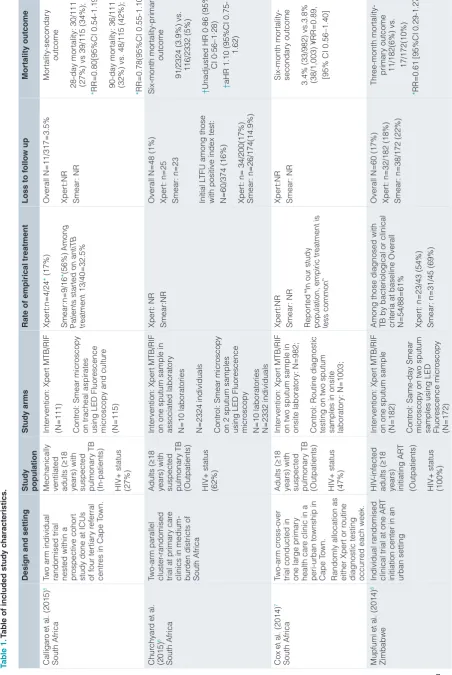
pre-post intervention study12. Further information about each trial
is given as Extended data20.
Each study was described as pragmatic by the study authors and involved patients undergoing evaluation for pulmonary
TB in routine care settings (primary health care clinics6–11 and
tertiary referral hospitals5,12). All eight studies were conducted
in high-TB-burden countries28, including seven in sub-Saharan
Africa5–10,12, and one in Brazil11. Seven studies included
adults ≥18 years5–10,12 and one study11 included adults and
children of any age. Proportion of HIV-positive participants in the included studies ranged from 10% to 100%.
Usual care consisted of sputum smear microscopy in all but one study, where both culture and smear microscopy comprised standard of care5 following a change in government policy
recommending Xpert MTB/RIF as the initial diagnostic test. Overall rates of participant loss to follow-up (LTFU) ranged from 1% to 22% in included studies. LTFU rates between trial arms were similar except for two studies in which LTFU was higher in the smear microscopy arm compared to the Xpert MTB/RIF arm (10% vs 2%12 and 22% vs 18%8, respectively).
All-cause mortality was evaluated in seven studies5–9,12,17
and TB-attributed mortality in one study11. Mortality was assessed
as the primary outcome in three studies6,9,12, as a composite
primary outcome in one study8 and as a secondary outcome in
the other four studies5,7,11,17.
All included studies demonstrated relative reductions in over-all mortality in the Xpert MTB/RIF arm ranging from 6% to 40%. However, mortality reduction was reported to be sta-tistically significant in two studies (Table 1)9,11. Ngwira and
colleagues9 reported a statistically significant reduction in
all-cause mortality in a subgroup of patients with newly diag-nosed advanced HIV at primary health clinics in Malawi (RR: 0.43, 95% CI: 0.22 to 0.87), but not in the overall study population (RR: 0.78, 95% CI: 0.58 to 1.06). Trajman and colleagues11
reported a lower TB-attributed death rate in the Xpert MTB/RIF arm (2.3% vs 3.8%; OR: 0.60, 95% CI: 0.42 to 0.86) among patients with presumptive TB in primary health clinics in Brazil.
Analysis of key study design features relative to usual care
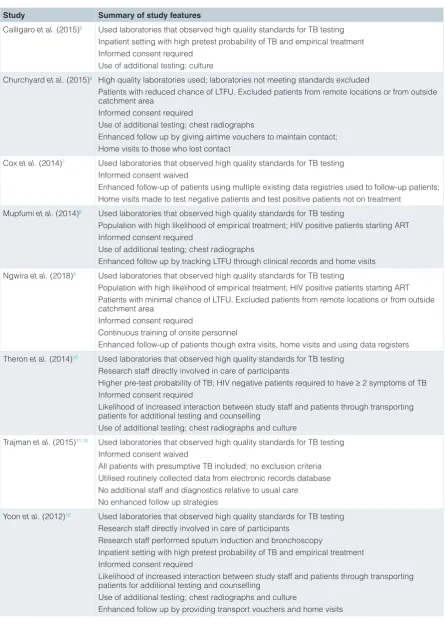
We analysed study features across five domains: study setting and context, study population, participant recruitment and enrol-ment, study procedures, and study follow-up. A summary of study features can be found in Table 2.
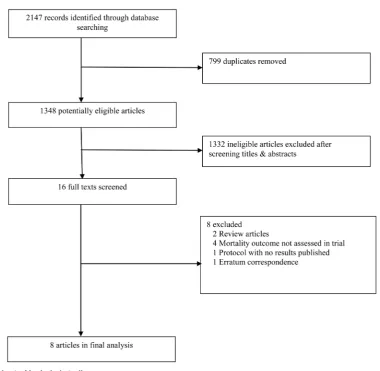
Figure 1. Flow chart of included studies.
Tab
randomised trial nested within a prospective cohor
t
study done at ICUs of four ter
tiar
Mechanically ventilated adults (
≥
18
years) with suspected pulmonar
y TB
(In-patients) HIV+ status (27%)
Intervention: Xper
t MTB/RIF
(N=111) Contr
ol: Smear micr
oscopy
on tracheal aspirates using LED Fluor
escence
years) with suspected pulmonar
y TB
(Outpatients) HIV+ status (62%)
Intervention: Xper
t MTB/RIF
on one sputum sample in associated laborator
y
N=10 la
boratories
N=2324 individuals Contr
ol: Smear micr
oscopy
on 2 sputum samples using LED Fluor
escence
with positive index test: N=60/374 (
16%)
91/2324 (3.9%) vs. 116/2332 (5%)
†
trial conducted in one large primar
y
health car
e clinic in a
peri-urban township in Cape T
own.
years) with suspected pulmonar
y TB
(Outpatients) HIV+ status (47%)
Intervention: Xper
t MTB/RIF
on two sputum sample in onsite laborator
y: N=982;
Contr
ol: Routine diagnostic
testing on two sputum samples in onsite laborator
y: N=1003;
3.4% (33/982) vs.3.8% (38/1,003) ¥RR=0.89, [95% CI 0.56–1.40]
Mupfumi
Individual randomised clinical trial at one AR
T
initiation center in an urban setting
HIV
Among those diagnosed with TB by bacteriological or clinical criteria at baseline Overall N=54/88=61% Xper
Design and setting
randomised trial at 12 rural primar
y health
clinics
Adults (
≥
18
years) newly diagnosed with HIV with suspected pulmonar
y TB.
Not on AR
T
(Out-patients) HIV+ status (100%)
Intervention: Point-of-car
e
Xper
t MTB/RIF on one
sputum sample (onsite same day) (N=
1001)
two spot sputum samples using LED Fluor
escence
6.7 vs. 8.6 per 100 person-years
R
South Africa, Zimbabwe, Zambia, Tanzania Individual randomised clinical trial at peri- urban primar
y health
years) with suspected pulmonar
y TB
(Outpatients) HIV+ status (60%) Intervention: Onsite, nurse- done Xper
t testing on one
sputum sample (N=744) Contr
ol: Same-day smear
of a stepped wedge cluster randomised trial. T
rial was
conducted in public health primar
y car
on one sputum sample in laborator
y
staining on two sputum samples
in laborator
result n=199 (8.9%) Smear:NR -Clin
ically diagnosed, negative
test n= 381 (20.5%) -Clinically diagnosed, no test result n=213 (11.5%) Over
al
aOR (HIV status and age
gr
implementation study at a national r
eferral
hospital in capital city
Adults (
≥
18
years) with suspected pulmonar
y TB
on two sputum samples using fluor
escence
14% vs. 17% (Among 252 bacteriologically confir
med
Estimates Relative Risk and 95% confidence intervals calculated by r
Table 2. Analysis of study features relative to usual care.
Study Summary of study features
Calligaro et al. (2015)5 Used laboratories that observed high quality standards for TB testing
Inpatient setting with high pretest probability of TB and empirical treatment Informed consent required
Use of additional testing; culture
Churchyard et al. (2015)6 High quality laboratories used; laboratories not meeting standards excluded
Patients with reduced chance of LTFU. Excluded patients from remote locations or from outside catchment area
Informed consent required
Use of additional testing; chest radiographs
Enhanced follow up by giving airtime vouchers to maintain contact; Home visits to those who lost contact
Cox et al. (2014)7 Used laboratories that observed high quality standards for TB testing
Informed consent waived
Enhanced follow-up of patients using multiple existing data registries used to follow-up patients; Home visits made to test negative patients and test positive patients not on treatment
Mupfumi et al. (2014)8 Used laboratories that observed high quality standards for TB testing
Population with high likelihood of empirical treatment; HIV positive patients starting ART Informed consent required
Use of additional testing; chest radiographs
Enhanced follow up by tracking LTFU through clinical records and home visits Ngwira et al. (2018)9 Used laboratories that observed high quality standards for TB testing
Population with high likelihood of empirical treatment; HIV positive patients starting ART Patients with minimal chance of LTFU. Excluded patients from remote locations or from outside catchment area
Informed consent required
Continuous training of onsite personnel
Enhanced follow-up of patients though extra visits, home visits and using data registers Theron et al. (2014)10 Used laboratories that observed high quality standards for TB testing
Research staff directly involved in care of participants
Higher pre-test probability of TB; HIV negative patients required to have ≥ 2 symptoms of TB Informed consent required
Likelihood of increased interaction between study staff and patients through transporting patients for additional testing and counselling
Use of additional testing; chest radiographs and culture
Trajman et al. (2015)11,13 Used laboratories that observed high quality standards for TB testing
Informed consent waived
All patients with presumptive TB included; no exclusion criteria Utilised routinely collected data from electronic records database No additional staff and diagnostics relative to usual care No enhanced follow up strategies
Yoon et al. (2012)12 Used laboratories that observed high quality standards for TB testing
Research staff directly involved in care of participants Research staff performed sputum induction and bronchoscopy
Inpatient setting with high pretest probability of TB and empirical treatment Informed consent required
Likelihood of increased interaction between study staff and patients through transporting patients for additional testing and counselling
Use of additional testing; chest radiographs and culture
Enhanced follow up by providing transport vouchers and home visits
Study setting and context
We focused on whether the quality of care in the usual care arm was higher at study sites than would be expected in usual care settings, either because of the sites chosen or the manner in which studies were executed. All eight studies used laborato-ries that observed high quality standards for TB testing, with one study6 excluding laboratories that did not meet quality
stand-ards. In two studies, research staff were directly involved in the care of participants, including facilitating chest X-rays, deliv-ering test results to participants, and referring participants for TB treatment10,12. In one study, research staff performed
sputum induction and bronchoscopy, neither of which were routinely available at the study site12.
Study population
Empiric treatment is more common when pre-test probability of TB is high17,19 or in study populations with very ill patients who
have a high likelihood of dying, reducing the potential impact of Xpert MTB/RIF, a more sensitive test than sputum microscopy. Five studies reported rates of empiric treatment, and the rates ranged from 12% to 60%5,8,10–12. Five of eight studies enrolled
participants with a higher pre-test probability of TB than the tar-get population (i.e., all patients referred for sputum-based TB testing in usual care). Yoon and colleagues12 and Calligaro and
colleagues5 conducted their studies in inpatient settings, where
TB prevalence and empiric treatment rates are generally higher than in outpatient settings. Theron and colleagues10 required
HIV-negative participants to have at least two TB symptoms (cough for more than two weeks, fever lasting two weeks, weight loss, sweats, fatigue, chest pain or hemoptysis), rather than locations, reducing the potential for loss to follow-up.
Participant recruitment/enrolment
pre-treatment loss to follow-up relative to routine care.
Study procedures
The use of testing and other procedures not typically available in many high burden settings could lead to more patients being diagnosed with and treated for TB than would have occurred under usual care. For example, chest radiography was performed in all participants in two studies10,12, at baseline at the
discre-tion of clinicians in one study8 and in HIV-positive participants
with a negative index test result in another study6. The
avail-ability of chest radiograph results compatible with active TB is likely to have made empiric TB treatment initiation more frequent, especially for HIV-positive participants10. Culture is
not routinely available in most high TB burden settings. How-ever, it was part of usual care in one study setting5, and was
performed in two other studies as a reference standard for diagnostic test accuracy calculations10,12. In all these three
studies, a positive culture test result also informed treatment in the Xpert MTB/RIF arm. registers to trace participants who missed clinic appointments. Yoon and colleagues provided transport vouchers and made home visits for patients who did not return for scheduled follow-up visits12. The enhanced follow-up procedures likely increased
initiation of TB treatment for those with bacteriologically- confirmed disease and those without bacteriological confirmation but persistent symptoms.
Discussion
Our review has implications for the design of future trials aiming to assess the comparative effectiveness of novel TB diagnostics. We highlight features of trial design and execu-tion that could have mitigated the key advantages of Xpert MTB/RIF relative to smear microscopy with respect to faster diagnosis and treatment of TB patients. Such features included: a higher quality of care in comparison to usual care at trial sites, inclusion of patients with higher pre-test probability of TB relative to all patients undergoing TB testing at the trial sites leading to higher than expected empiric treatment rates, selection criteria and increased contact with participants as a result of study procedures leading to reduced pre-treatment loss to follow-up, the performance of additional diagnostic test-ing not done in usual care leadtest-ing to increased TB diagnosis or empiric treatment initiation, the recruitment of partici-pants likely to return for follow-up, and involvement of
also published a literature review exploring Xpert MTB/RIF’s lack of effect on morbidity and mortality. They appraised eight trials (six randomised5–8,10,11 and two pre-post trials12,29)
and concluded that study characteristics that may explain this lack of effect on morbidity and mortality include underpow-ered trials, higher rates of empiric treatment in the control arms compared to the Xpert MTB/RIF arm, studies with populations not comprised exclusively of those likely to
benefit from Xpert MTB/RIF, and health system limitations such as patient loss to follow-up. Our review extends upon and contextualizes these findings by focusing on how specific study design and execution features that improve upon usual care may mitigate the potential benefit of novel diagnostics. Of the eight studies included in our review, Trajman and col-leagues11 minimally interrupted usual care for that setting.
The study was conducted at public primary care settings, included all patients undergoing TB testing (no exclusion cri-teria) and utilized routinely collected data to assess outcomes. Electronic records of routinely collected diagnostic, treatment and outcome data were linked and analysed retrospectively with minimal influence by external research staff. Trajman and colleagues also did not utilize additional resources in terms of staff or diagnostics that were used over and above what was available in usual care settings and similar implementation pro-tocols were uniformly applied at all sites. Informed consent
encouraged to use the Pragmatic Explanatory Continuum Indicator Summary (PRECIS) tool to inform design deci-sions on how explanatory (ideal context) or pragmatic (usual care context) the study features of their trials can be in the pragmatic/explanatory continuum33. Trial findings also need
to be interpreted in line with the trial’s position in this continuum particularly if they are labelled as pragmatic.
When a study aims to provide valid evidence for or against the introduction of a trial-validated intervention in real-world set-tings, a more pragmatic trial is needed to evaluate its performance in less controlled, heterogeneous settings and populations that are typical of the settings the intervention is intended for34. The study population should be all persons that would
qualify for the intervention under usual care including adults and children and participants that may be prone to loss to
follow-up. Recruitment approaches should be built on existing ones35. Individual consent should be inferred from participants’
presentation at the health facility and request for treatment especially if the intervention under study is already approved. Study populations, would, therefore present themselves to the health facility staff and be evaluated by no more effort than that observed under usual care or alternative methods of obtaining consent can be sought such as consent waivers, integrated clinical and research consent, and broadcast consent (notifications in health settings informing patients that trials with minimal risk are permitted)36. The intervention
should be delivered through usual care providers and resources34.
Data on patients and outcome measures should also be gath-ered from routine programmatic data sources wherever efforts can be made to strengthen data collection and bring it to a higher standard, without having the potentially problematic effect of placing research staff at each study site.
The strengths of our review include a comprehensive search in multiple databases for studies assessing the effect of Xpert MTB/RIF testing on mortality. Two reviewers extracted data in discussion with a senior reviewer. Our review was limited by focusing on the effect of Xpert MTB/RIF on one health outcome. However, other health outcomes such as morbidity and quality of life are limited by lack of standardized scores and are rarely18 measured in trials. For example, only one trial10 in
our review evaluated the effect on morbidity and none evalu-ated the effect on quality of life. An advantage of Xpert is its high sensitivity in detecting rifampicin-resistant TB37. It would
be informative to evaluate the effect of Xpert MTB/RIF on health outcomes in patients with rifampicin-resistant TB. How-ever, none of the included studies evaluated the effect of Xpert was reported in the included studies.
In conclusion, although presented as pragmatic, specific study design and execution choices are likely to reduce the ability of tension between balancing internal and external validity. Nonetheless, our findings indicate trials that are further along the explanatory-pragmatic continuum are needed to evaluate the impact of the next-generation of TB diagnostics in real-world settings.
Data availability Underlying data
All data underlying the results are available as part of the article and no additional source data are required.
Extended data
Open Science Framework: Variation in the observed effect of Xpert MTB/RIF testing for tuberculosis on mortality. https://doi.org/10.17605/OSF.IO/HXYQW20.
This project contains the following extended data:
• Protocol-Literature Review_v4 (protocol for this review).
• Systematic review data-TB Xpert Effect (data on studies identified by this review).
Reporting guidelines
Open Science Framework: PRISMA checklist and flow chart for ‘Variation in observed effect of Xpert MTB/RIF testing for tuberculosis on mortality’ https://doi.org/10.17605/OSF.IO/ HXYQW20.
Data are available under the terms of the Creative Commons Zero “No rights reserved” data waiver (CC0 1.0 Public domain dedication).
References
1. WHO: Global Tuberculosis Report. Geneva: World Health Organization. 2018;
(accessed April 01, 2019).
Reference Source
2. UNITAID: Tuberculosis Diagnostics Technology Landscape 5th Edition. Geneva. 2017; (accessed January 10, 2019).
Reference Source
3. WHO: WHO Policy statement: automated real-time nucleic acid amplification technology for rapid and simultaneous detection of tuberculosis and rifampicin resistance: Xpert MTB/RIF system. World Health Organization. 2011;
(accessed January 10, 2019).
Reference Source
4. WHO: Automated real-time nucleic acid amplification technology for rapid and simultaneous detection of tuberculosis and rifampicin resistance: Xpert MTB/ RIF assay for the diagnosis of pulmonary and extrapulmonary TB in adults and children: Policy Update. World Health Organization. 2013; (accessed January
10, 2019).
Reference Source
5. Calligaro GL, Theron G, Khalfey H, et al.: Burden of tuberculosis in intensive care units in Cape Town, South Africa, and assessment of the accuracy and effect on patient outcomes of the Xpert MTB/RIF test on tracheal aspirate samples for diagnosis of pulmonary tuberculosis: a prospective burden of disease study with a nested randomised controlled trial. Lancet Respir Med.
2015; 3(8): 621–30.
PubMed Abstract |Publisher Full Text
6. Churchyard GJ, Stevens WS, Mametja LD, et al.: Xpert MTB/RIF versus sputum microscopy as the initial diagnostic test for tuberculosis: a cluster-randomised trial embedded in South African roll-out of Xpert MTB/RIF. Lancet Glob Health. 2015; 3(8): e450–e7.
PubMed Abstract |Publisher Full Text
7. Cox HS, Mbhele S, Mohess N, et al.: Impact of Xpert MTB/RIF for TB diagnosis in a primary care clinic with high TB and HIV prevalence in South Africa: a pragmatic randomised trial. PLoS Med. 2014; 11(11): e1001760.
PubMed Abstract |Publisher Full Text |Free Full Text
8. Mupfumi L, Makamure B, Chirehwa M, et al.: Impact of Xpert MTB/RIF on Antiretroviral Therapy-Associated Tuberculosis and Mortality: A Pragmatic Randomized Controlled Trial. Open Forum Infect Dis. 2014; 1(1): ofu038.
PubMed Abstract |Publisher Full Text |Free Full Text
9. Ngwira LG, Corbett EL, Khundi M, et al.: Screening for Tuberculosis With Xpert MTB/RIF Assay Versus Fluorescent Microscopy Among Adults Newly Diagnosed With Human Immunodeficiency Virus in Rural Malawi: A Cluster Randomized Trial (Chepetsa). Clin Infect Dis. 2019; 68(7): 1176–1183.
PubMed Abstract |Publisher Full Text |Free Full Text
10. Theron G, Zijenah L, Chanda D, et al.: Feasibility, accuracy, and clinical effect of point-of-care Xpert MTB/RIF testing for tuberculosis in primary-care settings in Africa: a multicentre, randomised, controlled trial. Lancet. 2014; 383(9915):
424–35.
PubMed Abstract |Publisher Full Text
11. Trajman A, Durovni B, Saraceni V, et al.: Impact on Patients’ Treatment Outcomes of XpertMTB/RIF Implementation for the Diagnosis of Tuberculosis: Follow-Up of a Stepped-Wedge Randomized Clinical Trial. PLoS One. 2015; 10(4): e0123252.
PubMed Abstract |Publisher Full Text |Free Full Text
12. Yoon C, Cattamanchi A, Davis JL, et al.: Impact of Xpert MTB/RIF testing on tuberculosis management and outcomes in hospitalized patients in Uganda. PLoS One. 2012; 7(11): e48599.
PubMed Abstract |Publisher Full Text |Free Full Text
13. Durovni B, Saraceni V, van den Hof S, et al.: Impact of replacing smear microscopy with Xpert MTB/RIF for diagnosing tuberculosis in Brazil: a stepped-wedge cluster-randomized trial. PLoS Med. 2014; 11(12): e1001766.
PubMed Abstract |Publisher Full Text |Free Full Text
14. Di Tanna GL, Khaki AR, Theron G, et al.: Effect of Xpert MTB/RIF on clinical outcomes in routine care settings: individual patient data meta-analysis. Lancet Glob Health. 2019; 7(2): e191–e9.
PubMed Abstract |Publisher Full Text |Free Full Text
15. Ferrante di Ruffano L, Dinnes J, Sitch AJ, et al.: Test-treatment RCTs are susceptible to bias: a review of the methodological quality of randomized trials that evaluate diagnostic tests. BMC Med Res Methodol. 2017; 17(1): 35.
PubMed Abstract |Publisher Full Text |Free Full Text
16. Auld AF, Fielding KL, Gupta-Wright A, et al.: Xpert MTB/RIF - why the lack of morbidity and mortality impact in intervention trials? Trans R Soc Trop Med Hyg. 2016; 110(8): 432–44.
PubMed Abstract |Publisher Full Text
17. Theron G, Peter J, Dowdy D, et al.: Do high rates of empirical treatment undermine the potential effect of new diagnostic tests for tuberculosis in high-burden settings? Lancet Infect Dis. 2014; 14(6): 527–32.
PubMed Abstract |Publisher Full Text
18. Schumacher SG, Sohn H, Qin ZZ, et al.: Impact of Molecular Diagnostics for Tuberculosis on Patient-Important Outcomes: A Systematic Review of Study Methodologies. PLoS One. 2016; 11(3): e0151073.
PubMed Abstract |Publisher Full Text |Free Full Text
19. Boyles TH: Why do clinical trials of Xpert® MTB/RIF fail to show an effect on patient relevant outcomes? Int J Tuberc Lung Dis. 2017; 21(3): 249–50.
PubMed Abstract |Publisher Full Text
20. Ochodo E: Variation in the observed effect of Xpert MTB/RIF testing for tuberculosis on mortality. 2019.
http://www.doi.org/10.17605/OSF.IO/HXYQW
21. Higgins JPT, Lasserson T, Chandler J, et al.: Methodological Expectations of Cochrane Intervention Reviews. London: Cochrane, 2018.
Reference Source
22. Moher D, Liberati A, Tetzlaff J, et al.: Preferred reporting items for systematic reviews and meta-analyses: the PRISMA statement. PLoS Med. 2009; 6(7):
e1000097.
PubMed Abstract |Publisher Full Text |Free Full Text
23. Dal-Ré R, Janiaud P, Ioannidis JPA: Real-world evidence: How pragmatic are randomized controlled trials labeled as pragmatic? BMC Med. 2018; 16(1): 49.
PubMed Abstract |Publisher Full Text |Free Full Text
24. Glasgow RE, Magid DJ, Beck A, et al.: Practical clinical trials for translating research to practice: design and measurement recommendations. Med Care.
2005; 43(6): 551–7.
PubMed Abstract |Publisher Full Text
25. Huf G, Kritski A: Evaluation of the clinical utility of new diagnostic tests for tuberculosis: the role of pragmatic clinical trials. J Bras Pneumol. 2012; 38(2):
237–45.
PubMed Abstract |Publisher Full Text
26. Helms PJ: ‘Real world’ pragmatic clinical trials: what are they and what do they tell us? Pediatr Allergy Immunol. 2002; 13(1): 4–9.
PubMed Abstract |Publisher Full Text
27. Tunis SR, Stryer DB, Clancy CM: Practical clinical trials: increasing the value of clinical research for decision making in clinical and health policy. JAMA. 2003; 290(12): 1624–32.
PubMed Abstract |Publisher Full Text
28. WHO: Global Tuberculosis Report. Geneva: World Health Organization, 2017.
(accessed January 10, 2019).
Reference Source
29. van Kampen SC, Susanto NH, Simon S, et al.: Effects of Introducing Xpert MTB/RIF on Diagnosis and Treatment of Drug-Resistant Tuberculosis Patients in Indonesia: A Pre-Post Intervention Study. PLoS One. 2015; 10(6): e0123536.
PubMed Abstract |Publisher Full Text |Free Full Text
30. Green LW, Glasgow RE: Evaluating the relevance, generalization, and
applicability of research: issues in external validation and translation methodology. Eval Health Prof. 2006; 29(1): 126–53.
PubMed Abstract |Publisher Full Text
31. Shadish WR, Cook TD, Campbell DT: Experimental and quasi-experimental design for generalized causal inference. Boston: Houghton Mifflin, 2002. Reference Source
32. AHRQ: Using Pragmatic Clinical Trials to Test the Effectiveness of Patient-Centered Medical Home Models in Real-World Settings. Agency for Healthcare
Research and Quality. 2013. (accessed August 01, 2019).
Reference Source
33. Loudon K, Treweek S, Sullivan F, et al.: The PRECIS-2 tool: designing trials that are fit for purpose. BMJ. 2015; 350: h2147.
PubMed Abstract |Publisher Full Text
34. Worsley SD, Oude Rengerink K, Irving E, et al.: Series: Pragmatic trials and real world evidence: Paper 2. Setting, sites, and investigator selection. J Clin
Epidemiol. 2017; 88: 14–20.
PubMed Abstract |Publisher Full Text
35. Oude Rengerink K, Kalkman S, Collier S, et al.: Series: Pragmatic trials and real world evidence: Paper 3. Patient selection challenges and consequences. J Clin Epidemiol. 2017; 89: 173–80.
PubMed Abstract |Publisher Full Text
36. Kalkman S, van Thiel GJMW, Zuidgeest MGP, et al.: Series: Pragmatic trials and real world evidence: Paper 4. Informed consent. J Clin Epidemiol. 2017; 89: 181–7.
PubMed Abstract |Publisher Full Text
37. Horne DJ, Kohli M, Zifodya JS, et al.: Xpert MTB/RIF and Xpert MTB/RIF Ultra for pulmonary tuberculosis and rifampicin resistance in adults. Cochrane Database Syst Rev. 2019; 6: CD009593.
PubMed Abstract |Publisher Full Text |Free Full Text
38. Pai M, Behr MA, Dowdy D, et al.: Tuberculosis. Nat Rev Dis Primers. 2016; 2: 16076.
PubMed Abstract |Publisher Full Text
Open Peer Review
Current Peer Review Status:
Version 1
11 December 2019 Reviewer Report
https://doi.org/10.21956/wellcomeopenres.16852.r37001
© 2019 Boyles T. This is an open access peer review report distributed under the terms of the Creative Commons
, which permits unrestricted use, distribution, and reproduction in any medium, provided the original
Attribution License
work is properly cited.
Tom Boyles
Anova Health Institute, Johannesburg, South Africa
London School of Hygiene and Tropical Medicine, London, UK
Thank you for the opportunity to review this systematic review and analysis of trial design considerations
in the evaluation of Xpert MTB/RIF.
When Xpert MTB/RIF was first reported to have much higher sensitivity than the current test (smear
microscopy), it was widely assumed to be a game changer in terms of TB diagnostics. Multiple clinical
trials along with meta-analyses have shown that the impact is much less than was anticipated.
Rather than accept that Xpert MTB/RIF might not be an important addition to TB diagnostics, multiple
authors have tried to explain the lack of trial efficacy by examining the trial design.
In this review, the authors focus on 5 areas, study setting and context, population, recruitment and
enrollment, study procedures and follow-up.
The authors make a strong argument for many of the studies having sub-optimal design in these aspects
and conclude that “trialists face an inherent tension between balancing internal and external validity.
Nonetheless, our findings indicate trials that are further along the explanatory-pragmatic continuum are
needed to evaluate the impact of the next-generation of TB diagnostics in real-world settings.”
This is an interesting argument as in general, when trials are less pragmatic there tends to be a larger
effect size than in real world settings. The authors are arguing that in this instance, the opposite is true,
and that larger effect sizes would be seen in real world settings.
Their arguments are convincing but do not address the main reasons for the failure of these studies to
show an effect on mortality. In this reviewer’s opinion, the primary reason that many of these trials failed to
show an effect of Xpert MTB/RIF was fundamental design flaws in terms of the choice of the intervention
arm.
The fundamentals of determining the impact of a novel diagnostic is to perform ‘test research’ (diagnostic
accuracy studies) before moving to ‘diagnostic research’ (e.g. developing algorithms or prediction rules),
1
2
accuracy studies) before moving to ‘diagnostic research’ (e.g. developing algorithms or prediction rules),
before finally moving to ‘diagnostic intervention research’ (randomised trials). In the case of Xpert
MTB/RIF no adequate ‘diagnostic research’ was performed and so appropriate diagnostic strategies were
not developed prior to designing randomised trials. The trials therefore merely tested the standard of care,
which was smear microscopy and frequent empiric therapy (due to the known lack of sensitivity of smear)
vs Xpert MTB/RIF as a stand alone test. An appropriate research strategy would have been to first
develop a full diagnostic strategy based around Xpert MTB/RIF, which included for example, therapy for
patients with a high pre-test probability of disease regardless of Xpert result, empiric therapy for patients
with high pre-test probability who were unable to produce sputum, possibly with the inclusion of a trial of
antibiotics and referral for CXR when the diagnosis was in doubt.
Such an approach would have adequately compared the current standard of care with an evidence based
diagnostic strategy which included Xpert MTB/RIF. In their form that these studies were done, it was in my
opinion highly likely that no effect would be seen.
Therefore, while the authors make some convincing arguments as to how these trials might have been
better designed, my suggestion would be that they acknowledge that these were minor flaws in
comparison to those mentioned above. I would conclude that while there is room for improvement in the 5
areas they discuss, adequate randomised trials of Xpert MTB/RIF would compare the current standard of
care diagnostic strategy based around smear microscopy. with a novel diagnostic strategy which included
Xpert MTB/RIF, rather than simply comparing a test with another test.
Are the rationale for, and objectives of, the Systematic Review clearly stated?
Yes
Are sufficient details of the methods and analysis provided to allow replication by others?
Yes
Is the statistical analysis and its interpretation appropriate?
Yes
Are the conclusions drawn adequately supported by the results presented in the review?
Partly
No competing interests were disclosed.
Competing Interests:
Reviewer Expertise:
Infectious diseases clinician with an interest in the appropriate evaluation of novel
diagnostics, particularly for tuberculosis.
I confirm that I have read this submission and believe that I have an appropriate level of
expertise to confirm that it is of an acceptable scientific standard, however I have significant
reservations, as outlined above.