University of South Carolina
Scholar Commons
Theses and Dissertations
2015
National Register Nomination for St. James the
Greater Catholic Mission
Diana Garnett
University of South Carolina - Columbia
Follow this and additional works at:https://scholarcommons.sc.edu/etd
Part of thePublic History Commons
This Open Access Thesis is brought to you by Scholar Commons. It has been accepted for inclusion in Theses and Dissertations by an authorized administrator of Scholar Commons. For more information, please [email protected].
Recommended Citation
Garnett, D.(2015).National Register Nomination for St. James the Greater Catholic Mission.(Master's thesis). Retrieved from
National Register Nomination for
St. James the Greater Catholic Mission
By
Diana Garnett
Bachelor of Arts University of Virginia, 2011
Submitted in Partial Fulfillment of the Requirements
For the Degree of Master of Arts in
Public History
College of Arts and Sciences
University of South Carolina
2015
Accepted by:
Robert Weyeneth, Director of Thesis
Lydia Brandt, Reader
Acknowledgements
I am indebted to many people for the completion of this thesis. My first
thanks extends to the parishioners of St. James the Greater Parish, and their
pastor Father Antony Benjamine, who were always kind and welcoming, and
without whose consent I could never have initiated this project. In particular, I
am grateful to Linda Godley, administrative assistant at St. James, who
generously and trustingly granted me access to the property, and who has
remained my regular point of contact. The great bulk of my research was made
possible by Brian Fahey, archivist at the Diocese of Charleston, whose cheerful
expertise enlightened many long research days.
My advisors, Dr. Robert Weyeneth and Dr. Lydia Brandt, have been
indispensable mentors not only for this thesis, but throughout my time at the
University of South Carolina. They have been encouraging, patient, and
generous with their time and advice. Their thoughtful criticisms and insights
instill me with confidence in the quality of my finished product.
Grateful cheers to my constant comrades in work and school—Stephanie
Gray, Kristie DaFoe, Kayla Halberg, Robert Olguin, and Max Imberman. These
cookies, and library books already overdue, as well as provided invaluable
recourse for humor, commiseration, and companionship.
Last, and anything but least, thank you to my family. My brothers and
sisters—Maggie, Olivia, Thomas, Erin, Kate, Emily, and Ben—remain always my
best friends, never failing to keep me mindful of all that is good and important.
My parents, Joanne and Robert, have given me more encouragement and
enthusiasm than I could ever have asked. Their excitement and interest in this
project frequently surpassed even my own, and has been my chief motivation for
Abstract
St. James the Greater Catholic Mission constitutes a rare and possibly
unique site on the American landscape. Comprising a church, a schoolhouse, and
a cemetery, the mission parish serves the rural black community south of
Walterboro, South Carolina. Black Catholics in rural America are a rarity unto
themselves, but the St. James blacks are particularly extraordinary. Parishioners
today trace their roots to ancestors who were slaves of Irish Catholic planters in
the 1820s and 1830s. Originally biracial, the parish evolved into a predominantly
black congregation by the middle of the nineteenth century. The early white
heritage exists quietly on today in the parish cemetery: the sarcophagus of James
McKain, born in Derry, Ireland and deceased in Colleton County, South Carolina
in 1835, stands surrounded by nineteenth-century African-American graves.
St. James School introduced Catholic parochial education to South
Carolina’s rural blacks. The two-story schoolhouse that stands today served for
in the state.1 Constructed with donations from the Catholic nun and
philanthropist Katharine Drexel, the school operated from 1901 to 1960, when
integration brought about the consolidation and closing of black schools across
the South.
St. James Church lies east of the schoolhouse and completes this
exceptional, compact little Catholic campus. A northern white couple, Mr. and
Mrs. Edwin H. Denby, funded the building of the church in 1935. The shingled,
Gothic-styled edifice is emblematic of the style of the distinguished architect who
designed it, Catholic priest Michael McInerney. Together, the schoolhouse and
church give material expression to the black St. James community, as well as to
the whites who, acting out of a sense of Catholic fellowship, gave generously to
the poor African-American parish of whom they knew little but that they shared
the same faith. This white philanthropy supplemented the remarkable
steadfastness and perseverance of the St. James blacks, helping the mission to
survive and thrive for over a century.
1Commission for the Catholic Missions among the Colored People and the Indians, “Charleston,”
Table of Contents
Acknowledgements ... iii
Abstract... v
List of Figures ... ix
Chapter 1: Introduction ...1
1.1 A Nomination for the National Register of Historic Places ... 1
1.2 A Black Catholic Parish in the Lowcountry ... 3
Chapter 2: Architectural Descriptions ...5
2.1 St. James the Greater Church (1935) ...8
2.2 St. James the Greater Schoolhouse (1901) ...16
2.3 St. James the Greater Cemetery (1835) ...19
2.4 Noncontributing Resources ...22
2.5 Conclusion ...23
Chapter 3: Statement of Significance: Broad Patterns of History ...34
3.1 Religion: Catholicism in South Carolina ...35
3.2 Black Ethnic Heritage: Afro-Catholics in Rural South Carolina ...41
3.3 Education: Segregated Parochial Education in South Carolina ...52
4.1 Architectural Significance of St. James Church ...67
4.2 Architectural Significance of St. James Schoolhouse ...77
Chapter 5: Conclusion ...87
Bibliography ...90
Appendix A—Images ...96
List of Figures
Figure 2.1 Geological Map of Catholic Hill ...24
Figure 2.2 Sketch Map of St. James the Greater Mission ...25
Figure 2.3 Facade of St. James Church ...26
Figure 2.4 West elevation of St. James Church ...26
Figure 2.5 Recessed Gothic doorway of St. James Church ...26
Figure 2.6 North (rear) elevation of St. James Church ...26
Figure 2.7 Interior of St. James Church ...27
Figure 2.8 Stations of the Cross ...27
Figure 2.9 Original pews and floors of St. James Church ...28
Figure 2.10 St. James Schoolhouse, southwest oblique ...28
Figure 2.11 North (rear) elevation of St. James Schoolhouse, 2011 ...29
Figure 2.12 St. James School in 1942 ...29
Figure 2.13 St. James School in 1956 ...30
Figure 2.14 St. James School, c. 1970s-1980s ...30
Figure 2.15 St. James School today, first floor ...31
Figure 2.16 St. James School, east room, second floor ...31
Figure 2.18 St. James Cemetery, view north ...32
Figure 2.19 St. James Cemetery, c. 1950, view west ...33
Figure 2.20 Sarcophagus of James McKain ...33
Figure 2.21 Gravestone of Diana Bolen ...33
Figure 3.1 St. Andrew’s Catholic Church, Barnwell, SC ...61
Figure 3.2 Home of John and Isabelle Brown, 1945 ...61
Figure 3.3 Reverend Daniel Berberich ...62
Figure 3.4 The second St. James Church, c. 1920s ...62
Figure 3.5 St. James Schoolhouse, c. 1920s ...62
Figure 3.6 Altarpiece depicting St. Peter Claver ...63
Figure 3.7 St. Martin de Porres statue ...63
Figure 3.8 Visitation of Bishop William Russell ...63
Figure 3.9 Ethel Brown’s confirmation class, April 1926...64
Figure 3.10 St. James students and two lay teachers, 1930s ...64
Figure 3.11 Two unidentified lay teachers, 1930s...65
Figure 3.12 Leonie Williams and Sister of Mercy Mary Julia, 1956 ...66
Figure 3.13 Principal Ernestine Washington with “Fr. John” ...66
Figure 4.1 Reverend Michael McInerney, O.S.B. ...82
Figure 4.2 St. James Church, c. 1940s ...83
Figure 4.4 St. Louis Church, Dillon, SC ...84
Figure 4.5 St. Andrew’s Chapel, Blufton, SC ...84
Figure 4.6 Our Lady of Peace, Bonneau, SC. ...85
Figure 4.7 St. Boniface, Joanna, SC ...85
Figure 4.8 Episcopal Church of the Atonement, Walterboro, SC ...85
Figure 4.9 St. Peter AME Church, Walterboro, SC ...85
Figure 4.10 St. James Schoolhouse and Church, c. 1920s ...86
Figure 4.11 Goodwill Parochial School in Mayesville, SC ...86
Figure 4.12 Hopkins Graded School in Hopkins, SC ...86
Figure A.1 Aerial Photo of St. James the Greater, c. 1960 ...97
Figure A.2 St. James Schoolhouse and Church, c. 1980 ...98
Figure A.3 Floorplan for St. James Church ...98
Figure A.4 Architectural drawing of façade ...99
Figure A.5 Architectural drawing of north portion of west elevation ...100
Figure A.6 Architectural drawing of north elevation ...101
Figure A.7 Architectural drawing of east elevation ...102
Figure A.8 Architectural drawing of northeast corner ...103
Figure B.1 Map of Colleton County ...104
Figure B.2 Colleton County Satellite Map ...105
Chapter 1
Introduction
1.1 A Nomination for the National Register of Historic Places
I have composed this thesis concurrently with a nomination for the National
Register of Historic Places (NRHP), which is a project still in progress. The
NRHP nomination is a federal government form that requires technical
descriptions and specific kinds of formatting. In converting the nomination
content into a traditionally-styled thesis, I have divided the material into
chapters that I believe will best retain the technical information as well as present
a logically sequenced narrative.
The written portion of the NRHP form contains two main sections: section
seven, the narrative description, and section eight, the statement of significance.
The narrative description is the more technical part of the document, consisting
of thorough architectural descriptions of all buildings, structures, sites, and
objects. The narrative description from the nomination constitutes chapter two of
this thesis. Chapter two includes four subtitles. Three of these correspond to the
three resources on the site that contribute as historically significant to the
four resources on the property that are, in National Register terminology,
“noncontributing.”
The statement of significance in the NRHP form demonstrates the “thesis”
of the nomination. This section explains why the property is historically
significant at the local, state, or national level, and in which areas of historical
study it is significant. I argue that St. James is significant for the NRHP under
two criteria—as representative of a broad pattern of history (Criteria “A”), and
architecturally (Criteria “C”). Chapter three covers St. James’ significance under
broad patterns of history, and is subdivided into the three areas in which the
property merits recognition: Religion, Black Ethnic Heritage, and Education.
Chapter four explains the architectural significance of St. James. I have
subdivided chapter four into two sections, the first explaining the architectural
significance of St. James Church, and the second the architectural significance of
St. James School.
Finally, I have incorporated some of the historic photographs that
accompany the NRHP nomination form and help to demonstrate the property’s
historic and architectural importance. I have also taken the liberty of adding to
this thesis images of people, maps, and drawings that I am not inserting into the
NRHP form, which is primarily concerned with photographs and maps that
Most of these images I have placed at the end of chapters where I believe they
are most relevant and best illustrate the text. The remainder are organized for the
reader’s reference in Appendices A (Images) and B (Maps) at the end.
1.2 A Black Catholic Parish in the Lowcountry
In 1831, Irish Catholics near Ritter, South Carolina organized one of the first
Catholic parishes in the state. Two years later, in 1833, they built a church and
established a cemetery, and dedicated the parish to St. James the Greater. St.
James soon became a black majority, with slaves outnumbering their white
masters. When the first church burned in 1856, the white population dispersed
and celebrated mass and sacraments at the Catholic church in nearby Walterboro
or in their own homes. The Civil War caused further scattering and dissolution of
St. James’ white parish core. However, the African Americans of St. James clung
to the original site of their faith during and after the war, building their homes
and grounding their community around the sandy cemetery that was home to
the graves of their parents, grandparents, and former masters.
The Diocese of Charleston lost sight of St. James after the first church
burned down and the initial dispersal of the parish occurred. In 1892, missionary
priest Fr. Daniel Berberich arrived and re-established the parish in the Diocese.
Under Berberich’s direction, the blacks of St. James erected a second church and
extant African-American schools in South Carolina. Under Berberich’s pastoral
tenure, St. James the Greater Mission flourished, annually sending up to eighty
students through the school, and bursting the seams of their small chapel.
In 1935, in the midst of the Great Depression, St. James parishioners
replaced their diminutive, weather-beaten chapel with their third church, a
Gothic Revival-styled building designed by the most prominent Catholic
architect in the South during the first half of the twentieth century, Fr. Michael
McInerney of Belmont Abbey College in North Carolina. Flanked on the west by
the schoolhouse and on the north by the original parish cemetery, St. James the
Greater Church remains testament today to the perseverance and ingenuity of a
band of rurally isolated, financially straitened, and socially marginalized
Americans. The site of St. James the Greater Mission speaks to the unique power
that a place can hold—as architecture or as land—in sustaining a sense of
Chapter 2
Architectural Descriptions
St. James the Greater Mission is located at 3087 Ritter Road, in an
unincorporated area called “Catholic Hill,” twelve miles south of the city of
Walterboro. The mission property comprises a church building, a schoolhouse,
and a cemetery, all adjoining on a single parcel less than an acre in size. The
property is situated on a lowland island that stretches one-and-a-half miles at its
longest dimension. The irregular shape of this island resembles a downwards
“V” that sits at a slightly higher elevation than the surrounding swampland
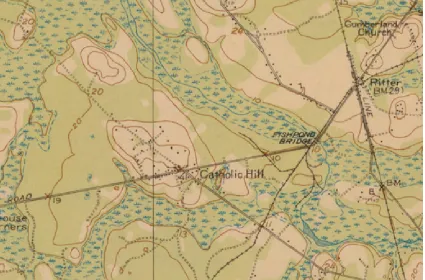
(Figure 2.1). 2 The church property rests at one of the high points of this swamp
island, which may be the logic behind the appellation “Catholic Hill,” which
evolved from the earlier name “Catholic Crossroads.”3
2 United States Army Corp of Engineers, Geological Survey: Walterboro Quadrangle, 1917-1918,
reprinted 1942; map, University of South Carolina Digital Collections: Topographical Maps of South Carolina 1888-1975 (accessed online January 2015).
3 The name Catholic Hill is the most recent in a series of appellations for the settlement around St.
Pine and cedar trees surround the perimeter of the property, and the
interior contains live oak and magnolia trees, most of which stand in the
cemetery. Florida anise shrubs line the side elevations of the church, as well as
front some of the property on Ritter Road. The soil of this Lowcountry swamp
island is typically sandy and shallow, and not very amenable to profitable
agriculture. Historically, rice was a staple crop for much of Colleton County and
supported the plantations of St. James’ first white parishioners. Today, rice
cultivation is rare among the local agricultural operations. Farmers in the region
grow cotton, soybeans, and corn. The richest natural and economical resource in
the vicinity of Catholic Hill and Walterboro is lumber, produced from the
abundant forests of pine and cedar trees.
The three resources that contribute to the National Register are St. James
Church, School, and Cemetery (Figure 2.2). St. James Church, built in 1935, is a
vernacular building that most closely adheres to the Gothic Revival style. Facing
south onto Ritter Road, the church is of wooden-frame construction and rests on
a brick foundation. It is sided in wooden shingles and contains a central steeple
with an open bell tower and a louvered lantern. The church is one story tall,
three bays wide, and six bays deep. It possesses an original rear wing extending
added a front porch and a handicap ramp in 1999, but the basic floorplan and
massing of the church are unchanged since its original construction.
The contributing schoolhouse is located west of the church and also faces
south. Built in 1901, the historic portion of the schoolhouse is a vernacular,
wooden-frame I-house constructed with weatherboard siding. There is an
original enclosed front porch covering the entryway, as well as a modern wing
added in 2011 to the north (rear) elevation. Despite the partial removal of the
north wall of the schoolhouse for the purpose of attaching the 2011 wing, the
form and footprint of the original schoolhouse remain otherwise intact and
visible. Other alterations such as the replacement roof and doors have been made
in sympathy with the era and style of the building. Finally, interior changes to
the schoolhouse, including a removed staircase, the addition of wall partitions,
and replacement floors were likewise sensitive to the historic materials and do
not detract from the integrity of the building.
The parish cemetery covers the north and west portions of the property.
The cemetery contains burial sites from 1835 through the twenty-first century,
and is still in active use. Gravestones mark the burial sites of some of Catholic
Hill’s first white Irish settlers, as well as African Americans who were born into
slavery. The church, schoolhouse, and cemetery are all still in use by St. James
In addition to these three contributing resources, there are four
noncontributing resources (that is, considered not historically significant for the
National Register) located on the property. Two utility sheds and one restroom
facility building stand east of the church along Catholic Hill Road.4 A brick patio
shrine lies near the center of the property between the schoolhouse and the
church.
2.1 St. James the Greater Church (1935)
St. James the Greater Church is a wooden frame, wooden shingled, vernacular
Gothic Revival building. It stands one story tall, six bays deep, and three bays
wide, with a west wing attached to the west elevation at the north end of the
building (Figures 2.3 and 2.4). The church rests on a solid brick foundation and
faces south onto Ritter Road. Originally, the foundation consisted of brick piers
filled in with brick latticework. The overall footprint of the building is an
L-shape, with the rear wing extending out from the main block at the northwest
corner. The rear west wing is three bays wide and two bays deep, and contains a
small porch entrance on the north elevation. The north elevation of the wing
does not align flush with the north elevation of the main block, lying about four
feet shallow. The church is front-gabled with a central steeple and an elevated
front porch entrance covered with a gabled roof. The original squared-butted,
4Catholic Hill Road alternately goes by the name “Clover Hill Road” as well as its technical state
cedar shake shingles cover all elevations of the building. Originally
brown-stained, they have been painted red since the late 1950s. The windows are
symmetrically arranged on the façade and on each side elevation. The north
(rear) elevation of the main block is gabled and contains no windows. The roof,
originally constructed of red-stained cedar shingles overlying a sheathing of
yellow pine, is now black asphalt shingle. An iron fence borders the
triangular-shaped church property along its southern perimeter on Ritter Road and along
the northeast perimeter on Catholic Hill Road.
The Gothic Revival elements of the church include its pointed arch
entryway, as well as the rectangular, central steeple that nods to the multistage
Gothic tower form with its vertical trim courses and flared wall. The steeple
features a louvered lantern and an open belfry. A galvanized iron cross, of
dimension roughly two feet wide by three-and-a-half feet tall, stands at the peak
of the four-sided spire. The steeple protrudes slightly out from the façade,
forming the front vestibule. The front steps of the building were expanded in
number and size in 1999, and are constructed of concrete and brick. The front
porch connects to a brick and concrete handicap ramp that runs partway along
the east elevation of the building. There is an iron balustrade installed on both
sides of the ramp and on both sides of the front steps. A gabled roof of asphalt
parish most likely added the porch addition at the same time as the modern stair
and ramp, in 1999. A cross stands at the peak of the gabled porch roof. The porch
roof is an extension of the original gabled roof that framed the front doors and
extended only about two feet out from the wall. The wooden beadboard ceiling
of the porch forms a pointed Gothic arch that frames the shape of the original
transom over the front doors. The transom consists of four yellow frosted
window panels that together form the pointed arch. The paired front doors,
which are not original, are three-by-five paneled wood. The original doors were
white pine, paneled two-by-two, and contained window panes across the top to
match the transom. The front doors open into the church vestibule.
Though the windows themselves are replacements, all of the original
window openings on the church are present and remain unaltered in size and
shape. Originally, the two glass windows on the façade were rectangular
casement windows covered in galvanized wire protectors fastened to the frames.
Today, these two windows contain replacement glass and feature Gothic-arched
wooden panels that are painted white and ornamented with a cut-out cross in
the center. The panels are mounted on decorative ironwork frames, which
suspend the wooden panels out from the wall a space of about two inches. The
window panels are not original, and date from after 1970. The windows on the
double-sash, each sash containing two vertically-aligned panels of frosted glass. The
windows contain metal strip muntins and retain their original pine sills and
lintels. The two windows on the west elevation of the rear west wing are of a
slightly shorter and wider dimension than all of the other windows on the
building. There are no windows on the north elevation of the main block.
In addition to the main front entrance, there are three doors located on the
west wing. Concrete steps with an iron balustrade lead to the recessed,
Gothic-arched doorway on the south elevation of the west wing (Figure 2.5). The door,
which grants access to the sacristy, is wooden, five-paneled, and has a
three-paneled, rectangular transom window overhead. Three concrete steps provide
access to a rear porch entry on the north elevation of the west wing. The door at
this north porch entry is also five-paneled, wooden, and painted white, and
contains no transom. It opens into the priest’s room, located adjacent to the
sacristy on the west side. Situated perpendicularly to this door on the same
porch, the third door on the west annex provides access to the historic (and still
operative) privy. Originally, there was most likely no plumbing installed at the
church, though electricity has always been present in the building.5 The privy
door is also five-paneled, but is narrower, only about two-thirds the width of the
other two west wing doors. These two rear doors both open outwards onto the
5The architect’s original drawings of St. James Church include a “chemical closet” attached to the
rear porch, which is sheltered under the extended roof of the wing and
supported by a pillar. A wooden balustrade runs along the north side of the
porch (Figure 2.6).
The church has two chimneys, both capped and both on the west wing,
one located at the juncture with the main block, and one exterior chimney located
on the west elevation of the wing. The original copper flashing is still in place,
supplemented by a putty applied to seal exposed areas where the flashing is
failing. The soffit and all the trim on the building are painted white, in keeping
with their historic color. There were originally gutters and downspouts installed
around the church building, and though the metal gutter hangers remain
attached under the eaves of the side and rear elevations, gutters and downspouts
are no longer present.
The interior floor plan of the church is unchanged since its construction in
1935. The small front vestibule opens into the nave through the original swinging
doors, which are wood-paneled with a stained glass square covering the top
third of each door. The nave consists of a rectangular, basilica-style plan with the
central aisle flanked by two rows of pews oriented towards the apse situated at
the north end. Originally designed to accommodate 150 persons in twenty-six
pews, the church today has twenty-three pews, each ten-and-a-half feet long.
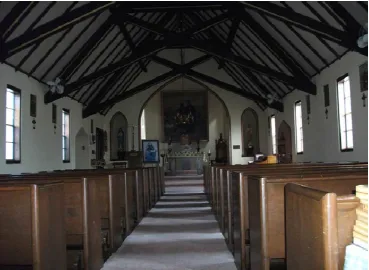
(Figure 2.7). The beams measure six-by-eight feet and are stained brown with
chamfered edges painted gold. The walls are the original coarse sand-finished
plaster, and on each side of the nave there are five unadorned windows with
frosted glass set in recessed yellow pine frames. Wooden panel paintings
depicting the fourteen Stations of the Cross rest in shallow niches along the west
and east walls, interspersed among the windows. Below each station hangs a
small wooden cross with gold paint indicating the station number in roman
numerals (Figure 2.8). There are two windows located in the apse, one on the
west wall and one on the east wall, both containing a pair of functional louvered
shutters. In the back of the church, at the south end, two Gothic-arched niches
flank the vestibule doors. One niche houses a statue, and the other a kneeler, a
piano, and other miscellaneous items. A third niche of the same size and shape is
located on the west wall near the front of the nave, and contains the baptismal
font. This niche occupies the space that originally was enclosed and housed the
building’s furnace. Two smaller niches flank the apse, each containing a statue. A
large, Gothic-arched partition demarcates the apse from the nave. The floor of
the apse is tiered, rising towards the north apse wall. The first (lowest) tier
contains the pulpit, the second tier the altar and the episcopal chair, and the third
by 7’ 6 ½”) depicting St. Peter Claver ministering to African slaves in Cartagena,
signed by the Czech painter Emanuel Dite in 1894.
The one major alteration in the appearance of the nave is the addition of
carpeting. Carpet covers the central aisle; the tiered floor of the apse; most of the
baseboard around the interior; the east and west walls in Gothic-arched cutouts
in the baptismal font niche (west) and behind the choir piano (east); and the
south (rear) wall in both niches. The carpet dates to the 1970s and is evidence of
modernizing post-Vatican II influences upon church designs and furnishing.6
The original yellow pine wood floors are still visible beneath the wooden pews
and kneelers, which are also yellow pine (Figure 2.9).
A five-paneled wooden door on the west side of the apse grants access to
the west wing, which contains the sacristy and the office or “priest’s room.” The
walls and ceilings of both rooms are the original plaster with a coarse sand finish.
The sacristy includes a modern sink and a window on the north wall. A
five-paneled wooden door provides exterior access on the south side. The sacristy
originally contained a closet that housed the original furnace, which was
6In its Constitution on the Sacred Liturgy (Sacrosanctum Concilium), The Second Vatican Council
(1962-1965) encouraged ecclesiastical architecture and design that would encourage lay
probably a wood-burning heater. Underground ducts and wall vents facilitated
forced air circulation. Today, the heater closet is no longer intact, and a recessed
niche on the west wall of the nave has taken its place. An open doorway leads
directly from the sacristy into the western-most room of the building, which is
the priest’s room. Used now as office space and for confessions, the priest’s room
originally accommodated travelling missionary priests during their overnight
visits to St. James.7 The west wall of the room contains a brick fireplace with a
decorative brass hearth and a simple, unadorned wooden mantel. The fireplace
provided separate heating from the central furnace system warming the rest of
the building. Two windows on the west wall flank the fireplace. A five-paneled
wooden door on the north wall of the priest’s room provides access to the
outside. Antique furnishings, mostly of wood and brass, decorate both the
sacristy and office rooms. Both rooms are carpeted and have baseboard heating.
A memorial plaque mounted on the brick fireplace header notes that the priest’s
room underwent refurbishing in 1976.
The few major changes made to St. James Church since its construction in
1935 consist of the east handicap ramp, the asphalt shingle roof, and the raised
front porch entrance and extended porch roof. These additions are unobtrusive
7 “History of St. James,” St. Mary’s Church, Aiken, 1976, folder 9 “Files Re History of St. James the
to the building’s original form and composition. The church still retains its
distinctive cedar shake siding and vernacular Gothic style, reflecting church
architectural trends of the late nineteenth and early twentieth centuries,
particularly as expressed in the rural South.
2.2 St. James the Greater Schoolhouse (1901)
St. James the Greater Schoolhouse sits directly west of the church and also faces
south onto Ritter Road (Figure 2.10). The original portion of the building is an
I-house, five bays wide and two bays deep. A wing added in 2011 extends at a
perpendicular angle from the rear (north) elevation of the historic I-house. The
house is side-gabled with a metal seam roof. The siding on the building is the
original weatherboard, which was originally painted white but since the late
1950s has been painted red. The foundation was originally masonry piers, and
was filled in with concrete after the 1950s. There was originally one chimney
located on the rear wall of the I-house. At an unknown point in the building’s
history, the fireplace was bricked over, and the chimney was removed.
Windows are the original six-over-six sash and are symmetrically
arranged on all elevations. There are four windows on each side elevation, two
on each story; nine windows on the façade, five on the second story and four on
the first story; and two windows on the rear (north) elevation of the historic
on the rear elevation, as well as paired six-paneled wooden doors. After the
1950s, an iron fire escape stairway provided outdoor access at the rear of the
building from the second story central bay, where a door replaced the original
window opening. The addition of the 2011 wing resulted in the removal of the
second story fire escape door and the first story windows and doors (Figure
2.11). The front entryway to the schoolhouse is an enclosed porch with a
front-gabled, metal seam roof. A three-step concrete stair provides access to the porch
entry. For a brief period of time, an additional entrance to the building was
located at the south corner of the west elevation. Probably inserted in the
mid-1950s, this side door and its concrete stair were removed and replaced with
weatherboard siding just a few years later.
When constructed in 1901, the schoolhouse contained a wooden shingled
roof. The original main roofline featured a central clipped gable with a
rectangular gable vent (Figure 2.12). Remodeling in the 1950s resulted in a new
metal sheet roof that required the removal of the central clipped gable. The main
façade roofline became newly uninterrupted, as it remains today (Figure 2.13).
Roof replacements have occurred at least twice since the installment of the 1950s
metal sheet; once with a composite shingle, and most recently in 2011 with the
current metal seam roof. Circa 1960, the parish installed metal awnings over all
The rear 2011 wing is a rectangular, front-gabled form, consciously
matching the north elevation of St. James Church to the east. There are two
shorter wings attached on either side, each with its own shed roof. The wing is
five bays deep and three bays wide, but nearly covers the full (five-bay) width of
the historic I-house portion. The modern wing has weatherboard siding and
metal seam roofs to match the materials of the historic block.
The interior of St. James School has been altered with the 2011 addition,
but the shape and volume remain essentially the same. There are two full floors
in the building, and originally each floor consisted of one undivided room.
Floors are replacement wood, and the ceiling and walls are a mix of original and
replacement pine wood. The original front entrance vestibule is located on the
first floor, facing south. The vestibule is an enclosed, rectangular space that
protrudes outwards from the south wall. Square wooden columns support the
ceilings on each floor.
In the 1970s, wooden paneling was applied over the beadboard on the first
floor interior walls. Around this time, metal supports were installed to reinforce
the wooden columns on the second floor, and linoleum tiles were laid over the
wooden floors.
During the 2011 alterations, the 1970s-era additions—wooden wall
wooden floors were replaced in-kind, and the beadboard walls were largely
preserved, replaced in locations where the historic wood was failing. The 2011
project also removed the original stairway located on the far west side of the
building to allow for more space on the first and second floors (a staircase in the
new rear addition now grants access between the floors) (Figure 2.14). The
original ceilings remain intact and unchanged, except where new beadboard fills
in the original stair opening. In-kind square wooden support columns have
replaced several of the historic support columns (Figure 2.15). Wall partitions
now divide the upper floor into three rooms and a hallway (Figure 2.16).
2.3 St. James the Greater Cemetery (1835)
St. James the Greater Cemetery lies on the north and west portions of the
property, abutting the schoolhouse on the west and north sides of the building
and the church on its north side. A wire fence borders the cemetery on the north
and west edges. St. James Cemetery covers approximately half an acre of the
property grounds. Burial plots lie in long rows that join near the property’s
northwest corner to form an ell-shape. Grave markers in the north arm of the ell
constitute the majority of cemetery plots and face south, towards the buildings
(Figure 2.17). The remaining grave markers are located on the far west side of the
property, and face east, also towards the buildings. Vertical rectangular and
bear inscribed names, dates, and epitaphs. Horizontal slabs of stone or brick also
mark many of the graves, identifying the deceased with either a stone inscription
or with metal plates. There are several family plots bordered by low brick or
concrete walls (Figure 2.18). Nothing in the arrangement or design of
gravestones specifically denotes African-American burial customs, which could
indicate either the historic adaptation of Anglo-Catholic practices or simply that
such signs have been lost to time and nature.
However, like many other African Americans in the South Carolina
Lowcountry during the nineteenth century (and earlier), the St. James blacks may
have particularly appreciated the wet, lush quality of their graveyard grounds.
Spiritual traditions that originated with West African slaves arriving on Carolina
shores in the eighteenth and nineteenth century held that bodies of water were
especially communicative of the spirit world and afterlife.8 Close to bay inlets,
surrounded by swamp area, and shrouded by oaks, magnolias, cedars, Spanish
moss, and brush, St. James Cemetery would have seemed to black parishioners a
spiritually potent place to lay loved ones to rest (Figure 2.19).
Though like most African-American cemeteries in its association with a
church community, many of which were established independently of whites
after the Civil War, St. James Cemetery is unusual among black church
8Roberta Hughes Wright and Wilbur B. Hughes III,
graveyards in the South for its Catholic identity and biracial composition. Burial
plots on Catholic Hill represent a mixture of white and African-American
deceased parishioners of St. James the Greater Mission. The oldest gravestone
standing in St. James Cemetery belongs to James McKain, a founding
Irish-American member of St. James parish who was born in Ireland and died in
Colleton County, South Carolina in 1835. McKain’s grave lies in the lone stone
sarcophagus in the cemetery, a tomb approximately three feet high, five feet
long, and two feet wide (Figure 2.20). The sarcophagus lies outside the main
cemetery perimeter, and directly adjacent to the west wall of the schoolhouse.
Parish tradition holds that during the nineteenth century, the blacks of St. James
built their homes and, in 1901, their schoolhouse, over some of the early parish
graves. The location of McKain’s grave site supports this account. The oldest
African-American grave in the cemetery belongs to Diana Bolen, who was born
into slavery in 1806, and died a free woman in 1899 (Figure 2.21). With the
exception of McKain, whose sarcophagus is situated at the southwest corner of
the schoolhouse, the oldest graves of the cemetery lie in the northeastern
segment of the property, and face southward. Twenty-first century and
late-twentieth-century graves lie on the western half of the property and face east.
2.4 Noncontributing Resources
The noncontributing utility shed 1 is located east of the church, at the edge of the
property that lies along Catholic Hill Road (State Rd S-15-436). The shed is a
rectangular form with a front-gabled roof. The exterior is cinderblock and the
roof is composite shingle. Dimensions are approximately ten feet high by eight
feet wide and eight feet deep. There is a door on the west elevation of the
building. Utility shed 1 dates to post-1960.
The noncontributing utility shed 2 is located north of the church and
adjacent to the outhouse building on the north side, at the edge of the property
that lies along Catholic Hill Road. It is a rectangular form with a front-gabled
roof. The exterior and the roof are corrugated metal. Dimensions are
approximately twelve feet high by eight feet wide and twelve feet deep. There
are paired metal doors on the south elevation. There is a one-over-one sash
window on both side elevations. Utility shed 2 dates to post-1960.
The noncontributing outhouse is located north of the church and adjacent
to utility shed 2 on the south side, at the edge of the property that lies along
Catholic Hill Road. It is a rectangular form with a side-gabled roof. The exterior
is cinderblock and the roof is composite shingle. Dimensions are approximately
twelve feet high by twelve feet wide and eight feet deep. The building contains
The doors are wood-paneled and covered by iron grates. Plumbing is installed,
and there is a water fountain standing at the north corner of the building. There
is no specific construction date documented for the outhouse, but it may date to
as early as the late 1950s or 1960.
The noncontributing shrine patio is located southwest of the church and
east of the schoolhouse, and faces south onto Ritter Road. The structure is a
square brick patio approximately ten feet wide by ten feet long. At the center of
the patio stands a square brick pedestal, on which stands a statue of the Virgin
Mary. Mounted on the pedestal is a plaque entitled “1826-1976: 150 Years of
Faith at St. James Church.” An iron fence encircles the brick patio, with an
entrance gate located on the south side. The Marian patio shrine was constructed
in 1976.
2.5 Conclusion
Of the seven resources situated on the St. James the Greater Mission property,
three contribute to the National Register as historically significant: the church,
the schoolhouse, and the cemetery. These two buildings and one site are the
oldest extant resources on the property, and are essentially intact in design and
structure. Together, they give authentic material expression to the 180-plus year
Figure 2.3 (left) Façade of St. James the Greater Church. Figure 2.4 (right) West elevation of St. James Church, showing rear west wing. (Photos by the author.)
Figure 2.7 Church interior, view north towards the apse. (Photo by the author.)
Figure 2.9 Original yellow pine pews and floors. (Photo by author.)
Figure 2.11 North (rear) elevation of St. James Schoolhouse c. 2011, before the 2011 addition was built. Most of this back wall was removed with the new addition. (Photo courtesy of St. James the Greater Parish.)
Figure 2.13 St. James School in 1956, with a new metal roof and side door, and the clipped gable removed. (Photo courtesy of Diocese of Charleston Archives.)
Figure 2.15 St. James School today, first floor looking southwest, toward the original location of the stair. The front vestibule entrance is on the far left. (Photo by the author.)
Figure 2.17 St. James Cemetery, view east. Most of the graves are situated behind (north of) the buildings and face south. (Photo by the author.)
Figure 2.18 St. James Cemetery, view north. Typical horizontal stone slabs,
Figure 2.19 St. James the Greater Cemetery, circa 1950, view west. (Photo courtesy of St. James Parish.)
Figure 2.20 (left) Sarcophagus of James McKain, born in Derry, Ireland, and died at
Chapter 3
Statement of Significance: Broad Patterns of History
Though religious properties are not usually eligible for the National
Register, St. James the Greater Mission is eligible because its significance derives
primarily from its cultural contribution to African-American education and
heritage, as well as from its architecture.9 The three contributing resources of St.
James the Greater Mission constitute an uncommon example of a rural, southern,
African-American Roman Catholic parish, in continuous existence from its
antebellum origins to today. The site is remarkable for possessing a complete and
intact campus with a church, a school, and a cemetery. The church, St. James’
third, is situated on the same site that served the previous two churches built in
1833 and 1894, and it accordingly embodies the parish’s continuity with its
earliest roots. St. James Parish established the school in the late nineteenth
century, and the current building constructed in 1901 provided private Catholic
education for hundreds of local black pupils, regardless of their religious
9 The term “Mission” in this context identifies St. James the Greater as a parish that has never—
affiliation, for sixty years. The teachers were African-American women from
South Carolina, some themselves graduates of St. James School. In terms of the
National Register, the period of significance for St. James the Greater Mission is
from 1835 to 1960. The year 1835 marks the earliest extant and decipherable
gravestone in the cemetery, and 1960 was the last year that St. James School
operated as a Catholic school for African Americans. After 1960, the parish lost a
degree of historic autonomy and self-sufficiency as the education of its youth
merged with other local schools. Both buildings and the cemetery are eligible
under Criterion A, “events or broad patterns of history,” for their roles in
shaping, expressing, and sustaining black Catholic religion, education, and
ethnic heritage.
3.1 Religion: Catholicism in the South Carolina Lowcountry
The Catholic Church officially established itself in South Carolina in 1820 with
the formation of the Diocese of Charleston under the auspices of Bishop John
England. Initially serving all Catholics in Georgia and the Carolinas, the Diocese
of Charleston gradually reduced its domain to encompass just the state of South
Carolina. Though the first Catholic parish in the state, St. Mary of the
Annunciation on Hasell Street in Charleston, was founded in 1789, Catholicism
nineteenth centuries.10 Associated with immigrants—in the South, primarily
Irish—Catholic churches and schools were particular targets for violence and
hostility by groups such as the Nativists and Know-Nothings and later, the Ku
Klux Klan. Bishop England persevered in establishing two Catholic religious
orders for women in Charleston, the Sisters of Our Lady of Mercy and the Ladies
of the Ursuline Community. England also founded a school for free
African-American children in Charleston in the 1830s. The school operated briefly before
closing in response to opposition from pro-slavery Charlestonians.11 Ill will
towards Roman Catholics in Charleston drove Irish Catholics to move out of the
city and establish themselves in less populous areas of the state. One such group
moved south of Charleston to Colleton District in the rural Lowcountry
surrounding Walterboro.
Irish Catholic planters established St. James the Greater Mission south of
Walterboro in 1831. In 1833, they finished building their first church, a simple
wooden chapel (Figure 3.1). The parish grew with the conversion of local
members of the large (previously Episcopalian) Bellinger-Pinkney clan, who
additionally baptized their slaves in the Church. Considering the prevalent
stigmas attached to Catholicism during this time, it is particularly remarkable
10“History,” Diocese of Charleston website, accessed online November 2014. 11James Lowell Underwood and W. Lewis Burke, eds.,
that well-established and prosperous Episcopalians who ran plantations outside
of Walterboro chose to spurn their secure social and religious standing and
convert to the Catholic faith. The Bellingers and other white families of St. James
reportedly taught their slaves to read and write, which violated state law at the
time, but ensured the black members of the parish an intellectual advantage at
the time of their emancipation several decades later.12 Literacy would likewise
have been instrumental in helping the first St. James blacks to communicate their
Catholic faith to successive generations.
St. James the Greater Parish became a predominantly black parish
possibly as early as 1835, just a few years after the parish was established
officially in the Diocese of Charleston.13 There were two main groups of
parishioners who made up St. James’ white community in these early decades:
the Irish-Americans—Magees, McKains, Maloneys, Purcels, Foxes and Ryans—
and the extensive Bellinger-Pinckney family.14 The Bellingers and Pinckneys held
the largest plantations and commanded the largest number of slaves. By the late
1840s, the two intermarried families were holding mass slave baptisms—one
12 Daniel Berberich to Andrew Walter, February 4, 1895, folder 7 “Newspaper Clippings
1831-2003,” St. James the Greater Parish File Box, Diocese of Charleston Archives.
13 “South Carolina: District of St. James the Greater,” United States Catholic Miscellany (Charleston,
SC), January 29, 1831.
14 Mary Pinckney Powell, “Over Home—the Heritage of Pinckney Colony, Blufton, South
time reportedly baptizing sixty slaves in a single ceremony.15 These massive
baptisms quickly resulted in a parish whose majority was black. That fact may
have been the impetus for the establishment in 1845 of St. Philip’s Catholic
Church in Walterboro, just thirteen or fourteen miles north of Thompson’s
Crossroads (now Catholic Hill).16 St. Philip’s, which later evolved into St.
Anthony’s parish, was historically white.
Not all of the whites abandoned St. James for St. Philip’s, however. Those
family members who held winter homes along the Ashepoo River, the “seat of
the Bellinger barony,” continued to worship alongside their slaves at St. James at
least through the 1840s.17 Mission priests tended to small country parishes like
St. James and St. Philip’s two or three times a month, usually travelling from
Charleston or Beaufort. This long-distance pastoral care was typical for mission
parishes whose numbers were small and locations rural. Though remote, the
parish was then still very much in the pastoral fold of the Diocese, and in 1848,
Bishop Ignatius Reynolds took the two hour stage coach trip from Charleston to
Thompson’s Crossroads to celebrate mass and visit with parishioners. A Catholic
from Walterboro wrote an account of the visit for the United States Catholic
15 Mary Claire Pinckney Jones, “The Pinckneys of Ashepoo: Their Story,” 1988, folder 5
“Publications 1956-2001,” St. James the Greater Parish File Box, Diocese of Charleston Archives.
16 “History of St. James,” St. Mary’s Church, Aiken, SC.
17 Alice Beckett, “St. James Church is One of Oldest in State,” The Press and Standard (Walterboro,
Miscellany, the antebellum newspaper of the Diocese of Charleston. She noted
that Catholics from Walterboro travelled fourteen miles to St. James to join a
congregation which was “intelligent and quite large, considering the thin
population of the area.”18 If the two parishes of St. James and St. Philip’s were
heavily divided along racial lines, their members nonetheless maintained ties of
familial and neighborly affinity.
The Irish who founded St. James were more transitory of a presence than
the Bellinger and Pinckney planters, and in the 1840s they began to disperse and
disappear as a result of relocation and death. Reverend J. J. O’Connell noted that
by the end of the 1840s, the church had become significantly dilapidated, and he
undertook repairs. However, just a few years later, in 1856, an out-of-control
field fire consumed the small frame church, burning it to the ground. The few
remaining whites who had been worshipping at St. James when it burned
retreated either to their homes or to St. Philip’s in Walterboro to hold baptisms,
weddings, and other religious ceremonies.19
The community of St. James during the next thirty-four years proved itself
exceptional among Catholic blacks in the state. Parish tradition states that the
blacks, over the course of the next three decades, settled their homes and stores
on and around the site of the burnt church and the cemetery.20 The Josephites, an
American branch of the English missionary order the Mill Hill, devoted
themselves to tending Catholic African-American communities throughout the
South, beginning in the 1870s. One of their most ambitious stations was
Charleston, which served as a central base for missions extending throughout the
Lowcountry. Remarkable for reaching secluded and difficult-to-reach enclaves of
blacks who proved receptive to Catholic evangelization, the Josephites
nonetheless never directly stumbled upon or engaged with the community at
Catholic Crossroads. Letters and diaries of these missionaries reveal their
frequent and surprising proximity to the St. James blacks, as well as an
occasional, vague awareness of their existence. They also provide a rough
illustration of the region’s black Catholic settlements which, though possessing
highway and railroad access, clerical attendance, and imposed organization, did
not survive into the twentieth century as intact parishes. Lying within just fifteen
or twenty miles of Catholic Crossroads, Josephite mission posts such as those at
Bennett’s Point, Jacksonboro, and Hutchison’s Island all either dissolved,
dispersed, or consolidated with larger nearby churches. However, the African
Americans of St. James—devoid of chapel, priest, railway proximity (until 1887),
20Commission for the Catholic Missions among the Colored People and the Indians,
or diocesan funding—succeeded in sustaining their faith, their community, their
sense of identity as St. James the Greater Parish, and their traditional place of
spirituality.21
3.2 Black Ethnic Heritage: Afro-Catholics in Rural South Carolina
Though it was Irish and Anglo-Americans who initially founded the church at
Catholic Crossroads (then Thompson’s or Collin’s Crossroads) and
“unanimously” elected St. James the Greater to be the parish patron, it is
apparent that the African-American parishioners were profoundly attached as
well to the identification of their community as St. James the Greater.22 This
devotion to St. James’ patronage—expressed in their choice to retain that
parochial identity nearly half a century after the departure of the whites—could
have been rooted in a sense of historic identity, culture, religion, or a
combination of all three. The former slaves, whose parents and grandparents had
come with their owners from Charleston some twenty or thirty years prior, may
have possessed African-Catholic traditions that predated conversion under their
masters. These Afro-Catholic roots would have traveled to Charleston and the
South Carolina Lowcountry following the arrival of Catholic slaves of Kongolese
and Santo Domingan descent during the eighteenth and nineteenth centuries.
21 J.D. Lewis, editor, “Green Pond, Walterboro, and Branchville Railroad,” South Carolina
Railroads, 2012 (accessed online October 2014).
Thousands of slaves with West African origins flooded into the South during
these centuries, carrying with them distinct Afro-Catholic cultural customs and
beliefs that dated to the 1400s.23 One notable such custom was the special affinity
Kongolese Catholics held for St. James the Greater (also known as St. James
Major). St. James was traditionally the patron saint of Kongo, and his feast day,
July 25, was Kongo’s national holiday. Likewise, St. James still holds a place of
special veneration in Haiti and the Dominican Republic (both formerly
constituting the island of Santo Domingo), where Catholic West African slaves
arrived in vast numbers during the colonial period.24 Several names on the
gravestones in St. James’ cemetery that postdate the presence of white
parishioners indicate French or Spanish origin, despite the Anglo heritage of the
founding whites. Such names as would have existed in Haiti and Santo
Domingo include Thadious Jahnrette, born in 1899, and Louise Bartholoneau,
who died in 1992.25
Another significance of the possible Catholic West African origins of the
St. James blacks lies in the African spiritual traditions that value the natural
23 For more on this, see John Thornton and Linda Heywood, “A Forgotten African Catholic
Kingdom,” The Root, Aug. 12, 2011 (accessed online October 2014); and Michael Gomez,
Exchanging Our Country Marks: The Transformation of African Identities in the Colonial and Antebellum South (Chapel Hill: University of North Carolina Press, 1998).
24 Mark Smith, “Remembering Mary, Shaping Revolt: Reconsidering the Stono Rebellion,” Journal
of Southern History, 67 (August 2001), pp. 522-26; Thornton and Heywood, “A Forgotten African Catholic Kingdom.”
25 “St. James Catholic Cemetery,” survey conducted May 1997, folder 9, St. James the Greater
landscape as space elemental to daily spirituality. West Africans commonly
believed that nature—especially, forests and bodies of water—hosted the spirits
of their deceased ancestors, who played an active and powerful role in the lives
of their living descendants. Land served as a continued habitation for the dead
who were really not “dead” in the traditional European sense of the word, but
rather were alive and participating in the lives and wellbeing of their
descendants.26 Catholic Hill during the nineteenth century could hardly have
been a more ideal landscape for this tradition, surrounded by dense woods and
swampland as it was.27 These traditional African beliefs could explain the
outstanding tenacity of the St. James blacks in holding to their parish roots,
despite the long absence of any church buildings or clerical guidance. The rural
seclusion of the parish would have insulated these African customs from outside
influences, until Daniel Berberich arrived in 1892.
Unfortunately, there is scant written documentation regarding the black
Catholic community of St. James from the 1850s through 1890. Parish tradition
holds fast to a few names of black or mixed race men and women who
reportedly held the community together and sustained its Catholic character.
One family in particular stands out in collective memory—the Davises. Like
26 Ras Michael Brown, The African-Atlantic Cultures and the South Carolina Lowcountry (New York:
Cambridge University Press, 2012), p. 30.
nearly all the St. James blacks after the Civil War, the Davis family farmed. In the
years immediately following the Civil War, Sarah Davis was the family
matriarch, heading a household of seven children ranging in age from nine to
nineteen, and possibly not all her own. Sarah, for whom no spouse is listed in the
United States Census, is identified as “mulatto,” as are her children. Among her
children were Vincent, Isabelle, Lewis, and Emeline.28 These four men and
women were stalwarts of St. James Parish during the years when there was no
attendant priest or diocesan oversight. Vincent, sometimes referred to in parish
records as Vincent “de Paul” Davis—a name recalling the Catholic saint Vincent
de Paul, renowned for teaching and serving the indigent—seems to have been
particularly revered as a teacher and father-like figure to the poor, isolated
parish. Born in 1860, Vincent was still a young man when the Diocese re-entered
the scene in 1890. Years later, St. James’ missionary priest Daniel Berberich
recounted in a series of letters the decline in health of his “principle man, Mr.
Davis.”29 In 1907, Vincent Davis died. Berberich remembered him in subsequent
letters as “the soul of Catholicity of that place [St. James].”30 Other former
slaves—Jacksons, Washingtons, and Browns, to name a few—were likewise
instrumental in preserving St. James Parish during the nineteenth century.
28 United States Census, 1860-1900, FamilySearch database (accessed online February 2015).
29Daniel Berberich to Katharine Drexel, March 4, 1905, folder 10 “Correspondence,” St. James the
Greater Parish File Box, Diocese of Charleston Archives.
30Daniel Berberich to Katharine Drexel, October 16, 1907, folder 10 “Correspondence,” St. James
Vincent’s sister Isabelle married John Joseph Brown, and the two taught
catechism and held parish gatherings in their home (Figure 3.2).
Various accounts exist regarding the rediscovery of St. James by the
Diocese of Charleston. In 1890, either a priest, or a group of priests, or some
Charleston Catholics picnicking in the countryside happened upon the Catholic
Crossroads settlement. The encounter seems, in any case, to have been a source
of mutual excitement.31 In 1891, the Diocese remarked that Catholic Crossroads
was “a promising community of Catholics . . . this is the only encouraging spot in
the whole state, a nucleus for a congregation away from city influence.”32
Mission priests began trekking out to the St. James blacks once or twice a month,
administering sacraments and celebrating mass. In 1892, the bishop appointed
Father Daniel Berberich, a thirty-six-year-old German-American missionary
priest attached to the Pallotines or the Pious Society of Missions Order, to attend
St. James along with other nearby missions (Figure 3.3). The Pallotines were an
international Catholic missionary order contemporary with the Josephites.
Unlike the Josephites, Pallotine missionaries included a combination of priests,
nuns, and lay people. Founded in Italy in 1835, they arrived to the United States
31Berberich to Walter, February 4, 1895; “Resurrection in Carolina,” The Carolina Oratorian, Vol 2,
No. 1, 1945, Rock Hill, SC, folder 9, St. James the Greater Parish File Box, Diocese of Charleston Archives;“History of St. James,” St. Mary’s Church in Aiken.
32Commission for the Catholic Missions among the Colored People and the Indians,
in the 1880s, and sent missionizing teams into rural areas throughout the
Midwest and the South.33 The Diocese of Charleston, who during the 1880s held
jurisdiction over both Carolinas and the Bahama Islands, relied heavily upon
these kinds of independent mission orders and communities of nuns to establish
and care for church communities.34
Though there is little material documenting the life of Pallotine missionary
Daniel Berberich, the letters he wrote during his mission tenure at St. James
depict a man who was extraordinarily energetic, financially savvy, and
personally charismatic. Berberich, who was born and lived most of his life in
Germany, evidently valued architecture as an essential form in which to ground
education and religion at the mission.35 The mission priest wrote regularly and
persuasively to Katharine Drexel and to the Diocese, towing a masterful balance
of gratitude, desperation, and good news. Buildings—the schoolhouse and
church—were a constant and central theme in Berberich’s letters.36 His
commitment not only to their initial construction, but to their continued
maintenance and aesthetic qualities, was fundamental to the development of St.
James as a site of lasting architectural value.
33 “About St. Vincent Pallotti,” The Pallotines: Society of the Catholic Apostolate (accessed online
February 2015).
34 “History,” Diocese of Charleston website.
35 “About St. Vincent Pallotti,” The Pallotines: Society of the Catholic Apostolate. 36 Daniel Berberich, collection of letters to Katharine Drexel, 1900 to 1910, folder 10
In 1894, Berberich directed construction of the second church on the site.
Parishioners reportedly felled trees in the surrounding woods, hewed them into
boards and shingles, and assembled a wooden frame, side-steepled church
(Figure 3.4).37 Though Berberich and Diocesan officials referred to this black
Catholic parish almost exclusively as “Catholic Crossroads” from the earliest
date of discovery well into the 1930s, the parish promptly dedicated their second
church in 1894 as “St. James”—an indication of the collective black memory and
attachment to their historic and religious roots.38 Berberich remained the
attendant priest at St. James until 1910. Under his tenure and in the space of the
1894 church, complete with an organ loft, the parishioners established a
successful choir capable of performing Catholic Latin hymns.39
In addition to building the church, Berberich immediately commenced the
operation of a school as well, initially holding classes in the one-room building
already on site.40 Reflecting back on the year 1899, Bishop Henry Northrop
reported on the status of Charleston and Lowcountry black Catholic missions, “I
was present at the [St. James] school closing there, very primitive but very
37 Emaline Bing quoted in “Resurrection in Carolina,” The Carolina Oratorian. 38 Berberich to Walter, February 4, 1895.
39 Daniel Berberich to Katharine Drexel, March 22, 1905, folder 10 “Correspondence,” St. James
the Greater Parish File Box, Diocese of Charleston Archives.
40 Commission for the Catholic Missions among the Colored People and the Indians,