ABSTRACT
O’DONOVAN, KRISTIN TAYLOR. Floods, Hazard Mitigation and Policy Diffusion: Testing the Influences on State Policy Adoption 1968-2008. (Under the direction of Thomas A. Birkland).
This study is about the spread of ideas over time. By considering the choices and conditions that influence policy decisions, this research examines the process of adoption through the lens of flood mitigation policy between 1968 and 2008. Using diffusion theory and data on the 50 American states, this study addresses a gap in the diffusion of policy innovations theory and contributes to the hazards literature concerned with mitigation. This study reframes diffusion theory in a way that assumes multiple policy ideas exist
Floods, Hazard Mitigation and Policy Diffusion: Testing the Influences on State Policy Adoption 1968-2008
by
Kristin Taylor O’Donovan
A dissertation submitted to the Graduate Faculty of North Carolina State University
in partial fulfillment of the requirements for the degree of
Doctor of Philosophy
Public Administration
Raleigh, North Carolina 2012
APPROVED BY:
_______________________________ ______________________________ Thomas A. Birkland, Ph.D. G. David Garson, Ph.D
Committee Chair
DEDICATION
BIOGRAPHY
Kristin Taylor O’Donovan earned a Bachelor of Arts, cum laude, in political science from
Ohio University in 1997 and master’s degree in community planning from the University of Cincinnati in 1999. After earning her graduate degree, Ms. O’Donovan began work in international development for the Center for Institutional Reform and the Informal Sector (IRIS) at the University of Maryland College Park. Ms. O’Donovan worked at IRIS from 1999-2004 implementing economic and governmental reform programs in Eastern Europe and former Soviet states. Ms. O’Donovan managed research grants for the University of North Carolina Wilmington from 2005 until she began her doctoral studies at North Carolina State University in 2006. As a doctoral student in public administration at North Carolina State University, Ms. O’Donovan worked as a teaching assistant, lecturer, and research
ACKNOWLEDGMENTS
I could not have completed this dissertation without the guidance, help, and support of valued mentors and advisors, reviewers and family. I would like to thank my dissertation advisor, Thomas A. Birkland. Over the course of my dissertation research and writing Dr. Birkland has carefully and patiently taught me what it means to be a social scientist. I could not have asked for a better mentor to acclimate me to public policy studies and encourage my journey down the path of hazards and disaster research. Dr. Birkland will always be my mentor. My dissertation committee, G. David Garson, Richard C. Kearney and Christopher Mayhorn, provided thoughtful and constructive comments on the substance of my research. Dr. Garson was particularly helpful in my choice of method of analysis; highlighting the importance that method selection plays in the reliability of my research findings. Dr. Kearney provided helpful insight on state politics and finances. Finally, Dr. Mayhorn was particularly helpful by reminding me of the mantra of social scientists: correlation is not causation.
The scope of the data in this study was greatly enhanced by a dissertation
not for research assistance from Medha Surampudy, an undergraduate student in political science at North Carolina State University, for her diligent, tenacious and meticulous work.
Finally, I would like to thank my family for giving me the support and
TABLE OF CONTENTS
LIST OF TABLES ... viii
CHAPTER ONE: INTRODUCTION ... 1
Policy Ideas and Influences on Innovation ... 4
Overview of Flood Mitigation, Hazards, and Disasters ... 9
Risk, Hazards, Disasters, and Mitigation ... 9
Floods ... 11
Flood Mitigation Policy Innovations ... 12
Building Codes for Flood Hazard Mitigation ... 12
Comprehensive Land Use Planning Mandates ... 15
Land Acquisition for Flood-Prone Areas ... 17
Conclusion and a Look Ahead ... 18
CHAPTER TWO: POLICY INNOVATIONS, POLICY ADOPTION AND FLOOD MITIGATION ... 21
Diffusion of Policy Innovations and the Innovation Decision ... 21
Policy Innovations and Policy Ideas ... 21
Diffusion of Innovations Theory ... 24
The Innovation Decision ... 26
Influences on Diffusion ... 28
Internal Determinants of State Policy Adoption ... 28
External Influences ... 35
Focusing Events ... 45
Conclusion and a Look Ahead ... 49
CHAPTER THREE: METHODOLOGY ... 50
Research Design ... 50
Data Collection ... 51
Data ... 52
Statistical Procedure ... 55
Hypotheses ... 56
Model Specification ... 59
Conclusion and a Look Ahead ... 73
CHAPTER FOUR: RESULTS ... 74
Land Use Planning Model ... 74
Building Code Model ... 78
Land Acquisition and Relocation Model ... 81
Conclusion and a Look Ahead ... 85
CHAPTER FIVE: FINDINGS AND CONCLUSIONS ... 86
Findings ... 86
Internal Influences ... 86
Focusing Events ... 97
Discussion ... 99
Limitations ... 102
Implications for Theory ... 102
Future Research ... 104
LIST OF TABLES
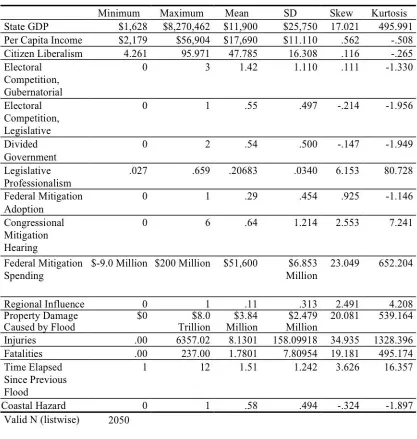
TABLE 1: DESCRIPTIVE STATISTICS ... 53
TABLE 2: HYPOTHESES ... 57
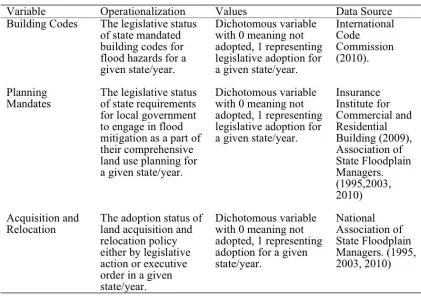
TABLE 3: MEASURES OF DEPENDENT VARIABLES ... 60
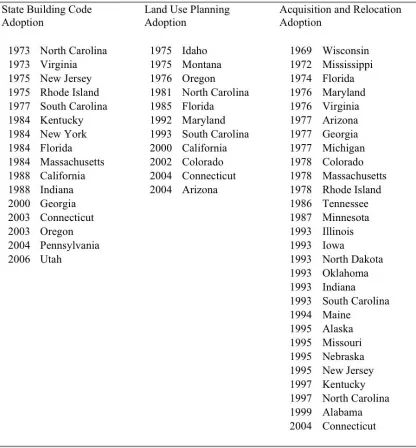
TABLE 4: DEPENDENT VARIABLES ... 62
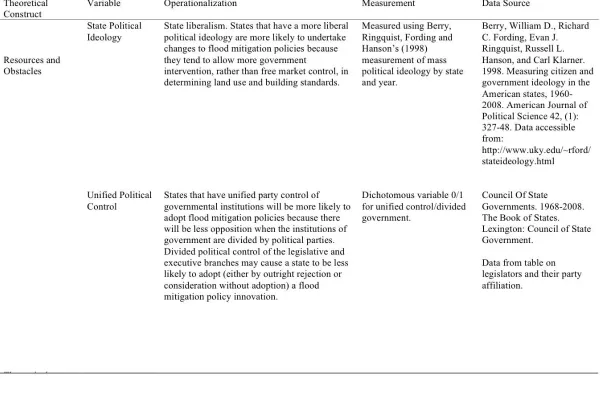
TABLE 5: MEASURES OF INDEPENDENT VARIABLES ... 63
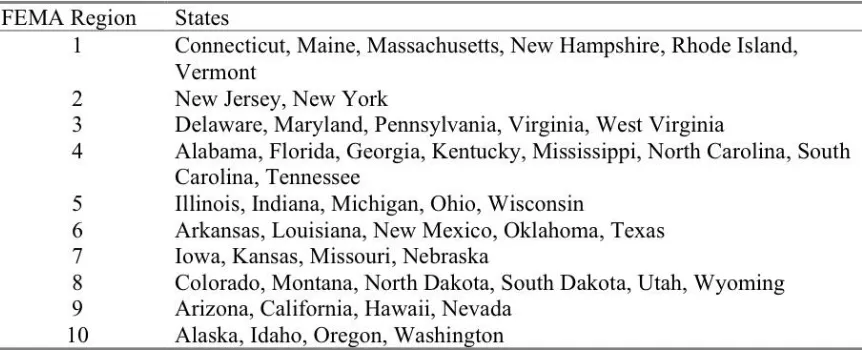
TABLE 6: FEMA REGIONS ... 70
TABLE 7: FEDERAL LEGISLATIVE ADOPTION ... 71
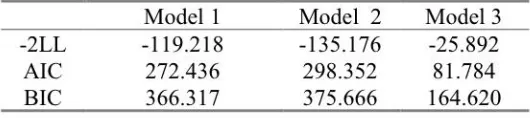
TABLE 8: GOODNESS OF FIT STATISTICS, LAND USE PLANNING ADOPTION ... 75
TABLE 9: TESTS OF MODEL EFFECTS, LAND USE PLANNING ADOPTION ... 76
TABLE 10: ODDS RATIOS, LAND USE PLANNING ADOPTION ... 77
TABLE 11: GOODNESS OF FIT STATISTICS, BUILDING CODE ADOPTION ... 78
TABLE 12: TESTS OF MODEL EFFECTS, BUILDING CODE ADOPTION ... 79
TABLE 13: ODDS RATIOS, BUILDING CODE ADOPTION... 81
TABLE 14: GOODNESS OF FIT STATISTICS, LAND ACQUISITION AND RELOCATION ADOPTION ... 82
TABLE 15: TESTS OF MODEL EFFECTS, LAND ACQUISITION AND RELOCATION ADOPTION ... 83
TABLE 16: ODDS RATIOS, LAND ACQUISITION AND RELOCATION POLICY ADOPTION ... 84
TABLE 17: HYPOTHESIS TESTING, INTERNAL INFLUENCES ... 91
TABLE 18: HYPOTHESIS TESTING, EXTERNAL INFLUENCES ... 96
CHAPTER ONE: INTRODUCTION
This dissertation is about the spread of ideas over time. By considering the choices and conditions that influence policy decisions, this research examines the process of policy adoption through the lens of flood mitigation policy between 1968 and 2008. Using diffusion theory and data on the 50 American states, this study addresses a gap in the diffusion of policy innovations theory and contributes to the hazards literature concerned with flood mitigation. This introductory chapter is divided into three main sections: an overview of policy innovations theory, a brief overview of flood mitigation in the context of the hazards and disaster literature, and a discussion of the flood mitigation policy innovations that are the focus of this study—building code mandates, comprehensive planning mandates, and land acquisition.
Classic diffusion models have been critiqued as being overly concerned with the rate of policy adoption rather than the process by which policy ideas (or innovations) are
discovered, considered, and ultimately adopted or rejected. I reframe diffusion theory in a way that assumes multiple policy ideas exist simultaneously for decision makers to consider. Furthermore, incorporating aspects of agenda setting literature allows for a more thorough understanding of the innovation decision. Expanding the definition of adoption is important because it may suggest a more robust dependent variable for diffusion theory.
While flood mitigation policies have been studied extensively and hazards and disaster scholars have contributed to what we know about the efficacy of mitigation
use planning— or compared the use of a mitigation technique in a handful of states. Little has been done to address why a state or group of states favors one particular mitigation policy above another. This gap can be attributed to the fragmented nature of hazards and disaster research that is inherently multidisciplinary. Furthermore, little has been done to determine whether influences on the decision to adopt a mitigation policy innovation vary among different policy innovations. This is important because it focuses on the role states play in flood hazard mitigation. Assessing the cumulative role of states —as policy
innovators in an intergovernmental system—may lead to a better understanding of the way in which states may propel, contribute to, or deter the spread of mitigation innovations.
Overall natural disasters play a unique role in the policy process. When cast as focusing events, natural disasters often draw sharp media attention and particularly to
property damage and casualties. Images of disaster damage can be pervasive in the aftermath of a flood. The symbolism stemming from a flood can have a powerful influence on the policy process.
This study relies on publicly available, secondary data for analysis. While secondary data sources often use different operational definitions that do not neatly fit within theoretical constructs of theory, diffusion theory scholars have used such secondary data as standard practice as demonstrated in the works of Walker (1969), Gray (1974), Berry and Berry (1990; 1992), Allen, Pettus, and Haider-Markel (2004), Daley and Garand (2005) and Karch (2007). This has proved sufficient in the literature for the variables in this study to be grounded in the theoretical constructs of diffusion theory. There is no suitable,
including data on flood mitigation policy decisions. Because of this, the data for this study are assembled from a variety of sources. In fact, this dissertation creates a baseline dataset for inquiries into state adoption of flood mitigation policies. For the dependent variables that measure a state’s adoption decision data have been collected from the official legislative record, the Book of States (1968-2008) and legislative data from the National Association of State Floodplain Managers (NASFPM), the Insurance Institute for Business and Home Safety (IBHS) and the International Code Commission (ICC). Data sources for independent
variables were collected from the Book of States (1968-2008), The Spatial Hazard Events and Losses Database for the United States (1968-2008), The Federal Register, the Congressional Record, The US Census Bureau, and a measure of state political ideology calculated by Berry, Fording, Ringquist, Hanson, and Klarner (2008).
Recently, scholars have broadened the application of diffusion theory to test hypotheses related to comparative policy adoption (Karch 2007), a more fully articulated way of assessing regional and national influence on policy adoption (Daley 2007), and the
incorporation of other theories of the policy process into diffusion (Mintrom 1997, Mintrom and Vergari 1998). Using diffusion of policy innovations as an organizing framework, this study poses the following questions:
What are the correlates of adoption of comprehensive planning mandates as a
flood mitigation policy?
What are the correlates of adoption of stricter building codes as a flood mitigation
What are the correlates of adoption of land acquisition policies as a flood
mitigation policy?
Which correlates are common to all three flood mitigation policies and which are
unique?
When models for the diffusion of comprehensive planning mandates, stricter
building codes, and land acquisition are compared, are there similarities or differences in the patterns and underlying causes of state policy adoption? What are the intergovernmental influences on each policy innovation?
Do recent disasters lead states to adopt flood mitigation policies? If so, is the
positive relationship between recent floods and flood mitigation policy adoption consistent across all the policy innovations examined in this study?
Policy Ideas and Influences on Innovation
mitigation, the political unpopularity of such a policy, and the implications for private property rights (Prater and Lindell 2000).
When public problems are chronic in nature—whether it is homelessness, urban sprawl, environmental protection, education, or flood mitigation—policy makers often employ several ideas over a period of time to solve the problem. Chronic policy problems are relevant to this study for two reasons, one practical and one theoretical. First, floods are ongoing events and policies to mitigate floods have changed over time—from structural to non-structural mitigation. Second, diffusion has been used extensively to predict adoption but it suggests little about what else is being considered during the process of adoption. One way to address this gap is to examine how different policy innovations addressing the same policy problem diffuse over time. This is consistent with Stone’s (1988, 262) analogy of policy being akin to an “endless game of Monopoly.” Through this analogy Stone (1988, 262) suggests that where “the process of choosing and implementing the means of policy is political and continuous…. The actions we commonly call ‘new policies’ are really
somebody’s next move, and in politics, as in a good game, nobody’s move completely determines anybody else’s future.”
incentives and disincentives for safe development—all are devised to lessen the effects of flood on life and property.
Floods are one of the most common natural hazards in the United States. They account for 80 percent of all the disasters receiving a Presidential Disaster Declaration (Godschalk et al. 1995). In 2008 of the 75 major disaster declarations, 70 percent were for flooding caused by severe storms (DHS 2009, 26).
The broader policy environment influences the feasibility of adopting a policy idea, or innovation. This broader policy environment contains two sets of influences, those internal to a state and influences external to a state. Internal influences include political and
institutional factors, economic conditions, and socio-demographic conditions. External factors that influence adoption include the actions of neighboring or regional states, the decisions of the federal government, and flooding events.
process of state policy adoption (Mintrom and Vergari 1998; Mintrom 1997; Walker 1969; Gray 1974; Berry and Berry 1992).
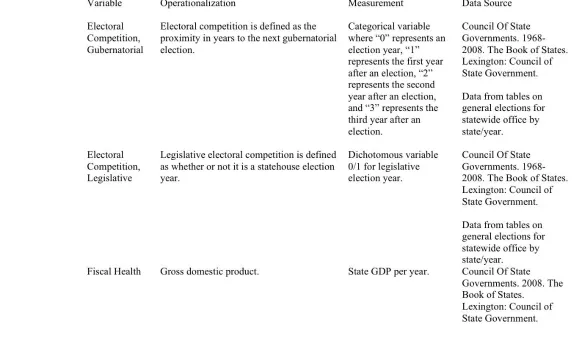
State financial health is sometimes used as a proxy for economic stability and is positively associated with policy adoption. Often state financial health is assessed using state GDP, a state’s manufacturing outputs (Walker 1969; Allen, Pettus, and Haider-Markel
2004; Daley and Garand 2005) or state budget performance (Berry and Berry 1992). The underlying rationale is that the better the financial health of a state, the more likely it will be to adopt a policy innovation. This study relies on state GDP as a proxy for financial health for two reasons. First, not all states have equivalent manufacturing bases. Second, state budget shortfalls may conflate state government fiscal health with overall state fiscal health.
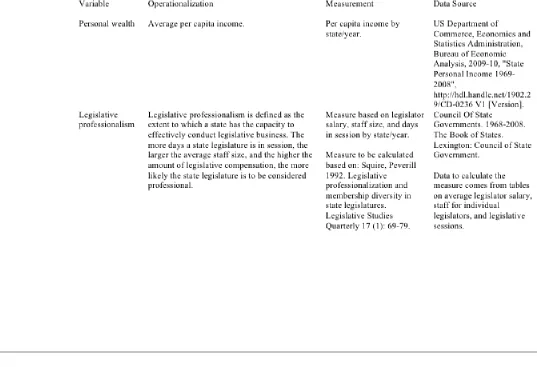
Finally, with respect to socio-demographic characteristics, high levels of personal wealth in a state have been positively associated with the diffusion of policy innovations (Walker 1969; Gray 1974; Berry and Berry 1992; Mooney 2001; Daley and Garand 2005).
External influences include policy decisions by neighboring states, policy decisions by the federal government, and by the disasters themselves. While flood mitigation policies are intergovernmental in nature, the transfer of policies and ideas are murky at best.
In the context of diffusion studies, we know that when states face a lack of leadership or clear information from the federal government, they will act independently to address a particular policy problem. In this instance, states are motivated to adopt by the desire to have a competitive edge over neighboring states, to avoid being at a disadvantage to neighboring states, or in response to public opinion (Berry and Berry 1999). But while states have indeed acted independently of the federal government to adopt policies to mitigate natural hazards, adoption has been uneven and the types of policies have varied from state-to-state (May and Deyle 1998). This variation has been attributed to a state’s commitment and capacity to
mitigate hazards (Godschalk et al. 1995). Obviously, risks also vary state-to-state because of differences in geography and topography—North Carolina, Missouri, and Arizona have different flood risks. While Godschalk and May and Deyle’s research has explained the
Overview of Flood Mitigation, Hazards, and Disasters
Risk, Hazards, Disasters, and Mitigation
It is important to distinguish among the terms hazard, risk and disaster. I adopt the definitions employed by Haddow, Bullock and Coppola (2008, 27) who adopt the National Governors Association’s definitions for hazard, risk, and disaster: hazard as “a source of
danger that may or may not lead to an emergency or disaster and is named after the
emergency/disaster that could be so precipitated;” risk is defined as “susceptibility to death, injury, damage deconstruction, disruption, stoppage, and so forth;” and disaster as “an event
that demands substantial crisis response requiring the use of government powers and resources beyond the scope of one line agency or service.”
When a flood hazard and risk of flooding are both present, it suggests that there is a possibility that a community will be susceptible to injury, the loss of life, property, or disruption in daily services and activities as a result of the flood hazard. However, it is possible for hazards to exist with no or very minimal risk to life and property. If a river routinely floods but there are no injuries, deaths, disruptions or property damage, it poses no real risk to human settlements. Managing hazards by minimizing risk is the goal of
In the most general sense, there are four key components of emergency management: mitigation, preparation, response and recovery. These four components have been conceived in terms of pre-disaster activities in the mitigation and preparedness stages that are passive in nature and in the after-impact stages of the cycle that include response and recovery that are reactive in nature (Lindell and Perry 2000). The idea that mitigation, preparation, response, and recovery occur in an ordered, cyclical way is unrealistic. However, it is useful to consider these activities as interrelated and to some extent, mutually reinforcing.
Structural mitigation policy innovations include building dams, levees, floodwalls, floodgates and other constructed elements to control or divert the flow of floodwaters. The primary approach in structural mitigation has been to control the flow of water in flood-prone areas by using levees and other engineered systems. While this action has prevented
significant losses in flood damage, it has also encouraged development in hazardous areas with sometimes catastrophic effects on cities like New Orleans and broader environmental concerns associated with floodplain management (Birkland et al. 2003).
governments to enforce hazard-specific portions of the state building code; comprehensive planning mandates; policies supporting land acquisition in hazard-prone areas; and public infrastructure investment decisions (May and Deyle 1998).
Floods
In the Eastern United States and along the Gulf Coast hurricanes and tropical storms are the most common cause of floods. In the western United States most floods are caused by snowmelt and rainstorms (USGS 2006). Between 1964 and 2007, there were 1,500 Presidential Disaster Declarations, of which 605 were floods accounting for 40% of all the major disaster declarations during the 43-year period. Between 2000 and 2007 there were 377 Presidential Disaster Declarations, 62 disaster declarations were for floods, or 16% of all the declarations. Floods were second only to severe storms during that time and represented 50% of all the Presidential Disaster Declarations. In many instances, severe storms and flooding were both listed as the cause of the disaster. However these figures tend to obscure the scope and magnitude of the flooding hazard in the United States. The increase of flood damage costs over time is more revealing. In terms of dollar value of flood damage, “…1960s floods caused $41.69 million dollars of damage a year. By the 1990s, average
annual property damage from flooding increased to $378.12 million dollars a year (in 1960 dollars)” (Brody et al. 2007, 330).
governor requests assistance from FEMA through the presidential disaster declaration process. The majority of disasters that occur in the United States are not big enough to register federal attention meaning that individuals, businesses, and local and state governments bear the cost to recover from disaster (Burby et al. 1999).
Floods in particular can be highly localized events. On average, the USGS estimates that floods cost $6 billion in damage and cause 14 deaths per year; major floods like the 1993 Midwest floods and the flooding that resulted from Hurricane Katrina caused $20 billion and $200 billion in damage respectively (USGS 2006).
Flood Mitigation Policy Innovations
This subsection discusses the three flood mitigation policy innovations that this study examines. They include building codes, comprehensive land use planning mandates, and land acquisition.
Building Codes for Flood Hazard Mitigation
In general, building codes have evolved from a disparate, fragmented set of construction standards that varied widely from one community to another to a uniform, national building code that local communities can adopt, in whole or in part, at their
discretion. Adoption of building code standards is the responsibility of state legislatures and the majority of states’ building codes are based on three standard model codes that
incorporate regional differences (Haddow, Bullock and Coppola 2008). While this is true, it is an oversimplification of the nature of building codes and how they are created and
In general, building codes are the tools that state and local government use to regulate the safe construction of residential and commercial structures. Building codes tend to be prescriptive, meaning that they set specific standards to achieve the goal of building safety (Dhering 2006). But this prescriptive nature means that modern building codes have become very complex, including sub-codes for the structural, fire, enclosure, interior environment, and materials construction standards (Listokin and Hattis 2004). The complexity of structural systems has caused states to jettison writing and updating their own individual building codes and instead adopt model building codes—with or without adding state-specific amendments (Listokin and Hattis 2004). However, not all communities in all states are required to adopt the same provisions of the model building code and construction standards can vary significantly between residential and commercial construction. Often commercial structures have stricter building requirements than residences.
The first model building code emerged in 1927 and was called the Uniform Building Code (UBC). The UBC remained the standard building code until 2000 when the
International Building Code (IBC) replaced it. The UBC was created by the insurance industry and the IBC was created and sanctioned by the International Code Council (ICC), a group of separate regional building code organizations. The ICC regularly updates the building code and makes amendments to the code.
standardization of construction standards. However, this does not mean that states cannot or do not adopt specialized amendments to the model code to suit local conditions. Local political subdivisions such as counties and municipalities may adopt additional amendments.
For example, states will adopt stricter building codes to mitigate the effects of a natural hazard. Florida and North Carolina have done just that by beefing up building code amendments to mitigate the effects of floods and hurricanes (Birkland 2006). State mandates for stricter building codes in California reduced potential property loss during the Northridge Earthquake (1994) however, local implementation and enforcement of the mandated codes varied by community (Burby, French, and Nelson 1998; May and Birkland 1994).
These brief examples suggest that states can and will innovate beyond simply rubber-stamping the model building code of the day. However, the influence of the federal
Comprehensive Land Use Planning Mandates
State legislatures have the ability to allow or to mandate local jurisdictions to include natural hazard mitigation into their comprehensive plans or develop a stand-alone natural hazard mitigation plan. These mandates are designed to limit development in hazard-prone areas by doing the following: (1) outright prohibition of development in hazardous areas; (2) limiting the population density in hazardous areas through zoning and provide incentives for high density development in less hazardous areas; (3) reducing property taxes in hazardous areas that are devoted to open space; and (4) transferring development rights on parcels in hazardous areas (Burby and Dalton 1994). Overall, land use planning requirements have been found to be an effective non-structural mitigation tool because they channel growth away from flood-prone areas (Brody et al. 2007). However, not all states require local
governments to engage in comprehensive land use planning. In states such as North Carolina, the state requires hazardous areas, particularly coastal areas, to engage in hazard-specific land use planning in addition to standard land use planning. But in states such as New York, there is no requirement for local land use planning and if communities decide not to plan, the existing land use patterns form the overall plan.
such as population growth and increased precipitation in addition to the ramifications of planning and development decisions (Brody et al. 2007). However, in states that mandate local land use plans, local governments that might not otherwise have a land use plan on the books are compelled to adopt one. These mandates can help communities overcome
resistance to hazard mitigation that stems from pro-growth political interests or community affluence but the overall quality of the plans suggests that the net result might be one of rote compliance (Berke et al. 1996). However, political tensions emerge because mitigation land use planning may reduce the availability of desirable and attractive parcels of land that would otherwise be ripe for local economic development.
The role of the federal government’s influence and policy preferences on state policy
decisions for comprehensive planning mandates is somewhat similar to its influence on building codes. Under the Disaster Mitigation Act of 2000 (DMA), states were required to include hazards for local land use planning as a condition of receiving disaster recovery assistance. However, there is evidence that suggests states were mandating land use planning requirements long before the US Congress adopted the DMA. In 1985, Florida adopted the Growth Management Act, requiring local governments to include hurricane and flood
mitigation tools into their comprehensive plans (Deyle, Chapin, and Baker 2008). In 1986, in the case of seismic safety, the State of California adopted earthquake-specific land use
planning and development requirements to be included in local governments’ comprehensive
Land Acquisition for Flood-Prone Areas
Land acquisition and relocation policies are designed to physically move people and property out of flood-prone areas, including wetlands and flood plains that usually have been subjected to repetitive flooding. Acquisition and relocation policy emerged in the 1970s when the state of Florida adopted the Environmental and Land and Water Management Act in 1972 and has been on the forefront of land acquisition and relocation policies (Godschalk et al. 1999). Land acquisition and relocation allow areas that are subject to severe flooding a permanent way to mitigate floods. Land acquisition tends to be compatible with other non-structural mitigation techniques like floodplain conservation (Godschalk et al. 2000). However, land acquisition and relocation policies can be difficult to implement for two reasons: one, because of landowner resistance or reluctance to be relocated; and two, complex funding sources to purchase the land (Godschalk et al. 2000; Burby and Kaiser 1986). In spite of these challenges, land acquisition and relocation policies have been found to be very effective, particularly for communities that have high levels of development already in a floodplain or for communities that have few alternative sites for development outside of a floodplain (Burby and French 1981).
Until the mid-1990s, land acquisition and relocation policies had been the domain of state and local governments, but in 1995 Congress amended the Stafford Act (PL 100-707) to provide disaster mitigation assistance to states. This program came to be known as the
HMGP was created in response to the devastating 1993 Midwest Floods. The 1993 Midwest Flood affected nearly every state in the Midwest resulting in $15 billion in damage and 50 deaths, but Iowa, Kansas, Minnesota, Missouri, and Nebraska bore the brunt of the flooding (Sylves 2007). A significant shortcoming of the HMGP, however, is that the program
provided funding after a disaster for mitigation, not before disaster when it might do the most good. Significant policy changes have occurred since the adoption of the Stafford Act, most notably the adoption of the Disaster Mitigation Act of 2000 (DMA). Under the DMA, the HMGP was continued and supplemented and a new pre-disaster mitigation was also created. However, executive branch requests and congressional appropriations for these programs have lagged far behind the demand for mitigation assistance, and less money and effort are being devoted to mitigation programs now that were expended in the 1990s.
In 1995, 22 states had adopted land acquisition and relocation policies, 13 of the states set aside state funds specifically for the purpose of acquiring flood-prone land for mitigation, and the other nine states assisted local governments in securing federal HMGP funding for post-disaster mitigation (Godschalk et al 1999). State level adoption of land acquisition and relocation policies and federal policy priorities for mitigation, particularly land acquisition and relocation, suggest that there may be different underlying causes leading certain states to adopt their own acquisition and relocation policies while others chose to rely solely on federal resources to acquire flood-prone land.
Conclusion and a Look Ahead
flood mitigation policies between 1968 and 2008. This chapter provided a brief overview of policy innovations theory, reviewed flood mitigation in the context of hazards and disaster literature, and identified the flood mitigation policy innovations that are the focus of this study—building code mandates, comprehensive planning mandates, and land acquisition.
There are three main contributions of this research to the study of public policy and hazards and disasters. First, I reframe diffusion theory in a way that assumes multiple, potentially competing policy ideas exist simultaneously for decision makers to consider. Second, this dissertation addresses why a state or group of states favors one particular mitigation policy above another. This is important because it focuses on the role states play in flood hazard mitigation. Assessing the cumulative role of states over time—as policy innovators in an intergovernmental system —may lead to a better understanding of the way in which states may propel, contribute to, or deter the spread of mitigation innovations. Third, this dissertation establishes baseline data for state policy adoption of flood mitigation policy innovations. Prior to this study, there has been no suitable, comprehensive dataset for state level data on measuring policy decisions and their correlates. Because of this, the data for this study is assembled from a variety of sources in a manner that is consistent with the literature on diffusion theory.
CHAPTER TWO: POLICY INNOVATIONS, POLICY ADOPTION AND FLOOD MITIGATION
This chapter is organized into two main sections. The first section discusses diffusion of policy innovations theory, frames policy innovations as policy ideas, and presents a theory of the process of policy change and innovation. Using diffusion of innovations as a
theoretical underpinning, I define policy adoption and the innovation decision for flood hazard mitigation policy innovations for the American states. I discuss the factors that predict state policy adoption, specifically the classic diffusion factors dealing with internal and external influences. These influences are grounded in the diffusion of policy innovations framework and are informed by literature addressing mitigation policies in general and flood mitigation policies specifically.
Diffusion of Policy Innovations and the Innovation Decision
The purpose of this section is to present a theory of influences on the innovation decision-making process. As such, it reframes policy innovations as policy ideas. Then it provides a brief overview of the diffusion of innovations theory and presents a theory of the innovation decision and its role in the diffusion process.
Policy Innovations and Policy Ideas
policy idea is seriously being considered for adoption for the first time. In the context of state policy adoption, this means that the policy idea may have been floating around the halls of the legislature for years but had never before been seriously considered for adoption. Instead, it is only when policy makers begin to take a policy idea seriously that it becomes ripe for adoption and perhaps a wider diffusion.
Diffusion scholars have made a clear and careful distinction between policy innovations and inventions. The distinction was present beginning with Walker’s (1969, 881) definition of an innovation as “a program or policy which is new to the states adopting it, no matter how old the program may be or how many other states have adopted it.” Diffusion scholars
have been less concerned with the creation of new ideas, original ideas, and inventions, than they have been concerned with the adoption of the innovation.
We know from other theories and models of the policy process that policy ideas are shaped, introduced, and considered in ways that compliment and support some aspects of Rogers’s (2003) “innovation-decision” process. Theories of policy making that rely less on
innovation diffusion might hypothesize that the policy that is eventually adopted depends on the right mix of timing, actors, issues, problems and solutions (Kingdon 2003). Still others might conceive of it in terms of policy change and disruptions in the powerful interests that control the policy debate (Baumgartner and Jones 1993).
In particular, policy process theories may better inform the ways in which innovators develop an opinion about the innovation and the decision to adopt or reject the innovation. First, Baumgartner and Jones’ punctuated equilibrium model (1993) distinguishes between
do provide new definitions of a policy problem. Furthermore, Baumgartner and Jones
asserted that punctuations in the policy equilibrium shed light on different aspects of a policy problem, or expand the scope of conflict on the policy subsystem.
Similarly, Kingdon’s multiple streams model conceives of policy ideas as so-called
alternatives, or a set of items different from the group of subjects or problems that are already on the policy agenda that are being seriously considered by government officials and policy insiders. This mix of old and new policy ideas is related to Baumgartner and Jones’ concept
of policy images that essentially represent the public understanding of a policy problem. These policy images are important because they play a role in expanding the policy issue to a disinterested or apathetic public.
For diffusion of innovations, this notion of multiple policy ideas—both new and old— being available for consideration at any time suggests that the classical assumption about the nature of policy innovations might be short-sighted. Walker (1969) asserted that an
innovation should be new to the state adopting it. However, policy innovations often times linger between being considered for placement on the agenda and actually being placed on the agenda (Mintrom 1997).
This suggests that the importance of the relative novelty of a policy innovation may be under-specified. If a policy innovation lingers in the so-called primordial soup of the policy process, it may gain traction as policy makers learn about the innovation, develop an opinion about it, and gauge public opinion on its acceptability.
strategy is inducements—either rewards and incentives or punishments and sanctions—are used to control others (Stone 1988). The second strategy is formal rules in the form of laws and regulations and third, informal rules in the form of social norms. While these are used to shape policy any rule is most effective when it is a balance between precision and flexibility. In Stone’s definition, the fourth strategy is facts that are sources of information that are
critical to sound decision-making even though they might not always be neutral. The fifth way that Stone defines the ways in which policies are shaped is in terms of power—battling for participation where changes in the decision-making process, and changes in the size and degree of centralization of the decision-making body can change policy outcomes.
Of particular interest in this context are inducements, either positive or negative, and formal rules and regulations. Positive inducements, such as grant funding, institutional and organizational development resources, tax breaks or other positive incentives might be used to help promote consideration of the policy idea. However negative inducements, seemingly heavy-handed regulations and outright mandates could be used in a way to make a policy idea seem less acceptable, less palatable to seriously consider for adoption.
Diffusion of Innovations Theory
been applied in policy studies to specify the social system as the American states (Walker 1969, Berry & Berry 1999, Gray 1974). Rather than question whether an innovation will spread through a system over time, diffusion has been concerned with predicting or
explaining why an innovation spreads through a system over time. Because of this, diffusion tends to focus on the causal explanations for innovations that have diffused rather than innovations that do not diffuse.
Diffusion of policy innovations is concerned with predicting or explaining patterns of policy adoptions among different political jurisdictions. States are the most commonly used political jurisdictions (Walker 1969, Gray 1974, Berry and Berry 1990, Berry and Berry 1992, Daley 2005, Balla 2001), although local jurisdictions have also been studied (Mintrom 1997). The pattern of diffusion for policy innovations is characterized by an S-shaped curve where early adopters or leaders will be the first to adopt. As time passes a critical mass of states adopting a policy innovation will be reached, which is typically propelled by a rapid or increased rate of adoption. States that adopt a policy innovation after the critical mass is reached are referred to as laggards or, in the case of non-adopting holdouts.
The body of diffusion literature focusing on the likelihood of adoption has generally conceived of adoption as whether or not a state has adopted the policy innovation by state legislative action in a given year. The likelihood of a state to adopt a policy innovation has been the focus of studies addressing issues such as the state lottery adoption (Berry and Berry 1990), adoption of tax innovations (Berry and Berry 1992), adoption of hazardous waste remediation programs (Daley 2007), adoption of regulations addressing health maintenance organizations (Balla 2001), education reforms (Mintrom and Vergari 1998),
truth-in-sentencing laws, so-called “partial birth abortion” laws, and hate crime laws (Allen, Pettus, and Haider-Markel 2004).
The Innovation Decision
Diffusion of innovation theory has traditionally been concerned with the rate at which a new idea, or innovation is adopted. This has led to an underdeveloped dependent variable for policy diffusion studies. I address the problem of an underspecified dependent variable by focusing on the “innovation decision” rather than the rate of adoption. Rogers (2003) defines the “innovation decision” as the way in which a person or organization moves from
initial knowledge of an innovation, to developing an opinion of the innovation, deciding whether to adopt or reject the innovation, and implementing the innovation.
Research investigating the “innovation-decision” process has developed two
A type of data gathering and analysis that consists of determining the covariances (or correlations) among a set of variables, but not in their time order. Such variance research usually is conducted using qualitative research methods, which measure variables by assigning numerical values to
behaviors.
In the context of public policy adoption, early variance studies focused on either the rate at which a policy innovation diffuses among states or the underlying political and socioeconomic differences that cause some states to adopt earlier than others; or, even why some states fail to adopt certain innovations at all. However, the use of Event History Analysis (EHA) provided a solution to this either/or problem by integrating what the
literature refers to as internal and external determinants models (Gray 1994; Berry and Berry 1999). While the advent of EHA was a significant development in scholarship, it still
neglects to incorporate aspects of the broader innovation-decision processes such as the timing of when and why new policy ideas are considered. Rogers (2005, 196) defines process studies as:
A type of data gathering and analysis that seeks to determine the sequence of a set of events over time. Usually such process research is conducted using qualitative research methods that seek to gain insight and understanding of human behavior.
causes for the policy adoptions (Berry and Berry 1992, 1999), it has been criticized for being overly concerned with variance in adoption rather than the process of adoption (Gray 1994).
I adopt Gray’s (1994) critique that to broaden diffusion theory, particularly the
innovation-decision process research needs to incorporate elements of the policy process, such as windows of opportunity, policy entrepreneurship, and other elements of the agenda-setting literature (Kingdon 2003). Scholarship on the role policy entrepreneurs play in the diffusion process for school choice reforms (Mintrom 1997; Mintrom and Vergari 1997) suggests that incorporating aspects of agenda setting may be fertile ground to develop diffusion theory.
I address the underdeveloped concept of the innovation-decision process by focusing on the policy innovations framed as policy ideas. Specifically, I study the variations in flood mitigation policy innovations that states choose to adopt. For example, is there an underlying reason to explain why some states choose to mitigate floods by restricting development in hazardous areas rather than adopting comprehensive planning mandates? While any one of these policies would mitigate floods, they do so in different ways that are accompanied by different politics (Lowi 1964, Wilson 1973), thereby influencing outcomes.
Influences on Diffusion
Internal Determinants of State Policy Adoption
Allen, Pettus and Haider-Markel 2004). Empirical support for the influence of political ideology on adoption have been mixed. This difference has been attributed to how liberal and conservative ideologies view the role of government intervention in solving public problems. For example in the case of tax policy, Berry and Berry (1992) hypothesized that more liberal states would adopt new taxes because ideologically liberal states would have more spending programs, rendering new tax revenue necessary. But they found that political ideology does not influence states to adopt any tax innovation with one exception: state ideology influenced the adoption of income taxes (Berry and Berry 1992).
Similarly, Allen, Pettus and Haider-Markel (2004) hypothesized that ideologically liberal states would be more likely to adopt hate crime legislation because conservative states traditionally oppose such laws particularly laws based on sexual orientation. They found, however, that for truth-in-sentencing, so-called partial birth abortion, and hate legislation that ideology did not significantly influence state policy adoption. Daley and Garand (2005) hypothesized that ideology would be an important factor influencing adoption but found that citizen ideology, in particular, states with liberal citizens had no effect on the adoption of hazardous waste policy. These findings support Karch’s (2007) suggestion that “While it is
important not to overestimate the influence of political ideology on the enactment process… Political ideology seems to affect the general contours within which public policy is made, but it does not force officials to comply with specific demands or give them a strict regimen to follow… It is not, however a sufficient explanation of policy adoption” (49-50).
ideology may not be significant for every type of mitigation innovation. For example, mitigating flood hazards by regulating development of land that is in flood-prone areas, wetlands or along the coast in the way that Delaware, Florida, Michigan, New York, North Carolina, and Wisconsin have imposes direct government intervention into private property rights (May and Deyle 1998, 70). Mitigation policies such as comprehensive land use planning may be more likely to be influenced by political ideology than other mitigation policies such as stricter building codes. For example, in Florida following Hurricane Andrew (1992) the state legislature adopted a very strong comprehensive planning mandate and a strict building code to mitigate the effects of wind and flood damage from hurricanes. Outside of south Florida, there were strong economic interests in other parts of the state, particularly the panhandle that opposed the new standard building code because it would increase construction costs in areas that were falsely assumed to be safe from hurricanes (Birkland 2006, 144). Thus:
H1: The more ideologically liberal a state, the more likely it will be to adopt a flood mitigation policy.
adoption of the controversial 2010 Affordable Care Act in March 2010 when a single political party controlled the presidency, the House and the Senate.
The rationale behind this hypothesis is that when a single party controls the legislative and executive branches of government, then there will be fewer institutional obstacles to prevent or stall adoption. However, the findings on the effect of a unified government have been mixed. Berry and Berry (1992) found that states with unified executive and legislative branches were more likely to adopt tax policies but this changed over time and was highly contextual to the point where their findings would not support the unified government hypothesis. Daley and Garand found, “Political and policy variables, such as party control of state institutions… [does] not substantially and directly affect state environmental policymaking; surprisingly in states with Democratic control of the state legislature and governor’s office, liberal citizens, and a pattern of stringent environmental
policies in other environmental areas are no more or less likely to adopt strong hazardous waste policies” (2005, 636). In the cases of truth-in-sentencing, partial birth abortion, and
hate crime legislation, a unified government also had no significant effect on state policy adoption (Allen, Pettus, and Haider-Markel 2004).
effectiveness of governmental response to disaster (Platt 1999). Thus, it seems relevant to consider the influence of political institutions on flood mitigation policy adoption. Thus:
H2: If there is single party control of a state legislature and the governor’s house, the sooner it will be to adopt a flood mitigation policy.
However, the effects of a unified government might be too subtle to influence policy diffusion. While single party control of the legislature and governor’s house may not directly affect policy adoption, a divided government may serve as an obstacle for adoption—or perhaps lead to non-adoption. This exemplifies the phenomenon of “hold outs” or “non-adopters.” These “hold outs” are states that forego adopting a policy that other states in the
region have adopted (Ingle, Cohen-Vogel, and Hughes 2007). A divided government might be one possible explanation for delayed adoption or non-adoption.
Finally, diffusion studies have considered the influence of elections on the process of state policy adoption (Mintrom and Vergari 1998; Mintrom 1997; Walker 1969; Gray 1974; Berry and Berry 1992). The extent to which parties compete for the governor’s house
(Walker 1969) or the margin of victory in a gubernatorial election (Gray 1974) have been used to assess electoral competition. Gray (1974) suggested that electoral competition might be more relevant for predicting early adopters of policy innovations.
As scholars have refined and developed diffusion theory, they began to examine if the proximity of elections had an effect on state policy adoption. “[S]tates with four-year
the legislative agenda and in off years for legislative elections a policy innovation is likely to be considered for the legislative agenda but the same innovation is less likely to be placed on the legislative agenda during an election year (Mintrom and Vergari 1998). This is
consistent with Mintrom’s (1997) earlier finding that policy innovations are less likely to be
considered during a statehouse election year. Thus:
H3: Flood mitigation policy innovations are less likely to be adopted during gubernatorial election years.
H4: Flood mitigation policy innovations are less likely to be adopted during statehouse election years.
A state’s resources, including state financial health, personal wealth, and
socio-demographic characteristics are important elements for predicting policy adoption. State financial health is sometimes used as a proxy for economic stability and is positively associated with policy adoption. Often state financial health is assessed using state GDP, a state’s manufacturing outputs (Walker 1969; Allen, Pettus, and Haider-Markel 2004; Daley
Classic diffusion theory suggests that the more fiscally healthy a state is, the more likely it will be to innovate. I anticipate that this will also be true for flood hazard mitigation policies. Thus:
H5: The better the fiscal health of a state, the earlier it will adopt a flood mitigation policy.
In general, high levels of personal wealth in a state have been positively associated with the diffusion of policy innovations (Walker 1969; Gray 1974; Berry and Berry 1992;
Mooney 2001; Daley and Garand 2005). In the case of hazardous waste cleanup, Daley and Garand (2005, 634) found that wealthier states are more likely to have resources to pursue clean up and “[R]eal per capita income suggests that states with more economic resources at
their disposal are more likely to develop stronger policies to address hazardous waste sites.” This proposition of diffusion theory is inconsistent with findings in the hazards literature dealing with vulnerability. The trend in the United States reflects a population that is increasingly susceptible to natural hazards, particularly coastal hazards (Cutter and Emrich 2006). Vulnerable populations tend to feel the brunt of the impact of a disaster because of social vulnerability, which is a function of demographic characteristics, social inequities, access to health care, and connections to community support (Cutter and Emrich 2006).
For wealthier states, it is likely that they would have more resources to devote to mitigating flood hazards. Thus:
A higher degree of legislative professionalism is another resource for adoption, because the extent to which legislative staffs are subject area specialists and trained analysts is associated with a state’s motivation to adopt a policy innovation (Walker 1969). But
recent findings about the relationship between a professional legislature and policy adoption have been mixed, suggesting that this proposition may not support or directly lead to state level policy adoption; instead it indicates the “background conditions” for state policy makers and policy making (Karch 2007). I anticipate that legislative professionalism will influence state adoption of flood mitigation policy innovations in a way that is consistent with Karch’s analysis: legislative professionalism sets the context for adoption rather than
being a leading indicator of adoption. In the context of flood mitigation policy adoption, states with more professional legislatures may be more likely to adopt because they have the institutional capacity to innovate. This means that the more time lawmakers spend in session and whether they are reasonably compensated, the more professional the legislature. From the existing literature we can derive the hypothesis:
H7: The more professional the legislature, the more likely a state will be to adopt a flood hazard mitigation policy.
External Influences
The following sections discuss the theoretical underpinnings for regional and national influence on state policy adoption and present hypotheses grounded in diffusion of
innovations theory for testing. However, it is necessary to acknowledge that in the hazards and disaster literature—particularly in the context of flood mitigation—the distinction
between the influence of state policy making and federal policymaking is not always clear.
Regional Influence
Regional influence is characterized by the assumption that “states are influenced primarily by those states that are geographically proximate” (Berry and Berry 1999, 175).
However, the influence of neighboring states adopting an innovation may not be the same over time and the extent to which the influence of neighbors adopting may be limited. Mooney (2001) suggests that regional influence may be important during the early stages of diffusion when policy innovations are new and little information is available to decision makers but over time as the policy innovations are implemented, the regional influence will lessen.
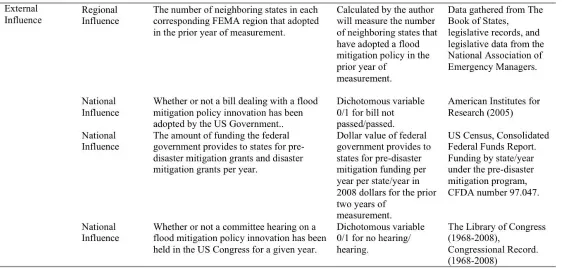
The influence of neighboring states on policy adoption has been measured either using count data (the number of neighboring states that adopted in the previous year) or using the percentage of neighboring states that adopted in the previous year but there is no
For flood mitigation polices, there are two concerns about regional influence. First, floodplains rarely fall neatly into political jurisdictions. The 1993 Midwest Flood affected nearly every state in the Midwest resulting in $15 billion in damage and 50 deaths, but Iowa, Kansas, Minnesota, Missouri, and Nebraska bore the brunt of the flooding (Sylves 2007). It seems likely that states in a certain geographic area would adopt some flood mitigation policy. Whether they adopt the same mitigation policy innovation in the same time period remains an open question that this study will address.
Furthermore, the presence of Emergency Assistance Compacts (EMAC) suggests some degree of cooperation and collaboration among states for emergency preparedness. The EMAC is a system of mutual aid agreements between states to provide assistance in the event of a catastrophic disaster that overwhelms the effected state’s ability to respond (Bea
2007). EMAC is a relatively recent development that was adopted for national use by Congress in 1996 and is administered by the National Emergency Managers Association, a professional membership group for emergency managers (Waugh and Streib 2006). All states participate in the EMAC. Similar mutual aid agreements existed to ensure civil defense since the 1950s (Bea 2007). This might suggest that regional influence may change over time, becoming more influential in predicting adoption after 1996.
Although EMAC deals almost exclusively with disaster preparedness and response rather than mitigation, it suggests that states may innovate based on collaboration and cooperation. This is inconsistent with Berry and Berry’s (1999) classic diffusion hypotheses
separate from each other. This means that the steps states take to share information and communicate effectively to prepare for a disaster may be similar for information sharing for mitigation. .
Finally, the relative importance of regional influence on state policy innovation might be based on the interaction among states following a recent flood. There is sufficient
evidence from the hazards literature to suggest that regional influence may play a role in policy adoption due to the nature of floods that transcends political jurisdictions and the evidence that states are influenced by each other—at least with respect to disaster preparedness and response. Therefore:
H8: The greater the number of a state’s neighbors that have adopted a flood
mitigation policy innovation in the prior year of measurement, the more likely the state is to adopt the same policy innovation.
National Influence
In terms of policy diffusion theory, indicators of national intervention or influence that have been used in diffusion studies include financial incentives to adopt a policy (Allen, Pettus and Haider-Markel 2004), federal agency spending per state (Daley 2007), national legislation regarding a policy (Karch 2007), and presidential statements indicating policy preferences (Karch 2007). Much of the scholarship on the influence of the national government has been concerned with direct or indirect action and the clarity of national policy preferences.
been the purview of local and state governments, but gradually the federal government has taken on more of a policy leadership role. This shift is consistent with trends in
intergovernmental relations in other policy areas. Beginning in the 1970s and 1980s coercive federalism replaced more cooperative practices as the federal government assumed an active position in policy leadership that superseded the authority of state and local governments through mandates or financial incentives (Kincaid 1990).
Despite the federal government’s changing role in flood mitigation policy, its
influence has been exerted primarily through legislation and funding to states. The federal government influences flood hazard mitigation policies through two major pieces of legislation: The National Flood Insurance Act of 1968 and its associated amendments, and the Robert T. Stafford Disaster Relief and Emergency Assistance Act of 1988 (Stafford Act) and its subsequent amendments. These two enactments are important because they are evidence of the federal government’s involvement in flood mitigation policy and the shifting
and sometimes conflicting nature of the federal government’s influence on flood mitigation policies. Furthermore, both pieces of legislation and their associated amendments provide the vehicle for the federal government to influence states by providing mitigation funding.
governments to impose construction standards, undertake structural mitigation projects like dams and levees and limit development in floodplains (Burby 2006).
Over time, the NFIA was amended twice more: in 1973 by The Flood Disaster Protection Act (PL 93-234), making flood insurance mandatory for all federally-backed mortgages and in 1994 with the adoption of The National Flood Insurance Reform Act (PL 103-325) creating a National Flood Mitigation Fund that provided grant funding to states for the “demolition or relocation of structures, elevation and flood-proofing, acquisition of floodplain properties, ‘minor physical mitigation efforts,’ beach nourishment, and state provision of technical assistance to localities” (Godschalk et al. 1999, 55). The 1973 and
1994 amendments to the NFIA were important because they added real consequences for state and local noncompliance or nonparticipation in the NFIP.
In spite of the amendments to the NFIA, an effect of the NFIP has been to increase vulnerability to floods by expanding land available for development (Burby 2006). Increased vulnerability to floods has been magnified by generous federal disaster relief assistance that creates a disincentive for communities and individuals to insure against floods before they occur (Birkland et al. 2003).
Addressed pre-disaster mitigation and preparedness by ordering the OEP [Office of Emergency Planning ] director to investigate additional or
improved plans, procedures, and facilities…necessary to provide immediate
effective action to prevent or minimize losses of publicly or privately owned property and personal injuries or deaths which could result from fires (forest and grass) earthquakes, tornadoes, freezes and frosts, tsunamis, storm surges and tides, and floods, which are or threaten to become major disasters (Bea 2007, 94-95).
More recently scholars studying intergovernmental relations have refined the concept to opportunistic federalism where “actors in the system pursue their immediate interests with
little regard for the institutional or collective consequences. For example, federal mandates, policy preemptions and highly prescriptive federal grant programs tend to be driven by opportunistic policy makers who seek to achieve their own policy and political goals regardless of transitional norms of behavior or boundaries of institutional responsibility”
(Conlan 2006, 667).
The Stafford Act (PL 100-707) as adopted provided mitigation assistance to states but only after a disaster had occurred, under what became the Hazard Mitigation Grant Program (HMGP). Significant policy changes have evolved since the adoption of the Stafford Act, most notably the adoption of the Disaster Mitigation Act of 2000 (DMA). The DMA
the federal government (PL 106-390). This planning had been mandated under the Stafford Act, but only at the state level for HMGP funds, and these plans had serious shortcomings (Godschalk et al. 1999).
This trend towards opportunistic federalism, particularly mandates, is problematic for state policy innovation because it suggests that states retain only the illusion of policy
discretion. Indeed, the federal government mandated pre-disaster mitigation planning for all states through the use of Section 409 in plan requirements in an amendment to the Stafford Act. This was later repealed under section 322 of The Disaster Mitigation Act of 2000 (PL 106-309) but the mandates for state, local, and tribal mitigation planning as a condition of receiving disaster assistance remained. Although the threat of withholding federal disaster recovery assistance may have been hollow, the DMA also incentivized state and local participation in the program by promising an increased federal share of recovery funding for states that had active mitigation plans in place. The rationale for the legislation was to reduce the costs associated with disaster recovery by identifying natural hazards and taking steps to protect life and property before the disaster occurred (PL 106-390).
The federal government sets its priorities for disaster preparation, response, recovery, and mitigation via the Stafford Act and its amendments. Godschalk and colleagues (1999, 15) refer to it as an ”intergovernmental mitigation system” where FEMA regional offices facilitate state level implementation based upon the individual state’s commitment to
mitigation and its own mitigation plans, and the state then implements the plan to reduce risks. While the role of the federal government’s influence on flood mitigation policies
of an ideal type. The federal government’s influence on flood hazard mitigation has been
mixed at best. However, the relative influence other states have on adoption compared to the influence of the federal government on adoption remains unknown. Berry and Berry have a theoretical concern over the issues of discretion and mandates, because “in some cases, the
national government can simply mandate certain activities by the states… a much more interesting theoretical process results when states retain discretion, but the national
government provides incentives for the adoption of the policy by the states” (1999, 177).
Thus:
H9: A state is more likely to adopt a flood mitigation policy innovation if Congress passes a mitigation policy in the prior year of measurement.
In the case of financial incentives for states to mitigate floods, I am concerned with influence of federal funding before a flood. Under the Stafford Act the federal government provides financial incentives to mitigate after a disaster occurs through the HMGP. But this has the potential to reward states for failing to mitigate. Federal financial incentives to mitigate before a disaster through the Pre-Disaster Mitigation (PDM) program could create sufficient influence by way of seed money for states to innovate using their own discretion. Thus:
H10: A state is more likely to adopt innovative flood mitigation policy if the federal government has provided financial incentives to mitigate under the Pre-Disaster Mitigation program during the prior year of measurement.
away from state and local governments. However, this shift has emphasized disaster
preparedness and response at the expense of mitigation as a means of lessening the effects of disasters or reducing risks associated with natural hazards. These reforms stemming from the reaction to September 11 and subsequent political rhetoric to “do something,” caused natural
disasters to become a secondary concern to terrorism at FEMA (Birkland 2004). For reasons that are unclear, the George W. Bush administration ended pre-disaster mitigation programs like Project Impact. In 2007, when Congress adopted the Post-Katrina Emergency Reform Act (PKEMRA), giving the director of FEMA authority to provide “land acquisition and relocation assistance” projects as long as the state or local government was eligible to receive
assistance under the hazard mitigation grant program. Any property that was acquired would have the structure removed and remain vacant and essentially underdeveloped in perpetuity in a way that is “compatible with open space, recreational, or wetlands management
practices” (PL 109-295).
The federal government’s role in and influence on flood mitigation policies is a part of an “intergovernmental mitigation system” but as I have argued, this description is more of an
ideal type. The real effect of federal policies is that they either increase vulnerabilities to floods or initiate shifting or unclear policy priorities for flood mitigation.
We know that issues of high political salience at the national level have tended to influence state legislative and political agendas and “the national government is therefore an
(Allen, Pettus, and Haider-Markel 2004). Finally, when the national government sends a mixed message to states about policy preferences—namely, response and recovery over mitigation—its influence on state policy adoption is weak (Allen, Pettus and Haider-Markel 2004). Thus:
H11: A state is more likely to adopt a flood mitigation policy innovation if mitigation is on the federal legislative agenda during the previous year.
Focusing Events
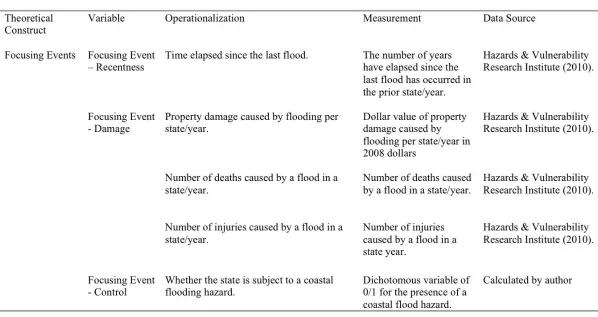
The development of diffusion theory in the policy sciences has narrowly concentrated on variance or the rate of diffusions and the characteristics of the states that have governed this process. This has led to an incomplete development of policy diffusion theory. Reframing diffusion as a more dynamic process of policy adoption within the context of focusing events, may allow for clarification of the policy innovation theories, particularly by considering diffusion as more of an integral part of the policy process, rather than a statistical variance.
Examining diffusion in the context of the policy agenda is one way to reframe diffusion. While Kingdon concedes that the term agenda has multiple meanings, whether it is the focus of a congressional meeting or a hidden plan of someone involved in the policy process he ultimately defines agenda as “the list of subjects or problems to which
Within the agenda setting literature, diffusion theory has been included only in a marginal way that I argue, reinforces a narrow, variance-oriented development. Baumgartner and Jones conceptualize agenda setting as the inherent instability of policy monopolies that are either perpetuated by negative feedback loops or disrupted by positive feedback loops, which lead to a punctuation in the policy equilibrium, and thus result in policy change. Baumgartner and Jones theorize that policy diffusion “with its S-shaped curve is remarkably
like a punctuated equilibrium model in which the system shifts rapidly from one stable point to another” (17).
Although Baumgartner and Jones recognize that it is not a certainty that all policy innovations will diffuse completely, their conceptualization of diffusion is a part of the positive feedback process where policies diffuse rapidly but once diffusion of a particular policy innovation reaches a saturation point, negative feedback occurs. This