Mental models are mental representations of the external world which humans constantly use when they interact with the environment and systems within it. These mental models are in part constituted by an underlying structure of associated concepts which are modified as a person gains experience with a system or domain. Video games provide a context that encourages the development of sophisticated mental models. The current research sought to understand how mental model structures differ between video game players of varying experience levels. Additionally, the study examined how the amount of mental model content differs across three experience levels and if video game experience is predictive of video game performance and enjoyment. Participants were recruited both over internet forums and through Mechanical Turk. Mental model structures were measured using relatedness ratings between pairs of concepts that were derived from players with high levels of experience playing League of Legends. Relatedness ratings were transformed into Pathfinder networks which were used to analyze mental model structures. Results revealed structural differences in mental models between experience levels and some structural characteristics successfully predicted performance. A three-stage model of mental model structure development is proposed to explain the results which suggests that some structural characteristics appear earlier in mental model development than others. The role of mental model structural
by
Caleb Samuel Furlough
A dissertation submitted to the Graduate Faculty of North Carolina State University
in partial fulfillment of the requirements for the degree of
Doctor of Philosophy
Psychology
Raleigh, North Carolina 2017
APPROVED BY:
_______________________________ _______________________________ Dr. Anne McLaughlin Dr. Christopher Mayhorn
_______________________________ _______________________________
Dr. Douglas Gillan Dr. Jason Allaire
DEDICATION
BIOGRAPHY
Caleb was born on September 5th, 1990 in Raleigh, North Carolina. In 2013 he graduated summa cum laude from North Carolina State University with a Bachelor of Arts degree in Psychology. In the spring of 2015 he completed his Master of Science in Psychology with a concentration in Human Factors and Applied Cognition from North Carolina State
ACKNOWLEDGMENTS
I would be remiss if I did not first and foremost acknowledge my wife, Faith, for her dedication and love. She has challenged me to be to be both a better researcher and better person. I must also acknowledge my family, especially my parents, who have never failed to provide support and encouragement.
I would like to thank Dr. Janey Barnes, Glenn Barnes, and User-View Inc. for both financial and directional support throughout my graduate education.
I would like to thank my advisor and mentor, Dr. Douglas Gillan, as well as others on my committee – Dr. Anne McLaughlin, Dr. Jason Allaire, and Dr. Christopher Mayhorn – for their support and expertise which has proven invaluable.
TABLE OF CONTENTS
LIST OF TABLES ... vii
LIST OF FIGURES ... viii
Introduction & Background ... 1
Mental Models ... 1
Defining the Mental Model. ... 1
Influence on Behavior in Human-Systems Interaction. ... 3
Characteristics of Mental Models. ... 4
Content and Structure... 5
Model Construction and Development ... 6
Video Games ... 11
Mental Models in Video Games. ... 13
Research Questions ... 15
Method ... 16
Preliminary Study ... 16
Participants. ... 16
Apparatus. ... 17
Procedure. ... 19
Main Study ... 19
Design. ... 19
Participants. ... 19
Apparatus. ... 20
Procedure. ... 22
Results ... 23
Video Game Experience... 23
Pathfinder Analysis ... 23
Knowledge Structure Characteristics ... 29
Structural Characteristics and Enjoyment ... 40
Discussion... 40
Differences in Mental Model Structures ... 40
Three-Stage Theory of Mental Model Construction ... 45
Video Game Enjoyment, Performance, and Mental Model Content ... 48
Applied Implications ... 49
Training ... 49
Game Design ... 51
Limitations and Future Research ... 51
REFERENCES ... 53
APPENDICES ... 59
Appendix A. Preliminary Study Questionnaire ... 60
Appendix B. Consent Forms ... 61
Appendix C. Concept Listing ... 65
Appendix D. Interest/Enjoyment Subscale (Intrinsic Motivation Inventory) ... 66
LIST OF TABLES
Table 1. Mental Model Structural Characteristics by Experience ... 9
Table 2. Characteristics of Interview Participants ... 17
Table 3. Structural Characteristics – Follow-up Univariate Results ... 34
LIST OF FIGURES
Figure 1. Aggregate Pathfinder networks for each level of experience. Descending: high
experience, medium experience, low experience. ... 26 Figure 2. Bar charts displaying means for each structural characteristic measurement for each
experience group. ... 32 Figure 3. Bar charts displaying means for concept listing, performance, and enjoyment
scores for each experience group. ... 36 Figure 4. Scatterplot of KDA ratio against performance scores. ... 39
Figure 5. Three-stage model of mental model structure development. The three blocks
Introduction & Background
People don’t interact with technological artifacts, they interact with their mental models of those artifacts (e.g., Norman, 1983). Consequently, people frequently use mental models as they complete daily tasks. Simple tasks, such as driving to work, operating a computer, and cooking a meal require the use of mental models for successful completion (Gentner, 2002; Norman, 1983). Mental models are also useful when performing more complex tasks, such as air traffic control and the medical care activities by physicians and nurses (Smith & Koppel, 2014; Mogford, 1997). The pervasiveness of mental models in routine human activity, especially as it relates to interaction with technology, reveals the importance of understanding how these models are formed, used, and adjusted over time.
Mental Models
(1983) recognized the role of long-term memory in the creation of mental models, he suggested that working memory is the primary mechanism by which models are stored, manipulated, and later discarded.
Other early pioneers of the concept include Gentner and Stevens (1983) and Norman (1983). Norman (1983) provided a slightly different perspective on mental models, framing them in terms of domain knowledge and human-system interaction. He stated that people construct internal representations of the systems with which they interact and that these representations “. . . provide predictive and explanatory power for understanding the interaction” (p. 7). Both Norman and Gentner described mental models in terms of the involvement of long-term memory. Gentner (2002) described her approach to mental model theory, in contrast with Johnson-Laird’s, as one that “seeks to characterize the knowledge and processes that support understanding and reasoning in knowledge-rich domains” (p. 9683). Norman (1983) described mental models as knowledge about objects and the
assume the interpretation of mental model theory given by Norman (1983) and Gentner (2002) as it is a more accurate reflection of the mental model literature as it pertains to human-systems interaction.
The diversity in definitions encompasses a number of differences including scope, number of cognitive processes involved, and usefulness. Rouse and Morris (1986) warned that defining mental models too broadly could result in a definition that is no different from general knowledge and provides no additional theoretical or practical utility. Therefore, I have carefully chosen a definition of mental models that reflects the wide body of literature and yet remains theoretically useful. Mental models are mental representations of systems or situations that reside primarily in long-term memory and aid in prediction of future states of systems and situations and facilitate reasoning concerning those systems and situations.
Influence on Behavior in Human-Systems Interaction. Mental model theory not only describes a representation of a system in long-term memory but also how models influence behavior. Given that mental models serve as mechanisms by which humans reason with objects in the environment, it should not be surprising that they are predictive of human behavior. Kieras and Bovair (1984) found that users who developed a more complete mental model of a device saw increased performance and learning. Slone (2002) reported that people with different mental models of internet searching engaged in different types of web
trusted an adaptive cruise control mechanism (Beggiato & Krems, 2013). Bader and Beyerer (2011) suggested that the state of a person’s mental model can predict gaze patterns during human-computer interaction tasks. Fein, Olson, and Olson (1993) found that groups who acquired mental models yielded higher performance using a complex device than those who did not. This evidence supports the claim made by Gentner and Stevens (1983) that the concept of a mental model is one that has obvious usefulness in understanding human behavior when interacting with systems.
Characteristics of Mental Models. Mental models have been observed to have a number of distinct characteristics. Some aspects of mental models have already been
posited that mental models of the same system are often inconsistent with one another and that people can hold contradictory models simultaneously. A central characteristic of mental models is that they have an organized structure in long-term memory. This concept is to be explored at more detail in the following section.
Content and Structure. Mental models can contain numerous types of informational content -- static declarative information, such as names and functions of system components, causal information about how these components interact with one another to produce effects (Mayer, Mathias, & Wetzell, 2002), and procedural knowledge about how to operate
functions of the system to produce desired outcomes (Zhang, 2013). The format of the content of mental models is flexible. Model representations in memory have been suggested to be conceptual or propositional (Doyle & Ford, 1998) as well as image-like (Rouse & Morris, 1986).
Mental model structures may be organized as networks with information chunks and concepts existing as nodes and links representing associative connections between those nodes (Lokuge, Gilbert, & Richards, 1996; Doyle & Ford, 1996). The associative
information in memory while schemata are non-computational (Jones, Ross, Lynam, Perez, & Leitch, 2011; Wilson & Rutherford, 1989). This is to say, that the underlying mental model structure provides the means by which mental simulation and prediction can occur. Schemata, on the other hand, are made up of static, inflexible chunks of information. It could be said that mental model structures in memory are a special case of schemata. The structure of a mental model provides the foundation from which behaviors with a system arise. Mental simulations and predictions rest upon the underlying model content and structure. The
organization provided by a mental model structure is not only used for mental simulation and prediction, though. It has been demonstrated that knowledge which is organized is easier to recall than unorganized knowledge (Cooke, Durso, & Schvanevedlt, 1986; Tulving, 1962). This is consistent with spreading activation theory as presented by Collins and Loftus (1975) and Quillian (1966). Mental model structures both facilitate mental simulation and aid in recall of declarative knowledge. However, in order to fully understand mental model structure, it is necessary to also examine how structures are modified and developed over time.
Model Construction and Development. Research has examined what factors affect how mental models are constructed (Katzeff, 1990; Zhang, 2009; Savage-Knepshield, 2001; Zhang 1998; Thatcher & Greyling, 1998). Some studies have assessed factors which affect the construction of mental models such as experience (Thatcher & Greyling, 1998),
Studies have also been performed from which researchers have made claims about the mental model construction process that go beyond simply identifying factors which influence construction (Mayer et al., 2002; Savage-Knepshield, 2001; Katzeff, 1990). Mayer et al. (2002) examined the effects of type and order of information given during training on performance with a system. They suggested that their results support a two-stage model of mental model construction. The first stage involves building a model for each component of the system including all of the possible states that each component can take independently of other components. Second, a model is built of how components stand in causal relationship to one another including how each component interacts with other components.
Savage-Knepshield (2001) framed mental model construction in terms of integration into existing models. Learners add task-specific knowledge to existing models as they engage with a new system. Cool, Park, Belkin, and Koenemann (1996) and Marchionini (1989) found that when people approach a novel system they engage their mental models in one of three ways. System users might use a mental model for a similar system they have
Katzeff (1990) analyzed think-aloud protocol data from computer-based tasks and concluded that mental model construction consists of three phases: construction, testing, and running. The construction phase involves the building of a mental model with more specific information about the system as well as filling in gaps and missing pieces of information. In the testing phase the learner runs a simulation of the mental model to determine if the model is incorrect and needs adjustment. The running phase involves simulating a mental model similar to that done in the testing phase. However, instead of the goal being to adjust the mental model based on system feedback, the learner uses the simulation to predict system feedback and interpret that feedback in light of the simulation outcome. In doing this the running phase aids in the interpretation of system feedback.
Zhang (2009) used concept listing and interviews to assess mental model construction in an information rich system. She interpreted her results as providing support that mental model development occurs in three dimensions: cognition, emotion, and behavior. The cognitive dimension encompasses the integration of system features into the model. The emotional dimension relates to how learners feel about the system. Lastly, the different strategies adopted over time by learners is considered the behavioral dimension. Zhang (2009) also noted that these dimensions and the construction of mental models as a whole were facilitated by three mental activities including assimilating new information into the model, eliminating old information, and adjusting existing information.
domains (e.g. Bradley, Paul, & Seeman, 2006; Gillan, Breedin, & Cooke, 1992; Kay & Black, 1984). Among the frequent observations in this work are the differences in mental model structures and in levels of performance between novices and experts. Researchers have posited a number of characteristics which are identified with mental model structures at different levels of experience with a system or domain, as can be seen in Table 1. In
addition, as the mental model structure of a novice becomes more similar to that of an expert, the novice’s performance improves (Day & Gettman, 2001; Goldsmith, Johnson, & Acton, 1991; Kraiger, Salas, & Cannon-Bowers, 1995).
Table 1.
Mental Model Structural Characteristics by Experience
Characteristic Low Experience High Experience References Level of
abstraction
Associations are based on surface features and concentrated around concrete objects.
Associations are based on conceptual features and based around abstract concepts.
Bradley et al., 2006; Graham, Zheng, and Gonzalez, 2006
Density Networks contain fewer links compared to those with more experience.
Networks contain more links compared to those with less experience.
Bradley et al., 2006; Zielinska, Welk, Mayhorn, & Murphy-Hill, 2015
Centralization Subnetworks of concepts are less common and make up less of the overall network.
Subnetworks are more common and take up a substantial amount of the network.
Table 1 Continued
Semantic Associations are made based on meanings of words in natural language instead of domain language.
Associations are made based on meanings of words in the language of the domain.
Cooke & Schvaneveldt, 1988; Sebrechts, Black, Galambos, Wagner, Deck, & Wilker, 1983
Procedural Associations are not based on concepts frequently used
together in procedures.
Subgroups and associations are often based on frequently used procedures.
Kay & Black, 1984
The literature surrounding these model structure characteristics has various
shortcomings. First, the majority of the research has been performed in only a few domains such as computer programming, word processing, and education. The nature of the domains could limit or shape how model structures are developed in a way that is not generalizable to other domains with different types of content. Second, some of the research is simply
subnetwork-based and natural language-based structures, are made without any
accompanying inferential statistical analysis (e.g. Cooke & Schvaneveldt, 1988; Graham et al., 2006; Gillan et al, 1992). The lack of inferential statistics weakens the claims that can be made about mental model structural differences. Lastly, with regards to model structures at different levels of system or domain experience, the literature rarely investigates beyond the simple expert-novice distinction. There is little examination of mental model structures at finer grains of experience. This is a major drawback the literature which precludes a more complete understanding of how mental model structures develop over time and with experience. Overall, this body of literature provides evidence that there are differences in mental model structures associated with varying levels of experience with a system or domain, but there remain clear areas where it could be strengthened and extended. Most notably, the literature could be expanded to examine if these observations hold true in different contexts and how mental models differ at more than two levels of experience. The current research sought to expand the literature primarily by examining mental model structures in a novel context and at more than two levels of experience. With regards to extending the literature to novel contexts, the emerging domain of video games provides such a context.
Video Games
that plays video games (Electronic Software Association, 2015). Many of those who play video games do so regularly, with forty-two percent of Americans playing at least three hours per week (Electronic Software Association, 2015). Research reported by the Electronic Software Association (ESA) also shows that people are spending less time engaging with other sources of entertainment, such as television, as video games rise in popularity. Consumers in the United States alone spent more than twenty-two billion dollars on video games in 2014. These statistics show that video games have a substantial potential for influence in modern society.
Video games are not only influential in the consumer entertainment industry. They have been used for educational purposes (Papastergiou, 2009), training of complex skills (Schlickum, Hedman, Enochsson, Kjellin, & Felländer-Tsai, 2009; Gopher, Well, & Bareket, 1994), improvement of cognitive ability (Li, Polat, & Makous, 2009; Feng, Spence, & Pratt, 2007; Green & Bavelier, 2007), and rehabilitation of physical and mental disabilities
(Deutsch, Brettler, Smith, Welsh, John, Guarrera-Bowlby, & Kafri, 2011; Rand, Kizony, & Weiss, 2008; Larose, Gagnon, Ferland, and Pépin, 1989). Video games designed or
educational domains. Given the propensity of video games to produce learning and skill acquisition it should be expected that they also produce an underlying mental model.
Mental Models in Video Games. Video games offer a potentially productive domain of research for mental model theory. Playing complex video games requires learning and using both declarative and procedural knowledge. As discussed earlier both of these types of knowledge are encompassed by mental models. Additionally, individuals who play multiple video games must engage in the transfer of mental models from one game to another, reflecting the mental model transfer and integration theories of Gentner (2002), Cool et al., (1996) and Marchionini (1989) discussed earlier. Research has shown that effortful
processing can alter how easily information is learned (Hasher, Rose, & Zacks, 1979). Video games have been shown to be particularly motivating, especially within the framework of Self-Determination Theory (Ryan, Rigby, & Przbylski, 2006). Given the motivational nature of video games it is reasonable to think that video games encourage players to engage in effortful processing more often than with many other technologies. The mental model
by many levels of experience. Each of these reasons results in a cumulative case for why video games provide a rich area of potential for mental model research.
Despite this, the research literature concerning mental models and video games is almost non-existent. The learning research referenced earlier constitutes the body of work most related to mental models. This research clearly shows the pedagogical utility of video games but does little to examine the underlying mental model development during video game play, especially for entertainment-oriented games. Graham et al. (2006), however, performed a pilot study examining how mental models of participants playing a real-time strategy video game changed over time. They posited that novice players would construct models of video game elements based on the physical features perceived and that over time the model would develop into a structure based on object function. Although there was a limited sample of five participants, they found that at least some of the initial model
In an earlier section, the influence of model structure on performance was discussed in contexts such as education and computer programming. This line of research could be extended to performance in a video game context, as well, in order to observe how mental model structure predicts video game play performance. Additionally, given the inherent importance of enjoyment in playing video games an examination of how model structure predicts game enjoyment would enhance the literature. Understanding both how mental model structures are influenced by game play experience and how those structures influence other outcomes variables such as performance and enjoyment would extend our current understanding of the role of mental model structure in human-systems interaction. Research Questions
Up to this point, a review of the literature has shown that mental model structure is an important area of research, both theoretically and practically, which has not been explored fully. This is also true for research on the types of content constituting the model structures. The current research explored mental model structure more fully, especially as it relates to structures at multiple levels of experience. Additionally, the domain of video games has been left largely untouched but presents a profitable area of research for mental model theory. Based on the review of literature conducted up to this point, the current research conducted a study which examined the following research questions:
2. How does mental model content differ across three levels of experience playing a video game?
3. Do mental model structural characteristics predict video game performance? 4. Do mental model structural characteristics predict video game enjoyment?
Method
The current study consisted of a preliminary study and a main study. The preliminary study determined the materials needed for the main study. Associations between concepts in a knowledge structure can be measured by presenting all possible pairs of words from a list and requiring participants to conduct ratings of relatedness or similarity on a numerical scale (e.g. Cooke et al., 1986; Cooke & Schvaneveldt, 1988; Goldsmith et al., 1991; Kraiger et al., 1995). This study utilized relatedness ratings to measure mental model structure in this way. Prior to the presentation of relatedness ratings, though, a list of concepts needed to be
generated. Goldsmith and Kraiger (1997) detailed the process of generating a list of concepts. The primary ways by which a list can be generated are (1) examining related source materials (e.g. training manuals) and (2) interviewing domain experts. Given the lack of previous research in the domain, as well as the lack of sophisticated instructional materials, the current research used the interview method to elicit a list of concepts related to a video game.
Preliminary Study
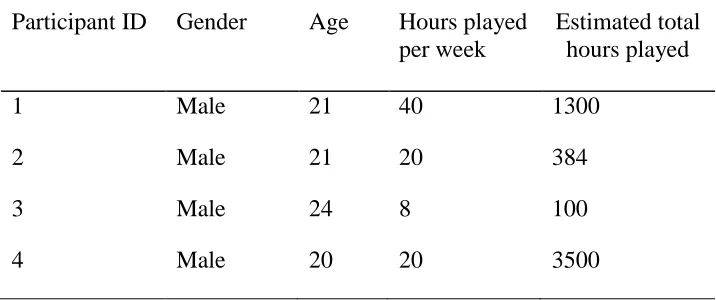
who played socially spent an average of six and a half hours per week playing with other people, including online play. People who spent on average at least six hours per week playing the chosen video game, which will be described in the next section, were deemed eligible to participate. Although six hours per week was the minimum requirement for eligibility, most participants far exceeded this requirement as is indicated in Table 2 below. The sample was a convenience sample. Participants were approached by the experimenter and asked to participate in the study. Participants were not compensated for taking part in this portion of the study.
Table 2
Characteristics of Interview Participants
Participant ID Gender Age Hours played per week
Estimated total hours played
1 Male 21 40 1300
2 Male 21 20 384
3 Male 24 8 100
4 Male 20 20 3500
on 8.5 x 11 inch printer paper and an ink pen (Appendix A). This document was used to record the following demographic information:
Gender
Age
Estimated hours per week spent playing League of Legends
Estimated total hours spent playing League of Legends
This also served as the means by which participants recorded their answers to the
interviewer’s questions. The experimenter also maintained a short set of two interview items, which he used to guide the interview with the participant. The interview items were:
In the next 5 minutes please list as many concepts and terms as you can that you believe are related to playing League of Legends. Concepts can be a variety of things such as objects, characters, or levels in the game or can be more abstract such as ideas, terminology, or strategies. List as many concepts as you can that you believe are central to playing League of Legends.
Take a look at the list you created. Using the pen and paper provided, please indicate each group of concepts which are frequently used together to accomplish a goal in League of Legends.
day according to publisher Riot Games (“Our Games”, n.d.). In addition to its widespread appeal it also fosters one of the most active professional gaming communities. League of Legends is an online team-based arena game in which players assume the role of a character matched with a team of players and pitted against another set of human controlled characters. All characters have a unique set of abilities which players use to destroy the opponents’ units and structures. The popularity, complexity, and diversity of player experience made the game an excellent fit for the goals of the present study.
Procedure. Participants were greeted and given the demographic portion of the questionnaire. The interview questions were then read and participants were instructed to write their answers down. The session then concluded.
Main Study
Design. A cross-sectional design was implemented. The independent variable was considered the amount of experience participants had with League of Legends. The independent variable contained three levels of experience (low, medium, high) which are described at more detail with the results. There were four primary outcome variables of interest: relatedness ratings, concept lists, performance, and enjoyment.
Participants. 160 participants took part in the study. Two participants’ data were not
Participants were recruited through two methods including internet forums and Amazon’s Mechanical Turk. Those who participated were compensated four dollars for participating in the study on Mechanical Turk. Participants who took part in the study through internet forums were given the opportunity to enter a raffle for one of three $25 Amazon gift cards. Initially, participants were recruited solely through internet forums through posts which invited anyone with experience playing League Legends to participate. However, due to forum restrictions which limited the sample size and generated a disproportionate number of participants with high amounts of experience, Mechanical Turk was also used as recruitment platform. There were no gender restrictions to participating but participants were required to be at least eighteen years old to participate. A power analysis performed using G*power software (Faul, Erdfelder, Lang, & Buchner, 2007) indicated that a X² test with power (1 - β) set at 0.80, α = 05, and df = 2, resulted in an estimated sample size of n = 108. A second power analysis indicated that a MANOVA with power (1 - β) set at 0.80, α = 05, the G*power default medium effect size of .0625, three groups, and five response variables resulted in an estimated required sample size of n = 135. 160 participants took part in the study, which exceeds the estimated sample sizes found in the power analysis.
Apparatus.Consent forms were developed for both forum and Mechanical Turk participants which were distributed to participants at the start of each session (Appendix B). An online questionnaire was developed that was used to collect all of the data in the study. A demographic questionnaire was used to collect the same information collected in the
Legends account and experience with similar video games. The online questionnaire also contained a set of relatedness ratings based on a list of concepts derived from the preliminary study (Appendix E). From the expert-derived concepts, twenty were chosen which are also listed in Appendix E. Concepts were chosen in part based on the frequency with which they were listed by experts and the extent to which they are perceived to encompass a wide range of concepts within the domain. Two judges, who had some expertise in research methods and cognitive psychology, categorized all concepts into two groups: abstract (e.g. ideas,
strategies) and concrete (e.g. objects). Interrater agreement was 76%. The experimenter then chose ten terms that were categorized as abstract and ten that were categorized as concrete, resulting in a list of twenty concepts. Prior to conducting the ratings, participants were shown the twenty individual concepts that they would subsequently compare. This is important as it provides a contextual frame of reference for making meaningful comparisons (Cooke & Schvanevedlt, 1988; Clariana, 2010). Goldsmith and Kraiger (1997) indicated that more concepts are generally associated with higher validity and that their research has typically included at least twenty concepts. Ratings of the pairs of concepts used a scale of 1 (high unrelated) to 9 (highly related) (Appendix E). In order to ensure that participants were
completing relatedness ratings correctly they were given initial practice trials and an attention check trial. The practice trials consisted of four relatedness rating items where the terms were common kitchen items (e.g. spoon and pot). The attention check trial was a single relatedness rating which consisted of a repeated item from the set of 190 pairs of terms and was
The online questionnaire also included a concept listing activity (Appendix C). Concept listing is a technique that can be used to elicit concepts considered most related to a domain in memory (Wang, Bales, Rieger, & Zhang, 2004; Zhang, 2009). In contrast to relatedness ratings, which measure the structure of predetermined concepts, concept listing elicits the amount of knowledge in declarative memory. Lastly, an adapted version of the
Interest/Enjoyment subscale of the Intrinsic Motivation Inventory (Appendix D) was used to measure game enjoyment (Lyons, Tate, Komoski, Carr, and Ward, 2012). A seven-item scale was used which includes statements followed by 1 (not true at all) to 7 (very true) Likert scale responses accompanying each statement (e.g. I enjoyed playing this game very much).
Procedure. The online questionnaire was administered through Qualtrics.
Participants were first asked to read and agree to a consent form. Participants then completed the demographics questionnaire. Participants were then asked to enter their username
associated with their League of Legends account. The concept listing activity was then administered. Next, participants completed the relatedness ratings portion of the
questionnaire which included the practice trials, full set of randomized relatedness rating items, and attention check trial. Participants were then given the Interest/Enjoyment subscale. Lastly, the Mechanical Turk participants were given a code to enter in order to receive
Results Video Game Experience
Participant experience with League of Legends and similar games was measured in the background questionnaire. The average estimated total number of hours of experience that participants had playing League of Legends was 1423 (SD = 1809.74). The estimated average number of hours per week spent playing was 11.9 (SD = 14.16). Participants were split into three groups which represented low, medium, and high levels of experience. After an inspection of the data, participants with 1-100 hours of experience were categorized as low experience, 101-1000 hours as medium experience, and more than 1000 hours as high experience. These thresholds resulted in a relatively balanced split of low (n = 40), medium (n = 52), and high (n = 66) experience groups. Establishing experience thresholds in order to create groups has been utilized in prior mental model research (e.g. Cooke & Schvaneveldt, 1988). Participants also rated their experience with games in the same genre as League of Legends, multiplayer online battle arenas (MOBAs), on a scale of 1 (no experience) to 5 (high experience). This measure was taken to ensure that prior experience with similar games would not influence ratings more for one level of experience than another. A one-way
between-subjects ANOVA revealed that there were no significant differences in prior MOBA experience between experience levels (low, medium, high), F(2,155) = .73, p = .48.
Pathfinder Analysis
network representation of the matrix data as an output. Pathfinder networks contain three central features: nodes, links, and link weights. Nodes are input terms or objects. Links are weighted paths between nodes that represent a meaningful connection. Link weights, which are often hidden in the graphical representation, represent the strength of the connection (i.e. link) between two nodes. The Pathfinder analysis eliminates links between pairs of nodes until the only remaining links are those that represent the strongest connections between nodes. This is accomplished by using a triangular inequality theorem method such that if the link between any two nodes is weaker than some other path of links which connects those two nodes, that link is eliminated. Thus, a Pathfinder network represents the most meaningful links between nodes given the parameter settings. There are two primary parameter settings, which act as constraints on the network. The q parameter determines the maximum number of links that are allowed in a path of links, such as to limit to maximum length of a path. The Minkowski r distance parameter determines how path weights are calculated. The most common parameter settings for similarity data, and those which were used in this study, are q = n-1, r = ∞. More details on the Pathfinder algorithm can be found in Schvaneveldt, Durso, and Dearholt (1989). Pathfinder networks have been shown to be a valid method of
Each Pathfinder network has an associated coherence value. The coherence statistic measures the extent to which the network is internally consistent. A network with a low internal consistently suggests that the pairwise inputs (i.e. relatedness ratings) were not reliable. Although there is no generally accepted threshold for internal consistency, the creators of the Pathfinder software used in this study suggest that a coherence of less than .15 indicates a network with low internal consistency (“Pathfinder Networks”, n.d.). Coherences for the low, medium, and high experience groups’ mean aggregate networks were .4, .38, and .46, respectively. Additionally, the mean coherences for each individual’s network in the low, medium, and high groups were .24, .33, .37, respectively. All of these coherences exceed .15 and the trend for the individual networks follows what was be expected, that networks are more coherent for individuals that have more experience. Additionally, both mean aggregate Pathfinder networks and raw individual relatedness ratings generated from Mechanical Turk participants correlated with networks generated by forum participants at r = .86, supporting the notion that participants recruited from difference sources did not produce substantially different relatedness ratings.
Knowledge Structure Characteristics
The degree to which mental model structures were organized around abstract
structures were organized around semantics, the meaning of words in natural language as opposed to the language of a domain, was determined by a two-step process. First, two judges, who have expertise in cognitive psychology, categorized all 190 pairs of concepts as being related based on semantics in natural language or domain language. Judges were able to reconcile all discrepancies in order to establish 100% inter-rater agreement. These links were then counted for all individual Pathfinder networks and the proportion of network connections that were categorized as natural language-based was determined. Participants in the preliminary study identified procedurally related concepts. Each pair of connected
concepts that were identified as being procedurally related were counted for all networks and the proportion of connections in a network that were procedurally related indicated how procedurally-based a network was. Lastly, the extent to which mental model structures were organized with central nodes and subnetworks was operationalized. This study used a modified version of the criteria for central nodes and subnetworks found in Gillan et al. (1992). A subnetwork was counted if a combination of links in a Pathfinder network met the following conditions:
1. A series of nodes which begins and ends with the same node.
2. All nodes in the network connect to at least two other nodes in the network.
3. At least half of the nodes in the network connect to at least three other nodes in the network.
5. A series of nodes is not considered a subnetwork if it contains half or more of the nodes in the entire network (i.e. 10 or more).
6. A series of nodes is not considered a subnetwork if the network would contain more than five subnetworks.
These criteria were intended to identify small neighborhoods of tightly interconnected links which could be considered a subnetwork of links. A central node was considered a node with at least three links that was not part of a subnetwork. Subnetworks and central nodes were counted for all individual Pathfinder networks.
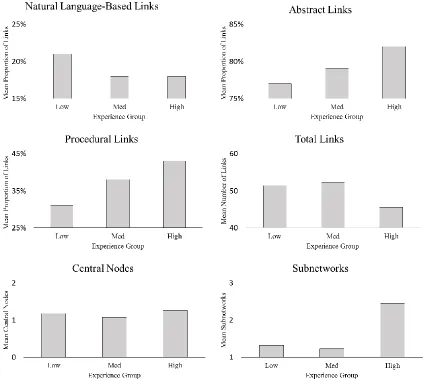
Figure 2. Bar charts displaying means for each structural characteristic measurement for each experience group.
inflation of Type 1 error associated with multiple ANOVA follow-up comparisons (Cramer & Bock, 1966). A MANOVA was conducted to test the hypothesis that there would be one or more mean differences between experience levels (low, medium, high) and the dependent variables: percentage of abstract connections, total number of links, percentage of natural language-based connections, number of central nodes, number of subnetworks, and
percentage of procedurally-based connections. A statistically significant overall MANOVA effect was found, Wilks’ Lambda = .63, F(12, 300) = 6.53, p < .001; partial η2 = .21,
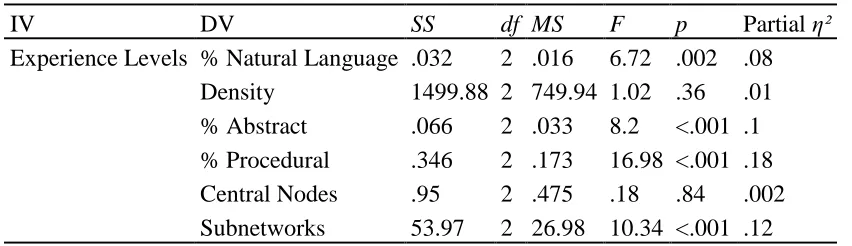
indicating a difference in structural characteristics between experience levels. Before follow-up ANOVAs were conducted, homogeneity of variance was tested using Levene’s F test at p < .001 for all dependent variables. Homogeneity of variance was considered satisfied for all variables. A series of follow-up one-way ANOVA’s on each of the dependent variables was conducted. As can be seen in Table 3, ANOVA’s were found to be statistically significant for percentage of natural language-based connections, F(2,155) = 6.72, p = .002 , η2 = .08, percentage of abstract connections, F(2,155) = 8.2, p < .001 , η2 = .1, percentage of
Table 3
Structural Characteristics – Follow-up Univariate Results
IV DV SS df MS F p Partial η²
Experience Levels % Natural Language .032 2 .016 6.72 .002 .08 Density 1499.88 2 749.94 1.02 .36 .01 % Abstract .066 2 .033 8.2 <.001 .1 % Procedural .346 2 .173 16.98 <.001 .18 Central Nodes .95 2 .475 .18 .84 .002 Subnetworks 53.97 2 26.98 10.34 <.001 .12
experience group (M = 2.5, SD = 1.7)were found to have more subnetworks than in the low (M = 1.3, SD = 1.5) p = .001,and the medium (M = 1.2, SD = 1.5)experience groups, p < .001.
Experience Difference Relationships to Concept Listing, Performance, Enjoyment In addition to the primary research question surrounding the structural characteristics of mental models, participants completed a concept listing task in order to measure the amount of important content stored in their mental model and the Interest/Enjoyment portion of the Intrinsic Motivation Inventory in order to measure enjoyment with playing League of Legends. Additionally, performance was measured by using the username provided by the participant to search public databases such as League of Graphs (n.d.) and LoLProfile (n.d.) for in-game statistics. The statistic used as a measure of performance was the KDA (kill, death, assist) ratio which combines three key in-game metrics in order to establish an overall individual performance score. This metric is more appropriate than other metrics such as win ratio because it is heavily dependent on the individual’s performance instead of the
performance of the team at large. KDA ratio data was retrieved for 119 of the 158 participants. For some participants, the username was not associated with any in-game statistics and so metrics could not be collected. This is likely due to players with little experience not playing the game in a way that would record such statistics (i.e. playing “practice” games). Other usernames were simply not able to be retrieved from the databases.
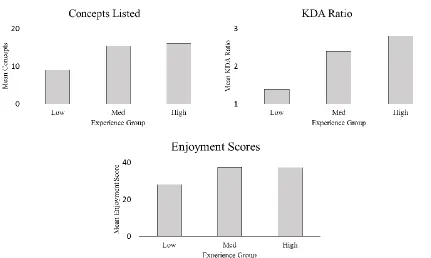
Figure 3). A descriptive examination of means revealed noticeable differences between groups. The mean number of concepts generated and enjoyment scores were noticeably lower for the low experience group than for the medium and high experience groups. The mean KDA ratio revealed a step-like pattern whereby each experience group had a higher proportion of procedural connections, ascending from the low experienced group to the high experience group.
Figure 3. Bar charts displaying means for concept listing, performance, and enjoyment scores for each experience group.
enjoyment. Consistent with the previous section, a MANOVA was chosen in order to protect against the inflation of Type 1 error associated with multiple ANOVA follow-up
comparisons (Cramer & Bock, 1966). A statistically significant overall MANOVA effect was found, Wilks’ Lambda = .731, F(6, 228) = 13.94, p < .001; partial η2 = .27, indicating a difference in the dependent variables between experience levels. Before follow-up ANOVAs were conducted, homogeneity of variance was tested using Levene’s F test at p < .001 for all dependent variables. Homogeneity of variance was considered satisfied for all variables except for performance. A series of follow-up one-way ANOVA’s on each of the dependent variables was conducted. As can be seen in Table 4, ANOVA’s were found to be statistically significant for number of concepts generated, F(2,116) = 12, p < .001 , η2 = .17, KDA ratio, F(2,155) = 27.27, p < .001 , η2 = .32, and enjoyment score F(2,116) = 13.93, p < .001 , η2 = .19.
Table 4
Content, Performance, Enjoyment – Follow-up Univariate Results
IV DV SS df MS F p Partial η²
Experience Levels Concepts Listed 986.6 2 493.30 12.03 <.001 .17 Performance 37.86 2 18.93 27.27 <.001 .32 Enjoyment 1736.87 2 868.44 13.93 <.001 .19
dependent variables for the significant univariate tests. Post-hoc analysis found fewer concepts were generated for participants in the low experience group (M = 8.96, SD = 6.88) than those in the medium (M = 15.38, SD = 6.93), p < .001,and the high (M = 16.05, SD = 5.84)experience groups, p < .001. KDA ratio was lower for those in the low experience group (M = 1.4, SD = 1.21)than those in the medium (M = 2.4, SD = .85), p < .001,and the high (M = 2.82, SD = .57) , p < .001,experience groups, and those in the medium experience group had lower performance than those in the high experience group, p = .025. Finally, enjoyment scores were lower for those in the low experience group (M = 28.19, SD = 11.21) than those in the medium (M = 37.44, SD = 7.12), p < .001,and the high (M = 37.22, SD = 6.34)experience groups, p < .001.
Structural Characteristics and Performance
In order to answer the third research question that this study sought to investigate, the relationship between the structural characteristics of mental models defined earlier and performance was examined. A multiple regression analysis was performed with performance (KDA ratio) as the outcome variable and with each of the structural characteristics described earlier (number of natural language-based links, total number of links, number of abstract links, number of procedurally-based links, number of central nodes, number of subnetworks) as the predictor variables in order to determine if performance could be predicted as a
accounted for 17% of the variance. An increase in the percentage of natural language links was associated with a decrease in KDA ratio (β = -.21, p = .02). An increase in the
percentage of abstract links was associated with an increase in KDA ratio (β = .19, p = .04). An increase in the percentage of procedural links was associated with an increase in KDA ratio (β = .31, p = .005). The total number of links (β = .05, p = .67), number of central nodes, (β = -.03, p = .78), and number of subnetworks (β = -.08, p = .39), were not statistically significant predictors of KDA ratio.
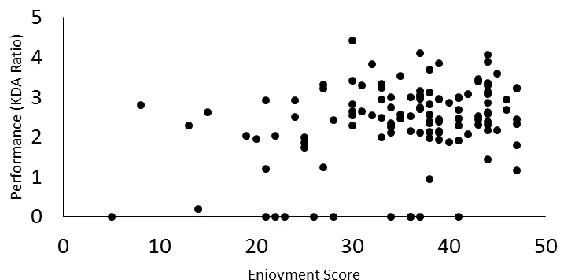
A simple Pearson product-moment correlation was also conducted in order to assess the extent to which enjoyment scores were associated with performance. There was a statistically significant positive relationship between KDA ratio and enjoyment scores (see Figure 4), p < .001, r = .32.
Structural Characteristics and Enjoyment
In accordance with the fourth research question this study sought to investigate, the relationship between the structural characteristics of mental models defined earlier and enjoyment scores was examined. A multiple regression was performed with enjoyment scores as the outcome variable and with each of the structural characteristics described earlier (number of natural language-based links, total number of links, number of abstract links, number of central nodes, number of subnetworks) as the predictor variables in order to determine if enjoyment could be predicted as a function of structural characteristic measures. Results indicated that the overall model was not statistically significant, F(6, 151) = 1.81, p = .1, R² = .07, showing that enjoyment was not predicted by the structural characteristics of Pathfinder networks.
Discussion Differences in Mental Model Structures
more direct implications for systems and domains that share such characteristics than those that do not.
The primary aim of this study was to assess if and how mental model structures differ between multiple levels of experience. It was found that some structural characteristics systematically differed between three levels of experience with the video game used in this study. Each of these structural characteristics were drawn from the literature and had received some degree of empirical support. As this study used a cross-sectional design methodology it is not equipped to directly address issues of mental model change over time, but rather to identify group differences. However, differences between groups categorized on the basis of a temporal measure such as experience can be accounted for by developmental explanations and theories. Therefore, many of the explanations posited here account for the group differences found in this study by appealing to theories of mental model development. This section interprets the findings related to each of the mental model structural
characteristics examined in this study.
It has been suggested that expert knowledge structures are denser (i.e. contain more connections) than those of novices (Koponen & Pekhonen, 2010; Bradley et al., 2006). Bradley et al. (2006) suggested that experts may have mental model structures containing more connections than novices due to their increased domain knowledge. However,
nodes represent important concepts which link many aspects of the structure together. It may be true, similar to the case of structural density, that more experienced individuals have undergone central node change that is not additive but rather the simple replacement of central nodes. This would result in mental model structures with equal numbers of central nodes between experience levels and thus account for the results found in this study that experience groups did not differ in the number of central nodes.
Previous research has shown, to the knowledge of this author, no detailed account or rationale for natural language-based mental model structures. However, the current study found differences in mental model structure, with the least experienced group having more links to natural language concepts than did the medium and high experience groups. Individuals approach a system or domain utilizing existing mental models of language (Gentner, 2002). As individuals discover mismatches between their mental models of terms and phrases and those in the novel system or domain they are likely to adapt existing models or create new models for a novel use of language (Cool, et al., 1996; Marchionini, 1989). Language, both spoken and written, is a fundamental means of communication in many domains and systems which individuals encounter frequently. Therefore, it is plausible that individuals encounter and react to any mismatches between mental and system models relatively quickly, resulting in sharp a decrease in natural-language based connections which plateaus as experience increases further.
spreading activation theory (Anderson, 1983), objects and concepts that are present in the environment or in working memory during frequently performed tasks have the connections between their associated nodes strengthened each time the task is performed (or even
mentally simulated). Humans often quickly learn a solution and use that solution repeatedly to perform tasks and solve problems (Schwartz, Ward, Monterosso, Lyubomirsky, White, & Lehman, 2002; Luchins, 1942). Given the propensity for humans to perform the same tasks frequently, it is likely that the nodes associated with the repeated task quickly become
associated in a mental model structure. Over time, especially in a competitive domain such as League of Legends, individuals encounter more advanced problems to solve and,
consequently, learn novel procedures to accomplish these more complex goals. This would account for the results of the present study which suggest that the number of procedural connections in mental models differ at each level of experience. Anderson’s (1983) ACT-R model also supports the notion that declarative knowledge can be proceduralized over time with repetition or practice. Individuals continuously discover procedures which accomplish desired goals and repeatedly perform those procedures while simultaneously organizing the associated mental model structure around procedural connections.
of various concepts and objects. These functional purposes are often, by their very nature, conceptual or abstract. Bradley, et al. (2006), suggested that this experiential difference in structure abstraction is due to experts organizing knowledge differently. While this latter explanation may not sufficiently explain the findings of this study, the interpretation of Graham et al. (2006) provides a starting point. The findings of the present study indicate that the low and medium experience groups were comparable in the number of abstract
connections in their knowledge networks, and both had fewer abstract connections than the high experience group. This difference could be due to a developmental pattern. Functional concepts, as pointed out by Graham, et al. (2006), require knowledge gained after repeated exposure and interaction. Surface features of objects, such as appearance, are readily
available and can be quickly encoded. It may be the case that individuals first encode surface features of objects, encode isolated functional operations, and then finally encode
associations between difference objects, concepts, and functions. This is consistent with the two-stage theory of mental model construction posited by Mayer, et al. (2002). The encoding of object functions and subsequent associations between different functions could take considerable time and effort relative to encoding readily apparent surface features. If this is the case, then it is not surprising that the low and medium levels of experience were similar in this aspect of their mental models.
while differences in subnetworks were found only between medium and high experience groups. Procedurally organized sets of concepts are likely reinforced through repetition and small sets of procedurally related concepts would appear to constitute a subnetwork. The primary difference between a string of procedurally related concepts, such as a script, and a subnetwork is that such a string is linear while a subnetwork contains a large degree of non-linear connectivity (Gillan et al., 1992). This added structural complexity requires
interconnections of concepts beyond those found in a linear script (e.g. abstract connections) in order to establish a truly interconnected subnetwork of concepts. Under this explanation it is not surprising that a difference in the number of subnetworks would only be found
between those with higher levels of experience.
Three-Stage Theory of Mental Model Construction
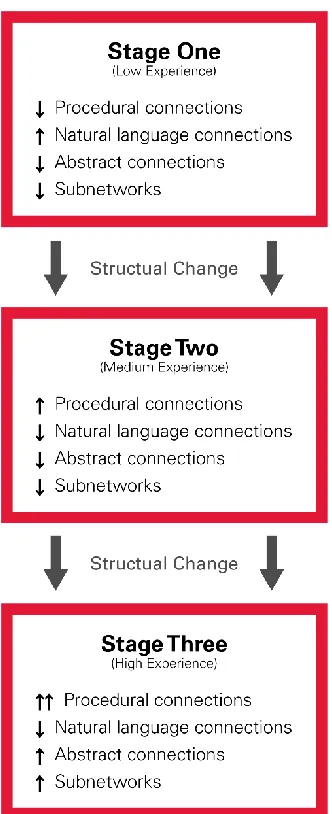
The results discussed in the previous section indicate differences in how mental model structures are organized across individuals of different experience levels. As mentioned previously, the design of this study does not lend itself to direct claims about longitudinal change. However, a developmental theory can plausibly explain the cross-sectional group differences found in this study. Based on the differences discussed in the previous section, a three-stage model of mental model structure development is proposed (see Figure 5). Stage one, in which individuals have low experience with a system or domain, is characterized by a low degree of procedural connections, abstract connections, and
procedural connections but a low number of natural language connections, abstract
This model is not in competition with the models of mental model development discussed earlier, such as the two-stage model of Mayer et al. (2002), Zhang’s (2009) model, and Katzeff’s (1990) model, but rather complements them by positing specific structural changes that occur during mental model construction.
Video Game Enjoyment, Performance, and Mental Model Content
structural characteristics contribute to performance. The former reason being grounded in the notion that non-structural factors, such as cognitive ability and automatization of procedural knowledge, could play a major role in determining levels of performance (Shiffrin &
Schneider, 1977). It may also be the case that the number of subnetworks, central nodes, and the density of the networks simply do not contribute as much to performance as the number of abstract and natural language-based connections.
The results indicated that the amount of stored terms differed only between those of low and medium experience. This could be a context-dependent effect wherein terminology related to League of Legends is picked up rather quickly. Alternatively, this could be an artifact of the study procedure. The current study only allowed participants to enter up to twenty terms, which was thought to be sufficient. Perhaps this limitation eliminated the possibility of finding differences as a function of levels of experience.
Applied Implications
Training. There is ample evidence that mental model structures can be used to both design and assess the effectiveness of skill training and education programs (Day & Gettman, 2001; Goldsmith & Kraiger, 1997; Trumpower, Sharara, & Goldsmith, 2010; Stout, Salas, & Kraiger, 1997; Upchurch, 2013; Trumpower & Sarwar, 2010). However, Cooke and
structures in training often uses overall measures of Pathfinder network similarity as a kind of signifier (i.e. the similarity between expert and novice networks). The use of these at a finer grain of mental model structures could provide additional utility for formative uses such as training design. The structural characteristics of mental models discussed in the present research represent possible signifiers of expertise that transcend the holistic nature of the expert-novice network similarity approach. The three-stage approach outlined earlier provides a framework which suggests temporal priorities for training with regards to
knowledge structure characteristics. This is to say, in using the three-stage approach, training program design can be informed not only by specific structural signifiers of expertise but also by when these signifiers appear in a structural development timeline. For example, a training program might expose trainees to domain language during early training sessions while addressing abstract concepts in later training sessions, consistent with both the structural characteristics and temporal order identified in the three-stage model.
Game Design. Similar to how mental model structural characteristics can be applied to training programs, they can also be applied to video game design. Graham et al. (2006) suggested that video game difficulty progression design can be informed by knowledge structure development. They suggested that instead of increasing difficulty in a linear fashion, as many games do, difficulty should be increased by requiring the player to adapt their current mental model or develop a new one. This design suggestion is even more plausible given the results of the current research. The structural characteristics described in this study offer a number of avenues through which game designers can increase game difficulty by manipulating mental model accommodation and assimilation. As Graham, et al. (2006), pointed out, this route is preferable to traditional approaches of increasing game difficulty because it focuses on manipulating mental models and not merely exhausting physical and cognitive abilities, which are limited. Additionally, this approach is open to a variety of qualitative shifts in difficulty, avoiding the repetition that often accompanies linear difficulty increases which demand that players execute the same tasks and complete the same goals while merely increasing the cognitive and physical workload. Additionally, game designers should consider how game elements might affect the construction of mental models, choosing when to provide or not provide support for the construction of mental model structures.
Limitations and Future Research
cross-sectional design and thus cannot make direct claims about intraindividual change. The present study also examined mental models in a single context and with a single system. Longitudinal research should be performed in order to further establish the proposed developmental nature of individual differences in mental model structural characteristics. Future research in differing domains would provide evidence serving to either strengthen the generalizability of these findings or reveal their contextual bounds. The present study also limited its scope to three levels of experience which were broadly inclusive of different degrees of experience. Future research at finer grains of experience levels could produce a more detailed understanding of where differences in structural characteristics lie. Lastly, devising and testing novel training interventions that support the development of
REFERENCES
Anderson, J. R. (1983). A spreading activation theory of memory. Journal of Verbal Learning and Verbal Behavior, 22(3), 261-295.
Anderson, J. R. (1983). The architecture of cognition. Cambridge, MA: Harvard University Press.
Bader, T., & Beyerer, J. (2011). Influence of user’s mental model on natural gaze behavior during human-computer interaction. 2nd Workshop on Eye Gaze in Intelligent Human Machine Interaction.
Beggiato, M., & Krems, J. F. (2013). The evolution of mental model, trust and acceptance of adaptive cruise control in relation to initial information. Transportation Research Part F: Traffic Psychology and Behaviour, 18, 47-57.
Borgman, C. L. (1986). The user's mental model of an information retrieval system: an experiment on a prototype online catalog. International Journal of Man-Machine Studies, 24, 47-64.
Bradley, J. H., Paul, R., & Seeman, E. (2006). Analyzing the structure of expert knowledge. Information & Management, 43, 77-91.
Clariana, R. B. (2010). Multi-decision approaches for eliciting knowledge structure. Computer-Based Diagnostics and Systematic Analysis of Knowledge, 41-59.
Collins, A. M., & Loftus, E. F. (1975). A spreading-activation theory of semantic processing. Psychological Review, 82(6), 407-428.
Cooke, N. M., Durso, F. T., & Schvaneveldt, R. W. (1986). Recall and measures of memory organization. Journal of Experimental Psychology: Learning, Memory, and
Cognition, 12(4), 538-549.
Cooke, N. J., & Schvaneveldt, R. W. (1988). Effects of computer programming experience on network representations of abstract programming concepts. International Journal of Man-Machine Studies, 29(4), 407-427.
Cool, C., Park, S., Belkin, N. J., Koenemann, J., & Ng, K. B. (1996). Information seeking behavior in new searching environment. CoLIS, 2, 403-416.
Craik, K. (1943). The nature of exploration. Cambridge, UK: Cambridge University Press Cramer, E. M., & Bock, R. D. (1966). Multivariate analysis. Review of Educational
Research, 36, 604-617.
Deutsch, J. E., Brettler, A., Smith, C., Welsh, J., John, R., Guarrera-Bowlby, P., & Kafri, M. (2011). Nintendo wii sports and wii fit game analysis, validation, and application to stroke rehabilitation. Topics in Stroke Rehabilitation, 18(6), 701-719.
Dinet, J., & Kitajima, M. (2011). Draw me the Web: impact of mental model of the web on information search performance of young users. 23rd French Speaking Conference on Human-Computer Interaction, 3.
Doyle, J.K., & Ford, D.N. (1998). Mental models concepts for systems dynamics research. System Dynamics Review. 14(1), 3-29.
Faul, F., Erdfelder, E., Lang, A.-G., & Buchner, A. (2007). G*Power 3: A flexible statistical power analysis program for the social, behavioral, and biomedical sciences. Behavior Research Methods, 39, 175-191.
Fein, R. M., Olson, G. M., & Olson, J. S. (1993). A mental model can help with learning to operate a complex device. INTERACT'93 and CHI'93 Conference Companion on Human Factors in Computing Systems, 157-158.
Feng, J., Spence, I., & Pratt, J. (2007). Playing an action video game reduces gender differences in spatial cognition. Psychological Science, 18(10), 850-855. Gentner, D. (2002). Mental models, psychology of. In N.J. Smelser & P.B. Bates,
International Encyclopedia of the Social and Behavioral Sciences, (pp. 9683-9687). Amsterdam: Elsevier Science.
Gentner, D., & Stevens, A. (1983). Mental models. Hillsdale, NJ: L.
Gillan, D. J., Breedin, S. D., & Cooke, N. J. (1992). Network and multidimensional representations of the declarative knowledge of human-computer interface design experts. International Journal of Man-Machine Studies, 36(4), 587-615.
Goldsmith, T. E., Johnson, P. J., & Acton, W. H. (1991). Assessing structural knowledge. Journal of Educational Psychology, 83(1), 88.
Goldsmith, T. E., & Kraiger, K. (1997). Applications of structural knowledge assessment to training evaluation. In Improving training effectiveness in work organizations, J.K. Ford, Ed.). page numbers. Publisher info..
Gopher, D., Well, M., & Bareket, T. (1994). Transfer of skill from a computer game trainer to flight. Human Factors: The Journal of the Human Factors and Ergonomics Society, 36(3), 387-405.
Graham, J., Zheng, L., & Gonzalez, C. (2006). A cognitive approach to game usability and design: mental model development in novice real-time strategy gamers.
Green, C. S., & Bavelier, D. (2007). Action-video-game experience alters the spatial resolution of vision. Psychological Science, 18(1), 88-94.
Interactive Digital Software Association. (2015). Essential facts about the computer and video game industry. Retrieved May, 5, 2016.
Johnson-Laird, P. (1983). Mental models. Cambridge, MA: Harvard University Press. Jones, N., Ross, H., Lynam, T., Perez, P., & Leitch, A. (2011). Mental models: an
interdisciplinary synthesis of theory and methods. Ecology and Society, 16(1), 46. Katzeff, C. (1990). System demands on mental models for a fulltext database. International
Journal of Man-Machine Studies, 32(5), 483-509.
Kay, D. S., & Black, J. B. (1984). Changes in knowledge representations of computer
systems with experience. Proceedings of the Human Factors and Ergonomics Society Annual Meeting, 28(11), 963-967.
Kieras, D. E., & Bovair, S. (1984). The role of a mental model in learning to operate a device. Cognitive Science, 8(3), 355-273.
Koponen, I. T., & Pehkonen, M. (2010). Coherent knowledge structures of physics
represented as concept networks in teacher education. Science & Education, 19(3), 259-282.
Kraiger, K., Salas, E., & Cannon-Bowers, J. A. (1995). Measuring knowledge organization as a method for assessing learning during training. Human Factors: The Journal of the Human Factors and Ergonomics Society, 37(4), 804-816.
Landriscina, F. (2013). Simulation and Cognition. Simulation and Learning. Springer New York. 13-29.
Larose, S., Gagnon, S., Ferland, C., & Pépin, M. (1989). Psychology of computers: XIV. Cognitive rehabilitation through computer games. Perceptual and Motor Skills, 69(3), 851-858.
League of Graphs. Retrieved November 20, 2016, from http://www.leagueofgraphs.com/ Li, R., Polat, U., Makous, W., & Bavelier, D. (2009). Enhancing the contrast sensitivity
function through action video game training. Nature Neuroscience, 12(5), 549-551. Lokuge, I., Gilbert, S. A., & Richards, W. (1996). Structuring information with mental
models: A tour of Boston. Proceedings of the SIGCHI Conference on Human Factors in Computing Systems, 413-419.
LoLProfile. Retrieved November 20, 2016, from http://lolprofile.net/ Luchins, A. S. (1942). Mechanization in problem solving: The effect of