A NOVAL APPROACH FOR OPTIMIZATION OF
PHYSICAL
LAYER
FOR
WIRELESS
AND
MOBILE
COMMUNICATION
Neelima Gupta
& Alok srivastava
Chandravati Group of Institutions
ABSTRACT: In modern era communication is very important. This communication can be divided in two parts (1) Voice and (2) Data. .In voice communication real time data transmission is necessary while data can wait for while. But major area of concern is cost and that is the main reason why we cannot have separate lines for both. In any communication transmission of signal should be secure, error free and least affected by attenuation. These all can affect signal during transmission in physical layer where little can be done to prevent this. In recent developments in mobile communication has raised the expectation of users to a new height and as demand arises new advancement by mobile companies are also offering newer and faster technologies. In this series the latest development is advancement towards 5 G mobile network with expected data rate over 1 Gbps . This network is expected to roll out around 2020 but a lot of work is pending like infrastructure improvement, architecture development frequency band allotment etc
KEYWORDS: 5G, PLMN,OFDM, Roaming, IP
Address, GSM, OSI
I.INTRODUCTION
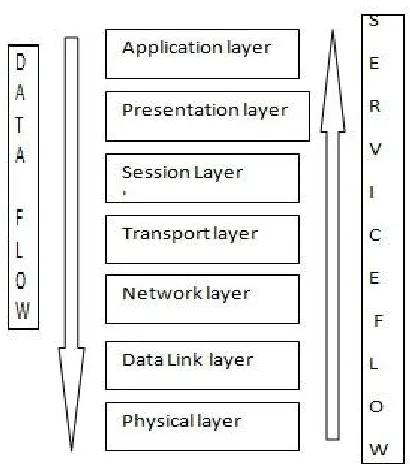
In data transmission OSI layers is used. In OSI layer the complete system is divided in seven layers
(i) Application (ii) Presentation
(iii) Session (iv) Transport (v) Network (vi) Data link (vii) Physical
Every layer has to give service to lower layers and get services from upper layer. Out of these layers application layer is the layer where data is generated while physical layer is responsible for data transmission.
2.ISSUESTOBECONSIDERFORENDTO ENDPHYSICALLAYERDESIGN
While designing a network we have to consider two major issues
(i) Security of data (ii) Cost
While security of data involves various algorithms, costing involves efficient designing and optimization. There are two types of channels which are used at presented
(i) Wired (ii) Wireless
Both the systems have their own advantages and disadvantages. But due to greater flexibility and ease of establishment gives wireless system an edge over wired system. A wireless systems looks very simple but it involves several components and their related issues
1. Channel : The connecting medium in between transmitter and receiver is known as channel. During the transmission trough the channel every signal has face two main problems (a) Attenuation
(b) Noise
1.1 Attenuation : When a signal is transmitted from transmitter to receiver, it losses power with the distance . This can be represented mathematically as below
𝑃𝑅 = 𝑃𝑇 𝐴
𝜋𝑥2𝐺 − 𝑃𝐴---(i)
Where
PR=Power received
PT=Power Transmitted
A=Area of receiving antenna
G = Gain of receiving antenna
X= distance from transmitter
PA= Total attenuation
1.2 Noise : Any unwanted signal which is interfering the original signal is known as noise. Noise is everywhere but it is most effective in channel , while considering noise factor expression for received power can be written as
𝑃𝑅= 𝑃𝑇 𝐴
𝜋𝑥2𝐺 − 𝑃𝐴− 𝑁---(ii)
Where N= Noise
2. Antenna Parameters: There are various antenna parameters which has to be considered like
(a) Minimum threshold value to detect receiving signal,
(b) Directivity
(c) Aperture efficiency (d) Gain
bandwidth. So total no of users depends upon total bandwidth available. To increase no of users we may use various types of multiplexing techniques. 4. Modulation : Any signal cannot be
transmitted without modulating. Various modulation techniques are in use but QPSK is most widely used. However choosing a modulation scheme depends upon environment, amount of data, 5. Channel Coding: Depends upon SNR,
Fading, Redundancy and receiver design.
6. Equalization : To reduce the effect of other signals or ISI
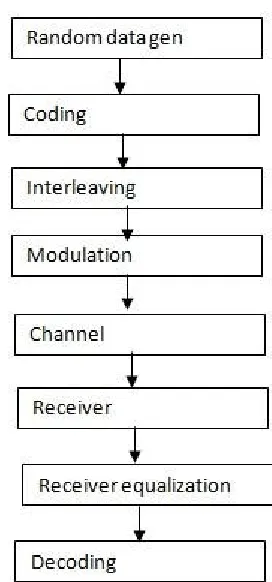
Fig 2 Block diagram of communication system
3.SIMULATIONOFPHYSICALLAYER
In this paper we proposed a system to simulate physical layer
We first consider Convolutional coding and puncturing using code rates of 2/3, and 3/4
Then we inserted Data interleaving as multiplexing to save bandwidth
As discussed earlier we have used QPSK modulation method for modulation
Then we consider orthogonal frequency division multiplexing transmission which is being used in most modern communication system .
After this we have design channel using dispersive multipath fading channel. we have consider COST 207 modeling for this
Fig 3 Algorithm for simulation of physical layer
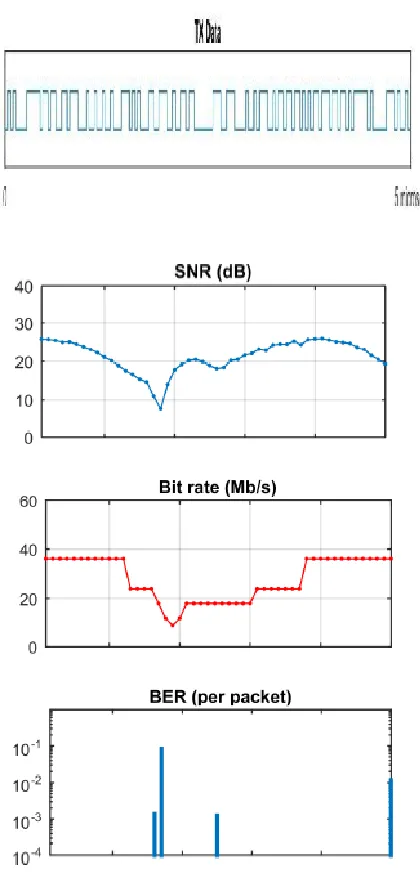
4.RESULTS
From result it is very clear that the results are impresive. They match with practical outcomes
5.CONCLUSION&FUTURESCOPE
We have simulated end to end physical layer successfully including attenuation and various
improve the overall system and to reduce cost. The advantage of our simulation is that we have included all types of error, noise, attenuation and effect of environment.
REFERENCES
[1] F. Khan and Z. Pi, “An introduction to millimeter-wave mobile broadband systems,” IEEE Commun. Mag., vol. 49, no. 6, pp. 101–107, Jun. 2011.
[2] T. S. Rappaport, S. Sun, R. Mayzus, H. Zhao, Y. Azar, K. Wang, G. N.Wong, J. K. Schulz, M. Samimi, and F. Gutierrez, “Millimeter Wave Mobile Communications for 5G Cellular: It Will Work!” IEEE Access,vol. 1, pp. 335–349, May 2013.
[3] S. Rangan, T. S. Rappaport, and E. Erkip,
“Millimeter-wave cellular wireless networks:
Potentials and challenges,” Proc. IEEE, vol. 102, no. 3, pp. 366–385, Mar. 2014.
[4] J. Andrews, S. Buzzi, W. Choi, S. Hanly, A. Lozano, A. Soong, and J. Zhang, “What will 5G be?” IEEE J. Sel. Areas Commun., vol. 32, no. 6, pp. 1065–1082, June 2014.
[5] A. Ghosh, T. A. Thomas, M. C. Cudak, R. Ratasuk, P. Moorut, F. W. Vook, T. S. Rappaport, G. MacCartney, S. Sun, and S. Nie, “Millimeter wave enhanced local area systems: A high data rate approach for future wireless networks,” IEEE J. Sel. Areas Commun., vol. 32, no. 6, pp. 1152–1163, June 2014.
[6] J. Gozalvez, “5G tests and demonstrations
[mobile radio],” IEEE Vehicular Technology Magazine, vol. 10, no. 2, pp. 16–25, June 2015. [7] M. Akdeniz, Y. Liu, M. Samimi, S. Sun, S. Rangan, T. Rappaport, and E. Erkip, “Millimeter wave channel modeling and cellular capacity evaluation,” IEEE J. Sel. Areas Commun., vol. 32, no. 6, pp. 1164–1179, June 2014.
[8] T. Bai and R. Heath, “Coverage and rate analysis for millimeter-wave cellular networks,” IEEE Trans. Wireless Commun., vol. 14, no. 2, pp. 1100–1114, Feb. 2015.
[9] D. E. Berraki, S. M. D. Armour, and A. R. Nix, “Codebook based beam forming and multiuser scheduling scheme for mm wave outdoor cellular systems in the 28, 38 and 60 GHz bands,” in IEEE Globecom Workshops (GC Wkshps), 2014, Dec 2014, pp. 382–387.
MHz, ser. NTIA report – 94-306. Boulder, CO: U.S. Dept. of Commerce, National Telecommunications and Information Administration, 1994.
[11] C. R. Anderson and T. S. Rappaport, “In -building wideband partition loss measurements at 2.5 and 60 GHz,” IEEE Trans. Wireless Comm., vol. 3, no. 3, pp. 922–928, May 2004.
[12] A. Alejos, M. Sanchez, and I. Cuinas,
“Measurement and analysis of propagation
mechanisms at 40 GHz: Viability of site shielding
forced by obstacles,” IEEE Trans. Vehicular
Technology, vol. 57, no. 6, pp.3369–3380, Nov. 2008.
[13] S. Singh, F. Ziliotto, U. Madhow, E. M. Belding,
and M. J. Rodwell, “Millimeter wave WPAN: cross
-layer modeling and multi-hop architecture,” in Proc. IEEE INFOCOM, 2007, pp. 2336–2340.
[14] H. Zhao, R. Mayzus, S. Sun, M. Samimi, J. K. Schulz, Y. Azar, K. Wang, G. N. Wong, F. Gutierrez, and T. S. Rappaport, “28 GHz millimeter wave cellular communication measurements for reflection and penetration loss in and around buildings in New York City,” in Proc. IEEE ICC, June 2013.
[15] J. S. Lu, D. Steinbach, P. Cabrol, and P. Pietraski, “Modeling human blockers in millimeter wave radio links,” ZTE Communications, vol. 10, no. 4, pp. 23–28, Dec. 2012.
[16] B. Levasseur, M. Claypool, and R. Kinicki, “A TCP cubic implementation in ns-3,” in Proceedings of the 2014 Workshop on ns-3. ACM, 2014.
[17] M. Mezzavilla, S. Dutta, M. Zhang, M. R. Akdeniz, and S. Rangan, “5G mmWave module for the ns-3 network simulator,” in Proceedings of the 18th ACM International Conference on Modeling, Analysis and Simulation of Wireless and Mobile Systems. ACM, 2015, pp. 283–290.
[18] R. Ford, M. Zhang, S. Dutta, M. Mezzavilla, S.
Rangan, and M. Zorzi, “A framework for cross-layer
evaluation of 5G mmwave cellular networks in ns-3,” arXiv:1602.06932 [cs.NI]., Feb. 2016.
[19] T. S. Rappaport, G. R. Maccartney, M. K.
Samimi, and S. Sun, “Wideband millimeter-wave
propagation measurements and channel models for future wireless communication system design,” IEEE Transactions on, Communications, vol. 63, no. 9, pp. 3029–3056, May 2015.
[20] N. F. Abdullah, D. Berraki, A. Ameen, S. Armour, A. Doufexi, A. Nix, and M. Beach, “Channel parameters and throughput predictions for mmWave and LTE-A networks in urban environments,” in Proc. IEEE VTC, 2015.
[21] S. Dutta, M. Mezzavilla, R. Ford, M. Zhang, S. Rangan, and M. Zorzi, “Frame structure design and
analysis for millimeter wave cellular systems,” in arXiv:1512.05691 [cs.NI], Dec. 2015.
[22] F. Khan and J. Pi, “Millimeter–wave mobile broadband: Unleashing 3–300GHz spectrum,” in IEEE Wireless Commun. Netw. Conf, 2011.
[23] N. Baldo, “The ns-3 LTE module by the LENA
project,” 2011.
[24] M. Mezzavilla, M. Miozzo, M. Rossi, N. Baldo, and M. Zorzi, “A lightweight and accurate link abstraction model for the simulation of LTE networks in ns-3,” in Proceedings of the 15th ACM International Conference on Modeling, Analysis and Simulation of Wireless and Mobile Systems, ser. MSWiM ’12, 2012.
[25] P. A. Eliasi and S. Rangan, “Stochastic dynamic channel models for millimeter cellular systems,” in Proc. IEEE Computational Advances in Multi-Sensor Adaptive Processing (CAMSAP), 2015, pp. 209–212. [26] M. K. Samimi and T. S. Rappaport, “28 GHz millimeter-wave ultrawideband small-scale fading models in wireless channels,” in Proc. IEEE