Vaccines for Nontypeable
Haemophilus influenzae
: the Future Is Now
Timothy F. Murphy
Division of Infectious Diseases, Department of Medicine, Clinical and Translational Research Center, Department of Microbiology and Immunology, University at Buffalo, State University of New York, Buffalo, New York, USA
Infections due to nontypeableHaemophilus influenzaeresult in enormous global morbidity in two clinical settings: otitis media in children and respiratory tract infections in adults with chronic obstructive pulmonary disease (COPD). Recurrent otitis me-dia affects up to 20% of children and results in hearing loss, delays in speech and language development and, in developing coun-tries, chronic suppurative otitis media. Infections in people with COPD result in clinic and emergency room visits, hospital ad-missions, and respiratory failure. An effective vaccine would prevent morbidity, help control health care costs, and reduce antibiotic use, a major contributor to the global crisis in bacterial antibiotic resistance. The widespread use of the pneumococcal conjugate vaccines is causing a relative increase inH. influenzaeotitis media. The partial protection againstH. influenzaeotitis media induced by the pneumococcalH. influenzaeprotein D conjugate vaccine represents a proof of principle of the feasibility of a vaccine for nontypeableH. influenzae. An ideal vaccine antigen should be conserved among strains, have abundant epitopes on the bacterial surface, be immunogenic, and induce protective immune responses. Several surface proteins ofH. influenzae have been identified as potential vaccine candidates and are in various stages of development. With continued research, progress toward a broadly effective vaccine to prevent infections caused by nontypeableH. influenzaeis expected over the next several years.
V
accines composed of polysaccharide capsule conjugated to protein carriers have virtually eliminated infections caused by encapsulatedHaemophilus influenzaetype b, including meningitis and other systemic infections, in regions of the world where the vaccines are administered widely. However, these conjugate vac-cines have no effect on infections caused by nontypeable (nonen-capsulated) strains ofH. influenzae. Common infections cause by nontypeableH. influenzaeinclude otitis media in children and lower airway infections (exacerbations) of chronic obstructive pulmonary disease (COPD) in adults. Vaccine development for nontypeable strains ofH. influenzaepresents an entirely different challenge compared to vaccines for encapsulated type b strains for several reasons: (i) nontypeableH. influenzaelacks a polysaccha-ride capsule and thus will require the identification of alternative vaccine antigens; (ii) nontypeable strains demonstrate enormous genetic and antigenic heterogeneity among strains, whereas type b encapsulated strains are generally a clonal population; (iii) the pathogenesis of infections caused by nontypeableH. influenzaeinvolves contiguous spread from mucosal surfaces, suggesting that a successful vaccine will require a different immune response from that required to protect from infections by type b strains, which occur through hematogenous dissemination.
This review will assess the current state of vaccine development for nontypeableH. influenzae, including the rationale for devel-oping such vaccines, the populations who would benefit from a vaccine, its feasibility, some of the challenges, the antigens under consideration, and a discussion of what is needed to advance vac-cine development to prevent infections by nontypeableH.
influ-enzae.
RATIONALE FOR A VACCINE FOR NONTYPEABLE
H. INFLUENZAE
Infections caused by nontypeableH. influenzaecause enormous morbidity in two clinical settings: (i) otitis media in children un-der the age of 6 years and (ii) adults with COPD. The bacterium also causes sinusitis and community-acquired pneumonia in
chil-dren and adults (1). NontypeableH. influenzaecauses pneumonia in children in developing countries, but its role in this infection is not yet well defined (2,3). Finally, in regions withH. influenzae
type b vaccination programs, nontypeable strains are now the most common cause of invasiveH. influenzaeinfection, although these are far less common than otitis media and exacerbations of COPD (4–7).
Vaccine development efforts are directed primarily toward oti-tis media and COPD; thus, the discussion of the rationale for nontypeableH. influenzaevaccines will focus on these two clinical settings.
OTITIS MEDIA
Otitis media is the most frequently diagnosed bacterial infection in young children requiring office or clinic visits in the United States. Approximately 70% of children will have at least one epi-sode of otitis media by the age of 3 years (8,9). Acute otitis media is an inflammation in the middle ear (the cavity between the ear drum and the inner ear) that is characterized by fever and ear pain. The pathogenesis of otitis media involves migration of pathogens from the nasopharynx to the middle ear through the Eustachian tube. Most episodes of bacterial otitis media are triggered by an initial viral upper respiratory tract infection.
Recurrent otitis media is common, with up to 30% of children experiencing 3 or more episodes before the age of 3 years (10). Up to 20% of children experience 4 or more episodes of otitis media
Accepted manuscript posted online18 March 2015
CitationMurphy TF. 2015. Vaccines for nontypeableHaemophilus influenzae: the
future is now. Clin Vaccine Immunol 22:459 –466.doi:10.1128/CVI.00089-15.
Editor:C. J. Papasian
Address correspondence to [email protected].
Copyright © 2015, American Society for Microbiology. All Rights Reserved.
doi:10.1128/CVI.00089-15
on August 17, 2020 by guest
http://cvi.asm.org/
within a year, and these children are considered otitis prone (11). Otitis media with effusion refers to the presence of fluid in the middle ear without symptoms of acute otitis media. The persistent middle ear effusions associated with recurrent and chronic otitis media and otitis media with effusion cause conductive hearing loss and subsequent delay or impairment in speech and language development (12–14). Thus, preventing otitis media would have a potentially huge impact for the children and families who experi-ence these disorders by preventing these important complica-tions.
The burden of otitis media differs considerably between devel-oping and developed countries. Chronic suppurative otitis media (defined by the World Health Organization as 2 weeks of persis-tent ear discharge) is a major cause of hearing loss in developing countries, affecting an estimated 65 million to 300 million people globally (15,16). Socioeconomic conditions (overcrowding, re-duced sanitation, and limited access to diagnosis and treatment) and genetic and cultural factors may all play a role in the high rate of early onset of acute otitis media and chronic suppurative otitis media in selected populations (17–19).
Etiology of otitis media.With the widespread use of pneumo-coccal conjugate vaccines, which dramatically alter nasopharyn-geal colonization patterns, the etiology of otitis media is undergo-ing continuundergo-ing changes. The 3 primary bacterial pathogens that cause otitis media are nontypeableH. influenzae, Streptococcus
pneumoniae, andMoraxella catarrhalis. Since 2000, most children
in the United States have received the 7-valent pneumococcal con-jugate vaccine, and this has led to a reduction of otitis media and nasopharyngeal colonization by the 7 vaccine serotypes, resulting in “replacement” by nonvaccine pneumococcal serotypes, non-typeableH. influenzae, andM. catarrhalis. These changes in naso-pharyngeal colonization patterns are resulting in changes in the distribution of pathogens that cause otitis media and in an in-creasing role for nontypeableH. influenzae, which is now the most common cause of acute otitis media and recurrent otitis media according to several recent studies (20–24). The introduction of the 13-valent pneumococcal conjugate vaccine and the increasing use of the 10-valent pneumococcal vaccine withH. influenzae pro-tein D as the carrier molecule in⬃40 countries where it is licensed will undoubtedly cause additional changes in nasopharyngeal col-onization patterns and the distribution of pathogens causing otitis media (25). These patterns must be monitored carefully.
In clinical practice, otitis media is managed empirically, and so the etiology of individual cases of otitis media is rarely known by those clinicians managing such patients. The gold standard for determining the etiology of acute otitis media has been culture of middle ear fluid obtained by tympanocentesis. While studies vary, reasonable current estimates of etiology of acute otitis media based on culture report that nontypeableH. influenzaeand pneu-mococcus each cause 25 to 35% of episodes andM. catarrhalis
causes 10 to 20%.
Implications of biofilms in etiology and clinical trial design. As knowledge of the pathogenesis of otitis media has advanced and the central role of biofilms in the course of the disease has become apparent, it is clear that culture of middle ear fluid does not tell the whole story regarding the etiology of otitis media (26). A biofilm is a community of bacteria encased in a matrix. Biofilms show a reduced growth rate, a distinct transcriptome, and in-creased resistance to effectors of innate and acquired immunity and to the action of antimicrobial agents, compared to planktonic
bacteria. Effusions recovered from the middle ear are often sterile by culture but contain abundant pathogens in the form of a bio-film. Hall-Stoodley et al. (27) showed that sterile effusions (by culture) from children with chronic otitis media and otitis media with effusion contained bacterial biofilms based on fluorescentin situhybridization and confocal scanning laser microscopy. Fur-thermore, PCR demonstrated the presence of DNA, and live-dead fluorescent stain showed abundant viable bacteria despite nega-tive culture. Another important observation from this study was the presence of a mixed microbial etiology for some of the effu-sions from children with chronic otitis media or otitis media with effusion.
Studies from several centers have demonstrated by PCR the presence of DNA fromH. influenzae,S. pneumoniae, andM.
ca-tarrhalisin sterile middle ear fluids (28–30). Rayner et al. (31)
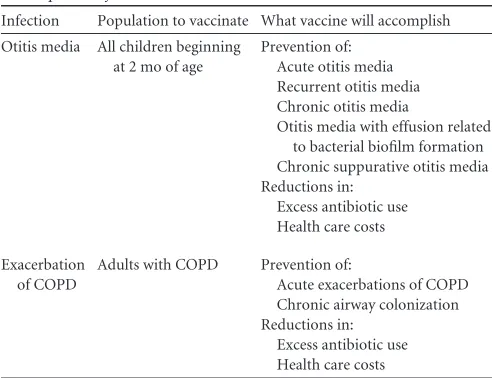
further demonstrated the presence of mRNA, indicating the pres-ence of viable bacteria, in effusions that were PCR positive but sterile by culture. A recent PCR study that examined middle ear effusions from 207 consecutive children who were undergoing tympanostomy placement demonstrated the presence of DNA from otitis media pathogens in 87% of children with acute otitis media and in 51% of children with otitis media with effusion (32). Thus, the recognition of the role of biofilms in multiple forms of otitis media has important implications in understanding the etiology of otitis media and in designing rational vaccine develop-ment strategies. Relying solely on cultures of middle ear fluids as the endpoint in clinical trials of otitis media will assess only a subset of otitis media, i.e., those that are culture positive. The design of trials to assess the impact of vaccines in preventing otitis media should take into account the role of biofilms and culture-negative otitis media.Table 1summarizes potential benefits re-sulting from a vaccine that will prevent otitis media caused by nontypeableH. inflluenzae.
INFECTIONS IN COPD
COPD afflicts⬃24 million Americans and is the third most com-mon cause of death in the United States and the world (33,34). The course of the disease is characterized by intermittent exacer-bations that result in enormous morbidity, including lost work TABLE 1Rationale for vaccine development for nontypeable
Haemophilus influenzae
Infection Population to vaccinate What vaccine will accomplish
Otitis media All children beginning at 2 mo of age
Prevention of: Acute otitis media Recurrent otitis media Chronic otitis media
Otitis media with effusion related to bacterial biofilm formation Chronic suppurative otitis media Reductions in:
Excess antibiotic use Health care costs
Exacerbation of COPD
Adults with COPD Prevention of:
Acute exacerbations of COPD Chronic airway colonization Reductions in:
Excess antibiotic use Health care costs
on August 17, 2020 by guest
http://cvi.asm.org/
time, doctor’s office and clinic visits, emergency room visits, hos-pital admissions, and respiratory failure requiring mechanical ventilation. Bacteria cause approximately half of the exacerba-tions, with nontypeableH. influenzaeas the most common bacte-rial cause (35). Antibiotic therapy results in faster recovery and fewer complications in selected exacerbations, and so many erbations are treated with antibiotics. A vaccine to prevent exac-erbations would result in a major benefit in reducing morbidity and reducing the use of antibiotics in this population.
H. influenzaealso plays a more subtle role in the course and
pathogenesis of COPD. The organism is absent in healthy airways but colonizes the lower airways of adults with COPD, even during clinically stable periods. The bacteria release highly inflammatory antigens (e.g., lipooligosaccharide, outer membrane protein P6, peptidoglycan fragments, and other antigens) into the airways, contributing to airway inflammation, which is a hallmark of COPD (36). Symptoms of COPD parallel airway inflammation, suggesting that eradication of nontypeableH. influenzaein the airways, for example, by a vaccine, could reduce airway inflamma-tion and thus have a beneficial effect on the course of COPD (37). Table 1summarizes the potential benefits of a vaccine that would prevent exacerbations and eradicate airway colonization by non-typeableH. influenzaein adults with COPD.
VACCINES TO REDUCE ANTIMICROBIAL RESISTANCE
Widespread use of antimicrobial agents is causing a global crisis in antibiotic resistance (38,39). Otitis media is the most common reason for children in industrialized countries to receive antimi-crobial therapy, and children play an important role in transmis-sion of resistant isolates into the community (40). Infections in COPD are one of the most common indications for antimicrobial therapy in adults. Thus, antimicrobial therapy for infections in these two clinical settings (otitis media in children and exacerba-tions of COPD in adults) plays an important role in driving global antimicrobial resistance. Because up to 70% of all children expe-rience at least one episode of otitis media and up to 20% of chil-dren experience recurrent otitis media, the microbiome of a substantial proportion of the population is exposed to the antimi-crobial agents used to treat otitis media.
The availability of a vaccine to prevent otitis media and exac-erbations of COPD will reduce the need to treat these infections with antimicrobial agents. Indeed, the rate of antibiotic-resistant invasive pneumococcal infections has decreased in young children and older adults with the widespread use of pneumococcal conju-gate vaccines (41). Palmu et al. (42) performed an innovative clus-ter randomized controlled trial using data from a national registry of antibiotic purchases to show that vaccination of every 5 chil-dren with the 10-valent pneumococcalH. influenzaeprotein D conjugate vaccine prevented one antibiotic purchase. A growing body of evidence supports the concept that vaccines to prevent otitis media and exacerbations of COPD will have a broad impact in reducing antimicrobial use, an important contributor to the global burden of antimicrobial resistance (43,44).
FEASIBILITY OF A VACCINE FOR NONTYPEABLE
H. INFLUENZAE
Pneumococcal conjugate vaccines, particularly the 10-valent pneumococcalH. influenzaeprotein D conjugate vaccine, repre-sent a proof of principle of the feasibility of a vaccine to prevent otitis media caused by pneumococcus and byH. influenzae(25,
45). In a prospective clinical trial, 4,968 infants were randomized to receive the protein D conjugate vaccine or hepatitis A vaccine as a control. The vaccines were administered at the ages of 3, 4, 5, and 12 to 15 months. Children were followed for episodes of otitis media and underwent tympanocentesis and culture of middle ear fluid for clinically documented otitis media. The primary end-point of the study was protective efficacy against the first episode of acute otitis media caused by pneumococcal vaccine serotypes. A secondary endpoint was protective efficacy against a first episode of otitis media caused by nontypeableH. influenzae. During the follow-up period, an efficacy of 36% for preventing a first episode
ofH. influenzaeotitis media was observed (45). While
improve-ment in this level of efficacy is needed, the observation that im-munization with a surface protein ofH. influenzaeinduces pro-tection from otitis media in children is important in establishing the feasibility of vaccines to prevent otitis media caused byH.
influenzae.
An important mechanism by which pneumococcal conjugate vaccines induce protection is through reduction of nasopharyn-geal colonization by the pneumococcus (46–48). The question of whether the protein D pneumococcal conjugate vaccine also re-duces nasopharyngeal colonization by H. influenzae was ad-dressed by van den Bergh et al. (49), who performed a randomized controlled trial comparing the effect of the 7-valent pneumococ-cal conjugate vaccine (which does not contain anH. influenzae
antigen) with the effect of the protein D pneumococcal conjugate vaccine on nasopharyngeal colonization by H. influenzae. The protein D pneumococcal conjugate vaccine had no differential effect onH. influenzaenasopharyngeal colonization compared to the 7-valent vaccine in children up to 2 years of age. The strengths of this study included the randomized controlled study design, high follow-up rate, assessment of colonization at multiple time points, use of molecular methods in addition to culture to detect bacterial density, and the inclusion of a 7-valent pneumococcal vaccine control group. Based on this study, “herd immunity” toH.
influenzaeinfection is not likely to be observed with widespread
use of the protein D pneumococcal conjugate vaccine, but further studies are needed.
CORRELATES OF PROTECTION
For a vaccine antigen to be effective, it must induce a protective immune response in the human host. Thus, an important consid-eration in vaccine development is identifying a correlate of pro-tection. Several animal models have contributed important infor-mation on immune responses to H. influenzae, including pulmonary clearance and nasopharyngeal colonization models in rats and mice. The chinchilla model of otitis media is widely re-garded as the best animal model for studying otitis media. The model is used extensively by multiple research groups and has played a key role in elucidating mechanisms of pathogenesis ofH.
influenzaeotitis media and in assessing and prioritizingH.
influ-enzaevaccine antigens (10,50–55).
Novotny et al. (56) demonstrated that passive immunization of chinchillas with serum from children who were immunized with protein D pneumococcal conjugate vaccine conferred 34% pro-tection against otitis media, closely paralleling the level of protec-tion (36%) observed in the clinical trial described above (45). This important study provided a line of evidence that protection from otitis media in the chinchilla model predicts protection from otitis
on August 17, 2020 by guest
http://cvi.asm.org/
media in humans. The study also provided evidence that protec-tion is at least partially antibody mediated.
In addition to the chinchilla model, serum bactericidal assays are potentially useful as guides in identifying potentially protec-tive antigens. The presence of serum bactericidal antibodies to a strain of nontypeableH. influenzaeis associated with protection from otitis media due to that strain (57,58). Therefore, antigens that induce bactericidal antibodies are potentially promising vac-cine candidates.
APPROACH TO VACCINE DEVELOPMENT FOR NONTYPEABLE
H. INFLUENZAE
Many research groups are taking the approach of identifying sur-face proteins that are conserved among strains as vaccine antigens (10,59). A challenge to this approach is the enormous genetic heterogeneity among strains of nontypeableH. influenzae, result-ing in sequence heterogeneity of many surface antigens (60–64). For example, the P2 porin protein, the most abundant protein on the bacterial surface, contains several surface loops that show se-quence differences among strains, raising the possibility that P2 may not induce broadly reactive immune responses.
Characteristics of an ideal vaccine antigen for nontypeable H. influenzae. (i) Surface exposure.As noted above,in vitroand
in vivoevidence indicates that humoral immunity is important for
protection from nontypeableH. influenzaeinfection (56,57). An-tibodies induce protective responses by blocking adherence, di-recting complement-mediated killing, or opsonizing for killing, all of which require binding to the bacterial surface.
(ii) Sequence conservation among strains.A conserved anti-gen will induce a response that protects against all or most strains. A related strategy to identifying conserved surface proteins is identification of conserved regions of abundantly expressed sur-face molecules. For example the conserved regions of the P2 porin protein may represent an effective approach (65,66). Similarly, the lipooligosaccharide molecule is a prominent surface antigen that displays antigenic variability among strains. However, a de-toxified form of lipooligosaccharide utilizing relatively conserved regions of the molecule has shown promise in animal models (67,68).
(iii) Phase variation.A vaccine antigen must be expressed by the bacterium during infection or colonization in the human host.
A surface molecule that is expressed when grown in vitrobut whose expression is shut off underin vivoconditions would not be an effective vaccine antigen.
(iv) Immunogenicity of the antigen.In order for an antigen to be effective, it must be capable of inducing an immune response in the target population. Otitis-prone children will benefit most from a vaccine to prevent otitis media; however, it is not yet pos-sible to predict which children are otitis prone. Thus, a vaccine for otitis media would need to be immunogenic in infants, because an episode of otitis media in the first year of life is a risk factor for recurrent otitis media. Therefore, many authorities recommend universal vaccination for otitis media beginning in the first 2 months of life once effective vaccines are available (69,70). Mul-tiple protein vaccines used in routine immunization of infants reliably induce protective immune responses, providing evidence that surface proteins ofH. influenzaewill be immunogenic.
(v) Induction of protective responses.As discussed above, se-rum bactericidal antibodies and protection in the chinchilla model are reasonable correlates of protection. Each vaccine anti-gen will require testing in rigorous clinical trials as the definitive test of efficacy.
CANDIDATE VACCINE ANTIGENS
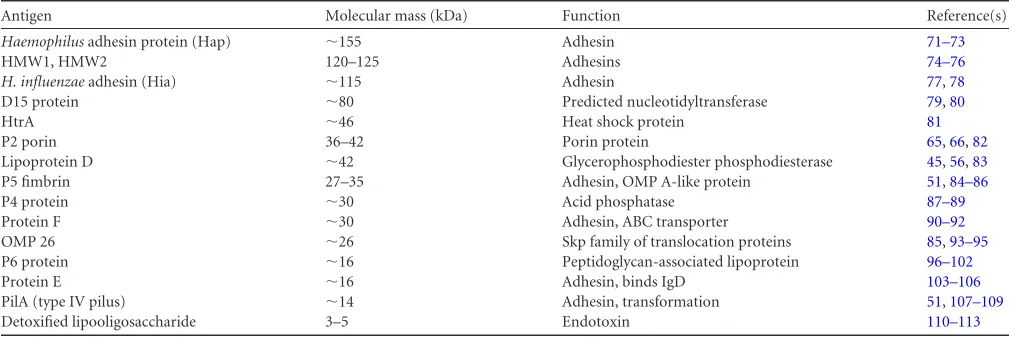
Table 2lists candidate vaccine antigens that have many of the characteristics of vaccines noted above and are in various stages of development. This list reflects data that are available from publi-cations in peer-reviewed journals and in the public domain. Ad-ditional antigens may be under consideration, and adAd-ditional data on the antigens inTable 2may be known but not yet widely avail-able.
Vaccines for nontypeableH. influenzaeare an active area of research. A search of clinicaltrials.gov using the search terms “vac-cine” and “Haemophilus influenzae” revealed 226 registered clini-cal trials. A total of 25 of those involve administration of noncap-sularH. influenzaeantigens in vaccine formulations designed for preventing infections cause by nontypeable H. influenzae. Of those 25, 3 are actively recruiting, 2 are registered but not yet recruiting, 18 have been completed, and 2 were terminated. Many of the completed trials involve(d) testing of protein D formula-tions.
TABLE 2Haemophilus influenzaevaccine antigens under study
Antigen Molecular mass (kDa) Function Reference(s)
Haemophilusadhesin protein (Hap) ⬃155 Adhesin 71–73
HMW1, HMW2 120–125 Adhesins 74–76
H. influenzaeadhesin (Hia) ⬃115 Adhesin 77,78
D15 protein ⬃80 Predicted nucleotidyltransferase 79,80
HtrA ⬃46 Heat shock protein 81
P2 porin 36–42 Porin protein 65,66,82
Lipoprotein D ⬃42 Glycerophosphodiester phosphodiesterase 45,56,83
P5 fimbrin 27–35 Adhesin, OMP A-like protein 51,84–86
P4 protein ⬃30 Acid phosphatase 87–89
Protein F ⬃30 Adhesin, ABC transporter 90–92
OMP 26 ⬃26 Skp family of translocation proteins 85,93–95
P6 protein ⬃16 Peptidoglycan-associated lipoprotein 96–102
Protein E ⬃16 Adhesin, binds IgD 103–106
PilA (type IV pilus) ⬃14 Adhesin, transformation 51,107–109
Detoxified lipooligosaccharide 3–5 Endotoxin 110–113
on August 17, 2020 by guest
http://cvi.asm.org/
SUMMARY AND FUTURE DIRECTIONS
This is a dynamic and exciting time for the development of vac-cines to prevent infections caused by nontypeableH. influenzae, in particular, otitis media in children and exacerbations in adults with COPD. A vaccine to prevent infections in these clinical set-tings would result in prevention of an enormous global morbidity, reduced mortality related to COPD, and billions of dollars in health care savings. The early success of protein D in preventing episodes of otitis media provides a path forward to assess addi-tionalH. influenzaeantigens as vaccines. Several conserved surface proteins are in various stages of development as vaccine antigens. Several of these antigens are ready for preclinical and early clinical testing as vaccines for nontypeableH. influenzae. Investment in such studies is needed to advance the development of these im-portant vaccines.
ACKNOWLEDGMENT
This work was supported by NIH grant AI19641.
REFERENCES
1.Agrawal A, Murphy TF.2011.Haemophilus influenzaeinfections in the H. influenzaetype b conjugate vaccine era. J Clin Microbiol49:3728 – 3732.http://dx.doi.org/10.1128/JCM.05476-11.
2.Hausdorff WP, Dagan R.2008. Serotypes and pathogens in paediatric pneumonia. Vaccine26(Suppl 2):B19 –B23.http://dx.doi.org/10.1016/j .vaccine.2008.05.033.
3.Howie SR, Morris GA, Tokarz R, Ebruke BE, Machuka EM, Ideh RC, Chimah O, Secka O, Townend J, Dione M, Oluwalana C, Njie M, Jallow M, Hill PC, Antonio M, Greenwood B, Briese T, Mulholland K, Corrah T, Lipkin WI, Adegbola RA.2014. Etiology of severe childhood pneumonia in The Gambia, West Africa, determined by conventional and molecular microbiological analyses of lung and pleural aspirate sam-ples. Clin Infect Dis59:682– 685.http://dx.doi.org/10.1093/cid/ciu384. 4.Livorsi DJ, Macneil JR, Cohn AC, Bareta J, Zansky S, Petit S,
Gersh-man K, Harrison LH, Lynfield R, Reingold A, Schaffner W, Thomas A, Farley MM.2012. InvasiveHaemophilus influenzaein the United States, 1999-2008: epidemiology and outcomes. J Infect65:496 –504.http://dx .doi.org/10.1016/j.jinf.2012.08.005.
5.Giufre M, Cardines R, Caporali MG, Accogli M, D’Ancona F, Cer-quetti M.2011. Ten years of Hib vaccination in Italy: prevalence of non-encapsulatedHaemophilus influenzaeamong invasive isolates and the possible impact on antibiotic resistance. Vaccine29:3857–3862.http: //dx.doi.org/10.1016/j.vaccine.2011.03.059.
6.MacNeil JR, Cohn AC, Farley M, Mair R, Baumbach J, Bennett N, Gershman K, Harrison LH, Lynfield R, Petit S, Reingold A, Schaffner W, Thomas A, Coronado F, Zell ER, Mayer LW, Clark TA, Messon-nier NE.2011. Current epidemiology and trends in invasive Haemophi-lus influenzaedisease: United States, 1989-2008. Clin Infect Dis53:1230 – 1236.http://dx.doi.org/10.1093/cid/cir735.
7.Dworkin MS, Park L, Borchardt SM.2007. The changing epidemiology of invasiveHaemophilus influenzaedisease, especially in personsⱖ65 years old. Clin Infect Dis44:810 – 816.http://dx.doi.org/10.1086/511861. 8.Auinger P, Lanphear BP, Kalkwarf HJ, Mansour ME.2003. Trends in otitis media among children in the United States. Pediatrics112:514 – 520.http://dx.doi.org/10.1542/peds.112.3.514.
9.Teele DW, Klein JD, Rosner B, The Greater Boston Otitis Media Study Group.1989. Epidemiology of otitis media during the first seven years of life in children in greater Boston: a prospective, cohort study. J Infect Dis 160:83–94.http://dx.doi.org/10.1093/infdis/160.1.83.
10. Pelton SI, Pettigrew MM, Barenkamp SJ, Godfroid F, Grijalva CG, Leach A, Patel J, Murphy TF, Selak S, Bakaletz LO.2013. Panel 6: vaccines. Otolaryngol Head Neck Surg148:E90 –E101.http://dx.doi.org /10.1177/0194599812466535.
11. Faden H.2001. The microbiologic and immunologic basis for recurrent otitis media in children. Eur J Pediatr160:407– 413.http://dx.doi.org/10 .1007/s004310100754.
12. Baldwin RL.1993. Effects of otitis media on child development. Am J Otol14:601– 604.
13. Hunter LL, Margolis RH, Giebink GS.1994. Identification of hearing loss in children with otitis media. Ann Otol Rhinol Laryngol Suppl163: 59 – 61.
14. Teele DW, Klein JO, Chase C, Menyuk P, Rosner BA.1990. Otitis media in infancy and intellectual ability, school achievement, speech, and language at age 7 years. Greater Boston Otitis Media Study Group. J Infect Dis162:685– 694.http://dx.doi.org/10.1093/infdis/162.3.685. 15. World Health Organization.2004. Chronic suppurative otitis media:
bur-den of illness and management options. World Health Organization, Ge-neva, Switzerland. http://www.who.int/pbd/deafness/activities /hearing_care/otitis_media.pdf.
16. Berman S.1995. Otitis media in developing countries. Pediatrics96: 126 –131.
17. Jensen RG, Homoe P, Andersson M, Koch A.2011. Long-term fol-low-up of chronic suppurative otitis media in a high-risk children co-hort. Int J Pediatr Otorhinolaryngol75:948 –954.http://dx.doi.org/10 .1016/j.ijporl.2011.04.017.
18. Morris PS, Leach AJ.2009. Acute and chronic otitis media. Pediatr Clin North Am56:1383–1399.http://dx.doi.org/10.1016/j.pcl.2009.09.007. 19. Curns AT, Holman RC, Shay DK, Cheek JE, Kaufman SF, Singleton RJ,
Anderson LJ.2002. Outpatient and hospital visits associated with otitis media among American Indian and Alaska native children younger than 5 years. Pediatrics109:E41.http://dx.doi.org/10.1542/peds.109.3.e41. 20. Block SL, Hedrick J, Harrison CJ, Tyler R, Smith A, Findlay R, Keegan
E.2004. Community-wide vaccination with the heptavalent pneumo-coccal conjugate significantly alters the microbiology of acute otitis me-dia. Pediatr Infect Dis J23:829 – 833.http://dx.doi.org/10.1097/01.inf .0000136868.91756.80.
21. Casey JR, Pichichero ME.2004. Changes in frequency and pathogens causing acute otitis media in 1995-2003. Pediatr Infect Dis J23:824 – 828.
http://dx.doi.org/10.1097/01.inf.0000136871.51792.19.
22. Casey JR, Adlowitz DG, Pichichero ME.2010. New patterns in the otopathogens causing acute otitis media six to eight years after introduc-tion of pneumococcal conjugate vaccine. Pediatr Infect Dis J29:304 – 309.http://dx.doi.org/10.1097/INF.0b013e3181c1bc48.
23. Revai K, McCormick DP, Patel J, Grady JJ, Saeed K, Chonmaitree T. 2006. Effect of pneumococcal conjugate vaccine on nasopharyngeal bac-terial colonization during acute otitis media. Pediatrics117:1823–1829.
http://dx.doi.org/10.1542/peds.2005-1983.
24. Pumarola F, Mares J, Losada I, Minguella I, Moraga F, Tarrago D, Aguilera U, Casanovas JM, Gadea G, Trias E, Cenoz S, Sistiaga A, Garcia-Corbeira P, Pircon JY, Marano C, Hausdorff WP.2013. Microbi-ology of bacteria causing recurrent acute otitis media (AOM) and AOM treatment failure in young children in Spain: shifting pathogens in the post-pneumococcal conjugate vaccination era. Int J Pediatr Otorhinolaryngol 77:1231–1236.http://dx.doi.org/10.1016/j.ijporl.2013.04.002.
25. Prymula R, Schuerman L.2009. 10-valent pneumococcal nontypeable Haemophilus influenzaePD conjugate vaccine: Synflorix. Expert Rev Vaccines8:1479 –1500.http://dx.doi.org/10.1586/erv.09.113.
26. Bakaletz LO.2012. Bacterial biofilms in the upper airway: evidence for role in pathology and implications for treatment of otitis media. Paediatr Respir Rev13:154 –159.http://dx.doi.org/10.1016/j.prrv.2012.03.001. 27. Hall-Stoodley L, Hu FZ, Gieseke A, Nistico L, Nguyen D, Hayes J,
Forbes M, Greenberg DP, Dice B, Burrows A, Wackym PA, Stoodley P, Post JC, Ehrlich GD, Kerschner JE.2006. Direct detection of bacte-rial biofilms on the middle-ear mucosa of children with chronic otitis media. JAMA296:202–211.http://dx.doi.org/10.1001/jama.296.2.202. 28. Hendolin PH, Markkanen A, Ylikoski J, Wahlfors JJ. 1997. Use of
multiplex PCR for simultaneous detection of four bacterial species in middle ear effusions. J Clin Microbiol35:2854 –2858.
29. Hendolin PH, Paulin L, Ylikoski J.2000. Clinically applicable multiplex PCR for four middle ear pathogens. J Clin Microbiol38:125–132. 30. Post JC, Preston RA, Aul JJ, Larkins-Pettigrew M, Rydquist-White J,
Anderson KW, Wadowsky RM, Reagan DR, Walker ES, Kingsley LA, Magit AE, Ehrlich GD.1995. Molecular analysis of bacterial pathogens in otitis media with effusion. JAMA273:1598 –1604.http://dx.doi.org/10 .1001/jama.1995.03520440052036.
31. Rayner MG, Zhang Y, Gorry MC, Chen Y, Post JC, Ehrlich GD.1998. Evidence of bacterial metabolic activity in culture-negative otitis media with effusion. JAMA279:296 –299.http://dx.doi.org/10.1001/jama.279 .4.296.
32. Holder RC, Kirse DJ, Evans AK, Peters TR, Poehling KA, Swords WE, Reid SD.2012. One third of middle ear effusions from children
on August 17, 2020 by guest
http://cvi.asm.org/
going tympanostomy tube placement had multiple bacterial pathogens. BMC Pediatr12:87.http://dx.doi.org/10.1186/1471-2431-12-87. 33. Lopez AD, Shibuya K, Rao C, Mathers CD, Hansell AL, Held LS,
Schmid V, Buist S.2006. Chronic obstructive pulmonary disease: cur-rent burden and future projections. Eur Respir J27:397– 412.http://dx .doi.org/10.1183/09031936.06.00025805.
34. Mannino DM, Buist AS.2007. Global burden of COPD: risk factors, prevalence, and future trends. Lancet370:765–773.http://dx.doi.org/10 .1016/S0140-6736(07)61380-4.
35. Sethi S, Murphy TF.2008. Infection in the pathogenesis and course of chronic obstructive pulmonary disease. N Engl J Med359:2355–2365.
http://dx.doi.org/10.1056/NEJMra0800353.
36. Berenson CS, Murphy TF, Wrona CT, Sethi S.2005. Outer membrane protein P6 of nontypeableHaemophilus influenzaeis a potent and selective inducer of human macrophage proinflammatory cytokines. Infect Immun73: 2728 –2735.http://dx.doi.org/10.1128/IAI.73.5.2728-2735.2005. 37. Desai H, Eschberger K, Wrona C, Grove L, Agrawal A, Grant B, Yin
J, Parameswaran GI, Murphy T, Sethi S.2014. Bacterial colonization increases daily symptoms in patients with chronic obstructive pulmo-nary disease. Ann Am Thorac Soc11:303–309.http://dx.doi.org/10.1513 /AnnalsATS.201310-350OC.
38. Bush K, Courvalin P, Dantas G, Davies J, Eisenstein B, Huovinen P, Jacoby GA, Kishony R, Kreiswirth BN, Kutter E, Lerner SA, Levy S, Lewis K, Lomovskaya O, Miller JH, Mobashery S, Piddock LJ, Projan S, Thomas CM, Tomasz A, Tulkens PM, Walsh TR, Watson JD, Witkowski J, Witte W, Wright G, Yeh P, Zgurskaya HI.2011. Tackling antibiotic resistance. Nat Rev Microbiol9:894 – 896.http://dx.doi.org/10 .1038/nrmicro2693.
39. Boucher HW, Talbot GH, Bradley JS, Edwards JE, Gilbert D, Rice LB, Scheld M, Spellberg B, Bartlett J.2009. Bad bugs, no drugs: no ESKAPE! An update from the Infectious Diseases Society of America. Clin Infect Dis48:1–12.http://dx.doi.org/10.1086/595011.
40. Ito M, Hotomi M, Maruyama Y, Hatano M, Sugimoto H, Yoshizaki T, Yamanaka N.2010. Clonal spread of beta-lactamase-producing amoxi-cillin-clavulanate-resistant (BLPACR) strains of non-typeable Haemo-philus influenzaeamong young children attending a day care in Japan. Int J Ped Otorhinolaryngol74:901–906.http://dx.doi.org/10.1016/j.ijporl .2010.05.008.
41. Kyaw MH, Lynfield R, Schaffner W, Craig AS, Hadler J, Reingold A, Thomas AR, Harrison LH, Bennett NM, Farley MM, Facklam RR, Jorgensen JH, Besser J, Zell ER, Schuchat A, Whitney CG, Active Bacterial Core Surveillance of the Emerging Infections Program Net-work.2006. Effect of introduction of the pneumococcal conjugate vac-cine on drug-resistantStreptococcus pneumoniae. N Engl J Med354: 1455–1463.http://dx.doi.org/10.1056/NEJMoa051642.
42. Palmu AA, Jokinen J, Nieminen H, Rinta-Kokko H, Ruokokoski E, Puum-alainen T, Borys D, Lommel P, Traskine M, Moreira M, Schuerman L, Kilpi TM.2014. Effect of pneumococcalHaemophilus influenzaeprotein D con-jugate vaccine (PHiD-CV10) on outpatient antimicrobial purchases: a double-blind, cluster randomised phase 3-4 trial. Lancet Infect Dis14: 205–212.http://dx.doi.org/10.1016/S1473-3099(13)70338-4.
43. Dagan R, Klugman KP.2008. Impact of conjugate pneumococcal vac-cines on antibiotic resistance. Lancet Infect Dis8:785–795.http://dx.doi .org/10.1016/S1473-3099(08)70281-0.
44. Wilby KJ, Werry D.2012. A review of the effect of immunization pro-grams on antimicrobial utilization. Vaccine30:6509 – 6514.http://dx.doi .org/10.1016/j.vaccine.2012.08.031.
45. Prymula R, Peeters P, Chrobok V, Kriz P, Novakova E, Kaliskova E, Kohl I, Lommel P, Poolman J, Prieels JP, Schuerman L.2006. Pneu-mococcal capsular polysaccharides conjugated to protein D for preven-tion of acute otitis media caused by bothStreptococcus pneumoniaeand non-typableHaemophilus influenzae: a randomised double-blind effi-cacy study. Lancet367:740 –748.http://dx.doi.org/10.1016/S0140-6736 (06)68304-9.
46. Anonymous.2005. Direct and indirect effects of routine vaccination of children with 7-valent pneumococcal conjugate vaccine on incidence of invasive pneumococcal disease—United States, 1998-2003. MMWR Morb Mortal Wkly Rep54:893– 897.
47. van Gils EJ, Veenhoven RH, Hak E, Rodenburg GD, Bogaert D, Ijzerman EP, Bruin JP, van Alphen L, Sanders EA.2009. Effect of reduced-dose schedules with 7-valent pneumococcal conjugate vaccine on nasopharyn-geal pneumococcal carriage in children: a randomized controlled trial. JAMA302:159 –167.http://dx.doi.org/10.1001/jama.2009.975.
48. O’Brien KL, Millar EV, Zell ER, Bronsdon M, Weatherholtz R, Reid R, Becenti J, Kvamme S, Whitney CG, Santosham M. 2007. Effect of pneumococcal conjugate vaccine on nasopharyngeal colonization among immunized and unimmunized children in a community-randomized trial. J Infect Dis196:1211–1220.http://dx.doi.org/10.1086 /521833.
49. van den Bergh MR, Spijkerman J, Swinnen KM, Francois NA, Pascal TG, Borys D, Schuerman L, Ijzerman EP, Bruin JP, van der Ende A, Veenhoven RH, Sanders EA.2013. Effects of the 10-valent pneumococ-cal nontypeableHaemophilus influenzaeprotein D-conjugate vaccine on nasopharyngeal bacterial colonization in young children: a randomized controlled trial. Clin Infect Dis56:e30 – e39.http://dx.doi.org/10.1093 /cid/cis922.
50. Novotny LA, Clements JD, Bakaletz LO.2013. Kinetic analysis and evaluation of the mechanisms involved in the resolution of experimental nontypeableHaemophilus influenzae-induced otitis media after transcu-taneous immunization. Vaccine 31:3417–3426. http://dx.doi.org/10 .1016/j.vaccine.2012.10.033.
51. Novotny LA, Clements JD, Bakaletz LO.2011. Transcutaneous immu-nization as preventative and therapeutic regimens to protect against ex-perimental otitis media due to nontypeableHaemophilus influenzae. Mu-cosal Immunol4:456 – 467.http://dx.doi.org/10.1038/mi.2011.6. 52. Figueira MA, Ram S, Goldstein R, Hood DW, Moxon ER, Pelton SI.
2007. Role of complement in defense of the middle ear revealed by restoring the virulence of nontypeableHaemophilus influenzae siaBmutants. Infect Immun75:325–333.http://dx.doi.org/10.1128/IAI.01054-06.
53. Babl FE, Pelton SI, Li Z.2002. Experimental acute otitis media due to nontypeableHaemophilus influenzae: comparison of high and low azi-thromycin doses with placebo. Antimicrob Agents Chemother46:2194 – 2199.http://dx.doi.org/10.1128/AAC.46.7.2194-2199.2002.
54. Armbruster CE, Hong W, Pang B, Weimer KE, Juneau RA, Turner J, Swords WE.2010. Indirect pathogenicity ofHaemophilus influenzaeand Moraxella catarrhalisin polymicrobial otitis media occurs via interspe-cies quorum signaling. mBio1(3):e00102-10.http://dx.doi.org/10.1128 /mBio.00102-10.
55. Hong W, Mason K, Jurcisek J, Novotny L, Bakaletz LO, Swords WE. 2007. Phosphorylcholine decreases early inflammation and promotes the establishment of stable biofilm communities of nontypeable Haemophi-lus influenzaestrain 86-028NP in a chinchilla model of otitis media. Infect Immun75:958 –965.http://dx.doi.org/10.1128/IAI.01691-06. 56. Novotny LA, Jurcisek JA, Godfroid F, Poolman JT, Denoel PA, Bakaletz
LO.2006. Passive immunization with human anti-protein D antibodies induced by polysaccharide protein D conjugates protects chinchillas against otitis media after intranasal challenge withHaemophilus influenzae. Vac-cine24:4804 – 4811.http://dx.doi.org/10.1016/j.vaccine.2006.03.021. 57. Faden H, Bernstein J, Brodsky L, Stanievich J, Krystofik D, Shuff C,
Hong JJ, Ogra PL.1989. Otitis media in children. I. The systemic im-mune response to nontypableHaemophilus influenzae. J Infect Dis160: 999 –1004.
58. Shurin PA, Pelton SI, Tazer IB, Kasper DL.1980. Bactericidal antibody and susceptibility to otitis media caused by nontypeable strains of Hae-mophilus influenzae. J Pediatr 97:364 –369.http://dx.doi.org/10.1016 /S0022-3476(80)80182-X.
59. Murphy TF.2009. Current and future prospects for a vaccine for non-typeableHaemophilus influenzae. Curr Infect Dis Rep11:177–182.http: //dx.doi.org/10.1007/s11908-009-0027-1.
60. Shen K, Antalis P, Gladitz J, Sayeed S, Ahmed A, Yu S, Hayes J, Johnson S, Dice B, Dopico R, Keefe R, Janto B, Chong W, Goodwin J, Wadowsky RM, Erdos G, Post JC, Ehrlich GD, Hu FZ. 2005. Identification, distribution, and expression of novel genes in 10 clinical isolates of nontypeableHaemophilus influenzae. Infect Immun73:3479 – 3491.http://dx.doi.org/10.1128/IAI.73.6.3479-3491.2005.
61. Hogg JS, Hu FZ, Janto B, Boissy R, Hayes J, Keefe R, Post JC, Ehrlich GD.2007. Characterization and modeling of theHaemophilus influenzae core and supragenomes based on the complete genomic sequences of Rd and 12 clinical nontypeable strains. Genome Biol8:R103.http://dx.doi .org/10.1186/gb-2007-8-6-r103.
62. Erwin AL, Sandstedt SA, Bonthuis PJ, Geelhood JL, Nelson KL, Unrath WC, Diggle MA, Theodore MJ, Pleatman CR, Mothershed EA, Sacchi CT, Mayer LW, Gilsdorf JR, Smith AL.2008. Analysis of genetic related-ness ofHaemophilus influenzaeisolates by multilocus sequence typing. J Bacteriol190:1473–1483.http://dx.doi.org/10.1128/JB.01207-07. 63. Eutsey RA, Hiller NL, Earl JP, Janto BA, Dahlgren ME, Ahmed A,
on August 17, 2020 by guest
http://cvi.asm.org/
Powell E, Schultz MP, Gilsdorf JR, Zhang L, Smith A, Murphy TF, Sethi S, Shen K, Post JC, Hu FZ, Ehrlich GD. 2013. Design and validation of a supragenome array for determination of the genomic content ofHaemophilus influenzaeisolates. BMC Genomics14:484.http: //dx.doi.org/10.1186/1471-2164-14-484.
64. Power PM, Bentley SD, Parkhill J, Moxon ER, Hood DW. 2012. Investigations into genome diversity ofHaemophilus influenzaeusing whole genome sequencing of clinical isolates and laboratory transfor-mants. BMC Microbiol12:273.http://dx.doi.org/10.1186/1471-2180-12 -273.
65. Neary JM, Murphy TF.2006. Antibodies directed at a conserved motif in loop 6 of outer membrane protein P2 of nontypeableHaemophilus influenzae rec-ognize multiple strains in immunoassays. FEMS Immunol Med Micro-biol46:251–261.http://dx.doi.org/10.1111/j.1574-695X.2005.00033.x. 66. Ostberg KO, Russell MW, Murphy TF.2009. Mucosal immunization of
mice with recombinant OMP P2 induces antibodies that bind to surface epitopes of multiple strains of nontypeableHaemophilus influenzae. Mu-cosal Immunol2:63–73.http://dx.doi.org/10.1038/mi.2008.70. 67. Hou Y, Gu XX.2003. Development of peptide mimotopes of
lipooligo-saccharide from nontypeableHaemophilus influenzaeas vaccine candi-dates. J Immunol170:4373– 4379.http://dx.doi.org/10.4049/jimmunol .170.8.4373.
68. Wu T, Chen J, Murphy TF, Green BA, Gu XX.2005. Investigation of non-typeableHaemophilus influenzaeouter membrane protein P6 as a new carrier for lipooligosaccharide conjugate vaccines. Vaccine23:5177– 5185.http://dx.doi.org/10.1016/j.vaccine.2005.06.014.
69. Giebink GS, Kurono Y, Bakaletz LO, Kyd JM, Barenkamp SJ, Murphy TF, Green B, Ogra PL, Gu XX, Patel JA, Heikkinen T, Pelton SI, Hotomi M, Karma P.2005. Recent advances in otitis media. 6. Vaccine. Ann Otol Rhinol Laryngol Suppl194:86 –103.
70. Murphy TF, Bakaletz LO, Kyd JM, Watson B, Klein DL.2005. Vaccines for otitis media: proposals for overcoming obstacles to progress. Vaccine 23:2696 –2702.http://dx.doi.org/10.1016/j.vaccine.2004.12.014.
71. Liu DF, Mason KW, Mastri M, Pazirandeh M, Cutter D, Fink DL, St Geme JW, III, Zhu D, Green BA.2004. The C-terminal fragment of the internal 110-kilodalton passenger domain of the Hap protein of nontypeable Haemo-philus influenzaeis a potential vaccine candidate. Infect Immun72:6961– 6968.http://dx.doi.org/10.1128/IAI.72.12.6961-6968.2004.
72. St Geme JW, III, de la Morena ML, Falkow S.1994. AHaemophilus influenzaeIgA protease-like protein promotes intimate interaction with human epithelial cells. Mol Microbiol14:217–233.http://dx.doi.org/10 .1111/j.1365-2958.1994.tb01283.x.
73. Cutter D, Mason KW, Howell AP, Fink DL, Green BA, St Geme J, III. 2002. Immunization withHaemophilus influenzaeHap adhesin protects against nasopharyngeal colonization in experimental mice. J Infect Dis 186:1115–1121.http://dx.doi.org/10.1086/344233.
74. Winter LE, Barenkamp SJ. 2006. Antibodies specific for the high-molecular-weight adhesion proteins of nontypeableHaemophilus influ-enzaeare opsonophagocytic for both homologous and heterologous strains. Clin Vaccine Immunol13:1333–1342.http://dx.doi.org/10.1128 /CVI.00221-06.
75. St Geme JW, III, Falkow S, Barenkamp SJ. 1993. High-molecular-weight proteins of nontypableHaemophilus influenzaemediate attach-ment to human epithelial cells. Proc Natl Acad Sci U S A90:2875–2879.
http://dx.doi.org/10.1073/pnas.90.7.2875.
76. Barenkamp SJ.1996. Immunization with high-molecular-weight adhe-sion proteins of nontypeableHaemophilus influenzaemodifies experi-mental otitis media in chinchillas. Infect Immun64:1246 –1251. 77. Winter LE, Barenkamp SJ.2009. Antibodies specific for the Hia
adhe-sion proteins of nontypeableHaemophilus influenzaemediate op-sonophagocytic activity. Clin Vaccine Immunol16:1040 –1046.http://dx .doi.org/10.1128/CVI.00090-09.
78. Barenkamp SJ, St Geme JW, III.1996. Identification of a second family of high-molecular-weight adhesion proteins expressed by non-typable Haemophilus infleunzae. Mol Microbiol19:1215–1223.http://dx.doi.org /10.1111/j.1365-2958.1996.tb02467.x.
79. Yang Y, Thomas WR, Chong P, Loosmore SM, Klein MH.1998. A 20-kilodalton N-terminal fragment of the D15 protein contains a pro-tective epitope(s) againstHaemophilus influenzaetype a and type b. In-fect Immun66:3349 –3354.
80. Loosmore SM, Yang YP, Coleman DC, Shortreed JM, England DM, Klein MH.1997. Outer membrane protein D15 is conserved among
Haemophilus influenzaespecies and may represent a universal protective antigen against invasive disease. Infect Immun65:3701–3707. 81. Loosmore SM, Yang Y-P, Oomen R, Shortreed JM, Coleman DC,
Klein MH.1998. TheHaemophilus influenzaeHtrA protein is a protec-tive antigen. Infect Immun66:899 –906.
82. Neary JM, Yi K, Karalus RJ, Murphy TF.2001. Antibodies to loop 6 of the P2 porin protein of nontypeableHaemophilus influenzaeare bacteri-cidal against multiple strains. Infect Immun69:773–778.http://dx.doi .org/10.1128/IAI.69.2.773-778.2001.
83. Forsgren A, Riesbeck K, Janson H.2008. Protein D ofHaemophilus influenzae: a protective nontypeableH. influenzaeantigen and a carrier for pneumococcal conjugate vaccines. Clin Infect Dis46:726 –731.http: //dx.doi.org/10.1086/527396.
84. Novotny LA, Jurcisek JA, Pichichero ME, Bakaletz LO.2000. Epitope mapping of the outer membrane protein P5-homologous fimbrin adhe-sin of nontypeableHaemophilus influenzae. Infect Immun68:2119 – 2128.http://dx.doi.org/10.1128/IAI.68.4.2119-2128.2000.
85. Kyd JM, Cripps AW, Novotny LA, Bakaletz LO.2003. Efficacy of the 26-kilodalton outer membrane protein and two P5 fimbrin-derived im-munogens to induce clearance of nontypeableHaemophilus influenzae from the rat middle ear and lungs as well as from the chinchilla middle ear and nasopharynx. Infect Immun71:4691– 4699.http://dx.doi.org/10 .1128/IAI.71.8.4691-4699.2003.
86. Bakaletz LO.2001. Peptide and recombinant antigens for protection against bacterial middle ear infection. Vaccine19:2323–2328.http://dx .doi.org/10.1016/S0264-410X(00)00522-3.
87. Hotomi M, Ikeda Y, Suzumoto M, Yamauchi K, Green BA, Zlotnick G, Billal DS, Shimada J, Fujihara K, Yamanaka N.2005. A recombinant P4 protein ofHaemophilus influenzaeinduces specific immune responses biologically active against nasopharyngeal colonization in mice after in-tranasal immunization. Vaccine 23:1294 –1300. http://dx.doi.org/10 .1016/j.vaccine.2004.08.042.
88. Green BA, Vazquez ME, Zlotnick GW, Quigley-Reape G, Swarts JD, Green I, Cowell JL, Bluestone CD, Doyle WJ.1993. Evaluation of mixtures of purifiedHaemophilus influenzaeouter membrane proteins in protection against challenge with nontypeableH. influenzaein the chinchilla otitis media model. Infect Immun61:1950 –1957.
89. Green BA, Farley JE, Quinn-Dey T, Deich RA, Zlotnick GW.1991. The e(P4) outer membrane protein ofHaemophilus influenzae: biologic ac-tivity of anti-eserum and cloning and sequencing of the structural gene. Infect Immun59:3191–3198.
90. Jalalvand F, Su YC, Morgelin M, Brant M, Hallgren O, Westergren-Thorsson G, Singh B, Riesbeck K.2013.Haemophilus influenzaeprotein F mediates binding to laminin and human pulmonary epithelial cells. J Infect Dis207:803– 813.http://dx.doi.org/10.1093/infdis/jis754. 91. Jalalvand F, Littorin N, Su YC, Riesbeck K.2014. Impact of
immuni-zation with protein F on pulmonary clearance of nontypeable Haemo-philus influenzae. Vaccine 32:2261–2264. http://dx.doi.org/10.1016/j .vaccine.2014.02.082.
92. Su YC, Jalalvand F, Morgelin M, Blom AM, Singh B, Riesbeck K.2013. Haemophilus influenzaeacquires vitronectin via the ubiquitous protein F to subvert host innate immunity. Mol Microbiol87:1245–1266.http://dx .doi.org/10.1111/mmi.12164.
93. Kyd JM, Cripps AW.1998. Potential of a novel protein, OMP26, from nontypeableHaemophilus influenzaeto enhance pulmonary clearance in a rat model. Infect Immun66:2272–2278.
94. Riedmann EM, Lubitz W, McGrath J, Kyd JM, Cripps AW. 2011. Effectiveness of engineering the nontypeableHaemophilus influenzae an-tigen OMP 26 as an S-layer fusion in bacterial ghosts as a mucosal vaccine delivery. Hum Vaccin7(Suppl):99 –107.http://dx.doi.org/10.4161/hv.7 .0.14569.
95. Riedmann EM, Kyd JM, Smith AM, Gomez-Gallego S, Jalava K, Cripps AW, Lubitz W.2003. Construction of recombinant S-layer pro-teins (rSbsA) and their expression in bacterial ghosts: a delivery system for the nontypeableHaemophilus influenzaeantigen OMP 26. FEMS Im-munol Med Microbiol 37:185–192. http://dx.doi.org/10.1016/S0928 -8244(03)00070-1.
96. Green BA, Metcalf BJ, Quinn-Dey T, Kirkley DH, Quataert SA, Deich RA.1990. A recombinant non-fatty acylated form of the Hi-PAL (P6) protein ofHaemophilus influenzaeelicits biologically active antibody against both nontypeable and type bH. influenzae. Infect Immun58: 3272–3278.
97. Hotomi M, Yamanaka N, Shimada J, Suzumoto M, Ikeda Y, Sakai A,
on August 17, 2020 by guest
http://cvi.asm.org/
Arai J, Green B.2002. Intranasal immunization with recombinant outer membrane protein P6 induces specific immune responses against non-typeableHaemophilus influenzae. Int J Pediatr Otorhinolaryngol65: 109 –116.http://dx.doi.org/10.1016/S0165-5876(02)00076-9.
98. Noda K, Kodama S, Umemoto S, Abe N, Hirano T, Suzuki M.2010. Nasal vaccination with P6 outer membrane protein and alpha-galactosylceramide induces nontypeable Haemophilus influenzae -specific protective immunity associated with NKT cell activation and dendritic cell expansion in nasopharynx. Vaccine28:5068 –5074.http: //dx.doi.org/10.1016/j.vaccine.2010.05.005.
99. Kodama S, Hirano T, Noda K, Abe N, Suzuki M.2010. A single nasal dose offms-like tyrosine kinase receptor-3 ligand, but not peritoneal application, enhances nontypeableHaemophilus influenzae-specific long-term mucosal immune responses in the nasopharynx. Vaccine28: 2510 –2516.http://dx.doi.org/10.1016/j.vaccine.2010.01.043.
100. Abe N, Kodama S, Hirano T, Eto M, Suzuki M.2006. Nasal vaccination with CpG oligodeoxynucleotide induces protective immunity against non-typeableHaemophilus influenzaein the nasopharynx. Laryngoscope 116:407– 412.http://dx.doi.org/10.1097/01.mlg.0000199740.04730.d4. 101. Murphy TF, Bartos LC, Rice PA, Nelson MB, Dudas KC, Apicella MA.1986.
Identification of a 16,600-dalton outer membrane protein on nontypable Hae-mophilus influenzaeas a target for human serum bactericidal antibody. J Clin Invest78:1020 –1027.http://dx.doi.org/10.1172/JCI112656. 102. Abe Y, Murphy TF, Sethi S, Faden HS, Dmochowski J, Harabuchi Y,
Thanavala YM.2002. Lymphocyte proliferative response to P6 of Hae-mophilus influenzaeis associated with relative protection from exacerba-tions of chronic obstructive pulmonary disease. Am J Respir Crit Care Med165:967–971.http://dx.doi.org/10.1164/ajrccm.165.7.2109009. 103. Ronander E, Brant M, Janson H, Sheldon J, Forsgren A, Riesbeck K.
2008. Identification of a novelHaemophilus influenzaeprotein important for adhesion to epithelial cells. Microbes Infect10:87–96.http://dx.doi .org/10.1016/j.micinf.2007.10.006.
104. Barthel D, Singh B, Riesbeck K, Zipfel PF.2012.Haemophilus influen-zaeuses the surface protein E to acquire human plasminogen and to evade innate immunity. J Immunol188:379 –385.http://dx.doi.org/10 .4049/jimmunol.1101927.
105. Singh B, Jalalvand F, Morgelin M, Zipfel P, Blom AM, Riesbeck K.2011. Haemophilus influenzaeprotein E recognizes the C-terminal domain of vitronectin and modulates the membrane attack complex. Mol Micro-biol81:80 –98.http://dx.doi.org/10.1111/j.1365-2958.2011.07678.x.
106. Hallstrom T, Singh B, Resman F, Blom AM, Morgelin M, Riesbeck K. 2011.Haemophilus influenzaeprotein E binds to the extracellular matrix by concurrently interacting with laminin and vitronectin. J Infect Dis 204:1065–1074.http://dx.doi.org/10.1093/infdis/jir459.
107. Bakaletz LO, Baker BD, Jurcisek JA, Harrison A, Novotny LA, Book-walter JE, Mungur R, Munson RS, Jr.2005. Demonstration of type IV pilus expression and a twitching phenotype byHaemophilus influenzae. Infect Immun 73:1635–1643. http://dx.doi.org/10.1128/IAI.73.3.1635 -1643.2005.
108. Jurcisek JA, Bookwalter JE, Baker BD, Fernandez S, Novotny LA, Munson RS, Jr, Bakaletz LO.2007. The PilA protein of non-typeable Haemophilus influenzaeplays a role in biofilm formation, adherence to epithelial cells and colonization of the mammalian upper respiratory tract. Mol Microbiol 65:1288 –1299. http://dx.doi.org/10.1111/j.1365 -2958.2007.05864.x.
109. Novotny LA, Adams LD, Kang DR, Wiet GJ, Cai X, Sethi S, Murphy TF, Bakaletz LO.2009. Epitope mapping immunodominant regions of the PilA protein of nontypeableHaemophilus influenzae(NTHI) to facil-itate the design of two novel chimeric vaccine candidates. Vaccine28: 279 –289.http://dx.doi.org/10.1016/j.vaccine.2009.08.017.
110. Sun J, Chen J, Cheng Z, Robbins JB, Battey JF, Gu XX.2000. Biological activities of antibodies elicited by lipooligosaccharide based-conjugate vaccines of nontypeableHaemophilus influenzaein an otitis media model. Vaccine 18:1264 –1272. http://dx.doi.org/10.1016/S0264-410X (99)00381-3.
111. Gu X-X, Tsai C-M, Ueyama T, Barenkamp SJ, Robbins JB, Lim DJ. 1996. Synthesis, characterization, and immunologic properties of detox-ified lipooligosaccharide from nontypeableHaemophilus influenzae con-jugated to proteins. Infect Immun64:4047– 4053.
112. Hirano T, Hou Y, Jiao X, Gu XX.2003. Intranasal immunization with a lipooligosaccharide-based conjugate vaccine from nontypeable Hae-mophilus influenzaeenhances bacterial clearance in mouse nasopharynx. FEMS Immunol Med Microbiol 35:1–10.http://dx.doi.org/10.1111/j .1574-695X.2003.tb00642.x.
113. Gu XX, Rudy SF, Chu C, McCullagh L, Kim HN, Chen J, Li J, Robbins JB, Van Waes C, Battey JF.2003. Phase I study of a lipooligosaccharide-based conjugate vaccine against nontypeableHaemophilus influenzae. Vac-cine21:2107–2114.http://dx.doi.org/10.1016/S0264-410X(02)00768-5.