Running head: IMPLEMENTATION INTENTIONS AND ADOLESCENT SMOKING Paper accepted (6.12.18) for publication in Journal of Consulting and Clinical Psychology
Effectiveness and cost-effectiveness of repeated implementation intention formation plus anti-smoking messages on adolescent smoking initiation:
A cluster randomized controlled trial
Mark Conner1, Sarah Grogan2, Robert West1, Ruth Simms-Ellis1, Keira Scholtens3, Bianca Sykes-Muskett1, Lisa Cowap3, Rebecca Lawton1, Christopher J. Armitage4, David Meads1,
Laetitia Schmitt5, Carole Torgerson6, Kamran Siddiqi5 1 University of Leeds, UK.
2 Manchester Metropolitan University, UK. 3 Staffordshire University, UK. 4 University of Manchester, UK.
5 University of York, UK. 6 Durham University, UK.
Address for Correspondence: Prof Mark Conner, School of Psychology, University of Leeds, Leeds LS2 9JT, UK. email: [email protected]
Highlights
When combined with anti-smoking messages, implementation intentions to refuse offers of cigarettes reduced smoking initiation in adolescents.
Classroom-based intervention delivered by teachers targeting refusal of offers of cigarettes is readily scalable.
Abstract
Objective: Forming implementation intentions (if-then plans) about how to refuse cigarette offers plus anti-smoking messages was tested for reducing adolescent smoking.
Method: Cluster randomized controlled trial with schools randomized (1:1) to receive implementation intention intervention and messages targeting not smoking (intervention) or completing homework (control). Adolescents (11-12 years at baseline) formed
implementation intentions and read messages on eight occasions over four years meaning masking treatment allocation was not possible. Outcomes were: follow-up (48 months) ever smoking, any smoking in last 30 days, regular smoking, and breath carbon monoxide levels. Analyses excluded baseline ever smokers, controlled for clustering by schools and examined effects of controlling for demographic variables. Economic evaluation (incremental cost effectiveness ratio; ICER) was conducted. Trial is registered (ISRCTN27596806).
Results: Schools were randomly allocated (September-October 2012) to intervention (n=25) or control (n=23). At follow-up, among 6155 baseline never smokers from 45 retained schools, ever smoking was significantly lower (RR = 0·83, 95%CI = 0·71, 0·97, p = ·016) in intervention (29·3%) compared to control (35·8%) and remained so controlling for
demographics. Similar patterns observed for any smoking in last 30 days. Less consistent effects were observed for regular smoking and breath carbon monoxide levels. Economic analysis yielded an ICER of $134 per ever smoker avoided at age 15-16 years.
Conclusions: This pragmatic trial supports the use of repeated implementation intentions about how to refuse the offer of a cigarette plus anti-smoking messages as an effective and cost-effective intervention to reduce smoking initiation in adolescents.
Tobacco smoking continues to be an important cause of morbidity and mortality, particularly later in life (Gowing et al., 2015). Most smokers initiate the habit as adolescents (McRobbie et al., 2014; Polosa et al., 2013; Singh et al., 2016) with around 40% of adult smokers having started before they reached 15 or 16 years of age (Warner, 2016). Although quitting smoking at any age is beneficial, maximum health benefit accrues from never
initiating smoking. Addiction to nicotine can be established rapidly in adolescence (DiFranza et al., 2007) with strong associations between having a first cigarette (Sargent, Babrielli, Budney, Soneji, & Wills, 2017) or smoking as infrequently as one day in the past month (Saddleson, Kozlowski, Giovino, Homish, Mahony, & Goniewicz, 2016) and progression to regular smoking as an adult. Additionally, early uptake of smoking is associated with more cigarettes smoked (Chassin, Presson, Pitts, & Sherman, 2000; Taioli & Wynder, 1991) and lower quit rates (Ferguson, Bauld, Chesterman, & Judge, 2005) in adulthood. These findings point to the potential value of effective interventions to reduce smoking initiation and
avoiding that first cigarette in adolescents. The present paper reports a pragmatic trial of an intervention designed to reduce smoking initiation in adolescents by targeting the refusal of offers of a cigarette.
The current intervention was based on implementation intentions. Implementation intentions are specific ‘if-then’ plans (Gollwitzer, 1993). Gollwitzer (1993, 1999) defined an implementation intention as a plan of how, where and when to perform a behavior. This type of plan establishes a link between a critical situation and a planned behavior (“If I encounter situation X then I will do Y”). Through forming an implementation intention, it has been argued that an individual passes control of goal directed activities from the self to critical situations (e.g., Aarts, Dijksterhuis, & Midden, 1999). The critical situation when
opportunities (when “X” occurs; Gollwitzer, 1993).
Implementation intentions have been found to be effective means to change a range of behaviors (Gollwitzer & Sheeran, 2006), including promoting smoking cessation (Armitage, 2016). Empirical findings indicate that the effects of forming implementation intentions are often contingent on the presence of strong motivation or goal intention to perform the
behavior (e.g., Prestwich, Sheeran, Webb, & Gollwitzer, 2015; Sheeran, Webb, & Gollwitzer, 2005). A number of studies (including the present one) therefore use interventions that combine the formation of implementation intentions with the presence of motivational messages about the target behavior (e.g., Prestwich, Lawton, & Conner, 2003).
Two previous studies tested implementation intentions in conjunction with anti-smoking messages in relation to anti-smoking initiation in adolescents. In a pilot study, Higgins and Conner (2003) tested the effects of engaging with anti-smoking messages plus forming a single implementation intention on self-reported ever-smoking two months later.
Implementation intentions were formed in relation to refusing offers of a cigarette (intervention; e.g., If offered a cigarette then I will say ‘no thanks, I don’t smoke’) or
completing homework (control). Of the 104 baseline never smokers, 0% initiated smoking in the intervention group, while 6% initiated smoking in the control group. In a later
explanatory trial with 1338 adolescents, Conner and Higgins (2010) tested the effects of forming implementation intentions on how to refuse the offer of a cigarette after engaging with anti-smoking messages on eight occasions (intervention). The control conditions also included engaging with anti-smoking messages on eight occasions plus an intervention designed to promote self-efficacy not to smoke, or forming implementation intentions about completing homework or promoting self-efficacy to complete homework. Compared to the combined control conditions, the intervention was shown to reduce self-reported smoking and breath carbon monoxide levels significantly at four years post baseline.
of the effectiveness of forming repeated implementation intentions about how to refuse an offer of a cigarette after engaging with anti-smoking messages compared to usual practice on tobacco control. Previous studies (Conner & Higgins, 2010; Higgins & Conner, 2003) showed the efficacy of combining implementation intentions with anti-smoking messages compared to anti-smoking messages alone. Therefore this pragmatic trial compared the combined intervention to a control condition using the same intervention techniques (i.e., implementation intentions combined with persuasive messages) but focusing on a distinct behavior (completing homework) rather than, for example, comparison to anti-smoking messages alone. In the control condition used here adolescents formed repeated
implementation intentions about how to complete homework after engaging with pro-homework messages.
This present intervention (i.e., forming repeated implementation intentions on how to refuse the offer of a cigarette after engaging with anti-smoking messages), if shown to be effective in a pragmatic trial, could be deployed across schools to reach the majority of adolescents in order to tackle smoking initiation in this age group. In addition, this
intervention is relatively low cost, requiring only 30-50 minutes per session for teachers to implement in classroom time (including engaging with anti-smoking messages and
completing an implementation intention questionnaire; Conner & Higgins, 2010; Higgins & Conner, 2003). This contrasts with other anti-smoking interventions tested in this age group that tend either to have only mixed evidence for their effectiveness (for reviews see
MacArthur, Harrison, Caldwell, Hickman, & Campbell, 2016; Thomas, McLellan, & Perera, 2013; Wiehe, Garrison, Christakis, Ebel, & Rivara, 2005), or have effectiveness evidence but are high cost (Campbell et al., 2008; Peterson, Kealey, Mann, Marek, & Sarason, 2000).
Method Study design and participants
Authorities) were eligible for inclusion in the study. Head teachers provided written consent that their schools would participate in the trial and continue usual smoking education and policies on tobacco control for the trial duration. Schools sought parental consent (i.e., passive consent) by writing to parents of pupils in the relevant year group (Year 7 at baseline, 11-12 year olds). Very few parents asked for their child to be excluded from data collection sessions. All adolescents in the relevant year group were eligible for participation.
Adolescents provided active assent by completing questionnaires. As passive consent was used, ethical/governance procedures required that adolescent data be collected anonymously and so matching of data across time points was based on individually generated codes.
The University of Leeds, UK (School of Psychology, Faculty of Medicine and Health) ethical review committee approved the study (reference 12-0155 on 24th September 2012). The study was registered on 26th October 2012 (ISRCTN27596806) before any intervention sessions. There were no changes to the methods after trial commencement. Details of the trial protocol have been published previously (Conner et al., 2013).
Randomization and masking
School was the unit of randomization. Schools were randomized by random number generator to intervention or control conditions on a 1:1 ratio by the trial statistician (RW). Randomization took place before recruitment of participants within each school. Due to the nature of the intervention, adolescents, teachers administering the intervention, heads of school, and data collection assistants were aware of group allocation. The trial statistician who conducted the analyses was initially blinded to condition.
Procedures
Self-reported data were collected at baseline plus 12, 24, 36 and 48 months post-baseline by research staff (present to answer questions) via questionnaire in groups (classes or year group assemblies) with adolescents requested not to confer. At each time point a
not available to adolescents.
The eight intervention sessions took place separately to data collection in classroom time (with each session containing approximately 26 adolescents) approximately every six months starting within two months of baseline data collection and were each led by a teacher. The content of sessions was designed to be matched (in relation to duration and frequency plus the use of written motivational materials and an implementation intention formation task) across the two conditions but focusing on smoking (intervention condition) or completing homework (control condition) as an unrelated behavior. Adolescents engaged with
motivational materials (read anti-smoking messages or pro-homework messages plus engaged in related tasks designed to increase engagement with the messages) and then completed implementation intentions sheets in relation to the target behavior (not smoking in
intervention condition; completing homework in control condition). The target behavior in the control condition (completing homework) was selected to be a non-health related behavior appropriate for adolescents. The interventions were designed to run within a standard
classroom session (50 minutes) with the majority (60%) of the time devoted to the messages. Implementation intention formation was consistent across intervention sessions. Adolescents were first required to tick an option to indicate how they could refuse smoking this school term (‘Tick ONE of the following things you could say if you were offered a cigarette or if you were tempted to smoke…’; No thanks, smoking makes you smell awful; No, I don’t want yellow teeth; No, I don’t want to get addicted; No thanks, if you’re buying cigarettes you’re buying cancer; No it’s really bad for my asthma). They were then requested to write in the selected response or generate a new response of their own to complete a
cigarette’) and to respond to a question about smoking this school term (‘I think I can make sure I don’t smoke this term: yes, no’). The task was similar in the control condition but completed in relation to completing homework. Participants completed the implementation intention task individually by ticking boxes and writing down responses. The implementation intention sheets were collected in by the teacher and returned to the research team.
The motivational materials provided anti-smoking or pro-homework messages and were paper based. The motivational materials were different in each session (i.e., 8 sets of materials), were all judged to be age-appropriate by an experienced school teacher, and were similar in content to that used in our previous work (Conner & Higgins, 2010; Higgins & Conner, 2003). For example, the first set of anti-smoking materials (‘Smoking: It’s not worth it’) focused on 10 reasons not to smoke and included text and pictures along with a quiz designed to promote engagement with the materials. Full copies of the implementation intention sheets and motivational materials can be obtained from the first author.
Training sessions were run with teachers in each year of the study. These were 45 minute sessions run in each school that focused on the broad purpose of the intervention and details of the intervention content (motivational messages and implementation intention sheets plus a plan of how to run the session). An opportunity to discuss the content and any potential problems with delivery was provided. The need to stick to the planned content and ensure all implementation intention sheets were fully completed was emphasized. A teacher in each school acted as a coordinator and monitored the delivery of all sessions and was available to answer teachers’ questions.
Outcome measures
(4) I sometimes smoke cigarettes now, but I don’t smoke as many as one a week; (5) I usually smoke between one and six cigarettes a week; (6) I usually smoke more than six cigarettes a week. This was used to create our first two measures of smoking: ever smoking (ticking response 1 coded 0; ticking responses 2-6 coded 1); regular smoking (ticking responses 1-4 coded 0; ticking responses 5-6 coded 1).
Any smoking (last 30 days) was assessed at 48-month post-baseline only (self-reported number of days in last 30 days using each of cigarettes, cigars, pipes or
sheesha/hookah was recorded and summed). Any smoking (last 30 days) (0 days coded 0; >1 days coded 1) was our third smoking measure.
Breath carbon monoxide (CO) levels (in parts per million; COppm) were assessed using the Micro+ Smokerlyzer® CO Monitor (Bedfont Scientific Limited, Kent, England) at each time point. However, the short half-life (four-six hours) of breath CO means that such measures are only reliable and valid for assessing recent cigarette smoking (Bedfont, 2017; Jarvis et al., 1987; Stookey et al., 1987). A variety of cut-offs have been used in the literature to indicate smoking in adults. We used the cut-off recommended by the device manufacturer as a clear indication of recent smoking in adolescents (<6ppm CO coded as 0; >6ppm CO coded as 1). Breath CO > 6ppm was our fourth smoking outcome measure.
For the three smoking measures taken at each time point (ever smoking, regular smoking, breath CO > 6ppm) we also created measures of smoking across time points 2 to 5 (based on being categorized as smoking on a measure on at least one of the time points). Other measures
individual-level socioeconomic status (4-item Family Affluence Scale [FAS] scored 0-9 with higher scores indicating greater affluence; Boyce, Torsheim, Currie, & Zambon, 2006).
Fidelity checks assessed adherence, quality of delivery and exposure to the
intervention. The study coordinator in each school was requested to monitor adherence and provide feedback on the number of intervention sessions in their school not run as planned. Teachers were requested to return to the study coordinator completed implementation
intention sheets after each session. These were subsequently collected from each school. For approximately half of these sessions, teachers were also requested to complete feedback sheets on session delivery. The feedback sheets included a rating of how well the session went (‘The lesson went incredibly well’, strongly disagree, disagree, neither agree nor disagree, agree, strongly agree). Quality of delivery was also assessed in observation of sessions by researchers. Approximately 7% of sessions were observed by researchers, including at least one session in each school. Observation sheets included a rating of overall quality of delivery (‘Overall session quality was…’, low, moderate, satisfactory, good, high). Exposure to the intervention was assessed by self-reported questions from participants at the final follow-up. Those in the intervention (anti-smoking) condition were asked to indicate which sessions they attended by checking a box next to each session (identified by number, short title and image of the anti-smoking information) to give a score between 0 and 8. All participants were requested to indicate if they had moved school since the beginning of the study and to specify the old school and year of change (coded into total numbers changing school, numbers moving between schools in different conditions, numbers moving from non-study schools or non-specified schools).
Data relevant to costing the intervention fully were also collected. A number of other measures were taken but are not reported here (full details available from first author along with intervention materials, analysis scripts and raw data).
Based on a power of 90% to detect a 5% difference in smoking rates, an intra-class correlation (ICC) of ·01, and alpha of ·05, prior sample size calculations indicated the need for at least 3672 adolescents from 36 schools in the analyses (Conner et al., 2013). We first summarized the measures taken for the full sample and the intervention and control
conditions. The main analyses tested for differences between the intervention and control conditions at 48-month post baseline in each of the four smoking measures among those who were self-reported never smokers at baseline. Those who self-reported ever smoking at baseline (N = 301) were removed from all analyses. The largest amount of missing data was for baseline ever smoking, principally due to a failure to match individually generated codes. Missing self-reported ever smoking at baseline was imputed to be zero (i.e., never smoking). Missing data from other variables ranged from 0·2% for gender to 5·8% for any smoking (in last 30 days) (see Table 1 for details of numbers of missing data points for each variable) and only 88% of the 6115 never smokers in the sample would have been available for analysis under the traditional listwise deletion method across these variables. Data were primarily missing due to item non-response. We addressed the problem of missing data through multiple imputation using chained equations (MICE; van Buuren & Groothuis-Oudshoorn, 2011) after confirming that the missing values were missing at random. The mice command in R was used to generate 20 imputed datasets that were analysed using the pooled command. Imputed values compared reasonably to observed values and the results using listwise
deletion were similar to multiple imputation, so imputed results are presented.
around the risk ratio (95%CI), and the p-value for each predictor variable in these regressions. The RR is the ratio of likelihood of the outcome (in this case smoking) across the compared conditions (intervention versus control). For each step we also report the ICC. At step 1 condition was entered, while at step 2 we examined the effects of controlling for demographic variables (school SES; boys vs. girls; non-white vs. white ethnicity; individual level of SES based on FAS). At step 3 we tested whether each of these demographic variables
significantly moderated the effects of the intervention. For outcome measures taken at each of the post-baseline time points (ever smoking, regular smoking, and breath CO > 6ppm), sensitivity analyses assessed intervention effects on smoking on at least one time point (i.e., for each smoking measure an outcome was created: 0 = not smoking at any time point; 1 = smoking at one or more time points). Fidelity analyses also examined whether attending no smoking intervention sessions versus a few or most smoking intervention sessions influenced the key findings. Fidelity analyses also examined whether the key findings were influenced by excluding participants who self-reported changing school.
The economic evaluation was based on the incremental cost of the intervention per averted smoker at age 15-16 years. The costs of implementing the intervention were gathered by researchers during the study and expressed in UK sterling in 2017 prices (converted to US dollars) based on wages and transport costs as at August 2017 provided by the Office for National Statistics. Costs included intervention development (printing material), delivery (travel and time incurred in providing training and support) and receipt (teacher time in undertaking training). Costs over the four-year period were discounted at 3·5% per annum consistent with NICE guidelines (National Institute for Health and Care Excellence, 2018). An incremental cost-effectiveness ratio (ICER) was calculated based on the incremental cost per adolescent of implementing the intervention divided by the difference in the proportion not smoking across conditions.
Sample Description
The study took place between September 2012 and January 2017. A total of 73 secondary schools were eligible for inclusion in the study. Of these, 48 schools agreed to participate and were randomized to intervention (n=25) or control (n=23) conditions. Three schools subsequently withdrew from the study before data collection began because of changes in decisions by school management and also declined when requested to participate at the final time point. The remaining schools (25 intervention, 20 control) were retained for the duration of the 4-year trial.
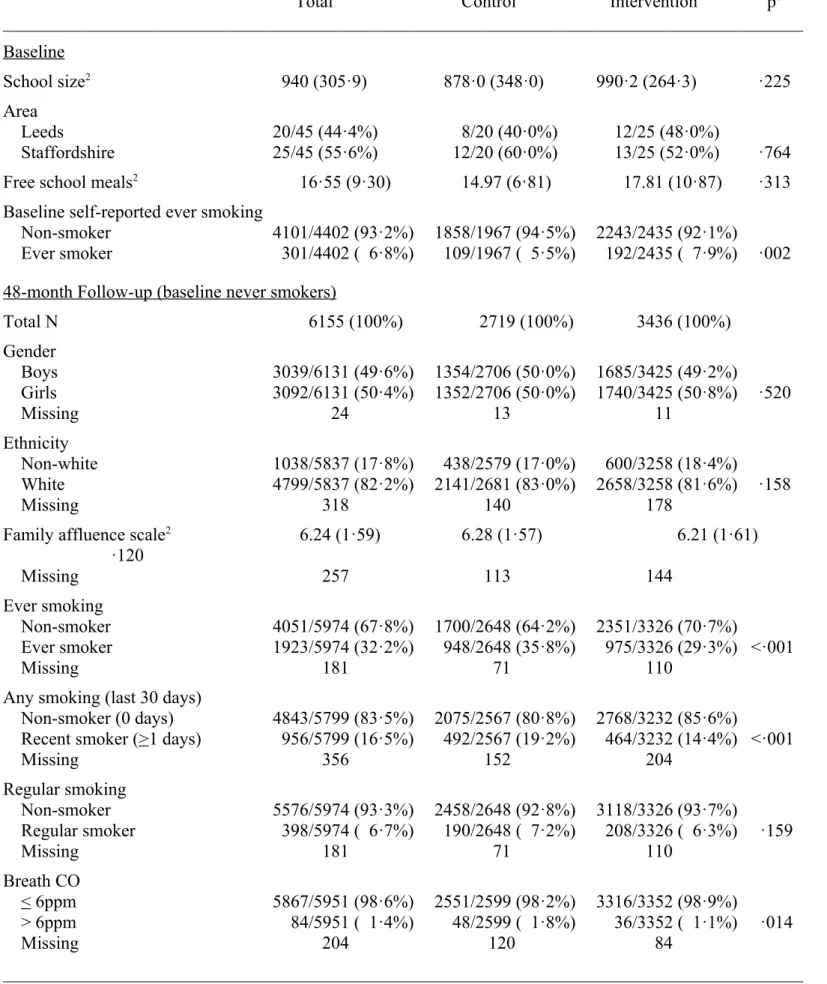
Table 1 provides details of the sample overall and by condition for school and individual level data (and numbers of missing data points). At the school level, the
intervention and control conditions were not significantly different in terms of school size or geographical area (neither had effects on the results and are not considered further here), nor in terms of percentage of pupils eligible for free school meals. Compared to the value for England as a whole (M = 13.8; Department for Education, 2017), our 45 schools had a slightly higher percentage of pupils eligible for free school meals (tone sample(44) = 1·98, p = ·054). This was also true for free school meals data in our schools from each of the two geographical areas compared to appropriate regional data (Leeds, M = 20·63, SD = 11·13 versus M = 16·5 for area, tone sample(19) = 1·66, p = ·114; Staffordshire, M = 13·28, SD = 5·97 versus M = 9·3 for area, tone sample(24) = 3·34, p = ·003). This indicates that the included schools were slightly more deprived than comparable schools.
differ in mean FAS scores (Table 1). Follow-up self-reported ever smoking and any smoking (last 30 days) were significantly lower in the intervention compared to the control condition. In contrast, although regular smoking was lower in the intervention compared to the control conditions, this difference did not approach statistical significance. Breath CO > 6ppm rates were low in both conditions, but significantly lower in the intervention compared to the control condition (Table 1).
Predicting Smoking Outcomes
Log binomial regressions in a multi-level model that controlled for the effects of school (and excluded baseline ever smokers) showed that self-reported ever smoking was significantly lower in the intervention compared to the control condition (Step 1, Table 2). This effect for condition on ever smoking remained significant when also controlling for demographic variables (Step 2, Table 2). Free school meals, gender, white ethnicity and FAS were also significant predictors of ever smoking at this step, with higher levels of ever
smoking being associated with more free school meals, being female, being white and with lower family affluence. None of the demographic covariates significantly moderated the effects of the intervention on ever smoking (free school meals: RR = 1·00, p = ·790; gender: RR = 1·07, p = ·387; ethnicity: RR = 1·14, p = ·246; family affluence scale: RR = 1·02, p = ·402). Sensitivity analyses also showed that the effect of the intervention on reducing ever smoking at any time point was significant when controlling for covariates (p = ·003) or not (p = ·016) (Supplementary Table 1).
A similar pattern was apparent for any smoking (last 30 days) with the condition effect being significant (i.e., less smoking in the intervention condition) when not controlling (Step 1, Table 2) or controlling (Step 2, Table 2) for demographic variables. Lower family
·732; ethnicity: RR = 1·25, p = ·177; family affluence: RR = 0·98, p = ·513).
School coordinators informed us about a total of 37 sessions (approximately 1.6%) across control and intervention conditions that did not run as planned. We received teacher feedback on 797 (88%) out of 905 sessions from teachers, with 11 (1%) responding ‘strongly disagree’, 69 (7%) ‘disagree’, 348 (44%) ‘neutral’, 337 (42%) ‘agree’, and 30 (4%) ‘strongly agree’ to the statement that the ‘lesson went incredibly well’. A total of 73 individual
sessions (30 control, 43 intervention) were observed and scored for quality. In relation to overall session quality, none were rated as ‘unsatisfactory’, 4 (5%) as ‘moderate’, 16 (22%) as ‘satisfactory’, 46 (63%) as ‘good’, and 7 (10%) as ‘high quality’. Lower ratings were mainly attributable to disruptive student behavior impacting on learning, too large a group to process the activities interactively, insufficient time to complete the activities, or insufficient staff input (e.g., no exploration of the activities as a group/students completed independently).
Completed implementation intention sheets were returned for approximately 91% of adolescents (89% in intervention; 95% in control) and the vast majority of sheets were scored as complete (88%) with no difference between conditions (87% in intervention; 90% in control). It was not possible to match individually generated codes to data on smoking thus precluding an analysis of the impact of completion on intervention effectiveness.
attending no intervention sessions for each of the smoking outcomes (ever smoking: RR = 0·76, 95%CI = 0·68, 0·86, p < ·001; any smoking (last 30 days): RR = 0·61, 95%CI = 0·52, 0·72, p < ·001; regular smoking: RR = 0·57, 95%CI = 0·45, 0·73, p < ·001; breath CO > 6ppm: RR = 0·41, 95%CI = 0·24, 0·70, p = ·001).
A total of 540 (9%) participants reported a change of school within the study period. A total of 82 moved between schools in the same condition, 86 moved between schools in different conditions, and 372 moved in to the study from non-study schools or did not specify the school they had moved from. These numbers were similar for the control and intervention conditions. Sensitivity analyses indicated that excluding these 540 participants did not substantively alter the main findings (i.e., no change in significance of condition for any smoking outcomes).
Economic analyses
The intervention was costed at $1391 [£1,031] per school over the four-year program duration. Twenty-eight percent of the intervention cost was associated with covering teacher time (seven members per school) to attend an intervention training session (45 minutes duration) pertaining to how to deliver the intervention, conservatively assuming that: (i) teachers attend the training every year; and (ii) their workload is already fully allocated. The rest of the intervention cost stemmed from printing and delivering material to schools, researcher travel and time incurred in training teachers and various administrative support tasks.
cost of designing the intervention ($21,159 [£15,680]) and assuming teachers’ delivery of sessions requires extra time (i.e., they are done outside existing sessions), the intervention cost increases to $18.99 [£13.33] per adolescent. This yields an ICER of $292 [£205] per smoker avoided at age 15-16 years based on ever smoking assessment.
Discussion
The current study shows that the repeated formation of implementation intentions about how to refuse offers of a cigarette alongside motivational anti-smoking messages were effective in significantly reducing ever smoking (6·5% reduction) and any smoking (last 30 days) (4·8% reduction). The intervention may also provide a cost effective means to reduce smoking initiation in adolescents. The evidence in relation to breath CO >6ppm and
particularly regular smoking was less consistent, with a significant effect for the former only when controlling for demographic variables and a non-significant effect for the latter
(controlling for demographic variables or not). None of the intervention effects for the four smoking variables were significantly different in schools serving more or less deprived areas, in boys versus girls, in non-white versus white adolescents, or at different levels of family affluence. Sensitivity analyses showed that a similar pattern of findings was apparent when examining ever smoking, regular smoking, or breath CO > 6ppm across any of the four time points post-baseline. This suggests that the current findings were not restricted to smoking outcomes at the final data collection point.
Relatedly our fidelity analyses suggest that the majority of intervention sessions were completed as planned. We were unable to examine the impact of completing the
implementation intention sheets on outcomes due to problems with matching individual codes, nevertheless a high percentage of sheets were completed appropriately. We were, however, able to assess the impact of the number of smoking sessions attended. This indicated that for each of the four smoking outcomes significant effects were mainly
and Higgins (2010) who did not find number of sessions attended influenced the effectiveness of the intervention in reducing smoking initiation, although over 90% of participants in that study attended between 3 and 8 intervention sessions. Together the two studies might suggest the value of multiple implementation intention sessions over single sessions in reducing smoking in adolescents, although adolescents may not need to attend all sessions to benefit. Our fidelity analyses also indicated our findings were not influenced by participants moving between schools during the study.
The mixed findings for regular smoking are worth further comment. The rates of regular smoking observed here (6·7% regular smokers) were consistent with national
statistics for England showing that regular smoking (at least one cigarette per week) has fallen in recent years (15% in 2009 to 7% in 2016 among 15-year-olds in England; Office for National Statistics, 2018). The lack of a significant effect of the intervention on regular smoking may indicate its lack of effectiveness on curbing higher levels of smoking. However, the current study may be lacking in power to detect differences between conditions at such low frequencies of regular smoking (7·2% vs. 6·3% regular smoking for control and
invention respectively). Similar arguments apply to breath CO > 6ppm which was low in our sample (1·8% vs. 1·1% for control and invention respectively).
but this may still reflect the early stages (i.e., first few cigarettes) in becoming a regular smoker. Nevertheless, research does suggest a strong relationship between trying one cigarette and progression to becoming a daily smoker (Saddleson et al., 2016; Sargent et al., 2017). For example, a recent meta-analysis (Birge, Duffy, Miler, & Hajek, in press) of relevant studies indicated that 68·9% of people who tried one cigarette progressed to daily smoking.
Although systematic reviews indicate mixed evidence for school-based interventions for smoking prevention (Thomas et al., 2013), many countries require the inclusion of some activities for smoking prevention in the curriculum. This being the case, identifying effective school-based interventions (such as the one considered here) can ensure that such activities are worthwhile. Schools are also a valuable setting for smoking prevention because of the consistent access they provide to adolescents from a broad range of backgrounds. School-based interventions such as the present one have the added advantage of being of equivalent effectiveness and reach in different social class/deprivation groups (as shown here for school-based and individual-school-based measures of deprivation), thus potentially not exacerbating health inequalities. This contrasts with smoking cessation efforts in adults that tend to meet with lower success in lower socioeconomic status groups (Honjo, Tsutsumi, Kawachi, & Kawakami, 2006) and so tend to widen health inequalities.
The current pragmatic cluster randomized controlled trial of an implementation intention-based intervention about how to refuse offers of a cigarette supports the findings of an earlier explanatory trial (Conner & Higgins, 2010) and pilot study (Higgins & Conner, 2003) of the same intervention in UK adolescents. Together these findings suggest that the repeated formation of implementation intentions of how to refuse offers of cigarettes when combined with anti-smoking messages may be an effective means to reduce smoking
intervention is also uncomplicated and low cost with each implementation requiring a maximum of 30-50 minutes for adolescents to engage with messages targeting motivation to not smoke and completing an implementation intention sheet. In addition, there was no evidence that the intervention was less effective in groups that tend to show higher rates of smoking (e.g., economically deprived or ethnic minority groups; Drape et al., 2018).
It is worth reiterating that the tested intervention assessed the combined effects of engaging with anti-smoking motivational messages and forming an implementation intention in relation to not smoking. This was consistent with a previous explanatory trial (Conner & Higgins, 2010) showing that this combination was more effective in reducing smoking initiation in adolescents than anti-smoking messages alone. It is also consistent with
theoretical and empirical work showing the effectiveness of implementation intentions to be maximized among those motivated to engage in the behavior (Gollwitzer, 1993; Gollwitzer & Sheeran, 2006).
Key strengths of the current research are retention of the schools throughout the four year study and the diversity of the participating schools (e.g., serving pupils from different SES groups and different school sizes). The schools were generally representative of schools across England and the two geographical areas they were drawn from in relation to proportion of free school meals. There was some evidence that our schools were slightly more deprived on this measure, although this was only significant in relation to the schools in the
Staffordshire area. Although our measures of deprivation were predictive of smoking outcomes, there was no evidence that school or individual measures of deprivation
significantly moderated the effectiveness of the intervention. It is also worth noting that the reported intervention effects are for differences between the intervention and control
conditions in smoking outcomes taken approximately six months after the last intervention session.
There are also a number of weaknesses to the present research. A first weakness is the fact that three control schools withdrew from the study after randomization due to a change in decision to participate by school management. Although the numbers of schools in both conditions at final follow-up exceeded the required numbers based on prior power calculations (Conner et al., 2013), this does not remove the potential for bias that such
dropouts can introduce. Relatedly the fact that participants were recruited after randomization could be considered a weakness. A second weakness is the fact that we had to impute
made to ensure we tested all eligible adolescents at each school (including running 10 additional sessions at schools when significant numbers of adolescents were not present). However, it remains possible that significant numbers of adolescents were not tested. This might be particularly likely to affect smokers, who may be more likely to be absent from school. However, randomization should ensure that drop-out of smokers did not unduly influence the findings.
In conclusion, the use of repeated implementation intentions about how to refuse the offer of a cigarette plus anti-smoking messages is an effective and cost-effective intervention to reduce smoking initiation in adolescents. However, impacts on progression to regular smoking remain to be demonstrated.
References
Aarts, H., Dijksterhuis, A., & Midden, C. (1999). To plan or not to plan? Goal achievement or interrupting the performance of mundane behaviors. European Journal of Social Psychology, 29, 971–979. doi: 10.1002/(SICI)1099-0992(199912)29:8<971::AID-EJSP963>3.3.CO;2-1.
Armitage, C. J. (2016). Evidence that implementation intentions can overcome the effects of smoking habits. Health Psychology, 35, 935-943. doi: 10.1037/hea0000344
Bedfont. (2017, January 17). piCO+ smokerlyzer. Operating manual 2017. Retrieved from https://www.bedfont.com/file/2488-LAB679%20Smokerlyzer%20Manual %20Issue%203.pdf.
Birge, M., Duffy, S., Miler, A.S., & Hajek P. (in press). What proportion of people who try one cigarette become daily smokers? A meta-analysis of representative surveys. Nicotine and Tobacco Research, in press. doi: 10.1093/ntr/ntx2435.
Campbell, R., Starkey, F., Holliday, J., et al. (2008). An informal school-based peer-led intervention for smoking prevention in adolescence (ASSIST): A cluster randomized trial. Lancet, 371, 1595–1602. doi: 1016/S0140-6736(08)60692-3.
Chassin, L., Presson, C.C., Pitts, S.C., & Sherman, S.J. (2000). The natural history of cigarette smoking from adolescence to adulthood in a Midwestern community sample: Multiple trajectories and their psychosocial correlates. Health Psychology, 19,223–231. doi: 10.1037/0278-6133.19.3.223.
Conner, M., Grogan, S., Lawton, R., Armitage, C., West, R., Siddiqi, K., Gannon, B., Torgerson, C., Flett, K., & Simms-Ellis, R. (2013). Study protocol: A cluster randomised controlled trial of implementation intentions to reduce smoking initiation in adolescents. BMC Public Health, 13, 54. doi: 10.1186/1471-2458-13-5418
Conner, M., & Higgins, A. (2010). Long-term effects of implementation intentions on prevention of smoking uptake among adolescents: A cluster randomized controlled trial. Health Psychology, 29, 529-538. doi: 10.1037/a00203179
Croxford L. (2000). Is free school entitlement a valid measure of school intake characteristics. Education Research and Evaluation, 6, 317–335. doi:
10.1076/edre.6.4.317.6933.
Department for Education (2017, September 2017). Schools, pupils and their characteristics: January 2017. Retrieved from https://www.gov.uk/government/statistics/ schools-pupils-and-their-characteristics-january-2017.
DiFranza, J.R., Savageau, J.A., Fletcher, K., et al. (2007). Symptoms of tobacco dependence after brief intermittent use: The development and assessment of nicotine
dependence in youth–2 study. Archives of Pediatric Adolescent Medicine, 161,704–710. doi: 10.1001/archpedi.161.7.704.
106-115. doi: 10.3322/caac.21444.
Ferguson, J., Bauld, L., Chesterman, J., & Judge, K. (2005). The English smoking treatment services: One-year outcomes. Addiction, 100 (suppl 2),59–69. doi: 10.1111/j.1360-0443.2005.01028.
Gollwitzer P. (1993). Goal achievement: The role of intentions. European Review of Social Psychology, 4, 141–185. doi: 10.1080/14792779343000059.
Gollwitzer, P. M. (1999). Implementation intentions: strong effects of simple plans. American Psychologist, 54, 493–503. doi: 10.1047/003-066x.54.7.493.
Gollwitzer, P.M., & Sheeran, P. (2006). Implementation intentions and goal achievement: A meta-analysis of effects and processes. Advances in Experimental Social Psychology, 38, 69–119. doi: 10.1016/S0065-2601(06)38002-1.
Gowing, L.R., Ali, R.L., Allsop, S., et al. (2015). Global statistics on addictive behaviours: 2014 status report. Addiction, 110, 904–919. doi:10.1111/add.12899.
Higgins, A., & Conner, M. (2003). Understanding adolescent smoking: The role of the Theory of Planned Behaviour and implementation intentions. Psychology, Health and Medicine, 8, 177-190. doi: 10.1080/1354850031000087555.
Hollingworth, W., Cohen, D., Hawkins, J., et al. (2012). Reducing smoking in
adolescents: Cost-effectiveness results from the cluster randomized ASSIST (A Stop Smoking In Schools Trial). Nicotine & Tobacco Research, 14, 161–168. [Erratum in: Nicotine Tob Res 2013; 15: 999]. doi: 10.1093/ntr/ntr155.
Honjo, K., Tsutsumi, A., Kawachi, I., & Kawakami, N. (2006). What accounts for the relationship between social class and smoking cessation? Results of a path analysis. Social Science & Medicine, 62,317–328. doi: 10.1016/j.socscimed.2005.06.011.
MacArthur, G.J., Harrison, S., Caldwell, D.M., Hickman, M., & Campbell, R. (2016). Peer-led interventions to prevent tobacco, alcohol and/or drug use among young people aged 11-21 years: A systematic review and meta-analysis. Addiction, 111, 391–407.
doi:10.1111/add.13224.
McRobbie, H., Bullen, C., Hartmann-Boyce, J., et al. (2014). Electronic cigarettes for smoking cessation and reduction. Cochrane Database of Systematic Reviews, 12.
doi:10.1002/14651858.cd010216.pub2.
National Institute for Health and Care Excellence (NICE) (2018, January 17). Guide to the methods of technology appraisal. Retrieved from https://www.nice.org.uk/process/pmg9/ resources/guide-to-the-methods-of-technology-appraisal-2013-pdf-2007975843781.
Office for National Statistics (1997). Smoking among secondary school children in 1996. England. London: HMSO. doi: 10.5255/UKDA-SN-4124-1.
Office for National Statistics (2018). Smoking, drinking and drug use among young people in England – 2016. Retrieved from http://digital.nhs.uk/catalogue/PUB30132.
Peterson, A.V., Kealey, K.A., Mann, S.L., Marek, P.M., & Sarason, I.G. (2000). Hutchinson smoking prevention project: Long-term randomized trial in school-based tobacco use prevention – results on smoking. Journal of the National Cancer Institute, 92, 1979– 1991. doi: 10.1093/jnci/92.24.1979.
Polosa, R., Rodu, B., Caponnetto, P., et al. (2013). A fresh look at tobacco harm reduction: The case for the electronic cigarette. Harm Reduction Journal, 10, 19. doi: 10.1186/1477-7517-10-19.
Prestwich, A., Lawton, R., & Conner, M. (2003). Use of implementation intentions and the decision balance sheet in promoting exercise behaviour. Psychology and Health, 18, 707–721. doi: 10.1080/08870440310001594493.
behaviour: Research and practice with social cognition models (3rd Edn.; pp. 321-357). Maidenhead: Open University Press.
Saddleson, M.L., Kozlowski, L.T., Giovino, G.A., Homish, C.G., Mahony, M.C., & Goniewicz, M.L. (2016). Assessing 30-day quantity-frequency of U.S. adolescent smoking as a predictor of adult smoking 14 years later. Drug & Alcohol Dependency, 162, 92–98. doi: 1016/j.drugcdep.2016.02.043.
Sargent, J.D., Babrielli, J.G., Budney, A., Soneji, S., & Wills, T.A. (2017). Adolescent smoking experimentation as a predictor of daily cigarette smoking. Drug & Alcohol
Dependency, 175, 55–59. doi: 10.1016/j.drugalcdep.2017.0138.
Sheeran, P., Webb, T. L., & Gollwitzer, P. M. (2005). The interplay between goal intentions and implementation intentions. Personality and Social Psychology Bulletin, 31, 87– 98. doi: 10.1177/0146167204271308.
Singh, T., Arrazola, R.A., Corey, C.G., et al. (2016). Tobacco use among middle and high school students – United States, 2011-2015. MMWR Morbidity & Mortality Weekly Reports, 65, 361-367. doi: 10.15585/mmwr.mm6514a1.
Stookey, G.K., Katz, B.L., Olson, C.A., et al. (1987). Evaluation of biochemical validation measures in determination of smoking status. Journal of Dental Research, 66, 1597–1601. doi: 10.1177/00220345870660101801.
Taioli, E., & Wynder, E.L. (1991). Effect of the age at which smoking begins on frequency of smoking in adulthood. New England Journal of Medicine, 325,968–969. doi: 10.1056/NEJM199109263251318.
Thomas, R.E., McLellan, J., & Perera, R. (2015). Effectiveness of school-based smoking prevention curricula: Systematic review and meta-analysis. BMJ Open, 5, e006976. doi: 10.1136/bmjopen-2014-006976.
10.18637/jss.v045.i03.
Warner, K.E. (2014). Frequency of e-cigarette use and cigarette smoking by
American students in 2014. American Journal of Preventive Medicine, 51, 179-184. doi:
10.1016/j.amepre.2015.12.004.
Webb, T. L., & Sheeran, P. (2003). Can implementation intentions help to overcome ego-depletion? Journal of Experimental Social Psychology, 39, 279–286. doi:
10.1016/S0022-1031(02)00527-9.
Table 1. Descriptive data for sample (comparison of control and intervention conditions).
_________________________________________________________________________________________ Total Control Intervention p1 _________________________________________________________________________________________ Baseline
School size2 940 (305·9) 878·0 (348·0) 990·2 (264·3) ·225
Area
Leeds 20/45 (44·4%) 8/20 (40·0%) 12/25 (48·0%)
Staffordshire 25/45 (55·6%) 12/20 (60·0%) 13/25 (52·0%) ·764 Free school meals2 16·55 (9·30) 14.97 (6·81) 17.81 (10·87) ·313 Baseline self-reported ever smoking
Non-smoker 4101/4402 (93·2%) 1858/1967 (94·5%) 2243/2435 (92·1%)
Ever smoker 301/4402 ( 6·8%) 109/1967 ( 5·5%) 192/2435 ( 7·9%) ·002 48-month Follow-up (baseline never smokers)
Total N 6155 (100%) 2719 (100%) 3436 (100%) Gender
Boys 3039/6131 (49·6%) 1354/2706 (50·0%) 1685/3425 (49·2%)
Girls 3092/6131 (50·4%) 1352/2706 (50·0%) 1740/3425 (50·8%) ·520
Missing 24 13 11
Ethnicity
Non-white 1038/5837 (17·8%) 438/2579 (17·0%) 600/3258 (18·4%)
White 4799/5837 (82·2%) 2141/2681 (83·0%) 2658/3258 (81·6%) ·158
Missing 318 140 178
Family affluence scale2 6.24 (1·59) 6.28 (1·57) 6.21 (1·61) ·120
Missing 257 113 144
Ever smoking
Non-smoker 4051/5974 (67·8%) 1700/2648 (64·2%) 2351/3326 (70·7%)
Ever smoker 1923/5974 (32·2%) 948/2648 (35·8%) 975/3326 (29·3%) <·001
Missing 181 71 110
Any smoking (last 30 days)
Non-smoker (0 days) 4843/5799 (83·5%) 2075/2567 (80·8%) 2768/3232 (85·6%)
Recent smoker (>1 days) 956/5799 (16·5%) 492/2567 (19·2%) 464/3232 (14·4%) <·001
Missing 356 152 204
Regular smoking
Non-smoker 5576/5974 (93·3%) 2458/2648 (92·8%) 3118/3326 (93·7%)
Regular smoker 398/5974 ( 6·7%) 190/2648 ( 7·2%) 208/3326 ( 6·3%) ·159
Missing 181 71 110
Breath CO
< 6ppm 5867/5951 (98·6%) 2551/2599 (98·2%) 3316/3352 (98·9%)
> 6ppm 84/5951 ( 1·4%) 48/2599 ( 1·8%) 36/3352 ( 1·1%) ·014
Missing 204 120 84
baseline smokers based on imputed data (N = 6155).
______________________________________________________________________________________________________________________________ Ever Smoking Any Smoking (last 30 days) Regular Smoking Breath CO > 6ppm
____________________ ____________________ ____________________ ____________________
Predictors RR 95% CI p RR 95% CI p RR 95% CI p RR 95% CI p
______________________________________________________________________________________________________________________________ Model 1 without covariates
Condition
Control 1·00 1·00 1·00 1·00
Intervention 0·83 0·71, 0·97 ·016 0·77 0·63, 0·93 ·007 0·87 0·66, 1·13 ·296 0·55 0·29, 1·04 ·066 Model 2 with covariates
Condition
Control 1·00 1·00 1·00 1·00
Intervention 0·80 0·70, 0·93 ·003 0·75 0·62, 0·90 ·002 0·81 0·64, 1·03 ·092 0·53 0·31, 0·92 ·024 Free school meals 1·01 1·001, 1·02 ·022 1·01 0·997, 1·02 ·159 1·02 1·003, 1·03 ·016 1·02 0·99, 1·05 ·306
Gender: Boys 1·00 1·00 1·00 1·00
Girls 1·28 1·19, 1·37 <·001 1·01 0·90, 1·13 ·898 1·02 0·84, 1·23 ·872 1·06 0·72, 1·56 ·773
Ethnicity: Non-white 1·00 1·00 1·00 1·00
White 1·17 1·04, 1·31 ·007 1·01 0·86, 1·19 ·913 1·38 1·03, 1·85 ·031 1·19 0·66, 2·13 ·568
Allocation
Analysis Follow-Up Enrollment
Analyzed (n=20 schools; 2719 adolescents)
Excluded from analysis (n=0 schools; 109 baseline ever smokers)
Lost to follow-up (n=0 schools)
Discontinued intervention (n=0 schools) Allocated to control (n=23 schools)
Received allocated intervention (n=20 schools)
Did not receive allocated intervention (declined
Lost to follow-up (n=0 schools)
Discontinued intervention (n=0 schools)
Analyzed (n=25 schools; 3436 adolescents)
Excluded from analysis (n=0 schools; 192 baseline ever smokers)
Allocated to intervention (n=25 schools)
Received allocated intervention (n=25 schools)
Did not receive allocated intervention Excluded (n=25 schools)
Not meeting inclusion criteria (n=0 schools)
Declined to participate (n=25 schools)
predictors controlling for clustering by school (N = 6155).
___________________________________________________________________________________________________________________ Ever Smoking Regular Smoking Breath CO > 6ppm
______________________ ______________________ ______________________
Predictors RR 95% CI p RR 95% CI p RR 95% CI p
___________________________________________________________________________________________________________________ Model 1 without covariates
Condition
Control 1·00 1·00 1·00
Intervention 0·85 0·75, 0·97 ·016 0·83 0·64, 1·07 ·156 0·71 0·53, 0·96 ·027
Model 2 with covariates Condition
Control 1·00 1·00 1·00
Intervention 0·83 0·73, 0·94 ·003 0·77 0·61, 0·98 ·036 0·68 0·45, 1·04 ·079
Free school meals 1·01 1·001, 1·01 ·024 1·01 1·003, 1·03 ·019 1·02 0·996, 1·04 ·107
Gender: Boys 1·00 1·00 1·00
Girls 1·19 1·11, 1·27 <·001 1·07 0·90, 1·27 ·462 1·03 0·76, 1·38 ·857
Ethnicity: Non-white 1·00 1·00 1·00
White 1·16 1·05, 1·29 ·003 1·22 0·94, 1·60 ·136 1·19 0·75, 1·90 ·459
Family affluence 0·96 0·94, 0·98 <·001 0·89 0·85, 0·94 <·001 0·84 0·77, 0·91 <·001 ___________________________________________________________________________________________________________________
Cost item Mean (per school)*
Base case analysis
Material development (printing) costs £331.05
Material delivery costs
Travel time £67.73
Mileage £93.37
Training delivery costs
Travel time £36.47
Mileage £50.27
Training delivery time £28.39
Total delivery £276.23
Training receipt costs
Administration costs in school £173.58
Attending training session £303.77
Total receipt £477.35
Total undiscounted £1,084.63
Total discounted £1,031.04
Total discounted cost per pupil £6.44
Sensitivity analysis (including the sunk costs of intervention design)
Researcher time development costs £348.52
Teacher time for delivering session £810.05
Grand total undiscounted £2,243.19
Grand total discounted £2,132.15
Total discounted cost per pupil £13.33