Efficient Mobile Broadband Systems Based
On Millimeter Wave and TACT Framework
Nirosha R
1, Ani Pappachen
2Assistant Professor, Dept. of ECE, Caarmel Engineering College, Pathanamthitta, Kerala, India1
PG Student, Dept. of ECE, Caarmel Engineering College, Pathanamthitta, Kerala, India2
ABSTRACT: Almost all mobile communication systems today use spectrum in the range of 300 MHz–3 GHz. In this
article, we reason why the wireless community should start looking at the 3–300 GHz spectrum for mobile broadband applications. As the number of tablets and smart phones are gaining high popularity, the now available frequency bands will not be able to satisfy the needs of customers, so we have to exploit the millimeter wave bands ranging from 3 GHz to 300 GHz. Also we will implement the TACT based switching framework as a next generation broadband switching scheme, which allows us to switch between micro and macro stations based on busy hours. Through this we can implement green cellular base stations. The simulations are implemented using NS2
KEYWORDS: Millimeter Wave, Tact, Green Communication, micro Stations, Macro Stations.
I.INTRODUCTION
Theexplosive popularity of smartphones and tablets has ignited a surging traffic load demand for radio access and has been incurring massive energy consumption and huge greenhouse gas emission [1]. The information and communication technology (ICT) industry accounts for 2% to 10% of the world’s overall power consumption [3] and has emerged as one of the major contributors to the world-wide CO2 emission. Besides that, there also exist economic
pressures for cellular network operators to reduce the power consumption of their networks.Currently, over 80% of the power consumption takes place in the radio access networks (RANs), especially the base stations (BSs). The reason behind this is largely due to that the present BS deployment is on the basis of peak traffic loads and generally stays active irrespective of the heavily dynamic traffic load variations.Some predictions indicate that mobile data will grow at 108 percent compound annual growth rate (CAGR) [1] with over a thousandfold increase over the next 10 years. In order to meet this exponential growth, improvements in air interface capacity and allocation of new spectrum are of paramount importance.The current fourth-generation (4G) systems including LTE and Mobile WiMAX already use advanced technologies such as orthogonal frequency- division multiplexing (OFDM), multiple-input multiple-output (MIMO), multi-user diversity, link adaptation, turbo code, and hybrid automatic repeat request (HARQ) in order to achieve spectral efficiencies close to theoretical limits in terms of bits per second per Hertz per cell.As the mobile data demand grows, the sub-3 GHz spectrum is becoming increasingly crowded. On the other hand, a vast amount of spectrum in the 3–300 GHz range remains underutilized. The 3–30 GHz spectrum is generally referred to as the super high frequency (SHF) band, while 30–300 GHz is referred to as the extremely high frequency (EHF) or millimeterwave band. Since radio waves in the SHF and EHF bands share similar propagation characteristics,we refer to 3–300 GHz spectrum collectively as millimeterwave bands with wavelengths ranging from 1 to 100 mm.Millimeterwave communication systems thatcan achieve multigigabit data rates at a distance of up to a few kilometres already exist for point to point communication. However, the component electronics used in these systems, including power amplifiers, low noise amplifiers, mixers, and antennas, are too big in size and consume too much power to be applicable in mobile communication.
scheme, the frequency problems and energy crisis in the information and communication industry can be solved in the coming decades.
II
.
RELATED WORKExisting works are based on a greedy algorithm, with the help of it we try to predict the total traffic under a region and based on it switching is made possible.The controller would firstly estimate the traffic load variations based on the on-line experience. Afterwards, it can select one of the possible BS switching operations under the estimated circumstance and then decreases or increases the probability of the same action to be later selected on the basis of the required cost. Here, the cost primarily focuses on the energy consumption due to such a BS switching operation and also takes the performance metric into account to ensure the user experience. After repeating the actions and knowing the corresponding costs, the controller would know how to switch the BSs for one specific traffic load profile. Moreover, with the MDP model, the resulting BS switching strategy is foresighted, which would improve energy efficiency in the long run [5].However, it usually take some time for the RL approaches to be convergent to the optimal solution in terms of the whole cost. Hence, the direct application of the RL algorithms may sometimes get into trouble, especially for a scenario where a BS switching operation controller usually takes charge of tens or even hundreds of BSs [6]. Fortunately, the periodicity and mobility of human behaviour patterns make the traffic loads exhibit some temporal and spatial relevancies, thus making the traffic load-aware BS switching strategies at different moments or neighbouring regions relevant.
III.SYSTEM ARCHITCTURE
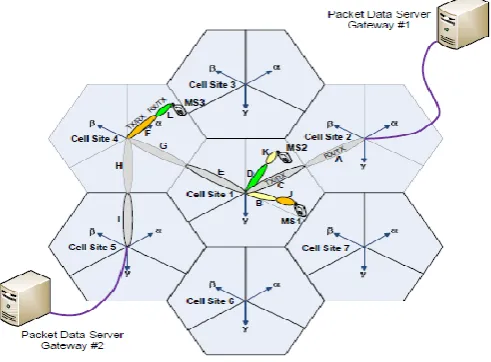
An MMB network consists of multiple MMBbase stations that cover a geographic area. Inorder to ensure good coverage, MMB base stationsneed to be deployed with higher densitythan macro cellular base stations. In general, the same site-to-site distance as microcellor picocell deployment in an urban environmentis necessary. An example of MMBnetwork is shown in Figure 1.The transmission and/or reception in an MMB system are based on narrow beams, which suppress the interference from neighbouring MMB base stations and extend the range of an MMB link. This allows significant overlap of coverage among neighbouring base stations. Unlike cellular systems that partition the geographic area into cells with each cell served by one or a few base stations, the MMB base stations form a grid with a large number of nodes to which an MMB mobile station can attach. For example, with a site-to-site distance of 500 m and a range of 1 km for an MMB link, an MMB mobile station can access up to 14 MMB base stations on the grid [2]. The challenge with millimeter wave is the low efficiency of RF devices such as power amplifiers and multi-antenna arrays with current technology. A solution to avoid multi-antenna arrays at the MMB base station is to use fixed beams or sectors with horn antennas. Horn antennas can provide similar gains and beam widths as sector antennas in current cellular systems in a cost-effective manner.
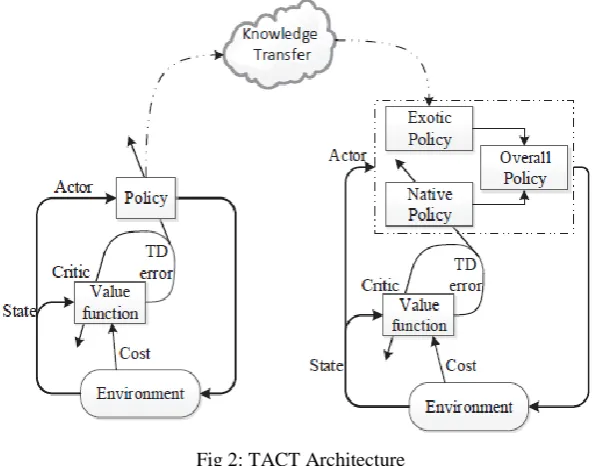
A RAN usually consists of multiple BSs while the traffic loads of BSs are usually fluctuating, thus often makingBSs underutilization.In this paper,we assume there exists a BS switching operation controller, which can timely know the traffic loads in these BSs at current stage and correspondingly determine the energy efficient working status of any BS (i.e., active/sleeping mode) at next stage in a centralized way.The file transmission requests at a locationarrive following a Poisson point process.As the name implies, the actor-critic algorithm encompasses three components: actor, critic, and environment as illustrated in Fig. 2. At a given state, the actor selects an action in a stochastic way and then executes it. This execution transforms the state of environment to a new one with certain probability, and feeds back the cost to the actor. Then, the critic criticizes the action executed by the actor and updates the value function through a time difference (TD) error. After the criticism, the actor will update the policy to prefer the action with a smaller cost, and vice versa. The algorithm repeats the above procedure until convergence. The reasons to adopt actor-critic algorithm are three-folded: (i) since it generates the action directly from the stored policy, it requires little computation to select an action to perform; (ii) it can learn an explicitly stochastic policy which may be useful in non-Markov traffic variation environment of RANs [5]; (iii) it separately updates the value function and policy [6]. As a result, it would be more easily to implement the policy knowledge transfer better than other switching algorithms.
Fig 2: TACT Architecture
We design an actor-critic learning framework for energy scheme as illustrated
(i) Action selection: the controller needs to select an action according to a stochastic strategy, the purpose of whichis to improve performance while explicitly balancing twocompeting objectives: a) searching for a better BS switchingoperation (exploration) and b) taking as little cost as possible(exploitation). As a result, the controller not only performsa good BS switching operation based on its past experience.
(ii) User association and data transmission: In one stage,there exist several slots for user association and data transmission.After the controller chooses to turn some of BSsinto sleeping mode and broadcasts the traffic load density, the users choose to connect one BS according to the modified metric and start the communications slotby slot.
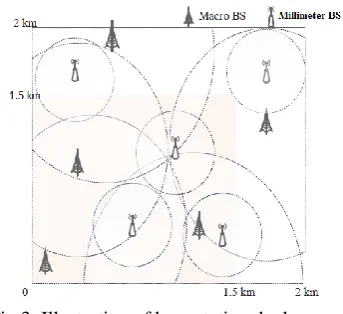
Fig 3: Illustration of base station deployment
The following steps are done to choose whether switching is needed or not [7]. Based on the results the switching is done between the millimeter wave stations and macro stations
1. Base station controller checks the traffic level in each base station.
2. If the traffic level is lower than the particular threshold it will turn off the base station otherwise it turns on the base station.
It makes use of markov decision process to discover the traffic level in every base station.
3. In markov decision process the dynamic programming problem can be occurs. So that the reinforcement learning and transfer actor critic algorithm is used to overcome the problem.
4. Transfer actor critic algorithm is used to maximize the energy saving in current active base station by transfer actor critic algorithm is used to overcome the problem.
IV. RESULT AND DISCUSSION
We validate the energy efficiency improvement of our proposed scheme by extensive simulations under practical configurations. Here, we simulate for an area of 2km ×2km, where there exist five macro BSs and five micro BSs as shown in the illustration.
.
Figure shows how the base stations respond to heavy traffic situations. During heavy traffic instead of operating frequencies less than 3 GHz, millimetre wave principle based cells can attain bandwidth in range of GHzs. Also the number of customers accommodated to the cell can increase significantly. Thus call drops can also be reduced.
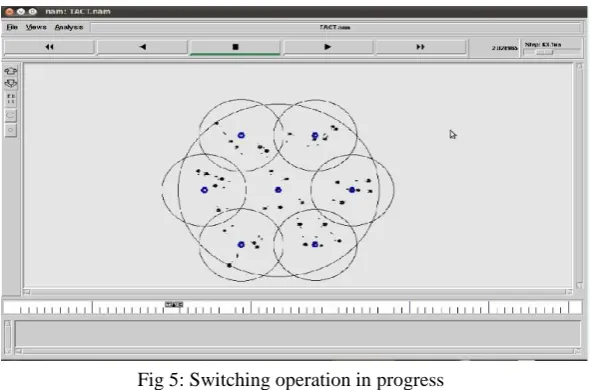
Figure shows how the TACT algorithm responds to variations in traffic.
Fig 5: Switching operation in progress
Figure showing how switching takes place between the millimeter wave base stations and macro stations during busy hours and less traffic hours. When the traffic is more, the millimeter wave base stations will be active, in other situations the macro stations will be active. The hand off scheme is soft handoff in nature. New connection is made before leaving the old base station.
Fig 6: Traffic aware switching operation
IV.CONCLUSION
Millimeter wave spectrum with frequencies in the range of 3–300 GHz can potentially provide the bandwidth required for mobile broadband applications for the next few decades and beyond. Through this paper we discussed the possibilities of using these frequencies, millimeter wave mobile broadband system architecture and how to implement the system. We also discussed the possibility of using TACT based switching scheme based on which switching can be done depending on the condition of busy hour or not. Future works is needed to know whether these systems acquire the required characteristics.
REFERENCES
[1] White_paper_c11-481360, “Cisco Visual Networking Index: Forecast and Methodology,” June 2010.
[2] F. Khan, LTE for 4G Mobile Broadband: Air Interface Technologies and Performance, Cambridge Univ. Press, 2009. [3] C. H. Doann, “Millimeter wave CMOS Design,” IEEE J. Solid-States Circuits, Jan. 2005.
[4] FCC, “Millimeter wave Propagation: Spectrum Management Implications,” Office of Eng. and Tech., Bulletin no. 70, July, 1997.
[5] Ivo Grondman, Lucian Bus¸ oniu, Gabriel A.D. Lopes, Robert Babuska, A Survey of Actor-Critic Reinforcement Learning: Standard and Natural Policy Gradients
[6] Hao Zhu, Guohong Cao, A Power-aware and QoS-aware service model on wireless networks
[7] Michimune Kohno, Yuji Ayatsuka, Jun Rekimoto, TACT: Mobile Wireless Terminal for Digitally- Enabled Environments