ABSTRACT
CHENG, MENG-TZU. Middle School Students’ Learning of the Impact of
Methamphetamine Abuse on the Brain through Serious Game Play. (Under the direction of Dr. Leonard Annetta).
In response to the solicitation of the National Institute on Drug Use (NIDA) (NIDA, 2006) for the Development of a Virtual Reality Environment for Teaching about the Impact of Drug Abuse on the Brain,a virtual brain exhibit was developed by the joint venture of Entertainment Science, Inc. and Virtual Heroes, Inc.. This exhibit included a virtual reality learning environment combined with a video game, aiming at improving the neuroscience literacy of the general public, conveying knowledge about the impacts of methamphetamine abuse on the brain to the population, and establishing a stronger concept of drug use
prevention among children.
This study investigated the effectiveness of this interactive exhibit on middle school students’ understanding and attitudes toward drug use. Three main research questions are addressed: 1) What do students learn about basic concepts of neuroscience and the impact of methamphetamine abuse on the brain via the exhibit? 2) How are students’ attitudes toward methamphetamine use changed after exposure to the exhibit? 3) What are students’
experiences and perceptions of using the exhibit to learn the impact of methamphetamine abuse on the brain? A mixed-method design, including pre/post/delayed-post test instruments, interviews, and video recordings, was conducted for 98 middle school students ranging from sixth to eighth grades to investigate these questions.
Middle School Students’ Learning of the Impact of Methamphetamine Abuse on the Brain through Serious Game Play
by
Meng-Tzu Cheng
A dissertation submitted to the Graduate Faculty of North Carolina State University
in partial fulfillment of the requirements for the degree of
Doctoral of Philosophy
Science Education
Raleigh, North Carolina 2009
APPROVED BY:
_______________________________ ______________________________ Dr. Leonard A. Annetta Dr. John E. Penick
Chair of Advisory Committee
DEDICATION
BIOGRAPHY
Meng-Tzu Cheng was born on December 19, 1977 in I-Lan, a beautiful city in Taiwan embraced by both beautiful mountains and oceans. Raised in a loving home, she was
surrounded by the selfless and endless love of her parents and two older sisters.
Meng-Tzu got her Bachelor of Science in Botany from National Taiwan University in 2000 and earned a Master of Science in Biology from National Taiwan Normal University in 2003. While pursuing her master’s degree, she got a chance to attend the teacher education program and to receive professional teaching training. In the meantime, she met several wonderful professors who led her to realize her love for education.
After one year of teaching experience in Taipei Municipal Sun Shan High School, she decided to pursue a higher degree in the United States. She entered the doctoral program in science education at North Carolina State University in the fall of 2005 and joined the research group under the advisement of Dr. Len Annetta in 2006.
She has been working with Dr. Len Annetta for three years, focusing on using
technologies, especially video games, to assist and improve students’ learning. She was also an intern in the North Carolina Museum of Natural Sciences in the spring of 2009, where she constructed surveys and collected and analyzed data from the surveys to help evaluate
ACKNOWLEDGMENTS
I would like to express my deepest appreciation to many people, whose support and help have made this journey possible. My sincerest gratitude goes to my committee chair and advisor, Dr. Len Annetta, who has always inspired me in all possible ways and encouraged me at the times when I needed it. I am grateful to have such an excellent mentor and thank him for his vast patience and support.
I would also like to thank my advisory committee members, Dr. John Penick, Dr. Glenda Carter, and Dr. Christopher Mayhorn, for their valuable advice and guidance throughout my studies. Thanks you to Dr. Carter for always giving me the warmest smile while listening to my research, and to Dr. Mayhorn for leading me into the wonderful world of cognitive science. A special thank goes to Dr. Penick, without whose help, I could not be here to complete this research project.
The joint venture of Entertainment Science, Inc. and Virtual Heroes, Inc. also has to be highly acknowledged. Thank you for creating such a great exhibit and for inviting Dr. Annetta and me to participate in the project as my pilot study. I am especially grateful to Jerry Heneghan, the CEO of Virtual Heroes Inc., whose generous support through all the equipment has made this dissertation possible.
I want to give additional thanks to Dr. Gail Jones who offered great help to me when I was sick. I am also thankful to my research partners with whom I worked, Dr. Shawn
Finally, I would like to express my gratitude to my family and my friends. Thanks to all of my friends who accompanied me throughout this long journey. For good time or bad time, you guys have always been by my side. Thanks to my dearest cousin, Jason, who has offered great patience in helping to check and correct almost every article for me. The biggest
TABLE OF CONTENTS
Page
LIST OF TABLES... viii
LIST OF FIGURES ...x
CHAPTER ONE: Introduction ...1
Drug Use Problems in America ... 1
Solicitation of National Institute on Drug Abuse (NIDA)... 3
Drugs and the Brain: A Serious Game... 4
Statement of the Problem... 5
Purpose of the study/Research Questions ... 6
Hypotheses ... 8
Limitations of the study ... 8
Definition of Terms... 9
CHAPTER TWO: Literature Review...11
Overview …... 11
Serious Play ... 12
Misconceptions about Play ... 13
Defining Play ... 14
Classical theories of Play ... 15
Modern Theories of Play ... 16
Video Game Play ... 21
Video Game Play and Flow ... 22
Video Game Play and Learning... 24
Video Game Play and Brain Activity ... 26
Video Game Play and Cognitive Skills ... 28
Good Video Games... 32
Serious Games ... 35
Relationship between Simulations and Video Games ... 35
Constructivist Theory and Microworlds ... 36
Practical Applications ... 38
Drug Education ... 40
Neuroscience Literacy ... 42
Conclusions... 44
CHAPTER THREE: Methods ...46
Setting of the Study and Participants... 46
Science Content ... 46
Data collection and Research Design ... 51
Revisit the research questions... 51
Research Design Matrix... 52
Research Instrumentation... 54
Research Procedure... 56
Data Analysis ... 58
Overview... 58
Question 1. What do students learn about basic concepts of neuroscience and the impact of methamphetamine abuse on the brain via the exhibit?... 61
Question 2. How are students’ attitudes toward methamphetamine use changed after exposure to the exhibit?... 64
Question 3. What are students’ experiences and perceptions of using the exhibit to learn the impact of methamphetamine abuse on the brain?... 65
CHAPTER FOUR: Results...67
Question 1. What do students learn about basic concepts of neuroscience and the impact of methamphetamine abuse on the brain via the exhibit?... 67
Question 2. How are students’ attitudes toward methamphetamine use changed after exposure to the exhibit?... 81
Question 3. What are students’ experiences and perceptions of using the exhibit to learn the impact of methamphetamine abuse on the brain?... 86
CHAPTER FIVE: Discussion...92
Overview ... 92
Question 1. What do students learn about basic concepts of neuroscience and the impact of methamphetamine abuse on the brain via the exhibit?... 92
Summary of Findings... 93
Surface Knowledge v.s. Deep Knowledge ... 93
Learning through Serious Games as a Conceptual Model... 95
Do Boys Learn Better than Girls?... 97
Question 2. How are students’ attitudes toward methamphetamine use changed after exposure to the exhibit?... 98
Summary of Findings... 98
Serious Games Affect Students’ Attitude toward Drug Use ... 98
Question 3. What are students’ experiences and perceptions of using the exhibit to learn the impact of methamphetamine abuse on the brain?... 100
Summary of Findings... 100
Self-Regulated Learning ... 100
Implications... 103
New Opportunity for Pedagogy ... 103
Drug Use Education Programs... 104
Future Studies ... 105
Future Work for Research Design ... 107
Conclusions... 107
REFERENCES ...109
APPENDIXES...137
Appendix A... 138
Appendix B ... 140
Appendix C ... 141
Appendix D... 144
Appendix E ... 146
LIST OF TABLES
Page CHAPTER THREE: Methods
Table 3.1. Research design matrix showing data resources and methods for each
research question... 53 Table 3.2. Data analysis matrix showing data analysing methods for both
quantitative and qualitative data by each research question. ... 60 CHAPTER FOUR: Results
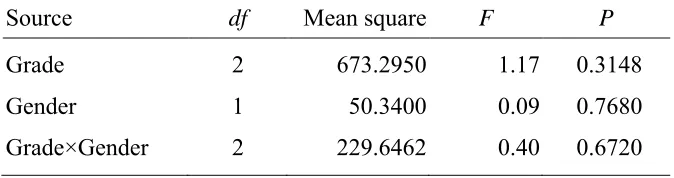
Table 4.1. The results of two-way ANOVA for pre-existing knowledge about basic concepts of neuroscience and the impact of methamphetamine
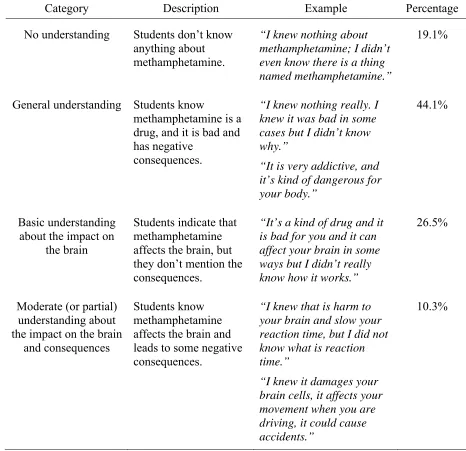
abuse by grade and gender... 67 Table 4.2. Descriptions, examples, and the percentage of students who are
classified into the four categories, generated from interviews regarding students’ pre-existing knowledge of the impact of methamphetamine
abuse on the brain. ... 69 Table 4.3. The results of two-way ANOVA for the correct percentage of total
knowledge gain score about basic concepts of neuroscience and the
impact of methamphetamine abuse by grade and gender. ... 74 Table 4.4. Descriptions, examples, and the percentage of students who are
classified into the four categories generated from students’ answers and explanations regarding students’ descriptions of the impact of
LIST OF FIGURES
Page CHAPTER THREE: Methods
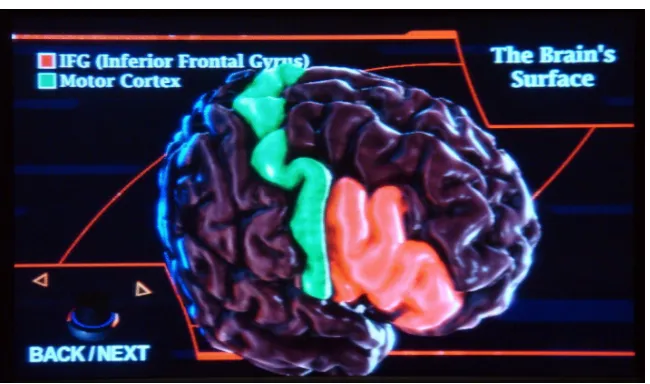
Figure 3.1.A screenshot showing the 3D effects of the brain. ... 48 Figure 3.2.A screenshot presenting the brief descriptions of the brain being
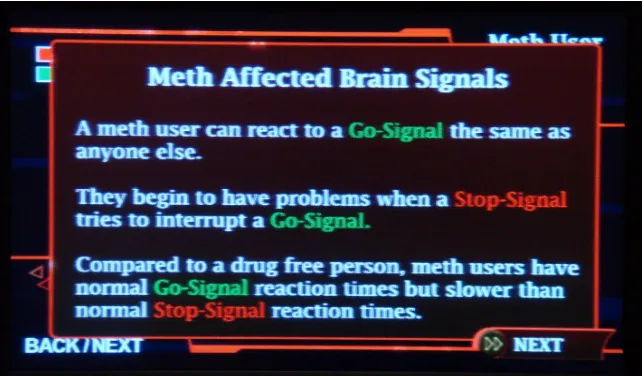
modeled... 49 Figure 3.3.A screenshot showing the mini driving game that simulates
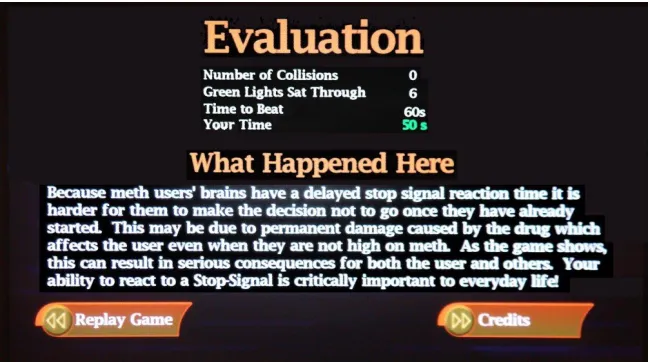
methamphetamine-abused conditions... 50 Figure 3.4.A screenshot of final feedback presenting students’ performance and
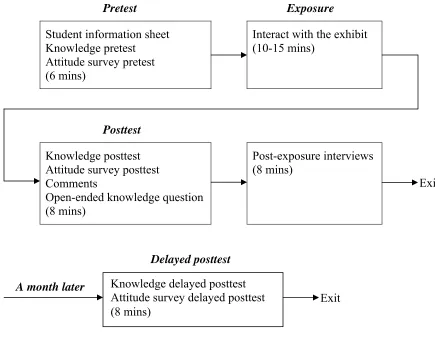
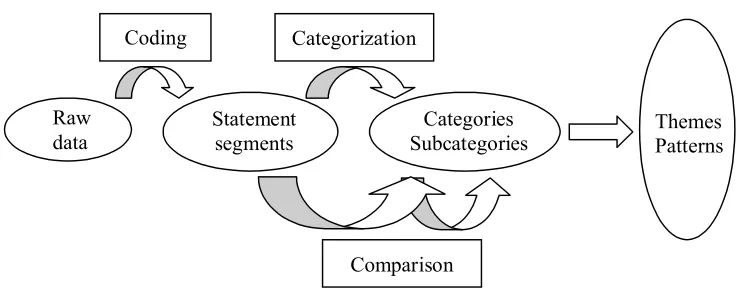
the rationale embodied in the game context. ... 51 Figure 3.5.Overview of research procedural detail for each student... 57 Figure 3.6.Three phases consisting of coding, categorization, and comparison
for analyzing interview transcriptions. ... 61 CHAPTER FOUR: Results
Figure 4.1.Comparison of mean of correct percentage among knowledge pre-test, post-test, and delay post-test for the knowledge of basic brain
structures and their functions... 71 Figure 4.2.Comparison of correct percentage mean among pretest, posttest, and
delayed posttest for knowledge of physical and functional
impairments associated with taking methamphetamines... 73 Figure 4.3.A student’s drawing used by the student to attempt to explain the
difference between the visions in meth users and normal people. ... 78 Figure 4.4.A student’s drawing explaining that meth users have faster reaction
times to go-signals. ... 79 Figure 4.5.A student’s drawing used by the student to explain that meth users
have slower reaction times to stop-signals. ... 80 Figure 4.6.Students’ progression of the understanding of the impact of
methamphetamine abuse on the brain through using the exhibit. ... 81 Figure 4.7.Comparison of students’ general attitude towards methamphetamine
among pre-test, post-test, and delay post-test. Results were presented
by each item... 82 Figure 4.8.Comparison of students’ attitudes toward methamphetamine and
health among pre-test, post-test, and delay post-test. Results were
presented by each item... 84 Figure 4.9.Students’ perceptions of the exhibit in terms of four intrinsic values,
curiosity, fantasy, challenge, and control. ... 87 CHAPTER FIVE: Discussion
Figure 5.1.An input-process output model of instructional games and learning
CHAPTER ONE Introduction
Drug Use Problems in America
Ever since illicit drug use burgeoned its way into the youth population in the mid 1960’s, it has remained a major public health problem in America. Findings from the 2007 National Survey on Drug Use and Health (Substance Abuse and Mental Health Services Administration [SAMHSA], 2008a, 2008b) show that an estimated 19.9 million (8.0%) Americans aged 12 or older were current illicit drug users, which was similar to the rate in 2006 (8.3%) and has been since 2002 (8.3%). Of the 19.9 million current illicit drug users in 2007, 9.5% of them were youths aged 12 to 17. Although the rates of current illicit drug use among youths aged 12 to 17 declined significantly between 2002 (11.6%) and 2007 (9.5%), they have remained relatively stable since 2005 (9.9%). Additionally, the state reports for North Carolina indicated that the rate of current illicit drug use among youths aged 12 to 17 has also remained stable since 2004 (SAMHSA, 2008). The rates of 2004 through 2006 were 11.06%, 10.87%, and 10.38%, respectively.
Reports from Monitoring the Future: National Results on Adolescent Drug Use
graduation. Nevertheless, regardless of these declines, the results point out that the problem of drug use in youths today still exists, and more efforts are needed to improve drug use prevention, ultimately aiming to achieve a drug-free environment where youths could learn about the consequences of drug use and grow up in a healthy manner.
Recently, a series of neuroscience research reports have shown that drug use induces abnormal neurotransmitter releases, as well as severe and persistent brain damage, which subsequently lead to motor and cognition impairments (Bowyer & Ali, 2006; Harper & Kril, 1994; Simon et al., 2000; Thompson et al., 2004; Volkow et al., 2001). Bowyer and Ali (2006) treated mice with a single high dose of methamphetamine (meth), causing rapid and extensive hippocampal and amygdalar damage which should be sufficient in compromising the functions of learning and memory. Humans who have used meth have been evidenced to have structural deficits in dopaminergic and serotonergic systems and cerebral metabolic abnormalities (Thompson et al., 2004), and hence performed significantly worse on several cognitive tasks (Simon et al., 2000). Long-term neural damage caused by methamphetamine-dependence may also lead to difficulties in sustaining attention in humans (Nordahl, Salo, & Leamon, 2003). Moreover, these neurocognitive impairments might be unrecoverable, since research has also indicated that methamphetamine-dependent individuals who were in the initial phases of abstinence (Kalechstein, Newton, & Green, 2003) or were even abstinent for up to one year (Volkow et al., 2001) still had memory deficits and motor slowing, and
Most of the current drug use prevention programs are categorized as social skills or influence programs which have been called ‘the most promising strategies to drug
prevention’ (Brown, 2001; Ellickson, 1995). They focus on life skills training, and these skills could be classified into two categories, resistance skills for rejecting social influence and misconceptions of drug use, and generalized skills for coping with social competency and stressful life situations (Ellickson, 1995; Marsch, Bickel, & Badger, 2007; Western CAPT, 1999). Other programs that teach students the information of drug use are categorized as information programs, generally focusing on introducing the facts about drugs including history, pharmacology, physical and psychological effects, and legal sanctions (Ellickson, 1995). However, programs which teach students the consequences of drug use from a neuroscience perspective are few.
Solicitation of National Institute on Drug Abuse (NIDA)
The Division of Basic Neuroscience and Behavioral Research (DBNBR) of the National Institute on Drug Abuse (NIDA) therefore initiated the solicitation for the
Development of a Virtual Reality Environment for Teaching about the Impact of Drug Abuse on the Brainsince 2006, providing grants to fund projects that aim at teaching the public of the impact of drug abuse on the brain (NIDA, 2006). The solicitation indicates that since virtual reality (VR) is an emerging technology that has been broadly used for medical
‘Virtual Reality’ is defined as an electronic generated environment. This environment is filled with computer generated graphics, enabling users to see in a 2D or 3D visual display apparatus or stereo viewing goggles, and interaction with objects in the environment is achieved with the aid of a variety of input devices such as a mouse, joystick or reality gloves (Steuer, 1992). Using virtual reality to simulate the real-world environment provides users a unique immersive experience, allowing new possibilities for experimentation, operation, manipulation, and exploration that are normally impossible or impractical (Johns Hopkins University Applied Physics Laboratory, n.d.). Virtual reality is an emerging technology that has already been in use effectively for a number of years for various purposes, such as medical and surgical education (Lemole, Banerjee, Luciano, Neckrysh, & Charbel, 2007; Sarker & Patel, 2007; Ward, Charissis, Rowley, Anderson, & Brady, 2008), business and industry training (Sawhney, Mund, & Koczenasz, 2001), and the treatment of phobias and pain control (Hoffman et al., 2008; Reger & Gahm, 2008). Especially since neuroscience includes a number of models of the brain and the skull, virtual reality models that provide an extra dimension from 2D images are more informative for both the quality of visual
information and utility of surface visualization (Kelley et al., 2007). Drugs and the Brain: A Serious Game
present detailed, 3D graphical models of the functioning brain, combining it with a video game as a fun and engaging way to convey knowledge and concepts about neuroscience, as well as the neurotoxic and long-term effects of drug abuse on the brain.
Through this exhibit, people virtually view and manipulate the images between normal and methamphetamine-impaired brains to make a comparison between the two, and play a video game that simulates driving skills under methamphetamine-abused conditions. NIDA's objective is to let all members of society understand the role of science, biology, and
technology, and their relationship to neuroscience, behavioral science, and drug abuse and addiction research. Thus, the exhibit is aimed at improving the neuroscience literacy of the general public, conveying knowledge about the impacts of methamphetamine abuse on the brain to the population, and establishing a stronger concept of drug use prevention among children.
Statement of the Problem
Applying video games and simulations as a teaching and learning tool in fields outside of entertainment was initiated in 2003 by a movement called ‘Serious Games’ (Gudmundsen, 2006). Nowadays, Serious Game has become a general term that refers to any simulation with a game format that is used for instructional and educational purposes. Many researchers have also started to suggest that video games have enormous potential in classroom
are highly interactive, authentic, meaningful, learner-centered, engaging, and fun (Kirkley & Kirkley, 2004). It turns out that the exhibit, Drugs and the Brain: A Serious Game,has the potential to be an enjoyable learning experience for the next generation by combining a virtual reality learning environment with a video game.
After conducting a pilot study that tested and evaluated the prototype of this exhibit in the North Carolina Museum of Life and Science at Durham, NC, many parents expressed highly positive feedback. They in turn suggested that it should be brought into schools to provide students the experience of learning the impact of drug use on the brain, helping them to create negative (anti-drug) attitudes toward drug use. This study was hence proposed. It was hoped that the exhibit could increase the possibility of attracting and holding the attention of middle school students and subsequently improve their understanding of and negative attitudes toward drug use.
Purpose of the study/Research Questions
This study investigated the effectiveness of the interactive exhibit, which included a virtual reality learning environment combined with a video game, on middle school students’ understanding and attitudes toward drug use. As the awareness of the educational uses of video games increases, this is a timely study that provides practical evidence to support the role of video games in education. This study also contributes an idea and useful resources for both pre- and in-service science teachers to think about how to enhance students’
neuroscience literacy. Moreover, this is also a study that provides valuable information for the considerations of policy makers and program designers about reformation and
questions that were addressed:
1. What do students learn about basic concepts of neuroscience and the impact of methamphetamine abuse on the brain via the exhibit?
1.1. What do students know about basic concepts of neuroscience and the impact of methamphetamine abuse before exposure to the exhibit?
After the exhibit:
1.2. Do students identify the basic brain structures and their functions?
1.3. Do students understand the physical and functional impairments associated with taking methamphetamines?
1.4. How do students describe the negative consequences of taking methamphetamines in their daily lives?
2. How are students’ attitudes toward methamphetamine use changed after exposure to the exhibit?
2.1. Have their general attitudes toward methamphetamine use changed?
2.2. Have their attitudes toward the relationship between methamphetamine use and health changed?
3. What are students’ experiences and perceptions of using the exhibit to learn the impact of methamphetamine abuse on the brain?
Hypotheses
It was hypothesized that an effective, virtual reality learning environment with a video game, which provides the latest findings in neuroscience research to teach the impact of drug abuse on the brain, may be of substantial benefit in enhancing the neuroscience literacy of middle school students, thus conveying knowledge about the impact of drug abuse on the brain to them, and improving their negative attitudes toward drug use.
Limitations of the study
Several limitations should be considered in this study. Sampling and generalizability would be the first limitation encountered. This study was conducted at the Friday Institute (FI) using a convenient sample. A total of 98 students from Centennial Campus Middle School (CCMS) volunteered to participate with the research during their health classes. Since it is not a random sample and the population is relatively small compared to the whole nation, interpretations of the study’s results and generalizations to other states or nations should be taken with care to avoid any form of bias.
This exhibit was originally designed as a touring museum exhibit. Thus, in order to convey the most precise and clear information to the public in a relatively short time (about 10-13 minutes that visitors spend on average for an exhibit) (Boisvert & Slez, 1994) in the museum setting, this exhibit features only a single drug, methamphetamine. However, more relative exhibits that feature other drugs might be available in the future. It is hoped that more efforts could be made by educators and neuroscientists.
decrease their drug use. However, it is also known that attitude change does not ensure behavior change. This study did not involve a longitudinal research design tracking students’ attitudes and monitoring their behaviors of drug use. Hence, a long-term effect might not be inferred from the findings of this study.
All interview and observation data were collected and analyzed by the researcher personally. Even though the researcher has already done as much as possible to deal with the data as objectively as possible, the subjective biases are still unavoidable. This also cannot be ignored.
Definition of Terms
Illicit drugs:Illicit drugs include marijuana or hashish, cocaine (including crack), inhalants, hallucinogens (including phencyclidine [PCP], or prescription-type psychotherapeutics used nonmedically, which include stimulants, sedatives, tranquilizers, and pain relievers.
Neuroscience Literacy:The knowledge and understanding of concepts and processes in neuroscience required to understanding issues related to diseases and disorders of the brain, as well as how humans interact with their environment and each other because of their unique nervous system characteristics.
Games:Deliberately simplified representations of phenomenon based on goal-directed and competitive activities conducted within a framework of established rules.
Video Games:An electronic or computerized game played by manipulating images on a video display or television screen.
CHAPTER TWO Literature Review
Overview
To elaborate and support the important role of video games in education, the literature is discussed in four key sections. The first section generally discusses why play is a serious matter. It starts by clarifying misconceptions about play that people usually have and then tries to give play a general definition. After that, both classical and modern theories of play are drawn out to inquire into the origin and fundamental nature of play. Those theories give rationale for answering the question about why play has influenced education for quite a long time and has provided justifications for content in many educational programs.
Since play includes many varieties and settings, video game play that has burgeoned over the past two decades is discussed in the second section. This section provides evidence from previous research to support that video games actually have enormous potential to facilitate learning. First, it discusses the relation between video game play and flow
The third section mainly discusses Serious Games. The always blurred and confusing relationship between simulations and video games is discussed at first. It is followed by investigating constructivist theory and microworld that give rationale and underpinning to the concept of Serious Games. This is followed by some practical applications of using Serious Games for multiple purposes, especially for drug use education.
The last section of the literature review discusses the approaches employed for drug use education. Although the programs that focus on teaching and training children the skills to deal with life pressures and to resist drug use have been considered as the most promising approaches, information dissemination still can not be ignored because it gives children a rationale to say no to drug use. Moreover, disseminating information about the negative consequences of drug abuse from a neuroscience perspective could be helpful for improving neuroscience literacy of students, and thus affecting their attitudes toward drug use. Unlike the traditional approaches of information dissemination that are always delivered by a one-way communication from the source to the audience directly, Serious Games that provide interactive, engaging learning environment to children would give a new process and opportunity to information dissemination.
Through these four sections of literature review, a clear idea that supports the use of Serious Games to convey knowledge about the impact of drug abuse on the brain to students emerges.
Serious Play
as education and no increase of ability or intelligence, either in the individual or the species. -- Mitchell & Mason,1935, pp. 56-57 Misconceptions about Play
Play is serious. The importance of play has been studied by extensive research in a variety of disciplines; however, some misconceptions still exist in thinking about play (Mann, 1996; Rieber, 1996). The first one is that play and entertainment are traditionally considered as synonymous. Mann (1996) argues that the only similarity between play and entertainment is that both of them are fun and enjoyable. However, play is active, making it very different from the passive entertainment mode. Play is something that requires and even compels children to actively participate, and the active participation serves as an engine for learning. In other words, the more active the children are and the more they participate and the more they learn. On the contrary, children actually learn very little from entertainment such as watching TV, because they are entertained and passively consuming something presented only for their enjoyment (Mann, 1996).
Another misconception is that play applies only to children, but not to adults (Rieber, 1996). Play is generally considered as something to be given up when growing up (Provost, 2001, as cited in Rieber, 1996). Unlike work, play is not respectable in adults. Some feel there should not be play in adult world, moreover, adults tend to refuse to use the word ‘play’ to describe their activities. However, the truth is that adults might impose additional
undertake for its own sake (J. Lee, 1915).
The last but the most important misconception is that play has little to do with learning. In fact, play facilitates cognitive growth by providing children with experiences and
opportunities to interact with the world. As Rogers and Sharapan contend, “Play is a very serious matter, indeed. It is an expression of our creativity; and creativity is at the very root of our ability to learn, to cope, and to become whatever we may be.” (Rogers & Sharapan, 1994, p. 1). The value of play in education is important and should not be underrated (Weininger, 1929).
Defining Play
Play is a natural part of life. It is so broad a phenomenon, so universal that it cannot be easily defined (Mitchell & Mason, 1935). Play includes a variety of forms, and consists of many factors, even though there might be some general attributes that are considered as being involved in play. For example, play is a self-initiated and self-regulated activity, which is also relatively risk free and not necessarily goal-oriented (Verenikina, Harris, & Lysaght, 2003). Fromberg proposes a definition of play, clearly indicating that young children's play is (Fromberg, 1999, p. 28):
Symbolic, in that it represents reality with an “as if” or “what if” attitude; Meaningful, because it connects and/or relates experiences;
Active, in that children are doing things;
Pleasurable, even while children are engaged in a serious activity;
Voluntary and intrinsically motivated, whether the motive is curiosity, mastery, affiliation, or something else;
Rule-governed, whether implicitly or explicitly expressed; and
spontaneously and flexibly.
These characteristics may provide an overall idea about what play looks like, but why do children play? And why do all children like to play? Many theories have been reported by scholars and researchers since the beginning of 1870's, attempting to inquire into the origin and fundamental nature of play (Mitchell & Mason, 1935). Reviewing those theories gives opportunities to understand how play impacts children's development and how children develop meaning through play (Verenikina et al., 2003).
Play theories could be classified into two clusters: classical theories and modern theories. Classical theories of play were generated in the nineteenth and early twentieth centuries. They mainly focus on the driving forces and physical and instinctive aspects, striving to provide a reason or purpose for play and its functions. On the other hand, modern theories of play were generated after 1920. They are more concerned with the ways that play benefits psychological and cognitive development. Research stimulated by these modern theories provides an understanding of play as either a form of cognition or a form of
symbolization, which has the most influence on education (Mellou, 1994; Mitchell & Mason, 1935; Sapora & Mitchell, 1961; Saracho & Spodek, 1995; Verenikina et al., 2003).
Classical theories of Play
Another theory is the recreation theory. Different from surplus energy theory, recreation theory posits that play is used to recuperate and restore energy (Lazarus, 1883, as cited in Mitchell & Mason, 1935). People who have exhausted energy can recuperate from an active and interesting occupation through play.
After these two energy-driven theories, Groos (1898; 1901) argues that play gives practice and training to human and higher thinking animals for developing important instincts before reaching maturity. In other words, play develops physical and mental capacities in children, serving as a preparation for adult activities (Verenikina et al., 2003). Groos' idea of play is named as the instinct-practice theory, which is the first theory that considers the benefits of play from an intellectual and cognitive perspective. Later, the recapitulation theory is given by Hall (1906) to explain play as a result of biological inheritance (Mitchell & Mason, 1935). Hall asserts that play per se is a recapitulation of the evolutionary history, in which we rehearse the activities of our ancestors as if we relive the past of our race. Different from Groo's theory that play is for practicing and strengthening instincts, Hall argues that the rehearsal of the culture of the race provides children opportunities to express their instincts, and thereby weaken them. For example, if children can exercise their fighting instinct freely in play, then the fighting instinct becomes weakened and will not function so strongly in their later lives.
Modern Theories of Play
Mitchell, 1961). The key point of this theory contends that because man is an active, dynamic creature, activities are the primary need of life. Both the physical and anatomical structure and the psychological inclinations of the individual all predispose him to certain types of activity. Hence, play provides man the feeling of accomplishment, as Mitchell and Mason argue, “Man plays to achieve, to create, to conquer, to acquire, to impress, and to win approval” (Sapora & Mitchell, 1961, p. 91).
Focusing on the emotional domain, psychoanalytic theory was developed by Freud and his followers (A. Freud, 1968; S. Freud, 1959), speculating that play is a catharsis, providing a safety valve for releasing emotions. Children incorporate stressful situations into their play, and play serves as a coping mechanism that helps children understand or deal with stressful situations; eventually helping them master the world.
Arousal modulation theory is stimulation-related theory (Berlyne, 1960; Ellis, 1973). What it argues is that play is a means used to maintain and keep an optimal level of arousal by either raising or decreasing arousal level. Excess stimulation that raises arousal to disturbingly high levels could be decreased in play activities. On the other hand, play also serves as an additional source of arousal-seeking activity that helps raise arousal levels in children when the stimulation is insufficient.
The theory by Bateson (1955; 1976) focuses on the development of communication and metacommunication in children as they play together. Play communication refers to
play and the strategies to communicate their understanding. Play provides the
metacommunicative context for the development of children’s understanding and awareness of the rules and strategies to talk about their understanding. Hence, it serves an important role in a child’s cognitive development.
Cognitive theories impact education the most, because they try to explain the relationship between play and cognitive development. In other words, cognitive theorists endeavor to understand play and its role in the cognitive development of children. Two major theories, Piagetian learning theory and Vygotskian sociocultural theory, give the most
profound influence.
Piagetian learning theory. Piaget (1951) supports two concepts that account for cognitive development in children: assimilation and accommodation. According to Piaget, assimilation takes place when individuals attempt to integrate new information from the external world connecting reality into existing mental structures directly; Piaget refers to existing metal structures as ‘schemata.’ On the other hand, when individuals modify or change the existing schemata to fit new information, accommodation occurs. The dual processes of assimilation and accommodation allow new schemata to be formed. Essentially, cognitive disequilibrium sets in while a person encounters a new event, and a state of balance or equilibrium is attained again as he is able to assimilate or accommodate the new
information (Ginn, 1995; Howard, 1998; Tamburrini, 1974).
ever-changing environment. This epistemic conflict easily evokes our cognitive
disequilibrium. In the meantime, self-reflection makes us assess and understand a given situation, and finally, a resolution through either assimilating or accommodating new
information will be achieved through self-regulation. According to this theory, Rieber claims that “learning cannot occur unless an individual is in a state of disequilibrium.” (Rieber, 1996, p. 47). Learning thereby is defined as the construction of new knowledge through the dual processes of assimilation and accommodation. In other words, when new knowledge is constructed from a resolution to conflict, learning occurs.
Tamburrini (1974) thereby asserts three important interrelationships between play and Piaget’s theory of cognitive development in play. First, play reflects children’s schemata. Piaget proposes three stages of play in accordance with the stages of cognitive development, functional or practice play, make-believe or symbolic play,and games with rules,
respectively. Each particular type of play requires a particular level of cognitive
sophistication in children, and play simply reflects the level of cognitive development that has been attained (Saracho & Spodek, 1995). Secondly, Play consolidates the skills, actions, and meanings children have acquired by maintenance or exercise of activities to prevent the atrophy of schemata for lack of use, which is close to Groo’s instinct-practice theory (Groos, 1898, 1901). And finally, play is an incidental learning.
Vygotskian sociocultural theory. Vygotsky (1967; 1978) sees play as the leading source of cognitive development, which means that play is an activity that directly supports
cognitive development in children. According to Vygotsky, play gives children an imaginary, illusory world, in which unrealizable desires can be realized. That is, children create and engage in an imaginary situation in play where they use objects in place of other things, and the meaning of the objects begins to become separated. This imaginary situation in play (symbolic play) helps children to be able to think about meanings independently of the objects they represent, which in turn promotes the development of abstract thinking.
these two levels of performance. He argues that play is a kind of magnifying glass that creates a broad ZPD both for the social and emotional development in children, as well as for their cognitive development. Vygotsky states, “Play creates the ZPD of the child. In play a child always behaves beyond his average age, above his daily behavior; in play it is as though he were a head taller than himself” (Vygotsky, 1978, p. 102).
For Vygotsky, the imaginary situation in play always contains social and cultural rules. He asserts that, “all games with imaginary situations are simultaneously games with rules, and vice versa” (Vygotsky, 1967). For children pretending to be real life characters, they must present the social images of the roles and obey the rules of society. Hence, children always acquire the tools and meanings of their culture and society when they play (Verenikina et al., 2003).
Each of the aforementioned theories gives explanations for play and its role in a wide range of development areas in children, which have influenced education for a long time and provided justifications for content in many educational programs (Saracho & Spodek, 1995). Play includes many varieties and settings and video game play is one that has grown at an astronomical pace over the past two decades. Since video games have successfully invaded our daily lives with an incredible fan-base, the potential consequences of video game play have unavoidably evoked much attention.
Video Game Play
When kids play video games they experience a much more powerful form of learning than when they are in the classroom.
A national survey indicates that 97% of young people aged 12-17 play video games (Lenhart, Kahne, Macgill, Evans, & Vitak, 2008). In other words, almost all teens today play video games. With such a high percentage of teens playing video games, today’s learning generation is extremely video game literate. Play serves an important role in children’s development. Video games in particular might carry enormous potential to be valuable learning tools (Oblinger, 2006).
Video Game Play and Flow
Video game play provides people a so-called flowexperience in which individuals enjoy and engage themselves. Csikszentmihalyi (1990) describes flowas an optimal
experience, a state that people attain when they are intensely involved in an activity with a high level of enjoyment and fulfillment. Because this gratifying state is so enjoyable, people are willing to put forth effort to reach and maintain that state, with little concern for their surroundings or what they will be getting out of it, even when it is difficult or becomes dangerous.
thus allows people to experience the flowstate with a much enjoyment, engagement and fulfillment.
Flow theory and learning.The experience of flowis a major incentive of intrinsically motivated behavior (Schiefele, 2001), which is fundamental to all learning. Jones (1998) argues that in order to reach flowexperience, people must use two kinds of cognition: experiential and reflective cognition (Norman, 1993, as cited in Jones, 1998). According to Norman (1993), experiential cognition refers to a combination of skills, reflexes, and knowledge gained after practice that helps one react to events efficiently and effortlessly, whereas reflective cognition is one of comparison of thought and of decision making that usually results in new ideas. Problem solving generally results from the combination of both experiential and reflective cognition. While playing video games, people reach flowby using both experiential and reflective cognition. As people continue to engage in video games and gradually master them, learning is spontaneously furthered and knowledge and skill are increased.
induces the release of mesocorticolimbic dopamine (Hoeft, Watson, Kesler, Bettinger, & Reiss, 2008; Koepp et al., 1998). In other words, this mesocorticolimbic dopamine release through video game play might be the neurochemical process that gives people flow experiences. Moreover, the involvement of dopamine release is far more than a hedonic reward. It is generally thought that dopamine is also involved in a wide range of human behaviors including learning, attention, sensorimotor coordination, and so forth (Koepp et al., 1998; Robbins & Everitt, 1992).
Video Game Play and Learning
to share information, and to interact with each other (Barab, Thomas, Dodge, Carteaux, & Tuzun, 2005; Lehtinen, Hakkarainen, Lipponen, Rahikainen, & Muukkonen, n.d.)
Piagetian theory.Van Eck (2006) argues that video games that promote curiosity and challenge student’s abilities facilitate the processes of what Piaget calls cognitive
disequilibrium and resolution. The extent to which games foil expectations, thus creating cognitive disequilibrium, without exceeding the capacity of the player to succeed largely determines whether games are engaging. Interacting with a game therefore requires a constant cycle of hypothesis formulation, testing, and revision, and this process happens rapidly and often while the game is played, with immediate feedback. In other words, curiosity and challenge increase the intrinsic motivation of games and thus encourages players to resolve conflict if a goal seems attainable. This implies that games that are either too easy or difficult to solve will not be engaging. Thus video games with appropriate curiosity and challenge constantly require input from and provide feedback to the players. Hence, according to Van Eck (2006), games could be potential teaching and learning tools as long as they create a continuous cycle of cognitive disequilibrium and resolution that engages players while also allowing players to be successful.
influential input for children. In other words, video game play that reaches ZPD has enormous upside as it pertains to learning.
Ritterfeld & Weber continue arguing that this contention is also supported by the notion of developmental tasks (Havighurst, 1971, as cited by Ritterfeld & Weber, 2006). Havighurst defines a developmental task as “a task which arises at or about a certain period in the life of the individual, successful achievement of which leads to his happiness and success with later tasks, while failure leads to unhappiness in the individual, disapproval by society, and difficulty with later tasks” (Havighurst, 1956, p. 215). From this point of view, video games are similar to developmental tasks. Playing with video games that are collaborative, curious and challenging while allowing the players to be successful by letting children reach
achievement gradually, continually engaging them in later tasks, and mastering those tasks, will subsequently lead to cognitive, emotional and social improvement.
Video Game Play and Brain Activity
Brain imaging research directly reflects responses of the brain during video game play. In considering the findings from brain research, however, the impact of video game play on brain activity, especially the prefrontal cortex which is generally considered as brain areas associated with learning, memory, thinking, emotion, and impulse control, still remains controversial.
board game, which requires logical thinking, activated broader areas of the prefrontal cortex. The shooting game, which requires real-time reaction, activated broader areas of the
premotor and parietal cortex, and the puzzle game, which requires both logical thinking and real-time reaction, activated broader areas of the prefrontal, premotor, and parietal cortex. All three types of games also showed activation in the visual association cortex and cerebellum that are responsible for vision and movement coordination respectively (Kandel, Schwartz, & Jessell, 2000).
The study by Nagamitsu, Nagano, Yamashita, Takashima, and Matsuishi (2006) measured cerebral hemoglobin concentrations using near infrared spectroscopy (NIRS) to investigate the effect that action video games have on regional cerebral blood volume in 12 normal volunteers, including six adults and six children. The results indicate that during video game play, five adults and two children showed significant increases of total-hemoglobin concentrations in either the unilateral or bilateral prefrontal region, while significant decrease in prefrontal total-hemoglobin concentration were observed in three children and one adult. They then conjecture an individual game performance, such as different interests and attention devotion, or an age-dependent utilization of different neural circuits during video game tasks, which might contribute to the various changes.
Deactivation of prefrontal cortex. On the other hand, the opposite findings that video game play deactivates prefrontal cortex are also evidenced in other studies. Ryuta
show the game group only had brain activity in the parts of the brain associated with vision and movement, while arithmetic exercise stimulated brain activity in both the left and right hemispheres of the frontal lobe. Hence, Kawashima infers that video game play excessively would halt the process of brain development, especially the frontal lobe, leading to
impairments of one’s ability to control behaviors (McVeigh, 2001). Another study,
conducted by Mori, recorded and analyzed electroencephalogram (EEG) patterns from 240 participants, comparing the amount of alpha and beta brainwave activity in people who rarely play video games with people who are regular and excessive players. Mori found that beta waves that are thought to represent “online” neural activity were chronically reduced in those who play video games frequently and excessively, and he in turn conjectures that video games lead to brain damage (Jarrett, 2002; Kobayashi, 2002). However, the brain damage claim by Kawashima and Mori is criticized by other researchers. Some neuroscientists and psychologists suggest that since there is no direct evidence for lasting damage, this is really a premature conclusion. Moreover even assuming the findings are correct, it is by no means a certain sign of damage that is caused by gaming per se (Phillips, 2002).
Video Game Play and Cognitive Skills
many studies have shown that instead of causing cognitive impairments, video game play can actually improve or modify many perceptual and cognitive abilities (Green & Bavelier, 2006a).
Visual processing. The research conducted by Greenfield, DeWinstanley, Kilpatrick, and Kaye (1994) indicates that video game players (VGPs) performed significantly better on tasks requiring divided visual attention, demonstrating that video game play may causally result in improving strategies of divided attention. In another study, a series of experiments were conducted by Green and Bavelier (2003) showing that video games might be capable of modifying visual selective attention. Compared to non- video game players (NVGPs), VGPs had an overall greater attentional capacity, an enhanced spatial distribution of attentional processing over the visual field up to 30°, and better temporal processing of visual
information. Both studies also demonstrate that after a period of practice on video games, the performance of NVGPs on those tasks requiring divided and selective visual attention was significantly improved.
Trick, Jaspers-Fayer, & Sethi (2005) investigated the development of multiple object tracking ability in children, showing that after statistically controlling the effects of age, tracking performance of players with action video game experiences was significantly better than NVGPs, especially with large numbers of targets. The same results are further
therefore suggest that this enhancement is mediated by changes in visual short-term memory skills. Moreover, the experiments by Castel, Pratt, and Drummond (2005) also evidence that VGPs performed better on visual search tasks than NVGPs.
Green and Bavelier (2007) conducted research to investigate the mechanisms
underlying the improvement of visual processing resulting from playing action video games, indicating that playing video games augmented spatial resolution of visual system. Although the mechanism is still not clear enough, so far we can be sure that playing video games does indeed enhance the performance of complex visual tasks, demonstrating improvement of several different aspects of visual processing such as visual attention, object tracking abilities, item detection, and spatial resolution.
Spatial representational skills. Research has suggested that video game play improves spatial representational skills. Greenfield, Brannon, and Lohr (1994) found a close
relationship between scores on mental paper folding and video game scores, and spatial presentational skills might be developed and improved over long-term video game play. On the other hand, a study by Subrahmanyam and Greenfield (1994) shows that about a 2-hour video game practice was enough to lead to an overall improvement in dynamic spatial performance, and the improvement in spatial skills caused by video game training was maintained and still evident even after several months (Terlecki, Newcombe, & Little, 2008).
More than improving spatial ability in both males and females, video game play has also been demonstrated to particularly benefit females, reducing gender differences in spatial cognition (De Lisi & Wolford, 2002; Feng, Spence, & Pratt, 2007, experiment 2).
enhance children’s spatial abilities and equalize individual differences in spatial performance, including those associated with gender (De Lisi & Wolford, 2002; Subrahmanyam & Greenfield, 1994).
Reaction time and visual-motor coordination. Since playing video games is an activity that requires coordination and quick reactions, many studies have indicated that video game play can improve reaction time, especially for the elderly (Goldstein et al., 1997; Clark, Lanphear, & Riddick, 1987, as cited in Whitcomb, 1990). Orosy-Fildes and Allan (1989, as cited in Green & Bavelier, 2006a) found that only 15 minutes of a video game experience might be enough to improve reaction task performance. Even in children, reaction time was also decreased after video game practice (Yuji, 1996, as cited in Green & Bavelier, 2006a).
For video games, visual-motor coordination is mainly related to hands and eyes, so hand-eye coordination is a popular skill that has been thought to associate with video games. An experiment by Griffith, Voloschin, Gibb and Bailey (1983) conclude that video game players had better performance on visual and motor coordination than non-players in the same peer group.
Logical reasoning skills.Ko (2002) investigated whether video games improve children’s abilities in using a particular form of logical reasoning. The findings show that children’s performances were significantly improved by practicing games. Hence, they conclude that children could learn through performing tasks that elaborate their logical reasoning skills and problem-solving abilities by playing video games. In other words, children’s understanding of game clues and skills of logical reasoning gradually improve during the video game practice.
All behavior is a function of the brain (Kandel et al., 2000). Even higher cognitive functions are also built upon more basic underlying neurobiological processes (Tallal, Miller, Jenkins, & Merzenich, 1997). The brain cortices in animals are not fixed entities. On the contrary, they are dynamic and are continuously modified by experience, the so-called cortical plasticity (Buonomano & Merzenich, 1998). Hence, the performance of a given task can be dramatically improved with practice and training. It is then reasonable to assume that such improvement in performance would reflect changes in the brain. Learning thereby refers to a robust improvement in performance induced by experience and dependent on practice (Karni & Bertini, 1997). From this perspective, video game experiences could improve perceptual skills and cognitive abilities by playing the role of a facilitator that assists with learning, and ultimately causes changes in neural processing in the brain.
Good Video Games
principles for examining good video games for learning.
Gee argues that the human mind works just like a simulator; good video games are a perfect metaphor for the human mind and are a good place to study and produce human thinking and learning:
Human understanding is not primarily a matter of storing general concepts in the head or applying abstract rules to experience. Rather, humans think and
understand best when they can imagine (simulate) an experience in such a way that the simulation prepares them for actions they need and want to take in order to accomplish their goal (Gee, 2008, p. 41).
Gee continues by using weddings as an example, arguing that on the basis of previous experiences related to weddings, people can simulate different wedding scenarios and role-playing of other people in their mind before acting and responding in the real world. It is thereby concluded that “videogames turn out to be the perfect metaphor for what this view of the mind amounts to, just as slates and computers were good metaphors for earlier views of the mind” (p. 42). He also provides a list that points out a baker’s dozen of features
describing what constitutes a good video game and argues that the more features a game contains from the list, the better it would be for thinking and learning. Those features are presented as follows:
Co-design. Good video games are interactive and give immediate feedback.
Customize. Good video games are designed either to let players to customize the game play to fit their learning styles or to allow different learning styles and playing to work.
Manipulation and distributed knowledge.Players can manipulate characters and objects intricately, effectively, and easily through the world, which becomes tools for carrying out the player’s goal.
Well-order problems.Problems are well ordered, implying that early problems provide enough clues for players to form good guesses for later and difficult problems.
Pleasantly frustrating.Games adjust challenges and provide feedback, which makes players feel challenged while success is also attainable.
Cycles of expertise.Good games support the cycle of expertise, in which players master the challenges after practice, and as new challenges come, new extended practice forms.
Information “on demand” and “just in time”.Verbal information is provided “just in time” and “on demand” in the game. Players can get the information in the game whenever they need.
Fish tanks.Good games offer players fish tanks, stripped-down versions of the game, either as tutorial or the first few levels, so that newcomers could easily understand the game as a whole system.
Sandboxes.Good games offer players sandboxes either as tutorial or the first few levels, in where game play much like the real game but much easier and things can not go too wrong or too fast.
Skill as strategies.Players learn and practice skills as the strategies that help them accomplish things in the game.
playing the game.
Meanings as actions and images.Good games have to make the meanings of words and concepts clear, and to make the philosophical points be realized and understandable in terms of images and actions.
Serious Games
Video games, once confiscated in class, are now a key teaching tool. If they’re done right. -- Shreve, 2005, p. 29 Play and good video games perform an important role in learning and cognitive
development and researchers subsequently are studying games as teaching and learning tools as a practical way to assist students in gaining knowledge. The Serious Games movement that aims at using video games and simulations for educational purpose was therefore initiated in 2003. The idea of Serious Games had already been practiced since the 1600s, with war games being used for improving the strategic planning of armies.
Relationship between Simulations and Video Games
The relationship between simulations and video games is very close, thus causing some confusion between the two (Leemkuil, 2006). When it comes to making a distinction
between simulation and games, Jacobs & Dempsey (1993) contend:
The distinction between simulation and the concept of games or gaming is often blurred, and many recent articles in this area refer to a single “simulation game” entity. After all, a game, like a simulation, generally may be assumed to have goals, activities, constraints, and consequences. A distinction could be made between simulations and games in the following way. Where the task-irrelevant elements of a task are removed from reality to create a simulation, other elements are emphasized to create a game. These elements include competition and
Jacobs and Dempsey view games as being separated from simulations and being defined as any training format that involves competition and is rule-guided. However, Leemkuil (2006) places games into six genres: action games, adventure games, fighting games, puzzle games, role playing games, and simulation games. According to his definition, some games like role-playing or simulation games, actually do not involve competition (Leemkuil, 2006). Therefore, the distinction between simulations and video games remains blurred. As Maier and Größler (2000) describe, some researchers just combine both as ‘simulation games,’ some do not distinguish them, and others just separate games from simulations. In terms of computer-based instructional tools, Rieber (1996) argues that both games and simulations offer practical means to reach the constructivist idea of a microworld. Constructivist Theory and Microworlds
The rationale underpinning the concept of Serious Games fits broadly under constructivist theory. Contrary to the traditional view that there is a single correct mental model of knowledge, constructivist theory asserts that various knowledge representations might be constructed individually. In terms of teaching, constructivist theory focuses on knowledge construction rather than knowledge transmission, which constructivists distinguish as objectivism (Dalgarno, 1996). According to Dalgarno, there are three
learning is situated in a context. Hence, social interactions are a necessary part of the learning process. Obviously, the works of both Piaget and Vygotsky are broadly implicit within constructivist theory.
Inspired by constructivist views of learning, the microworld is a constructivist
invention that was first coined by Papert (1980). It can be defined as “a small but complete subset of reality into which one can go to learn a specific domain through personal discovery and exploration” (Rieber, 1992, p. 94; Scherly, Roux, & Dillenbourg, 2000, p. 127). Rieber (1996) argues that microworlds have two important characteristics. They present the learner with the ‘simplest case’ of the domain and this must match the learner’s cognitive and affective states. Besides, the most important assumption of a microworld is that individuals in a microworld are expected to be self-regulated learners (Rieber, 1992, 1996). Zimmerman (1989) describes self-regulated learners as being active in participating in their own learning process motivationally, metacognitively, and behaviorally. In other words, learners
participate in a learning activity not for any reward but intrinsically, where they are able to monitor and evaluate their own learning and take the necessary steps to meet their learning styles.
Serious Games and microworlds.Simulations and video games are two common types of computer-based microworlds. According to Rieber (1992; 1996), the design of
simulations-as-microworld is similar to the idea of conceptual models, which are artifacts invented by teachers, scientists, or instructional designers to provide appropriate
Virtual reality provides “a high fidelity simulation of the real world that allows users to interact with the virtual environment in a manner similar to how users do it in the real world” (Hernandez-Serrano, Choi, & Jonassen, 2000, p. 117). Hence, the simplified but immersive virtual reality environments could be considered as functioning like
simulations-as-microworlds in which people explore and experience almost the same things as they do in the real world.
Although simulations-as-microworlds could be considered as an interactive conceptual model, they can not ensure the active participation of learners (Rieber, 1996). In other words, they are as not intrinsically motivating as video games. Video games with features such as challenge, curiosity, fantasy, and control might be intrinsically motivating and have much potential for learniers to engage and persist in the learning activities embodied. Rieber (1996) therefore argues that, “Simulations offer a direct link to the subject matter or content; and games offer a practical means for meeting the microworld assumption of self-regulation” (p. 49).
Practical Applications
physical disabilities (McComas, Pivik, & Laflamme, 1998; Stanton, Wilson, Foreman, & Duffy, 2000; Wilson, Foreman, & Stanton, 1998). Furthermore, they have been used for assisting the elderly to increase their knowledge, to improve their skill performance, and to enhance their cognitive functioning (Ryan, 1986, as cited in Drew & Waters, 1985; Farris, Bates, Resnick, & Stabler, 1994; G. Miller, 2005).
Because Serious Games are used within a professional learning environment, offering a safe, learner-center way to master delicate technical skills through repeated practice, Serious Games are extensively used for medical and surgical training (Ali, Mowery, Kaplan, & DeMaria, 2002; T. P. Grantcharov et al., 2003; T. P. Grantcharov, Rosenberg, Pahle, & Funch-Jensen, 2001; Issenberg et al., 1999; Kneebone, 2003; Lemole et al., 2007; Mooney & Bligh, 1998; Sarker & Patel, 2007; Ward et al., 2008), firefighter training (Backlund,
Engstrom, Hammar, Johannesson, & Lebram, 2007; Romano & Brna, 2001), military training (D. C. Miller & Thorpe, 1995; Prensky, 2001b; Weil, Hussain, Brunye, Sidman, & Spahr, 2005), and driving and flight practice (Backlund, Engström, & Johannesson, 2006; Backlund, Engström, Johannesson, & Lebram, 2008, in press; Baker, Prince, Shrestha, Oser, & Salas, 1993; Jentsch & Bowers, 1998).
Serious Games have also been used by many primary and secondary school children for language learning (Palmberg, 1988) and science and mathematics education (Annetta,
(Thomas, Cahill, & santilli, 1997) and pregnancy prevention (Paperny & Starn, 1989) in both children and adolescents.
In order to convey the concepts of the neurobiology underlying substance abuse and the latest findings of various drugs, Miller et al. (L. Miller, Moreno, Willcockson, Smith, & Mayes, 2006; L. Miller, Schweingruber, Oliver, Mayes, & Smith, 2002) integrated problem-based learning, multimedia pedagogy, and the National Science Education Standards (1996) to develop an episodic series of interactive online games, called The ReconstructorsTM (http://reconstructors.rice.edu). This uses a 2D web-based format to construct a series of adventure games and, from my understanding, it is the only Serious Game so far that aims at introducing substance abuse from a neuroscience perspective. Their findings indicate that middle school students’ knowledge about drugs and the basic neuroscience concepts underpinning the impact of drug abuse significantly improved after playing the game. However, they did not examine whether the use of Serious Games presents the potential to influence students’ attitudes towards drug use.
Drug Education
Drug prevention education is more than teaching the facts about drugs, it is teaching children and youth about themselves—what is possible in their life now, and what is possible
for the future.
with the facts about drugs including history, pharmacology, physical and psychological effects, and legal sanctions. Overall, this model posits a causal sequence that gaining knowledge about drugs leads to attitude change, which subsequently results in behavior change. The affective model assumes that some personality problems involving low self-esteem, inadequate communication skills, or inappropriate decision-making skills lead children to use drugs. Hence, this model focuses on improving their self-images,
communication and decision-making skills, and problem-solving abilities without providing information on drugs. Finally, the social influence model stresses both external and internal influences that push children to use drugs. External influences include pressures and
misconceptions from family, friends, or media, while internal influences involve children’s desires to be accepted by their peers or to look cool. This model focuses on teaching children how to deal with these pressures and how to resist drug use. Moreover, it also seeks to motivate children’s resistance against drug use (Ellickson & Robyn, 1987). Programs based on the social influences model are the most used and have been considered as the most promising approaches.
education, because children still need to be provided with basic information so that they could be aware of negative consequences. In other words, children need to understand why they have to say no to drug use and information gives them the rationale.
These traditional information programs are always delivered by lectures without much classroom discussion (Ellickson, 1995), which is characterized as a one-way communication from the source to the audience directly (Western CAPT, 1999). Serious Games provide an interactive environment that engages children in the learning activities which might give the traditional information model a new opportunity, whereby children learn about the negative consequences of drug use in a more interesting way, which may in turn provide much more potential to influence their attitudes toward drug use.
Neuroscience Literacy
On the other hand, although traditional information programs generally focus on introducing the facts and knowledge about drugs, those programs that teach students the consequences of drug use from a neuroscience perspective are few. Moreover, neuroscience topics are usually not in school science curricula.