ABSTRACT
KWAG, SHINYOUNG. Probabilistic Approaches for Multi-Hazard Risk Assessment of Structures and Systems. (Under the direction of Dr. Abhinav Gupta.)
© Copyright 2016 by Shinyoung Kwag
Probabilistic Approaches for Multi-Hazard Risk Assessment of Structures and Systems
by
Shinyoung Kwag
A dissertation submitted to the Graduate Faculty of North Carolina State University
in partial fulfillment of the requirements for the Degree of
Doctor of Philosophy
Civil Engineering
Raleigh, North Carolina
2016
APPROVED BY:
Dr. Nam Dinh Dr. Mervyn Kowalsky
Dr. Kumar Mahinthakumar Dr. Shamim Rahman
Dr. Abhinav Gupta
ii
DEDICATION
Firstly, to My LORD GOD
iii
BIOGRAPHY
Shinyoung was born on October 28th, 1981 in Gwangju, South Korea. He received a
Bachelor’s of Civil Engineering from Sungkyunkwan University, South Korea in 2005 and a
Master of Science degree from the Department of Civil Engineering at Seoul National
University in 2010. During the Master’s program, he also worked as an instructor at Awassa
TVET College in Ethiopia for three years as part of KOICA (Korea International
Cooperation Agency) volunteer program. Following the graduation from Master’s program,
he worked for four years at the research reactor division of KAERI (Korea Atomic Energy
Research Institute) as a senior researcher. In August 2013, he joined the graduate school at
NC State University to pursue a doctoral degree. During his time at NC State University, he
worked as a research assistant in the CNEFS (Center for Nuclear Energy Facilities and
Structures), a teaching assistant for “CE527: Structural Dynamics”, and an instructor for
“CE324: Structural Behavior and Measurements Laboratory”. Upon graduation, he plans to
continue working for KAERI. Shinyoung’s research interests include structural dynamics,
probabilistic risk assessment, engineering optimization, earthquake engineering, Bayesian
iv
ACKNOWLEDGEMENTS
“Being confident of this, that he who began a good work in you will carry it on to completion until the day of Christ Jesus (Philippians 1:6).”
Most of all, I praise my LORD GOD by giving me an opportunity to conduct doctoral level
research and work towards satisfactory completion of all requirements. You are the one who
start and finish such endeavors in my life. If compliments and honor are bestowed upon me,
all belong to you GOD.
This research was supported by the Center for Nuclear Energy Facilities and
Structures (CNEFS) at North Carolina State University. Resources for the center come from
dues paying member organizations, Department of Civil, Construction and Environmental
Engineering (CCEE) and College of Engineering at NCSU. I really appreciate the assistance
of the Center by providing me with a good learning environment and the facilities throughout
my time in graduate school. I would also like to thank all the staff members of the CCEE
department for their help and support over the years.
I would like to express sincere appreciation for my advisor, Dr. Abhinav Gupta, for
giving me the opportunity to pursue my graduate studies at NCSU and the freedom to
explore and discover new areas in structural engineering research. This research would not
have become a reality without his invaluable guidance and inspiration throughout my
graduate studies. I would like to thank Dr. Nam Dinh, Dr. Shamin Rahman, Dr. Mervyn
v
committee and for their valuable suggestions. I would like to thank friends, colleagues and all
my professors who helped me learn during my time in graduate school. These include Dr.
Buseog Ju, Dr. Yonghee Ryu, Dr. Minho Kwon, Dr. Hyun-Su Kim, Dr. John Baugh, Payel
Chatterjee, Harleen Sandhu, Saran Bodda, Ankit Dubey, Sugandha Singh, Vivek Samu,
Heramb Mahajan and Greg Adams. I wish to thank my former advisor at Seoul National
University, Professor Hyun-Moo Koh and my academic mentor at Hankyong National
University, Professor Seung-Yong Ok for their support and guidance. I would like to thank
Dr. Jinho Oh, PI Jong-Min Lee, Dr. Jeong-Soo Ryu and Vice President Young-Ki Kim at
KAERI for allowing me to pursue a PhD degree at NCSU. I would like to thank all the
members of Nehemiah and Saem-mul communities at Duraleigh Presbyterian Church.
I am indebted to my family for their selfless support. I would like to express my
deepest gratitude to my parents (Hangi Kwag and Youngja Seol), parents in law (Namsik Lee
and Bongsan Kim), and other family members (Miyoung Kwag, Buil Kim, Youngjin Lee,
Hankwon Kim, and Younghwa Lee) for their unconditional love, prayer, sacrifices, support,
and encouragement in my pursuit.
Last but not the least, I would really like to thank my wife. My journey through this
doctoral degree would not have been possible without her unconditional love and wonderful
support. Youngsun, your continuous encouragement to do my best inspired me and motivated
me all along. My lovely daughter Yena, you are not old enough to read this since you are
baby now, but later, you may realize that you too contributed to my achievements as a family
vi
TABLE OF CONTENTS
LIST OF TABLES ... ix
LIST OF FIGURES ... xii
PART I : Introduction ... 1
1. Introduction ... 2
2. Background ... 2
3. Research Objectives ... 8
4. Proposed Research ... 9
5. Organization ... 14
References ... 15
PART II: Probabilistic Risk Assessment Framework for Structural Systems under Multiple Hazards using Bayesian Statistics ... 18
1. Introduction ... 21
2. Summary of Current PRA Methodology ... 25
3. Summary of Fault Tree Analysis and Bayesian Representation ... 29
4. Multi-Hazard PRA and Vulnerabilities Beyond Design Basis ... 36
5. Application Examples ... 37
6. Conclusions ... 46
Acknowledgements ... 48
References ... 49
vii
PART III: Probabilistic Risk Assessment based Model Validation Method using
Bayesian Network ... 83
1. Introduction ... 86
2. Performance-based Probabilistic Risk Assessment (PRA) ... 90
3. Concept of Bayesian Network for PRA ... 94
4. Proposed Validation Metric: Overlapping Coefficient (OC) ... 97
5. Concept of Response Surface ... 98
6. Bayesian Updating ... 99
7. Proposed Validation Framework ... 101
8. Illustrative Application Examples ... 103
9. Conclusions ... 112
Acknowledgements ... 113
References ... 114
PART IV: Efficient Seismic Fragility Analysis of Coupled System using Equivalent Elastic Limit State Concept and Bayesian Updating ... 132
1. Introduction ... 135
2. Fundamental Background ... 139
3. Mathematical Modeling of Coupled System ... 143
4. Description of Equivalent Limit State Method ... 148
5. Application and Verification of Proposed Method ... 158
6. Summary and Conclusions... 161
Acknowledgements ... 162
viii
PART V: Significance of Multi-Hazard Risk in Design of Buildings under Earthquake
and Wind Loads ... 194
1. Introduction ... 196
2. Performance Characterization ... 199
3. Proposed Framework ... 202
4. Illustration of Proposed Framework ... 204
5. Application: Alternative Solutions in a Multi-Hazard Scenario ... 210
6. Summary and Conclusions... 220
Acknowledgements ... 221
References ... 222
PART VI: Summary, Conclusions, and Recommendations for Future Research ... 239
1. Summary and Conclusions... 240
ix
LIST OF TABLES
PART II: Probabilistic Risk Assessment Framework for Structural Systems under Multiple Hazards using Bayesian Statistics
Table 1: Risks, importance measures, statistics of events for FTA ... 54
Table 2: Risks and statistics of events for BN, effect of non-Boolean events ... 55
Table 3: Risks and statistics of events for BN, effect of correlated events ... 55
Table 4: Risks and statistics of events for BN, influence of updating ... 56
Table 5: IMs of minimal cut-sets, multi-hazard example ... 57
Table 6: Mean risks of events for BN, multi-hazard example ... 58
Table 7: IMs of minimal cut-sets, vulnerability beyond design basis in multi-hazard example ... 59
Table A-1: Risks and statistics of events for BN, Boolean relation ... 60
Table A-2: CPT of S node of BN ... 61
Table A-3: Risks and statistics of events for BN, Non-Boolean relation ... 62
Table A-4: Observation of failures, multi-hazard example ... 62
Table A-5: Risks and statistics of events for BN, incorporating new data in multi-hazard example ... 63
x
Table 2: Simulation and experiment data for fragility of building-piping structural
system ... 118
Table 3: Comparison of OCs with/without discrete data of IE1 ... 119
Table 4: Discrete data in IE2 node ... 119
Table 5: Overlapping coefficients for components satisfying criterion ... 120
PART IV: Efficient Seismic Fragility Analysis of Coupled System using Equivalent Elastic Limit State Concept and Bayesian Updating Table 1: Properties of 2-DOF coupled model ... 168
Table 2: Properties of 2-DOF coupled models for simulation ... 169
Table 3: Properties of primary SDOF- secondary SDOF coupled models ... 170
Table 4: Median value and log-standard deviation of seismic fragility curve for secondary system of primary SDOF – secondary SDOF coupled system using ELS only, ELS & Bayesian updating, and Nonlinear analysis approach in (a) ξs = 0.02 and (b) ξs = 0.05 ... 171
Table 5: Properties of primary MDOF- secondary SDOF coupled models ... 172
Table 6: Median value and log-standard deviation of seismic fragility curve for secondary system of primary MDOF – secondary SDOF coupled system using ELS only, ELS & Bayesian updating, and Nonlinear analysis approach in (a) ξs = 0.02 and (b) ξs = 0.05 ... 173
Table 7: Properties of primary MDOF- secondary MDOF coupled models ... 174
xi
xii
LIST OF FIGURES
PART II: Probabilistic Risk Assessment Framework for Structural Systems under Multiple Hazards using Bayesian Statistics
Fig. 1. An example of simple fault tree (FT) ... 64
Fig. 2. An example of simple Bayesian network (BN) ... 64
Fig. 3. BN for FT example of Fig. 1 using mapping algorithm ... 65
Fig. 4. Fault tree of building-piping structure system risk under an earthquake event ... 66
Fig. 5. Mean seismic hazard curves at Charleston (T = 0s and T = 0.2s) ... 67
Fig. 6. BN corresponding to FT of Fig. 4 ... 68
Fig. 7. BN incorporating additional scenario ... 69
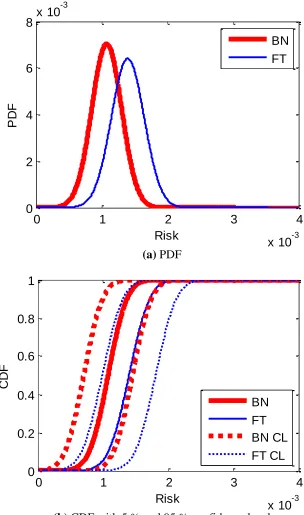
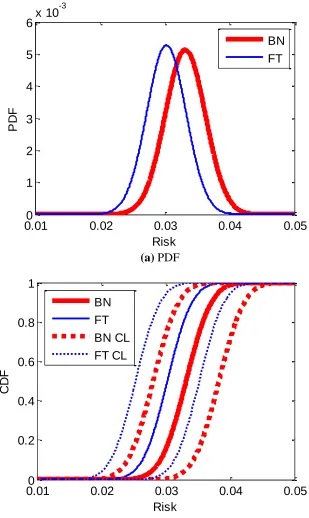
Fig. 8. PDF and CDF of risk of system failure from FTA and BN, single hazard example ... 70
Fig. 9. BN for additional correlation information ... 71
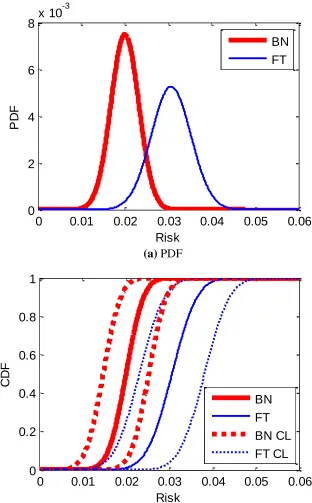
Fig. 10. PDF and CDF of risk of system failure from FTA and BN ... 72
Fig. 11. Prior and posterior distributions of the event of system failure with additional information ... 73
Fig. 12. FT of building-piping structure system risk under multiple hazards ... 74
Fig. 13. Wind hazard curves at Charleston ... 75
Fig. 14. BN corresponding to FT of Fig. 12 ... 76
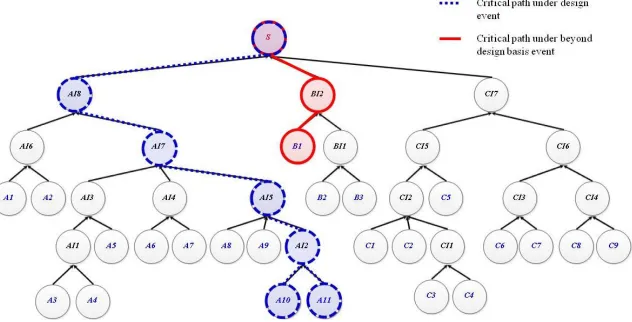
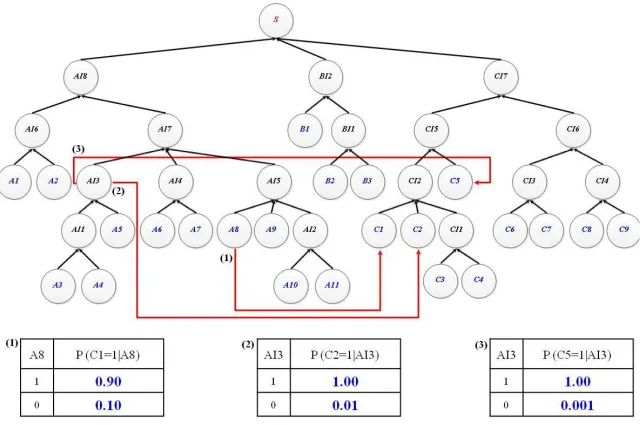
Fig. 15. Scenarios for vulnerabilities due to beyond design basis event ... 77
xiii
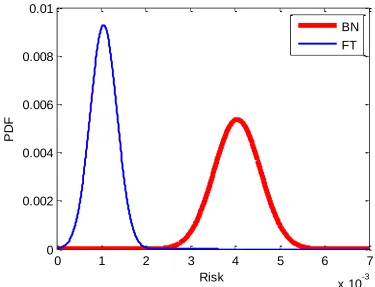
Fig. 17. PDF of risk of basement flooding event (CI5) from FT and BN considering
seismically induced flooding scenario ... 79
Fig. 18. PDF and CDF of risk of system failure from FT and BN considering seismically induced flooding scenario ... 80
Fig. A-1. PDF and CDF of risk of system failure from FTA and BN (non-Boolean relation) ... 81
Fig. A-2. Prior and posterior distributions of the event of system failure with additional information ... 82
PART III: Probabilistic Risk Assessment based Model Validation Method using Bayesian Network Fig. 1. An example of simple FT ... 121
Fig. 2. An example of simple Bayesian network ... 121
Fig. 3. BN for FT example of Fig. 1 using mapping algorithm ... 122
Fig. 4. Concept of overlapping coefficient ... 122
Fig. 5. Flowchart of proposed model validation method ... 123
Fig. 6. Coupled TDOF structural system ... 124
Fig. 7. Response spectra of 2% damped elastic SDOF system under 20 earthquake ground motions ... 124
Fig. 8. FT and BN for system failure of coupled structure system (example 1)... 125
Fig. 9. Extended BN for system failure event of coupled structure system (example 1) ... 125
xiv
Fig. 11. OCs and corresponding distributions in extended BN structure (example 1) .
... 127
Fig. 12. FT and BN for system failure (example 2) ... 128
Fig. 13. Critical path within BN structure (example 2) ... 128
Fig. 14. Comparison of fragility curves of system failure with/without discrete data of IE2 ... 129
Fig. 15. OCs and corresponding distributions in BN structure (example 2) ... 130
Fig. 16. OCs and corresponding distributions in BN structure satisfying criterion (example 2) ... 131
PART IV: Efficient Seismic Fragility Analysis of Coupled System using Equivalent Elastic Limit State Concept and Bayesian Updating Fig. 1. ELS concept ... 176
Fig. 2. Bouc-Wen hysteretic model ... 176
Fig. 3. m(=p+s)-DOF coupled system ... 177
Fig. 4. Configuration and properties of 2-DOF coupled system ... 178
Fig. 5. Response spectra of the 5%-damped linear-elastic SDOF model under input ground motions normalized to 1.0g ... 178
Fig. 6. RMS error between seismic fragility of linear and nonlinear system according to ELS V* ... 179
Fig. 7. Comparison between seismic fragility of nonlinear system and linear system using ELS V* ... 179
xv
Fig. 9. ELS V* curve using the equation of Tadinada and Gupta (2016) and the
proposed equation by this study (μ = 2 and ξs = 0.02) ... 181
Fig. 10. Asymptotic lines for ELS V* at η ≥ 0 and η < 0 ... 182
Fig. 11. Curve shapes for ELS V* according to the change of η ... 183
Fig. 12. Relation between ductility capacity and scale factor ... 184
Fig. 13. Comparison of fragility curves using the equation of Tadinada and Gupta (2016) and the proposed equation by this study (μ = 3, ξs = 0.02, η = 0.6) ... 184
Fig. 14. Comprehensive procedure of seismic fragility analysis of the secondary system of coupled system using ELS method and Bayesian updating ... 185
Fig. 15. Seismic fragility curve for secondary system of primary SDOF - secondary SDOF coupled system using ELS only, ELS & Bayesian updating, and Nonlinear analysis approach in (a) ξs = 0.02 and (b) ξs = 0.05 ... 187
Fig. 16. Primary MDOF- secondary SDOF coupled model ... 188
Fig. 17. Seismic fragility curve for secondary system of primary MDOF – secondary SDOF coupled system using ELS only, ELS & Bayesian updating, and Nonlinear analysis approach in (a) ξs = 0.02 and (b) ξs = 0.05 ... 190
Fig. 18. Primary MDOF- secondary MDOF coupled models ... 191
xvi
PART V: Significance of Multi-Hazard Risk in Design of Buildings under Earthquake and Wind Loads
Fig. 1. Graphical representation of proposed framework: multi-hazard risk map .. 225
Fig. 2. Development of multi-hazard prone site map: deterministic form ... 226
Fig. 3. Design spectra and compatible ground motions ... 227
Fig. 4. Design spectra compatible ground motions ... 228
Fig. 5. PSD curves at the 20th floor of 20-story building ( S20,20 (f) ) ... 229
Fig. 6. Average wind velocity distribution along floors ... 230
Fig. 7. Wind time history loadings at the top of the 20-story building ... 231
Fig. 8. Evaluated performance function values of 20-story building structure and interpolated curves under two hazard intensity measures of EQ and Wind of three representative sites ... 232
Fig. 9. Risk space: multiple hazard prone site map for 20-story building structure 232 Fig. 10. Change of multi-hazard prone area according to total heights of building 233 Fig. 11. Coupled buildings connected with nonlinear hysteretic MR dampers under earthquake and wind excitations ... 234
Fig. 12. MR damper mechanical model ... 235
Fig. 13. Nonlinear hysteretic behavior of the MR damper ... 235
Fig. 14. Installing MR dampers at all floors uniformly (all floors) ... 236
xvii
1
PART I
2
1. Introduction
In United States, NIST (2007) specified that natural hazards either directly or indirectly result
in approximately $55 billion of annual economic loss. FEMA (2008) estimated that
hurricanes and earthquakes can annually cause direct economic loss of about $5.4 billion and
$4.4 billion, respectively. The detailed quantitative estimation of casualties and economic
loss for various hazards are outlined in Li et al. (2012). External hazards can be categorized
into natural hazards and human induced hazards. Natural hazards include earthquakes, high
winds (hurricane, cyclone, typhoon, and tornado), floods, wild fires, snow storms, volcanic
activity, hail, lightning strike, heavy precipitation, and so on. The human induced hazards
consist of military action, industrial sabotage, terrorist attacks, vehicle collision, aircraft
crash, etc. This study relates primarily to risk assessment for multiple external natural
hazards such as those due to earthquakes, high winds, and flooding.
2. Background
2.1Probabilistic risk assessment under multiple hazards
The comprehensive procedure to calculate the risk metrics under a certain external hazard is
called as probabilistic safety assessment (PSA) or probabilistic risk assessment (PRA)
(USNRC, 1983; IAEA, 1992; EPRI, 1994; Ellingwood, 2001). Risk metric for a specific
hazard is evaluated by convolution of fragility and hazard curve. The hazard curve expresses
3
characterize the hazard. The fragility curve is expressed in terms of the conditional
probability of failure as a function of the intensity measure for a given hazard and is
evaluated by considering uncertainties in the mechanistic model of a component or system
through the use of empirical, experimental, and/or numerical data. Specifically, US Nuclear
Regulatory Commission and International Atomic Energy Agency have issued guidelines for
conducting a full scope PRA (EPRI 1994, IAEA 1992). In this methodology, the plant level
risk is calculated by a combining the component and subsystem fragility curves through a
systems analysis. Typically, fault and event trees are used for conducting the systems
analysis to combine the fragilities and convoluting with the hazard curve. Existing guidelines
consider each external hazard independently. The existing approach can be applied directly
to a multi-hazard scenario only under the assumption of statistically independent and
mutually exclusive events.
Only a few studies have been conducted to consider multi-hazard scenario in
structural design or risk-assessment. Ellingwood (2001) proposed a framework to calculate
risk due to competing hazards based on total probability theorem. Subsequently, Ayyub et al.
(2007) suggested the critical asset and portfolio risk analysis framework for evaluating risks
under multiple hazards. Li and Ellingwood (2009) conducted multi-hazard risk assessment
for wood-frame structures subjected to earthquake and hurricane. Beavers et al. (2009)
studied the overall risk to bridges due to earthquakes, storm surge, and ship collision.
Kameshwar and Padgett (2014) proposed a multi-hazard risk assessment for bridges
4
individual hazard using the traditional approach wherein the hazard curve is convoluted with
the fragility data. The effect of multiple hazards on the overall risk is computed by using the
total probability theorem. The fundamental assumption in using the total probability theorem
is that individual hazards are statistically independent, mutually exclusive, and collectively
exhaustive. Therefore, this approach cannot be used for assessment of risks associated with
multi-hazard scenarios such as seismically induced internal flooding or flooding induced
fires in which the undesirable response of the plant to one hazard acts as the initiator of
another hazard making them correlated events/hazards.
2.2Validation of system-level simulation models
Given the events at Fukushima-Daiichi nuclear power plant, there is an increased emphasis
on using high fidelity simulation tools to evaluate the vulnerability of nuclear facilities
subjected to external hazards. Availability of sophisticated computer models capable of
simulating multi-physics multi-scale phenomena has increased the need for verification and
validation of such high fidelity simulations. In the current practice of model validation, a
graphical comparison is employed to determine the degree of agreement between the
simulation predictions and the actual observations in the component level. The statistical
approaches using confidence bounds, hypothesis testing and inference have been explored as
quantitative approaches. In most cases and particularly in nuclear power plants, it is not only
impractical but almost impossible to conduct system-level experiments. The recommended
5
approach (AIAA Guide, 1998; Oberkampf and Smith, 2014). Some studies (Mahadevan and
Rebba, 2005; Jiang and Mahadevan, 2007) have used reliability and Bayesian statistics to
validate the computational system model when the system behavior can be characterized by
mechanics based mathematical equations. A general framework to validate computer model
for crashworthiness (Bayarri et al., 2005) is based on Bayesian hierarchical modeling.
Bayesian approach has also been applied to the validation of agent-based simulation
modeling (Korb et al., 2013). In the context of the various existing studies, the validation
problem continues to be a challenging one due to few different reasons. First, the existing
definitions of a quantitative validation metric need significant improvement especially for
addressing validation problems that have large degree of uncertainties associated with them.
Second, the existing studies are restricted to problems in which the system level simulation
model is characterized mathematically. Such a mathematical description is neither available
nor possible especially for evaluating the performance of nuclear systems subjected to
external hazards. In addition to these restrictions, current approaches do not identify whether
or not an improvement in the validation of a given component or subsystem is
important/critical with respect to system level performance.
2.3Equivalent linearization methods in seismic fragility analysis
Theoretically, a seismic fragility curve can be developed through a large amount of empirical,
experimental, or simulation data. In reality, the experience or experimental data for large
6
fragility is evaluated by conducting probabilistic simulations in which multiple nonlinear
time history analyses of a large-scale simulation model are performed at different levels of
seismic intensity parameter. A large number of computationally rigorous nonlinear time
history analyses makes this process highly inefficient. Consequently, equivalent linearization
approach can be highly efficient for calculating seismic fragility. Many equivalent
linearization methods have been developed over the years. Proppe et al. (2003) and Crandall
(2006) provide a good summary of existing methods which can be broadly categorized into
following:
Equivalent viscous damping method Elastic strain energy method
Empirical method
Stochastic linearization method Secant stiffness method
Equivalent elastic limit state method
Most researches in equivalent linearization methods have analytically or empirically focused
on how to linearize the system model by minimizing the average error between the responses
of nonlinear and the linearized system. In this regard, Tadinada and Gupta (2016) proposed a
novel concept of equivalent limit-state (ELS) to reduce the computational effort needed in
7
nonlinearities. This methodology needs enhancements to account for uncertainties, more
realistic hysteretic nonlinear models, and effect of non-classical damping.
2.4Multi-hazard risk assessment for earthquake and wind in tall building
The research on the design and retrofit of buildings subjected to multiple hazards of
earthquake and wind have mostly focused on mitigating the effects of each hazard
independently which is also implemented in the codes and standards especially in favor of
designing the building for a single hazard that corresponds to higher load. The premise for
such an approach is that these two hazards are not dependent or correlated but have strong
likelihood of occurrence at different times during the lifetime of a structure. Recent studies
have identified limitations of such an approach. Wen and Kang (2001) illustrate that even if a
single hazard (earthquake or wind) dominates the design loads, the less dominant hazard can
contribute significantly to the overall design. Duthinh and Simiu (2009) and Crosti et al.
(2010) show that ASCE 7-05 requirements are not risk consistent. They illustrate that the
overall risk for combined earthquake and wind loads in regions susceptible to both strong
earthquakes and extreme winds can be more than twice of that calculated by considering only
a single dominant hazard. Subsequently, these studies propose modifications to ASCE 7-05.
Chen (2012) considered mid- to high-rise buildings to study the inherent wind resistance of a
building designed for earthquake loads as well as the inherent seismic resistance of a building
designed for wind loads. It illustrates that certain solutions to ensure safety against a single
8
other hazard, such as earthquake. Li et al. (2012) also shows that the design and retrofit
strategies to improve a structure’s performance for withstanding a single hazard can make the
structure more vulnerable to the other non-dominant hazards.
3. Research Objectives
The primary objective of this research is to develop a new probabilistic risk assessment (PRA)
framework for structural systems subjected to multiple hazards. This framework aims to
amalgamate existing PRA risk assessment approach and the system risk analysis technique of
Bayesian network including Bayesian inference. Within this PRA framework, a related
objective is to propose a PRA based model validation method combining the Bayesian
network based PRA approach with a probabilistic index as a degree of validation in order to
quantitatively assess and efficiently improve the validation metric of system-level simulation.
An additional objective is to develop an efficient seismic fragility analysis method for the
coupled structure-equipment-piping systems in order to reduce the number of nonlinear
analyses of coupled structural systems under earthquake hazard for calculating the seismic
fragility curve. Lastly, another objective is to develop a performance-based approach to
determine whether the performance of a building is governed by a multi-hazard scenario for
9
4. Proposed Research
The following specific research tasks are proposed to achieve the objectives of this research.
4.1Probabilistic risk assessment framework for structural system under multiple hazards using Bayesian statistics
The specific steps needed to address this aspect of the proposed research are:
Study the existing PRA methodologies for multiple hazard risk assessment. Identify limitations of the current approaches:
o Existing studies are conducted for only a single hazard or combine risks from
multiple hazards by using total probability theorem which considers each hazard
as a statistically independent mutually exclusive event. Statistical correlations and
conditional relationships among events and hazards cannot be accounted for in
existing approaches.
o Incorporation of newly observed data or scenario for vulnerabilities beyond
design basis is not directly possible in existing approaches.
Introduce fault tree analysis (FTA) for a system-level reliability or system sequence
analysis. Some of the limitations in FTA are:
o It cannot consider uncertainties in basic events.
o It characterizes relationships between events through logic gates. It cannot
10
Incorporate Bayesian network and Bayesian inference concepts in order to address
the limitations of current PRA and fault tree analysis.
Illustrate the effectiveness of the proposed framework by application to simple
representative and realistic examples. The purpose would be to illustrate that the
proposed framework can consider statistical dependencies and correlations among
events, include the additional information at any level, and even allow analysis for
vulnerabilities beyond the design basis.
4.2PRA based model validation method using Bayesian network
It is proposed to develop a quantitative approach to validation of high fidelity system-level
simulations within a risk-informed performance based decision environment. The main tasks
needed to accomplish the objectives of this research consist of three main phases: (1)
Probabilistic risk assessment based on Bayesian network and identification of critical
sequences for the system risk, (2) Select important component-level simulation models
within the identified critical path from Bayesian network based PRA, (3) Calculate a
system-level quantitative validation metric by introducing the concept of overlapping coefficient.
Bayesian updating is employed to revalidate by incorporating enhanced simulation results or
new experimental data. Specific tasks needed in this research are outlined as follows:
11
Construct Fault Tree (FT) for system risk analysis. Map fault tree into Bayesian network.
Evaluate the upper level risks based on component level risks, and identify the most
critical scenario/path for the system risk.
Select simulation models from the identified critical path.
Introduce an overlapping coefficient (OC) as a quantitative validation metric. Calculate OCs at component-level using simulation & experimental data.
Establish the relationship between lower level and upper level events using either
mechanistic models or generating response surface.
If new data is available at any levels, update OCs at all levels based on this data. Evaluate system-level OCs by propagating component level fragilities through the
Bayesian network.
Compare the system-level OC with a desired predefined acceptance criterion. Illustrate the effectiveness of this method by application to several examples.
4.3Efficient simulation based seismic fragility assessment by using equivalent limit state concept and Bayesian updating
The specific tasks needed to achieve the objectives of this research are:
Introduce equivalent limit-state (ELS) concept and Bayesian updating in the context
12
Incorporate a numerical model for representing nonlinear hysteretic behavior of
secondary system.
Demonstrate the efficiency of ELS concept using simple coupled systems.
In order to generalize the efficiency of ELS concept, consider several different
coupled systems having different tuning ratios between primary and secondary
system, nonlinearities, ductility and damping ratios of the secondary system.
Propose a modified closed-form equation for ELS.
Application of the methodology using the closed-form equation and Bayesian
updating to increase the efficiency.
Demonstrate the effectiveness of the proposed methodology through applications to
different configurations of primary-secondary systems. Illustrate that the proposed
methodology can significantly reduce the computational efforts and also arrive at
accurate seismic fragility curve compared to that calculated from comprehensive
nonlinear time history analyses.
4.4Significance of multi-hazard risk in design of buildings under earthquake and wind loads
In this research, we propose a novel performance-based framework. The proposed
framework uses (a) site-dependent hazard intensity for a given site, (b) the building
configuration/height, and (c) performance criteria that governs the design of building for
13
structure requires any retrofitting especially in cases where both the earthquake and the wind
hazards govern the design and performance of a building whose initial design may not have
necessarily considered such a multi-hazard scenario. In addition, a retrofit strategy using
energy dissipation devices is introduced and optimal design of these is investigated. The
specific tasks needed are outlined below:
Study the current practice for the design of buildings in a multi-hazard region. Identify the limitations of current approaches.
Develop a probabilistic framework that combines the performance functions with the
multi-hazard intensity measures to enable a graphical representation of the problem.
As an application of the proposed framework, consider multiple geographical sites,
and obtain the design hazard information of earthquake and wind at these sites.
Develop the input time history loadings corresponding to design information on
earthquake and wind hazard.
Define a tall building structure as a target structure of interest.
Identify the performance limits and formulate the performance functions.
Evaluate the performance functions for the designated sites and develop the multiple
hazard (both earthquake and high wind) based graphical representation for the target
14
To illustrate the differences in solutions for a multi-hazard risk scenario, two adjacent
buildings are considered as a target structure and the two buildings are connected by
supplemental damping devices as a retrofit solution.
Finally, compare the optimal damper design considering a single hazard with a
multi-hazard scenario.
5. Organization
This dissertation primarily consists of four manuscripts which will be submitted for possible
publications in peer reviewed journals. The first manuscript (Part II) of the dissertation
presents the probabilistic risk assessment (PRA) framework for structural systems under
multiple hazards using Bayesian statistics. The second manuscript (Part III) in this
dissertation discusses the PRA based model validation method. The third manuscript (Part IV)
in this dissertation addresses the development of efficient seismic fragility assessment for the
coupled building-equipment-piping system using equivalent limit state concept. The fourth
manuscript (Part V) in this dissertation describes the framework for characterizing the
significance of multi-hazards in design of buildings under earthquake and wind loads. The
last part (Part VI) of this dissertation gives a summary and conclusions of this research and
15
References
AIAA, “Guide for the verification and validation of computational fluid dynamics simulations,” American Institute of Aeronautics and Astronautics, AIAA-G-077-1998, Reston, VA, 1998.
ASCE, Minimum design loads for buildings and other structures, ASCE/SEI 7-05/-10, Reston, VA, US.
Ayyub BM, McGill WL, and Kaminskiy M, “Critical asset and portfolio risk analysis: An all-hazards framework.” Risk Analysis, 27(4), 789–801, 2007.
Bayarri MJ, Berger JO, Kennedy MC, Kottas A, Paulo R, Sacks J, Cafeo JA, Lin, CH, and Tu J, “Bayesian validation of a computer model for vehicle crashworthiness,” National Institute of Statistical Sciences (NISS), Technical Report Number 163, 2005.
Beavers JE, “Multihazard issues in the central United States: Understanding the hazards and reducing the losses.” ASCE Council on Disaster Risk Management Monograph No. 3, Reston, VA, US, 2009.
Chen EY, Multi-hazard design of mid- to high-rise structures, M.S. thesis, Univ. of Illinois, Urbana-champaign, IL, 2012.
Crandall SH, “A half-century of stochastic equivalent linearization,” Structural Control and Health Monitoring, 13(1), 27-40, 2006.
Crosti C, Duthinh D, and Simiu E, “Risk consistency and synergy in multihazard design,” ASCE Journal of Structural Engineering, 137(8), 844-9, 2010.
Duthinh D and Simiu E, “Safety of structures in strong winds and earthquakes: multihazard considerations,” ASCE Journal of structural engineering, 136(3), 330-3, 2009.
16
EPRI, “Methodology for developing seismic fragilities,” TR-103959, Electric Power Research Institute, 1994.
FEMA, “HAZUS-MH estimated annualized earthquake losses for the United States,” FEMA 366, Federal Emergency Management Agency, 2008.
IAEA, “Procedures for conducting probabilistic safety assessments of nuclear power plants (Level 1),” Safety Series No. 50-P-4, International Atomic Energy Agency, 1992.
Jiang X and Mahadevan S, “Bayesian risk-based decision method for model validation under uncertainty,” Reliability Engineering & System Safety, 92(6), 707-718, 2007.
Kameshwar A, and Padgett JE, “Multi-hazard risk assessment of highway bridges subjected to earthquake and hurricane hazards,” Engineering Structures, 78, 154-166, 2014.
Korb KB, Geard N, and Dorin A, “A Bayesian approach to the validation of agent-based models,” Epistemology, & Teleology for Model. & Simulation, ISRL 44, 255-269, 2013.
Li Y and Ellingwood BR, “Framework for multihazard risk assessment and mitigation for wood-frame residential construction.” ASCE Journal of Structural Engineering, 135(2), 159–168, 2009.
Li Y, Ahuja A, and Padgett J, “Review of methods to assess, design for, and mitigate multiple hazards,” ASCE Journal of Performance of Constructed Facilities, 26(1), 104–117, 2012.
Mahadevan S and Rebba R, “Validation of reliability computational models using Bayes networks,” Reliability Engineering & System Safety, 87(2), Pages 223-232, 2005.
NIST, Measurement sciences for disaster-resilient structures and communities, National Institute of Standards and Technology, 2007.
17
Proppe C, Pradlwarter HJ, and Schuëller GI, “Equivalent linearization and Monte Carlo simulation in stochastic dynamics,” Probabilistic Engineering Mechanics, 18(1), 1-15, 2003.
Tadinada SK and Gupta A, “Structural fragility of large-scale piping systems using equivalent elastic time-history simulations,” Structural Safety, submitted.
US NRC, “PRA Procedure Guide – A guide to the performance of probabilistic risk assessments for nuclear power plants,” NUREG/CR-2300, US Nuclear Regulatory Commission, 1983.
18
PART II
PROBABILISTIC RISK ASSESSMENT FRAMEWORK FOR STRUCTURAL SYSTEMS UNDER MULTIPLE HAZARDS USING BAYESIAN STATISTICS
19
ABSTRACT
Conventional probabilistic risk assessment (PRA) methodologies (USNRC, 1983; IAEA,
1992; EPRI, 1994; Ellingwood, 2001) conduct risk assessment for different external hazards
by considering each hazard separately and independent of each other. The risk metric for a
specific hazard is evaluated by a convolution of the fragility and the hazard curves. The
fragility curve for basic event is obtained by using empirical, experimental, and/or numerical
simulation data for a particular hazard. Treating each hazard as an independent mutually
exclusive event can be inappropriate in some cases as certain hazards are statistically
correlated or dependent. Examples of such correlated events include but are not limited to
flooding induced fire, seismically induced internal or external flooding, or even seismically
induced fire. In the current practice, system level risk and consequence sequences are
typically calculated using a Fault Tree Analysis (FTA) that uses logic gates to express the
causative relationship between events. Furthermore, the basic events in an FTA are
considered as independent. Therefore, conducting a multi-hazard PRA using a Fault Tree is
quite impractical. In some cases using an FTA to conduct a multi-hazard PRA can even be
inaccurate because an FTA cannot account for uncertainties in probabilistic distributions of
basic events by itself and the use of logic gates (“AND” and “OR” gates) limits the
consideration of statistical correlations or dependencies between the events. An additional
limitation of an FTA based PRA lies in its inability to easily accommodate newly observed
20
information. Finally, FTA is not best suited for addressing beyond design basis
vulnerabilities. In this paper, we present the results from a study on multi-hazard risk
assessment that is conducted using a Bayesian network (BN) with Bayesian inference. The
framework can consider general relationships among risks from multiple hazards, allows
updating by considering the newly available data/information at any level, and evaluate
21
1. Introduction
In a probabilistic safety assessment (PSA) or probabilistic risk assessment (PRA) (USNRC,
1983; IAEA, 1992; EPRI, 1994; Ellingwood, 2001), the risk metric for a specific hazard is
evaluated by convolution of fragility and hazard curves. The hazard curve expresses the
annual probability of exceedance as a function of the intensity measure employed to
characterize the hazard. The fragility curve of basic event is expressed in terms of the
conditional probability of failure as a function of the intensity measure for a given hazard and
is obtained by considering uncertainties in the available physical model of a component or
system through the use of empirical, experimental, and/or numerical data. US Nuclear
Regulatory Commission and International Atomic Energy Agency have issued guidelines for
conducting a full scope PRA (EPRI 1994, IAEA 1992). In this methodology, the plant level
risk is calculated by a combining the component and subsystem fragility curves through a
systems analysis. Typically, fault and event trees are used for conducting the systems
analysis to combine the fragilities and convoluting with the hazard curve.
The currently used methodology is focused on addressing the risk associated with
each external hazard separately. Multi-hazard scenarios have not been considered in a
traditional PRA study because the possibility of simultaneous occurrence of two different
extreme events such as earthquake and hurricane or earthquake and floods is extremely rare
and almost impossible. However, there have been several instances of closely-related
22
induced flooding due to tsunami following the great Tohoku earthquake caused the disaster
at Fukushima Daiichi nuclear plant (Aoki and Rothwell, 2013). One may argue that such a
multi hazard scenario though very recent is also quite rare and limited to very specific
regions in the world. On the other hand, there are many instances of significant damage or a
major disaster due to seismically induced internal flooding such as those due to failure of fire
piping or tanks in a hospital or other industrial facilities. Seismically induced fires are widely
acknowledged. Similarly, hurricane induced storm surge flooding and high winds pose
simultaneously occurring multiple hazards that can have a significant impact on not only the
design of a nuclear plant but also on the accident management and emergency response.
Only a limited number of studies have been conducted to consider multi-hazard
scenario in the design or risk-assessment. Ellingwood (2001) proposed a framework to
calculate risk due to competing hazards based on total probability theorem. Subsequently,
Ayyub et al. (2007) suggested the critical asset and portfolio risk analysis framework for
evaluating risks under multiple hazards. Li and Ellingwood (2009) conducted multi-hazard
risk assessment for wood-frame structures subjected to earthquake and hurricane. Beavers et
al. (2009) studied the overall risk to bridges due to earthquakes, storm surge, and ship
collision. Kameshwar and Padgett (2014) proposed a multi-hazard risk assessment for
bridges subjected to earthquake and hurricane. The common theme in all these studies is that
the risk is calculated for each individual hazard using the traditional approach wherein the
hazard curve is convoluted with the fragility data. The effect of multiple hazards on the
23
The fundamental assumption in using the total probability theorem is that individual
hazards are statistically independent, mutually exclusive, and collectively exhaustive.
Therefore, it cannot be used for assessment of risks associated with multi-hazard scenarios
such as seismically induced internal flooding or flooding induced fires in which the
undesirable response of the plant to one hazard acts as the initiator of another hazard making
them correlated events. It can be argued that a well designed plant should not exhibit such
failures. Traditional PRAs do not exhibit such correlated events because failures of these
nature are not encountered in a plant that is well designed to withstand the design basis
events. On the contrary, identifying and suppressing such events are the primary reason for
the strong emphasis in recent years on evaluating vulnerability beyond design basis. The
response of a plant’s structures, systems, and components to beyond design basis events is
quite different from that to the events at or below the design basis levels. Consequently, there
is need for developing multi-hazard risk assessment methodologies to account such
correlated events beyond the design basis levels and to determine a plant’s vulnerability. As
additional studies are conducted and new data becomes available, such methodologies should
allow easy and continued updating of plant risk.
A systems analysis is typically used to consider the various aspects mentioned above.
Some of the typical tools used for conducting such systems analysis are fault tree analysis
(FTA), event tree analysis, Petri net, PNET, logic tree, decision tree, etc. Out of these, a
typical PRA in a nuclear power plant relies heavily on FTA for modeling and assessment of
24
A fault-tree based approach can be broadly divided into two parts: (1) a qualitative
development of the logic diagram which is then used to write an expression for the TE and
determine the minimal cut-sets; (2) a quantitative evaluation based on probabilities of
occurrence of basic events to determine the probability of occurrence of the TE (and of any
intermediate-level events) together with a determination of the importance measure for each
minimal cut-set. The importance measures are used to identify critical events contributing
significantly to the probability of system failure and to identify the weak links. A traditional
implementation of fault-tree analysis is quite static in nature and some of its limitations are:
(1) it does not allow an explicit consideration of uncertainties in the probabilities of basic
events, (2) the events are related through logic gates (AND/OR gates) which prohibits
consideration of statistical dependencies and correlated events, and (3) it was not developed
to consider and identify updated scenarios due to availability of new data/information
particularly for events beyond design basis.
The limitations in FTA mentioned above are generally overcome by combining it
with other techniques. For example, the uncertainties in basic event probabilities are
considered by implementing an FTA in conjunction with Monte-Carlo simulation
(Rasmussen, 1975) or Fuzzy set theory (Tanaka et al., 1983; Singer, 1993; etc.).
Consideration of the statistical correlations and relationships among events beyond what can
be represented by logical gates is possible by converting a fault-tree into a Bayesian network
(BN). The concept of Bayesian Network was developed to directly manage various statistical
25
proposed the mapping method which converts a fault tree into a corresponding Bayesian
network (BN). Finally, Bayesian updating has been found to be quite effective for
accommodating the new data/information (Hamada et al., 2004; Wilson et al., 2007; Kelly
and Smith, 2009). Consequently, in this paper we explore the use of a Bayesian Network and
Bayesian Inference based approach for multi-hazard risk assessment so as to account for
statistical dependencies. The premise is to explore if this framework can allow identification
of critical events for both the design basis risk as well as for the beyond design basis
vulnerabilities. Illustrative examples are used to identify differences in possible solutions
evaluated from the traditional FTA methodology compared to a Bayesian Network based risk
assessment.
2. Summary of Current PRA Methodology
In the current methodology, the overall risk (i.e. annual probability of failure) for an
individual hazard is evaluated by convolution of hazard curve and the corresponding fragility
as following:
f f |
dH
P P d
d
(1)in which λ is a hazard intensity parameter, Pf | λ is the fragility curve, and H (λ) represents the
hazard curve. The hazard curve expresses the probability of annual exceedance in a domain
26
basic events is obtained by using empirical, experimental, and/or numerical simulation data.
It represents the conditional probability of failure under each hazard’s intensity. The
system-level risk is calculated by employing either a series-parallel system as a simplistic
representation of the complete system or by conducting a fault tree analysis in which the
events are assumed to be statistically independent, mutually exclusive, and collectively
exhaustive.
2.1Probabilistic Hazard Analysis
In order to develop a hazard curve, the hazard is characterized in terms of an engineering
design parameter which also characterizes the intensity of the hazard. For example, the
intensity measures that have been used to characterize earthquake intensities are one or a
combination of its magnitude (Mw), peak ground acceleration (PGA) or spectral acceleration
(SA). Similarly, the wind hazard is typically characterized in terms of maximum wind
velocity and flood hazard by the elevation of water levels for a specified return period. If
multiple sources can initiate the hazard at a given site, then a probabilistic analysis is
conducted to identify and integrate the hazard from each source, their relative size,
propagation characteristics from source to the site, prediction model, etc. The end result is a
hazard curves (H (λ)).
Seismic Hazard: The probabilistic seismic hazard analysis (PSHA) focuses on quantifying uncertainties in the sources, size, distance, and ground motion characteristics of future
27
distribution of possible ground motions that can occur at a site of interest. The end result of
the PSHA is represented by seismic hazard curves where the annual rates of exceedance are
plotted against a ground motion intensity parameter such as moment magnitude (Mw), peak
ground acceleration (PGA) or spectral acceleration (SA). A detailed description for
conducting PSHA is described in McGuire (2002). The US Geological Survey (USGS,
http://earthquake.usgs.gov/hazards/products/) provides hazard information and hazard curves at any site of interest.
Wind Hazard: A probabilistic wind hazard analysis (PWHA) expresses the annual rates of exceedance with respect to average wind speed during a gust of 3 second or less in the open
terrain at a 10 m height. A PWHA is based on extrapolation from various return period of
tropical cyclones (typhoons and hurricanes) and wind field models developed from recorded
data. The detailed guidelines are represented in IAEA safety guide SSG-18 (IAEA, 2011).
Specifically for hurricanes, several wind models have been proposed to estimate wind speeds
corresponding to different return periods. A Weibull distribution is revealed to be an
appropriate model for hurricane wind speeds (Batts et al., 1980; Georgiou, 1985; Peterka and
Shahid, 1998; Vickery et al., 2000). Li and Ellingwood (2006) obtained the parameters for
the Weibull distribution at three different geographical locations namely, southern Florida,
Charleston, SC, and Boston MA.
Flood Hazard: A probabilistic flood hazard analysis (PFHA) evaluates the annual exceedance probabilities for different external flood severities in terms of a site-specific
28
probabilities with respect to flood levels (median, mean and other confidence levels). The
various methodologies used for conducting a PFHA can be mainly categorized into two
groups: the simple statistical methods and the detailed probabilistic methods. The statistical
methods utilize extrapolation of historical data and estimates probabilities for flood events
that have annual exceedance of 1e-2 or 5e-3. The detailed probabilistic methods combine
hydrologic and statistical models as well as the corresponding uncertainties. The detailed
description for PFHA is given in the IAEA safety guide (IAEA, 2011) and the corresponding
technical report (IAEA, 2015).
2.2Fragility Analysis
The fragility of a structure, system, or component (SSC) is defined as the conditional failure
probability, Pf|λ, to attain or exceed a specified performance function, G, under a given
measure of specific intensity parameter λ. Mathematically,
| 0 |
f
P P G (2)
G is a function of the random variables representing uncertainties in material properties, physical and mechanistic models, and loading conditions. It can be described in a simplistic
form as:
,
29
where S represents the “strength” or “capacity” corresponding to the specified loading condition and R represents the “maximum response” or “demand” corresponding to the given hazard intensity parameter. Eq. (3) can be written in terms of various different approaches
such as physics or mechanics based models, experimentally obtained data, empirical relations,
simulations, or a combination of these. The Eq. (3) can then be solved in many different
ways such as Monte Carlo simulation, First/Second order reliability methods, random
vibration based approach, statistical inference approach, etc. In most implementations, the
fragility curves are represented as the cumulative distribution function for a log-normal
distribution.
3. Summary of Fault Tree Analysis and Bayesian Representation
3.1Fault Tree Analysis (FTA)
A fault tree diagram is a graphical decomposition of an undesirable event representing
system failure (denoted as top event TE) into intermediate events and basic events through
the use of logical gates (AND and OR gates). The basic events are characterized by Boolean
states that represent “failure” or “safe” states. The basic events are considered to be
statistically independent as well. The basic events are connected through the logic gates to
characterize intermediate events which are also connected through the logic gates.
To begin with, a qualitative evaluation is used to develop the logical expression for
the TE. Boolean algebra is used to obtain the minimal sets. The order of a minimal
30
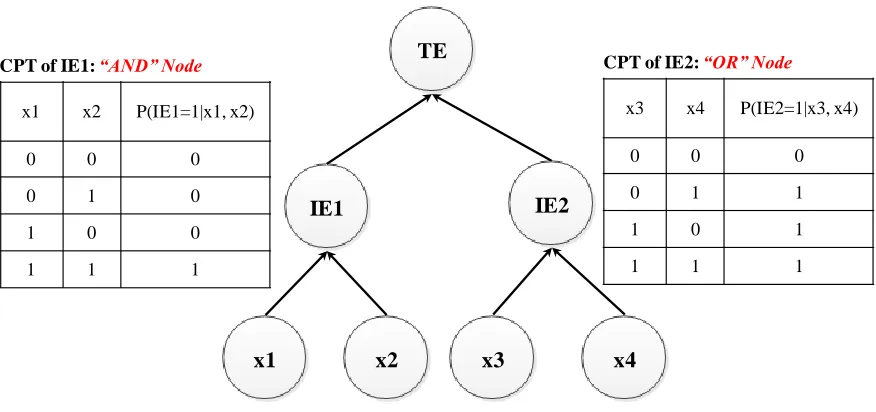
illustration purposes, let us consider the example of a simple fault tree shown in Fig. 1. In
this figure, x1, x2, x3 and x4 represent the four basic events. The IE1 and IE2 are the
intermediate events produced through combination of basic events by logic gates. Therefore,
we can write a logical expression for the top event as:TE
x1x2
x3x4
. Thecorresponding Boolean algebra is TE
x1 x2
x3 x4
and a total of 3 minimal cut-setsexist namely, x1∙x2, x3, and x4. The minimal cut-sets x3 and x4 are of first order and the
minimal cut-set x1∙x2 is the second order. Finally, a quantitative analysis is conducted to
compute the probability of occurrence of the TE and determine the importance measure for
each minimal cut-set. The probability of occurrence of the TE is calculated by using
following equation:
1
1 2 3
1 1 2 1 n i i
n n n
i i j i j k
i i j i j k
n
n
P TE P M
P M P M M P M M M
P M M M
(4)where M1, M2, …, Mn represents the minimal cut-sets and n is the total number of minimal
cut-sets. The importance measure (IM) analysis calculates the contribution of the minimal cut-sets to the occurrence of TE and accordingly identifies the critical events. Various
31
study, the importance measure of minimal cut-set of Fussell-Vesely (1975) is employed
according to which:
i
IM F M / F M (5)
where F (M) is the total risk from all minimal cut-sets; F (Mi) is the risk from minimal
cut-sets which contain minimal cut-set Mi. These IMs compute the overall percent contributions
of minimal cut sets to the total risk.
3.2Bayesian Network (BN)
In contrast to a fault-tree, a Bayesian Network (BN), also referred to as a Bayesian Belief
Network (BBN), is a more general form that can account for the statistical relationships
among the events. It is a graphical representation of a set of conditionally independent
assumptions and accordingly requires a joint probability distribution between random
variables. This generality makes it a powerful tool for the structure/system reliability, risk
management, accident analysis, artificial intelligence, etc. A Bayesian Network is a directed
acyclic graph (DAG) which is represented using the nodes (or vertices) represented by circles,
arrows (or arcs), and the conditional probability table (CPT). Each node defines either a
discrete or a continuous random variable. In this study, we consider only discrete variables.
An intermediate node serves as a parent as well as a child node. The nodes which have
arrows directed to other nodes are parent nodes and nodes that have coming from other nodes
32
called as root node and it does not have any parent node. Arrows represent direct
relationships between interconnected parent and child nodes. The CPTs assigned to nodes
describe the quantitative relationships between interconnected nodes.
The BN analysis is basically performed based on the conditional probability as per Eq.
(6) and conditional independence assumption, i.e. P(x,y|z) = P(x|z) P(y|z) if and only if
XY|Z. The joint probability distributions can be expressed using conditional probability
as:
1 2
1 1
1
n
n i i
i
P X , X , , X P X | X , , X
(6)The conditional independence assumption simplifies Eq. (6) further as:
1 2
1
Parent n
n i i
i
P X , X , , X P X | X
(7)Parent (Xi) is parent nodes for Xi; P(Xi | Parent (Xi)) is the CPT of Xi and n is the number of
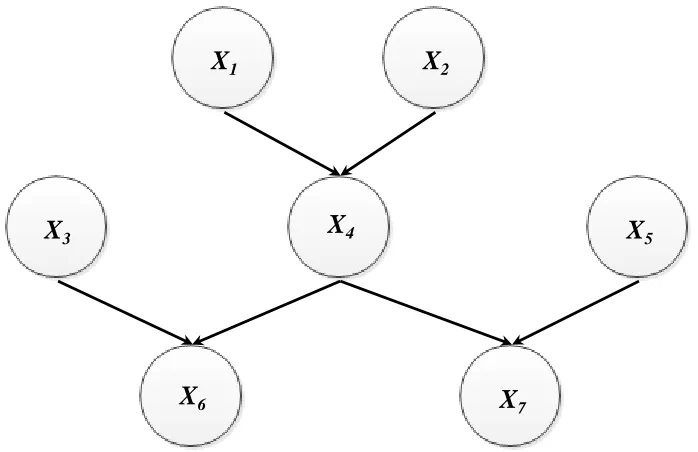
nodes in the network. For illustration, let us consider a simple network shown in Fig. 2 in
which X1, X2, X3 and X5 are the root nodes. X4 is the child node of X1 and X2, and parent node
of X6 and X7. X6 is the child node of X3 and X4. X7 is the child node of X4 and X5.
A Bayesian network can also be used as an inference tool to evaluate beliefs of events
when new information also called as “evidence” becomes available. The evidence is typically
represented by binary states: occurrence of event by “1” and non-occurrence by “0”. For
33
1
1 2 1 2
1 2
1 2
n
n n
n
n X , ,X
P X , X , , X ,e P X , X , , X ,e P X , X , , X | e
P e P X , X , , X ,e
(8)This equation can be adopted for two types of probabilistic reasoning - the predictive analysis
as well as updating analysis.
3.3Mapping algorithm
In general, it is not straightforward to start with creating a Bayesian network directly. It is
relatively much easier to create a fault tree. Therefore, a mapping algorithm is needed to
transform a fault tree into a Bayesian network. The mapping involves two steps, graphical
representation and numerical computation. First, all events in a fault tree - the basic,
intermediate, and top events - are converted into the nodes of Bayesian network. The basic
events map into the root nodes of a BN and the intermediate events map to child nodes of the
root nodes. The top event of a fault tree maps into a child node of basic and intermediate
events. For numerical computation, the probabilities of the basic events in a fault tree are
assigned to the marginal probabilities of the root nodes of BN. For the intermediate and top
events of fault tree defined by gates, the CPTs are established at corresponding child nodes of
BN. For illustration, let us consider the fault tree that was shown in Fig. 1 which is mapped
into a BN as shown in Fig. 3. The CPTs of IE1 and IE2 nodes of BN which are represented
34
Figure, “0” and “1” represent non-occurrence and occurrence of event, respectively. A
detailed discussion of mapping algorithm is given in Bobbio et al. (2001). It is noteworthy
that the mapped BN from the fault tree have the specific conditional probabilities consisting
of binary values 0 and 1, which is a special case of BN. Unlike the fault tree, the BN can be
extended to more general problem by using non-binary values in the CPT within the same
BN structure or creating arcs among the nodes for representing the correlation of events.
Also, though each root node has the binary outcomes, the marginal probability corresponding
to the either binary value (for example, P(x1 = 1)) can have uncertainties which can be
represented by an appropriate probability distribution (for example, P(x1 = 1) ~ Normal
Distribution). Since the root nodes are described by the probability distributions, the other
nodes are also evaluated as probability distributions after accounting for the CPT relations.
3.4Bayesian Inference
The inference considered by Eq. (8) above is binary in nature. Therefore, Bayes’ theorem or
Bayesian inference can be employed in accordance with Eq. (9) in order to account for
non-binary data, different levels of discrete data , and uncertainties (Hamada et al., 2004; Wilson
and Huzurbazar, 2007).
f | f L , f
f |
f L , f d
D p p D p p
p D