©
DOI: 10.1534/genetics.105.041608
Analysis of the Zebrafish
perplexed
Mutation Reveals Tissue-Specific Roles for
de Novo
Pyrimidine Synthesis During Development
G. B. Willer,* V. M. Lee,
†R. G. Gregg* and B. A. Link
‡,1*University of Louisville, Louisville, Kentucky 40202,†California Institute of Technology, Pasadena, California 91125 and ‡Medical College of Wisconsin, Milwaukee, Wisconsin 53226
Manuscript received February 6, 2005 Accepted for publication April 25, 2005
ABSTRACT
The zebrafishperplexedmutation disrupts cell proliferation and differentiation during retinal develop-ment. In addition, growth and morphogenesis of the tectum, jaw, and pectoral fins are also affected. Positional cloning was used to identify a mutation in thecarbamoyl-phosphate synthetase2-aspartate transcarbamy-lase-dihydroorotase(cad) gene as possibly causative of theperplexedmutation and this was confirmed by gene knockdown and pyrimidine rescue experiments. CAD is required forde novobiosynthesis of pyrimidines that are required for DNA, RNA, and UDP-dependent protein glycosylation. Developmental studies of several vertebrate species showed high levels ofcadexpression in tissues where mutant phenotypes were observed. Confocal time-lapse analysis ofperplexedretinal cellsin vivoshowed a near doubling of the cell cycle period length. We also compared theperplexedmutation with mutations that affect either DNA synthesis or UDP-dependent protein glycosylation. Cumulatively, our results suggest an essential role for CAD in facilitating proliferation and differentiation events in a tissue-specific manner during vertebrate development. Both de novoDNA synthesis and UDP-dependent protein glycosylation are important for theperplexedphenotypes.
W
E have used a forward genetic approach in zebra- ization (dpf). Our previous analyses indicated that theperplexedgene is essential for the transition from a prolifera-fish to identify and study genes essential for
reti-nal development. The neural retina of zebrafish, as in tive to a postmitotic state within the neural retina. Elevated cell death was observed at the time when retinal progeni-other vertebrates, arises from neuroepithelial cells that
line the optic cup. All of these elongated cells rapidly tor cells normally begin to withdraw from the cell cycle. In addition, retinal differentiation and morphogenesis divide through multiple rounds of mitosis before the
were dramatically diminished in surviving cells within first group of progenitor cells leaves the cell cycle. At
perplexedretinas. Genetic mosaic analysis indicated that the time of cell cycle exit, retinal progenitor cells
un-the mutation is non-cell autonomous for both survival dergo cell type fate decisions, initiate postmitotic cell
and differentiation. As part of this study, we have used migration, and begin to differentiate into one of the
positional cloning and other experiments to identify seven major cell types found in vertebrate retinas
(re-and confirm that a mutation in the gene encoding the viewed inOhnumaet al.2001;LevineandGreen2004).
trifunctional enzyme carbamoyl-phosphate synthetase2-In fish and other ectothermic vertebrates, the retina
aspartate transcarbamylase-dihydroorotase (CAD) is re-continues to grow throughout larval development from
sponsible for theperplexedphenotypes. a population of slowly proliferating stem cells found at
CAD is the rate-limiting enzyme forde novobiosynthesis the outer margin of the neural retina. Fundamental
of pyrimidine-based nucleotides and catalyzes the first questions in retinal development, and developmental
three steps in de novopyrimidine biosynthesis (reviewed biology in general, center on the coordination of cell
in Jones 1980; Figure 1). Utilizing ATP, CAD converts proliferation, cell cycle exit, and differentiation of
glutamine and bicarbonate to dihydroorotate for the pro-genitor cells.
duction of orotate. Orotate is then rapidly converted to Theperplexedmutation was identified in a genetic screen
uridine-5⬘-diphosphate (UDP), which is a precursor for for ethylnitrosourea (ENU)-induced mutants that showed
production of cytosine- and thymine-based nucleotides disrupted retinal lamination in the absence of gross
em-and ultimately RNA em-and DNA synthesis. UDP is also a bryological defects (Linket al.2001). Embryos
homozy-precursor of UDP-sugar intermediates, which are required gous for the perplexedmutation have small eyes and a
for post-translational modification of many proteins. The reduced tectum and die between 8 and 12 days
postfertil-function of CAD, therefore, is important for bothde novo
RNA and DNA synthesis and for specific types of protein glycosylation. In most cells, UDP and other nucleotides 1Corresponding author: Department of Cell Biology, Neurobiology
can also be provided by the salvage pathways. Several
cul-and Anatomy, Medical College of Wisconsin, 8701 Watertown Plank
Rd., Milwaukee, WI 53226-0509. E-mail: [email protected] tured cell lines lack functional CAD, but can be
types ofperplexedby comparingcadmutants to embryos with mutations in other genes required for either nucle-otide synthesis or UDP glycosylation. Cumulatively, our results suggest an essential and complex role for CAD in facilitating proliferation and differentiation events in a tissue-specific manner during vertebrate development. Our observations are consistent with the hypothesis that basic metabolic pathways are key targets of regulatory signals essential for coordinating cellular proliferation and differentiation during development.
MATERIALS AND METHODS
Mutant alleles:The following mutant alleles were used in this study (the gene affected is in brackets and the original citation is in parentheses):perplexeda52[cad] (Linket al.2001);
hi688 [ribonucleotide reductase R2] and hi954 [UDP-glucuronic acid decarboxylase] (Gollinget al.2002); and hi2694[cad], hi3378[ UDP-glucuronic acid/UDP-N-acetylgalactosamine dual transporter], and hi3510[thymidylate synthase] (Amsterdamet al.2004).
Positional cloning:Bulked segregant linkage analysis:The re-cessiveperplexeda52mutation was outcrossed with wild-type AB Figure1.—Illustration of the role of the
carbamoyl-phos-fish and the mutant line was propagated by repeated AB out-phate synthetase2-aspartate transcarbamylase-dihydroorotase
crossings (Linket al.2001). Since meiotic recombination rates enzyme (CAD) inde novobiosynthesis of dihydroorotate (DHO)
are lower in male zebrafish compared to those in females, the and its rapid conversion to uridine diphosphate (UDP). CAD
use of male meiosis is favorable for bulked segregant analysis utilizes glutamine (Gln), adenosine triphosphate (ATP), and
to identify on which chromosome the mutation is located bicarbonate (HCO⫺3) to synthesize DHO. All reactions take
(Singeret al.2002). A mapping panel to maximize the infor-place in the cell cytoplasm except for that of dihydroorotate
mation content of the male parent was generated by outcross-dehydrogenase (DHO-DHase), which occurs at the
mitochon-ing an AB⫹/perplexedfish with a TL⫹/⫹fish and then back-dria inner membrane (IM). Loss of CAD activity can affect
crossing a resulting TL⫹/perplexedheterozygous male with an DNA/RNA nucleotide biosynthesis as well as UDP-dependent
AB⫹/perplexedfemale. Genomic DNA was isolated from homozy-protein glycosylation events.
gous perplexed mutant embryos and wild-type siblings and two pools of 20 mutant and 20 wild-type embryos were used for bulked segregant analysis. Simple sequence-length polymor-phism markers (Knapiket al.1998;Shimodaet al.1999; http:// tained in a pyrimidine-supplemented medium (
David-zebrafish.mgh.harvard.edu/zebrafish/index.htm) spaced ⵑ20
sonandPatterson1979;Pattersonet al.1992;Qiu
cM apart across the length of the genome were amplified andDavidson1998). The utilization ofde novo vs.
sal-by polymerase chain reaction (PCR) and the products were vage pathways for pyrimidine biosynthesis in vivo has analyzed on 3% agarose gels. Once linkage was detected, 96 been proposed to be dependent on tissue and cell type, individual mutants were genotyped to confirm linkage and to
refine the critical interval. as well as on the mitotic state of a cell (Andersonand
High-resolution linkage mapping:Given that increased rates
Parkinson 1997).
of recombination are more advantageous for high-resolution In Drosophila, a mutation in CAD—rudimentary—was linkage mapping, new mapping panels informative for recom-among the first described by Thomas Hunt Morgan bination in the female parents were generated. AB⫹/perplexed and was used for discovering meiotic recombination fish were outcrossed to WIK⫹/⫹fish and resulting WIK⫹/ perplexedwere mated to AB⫹/perplexedto generate homozy-(Morgan1913;Sturtevant1913). Flies with the
rudi-gousperplexedmutants for fine mapping. Fluorescent primers
mentarymutation show malformed and reduced wings
(Proligo, Boulder, CO) were designed for markers z8150 and as well as female sterility (Morgan 1911, 1915). The z9794 and 530 mutant embryos were genotyped on a CEQ mutation is lethal only when larvae are grown on pyrimi- 8000 genetic analysis system (Beckman Coulter, Fullerton, dine-free medium. While these results show that CAD CA) to identify recombinant embryos. BLAST searches were used to identify finished BAC clones from the NCBI database has tissue-specific functions during invertebrate
devel-(http://www.ncbi.nlm.nih.gov/genome/seq/DrBlast.html) and opment, the role of CAD in vertebrate development has
scaffolds from the zebrafish assembly version 4 (http://www. not been investigated. ensembl.org/Danio_rerio/) that were located in the critical In this study, we have used positional cloning, gene region. SeqMan II software (DNASTAR, Madison, WI) was used knockdown, and pyrimidine rescue experiments to iden- to assemble the BAC clones and scaffolds into a single contig that spanned the entire length of the critical interval containing tify and confirm a mutation in the zebrafish cad gene
theperplexedmutation. Single-nucleotide polymorphisms (SNPs) as causative for theperplexedmutation. To address tissue
pheno-Candidate gene search:Candidate genes within theperplexed Riboprobes andin situhybridization:Localization of mRNA in zebrafish was performed on whole embryos (Jowettand critical region were identified using GENSCAN (http://genes.
mit.edu/GENSCAN.html). Total RNA was isolated from pools Lettice1994). For chicken and mouse,in situhydridization was performed on paraffin-sectioned embryos as described in of 100perplexedand wild-type embryos using a VERSAGENE
RNA purification kit (Gentra Systems, Minneapolis) and cDNA Leeet al. (2005). Digoxegenin-labeled cRNA probes corre-sponding to the following regions of cDNA were used: zebra-synthesized using oligo(dT) and SuperScript II as described
by the manufacturer (Invitrogen, Carlsbad, CA). The full- fish, 6365–7000 bp, accession no. AY880246; chicken, 43–3043 bp, accession no. XM_426217; and mouse, 6139–6930 bp, length ORF representing thecad gene was amplified using
primers (forward, 5⬘-AGGGACAGCATGCTATTTGG-3⬘; re- accession no. NM_023525.
Transgenesis and time-lapse microscopy:Wild-type or per-verse, 5⬘-TGGTCCCAATTGGATAGGAA-3⬘) and AccuPrime
Taq polymerase as described by the manufacturer (Invitrogen). plexedmutant embryos were injected at the one- to four-cell stage withⵑ15 nl of 50 ng/l circular plasmid DNA encoding Amplified products were cloned, sequenced, and analyzed
for potential mutations. The identified T-to-G transversion histoneH2B::green fluorescent protein (GFP) fusion protein (Ko¨ sterandFraser2001). Embryos were grown in PTU to introduces anAvaII restriction enzyme site, which was
subse-quently used to confirm that the mutation was present in block pigment synthesis. At 32–34 hpf, embryos were anesthe-tized with 0.05% Tricane and embedded in 1.0% low-melt aga-genomic DNA fromperplexedembryos.
Orotic acid and uridine rescue:The sodium salts of orotic rose. Fish were oriented on their side within a 35-mm2culture
dish (P35G-1.5-10-C; MatTek, Ashland, MA). Cells labeled with acid (no. O3000) and uridine (no. U0750) were obtained from
Sigma (St. Louis). Stock solutions made in embryo medium the transgene were then imaged with a Nikon C1 confocal microscope for 15–20 hr. Z-sections (40m total depth) were (Westerfield 1995) and 50 nl of various concentrations (1
m–10 mm) were injected into the yolk sack of developing collected every 12 min. This time was determined empirically to be sufficient to capture M-phase for each cell. Temperature wild-type andperplexedembryos at 20 hr postfertilization (hpf).
Partial rescue of eye, jaw, and fin development was observed was maintained throughout all experiments at 28.5⬚ using a stage incubator.
at a minimal concentration of 1mfor orotic acid and 100
mfor uridine. Concentrations ⬎1000mresulted in early Cell cycle analysis:Image planes from confocal time-lapse microscopy were converted from IDS to ND format using developmental lethality. To evaluate retinal histology, embryos
were fixed in 4% paraformaldehyde at 72 hpf and processed Metamorph Imaging software (Universal Imaging, Philadel-phia). These data were then arrayed by time and z-plane using for cryosectioning. Sections were mounted on glass slides and
the multidimensional analysis tool suite. Individual cells were nuclei were stained with Hoechst 33258 (0.5g/ml in PBS).
followed from M-phase to M-phase. M-phase was easily viewed
Morpholino antisense knockdown:We designed three
inde-by the condensed and elongated nature of the chromatin. pendent morpholino (MO) antisense oligonucleotides (Gene
The time required for this was recorded as the total cell cycle Tools, Philomath, OR) to the zebrafishcadgene. CADMO1
period. If a cell underwent apoptosis, as evident by DNA frag-(TTAATTTTCACTTACCAACTTCACC) overlapped exon 1
mentation, the latency from the last M-phase was recorded. donor sequence and was used at 40m. CADMO2 (AAACA
In all, we quantified the cell cycle period or latency to cell AAAATAAACCTTGCTGAGTC) overlapped exon 2 donor
se-death forn⫽26perplexedretinoblasts (four time-lapse experi-quence and was used at 30m. CADMO3 (TAAAGATGCCA
ments) and n⫽ 27 wild-type retinoblasts (three time-lapse TTTTCAGCGACATG) overlapped the ATG start site and was
experiments). used at 200m. These oligonucleotides were diluted in sterile
water with 0.02% phenol red for visualization purposes and 15 nl was injected into one- or two-cell stage wild-type embryos.
As controls, standard control morpholino (GeneTools) was in- RESULTS jected at equivalent concentrations. To confirm efficacy of
splicing inhibition, a subset of embryos injected with MO1 and Zebrafish embryos with theperplexedmutation show re-MO2 were taken for reverse transcription-polymerase chain duced eye size and lack retinal cell morphogenesis (Link reaction (RT-PCR) analysis (Draper et al. 2001). For MO1 et al.2001). Increased apoptosis, as compared to that and MO2, 30 control and 30 CADMO1- or CADMO2-injected
in wild-type siblings, is apparent by histology at 40 hpf. embryos were collected at 32 or 48 hpf for RT-PCR analysis. A
These phenotypes suggested that theperplexedgene was forward primer specific to exon 1 (CADEX1F1 GTCTGTTCG
critical for normal proliferation and differentiation in GTGCCGTATCT) and a reverse primer specific to exon 3
(CADEX3R1 GCTCTCTGAGCCACTCATCC) were used to the retina. Linkage mapping with microsatellite markers amplify the cDNA pools. Analysis indicated that both MOs localizedperplexedto chromosome 20, between z8150 and induce alternative splicing events that disrupt gene function.
z9794. Recombinant mutant embryos were then used
Histology:Semithin retinal sections were obtained after
fix-in conjunction with additional microsatellite markers ing embryos overnight at 4⬚in 2.5% glutaraldehyde/1%
para-and newly developed SNPs. Markers z4394 para-and z536 formaldehyde/phosphate-buffered sucrose, pH 7.4. Embryos
were dehydrated and infiltrated with Epon/Araldite. Trans- showed no recombinants out of 530 embryos genotyped. verse sections, 1–2m, were heat mounted and stained with BACs and scaffolds (assembly version 4) were identified 1% methylene blue in 1% borax. that spanned the entire critical region between z13672
Alcian blue cartilage staining:PTU-treated embryos (ⵑ15)
and z8164 (Figure 2A). Genscan analysis of this region were placed in 1.5-ml plastic centrifuge tubes and fixed in 1
revealed two potential candidate genes, aselective
LIM-ml of 3.7% neutral buffered formaldehyde at room
tempera-ture for 2 hr. Embryos were then rinsed in PBS and transferred binding factorhomolog andcad. Cloning and sequencing to Alcian blue stain (0.1% Alcian blue in 80% ethanol/20% of thecadopen reading frame fromperplexedand wild-glacial acetic acid) for overnight incubation at room tempera- type embryos revealed a mutation at nucleotide position ture. The next day, embryos were rinsed in 100% ethanol and
3848. This T-to-G transversion produces a nonconserva-gradually rehydrated in PBS. Further washes were carried out
tive methionine to arginine substitution at position 1283 in 1% KOH in PBS. Embryos were mounted in 1% low melting
Figure2.—Positional cloning of theperplexedmutation. (A) Genetic and physical map of the critical in-terval for theperplexedlocus of chro-mosome 20. Informative markers are listed with the associated num-ber of recombination events per 1060 meioses (red). BAC and geno-mic scaffolds are to the right of the genetic map. Thecadopen reading frame is represented as a blue arrow. (B) Sequence analysis and pre-dicted protein composition of wild type and the perplexedmutation at amino acid 1283. (C) Sequence com-parisons among diverse phyla show absolute conservation for M1283 (yellow highlight) and near perfect similarity for surrounding residues. Amino acids different from zebra-fish are indicated in blue. The acces-sion number for the complete cod-ing sequence of zebrafish cad is AY880246.
M1283 in the carbamoyl-phosphate synthetase 2 domain Finally, a recently reported insertional mutagenesis screen in zebrafish described a retroviral insertion into ofcadrevealed that this methionine is conserved from
humans toCaenorhabditis elegans(Figure 2, B and C). the cad locus (Amsterdam et al. 2004). We obtained this line, hi2694, for phenotype analysis and comple-To confirm that the M1283R mutation in cad was
responsible for the perplexed phenotype, we designed mentation tests. Embryos homozygous for the hi2694 allele showed a phenotype indistinguishable from the antisense oligonucleotides (“morpholinos”) to either
disrupt pre-mRNA splicing or block translation (Nasevi- perplexedembryos and pairwise crosses betweenperplexed
and hi2694 heterozygotes were noncomplementing for
cius and Ekker 2000; Draper et al. 2001). Wild-type
embryos injected with any of these morpholinos pheno- the mutant phenotype. Cumulatively, these data demon-strate that a loss-of-function mutation incadis responsi-copied theperplexedmutation (Figure 3). Whole-embryo
morphology and retinal histology show the similarities ble for theperplexedphenotype. The ability of supplied orotic acid or uridine to rescueperplexedmutant pheno-betweenperplexedand CAD morphant embryos. To
fur-ther test whefur-ther the mutation incadis responsible for types also explains the non-cell-autonomous nature of the perplexed mutation. When mutant cells are placed the perplexed phenotype, we attempted to rescue the
phenotype by providing pyrimidine nucleotide precur- within a wild-type environment, the compounds down-stream of CAD provide substrates for UDP synthesis sors that are in the de novobiosynthetic pathway, but
downstream of CAD. Injection of either orotic acid or within theperplexed cells. Orotic acid and uridine can be taken up by adjacent cells through free diffusion, by uridine into 24-hpf mutant embryos was able to rescue
the retinal defects of theperplexed mutation as judged specific transporters, or via gap junctions depending on cell type and local concentration (Anderson and by eye size and plexiform layer formation (Figure 4).
Partial rescue of jaw and fin morphogenesis was also Parkinson1997).
In addition to showing reduced eye and tectal size, noted. Neither of the compounds had an effect on the
Figure 3.—CAD knockdown pheno-copies theperplexedmutation. (A) Whole-embryo morphologies of 84-hpf wild-type, perplexed mutant, and CAD MO1 mor-phant embryos. (B) RT-PCR analysis of pre-mRNA splice-disrupting morpholinos indicates altered mRNA processing. Con-trol morpholino-injected embryos pro-duced the expected 288-bp product, while the splice-disrupting morpholinos pro-duced alternate splice forms. (C) Histo-logical analysis of wild-type,perplexed, and CAD MO1 morphant eyes. Indistinguish-able phenotypes were observed in per-plexedand CAD morphant embryos.
fins as well as malformed jaw structures. However, other to jaw structures, and within the developing fin buds. Moderate levels ofcadexpression are found within the aspects of embryogenesis appear normal. To explore
the tissue specificity of theperplexedphenotype, we inves- liver, pancreas, and intestine at 3–4 dpf, a time whencad
expression in the tectum, retina, and branchial arches has tigated the developmental expression ofcadmRNA. We
found that cad transcripts were provided to the egg been downregulated. Overall, high levels ofcad expres-sion correspond to cells undergoing rapid proliferation maternally (Figure 5). When zygotic transcription
be-gins in zebrafish (ⵑ512-cell stage),cadexpression is not or initiating differentiation, consistent with the dismor-phic phenotypes ofperplexedmutants.
spatially restricted. However, by the 18-somite stage,cad
mRNA expression is downregulated in the posterior To address whether thecadexpression pattern in zebra-fish is conserved in other vertebrates, we examined local-region of the embryo and upregulated in the CNS with
particularly high expression levels in the retina and ization of cad transcripts by in situ hybridization in chicken and mouse embryo sections. Similar to zebra-tectum. This trend continues until ⵑ36 hpf. At this
time, expression within the eyes and tectum becomes fish, the retina and tectum of chicken and mouse em-bryos showed high levels of expression during prolifera-restricted to cells within the proliferative germinal
zones. By 48 hpf, transcripts forcadbecome prominent tive stages, with subsequent decreases following cell cycle exit. At the early developmental times, before cell within the branchial arch regions, which will give rise
we used a time-lapse imaging technique to directly mea-sure cell cycle parameters in living embryos. To label cells for imaging, wild-type or mutant embryos were in-jected at the one- to four-cell stage with a plasmid encod-ing a fusion protein of histone H2B and GFP (Ko¨ ster
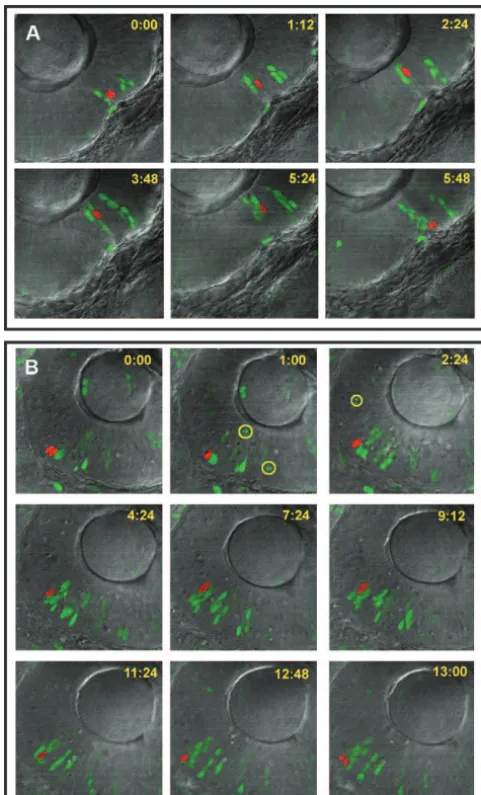
andFraser2001). This manipulation allows for mosaic expression of the transgene, such that individual cells can be followed from mitosis to mitosis via confocal time-lapse microscopy. Figure 7 shows a time series of either a wild-type (Figure 7A) or aperplexed(Figure 7B) retinal neuroepithelial cell completing one full cell cycle. In vertebrate neuroepithelial cells, the nucleus moves from the apical to basal surface—a behavior known as interkinetic nuclear migration. Our time-lapse analyses demonstrate that the average cell cycle period of perplexed retinal cells was twice as long as that of wild-type retinal cells (Table 1). Interkinetic nuclear migration slowed proportionately to the cell cycle delay inperplexed, but no differences in M-phase kinetics were noted. We also calculated the proportion of dying cells and the latency from M-phase to nucleus fragmentation. No cell death was observed in GFP-labeled wild-type cells, consistent with the low levels of normal apoptosis Figure5.—In situmRNA analysis of zebrafishcad. (A)
Ma-previously described for the zebrafish retina (
Biehl-ternal stores of cad are found in embryos prior to zygotic
transcription. (B) Eighteen somite stage embryos begin to maieret al.2001). In contrast, 25% of the retinal cells show restricted high-level mRNA expression in the eyes and labeled in theperplexedretina underwent apoptosis and anterior CNS. (C) Sagittal view of a 24-hpf embryo showscad
this typically occurred within 2 hr from the last cell expression has become further enhanced in the eyes and
division. These observations providein vivoand genetic tectum. (D) Dorsal view of a 24-hpf embryo shows highcad
evidence that CAD function is essential for normal cell expression within the retina, tectum, and proliferative zone
of the hindbrain. (E) Sagittal and (F) dorsal views of 48-hpf cycle progression.
embryos show expression in retinal and tectal proliferative CAD activity is required forde novoUDP biosynthesis, zones, condensing jaw cartilage, and fin buds. which is required for both DNA synthesis and
post-translational modification. To address whether disrup-tion of one or the other of these pathways was more or cycle exit has commenced in zebrafish, chick, or mouse,
less responsible for theperplexedphenotype we analyzed
cadexpression was uniform across the neural retina
(Fig-several additional zebrafish mutants, all of which had ure 6, A–C). In the 84-hpf zebrafish retina,cad
expres-been produced by retroviral insertion (Table 2) (
Gol-sion was maintained in the marginal zone where
reti-linget al. 2002;Amsterdam et al. 2004). The mutant noblasts continue to proliferate (Figure 6D). In the stage
hi688 has an insertion inribonucleotide reductase R2(
Gol-38 chick retina, when lamination has been established,cad
ling et al. 2002). The other mutant, hi3510, has an expression has been downregulated uniformly (Figure
insertion in thethymidylate synthase gene (Amsterdam
6E). However, in the P3 mouse retina, increased cad
et al. 2004). Ribonucleotide reductases are composed expression in still observed in the inner nuclear layer
of subunits R1 and R2. This enzyme catalyzes the synthe-where late proliferating bipolar and Mu¨ ller cells reside
sis of deoxyribonucleotides from their corresponding (Figure 6F).
ribonucleotides. Therefore, ribonucleotide reductase Several studies in cell culture have suggested an
im-provides the only source of precursor nucleotides— portant role for pyrimidine nucleotides in modulating
from eitherde novoor salvage pathways—for DNA syn-the rate of cell proliferation (Huismanet al.1979;
Col-thesis (JordanandReichard1998). Thymidylate
syn-quhounandNewsholme1997;Sigoillotet al.2004).
thase catalyzes the methylation of dUMP to dTMP and In addition, the activity of CAD is modulated
through-is essential forde novosynthesis of thymidine, which is out the cell cycle with the highest activities found in
also essential for DNA synthesis. S-phase (Morford et al. 1994; Sigoillot et al. 2002,
To examine if the lack of nucleotides for DNA synthe-2003). Our previous studies with theperplexedmutation
sis was likely to be the main cause of theperplexed pheno-showed that the proportion of retinal cells in S-phase
types, particularly given the extent to which the cell was dramatically increased at a time when retinal cells
cycle in retinal cells was affected, we examined develop-in wild-type embryos were postmitotic. This result could
ment in these mutants. The ribonucleotide reductase R2
be due to either an increased cell cycle period or a delay
Figure6.—High levels ofcadexpression in zebrafish, chick, and mouse retinas. Prolifera-tive stages of retinal development were ana-lyzed for cad expression in (A) zebrafish, 24 hpf; (B) chick, stage 22; and (C) albino mouse, embryonic day 11. Postmitotic stages of retinal development were also analyzed forcad expres-sion in (D) zebrafish, 84 hpf (note the high level of expression in the proliferative retinal marginal zone, arrowheads); (E) chick, stage 38; and (F) mouse, postnatal day 3. Asterisks denote a high level of expression in the inner nuclear layer at this time. Basal surface is to the right and apical is to the left. Reduced pigmentation in D was due to use of phenylthi-ourea, which blocks pigment synthesis in ze-brafish. Reduced pigmentation facilitated as-sessment of gene expression in the retinal pigment epithelium.
lethality and could not be analyzed further. Thymidylate ral insertion in the UDP-glucuronic acid/UDP-N -acetyl-galactosamine dual transporter had normal eye size and synthase mutants, which affectde novo DNA synthesis,
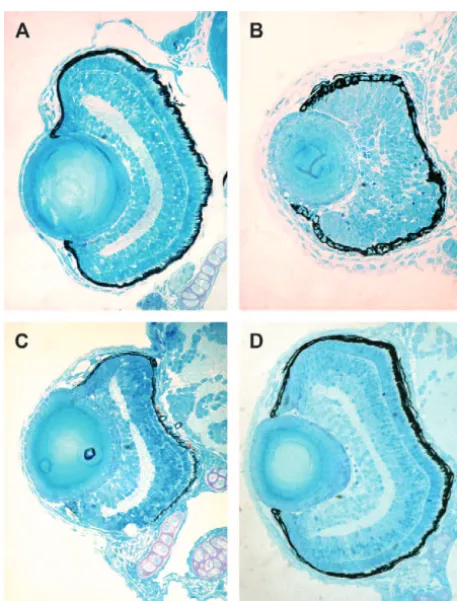
but not UDP-dependent glycosylation, show reduced retinal differentiation (Figure 8D). However, cartilage differentiation and jaw morphogenesis was disrupted. eye size. Interestingly, retinal lamination and
differenti-ation appear normal as compared to that in perplexed In particular, Alcian blue staining was severely reduced and Meckel’s cartilage and the ethmoid plate appeared retinas (Figure 8). To assay jaw and fin formation and
differentiation, Alcian blue cartilage staining and histo- absent (Figure 9D). Fin development was not affected by mutations in this nucleotide-sugar transporter. Nor-logical inspections were conducted (Figure 9).
Thymidy-late synthase mutants showed normal jaw structures and mal eye and fin morphology, but similarly disrupted jaw development, was observed in mutants for UDP-fin morphogenesis (Figure 9C). In contrast, perplexed
embryos showed severe dismorphogenesis of the jaws glucuronic acid decarboxylase.
Together these data suggest that defects in both de
and fins (Figure 9D). The overall staining intensity of
Alcian blue was reduced inperplexedand notably absent novonucleotide synthesis and UDP-dependent protein glycosylation contribute to theperplexedphenotypes. Spe-were Meckel’s, cleithrum, and hyosymplectic cartilage.
To examine the role of UDP-dependent glycosylation cifically, decreased retinal precursor cell proliferation is likely due to low levels of nucleotides required for DNA we analyzed the hi3378 mutant, which lacks the
UDP-glucuronic acid/UDP-N-acetylgalactosamine dual trans- synthesis as bothcadandthymidylate synthasemutants show reduced retinal size. The retinal lamination and differ-porter. This transporter is part of a large family of
nu-cleotide sugar transporters, where each member has entiation phenotypes of perplexed, however, are more likely to be caused by pathways other than DNA synthesis specificity for a particular nucleotide-sugar compound
(BulterandElling 1999). In humans there are five becausethymidylate synthasemutants show normal retinal lamination and cellular differentiation. The jaw defects UDP-sugar transporters (IshidaandKawakita2004).
Mutations in these transporters prevent the movement inperplexedcan be attributed to UDP-dependent protein glycosylation, as mutants that affect subsets of this post-of the nucleotide-sugar intermediates from the
cyto-plasm to the Golgi apparatus and therefore block a translational modification pathway show defects in jaw development. Cumulatively, our comparison of multiple subset of UDP-dependent glycosylation events. We also
investigated hi954, which has a mutation in the UDP- mutants suggests that theperplexedphenotype is complex and not simply due to a generalized decrease inde novo glucuronic acid decarboxylase gene. This enzyme is
re-quired for the conversion of UDP-glucuronic acid to pyrimidine biosynthesis. Instead, the defects ofperplexed
are due to the misregulation of UDP, which impinges UDP xylose, which is used for synthesis of numerous
glycoconjugates abundant in the extracellular matrix on several critical pathways that have tissue-specific con-sequences.
retrovi-TABLE 1
Cell cycle parameters of retinal progenitors
Parameter Wild type perplexed
Cell cycle (hr) 6.3⫾1.3 12.1⫾1.6 Apoptosis: latency NA 1.6⫾1.3
from M-phase (hr)
Apoptotic cells 0 9
Total cells imaged 26 27
ative for the perplexed phenotypes. Similar phenotypes betweencadmorphants (embryos in whichcadwas inhib-ited by antisense oligonucleotides) and hi2694 (a retrovi-ral insertional mutant in the first exon ofcad) strongly suggest that theperplexedmutation results in loss-of-func-tion for CAD activity. The tissue specificity of the per-plexedmutation can be explained by the high levels of gene expression in the tissues that display dismorphic phenotypes. The Drosophilacadmutation and our anal-ysis ofcadexpression in other vertebrates suggest that a tissue-enhanced developmental expression of this gene is conserved through evolution.
Our analyses also suggest that the utilization of prod-ucts of de novo pyrimidine biosynthesis may differ be-tween different cell types. Comparative analysis of muta-tions that differentially affect eitherde novonucleotide synthesis or UDP-dependent glycosylation suggests that retinal development requiresde novonucleotide synthe-sis for proliferation and UDP-dependent glycosylation for differentiation. Jaw development does not appear to requirede novonucleotide synthesis, but is dependent on the role of CAD in facilitating glycosylation. Al-though DNA/RNA synthesis and UDP-dependent glyco-Figure7.—Confocal time-lapse analysis of retinal cell cycle sylation are the principal downstream pathways affected dynamics. (A) Wild-type and (B)perplexedretinal progenitors by CAD, additional uncharacterized metabolic products are shown. The red pseudo-colored cell expressed histone of CAD may also be important for the phenotypes associ-H2B:::GFP and can be seen to enter mitosis in the top left
ated with the perplexedmutation. In particular, pheno-(time 0:00). Representative images are shown throughout the
types such as retinal differentiation, where we were unable cell cycle. Green cells, also labeled with histoneH2B:::GFP,
were followed by separate analyses. Yellow numbers show time to find a similar defect in other downstream metabolic in minutes from the first imaged M-phase. The lens is located mutants, may be due to alternative pathways. Our com-in the top half of each image and the ventricular zone at the parative analysis has been limited to currently identified retinal pigment epithelium is toward the bottom
(pigmenta-mutations. tion was inhibited with PTU). Apoptosis can be seen occurring
The imaging experiments to directly measure the cell in some labeled cells in theperplexedretina (highlighted by
yellow circles). Nonlabeled cells dying are also visible by their cycle period of retinal progenitor cells are consistent with pyknotic profiles. an important role for CAD in cell proliferation. Reti-noblasts with theperplexedmutation required twice as long to complete one cell cycle and also showed increased DISCUSSION
cell death. One possibility for the increase in cell death Theperplexedmutation in zebrafish affects cell prolif- might be due to a lack of pyrimidine nucleotides re-eration and differentiation in a tissue-restricted manner. quired for S-phase and a subsequent induction of a Specifically, retinal, tectal, jaw, and fin morphogenesis checkpoint arrest, which activates apoptosis. Alterna-is affected. Using positional cloning techniques we have tively, activation of apoptotic pathways may be more direct identified a missense mutation within the carbamoyl as recent studies have indicated that CAD is a target for phosphate synthetase 2 domain of thecad gene inper- caspase-mediated degradation during cell death and loss
plexedembryos. Targeted gene knockdown and pyrimi- of CAD activity, therefore, facilitates apoptosis (Huanget al.2002).
caus-TABLE 2
Mutant comparison
Allele Gene Metabolic function Phenotype
plxa52 cad De novosynthesis of pyrimidines (DNA synthesis Retinal proliferation
and UDP glycosylation) Retinal differentiation Jaw differentiation
hi688 ribonucleotide reductase R2 Synthesis of dNTP’s (DNA synthesis) Early lethal, pan-degeneration
hi3510 thymidylate synthase De novosynthesis of thymidine (DNA synthesis) Retinal proliferation
hi3378 UDP-glucuronic acid/UDP- Transport of nucleotide sugar into Golgi Jaw differentiation N-acetylgalactosamine dual apparatus (UDP glycosylation)
transporter
hi954 UDP-glucuronic acid decarboxylase Synthesis of UDP xylose (UDP glycosylation) Jaw differentiation
Observations withperplexeddescribed here are consis- was found to be a direct target of mitogen-activated tent with previous studies that have implicated CAD protein (MAP) kinases. The MAP kinase Erk2 was found as a key target of signaling pathways that regulate cell to phosphorylate CAD and increase its enzymatic activity proliferation and differentiation (reviewed in Huang (Graves et al. 2000). Direct phosphorylation of CAD andGraves 2003). For example, in cell culture CAD by protein kinase A (PKA) was also found to correlate with increased activity (Carreyet al. 1985;Sigoillot
et al.2002). Interestingly, PKA phosphorylation also ren-dered CAD more susceptible to degradation, suggesting
Figure 9.—Jaw and fin phenotypes of CAD pathway mu-tants. (A) Wild type; (B) perplexed (CAD); (C) thymidylate synthase mutant (3510); (D) UDP-glucuronic acid/UDP-N-acetylgalactosamine dual transporter mutant (3378). Alcian Figure8.—Retinal histology of CAD pathway mutants. (A)
Wild type; (B) perplexed; (C) thymidylate synthase mutant blue staining was used to label differentiating cartilage. Note the reduced and dismorphic jaw cartilage and fins inperplexed. (3510); (D) UDP-glucuronic acid/UDP-N-acetylgalactosamine
dual transporter mutant (3378). Note the small eye, but nor- Reduced cartilage, but normal fins were observed in the UDP-glucuronic acid/UDP-N-acetylgalactosamine dual transporter mal differentiation in the thymidylate synthase mutant. No
was funded by American Heart Association grant 0225071Y (V.L.),
negative feedback regulation (Carrey 1986). Finally,
National Institutes of Health grant RO1EY01467 (B.L.), and a March
an important role for CAD in proliferation is supported
of Dimes Basil O’Connor Fellowship (B.L.).
by the observation that CAD activity is upregulated in multiple cancer cell lines (Kizakiet al.1980;Aokiand
Weber1981;Sigoillotet al.2004).
LITERATURE CITED In addition to post-translational regulation, CAD is
Amsterdam, A., R. M. Nissen, Z. Sun, E. C. Swindell, S. Farrington
also regulated transcriptionally and in a manner
consis-et al., 2004 Identification of 315 genes essential for early
zebra-tent with growth and differentiation. For example, when fish development. Proc. Natl. Acad. Sci. USA101:12792–12797.
Anderson, C. M., and F. E.Parkinson, 1997 Potential signalling
proliferation of ts13 cells is inhibited by serum
starva-roles for UTP and UDP: sources, regulation and release of uracil
tion,cadmRNA synthesis and stability is decreased (Rao
nucleotides. Trends Pharmacol. Sci.18:387–392.
andDavidson1988). The opposite effects oncadmRNA Aoki, T., andG. Weber, 1981 Carbamoyl phosphate synthetase
(glu-tamine-hydrolyzing): increased activity in cancer cells. Science
are observed with serum stimulation of quiescent cells.
212:463–465.
Likewise, when cells of the HL-60 myeloid line are
in-Biehlmaier, O., S. C. NeuhaussandK. Kohler, 2001 Onset and
duced to undergo terminal differentiation,cadmRNA time course of apoptosis in the developing zebrafish retina. Cell
Tissue Res.306:199–207.
expression is nearly extinguished (Raoet al.1987).
Com-Boyd, K. E., andP. J. Farnham, 1997 Myc versus USF: discrimination
pelling evidence now implicates a direct Myc-dependent
at the cad gene is determined by core promoter elements. Mol.
mechanism for activating thecadpromoter during pro- Cell. Biol.17:2529–2537.
Bulter, T., andL. Elling, 1999 Enzymatic synthesis of nucleotide
liferation (Miltenbergeret al. 1995;Boydand
Farn-sugars. Glycoconj. J.16:147–159. ham1997;Bushet al.1998). Further analysis of thecad
Bush, A., M. Mateyak, K. Dugan, A. Obaya, S. Adachiet al., 1998
promoter has indicated that the Brg1 complex, a SWI/ c-myc null cells misregulate cad and gadd45 but not other
pro-posed c-Myc targets. Genes Dev.12:3797–3802.
SNF-type chromatin remodeling complex, associates
Carrey, E. A., 1986 Nucleotide ligands protect the inter-domain
with Myc to inducecadgene expression (Palet al.2003).
regions of the multifunctional polypeptide CAD against limited
In the absence of high levels of Myc, the Brg1 complex proteolysis, and also stabilize the thermolabile part-reactions of
the carbamoyl-phosphate synthase II domains within the CAD
associates with transcriptional repressor proteins and
polypeptide. Biochem. J.236:327–335.
cadtranscription levels fall. Interestingly, theyoung
mu-Carrey, E. A., D. G. CampbellandD. G. Hardie, 1985
Phosphoryla-tation in zebrafish, which shows delayed cell cycle exit tion and activation of hamster carbamyl phosphate synthetase
II by cAMP-dependent protein kinase: a novel mechanism for
and blocked retinal cell differentiation, is caused by a
regulation of pyrimidine nucleotide biosynthesis. EMBO J. 4:
null mutation in brg1 (Link et al. 2000; Gregg et al.
3735–3742.
2003). Furthermore, this mutation inhibits a wave of Colquhoun, A., andE. A. Newsholme, 1997 Aspects of glutamine
metabolism in human tumour cells. Biochem. Mol. Biol. Int.41:
MAP kinase acitivity that normally associates with retinal
583–596.
cell differentiation (Gregget al.2003).
Davidson, J. N., andD. Patterson, 1979 Alteration in structure
Overall, our analysis of the perplexed mutation indi- of multifunctional protein from Chinese hamster ovary cells
de-fective in pyrimidine biosynthesis. Proc. Natl. Acad. Sci. USA76:
cates that the pyrimidine enzyme CAD has a central,
1731–1735.
but tissue-specific role in coordinating cell proliferation
Draper, B. W., P. A. MorcosandC. B. Kimmel, 2001 Inhibition
and differentiation, supporting a model that was pro- of zebrafish fgf8 pre-mRNA splicing with morpholino oligos: a
quantifiable method for gene knockdown. Genesis30:154–156.
posed on the basis of numerous cell culture findings
Golling, G., A. Amsterdam, Z. Sun, M. Antonelli, E. Maldonadoet
(HuangandGraves2003). The comparative analysis of
al., 2002 Insertional mutagenesis in zebrafish rapidly identifies
perplexedto zebrafish mutants that affect DNA nucleotide genes essential for early vertebrate development. Nat. Genet.31:
135–140.
precursors or UDP-dependent glycosylation suggests
Graves, L. M., H. I. Guy, P. Kozlowski, M. Huang, E. Lazarowski
that the role of CAD is complex and may differ in
func-et al., 2000 Regulation of carbamoyl phosphate synthetase by
tion depending on cell type. For example, within the MAP kinase. Nature403:328–332.
Gregg, R. G., G. B. Willer, J. M. Fadool, J. E. DowlingandB. A.
retina, CAD appears to be required during proliferative
Link, 2003 Positional cloning of theyoungmutation identifies
phases to provide sufficient quantities of DNA
nucleo-an essential role for the Brahma chromatin remodeling complex
tides for genome replication. Without CAD, the time in mediating retinal cell differentiation. Proc. Natl. Acad. Sci.
USA100:6535–6540.
needed to complete one cell cycle of a retinal
neuroepi-Huang, M., andL. M. Graves, 2003 De novo synthesis of pyrimidine
thelial cell is extended twofold. Retinal cell
differentia-nucleotides; emerging interfaces with signal transduction
path-tion is also disrupted in perplexed and this phenotype ways. Cell Mol. Life Sci.60:321–336.
Huang, M., P. Kozlowski, M. Collins, Y. Wang, T. A. Haysteadet
sets perplexed/CAD mutants apart from other mutants
al., 2002 Caspase-dependent cleavage of carbamoyl phosphate
that affect de novo synthesis of DNA nucleotides. We
synthetase II during apoptosis. Mol. Pharmacol.61:569–577.
suggest that the role of CAD in UDP-dependent glycosyl- Huisman, W. H., K. O. RaivioandM. A. Becker, 1979 Simultaneous
estimation of rates of pyrimidine and purine nucleotide synthesis
ation is the reason for the retinal differentiation
pheno-de novo in cultured human cells. J. Biol. Chem. 254:12595–
type. Future studies to disrupt specific UDP-dependent
12602.
glycoproteins will be required to identify the key sub- Ishida, N., andM. Kawakita, 2004 Molecular physiology and pa-thology of the nucleotide sugar transporter family (SLC35).
strates for retinal cell differentiation.
Pflugers Arch.447:768–775.
We thank Adam Amsterdam and Jeff Gross for sharing data and Jones, M. E., 1980 Pyrimidine nucleotide biosynthesis in animals: mutant lines prior to publication. We also gratefully acknowledge the genes, enzymes, and regulation of UMP biosynthesis. Annu. Rev.
Jordan, A., and P.Reichard, 1998 Ribonucleotide reductases. Annu. Nasevicius, A., and S. C. Ekker, 2000 Effective targeted gene ‘knockdown’ in zebrafish. Nat. Genet.26:216–220.
Rev. Biochem.67:71–98.
Jowett, T., andL. Lettice, 1994 Whole-mountin situhybridiza- Ohnuma, S., A. PhilpottandW. A. Harris, 2001 Cell cycle and cell fate in the nervous system. Curr. Opin. Neurobiol.11:66–73. tions on zebrafish embryos using a mixture of digoxigenin- and
fluorescein-labelled probes. Trends Genet.10:73–74. Pal, S., R. Yun, A. Datta, L. Lacomis, H. Erdjument-Bromageet al., 2003 mSin3A/histone deacetylase 2- and PRMT5-containing
Kizaki, H., J. C. Williams, H. P. MorrisandG. Weber, 1980
In-Brg1 complex is involved in transcriptional repression of the Myc creased cytidine 5⬘-triphosphate synthetase activity in rat and
target gene cad. Mol. Cell. Biol.23:7475–7487. human tumors. Cancer Res.40:3921–3927.
Patterson, D., R. Berger, J. Bleskan, D. VannaisandJ. Davidson,
Knapik, E., A. Goodman, M. Ekker, M. Chevrette, J. Delgadoet al.,
1992 A single base change at a splice acceptor site leads to a 1998 A microsatellite genetic linkage map for zebrafish (Danio
truncated CAD protein in Urd-A mutant Chinese hamster ovary
rerio). Nat. Genet.18:338–343.
cells. Somat. Cell Mol. Genet.18:65–75.
Ko¨ ster, R., andS. Fraser, 2001 Tracing transgene expression in
Qiu, Y., andJ. N. Davidson, 1998 CAD overexpression in mamma-living zebrafish embryos. Dev. Biol.233:329–346.
lian cells. Adv. Exp. Med. Biol.431:481–485.
Lee, V. M., M. Bronner-FraserandC. V. H. Baker, 2005 Restricted
Rao, G. N., andJ. N. Davidson, 1988 CAD gene expression in serum-response of mesencephalic neural crest to sympathetic
differenti-starved and serum-stimulated hamster cells. DNA 7:423–432. ation signals in the trunk. Dev. Biol.278:175–192.
Rao, G. N., E. S. BufordandJ. N. Davidson, 1987 Transcriptional
Levine, E. M., and E. S. Green, 2004 Cell-intrinsic regulators of
regulation of the human CAD gene during myeloid differentia-proliferation in vertebrate retinal progenitors. Semin. Cell Dev.
tion. Mol. Cell. Biol.7:1961–1966. Biol.15:63–74.
Shimoda, N., E. W. Knapik, J. Ziniti, C. Sim, E. Yamadaet al., 1999
Link, B., P. Kainz, T. RyouandJ. Dowling, 2001 Theperplexed
Zebrafish genetic map with 2000 microsatellite markers. Geno-andconfusedmutations affect distinct stages during the transition
mics58:219–232. from proliferating to post-mitotic cells within the zebrafish retina.
Sigoillot, F. D., D. R. EvansandH. I. Guy, 2002 Growth-depen-Dev. Biol.15:436–453.
dent regulation of mammalian pyrimidine biosynthesis by the
Link, B. A., J. M. Fadool, J. MalickiandJ. E. Dowling, 2000 The
protein kinase A and MAPK signaling cascades. J. Biol. Chem. zebrafish young mutation acts non-cell-autonomously to
un-277:15745–15751. couple differentiation from specification for all retinal cells.
De-Sigoillot, F. D., J. A. Berkowski, S. M. De-Sigoillot, D. H. Kotsisand velopment127:2177–2188.
H. I. Guy, 2003 Cell cycle-dependent regulation of pyrimidine
Miltenberger, R. J., K. A. SukowandP. J. Farnham, 1995 An
biosynthesis. J. Biol. Chem.278:3403–3409.
E-box-mediated increase in cad transcription at the G1/S-phase Sigoillot, F. D., S. M. SigoillotandH. I. Guy, 2004 Breakdown boundary is suppressed by inhibitory c-Myc mutants. Mol. Cell.
of the regulatory control of pyrimidine biosynthesis in human Biol.15:2527–2535. breast cancer cells. Int. J. Cancer109:491–498.
Morford, G., J. N. DavidsonandE. C. Snow, 1994 Appearance Singer, A., H. Perlman, Y. Yan, C. Walker, G. Corley-Smithet al., of CAD activity, the rate-limiting enzyme for pyrimidine biosyn- 2002 Sex-specific recombination rates in zebrafish (Danio rerio). thesis, as B cells progress into and through the G1 stage of the Genetics160:649–657.
cell cycle. Cell Immunol.158:96–104. Sturtevant, A. H., 1913 The linear arrangement of six sex-linked
Morgan, T. H., 1911 The origin of nine wing mutations inDrosoph- factors in Drosophila as shown by their mode of association. J. ila.Science33:384. Exp. Zool.14:43–59.
Morgan, T. H., 1913 Factors and unit characters in Mendelian Westerfield, M., 1995 The Zebrafish Book. University of Oregon Press, heredity. Am. Nat.47:5–16. Eugene, OR.
Morgan, T. H., 1915 The infertility ofrudimentarymutants of