ABSTRACT
CHURCHWELL, ATALAYSHA LAQUETTE. The Complexity of Care: A Single Case Study Exploring the Intersectionality of Culture and Chronic Life Stressors on Trust. (Under the direction of Dr. Edwin R. Gerler).
The purpose of this instrumental qualitative case study was to learn about the lived
experiences of patients within primary care settings as it relates to trust. The development of trust is central to the therapeutic relationship between providers and patients. The assessment process, which is a crucial first step in ascertaining the needs of patients, is only as accurate as the
The Complexity of Care: A Single Case Study Exploring the Development of Trusting Patient-provider Relationships
by
Atalaysha Laquette Churchwell
A dissertation submitted to the Graduate Faculty of North Carolina State University
in partial fulfillment of the requirements for the degree of
Doctor of Philosophy
Counseling and Counselor Education
Raleigh, North Carolina 2019
APPROVED BY:
_______________________________ ____________________________ Dr. Edwin Gerler Dr. Angela Smith
Committee Chair
ii DEDICATION
iii BIOGRAPHY
Atalaysha Laquette Churchwell was born in Grand Rapids, Michigan and raised in Kentwood, Michigan. She earned a bachelor’s degree in university studies from Middle Tennessee State University. She subsequently graduated with a master’s degree in Counseling Psychology from Tennessee State University. Upon graduating, Atalaysha worked in
iv ACKNOWLEDGMENTS
I want to thank everyone who has helped me along my path. My Docsisters: Tabitha, Regina, LaVera, Liz, Mona, and Tonya for your encouragement and support. My committee who has encouraged me and challenged me to map out my goals, bringing me through this process. My family and friends who have prayed with and for me along this journey. My NBCC Foundation Legacy fellows for motivating me and supporting me. I want to especially
v TABLE OF CONTENTS
LIST OF TABLES ... viii
LIST OF FIGURES ... ix
CHAPTER ONE: INTRODUCTION ... 1
Primary Care and Current Modeling... 4
Patient-Centered Medical Home ... 5
Five key functions ... 5
Population health ... 6
Patient engagement ... 6
Need and Rationale for the Study ... 6
Significance of the Study ... 9
Research Questions ... 11
Key Terms Defined ... 11
Summary ... 12
CHAPTER TWO: LITERATURE REVIEW ... 13
Trust and Trust Development ... 14
Importance of Trust in PCMH ... 16
Perceptions ... 18
Social Determinants of Health ... 19
Psychosocial Factors of Health Outcomes ... 20
Pilot Study ... 22
Patient-Provider Trust ... 23
Theories and Models ... 24
Relational Cultural Theory ... 24
Ethnopolitical Theory ... 26
Chaos and Complexity Theory ... 27
Social Ecology Model for Health Promotion... 28
Gaps in the Literature... 29
CHAPTER THREE: METHOD ... 31
Purpose of the Study ... 31
Case Study ... 31
Identified PCMH ... 32
Research Design... 34
Data Collection ... 34
Participants ... 35
Procedure ... 39
Informed consent ... 41
Forms of data collected ... 41
Instrumentation ... 42
Data Analysis ... 44
Research Team ... 46
vi
Validation Strategies ... 48
Summary ... 49
CHAPTER FOUR: FINDINGS ... 50
Participant Profiles ... 50
Latoya ... 50
Monica ... 51
Nivea ... 51
Ebony ... 52
Will ... 52
Marco ... 52
Jason ... 52
Sabrina ... 53
Nancy ... 53
PCMH Experience ... 53
PCMH Data Findings ... 55
Findings... 55
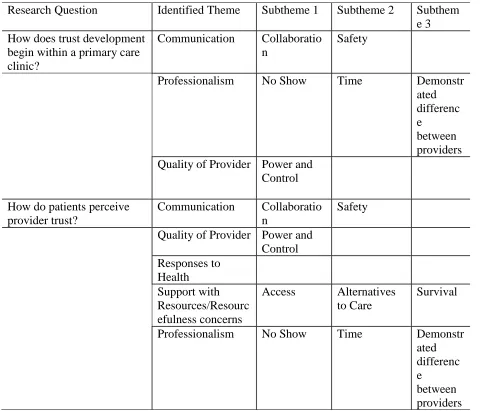
Research Question 1: How does trust development begin within a primary care clinic?... 58
Communication ... 58
Professionalism ... 59
Quality of provider ... 61
Research Question 2: How do patients perceive provider trust? ... 62
Responses to health ... 62
Support with resources/resourcefulness ... 64
Research Question 3: What are ways trust development is established or hindered? ... 65
Chapter Summary ... 66
CHAPTER FIVE: DISCUSSION ... 67
Theoretical Connections ... 67
Bearing Witness ... 70
Growth-Fostering Relationship ... 70
Understanding Complexity ... 72
Research Questions #1: How does trust development begin within a primary care clinic? . 73 Communication ... 74
Professionalism ... 74
Quality of provider ... 75
Research Question #2: How do patients perceive provider trust? ... 75
Research Question #3: What are ways trust development is established or hindered? ... 75
Support with resources/resourcefulness concerns ... 76
Responses to health ... 76
Limitations ... 77
Implications for Counseling ... 78
Practice and Future Research ... 79
Conclusion ... 80
REFERENCES ... 82
vii
Appendix A: Conceptual Framework ... 96
Appendix B: In-Person Interview Questions ... 97
Appendix C: Second Interview Questions ... 99
Appendix D: Prescreen Checklist ... 100
Appendix E: Provider request for Participant Recruitment E-mail ... 101
Appendix F: Telephonic Script for Potential Participants ... 103
Appendix G: North Carolina State University Informed Consent Form for Research ... 104
Appendix H: Observational Protocol ... 108
Appendix I: Demographics Questionnaire ... 109
Appendix J: Pilot Study Interview Questions ... 111
Appendix K: Data Collection Matrix ... 114
Appendix L: Participant Study Theme Review E-mail ... 115
Appendix M: Participant Informed Consent for Review E-mail ... 116
Appendix N: Formal Recruitment Letter ... 117
viii LIST OF TABLES
ix LIST OF FIGURES
1 CHAPTER ONE: INTRODUCTION
In the early twenty-first century, discussions about disparities in health led to a
conclusion that health inequalities across race, gender, and other cultural factors are among the nation’s most unyielding concerns (CDC, 2007; Nelson, 2002). The World Health
Organization’s Commission on the Social Determinants of Health (2008) concluded that reducing health inequities was a matter of social justice. Social injustices such as historic oppression can be a chronic life stressor, which are constant and can be tied to enduring social structures, causing or exacerbating health concerns (Meyer, 2003). According to the American Psychological Association (APA): “Chronic stress can occur in response to everyday stressors that are ignored or poorly managed, as well as exposure to a traumatic event” (How Stress Harms section, para 3, 2013). Chronic stress can exacerbate risk of chronic health conditions such as heart disease, obesity, depression, gastrointestinal problems, and asthma. The Center for Disease Control (CDC; 2007) named chronic disease a public health challenge of the 21st century with nearly half the population being effected by 2030. With the rising concerns of health
disparities and the challenges of chronic disease, it becomes increasingly relevant to identify and resolve barriers to engaging patients in effective care.
2 concerns. Often times these disparities are the foundations of other more direct challenges that derail treatment progress. These challenges highlight the importance of having further research regarding the multiple factors that can affect health outcomes and what providers can do to address those concerns in an effort to promote enhanced health outcomes.
Of particular interest, is the literature regarding social cultural factors such as
communication, expectations, difference in race and gender, mistrust and underutilization of preventative care ( DesJesus, Vickers, Howell, & Stroebel, 2012; Johnson-Lawrence, Griffith, & Watkins, 2013; LaVeist, Isaac, & Williams, 2009; Meyer, Ouellette, Haile, &McFarlane, 2011). These developments in the exploration of some of the factors that affect health outcomes are promising. However, research exploring the intersection of chronic life stressors and culture on patient-provider trust within marginalized populations, given that mistrust negatively affects the therapeutic relationship and the health outcomes, was missing from the discussion. Adults within marginalized populations receiving care within Primary Care clinics experience disruptions in health outcomes when there is a perception of mistrust within the patient-provider relationship. Gaining insight into perceptions of trust among marginalized populations regarding the patient-provider relationship could lead to the development of improved patient-provider interventions, better engagement, and improved patient health outcomes.
As the integration of health care and the use of Patient-Centered Medical Home model (PCMH) models have evolved there is potential for providers of care in clinic settings to expand and better address the needs of the identified population. Additionally, the collaborative
3 costs stemming from the escalation of chronic diseases. Primary care thus shoulders the double burden of preventing and managing rising chronic disease while also being responsible for lowering health care costs” (Howard, Malouin, & Callow-Rucker, 2016, pg. 10). The PCMH model also called Primary Care Medical Home model encourages patients to be managers of their own illness (Howard, Malouin & Callow-Rucker, 2016). The model identifies strategies to address health outcomes and challenges the health care providers to explore the lives of patients and engage with community resources to promote health education, lifestyle, and environmental changes.
The professional counselor in an integrated PCMH, as other healthcare providers can be an important member of the team to help empower the patient, identify variables that affect patient engagement in their health, and improve their health outcomes. Counselors and other behavioral health professionals can address emotional and behavioral barriers to engagement to care and provide the necessary resources to patients that may prevent patient follow-through. Being able to better understand the totality of the patient’s needs is beneficial towards the identification of a person-centered plan of care. The purpose of the current study was to learn about how the patient experiences patient-provider trust development within a primary care clinic. The study was qualitative in nature and attempted to outline qualitatively the shared experiences of patients within a Durham County primary care clinic dealing with trust
4 Primary Care and Current Modeling
Primary care is a core component within any health system. Kilo and Wasson (2010) identify that “primary care was defined as an entity in 1961. Medicare and Medicaid programs were signed into law July 1965” (pg. 10). The World Health Organization (WHO) at the international conference in 1978 defined primary care in the Alma-Alta declaration. The WHO defined primary care as:
Primary health care is essential health care based on practical, scientifically sound, and socially acceptable methods and technology made universally accessible to individuals and families in the community through their full participation and at a cost that the community and country can afford to maintain at every stage of their development in the spirit of self-reliance and self-determination (WHO, 1978).
Although, it was thought that appropriate health could be achieved for all by the year 2000, at this time in the United States there still isn’t universal healthcare for individuals and families. However, there have been advances that have been made to identify and improve care in community clinic settings. When individuals have access to primary care it can reduce the use of crisis services and provide opportunity to engage in preventative care. It is the intention of primary care to be effective and safe for the patient population and community they serve. The World Health Organization updated part of the definition to primary health care (2008) to include:
5 The patient is intended to be the center of care. The consistent engagement of care with primary care clinics is intended to support a trusting relationship between the patient and the provider. Additionally, the primary care relationship is intended to be just that, the primary health relationship that a patient has and not the acute settings of the emergency department. Patient-Centered Medical Home
The Patient-Centered Medical Home model are examples of primary care clinics intended to follow guidelines identified by the National Center for Quality Assurance (NCQA). In 2007 the American College of Physicians adopted the principles of PCMH. Phillips and Bazemore (2010) identified the core of the PCMH’s to include the redesign of primary care, reimbursement reform, relationship focused, and comprehensive care. PCMH’s should address rising cost of healthcare by expanding the team of providers to better coordinate care within the clinic and empowering the patient to address chronic conditions. Providers can include physicians, nurse practitioners, nurses, physician assistants, social workers, counselors, pharmacist, and
nutritionist. PCMH’s encourages whole person care for the patient, utilizing team coordination to overcome some barriers of multiple system engagement. Transitions out of crisis services such as inpatient hospital visits back to the community are crucial opportunities to coordinate care and ensure patients are supported and connected within their community and with their primary care clinics for continued care.
6 Ensuring patient-centered comprehensive care requires the provider to invest in understanding the culture, motives, and specific needs of the patient to improve health outcomes.
Population health. Addresses the concerns of the wellness of the community in addition to the individual patient. Exploring health on a larger population scale with the availability to evaluate data to guide appropriate interventions. To appropriately address population health it includes preventive care, cross system collaboration, early intervention, and investment from the patient to manage chronic conditions.
Patient engagement. The patient’s role within the PCMH model is to collaborate with
the provider and take the lead in care planning that is relevant to them. This is a shift from provider driven care; the patient is the true expert of their needs. With the patient invested in the direction of their care, interventions identified should empower the patient to the action of
change. Keeley, West, Tutt, and Nutting (2014) state, “The patient experience has been described as a multidimensional, complex phenomena that is influenced by individual and environmental phenomena” (pg. 2). To improve patient engagement it requires the attention of both the patient and provider in the way they interact. Kilo and Wasson (2010) found there is, “still much to learn about truly meeting patients' needs and engaging patients meaningfully in their care” (pg. 776).
Need and Rationale for the Study
Expectations for PCMH’s to meet accreditation requirements consistently address safety concerns. Often in attempts to engage the patient in their care, practices provide patient
7 communication can encourage trusting relationships, but may not be an exclusive variable to trusting relationships.
Additionally, explorations of race and gender in relationship to trust have been examined. O’Malley, Sheppard, Schwartz, and Mandelblatt (2004) explored higher trust in the physician by African American woman increase their participation in preventative care. Benkert, Peters, Clark, and Keves-Foster (2006) found that trust dilemmas affect African American’s willingness to seek care and follow treatment recommendations. Additionally, Benkert et al. (2006)
identified racism as a chronic life stressor. O’Malley et al. (2004) encouraged exploring global trust, as it is difficult to separate institutional trust versus interpersonal trust with provider. Trust is central to an effective patient-provider relationship. There were limitations in the research regarding a lack of direct observation of patient care and engagement with providers.
Behnia (2008) explores interpersonal trust and how three typical approaches to trust development only speak to initial trust and that the client-provider relationship benefits from a deeper level of trust development. Trust and the belief of future trustworthy actions encourages cooperation and can reduce the complexity of life (Behnia, 2008). Hupcey and Miller (2006) found the patient perception of trust aren’t well understood. Additionally, with PCMH the definition of the provider has expanded and much of the current research explores the patient-provider relationship regarding the physician. There is a wealth of research that is disease specific regarding belief of trust. Murray and McCrone (2014) identified that much of the qualitative research completed has been grounded theory or cross-sectional quantitatively with tools that are patient-physician specific. The research has explored ethnically diverse
8 In review of the literature, an identified gap is exploring cultural influences that aren’t connected to ethnicity specifically, unevaluated variables that influence trust, patients living in smaller communities, including a wider definition of provider, exploration of additional populations that are identified as marginalized populations. Finally, research that explores alternative qualitative methodologies could provide an additional perspective regarding understanding what trust development means and looks like for the patient.
Specifically, this research explored the identified gap in the literature regarding
understanding the intersectionality of culture and chronic life stressors on trust development. The problem explored was: Understanding adults within marginalized populations receiving care within a Primary Care clinic and their experiences of trust development within the patient-provider relationship. The purpose of this case study was to explore and describe how culture and chronic life stressors factor on trust development between the provider and patients at a local integrated primary care clinic, and summarize some assertions that may be used by the patient and/or the provider to address those factors to improve health outcomes. The current study adopted a single instrumental case study (Stake, 1995) with the issue of Trust Development being illustrated at a Durham County primary care clinic. It was the intention of the researcher to gain insight into the issue of trust development with individuals within a specific primary care clinic in a smaller urban city in North Carolina and how providers can promote health outcomes.
9 completed within two-week timeframe. Based on this single case study, the aim of the research was to a) Identify and organize overarching themes/issues; b) Synthesize and summarize the study findings to help inform future development of effective ways to develop trust taking cultural and chronic life stressors of patients into consideration.
Significance of the Study
Two of the three components of the Triple Aim of healthcare are quality care and improved health of the population (Institute for Healthcare Improvement, 2014). Currently, focusing on client satisfaction does not address trust development. Trust can affect adherence and follow-through with healthcare needs. With limited time during encounters and the
complexity of concerns that patients can have, addressing patient-provider trust can improve the quality and health of the population. Translating some of the constructs of the aforementioned theories into practice combined with a better understanding of trust development within primary care clinics, could be useful in accomplishing improved interactions, authentic relationships, and identifying patterns that hinder trust thus becoming a barrier to care. Obtaining an extensive understanding of trust development within the practice between patients and providers in primary care settings was the objective of this study.
Providers within primary care practices engage with clients often at the onset or
10 embracing their client’s non-linear experiences that are complex could promote a more accurate awareness of the client experience. This in turn increases the ability of individuals to relate to others more authentically and empathetically (Comstock et al., 2008).
Healing has the potential to occur in the context of mutually empathic and growth fostering relationships (Comstock et al., 2008). Patient-provider trust is promoted when clients feel understood, respected, and heard; leading to their believing the provider has their best interest in mind (Levin et al., 2006). With secured patient-provider trust, client health responses can improve, thus improving health adherence, outcomes, and overall quality of care. Trusting relationships could position providers to facilitate the reorganization and adaptive functioning necessary to develop new client patterns within the dynamic human system (Livneh & Parker, 2005). Helping individuals develop relationships that promote growth can be beneficial to relational connections. Lastly, this new framework encourages providers to help clients with exploring the root of their concerns instead of the presenting symptoms.
11 Additionally, to encourage counselors to explore possible interventions within PCMH’s that support trust development.
Research Questions
This study explored the lived experiences of patients within the PCMH as it related to issue of patient-provider trust development. The purpose of this exploratory qualitative design was to learn from the direct accounts of patients what their experience are with issues of patient-provider trust development. The research questions that were explored were: How does trust development begin within a primary care clinic? How do patients perceive provider trust? What are ways trust
development is established or hindered?
Key Terms Defined
There are several key terms used throughout the literature that are important to be aware of. Some terms have been used interchangeably, therefore, it is important to define the key terms of this study. Failure to define key terms could result in confusion. The following key terms are mentioned in this study:
1. Patient – The individual receiving services. Can also be referred to as client, consumer, beneficiary, or enrollee.
2. PCMH –Primary Care Medical Home. May also be referred to as Patient-Centered Medical Home. Phillips and Bazemore (2010) identified the core of the PCMH’s to include the redesign of primary care, reimbursement reform, relationship focused, and comprehensive care.
12 4. Marginalized Populations – Historically underserved or unserved communities.
Groups of people that have been pushed to the margins of society economically, culturally, politically, and socially. Individuals that may identify with a history of oppression, poverty, geographic isolation, socioeconomic status, mental health diagnosis.
5. Provider – Individuals that are a part of the care team providing services. This can include Physician, Specialist, Nurse, Nurse Practitioner, Physician Assistant, Social Worker, Counselor, Dietician, Pharmacist, and Health Education staff.
6. Lived experience(s) – The first-hand accounts, interpretation, and impressions of an individual. In the case of this study, it would be the lived experiences of patients.
Summary
13 CHAPTER TWO: LITERATURE REVIEW
The formulation of a therapeutic perspective can evolve over years of experience for a provider. Developmental stages and the acquisition of appropriate skills at each level are
essential to the clinical process when creating effective treatment planning. Developing treatment pathways within a team is a central focus with the Primary Care Medical Home Model (Thom et al., 2014) which has been successful in lowering costs, improving quality care, and enhancing patient satisfaction. The Institute for Healthcare Improvement (IHI; 2014) presents the Triple Aim of healthcare as a focus on excellent quality care, lowering total cost, and improving the
health of their populations. With a focus of lowering cost while improving quality care and health, many providers have limited time with clients, challenged to address complex care needs appropriately, and may find it difficult to juggle the requirements of the healthcare system. Finding ways to help providers address the multitude of system concerns while meeting the needs of their patients can only benefit both the providers and the patients, thus accomplishing the Triple Aim of healthcare.
14 way with the team to improve their health outcomes (Okorgo & Odedina, 2016). Phillips and Bazemore (2010) explored the lack of understanding of the most beneficial way that the primary care practices can function in health reform.
For the purpose of this study, the focus is on the patient-provider relationship. The literature contains a number of articles that discuss multiple variables affecting that relationship including systems and organizations as a whole (Blomqvist & Stahle, 2004; Lanham et al., 2016). The patient-provider relationship is complex, but at the core of understanding the relationship, is trust (Behnia, 2008; Dawson-Rose et al., 2016). This study focuses on issues of trust development within the patient-provider relationship. This literature review explores trust and concepts that were found in the review to be effected by or interfere with trust development within the patient-provider relationship. The subject being discussed and mentioned in the literature review are seen as similar and related to the current study and the research question.
Trust and Trust Development
15 expectations to clinical encounters. When these expectations differ due to cultural reasons,
beliefs, or values, communication is necessary to ensure each participant is satisfied with the result of the encounter” (p. 34). Furthermore, Thom, Hall, and Pawlson (2004) pointed out that:
Satisfaction looks backward, based on past experience, while trust looks forward, and expectation of future behavior. Although satisfaction refers to the patient’s opinions of the physician’s actions, trust refers to the relationship between the physician and patient based largely on perceptions about the physician’s motivations. Trust also has a strong emotional component not present in satisfaction (p. 127).
Individuals who trust have positive expectations of another’s intentions, competence, and believe they wouldn’t be exploited for reasons such as power, profit, or pleasure (Behnia, 2008). Studies show that physician trust is more important than treatment satisfaction in predicting adherence to prescribed therapy and overall satisfaction with care (Piette, Heisler, & Krein, 2005). Physician trust correlates positively with acceptance of new medications, intention to follow physician instructions, perceived effectiveness of care, and improvements in self-reported health status (Haskard-Zolnierek & DiMatteo, 2009). Some individuals will have trust within the health system and individual professionals within that system just because the respect that comes with the profession (Platt, Jacobson, & Kardia, 2018).
As the expansion of the definition of provider has occurred supporting a more
16 explored through interviews with mental health workers how it appeared they had a stronger bond of trust versus nursing. When there are limits given to trust, it will be limits to receiving it. Smythe et al. (2017) found through provider interviews that offering relational space to patients, having open thinking, and acknowledging mutual trust is a continual process; trust appeared stronger from the participant perspective. There is potential with additional information from the patient that the integrative nature of a PCMH can improve trust development. With the
integrative care component in PCMH clinics, there is an opportunity to gain understanding from the patient’s perspective of trust.
Collaboration in care plan development when attempting to address chronic health
concerns is helpful. Van Dongen et al. (2016) explored through a qualitative focus group mapped influences of collaborations from healthcare professionals that found provider motivation,
identified leadership within a team, understanding the culture of the clinic, and patient-provider related factors as key to successful teams. Limitations identified were that participants focused on theory and not an expression of their personal experiences. Additionally, a noted limitation and suggested further research were the need to explore patient experiences and perceptions, as they are a vital member of the team needed to have successful collaboration and improved outcomes (Van Dongen et al., 2016).
Importance of Trust in PCMH
17 shared decision-making, trust becomes essential to accomplish the goal at hand. Being
transparent regarding cost of procedures and other health concerns goes along way for patients establishing trust with their providers (Liao, Emanuel, & Navathe, 2016).
Conversations about care becomes more individualized. Additional members of the team, it becomes increasingly important for the providers to improve communication with the team and with the patient to reduce confusion and treatment direction (Liao, Emanuel, & Navathe, 2016). The organization that is thoughtful in their designation of PCMH incorporates training, structure, and person-centered communication to develop trust within the treatment process. Lantham et al. (2016) did a cross-sectional study surveying clinicians at U.S. family medicine clinics and found that trust and reflection together become a strong indicator of a strong relationship. However, the focus of this study was discussing the importance of trust within the PCMH team and effectively expanding the team to improve care. Improved trust and reflection increased diversity of thought, shared decision-making, and mindfulness. Lantham et al. (2016) limitations involved the study was by self-report without direct observation of clinic interactions with members of the team and with the patient. Lastly, some of the characteristics identified for trust within the PCMH include the patient too and there is benefit in exploring their perspective to understand the patient’s perception of the strengthening of the relationship.
18 of the provider’s perception on what was necessary to improve patient engagement and what prevented engagement. Often patients have a crisis or multiple crises due to their unmanaged health concerns. Providers within Fleming et al. (2017) study identified that, “the more marginalized the patients, the higher unpredictability of engagement” (p. 15).
Perceptions
Rowe et al. (2014) highlighted a challenge related to the manner in which medical doctors are trained that is, medical school is about learning technical words and approaches to problem solving with differential diagnoses. From the provider perspective, Molina and Simon (2014) pointed out that sometimes-subtle unfair treatment, or a belief in inferior treatment, has negatively affected the perceptions of some marginalized groups. In this vein, LaVista et al. (2009) reported about the role that mistrust has on care and that a trust scale for physicians was not applicable to the uninsured because there is limited research on the effect of trust on health. Perceived connectedness in social relationships as an effort to improve health outcomes
produced seven attributes by Phillips-Salimi, Haase, and Kooken (2012): intimacy, sense of belonging, caring, empathy, respect, trust, and reciprocity (p. 242).
Benbenishty and Hannink (2015) identified the importance of both verbal and non-verbal communication in developing trust. In addition, communicating expectations and not assuming others are aware of actual thoughts is important to developing trust between patients and providers (Rowe et al., 2014). In establishing effective communication, demonstrating empathy supports the development of trust and gains connectedness within the patient-provider
19 conflict can prevent the patient from trusting the provider and being authentic. As Treiman et al. (2018) found patient-centered communication is beneficial with newly diagnosed cancer patients in North Carolina and improved patient-provider relationships. Patient-focused communication assist the patient with processing new information on chronic health conditions and how to navigate ways to address quality of life concerns.
Patients with Medicaid or uninsured seem to have additional issues to interfere with their care including social instability. Misky et al. (2018) found that patients with Medicaid or
uninsured experienced health system failure, lack of consistent care and issues with the relationship with provider post discharge from hospital. There were several articles in the
literature that explored misperceptions and the effect on communication, health needs, utilization of services, and medication in relationship to trust (Benbenishty & Hannink, 2015; Haskard-Zolnierek & DiMatteo, 2009; LaVeist, Issaac, & Williams, 2009; O’Malley et al., 2004; Polinski et al., 2014). In all, clearly understanding the perceptions of the patient and how trust is
encouraged or hindered would be beneficial to the patient-provider relationship and patient’s engagement in treatment recommendations.
Social Determinants of Health
The World Health Organization (2008) described Social Determinants of Health (SDOH) as circumstances in the environment that affect a wide range of health functions and the quality of life, identifying those social gaps that need to be addressed. Some examples of SDOH address accessibility and availability to social and economic conditions that can improve health.
20 additional factors should be explored regarding rust including social status, culture and
expanding race and gender (Scheid & Smith, 2016). The vulnerability of the patient population makes unstable social determinants alter health engagement and outcomes more unsure
(Junewicz et al., 2017; Padela, Pruitt, & Mallick, 2017). Psychosocial Factors of Health Outcomes
Racial health disparities have been observed in addition to disparities between gender and social economic class (CDC, 2007; Johnson-Lawrence et al., 2013; Nelson, 2002). Medical mistrust within minority populations deters medication adherence with individuals with
diagnosis of HIV, but this is true with other chronic health issues (Kalichman, Eaton, Kalichman, & Cherry, 2017). Social inequality can deprive people of a sense of self and increase stress related to those feelings (Meyer et al., 2011). Forms of discrimination can act as chronic stressors that have long-term effects of health outcomes (Molina & Simon, 2014). For example, Senteio and Veinot (2014) stated: “African American patients, who are more likely to live in low-income neighborhoods and to have multiple chronic conditions, are even less likely to follow medical recommendations” (p. 1745).
21 There were several studies within the literature that explored race, ethnicity,
discrimination, and sexism in relationship to health outcomes (Hirschfield, 1996; IOM, 2002; Johnson-Lawrence et al., 2013; Meyer, 2003; Molina, 2014; Nelson, 2002). Health inequities were identified within marginalized populations that negatively affect health outcomes related to adherence to care, engagement to care, and trust of care. Culture as defined by Sue and Sue (1990) are, the thoughts, beliefs, practices and behaviors of a person(s) in the areas of history, religion, social organization, economic organization, political organization, and collective production. As providers, it becomes necessary to be not only culturally competent of the patient population served, but also be aware of one’s own cultural identity and the influences both have on the bi-directionality of care within the patient-provider relationship. Much of the research within the literature explored culture in relationship to race and ethnicity, competence of the provider, and individual cultural identity and potential effects on patient trust (Hirschfield, 1996; Oelke et al., 2013; Simonds et al., 2013).
22 Pilot Study
The purpose of the pilot study was to explore and describe how culture and chronic life stressors factor on trust development between provider and patients at a local integrated primary care clinic, and methods used by the provider to address those factors to improve health
outcomes. The pilot study adopted a single instrumental case study (Stake, 1995) with one Behavioral Health Consultant provider as the ‘case’, Margaret (pseudonym); working within the environment of the identified local clinic using an embedded analysis unit of two individual patients experiences ‘context’ Bryan and Reed (pseudonyms). It was the intention of the researcher to gain insight into the issue of trust development with individuals who previously mistrusted providers. Additionally, how Margaret addressed those concerns with two patients to promote health outcomes. The research was grounded in in-depth interviews with Margaret, observation with Reed, and review of electronic medical records of both patients. The bounded time of the case was patients having had access to six months of interventions by Margaret from February 2016 through July 2016 with researcher exploring trust development at the halfway point of treatment interventions. As an exploratory inquiry the objective of the pilot study was to seek answers to the following research questions: How do cultural and chronic life stressors factor into the development of trust with providers and health outcomes? What interventions and
how are they selected to develop trust and promote health outcomes?
The pilot was small scale and the findings supported that the provider, Margaret, developed trust by bearing witness, reestablishing rapport, collaborating with the patient,
continually assessing motivation of patient, and providing training for the provider. The findings were from the perspective of what the provider found to work for a couple of patients she
23 patient’s perception needed to be explored. Additionally, research questions needed adjustment to get to the core of the patient experience, and interview questions needed to explore patient experiences. Lastly, additional coders would increase dependability of results, and if there was to be any transferability; the clinic as a whole including multiple providers and patient experiences should be explored.
As the primary researcher, it became clear that the patient experiences needed exploration and were the gap in previous research. Additionally, the researcher was drawn to further explore the collective stories of patients within the PCMH in Durham County. Through patient
exploration, more detail on how trust developed would be gathered. As a result of the pilot, alterations to the study design and research process were made and the primary researcher’s passion in the subject matter intensified.
Patient-Provider Trust
24 participants experience with questions that are open ended in nature. This study hopes to gather responses that are greater in detail and value to the patient-provider relationship.
Theories and Models
Although there are many theories and models that have constructs relevant to health promotion, relationship development, and systems; it was the intention of this study to explore the unknown of the patient experience and gain understanding of their perceptions of the patient-provider relationship related to trust development. The study explored the patients lived
experiences and within the instrumental case study the primary researchers lens had the ability to change. The research did not attempt to prove or disprove a theory. However, there are four theories that each have a component that speak to method and/or research question regarding the population of participants. Therefore, it is important to detail those theoretical models that may give providers and participants a different way of approaching the same phenomena.
Relational Cultural Theory
Relational Cultural Theory (RCT) was developed by Jean Baker Miller in 1976. Comstock et al. (2008) stated RCT focuses on “exploring how issues related to sex role
socialization, power, dominance, marginalization, and subordination affect the mental health and relational development of all people” ( pg. 279). Healing for individuals has the potential to occur in the context of mutually empathic and growth fostering relationships (Comstock et al., 2008).
25 focusing on the experiences of others and no set reality. Additionally, it has collectivist and humanistic principles. RCT was found to be at the core of strong therapeutic relationships (Headly, 2014). The principles of RCT align with the micro skills necessary to develop a strong therapeutic relationship. It takes into account the cultural backgrounds of the patient and
provider, and promotes growth and development within the therapeutic relationship. Additionally, growth in the relationship can result for both participants in feelings of
empowerment, connection, self-reflection, and hope. There are seven core tenets of relational development as described by Jordan (2000), but a few speak to reasons for research questions and method of study to understand the patient’s experience of trust development: people grow through and toward relationships throughout the lifespan and in growth-fostering relationships, all people contribute and grow or benefit; development is not a one-way street.
26 promotion of growth-fostering relationships is worth exploring if those skills would be of
benefit.
Ethnopolitical Theory
Ethnopolitical is an identified theory to assist with addressing the compartmentalization, demonization, and intentional disregard of experiences of people of color that affect the pursuit of happiness. In the manifestation of the theory, Comas-Diaz (2000) assumes that
ethnopsychological perspective with a liberation paradigm equals the ethnopolitical theory. Comas-Diaz (2000) defines the theory to, “study the effects of oppression, racism, and political repression on individuals, groups, and societies” (p. 1319).
It is innate to compartmentalize and categorize people by visually identified constructs as early as three years old in an effort to detect allies and enemies (Hirschfeld, 1996). It is much easier to identify differences instead of embracing similarities. Human rights are for all humans, but this fact has traditionally been compromised in the United States. The awareness of that is what potential patients or inappropriately identified patients bring to the therapeutic relationship. The analysis of socio-economic, historical, psychological, and environmental factors as it relates to ethnic and cultural truths broadens the scope to a collective one instead of individual (Comas-Diaz, 2000).
The assumption is that the model appropriately used can assist people who have suffered racism or oppression to gain racial equality and social justice (Comas-Diaz, 2000). By studying the historical significance of oppression, one can gain a better understanding of how the
27 insight into promoting self-awareness and developing understanding for what may hinder trust development.
The theory is newer and doesn’t have specific tenets or components that make it similar in structural organization and as user-friendly to train others in relationship to Relational Cultural Theory. However, there is a base understanding to the effect of oppression and the willingness to bear witness, and comprehend how that systemic oppression affects trust in the patient-provider relationship. Empowering both participants to name the terror and establish what healthy communication and partnership need to look like for the relationship to be successful. There is additional benefit in ensuring that as a provider, patient experiences can be heard in their authentic truth and valued in an effort to overcome what may have previously hindered trust. Chaos and Complexity Theory
Abductive reasoning is a central component of Chaos Theory of Career (CTC; Bright & Pryor, 2005), dealing with patterns, relationships, and is lateral not linear. Knowledge is open to doubt and change while looking at interpretations from different viewpoints. Chaos theory posits the idea that change is always possible. Reestablishing the belief in change or new possibilities could be helpful in changing the perceptions of both the providers and patients in the therapeutic relationships. Additionally, being open to observing the possible patterns of the past and learning from them could help with improving health outcomes. CTC promotes exploration of emergent patterns of behavior with the examination of how one’s life story can provide ideas for the future (Bright & Pryor, 2005). Similar to removing the limits a career counselor could have on a
28 In general, Chaos Complexity Theory (CCT) promotes understanding systems that are nonlinear, dynamic, self-organizing, and self-similar (Livneh & Parker, 2005). Providers who have developed trust with patients will be able to guide them towards behaviors and cognitions that are new and adapted patterns that reorganize patients towards future health goals (Livneh & Parker, 2005). This theory addresses the necessity of understanding systems and the complexity that is involved in trusting relationships. Both RCT and Ethnopolitical theory have in common with CCT that there is the ability of change, connection, and growth for individuals, which all speak to the potential for relationships to be different. Additionally, both RCT and Ethnopolitical theory explore some of the complexities to relationships and human understanding.
Disconnections and historic oppression can be the cause of emergent previous patterns of
patients and helping providers recognize that and empower the patient to create new patterns that appreciate the complexity of care could be beneficial to overall health outcomes.
Social Ecology Model for Health Promotion
Social Ecology models explain the person-environment interaction and behavior has multiple levels of influence. Sallis, Owens, and Fisher (2008) found that if individuals are provided with motivation and skills to change behavior and if environments and policies are created that nurture the change behavior, healthy choices become attractive. Stokols identified four assumptions that are central to health promotion as (cited in Sallis, Owens, & Fisher, 2008, p. 469):
● Health behavior is influenced by physical environment, social environment, and personal attributes.
29 ● Human environment interactions occur at varying levels (individual, family, cultural,
whole populations).
● People influence their settings, change settings then influence health behaviors This model may provide some insight into the potential for future interventions that promote behavior change. Additionally, the view of person-environment interaction may give insight into the environment of the clinic and the influences of health behavior. The multiple layers of environment types and how patients interact can immediately affect patient interaction. Health promotion can occur at a clinic level, community, and internally.
Overall, these theories aren’t all inclusive or offered to explain the phenomena. However, each on some level speaks to reasons for the chosen method of research or research question. Once engaged with the participants my lens may change with a deeper understanding of patients experiences of trust development within a PCMH. It is the intention of the researcher to access theoretical understanding that may encourage and support the ability for the researcher to better understand what may encourage or hinder trust development within the patient-provider
relationship.
Gaps in the Literature
The gap in the research is the effect of both cultural and chronic life stressors and if they simultaneously influence trust development. Content related to understanding patient perceptions and recommending provider interventions to address potential factors of mistrust were not found in the literature review. Additionally, missing was direct observations of patient-provider
encounters, offering a detailed way to witness the human event of trust developed in the
30 fictional case with psychosocial adversities and with interviews of the team of providers
identified provider and system changes for the patient, without the patient involved in the study. Although, it was helpful to discuss the provider’s belief that system changes and communication styles are at the core of addressing chronic life stressors with patients, interviews with the patients will be the vantage point that this researcher will address. The biggest gap in the literature is the topic needs to be researched in greater depth.
The theories and model reviewed relate foundationally and thinking of future
interventions based on potential participant response. Connection, growth towards relationships, and understanding marginalized populations could potentially be ways that trust is established or hindered in the patient-provider relationship. Those components are explored in RCT and
31 CHAPTER THREE: METHOD
This chapter includes the purpose of the study, the research questions, and a description of the research design, participants, procedure, data collection, and data analysis. In addition, it also discusses construction of the questionnaire including pilot study feedback and adjustments to the original focus and questions.
Purpose of the Study
The main goal of this case study was to explore and describe how culture and chronic life stressors factor on trust development between the provider and patients at a local integrated primary care clinic, and summarize assertions that may be used by the patient and/or the provider to address those factors to improve health outcomes. The current study adopted a single
instrumental case study (Stake, 1995) with the issue of Trust Development being illustrated at a primary care clinic. It was the intention of the researcher to gain insight into the issue of trust development with individuals who may mistrust providers within the primary care clinic in a smaller urban city in North Carolina and how providers can promote health outcomes.
Most research conducted has been with a variety of patient populations, different disease states, and varied levels of trust explored. Although this research is important, this study focused on the experiences of trust development with patients at a PCMH regarding the patient-provider relationship. This study was qualitative, using a case study approach in order to explore a real life case (the identified clinic) to better understand the issue of trust development. A case study allows understanding rather than explanation of the issue.
Case Study
32 Cholewa, 2018; Yin, 2018). A case study can be informative about experiences of the average person within the care clinic. Multiple sources will be accessible for this study including
interview of patients within the PCMH, review of public records about the population and health outcomes of the PCMH, and observations in the field to better understand the environment of the clinic. A case study is a bounded system or case and allows examination of a case without manipulation of behavior (Yin, 2018). It is the intent that as Yin (2018) stated, “Within a common case lessons might provide information about social processes related to interest” (p. 50). Participants may express insight into social and institutional structural perspective regarding the case and their effect on trust. In addition, the case study approach allows for a more detailed description and exploration of particulars regarding the identified phenomenon.
Interviewing multiple participants within the single identified case gives opportunity to explore multiple perspectives and expand the understanding of patient experiences in a particular setting. Creswell (2013) described the use of a single case as a method to gain insight into a particular phenomenon, and learning has the potential to generalize or develop theory. Stake (1995) described triangulation as using the multiple data points to verify or establish meaning. A single instrumental case study administered in the research completed by Goodman-Scott, Hays, and Cholewa (2018) identified the case as a middle school, provided rich description of the case, and explored themes. Improved understanding of the identified community PCMH and the patient experience of trust development within that PCMH made a single instrumental case study most appropriate for this study.
Identified PCMH
33 throughout the community. At this time, approximately 43% of the population within the clinic identify as uninsured or self-pay and 27% identify with North Carolina Medicaid as their health insurance coverage type. The clinic provides a wide range of services to patients including dental, behavioral health, pediatric, adult, and family medicine since 1971. The clinic houses multiple services at multiple sites, to ensure preventative quality care for underserved patients. Per the Health Resources Services Administration (HRSA, 2017) report, at least 92% of the population at the clinic identifies as a racial/ethnic minority. In addition, approximately 72% of the clinic population identified as at or below 200% of poverty (HRSA, 2017).
The PCMH has multiple providers engaging in patient care that includes physicians, nurses, nurse practitioners, dentists, social workers, counselors, physician assistants, dietitians, and non-clinical; working in a collaborative effort to support the patient populations multitude of needs. The PCMH strives to have accessible, affordable, high quality health care services to the medically underserved in Durham county with over 40 providers serving adults (HRSA, 2017). Documentation of all services are in a primary electronic medical record that are accessible across a local health system and has the ability to be viewed by providers within participating health systems to access records to support the continuum of care. The clinic was identified as the case for this research because of the desire to explore the phenomenon of trust development within a bounded timeframe and environment with the intent to delve more in-depth into the specific clinic patient population. Trust development within the clinic is explored through the semi-structured interviews of patients assigned to the clinic with the intent that the findings may provide an understanding of the phenomena within the clinic.
34 Research Design
Trust development within the PCMH is the issue explored. The researcher identified a primary care clinic recognized to be following the patient-centered medical home model as the case unit. Exploring the concern through a case study allows the researcher to explore the lived experiences of patients within the PCMH at the identified bounded time. The issue is trust development and it is explored within-site of the PCMH serving adults patients. The clinic identified is a PCMH. Additionally, the PCMH described gave accessibility to the population, varied perspectives on trust development, and the opportunity to explore patient’s perception of engagement. Sampling of patients within the clinic happened through random purposefulness, maximum variation, and chain sampling. Lastly, the clinic identified provided for accessibility to patients across multiple marginalized factors. The researcher was able to gain rich descriptions of trust development within the clinic through the interviews with participants. Although, each participant had their own experience within the clinic, all of the interviews and additional supporting data helped to better understand the experiences within the clinic and helped to give in-depth understanding of experiences within the clinic. An instrumental case study as defined by Stake (1995) was selected because the research focused on an issue within a bounded case, within specified time and with multiple data sources.
Data Collection
35 individuals in healthcare services and peer reviewed for appropriateness. Lastly, the questions were informed by feedback from patients and the provider in the pilot study. Necessary questions were adjusted, omitted, or added to better explore trust development within the clinic. There were two semi-structured, open-ended question interviews with patients, scheduled at least a week a part with at least one being face-to-face. The interview protocol included structured and unstructured follow-up questions. The second interview was completed telephonically and the researcher completed field observation within the clinic to observe environment, flow, and general interactions within the clinic. Patients were asked about their relationship with their provider, how they perceive trust, and ways trust could be established with provider (See Appendix B and C). The procedures for data analysis followed the recommendations for case study research as outlined by Stake (1995) and Merriam (1998). The researcher analyzed data by consolidating, reducing, grouping complex data into categories, interpreting what patients have said, what the researcher has observed, and searched for meaning in the data collected.
36 It was the intent of the researcher to have participants in the study have a similar
demographic distribution of the county data. There were initially fourteen patients that were assigned to the PCMH that identified and completed study prescreening. Three individuals didn’t meet minimal prescreening criteria and weren’t eligible to participate in the study. Additionally, two qualified participants didn’t show for all aspects of the study and hence didn’t complete the study. Therefore, there were nine participants that completed all aspects of the study. Each of the nine participants had attended the PCMH for at least three months and hadn’t been engaged at the clinic for more than two years at the time of the study. All of the participants identified as cisgender and one participant identified with the LGBTQIA community. Six of the participants identified as female and three identified as male. Of the participants that completed the study, 56% of the participants self-identified as Black, 22% identified as other race/ethnicity including at least two additional ethnicities, 11% of the participants were Latino and 11% were white. They vary in age from late-thirties to early-sixties. The demographics of the nine participants, as displayed in Table 1, reflect the overall demographics of patients at the PCMH.
37 Table 1
Demographic Information of Participants
Pseudony m Chosen by Participan t Length of Clinic Assignme nt (Months) Ag e Gende r Race/Ethnicit y Health Knowled ge Group Membershi p Chronic Life Stressor
Latoya 24 44 F Other, Native
American/Bla ck
5 Women, SES, Unemploy ed Financial Stress, Work related, Health of Self, Loss of Loved one
Monica 22 57 F Black 5 Women,
Physical Disability Financial Stress, Trauma, Health of Self, Loss of Loved one
Nivea 13 42 F Black 5 Ethnicity,
Women, SES Financial Stress, Trauma, Caregiver , Health of Self, Loss of Loved one
Ebony 18 63 F Black 3 Women,
Physical Disability Health of Self, Retireme nt
Will 23 58 M Black 4 Physical
Disability
Financial Stress, Health of Self
38 Pseudony m Chosen by Participan t Length of Clinic Assignme nt (Months) Ag e Gend er Race/Ethnici ty Health Knowled ge Group Membership Chronic Life Stressor
Marco 18 38 M Latino 3 Country of
Origin, Immigrant Work Related, Health of Self
Jason 8 39 M Black 4 Country of
Origin, Unemployed Financial Stress, Health of Self/Other s
Sabrina 23 38 F Other,
Latina/Black
3 Women, Unemployed Financial Stress, Divorced, Work Related, Caregiver , Health of Self/Other s, Loss of Loved one
Nancy 18 43 F White 5 Women,
39 The study was submitted and approved by the Institutional Review Board at North
Carolina State University prior to commencing. The participants were recruited using a mixture of three purposeful sampling strategies. Baker and Edwards (2012) described identifying enough participants that there is no additional insight gathered with more participants. The description of saturation and the awareness that qualitative research does not identify sample size in the same manner as quantitative research, allows the researcher to explore in-depth interviews and open discussions with the participants. Additional data points identified assisted with gaining insight to the clinic and advance understanding of trust development. Saturation occurred with the nine participants within the case study. Baker and Edwards (2012) stated saturation in a single case study occurs with at least four to twelve participants.
Procedure. This study followed all requirements of the Internal Review Board at North Carolina State University. The researcher used the snowball strategy by requesting from
providers in the PCMH, that the study information be shared with patients that have similar characteristics of the predetermined criteria. Additionally, patients were recruited using the maximum variation technique by reaching out to patients at the clinic while on-site to seek as much diversity as possible. Lastly, the researcher accepted patient volunteers that met criterion-i described by Palinkas et al. (2015) as patients that are identified and selected meeting the
predetermined criterion of importance.
40 Participants were recruited through the identified sampling strategies. Providers received emails and in-person invitations to share study marketing information with patients with similar characteristics of predetermined criteria (See Appendix E). Patients identified, participated in a telephonic formal invite to the study (See Appendix F). Furthermore, patients self-identified from study marketing flyer dispersed throughout clinic-contacted researcher via phone and if confirmed to meet predetermined criteria were invited to participate. The intention with the use of multiple recruitment strategies was to engage a diverse group of information rich patients. The participants received a formal recruitment letter with instructions about the in-person interview process, the second interview process, a copy of the informed consent form for preview, and the expectations of the participants during the study (See Appendix G). Potential participants were invited to participate in the study via phone or in-person when they met the predetermined criteria. The participants who expressed interest were screened for inclusion and exclusion criteria. Those participants that were still eligible to participate in the study, an in-person interview was scheduled with the primary researcher. Those interviews were scheduled in a confidential and convenient location for the participants. Participants received a reminder of the scheduled interview via their identified preferred way of communication.
Data was collected from in-person interviews individually with each participant and field observation of the clinic flow (See Appendix H). Each participant was able to withdraw from the study at any time for whatever reason. Patients that participated in the study in its entirety
received a $25 gift card to a local merchant.
41 the member checks, the interview verbatim transcripts were sent to the three person coding team for initial coding and auditing. The coding team was made up of the primary investigator, one professional that identifies with at least one of the occupations included in the definition of provider, and a graduate of the Counseling and Counselor Education doctoral program at North Carolina State University. Each team member has completed qualitative coursework and had been trained to analyze data using thematic coding methods and descriptive statistical analysis of demographic information.
Informed consent. Each participant was informed about the purpose of the study, received a formal study letter, and a copy of the informed consent (Appendix G) prior to the interview. Participants also received a hard copy of the interview questions (Appendix B and C) prior to the interview to support transparency of the interview and to assist with member
checking of transcript, and two randomly selected participants completed member checking of identified themes and assertions at the conclusion of the study. The informed consent included information regarding the purpose of the study, what to expect as a participant of the study, potential risks and benefits, confidentiality protection, and information regarding the IRB office. Participants chose their own pseudonyms for the purposes of confidentiality in the study.
Informed consent was reviewed verbally at the in-person interview and all signed forms were scanned and stored on a secure encrypted computer accessible to primary researcher only.
42 observed lighting, traffic flow within the clinic, sign-in, and general behavior of staff and
patients during different times of the day. Documents and records included review of existing public records regarding clinic demographics and health outcomes for the past fiscal year. The multiple forms of data were used in an effort to triangulate the data and increase credibility and validity in results as recommended by Creswell (2013). Data including audio and written transcript were stored on an encrypted computer with additional multifaceted identification for entry.
Instrumentation. Interview questions were developed by the researcher based on a review of the literature regarding marginalized individuals, cultural, chronic life stressors, and perceptions of trust with providers in the health system regarding health outcomes. An initial conceptual framework was developed and can be reviewed (See Appendix A). Additionally, the interview questions were informed by the clinical experience of the researcher with dually diagnosed marginalized individuals in healthcare services and peer reviewed for appropriateness. Furthermore, current research on interview design, field experience, and the feedback received from the pilot study were considered to create and edit the interview questions. The interview protocol included structured and unstructured follow-up questions. The second interviews were completed telephonically. The follow-up interview included questions to clarify from initial interview, insight after field observations, and check-ins regarding interactions with providers since initial interview. Included in Table 2 are the connections between the research questions and the interview questions. This demonstrates that there is content validity within the study for interview protocol questions.
43 Table 2
Research Questions in Alignment with Interview Questions
Research Question Corresponding Interview
Question Number How does trust development begin within a primary care
clinic
B1, B2, B6, B7, B8, B9, B10 How do patients perceive provider trust B1, B2, B12, B13, C1, C4 What are ways trust development is established or hindered B1, B2, B3, B4, B5, B10, B11,
C2, C3
Patients were asked about their relationship with their provider, how they perceive trust, and ways trust could be established with the provider. Demographic questions were aimed to understand the participants’ age, gender, ethnicity, knowledge of health, time at the PCMH, identified marginalized population, and identified chronic life stressor (See Appendix I).
The questions used in this study, were being used for the first time by the primary researcher. The questions used were proposed after the primary researcher conducted an initial pilot study. After field observations were completed within the pilot and patients began to share their words, feelings, and experiences regarding trust in the primary care clinic; they were so relevant and engaging that the vantage point was altered for this study. The pilot gave credence that further exploration of patient’s experiences of trust development within the PCMH would gather a richer understanding. The interview questions now allow the stories of patients to be explored from within rather than interpreted (See Appendix J) for the pilot study questions. Lastly, the demographic questions were removed from the same interview question document to improve confidentiality efforts.
44 the participant regarding trust development with their provider. The questions were primarily open-ended with some closed that included follow-up questions gathering participant
perceptions. Follow-up questions were based on what the participant shared in an effort to gain further clarity and understanding. Turner (2010), states open-ended interviews allow the
participant to fully discuss their views and experiences. Language that promoted comprehension of the participants was used in the interview structure. Additionally, the interview structure allowed the interviewer to listen to participants more as they shared their experiences in their language, which increased validity (Creswell, 2013). The refocus of the research questions and the restructure of the interview questions improved the connection to the purpose of the study. Each of the interview questions related to one or more of the research questions, accomplishing content validity; seeking understanding of what it was intended to explore. In addition,
respondent validation occurred when randomly identified participants reviewed identified themes and findings continued to be relevant to participant experiences.
Data Analysis
All interviews were transcribed verbatim and reviewed for accuracy by the primary researcher. The verbatim transcripts were sent to the participants via mail or in-person delivery. Participants were asked to voluntarily serve as “member checkers” for their transcribed
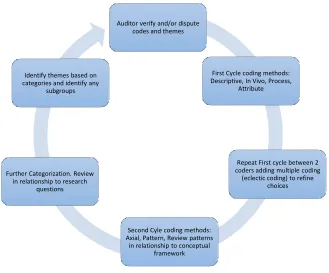
45 The transcripts of the interviews were coded with Saldana (2016) infrastructure of first cycle coding methods including in-vivo open coding, attribute coding, and descriptive coding. First cycle coding occurred between two coders discussing, expanding, and collapsing codes as appropriate. During this process and second cycle coding, eclectic coding occurred with