Implementing ITIL Change Management
[Extended Abstract]
Filipe Crespo Martins
Instituto Superior Tecnico Av. Rovisco Pais Lisboa, Portugal
[email protected]
ABSTRACT
Today’s technology has had a huge impact on business and society. Current business practices would be impossible with-out IT. ITIL is a framework that was created with the goal of reducing costs and to better manage IT service de-livery. However, implementing ITIL is not easy and it is common that ITIL implementations end in failure. Fur-ther more, ITIL documentation explains all the processes but it doesn’t tell us how that implementation should be made. In this document we proposed to build a Config-uration Management Database and how to implement an ITIL Change Management process, including the develop-ment of a prototype to support the process, using the best practices of implementing information systems, avoiding the most common mistakes in this area. Using the Action Re-search method, this proposal was evaluated in a public or-ganization which already followed other processes, namely ITIL Incident Management and ITIL Configuration Man-agement. We concluded that it became very difficult to ob-tain all the information necessary to build the Configuration Management database. However, we could accomplish this step and implement a Change Management process includ-ing a prototype which was then put in production and used.
Keywords
ITIL, ITIL Implementation, Configuration Management Database, Change Management
1.
INTRODUCTION
Today’s technology has had a huge impact on business and society. Current business practices would be impossible with-out IT. A seemingly endless stream of innovations brings images of boundless opportunity and change [1].
1.1
ITIL
In response to the serious economic downturn in the late 1980s, the Central Computer and Telecommunications Agency (CCTA) in the United Kingdom developed the IT
Infras-tructure Library (ITIL) framework to reduce costs and to better manage IT service delivery. The ITIL framework is now administrated by the Office of Government Commerce1 (OGC) and its best-practice processes are supported by the British Standards Institute’s BS 15000 Standard for IT Ser-vice Management [2].
In this trend towards embracing principles of organizational IT Service Management, the IT Infrastructure Library has, of all approaches, gained the biggest popularity and can, at least in Europe, now indeed be called a de-facto standard [3].
1.2
Change Management
According to ITIL, “Change is the process of moving from one defined state to another”.
The ITIL Change Management, in simple words, covers the management methods of IT change control encompassing the change orders or change requests for the Configura-tion Items (CIs). CIs are the items that are present in the Configuration Management Database, commonly known as CMDB. CIs typically include IT Services, hardware, soft-ware, buildings, people and formal documentation such as process documentation and Service Level Agreements [4]. Change Management is responsible for managing Change processes involving [5] hardware, communications equipment and software, system software, ’live’ applications software and all documentation and procedures associated with the running, support and maintenance of live systems.
CMDB is something that underlies all the processes, it is where the usual asset management data resides, but the CMDB also holds the sources on information on the re-sources used by each service and their dependencies. When a Change needs to be executed, the CMDB will show which components are attached to the altered component or ser-vice so that any consequences and problems associated to the change are always known [6]. Further more, this reposi-tory is widely used in many organizations [7][8].
The primary objective of Change Management is to enable beneficial changes to be made with minimal disruption to IT services. Change Management ensures that changes are deployed in a controlled way, i.e. they are evaluated, priori-tized, planned, tested, implemented and documented [9]. 1
Changes arise as a result of Problems, but many Changes can come from proactively seeking business benefits such as reducing costs or improving services.
Changes are also made for proactive or reactive reasons. Examples of proactive reasons are cost reduction and ser-vice improvement. Examples of reactive reasons for change are solving service disruptions and adapting the service to a changing environment.
The goal of the Change Management process is to ensure that standardised methods and procedures are used for effi-cient and prompt handling of all Changes, in order to min-imise the impact of Change-related Incidents upon service quality, and consequently to improve the day-to-day opera-tions of the organization [5].
2.
PROBLEM
One of the main challenges posed by information systems is ensuring they can deliver genuine business benefits. There is a very high failure rate among information systems projects because organizations have incorrectly assessed their busi-ness value or because firms have failed to manage the orga-nizational change surrounding the introduction of new tech-nology [10].
The CHAOS Report [11] also refers that only 16% of IT projects are successful (finished on-time and on-budget). However, since 1994 this value has not suffered almost any variation, as it is illustrated in Figure 1.
Figure 1: Percentage of succeeded, challenged and failed IT projects according to The CHAOS Reports
.
ITIL is a methodology to improve delivery service efficiently and effectively, with high quality, based on the best practices of service. Every year more organizations desire implement-ing ITIL. However a considerable percentage of them fail and some organizations collapse trying it. Some of the most common mistakes made by organizations when implement-ing ITIL are [11][12]:
• Lack of management commitment
• Spend too much time on complicated process diagrams
• Not creating work instructions
• Not assigning process owners
• Concentrating too much on performance
• Being too ambitious
• Failing to maintain momentum
• Allowing departmental demarcation
• Ignoring constant reviewing of the ITIL
• Memorizing self ITIL books
Besides these factors, another ones can also be referred like the organizational resistance to change or even the fact that ITIL books only explain what to do to implement its pro-cesses but it does not explain how that same implementation should be done.
Another research [13] where a maturity model for ITIL im-plementations was developed and was tested in seven differ-ent portuguese organizations, proved that those same orga-nizations had a maturity level of one. The fact that these organizations were only at the first level of maturity is also a good reason to believe that ITIL implementations are not easy.
There are studies that conclude that a majority of organi-zations give priority to implement some ITIL processes [14] but there is even less research about the implementation of these processes. Despite this sweeping adoption by industry, most academic institutions appear to be reluctant to include ITIL in their IT curriculum [15], what helps to explain a lit-tle why there is not much published in implementing ITIL. Many organizations are already implementing ITIL. Most part of them resume ITIL to just Incident Management and Configuration Management. These points represent a huge problem regarding first, the CMDB and then the business itself. Many organizations that use a CMDB today don’t have Change Management implemented. The most direct consequence is that the CMDB used in Configuration and Incident Management, can become out of date very quickly, caused by any change in any Configuration Item (Ci). Some common examples are the installation of new software or even software updates in the workstations. Further more, these changes can occur several times a week or even several times a day. It becomes obvious that a CMDB that is not up to date, does not have any interest to the organization. Worse than that, working with a CMDB which is not up to date, thus inconsistent, can lead to wrong and bad decisions. As ITIL says, the Change Management process depends on the accuracy of the configuration data to ensure the full impact of making Changes is known [16].
So, the fact that many organizations don’t know how to implement Information Systems projects, namely ITIL, is a problem that this thesis proposes to solve.
3.
RELATED WORK
In this section, we present various concepts related to Change Management, as well as some work that has already been done in this area.
Changes should be managed to optimize risk exposure, min-imize the severity of any impact and disruption or to be successful at the first attempt (of any change). Such an approach will deliver direct benefit to the bottom line for the business by delivering early realization of benefits (or removal risk), with a saving of money and time [4]. While the benefits of applying IT Service Management prac-tices vary depending on the organization’s needs, some typi-cal benefits include [17] improving quality service provision, cost justifiable service quality, learning from previous expe-rience or demonstrable performance indicators.
It is also important to consider the range of stakeholders who can benefit from improved ITSM practices. These stakehold-ers can come from [17] senior management, business unit managers, customers, end-users, IT staff or suppliers. A study [18] states that, on average, the information net-work causes 15% of all problems resulting in downtime at $1 billion-plus companies. However, only 2% are caused by actual networking hardware failures: The other 13% are due to different issues like human errors, unmanaged changes, misconfigurations, routing failures, and problems with net-working software.
3.1
Change Management
ITIL Service Support volume states that Change Manage-ment ensures that standardized methods and procedures are used for efficient and prompt handling of all changes, in or-der to minimize the impact of change-related incidents upon service quality, and consequently to improve the day-to-day operations of the organization [16].
Furthermore, changes to any components that are under the control of projects are subject to project Change Manage-ment Procedures, not under general Change ManageManage-ment procedures. The Change Management team will, however, be expected to liaise closely with project managers to ensure smooth implementation and consistency within the changing management environments. It is the Change Management process that produces approval for any proposed Change. While Change Management makes the process happen, the decision authority is the Change Advisory Board (CAB), which is made up for the most part of people from other functions within the organization [16].
3.1.1
Change Management Activities
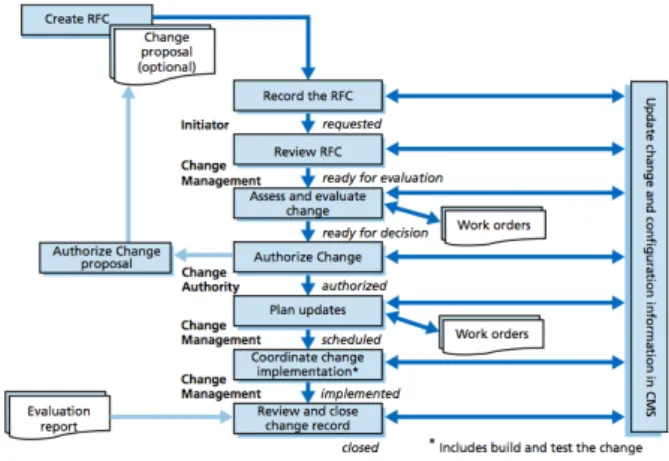
Figure 2 shows the activities involved in ITIL Change Man-agement Process.
There is a research that proposes an interesting approach to the Change Management activities. The author states that it is based on ITIL with some specific modifications accord-ing to the business needs of the respective organization in the case study [19].
According to ITIL, to effectually do any change a Request
Figure 2: Change Management activities [9]
For Change is the first step. The Request For Change then goes to a Change Coordinator or a CAB (depending on the impact of the change) which will approve or reject the re-quest. However, before approving he also analyses the im-pact and schedules it (if necessary). After this phase, the change can be built and passes to a testing phase. The test-ing phase is the last one before clostest-ing the change. In this phase it is checked if the change was made and caused no problems. If it eventually caused any problems a roll-back is made.
3.1.2
Change Advisory Board
According to ITIL, the Change Advisory Board (CAB) is a group that provides expert advice to the Change Manager. It involves representatives from various IT and business ar-eas as well as other involved stakeholders including external suppliers. It is chaired by the Change Manager. There is also a subgroup of CAB called Emergency CAB which task is to provide expert advice for emergency change decisions [17].
3.1.3
Configuration Item Lifecycle
ITIL suggests only some examples of the status of an RFC as logged, assessed, rejected, accepted and sleeping. Mattila also proposes a Lifecycle in his thesis [19] introducing other status such as planned, tested, archived or received. Other author [20] still suggests other stages and introduces the concept of protected stages. In these stages, any change made do the Configuration Item required that an RFC has to be associated with them. This validation capability rec-ognizes explicitly that there are life-cycle states in which a greater degree of control is required over the way in which they can be modified.
3.1.4
Change States
In spite of the fact that ITIL already defines different change states as standard, minor, major and significant, other au-thors propose slightly modifications to this idea. For exam-ple, [19] proposes three states instead of the four referred in the last paragraph: Normal, Major and Emergency Change.
In a case study in which ITIL methodology was successfully implemented in a financial industry [21], results based on a set of KPI’s showed the exact and measurable improvements the Company achieved. Among many ITIL processes, in Table 1 are illustrated the KPI’s used in both Configuration and Release Management processes.
Table 1: KPIs for ITIL processes Change Manage-ment and Release ManageManage-ment [21]
KPI Before ITIL Imple-mentation (%) After ITIL Imple-mentation (%)
% of changes which are realized as planned
25 80
% of released changes but not approved 10 95 % of urgent changes 60 35 % of unsuccessfully real-ized changes 18 6
% of used software which are unauthorized
22 8
% of wrong releases 13 10
% or urgent releases 32 20
However, some other metrics are proposed by other authors [22][23] as for example:
• Number of changes within a specified period broken down by type.
• Percentage of changes completed on schedule.
• Number of aborted changes within a specified period.
• Number of incidents attributed to changes completed within a specified period.
• Number of rejected changes
• Number of back out related to changes
3.2
Other Academic Work
Unfortunately, a large array of authors state that there is little or no published research that concerns ITSM. There is a world of knowledge, secretly contained in Consulting Firms and Organizations, but that knowledge is contained there, in exclusivity, and is not based on worldwide scientific construction. There is some research related to areas like au-tomatic scheduling of IT Changes, but none concerning the actual way to implement and do IT Change Management. There are studies that conclude that a majority of organi-zations give priority to implement Change Management [14] but there is even less research about the implementation of this process.
Despite this sweeping adoption by industry, most academic institutions appear to be reluctant to include ITIL in their IT curriculum [15], what helps to explain a little why there is not much published in implementing ITIL, or specifically implementing Change Management.
Nowadays, IT Departments can no longer be an isolated silo in the organization. They must be completely aligned with
business in order not only to support it, but also to improve it. Still, business is not static, and it needs to be adapted as a response to market needs or to exploit a business oppor-tunity that has arised. As business is not static, IT Services can’t be static either. This is another important motivation for IT Departments to continuously improve their processes [24]. But once again, it is hard to define a roadmap for improvement as ITIL does not provide a set of tools to do so and as very often CIOs aren’t able to see the true links between IT and Business [25].
So, actually it is not known how to implement ITIL Change Management in any context of an organization.
4.
PROPOSAL
Building a new Information System is one kind of planned organizational change. The inroduction of a new informa-tion systems involves much more than new hardware and software. it also includes changes in jobs, skills, manage-ment and organization. When we design a new Informa-tion System, we are redesigning the organizaInforma-tion. Systems builders must understand how a systems will affect specific business processes and the organization as a whole. An Information System implementation can be composed of three main components [10]. These components are People, Organization and Technology.
Being ITIL an Information System implementation, it can also be composed by these three components. As it has been already said in section 2, there are few Information Systems projects that are finished on-time and on-budget.
Having said this, we propose an implementation of a new Information System taking in mind that it is crucial to avoid the problems that usually make this projects to fail, such as:
• Lack of management commitment
• Spend too much time on complicated process diagrams
• Not creating work instructions
• Not assigning process owners
• Concentrating too much on performance
• Being too ambitious
• Failing to maintain momentum
• Allowing departmental demarcation
• Ignoring constant reviewing of the ITIL
• Memorizing self ITIL books
In the specific context of this thesis, we implemented the ITIL Change Management process in a public organization. This implementation consisted in two phases. The first phase of this work consisted in constructing a new and up to date CMDB so that it could bring added value to the organization. Only with this phase completed, the Change Management process implementation could advance.
This implementation was integrated in a wider ITIL imple-mentation project where other processes such as Configura-tion Management or Incident Management were underway or almost completely implemented. However, no Change Management process was defined. Besides this, the CMDB that existed was not up to date which made it unuseful. All its contents were more than one year old and since that time that nobody maintained it. The only information that was kept to date, was the inventory of the workstations of everybody and even this list, in which were made changes every day in order to keep it actual, had many inconsis-tencies. This list was only maintained by the service-desk responsible.
To implement the Change Management process in the orga-nization, an application was developed using the agile pro-gramming framework Scrum in the Outsystems platform. With this solution, the time spent is minimal, the develop-ment sprints are very short and there is constant feedback between the users and the development team.
5.
FIRST RESEARCH CYCLE
The methodology used in this work was the Action Research (AR) Cycle. The first of a set of two Action Research cycles concluded in this work, consisted in Importing a Configura-tion Management Database in a private organizaConfigura-tion which main business is to provide IT Outsourcing services.
5.1
Context
In this project, the goal was to implement ITIL processes In-cident Management and Configuration Management in the Organization mentioned before. At the moment, there were no processes defined and the idea was to create a centralized support center where they could manage all IT infrastruc-ture of their clients, which had IT technicians in outsourcing contacts. The implementation of the Change Management process was also planned, but it was cancelled later. The idea was to have these processes working for six different organizations (six clients of the organization).
5.2
AR Diagnosing
Before starting the project, a kick-off meeting was arranged. In that meeting, the problem (all the service-desk activities did not follow a defined process) and all its consequences were discussed. It was also decided mainly the specific or-ganizations we would do the project. Some points were dis-cussed in detail, such as deciding what would be the CIs and their types or subtypes.
5.3
AR Action Planning
By taking advantage of some other projects (MSc and Phd thesis) in implementing this ITIL process and using it to our benefit, it was decided to use an application already developed and working successfully in another public orga-nization for almost two years in order to manage incidents according to the ITIL framework.
It was also discussed in a following-up meeting the states of any incident, during its lifecycle. It was decided that any incident should have one of the following possible nine states:
• Not Assigned - The Incident has not been assigned to anyone
• Assigned - The Incident is assigned to a technician.
• Validation of Information - It is verified if all the in-formation needed to solve the incident is available.
• Pending from Client - Waiting for the client to give more detailed information about the incident.
• Scheduled - The incident is scheduled to be solved.
• External Entity - The incident resolution was assigned to an external entity.
• In Resolution - Incident is being solved.
• Solved - Incident is solved.
• Closed - After the client confirmation that the incident is solved, it is closed.
• Cancelled - Incident is cancelled.
Another topic that was decided was the impact and urgency of each problems. These two parameters defined together, define a priority which is later user to prioritize the incident, helping this way to classify the priority to give to each one. To each priority it was also associated a timeframe which was used to define the maximum time the incident had until being resolved and closed.
5.4
AR Action Taking
Putting this to work was not a big problem at all. All the points previously defined (the ones described in the last sec-tion) had to be configured in the Incident Management ap-plication which, once more, was already developed.
All this parameters were easy to set as the application has many configuration areas which allow to easily add or re-move certain configuration data. Further more, it was used some former knowledge as we had information of these con-figuration data in a public organization where this process was already implemented.
Having the application working, the only information that was loaded into it was the data about the technicians, the incident states and its transitions and finnaly the incident impacts, urgencies and priorities.
In addition to the Incident Management process, a CMDB was also loaded. Many listings with all IT assets were re-quested to the six involved organizations. This revealed to be the most difficult phase as it will be explained in the next section.
5.5
AR Evaluating & AR Learning
After finishing this cycle, some conclusions can be taken. First of all, some lists took a long time to receive. Then, we realised that all the lists came incomplete or with serious errors. The errors were very different, but mostly because the lists were incomplete or had many contradictions. The most common of these errors were (among others):
• Incomplete list of the existing workstations and servers.
• List of users was incomplete and/or out of date.
• It was not known what workstations were being used by what users.
• It isn’t known which users use some applications.
• It isn’t known what items are connected to the routers.
• It isn’t known what computers use certain network printers.
• It isn’t known what databases belong to what servers.
This led to ask for some more corrections of the lists and only after some more time, it was possible to have accurate listings and then to load them to the CMDB.
Considering all the 6 organizations together, the following items were imported to the newly created CMDB: 292 Work-stations; 224 Staff; 88 Printers or Scanners; 57 Servers; 22 Applications; 11 Routers and 116 Databases.
Throughout the entire process we can conclude that, as predicted, organizations don’t know what their assets are. Specifically in IT, which is the context of this project, no one knows how many workstations exist or who uses them, how many servers exist or the list of web applications, for example. These were real problems that had to be faced and solved in order to accomplish our initial goal, to successfully create an accurate Configuration Management Database.
6.
SECOND RESEARCH CYCLE
6.1
Context
The second Action Research Cycle took part in a second public organization.
The goal in this second organization, which already followed some ITIL processes namely ITIL Incident Management and ITIL Configuration Management, was to implement ITIL Change Management.
6.2
AR Diagnosing
Regarding its ITIL usage, they have been using an ITIL Incident Management application for almost two years. A Configuration Management application was already imple-mented and available but it was ignored by all as its rarely modified information data (the CI data and its relations) was out of date.
Especially this last point made the implementation of ITIL Change Management the next logical step. Further more, they had no process defined for changes. This way, the data of all IT assets would be kept up to date and this would bring many advantages to the Organization.
6.3
AR Action Planning
Before implementing Change Management itself, a Config-uration Management Database with all its up to date infor-mation had to be imported as Change Management logically makes no sense without a CMDB.
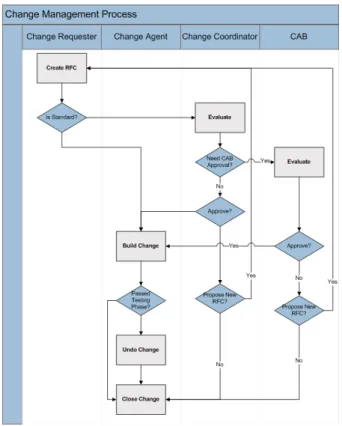
Figure 3: Proposed Change ManagementProcess
6.3.1
Defining the New Structure of the Data
The base structure, already defined in the existing Configu-ration Management application, allowed the division of each Configuration Item by one of the followingCi Types(this is the name the application uses to name these types): Staff; Software; Hardware; Server; Workstation; Router; External Device; Racks; Communication Device; Database; Applica-tion.
6.3.2
Defining the Change Management Process
The design of the proposed Change Management Process, had some points taken in mind. First of all, it is based in the process defined by ITIL (see Figure 2). In Figure 3 it is illustrated the proposed process in this thesis that was later implemented in the application.
6.4
AR Action Taking
6.4.1
Getting the Data
Having defined the new structure, the next step consisted in requiring the data to the ones responsible for it. While the list of workstations, staff and phones was requested to the service-desk people, other items such as servers, databases and their relations were asked to the system administrators team.
A structured spreadsheet was provided to them where they could fill in the data and all the information that was needed.
6.4.2
Importing the Data to the CMDB
Once the data was obtained in a consistent mode, the im-portation began. Using the potentials of Outsystems tech-nology, which makes it very simple to read data from Excel
(.xls) files, this phase did not take long and in two days, all the information was loaded to the new CMDB.
6.4.3
The Change Management Application
Having concluded the previous phase, the building of the application to support the Change Management process be-gan.
To summarize, the developed application allows a change to be requested and built and allows that all this process follows the main phases as defined in ITIL like requesting, evaluating, approving and testing. To undo the change and put the Ci to its initial state is also possible.
Besides from this, the application offers the following func-tionalities:
• Creating a Request For Change associated with a Ci, a Change Requester, a Category and a Priority.
• When a Change Coordinator reviews the RFC, he has access to all the information the Change Requester provided. He also can view the current associated Ci information before making a decision on the RFC.
• Scheduling the build of the change is also possible just by defining a date. Then, the application automati-cally blocks any intention of building the change if the scheduled date is ahead of the current date.
• A change is built (and the Ci attributes automatically modified in the CMDB) easily by pressing a single button. This is only possible when the Request For Change has been previously approved by a Change Co-ordinator or a CAB.
• After the change is built, is passes to a Testing phase. In this phase, if anything went wrong, there is the possibility to execute a roll back and change the Ci to its initial state.
• A complete list of all changes is recorded.
• A complete list of all changes in a Ci is recorded and it is possible to consult all its history and every RFC related to its change. It is also possible to know all the information of that RFC such as the change requester or the change agent, who approved it, in which date the change was built, etc.
• Is is possible in a simple way to define new RFC Cate-gories as well as new Priorities using a restricted access area of the application.
• A dashboard is available with some useful metrics to the users.
• Various user profiles are available such as Change Agent, Change Coordinator, CAB and Manage. Each profile allows the use of specified functionalities.
6.5
AR Evaluating
Having completed the last phase from the cycle, fortunately we can say that all the initial goals were accomplished.
6.5.1
Building the CMDB
This was the most difficult phase of all the work. After requesting to the right staff for the lists of all the assets, they took too long to give them to me. Further more, all the problems described in section 5.5 referring to the first organization were once more repeated.
Only after three or four requests of the lists to each per-son (in fact I made about eight more requests as I had to make them to two different persons) I could get an accept-able and coherent list. In fact, it was not 100% coherent, but some inconsistencies that existed were easily corrected. All this process of requesting, analysing, typing the errors, having to make new requests and waiting for their responses took about three months, which was the main reason for the whole project to take so long.
The following items were imported to the new CMDB: 443 Workstations (desktops and laptops); 135 Servers; 137 Databases; 382 Communication Devices; 39 Network Printers; 65 Ap-plications; 21 Switches and all the relations between the previous items.
Before importing definitely the new CMDB, I was still asked to include all the assets not only from the headquarters but also from all the other schools and casinos that this organiza-tion is responsible for. After some tries, I had to give up and focus on my initial idea - only the headquarters. They sim-ply couldn’t provide me with accurate information. Many workstations, for example, had been already destroyed. The usernames were completely out of date and many of them didn’t even exist. The problems verified were basically the ones referred previously.
At least, I could load a set of items to the CMDB. It’s true that the CMDB only contains the assets from its headquar-ters, maintaining all the other ones from schools and casinos out of the CMDB. However, considering that some months ago, they had no (useful) CMDB, it is a good achievement to have one now and, besides this, it is being refreshed daily and it is up to date.
6.5.2
Developing and Deploying the Change
Man-agement Application
In contrast to building the CMDB, this phase was easier as in fact my work wasn’t dependent on any other. This allowed me to work without delays.
When the development of the application ended, some tests with the users were made. This led to some minor correc-tions, mainly functional errors that were detected with them and that were not detected in development time.
The most interested user in the Change Management Appli-cation (the service-desk responsible) has been the one who has been using it mostly. Now, he registers any changes in the Cis (mainly workstations) directly in the application, and consequently in the CMDB. It is a major improvement instead of registering the changes in a spreadsheet that only he had access.
turn-ing it accessible to everyone, there are (at the time of the writing of this document) 17 changes in a closed state, being all of them successful.
6.6
AR Learning
Reaching the final phase of this Action Research Cycle, some conclusions can be made.
Considering the first part, in which a new CMDB was built, there were many difficulties in all the process. Beginning with the lists of all the assets, it became very clear that organizations don’t know what they have. This was the second organization where I realized that the problems in this area were very similar.
Another point is that even the department doesn’t know with some accuracy what are the items that it is responsi-ble for. Referring to the context of this thesis, the IT de-partment doesn’t have the information about what are the assets they should manage. For example, it is impossible to ask and expect for an accurate list of either workstations, users, servers or databases. Further more, this point is a need for the organization for logical reasons. First, it is al-ways a good management practice to know what we have to manage. Then, in spite of this fact, even the IT director asks regularly for lists of this type to the technicians. Having imported the Configuration Management Database successfully, allowed to the service-desk team to associate the new Incidents (from the Incident Management process) to associate with accuracy the incidents with the respective Ci (all the new up to date Cis were loaded into the CMDB and its relations, including relations with Staff).
Then, the Change Management application is very useful tool to help keeping the CMDB up to date. As referred earlier, a CMDB which is not up to date logically has no interest and this was exactly what was happening at the beginning of this thesis. Then, all changes from now become logged and it is possible to view all details from all changes in the future, which can be useful to the organization.
7.
CONCLUSION
This thesis main goal was to implement a Change Manage-ment process in an organization which already followed other ITIL processes namely ITIL Incident Management and ITIL Configuration Management.
Change Management is not responsible for identifying com-ponents affected by Change or updating Change records (the domain of Configuration Management), nor is it responsible for the release of new changed components (the domain of Release Management) [5]. However, having a CMDB is vital and as the organization didn’t provide an accurate one, the work also involved importing a new one.
As many literature in the area argues, there is a very weak knowledge of all the IT assets in organizations. Having this in mind, it turns very difficult to obtain lists of those as-sets in order to store them in a Configuration Management Database, as it was widely verified during this thesis’ work. The implementation of the Change Management process,
with the aid of an application to support it, allowed the organization to have and maintain an up to date CMDB which has many advantages, being the first of them to know what do we have in our organization.
7.1
Future Work
In spite of having imported Cis to a Configuration Manage-ment Database and created and deployed an application to support the Change Management process, there is still some work to be done.
Regarding the CMDB, it is still necessary to obtain accurate lists of all the assets that do not belong to the headquarters building and introduce the in the CMDB application. Then, other assets that were not considered in this phase can be added too in order to get, in the future a good and very complete Configuration Management Database.
About the Change Management application, some change Categories can and should be created. As said before, only one exists at the moment and it is non-standard (needs al-ways an approval). Some meetings should be arranged and after analysing the types and number of changes, define dif-ferent categories and to each one of them, if they are stan-dard. Despite allowing to have different categories, this can be useful in the future as it can allow specific reports to be created.
It is also necessary to define a CAB in the organization. In spite of having defined roles for a CAB in the application, no one was nominated as one, so this is a point that can be decided in the future.
Having this process to work well is also a good starting point to implement other ITIL processes like Release Management or Problem Management.
8.
REFERENCES
[1] Alter, S.: The Work System Method. Work System Press (2006)
[2] Cater-Steel, A., Toleman, M., Tan, W.G.: Transforming it service management - the ITIL impact. In: ACIS 17th Australasian Conference on Information Systems: Thought, Leadership in IS. (2006)
[3] Brenner, M.: Classifying itil processes; a taxonomy under tool support aspects. In: Business-Driven IT Management, 2006. BDIM ’06. The First IEEE/IFIP International Workshop on. (April 2006) 19–28 [4] OGC: ITIL Service Transition. The Stationary Office
(2007)
[5] OGC: Best Practice for Service Support, Managing IT Services. The Stationary Office (2001)
[6] Greiner, L.: Itil: The international repository of it wisdom. netWorker11(4) (2007) 9–11
[7] Steinberg, R.A.: Implementing ITIL. Trafford Publishing (2005)
[8] Atherton, M.: Deploying cmdb technology pragmatism and realism will deliver the benefits. Technical report, Freeform Dynamics Ltd (2007) [9] Arjen de Jong, Axel Kolthof, M.P.R.T.A.v.d.V.T.V.:
edn. Van Haren Publishing (2008)
[10] Laudon, J.P.: Management Information Systems: Managing the Digital Firm. 10 edn. Prentice Hall (2007)
[11] : The chaos report. Technical report, The Standish Group International, Inc. (1995)
[12] Sharifi, M., Ayat, M., Rahman, A.A., Sahibudin, S.: Lessons learned in itil implementation failure.1(Aug 2008) 1–4
[13] Pereira, R.: A maturity model for implementing itil v3. Master’s thesis, Instituto Superior Tecnico, Universidade Tecnica de Lisboa (2010)
[14] Cater-Steel, A., Toleman: ITIL adoption in australia: 2 years of itSMFA surveys and case studies. In: itSMF Australia 10th National Conference and Expo, Melbourne. (2007)
[15] Cater-Steel, A., Toleman, M.: The role of universities in it service management education. In: 11th Pacific Asia Conference on Information Systems. (2007) [16] OGC: Service Support (IT Infrastructure Library).
The Stationary Office (2000)
[17] OGC: How to Develop, Implement and Enforce ITIL V3 Best Practices. The Art of Service (2009)
[18] Thomas Mendel, Bernt Ostergaard, N.v.V.: A big step toward automating network management. Forrester (Aug 2004)
[19] Mattila, A.: Best practices for network infrastructure management - a case study of information technology infrastructure library (ITIL). Master’s thesis, Helsinki University of Technology (2008)
[20] Ward, C., Aggarwal, V., Buco, M., Olsson, E., Weinberger, S.: Integrated change and configuration management. IBM Syst. J.46(3) (2007) 459–478 [21] Spremic, M., Zmirak, Z., Kraljevic, K.: It and business
process performance management: Case study of itil implementation in finance service industry. In: 30th International Conference on Information Technology Interfaces. (June 2008) 243–250
[22] Addy, R.: Effective IT Service Management - To ITIL and Beyond! Springer (2007)
[23] Ayat, M.: Implementing itil service support in the infrastructure and service unit of cict, utm. Master’s thesis, Faculty of Computer Science and Information System, Universiti Teknologi Malaysia (2008) [24] Peynot, R.: Firms Must Take ITIL Beyond IT
Operational Goals - Service Providers Can Help With Change Management Issues. Forester (2006)
[25] Gaughan, D.: Notes From the Field: CMDB Projects Stall Because of Missing Business Focus. AMR Research (2008)

![Table 1: KPIs for ITIL processes Change Manage- Manage-ment and Release ManageManage-ment [21]](https://thumb-us.123doks.com/thumbv2/123dok_us/1714920.2739489/4.892.84.434.237.492/table-kpis-processes-change-manage-manage-release-managemanage.webp)