A CASE STUDY OF THE PRE-K
FOR All DC CAMPAIGN
How Pre-K for All Became the Law of the Land in Washington, DC
BERNARDINE H. WATSON NOVEMBER 2010
HISTORY OF DISTRICT OF COLUMBIA (DC) EARLY CHILDHOOD EDUCATION AND THE DEVELOPMENT OF THE PRE-K ENHANCEMENT
AND EXPANSION ACT OF 2008
1964
Washington DC‘s Anacostia Pre-School Project serves as a pilot site for the Federal Head Start Program.
1972
Washington DC‘s Public Schools (DCPS) become one of the first jurisdictions in the country to offer pre-Kindergarten to four-year-old children.
1979
The Mayor‘s Advisory Committee on Early Childhood Development (MACECD) is established to hold public hearings on early childhood education issues; increase public awareness of programs; recommend methods of upgrading services; and improve
communications between providers, the public and the government.
1989
A report by the DC Committee on Public Education (COPE) calls attention to critical problems in DCPS, including declining achievement levels as students moved through grades; the poor condition of school facilities; and lack of accountability among school and related agencies. The report makes several recommendations for public school reform, including the need to expand and upgrade the quality and quantity of early childhood programs. In response nearly 500 pre-Kindergarten and kindergarten classrooms across the city are refurbished.
1990
A coalition of business, government and community organizations forms the DC Early Childhood Collaborative. The Collaborative pools public and private sector resources to improve the well-being of DC children and families. In 1993, the Collaborative establishes the Frederick Douglass Early Childhood Development and Family Support Center. The
2002
Washington DC receives two major national grants that provide new energy for the early childhood education community and a renewed focus on quality programming. The first grant is a $5 million, five-year award from The W.K. Kellogg Foundation to the National Black Child Development Institute (NBCDI) to participate in the Supporting Partners to Assure Ready Kids (SPARK) initiative. SPARK DC helps unite local resources, including advocates, providers and parents, to focus on preparing children for school. The second grant is an Early Learning Opportunities Act (ELOA) award from the U.S. Department of Education to the MACECD. This funding helps educate parents, caregivers, child care providers, librarians and health providers on how to make sure children are ready to learn. The SPARK DC and ELOA efforts collaborate to focus on children and families in DC‘s poorest wards.
2003
A group of more than 200 early childhood education and K-12 organizations come together to form the Universal School Readiness
Stakeholder Group (USRSG). Founding partners include the DC Department of Human Services-Office of Early Childhood Development; NBCDI-SPARK DC; the Early Childhood Leadership Institute of the District of Columbia (ECLIUDC) and Citywide Early Childhood Initiatives, DCPS. The USRSG becomes the ―umbrella‖ under which diverse groups work toward universal, high-quality pre-K.
2004
Under the banner of the USRSG, early
childhood education advocates develop the Road Map to Universal School Readiness, which becomes a seminal document in the movement to develop high-quality, universal pre-K programming.
2005
DCPS grants $4.6 million to the Department of Human Services-Early Care and Education Administration to provide high-quality pre-K programs in community-based settings. These dollars fund the Pre-K Incentive Program, which operates 20 high-quality pre-K centers across DC. Centers in the Pre-K Incentive Program become models for the Pre-K Enhancement and Expansion Act of 2008.
2006
The Pre-K for All DC Campaign is launched with funding from Pre-K Now and the CityBridge Foundation. The Campaign raises additional funding from the DC Early Childhood Collaborative, PNC Bank and other private sources. Pre-K for All DC is housed at the National Black Child Development Institute, which also serves as fiscal agent.
2007
DC Council Chair Vincent Gray asks Pre-K for All DC to work with him to develop pre-K for all legislation. The Campaign Steering
Committee forms a legislative policy sub-committee and begins drafting a legislative framework.
2008
Pre-K for All DC organizes a public hearing at the DC Council for Bill 17-537/The Pre-K for All DC Amendment Act of 2007. Testimony is heard from 60 people, including local early childhood education advocates and providers; national early learning experts; city officials; parents; and members of the DC business community.
May 2008
The DC Council unanimously passes the Pre-K Enhancement and Expansion Act of 2008. The Act expands pre-K to serve the approximately 2000 three- and four-year-olds in the city who do not have access to programming. The law also provides resources and support to improve the quality of pre-K programs, and assist individuals in obtaining the appropriate credentials to serve as teachers and assistant teachers in DC pre-K classrooms.
CONTENTS
Page
Acknowledgments...1
I. Introduction ...2
II. The National History of Pre-K and Context for the DC Pre-K Campaign ... 3
III. The Local Environment for Pre-K ...7
IV. Organizing the Pre-K for All DC Campaign ...16
V. Implementing the Theory of Change Part 1: A Strategy for the Election Season (April 2006-November 2006) ...21
VI. Implementing the Theory of Change Part 2: Ratcheting Up the Campaign for Universal Pre-K (November2006 to June 2007) ...28
VII. The Campaign Enters a Critical Phase (July 2007 to December 2007) ...39
VIII. Public Knowledge + Action = Victory! ...49
IX. Analyzing the Campaign...54
X. Going Forward: Implementing the Pre-K Enhancement and Expansion Act of 2008 ...65
XI. Lessons and Conclusions ...71
Appendix A: Interviews Conducted for Pre-K for All DC Case Study ...77
Appendix B: Pre-K for all DC Campaign Co-Chairs and Steering Committee Members ...79
Appendix C: Partial Public Hearing/Witness List for Bill 17-0537 ―Pre-K for All DC Amendment Act of 2007, January 3, 2008, 10:00am‖ ...80
Appendix D: District of Columbia Pre-K Enhancement and Expansion Act of 2008...82
Appendix E: District of Columbia Family Risk Indicators and Child Development Center Data by Ward ...84
Acknowledgments
In conducting this study, I learned that Washington, DC has had a long-standing, vibrant and dedicated early childhood education community. Many members of this community were generous with their time, records and contacts in helping me gather the information included in this report, and understanding DC‘s journey in pursuit of Pre-K for All. Thank you!
I am particularly indebted to three members of the Pre-K for All DC Board of Directors. Carrie Thornhill was an ever-present support. She was always available to talk and provided an unflinching analysis of the issues surrounding pre-K in DC. Maurice Sykes sat for repeated interviews, read every page of this document and provided a detailed critique that helped shape the final product. BB Otero was one of my first interviews. Her remarks about the development of the DC early childhood education community were so insightful they helped set the direction for this study.
I also owe a huge thank you to Jesse Bailey, Manager of the Pre-K for all DC Campaign. Throughout this work, Jesse‘s friendship and support was often above and beyond the call. Finally, I must thank my colleague, Maxine Sherman, who did her usual, brilliant job in processing, copyediting and formatting this document.
This work was supported by the Strategic Knowledge Fund, co-funded by the Foundation for Child Development and the W.K. Kellogg Foundation.
The Strategic Knowledge Fund is a partnership between the W.K. Kellogg Foundation (WKKF) and the Foundation for Child Development (FCD) created to fund projects that increase knowledge about children, birth to eight years old and their families, particularly children who are at-risk for poor educational outcomes.
For more information about the Foundation for Child Development visit www.fcd-us.org. For more information about the W.K. Kellogg Foundation visit www.wkkf.org.
Bernardine (Dine) H. Watson is a social policy consultant and writer. She works with
foundations, think tanks and other nonprofit organizations to plan and implement social policy initiatives and document policy issues. Ms. Watson’s work focuses primarily on youth and community issues including child welfare, education, juvenile justice, youth development, race and poverty. Her clients have included, The Annie E. Casey Foundation, The Ford Foundation, Foundation for Child Development, National Council for the Accreditation of Teacher
I. Introduction
On May 6, 2008, the District of Columbia passed the Pre-K Enhancement and Expansion Act of 2008, designed to ensure that all three- and four-year-olds have access to high-quality pre-Kindergarten programs. This Act was the culmination of decades of activism by the DC early childhood education community, including a spirited, two-and-a-half-year campaign for
―universal pre-K‖ carried out by Pre-K for All DC, and supported by national funder Pre-K Now and local sources. This case study tells the story of the Pre-K for All DC Campaign and how the Pre-K Enhancement and Expansion Act became law. To carry out this study, over 30 interviews were conducted with Pre-K for All DC Campaign staff and Steering Committee members, as well as other important constituents across the city, including early childhood education providers, parents and community, civic, foundation and political leaders. In addition, seven meetings and site visits were attended. (See Appendix A for a list of Interviewees and meetings/site visits attended.)
While conducting this study, it was important to interview a broad range of people in order to understand early childhood education in DC and, as much as possible, get the ―real story‖ of the Pre-K for All DC Campaign. As a practice, the same questions were asked of a variety of people in an effort to corroborate the statements of individuals and gain a sense of where there was consensus or difference in perspective around important issues. Often, the same people were interviewed repeatedly in order to check facts and clarify information.
In addition to interviews, meetings and site visits, this study is based on the voluminous records of the Pre-K for All DC Campaign; public records, such as legislative documents and testimony before the DC Council; reports from various organizations; local media; and relevant websites.
Chapter II documents the history and context of early childhood education in this country, including the role of the District of Columbia. Chapter III reviews the local environment for early childhood education in DC, including the development of an infrastructure that laid the groundwork for the Pre-K for All DC Campaign. Chapter IV outlines how the Campaign was organized: the funding, structure, leadership and direction, and most important, the theory of change that guided all activity. Chapters V to VIII tell the story of the Campaign itself—the strategies used, constituencies involved, adjustments made and, finally, how the 2008 law was passed.
Chapter IX of this study analyzes the Campaign, looking at the factors that allowed Pre-K for All DC to achieve its goal of legislation; how effectively the Campaign was carried out, including how well various groups were mobilized; the challenges involved in carrying out campaign strategies; and the potential impact of the new legislation on some constituencies. Chapter X reviews the early implementation of the Pre-K legislation, and the final chapter offers concluding thoughts and lessons other jurisdictions can take from the DC experience.
II. The National History of Pre-K and Context for the
DC Pre-K Campaign
The concept of caring for young children outside the home away from the mother began in 18th century Europe but arrived in America during the Industrial Revolution.
Pre-K Now, The History of Pre-K
In documenting the Pre-K for All DC campaign, it is important to understand the history and context of the national pre-Kindergarten movement, since it greatly influenced the pre-K movement in DC. The idea of pre-school was first introduced in the U.S. in the 1800s, when some factory owners, charities and churches supported ―infant schools.‖ These schools allowed parents to spend their days working without having to worry about their children. In the mid-nineteenth century, some states—Wisconsin, New York and New Jersey—began using public funds to provide pre-Kindergarten education—in the case of New York, to mitigate some of the effects of poverty on children.
Federal funds were first used on a large scale to support public nursery schools during the Depression, as part of the New Deal. These schools were seen by the federal government as a way to create jobs for unemployed teachers and other school staff—although enrollment was limited to children of poor parents. Funding for these schools was largely terminated when the economy recovered. National events again spurred federal government involvement during World War II, when federal funds provided ―pre-Kindergarten‖ schools to support parents working in the defense industry. These federally funded centers were largely closed after the war, as public opinion shifted away from separating young children from their mothers for long hours—although California and Washington, DC continued to fund centers for low-income children and single working mothers. 1
The Head Start program, launched in 1965 as part of President Lyndon Johnson‘s Great Society program, is still considered one of the most important investments the federal government ever made in early childhood education. The Head Start story is important, because the program served as a catalyst for significantly increasing early childhood education activity at the state level, with many programs following elements of the Head Start model. Head Start was developed in response to research from child development experts, whose findings concluded that early intervention programs could significantly affect the cognitive and socio-emotional development of low-income children. Head Start began as a summer program for approximately 560,000 three - to four-year-old children in poor communities; the initial budget was $96.4 million.2
Washington, DC, always a pioneer in early childhood education, was a pilot test site for the Head Start program in 1964, continuing its long-time attention to ―at-risk‖ pre-schoolers. New York, also a pre-school pioneer, started a half-day program for at-risk four-year-olds in 1966. In 1972,
Washington, DC became one of the first jurisdictions in the country to offer pre-K for four-year-olds in a public school setting.
By the 1980s, several states—Maine, Rhode Island, Oregon and New Hampshire—were supplementing Head Start to increase the program‘s capacity; and additional states, including West Virginia, Texas, Illinois, Louisiana and Michigan, were using state funds to open new pre-K programs. The majority of these programs targeted four-year-olds and children considered to be ―at risk.‖ In response to this proliferation of programs, in 1985, the National Association for the Education of the Young Children (NAEYC) created the first comprehensive system to measure the quality of early childhood programs.
In 1990, the federal Child Care and Development Block Grant (CCDBG) became law. CCDBG is the largest federal source of funding to states for providing child care assistance to low-income families. This allowed jurisdictions with existing programs, including the District of Columbia, to expand their services for low-income families, and opened the way for other jurisdictions to implement programs to serve this population. Most programs continued to focus primarily on at-risk four-year-olds, but the idea of more comprehensive efforts was growing.3 For example, Kentucky, Ohio, Minnesota, Connecticut, Nebraska and Tennessee began serving ―at-risk‖ three- and four-year-olds; Arkansas opened programs that served ―educationally deprived‖ children, aged three to five; and New Mexico and Missouri began programs for children birth to five. Georgia became the first state to offer a program open to all four-year-olds, followed a few years later by Oklahoma. New York expanded its programs in an effort to include all four-year-olds.4 California and South Carolina created ―comprehensive initiatives‖. California established commissions in several counties dedicated to providing pre-K services to all children birth to five; South Carolina‘s initiative served all children up to age six.
This increased state-level program activity during the 1990s was not only due to additional federal dollars but also correlated with findings from studies about child brain development by organizations such as the National Research Council‘s Institute of Medicine. Specifically, the studies concluded that birth to five in a child‘s life is a prime time for child brain development and learning; that early environments and nurturing relationships matter to the development of young children; and that supportive out-of-the-home relationships and environments can have positive impacts on young children from unstable homes.5 In fact, in 1994, Congress established Early Head Start for children birth to three in order to respond to this new evidence.6
The decade of 2000 saw continued and important growth in pre-K activity—with existing programs expanding to serve more children and with an increase in the total number of states offering programs. By 2000, Head Start had expanded significantly, and by 2005, more than 22 million children had been served in the program; the annual budget had grown to almost $7 billion. Most Head Start programs were operating for the full school day and for nine months of the year.7 Many state-funded pre-K programs were collaborating with Head Start and considered it to be a critical component of their early childhood education systems.8 Also, the idea of providing pre-K services for all was spreading. Notably, Nevada began serving children birth to five and required no official eligibility criteria; Florida voters approved a ballot initiative to require quality pre-K for all four-year-olds; Massachusetts created a new Department of Early
Education and Care to develop a plan to establish pre-K for all of the state‘s three- to four-year-olds; and California counties began implementing their pre-K for all programs.9
Yet, in addition to program growth, program quality was becoming an increasing concern. In 2002, The Pew Charitable Trusts, the nation‘s seventh largest foundation, established the National Institute for Early Education Research (NIEER) at the Rutgers University School of Education. NIEER‘s research is designed to help raise the quality of early childhood education programs and assess the degree to which state pre-K programs are meeting important minimum qualifications for effectiveness.10
Two new factors helped to spur pre-K activity during the decade. In 2002, The Pew Charitable Trusts also created the Trust for Early Education (TEE), a new advocacy center in Washington, DC to provide funding and technical assistance to states attempting to advance high-quality pre-K for all three- and four-year-olds. In 2005, TEE officially became Pre-pre-K Now, and continued working with states and the District of Columbia to support advocates and other leaders trying to secure policies and funding to improve the availability and quality of pre-K programming. They also worked at the local, state and federal levels to educate the public and policymakers about the importance of pre-K education.11 Since 2002, Pre-K Now has provided funding for pre-K
advocacy in 33 states and the District of Columbia. (In 2009, Pre-K Now became a campaign of the Pew Center on the States, which is a division of The Pew Charitable Trusts.)
Another major factor influencing the growth of Pre-K during the 2000 decade was the release of findings from several long-term research studies, which showed the sustained and positive impacts of high-quality pre-K programs. Included were studies of The High Scope Perry Pre-School, Abecedarian Early Intervention and Chicago School District‘s Child Parent Center (CPC) programs. Each of these programs provided primarily low-income, African-American pre-school age children with high-quality early education experiences and social supports. Research studies compared these children with a similar group of children that did not receive these services and followed both groups into adulthood, measuring their progress in a number of key areas over time. All three studies concluded that the group that had received high-quality pre-K ―treatment‖ as young children fared much better over the years than those that had not. The ―treatment‖ group achieved significantly higher academic levels, had better employment and earnings records, had fewer arrests, and were generally doing better in life. Further, cost-benefit analyses of each program concluded that the benefits to the youth participants and society far exceeded the costs of the programs.12
These findings showed that quality pre-school programs had an impact not only on kindergarten readiness but also on participants‘ learning and success later in life. Taken together, and along with child brain development research, these findings helped pre-K advocates in numerous states and the District of Columbia convince various constituencies that high-quality pre-K was a good investment.
By 2008, 38 states had funded pre-K programs. In May 2008, Washington, DC passed the Pre-K Enhancement and Expansion Act, designed to expand pre-K to all three- and four-year-olds, and improve quality of all existing programs by 2014. Across the country, more than one million children of all ages were enrolled in state-funded programs—an increase of 100,000 over those
enrolled in 2007. State funding for pre-K programs was on the rise—with a nearly 23 percent increase over 2007. Still, access to services, funding and program quality were problems, varying widely from state to state.
According to NIEER, the recession of the past two years may be limiting the growth of pre-K nationwide. Data for the 2008-2009 school year shows that states continued to make progress in the provision of pre-K education to children, but that progress was slower than in previous years. Enrollment in state-funded programs across the country increased by approximately 81,500 children of all ages—19,000 children less than between 2007-2008. Twenty-nine states had increases in the percent of three- and four-year-olds enrolled in state pre-K programs, while nine states had decreases. Overall, when enrollment in general and special education programs is combined, 30 percent of four-year-olds and 7 percent of three-year-olds were served across the states. This was only a 2 percent increase in enrollment for four-year-olds over the previous year and less than 1 percent growth in enrollment for three-year-olds. Oklahoma was the only state where almost every four-year-old had the opportunity to attend a quality pre-K education program; 13 states with state-funded programs offered no services to three-year-olds; and 12 states had no regular program.
In the 2008-2009 school year, state spending on pre-K, slightly more than $5 billion, represented a nominal 10 percent increase over the previous year and did not increase enough to keep up with inflation. This reversed a two-year upward trend in real spending by states. Federal efforts to increase support for early childhood programs have focused on childcare and Head Start, largely excluding state pre-K programs.
States differed greatly in per-child spending on pre-K—from approximately $1,500 per child in Maine to more than $11,000 per child in New Jersey. State spending per child averaged $4,143, an increase of $86 per child over 2007, but a decrease of $36 per child after adjusting for inflation. In fact, after adjusting for inflation, state spending per child declined in 24 of the 38 states with pre-K programs. Regarding quality, according to NIEER, many states failed to provide enough funding to ensure programs could meet minimum quality standards. Only 16 states could be verified as having provided enough funding to meet all 10 benchmarks for quality standards. 13
NIEER is not the only organization concerned about the impact of the ―great recession‖ on pre-K services for children. Recently, the Foundation for Child Development (FCD) published the 2010 Child and Youth Well-Being Index (CWI),which offers data on child well-being from the first year of the recession and projections for years 2009 to 2012. The CWI projects that by 2010, the recession will cause a ―decrease in community engagement,‖ including a decline in pre-K enrollment, a finding that mirrors many of the state-level trends NIEER is reporting.14
The Pre-K for All DC movement is closely intertwined with the history, growth and current challenges surrounding early childhood education in this country. This case study will show that as the District of Columbia implements the Pre-K Enhancement and Expansion Act of 2008, it must address the same issues facing other state-funded pre-K efforts—program access, program quality and adequate funding in a time of shrinking resources. Where will DC‘s new effort fit in the ever changing, national pre-K story?
III. The Local Environment for Pre-K
Not many jurisdictions have our public policy history with pre-K. We opened the Anacostia Pre-School Project in 1964, which was a precursor to Head Start
and have had free, publically funded pre-K for four -year-olds since 1972.
Maurice Sykes, Director, Early Childhood Leadership Institute, University of the District of Columbia; Member, Pre-K for All DC Campaign Steering Committee
A. The Early Landscape for Pre-K
Ask any of the local public officials or advocates about pre-K in the District of Columbia (DC) and they will proudly to tell you that DC is a pioneer in the provision of early childhood education services. In fact, in 1964, the United Planning Organization (UPO), a private, non-profit, human service corporation in the city, began providing early childhood education through the Anacostia Pre-School Project, a test site for the federal Head Start program, which officially opened in 1965. That DC was an initial testing ground for an early federal childhood education program makes perfect sense to Maurice Sykes, Director of the Early Childhood Leadership Institute at the University of the District of Columbia (ECLIUDC). According to Sykes, ―DC has always been fertile ground for federal ideas on social reform since its right here in the
government‘s backyard. And back then in the 1960s, we didn‘t have home rule. The federal government could do whatever it liked here. Besides, Head Start came out of the War on Poverty, and at that time a number of areas in the city were extremely poor.‖
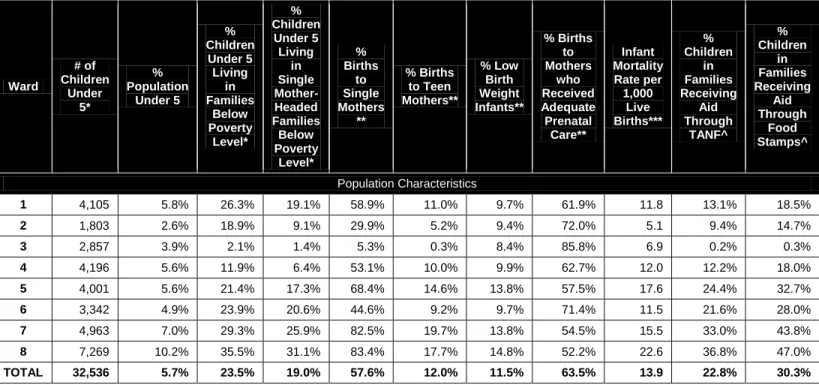
In 1972, DC became one of the first jurisdictions in the country to offer pre-K in public school settings. The program, operated by the District of Columbia Public Schools (DCPS), focused solely on four-year-olds and was funded through the school-funding formula on a per-pupil basis. Services were free and available citywide on a first-come first-served basis—something that was very important in DC, a city that has historically been polarized by race and geography. For example, 57 percent of black children and 64 percent of Hispanic children in DC lived in low-income households compared with 2 percent of non-Hispanic white children. There is also a correlation between geography and poverty in DC. In Ward 3, which is predominately white, only 7 percent of children lived in low-income families as compared with 70 percent in Ward 8, 62 percent in Ward 1, and 61 percent in Ward 7—all of which are predominately black and Hispanic.15 In an effort to provide equitable access to services, each public elementary school in the city had at least one pre-K classroom.
According to people in DC who remember those early days, the demand for these public school pre-K programs was high. Barbara Kamara, former Executive Director of the DC Office of Early Childhood Development (OECD), Department of Human Services (DHS) recalls that people of all races and classes in every neighborhood would wait in line all night to get their children into these programs.16
B. Building on a Legacy
Since the 1970s, political, community and child care industry leaders have built on DC‘s early provision of publicly funded pre-K services, and worked to expand access to and improve the quality of these programs. One critical step in this process was the establishment of the Mayor‘s Advisory Committee on Early Childhood Development (MACECD) under Mayor Marion Barry in 1979. MACECD, whose members were early childhood education leaders, academics,
advocates and DC government staff,was established to make recommendations to the Mayor on early childhood education policies and programs; increase public awareness of programs; and improve communications between providers, the public and the government.17 The MACECD worked closely with OECD-DHS and held open public meetings every other month from
September through May. The establishment of MACECD signaled the willingness of DC‘s early childhood education community leaders to work across traditional boundaries on a
comprehensive approach toward early education programming, something that would be a trademark of the pre-K movement.18
In 1989, a report by the DC Committee on Public Education (COPE) gave early childhood
education leaders in the city additional ammunition to pursue issues of access and quality. One of COPE‘s co-chairs was Terry Golden, President and CEO of Host Marriott Corporation, and an early leader in the DC pre-K movement. The COPE report called attention to critical problems in the DC Public Schools, including declining achievement levels as students moved through grades, the poor condition of school facilities, and the lack of accountability among school agencies.19 The report made several recommendations for public school reform, chief among them, the need to expand and upgrade the quality and quantity of early childhood programs. Maurice Sykes, who, during the 1980s and 1990s, served as executive director of early childhood education, and Deputy Superintendent of the Center for Systemic Educational Change in DCPS, says the COPE report served as another catalyst for the movement to improve the education of pre-K-age children, ―The COPE report became the framework for reform in the public
schools…and I thought it was important to use it to help create a new climate around the quality of early childhood education in DC and push young children to the forefront of the school system‘s reform agenda.‖
Sykes used the COPE report to try to ―change the conversation‖ among principals, teachers and parents, so that everyone was focused on ―doing the right thing for children.‖ To signal this new direction, Sykes worked with the DC Board of Education to have the 1990-1991 school year declared ―The Year of the Young Child.‖ Activities during the year were designed to focus on quality indicators related to classroom learning and environment, parental support and
involvement, and comprehensive community services to support healthy childhood development. In 1990, Sykes also conducted the first all-day, citywide Early Childhood Institute for
pre-Kindergarten, kindergarten and first grade teachers and teachers‘ aids in an effort to promote good practice.20 Sykes also credits the COPE report for a Congressional appropriation of $1.3 million to DC that was ―set aside‖ for DCPS. The resources were used to upgrade nearly 500 pre-Kindergarten and kindergarten classrooms with new furniture, materials and equipment, since, as Sykes put it, ―you can‘t ask people to improve their craft if they don‘t have the tools to do it.‖
There was another early signal that the DC early childhood education community would work across sectors toward the goal of high-quality pre-K education. The Early Childhood
Collaborative of the District of Columbia was founded in 1990 as a coalition of local government agencies, schools, community and social service organizations, and business leaders. The
purpose of the Collaborative was to coordinate public and private sector support for excellence in early childhood education. Among the Collaborative‘s Board of Directors were Terry Golden, Katharine Graham (former Publisher of The Washington Post), Barbara Kamara and Maurice Sykes. In addition to other activities, the Collaborative raised more than $1 million in private sector funds to establish the Frederick Douglass Early Childhood Development and Family Support Center. The Center, which opened in 1993, is located in Ward 8, one of the poorest wards in DC and provides residents with on-site infant care, early childhood development training programs, activities for school-age children, parent education, and health, housing and employment referrals. According to Sykes, the Center served as an early prototype of high-quality child development. Eventually, the Frederick Douglass Center was turned over to DCPS to operate.21
While Sykes worked to improve the quality of early childhood education in public school programs, as Executive Director at OECD-DHS, Barbara Kamara focused on program quality and expanded services in community-based programs. Extending programming to three-year-olds was a particular emphasis. In taking this approach, Kamara was influenced primarily by two factors: widely publicized research showing the value of early education for child brain
development and the increased need in DC for family economic stability due to welfare reform. Kamara advocated for additional local and, in particular, federal TANF (Temporary Assistance for Needy Families) and Child Care Development Block Grant dollars to significantly increase the number of low-income families that could participate in subsidized early childhood education services. According to Kamara, ―In the late 1990s, and with the beginning of welfare reform, folks had to go to work. You had to have something for the children. Between 1995 and 1999, our federal allocation for child care increased from $10 to $50 million. During that time, we also expanded the number of children served in the subsidy program from around 7,000 to 20,000, and the number of participating providers from 50 to over 400. We developed a major outreach campaign to inform people that there was money available for child care. We also established a diversion program, so needy parents could receive child care and go directly to work, instead of having to go through the welfare system.‖
BB Otero, President and CEO of Centro Nia, a DC, community-based organization that provides early childhood education and family support programs, remembers the 1990s and Kamara‘s push to expand the child care subsidy funding. She says Kamara‘s work was critical to the evolution of DC‘s early childhood education community, ―There were lots of low-income folks in the city who needed child care in order to be able to move forward. Because of the policies Kamara put into place, there was a substantial subsidy pot. Parents were able to go to work and many organizations, including this one, were able to move from providing child care to
providing early childhood education and become stable community institutions.‖
By 2000, in another move toward improving program quality, Kamara and OECD-DHS instituted Going for Gold, a tiered-rate reimbursement system that pays higher reimbursement rates to providers in the subsidy system that meet the highest quality standards. In this system,
programs are rated in the areas of accreditation, compliance with licensing regulations, director and staff qualifications, staff compensation and benefits, parental involvement and satisfaction, and learning environment. Providers who meet lower standards (silver and bronze) are paid less.22 Also in 2000, Kamara asked Maurice Sykes, who had moved on from DCPS to start the Early Childhood Leadership Institute at the University of the District of Columbia, (ECLIUDC) to start a professional development program for community-based early childhood education providers—similar to the work he had done earlier in the public schools.
The two decades of activity described above begin to show the relationships and resources with which DC had to work in building a movement focused on high-quality pre-K for all. For many years before the Pre-K for All DC Campaign, there were people at the table, including some of the most powerful people in DC, who could make things happen. Just as important, these people crossed sectors and worked together for the benefit of children. This kind of leadership and collaboration would lay the groundwork for pre-K efforts to come.
C. The Impact of National Recognition on DC’s Early Childhood Education Efforts By the year 2000, 70 percent of three- and four-year-olds in DC were participating in some publicly supported early care and education, and the city was gaining increased national attention for its focus on pre-K programming.23 In 2002, DC received two major grants that represented recognition from important national funders. One award was an $800,000 federal Early Learning Opportunities Act (ELOA) grant from the U.S. Department of Education. Since the ELOA grant needed to go through a state or city early learning Council, the funding was awarded to the MACECD, which coordinated with OECD-DHS for program implementation. The funding was designed to educate parents, caregivers, child care providers, librarians and health providers on how to make sure children were ready to learn and to help early childhood educators and program directors improve their practices.24 The grant was another step in helping the DC early education community focus on the quality of programming.
Another grant was from The W. K. Kellogg Foundation (Kellogg)—$5 million over five years to participate in the foundation‘s SPARK (Supporting Partnerships to Assure Ready Kids)
Initiative. SPARK emphasized partnerships among schools, businesses, state agencies,
community organizations and families to ensure that vulnerable children, ages three- to six, were ready for school and schools were ready for children. The tagline for SPARK was Ready
Children and Families, Ready Schools, Ready Communities. This grant was awarded to the National Black Child Development Institute (NBCDI), a more than 30-year-old organization that advocates for black children and families. DC was one of eight locations in the country to be awarded a SPARK grant.25 Evelyn Moore, a founder and former President and CEO of NBCDI, applied to Kellogg for the SPARK grant and sees the award as another critical step in the DC pre-K movement. Moore had been a lead teacher in the High/ Scope Perry Pre-School program in Ypsilanti, MI, one of the most successful early childhood education initiatives in the country. She says, ―because of my background, I understood the value of early childhood education and NBCDI has always supported high-quality, universal pre-Kindergarten. That‘s why we applied to Kellogg for the grant.‖ NBCDI-SPARK DC would become a key partner on the DC early childhood education scene.
This infusion of national money was very important in DC‘s movement toward expanded, high-quality pre-K. The grants caused early childhood leaders in the city to begin thinking and acting strategically, and with intention about the creation of an early childhood education system. Sykes recalls, ―We determined that we needed to pool our efforts and not create more silos. We decided to use both the SPARK and ELOA funds to target the same high-need neighborhoods—wards 1, 7, 8.‖ NBCDI-SPARK DC, under the leadership of its first Director, Andrea Young, began working with childhood development centers and schools in these wards to organize and educate parents about the importance school readiness, early literacy, the role of parents as educators and advocacy for quality pre-K for their children. The ELOA dollars were used simultaneously to educate other caregivers about the importance of quality early education. Young says Ward 1 was specifically targeted because of its high Latino population.
DC‘s early childhood education leaders also knew that if they wanted to be successful in creating an early childhood education system they needed to develop a broad-based coalition, a tent big enough to include anyone interested in school readiness. Sykes says, ―The reality is that we are in a city with a lot disparate interests.‖ In 2003, the Universal School Readiness
Stakeholders Group (USRSG) was formed. Founding partners were Barbara Kamara, OECD- DHS; Maurice Sykes, ECLIUDC; Andrea Young, NBCDI-SPARK DC; and Mary Gill, Citywide Early Childhood Initiatives, DCPS. It was under the USRSG umbrella that a formal strategy for pre-K for all three- and four-year-olds, or universal pre-K, began to take shape. As Andrea Young put it, ―Universal pre-K was our goal from the beginning, and everything we did was designed to move us closer to that goal.‖ More than 200 activists and organizations joined the group at its inception, and began meeting once a month to hear about and help shape where early childhood education was moving in DC.
While each of the major organizations involved in the USRSG went on with their individual work, the group‘s leaders were determined to work collectively toward universal school readiness. According to Carol Brunson Day, current president of NBCDI, ―Everyone in the USRSG leadership served on the SPARK DC advisory group. We even went so far as to hold our meetings on the same day. A USRSG meeting was followed by a SPARK DC advisory group meeting. We worked together on federal applications for early childhood care and education funding. The director of SPARK DC sat on the MACECD.‖
D. Public Knowledge, Public Will, Public Action
With a high percentage of pre-schoolers already involved in early education, the USRSG
leadership turned its attention to creating a system that would result in high-quality pre-K for all three- and four-year-olds. Sykes says, ―Our goal was to build public knowledge, public will and public action around this issue.‖ While these advocates believed each component of this goal was important, they were particularly interested in promoting public knowledge about quality pre-K. As one advocate says, ―We couldn‘t mobilize people around quality pre-K if they didn‘t know what it meant.‖The USRSG not only performed an important convening function in pursuit of this goal, it carried out a number of concrete activities in an effort to make the goal a reality. Four activities were particularly critical. First, in 2003, USRSG held its first annual school readiness conference in conjunction with the ECLIUDC. The purpose of the conference was to begin to educate people about and build broader support around the importance of quality
conference workshops on early literacy, parenting, child social-emotional development, and the transition from early care and pre-school to kindergarten. Speakers included the DC deputy Mayor for Children, Youth, Families and Elders; the president of the Board of Education; and several members of the DC Council and school system.26 NBCDI-SPARK DC used part of its funding to help support the conference.27
Second, in 2004, early education advocates working under the USRSG banner developed Road Map to Universal School Readiness, a policy paper that laid out a candid picture of the DC early care and education landscape, and made recommendations for achieving universal school
readiness. The team that developed the paper was led by Bobbi Blok, of the Georgetown Children‘s House Endowment, and Susie Cambria, of DC Action for Children. The Road Map
document was requested by Robert Bobb, then City Administrator and Deputy Mayor in Mayor Anthony Williams‘ administration, in response to advocates‘ annual request for resources to expand and improve early childhood education services in DC. According to the Road Map, DC was in a strong position to move toward universal school readiness, but needed to summon ―the public will and public funding to transform a decent, but disjointed system into a comprehensive, collaborative system of consistently high-quality programs and services.‖ In assessing the early care and education landscape, the Road Map highlighteda number of areas that needed attention, including:
While 70 percent of DC three- and four-year-olds participated in a publicly supported early care and education program, as of 2002, nearly 2,000 children, ages 2½ to 4, were on waiting lists for services. Approximately 25 percent of participating children were three-years-old.
Of the close to 400 licensed child development centers in DC, only 20 percent met standards set by the National Association for the Education of Young Children.
The delivery of early care and education services was fragmented: three- and four-year-olds were being served through a patchwork of providers and funders with no oversight body. Services were being provided by a number of citywide agencies (including DC Public schools, DC Public Charter Schools, Department of Parks and Recreation, and OECD-DHS) that subcontracted with community providers.
Fragmentation in service delivery meant problems with record keeping and reporting. It was possible for one child to participate in and be counted by three different
programming and funding sources: Head Start until 3:30p.m., an after-school child care subsidy program, and another program in the summer. As a result, DC had no way to monitor services by the individual child. Private, parochial and non-licensed care settings did not report in any systemized way. The number of children served could only be estimated.
There was a wide, confusing range of funding sources for early care and education services, including federal, local and foundation, private support, and parent fees. Also, the method of paying for services differed by each managing agency. While DCPS and DC Charter Schools were funded by a per-pupil spending formula from the central school
administration to individual schools, non-profit child development centers were paid on a reimbursement basis by OECD-DHS.
There were numerous inconsistencies across funding agencies and centers, including differences in staff development and quality, space requirements, funding equity, curriculum standards, family access to services, and overall outcomes.
At the same time, the Road Map laid out the following recommendations to address the above issues and achieve the goal of universal school readiness:
High-quality, developmentally appropriate early care and education programs that included all children, ages 0 to 6.
High-quality, continuous professional development and training for early care and education teachers across all program sectors (public school, charter school, and community-based).
Equitable, secure, long-term funding for programs across all sectors.
Consistent, nationally recognized education quality standards.
Regular assessment of program quality and improvement to measure impact over time.
Health and developmental screenings, immunizations and alignment of all systems that impact young children and families.
Alignment of standards and practices with K-12 systems.
A strategy to rally the community around school readiness.28
The Road Map represented an important benchmark in DC‘s pre-K evolution. Many of the recommendations in the document would shape the actions of advocates and political leaders looking to push DC toward a more comprehensive, higher-quality system.
Another important piece of work carried out under the auspices of the USRSG was the
development of early learning standards for children entering kindergarten in DC. The standards were developed through a year-long, collaborative process jointly convened by OECD-DHS and ECLIUD. Funding for the work was provided by the federal Early Learning Opportunities Act (ELOA) grant received by MACECD in 2002. The purpose of the standards development process was to engage a broad cross section of the DC early childhood education community— staff from public, charter and community-based centers, as well as researchers, academics and advocates—in defining what preschool children should know and be able to do before entering kindergarten. The process was led by and the standards were reviewed by national early
childhood education experts. (These early learning standards were eventually adopted by the DC State Board of Education.) 29
Finally, in 2005, the leadership of the USRSG negotiated with the DCPS to redirect $4.6 million, originally slated for public school pre-K programs, to OECD-DHS to fund a demonstration project called the Pre-K Incentive Program. The purpose of the project was to provide a concrete model of what high-quality pre-K would look like in community-based settings if the appropriate investments were made. According to Maurice Sykes, this was a strategic move by USRSG to broaden public funding for community-based, early care programs beyond child care subsidy
programs being operated by the public schools already benefited from the public school infrastructure—that community-based programs were where the investment was needed.‖ The idea of using public school dollars to fund community programs was not without controversy, and there was some opposition within DCPS, because public school dollars had never been used in that manner. According to Andrea Young, who represented NBCDI-SPARK DC in this effort, this use of public education dollars was considered ―revolutionary.‖
However, two factors were critical to making the initiative a reality. First, the reach of the USRSG included everyone in the education community—parents, community activists, K-12 teachers and administrators. This provided broad support and cover for the effort. Second, the Superintendent of DCPS at the time, Clifford Janey, had created a similar program in his former role as Superintendent of the Rochester Public schools and was supportive of the effort. Janey‘s support, however, did not come without requirements. Barbara Kamara recalls, ―Janey told us to go and look at what he had done in Rochester. He understood quality and wanted to make sure the Pre-K Incentive Program would actually demonstrate high-quality pre-K. We worked with a national panel of early childhood education experts to put together a proposal for him—there were a number of iterations. Finally, a memorandum of agreement was developed between the DCPS and the OECD-DHS to transfer the money for the program.‖
Once money for the Pre-K Incentive Program was allotted, OECD-DHS developed a request for applications, which was sent to interested early child care centers in DC. A panel of independent reviewers helped select the respondents that would participate. In the 2005-2006 school year, classrooms in 16 pre-K sites from every section of the city were selected. The program required small class sizes (16 children and 2 adults) and an approved curriculum and child development specialist in every classroom. Lead teachers were required to have at minimum a Bachelors Degree and assistant teachers needed to have at least an Associate‘s Degree. The model included monthly professional development for teachers; comprehensive services for children and their families; and a parental component, including educational workshops, parent association meetings, parent-teacher conferences and opportunities for parents to volunteer in their child‘s classroom. Three- and four-year-olds would be served on a first-come first-served basis.
Sykes believes that Janey‘s presence as superintendent was key to the development of the Pre-K Incentive Program, ―Janey happened to know something about early childhood development. If there had been someone else in that position this program probably would not have happened. Also, Janey was new to the school system when this all started. He didn‘t know anyone inside the system and was eager to attach himself to something credible. The Pre-K Incentive Program, with its panel of national experts, gave him credibility inside the system and, to some extent, nationally. He even made early education a key focus in his comprehensive education plan. So it worked for everyone—we got the money to develop a model of high-quality pre-K that everyone could see, and Janey gained a solid foothold in the system and enhanced his national reputation.‖ The Pre-K Incentive Program has been continuously funded since 2005, and now includes classrooms in 20 centers.
By 2006, the DC early childhood education community had come a long way. Long-time activism on behalf of early learning had been recognized with large national grants from The Kellogg Foundation and the U.S. Department of Education. Community, political and business
leaders, educators, administrators, and parents had built a coalition—USRSG—across race and class to advocate for expanded access to high-quality pre-K. Time had been a friend with the release of critical research on the benefits of early learning and the appointment of a
superintendent who was an advocate of high-quality early childhood education. There was now a model—the Pre-K Incentive Program—operating in community-based, early childhood centers across DC that demonstrated what high-quality child care should look like. This was the second time the early childhood education community had attempted to develop such a community-based prototype—the first being the Frederick Douglass Center in Ward 8. This time, it appears the power of a broad-based coalition made the difference.
The profile of the early childhood education issue had been raised in all sectors of the DC community. Brunson Day remembers the feeling that momentum was building, ―Andrea Young, the Director of the SPARK DC initiative was really plugged in to what was going on in the foundation world and nationally because of her relationship with Kellogg. She came to me one day and said she felt we had enough going on in DC to approach Pre-K Now to support our growing push for universal pre-K.‖ DC early childhood education advocates had approached K Now before to no avail. Brunson Day continues, ―I knew Libby Doggett, the head of Pre-K Now, from work we had done together in the past, so I approached her and made the case for what we had accomplished in DC. She was open to it.‖
In talking about why Pre-K Now decided to fund a pre-K campaign in DC, Doggett says, ―There are a number of reasons why we made this decision. I rely heavily on staff and they really wanted to do something in DC. We were influenced by the condition of pre-K in DC. We live here in this beautiful city and want children here to get a beautiful education. DC shouldn‘t just be about monuments and dead heroes. We wanted to give back to the city. There were a number of things that needed to be in place in DC before they could be successful. The early childhood community had done a lot of work together—Maurice Sykes, Barbara Kamara and others. There was leadership at the District level—they had developed the Pre-K Incentive program. NBCDI had done terrific work with SPARK. Carol Day and I had done work together and she was willing to house the effort.‖
A history of activism, strategic thinking and planning, strong leadership, coalition building, and timing were the key elements responsible for DC‘s success in building a movement for high-quality universal pre-K. Movement leaders would consistently turn to these elements to take them further than they had imagined. The next section of this paper will document and explore how a movement to expand the quantity and improve the quality of pre-K services in DC became a full-blown campaign for pre-K for all.
IV.
Organizing the Pre-K for All DC Campaign
Sometimes DC is a hard town to work in. It took a long time, but we got to the point where we had enough momentum to really push it and move to the next level.
Barbara Kamara, Former Executive Director, Office of Early Childhood Development and Administrator, Early Care in Education Administration, DC Department of Human Services.
A. Getting Funded, Getting Political, Setting Initial Direction
In April 2006, the Pre-K for All DC Campaign was born when Pre-K Now made an initial $75,000 grant to the National Black Child Development Institute (NBCDI). NBCDI agreed to house and act as fiscal agent for the Campaign. Throughout the life of the Campaign, Pre-K Now would provide Pre-K for All DC with an additional $300,000, including $150,000 raised from CityBridge, a DC foundation whose mission is to address complex social problems. Another $166, 500 would be raised by the Campaign including: $140,000 from the DC Early Childhood Collaborative; $15,000 from PNC Bank and $11,500 from individuals and other sources.30 The Campaign would have a total budget of $541,500 for two and a half years of operations. As the Pre-K for All DC Campaign was being planned, major political changes were underway in DC. Arthur McKee, Program Officer at CityBridge Foundation and member of the Campaign Steering Committee remembers the political atmosphere, ―In 2006, Mayor Williams was retiring; he‘d decided not to run again, so there was a Mayor‘s race; seven Council members were up for re-election and there was a race for the Council Chair‘s seat. The entire political establishment was going to be turned upside down. There were big political fights brewing; there was going to be an infusion of new blood and people running for office were looking for issues they could champion. Those of us planning the Campaign began to ask ourselves how we could take advantage of this environment to further the goal of pre-K for all.‖ McKee also explains the larger political context in DC, ―DC is a very Democratic city in terms of what the government can and should do. In some other places, there is an argument against pre-K that comes down to
you shouldn’t have the state taking care of children. There is no constituency where you could play on that fear here in DC. The only opposition here is that it will cost money and I don‘t think we even have entrenched opposition on that issue here.‖
But there were other challenges. Carrie Thornhill, a long-time community and education activist, who would go on to co-chair the Pre-K for All DC Campaign, describes what she saw as one of the major challenges facing the Campaign, ―Every year, we activists had gone before Council with our various hats on to make the case for continued or new support for the expansion of early care and education. It struck us that we would have essentially a new Council and that we needed better tools to help them understand that we didn‘t just need to expand numbers, but that the research says we had to have quality programs, and this is an area where DC was doing poorly. But you see many of our government leaders were convinced that we were the best in the nation because we were serving so many children. It dawned on us that the tools and strategies we were using weren‘t enough and we needed a different game plan.‖
Pre-K Now provided advice and resources that helped develop the ―game plan‖ for the Pre-K for All DC Campaign. Staff from the national organization briefed the DC Campaign on the
successful components of campaigns in various other states, including grassroots organizing, direct candidate education, and use of technology to expand communication with constituents. Pre-K Now staff also shared information about the importance of effective messaging and branding in a campaign, and helped to shape the mission, vision and guiding principles that would ground the effort. Pre-K Now and Campaign staff discussed the necessity of forming a truly multi-cultural campaign that could reach all DC residents. The Pre-K for All DC
Campaign‘s initial project overview describes plans for the Campaign this way: Pre-K for All DC will launch a non-partisan, multi-cultural and multi-lingual advocacy campaign designed to inform and engage policymakers and the public about the multiple benefits of high-quality pre-K.
Throughout the Campaign, Pre-K Now met with staff of Pre-K for All DC to provide ongoing support. Members of the Pre-K for All DC Campaign are quick to point out, however, that local early childhood education advocates did not always welcome the input of a national funder. As one advocate put it, ―people in DC are fiercely entrepreneurial.‖ Often, the strategies and tools recommended by Pre-K Now were adapted to fit the DC context, and some were not used at all. Early leaders of the Pre-K for All DC Campaign determined that the 2006 Mayoral and Council elections presented an excellent opportunity to make pre-K a major issue in DC. They decided that the campaign for universal pre-K should run parallel to the ongoing campaigns for political office. A key goal of the pre-K campaign would be to educate all major candidates for Mayor and Council about the issue—a formidable task, since the election was only months away in November 2006. Pre-K for All DC needed to take several initial steps to lay the groundwork, so this effort could get started strongly and quickly.
B. Creating a Working Governance Structure
Because of the existence of the Universal School Readiness Stakeholders Group (USRSG), elements of a governance structure were already in place. The National Black Child
Development Institute (NBCDI) agreed to house the Campaign and provide overall support. Pre-K for All DC was added as a key partner in the USRSG, which would be an important vehicle in promoting the Campaign. Given the vast array of advocacy groups in DC lobbying for a variety of issues, the broad reach of the USRSG would be needed to help push the Campaign to the top of the political agenda. In fact, one of the major priorities of the Campaign would be to expand the USRSG to ensure representation for additional groups, such as multi-cultural businesses, and civic and education leaders, who could argue for high-quality pre-K from a variety of
perspectives, and give the Campaign instant credibility with important constituencies. Also, early childhood education leaders in DC say that the USRSG was also an attempt to handle the
inevitable ―turfism‖ among early education activists, since there was not necessarily total consensus about the policy direction a pre-K Campaign should take.
A Steering Committee was drawn from the USRSG that would finalize the mission and strategic plan of the Campaign; help actualize the strategic plan by taking on specific, high-level tasks; manage Campaign staff; and guide the Campaign from start to finish. (See Appendix B for the names of Steering Committee members.)
C. Selecting the Right Leadership: Influential Campaign Co-Chairs and Experienced Management
Terry Golden and Carrie Thornhill, two highly influential DC civic leaders, were selected to co-chair the Campaign. Golden is a prominent businessman, Chairman of Bailey Capital
Corporation, a private investment firm, and Chairman of the Federal City Council, a powerful, business-led civic organization in DC. He is also a former Assistant Secretary of the United States Treasury. Golden developed a personal interest in pre-K through his service on the DC Committee on Public Education (COPE); his membership on the board of directors of the Early Childhood Collaborative of the District of Columbia and his role as Chair of the DC Knowledge Is Power Program (KIPP) charter schools.
Thornhill has been involved in public education reform and community development for more than 40 years. She is Managing Director of Israel Manor, Inc, a Community Housing
Development Organization located in Northeast DC, and Vice President for Youth Investment and Community Outreach with DC Agenda, a non-profit civic organization that addresses complex urban problems. Thornhill was appointed to the DC Board of Education by Mayor Anthony Williams and is Founding President of the DC Childcare Corporation, a public-private partnership serving children and families.
The co-chairs would be the faces of the Campaign and given their influence in the community, Golden and Thornhill were important, strategic choices. Together, they gave Pre-K for All DC access to a diverse set of decision-makers and other constituencies that would be critical to the Campaign‘s success. Thornhill is closely connected to both the grassroots and political
leadership in DC. One community activist described her as having a ―multiplier effect‖ in terms of bringing people and attention to any project with which she is involved. Golden would be essential in pulling together the business community. As co-chairs, they would be asked to provide input on overall Campaign strategy, appear at key public events, and use their contacts and influence in support of the Campaign.
Jesse Bailey, a former Truman Fellow and intern at Pre-K Now, was hired as Manager of the Campaign and housed at NBCDI. Most people involved in the Pre-K for All DC Campaign agree that hiring Bailey was a smart move. Doggett, says, ―Jesse had only a few months left on his fellowship. Jesse was young, but terrific and DC was willing to take him on. He had been involved in a number of our campaigns around the country and knew our process. I felt strongly that there was enough turfism in DC that they needed a neutral leader.‖ It would be Bailey‘s job to work under the direction of the Steering Committee to manage the Campaign‘s daily
operations. This included creating Campaign work plans; directing Campaign staff (who would be hired later in the Campaign); planning all major events; working with consultants to create all Campaign materials; working with the Steering Committee to educate key community leaders about pre-K; attending meetings of community stakeholders; assisting in recruiting volunteers; helping to develop and execute a media relations plan; and creating and executing a fundraising plan as needed.
D. Clearly Articulating the Campaign’s Mission, Vision, Guiding Principles and Policy Goals
The ability of the Campaign to quickly develop clear positions and statements of its purpose and objectives was critical to garnering attention and widespread support. In developing these positions, the Steering Committee was aided greatly by the previous work of the USRSG, in particular, the Road Map document that had been completed in 2004, and the design for the Pre-K Incentive Program, implemented in 2005. The Road Map document and the Pre-K Incentive Program model provided important initial direction for the Campaign. Still, the Steering Committee held a facilitated retreat to come up with an intentional, strategic approach to the Campaign. The following statements were laid out in the April 2006 Pre-K for All DC Project Overview:
Mission: Pre-K for All DC seeks to ensure that all three- and four-year-old children and their families have access to high-quality pre-Kindergarten in the District of Columbia. Vision Statement: All young children and their families will have access to a continuum
of comprehensive, high-quality early childhood programs and services that promote child well-being and school readiness, and ensure that all children are healthy, ready to learn and have safe passages through the early years.
Guiding Principles: Pre-kindergarten programs in the District of Columbia will be:
- Universally accessible to all three- and four-year-old children
- High-quality, comprehensive and developmentally appropriate
- Delivered through a diverse set of community- and school-based settings
- Family focused and culturally responsive
- Aligned with K-12 reform
- Accredited with nationally recognized standards (such as the National Association of for the Education of the Young Child)
- Well-funded through a stable source
- Phased in by 2010
Policy Goals: Based on its mission, vision and guiding principles, the Campaign will educate DC policymakers about the need for:
- Adequate investment over four years to ensure all three- and four-year-olds have access to high-quality pre-K
- Additional high-quality classrooms each year until all have access
- Improved surplus public school space to be utilized by community- and school-based centers
- Increased professional development programs to improve teacher quality over the next four years
- A long-term program evaluation
(It should be noted, and will be discussed later in the report, that the policy goal to develop and pass legislation to ensure pre-K for all three- and four-year-olds in DC did not emerge until later
in the Campaign. Also, the final pre-K legislation allows for universal pre-K to be phased in by 2014 as opposed to 2010.)
Here are the facts on the ground that the Pre-K for All DC Campaign was attempting to change. In 2006:
There were close to 13,000 three- and four-year-olds in DC—over 2,000, most of them three-year-olds, were not being served in pre-school programs.31
Of the more than 300 center-based child care providers, only 30 percent were accredited by the National Association of the Education of Young Children (NAEYC) or the
Council on Accreditation.32
E. Establishing a Clear Theory of Change
A theory of change defines the steps or activities required by an effort to bring about a long-term goal. The Pre-K for All DC Campaign Steering Committee established a theory of change that would be the basis of their strategy:
Pre-K for All DC will promote well-researched economic and scientific evidence, and use strategic communications and mobilization tools to build an informed and broad-based movement of families, community, business and political leaders in support of high-quality learning experiences for all of DC’s youngest citizens.33
The pre-K Campaign‘s theory of change provided fundamental guidance for the Steering Committee and staff. All of the Campaign‘s strategies for moving their agenda forward flowed directly and deliberately from the theory of change. According to Bailey, ―Our Campaign was successful in part because we outlined a clear theory of change and stuck to it.‖ Many of the theory‘s elements were interconnected, facilitating the Campaign‘s ability to meet objectives. Still, implementing the Campaign so that it kept pace with the political election and achieved its policy goals was daunting. As Bailey put it, ―Particularly in the beginning, we had to develop the Campaign as we were generating support for pre-K. We had to build the plane as we were
flying.‖ Bailey had experience with other Campaigns, but he was not from DC. Therefore, he relied on the advice and experience of the Steering Committee, who understood the DC context and met regularly to help keep things on track. Pre-K for All DC developed strategies and tools that would help them achieve their goals for the 2006 election season—and could be adapted as the Campaign bumped up against the realities of time, resources and on-the-ground
implementation in Washington, DC.
The next chapter will examine how the Pre-K for All DC Campaign positioned itself to take advantage of the 2006 DC election.