UCLA
UCLA Electronic Theses and Dissertations
TitleComputer Science for Middle School (CS4MS): How Middle School Administrators and Teachers Implement Computer Science Curricula
Permalink https://escholarship.org/uc/item/5j6713k9 Author Mayer, Verjinia Publication Date 2019 Peer reviewed|Thesis/dissertation
UNIVERSITY OF CALIFORNIA Los Angeles
Computer Science for Middle School (CS4MS): How Middle School Administrators and Teachers Implement
Computer Science Curricula
A dissertation submitted in partial satisfaction of the requirements for the degree Doctor of Education
by
Verjinia Mayer
© Copyright by Verjinia Mayer
ABSTRACT OF THE DISSERTATION Computer Science for Middle School (CS4MS): How Middle School Administrators and Teachers Implement
Computer Science Curricula
by
Verjinia Mayer Doctor of Education
University of California, Los Angeles, 2019 Professor Linda P. Rose, Co-Chair
Professor Linda J. Sax, Co-Chair
Computer science education in K-12 schools is a popular topic of study, especially in quantitative research. Many findings concur that computer science education should be
introduced at lower grade levels to provide students with early exposure to computing skills or computational thinking more broadly. While there is substantial research about computer science education implementation at the elementary and high school levels. However, there is a paucity of qualitative research about computer science curriculum implementation at the middle school level.
The current case study concentrated on the computer science implementation stories of six teachers and six administrators at six middle schools in a large urban public school district with a large number of socioeconomically disadvantaged and traditionally underrepresented
minority students. Through the theoretical framework of diffusion of innovation in organizations, the study investigated the essential elements of a computer science curriculum implementation, as well as the essential elements of sustaining a computer science education implementation. The study also focused on the challenges of computer science education implementation and how the challenges, if any, varied by student population. Lastly, the study sought data on solutions to implementation challenges and how solutions, if any, varied by student population.
Study findings show that when middle school teachers do not receive computer science curriculum training, their implementation of the curriculum does not reach the higher stages of diffusion, such as redefining, clarifying, and routinizing. Results also indicate that the middle school computer science teacher’s dedication to and enthusiasm for teaching the subject is essential to sustaining the implementation. Furthermore, when the administrator and teacher in charge of computer science education are both committed to the implementation, then they are more likely to exhibit a problem-solving mindset.
Challenges to implementing a middle school computer science curriculum include securing funding for training to teach the curriculum, in addition to finding enthusiastic teachers to teach the topic. A further challenge was the lack of teacher support from administrators who were not completely sold on any particular computer science curriculum or plan of
implementation. Challenges pertaining to students include teachers not having any assistance with special education students who are not necessarily ready for a computer science classroom environment. Teachers also expressed challenges in terms of student behavior and students’ reluctance to work in teams, especially when there is not enough equipment for every student.
Solutions to the funding challenge that worked for participants of the study included continuous fundraising and grantwriting. Administrators who were more dedicated to
implementing computer science education at their middle schools had all read research about the importance of early exposure to computer science opportunities as well as project-based learning curricula. Solutions related to special education students and others who were not ready for the advanced curriculum included having multiple levels of the work available for students to feel challenged at their level.
Teacher enthusiasm and ability to teach CS can be found among existing middle school teachers. Administrators who are informed about middle school CS education are in a better position to make teacher-centered and student-centered decisions about CS implementation. When administrators’ visions of CS implementation align with the middle school teacher’s vision of CS implementation, the social network that is generated by the administrator and CS teacher working collaboratively makes a CS program more sustainable. The alignment of middle school CS education research with existing research about diffusion of innovations makes these insights more accessible. Consequently, the implementation of middle school CS education can be better understood by using the five stages of diffusion of innovations as a theoretical
The dissertation of Verjinia Mayer is approved.
Miryung Kim William A. Sandoval
Linda P. Rose, Committee Co-Chair Linda J. Sax, Committee Co-Chair
University of California, Los Angeles 2019
DEDICATION
I dedicate this dissertation to the four people who encouraged and inspired me to take on and finish this odyssey: to my mother, Mary, whose many sacrifices for my education are too many to list and too priceless to forget; to the memory of my late stepfather, Anghel, whose belief that I could pursue this degree gave me the confidence to do so; to my husband, Eric, whose love, patience, silly puns, and many printer purchases kept me going; and to our son, Joshua, who let me take him along for the journey from the beginning.
TABLE OF CONTENTS
Abstract of the Dissertation ... ii
Committee Page ...v
Dedication ... vi
Table of Contents ... vii
List of Table and Figures ... ix
List of Abbreviations ... x
Acknowledgements ... xi
Vita ... xiii
Chapter One: Introduction ...1
Statement of the Problem ...1
Urgency for Proficiency in Computer Science in the United States ...6
Barriers and Traditional Solutions ...8
Learning from Administrators and Teachers Implementing CSE ...10
Research Questions ...11
Methodology ...13
Public Engagement and Dissemination ...13
Chapter Two: Review of the Literature ...15
Introduction and Roadmap ...15
Terminology ...17
Theoretical Framework ...18
Why Access to Middle School CS is a Social Justice Issue ...23
Computer Science Education Calls to Action ...29
Evidence of Successful CSE Reform Despite Persistent Barriers ...31
Summary ...43
Chapter Three: Methodology ...44
Introduction ...44
Research Design ...45
Methods...46
Data Collection Methods and Analysis ...48
Validity and Reliability ...51
Ethical Considerations ...51
Chapter Four: Case Study Findings ...53
The SUSD Case Study ...54
Site 1: Arbor Middle School, SUSD ...63
Site 2: Bloom Middle School, SUSD ...69
Site 3: Crest Middle School, SUSD ...76
Site 4: Delta Middle School, SUSD ...83
Site 5: Eagle Middle School, SUSD ...88
Site 6: Falcon Middle School, SUSD ...97
Chapter Five: Cross-Case Analysis ...105
Research Questions 1 and 1a: Analysis of Implementation Elements and Timelines ...106
Administrator Expectations, Vision, and CS Identity ...107
Teacher Expectations, Opportunities and Recruitment to Teach CS, and CS Identity ....110
CS Curricula ...112
Student Expectations and Student-Centered Theories ...115
Summary of Essential and Sustaining Implementation Elements and Timelines ...118
Research Question 2: Analysis of Implementation Challenges and Solutions ...119
Training Constraints ...120
Budgetary Constraints ...123
Summary of Implementation Challenges and Solutions ...125
Research Question 3 and 3a: Analysis of Implementation Supports and Resources ...126
Student Engagement in Learning CS ...126
Partnerships and Collaboration ...127
Problem-Solving Mindset ...128
Vision of CS in the Future ...130
Summary of Implementation Supports and Resources ...132
Chapter Six: Discussion and Recommendations ...134
Key Findings ...134
Recommendations ...135
Recommendation #1: Curriculum Selection ...135
Recommendation #2: The Need for Ongoing CS Training ...136
Recommendation #3: CS Teacher Recruitment, Retention, and CS Identity Development ...137
Recommendation #4: Student-Centered CS Decision-Making ...138
Recommendation #5: Partnerships and Collaboration ...139
Limitations of the Study...139
Need for Future Research ...140
Conclusion ...141
List of Appendices ...142
Appendices ...143
LIST OF TABLES AND FIGURES
Tables
Table 1. Examples of CS-Related Professions Where Women and Minorities Are
Underrepresented...7
Table 2. Research Question and Data Collection Crosswalk...50
Table 3. Case Study Middle School Sites with Demographics...55
Table 4. CS Curriculum Offered at Each Site...57
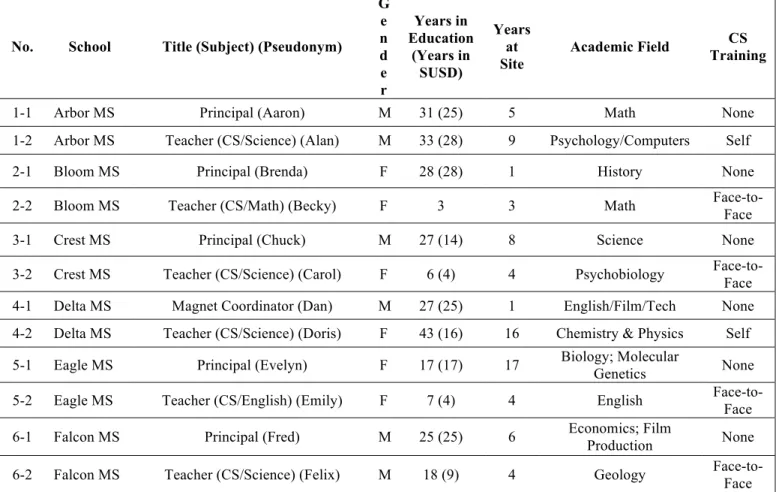
Table 5. Administrators and Teachers Interviewed...61
Table 6. CS Implementation Initiators, CS Teacher Backgrounds, and Admin/Teacher Adopter Categories...106
Table 7. Essential Elements of CS Implementation Aligned with Five Stages of Diffusion of Innovation...106
Table 8. CS Research on Student-Centered Theories of Engagement...118
Table 9. CS Implementation Challenges and Solutions...120
Table 10. CS Implementation Supports and Resources...126
Figures Figure 1. Five Stages in the Innovation Process in Organizations...19
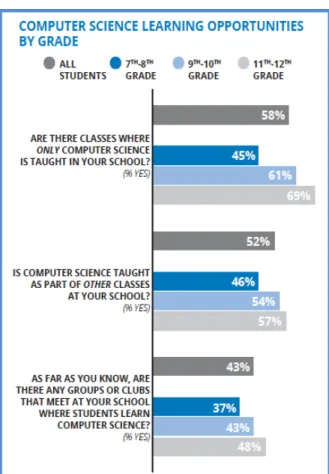
Figure 2. Computer Science Learning Opportunities by Grade...23
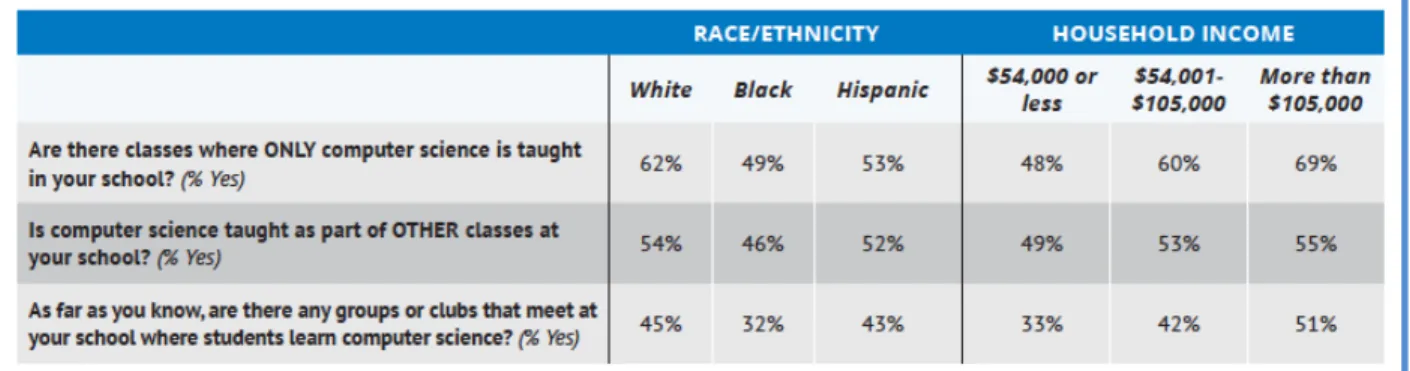
Figure 3. Computer Science Learning Opportunities by Race/Ethnicity and Income...25
LIST OF ABBREVIATIONS Advanced Placement Computer Science A (AP CS A)
Advanced Placement Computer Science Principles (AP CSP) Association for Computing Machinery (ACM)
Computer Science (CS)
Computer Science Education (CSE)
Computer Science STEM Network (CS2N) Computer Science Teachers Association (CSTA)
Computing, Science, Technology, Engineering, and Mathematics (C-STEM) United States Department of Education (DoED or ED)
Every Student Succeeds Act (ESSA) Exploring Computer Science (ECS)
Information and Communications Technology (ICT) Information Technology (IT)
Project GUTS (Growing Up Thinking Scientifically)
Science, Technology, Engineering, and Mathematics (STEM)
Science, Technology, Engineering, Arts, and Mathematics (STEAM) Underrepresented Minorities (URMs)
ACKNOWLEDGEMENTS
I was fortunate to learn from so many gifted professors in the Educational Leadership Program. My inspiring and tremendously accomplished co-chairs, Dr. Linda Sax and Dr. Linda Rose, guided me in developing a project that I could be passionate about and that enriched and transformed me as an educator. I was also privileged to have Dr. Miryung Kim and Dr. William Sandoval on my committee. Thank you to my entire committee for your time and support. Dr. Diane Durkin, Dr. Lillian Utsumi, and our dissertation writing group provided valuable insights and made me a better writer. Dr. Cindy Kratzer was an unforgettable role model of an organized, disciplined, and innovative educational leader. I am indebted to Dr. Stuart Biegel for his
generosity and his captivating lessons on education law. I am grateful to Dr. Eugene Tucker and Dr. Richard Wagoner for broadening my learning with organizational theories and insights that helped me see the big picture in education. I appreciate Dr. Robert Cooper and Dr. Tyrone Howard for the social justice and educational equity narratives they provided that gave all this work an anchor. Thank you to Shan Boggs who kindly helped me navigate the numerous technical aspects of the process, such as forms, signatures, and deadlines. Shan, you are an ELP treasure.
To the amazing Cohort 21, thank you for all the starfish reminders and the many birthday and holiday celebrations, and for making this journey fun and unforgettable. Thank you to my friends who supported me along the way. Lisa, thank you for your calming stories and sage advice. Thanks to Taline for being there during monumental and challenging times. Thanks to Doug Dall for being my mentor and for entrusting me with opportunities to be an educational leader. Thanks to my brilliant and beautiful soul sister Mary for all the life lessons and guidance. And thanks to my kind and gifted brother Ara for the music, the road trips, the movies, and the
tech memories that united us. I am so lucky to be connected to you by love and laughter, no matter how many miles separate us. I wouldn’t be where I am without all of you.
This project would not have been possible without the generous participation of the district, principals, and computer science teachers who were a part of this study. Thank you for your time and for all that you shared about your experiences with computer science education. I learned so much from all of you. I am also grateful to all the computer science professional development providers I was fortunate to meet and learn from as a result of this project: Dr. Steve Cooper (Adventures in Alice), Dr. Emmanuel Schanzer (Bootstrap), Steven Zanotti (Code.org), and so many others at the CUE, CSTA, and CSPD Week conferences. I could not have become the CS educator I am today without your expertise.
I would also like to thank my current principal, Dr. Tom Crowther, for being so
supportive and nurturing. Thank you for your guidance and for giving me a playground where I could grow and help to excite students to learn. Thanks to my colleagues at Toll for making me a part of the family. Finally, I am fortunate to have the most brilliant students who make teaching a pleasure. We get to learn from playing, tinkering, and designing. It is a privilege to watch you create like young inventors. I learn to be a better teacher from each of you every day.
VITA 1996 B.S. Mathematics and Philosophy
University of California Los Angeles, California 1998-2001 Mathematics Teacher
Roosevelt Middle School Glendale, California
2000 Single Subject Teaching Credential Mathematics with CLAD Emphasis National University
Sherman Oaks, California 2002-2003 Master of Education
National University Sherman Oaks, California 2001-2010 Mathematics Teacher
Clark Magnet High School La Crescenta, California
2004-2009 Beginning Teacher Support and Assessment (BTSA) Support Provider Glendale Unified School District
Glendale, California
2010-2016 Teacher Specialist in Educational Technology Educational Technology and Information Services Glendale Unified School District
Glendale, California
2015-present Google for Education Certified Trainer 2016-present VEX IQ Certified Robotics Instructor
2016-present Robotics, 3D Design and Printing, and Applied Technology Teacher Toll Middle School
Glendale, California
2018 Designated Subjects Career Technical Education Teaching Credential Information and Communication Technologies
Commission on Teacher Credentialing Sacramento, California
CHAPTER 1: INTRODUCTION
“Perhaps in the past it was possible to undereducate a significant portion of the population without causing serious harm to the nation. No longer. Education, today more than at any time in the past, is the key to successful participation in society” (Ravitch, 2001).
Statement of the Problem
After years of eluding female and underrepresented minority students in grades K-12, computer science education (CSE) is at a critical juncture in education history wherein educators understand the need to prepare all children to learn advanced computing in high school and are willing to implement CSE in their schools. CSE curriculum reform has reached a tipping point, with many schools using free online resources or paying for computer science curricula while struggling to find teachers willing to teach computer science in grades K-12. Despite the lack of research on effective CSE implementation in the traditional K-12 classroom, early adopters (i.e., school administrators and teachers) of relatively new CS curricula are yielding to the pressures of producing enough students with computer science knowledge to help meet the needs of the future job market. To compound their early efforts, school administrators and teachers have the added pressure of achieving ethnic and gender equity in CSE, because recent data reveal that the current technology workforce is predominantly White and male-dominated. Due to a lack of early opportunities to learn foundational computer science concepts, traditionally
underrepresented student populations have been less prepared to learn advanced computer science in high school and, consequently, less likely to pursue computer science majors and careers. Reinforcing the importance of early CSE opportunities and the need for gender and ethnic diversity in CSE, the United States Department of Education (DOE) endorsed computer science in the 2015 Every Student Succeeds Act (ESSA) as part of a “well-rounded education”. However, despite all the recent hype about the importance of teaching computer science to all
K-12 students, the feasibility and cost of long-term CSE implementation have yet to be well documented.
Research supports the need to start computer science interventions as early as possible, and specifically in middle school, before students’ perceptions of gender and career roles are solidified (Barker, Snow, Garvin-Doxas, & Weston, 2006; Whitecraft & Williams, 2010). Traditionally, the majority of public school students in America have not been exposed to any computer science curriculum prior to high school (Google & Gallup, 2015a, 2015b;
Kaczmarczyk & Dopplick, 2014). As a result, the vast majority of K-12 students, particularly the underrepresented populations, lack the essential computer science exposure and socialization that would help them thrive in the field—namely, available credit-earning courses, a computer
science social network, parental support, and teacher support (Margolis, Estrella, Goode, Holme, & Nao, 2008). Absent an easy-to-access computer science pathway, most underrepresented female and minority students choose career pathways outside the technical fields (i.e., science, technology, engineering, and mathematics) (Denner, 2011; Lightbody, Siann, Tait, & Walsh, 1997; Trigg & Perlman, 1976). Margolis et al. (2008) found that the numerous barriers to computer science access (including lack of trained computer science teachers and little prior student exposure to rigorous computer science curriculum) result in more homogeneous and male-oriented high school computer science courses (Lee, 2015; Rodger et al., 2014; Ryoo et al., 2012). “Chilly climate/classroom,” “brain drain,” and “leaky pipeline” more accurately describe female and minority students’ K-12 experiences with computer science (Eccles, 1989; Frenkel, 1990; Goode, 2007; Hilton & Lee, 1988). Yet, in reality computer science is intimately linked to science, technology, engineering, and mathematics (STEM).
Computer science is defined as “the study of computers and algorithmic processes, including their principles, their hardware and software designs, their applications, and their impact on society” (CSTA, 2009). The high school Advanced Placement Computer Science A (AP CS A) course, historically not offered in many high schools, is an example of a rigorous computer science course that exposes students to complex problem solving and computational thinking through computer programming (Cuny, 2012). Descriptions of computer science may seem dry and boring to many students, but various K-12 computer science programs have seen success in motivating students to pursue higher levels of computer science. The most notable of these improvements in student access to and engagement in CS education is the new AP
Computer Science Principles (CSP) course introduced in high schools in 2016. A variety of AP CSP curricula have been designed to make the study of computing more appealing to
traditionally underrepresented students. AP CSP courses’ purpose is to raise high school students’ interest in computing through the use of topics relevant to high school students’ lives (College Board, 2017).
Nonetheless, despite their high interest and academic achievement in mathematics and science throughout their elementary and middle school education, many girls and
underrepresented students do not pursue more rigorous STEM courses like AP Computer
Science in high school or major in computer science in college (CSTA, 2006, p. 72; Glenn, 2000; Goode, 2007; Sax et al., 2017; Stout, Dasgupta, Hunsinger, & McManus, 2011). Consequently, the rate of openings in STEM careers worldwide is growing at a higher rate than female and minority STEM college graduates (Lemons & Parzinger, 2007; Ma, 2011; Stout et al., 2011; Hill, Corbett, & St. Rose, 2010; Papastergiou, 2008; Rosenbloom, Ash, Dupont, & Coder, 2008; Whitecraft & Williams, 2010). The billions of dollars spent on filling elementary and middle
schools with technology and Internet access will not have as great an impact on our future economy if more and diverse students do not immerse themselves in rigorous computer courses in high school (Cuny, 2012; Margolis & Fisher, 2002; Stephens, Jelenac, & Noack, 2010). While access to AP Computer Science courses in high school is important, students also need access and exposure to formal (in-school) and informal (after-school) computer science curriculum throughout their K-12 education, not just at the tail end of their secondary schooling (Denner, 2011; Denner, Martinez, Thiry, & Adams, 2014; Goode, 2007; Google, 2014; Google & Gallup, 2015a, 2015b; Ryoo, Margolis, Lee, Sandoval, & Goode, 2012; Wilson, Sudol, Stephenson, & Stehlik, 2010).
The College Board provides some of the most detailed statistics about the status of computer science education in the United States. College Board AP CS A and CSP exam results from 2018 indicate an upward trend for Black/African American, Hispanic/Latino, and female students (College Board, 2019). While these data show a rise in some minority AP CS A and AP CSP test takers and passers, the overall ratios of Black to White and Hispanic to White students taking the exams remain low—1 to 12 and 1 to 4 for AP CS A and 1 to 6 and 1 to 2 for AP CSP, respectively. Similarly, male test takers outnumber female test takers on the AP CS A exam by a ratio of 3 to 1 and on the AP CSP exam by a ratio of 2 to 1. While these data are encouraging, the lack of parity between minority and female test-takers and White and male test-takers indicates a need for CS education interventions to begin earlier than high school. As computer science education policy reformers continue to gain momentum, teacher and administrator preparation for implementing the new curriculum at the middle school level will become more and more important.
Research has established that science, technology, engineering, and mathematics— collectively known as “STEM”—have traditionally been male-dominated subjects (Dryburgh, 2000; Anderson, Lankshear, Timms, & Courtney, 2008; Cheryan, Plaut, Handron, & Hudson, 2013). Girls and minorities are underrepresented in certain STEM subjects, STEM college majors, and STEM careers despite their interest and academic achievement in these subjects in the earlier years of schooling (Cheryan et al., 2013; Tan, Barton, Kang, & O’Neill, 2013). For example, girls outnumber boys in biology and environmental science, however boys heavily outnumber girls in computer science and physical science (Anderson et al., 2008; College Board, 2014c; Diekman, Brown, Johnston, & Clark, 2010; Rosenbloom et al., 2008). The historical gender and racial imbalances in computer science education have allowed negative stereotypes to solidify wherein females and minorities are perceived as less naturally able to study computer science. Studies confirm the access barriers girls and minorities face in studying computer science posed by stereotype threat (Cheryan et al., 2013; Hill et al., 2010; Rosenbloom et al., 2008; Tan et al., 2013). Stereotype threat is a fear that one who belongs to a group will confirm the truth of negative stereotypes about his or her group if he or she performs poorly on an important task. The said group is stereotypically considered weaker in such tasks (Aronson, Fried, & Good, 2002; Sanders, 2005).
In addition to a lack of access to computer science curriculum, another common thread that runs through most K-12 computer science research is the lack of role models and mentors available to female and minority students (Aronson et al., 2002; Reinen & Plomp, 1993, 1997; Frenkel, 1990; Simard & Gammal, 2012; Hill et al., 2010). Programs that bring successful
women computer scientists to K-12 classrooms as mentors have been effective in recruiting more girls to the field (Finson, 2009; Minogue, 2010). Girls report that field trips to see computer
scientists at work have had a positive impact on how they perceive women in computer science (Bamberger, 2014). However, Bamberger (2014) also discovered that when the knowledge of the women mentors is far too advanced for the female mentees to identify with, the mentees make a vital distinction—group-as-target and self-as-target stereotype threats—“we (women) can do it, however I cannot” (Shapiro, Williams, & Hambarchyan, 2013). Research has shown that the extent of a female mentor’s computer skills makes a difference in the impact she can make on middle school female students (Reinen & Plomp, 1993, 1997). Betz and Sekaquaptewa (2012) argue that mentors need to be less stereotypical of a computer science student, and female mentees need to be able to identify with their female mentors and their computing skills (as cited in Cheryan, Drury, & Vichayapai, 2012, p. 76). Absent a robust pipeline of available CS
mentors, the pressure lies on CS teachers to establishing mentoring relationships with their students and encourage greater student interest in the field.
Urgency for Proficiency in Computer Science in the United States
National labor statistics paint a bleak picture of the long-term effects of not recruiting more females and underrepresented minorities into computer science courses. According to the May 2014 United States Bureau of Labor Statistics’ report on Women in the Labor Force, of the roughly 67 million women who are employed in the civilian labor force, a mere 1.5%—
approximately 1 million women—are working in computer and mathematical occupations. These women represent only one-third of the entire computer and mathematical occupations work force. The Labor Bureau also reports that currently the top three highest paying computer science occupations are software developer, computer network architect, and information security
analyst. Figures 1a, 1b, and 1c below show that by the year 2024, the Labor Bureau predicts that these three top-paying computer science careers will grow at higher rates than the national
average for all other occupations, with information software application developer jobs predicted to grow by approximately 19%.
Yet, today, women and underrepresented minorities represent disproportionately low percentages of those employed in these three technical and high skill-based professions (see Table 1). Major tech corporations, who have released their diversity statistics annually since 2013, confirm what can happen if access to computer science does not become a priority in public education soon (see Figure 2).
Table 1
Examples of CS-Related Professions Where Women and Minorities Are Underrepresented (U.S. Department of Labor, 2015a, 2015b, 2015c)
Profession Women Black or African American Hispanic or Latino Software Developers 17.9% 5.0% 5.4%
Computer Network Architects 12.1% 8.9% 6.5% Information Security Analysts 19.7% 3.0% 5.2%
In the interest of “serving humanity” (Diekman et al., 2010) and as a matter of national economic security, achieving greater social equity in computer science will help fill the hundreds of thousands of computer science jobs that will dominate the work force of the near future. The Labor Bureau states, “analysts will be needed to create innovative solutions to prevent hackers from stealing critical information or causing problems for computer networks” (U.S. Department of Labor, 2015c, www.bls.gov). If the top-paying computer science occupations are predicted to grow from 12% to 19% by the year 2024, an additional 300,000 or so paying and high-skilled technology jobs will be available in less than ten years (Goode, 2007; Lee, 2015; Millar
pursuing these careers is not growing at a comparable pace, which may result in the United States outsourcing computer science jobs (CSTA, 2006).
The nation is looking to K-12 public education to ameliorate the paltry diversity statistics in computing professions (Byars-Winston, 2014). District and site administrators, counselors, and classroom teachers can be enlisted to help girls and underrepresented minorities understand that in less than ten years, confidential activities of American citizens’ lives will be outsourced to qualified computer scientists in other countries (Byars-Winston, 2014; Charles & Bradley, 2006; Zarrett & Malanchuk, 2005; Dryburgh, 2000; Hess & Miura, 1985). Female and minority
students have expressed greater interest in studying computer science when computing is taught as a means to achieving greater social justice and benefiting society (Denner et al., 2014;
Melguizo & Wolniak, 2012; Ryoo et al., 2012).
Barriers and Traditional Solutions
Several reasons explaining the low numbers of girls and minority students in advanced computer science courses have been offered in the past. Some researchers have posited that girls would rather study subjects other than computer science, because girls see other subjects as more direct pathways to making a difference in the world (Diekman et al., 2010; Stout et al., 2011). In addition, girls have often complained of boredom and irrelevance in their computer science coursework—not seeing the real-life applications of programming and other aspects of computer science (AAUW, 2000; Anderson et al., 2008; Carbonaro, Szafron, Cutumisu, & Schaeffer, 2010; Diekman et al., 2010; Margolis et al., 2008). Trivialized curricula in K-12 technology courses, such as cutting and pasting or desktop publishing, lead students to being underprepared to pursue rigorous computer science coursework in college. Research shows that improving computer science curriculum and cross-curricular integration of computer science in core
subjects (i.e., science, English, social sciences, etc.) can help girls and minorities see the real-life relevance of computer science (Carruthers, Milford, Pelton, & Stege, 2010; Rodger et al., 2014).
Researchers who have conducted studies in racial and gender diversity in careers report that despite evidence that women and minorities truly prefer other careers over computer science, it is possible that this is a result of reverse causation—that feeling unwelcome in the profession is what causes women’s and minorities’ lower interest in computer science (Byars-Winston, 2014; Rosenbloom et al., 2007). Ryoo et al. (2012) and Byars-Winston (2014) showed that counter-narratives provided by inquiry-based, culturally relevant computer science programs helped increase women’s and underrepresented minorities’ interest in computer science.
Notwithstanding, a challenge to providing more inquiry-based, culturally relevant computer science education programs is a lack of experienced computer science teachers (Carruthers et al., 2010). For example, the CS 10K Project, funded by the National Science Foundation (NSF), focused on creating a sequence of computing classes to prepare students for AP Computer Science at 10,000 high schools by the year 2015. CS 10K, now known as the CS for All
Teachers Community, however, also planned to find 10,000 well-prepared educators who would teach these pathway courses—a herculean feat considering that most K-12 computer science teachers are self-taught techies and have never had formal computer science training (Margolis et al., 2008).
Due to the impending shortage of computer scientists, computer science education with an emphasis on increasing the number of traditionally underrepresented minorities and females is a burgeoning topic in educational research. The National Science Foundation (NSF) has funded dozens of programs that focus on increasing the number of underrepresented students taking computer science courses (NSF, 2006). One such program is the Computer Science Computing
and Mentoring Partnership (CS-CAMP) led by mathematician Richard Tapia at Rice University in Texas. Another example with a long waitlist is the Technology Education And Literacy in Schools (TEALS) program backed by Microsoft, which sends high-tech professionals to partner high schools to teach students advanced computer science courses that many schools do not offer (www.tealsk12.org). Notwithstanding the expansion of CS outreach programs, much of what is written on the topic of CSE consists of quantitative studies evaluating a specific CS curriculum and how that curriculum raised students’ interests in CS. Curriculum implementers’ stories about challenges and successes of offering CSE are missing, leaving a gap in the research that can be filled by more studies that share administrators’ and CS teachers’ narratives about what it means to teach CS.
Learning from Administrators and Teachers Implementing CSE
In general, middle schools are not preparing students to take AP Computer Science in high school. The lack of middle school computer science courses under educates students in advanced computing, and by the time most students reach high school they are not interested in learning a difficult computing language for which they see little relevance to real life. Despite years of research on the topic of non-traditional (i.e., after-school or out-of-school) CS
interventions, female and ethnic underrepresentation in advanced high school computer science courses remains an unsolved issue.
There is a gap in the literature about how CS programs are implemented in traditional K-12 public classrooms, specifically at the middle school level. The phrase foundational computer science curriculum is used to refer to middle school coursework, including introductory
computer programming, that prepares students for learning computer programming in Java if they choose to take AP Computer Science Principles or AP Computer Science A in high school
(see Appendix J for sample middle school curricula). Research has shown that learning Java without any prior exposure to computer programming results in greater student attrition along the computer science pipeline. To study how CS programs are implemented, this study will focus on the following three research questions.
Research Questions
This study will attempt to fill the gap in middle school CSE implementation research by investigating the following research questions:
1. According to middle school administrators and computer science teachers in a district with a large number of socioeconomically disadvantaged (SED) and traditionally underrepresented minority students (URM), what are the essential elements (i.e., teacher, technology, funding, etc.) necessary to offer computer science courses to its middle school students?
a. What are the essential elements necessary to sustain a computer science education program?
2. According to middle school administrators and computer science teachers in a district with a large number of SED and traditionally URM students, what are the challenges they faced while implementing a computer science curriculum in their schools?
a. How did the challenges vary, if at all, by student population (i.e., URM, SED, special education students, female students, male students, etc.)?
b. According to middle school administrators and computer science teachers, how has the school and/or district addressed the challenges?
3. What supports and resources do middle school administrators and computer science teachers say they need to help them integrate computer science into the middle school curriculum?
a. How do the supports and/or resources vary, if at all, by student population (i.e., URM, SED, special education students, female students, male students, etc.)?
Through a qualitative multi-site comparative case study, I investigated how
administrators and teachers at six middle schools in California provided access to computer science education to their middle school students. Through this study, I interviewed six administrators and six teachers about CSE implementation at their sites. Districts preparing to offer CSE in grades K-8 can learn from early implementers about how to offer a foundational computing curriculum that allows students to construct their own identities, without imposing on them how to fit into gender and/or ethnic roles (Cassell & Jenkins, 2000). In the process of focusing on students’ reactions to foundational computer science curricula, teachers’ and administrators’ voices have not been heard in the research. Little has been published about the experiences and perspectives of administrators and teachers who are leading computer science interventions in the United States. The few studies that have included teachers’ perspectives about teaching CS—many of which are either literature reviews or quantitative surveys—have come from outside the United States (Black et al., 2013; Hubweiser, Armoni, Giannakos, & Mittermeir, 2014). Therefore, this study focused on the stories shared by 12 interviewees at six middle schools that have implemented a computer science curriculum within the past three years. Data was collected through CS curriculum analysis and telephone interviews with each school principal (or administrator with the greatest knowledge about the site’s CSE implementation) and the computer science instructor at each site.
Methodology Sites and Access
In the Fall and Winter of the 2015-16 school year, I spoke to CS curriculum writers, CS professional development providers, and administrators planning to offer CS at the middle school level throughout Southern and Northern California. Many of the administrators I spoke to were planning to begin implementing middle school computer science courses for the first time in the 2016-17 school year. One large urban district in California was further along in the middle school CS implementation process than any other district I contacted. At least 50% of the
students at each school were underrepresented minority students, and at least 60% of the students at each site were socio-economically disadvantaged (see Table 3).
Data Collection and Analysis
Interviews. I conducted in-depth semi-structured interviews with administrators and computer science teachers at each of the six middle schools in Sunrise Unified School District (SUSD). Interviews elicited the types of challenges and successes that administrators and teachers faced in implementing a computer science curriculum at the middle school level.
Document Analysis. I analyzed the computer science curricula implemented in the district in order to help with understanding the interview data. I also looked at other materials and online resources that the administrators and computer science teachers said they used to facilitate the learning of CS concepts.
Public Engagement and Dissemination
The findings of my multi-site case study were shared with stakeholders at SUSD and at each of the participating middle schools. The findings were also shared with stakeholders in my own district, in order to guide my district in moving forward with computer science courses at
the middle school level. In the future, I plan to share key findings of my study nationally, if possible, through publications in educational technology journals, as well as through presentations at educational technology conferences.
CHAPTER 2: REVIEW OF THE LITERATURE Introduction and Roadmap
We have learned that there is a constant need to build and nurture advocacy networks within the school, district, and state level. And, this is often best accomplished with local people who know the district and state culture, have “skin in the game,” and are truly committed to equity within a particular district (Margolis, Goode, & Chapman, 2015).
As indicated by the data in chapter one, the United States currently cannot keep up with the demand for workers with computer science knowledge. Most US public schools are not teaching computer science—an essential 21st century skill students will need when they enter the work force (Aesaert, Vanderlinde, Tondeur, & van Braak, 2013; Rodger et al., 2014). Some have even been calling computer programming “the new literacy” (Prensky, 2008). As teachers in the US grapple with the challenges of teaching the traditional language literacy through the Common Core State Standards (CCSS), teachers in other countries (i.e., United Kingdom (2012), New Zealand (2012), Russia (1970s), France (1960s), Sweden (1960s)) have been implementing computer science curricula in their classrooms for decades (Hubweiser et al., 2014; Sentance & Csizmadia, 2015). The US Department of Education made computer science education a priority when President Barack Obama signed the Every Student Succeeds Act (ESSA) into law on December 10, 2015. ESSA is the reauthorization of the 1965 Elementary and Secondary Education Act (ESEA), and it specifies that federal money is available to districts that teach computer science as part of the “well-rounded subjects” (see Appendix I). However, the road to proper implementation of computer science education in K-12 schools is long and paved with challenges. While the ESSA’s mention of computer science implies progress in mainstreaming computer science education as a STEM subject, it may take years from its 2016-17
administrators and teachers who have already implemented CSE in their schools will be valuable to districts and schools looking to implement CSE in the near future.
My conceptual framework was based on Everett Rogers’ (2003) theory of diffusion of innovation and how Rogers’ theory could be implemented to achieve greater computer science access for traditionally underrepresented groups. Diffusion of computer science curriculum into mainstream K-12 public education with gender and ethnic equity in mind involves a heavy reliance on social systems and collaboration—two basic tenets of Rogers’ (2003) diffusion of innovations theory. Understanding how educators leverage their social networks and leadership roles to adopt and implement CS curricula will help accelerate the diffusion of CSE in the entire country. The innovation is the computer science curriculum, and the diffusion is the spread of CS implementation ideas as they apply to middle school CS courses through social communication channels (Rogers, 2003).
Before discussing the CSE literature, I define the key terminology used in CSE research with an explanation of why Rogers’ (2003) theory of diffusion of innovations applies to middle school CS implementation. Next, I provide background data illustrating the need to expand CSE access to promote diversity in CS in general and increase diversity in middle school CS courses in particular. Then, I summarize several calls to action that lay out evidence of the lack of middle school access to CSE. Finally, I provide examples of successful CS reform efforts, despite
persistent barriers to CS implementation. I conclude my literature review with a summary that emphasizes the need for more studies documenting the CSE implementation experiences of middle school administrators and teachers in the United States.
Terminology
Throughout this literature review I use the terminology and abbreviations routinely seen in research about computer science education (CSE). The terms STEM (Science, Technology, Engineering, and Mathematics) and STEAM (Science, Technology, Engineering, Art, and Mathematics) are often used in research involving computer science education, especially about CSE as it relates to robotics and engineering courses. Information technology (IT) and computer science (CS) are sometimes used interchangeably to refer to a general preparation for a variety of careers in technology. CSE literature from countries other than the United States usually refers to CS and CSE as ICT or Information and Communication Technology (Falkner, Vivian, &
Falkner, 2014; Kori, Pedaste, Leijen, & Tõnisson, 2014). The 2007 College Board AP Computer Science Teacher’s Guides, defines computer science as:
The systematic study of computing systems and computation… [and] theories for understanding computing systems and methods; design methodology, algorithms, and tools; methods for the testing of concepts; methods of analysis and verification; and knowledge representation and implementation (NCO-HPCC, 1996, p. 116).
When I refer to the technical College Board definition of CS in this literature review, I also mean that CS is the gateway to advanced careers such as software developer, computer network
architect, and information security analyst (U.S. Department of Labor, 2015a, 2015b, 2015c). As mentioned earlier, these careers are multiplying at a much faster rate than the rate of students, particularly women and underrepresented minorities, entering these professions.
Two other terms often used synonymously in CS literature include “coding” and “computer programming” (Duncan, Bell, & Tanimoto, 2014). While they have varying meanings, coding refers to writing basic computer instructions and programming refers to the more comprehensive task of designing a computer program and debugging the program.
Theoretical Framework
An analysis of curricular implementation practices would not be complete without a grounding theory. Its connection to a theoretical framework makes the implementation analysis more replicable and the implementation itself less fleeting (Strang & Meyer, 1993). Israel, Pearson, Tapia, Wherfel, and Reese (2015) suggest two possible frameworks to study CSE implementations: implementation science theory (Fixsen, Naoom, Blase, Friedman, & Wallace, 2005; Harn, Parisi, & Stoolmiller, 2013; Odom, 2009) and diffusion of innovations theory (Norris, Sullivan, Poirot, & Soloway, 2003; Rogers, 2003). Sometimes used to imply diffusion, implementation science is defined as the “scientific study of methods to promote the systematic uptake of research findings and other evidence-based practices into routine practice, and, hence, to improve the quality and effectiveness of health services” (Eccles & Mittman, 2006). On a less technical note, “diffusion connotes the socially mediated spread of some practice within a population” (Strang & Meyer, 1993, p. 487). In addition, implementation science is a relatively new framework for analyzing the adoption of practices, therefore it is a theory with limited applications, thus far. On the other hand, diffusion of innovations theory has been used for almost a century to analyze the spread of such innovations as kindergarten and driver training in public schools (Rogers, 2003). Furthermore, implementation science relies heavily on Rogers’ (2003) theory of diffusion of innovations, yet implementation science has a more complex and nebulous topography (Fixsen et al., 2005) than diffusion’s five basic stages of innovation (see Figure 3). Due to the newness of computer science education implementation in middle schools at this time, it is more appropriate to use a time-tested framework like diffusion of innovations theory that has been shown through a variety of applications to be a generalizable theoretical framework. Once middle school computer science courses become more mainstream, then
improvement efforts on established CSE implementation practices may benefit from the application of an implementation science framework. I also chose to analyze CSE
implementation through a diffusion lens rather than an implementation science lens, because of diffusion theory’s foundation in social networks. “[S]chools are fundamentally social
organizations”, especially when it comes to implementing computer technologies (Frank, Zhao, & Borman, 2004). Surprisingly, many CSE studies describe a variety of social aspects of CSE interventions without attributing any social theories to the implementation process. Without a unifying social theory, these various CSE studies remain isolated instances of CSE intervention.
In addition to the importance of social channels, Strang and Meyer (1993) further emphasize that widespread adoption of an innovation depends on how “compelling [the
innovation is] to relevant audiences” (p. 494). CSE suffers from not yet being a compelling enough curriculum reform to more district- and site-level administrators and teachers. In other words, the slow diffusion of CSE can partly be explained by the fact that for a long time the most vocal CSE reform advocates have been the “highly specialized and marginal” (p. 495)
populations—namely, CS teachers, CS professors and researchers, and CS professional organizations.
Finally, identifying and overcoming the challenges of CSE implementation also requires a look at K-12 institutional barriers. Institutional challenges to CSE implementation include maintaining student engagement, providing CSE opportunities for all, funding for curricula, for resources, and for teacher preparation that promote rigor, recruitment, and diversity, and changing traditional images of CS among administrators, parents, and society at large (Black et al., 2013). Educators facing this complex mesh of challenges would benefit from a unifying theory that helps them make sense of the CSE implementation trajectory.
To date, few studies apply the diffusion of innovations theory to K-12 technology integration, and none have applied diffusion of innovations to K-12 computer science education reform. In one of its earliest applications to education research, Carlson (1965) used a diffusion of innovation model to explain how several popular superintendents’ “interpersonal networks” helped spread the adoption of a new math program in Pittsburgh (as cited in Rogers, 2003, p. 61). Since Carlson (1965), hundreds of education studies have shown how diffusion in schools follows Rogers’ S-shaped adopter distribution curve. The left tail of the S begins at the early stages of adoption. Over time and through the social process of diffusion, the S-curve “takes off” to reach a peak number of adopters (p. 272). Rogers (2003) also developed a bell curve upon which to map different levels of adopters. He wrote, “Adopter categories, the classifications of
members of a social system on the basis of innovativeness, include: (1) innovators
[venturesome], (2) early adopters [respect], (3) early majority [deliberate], (4) late majority [skeptical], and (5) laggards [traditional]” (pp. 20, 283).
Figure 1 above illustrates how diffusion of an innovation can be broken down into two phases: initiation (pre-decision) and implementation (post-decision) (Rogers, 2003). During the pre-decision initiation phase, which is comprised of two stages—agenda-setting and matching— the organization identifies a problem in need of innovation and the problem is matched to the innovation. Once the problem and innovation have been aligned to each other, the decision to implement is made and the next three stages—redefining/restructuring, clarifying, and
routinizing—make up the implementation phase of the innovation process. During the three implementation stages, the organization first adapts the innovation to its needs and adapts itself appropriately to implement the innovation. Then, the organization can more clearly define its relationship to the innovation. In the final stage of the implementation, the innovation has become so organically woven into the organization’s fibers that the innovation “loses its identity” (Rogers, 2003, p. 421).
A detailed and large-scale example of a CSE study that follows the diffusion of
innovations model is the six-year Georgia Computes! (GaComputes) research project (Guzdial, Ericson, McKlin, & Engelman, 2014). At the agenda-setting phase, the state of Georgia realized a need for innovation in CS teacher professional development when the AP CS A curriculum changed from the C++ programming language to Java. Two major goals of the Georgia
Computes! initiative were to increase the number of high schools offering AP CS and to increase the number of female and underrepresented minority students taking AP CS. In the matching phase, the researchers participated in the development of new CS course standards for Java and
in finding universities that would offer the certification necessary to increase the number of CS teachers who could teach the AP CS A course in Java. The matching phase proved to be complicated, because of the unpredictable, inconsistent, and shifting nature of state policy. The redefining/restructuring phase involved the design of CS teacher professional development based on data gathered from teacher observations and interviews. During the clarifying phase in Year Four, the Georgia Computes! initiative hired a program evaluation group to help determine how the CS professional development impacted teacher practices and student learning in AP CS courses. Finally, at the routinizing phase, GaComputes helped develop CS summer camps for students in grades 4-12, developed strategic partnerships to help deliver robotics kits to schools, and had developed an extensive library of CS professional development resources for teachers. Even though the GaComputes researchers did not deliberately map their six-year study to Rogers’ five stages of innovation, doing so makes the Guzdial et al. (2014) study easier to compare to other states’ large-scale CS intervention initiatives.
Rogers’ five-stage innovation implementation model aptly applies to K-12 CSE research that has found how linking CSE to mainstream skills, such as writing and storytelling, can improve both computing skills and English literacy skills in middle school (Burke, 2012; Rodger et al., 2014). Even as they write about the importance of advisory adoption committees in
schools, many of these innovative CSE researchers and staunch K-12 CSE reform advocates fail to apply a social model, such as Rogers’ diffusion of innovations theory, to help future
researchers evaluate which of the five stages of diffusion pose the greatest challenges for administrators and teachers involved in K-12 CSE implementation (Anthony & Patravanich, 2014). For these reasons, K-12 CSE reform research would benefit from the innovation initiation
and implementation stories told by middle school administrators and teachers who have already implemented CS curricula in their schools.
Why Access to Middle School CS is a Social Justice Issue
Whether or not they study the most sought-after fields in college or not is largely
determined by students’ foundational preparation in grades K-12, which is driven by the choices of administrators and teachers (Strang & Meyer, 1993). Public K-12 districts in the United States offer college preparatory courses in mathematics, science, English language arts, and social science. Most of these topics are introduced in elementary school and get more and more
advanced by the time students enter high school. However, when it comes to learning computing languages (those which control what a computer does), a skill that many researchers today call essential (Bernier & Margolis, 2014; CSTA, 2010), students’ first encounter with programming a computer is with AP Computer Science A in high school—an elective course that sometimes does not count towards the University of
California’s A-G graduation requirements (CSTA, 2012a). Not receiving college credit for taking a difficult computer science course is a disincentive for high school students to pursue CS studies. Furthermore, many students who take the AP Computer Science A course without prior CS preparation struggle to learn Java—a difficult first computing language for absolute beginners. Many students do not pass the AP CS A exam for which the course is supposed to prepare them. With such a
disconnect between the importance of CSE and how it is first introduced to most students,
students’ adverse reactions that the traditional high school CS curriculum is boring and irrelevant are not surprising (Carbonaro et al., 2010). This downward trend in high school computer
science has been stemmed by the 2016 introduction of the AP CSP course which has higher AP exam passage rates than the traditional AP CS A exam (College Board, 2018).
Based on National Center for Education Statistics (NCES) graduation data, the
percentage of overall high school graduates who earned computer science credits dropped from 25% to 19% from 1990 to 2009 (Nord et al., 2011). In 2009, 14% of high school computer science credit earners were girls—10% lower than male CS credit earners. Meanwhile, the rate of high school students taking advanced mathematics courses continues to rise. In fact, advanced mathematics courses demonstrate the gender parity that is lacking in computer science. Seventy-eight percent of high school graduates who earned Algebra II credit in 2009 were girls. Algebra II is a prerequisite to taking a high school computer science course (Cooper & Weaver, 2003), yet by the time they can choose to take an elective computer science course, girls and minority students have opted to take other classes instead.
While clear and consistent high school mathematics course pathways exist at most public high schools, computer science course offerings are rare (Carbonaro et al., 2010; Google & Gallup, 2015a). At the middle school level, computer science courses nationwide are even less common (Figure 2). The College Board, which administers and reports data on Advanced Placement (AP) examinations, indicated in their 2018 summary report that nationwide only 3,751 secondary schools out of over 20,000 (or less than 20%) of America’s high schools reported offering an AP Computer Science course, compared to over 6,000 schools that offered AP Biology, AP Chemistry, and the more traditional AP English and mathematics courses.
Granted that the number of schools offering AP CS has increased by 53% from 2010, when only 2,457 were offering the course, is cause for some optimism (College Board, 2010, 2014a). However, Margolis et al. (2008) found that the majority of high schools in the Los Angeles Unified School District that serve socio-economically disadvantaged youths cannot afford to offer AP CS, and that during economically challenging times administrators cut computer science offerings first. More recent data in Figure 3 below show that minority and
socioeconomically disadvantaged students are less likely than White students to have access to computer science courses (Google & Gallup, 2015a). In order to bring more underrepresented students into the CS pipeline, starting in the 2016-17 school year school were able to offer AP CSP classes in high school, assuming administrators could find teachers qualified and willing to teach this new introductory CS course. Meanwhile, researchers have shown that valuable recruitment efforts to bring more underrepresented groups to CS are needed in middle school, when many students who have not yet decided their career trajectory need to be shown the pathway to taking CS in high school (Barker et al., 2006; Whitecraft & Williams, 2010).
Figure 3. Google & Gallup (2015a)
Data support the need to recruit students to CS earlier than high school. Over the ten-year period from 2008 to 2018, the increase in AP CS A test takers increased 319%. Although
school, female and minority students continue to be underrepresented in these courses (College Board, 2018). On a positive note, female AP CSP test takers rose by 183% from 2016 to 2018, African American AP CSP test takers increased by 256%, and Hispanic AP CSP test takers increased by 229% over the same period (College Board, 2018). While these data indicate that the increase in CSE opportunities can have a positive effect on female and traditionally
underrepresented minority students’ participation in CS, achievement results remain troubling. Unfortunately, female, African American, and Hispanic students’ confidence levels have not kept up with the increased national average, and these underrepresented students’ passage rates (i.e., receiving a score of 3 or higher on an AP exam) in 2018 were far below the national
average passing rate on the AP CS A and AP CSP exams (College Board, 2018). Of all the 2018 AP CS A exam takers, only 2% were African American students who scored a 3 or higher, or passed the exam. Only 8% of all 2018 AP CS A examinees were Hispanic students who passed. On the 2018 AP CSP exam, only 4% of test takers who passed were African American and 15% of those who passed were Hispanic. On the other hand, even though females represent 36% of AP CS A and 44% of AP CSP test takers, 65% passed the AP CS A exam and 68.5% passed the AP CSP exam. These data indicate that CS interventions are more effective with female students than they have been with traditionally underrepresented minority students.
Across the 50 states, a variety of organizations have provided and continue to provide pockets of computer science exposure to workshop and camp participants. However, most public school districts in the United States have failed to make computer science—an essential 21st century skill—a part of the standard K-12 curriculum. Districts’ delay in providing access to computer science education for all students in grades K through 12 is a matter of social inequity and economic injustice (Parker & Guzdial, 2015). Researchers have found that a lack of access
to computer science education is directly correlated with the socioeconomic makeup of a district’s student population (Google & Gallup, 2015a). Wealthy parents have the resources to provide their children with computer science opportunities in elementary, middle, and high school. Meanwhile, minority Latina/o and African-American students, as well as females, miss out on CS courses and experiences that equip students from more affluent neighborhoods with foundational computer programming skills. Researchers have pondered the semantics of calling the imbalance in CS access either a matter of inequality or a matter of injustice. The following explanation can help CS intervention providers determine whether their CS program provides equal access and/or equal results:
Equality is privilege agnostic and implies giving every student equal opportunities no matter where they start. Justice is privilege sensitive and involves giving some students more opportunities that others based on how disadvantaged the student might be. Issues of equality and justice make us ask: what goals do we design our interventions for? Do we want to mitigate privilege to the point that we reach ‘equality of input school resources or equality of results of schooling’? Which approach benefits the student more? (Parker & Guzdial, 2015, p. 4).
While the semantic debate may have no immediate resolution, it is evident that CS intervention providers need to be mindful of what students have access to CS and how those students perform in their CS classes. School districts that offer advanced computer science courses strictly in their more affluent schools help sustain unwanted socioeconomic inequalities by limiting CS exposure for girls and minorities in lower SES schools. Surprisingly, teachers’ and administrators’ voices, particularly those at schools with significant numbers of
socioeconomically disadvantaged students of color, are largely missing from the computer science education literature. As a result, it is difficult for districts eager to implement computer
science education to replicate the CSE reform efforts that have been successful in the trailblazing districts already teaching CS (i.e., New York, San Francisco, Iowa).
Despite volumes of research attempting to explain why the leaky STEM pipeline starts with 78% girls in Algebra II and ends with only 14% girls in computer science in high school (Barker & Aspray, 2006; Margolis et al., 2008; Moses, Howe, & Niesz, 1999), recent university statistics show a declining trend in female advanced computing enrollees. The 2013 Taulbee Survey, administered by the Computing Research Association (CRA) since 1974 to collect data on “enrollment, production, and employment of Ph.D.s in” computer science (CS), computer engineering (CE), and information (I) (Zweben & Bizot, 2014), reported an all-time high in computing degrees as well as a rise in male computing graduates, who earned 82% of all doctoral computing degrees compared to 18% that were earned by women—a decline from 19.2% in 2012 (Zweben & Bizot, 2014). Since it began disaggregating bachelor’s, master’s, and doctoral degrees by gender in 1994 through the 2007-2008 school year, the Taulbee Survey has shown a 6% drop in female computing bachelor’s degree earners and a 4% and 8% rise in female master’s and doctoral degree earners, respectively (Zweben, 2014).
In 2006, scientific philosopher Thomas Kuhn articulated the paradigm shift happening in science thanks to computing science (Carbonaro et al., 2010). Kuhn emphasized the fact that science does not happen in “isolation” and that in order for science research to be “relevant to society” it must incorporate the use of computing science (Carbonaro et al., 2010; Cohoon & Aspray, 2006). As a result of the ubiquity of computing in solving society’s problems, female and minority underrepresentation in the physical sciences can no longer be overlooked.
Benefits of working in a computer science career include versatility of job options (Eubanks, 2011). Individuals with computer science knowledge will be in demand, because
machines need programmers to function. Design creativity is also in high demand, as CS can be applied to solve complex problems in all scientific areas (U.S. Department of Labor, 2015a, 2015b, 2015c). Carbonaro et al. (2010) argue that scientific innovation depends on improving CSE and increasing the number of students interested in pursuing CS majors and careers. Considering the intimate link between other STEM subjects and computer science, some K-12 schools have realized that to make their computer science offerings more appealing to
underrepresented groups, they need to publicize that CS learning can be applied to solving social issues—a reason often cited for why many girls gravitate towards the life sciences (Diekman et al., 2010; Emmott & Rison, 2006; Goode, 2010).
Increasing female and minority participation in computer science to promote innovation and diversity in perspectives would be a benefit to society (Bartol & Aspray, 2006; Cheryan et al., 2013). Of personal economic significance to females and underrepresented minority students should be the increased earning potential offered by a computer science career (Carruthers et al., 2010; Cheryan et al., 2013; Melguizo & Wolniak, 2012; Simard & Gammal, 2012). Through her action research study, Eubanks (2011) witnessed the social injustice in under-educating females and minorities in computer science. After conducting four years of participatory action research in a YWCA, Eubanks found that women need a more powerful voice in high-tech computing, and that women without access to advanced computing knowledge tend to stay in low-tech jobs (Eubanks, 2011).
Computer Science Education Calls to Action
Early warnings about the shrinking computer science pipeline were published over 29 years ago. In a November 1990 communication of the Association for Computing Machinery (ACM), for example, computer scientist Karen Frenkel referred to an “academic pipeline” that is
not producing enough post-secondary computer science graduates. While recognizing the need for more research to determine if the shrinking pipeline uniquely applies to computer science, Frenkel (1990) argued that the shortage of female computer science advanced degree holders results in a shortage of qualified computer science teachers and, consequently, a lack of computer science courses and curriculum for middle and high school students. Frenkel (1990) went on to say that the “chaos” surrounding computer science in middle schools and high schools is further exacerbated by the cumulative effects of tracking, as well as a lack of “role models, parental engagement, science-related opportunities, … [and access to] computers” (p. 39), of female and other under-represented student populations.
Close to three decades later, the bleak outlook for secondary computer science education exposed by Frenkel (1990) as negatively affecting underrepresented populations in computer science remains a persistent issue (Google & Gallup, 2015a; Margolis & Fisher, 2002; Margolis et al., 2008). However, as mentioned earlier in this chapter, the most vocal advocacy for CSE reform has thus far been limited to CS researchers and CS professional organizations. In 2006, the Computer Science Teachers Association (CSTA) published a report indicating that school administrators and education policy leaders did not understand the value of a computer science education or the urgency of improving high school computer science curriculum. Further research resulted in another CSTA (2010) call to action. Fueled by Margolis et al.’s (2008) research, the 2010 CSTA call to action claimed that a “lack of access to K-12 computer science education, or ‘privileged knowledge,’ is what education researchers have described as a
significant social justice issue for the 21st century” (CSTA, 2010, p. 9).
The CSTA’s latest research and call to action (CSTA, 2012b), commissioned by a group aptly named ACCESS (Alliance for California Computing Education for Students and Schools),