ww w . e l s e v i e r . e s / r e d e e
Revista
Europea
de
Dirección
y
Economía
de
la
Empresa
Article
The
mediating
effect
of
strategic
human
resource
practices
on
knowledge
management
and
firm
performance
Antonio
Aragón
Sánchez
∗,
Gregorio
Sánchez
Marín,
Arleen
Mueses
Morales
DepartmentofBusinessManagementandFinance,FacultyofBusinessEconomics,UniversityofMurcia,CampusdeEspinardo,30100Murcia,Spain
a
r
t
i
c
l
e
i
n
f
o
Articlehistory:
Received7April2014 Accepted17March2015 Availableonline30June2015
JELclassification: D830 L250 M500 Keywords: Knowledgemanagement Strategichumanresourcepractices Firmperformance
a
b
s
t
r
a
c
t
Previousempiricalevidencehassuggestedthatknowledgemanagementandhumanresource
prac-ticescaninteractinordertoimprovefirmperformance.Basedonthisidea,thepurposeofthisstudy
istoproposeandtestanintegrativemodelthatexaminesstrategichumanresourcepracticesasa
cat-alyticmechanisminfluencingtheeffectivenessofknowledgemanagement.Ourfindingsconfirmthat
knowledgemanagementstrategiespositivelyinfluencefirmperformancethroughcertainhighwork
performancepractices–selectivestaffing,intensivetraining,activeparticipation,comprehensive
per-formanceappraisal,andperformance-basedcompensation–highlightingthemediatingroleofhuman
resourcemanagementinthisrelationshipandtheneedtoalignhumanresourcepracticeswith
organi-zationalstrategies.
©2014AEDEM.PublishedbyElsevierEspaña,S.L.U.ThisisanopenaccessarticleundertheCC
BY-NC-NDlicense(http://creativecommons.org/licenses/by-nc-nd/4.0/).
Gestión
del
conocimiento
y
resultados
empresariales:
efecto
mediador
de
las
prácticas
de
recursos
humanos
CódigosJEL:
D830 L250 M500
Palabrasclave:
Gestióndelconocimiento
Prácticasestratégicasderecursoshumanos Resultadosdelaempresa
r
e
s
u
m
e
n
Laevidenciaempíricapreviase ˜nalaquetantolagestióndelconocimientocomolasprácticasderecursos
humanospuedeninteractuardediversasformasparamejorarlosresultadosdelaempresa.Partiendo
deestaidea,elobjetivodeestetrabajoesproponerycontrastarunmodeloqueexaminalagestiónde
recursoshumanoscomomecanismocatalizadordelaefectividaddelagestióndelconocimiento.
Nue-stroshallazgosconfirmanquelasestrategiasdecodificaciónypersonalizacióndelconocimientoinfluyen
positivamenteenlosresultadosdelaempresaatravésdedeterminadasprácticasestratégicasderecursos
humanosdealtorendimiento,loqueconfirmaelpapelmediadordelagestiónderecursoshumanosen
dicharelaciónylanecesidaddeajustarlasprácticasderecursoshumanosalascaracterísticasestratégicas
delaorganización.
©2014AEDEM.PublicadoporElsevierEspaña,S.L.U.EsteesunartículoOpenAccessbajolalicencia
CCBY-NC-ND(http://creativecommons.org/licenses/by-nc-nd/4.0/).
Introduction
Todaymostofthecompaniesoperateincomplexanddynamic
environments, where competition is constantly increasing and,
therefore,thetraditionalsourcesofcompetitiveadvantagedonot
∗ Correspondingauthor.
E-mailaddresses:[email protected](A.A.Sánchez),[email protected](G.S.Marín),
[email protected](A.M.Morales).
guaranteethesurvivaloftheorganization,creatinganeedforrapid
adaptation.Thissituationisleadingtoaredefinitionofbusiness
strategies(Pfeffer,1994;Wernerfelt,1984).Thereismuchdebate
abouttheneedtopaygreaterattentiontostrategicresourcesand
howtheyaremanaged,especiallythosecapableofproviding
eco-nomicvalueand competitivenessforcompanies.Barney(1991)
arguesthatintangibleresourcescanbecomeasourceofsustainable
competitiveadvantagetomeettherequirementsofvalueand
inim-itability(Barney,1991;Black&Boal,1994).Inthissense,knowledge
andhumancapitalareimportantassetsfororganizationsandan
http://dx.doi.org/10.1016/j.redee.2015.03.003
1019-6838/© 2014 AEDEM. Published by Elsevier España, S.L.U. This is an open access article under the CC BY-NC-ND license (http://creativecommons.org/ licenses/by-nc-nd/4.0/).
effectivemanagementofthoseassetscanmakepossiblefor
com-paniestoleveragetheknowledgeandskillsofemployeeswhile
developinghumanresourcemanagementmodelstailoredtothe
needstheenvironment,contributingtotheimprovementoffirm
performance(Soliman&Spooner,2000;Yahya&Goh,2002).
Whilesomestudieshavenotedthatknowledgemanagement
promotesfirm performance(Chen&Huang, 2009;Hsiao,Chen,
&Chang,2011;López-Nicolás&Mero ˜no-Cerdán,2011;Palacios& Garrigós,2006;Raˇsula,BosiljVukˇsi ´c,&Indihar ˇStemberger,2012),
othersstudiesarguethatitishumanresourcemanagementthat
helpstoimprovethisperformance(Becker&Gerhart,1996;Chen
&Huang,2009;Collins&Clark,2003;Huselid,1995;Youndt,Snell, Dean, &Lepak, 1996).In addition,someresearch suggeststhat
knowledge management and humanresource management are
closelyrelated(Afiouni,2007;Haesli&Boxall,2005;Oltra,2005;
Theriou&Chatzoglou, 2008;Wang,Chiang, &Tung,2012).The
majorityofthesestudiesoptfor analyzingthemediatingeffect
of knowledgemanagement in therelationship betweenhuman
resourcemanagementandfirmperformance(Jackson,Schuler,&
Jiang,2014).
Surprisingly,fewstudieshave suggestedaninverse
relation-shipbetweentheseconcepts,whichmightbeexpectedconsidering
thepotentialstronginteractionbetweenknowledgemanagement
andhumanresourcemanagement(Chuang,Jackson,&Jiang,2013;
Liao,2011;Shih&Chiang,2005).Therefore,themainobjectiveof
this workisoffering adifferentperspective ontherole human
resourcemanagement, respondingalsotorecent callsfor
alter-nativecausalmodelstoanalyzethecatalyticormediatingroleof
humanresourcesmanagementintherelationshipbetween
knowl-edge management and firm performance (Jackson et al., 2014;
Jiang,Takeuchi, &Lepak,2013).Thisnewperspective is
impor-tanttotheextentthatitcandeterminewhethercertainsystemsof
humanresourcemanagementareabletotranslateorganizational
needsandstrategiesintoapackageofstrategichumanresource
practicesthatcanfosteralignmentofemployeebehaviors,thereby
producingbetteroutcomesfortheorganization(Jiangetal.,2013).
Thus, recognizingtheneedfor empiricalstudiestoanalyzethe
roleofhumanresourcemanagementsystemsascatalytic
mech-anisms in developing organizational strategies and goals(Jiang
etal.,2013),weexaminethemediatingeffectsofcertainstrategic
highperformanceworkpracticesintheareasofstaffing,training,
participation,performanceappraisaland compensation(Chen &
Huang,2009; Huselid,1995).Itis expectedthatthesepractices
canmediatetherelationshipbetweenknowledgemanagement–
measuredthroughcodificationandpersonalizationstrategies–and
firmperformance.Therelationshipsareexaminedusingstructural
equationmodelingmethodologyinasampleof191Spanish
indus-trialcompanies.
Thespecificcontributionsofthisstudycanbesummarizedin
threeparts.First,itextendsthelimitedliteraturethatrecognizes
theneedforalignmentofthehumanresourcemanagement
strate-giesasamediator ofknowledgemanagement for thecompany
thatlinksthegoalsofthecompanyanditsimprovedperformance
(Jiang et al., 2013; Wang et al., 2012).Second, it supports the
ideathatmanagingtheknowledgeemployees,throughstrategic
humanresourcepractices,isessentialfororganizationsto
maxi-mizetheirperformance(Chuangetal.,2013;Liao,2011).Finally,it
helpstoexplaintherelationshipsbetweencertainspecific
strate-giesofknowledgemanagementandthehighperformancework
systems,fromtheperspectivethattheycontributetofirm
perfor-mance(Chen&Huang,2009;Snell&Youndt,1995).
Theworkis dividedinto foursections. First,theoretical and
empiricalcontributionsrelatedtotherelationshipsbetweenthe
variablesthatareincludedintheresearchmodelarereviewed.
Sec-ond,methodologyemployedtotestthemodelisdescribed.Third,
resultsarepresented,endingwithconclusionsanddiscussionof
theresultsobtained. Thisfinal sectionalsohighlights themain
implicationsforfutureresearch.
Researchbackgroundandhypotheses
Knowledgemanagementandfirmperformance
Knowledgecanbedefinedasinformationcombinedwith
expe-rience,context,interpretationandreflection(Davenport&Völpel,
2001).Knowledgeisconsideredavaluableresourcefor
organiza-tionswhenitisincorporatedinhumancapital,allowingcompanies
toimprovetheirdistinctivecompetencies(Grant,1996;Hansen,
1999;Spender,1996).Althoughliteratureincludesnumeroustypes
oforganizationalknowledge,themostfrequentlyusedframework
is that which distinguishes between tacit and explicit
knowl-edge(Afiouni,2007;Hussi,2004;Polanyi,1966;Spender,1996).
Whilecodifiedorexplicitknowledgeistransmittedthrough
for-malandsystematiclanguage,andmaytaketheformofsoftware,
patents,diagramsandthelike,tacitknowledgeisacquiredthrough
experienceandresidesinthehumanmind.Thatis,tacit
knowl-edge issituational andsubjective natureand thusit is difficult
toformalize, communicate and share withothers (Martensson,
2000;Polanyi,1966).Itshouldbenotedthatmuchorganizational
knowledgeistacit,anditisconsideredanimportantsourceof
com-petitiveadvantage(Ambrosini&Bowman,2001).Therearetwo
basicstrategiesforknowledgemanagement:acodificationstrategy
basedonexplicitknowledge,andapersonalizationstrategybased
ontacitknowledge(Choi&Lee,2003;Hansen,Nohria,&Tierney,
1999).Codificationextractsknowledgefrompeopleandstoresit
with thehelp of technological systems for re-use.
Personaliza-tionemphasizesdialogandpersonalcontacttoshareandmanage
knowledge(Hansenetal.,1999).However,thesetwostrategiesare
notmutuallyexclusive,andmayfunctiontogetherinsome
com-bination(Hussi, 2004).Thus,fromthepointofviewofbusiness
effectiveness,knowledge,bothtacitandexplicit,isrecognizedasa
keyresourcethatcanproducecompetitiveadvantageifitis
man-agedproperly(Wangetal.,2012).NonakaandTakeuchi(1995)
viewknowledgemanagementasatoolthatallowsthecompany
toemphasizeandpromotetheproductivity,flexibilityand
creativ-ityneededtoincreaseitsvalueandcompetitiveness(Davenport&
Völpel,2001;Salojärvi,Furu,&Sveiby,2005).
Research on how and under what circumstances the
vari-ousknowledge management strategieslead tobetteroutcomes
has provided ample evidence that generally support the
pos-itive relationship between the knowledge management and
firm performance(Yang,2010).For example,López-Nicolásand
Mero ˜no-Cerdán (2011) show that thetwo knowledge
manage-mentstrategiesofcodificationandpersonalizationaremechanisms
through which companiesmanage toachieve greater
effective-nessandperformance.Adoptingabroaderapproach,Palaciosand
Garrigós (2006) findthat sixknowledge management practices
–knowledge;learning;organizationalunderstanding;innovative
culture;individualizedapproachandskills–haveapositiveand
significanteffectonfirmperformance. Chenand Huang (2009),
takingamoreholisticapproach,noticethattheimplementation
ofknowledgemanagementsystemshasapositiveandsignificant
influenceonthefinancialand operationalperformance of
orga-nizations. Also, thestudy of Hsiao et al. (2011) showthat the
capacitytomanagetheacquisitionanddisseminationof
knowl-edgearepositivelyrelatedtothefirm’sperformance,andpointout
thatsocial interactionincreasesthestrength oftherelationship
betweenknowledgemanagementskillsandperformance.Finally,
Raˇsulaetal.,2012showthatthefourstrategiesofcreation,
accumu-lation,organizationanduseofknowledgehaveapositiveimpact
Otherstudiesfoundnopositiveevidenceinthisregard,usually
explainingthisresultbypointingtoalackofaproper
implemen-tationstrategyand interactionbetweenthevariousdimensions
ofknowledge.Yetultimatelythereisarecognitionthatthereis
a clear theoreticaland empirical foundation for the belief that
knowledgemanagementisinfluentialinobtainingsuperiorfirm
performance(Darroch,2005;Mills&Smith,2011;Seleim&Khalil,
2007).Therefore,itcanbeconcludedthattheliteraturelargely
sup-portstheidea,basedontheresource-basedview,thatproperly
implementedknowledge management, and therelated
interac-tionsandcomplementaritiesbetweenthestrategiesofcodification
andpersonalization,cancontributepositivelytofirmperformance.
Therefore,thefirstresearchhypothesisproposedinthefollowing
terms:
H1. Knowledgemanagement –throughtheimplementationof
codificationstrategiesandpersonalizationstrategies–hasa
posi-tiveeffectonfirmperformance.
Strategichumanresourcespracticesandfirmperformance
Incomplexanddynamicbusiness environmentsliketoday’s,
effective management of human capital is increasingly
impor-tant,beingthefoundationformuchofthesustainablecompetitive
advantageofacompany(Barney,1991;Wernerfelt,1984).Inthis
sense,humanresourcemanagement is essential asa structural
mechanisminthedevelopmentandadaptationofhumancapitalto
achievesustainablecompetitiveadvantage(Collins&Clark,2003;
Jacksonetal.,2014).Throughhumanresourcepractices,
compa-niescaninfluenceandshapetheskills,attitudesandbehaviorsof
individuals,sothattheycandotheirjobbetterandachievethe
objectivesoftheorganization(Delery&Doty,1996;Collins&Clark,
2003).
In fact, numerous studies have shown that certain human
resourcepractices,eitherindividuallyorasasystem,candirectly
and positively affect the individual and collective outcomes of
thecompany(BeckerandGerhart,1996;Jiangetal.,2013).Thus,
empiricalstudieshavemadeconsiderableefforts tolinksets of
humanresourcepracticestobusinessoutcomes,whetherthrough
so-called high performance work systems (Becker & Huselid,
1998;Delaney &Huselid,1996; Huselid,1995), based on trust (Arthur, 1994), through highengagement (Batt, 2002; Guthrie,
2001), or innovative practices (Ichniowski, Shaw, & Prennushi,
1997;MacDuffie,1995;Youndtetal.,1996),atthelevelof
indi-vidualbusinessunits(Koch&McGrath,1996),andintermsofthe
globalfinancialandeconomicperformanceofcompanies(Becker
&Huselid,1998; Delaney&Huselid,1996; Huselid,1995).The
commonthreadin these investigations is theidea that certain
humanresourcepracticescaninfluencefirmperformancethrough
theirinfluenceonthebehaviorofemployees.Thoseemployeesare
affectedpositivelyintheirperformance,andthisimproves
indi-vidualand/orgroupproductivity(Becker&Huselid,1998;Guest,
1997).Althoughtherearesomestudiesthatdidnotfullyconfirm
thepositiverelationship(Guest,Michie,Conway,&Sheehan,2003),
theirfindingscontinuetobeconsistentwiththemainideathat
strategichumanresourcepracticesinfluenceemployeebehavior
andgeneratepositiveeffectsinindividualperformanceand
there-forecollectiveenterprise-levelperformance(Jacksonetal.,2014).
Specifically,Huselid(1995, 635)describes highperformance
workpractices, which “can improve the knowledge, skills, and
abilities of a firm’s current and potential employees, increase
theirmotivation,reduceshirking,andenhanceretentionofquality
employees”,therebyimprovingindividualandorganizational
per-formance(Arthur,1994;Becker&Gerhart,1996;Ichniowskietal.,
1997;Jiangetal.,2013;Youndtetal.,1996).Itistherefore
possi-bletorefertostrategichumanresourcepractices(Chen&Huang,
2009),to theextentthattheyenhance theabilityand
involve-mentofemployees,encouragetheircommitmentandencourage
theirefforts,providingscopefortheorganizationtobeproactive
andmorecloselylinkedwithlearning,innovationandknowledge
(Chen&Huang,2009;Jacksonetal.,2014).Inthissense,ithasbeen
shown that selective selection, intensive training, encouraging
activeemployeeparticipation,conductingthoroughperformance
assessmentandestablishingincentiveslinkedtoperformanceare
highperformance workpracticesthat arerelated,throughtheir
impactonthedevelopmentandmotivationofemployees,with
bet-terfirmperformance(Jacksonetal.,2014;Jiangetal.,2013).These
arethereforestrategichumanresourcepractices,totheextentthat
theypromoteinimitableattributesinemployeesthatcontribute
totheachievementand maintenance ofa sustainable
competi-tiveadvantagefortheorganization(Chen&Huang,2009;Collins&
Clark,2003;Guest,1997;Huselid,1995;MacDuffie,1995;Youndt etal.,1996).
Therefore,consideringtheabovearguments,itisexpectedthat
theextenttowhichhumanresourcepracticesarestrategically
ori-entedtowardhighperformanceworkpractices(selectivestaffing,
intensivetraining,activeemployeeinvolvement,acomprehensive
performance assessment, and incentive systems linked to
per-formance),employeeswill beencouragedin thebehaviors and
attitudesthatpromotebetterindividualandorganizational
per-formance.Thus,thesecondhypothesisisproposedasfollows:
H2. Strategichumanresourcepractices–selectivestaffing,
inten-sive training, active participation, comprehensive performance
appraisal,andperformance-basedcompensation–haveapositive
effectonfirmperformance.
Themediatingeffectofstrategichumanresourcepractices
Much of the original literature on knowledge management
focusedontechnologicalissues,butovertimethehuman
dimen-sionhasbecomemoreimportanttotheextentthat ithasbeen
discoveredthattechnologyaloneis notaseffectiveasexpected
(Afiouni, 2007;Haesli & Boxall,2005).In this sense, Theriou & Chatzoglou (2008) note that although technology is necessary,
itis notsufficientalone toensureknowledgemanagement and
itsrelationshipwithhumanresourcemanagement.Ifthehuman
resourcemanagementisabouttheeffectivemanagementofpeople,
andthemostvaluableresourceofindividualsisknowledge,then,
humanresourcemanagementandknowledgemanagementmust
becloselyrelated,astheysharesomeactivitiesandobjectivesand
bothfocusonpeople(Oltra,2005;Svetlik&Stavrou-Costea,2007).
DavenportandVölpel(2001)summarizethesituationby
stat-ingthatknowledgemanagementmanagespeople,andviceversa.
Scholl, Koenig, Meyer, & Heisig (2004) explain that the most
effectivemethodforknowledgemanagementisanapproachthat
combines different disciplines.According totheir research,the
mosturgentanddifficultaspectforunderstandingand
advanc-ingknowledgemanagementistogiveprioritytohumanfactors.
Chuangetal.(2013)andYahyaandGoh(2002)notethathuman
resourcepracticesshouldbeusedtomonitor,measureand
inter-veneintheconstruction,personalization,disseminationanduseof
knowledgeofemployees.Thatis,theorganizationmustusehuman
resourcemanagementtoincreasetheknowledge,skills,experience
andcreativity ofallitsemployees(SolimanandSpooner,2000;
Wangetal.,2012).Inthissense,theknowledgemanagement
strat-egycanbeakeyfactortoconsiderwhenestablishingtheobjectives
ofenterprise-levelstrategichumanresourcepractices(Liao,2011;
Chuangetal.,2013).
In this vein, some researchers have begun to
conceptual-izehumanresourcemanagement andtheorientationofhuman
theorganizationanditsknowledgestrategy(Chuangetal.,2013; Jiangetal.,2013).Thesestrategichumanresourcepracticesreflect
(mediate)thedemands oftheorganizationandprovide
mecha-nismstostrengthentherequiredoutcomesofemployeesaswell
astosupportthemintheirwork(Jiangetal.,2013).For
exam-ple, when a company has a knowledge management strategy,
whetheritdependsoncodificationoronpersonalization,strategic
humanresourcepracticesareclearlyorientedtowardahigh
per-formanceworksystem(Chuangetal.,2013;Huselid,1995;Snell
&Youndt,1995).Specifically,emphasisonthoroughrecruitment
andselectionofemployeeswhocansolveproblems,tolerate
ambi-guity,andarewillingtosharetheirknowledgeandexperience,is
extremelyimportantandwillhelpemployeestoengagewiththe
developmentofaknowledgemanagementsystem.The
organiza-tionmay,afterathoroughassessmentofemployees’skills,train
themintensivelyandextensivelyaccordingtothespecificneeds
oftheindividualandoverallcompanygoals,usingcompensations
packagestoencourageemployeestosharetheirtacitandexplicit
knowledge(Wangetal.,2012).
Liao (2011) and Chuang et al. (2013) argue that, although
companiescanuseinterconnectedpersonalizationand/or
codifi-cationstrategies,globalknowledgemanagementstrategiesalways
requirethedevelopmentandimplementationofstrategichuman
resourcepractices(aimedathigh-performancesystems)covering
aspectsofselectiveselection,intensivetraining,active
participa-tion,performanceevaluationandincentive-basedcompensation.
Ifsuchstrategichumanpracticesaredesignedandproperly
ori-ented,knowledgemanagementwillhelpthecompanytomaintain
its competitiveadvantage, contributing to the improvement of
firm performance (Chuang et al., 2013; Meso & Smith, 2000;
Shih&Chiang,2005).So,itisexpectedthattheimplementation
of strategic humanresource practices willfacilitate knowledge
management, and actas acatalyst in therelationship between
knowledgemanagementandfirmperformance.Thethird
hypoth-esisis,therefore,proposedasfollows:
H3. Strategichumanresourcepracticesmediatetherelationship
betweenknowledgemanagementandfirmperformance.
Methodology
Population,sampleanddatacollection
DatawerecollectedfromSpanishcompanies.Theinitial
popula-tion,selectedfromtheSABIdatabase,was4112companies,which
employedbetween25and249workers,fromallindustrialsectors.
Atelephonesurveyofthispopulationwasconductedbetween1
December,2011and18January,2012basedonastructured
ques-tionnaire.Informationwasobtainedfrom191companiesoutofa
totalof2251companiescontacted,representingaresponserate
of8.48%.Smallerbusinesseswereexcludedduetopoor
formal-izationofknowledgemanagementstrategiesandhumanresource
practices.Similarly,weexcludedlargerenterprisesbecausethere
areimportant differencesregarding themanagement of human
resources in small and medium sized enterprises, which could
distort the empirical analysis. Finally, it should be noted that
the survey wasaddressed to the chief executive officerof the
company,1 asit wasconsidered thathis/her positionensures a
1Inordertominimizetheriskofcommonmethodbiasarisingfromtaking
infor-mationfromonlyonesource,thisstudyusesdatafromtwosources:thetelephone interviewformeasuresofknowledgemanagementandhumanresourcepractices andtheSABIdatabaseformeasuresoffirmperformance.Inaddition,as recom-mendedbyPodsakoffetal.(2003,2012),wehavetestedfortheabsenceofasingle commonfactorthathasaneigenvalueofgreaterthanone.Apoorfitofthe sin-glefactormodelisanindicationthatcommonmethodvarianceisnotamajor
Table1
Manufacturingsub-sectors.
Industries CNAE2009 N %
Meatproducts,beberages, foodandtobacco
10,11,12 21 11.62%
Textile,leatherproductsand footwear
13,14,15 5 2.53%
Paperproducts,printingand publishing,lumberand wood
16,17,18 22 11.11%
Chemicalproducts,rubber andmiscellaneousplastics productsandfuels
19,20,22,23 46 23.74%
Primarymetalindustries, fabricatedmetalproducts
24,25 26 14.65%
Electricalequipment, computerandoptical industry
26,27 7 3.54%
Industrialmachineryand equipment,motorvehicles
28,29,30 19 9.60% Otherindustries 21,31,32,33, 35,36,37,38, 39 45 23.23% Total 191
thoroughunderstandingoftheorganization,itshumanresources practicesandknowledgemanagementstrategies.Theoverall sam-plingerroris6.8%,foraconfidencelevelof95.5%2andp=q=0.5.
ThedistributionofthesampleisrepresentedbysectorsinTable1.
Variablesandmeasures
Strategichumanresourcepractices
Measuringthesetstrategichumanresourcepracticeswasbased
onamultidimensionalscaledrawnfromtheliteratureonhigh
per-formanceworkpracticesprovidedbyHuselid(1995),MacDuffie
(1995),Youndtetal. (1996),Collinsand Clark(2003)andChen andHuang(2009).Specifically,weappliedthemodelofChenand Huang(2009),whomeasuredfivedimensionsofhumanresource
practices related to the staffing, training, participation,
perfor-manceappraisalandcompensation,using15itemsformulatedon
a5-pointLikertscale(seeAppendixII).Astheitemsaredefined,
scorescloserto5indicatethatthecompanyisimplementingahigh
performanceworkpractice,asitplacesmoreemphasisonselective
selection,intensivetraining,encouragingactiveemployee
partic-ipation,makingacomprehensiveevaluationofperformanceand
establishingincentivesystems linkedtoperformance.Thescale
forstaffinghasareliability(c)of0.849andtheaveragevariance
extracted(ave)is 0.652,values whichconform tothose
recom-mendedintheliterature(Bagozzi&Yi,1988,2012).Similarly,for
trainingthevalues (c=0.843and ave=0.642),for participation
(c=0.880andave=0.711),forperformanceappraisal(c=0.834
andave=0.623),andforcompensation(c=0.815andave=0.597).
Knowledgemanagement
Knowledgemanagementwasmeasuredusinganadaptationof
thescaledevelopedbyChoiandLee(2003),inwhichthetwo
strate-gies,codificationandpersonalization,aredimensions.Thesescales
havesubsequentlybeenusedandvalidatedinotherstudies,such
problem. The single factor model has a 2=1241.26 with 252◦ of freedom
(NFI=0.473;NNFI=0.479;CFI=0.524;IFI=0.530;RMSEA=0.142),whichismuch worse thanthe measurement model(2 (224)=288.74(p=0.002), NFI=0.90,
NNFI=0.96,CFI=0.97,IFI=0.98,RMSEA=v0.04)(seeAppendixIIfordetails)which suggeststhatcommonmethodbiasisnotapotentialprobleminthedatacollection.
2Therearenostatisticallysignificantdifferencesbetweenthecompaniesinthe
populationandthoseinthesampleonanyofthekeyvariables,includingtotal investment,totalturnover,returnonsales,returnonassetsorreturnoninvestment, whichistosaythereisnoevidenceofaselectionbiasinthesample.
Table2
Means,standarddeviations,correlations,anddiscriminantvalidity.
Variables Mean S.D. 1 2 3 4 5 6 7 8 1.FirmPerformance 2.38 7.11 0.844 2.Staffing 9.64 1.76 0.179** 0.807 3.Training 8.95 2.24 0.275*** 0.623*** 0.801 4.Participation 8.37 2.25 0.152** 0.465*** 0.470*** 0.843 5.Performanceappraisal 7.75 1.82 0.186*** 0.469*** 0.465*** 0.596*** 0.789 6.Compensation 6.65 2.45 0.141** 0.284*** 0.264*** 0.316*** 0.337*** 0.773 7.Knowledgecodification 2.82 0.68 0.128* 0.400*** 0.501*** 0.402*** 0.432*** 0.188*** 0.760 8.Knowledgepersonalization 2.74 0.56 0.225*** 0.369*** 0.456*** 0.460*** 0.479*** 0.227*** 0.603*** 0.791 * p<0.1. ** p<0.05. ***p<0.01.
asLópez-Nicolásand Mero ˜no-Cerdán(2011).Thismeasure
con-sistsofsixitemsdefinedona5-pointLikertscale(seeAppendix
II)toidentifyand evaluatetheapproach thecompanytakesto
knowledgemanagement.Thehighertheratinggivenbythe
com-panytoeachitem,themorethecompanyisinvolvedinintensive
knowledgemanagement.Ofthesixitems,thefirstthree
repre-sentknowledgecodificationinitiatives(c=0.801andave=0.578),
whiletheremainingthreeareknowledgepersonalizationpractices
(c=0.833andave=0.626).
Firmperformance
Firm performance was measured using an indicator that
combinesglobaleconomicandfinancialperformanceofthe
com-pany(Beltrán-Martín,Roca-Puig,Escrig-Tena,&Bou-Llusar,2008; Delaney&Huselid,1996;Sanchez-Marin,Baixauli-Soler,& Lucas-Perez,2011).Specifically,weusedanindicatorthatreflectsthe
returnonsales(ROS),returnonassets(ROA)andreturnonequity
(ROE) of the companies in the sample, measured as the
aver-agevalue for each year from 2010to 2012,using information
fromthe SABI database (composite reliability is c=0.877 and
averagevariance extracted, ave=0.712). Using an average of 3
years’firmperformanceisintendedtomaintainthestabilityofthe
measureovertime,atthesametimeasavoidinganydistortion
introducedbythedelaybetweentheimplementationofa
knowl-edgemanagementstrategyandhumanresourcepracticesandfirm
performance(Aragón-Sánchez,Barba-Aragón,&Sanz-Valle,2003;
Sanchez-MarinandBaixauli-Soler,2015).
Controlvariables
Twocontrolvariables wereincluded.Thefirstisfirmsize,as
companiesmayhaveorganizationalcharacteristicsanddeploy
var-iousresourcesaccordingtotheirsize(Gilman&Raby,2013).Firm
sizewas measuredas its total number of employees.The
sec-ondis thetechnologicalintensity,sincethisisanindicatorthat
reflectsanydifferencesinstrategiestowardknowledgeandhuman
resourcepractices(Lepak,Takeuchi,&Snell,2003).Technological
intensitywasmeasuredusingtheOECD’s2011classification(ISIC
REV3TechnologyIntensityDefinition,2011),whichranks
compa-niesonascalewithtwolevelsoflowormedium-lowtechnological
intensity,withavalueofzero,orforhighormedium-high
techno-logicalintensity,withavalueofunity.
Goodnessoffitmodel:reliabilityandvalidity
Forthemeasurementmodelassessmenttwo-stageprocedure
recommendedbyAndersonandGerbing(1988)wasfollowed.In
thefirststage,weestimatedthemeasurementmodelusing
con-firmatory factor analysis (CFA) using the method of maximum
likelihood,whichissuitablewhenthenormalityofthedataisgiven
(Chou,Bentler,&Satorra,1991;Fornell&Larcker,1981;Gerbing &Anderson,1988;West,Finch,&Curran,1995).Inthiscasewe
haveusedtheindicesproposedbyFornellandLarcker(1981)and
BagozziandYi(1988,2012)ofaverageextractedvariance(ave)and
compositereliability(c)respectively,astheyprovideindicators
thataremoreaccuratethanothermethods,andalsousingthe
chi-squarestatisticaldistributionofSatorra-Bentler(Hair,Anderson,
Tatham,&Black,2006;Satorra&Bentler,1994;Westetal.,1995).
TheCFAadjustmentmeasureswereestimatedusingEQSV.6.3.
AsshowninAppendixII,theindicatorsarewithintheranges
rec-ommendedintheliterature(Anderson&Gerbing,1988;Fornell
& Larcker, 1981; Hoyle & Panter, 1995; Podsakoff, MacKenzie, Lee,&Podsakoff,2003),sothereisagoodfitandtherobustness
ofthemodelisassured(2 (224)=288.74(p=0.002),NFI=0.90,
NNFI=0.96,CFI=0.97,IFI=0.98,RMSEA=0.04).Ifwefocusonthe
analysisofindividualindicatorsforeachitem,allhavesignificant
valuesfortheirstandardizedcoefficients(p<0.05),beingthemodel
suitableformeasuringthespecifiedconstructs.Regardinginternal
consistency,allscaleshaveanappropriatevalueofcgreaterthan
0.6(BagozziandYi,1988,2012).Withrespecttoconvergent
valid-ity,allscaleshaveanaveabovetherecommendedlimitof0.5,while
thediscriminantvalidityhasbeenconfirmedbycheckingthatthe
squarerootofave(valuesonthediagonalofTable2)isgreater
thanthecorrelationsbetweenconstructs(off-diagonalinTable2)
(Fornell&Larcker,1981).
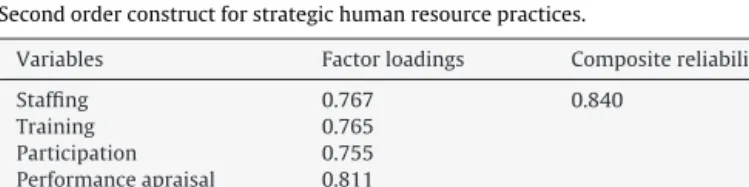
Table3showstheestimatedsecond-orderconstructfor
strate-gichumanresourcepractices.Constructestimatorsforthesecond
orderofthefivefirst-orderfactorsaresignificant,aswellas
indi-catorsofoverallmodelfit(2(84)=151.943(p=0.000),NFI=0.91,
NNFI=0.95,CFI=0.96,RMSEA=0.06),asrecommendedinthe
lit-erature(Hoyle &Panter, 1995).In addition, themodel hasa T
ratio(ratioofthetotalvalueof2 offirstandsecondorder)of
0.84,indicatingthatthehigherorderfactorrepresentsaverylarge
proportionof thecovariance betweenfactorsof thefirstorder,
implyingtherelationshipiscapturedappropriatelyandsufficiently
by the second order (Marsh & Hocevar, 1985). Table 4 shows
the estimated second-order construct knowledge management.
Theestimates forthetwo primefactors aresignificantandthe
resultssuggestagoodfitofthemodelspecification(2(6)=13.050
(p=0.042),NFI=0.98,NNFI=0.97,CFI=0.98,RMSEA=0.08),which
isalsoconfirmedbytheTrelationship,withavalueof0.87,
indicat-ingthatthehigherorderfactorrepresentsasignificantproportion
ofthecovarianceofthefirst-orderfactors(Marsh&Hocevar,1985).
Table3
Secondorderconstructforstrategichumanresourcepractices.
Variables Factorloadings Compositereliability
Staffing 0.767 0.840
Training 0.765
Participation 0.755
Performanceapraisal 0.811
Compensation 0.449
Table4
Secondorderconstructforknowledgemanagement.
Variables Factorloadings Compositereliability
Knowledgecodification 0.743 0.871
Knowledgepersonalization 0.999
2(6)=13.050(p=0.042),NFI=0.98,NNFI=0.97,CFI=0.98,RMSEA=0.08.
Results
Descriptiveanalysisandstructuralmodel
Table 5 shows the means, standard deviations and
correla-tionsof thevariables.It canbeseenthatthere arecorrelations
betweenthem,althoughtheyarenotveryhighexcept,asexpected,
thecorrelationbetweenstrategichumanpracticesandknowledge
management.
Table6andFig.1showtheresultsofstructuralequation
mod-eling.Inviewoftheresultsweconfirmhypothesis1asknowledge
management hasa positive effect onfirm performance, witha
directeffectof0.18(Model1).Similarly,itisfoundthat
strate-gichumanresourcepracticeshaveapositiveandsignificanteffect
onfirmperformance,withapositiveandsignificantdirecteffect
of0.31(Model2),confirminghypothesis2.Also,itisconfirmed
thatknowledgemanagementhasapositiveinfluenceontheuseof
strategichumanresourcepractices,withapositiveandsignificant
directeffectof0.78(Model2)andthattheindirecteffectof
knowl-edgemanagementonfirmperformancethroughstrategichuman
resourcepracticesispositiveandsignificant,withavalueof0.24,
whichleadsustoexaminethemediatingeffectofhumanresource
management,asdescribedinthemediationtestsetoutbelow.
Mediationtest
Four conditions are necessary for the existenceof aneffect
ofmediation(Baron&Kenny,1986).First,theindependentand
dependentvariablemust becorrelated:as shownin Fig.1, the
independentvariable, knowledge management, and the
depen-dentvariable,firmperformance,arecorrelated(Model1:=0.18,
p<0.05).Second,theindependentvariableandmediatormustbe
correlated:theindependentvariable,knowledgemanagement,and
themediator,strategichumanresourcepractices,arecorrelated
(Model2:=0.78,p<0.01).Third,themediatorandthe
depen-dentvariablemustbecorrelated:themediator,strategichuman
resourcepractices,andthedependentvariable,firmperformance,
arecorrelated(Model2:=0.31,p<0.1).Finally,theeffectofthe
independentvariable onthedependentvariableshould change
whenthemediatingvariableisintroduced:inModel2itcanbe
seen thattheeffect ofknowledgemanagement onfirm
perfor-mancechangeswhencontrollingforthestrategichumanresource
practices,tobecome=−0.07 (p>0.1,not significant).Since all
conditionsaremet,itisconcludedthatstrategichumanresource
practicesmediatetherelationshipbetweenknowledge
manage-mentandfirmperformance.Inaddition,weusedtheSobeltest
(Baron&Kenny,1986;Sobel,1982)toconfirmthatitiscomplete
mediation,sincethetestvalueforSobelzissignificant,andthe
ratiooftheeffectisgreaterthan0.8(z<1.82,p<0.1)(Zattoni,Gnan &Huse,2012).
Table5
Means,standarddeviations,andcorrelations.
Mean S.D. 1 2 3 4
1.Firmsize 4.42 0.43 1
2.Technologicalintensity 0.22 −0.01 0.07 1
3.Firmperformance 2.38 7.11 0.04 0.16* 1
4.Knowledgemanagemente 4.83 0.96 0.14** 0.07 0.20*** 1
5.Strategichumanresourcepractices 29.83 5.49 0.16** 0.14** 0.25*** 0.61***
*p<0.1. **p<0.05. ***p<0.01.
Table6
Directandindirecteffectsinthestructuralmodel.
Independentvariables Dependentvariables
Model1 Model2
Firmperformance Strategichumanresource practices
Firmperformance
Directeffects Directeffects Directeffects Indirecteffects
Strategichumanresource practices – – 0.31* (1.87) – Knowledgemanagement 0.18** (2.13) 0.78*** (7.81) −0.07 (0.41) 0.24* (1.85) Firmsize 0.00 (0.03) – 0.01 (0.16) – Technologicalintensity 0.12 (1.41) 0.10 (1.36) *p<0.1. **p<0.05. ***p<0.01. tvaluesinparentheses.
Goodnessoffitofmodel1:2(37)=37.65,NFI=0.95,NNFI=0.99,CFI=0.99,RMSEA=0.02.
Model
1
Modelo 2
Knowledge condification Knowledege codification Knowledge management Knowledge management Performance appraisal Participation Strategic human resource practices Compensation Training Staffing Knowledge personalization Knowledge personalizationNote: χ2 (37) = 37.65, NFI = 0.95, NNFI = 0.99, CFI = 0.99, RMSEA = 0.02
Note: χ2 (283) = 381.27, NFI = 0.87, NNFI = 0.96, CFI = 0.96, RMSEA = 0.04 0.18** 0.31* 0.01 0.10 –0.07 0.78*** 0.12 0.00 Firm performance Firm performance Firm size Firm size Technological intensity Technological intensity
Fig.1. Relationshipsamongknowledgecodification,strategichumanresourcepracticesandfirmperformance.
Furthermore, the mediating effect of each of the strategic
human resource practices was checked individually. This has
beentested withstructural modelsfor each of thefivehuman
resource practices and the results are shown in Table 7. In
terms of direct effects, knowledge management has a positive
andsignificanteffectonstaffing,training,performanceappraisal
and participation practices which, withthe exception of
com-pensation practices, confirms the role of these practices as
disseminatorsofknowledgemanagementintheorganization.In
terms of indirect effects, staffing and training have significant
impactasmediators(total)of therelationshipbetween
knowl-edge management and firm performance (with coefficients of
0.49 and 0.30 respectively). In contrast, performance appraisal
andparticipationdonotexertanysignificanceeffect,despitethe
positiveandsignificantinfluenceofknowledgemanagement on
Table7
Directeffectsinthestructuralmodelswithstrategichumanresourcepractices.
Independentvariables Dependentvariables
Model1 Model2
FirmPerformance Staffinga Trainingb Performanceappraisalc Participationd Compensatione Firmperformance Knowledgemanagement 0.18** 0.18** 0.68** 0.63*** 0.57*** −0.27 n.s.f Staffing – – – – – – 0.49*** Training – – – – – – 0.30*** Performanceappraisal – – – – – 0.12 Participation – – – – – – 0.12 Compensation – – – – – – −0.15** Firmsize 0.00 0.13* −0.05* 0.01 0.01 0.01 – Technologicalintensity 0.12 0.09 0.12 0.08 0.08 0.10 – *p<0.1. **p<0.05. ***p<0.01.
Goodnessoffitofmodel1:2(37)=37.65,NFI=0.95,NNFI=0.99,CFI=0.99,RMSEA=0.02. aFitmodelwithstaffing:2(58)=58.46,NFI=0.95,NNFI=0.99,CFI=0.99,RMSEA=0.01. bFitmodelwithtraining:2(58)=78.44,NFI=0.94,NNFI=0.98,CFI=0.98,RMSEA=0.04.
c Fitmodelwithperformanceappraisal:2(58)=48.05,NFI=0.95,NNFI=0.99,CFI=0.99,RMSEA=0.01. d Fitmodelwithparticipation:2(58)=70.29,NFI=0.95,NNFI=0.99,CFI=0.99,RMSEA=0.03. eFitofmodelwithcompensation:2(58)=65.17,NFI=0.94,NNFI=0.99,CFI=0.99,RMSEA=0.03.
f Inthefivemodelswithhumanresourcepracticesvariablesasmediators,thereisnosignificantinfluenceofknowledgemanagementonfirmperformance,withthe
respectivefollowingvaluesfound:0.08,−0.03,0.11.0.12and0.13.
Conclusionsanddiscussion
Currently,bothknowledgeandhumanresourcesmanagement
havebecomeimportantassetsfororganizationsthatcangenerate
valuableandinimitableresourcesandcapabilitiesforcompanies
(Barney, 1991; Pfeffer, 1994; Wernerfelt, 1984). Several
stud-iesagreethatknowledgemanagementandhumanresourcesare
closelyinterrelated(Afiouni,2007;Haesli&Boxall,2005;Theriou
&Chatzoglou, 2008; Wang et al.,2012), which hasledto
var-iousapproaches tocausality betweenknowledge management,
human resources management and firm performance (Jackson
etal.,2014).Thispapergoesbeyondtheclassicvisionofknowledge
management asamediator of therelationshipbetweenhuman
resourcemanagement andfirmperformance (Becker&Huselid,
1998;Delaney&Huselid,1996;Delery&Shaw,2001;Guest,1997; Huselid,1995)toproposeanalternativemodelthatlinkstheroleof
strategichumanresourcepracticesasacatalyticmechanismthat
modifiestheeffectiveness(intermsoffirmperformance)of
knowl-edgemanagementstrategies(Chuangetal.,2013;Jiangetal.,2013).
Thus,itfillsanimportantgapinthisareaofresearch,asindicated
byrecentreviewsofliterature(Jacksonetal.,2014;Jiangetal.,
2013)whichcallforstudiesanalyzingthemediatingroleofhuman
resourcemanagementinthelinksbetweenknowledge
manage-mentandfirmperformance.
Overall,thisstudyprovidesempiricalevidencetosupportthe
ideathataknowledgemanagementstrategy,actingasa
coordi-natingmechanism,indicatestheneedforenterprise-levelstrategic
humanresourcepractices(Chuangetal.,2013;Liao,2011;Wang
etal.,2012),recognizingtheimportanceoftargetingthese
prac-ticestocreateahighperformanceworksystem(Chen&Huang,
2009;Huselid,1995).Humanresourcemanagementcanthenplay
amediatingroleand,therefore,determineoftheeffectivenessof
knowledgemanagementstrategiesandtheircontributiontothe
competitivenessofthecompany.
Specifically, our first result indicate clear support for the
assumptionthat knowledgemanagement hasa positiveimpact
onfirmperformance,consistentwithmostoftheliterature(Chen,
Monahan,&Feng,2009;Hsiaoetal.,2011;Huang,2011; López-Nicolás&Mero ˜no-Cerdán,2011;Palacios&Garrigós,2006;Raˇsula
et al.,2012).In this regard, studies point totheimportance of
concentratingeffortsandresourcesontheactivemanagementof
knowledge,asthiswillallowcompaniestoremaincompetitiveand
grow.Oursecondresultevidencethatthestrategichumanresource
practicesbasedonhighperformanceworkmodel(Huselid,1995;
Snell&Youndt,1995)positivelyinfluencefirmperformance,which
isconsistentwithmoststudiesinthisfield(Becker&Gerhart,1996;
Chen&Huang, 2009;Collins&Clark,2003;Delaney&Huselid, 1996;Guest,1997;Youndtetal.,1996).
Third,andmostimportant,ourstudyconfirmedthatthe
strate-giesofknowledge management determinethestrategic human
resourcemanagementpracticesthatcanbeused,and,in
partic-ular,guidetheorientationofthemanagementofhumanresources
towardselectiveselection,intensivetraining,activeparticipation
and comprehensive performance appraisal. Our results support
thetheoreticalapproachofSnellandYoundt(1995),Liao(2011),
Wangetal.(2012)andChuangetal.(2013),whoproposedthatthe
knowledgemanagementstrategyindicatesthecompany’sneedsin
termsofhumanresourcesmanagement.Thuscompaniesrequire
an appropriatemix of knowledgeconstruction, personalization,
disseminationanduseofknowledgeonthepartoftheir
employ-ees,andthenatureofthatmixwilldecidewhichelementsofa
highperformanceworksystemwillbestalignwiththecompany’s
requirements, mediating then firm performance (Chuang etal.,
2013;Liao,2011).
Inaddition,checkingthemediatingeffectofstrategicresource
managementpracticesindividuallyhasconfirmedthatonlystaffing
and training fullymediatetherelationshipbetweenknowledge
management and firm performance. A less prominent role can
beassignedtoperformanceappraisalandparticipation;although
knowledge management hasa significanteffect on them, they
cannot,alone,improvefirmperformance.Moreover,incentivesin
isolationareneitherinfluencedbyknowledgemanagementnordo
theyhaveaneffectonfirmperformance.Thisservestohighlight,
asshownintheliterature,thathumanresourcepracticesaremost
effectivewhenanalyzedassystemsofpracticesthathave
syner-gisticeffectsbeyondtheindividualpractices(Arthur,1994;Chen&
Huang,2009;Delery&Doty,1996;Huselid,1995;MacDuffie,1995; Youndtetal.,1996).
Inthissense,wehavefoundthatthereisafullmediatingeffect
ofstrategichumanresourcepracticesintherelationshipbetween
knowledgemanagement and firm performance,which
suggeststheneedforcausalmodelswheretheeffectsofhuman
resource management act as a mediating mechanism between
knowledge management and organizational outcomes (Chuang
et al.,2013; Jackson et al., 2014). In this context, ourresearch
respondtothesuggestionofJiangetal.(2013:1469),encouraging
“futureresearcherstoexploreamorecompletemediationmodel
inwhichHRsystemscanmediatetheinfluenceoforganizational
characteristics,includingbusinessstrategy,onemployeeoutcomes
whichmayfurtherleadtofirmperformance”.Thispaper,therefore,
inpartprovidesevidenceinthislineofresearch,whichcontributes
toknowledgeaboutthecontributionofhumanresourcesystems
toorganizations.
Furthermore,inviewoftheresultsofthisstudy,wecan
high-lightseveralimplicationsforbusinesspractice.Ontheonehand,
managersshouldemphasizetheadoptionofknowledge
manage-mentstrategiesthatsuittherequirementsoftheorganizationand
theenvironment,and thusconcentrateeffortsand resourceson
theactivemanagementofsuchknowledge.However,thereisalso
a need to align knowledge management withstrategic human
resource practices, so that they can contribute to a successful
knowledgemanagementstrategyfromaperformanceviewpoint.
Accordingto the knowledge management strategy adopted by
thecompany, managers should select appropriate high
perfor-manceworkpractices, focusing onconstruction, customization,
disseminationanduseofknowledgebyemployees.Itistherefore
importantforcompaniestoinvestinthedesignand
implemen-tationof suchstrategic humanresource practices,ranging over
staffing,training,participation,evaluationandcompensation.
Finally,thisworkisnotwithoutitslimitations,whichinturn
provideopportunitiesfor futureresearch.Thefirst limitationis
linkedtotherestrictionofthestudytothecontextofsmalland
mediumcompanies,which do not usuallyimplement themost
developedbusinessmanagementpractices,amongwhichwecan
includehumanresourcepractices.Itwouldbevaluabletoextend
thestudywithlargercompanies,whichcanprovideamore
vari-ableframeworkofhumanresourcemanagement.Similarly,further
studiescouldextendthemodeltoincludeotherfactorsthatmay
helpspecifytherelationshipbetweenhumanresource
manage-mentandknowledgemanagement.Forexample,theinclusionof
variablessuchasflexibilityorambidexterityofhumanresources
could contribute to the development of the model, since it is
conceivable that thesefactors may have moderatingeffects on
the relationship between knowledge management and human
resourcepractices.Inmuchthesamewayitwouldalsobe
desir-abletotestthemodelatdifferentlevels,analyzingtherelationships
fromtheperspectiveofmanagementcomparedtooperational
con-siderationsortakingintoaccounttheviewsofkeyemployeesas
comparedwithmoreperipheralemployees.Itisalsopossiblethat
thespecificationofthemodelforaspecificsectorcouldhelpto
deepenunderstandingofthemechanismsinvolvedindetermining
howhumanresourcepracticescontributetotheeffective
imple-mentationofknowledgemanagementstrategiesinthecompany.
Nevertheless,thisstudyisafirstapproachtoanalternative
per-spectiveregardingtheroleofhumanresourcemanagementasa
catalyticmechanismofobjectivesandstrategiesofthe
organiza-tion.
AppendixI. Measurementscales
1.Strategichumanresourcepractices3:
Staffing
STAF1.Selectivityinhiring
STAF2.Selectionforexpertiseandskills
STAF3.Selectionforfuturepotential
Training
TRA1.Availabilityofformaltrainingactivities
TRA2.Availabilityofcomprehensivetrainingpoliciesand
pro-grams
TRA3.Availabilityoftrainingfornewhires
Participation
PART1.Employeesareallowedtomakedecisions
PART2.Employeesareallowedtosuggestimprovementsinto
work
PART3.Employees’voicesarevaluedbytheorganization
Performanceappraisal
APPR1.Developmentalfocus
APPR2.Results-basedappraisal
APPR3.Behavior-basedappraisal
Compensation
COMP1.Profitsharing
COMP2.Incentivepay
COMP3.Thelinkbetweenperformanceandreward
2.Knowledgecodificationandpersonalization4:
Knowledgecodification
KC1.Knowledge(know-how,technicalskill,orproblemsolving
methods)iswellcodifiedinyourcompany
KC2.Resultsofprojectsandmeetingsshouldbedocumentedin
yourcompany
KC3.Knowledgeissharedthroughcodifiedformslikemanuals
ordocumentsinyourcompany
Knowledgepersonalization
KP1.Knowledgecanbeeasilyacquiredfromexpertsand
co-workersinyourcompany
KP2.Itiseasytogetface-to-faceadvicefromexpertsinyour
company
KP3. Informal dialogsand meetings areused for knowledge
sharinginyourcompany
3Scale:1=minimalimprovement,5=maximumimprovement. 4Scale:1=minimalimprovement,5=maximumimprovement.
AppendixII.
Confirmatoryfactoranalysis
Variable/items c.e c ave
Firmperformance 0.879 0.712
Returnonassets(ROA) 0.984 Returnonequity(ROE) 0.710 Returnonsales(ROS) 0.814
Staffing 0.849 0.652
Selectivityinhiring 0.823 Selectionforexpertiseandskills 0.790 Selectionforfuturepotential 0.810
Training 0.843 0.642
Availabilityofformaltraining activities
0.813 Availabilityofcomprehensive
trainingpoliciesandprograms
0.836 Availabilityoftrainingfornewhires 0.754
Participation 0.880 0.711
Employeesareallowedtomake decisions
0.797 Employeesareallowedtosuggest
improvementsintowork
0.843 Employees’voicesarevaluedbythe
organization 0.887 Performanceappraisal 0.834 0.623 Developmentalfocus 0.853 Results-basedappraisal 0.745 Behavior-basedappraisal 0.773 Compensation 0.815 0.597 Profitsharing 0.875 Incentivepay 0.737
Thelinkbetweenperformanceand reward
0.694
Knowledgecodification 0.801 0.578
Knowledge(know-how,technical skill,orproblemsolvingmethods)is wellcodifiedinyourcompany
0.638
Resultsofprojectsandmeetings shouldbedocumentedinyour company
0.731
Knowledgeissharedthrough codifiedformslikemanualsor documentsinyourcompany
0.890
Knowledgepersonalization 0.833 0.626
Knowledgecanbeeasilyacquired fromexpertsandco-workersinyour company
0.876
Itiseasytogetface-to-faceadvice fromexpertsinyourcompany
0.771 Informaldialogsandmeetingsare
usedforknowledgesharinginyour company
0.718
Goodnessoffitofconfirmatoryfactoranalysis(CFA):2(224)=288.74(p=0.002);
NFI=0.90;NNFI=0.96;CFI=0.97;IFI=0.98;RMSEA=0.04.
References
Afiouni,F.(2007).Humanresourcemanagementandknowledgemanagement:A roadmaptowardimprovingorganizationalperformance.JournalofAmerican AcademyofBusiness,11(2),124–130.
Ambrosini,V.,&Bowman,C.(2001).Tacitknowledge:Somesuggestionsfor opera-tionalization.JournalofManagementStudies,38(6),811–829.
Anderson,J.C.,&Gerbing,D.W.(1988).Structuralequationmodelinginpractice: Areviewandrecommendedtwo-stepapproach.PsychologicalBulletin,103(3), 411–423.
Aragón-Sánchez,A.,Barba-Aragón,I.,&Sanz-Valle,R.(2003).Effectsoftrainingon businessresults.InternationalJournalofHumanResourceManagement,14(6), 956–980.
Arthur,J.B.(1994).Effectsofhumanresourcesystemsonmanufacturing perfor-manceandturnover.AcademyofManagementJournal,37(3),670–687. Bagozzi,R.,&Yi,Y.(1988).Ontheevaluationofstructuralequationmodels.Academy
ofMarketingScience,16(1),74–94.
Bagozzi,R.,&Yi,Y.(2012).Specification,evaluation,andinterpretationofstructural equationmodels.JournaloftheAcademicofMarketingScience,40,8–34.
Barney,J.(1991).Firmresourcesandsustainedcompetitiveadvantage.Journalof Management,17(1),99–120.
Baron,R.M.,&Kenny,D.A.(1986).Themoderator-mediatorvariabledistinction insocialpsychologicalresearch:Conceptual,strategicandstatistical consider-ations.JournalofPersonalityandSocialPsychology,51,1173–1182.
Batt,R.(2002).Managingcustomerservices:Humanresourcepractices,quitrates, andsalesgrowth.AcademyofManagementJournal,45(3),587–597.
Becker,B.,&Gerhart,B.(1996).Theimpactofhumanresourcemanagementon organizationalperformance:Progressandprospects.AcademyofManagement Journal,39(4),779–801.
Becker,B.,&Huselid,M.A.(1998).Highperformanceworksystemsandfirm per-formance:Asynthesisofresearchandmanagerialimplications.InG.R.Ferris (Ed.),ResearchinPersonnelandHumanResourcesManagement(pp.165–197). Greenwich,CT:JAIPress.
Beltrán-Martín,I.,Roca-Puig,V.,Escrig-Tena,A.,&Bou-Llusar,J.C.(2008).Human resourceflexibilityasamediatingvariablebetweenhighperformancework systemsandperformance.JournalofManagement,34,1009–1044.
Black,J.A.,&Boal,K.B.(1994).Strategicresources:Traits,configurationsandpathsto sustainablecompetitiveadvantage.StrategicManagementJournal,15,131–148. Chen,C.J.,&Huang,J.W.(2009).Strategichumanresourcepracticesandinnovation performance–Themediatingroleofknowledgemanagementcapacity.Journal ofBusinessResearch,62,104–114.
Chen,E.T.,Monahan,J.,&Feng,D.(2009).Alongitudinalcross-sectionexamination oftheimplementationofknowledgemanagementsystemsandfirm perfor-mance.JournalofInternationalTechnologyandInformationManagement,18(2), 223–238.
Choi,B.,&Lee,H.(2003).AnempiricalinvestigationofKMstylesandtheireffecton corporateperformance.Information&Management,40(5),403–417. Chou,C.P.,Bentler,P.M.,&Satorra,A.(1991).Scaledteststatisticandrobuststandard
errorsfornon-normaldataincovariancestructureanalysis.BritishJournalof MathematicalandStatisticalPsychology,44,347–357.
Chuang,C.,Jackson,S.E.,&Jiang,Y.(2013).Canknowledge-intensiveteamworkbe managed?ExaminingtherolesofHRMsystems,leadership,andtacit knowl-edge.JournalofManagement,http://dx.doi.org/10.1177/0149206313478189 Collins,C.J.,&Clark,K.D.(2003).Strategichumanresourcepractices,top
manage-mentteamsocialnetworks,andfirmperformance:Theroleofhumanresource increatingorganizationalcompetitiveadvantage.AcademyofManagement Jour-nal,46(6),740–751.
Darroch,J.(2005).Knowledgemanagement,innovationandfirmperformance. Jour-nalofKnowledgeManagement,9(3),101–115.
Davenport,T.H.,&Völpel,S.C.(2001).Theriseofknowledgetowardsattention management.JournalofKnowledgeManagement,5(3),212–221.
Delaney,J.T.,&Huselid,M.A.(1996).Theimpactofhumanresourcemanagement practicesonperceptionsoforganizationalperformance.Academyof Manage-mentJournal,39(4),949–969.
Delery,J.E.,&Doty,D.H.(1996).Modesoftheorizinginstrategichumanresource management:Testsofuniversalistic,contingency,andconfigurational perfor-mancepredictions.AcademyofManagementJournal,39(4),802–835. Delery,J.E.,&Shaw,J.D.(2001).Thestrategicmanagementofpeopleinwork
organizations:Review,synthesis,andextension.InG.R.Ferris(Ed.),Research inpersonnelandhumanresourcesmanagement(20)(pp.165–197).Bingley,UK: EmeraldGroupPublishingLimited.
Fornell,C.,&Larcker,D.F.(1981).Structuralequationmodelswithunobservable variablesandmeasurementerror:Algebraandstatistics.JournalofMarketing Research,18(3),7–23.
Gerbing,D.W.,&Anderson,J.C.(1988).Anupdatedparadigmforscale develop-mentincorporatingunidimensionalityanditsassessment.JournalofMarketing Research,25(2),186–192.
Gilman,M.,&Raby,S.(2013).Nationalcontextasapredictorofhigh-performance worksystemeffectivenessinsmall-to-medium-sized enterprises(SMEs):A UK–Frenchcomparativeanalysis.InternationalJournalofHumanResource Man-agement,24,372–390.
Grant,R.M.(1996).Towardaknowledge-basedtheoryofthefirm.Strategic Man-agementJournal,17,109–122.
Guest,D.E.(1997).Humanresourcemanagementandperformance:Areviewand researchagenda.InternationalJournalofHumanResourceManagement,8(3), 263–276.
Guest,D.E.,Michie,J.,Conway,N.,&Sheehan,M.(2003).Humanresource manage-mentandcorporateperformanceintheUK.BritishJournalofIndustrialRelations, 41(2),291–314.
Guthrie,J.P.(2001).High-involvementworkpractices,turnover,andproductivity: EvidencefromNewZealand.AcademyofManagementJournal,44(1),180–190. Haesli,A.,&Boxall,P.(2005).WhenknowledgemanagementmeetsHR
strat-egy:Anexplorationofpersonalization-retentionandcodification-recruitment configurations.InternationalJournalofHumanResourceManagement,16(11), 1955–1975.
Hair,J.F.,Anderson,R.E.,Tatham,R.L.,&Black,W.C.(2006).Multivariatedata analysis.EnglewoodCliffs,NJ:PrenticeHall.
Hansen,M.T.(1999).Thesearch-transferproblem:Theroleofweaktiesin shar-ingknowledgeacrossorganizationalsubunits.AdministrativeScienceQuarterly, 44(1),82–111.
Hansen,M.T.,Nohria,N.,&Tierney,T.(1999).What’syourstrategyformanaging knowledge?HarvardBusinessReview,77(2),106–116.
Hoyle,R.H.,&Panter,A.T.(1995).Writingaboutstructuralequationmodels.InR.H. Hoyle(Ed.),Structuralequationmodeling:Concepts,issuesandapplications(pp. 158–176).ThousandOaks,CA:SagePublications.
Hsiao,Y.-C.,Chen,C.-J.,&Chang,S.-C.(2011).Knowledgemanagementcapacityand organizationalperformance:Thesocialinteractionview.InternationalJournalof Manpower,32(5/6),645–660.
Huang,C.L.(2011).Theinfluence ofknowledge managementimplementation onorganizationalperformanceatTaiwan-listedintegratedcircuitcompanies: Usingintellectualcapitalasthemediator.JournalofGlobalBusinessManagement, 7(2),1–17.
Huselid,M.A.(1995).Theimpactofhumanresourcemanagementpracticeson turnover,productivity,andcorporatefinancialperformance.Academyof Man-agementJournal,38(3),635–672.
Hussi,T.(2004).Reconfiguringknowledgemanagement–Combiningintellectual capital,intangibleassets,andknowledgecreation.JournalofKnowledge Man-agement,8(2),36–52.
Ichniowski,C.,Shaw,K.,&Prennushi,G.(1997).Theeffectsofhumanresource prac-ticesonmanufacturingperformance:Astudyofsteelfinishinglines.American EconomicReview,87,291–313.
ISIC Rev. 3 Technology Intensity Definition. (2011). OECD, Online Document. Directoratefor Science, Technologyand Industry. Economic Analysis and StatisticsDivision. Availablefrom Internet:www.oecd.org/dataoecd/43/41/ 48350231.pdf(Accessed15.12.13)
Jackson,S.E.,Schuler,R.S.,&Jiang,K.(2014).Anaspirationalframeworkforstrategic humanresourcemanagement.AcademyofManagementAnnals,8,1–56. Jiang,K.,Takeuchi,R.,&Lepak,D.P.(2013).Wheredowegofromhere?New
per-spectivesontheblackboxinstrategichumanresourcemanagementresearch. JournalofManagementStudies,50(8),1448–1480.
Koch,M.J.,&McGrath,R.(1996).Improvinglaborproductivity:Humanresource managementpoliciesdomatter.StrategicManagementJournal,17,335–354. Lepak,D.P.,Takeuchi,R.,&Snell,S.A.(2003).Employmentflexibilityandfirm
perfor-mance:Examiningtheinteractioneffectsofemploymentmode,environmental dynamism,andtechnologicalintensity.JournalofManagement,29,681–703. Liao,Y.-S.(2011).Theeffectofhumanresourcemanagementcontrolsystemsonthe
relationshipbetweenknowledgemanagementstrategyandfirmperformance. InternationalJournalofManpower,32(5/6),494–511.
López-Nicolás,C.,&Mero ˜no-Cerdán,A.(2011).Strategicknowledgemanagement, innovationandperformance.InternationalJournalofInformationManagement, 31,502–509.
MacDuffie,J.P.(1995).Humanresourcebundlesandmanufacturingperformance: Organizationallogicandflexibleproductionsystemsintheworldautoindustry. IndustrialandLaborRelationsReview,48(2),197–221.
Marsh,H.W.,&Hocevar,D.(1985).Applicationofconfirmatoryfactoranalysistothe studyofself-concept:First-andhigherorderfactormodelsandtheirinvariance acrossgroups.PsychologicalBulletin,97,362–582.
Martensson,M.(2000).Acriticalreviewofknowledgemanagementasa manage-menttool.JournalofKnowledgeManagement,4(3),204–216.
Meso,P.,&Smith,R.(2000).Aresource-basedviewoforganizationalknowledge managementsystems.JournalofKnowledgeManagement,4(3),224–234. Mills,A.M.,&Smith,T.A.(2011).Knowledgemanagementandorganizational
performance:Adecomposedview.JournalofKnowledgeManagement,15(1), 156–171.
Nonaka,I.,&Takeuchi,H.(1995).Theknowledge-creatingcompany:HowJapanese companiescreatethedynamicsofinnovation.NewYork:OxfordUniversityPress. Oltra,V.(2005).Knowledgemanagementeffectivenessfactors:TheroleofHRM.
JournalofKnowledgeManagement,9,70–86.
PalaciosMarqués,D.,&GarrigósSimón,F.J.(2006).Theeffectofknowledge manage-mentpracticesonfirmperformance.JournalofKnowledgeManagement,10(3), 143–156.
Pfeffer,J.(1994).Competitiveadvantagethroughpeople.Boston:HarvardBusiness Press.
Podsakoff,P.M.,MacKenzie,S.B.,Lee,J.Y.,&Podsakoff,N.P.(2003).Common methodbiasesinbehaviouralresearch:Acriticalreviewoftheliteratureand recommendedremedies.JournalofAppliedPsychology,88,879–903.
Podsakoff,P.M.,MacKenzie,S.B.,&Podsakoff,N.P.(2012).Sourcesofmethodbias insocialscienceresearchandrecommendationsonhowtocontrolit.Annual ReviewofPsychology,63,539–569.
Polanyi,M.(1966).Thetacitdimension.Chicago:TheUniversityofChicagoPress. Raˇsula,J.,BosiljVukˇsi ´c,V.,&Indihar ˇStemberger,M.(2012).Theimpactofknowledge
managementonorganisationalperformance.EconomicandBusinessReview, 14(2),147–168.
Sanchez-Marin,G.,&Baixauli-Soler,J.S.(2015).TMTpaydispersionandfirm perfor-mance:Themoderatingroleoforganizationalgovernanceeffectiveness.Journal ofManagement&Organization,21(4),436–459.
Sanchez-Marin,G.,Baixauli-Soler,J.S.,&Lucas-Perez,M.E.(2011).Ownership struc-tureandboardeffectivenessasdeterminantsofTMTcompensationinSpanish listedfirms.JournalofBusinessEconomicsandManagement,12(1),92–109. Salojärvi,S.,Furu,P.,&Sveiby,K.-E.(2005).Knowledgemanagementandgrowthin
FinnishSMEs.JournalofKnowledgeManagement,9(2),103–122.
Satorra,A.,&Bentler,P.M.(1994).Correctionstoteststatisticsandstandarderrors incovariancestructureanalysis.InA.V.Eye,&C.C.Clogg(Eds.),Latentvariables analysis:Applicationsfordevelopmentalresearch(pp.399–419).ThousandOaks, CA:Sage.
Scholl,W.,Koenig,C.,Meyer,B.,&Heisig,P.(2004).Thefutureofknowledge man-agement:AninternationalDelphistudy.JournalofKnowledgeManagement,8(2), 19–35.
Seleim,A.,&Khalil,O.(2007).Knowledgemanagementandorganizational per-formanceintheEgyptiansoftwarefirms.InternationalJournalofKnowledge Management,3(4),37–66.
Shih,H.A.,&Chiang,Y.H.(2005).StrategyalignmentbetweenHRM,KM,and cor-poratedevelopment.InternationalJournalofManpower,26(6),582–603. Snell,S.A., & Youndt,M. A.(1995).Human resource management and firm
performance:Testingacontingencymodelofexecutivecontrols.Journalof Man-agement,21(4),711–737.
Sobel,M.E.(1982).Asymptoticconfidenceintervalsforindirecteffectsinstructural equationmodels.InS.Leinhardt(Ed.),Sociologicalmethodology(pp.290–312). Washington,DC:AmericanSociologicalAssociation.
Soliman,F.,&Spooner,K.(2000).Strategiesforimplementingknowledge manage-ment:Roleofhumanresourcesmanagement.JournalofKnowledgeManagement, 4(4),337–345.
Spender,J.C.(1996).Makingknowledgethebasisofadynamictheoryofthefirm. StrategicManagementJournal,17,45–62.
Svetlik, I.,&Stavrou-Costea,E. (2007).Connectinghuman resources manage-mentandknowledgemanagement.InternationalJournalofManpower,28(3/4), 197–206.
Theriou,G.N.,&Chatzoglou,P.D.(2008).Enhancingperformancethroughbest HRMpractices,organizationallearningandknowledgemanagement.European BusinessReview,20(3),185–207.
Wang,K.-L.,Chiang,C.,&Tung,C.-M.(2012).Integratinghumanresource manage-mentandknowledgemanagement:Fromtheviewpointofcoreemployeesand organizationalperformance.InternationalJournalofOrganizationalInnovation, 5(1),109–137.
Wernerfelt,B.(1984).Aresource-basedviewofthefirm.StrategicManagement
Journal,5(2),171–180.
West,S.G.,Finch,J.F.,&Curran,P.J.(1995).Structuralequationmodelswith non-normalvariables:Problemsandremedies.InR.H.Hoyle(Ed.),Structuralequation modeling:Concepts,issuesandapplications(pp.56–75).ThousandOaks,CA:Sage Publications.
Yahya,S.,&Goh,W.-K.(2002).Managinghumanresourcestowardachieving knowl-edgemanagement.JournalofKnowledgeManagement,6(5),457–468. Yang,J.(2010).Theknowledgemanagementstrategyanditseffectonfirm
per-formance:Acontingencyanalysis.InternationalJournalofProductionEconomics, 125,215–223.
Youndt,M.A.,Snell,S.A.,Dean,J.W.,&Lepak,D.P.(1996).Humanresource manage-ment,manufacturingstrategy,andfirmperformance.AcademyofManagement Journal,39(4),836–866.
Zattoni,A.,Gnan,L.,&Huse,M.(2012).Doesfamilyinvolvementinfluencefirm performance?Exploringthemediatingeffectsofboardprocessesandtasks.
Jour-nalofManagement,http://dx.doi.org/10.1177/0149206312463936(Published