Kn e e n , J. a n d P a t ti s o n , E. ( 2 0 1 2 ) ‘Q ui D o c e t Di s c e t’ (T h o s e w h o
t e a c h l e a r n ) – h o w p e e r t e a c h i n g c a n h e l p p r e p a r e s t u d e n t
t e a c h e r s fo r t h e cl a s s r o o m . Te a c h e r E d u c a ti o n Adv a n c e m e n t
N e t w o r k Jo u r n al (TEA N), 4 ( 2).
Do w n l o a d e d fr o m : h t t p ://i n si g h t . c u m b r i a . a c . u k /i d/ e p ri n t/ 1 3 5 9 /
U s a g e o f a n y i t e m s f r o m t h e U n i v e r s i t y o f C u m b r i a’ s i n s t i t u t i o n a l r e p o s i t o r y ‘I n s i g h t ’ m u s t c o n f o r m t o t h e f o l l o w i n g f a i r u s a g e g u i d e l i n e s .
Any it e m a n d it s a s s o ci a t e d m e t a d a t a h el d i n t h e U niv e r si ty of C u m b r i a ’s in s ti t u ti o n al r e p o si t o r y I n si g h t ( u nl e s s s t a t e d o t h e r wi s e o n t h e m e t a d a t a r e c o r d ) m a y b e c o pi e d , di s pl ay e d o r p e rf o r m e d , a n d s t o r e d i n li n e wi t h t h e JIS C f ai r d e a li n g g ui d eli n e s ( av ail a bl e h e r e) fo r e d u c a t i o n al a n d n o t-fo r-p r ofi t a c tiviti e s
p r o v i d e d t h a t
• t h e a u t h o r s , ti tl e a n d full bi blio g r a p h i c d e t ail s of t h e it e m a r e ci t e d cl e a rly w h e n a n y p a r t
of t h e w o r k is r ef e r r e d t o v e r b a lly o r i n t h e w ri t t e n fo r m
• a h y p e rli n k/ U RL t o t h e o ri gi n al I n si g h t r e c o r d of t h a t it e m is i n cl u d e d i n a n y ci t a ti o n s of t h e w o r k
• t h e c o n t e n t is n o t c h a n g e d i n a n y w a y
• all fil e s r e q ui r e d fo r u s a g e of t h e it e m a r e k e p t t o g e t h e r wi t h t h e m a i n it e m fil e.
Yo u m a y n o t
• s ell a n y p a r t of a n it e m
• r e f e r t o a n y p a r t of a n it e m wi t h o u t ci t a ti o n
• a m e n d a n y it e m o r c o n t e x t u ali s e it i n a w a y t h a t will i m p u g n t h e c r e a t o r ’s r e p u t a t i o n
[Type text]
‘Qui Docet Discet’ (Those who teach learn) – how peer teaching can help
prepare student teachers for the classroom
Authors: Judith Kneen and Elaine Pattison
Contact details:
Judith Kneen
Newman University College
Genners Lane
Bartley Green
BIRMINGHAM B32 3NT
Elaine Pattison
Newman University College
Genners Lane
Bartley Green
BIRMINGHAM B32 3NT
[Type text]
Title: “Qui Docet Discet” (Those who teach learn) – how peer teaching can help
prepare student teachers for the classroom
Authors: Judith Kneen and Elaine Pattison
Abstract
This study in reciprocal peer teaching (RPT), in an English Higher Education
Institution (HEI), enabled PGCE students teaching English and Modern
Languages at secondary level to develop their confidence in interactive teaching
methods. Students focussed on developing drama techniques, an area for
improvement in both cohorts. Research centred on whether student teachers
found RPT beneficial in fostering classroom skills and confidence, which was
evaluated through assessing students’ self-efficacy in particular tasks. In a mixed
methods study, self-efficacy for using drama techniques was measured via
questionnaires based on the Teaching Confidence scale and a focus group
elicited RPT data. Findings demonstrated increased confidence levels post to
pre-test in using drama techniques; students highlighted the positive benefits of
collaboration, application and adaptation of pedagogy. The emotional impact of
the RPT process was an unexpected finding however, reinforced by the focus
group, although with greater emphasis on the cognitive benefits of the process.
Findings demonstrated increased self-efficacy through acknowledgment of
mastery and vicarious experiences. Whilst there were limitations in view of the
small scale of the project, short-term benefits were derived by students and the
project will continue to be used at the HEI as an effective method of skills
sharing.
Key words: peer learning; reciprocal peer teaching; accountability; self-efficacy;
confidence; collaboration; drama; active learning; English student teachers;
[Type text]
Background and context
This study emerged from an institutional ‘buddying’ link between different subject
areas, designed to promote enhanced practice, through the discussion and
sharing of existing good practice. When PGCE secondary English and PGCE
KS2/3 Modern Foreign Languages were buddied in 2009, the dialogue centred
not only on how the subject tutors might learn from each other, but also on how
the student teachers might share their developing knowledge and capabilities.
What emerged was far more than an exchange of ideas and knowledge, as a
new approach to teaching and learning, using reciprocal peer teaching (RPT),
was developed.
The subject tutors were interested in promoting varied teaching styles to students
to enable them to adapt to the different learning needs of their pupils. Student
teachers tend to be more conservative in their approaches and may demonstrate
a lack of confidence in certain situations (Castle and Buckler, 2009, Bandura,
1997). In the major national longitudinal study by Hobson, et al., (2006),
individual trainee teachers identify confidence and flexibility as some of the
qualities most needed by teachers. Yet just 10% of student teachers (n= 3162)
identify confidence and 4% creativity as strengths (2006:151). Student language
teachers might regard their linguistic competence as being ‘in their control’
(Barnes, 2006:43) but prove less confident in other areas of classroom
instruction, presentation and ideas. The aim was to provide a skills-based
experience in the HEI environment which would inspire confidence in drama
techniques and be directly relevant to their school experience, whilst countering
the fragmentation of experience often judged detrimental by students (Hobson et
al., 2006).
Having both identified a reluctance in past cohorts to transfer knowledge and
skills of active strategies (such as drama) from lectures to classroom practice, the
subject tutors decided to work together to develop a sequence of training
sessions in drama skills. As language is elemental in communication, viewing
[Type text]
prove limiting. Pomphrey (2000: 278) alludes to ‘the isolation of MFL in the
school curriculum’ and MFL has a tendency to appear distant, the ‘foreign’ in the
title not serving us well perhaps. There have been studies on the use of drama
activities in the languages classroom (e.g. Borge, 2007) but little on its use with
beginning teachers and its impact on their confidence and capability. Working
with English and MFL student teachers in a single group enabled the underlining
of links between first and second languages, advocating ‘a consensual approach
to language’ (Harris and Grenfell, 2004:119). It also emphasised the mutual
benefits students may derive from pooling analogous knowledge and skills.
As a holistic teaching and learning approach, dramapedagogy strives to
overcome the cognitive isolation that characterizes a lot of foreignlanguage
teaching. Learners are confronted with fictitious situations that require not only
their intellectual — linguistic faculties but also body language, joint negotiation of
meaning, and emotional understanding. These kinaesthetic, social, and empathic
learning moments make for intensive and lasting experiences with the foreign
language, literature, and culture (Even, 2009, online)
By building meanings together, it was hoped that students would regard one
another as sources of information and skills, and actively seek one another out to
support their practice in schools. Sessions were designed to promote interactive
classrooms and we hoped to profit from the potential dynamism derived from
putting together groups of students who were unknown to one another.
Literature review
The practice of students teaching students is not a new strategy. The words of
the Latin writer Seneca - ‘Qui Docet Discet’ or ‘those who teach learn’ - echoed
later by Comenius, attest to the time-honoured value of putting a learner in the
role of a teacher (Krych et al., 2005);(Goodlad and Hirst, 1989). It is an approach
used in a range of educational contexts, disciplines and countries (e.g.
Ensergueix and Lafont, 2010; Longaretti, Godinho, Parr and Wilson, 2002;
McKenna and French, 2010). The subject tutors, however, chose to examine the
[Type text]
strategy, it has been suggested that ‘peer teaching is an underutilised, yet highly
valuable resource for higher education’ (Krych et al., 2005:296).
As a resource, peer teaching or tutoring is a ‘system of instruction in which
learners help each other and learn by teaching’ (Goodlad and Hirst, 1989:13).
The learners and teachers are peers and are therefore from the same definable
groups in terms of status (Goodlad and Hirst, 1989:13-14) and the process is
usually systematic and structured, as opposed to an ad hoc or random
experience (Topping, 1988). Boud (2001) distinguishes between peer teaching
or tutoring and peer learning. He considers the former to be more instrumental
with peers taking on a limited but fixed instructional role. Peer learning, however,
is more flexible with ‘students learning from and with each other in both formal
and informal ways’ (Boud, 2001:4). He emphasises the reciprocal nature of peer
learning which should be ‘mutually beneficial and involve the sharing of
knowledge, ideas and experience between the participants’ (Boud, 2001:3). In
terms of this study, the term reciprocal peer teaching (RPT) has been adopted to
indicate that the key focus is teaching – which provides a platform for student
teachers to practise their teaching skills within a ‘safe’ environment. They are to
be the ‘experts’ for the time when they are teaching, and should regard their
peers as their class. These roles switch during the course of the project and
consequently it can be seen as a reciprocal arrangement, and as Topping and
Boud concur, there are ‘gains for both tutors and tutees’ (Topping, 1996:332).
The benefits accrued from peer teaching and learning have been detailed in a
number of disciplines. Krych et al. (2005) report that RPT enhanced anatomy
students’ knowledge of course content as well as improving their communication
skills. This reinforcement of fundamental knowledge within a field, together with
the meaningful application of such knowledge, is consistent with the assertion of
Gestalt theory that learning is supported when the learner ‘locates’an item in an
intellectual structure’ (Goodlad and Hirst, 1989:56). Gestalt theory also
underpins the benefits to the tutor in gaining better insight into the teaching
[Type text]
student nurses saw enhanced confidence and self-reflection as a benefit of peer
teaching (McKenna and French, 2010). Duran and Monereo (2005:180) highlight
the constructivist nature of the process by which students co-construct
knowledge ‘using the interaction generated within the framework supplied by the
teacher’. Interaction and collaboration are benefits cited by Dangel, (2003: 10)
amongst others, who advocates the use of meaningful learning experiences as
‘opportunities to connect conceptual understanding to classroom practice’. The
process of collaboration with peers is perceived as the main benefit in a study of
initial teacher education (ITE) students in Melbourne, Australia (Longaretti et al.,
2002).
Whilst the process of collaboration has been the focus of the first author, the
second author’s interest in student self-efficacy led to the monitoring of students’
confidence in using dramatic techniques, and consequent benefits of RPT, in a
more concrete way. The definition of teacher self-efficacy subscribed to here
stems from Bandura’s seminal work in 1997 and clearly enshrines a teacher’s
need, and in our case a student teacher’s very particular need, to be successful:
‘teacher efficacy is the teacher’s belief in his or her capability to organise and
execute courses of action required to successfully accomplish a specific teaching
task in a particular context’ (Tschannen-Moran et al., 1998:233).
There is precedence for linking RPT with self-efficacy: Rittschof and Griffin’s
2001 study recognises the motivational benefits of RPT and examines the
mastery of concepts through RPT and its possible connection to increases in
self-efficacy, though with inconclusive outcomes. Other instances of skill
development linked to self-efficacy can be seen in Atay: (2007:215) ‘[Practising
Teachers] can be guided to work on developing one set of skills at a time and
encouraged to develop a sense of efficacy over various contexts and skills ’Whilst
this particular study related to mentor guidance, this may be transferable to
[Type text]
Bandura (1997) postulates four sources of self-efficacy: mastery, vicarious
experience, verbal persuasion and social/ physiological affect which influence
teachers’ self-efficacy to varying degrees. The current study provides the
opportunity to create both mastery (successful completion of drama routines) and
vicarious (watching others complete actions successfully) experiences within the
safety of the HEI in a mutually supportive environment. Whilst verbal persuasion
(in the form of feedback) may be limited given the timescale of the project, there
is potential for the physiological affect to be examined. It was hoped that these
positive experiences would encourage student teachers to undertake
drama-based activities in school, thus reinforcing the experience and gaining benefit
from ‘the cyclical nature of behaviour influencing self-efficacy’
(Tscahnnen-Moran and McMaster, 2009: 229).
The research question
This project seeks to explore the subject tutors’ initial impression that RPT may
be an effective way of developing the competence and confidence of training
teachers of different subject areas: PGCE English and PGCE MFL. The teaching
of drama and active learning strategies are skills beneficial to both English and
MFL students. These skills are also substantially practical ones, which require
the development of foresight and planning if they are to work well in the
classroom. Providing a platform for practical experience is a further benefit of
trying out the skills prior to going into a classroom.
This study looks beyond the reciprocal teaching of drama skills. Drama skills
may be the vehicle for the study but the project seeks to establish whether RPT is
a particularly appropriate approach for teacher educators to employ with student
teachers. Attaining considered and measurable feedback from student teachers
about the perceived benefits, or otherwise, of using RPT as part of the university
college programme has been a key consideration, and the main research
[Type text]
To what extent do student teachers regard reciprocal peer teaching as a
beneficial approach to building classroom skills, and confidence, in preparation
for classroom practice?
Methodology and methods
This project took place in January 2011, after the students had undergone their
first school placement and approximately three weeks before they were to
commence their next school placement. It involved 20 English and 10 MFL
students. Institutional ethical approval had been secured and informed consent
was sought from all students prior to the project, which took place in a number of
stages over the course of one week.
Stage 1 Drama workshop for English students, led by English tutor
Stage 2
English students plan a workshop on drama skills for MFL students
(from English perspective – although using the skills and strategies
that might be most useful to MFL)
Stage 3 English students deliver the work to MFL students
Stage 4 MFL students plan a workshop on drama skills for English students, as
though for Y7 MFL class
Stage 5 MFL students deliver workshop to English students
In this way, the students had the experience and perspective of being both pupil
and teacher. They also had the opportunity to ‘use’ the skills and strategies as
soon as they had been taught them, and they practised them on a live, albeit
sympathetic, class. The planning aspect was important as they had to consider
the logistical as well as the pedagogical aspects of using drama skills. However,
working in groups provided the opportunity to talk through ideas and potential
problems. Even more importantly, perhaps, they also had the opportunity to talk
through and evaluate their strategies after delivering them.
The research methods used to evaluate this study were drawn from both
[Type text]
integrating methods from both the positivist and interpretivist paradigms, was
born of what Burgess (2008:10) terms the Mechanical approach, characterised
by using the ‘right tools for the job’ with methods existing on a spectrum:
qualitative methods at one end and quantitative methods at the other. The
methods perceived as most suitable for this study were:
• a questionnaire focusing on teacher confidence in using drama skills
• a questionnaire focusing on reciprocal peer teaching
• a focus group interview with selected students
thus accruing the benefits of a convergence model (Creswell and Plano–Clark,
2011).
A questionnaire, to evaluate their confidence in using drama techniques, was
completed by the students from both subjects prior to the first workshop and after
they had delivered their own workshop. The questionnaire consisted of ratings
on a self-efficacy scale, adapted from the Teaching Confidence scale developed
by Woolfolk-Hoy (2000) for student teachers. Our questionnaire asked students
to consider their confidence in 15 specific areas including using particular drama
techniques, planning active learning and providing clear explanations. Their
confidence was indicated on a scale of 1 to 6. The questionnaires were
anonymous, although the students were asked to provide a unique ID code. This
enabled the tutors to match up the questionnaires, before and after, and also to
pursue follow-up discussions with selected respondents. After all of the
workshops, students completed a further questionnaire, with Likert scale
responses as well as open questions, to ascertain reactions to the RPT process.
After the questionnaires had been completed, both the English and MFL
responses were analysed, using SPSS for the quantitative questions and an
inductive approach to the qualitative data analysis through comparison of
codings. Some developing categories arose from the literature, for example,
cognition and collaboration (Rittschof and Griffin , 2001;Fantuzzo et al., 1989),
[Type text]
emotions’, were rooted in the interviewees’ expressions as recommended by
Kvale and Brinkmann (2009). A range of responses was selected through use of
the unique ID code and two respondents from each subject area were invited to
participate in a focus group. This discussion was semi-structured, with questions
initiated by one of the tutors, but with flexibility to pursue the discussion in other
directions if appropriate. The second tutor also made notes of interviewees’
reactions to serve as triangulation data. All comments were recorded and later
transcribed. The focus group meanwhile provided rich data for content analysis,
its thematic nature and systematic approach (Wilkinson, 2011) dovetailing with
the quantitative analysis already undertaken.
Findings: quantitative
The initial questionnaire, to assess levels of confidence in using different drama
skills prior to the workshops, was completed by 20 English students and 10 MFL
students. It showed similar patterns of confidence within both groups. The
average (mean) confidence score (1=low, 6=high) was 3.7 for English students
and 3.6 for MFL students. The second questionnaire, administered with the
same students after the workshops, showed that the average (mean) level of
confidence in using drama techniques had increased to 4.8 for English, and 5.0
for MFL.
A rise in confidence levels might be expected after any teaching on this topic,
with or without RPT. In the absence of a control group (not a feasible option in
this study) it is difficult to assess the precise part played by RPT in this increase
in confidence. However, another questionnaire, conducted after the workshops
were completed, attempted to gauge the students’ response to RPT in this
project. Students were asked to rate how strongly they felt about statements
relating to the use of RPT in this project. This final questionnaire was completed
by two-thirds of the students involved: 11 English and 10 MFL students. There
were no negative responses recorded from any student in this part of the
questionnaire. In particular, student responses indicated they felt it was a
[Type text]
Fig 1. overleaf). The indications in this small sample were that the students
found it a positive and beneficial experience.
Figure 1: Questionnaire on RPT - Responses to Likert scale questions
about RPT as a teaching and learning method, giving average (mean)
scores
(Eng n=11, MFL n=10)
Statements
RPT has…
English
Average score
1 (low) – 5 (high)
MFL
Average score
1 (low) – 5 (high)
improved my confidence
in drama teaching 4.6 4.5
been a positive
experience 4.7 4.6
developed my
active/drama teaching
skills
4.4 4.5
improved my
understanding of the topic 4.4 4.3
improved my retention of
the topic 4.2 4.3
Findings: qualitative
Whilst the modified Teaching Confidence scale enabled the tutors to gain some
indication of students’ perceived self-efficacy in using drama techniques, the
open-ended questions and subsequent focus group interview allowed the subject
tutors, as Rittschof and Griffin (2001:325) additionally noted, to ‘tease out
potentially valuable perceptions of participants that were not apparent in the
quantitative performance outcomes’ The first tranche of qualitative findings from
the questionnaire provided data-driven codings such as stress, excitement,
[Type text]
categories developed, some of which were derived from respondents’ own
idioms, for example the ‘bounce’ effect, where students exchanged and
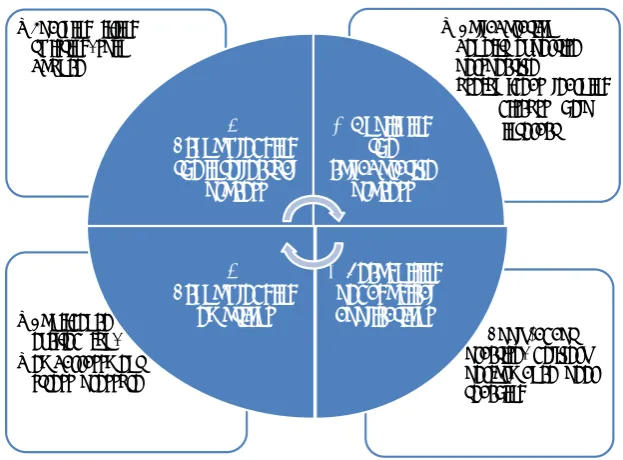
developed ideas through ‘bouncing them off each other’. Three broad categories
developed (see Figure 2.overleaf): collaboration, pedagogy and its adaptation or
application, and emotional impact which tended to cut across all categories.
Categories for collaboration supported both Fantuzzo’s and Rittschof and Griffin’s
earlier findings: many students were able to voice their appreciation of the
mutuality of the process in terms which were both articulate and receptive.
Reference to pedagogy recognised the practical benefits of RPT, although its
emotional impact was greater than expected (see Figure 2). The findings also
appear to support the notion of RPT as a positive, worthwhile approach with very
few voicing dissent e.g. question 3 from the RPT questionnaire Please comment
on what you did not like about the peer teaching process prompted three
responses of ‘N/A’, a few comments on organisation and one non-completion.
Figure 2. Categories, with underlying codings, developed from
the RPT open questions. Numbers in brackets refer to
[Type text]
The second tranche of qualitative findings derived from the focus group interview.
The sample for the focus group, whilst intended to represent a keen advocate of
RPT and a less interested student from both English and MFL, changed when the
less interested MFL representative did not appear and another volunteered. This
self-selection may have led to an imbalance: both MFL students were confident
and articulate, whereas English Student 2 was less so. However all seemed
keen to speak in some depth about their experience and the benefits of becoming
involved in the collaborative RPT process.
A similar process of coding and categorisation was followed with meaning making
producing similar themes to tranche one: unpicking the collaborative process,
acknowledging emotions, recognising pedagogical applications. Once again, the
affective aspect tended to cut across the different strands, However there was
an additional strand at the interview stage which the tutors described as
articulating the intellectual process (see Figure 3. overleaf). As the themes
[Type text]
them and how they sit alongside aspects of self-efficacy theory through a series
of vignettes.
Figure 3. Categories, with underlying codings, developed from
the focus group transcription
• Apply/adapt, practise; delivery, performance, peer teaching, • Confidence, excited, fun; • embarrassment, stress, pressure • Collaboration, benefit, expertise, perspective, useful, ideas, learning • discuss, help, • interact • Sparking, firing, twisting; spin, bounce 4. Acknowledging the intellectual process 1. Unpicking the collaborative process 2. Recognising pedagogical applications 3. Acknowledging emotions
English student 1
A confident and articulate male, his attitude was positive, as we see below:
‘and the prospect of the peer teaching was really appealing to me - because
we’re all trained together but we’re actually practising our teaching very
separately, aren’t we?’ (English Student 1).
‘He recognised pedagogical applications and valued the vicarious benefits of
[Type text]
‘It was quite useful for me anyway to see my peers teach - and their approach-
and their style and that sort of thing’ (English Student 1).
English Student 2
Her contributions were underpinned by an emotional response :’my worst
nightmare’ was her opening contribution, yet she was able to identify mastery
experiences which provided tangible benefits for her own teaching:
‘I loved those activities and definitely saw by the end how they could help me - in
teaching – and just building people’s confidence. Because I’m one of those
people who, at the start, doesn’t have the confidence to be in a group like that,
and put on the spot and by the end then you know it is just a bit of fun’ (English
Student 2.)
MFL Student 1
A very confident individual, she had been active in the RPT sessions and had a
tendency to dominate reflections. She had strong affective responses and
professed herself “really excited” about the prospect of the drama activity. MFL
student 1. was able to rationalise the experience too, seeing it as a mastery
process, being not always easy or pleasant:
‘I think our peer teaching – worked – but it wasn’t stress-free - because it was
done in two different stages – so there was quite a lot of tension with the group –
because we were having to kind of give your ideas back to you and we felt quite
awkward that – that we weren’t really giving you anything new’ (MFL Student 1).
The student here alluded to the impact of a physiological affect - stress - and also
to the perceived difference in experience: MFL already appeared to regard the
English as more proficient. She also articulated the intellectual process and
interpreted the benefits of the RPT experience:
‘So maybe have it in one longer session – the same amount of time - but firing off
[Type text]
out of that second session were actually when we were all together anyway’.
(MFL Student 1).
MFL Student 2
A perceptive student, she was able to unpick the collaborative process,
recognising the different dynamics and difficulties:
‘Certain people have got some ideas, others are trying to do it differently’ (MFL
Student 2).
and rationalise the benefits of a mastery experience:
‘it becomes like a bank of resources for everybody - you adapt to whatever
situation you are [in]’ (MFL Student 2).
MFL student 2 was quieter, her responses more considered and there was little
affective response in comparison with her peers.
As student observations were not possible during this study, students were
invited to email reports of their actual classroom experience and seven
responded (n. 30). Their comments referred to the usefulness of the techniques,
their confidence in implementing them and the pupils’ enjoyment; once back in
the classroom they were concerned with behaviour management and logistical
issues. There was no mention of the benefits of a prior reciprocal learning and
teaching process, which might have indicated a continuing deeper cognitive
engagement with its implementation, as most concerns were at a procedural
level. However there were some examples of more developed cognition, a
continuing articulation of the intellectual process as identified in the focus group.
‘Their responses became more sophisticated and deep. They are a middle set
class, who are quite shy and this really helped to bring them out of their shells’.
(English student)
[Type text]
The implications for the practice of teacher educators in general are considered
next.
Discussion
This study set out to investigate whether the RPT process was of benefit to two
groups of PGCE students, considering in particular the extent to which they
regarded it as a beneficial approach to building classroom skills and confidence.
Both groups perceived the process as valuable; they displayed increased
confidence as demonstrated by the questionnaire responses. Students were
emotionally engaged and motivated by the process: ‘I definitely got something
back from it’ (MFL Student 2). The social interaction with their peers and the
opportunity to act as ‘expert’ underpinned the learning process, acknowledging
the benefits of collaboration (Rittschof and Griffin, 2001; Fantuzzo et al, 1989).
The themes identified in the focus group interview supported findings that student
teachers benefiting from mastery and vicarious experiences demonstrate high
levels of self-efficacy (Bandura, 1997). Those students wanting to continue or
re-visit the process appear to be recognising how these experiences can be
re-enforced (Tschannen-Moran and McMaster, 2009). As expected, there was
little indication of verbal persuasion, so this cannot be assessed. However, the
influence of affect on confidence was greater than expected and merits further
investigation. The structured nature of the drama project, as advocated by
Topping, enabled confidence to be gained in a short time; however, student
feedback leads us to believe that closer structuring of the process would increase
confidence further.
The increase in self-efficacy through positive mastery and vicarious experiences
may well have been short-term; the fact that few students provided
implementation reports might indicate that they lacked confidence to continue
once back in a school setting. The higher level reflections may also not have
[Type text]
observed lessons following RPT experiences would be needed to confirm the
long-term benefits of the process.
The different group sizes may have affected outcomes: fewer English students
attended the second session and different motivational factors may have been
evident here. MFL students felt that they had more to gain as indicated in both
questionnaires and the focus group; they were more cohesive perhaps being a
smaller group and it may be that they felt more accountable, a key factor in
successful cooperative learning designs (Boud, 2001). Indeed Duran and
Monereo found that in truly reciprocal exchanges there was ‘greater symmetry
and mutuality’ in interactions (2005:193) and this should be borne in mind in
future course designs.
Conclusion
This study set out to assess the extent to which RPT might form a beneficial
approach to enhancing classroom skills and the confidence in using these skills.
The evidence gained from both quantitative and qualitative methods, in what is
admittedly a small study, would seem to indicate that RPT has a positive impact
on student approaches and confidence. Student responses indicated that there
were benefits and gains for both English and MFL students when working
co-operatively and in a reciprocal manner. Working in this way, with distinct groups
of student teachers in different subject areas, highlighted the value of an HEI
environment for developing skills and confidence in a demanding yet secure
context. We would recommend initial teacher training courses considering similar
approaches so that the isolation and fragmentation identified by students in the
past might be lessened.
References
Teacher Development, 11(2), pp. 203-19 [Online]. Available at:
http://www.tandfonline.com/doi/abs/10.1080/13664530701414720
(Accessed 28 December 2010).
[Type text]
Bandura, A. (1997) Self efficacy: the exercise of control. New York: W.H.
Freeman & Co.
Barnes, A. (2006) 'Confidence levels and concerns of beginning teachers of
modern foreign languages', Language Learning Journal, 34, pp.37-46.
Borge, S. (2007) The use of drama activities in teaching German in a third level
classroom, Scenario, 1(1) [Online]. Available at
http://publish.ucc.ie/scenario/2007/01/borge/01/en (Accessed 23 September
2011).
Boud, D. (2001) 'Introduction: making the move to peer learning' in Boud, D.,
Cohen, R. and Sampson, J. (ed) Peer Learning in Higher Education.
London: Kogan Page, pp.1-17.
Burgess, S. (2008) 'Adapting A Mixed Method Approach In School-Based
Research', Building Research Capacity, 14 pp. 9-11.
Castle, P and Buckler, S. (2009) How to be a successful teacher. London: Sage
Creswell J.W. and Plano-Clark, V.L. (2011) Designing and Conducting Mixed
Methods Research, (ed.)Thousand Oaks: Sage
Dangel, J. and Guyton, E. (2003) ‘Expanding Our View of Teaching and
Learning: Applying Constructivist Theory(s) to Teachers Education’, Annual
Meeting of the American Association of Colleges for Teacher Education
New Orleans, LA, January 24-27, Available at:
http://www.eric.ed.gov/contentdelivery/servlet/ERICServlet?accno=ED4728
16 (Accessed 26 October 2011).
Duran, D. and Monereo, C. (2005) ‘Styles and sequences of cooperative
interaction in fixed and reciprocal peer tutoring', Learning and Instruction
15(3), pp.179-199.
Ensergueix, P.J. and Lafont, L. (2010) ‘Reciprocal peer tutoring in a physical
education setting: influence of peer tutor training and gender on motor
performance and self-efficacy outcomes', European Journal of Psychology
of Education 25(2), pp.222-242.
Even, S (2008) ‘Moving in(to) Imaginary Worlds: Drama Pedagogy for Foreign
Language Teaching and Learning’, 41(2), pp.161-170, Die
[Type text]
http://web.ebscohost.com/ehost/detail?vid=9&hid=18&sid=597fcf1a-f3b1-
4496-0bafcf81ea50bb%40sessionmgr14&bdata=JnNpdGU9ZWhvc3QtbGl2ZQ%
3d%3d#db=ehh&AN=44126697 (Accessed 26October 2011)
Fantuzzo, J.W., Riggio, R.E., Connelly, S. and Dimeff, L.A. (1989) ‘Effects of
Reciprocal Peer Tutoring in Academic Achievement and Psychological
Adjustment: a Component Analysis’, Journal of Educational Psychology,
81(2), pp.173-177.
Harris, V and Grenfell, M. (2004)’ Language-learning strategies: A case for
Cross- curricular Collaboration’, Language Awareness, 13(2), pp.116-130.
Hobson, A.J., Malderez, A., Tracey, L., Giannakaki, M.S., Pell, R.G., Kerr, K.,
Chambers, G.N., Tomlinson, P.D. & Roper, T. (2006) .Becoming a Teacher:
Student Teachers. Experiences of Initial Teacher Training in England
Nottingham: Nottingham University.
Krych, A.J., March, C.N., Bryan, R. E., Peake, B. J., Pawlina, W. and Carmichael,
S.W. (2005) ‘Reciprocal Peer Teaching: Students Teaching Students in the
Gross Anatomy Laboratory', Clinical Anatomy 18, pp.296-301.
Kvale, S. and Brinkmann, S. (2009) InterViews: Learning the Craft of Qualitative
Research Interviewing. 2nd edn. Thousand Oaks: Sage.
Longaretti, L., Godinho, S., Parr, G. and Wilson, J. (2002) Rethinking Peer
Teaching’ Conference of the Australian Association for Research in
Education Brisbane. AARE Brisbane. Available at:
http://aare.edu.au/02pap/lon02122.htm (Accessed 4 October 2010).
McKenna, L. and French, J. (2010) ‘A step ahead: Teaching undergraduate
students to be peer teachers', Nurse Education in Practice,11(2)
pp.141-145, Elsevier [Online]. Available at:
http://www.nurseeducationinpractice.com/ (Accessed 29 December 2010)
Pomphrey, C. (2000) ‘Language transfer and the modern foreign languages
curriculum’, in: K. Field (ed.) Issues in Modern Foreign Languages Teaching
[Type text]
Rittschof, K. A. and Griffin, B. W. (2001) ‘Reciprocal Peer Tutoring: re-examining
the value of a cooperative learning technique to college students and
instructors’ Education Psychology, 21(3), pp.313-330.
Topping, K.J. (1988) The Peer Tutoring Handbook, Beckenham: Croom Helm.
Topping, K.J. (1996) ‘The effectiveness of peer tutoring in further and higher
education: A typology and review of the literature', Higher Education 32(3),
pp.321-345.
Tschannen-Moran, Megan; Woolfolk Hoy, Anita; Hoy, Wayne K. (1998) 'Teacher
efficacy: Its meaning and measure', Review of Educational Research, 68
(2), pp.202-248.
Tschannen-Moran, Megan and McMaster, Peggy (2009) 'Sources of self-efficacy:
Four professional development formats and their relationship to self-efficacy
and implementation of a new teaching strategy', The Elementary School
Journal, 110 (2), pp.228-245.
Wilkinson, S. (2011) ‘Analysing Focus Group Data’ in Silverman, D. (ed.),
Qualitative Research, 3rd Edn. London: Sage, pp.168-184.
Woolfolk-Hoy, A. (2000) ‘Changes in Teacher Efficacy During the Early Years of
Teaching’ The annual meeting of the American Educational Research
Association, New Orleans, LA. Session 43:22, Qualitative and Quantitative
Approaches to Examining Efficacy in Teaching and Learning, April 28.
Available at: