Geschke Center
Doctoral Dissertations Theses, Dissertations, Capstones and Projects
2018
Exploring Factors Influencing the Willingness to
Communicate among English-as-a-Second
Language University Students
Chi-Fang (Michelle) Chang
University of San Francisco, [email protected]
Follow this and additional works at:https://repository.usfca.edu/diss
Part of theBilingual, Multilingual, and Multicultural Education Commons
This Dissertation is brought to you for free and open access by the Theses, Dissertations, Capstones and Projects at USF Scholarship: a digital repository @ Gleeson Library | Geschke Center. It has been accepted for inclusion in Doctoral Dissertations by an authorized administrator of USF Scholarship: a digital repository @ Gleeson Library | Geschke Center. For more information, please [email protected].
Recommended Citation
Chang, Chi-Fang (Michelle), "Exploring Factors Influencing the Willingness to Communicate among English-as-a-Second Language University Students" (2018).Doctoral Dissertations. 451.
EXPLORING FACTORS INFLUENCING THE WILLINGNESS TO COMMUNICATE
AMONG ENGLISH-AS-A-SECOND LANGUAGE UNIVERSITY STUDENTS
A Dissertation Presented
to
The Faculty of the School of Education
International Multicultural Education Department
In Partial Fulfillment
of the Requirements for the Degree
Doctor of Education
by
Chi-Fang (Michelle) Chang
San Francisco, California
ii
THE UNIVERSITY OF SAN FRANCISCO
DISSERTATION ABSTRACT
This present study anchored its inquiry in English oral communication and
learning English as a second language. The purpose of the study was to explore the
factors that influence the willingness to communicate (WTC) of ESL university students
from the perspectives of both the students and their oral communication professor. Since
the 1980s, WTC among ESL university students has attracted increasing attention
because helping them communicate authentically is essential. WTC is correlated with
overall English language proficiency because of its equal weight with the other language
skills. Therefore, ESL students have targeted WTC as a vital skill. However, research on
factors that influence WTC of ESL university students draws largely from the perspective
of the students, with little attention to the perspective of the professors. Moreover, no
research focuses on the perspectives of the ESL university students and their professor.
To fill in the gap, the current study has set out to explore factors influencing the WTC of
ESL university students from the perspectives of students and their professor, by means
of class observations, one-on-one and focus group interviews with students, as well as a
narrative interview with course professor.
iii
level and their oral communication professor at a Northern California university. Thirteen
out of 14 students participated in the one-on-one interviews; 11 out of the 13 students
participated in the focus group interviews, along with a narrative interview with the
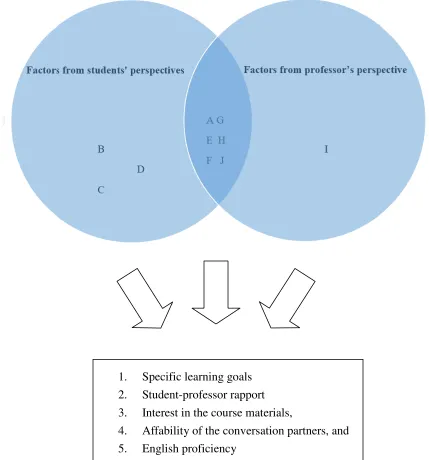
professor. The student participants reported six factors influencing their WTC while the
course professor identified four factors influencing his students' WTC. The researcher
integrated the factors from the students and professor, and five themes emerged from the
study, which mostly centered on the sociocultural theory and social constructivism of
Vygotsky.
The results of this study have implications for the fields of second language
teaching pedagogy, teacher knowledge, second language training, classroom and cultural
dynamics, and research methods. More studies on factors influencing the WTC of ESL
university students wouldimprove the WTC of ESL university students coupled with an
increase in English proficiency.
Keywords: English as a second language (ESL), willingness to communicate, factors,
iv
This dissertation, written under the direction of the candidate's dissertation committee and
approved by the members of the committee, has been presented to and accepted by the
Faculty of the School of Education in partial fulfillment of the requirements for the
degree of Doctor of Education. The content and research methodologies presented in this
work represent the work of the candidate alone.
Chi-Fang Chang May 17, 2018
Candidate
Dissertation Committee
Sedique Popal, Ed.D. June 25, 2018
Chairperson
Susan Roberta Katz, Ph.D. May 17, 2018
v
DEDICATION
This dissertation is dedicated to my family: Jia-Fu Chang, Yueh-Nu Hung, I-Jui Chang,
Tinjung Chen, and Matthew Jeffrey Chen.
vi
ACKNOWLEDGEMENTS
I am pleased to have this opportunity to thank the faculty members, family, and
friends that have supported me during the course of this project. There were many times
when it felt like I believed in impossible things. These impossibilities became possible
with the assistance of many. First and foremost, I would like to express my sincere
gratitude to my entire dissertation committee: Drs. Sedique Popal, Susan Roberta Katz,
and Sarah Capitelli. I am grateful for the time they invested in my dissertation and the
generous supportive feedback they offered. I am especially thankful to my advisor, Dr.
Popal, for his conviction that I could embark on this study and make a contribution to
second language acquisition research. The door to Dr. Popal's office was always open
whenever I ran into a trouble spot or had a question about my research. He consistently
allowed this paper to be my own work, but steered me in the right direction whenever he
thought I needed it. I sincerely thank him for being an angel in my life holding a candle
for me on the long and hard journey to its completion throughout my seven years in the
program. I am grateful for his continuous encouragement during the ups and downs of
my residence here. My sincere gratitude for his intellectual inspiration in, academic
guidance on, and linguistic refinement of this work is beyond words.
vii
Roberta Katz and Sarah Capitelli, for their invaluable input and inspiring questions which
motivated me to widen my study from various perspectives to shape this dissertation to
satisfaction, but also their general empathy during my pregnancy and early motherhood.
In addition, I am grateful for Dr. Katz, who patiently read and edited my study. Without
their detailed insights and constructive comments, I could not move forward to complete
my study.
In addition to the support provided by my committee members, I would also like
to thank all professors in the IME program participating in my qualification presentation
for sharing their research expertise and wisdom. My special thanks goes to Dr. Brad
Washington for his professional guidance and persistent assistance. I had never taken any
courses from Dr. Washington, but he initiated contact after attending my qualification
presentation to provide me his meticulous expertise and profound knowledge related to
my study. He encouraged me and provided support when I was overwhelmed as a
doctoral student. His warmhearted encouragement continued even after he moved to
Notre Dame de Namur University. Also, Dr. Benjamin Baab deserves my very profound
appreciation for his selfless guidance, insightful instruction in research design,
organization, and prompt feedback on my questions. Without their precious support, it
viii
This dissertation exists in part due to the support of my friends and family whose
continuous kind words and encouragement kept me going through challenges. Catherine
Wang, Denise Tiffany, Dr. Hideki Goya, Dr. Julie Sullivan, Micaella Colla, Dr. Nancy
Ryoo, Regina Tsen, Sarah McGregor, Sarah Quigley, Shao-Yu Kao, Tammy Chen, Dr. Yi
Guan, and Dr. Yu-Han Lin have been my rocks during my studies and I am deeply
grateful for their solid friendship, their kind care, continuous encouragement, and
unfailing support. Dear friends, I will never forget the tears and laughs we shared.
Furthermore, I would like to thank Denise Tiffany and Sarah Quigley, whose assistance in
proofreading cannot be overestimated.
Most importantly, I am indebted to my parents, Jia-Fu Chang and Yueh-Nu Hung,
as well as to my brother I-Jui Chang, for their financial support and allowing me to
pursue my dream. Although my father passed away in the midst of my doctoral pursuit
and cannot witness my completion, I would love to express my utmost gratitude for his
love. Additionally, I would like to recognize my husband, Tinjung Chen, who sacrificed
much so I could complete my study and dissertation. Without his encouragement,
understanding, company, and extra hours parenting, my dream would have remained
impossible. I would also like to thank my beloved son, Matthew Jeffrey Chen, who was
ix
study.
And finally, last but by no means least, I would like to thank the director at SJSU
and all participants who allowed me to carry out my study. I thank them for their time,
their interest, and openness.
I have had other supporters, too numerous to name, who are nonetheless
appreciated and valued. All in all, without their support, I would never have thought it
i
TABLE OF CONTENTS
DISSERTATION ABSTRACT ...ii
SIGNATURE PAGE ...iv
DEDICATION ...v
ACKNOWLEDGEMENTS ...vi
TABLE OF CONTENTS ...i
CHAPTER I: THE RESEARCH PROBLEM ... 1
Statement of the Problem... 1
Background and Need for Study... 3
Communicative language teaching and communicative competence ... 3
ESL students in the United States ... 5
WTC in Asian culture ... 6
Purpose of the Study ...11
Research Questions ...11
Theoretical Rationale ... 12
Sociocultural theory ... 13
The zone of proximal development ... 14
Social constructivism ... 16
Delimitations and Limitations... 18
Educational Significance ... 19
Definition of Terms ... 20
ii
CHAPTER II: LITERATURE REVIEW... 24
Overview... 24
ESL Students' Discourse Competence in English Inside and Outside the Classroom.. 25
Willingness to Communicate in the English Learning Classroom ... 27
Factors that influence the WTC of ESL students... 28
Teacher perspectives ... 28
Student perspectives... 32
Instruments that Evaluate Willingness to Communicate ... 44
Sociocultural Theory in Second Language Classrooms ... 47
Summary ... 51
CHAPTER III: METHODOLOGY ... 55
Introduction... 55
Restatement of the Research Purpose ... 56
Research Design... 56
Research Setting... 57
Participants... 62
Student participants... 62
Professor participant ... 73
Protection of Human Subjects ... 74
Data Collection ... 74
Observations ... 77
Interviews... 77
One-on-one student interviews ... 77
Focus group student interviews ... 78
Narrative interview with the professor ... 80
Data Analysis ... 81
iii
CHAPTER IV: FINDINGS... 83
Overview... 83
Teaching Materials and Classroom Practices in the Intermediate Level English Oral Communication Course ... 85
Responses to the Research Questions ... 87
Research Question One... 87
Course activities the students found helpful ... 89
English language exposure ... 95
Strengths and weaknesses in communication among students ... 98
Factors influencing the WTC of ESL university students ... 100
Interest in the topics. ... 100
Affability of the conversation partners ... 101
Vocabulary and pronunciation ... 106
English language proficiency... 106
Student-professor rapport... 109
Physical and psychological issues ...111
Research Question Two ...115
Course professor's description of his students' WTC in class...116
Factors influencing ESL university students' WTC from professor's perspectives ...116
Research Question Three ... 127
Students' recommendations for improving WTC ... 127
Professor's recommendations for improving WTC... 128
Summary ... 131
CHAPTER V: DISCUSSION, RECOMMENDATIONS, AND CONCLUSIONS ... 134
Summary of the Study ... 134
Summary of Findings... 138
Findings arranged by themes ... 138
Specific language learning goals ... 138
Student-professor rapport... 141
Interest in the course materials ... 142
iv
English language proficiency... 145
Findings beyond the themes... 147
Discussion ... 148
Reflections ... 156
Recommendations... 159
Recommendations for future research ... 159
Recommendation for English language educators... 162
Implications... 165
Theoretical implications... 166
Pedagogical implications ... 168
Conclusion ... 171
References... 175
Appendices APPENDIX A: International Gateways Program Chart San Jose State University ... 187
APPENDIX B: IRB Approval Letter from The University of San Francisco ... 188
APPENDIX C: IRB Approval Letter from San Jose State University ... 189
APPENDIX D: Informed Consent Form for Student Participants ... 190
APPENDIX E: Informed Consent Form for Professor Participant ... 194
APPENDIX F: Porfessor Narrative Interview Questions... 198
APPENDIX G: Student One-on-one Interview Questions ... 201
v
LIST OF TABLES
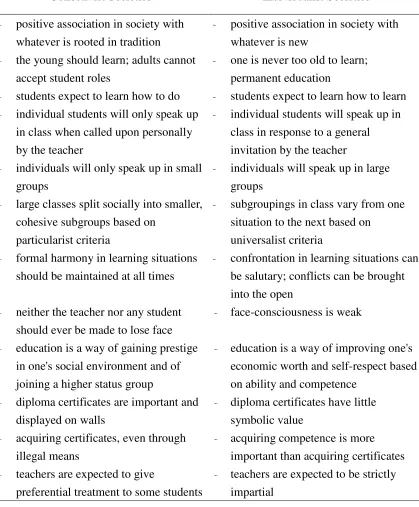
Table 1 Differences in teacher/student and student/student interaction related to the
individualism versus collectivism dimension ... 10
Table 2 Background information about the student participants ... 72
LIST OF FIGURES
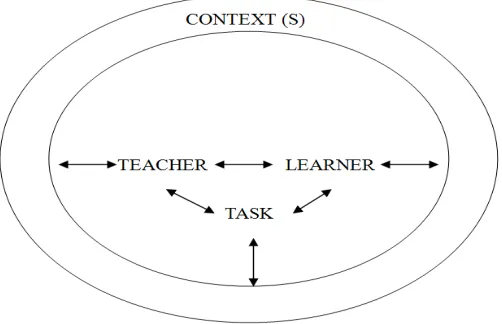
Figure 1 A social constructivist model of the teaching-learning process... 17
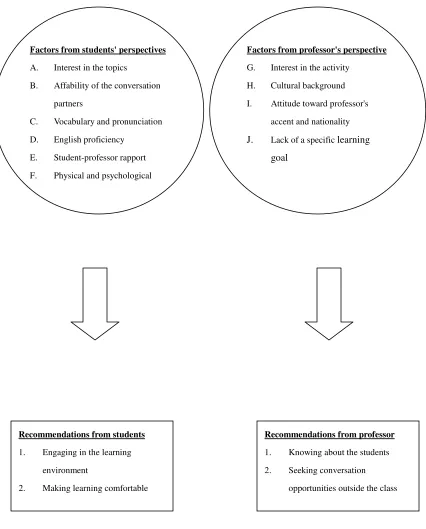
Figure 2 Factors influencing the WTC of ESL university students and recommendations to
improve their WTC ... 88
CHAPTER I
THE RESEARCH PROBLEM Statement of the Problem
Willingness to communicate (WTC) has become one of the most prevalent topics
in second language learning (Ellis, 1997; Ellis, 2008). A number of researchers have
claimed that authentic communication is the ultimate goal for many language learners
(Alalou, 2001; de Saint Léger & Storch, 2009; MacIntyre, Burns, & Jessome, 2011;
Ushioda, 2001). Along with this goal, MacIntyre, Dörnyei, Clément, and Noels (1998)
postulated that "a proper objective for second language (L2) education is to create WTC"
(p. 547), and the authors regarded any program which cannot accomplish this objective as
unsuccessful. However, MacIntyre et al. noted that excellent linguistic competence does
not necessarily predict second language learners' WTC or assure their automatic and
ongoing use of the L2 because some second language learners with minimal linguistic
competence communicate in a second language more frequently than others with high
linguistic competence. MacIntyre, Baker, Clément, and Donovan (2003) further
maintained that even though current language teaching practices focus on communication
and require oral practice to learn a language, many language learners remain reticent in
their communication (MacIntyre & Doucette, 2010). Thus, if English-as-a-Second
reaching their goal in acquiring the target language of English.
With this premise, numerous second language acquisition researchers (de Saint
Léger & Storch, 2009; MacIntyre, Dörnyei, Clément, & Noels, 1998; Cao & Philip, 2006;
Kang, 2005) have explored factors that affect the WTC of ESL university students from
the perspectives of the students themselves. Chen and Goh (2011, 2014) investigated
factors that impact university professors' instruction of oral communication in English as
a Foreign Language classes. However, little research has explored factors that affect the
WTC of ESL university students from the perspectives of their oral communication
professors. Moreover, sparse attention has been paid to factors that affect the WTC of
ESL university students from the dual perspectives of students and their oral
communication professor, which is the purpose of this study.
One of the first empirical studies dealing with the research on factors that affect
the WTC of ESL students is that of MacIntyre (1994, as cited in de Saint Léger & Storch,
2009). He pointed out that "perceived communication competence and communication
anxiety" (p. 270) are predictors of WTC for ESL students. MacIntyre et al. (1998)
investigated WTC and reported that factors such as familiarity with interlocutors,
discussion topic, group size, and social circumstances all easily influence people’s WTC
carries a number of intergroup issues, with social and political implications, that are
usually irrelevant to L1 use" (p. 546) and developed a holistic model of variables
influencing WTC of ESL students that has been utilized by many other researchers. For
example, Cao and Philip (2006) and Kang (2005) supported MacIntyre et al.'s (1998) idea
that familiarity with interlocutors, group size, discussion topics (including interest in the
topics), and self-confidence influence the WTC of ESL students.
As discussed above, researchers have extensively investigated the factors that
negatively influence the WTC of ESL students from the perspectives of students.
However, little research explores factors that influence ESL university students' WTC in
terms of their oral communication professors' impressions. Furthermore, no one has
directed attention toward the factors that influence the WTC of ESL university students
from the perspectives of students and their oral communication professor. Thus, this
study focused on the factors that influence ESL university students' WTC from the dual
perspectives of ESL students and their oral communication professor.
Background and Need for Study
Communicative language teaching and communicative competence
Since 1980, the Communicative Language Teaching (CLT) approach, which
most popular language teaching pedagogies. The CLT approach, originating in Europe in
the late 1970s, appeared as an alternative to the Grammar-Translation approach to
language teaching. Nishimura (2000) pointed out that the CLT approach is currently the
most accepted language teaching approach in the United States, although the
Audiolingual approach is still being used throughout the United States. Commenting on
the state of Taiwanese EFL education, Liu (2005) argued that successful language
learning relies on interaction. In this approach, English is a medium for classroom
communication, not just the object of study; that is, the emphasis is on the process of
communication rather than the mere mastery of language forms. CLT is essentially about
prioritizing meaning, since the purpose of language is to communicate meaningfully.
Thus, if learners practice language without attaching meaning to it, it is not real language
communication. As a result, the approach enables students to communicate more
effectively in English.
Partly what differentiates this approach from prior strategies is its learner-centered
features and the balanced relationship between students and teachers. In his description of
CLT, Hu (2002) indicated that in order to develop communicative competence, students
should extensively practice communicating in the target language; therefore, he believed
interaction. He concluded that language learning should be student-oriented and
experience-based.
Building on the CLT approach, communicative competence (CC) has become the
main objective of English language teaching today, and its importance in the classroom as
well as in research cannot be overstated. According to Hymes, CC refers to the ability to
produce utterances that are not only grammatically but also linguistically and
situationally appropriate (Liao, 1996). CC has four basic components: grammatical
competence, sociolinguistic competence, discourse competence, and communication
strategies (referred to as strategic competence) (Canale & Swain, 1980; Brown, 2007).
Thus, CLT aims to facilitate the integration of these four competences.
ESL students in the United States
Out of 1,078,822 international students in the United States, 903,127 were
actually enrolled in school, and 30,331 were registered in non-degree intensive English
programs during the 2016-2017 academic year (Institute of International Education,
2018). California hosts most of the international students. Of all the international students
in the United States, 19.5% came from China, 19.2% came from Saudi Arabia, 12.5%
came from Japan, 5.9% came from South Korea, and 4.6% came from Mexico.
Asian students, as reticent and passive in the ESL classrooms (Cheng, 2000; Jackson,
2002; Lee, 2007). Cheng (2000) and Lee (2007) found that this silence and passiveness
resulted from cultural, linguistic, and affective factors, foreign language proficiency,
opportunities for conversation practice, as well as different language teaching methods. In
addition, speaking anxiety and fear of negative evaluations seriously impact ESL
university students' oral performance in class. Most Asian students expect to be able to
express themselves precisely and correctly; they would prefer to remain silent rather than
risk making errors (Cheng, 2000; Gregersen & Howrtiz, 2002; Lee, 2007; Liu &
Littlewood, 1997; Jones, 1999; Willems, 1987).
WTC in Asian culture
MacIntyre, Dörnyei, Clément, and Noels (1998) found that not only linguistic but
also cultural factors affect Asian students' WTC. Chinese students of English perceived
cultural differences between Chinese and English more challenging than the English
language itself (Yue, 2016); therefore, cultural factors may heavily influence how ESL
students acquire English. Researchers, such as Cheng (2000), Jackson (2002), and Lee
(2007) have found East Asians reticent in ESL classrooms and have believed that their
reluctance stems from their inherited Chinese culture of Confucianism, which has
respect their instructors by not interrupting teacher-centered lectures, the preferable
classroom model in Chinese culture. These values and customs differ in the Western
classroom, which is often student-centered and structured around participation and
discussion.
Drawing on the work of Walker (1996) and Liu (2004), Hua, Nor Fariza, and
Jaradat (2012) stated that Chinese students of English found communicating in English to
be challenging because they perceived their communication efforts to conflict with
maintaining group rapport, upholding social status, and saving face. As a result, when
East Asian students study abroad in North America, they often have significant culture
shock when faced with class discussions and participation. Therefore, ESL students need
to learn about American culture to understand what is expected of them in the classroom;
similarly, ESL professors can learn information about their students to form the
underpinnings of cultural sensitivity (Hofstede, 1986; Zhan, 2016).
Concerning ESL acquisition, Hofstede (1986) pointed out that interactions
between teachers and students with different cultural backgrounds may generate
confusion. Chinese ESL learners and Westerners may have misunderstandings in their
cross-cultural conversations due to a lack of knowledge about classroom practices in
to teachers from a developed country may be irrelevant to local people with different
needs and societal ways of framing and solving problems. Both professor and students
may tend to hold the information in high esteem simply because this might have been
crucial in the evolution of the more-developed country, not necessarily because it shows
any promise as a means toward the evolution of the less-developed one.
Hofstede (1986) investigated conversational pairs, such as parent and child, man
and woman, teacher and student, boss and subordinate, and authority and member in
different settings, like the home, school, work, and community. He created a
four-dimensional model of cultural differences based on his research and personal
experiences from over 50 countries. One of these four dimensions is individualism, which
Hofstede used as opposed to collectivism from the anthropological perspective. He
thought people with individualistic cultural backgrounds focus mainly on themselves and
their nuclear family, whereas people with collectivistic cultural backgrounds focus mainly
on their group relations. Table 1 provides a deeper distinction between individualism and
collectivism. In his study, Hofstede categorized people from Arab countries, South Korea,
Taiwan, and Japan as low in individualism, whereas Americans are more individualistic.
In investigating communication apprehension (CA), self-perceived
(2013) concluded that as compared to people with collectivistic cultural backgrounds,
people from individualistic cultural backgrounds have higher WTC, higher SPCC, and
lower CA. Hofstede (1986) recommended that language teachers should learn how to
teach in a cross-cultural teaching/learning setting by realizing that people learn differently.
More specifically, Hofstede posited that professors, not the students, should take charge
of the cultural accommodations. Yet in an ESL classroom, the main thing a professor can
Table 1. Differences in teacher/student and student/student interaction related to the
individualism versus collectivism dimension
Collectivist Societies Individualist Societies
- positive association in society with whatever is rooted in tradition
- positive association in society with whatever is new
- the young should learn; adults cannot accept student roles
- one is never too old to learn; permanent education
- students expect to learn how to do - students expect to learn how to learn
- individual students will only speak up in class when called upon personally
by the teacher
- individual students will speak up in class in response to a general
invitation by the teacher
- individuals will only speak up in small groups
- individuals will speak up in large groups
- large classes split socially into smaller, cohesive subgroups based on
particularist criteria
- subgroupings in class vary from one situation to the next based on
universalist criteria
- formal harmony in learning situations should be maintained at all times
- confrontation in learning situations can be salutary; conflicts can be brought
into the open
- neither the teacher nor any student should ever be made to lose face
- face-consciousness is weak
- education is a way of gaining prestige in one's social environment and of
joining a higher status group
- education is a way of improving one's economic worth and self-respect based
on ability and competence
- diploma certificates are important and displayed on walls
- diploma certificates have little symbolic value
- acquiring certificates, even through illegal means
- acquiring competence is more important than acquiring certificates
- teachers are expected to give
preferential treatment to some students
- teachers are expected to be strictly impartial
Source: Hofstede, G. (1986). Cultural differences in teaching and learning. International
Purpose of the Study
The purpose of the study was to explore the factors that influence the WTC of
ESL university students from the perspectives of both the students and their oral
communication professor. Generally speaking, when language educators discuss WTC,
they consider the productive skills (i.e., speaking and writing) of the language. This study
only focused on the WTC of ESL university students as far as speaking is concerned.
Research Questions
The following questions were investigated in this study:
1. How do ESL university students characterize their overall experience in the low
intermediate level English oral communication class?
1a. How do they describe their strengths in communication?
1b. How do they describe their challenges in communication?
1c. How does WTC affect their overall experience in the class?
1d. What factors impact their WTC?
2. How does the professor of the low intermediate level English oral communication
class perceive the ESL university students' WTC?
2a. How does he describe his students' WTC in the class?
2c. In what ways does his students' WTC influence his teaching?
3. What are the participants' recommendations for how to improve WTC?
3a. What are the ESL university students' recommendations for how to improve
WTC?
3b. What are the professor's recommendations for how to improve WTC?
Theoretical Rationale
The overarching theoretical rationale of the study is based on the sociocultural
theory (SCT) and social constructivism of L. S. Vygotsky, a psychologist whose research
involved developmental psychology, child development, and education. Vygotsky's
concepts have been extensively adopted in the Western countries, although he died at an
early age and left many of his works uncirculated and not fully translated. His primary
focus was on higher mental capacities, including voluntary attention, logical problem
solving, rational thought, and meaning making (Fahim & Haghani, 2012; Lantolf 1994,
2000). According to Vygotsky, language is the main channel of mediation; learning
occurs during a social event resulting from the interaction between the learner and the
environment. Learners construct their learning in a way that is meaningful to them;
therefore, all learners are unique and solve problems differently (Fahim & Haghani,
Sociocultural theory
Sociocultural theory (SCT), first conceptualized by L. S. Vygotsky and his
colleagues, explains cognitive and linguistic development within the framework of
interaction and mental and social processes (Lantolf, 2007). Vygotsky's theory of
language, cognition, and culture focused on first language acquisition and child
development; yet later researchers (Frawley & Lantolf, 1985; Lantolf, 2000; Lantolf &
Thorne 2007; Thorne, 2000, 2004, 2005) extended his sociocultural theory to second
language acquisition based on two assumptions. First, second language acquisition is a
sophisticated process that is coordinated through culturally and socially constructed
objects. Second, learning English as second language requires a network of active
connections between the person, the society, and the topic. This assumption also includes
the idea that the classroom has to be related to the real world outside the classroom (Ajayi,
2008; Lantolf, 2000; Thorne 2004, 2005). Expanding Vygotsky's SCT to second language
acquisition, Lantolf and Thorne (2007) postulated that second language acquisition exists
in the context of daily life activities, and interaction within social and material settings
provides access to developing human cognition.
According to Vygotsky (1978), mediation plays an important role in SCT in that
Vygotskians regard mediation as a vehicle to connect humans with the world of objects or
the world of mental behavior (Lantolf, 1994). In terms of Vygotsky's theory, people use
physical and symbolic tools to mediate their relationships with others, and these tools are
artifacts evolving through generations by human cultural inheritance to meet the
contemporary need of the communities and individuals. Language is one of the symbolic
tools that adapts to the cultural practices and objects of the time.
The zone of proximal development
The zone of proximal development (ZPD) was introduced by Vygotsky as a
challenge to the traditional testing model that is largely accepted in Western countries.
Vygotsky defined his well-known concept of ZPD as the distance between what one can
achieve now only with assistance and what one can achieve independently in the future.
Related to this is Krashen's input hypothesis (i+1), which states that learning occurs
under critical conditions in which learners receive language input that is one level above
their current level. More specifically, the input hypothesis emphasizes that language
learning occurs when language learners are exposed to an environment that is beyond
their current level, challenges them to make progress, and still allows them understand
most of the content.
between expert and novice and its goal of assisting the novice in proceeding to a more
advanced language level (Lantolf & Thorne, 2007). The expert in ZPD refers not only to
professors but also to any more advanced peers. In addition to professors and advanced
peers, people with expertise and artifacts, such as "books, videos, wall displays, scientific
equipment, and a computer environment intended to support intentional learning" (Brown,
Ash, Rutherford, Nakagawa, Gordon, & Campione, 1993, p. 191) can take the role of the
expert in ZPD. In contrast to i+1, learners' receptivity to mediation can predict
ZPD-oriented development. With his concepts, Vygotsky strongly posited that
cooperative learning, especially in instructional settings, benefits development because
the learners imitate what they learn and then adapt the knowledge to suit their own
purposes. To second language students, imitation is indispensable because it sets current
social and cultural examples in the target language community.
However, students may prioritize their learning objectives differently from their
professors, and with this knowledge, professors may fine-tune teaching approaches to
maximize students progress in the language (Lantolf & Thorne, 2007). Therefore, Ajayi
(2008) believed that the sociocultural approach suggests
a need for studies that shed light on the dynamics of language
institutional structures, and an understanding of how professors relate their
pedagogical practices to the sociocultural background experiences of their
students (p. 640).
Ayaji (2008) further asserted that professors should take their students' background
experiences into account while choosing pedagogical approaches and materials from the
sociocultural perspectives but acknowledges that the challenges applying theory into
teaching practice receive sparse attention.
Social constructivism
Social constructivism originated from Vygotsky (1978), who stated that
knowledge is socially constructed through interactions and cooperative learning. With
respect to social constructivism, learning is interactive rather than isolated. Therefore, the
learning environment or context where learning occurs is important. Williams and Burden
(2004) created a diagram (Figure 1) to describe the relationship among teacher, learner,
and task, as well as their interactions. In this model, teachers select tasks based on their
beliefs about pedagogical philosophy. Learners validate tasks by connecting them to their
own experiences and ideas. Tasks, therefore, build a bridge between the teachers and
learners. Teachers and students interact with each other. Teachers' behavior in classrooms
characteristics and the attitudes of the teachers.
Figure 1. A social constructivist model of the teaching-learning process
In a nutshell, Vygotsky (1978) recognized the important influence of culture and
society in human cognition as it relates to language acquisition and emphasized the
germane relationship between professors' pedagogical beliefs and students' class
performance. Under the theoretical rationale of the study, second language acquisition
consists of cultural and social structures in which teachers and students interact to
perform goal-oriented tasks, as well as evolving over generations to fit the most current
needs appropriately. In addition, second language acquisition is associated with daily life
and connects to the real world outside the classroom. In an effort to move forward to a
more advanced level, students need interactions with experts and peers. In cooperative
learning, students receive support and assistance to have current cultural and social
community, students imitate what they receive and then utilize the knowledge for their
own purpose.
Students' goals and motivations are significant in learning because they influence
the way students prioritize their learning objectives. Therefore, ESL professors need to be
well aware of students' histories and reasons for taking the class to fine-tune their
teaching to best assist students' learning. Professors generally reflect their pedagogical
philosophy in their teaching, which may determine students' learning success. Students
provide feedback regarding what they received from their professors based on their
backgrounds and their characteristics. Consequently, when moving from an
English-as-a-Foreign Language (EFL) to an English-as-a-Second Language (ESL) setting
to acquire the target language, professors and students need to raise their awareness about
the cultural and social differences since they play influential roles in language
acquisition.
Delimitations and Limitations
Certain delimitations and limitations for this study pertained to the selection of the
research site, an intermediate-level ESL class at San Jose State University. The
participants were delimited to intermediate level college-age ESL students in Northern
university.
One limitation of the study related to research design. The researcher observed
low intermediate level Oral Communication, which met three times per week, in session
2 of the spring 2017 quarter, and her presence in class might affect the performance of the
students as far as WTC was concerned.
Educational Significance
This study explored factors that influence the WTC of ESL university students
from the dual perspectives of the students and their oral communication professor. This
study had the potential to help English language educators understand their students’
WTC and correlate the factors in the literature review with the results of this study. In
addition, since this study reported on ESL university students' and their oral
communication professor's perceptions and factors affecting the WTC of ESL university
students in class, ESL university oral communication professors may modify their
teaching pedagogy to assist their students in their language output and WTC. Furthermore,
ESL educators and future ESL researchers may also benefit from this study from gaining
Definition of Terms
Willingness to Communicate: MacIntyre, Dörnyei, Clément, and Noels (1998) describe
willingness to communicate as "a readiness to enter into discourse at a particular time
with a specific person or persons, using a L2" (p. 547). In describing WTC, the writers
stated that WTC focuses more on students' readiness than on the opportunities. Oxford
(1997) defined willingness to communicate in the classroom as "a student's intention to
interact with others in the target language, given the chance to do so" (p.449).
English as a second language (ESL): Generally speaking, ESL refers to learners
acquiring English where it is an official language. In this study, ESL refers to
international students whose native language is not English learning English in the United
States.
English as a foreign language (EFL): In contrast to ESL, EFL refers to international
students whose native language is not English, and English is not any official language in
their countries. Brown (2007 a) stated that "foreign language contexts are those in which
students do not have ready-made contexts for communication beyond their classroom." (p.
134)
Second Language (L2): SL or L2 refers to second language which is contrast to the first
contexts are those in which the classroom target language is readily available out there.
Teaching English in the United States or Australia clearly falls in to this (ESL category)."
(p. 134)
Communication: Hua, Nor Fariza, and Jaradat (2012) defined communication as a
message conveying process between senders and receivers. Writing and speaking are two
types of communications, and this study only focuses on speaking, also known as oral
communication. In this study, communication refers to meaning convey between two or
more speakers.
Competence: Brown (2007 b) defined competence in language as a learner's basic
knowledge of a language, such as the grammar rules and vocabulary of the language.
Competence is usually associated with performance, which is a learner's actual
"production and comprehension" of the language (Brown, 2007, p. 36). More specifically,
competence refers to the knowledge of a language while performance refers to the actual
use of a language (Canale and Swain, 1980).
Communicative Competence (CC): Brown (2007 b) defined CC as the collection of skills
that allow people to mutually transmit and decode messages and handle meaning in
particular situations. According to Hymes, communicative competence includes
strategic competence.
Discourse Competence: is one of the components of communicative competence aiming
at complement grammatical competence. Brown (2007 b) stated that discourse
competence focuses on intersentential relationships.
Integrativeness: Gardner emphasized the significance of integrative motive/motivation in
his socio-educational model. Integrativeness is one of the three components of the
integrative motive/motivation. "Integrativeness reflects an individual's inclination to
interact or identify with the L2 community" (Peng, 2007, p, 38).
Summary
The issue of improving willingness to communicate has become important in ESL
research and has attracted serious attention because it is imperative to help ESL students
accomplish their ultimate language learning goal: communicating in English
interpersonally and authentically, and demonstrating their English proficiency. Therefore,
learners’ willingness to communicate in the target language becomes an indicator of their
English language proficiency.
Several second language acquisition researchers (Cheng, 2000; de Saint Léger &
Storch, 2009; Lee, 2007) have investigated factors that influence learners’ willingness to
proficiency, opportunities for conversation practice, as well as different language
teaching methods, greatly influence learners’ willingness to communicate. However,
despite the popularity and wide-spread use of CLT, many education experts still find
foreign language learners silent and passive in the classroom. Furthermore, a gap exists
between research and the reality of WTC from the dual perspectives of ESL university
students and their oral communication professors.
The purpose and research questions of this qualitative study explored the
willingness of ESL students in the United States to communicate, as described from the
CHAPTER II
LITERATURE REVIEW
Overview
Vygotsky's (1978) sociocultural theory (SCT), based in social constructivism,
emphasizes that language is the main channel of mediation. Learning occurs during a
social event resulting from the interaction between the learner and the environment.
Learners construct their learning in a way that is meaningful to them; therefore, all
learners are unique and solve problems differently (Fahim, 2012). Today, an
ever-growing body of international students in the United States makes willingness to
communicate (WTC) one of the most prevalent topics in second language learning (Ellis,
1997). A number of researchers have acknowledged that authentic communication is the
ultimate goal for many language learners, and language learners should not only acquire
the target language but also learn how to use the language in their daily lives. (Alalou,
2001; de Saint Léger & Storch, 2009; MacIntyre, Burns, & Jessome, 2011; Ushioda,
2001). Despite students' best efforts to acquire the language, their WTC may remain low
because they do not fully understand the importance that U.S. culture places on active
participation, and they also lack experience interacting with this environment. Therefore,
dual perspectives of ESL students and their oral communication professor.
This chapter presents a review of related literature in order to provide a solid
foundation for the present study. This literature is divided into three categories: 1) ESL
students’ discourse competence in English inside and outside the classroom, 2) WTC,
including factors that influence the WTC of ESL students, including instruments that
evaluate WTC, and 3) sociocultrual theory in second language classrooms.
ESL Students’ Discourse Competence in English Inside and Outside the Classroom
ESL university students sometimes have different communicative behaviors
inside and outside the classroom. Certain ESL students may be quiet in class but talkative
outside the classroom, while others may be talkative in class but do not use English
outside the classroom (MacIntyre, Dörnyei, Clément, & Noels, 1998). Therefore, prior to
investigating factors that influence ESL university students' communication behaviors
inside the classroom, the next section explores literature on ESL university students'
communication behaviors in English, which has received sparse attention.
Shvidko, Evans, and Hartshom (2015) conducted one of the first empirical studies
exploring factors that influenced ESL students' language choice outside the classroom
recommended using only English. The researchers used questionnaires, semi-structured
(Shvidko, et al., 2015) reported that sociocultural, linguistic, individual, and affective
factors affect ESL students' choice in using English outside the classroom. In addition to
well-known variables, such as peer pressure, language proficiency, motivation, and
confidence and stress in speaking English, participants in the study revealed that the need
for cultural bonding and cultural communication patterns affected their choice in using
English outside of the ESL classroom. A participant from Venezuela commented that
speaking his native language with others maintains his friendships, and he regarded
relationships as more important than reaching his language learning goal. Meanwhile, a
Korean participant indicated that her friends declined to communicate with her because
they claimed that she spoke Korean with an American accent because she studied English
in the United States.
Translating is one of the factors that discourages participants from using English
outside the ESL classroom. Three Korean participants claimed that interlocutors interact
differently based on their gender and age-based seniority in Korean culture, using
different intonation and vocabulary with people who were older or younger than them.
These language differences do not translate to English in the same way, so sometimes
ESL students could not find corresponding words to express their messages and they
Shvidko et al. (2015) suggested providing an encouraging language learning
environment with interactionist and sociocultural perspectives, as language learning is
only one facet of a second language learner's being. Emotional as well as social needs
strongly influence their language acquisition. In this sense, Shvidko et al. also
encouraged language teachers and administrators to guide students to draw up language
use plans to regulate their acquisition, since self-regulated learners perform better by
monitoring their own learning.
Willingness to Communicate in the English Learning Classroom
Given the factors affecting second language learners’ communication behaviors
outside the classroom, this category will consist of factors influencing English learners'
willingness to communicate from the perspectives of English teachers and of English
learners. Research exploring ESL teachers' perspectives on teaching oral skills is scarce,
which is related to the purpose of the present study. As a result, the English teachers'
perspectives in teaching oral skills in this category are from EFL classes, so a detailed
picture will illustrate ESL students' English acquisition steps since their initial language
Factors that influence the WTC of ESL students
Teacher perspectives
Researchers (Chen & Goh, 2011, 2014) investigated teachers’ perception of their
speaking teaching skills and knowledge, as well as their difficulty in teaching speaking.
Chen and Goh (2011) argued that teachers’ self-efficacy plays an important role in their
teaching because their self-efficacy influences their enthusiasm and motivation in
teaching. In their study, Chen and Goh defined teachers’ self-efficacy as “teachers’
individual beliefs about their own abilities to perform specific teaching tasks and achieve
specific results” (p. 333). Chen and Goh investigated EFL teachers’ difficulties in
teaching oral English in higher education. They used a sample of 331 EFL teachers from
44 universities in 22 cities across China. The researchers found that the difficulties of
Chinese teachers of English are language competence, pedagogical knowledge,
approaches to motivate students, class sizes, limited class time, and outdated materials, as
well as striking a balance between students’ proficiency levels and developmental needs.
Teacher participants of Chen and Goh’s (2011) mixed methods study reported that
although the Chinese government emphasizes the importance of learning English,
especially oral English, students and instructors still spend more time on reading, writing,
most Chinese students of English have little interest in participating and improving their
oral skills in class. In light of class activities, teacher participants in Chen and Goh's
study acknowledged that they have insufficient pedagogical knowledge to design a course
plan and class activities to motivate their students' oral participation in class. These
teacher participants also stated that their unsatisfactory English language proficiency
influenced their oral skills teaching because they could not express their messages clearly
and could not properly evaluate their students’ skills. Subsequently, their students may
not receive the benefit of authentic and real-world conversations from the teachers whose
own oral English language proficiency is deficient.
The above factors resulted in teachers' low self-efficacy, and Chen and Goh (2011)
believed that low self-efficacy was not the only issue for Chinese teachers of English.
The use of multimedia was an alternative to compensate for teachers' insufficient
knowledge; however, the researchers indicated that the textbooks and the multimedia
equipment were outdated. Thus, several teacher participants in the study viewed
participation in training programs or conferences in English-speaking countries as a
solution.
However, in a subsequent study, Chen and Goh (2014) challenged the assertion
The researchers stated that English teachers may not fundamentally benefit from
attending training programs and conferences in English-speaking countries because the
amount of target language exposure and duration are insufficient for making significant
improvements in teachers’ speaking skills.
In their previous study that investigated teachers' self-efficacy in teaching oral
skills, Chen and Goh (2011) found that Chinese teachers of English had insufficient
pedagogical knowledge. In their 2014 study, Chen and Goh urgently investigated teacher
knowledge in oral English instruction with 527 teachers from 56 universities in 29 cities
across China, and mainly focused on pedagogical content knowledge and knowledge of
students' characteristic. Chen and Goh stated that pedagogical content knowledge is "an
integration of knowledge about content and pedagogy" (p. 93). Among many definitions,
Chen and Goh referred to teacher knowledge as "teachers' evidential and factual
understanding about themselves as teachers, teaching and learning oral English, and their
students' needs and characteristics" in their study (p. 82). The researchers developed a
questionnaire to investigate teachers’ knowledge about speech pedagogy and about
students’ oral English learning needs and characteristics by employing criteria from the
literature (Hughes, 2002; DeBoer, 2007; Thornbury, 2005).
found that their participants, Chinese teachers of English, had insufficient knowledge
about oral English instruction. Their study indicated that the length of teaching
experience, overseas experience, and speaking and listening instruction training had little
impact on teacher knowledge. Chen and Goh posited that teachers' engagement in
teaching and learning plays a more important role than experience in developing teacher
knowledge. On the other hand, the study of Chen and Goh revealed that teachers' learning
experience, self-perceived speaking ability, and familiarity with teaching methods have
great influences on teacher knowledge. Few teacher training programs are available in
China, so Chinese teachers of English employed their previous learning experience in
their teaching. Research (Ellis, 2006; Reeves, 2009) has showed that prior learning
experience greatly influences teacher knowledge. Chen and Goh argued that teachers who
have higher English proficiency might have more confidence in their speaking ability,
which contributes to their familiarity with English speaking. With this argument, Chen
and Goh implied that when Chinese teachers of English have more confidence in their
oral English proficiency and more familiarity with oral English teaching methods, the
teachers have a greater possibility of helping their students improve their speaking ability.
A drawback of this argument is that Chen and Goh did not examine the English
be convincing.
Building on the above findings, the self-efficacy and the knowledge of English
language teachers affect their ability to teach oral skills and further influence oral
proficiency. However, little research has investigated this knowledge and self-efficacy in
oral English in an ESL setting, so the present study will fill this gap in literature.
Student perspectives
Despite the lack of focus on researching teachers' perspective, English learners'
willingness to communicate (WTC) has garnered considerable attention (Cao & Philip,
2006; Dörnyei & Scott, 1997; Færch & Kasper, 1983; MacIntyre, Dörnyei, Clément, &
Noels, 1998; Somsai & Intaraprasert, 2011; Tarone, 1981; Willems, 1987). The term
willingness to communicate was first used by McCroskey and his associates in first
language acquisition (McCroskey, 1992; McCroskey & Richmond, 1987), and later
discussed in second language acquisition (MacIntyre, Dörnyei, Clément, & Noels, 1998).
Some researchers maintain that WTC in the first language depends on personality,
whereas WTC in a second language is more situation-dependent (Cao, 2012; Peng, 2013).
Although MacIntyre, Dörnyei, Clément, and Noels (1998) found it unnecessary to limit
WTC to personality or situations, Zhou (2013) stated that investigating the factors that
inevitable.
In addition to factors mentioned in the previous chapter, such as familiarity with
interlocutors, discussion topic, group size, social circumstances, and self-confidence (Cao
and Philip, 2006; Kang, 2005; MacIntyre, et al., 1998), researchers have found that
culture, previous educational experiences, language difficulties, opportunities to speak
English, personality, communication confidence, and perceptions of teacher-student
compatibility influenced English learners' WTC (Cheng, 2000; Jones, 1999; Liu &
Littlewood, 1997; Peng & Woodrow, 2010; Spatt, 1999; Zhou, 2013). In terms of WTC,
English learners found participating in group discussion in an English class to be the most
challenging (de Saint Léger & Storch, 2009; Zhu & Flaitz, 2005).
In their study, MacIntyre, Dörnyei, Clément, and Noels (1998) discussed factors
that influence students' willingness to communicate. They described WTC as "a readiness
to enter into discourse at a particular time with a specific person or persons, using a L2"
(p. 547). In describing WTC, the writers stated that WTC relies more on students'
readiness than on the opportunities. The purpose of the study was twofold. The first
purpose of the study was to provide an account of the linguistic, communicative, and
social psychological variables that might affect one's willingness to communicate. The
outlining a comprehensive conceptual model that may be useful in describing, explaining,
and predicting L2 communication.
Along with these purposes, the study was developed on the basis of proposing
WTC as the primary goal of language instruction. Under this premise, MacIntyre,
Dörnyei, Clément, and Noels (1998) first discussed factors that influence WTC in the
first or native language. With a negative correlation between WTC in the first and second
languages, MacIntyre et al. later explored factors that affect WTC in a second language.
The writers pointed out that a second language itself plays a role in influencing L2
students' WTC. Unlike communicative competence in L1, communicative competence in
L2 warrants several intergroup concerns that have social and political overtones, and that
generally are not related to L1 use. MacIntyre et al. also proposed that communication
anxiety, situational context, and particular events affect L2 learners' WTC.
MacIntyre et al. (1998) developed a pyramid-shaped model in order to
systematically rank factors that influence WTC in a L2. This model contains six layers,
the top three of which are categorized into "situation specific influences" and the last
three of which are categorized into "enduring influences" (p. 546). However, this model
is so complex and detailed that it may be difficult for readers to understand. In addition,
into account.
de Saint Léger and Storch (2009) investigated language learners' perception and
attitude toward speaking activities, as well as how these two variables influence language
learners' willingness to communicate (WTC) in L2. de Saint Léger and Storch stated that
the current L2 teaching approaches focused on language production; thus, L2 instruction
to motivate students' WTC in class becomes significant. With this premise, in addition to
being able to communicate in L2, second language learners need to be willing to
communicate in the target language. The research questions of de Saint Léger and Storch
study were: 1) what were the learners' perceptions regarding their speaking abilities, and
did these perceptions change over time? 2) What were the learners' perceptions of their
participation over the course of the semester? 3) What were the learners' attitudes toward
the whole class and small group discussion?
In order to find answer to these questions, de Saint Léger and Storch (2009)
collected data from 32 undergraduate participants (out of 90 total enrolled) studying
French at an Australian university. The participants in this semester-long study were at
the most advanced level. Classes were taught in French and were theme-based.
Instructors often tried to connect the themes to the learners' real-world experiences.
evaluate WTC. Class presentations, participation, and group debates, which were
components of students' final grade, were used to evaluate students' WTC. These tasks
emphasized participants' oral fluency. Self-assessment was the primary methodology of
the study and was introduced to the participants as a way to motivate them to become
more reflective and autonomous. de Saint Léger and Storch defined class participation to
students as their level of input in the target language in class discussions, small group
discussions and other class interactions, regardless of their proficiency level in the target
language. The self-assessment questionnaires included a combination of multiple choice
items, self-rating scales and open-ended questions. Data from this methodology were
analyzed in qualitative and in quantitative measures. Thirty-two participants responded to
the qualitative measure, while twenty-seven participants responded to the quantitative
measure.
In addition to the primary methodology, other means of data collection were the
self-assessment questionnaires, required anonymous course evaluation questionnaires,
focus group interviews, and the teacher's assessment. The self-assessment questionnaires
took place in week 4 and week 12. The course evaluation questionnaire was administered
at the end of the semester. The focus group interviews and the teacher's assessment were
participated in voluntarily by email invitations. Each group size was different due to the
time availability of the researchers and participants.
The result showed that anxiety, vocabulary, fluency, and confidence were
variables. Fluency was the greatest difficulty followed by turn taking and pronunciation.
Vocabulary was regarded as a serious concern at the beginning of the semester, but as
compared with other sources of difficulty, it became less of a concern at the end of the
semester. Participants identified "positive attitude and/or confidence" (p. 275) followed
by "grammatical knowledge and pronunciation/accent" (p. 275) as their strengths in oral
proficiency. It is worth noting that all participants reported their weakness, but five out of
32 did not report their strength.
In terms of attitudes toward class activities, a majority of the participants reported
a potential risk of being negatively judged by their peers in whole class discussion where
participants have opportunities to demonstrate their language skill and knowledge in
public. Compared to whole class discussions, group discussions were less stressful and
participants had more speaking opportunities in group discussion than in whole class
discussion. However, participants experienced other difficulties in group discussions. One
participant reported that without assistance from a French native speaker in the group, it
learners require authentic access to the target language to motivate their acquisition. de
Saint Léger and Storch concluded that "both cognitive and affective factors are socially
grounded and cannot be dissociated from the social setting in which learning takes place"
(p. 280).
Anxiety was another variable in group discussion. In their findings, the
researchers showed that anxiety resulted from competitiveness, fear of high exposure,
risk to self-esteem, and cognition required in discussion. Most participants noticed that
proficiency level prevented less proficient speakers from participating in discussions
because they felt apprehensive. Interestingly, few participants were worried about
participating too much and declared to hold back so as not to dominate the discussion. de
Saint Léger and Storch (2009) stated that although not all learners prefer small group
work to whole class discussion, small group discussions are generally viewed as a means
of alleviating learners' performance anxiety. Regarding negative judgment from peers,
peer pressure was also a concern in focus group interviews.
In their study, de Saint Léger and Storch (2009) conducted a thorough
investigation. However, de Saint Léger and Storch did not elaborate on their participation
selection: how did they select the thirty two participants (out of 90 total enrolled), why
participants responded to the quantitative measure? Are they two different groups of
participants or are some of the participants missing? Another limitation was when the
researchers’ employment of students' class participation, which was part of final grade, as
a method of the study, which may influence the validity and reliability of the study.
Moreover, the validity and the reliability of the study, in terms of participants'
backgrounds and their subjective self-reports and self-assessments, were questionable.
The researchers did not describe the participants' nationalities, native languages, and the
languages they used to answer the self-assessment. The result of the study greatly relied
on participants' self-assessment, but the researchers did not declare the validity of the
instrument. In addition, class participation comprised 10% of the final score, and the
researchers did not prove the validity and reliability of the participants' report on their
class participation. Because of these flaws, although participants indicated that their class
participation and oral ability increased, the validity and the reliability of the instrument
were questionable.
In a more recent study involving six participants, Cao (2012) investigated the
relationship between WTC and actual communication because the researcher noticed that
a gap existed in the classroom WTC research. Cao viewed WTC as dynamic and
communication when they have a choice to engage or not" (p. 20). The study operated
under the premise that contemporary language pedagogy has the purpose of exposing
learners to authentic language and to encourage them to communicate the language in a
meaningful and effective fashion. Thus, Cao stated that students with higher WTC
generally have more opportunity to use the L2 in authentic situations, which gives them
more opportunity to acquire and develop their L2. Cao aimed to explore 1) the
relationship between WTC and language quality in students' oral production, and 2) the
relationship between learners' WTC and actual classroom interaction. This study included
six voluntary participants from an intact English for Academic Purposes class at a
university language center in New Zealand. The study took place over three weeks of the
semester.
All tasks were piloted by native speakers and non-native speakers with the aims
of establishing baseline data from native speakers and ensuring that the tasks generated
adequate quantities of talk. Feedback from pilot participants was used to revise the task.
The trial also aimed to establish a time limit for task completion (p. 22).
Cao (2012) developed a WTC ratio to calculate participants' WTC behavior, and
evaluated participants' communication quality in interaction based on their accuracy,