Optimization of Process Paramaters of Parboiled Black
Rice Using Response Surface Methodology
REZA WIDYASAPUTRA,
1,2ELVIRA SYAMSIR
1* and SLAMET BUDIJANTO
11Department of Food Science and Technology, IPB University, Bogor, West Java, Indonesia.
2Department of Agricultural Technology, Institute of Agricultural Stiper Yogyakarta,
Sleman, Yogyakarta, Indonesia.
Abstract
Black rice is well known as healthy food. Nowadays, some people try to change their diet with this rice. However, it still has problem with long preparation time and hard texture. Parboiling is hydrothermal process that change rice starch from crystalline to amorphous. The parboiling process of rice consist of soaking in sodium citrate solution, high pressure cooking, freezing-thawing and drying. The aim of this research was to find the optimum condition from three processing variables: concentration of sodium citrate (0, 2, 5 and 5%, w/v), cooking period in autoclave (5, 10 and 15 min) and number of freeze-thaw cycles (1, 2.5 and 4). The optimum condition was achieved with 3.8% sodium citrate concentration, 5 min cooking in autoclave, and 3.8 freeze - thaw cycles. This optimum condition resulted in parboiled black rice with 25.84 min cooking time, 4.93 total color difference 101.80 N hardness of cooked rice, 49.04 N chewiness of cooked rice, 5.32 kg rice grain hardness.
Current Research in Nutrition and Food Science
www.foodandnutritionjournal.org
CONTACT Elvira Syamsir [email protected] Department of Food Science and Technology, IPB University, Bogor, West Java, Indonesia.
© 2019 The Author(s). Published by Enviro Research Publishers.
This is an Open Access article licensed under a Creative Commons license: Attribution 4.0 International (CC-BY). Doi: doi.org/10.12944/CRNFSJ.7.1.11
Article History
Received: 10 May 2018 Accepted: 19 April 2019
Keywords
Black Rice; Cooking Time; Parboiled Rice; Process Optimization.
Introduction
In this modern era, black rice has big potential to become the functional food. This rice contains many phenolic compounds which are accumulated on the bran layer.1 Phenolic compounds are well known associated with their ability to lower the risk of diabetes, cancer and cardiovascular diseases.2 Despite of the potency as functional food, this rice still has some problems. Black rice has hard texture and needs more preparation time than white rice. The good cooking quality of black rice can be obtained
by soaking this rice in water for an hour and then cooking for 20 minute.3 Without soaking preparation, black rice needs 35.54 minute cooking time (in 3:1 water to rice ratio) using rice cooker but still has hard texture. As a comparison, white rice takes only 22.49 minute in same rice to water ratio. Therefore, the structure of black rice needs to be modified to parboiled rice for solving the problem.
Basically, the process of parboiled rice consists of dehulling, soaking, steaming, drying, and milling.5 This basic process can be modified for the specific purposes. Sodium citrate can be added in the soaking process to improve water penetration into the rice.6 Water penetration rate is important to obtain quick cooking time. In white rice, soaking in 5% sodium citrate solution for two hours resulted quick cooking rice with 4 minute rehydration time.7 Use of pressure cooker in steaming process resulted more homogenous gelatinization and reduced the broken rice percentage.8 The addition of the freezing thawing cycle process after steaming can give positive impact. Freezing thawing cycles could improve porous structure of rice so that increasing rice rehydration rate.9 Combination of soaking, steaming and freezing thawing cycles has been already used to produce the instant (quick cooking) rice.4
In this study, parboiling process modification with sodium citrate soaking, under pressure steaming, and freezing thawing cycle were used to produce parboiled black rice. The goal of this research was to obtain the optimum process condition using response surface methodology (RSM) technique.
The optimum condition consists of short cooking time, good quality of texture, color, and rice grain hardness.
Materials and Methods Materials
A sample of Cempo Ireng black rice variety was obtained from local farmer in Ciampea, Bogor, West Java, Indonesia. The additional processing materials such as distilled water and sodium citrate were obtained from Setia Guna chemicals store, Bogor, West Java, Indonesia.
Process of Making Parboiled Black Rice
Parboiled black rice processing consisted of soaking, steaming under pressure, freezing, thawing, and drying. Soaking was done by using distilled water and sodium citrate solution at rice/water ratio of 1:2 (w/v) for 30 minute. Steaming under pressure was carried out by using Hirayama Hiclave HVE-50 (Hirayama Manufacturing Corp., Saitama, JP) in 1.1 bar pressure. One cycles of freezing was performed with LG GR-M712YLA freezer (LG Corp., Seoul, KR) in -20 ± 2 °C for 22 hours and thawing was done by using LG GR-M712YLA refrigerator
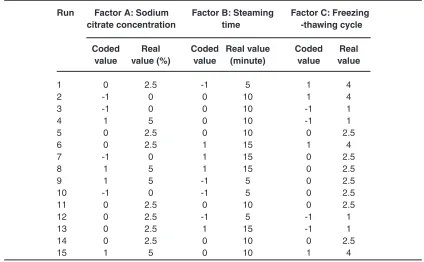
Table 1: Experimental units
Run Factor A: Sodium Factor B: Steaming Factor C: Freezing citrate concentration time -thawing cycle
Coded Real Coded Real value Coded Real value value (%) value (minute) value value
1 0 2.5 -1 5 1 4
2 -1 0 0 10 1 4
3 -1 0 0 10 -1 1
4 1 5 0 10 -1 1
5 0 2.5 0 10 0 2.5
6 0 2.5 1 15 1 4
7 -1 0 1 15 0 2.5
8 1 5 1 15 0 2.5
9 1 5 -1 5 0 2.5
10 -1 0 -1 5 0 2.5
11 0 2.5 0 10 0 2.5
12 0 2.5 -1 5 -1 1
13 0 2.5 1 15 -1 1
14 0 2.5 0 10 0 2.5
(LG Corp., Seoul, KR) in 4 ± 2 °C for 40 minute then left under running water in room temperature for 20 minute. Drying process was carried out with Memmert UF-110 universal oven (Memmert GmbH, Schwabach, DE).
Experimental Design
Box Behnken design in Response Surface Method was used in this research. All of design processing was operated with Design Expert 7.0 software (State-Ease Inc., Minneapolis, USA). The experiments were run using 3 factors: sodium citrate concentration (A) 0-5%, steaming time (B) 5-15 minute, and
freezing-thawing cycles (C) 1-4. The factor level range was obtained from previous research that showed significance difference after independent samples t test. The combination of these three factors resulted in 15 experimental units with 3 center points (Table 1). The measured response was cooking time, hardness of cooked rice, chewiness of cooked rice, total color difference of cooked rice, and rice grain hardness.
Cooking Time
One-hundred grams of parboiled black rice sample were mixed with 300 mL of distilled water and then
Table 2: Analysis of mathematic model
Response Mathematic Model Lack of Adj R2 Pred R2 Adeq.
Model Significance fit model model Precision (p < 0.05) (p > 0.05)
Cooking Time Quadratic 0.0228* 0.2596 0.7934 0.0034 10.118
(minute)
Total Color Mean vs Total - 0.3337 0 -0.148
-Difference of Rice (ΔE)
Hardness of Cooked Quadratic 0.0023* 0.5578 0.9218 0.7143 17.258
Rice (N)
Chewiness of Cooked Quadratic 0.0217* 0.4876 0.798 0.2024 10.076
Rice (N)
Rice grain Hardness (kg) Quadratic 0.0215* 0.799 0.7986 0.4988 9.957
* significant at P < 0.05
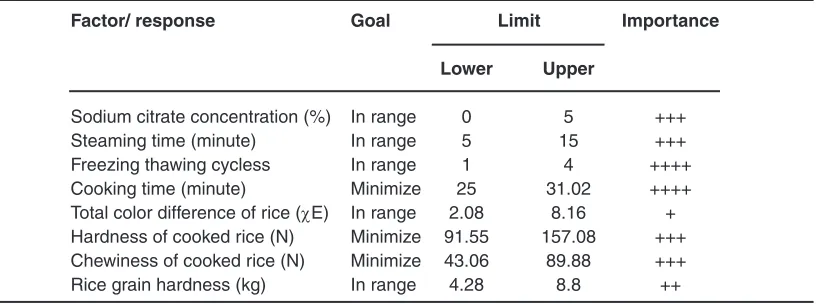
Table 3 : Factor and response criteria for determining optimum condition
Factor/ response Goal Limit Importance
Lower Upper
Sodium citrate concentration (%) In range 0 5 +++
Steaming time (minute) In range 5 15 +++
Freezing thawing cycless In range 1 4 ++++
Cooking time (minute) Minimize 25 31.02 ++++
Total color difference of rice (cE) In range 2.08 8.16 + Hardness of cooked rice (N) Minimize 91.55 157.08 +++ Chewiness of cooked rice (N) Minimize 43.06 89.88 +++
cooked with rice cooker Miyako 0.6 L 220V/50 Hz (PT. Kencana Gemilang, Tangerang, ID). Cooking time was counted from cooking indicator turned on to turned off.
Hardness and Chewiness of Cooked Rice
Hardness was defined as force needed to achieve deformation, while chewiness was the force to chew until the food was ready to swallow.10 These two analyzes were carried out using texture profile
analyzer TA-XT2i (Stable Micro Systems Ltd., Godalming, GB). Computer and TA-XT2i equipment were turned on then the sample was placed under the probe. The equipment was set to “Texture Profile Analysis” mode so that the sample was pressed two times. Cylinder probe was used in this analysis. Each sample was analyzed three times repetition with 90% test distance, 2.0 mm/s rate for pretest, test, and posttest. Hardness and chewiness were obtained from curve analysis.
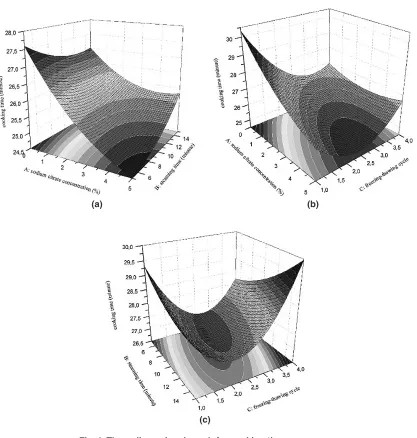
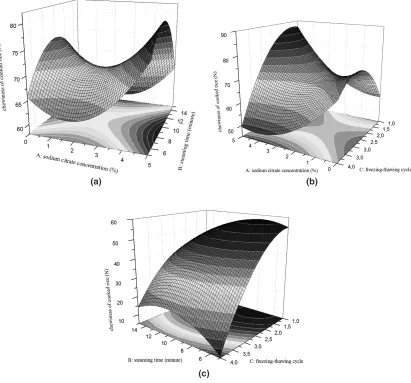
Fig. 1: Three dimensional graph for cooking time response;
(a) 2.5 freezing-thawing cycles; (b) 10 min steaming time; (c) 2.5% sodium citrate concentration
(a) (b)
Total Color Difference for Cooked Rice
Color measurement was analyzed by using Chroma meter CR300 Minolta (Konica Minolta Sensing Singapore Pte Ltd., Pandan Gardens, SG). Cooked rice sample was placed on the transparent dish then measured with Chroma meter. The measurement resulted L*, a*, and b*. L* value was lightness, from dark to light (0-100). Red to green chromatic color was showed by a* value, a+ for red color and a- for green color. Blue to yellow chromatic color was showed by b* value, b+ for yellow color and b- for blue color. Total color difference was determined by using the equation:
Rice Grain Hardness
The rice grain hardness measured the hardness of grain after parboiling without re-cooking. This measurement was important to know that the rice was hard enough for storage and transportation.11 This analysis was carried out by using Kiya Grain Hardness Tester instrument (Kiya Seisakusho Co. Ltd., Kawagoe, JP).11 Pointer needle was set to 0. Ten rice grains sample was tested. Each grain
was pressed by using tester spindle until it sounds “crack”. The needle would show the hardness value in kg.
Statistical Analysis
ANOVA test was carried out using Design Expert 7.0 software (State-Ease Inc., Minneapolis, USA).
Result and Discussion
Effects of Processing Factors on Cooking Time
Analysis of variance showed that factor A (sodium citrate concentration), C (freezing-thawing cycles), AC (interaction between sodium citrate concentration and steaming time), and C2 (quadratic interaction of freezing-thawing cycles) had significant effect on cooking time. While, the rest factor or factors combination had no significant effect. The equation of mathematic model in real value for cooking time response was:
Y = 38.54439 - 1.80730A - 0.53983B - 5.69844C + 0.037258AB + 0.248289AC + 0.096550BC + 0.078158A2 + 0.011951B2 + 0.71858C2
Relation between all factors and cooking time was showed in figure 1. The combination between sodium citrate concentration and steaming time (figure 1a) showed that cooking time decreased along with the increase of sodium citrate concentration. It happened because salt solution could improve water penetration rate.12,13 The faster the water was absorbed then rice starch gelatinization time became faster. The combination between salt solution, autoclave steaming and freeze dry process could improve the rehydration ratio of quick cooking rice.6
Combination of sodium citrate concentration and freezing-thawing cycles (figure 1b) had same path with steaming time and freezing-thawing cycles (figure 1c). The changes of cooking time was significantly affected by freezing-thawing cycles. More freezing-thawing cycles gave more porous structure.9 Porous structure caused easier interaction between heat, water, and starch granules.
Effects of Processing Factors on Hardness of Cooked Rice
Analysis of variance showed that factor C (freezing-thawing cycles), AC (interaction between sodium citrate concentration with freezing-thawing cycles),
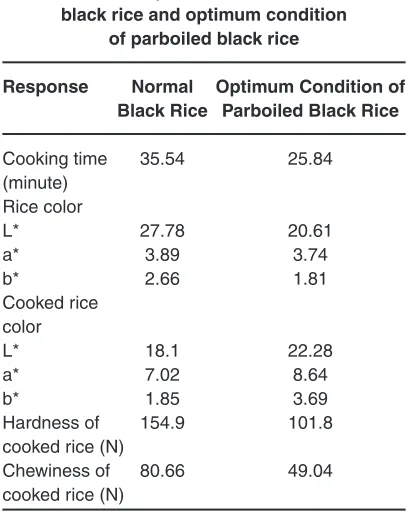
Table 4 : Comparation between normal black rice and optimum condition
of parboiled black rice
Response Normal Optimum Condition of Black Rice Parboiled Black Rice
Cooking time 35.54 25.84
(minute) Rice color
L* 27.78 20.61 a* 3.89 3.74 b* 2.66 1.81 Cooked rice
color
L* 18.1 22.28 a* 7.02 8.64 b* 1.85 3.69
Hardness of 154.9 101.8
cooked rice (N)
Chewiness of 80.66 49.04
BC (interaction between steaming time and freezing-thawing cycles), A2 (quadratic interaction of sodium citrate concentration), B2 (quadratic interaction of steaming time), and C2 (quadratic interaction of freezing-thawing cycles) had significant effect on hardness of cooked rice. While, the rest factors and factors combination had no significant effect. The mathematic model equation in real value was mentioned below:
Y = 68.10048 + 4.40271A + 6.91147B + 19.48615C - 0.21416AB - 4.78607AC + 1.03296BC + 2.18579 A2 - 0.48282 B2 - 4.72207C2
Fig. 2: Three dimensional graph for hardness of cooked rice response;
(a) 2.5 freezing-thawing cycles; (b) 10 min steaming time; (c) 2.5% sodium citrate concentration
(a) (b)
(b)
amylopectin molecules rearrangement after starch gelatinization. Certain concentration of salt solution could reduce the retrogradation degree.14 Sodium citrate concentration above 3% could inhibit the corn starch gelatinization swelling.15 Addition of NO
3- and SCN- ion in starch could inhibit retrogradation due to salting in mechanism.16
Repeated freezing-thawing on certain cycles caused low hardness of cooked rice. Figure 2b showed that the relation between sodium citrate concentration and freezing-thawing cycles. At low sodium citrate concentration, an increase in freezing-thawing cycles from 2.5 to 4 times caused decrease in the hardness of cooked rice. Porous structure which was formed
by freezing-thawing cycles improved heat and water transfer rate, so it generated softer texture.8
Effects of Processing Factors on Chewiness of Cooked Rice
Analysis of variances showed that factor C (freezing-thawing cycles), AC (interaction between sodium citrate concentration with freezing thawing cycles), B2 (quadratic interaction of steaming time), and C2 (quadratic interaction of freezing-thawing cycles) had significant effect on chewiness of cooked rice. Meanwhile, the rest factors and factors combination had no significant effect on chewiness of cooked rice. The equation of this model in real value was stated below:
Fig. 3: Three dimensional graph for chewiness of cooked rice response;
(a) 2.5 freezing-thawing cycles; (b) 10 min steaming time; (c) 2.5% sodium citrate concentration
(a) (b)
Y = 16.50036 + 4.91439A + 5.00961B + 22.18777C - 0.18325AB - 3.31745AC + 0.77958BC + 1.23934A2 - 0.34101B2 - 5.18982C2
The relation between factors combination with chewiness response is visualized in figure 3, which graph was similar to the hardness of cooked rice. The chewiness value was the result of multiplication between hardness, cohesiveness, and elasticity.
Effects of Processing Factors on Total Color Difference of Rice
Total color difference of rice was important to understand because it could early indicate if there was any anthocyanin change. Color parameter (L*, a*, b*) on black rice had correlation with anthocyanin content.17 Response analysis (Table 2) showed that “mean vs total” model was the best to predict the response. It meant that there was no model could predict the relationship significantly.
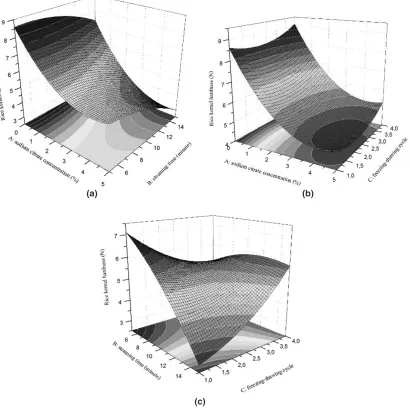
Fig. 4: Three dimensional graph for rice grain hardness response;
(a) 2.5 freezing-thawing cycles; (b) 10 min steaming time; (c) 2.5% sodium citrate concentration (a)
(c)
Effects of Processing Factors on Rice Grain Hardness
The analysis of variances showed that factor A (sodium citrate concentration), BC (interaction among steaming time with freezing-thawing cycles), A2 (quadratic interaction of sodium citrate concentration) affected significantly on rice grain hardness. Meanwhile, the other factors and factors combination had no significant effect on rice grain hardness. The equation in real value was described below:
Y = 12.94898 - 1.59617A - 0.194B - 2.52935C - 0.0216AB - 0.002AC + 0.16533BC + 0.21113A2 - 0.0173171B2 + 0.2087C2
The relation among combination of sodium citrate concentration and steaming time factors with rice grain hardness (figure 4a) had similar path with the relation among sodium citrate concentration and freezing-thawing cycles (figure 4b). Decreasing of rice grain hardness was affected by increasing of sodium citrate concentration. Soaking in sodium citrate solution caused more porous physical structure of rice.13 Rice with porous structure was easily broken and more brittle.
Product Optimization
Optimum condition was determined by giving goal and importance score for each factor and response (table 3). The criteria was determined based on the research goal and the response analysis. The optimum condition was predicted at 3.8% sodium citrate concentration, 5 minute steaming time,
and 3.8 times freezing-thawing cycles with 0.98 desirability value. High desirability values (close to 1) indicated the proximity to the desired optimum conditions. Table 4 showed that the verification (actual) values of response were closed to prediction. The response verification values were still within Confident Interval (CI) so the result was fit with the prediction.
The optimum condition of parboiled black rice was effective to reduce the cooking time, and improve the texture. Table 5 showed that the cooking time was reduced from 35.54 to 25.84 minute. This cooking time was already closed to IR64 white rice cultivar (23 minute).18 The texture parameter (hardness and chewiness) of optimum condition was also softer than normal black rice.
Conclusion
The optimum process parameters of parboiled black rice were obtained with 3.8% sodium citrate concentration, 5 minute steaming time under 1.1 bar pressure, and 3.8 times freezing-thawing cycles. This condition resulted the best response on 25.84 minute cooking time, 4.93 total color difference of cooked rice, 101.80 N hardness of cooked rice, 49.04 N chewiness of cooked rice and 5.32 kg rice grain hardness.
Acknowledgements
Facilities provided by Agroindustry Laboratory, Technology Research and Application Body (BPPT), Puspiptek Serpong, South Tangerang are gratefully acknowledged.
References
1. Shao Y., Xu F., Sun X., Bao J., Beta T. Identification and quantification of phenolic acids and anthocyanins as antioxidants in bran , embryo and endosperm of white, red and black rice kernels (Oryza sativa L.). J. Cereal Sci. 2014;59(2): 211-218. doi:10.1016/j. jcs.2014.01.004.
2. Liu R.H. Whole grain phytochemicals and health. J Cereal Sci. 2007;46(3):207-219. doi:10.1016/j.jcs.2007.06.010.
3. Kushwaha S. Black Rice Research, History and Development. Cham (CH): Springer
Inte-rnational Publishing AG; 2016. doi:10.1007/ 978-3-319-30153-2.
4. Luh B.S., Mickus R.R. 6. In: Rice: Production and Utilization. Westport, Connecticut (US):
AVI Publishing. 1980.
5. Buggenhout J., Brijs K., Celus I., Delcour J.A. The breakage susceptibility of raw and parboiled rice : A review. J Food Eng. 2013; 117(3):304-315. doi:10.1016/j. jfoodeng. 2013 .03.009.
(2):124-131. doi:10.1002/food.19950390205. 7. Prima L., Herawati H., Widowati S., Prianto
A.B. Pengaruh Kandungan Amilosa Terhadap Karakteristik Fisik dan Organoleptik Nasi Instan. J Penelit Pascapanen Pertan. 2015; 12(1):1-10.
8. Prasert W., Suwannaporn P. Optimization of instant jasmine rice process and its physicochemical properties. J Food Eng.2009 ;95(1):54-61. doi:10.1016/j.jfoodeng.2 009.04. 008.
9. Le T.Q., Jittanit W. Optimization of operating process parameters for instant brown rice production with microwave-followed by convective hot air drying. J Stored Prod Res. 2015;61:1-8. doi:10.1016/j.jspr.2015.01.004. 10. Szczesniak A.S. Texture is a sensory property.
Food Qual Prefer. 2002;13(4):215-225. doi:10.1016/S0950-3293(01)00039-8. 11. Fofana M., Mele V. Effect of improved
parboiling methods on the physical and cooked grain characteristics of rice varieties in Benin. Int Food Res J. 2011;18:715-721. 12. Erywiyatno N., Kristianto Y. Pengaruh Bahan
dan Konsentrasi Perendam Na2HPO4 dan Na5P3O10 Terhadap Mutu, Fisik, Kimiawi, dan Mutu Organoleptik Beras Instan. Media Gizi Kel. 2003;27(2):86-92.
13. Husain H., Muchtadi T.R., Sugiyono S.,
Haryanto B. Pengaruh Metode Pembekuan dan Pengeringan Terhadap Karakteristik Grits Jagung Instan. J Teknol dan Ind Pangan. 2007;17(3):189-196.
14. Miao W., Wang L., Xu X., Pan S. Evaluation of cooked rice texture using a novel sampling technique. MEASUREMENT. 2016;89(C):21-27. doi:10.1016/j.measurement.2016.03.072. 15. Villwock V.K., Bemiller J.N. Effects of Salts on the Reaction of Normal Corn Starch with Pro-pylene Oxide. Starch - Stärke. 2009;57(7):281-290. doi:10.1002/star.200400384.
16. Wang W., Zhou H., Yang H., Cui M. Effects of salts on the freeze-thaw stability, gel strength and rheological properties of potato starch.
J Food Sci Technol. 2016;53(9):3624-3631. doi:10.1007/s13197-016-2350-5.
17. Kristamtini K., Taryono T., Basunanda P., Murti R.H. Keragaman Genetik dan Korelasi Parameter Warna Beras dan Kandungan Antosianin Total Sebelas Kultivar Padi Beras Hitam Lokal. J Ilmu Pertan. 2014;17(1):90-103.