Health Care and Informatics Review Online, 2011, 15(2), pg 18-25, Published online at www.hinz.org.nz
ISSN 1174-3379
18
Learning Through the Life Span:
A Conceptual Virtual Simulation Model
Said Shahtahmasebi PhD
School of Health, WINTEC, Hamilton, New Zealand
Director of Research, The Good Life Research Centre Trust, Rangiora, New Zealand Voluntary Faculty, Division of Adolescent Medicine,University of Kentucky
Jan Liddell RN
School of Health, WINTEC, Hamilton, New Zealand [email protected]
Abstract
Teaching in a virtual environment has been a natural progression of advancements in information and communication technologies. The current issues with virtual teaching models appear to be related with the effective simulation of course content, some teaching materials are easier to be visualised in a simulation than others. For example, nursing through the life span is a module which was introduced in the nursing syllabus at Wintec (Waikato Institute of Technology) in 2009. The module explores the learnt experiences and the impact of ill health on a patient’s family and their development. The theoretical contents of the module make it difficult to teach in a virtual environment. However, using a unified health informatics system and advanced statistical and probability modelling, human behaviour can be explored and modelled. The results can then be integrated with the available technology into an appropriate virtual classroom. In this paper, the application of health informatics together with virtual classroom technology is conceptualised as an aid for teaching human behaviour.
1. Introduction
Simulation is rapidly becoming a standard alternative for student placements where industry training places are too few and do not meet demand. Often due to a shortage of placements, e.g. in nursing, placements are simulated in the classroom whereby a clinical setting is recreated for students to act out. More recently technology has been used to simulate some clinical settings and there is software that can perform such a task (e.g. http://secondlife.com/). Current simulation techniques, both physical and computer-based, are not suitable for non-clinical settings where human behaviour is the central driving force e.g. the relationship between health outcomes and life decisions. Exploring the developmental paths of people and the effects their developmental journey has on health is not solely reliant on a universal body of knowledge about human development. Who we are and what we want to become changes as we age and may move in a different direction due to illness, cultural expectations, social constraints or disability. As the ageing population continues to increase, demographic changes, and the ethnic make-up of the New Zealand population continues to rise, a life-span perspective should no longer be thought of as a universal ‘one glove fits all’ concept; rather, a life-span perspective should now be thought of as life-long, multidimensional, multidirectional, multidisciplinary and contextual [1]. It has long been argued that the education system must embrace these temporal dependencies and integrate them into the teaching and learning process e.g. [2]. There are computer simulation software for training purposes that claim to be cultural sensitive [3]. However, contextualising the dynamics of human behaviour within the educational process is not without its challenges.
19
2. Background
Information is considered the currency in any industry/business none more so than in the health care sector. Efficient health information retrieval systems are dependent on the processes for data collection, storage, access to and analysis of data. The utilisation of computer and communication technologies in the process of generating and managing health information as a currency is commonly known as health informatics. Informatics may be viewed as the application of information technology (IT) in storing and communicating data with particular reference to the clinical setting. The current definition of informatics reflects the contribution of computer technology in the context of information as the main currency in the health service. In this context the focus of software development has been to support new devices and hardware to perform specific tasks, e.g. intelligent pens, robotics and interfaces for between device communication such as between a computer, a camera and a human. The advantages of health informatics are reported to range from timely and improved care to reduction in error [6, 7]. On the other hand, Currell and Urquhart [8] suggest that there is little evidence that computer technology improves health care delivery.
The underlying force driving informatics is to enable the sharing of information, whether through the application of super fast broadband to share large datasets e.g. medical imaging, or mobile technology where patients share data with a nurse/doctor through a secure internet page, or, through various evidence-based practice databases. However, there are two main issues to consider: first, when does data become information, and second, the sharing of information across a variety of disciplines within the health sector as well as between the health sector and other sectors e.g. social, economic and education. Health data is still fragmented and does not lend itself to be shared in a fast and efficient way [9]. More importantly, a fragmented data system does not inform our understanding of the process of disease development. Perhaps through education and training, which has its philosophy based on knowledge transfer, the importance of sharing nursing informatics is better understood. The point is that technology is advanced enough to interface datasets across the various care sectors, however, the question is whether the sectors are ready to share the data?
Clearly, the advantages of linking together information systems across the health and social sector are guided by the philosophy behind the creation of informatics systems. Over and above the benefits for health care provision, an integrated informatics system can play an important role in education and training. It can inform the process of the teaching delivery of a course. In particular, courses that require students to study the dynamic nature of health and wellness across the lifespan in relation to the social, environmental, political, economic and cultural contexts of Aotearoa New Zealand. In order to explore and understand the dynamics of health, students must come to grips with a range of historical and contemporary theoretical perspectives about health and human behaviour. Therefore, a relevant issue to information is its delivery to students and users.
The development of ICT, the internet and advancements in modem technology has revolutionised teaching and learning. Information and communication technology has provided the flexibility needed in the delivery of teaching in virtual classrooms. The development of virtual classrooms appears to be a natural progression from internet-based distance and online courses. In most cases, the internet has merely removed the physical barriers, e.g. students can now access teaching materials at any time. Assuming that internet access and with the availability of mobile technology, learning may be done from anywhere in the world.
The flipside of the coin is whether improved access to teaching modes necessarily leads to improved learning outcomes. For example, Hiltz [10] reported no significant difference between the traditional and computer based mode of teaching delivery. While, Cassidy [11, 12] reported that ICT had become part of the teaching syllabus as opposed to been utilised as an aid to deliver teaching. Nevertheless, distance learning and alternative teaching delivery modes using ICT (e.g. internet-based and online courses) has become an integral part of education systems. The effectiveness of such courses is subject to continuous research. For example, students’ satisfaction of online courses appears to be mixed, e.g. Rovai [13] reported a negative rating for online courses. On the other hand student satisfaction is likely to be associated with the perceived flexibility in software and tutor/instructor to create an interactive environment [14]. These characteristics are not too dissimilar from those associated with the traditional classroom environment. It is not surprising that distance learning has been transformed into virtual classrooms and at the same time into new business ventures [15]. These new trends are based on the premise that technology can motivate students and help them to visualise course material better e.g. [11, 12, 16]. Nevertheless, regardless of the reported inconsistencies, the technology has led to more options in teaching modes that suit users with different learning styles and criteria.
20
visualising the theory. Over recent decades, ICT has been used to provide a multiplicity of teaching methods to suit the needs of different learning styles. For example, animated resources for teaching and learning statistical concepts may be found online e.g. http://www.causeweb.org/resources/. There is even the online Journal of Visualized Experiments, or JoVE (www.jove.com), which is a video journal for biological, medical, chemical and physical research indexed in PubMed.
Technology may not be so easily deployed for all courses and all classroom settings to enhance the teaching and learning process. Whilst, virtual classrooms use computers to animate difficult aspects of a course possibly in 3D, nevertheless, these virtual environments are basically simulating classroom settings. For example, a more sophisticated virtual teaching environment can take medical students into virtual hospitals, operating theatres as well as enabling students to learn the mechanics of the human body [17, 18]. Problems and issues arise when the technology is applied to modelling human development and human behaviour.
3. Setting and Issues
In nursing education, nursing through the lifespan is an attempt to integrate temporal dependencies in human behaviour into nursing education and subsequently nursing care. For students to understand the dynamic nature of health and wellness experiences across the lifespan, the design and implementation of Nursing through the Lifespan has been based on an exploration of the following:
•
Examine the social, environmental, political, economic and cultural constructions of health within the contexts of Aotearoa New Zealand.•
Explore the lived experience of health across the lifespan•
Examine a range of historical and contemporary theoretical models and methods for studying health and human developmentNursing through the life span aims to offer not only scientific foundations, but also to provide applied examples of concepts to give students a sense of personal meaning. Students are introduced to themes and issues that nurses consider when exploring life-span development. For this to occur the activities are designed to implementthelearning domains: affective (attitudes), psychomotor (feelings) and cognitive (knowledge) [19]. Assessments are based on student knowledge, comprehension, application, analysis, synthesis and evaluation. What is pertinent in the planning of such activities is that instructional requirements are clear and easily understood by the learner [20].
The delivery of the module has been in the traditional classroom environment utilising multimedia technology. First, students familiarise themselves with the life-span perspective, then the module explores processes and life events that characterise human development. Finally the module examines primary issues that may impact on human development.
To facilitate self-directed learning activity, a key characteristic of the module, families and family environment were simulated in the classroom. The simulated family environment was designed to encourage students in learning activities that would enable them to engage in focused learning behaviour and internalise information. The module was delivered along the following lines:
•
Face to face lectures twice weekly•
Online presentations•
Face to face tutorials•
CD-Rom for students•
Literature reviews21
diversity and opportunity for students to explore, understand and appreciate the dynamic nature of health and wellness experiences across the lifespan.
4. Model Conceptualisation: Virtual Families
The module requires students to visualise the different aspects of lived experiences (temporal dependencies) that may influence individuals’ choices and health outcomes. There are many challenging issues associated with such a learning process. First, there is a strong probability of biased learning: students may associate personal experiences and exposures to life events and making generalisations about the population. Second, learning may be based on the assumptions of other students. Third, it is not an easy task to visualise lived experiences along a continuum time line with possible consequences. Fourth, it is even more difficult to visualise the effect on health outcomes if some parameters in the lived experience are changed. These challenges will have a bearing on understanding ‘lived experiences’ (i) in relation to the pass rate, (ii) in relation to its application in nursing care, or, both (i) and (ii).
Student feedback indicates that simulating family environment incorporates human development from birth to death/or old age and assists students in imagining the different stages of development. As described in the previous section, the student feedback suggests the usefulness of integrating temporal dependencies into nursing. They also raise issues relevant to the teaching delivery of the module. Although, simulating a family environment was positively regarded, students’ using the term “manageability” of human development in their comments suggests that the students may not have fully understood family parameters. Furthermore, the feedback suggests that there is an expectation that the simulation should be realistic and interactive. Clearly, the students’ expectations and attitudes and the variation in their rate of getting to grips with family dynamics provided interesting teaching and learning challenges for the delivery of this module.
A major problem arises. Although simulating a family environment was helpful for students to visualise life experience, the ‘lived experiences’ were likely to be taught as opposed to acquired through learning. The simulated families’ life outcomes in this module would be biased towards the teachers’ and students’ own experience and exposure to life events. The introduction of simulated family environment into this module was due to the impracticality of allocating a real family to each student for observation. This problem is not unique to this setting and is relevant to simulating human behaviour such as intercultural games which may lead to stereotyping and cultural conflict. Fowler [3] suggests a combination of high-tech (online simulation) and low-tech (in person simulation) as a possible solution until users become familiar and comfortable with the simulation. However, this solution does not address the issues relevant to cultural stereotyping and bias, it only allows a transition period for users to become comfortable with using the simulation game.
The idea in the low-tech simulation that families are imaginary will, at least in theory, help to overcome this problem by assigning realistic family traits and characteristics to them. The way to achieve this is by removing the student’s and teacher’s influence when constructing family environments. Individual and family characteristics influence behavioural outcomes in given social and environmental settings. These outcomes may differ between individuals within the same family as well as under different social and environmental settings. It is therefore plausible to characterise individuals’ and families’ health related behaviour and outcomes within a probability modelling framework based on available evidence. In other words, we propose the conceptualisation and development of a virtual simulation model to construct computer simulated families. These will be referred to as virtual families. Avatars will take the characteristics of virtual family members. Their decision making behaviour will be simulated based on a probability model according to their characteristics. Therefore, the avatars will behave independently of tutors and expected scenarios. In this way students will have to utilise the lessons from the modules as well as their own personal and professional experience to interact with the virtual families as though in real life. Access to health and social informatics is essential in order to model human behaviour which requires the application of Information and communication technology (ICT) and informatics.
22
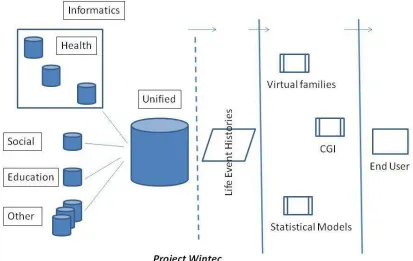
Figure 1 - Illustration of the development of the Virtual Families Game
5. Developmental Issues
Applications in subject areas such as physical sciences are easier to simulate because these subjects are well understood and parameters can be estimated with high degree of certainty. For example, it would be relatively simple to develop digitised resources to teach chemical reactions, or, the mechanics of movement and other bodily functions, or, statistical concepts that are based on well-defined distributions (e.g. the normal distribution). In contrast, human reaction to life events (e.g. illness) cannot be realistically simulated e.g. individuals with similar characteristics may have different decision outcomes. Teachers of such courses rely on the student’s imagination which is influenced by their assumptions and experiences. The downside is that learning may become biased or lead to stereotyping as students may identify with and relate to their own lived experiences. In other words, the main aim of the learning process is in understanding the variability and dynamics of health and human behaviour which may not be achieved. Therefore, as described in the background, the needs of tutors teaching nursing through the life span and students taking it are somewhat different. Research-based theories of human development and behaviour must be incorporated in the simulation in order to enable students to visualise the relationship between human behaviour and health outcomes, see Figure 1 & 2.
23
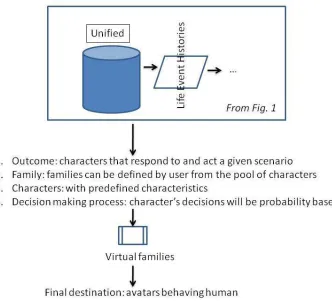
Figure 2 - Development of the Virtual Families Game
Using gaming software, various stages of life such as getting old (with or without health problems), various stages of ill-health to recovery, or dynamics of disease development can be animated using ICT. For this module we propose to create a virtual family whose temporal dependencies are governed not only by the family but also by the environment the virtual family is located in e.g. see [28]. As mentioned earlier, appropriate probabilistic modelling will inform the development of the virtual characters and their reaction to virtual scenarios. Figure 2 illustrates the basic idea behind the development of virtual families. In the initial stages, current knowledge about change over time, e.g. ageing, frailty, illness and their effects on family behaviour, will inform the behaviour of the virtual characters. As the unified database becomes populated, see Figure 1, it will lead to more life event histories which will in turn increase the precision of statistical models and will inform the development of family behavioural outcomes.
24
6. Concluding Comments
Health/nursing informatics can no longer be viewed as health data stored on magnetic media and retrieved for administrative purposes. Utilising technological advancements, the data can be complemented with data from other sources to generate information. As shown in Figure 1, health informatics can provide an excellent opportunity to develop applications for teaching and learning as well as assisting and informing the process of research and development. The proposed conceptual model in this paper will potentially expand opportunities in understanding ‘health’ and health care development, as well as in education and training. We believe that ICT has the capacity to operationalise the conceptual model presented in this paper. Clearly, future research and development will need to consider ethical and practical issues relevant to the interdisciplinary and multidisciplinary sharing of data. The virtual families game will have other applications beyond the classroom. For example, it can be used for policy development and policy analysis in the health and social care provision for the elderly, primary care and health promotion programmes, and family wellbeing and welfare.
7. References
[1] Santrock J. Lifespan development. New York: McGraw-Hill; 2007.
[2] Mioduser D, Nachmias R, Tubin D, Forkosh-Baruch A. Analysis schema for the study of domains and levels of
pedagogical innovation in schools using ict. Education and Information Technologies. 2003; 8(1): 23-36.
[3] Fowler SM, Pusch MD. Intercultural simulation games: A review (of the United States and beyond). Simulation
& Gaming. 2010; 41(1): 94.
[4] Bragge J, Thavikulwat P, Töyli J. Profiling 40 years of research in simulation & gaming. Simulation & Gaming. 2010; 41(6): 869-97.
[5] Crookall D. Serious games, debriefing, and simulation/gaming as a discipline. Simulation & Gaming. 2010; 41(6): 898-920.
[6] Charters K. Nursing informatics, outcomes, and quality improvement. AACN Advanced Critical Care. 2003; 14(3): 282.
[7] Zytkowski M. Nursing informatics: The key to unlocking contemporary nursing practice. AACN Advanced
Critical Care. 2003; 14(3): 271.
[8] Currell R, Urquhart C. Nursing record systems: Effects on nursing practice and health care outcomes. Cochrane
database of systematic reviews (Online). 2003;(3).
[9] Shahtahmasebi S, Researching health service information systems development. In: Dwivedi A, Ed. Handbook
of research on it management and clinical data administration in healthcare 2008; IGI Publishing. Chapter XXXVII.
[10] Hiltz SR. Correlates of learning in a virtual classroom. International Journal of Man-Machine Studies. 1993; 39(1): 71-98.
[11] Cassidy B, Shahtahmasebi S. Literacy & ICT: I. Young people with learning difficulties. Int. J. of Medical and Biological Frontiers. 2009; 15(1/2): 119-34.
[12] Cassidy B. Literacy, learning and ICT: The role of ICT in developing literacy skills in students with learning difficulties. Sarbrucken:Germany: VDM; 2009.
[13] Rovai AP, Ponton MK, Derrick MG, Davis JM. Student evaluation of teaching in the virtual and traditional classrooms: A comparative analysis. The Internet and Higher Education. 2006; 9(1): 23-35.
[14] Arbaugh J. Virtual classroom characteristics and student satisfaction with internet-based mba courses. Journal of Management Education. 2000; 24(1): 32.
[15] Harper KC, Chen K, Yen DC. Distance learning, virtual classrooms, and teaching pedagogy in the internet environment. Technology in Society. 2004; 26(4): 585-98.
25
[17] Gregory S, Tynan B. Introducing Jass Easterman: My second life learning space. In: Atkinson R, McBeath C,
Eds. Same places, different spaces. Proceedings ascilite 2009: , Auckland, New Zealand: Auckland University: http://www.ascilite.org.au/conferences/auckland09/procs/honey-interactivesession.pdf, 2009. 377-86.
[18] Honey M, Diener S, Connor K, Veltman M, Bodily D. Teaching in virtual spaces: an interactive session demonstrating second life simulation for haemorrhage management. In: Atkinson R, McBeath C, Eds. Same places, different spaces. Proceedings ascilite 2009: , Auckland, New Zealand: Auckland University: http://www.ascilite.org.au/conferences/auckland09/procs/honey-interactivesession.pdf, 2009. 1222-4.
[19] Bloom B. Taxonomy of educational objectives. Handbook 1: The cognitive domain. New York: David McKay;
1956.
[20] Butler K. Learning and teaching style, in theory and practice. Australia: Hawker Brownlow Education; 1994.
[21] Emerson E, Shahtahmasebi S, Berridge D, Lancaster G. Factors associated with poverty transitions among families supporting a child with intellectual disability. Journal of Intellectual and Developmental Disability. 2010; 35(4): 1-37.
[22] Shahtahmasebi S. Teenage smoking: Researching behaviour. Int. J. of Psychology Research. 2007; 2(1/2): 93-122.
[23] Shahtahmasebi S, Berridge D. Conceptualising behaviour in health and social research: A practical guide to data
analysis, Merrick J, Ed. New York: Nova Sci; 2009.
[24] Shahtahmasebi S, Berridge D. Teenage drinking patterns: A longitudinal analysis. Int J Adolesc Med & Health. 2009; 21(3): 371-85.
[25] Shahtahmasebi S, Emerson E, Berridge D, Lancaster G. A longitudinal analysis of poverty among families supporting a child with a disability. Int J Disabil Hum Dev. 2010; 9(1): forthcoming.
[26] Shahtahmasebi S, Emerson E, Berridge D, Lancaster G. Child disability and the dynamics of family poverty, hardship and financial strain. Journal of Social Policy. 2010: forthcoming.
[27] Shahtahmasebi S, Shahtahmasebi R. A holistic view of suicide: Social change and education and training. Journal of Alternative Medicine Research. 2010; 2010:2(1): 115-28.
[28] Gatrell A, Thomas C, Bennett S, Popay J, Bostock L, Williams G, Shahtahmasebi S, Understanding health inequalities: Locating people in place and time. In: Graham H, Ed. Understanding health inequalities. 2000; Open University Press.
[29] Shahtahmasebi S, van den Berg L. What do you do when no health and social agency wants to care for you? Int J