R E S E A R C H
Open Access
Evaluating implementation of
methicillin-resistant
Staphylococcus aureus
(MRSA)
prevention guidelines in spinal cord injury
centers using the PARIHS framework: a mixed
methods study
Salva N. Balbale
1,2,3†, Jennifer N. Hill
1,2†, Marylou Guihan
1,2,4†, Timothy P. Hogan
5,6,7†, Kenzie A. Cameron
8,9†,
Barry Goldstein
10,11†and Charlesnika T. Evans
1,2,3,9*Abstract
Background:To prevent methicillin-resistantStaphylococcus aureus(MRSA) in Spinal Cord Injury and Disorder (SCI/D) Centers, the“Guidelines for Implementation of MRSA Prevention Initiative in the Spinal Cord Injury Centers”were released in July 2008 in the Veterans Affairs (VA) Health Care System. The purpose of this study was to use the Promoting Action on Research Implementation in Health Systems (PARiHS) framework to evaluate the experiences of implementation of SCI/D MRSA prevention guidelines in VA SCI/D Centers approximately 2–3 years after the guidelines were released. Methods:Mixed methods were used across two phases in this study. The first phase included an anonymous, web-based cross-sectional survey administered to providers at all 24 VA SCI/D Centers. The second phase included semi-structured telephone interviews with providers at 9 SCI/D Centers. The PARiHS framework was used as the foundation of both the survey questions and semi-structured interview guide.
Results:The survey was completed by 295 SCI/D providers (43.8 % response rate) from 22 of the 24 SCI/D Centers (91.7 % participation rate). Respondents included nurses (57.3 %), therapists (24.4 %), physicians (11.1 %), physician assistants (3.4 %), and other health care professionals (3.8 %). Approximately 36 % of the SCI/D providers surveyed had not seen, did not remember seeing, or had never heard of the MRSA SCI/D guidelines, whereas 42.3 % of providers reported that the MRSA SCI/D guidelines were fully implemented in their SCI/D Center. Data revealed numerous barriers and facilitators to guideline implementation. Facilitators included enhanced leadership support and provider education, focused guideline dissemination to reach SCI/D providers, and strong perceived evidence supporting the guidelines. Barriers included lack of awareness of the guidelines among physical therapists and physician assistants and challenges in cohorting/isolating MRSA-positive patients and following contact precautions.
Conclusions:Successful implementation of MRSA infection prevention guidelines in SCI/D settings requires (1) guideline dissemination that reaches the full range of SCI/D providers working in inpatient, outpatient, and other care settings, (2) provider education that is frequent and systematic, (3) strong leadership support, and (4) that barriers unique to the recommendations are addressed. These findings may be used to inform selection of implementation strategies and optimize infection prevention beyond MRSA as well as in other specialty care populations.
* Correspondence:[email protected]
†Equal contributors
1Spinal Cord Injury Quality Enhancement Research Initiative, Edward Hines Jr.
VA Hospital, US Department of Veterans Affairs, Hines, IL, USA
2Center of Innovation for Complex Chronic Healthcare, Edward Hines Jr. VA
Hospital, US Department of Veterans Affairs, Hines, IL, USA Full list of author information is available at the end of the article
Background
Methicillin-resistant Staphylococcus aureus (MRSA) is responsible for over 11,000 deaths and 200,000 hospitali-zations in the USA every year, in addition to increases in health care costs and length of stay [1–4]. In 2007, the Veterans Affairs (VA) Health Care System released the MRSA Prevention Initiative [5], describing infection control strategies to prevent the spread of MRSA in VA medical centers. This initiative used a bundled intervention strategy and resulted in decreased MRSA transmission and infection in the VA [6]. Components of the initiative included (1) active surveillance and screening cultures (ASCs), (2) use of contact precautions by health care pro-viders if patients are found to be MRSA positive, (3) hand hygiene, and (4) cultural transformation through staff and leadership engagement [5]. The success of this initiative has been presented elsewhere including declines in MRSA infection rates in intensive care unit (ICU) and non-ICU settings [6, 7].
Additional guidance was provided for prevention of MRSA in VA Spinal Cord Injury and Disorder (SCI/D) Centers. Patients with chronic and complex health needs, such as those with SCI/D, are at particularly high risk for MRSA and other hospital-acquired infections (HAI) [7–9]. The “Guidelines for Implementation of MRSA Prevention Initiative in the Spinal Cord Injury Centers” (herein referred to as SCI/D MRSA prevention guidelines) were released in July 2008 [10]. These guide-lines (Additional file 1) addressed specific elements of SCI/D care, such as the inclusion of wounds and/or pres-sure ulcers as part of ASCs. The SCI/D MRSA prevention guidelines also emphasized hand hygiene in patients and providers before and after urinary catheterization and bowel care, addressed appropriate cleaning of shared equipment, and highlighted the need for contact precau-tions and environmental cleaning. The initiative was based on evidence from the Centers for Disease Control around management of multidrug-resistant organisms in health care settings [11]. Although research evidence clearly supports the components of the guidelines related to hand hygiene, contact precautions, and the presence of leader-ship and culture change [12, 13], the strength of evidence underlying the universal screening and isolation strategy is less clear [14]. Similar to the ICU and non-ICU settings, significant decreases in MRSA infection rates have been seen in VA SCI/D Centers [7].
Given the success of the MRSA Prevention Initiative in VA overall and in SCI/D Centers [6, 7], identifying barriers and facilitators that impacted early guideline implementation in SCI/D Centers is a critical step to enhance implementation of future prevention initiatives that are rolled out. Successful infection prevention depends on effective implementation of evidence-based guide-lines [15, 16]. However, translating infection prevention
guidelines into practice in SCI/D Centers can be espe-cially challenging due to several characteristics unique to patients with SCI/D and their needs and experiences [7, 9]. Specifically, patients with SCI/D are more suscep-tible to MRSA colonization and infection due to frequent and prolonged hospitalization [9, 17], frequent contact with body fluids (e.g., during bowel programs and bladder catheterization), high prevalence of pressure ulcers [18, 19], and extensive antibiotic use due to infections such as urinary tract infections and pneumonia [9, 20]. Controlling the spread of MRSA in hospital settings where individuals with SCI/D are present is further complicated by the use of common areas for rehabili-tation and exercise, shared equipment, and difficulties in performing hand hygiene among patients with impaired hand function secondary to tetraplegia.
Previous studies on guideline implementation have demonstrated that without systematic and tailored imple-mentation strategies, little impact is observed on routine clinical practice [21–23]. Prior implementation studies also have demonstrated the importance of using theory-based approaches or conceptual frameworks, such as the Promoting Action on Research Implementation in Health Systems (PARiHS), to comprehensively evaluate imple-mentation [16, 24–26]. The purpose of this study was to use the PARiHS framework to evaluate implementation of the SCI/D MRSA prevention guidelines in VA SCI/D Centers approximately 2–3 years after the guidelines were released.
Methods
Study design and participants
Quantitative and qualitative approaches were used across two phases in this mixed methods study. We focused on providers’ experiences with early implementation of the SCI/D MRSA prevention guidelines and recommended practices, approximately 2–3 years following the release of the guidelines. Additionally, we assessed provider percep-tions and familiarity with the guidelines, factors influen-cing early implementation, and attitudes on prevention practices and perceived strength of evidence around MRSA severity and prevention.
a broader effort to characterize MRSA prevention practices in SCI/D Centers following guideline release. Although the initial sample of providers was composed of MPCs at each Center’s facility, as well as the SCI/D Center Chief, SCI/D Center physicians, nurses, therapists, and other allied health providers, we only describe survey data from the SCI/D Center physicians, nurses, therapists, and allied health providers. MPC survey data were omitted from our analysis as these data did not focus on percep-tions of guideline implementation.
The second phase of the study included semi-structured telephone interviews with providers at nine of the SCI/D Centers, which occurred December 2010–March 2011. The research team selected interview questions about current practices that were critical to guideline implemen-tation [27]. Participants were recruited through the SCI/D Chief, Infection Control Coordinator, MPC, or other designated leaders at each of the nine VA facilities. Background on the objectives of the study was provided, and permission to interview providers requested. A recruitment letter about the study also was distributed to potential participants.
This study was approved by the Institutional Review Board at the Hines VA Hospital. Further details on the study design and data collection efforts are published elsewhere [27].
Conceptual framework
The PARiHS framework was used as the foundation of both the survey questions and semi-structured interview guide (Additional file 2: Appendix A). The PARiHS framework proposes that successful implementation of evidence into practice is a function of three broad inter-active elements: evidence, context, and facilitation [28–30]. Given the lack of knowledge around infection prevention guideline implementation in SCI/D, we focused on building our understanding around contextual factors that affected early implementation of the SCI/D MRSA prevention guidelines at each VA SCI/D Center, with a secondary focus on evidence and facilitation factors influencing early implementation.
Survey procedures and instrument
Catapult Systems Corporation’s InquisiteWeb Survey System 7.0 was used to administer the anonymous sur-vey. Respondents were provided with an electronic link through an email invitation generated by the system; the survey was available for 3 weeks. Two reminder emails were sent during this period to those who had not com-pleted the survey.
The survey included questions designed to explore early implementation of the SCI/D MRSA prevention guidelines as well as demographic questions, including type of provider, age, number of years in training, VA
facility, and supervisory status. Questions explored attri-butes known to influence guideline adoption [29–31], including (1) providers’perceived strength and extent of evidence underlying the guidelines, (2) the quality of the organizational context for guideline implementation, and (3) facilitation efforts to implement the SCI/D MRSA prevention guidelines.
Semi-structured interview procedures
Qualitative data were collected to examine the factors shaping provider survey responses and guideline imple-mentation. Survey data were used to select the study sites for interview [27]. The research team selected survey questions to gather information about frequency of pro-vider engagement in practices from the guidelines that are critical for MRSA prevention. These practices include conducting active surveillance, placing MRSA-positive patients on contact precautions, and educating patients and caregivers on MRSA prevention. The percentage of survey respondents from each SCI/D Center who reported
“usually/always” performing these prevention practices was used to create a summary score for their respective SCI/D Center. We used these summary scores to organize facilities into low, medium, and high scores. A sample of 2–4 SCI/D Centers was selected from each of these groups for a total of nine study sites. To ensure adequate representation from leadership within the SCI/D Center and infection control, interviewees included at least one designated leader in the SCI/D Center for the MRSA program and the MPC or another infection control repre-sentative. We recruited up to four participants at each facility. Interview participants were unaware of the selec-tion process.
Four authors (JNH, TPH, KAC, and MG) trained in qualitative data collection conducted the interviews. Informants were first asked to respond to a short set of background questions regarding demographics, profes-sional training, and work experience. A one-on-one, semi-structured, audio-recorded interview followed, last-ing from 30 to 60 min. Interview questions were related to perceptions of early efforts to implement the SCI/D MRSA prevention guidelines and the range of facilitating or impeding factors influencing their implementation.
Analysis
across provider groups and an alpha level of 0.008 to compare guidelines awareness across provider groups. All analyses were conducted using SAS software version 9.2 (SAS Institute Inc, Cary, NC, USA).
Audio-recorded interviews were transcribed verbatim and compared with the original recordings to ensure transcription accuracy. All personal identifiers were removed, and the transcripts were distributed to the coders. Transcripts were analyzed using a constant com-parative technique to organize the content into categories, identifying both common and unique themes across inter-views [32, 33]. A preliminary coding scheme was devel-oped, and interviews were independently coded by four research study members (JNH, TPH, KAC, and MG), where each interview was independently coded by at least two study members. Discrepancies in coding were further refined based on discussions between the coders. In line with the PARiHS model, we explored the different ele-ments of context, evidence, and facilitation associated with guideline implementation across the nine sites as well as provider perceptions related to implementation of the SCI/D MRSA prevention guidelines.
Results
Quantitative survey
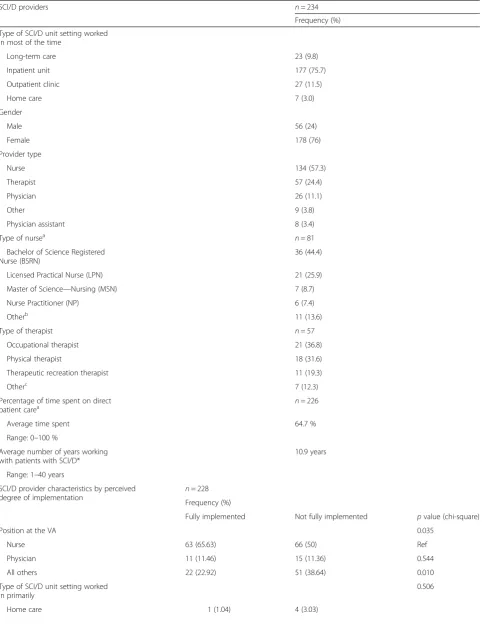
The survey was completed by 295 SCI/D providers (43.8 % response rate) from 22 of the 24 SCI/D Centers (91.7 % participation rate). Respondents were excluded in cases of (1) incomplete surveys, (2) undeliverable responses due to termination of VA employment, and (3) providers who did not treat patients with SCI/D or were not involved in direct patient care. Thus, our final eligible sample size included 234 potential respondents (34.8 % response rate). Respondents included nurses (57.3 %), therapists (24.4 %), physicians (11.1 %), physician assistants (3.4 %), and other health care professionals (3.8 %). The percentage of each provider type who responded was 40.1 % of nurses, 16.8 % of physicians, 42.1 % of physician assistants, 33.5 % of therapists, and 4.7 % of other health care professionals. Respondents cared for SCI/D patients in inpatient, outpatient, long-term care, and home care settings. Table 1 includes demo-graphic characteristics of the responding SCI/D Center providers. Although responses to the survey were anonym-ous, we compared the original sampling frame to those that responded by provider type [27]. When comparing survey respondents to the original sampling framework, the distri-bution of respondents was similar for nurses, therapists, and physician assistants. However, physicians were less likely to participate in the survey (11 % of respondents compared to 23 % of the sampling frame).
Overall, 42.3 % of providers reported that the SCI/D MRSA prevention guidelines were fully implemented in their SCI/D Center, followed by 47.0 % that indicated
mostly, and 10.7 % that they were partially implemented. Across the 22 sites, perceptions of full implementation of the guidelines ranged from 0–100 %. Nurses were sig-nificantly more likely to report full implementation of the guidelines compared to other positions at the Bonferroni-corrected alpha level of p< 0.017 but were similar in comparison with physicians (Table 1); no sig-nificant difference was found between physicians and other positions (p= 0.258). Perceived level of implemen-tation did not differ significantly across levels of nurse education.
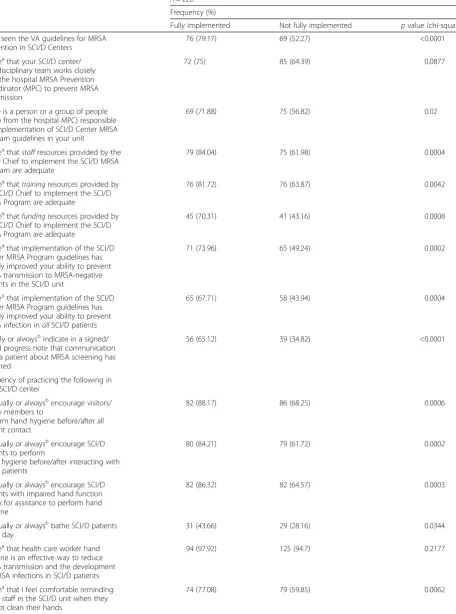
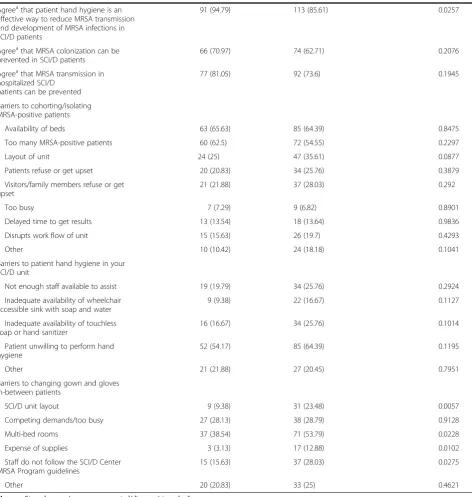
Table 2 reports respondents’familiarity with the SCI/D MRSA prevention guidelines, perceptions around imple-mentation of the guidelines, and specific prevention practices in their SCI/D Center, by perception of full imple-mentation. Compared to those who did not, staff members who perceived the guidelines to be fully implemented were more likely to endorse other factors that contribute to guideline implementation such as being aware of the guide-lines, having resources to implement the guidelines includ-ing provider support, traininclud-ing and fundinclud-ing, and perceivinclud-ing a beneficial impact on prevention of MRSA transmission and infection in patients with SCI/D. Those who reported full implementation were also more likely to report hygiene practices such as bathing patients with SCI/D every day and encouraging hand hygiene in visitors/family members and patients. Barriers to cohorting patients or patient hand hygiene were not associated with perception of implemen-tation; however, some differences in barriers were noted for providers in changing gowns and gloves in-between pa-tients. Multi-bed rooms, expense of gowns and glove sup-plies, and providers not following guidelines were more frequently reported in those who felt that the guidelines were not fully implemented.
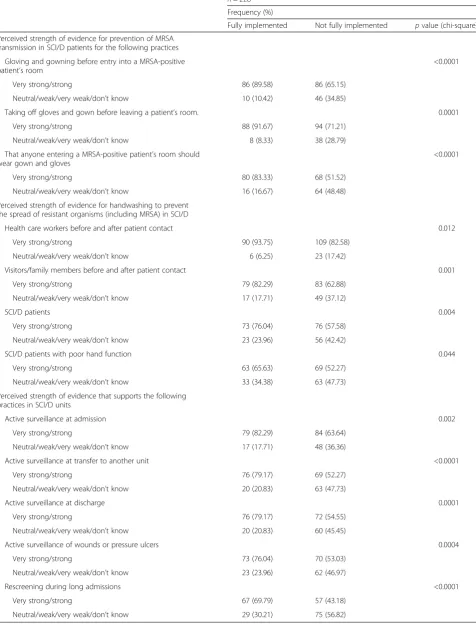
Perceived strength of research evidence among providers was also assessed (Table 3). Most providers perceived evi-dence underlying the SCI/D MRSA prevention guidelines to be strong. Perceived strength of evidence was generally stronger in the fully implemented group for several key MRSA prevention practices, including active surveillance measures at admission, hand hygiene, and gowning and glowing before entering a MRSA patient’s room.
Table 1Provider demographic characteristics
SCI/D providers n= 234
Frequency (%)
Type of SCI/D unit setting worked in most of the time
Long-term care 23 (9.8)
Inpatient unit 177 (75.7)
Outpatient clinic 27 (11.5)
Home care 7 (3.0)
Gender
Male 56 (24)
Female 178 (76)
Provider type
Nurse 134 (57.3)
Therapist 57 (24.4)
Physician 26 (11.1)
Other 9 (3.8)
Physician assistant 8 (3.4)
Type of nursea n= 81
Bachelor of Science Registered Nurse (BSRN)
36 (44.4)
Licensed Practical Nurse (LPN) 21 (25.9)
Master of Science—Nursing (MSN) 7 (8.7)
Nurse Practitioner (NP) 6 (7.4)
Otherb 11 (13.6)
Type of therapist n= 57
Occupational therapist 21 (36.8)
Physical therapist 18 (31.6)
Therapeutic recreation therapist 11 (19.3)
Otherc 7 (12.3)
Percentage of time spent on direct patient carea
n= 226
Average time spent 64.7 %
Range: 0–100 %
Average number of years working with patients with SCI/D*
10.9 years
Range: 1–40 years
SCI/D provider characteristics by perceived degree of implementation
n= 228
Frequency (%)
Fully implemented Not fully implemented pvalue (chi-square)
Position at the VA 0.035
Nurse 63 (65.63) 66 (50) Ref
Physician 11 (11.46) 15 (11.36) 0.544
All others 22 (22.92) 51 (38.64) 0.010
Type of SCI/D unit setting worked in primarily
0.506
Qualitative themes
Thirty interviews were conducted across nine SCI/D Centers in the second phase of the study. The final make-up of the interview sample (n= 30) included 16 nurses (8 registered nurses, 7 Bachelor of Science regis-tered nurses, 1 certified nursing assistant), 9 physicians, 4 physical therapists, and 1 physician assistant. Three of the nurses were also MPCs. We used the qualitative interview data to examine the provider perspective and better understand providers’survey responses. Prominent themes emerging from the data included provider aware-ness of the SCI/D MRSA prevention guidelines, perceived evidence supporting the guidelines, as well as leadership support and resources to facilitate implementation of the guidelines. Themes were grouped according to the PARiHS constructs (context, evidence, and facilitation) to explore factors influencing guideline implementation in VA SCI/D Centers (Additional file 3: Appendix B). Key survey results were linked with our qualitative findings to triangulate our data and interpret their relevance to implementation.
Context
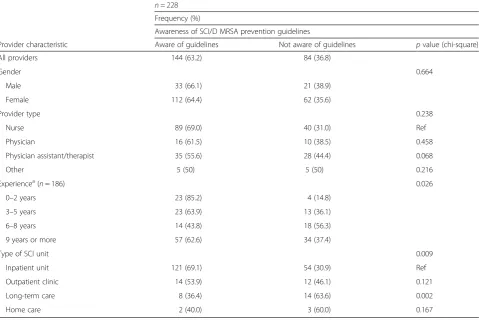
Awareness of the SCI/D MRSA prevention guidelines varied significantly across the nine sites, where some pro-viders had greater familiarity and others reported limited or no exposure to them. Based on survey findings, approximately 64 % of SCI/D providers surveyed were aware of the guidelines. Guideline awareness was generally higher among providers who perceived the guidelines to be fully implemented, compared to those who felt the guidelines were not fully implemented. Interview data revealed possible factors within the receptive context that may be driving a lack of guideline awareness, including gaps in the dissemination of the guidelines.
Providers reported varied experiences in learning about and accessing the SCI/D MRSA prevention guidelines. Guideline dissemination did not always reach all providers systematically. Among SCI/D providers interviewed, phys-ical therapists and physician assistants generally reported not learning about the guidelines. One physical therapist who had not read the guidelines reported:“Everything that
I’ve seen is second hand information that I am told through education…but as far as reading the [SCI/D MRSA preven-tion guidelines] policy myself, no [I have not].” Another physical therapist noted a disconnection in awareness of the guidelines between newer providers and those who had worked in a VA SCI/D Center longer.
Other providers were very familiar with the guidelines and were able to access them frequently. One SCI/D nurse said: “I’m pretty familiar [with the SCI/D MRSA prevention guidelines]…and I actually have it on my desktop always.” Others reported that they had some familiarity with the guidelines but did not have in-depth knowledge around them and had not reviewed them recently. An SCI/D nurse reported:“I’m not like the cli-nicians where I know it by heart or anything like that. I know the basic process.”
Another key component of the receptive context of implementation was a sense of receptivity to change among providers. This often included practices and strategies initiated by providers to better implement practices from the SCI/D MRSA prevention guidelines. One physician noted one example of such an activity to promote patient hand hygiene: “[Providers] getting hand sanitizer for patients at the bedside because they know bed-bound patients do self-care.”
Providers commented on contextual aspects specific to the culture within their SCI/D Centers and MRSA pre-vention program. One nurse/MPC described a prevailing belief within her SCI/D Center to be more lenient with respect to implementation of the SCI/D MRSA prevention guidelines, compared to acute care settings where she per-ceived a greater need for MRSA prevention: “It’s…acute care where we want [MRSA prevention] to be the most stringent; and then spinal cord injury is a little more leni-ent.”In addition, one nurse commented on steps her SCI/ D Center had taken to promote learning and adoption of contact precautions, as well as to improve patient and provider safety: “We spearheaded…and developed isola-tion signage that is consistent…colors, verbiage and every-thing. That’s how we present isolation. When we teach it, it’s like‘this is for your protection and also the protection of the multiple patients you care for.’”
Table 1Provider demographic characteristics(Continued)
Inpatient unit 78 (81.25) 97 (73.48)
Long-term care 8 (8.33) 14 (10.61)
Outpatient clinic 9 (9.38) 17 (12.88)
Gender 0.584
Male 75 (78.13) 99 (75)
Female 21 (21.88) 33 (25)
a
Indicates missing values
b
Includes clinical educators and certified nursing assistant (CNA)
c
Table 2Provider survey responses, by perceived degree of implementation
n= 228
Frequency (%)
Fully implemented Not fully implemented pvalue (chi-square)
Have seen the VA guidelines for MRSA prevention in SCI/D Centers
76 (79.17) 69 (52.27) <0.0001
Agreeathat your SCI/D center/ interdisciplinary team works closely with the hospital MRSA Prevention Coordinator (MPC) to prevent MRSA transmission
72 (75) 85 (64.39) 0.0877
There is a person or a group of people (aside from the hospital MPC) responsible for implementation of SCI/D Center MRSA Program guidelines in your unit
69 (71.88) 75 (56.82) 0.02
Agreeathatstaffresources provided by the
SCI/D Chief to implement the SCI/D MRSA Program are adequate
79 (84.04) 75 (61.98) 0.0004
Agreeathattrainingresources provided by
the SCI/D Chief to implement the SCI/D MRSA Program are adequate
76 (81.72) 76 (63.87) 0.0042
Agreeathatfundingresources provided by
the SCI/D Chief to implement the SCI/D MRSA Program are adequate
45 (70.31) 41 (43.16) 0.0008
Agreeathat implementation of the SCI/D
Center MRSA Program guidelines has greatly improved your ability to prevent MRSA transmission to MRSA-negative patients in the SCI/D unit
71 (73.96) 65 (49.24) 0.0002
Agreeathat implementation of the SCI/D
Center MRSA Program guidelines has greatly improved your ability to prevent MRSA infection inallSCI/D patients
65 (67.71) 58 (43.94) 0.0004
Usually or alwaysbindicate in a signed/ dated progress note that communication with a patient about MRSA screening has occurred
56 (65.12) 39 (34.82) <0.0001
Frequency of practicing the following in your SCI/D center
Usually or alwaysbencourage visitors/ family members to
perform hand hygiene before/after all patient contact
82 (88.17) 86 (68.25) 0.0006
Usually or alwaysbencourage SCI/D
patients to perform
hand hygiene before/after interacting with other patients
80 (84.21) 79 (61.72) 0.0002
Usually or alwaysbencourage SCI/D patients with impaired hand function to ask for assistance to perform hand hygiene
82 (86.32) 82 (64.57) 0.0003
Usually or alwaysbbathe SCI/D patients
every day
31 (43.66) 29 (28.16) 0.0344
Agreeathat health care worker hand hygiene is an effective way to reduce MRSA transmission and the development of MRSA infections in SCI/D patients
94 (97.92) 125 (94.7) 0.2177
Agreeathat I feel comfortable reminding
other staff in the SCI/D unit when they do not clean their hands
Evaluation, another contextual sub-element, was also discussed. Specifically, providers reflected on individual-and system-level feedback received on their performance if they were effectively implementing prevention practices and also if there was a need to improve implementation of specific prevention practices. One nurse commented: “I do get feedback from [SCI/D leadership]. When [staff] do really great, we get very good feedback…. If they’re not doing so great, we get support from leadership saying‘this
is important,’ ‘please do the swabs,’ ‘make sure you adhere to contact precautions,’or‘continue educating patients on the importance of hand hygiene.’”
Evidence
In terms of research evidence, providers generally per-ceived strong evidence for the prevention practices listed in the SCI/D MRSA prevention guidelines, including hand hygiene, contact precautions, and active surveillance.
Table 2Provider survey responses, by perceived degree of implementation(Continued)
Agreeathat patient hand hygiene is an
effective way to reduce MRSA transmission and development of MRSA infections in SCI/D patients
91 (94.79) 113 (85.61) 0.0257
Agreeathat MRSA colonization can be prevented in SCI/D patients
66 (70.97) 74 (62.71) 0.2076
Agreeathat MRSA transmission in
hospitalized SCI/D patients can be prevented
77 (81.05) 92 (73.6) 0.1945
Barriers to cohorting/isolating MRSA-positive patients
Availability of beds 63 (65.63) 85 (64.39) 0.8475
Too many MRSA-positive patients 60 (62.5) 72 (54.55) 0.2297
Layout of unit 24 (25) 47 (35.61) 0.0877
Patients refuse or get upset 20 (20.83) 34 (25.76) 0.3879
Visitors/family members refuse or get upset
21 (21.88) 37 (28.03) 0.292
Too busy 7 (7.29) 9 (6.82) 0.8901
Delayed time to get results 13 (13.54) 18 (13.64) 0.9836
Disrupts work flow of unit 15 (15.63) 26 (19.7) 0.4293
Other 10 (10.42) 24 (18.18) 0.1041
Barriers to patient hand hygiene in your SCI/D unit
Not enough staff available to assist 19 (19.79) 34 (25.76) 0.2924
Inadequate availability of wheelchair accessible sink with soap and water
9 (9.38) 22 (16.67) 0.1127
Inadequate availability of touchless soap or hand sanitizer
16 (16.67) 34 (25.76) 0.1014
Patient unwilling to perform hand hygiene
52 (54.17) 85 (64.39) 0.1195
Other 21 (21.88) 27 (20.45) 0.7951
Barriers to changing gown and gloves in-between patients
SCI/D unit layout 9 (9.38) 31 (23.48) 0.0057
Competing demands/too busy 27 (28.13) 38 (28.79) 0.9128
Multi-bed rooms 37 (38.54) 71 (53.79) 0.0228
Expense of supplies 3 (3.13) 17 (12.88) 0.0102
Staff do not follow the SCI/D Center MRSA Program guidelines
15 (15.63) 37 (28.03) 0.0275
Other 20 (20.83) 33 (25) 0.4621
a
Agree = Strongly agree/agree versus neutral/disagree/strongly disagree
b
Table 3Perceived strength of evidence among providers, by perceived degree of implementation
n= 228
Frequency (%)
Fully implemented Not fully implemented pvalue (chi-square)
Perceived strength of evidence for prevention of MRSA transmission in SCI/D patients for the following practices
Gloving and gowning before entry into a MRSA-positive patient’s room
<0.0001
Very strong/strong 86 (89.58) 86 (65.15)
Neutral/weak/very weak/don’t know 10 (10.42) 46 (34.85)
Taking off gloves and gown before leaving a patient’s room. 0.0001
Very strong/strong 88 (91.67) 94 (71.21)
Neutral/weak/very weak/don’t know 8 (8.33) 38 (28.79)
That anyone entering a MRSA-positive patient’s room should wear gown and gloves
<0.0001
Very strong/strong 80 (83.33) 68 (51.52)
Neutral/weak/very weak/don’t know 16 (16.67) 64 (48.48)
Perceived strength of evidence for handwashing to prevent the spread of resistant organisms (including MRSA) in SCI/D
Health care workers before and after patient contact 0.012
Very strong/strong 90 (93.75) 109 (82.58)
Neutral/weak/very weak/don’t know 6 (6.25) 23 (17.42)
Visitors/family members before and after patient contact 0.001
Very strong/strong 79 (82.29) 83 (62.88)
Neutral/weak/very weak/don’t know 17 (17.71) 49 (37.12)
SCI/D patients 0.004
Very strong/strong 73 (76.04) 76 (57.58)
Neutral/weak/very weak/don’t know 23 (23.96) 56 (42.42)
SCI/D patients with poor hand function 0.044
Very strong/strong 63 (65.63) 69 (52.27)
Neutral/weak/very weak/don’t know 33 (34.38) 63 (47.73)
Perceived strength of evidence that supports the following practices in SCI/D units
Active surveillance at admission 0.002
Very strong/strong 79 (82.29) 84 (63.64)
Neutral/weak/very weak/don’t know 17 (17.71) 48 (36.36)
Active surveillance at transfer to another unit <0.0001
Very strong/strong 76 (79.17) 69 (52.27)
Neutral/weak/very weak/don’t know 20 (20.83) 63 (47.73)
Active surveillance at discharge 0.0001
Very strong/strong 76 (79.17) 72 (54.55)
Neutral/weak/very weak/don’t know 20 (20.83) 60 (45.45)
Active surveillance of wounds or pressure ulcers 0.0004
Very strong/strong 73 (76.04) 70 (53.03)
Neutral/weak/very weak/don’t know 23 (23.96) 62 (46.97)
Rescreening during long admissions <0.0001
Very strong/strong 67 (69.79) 57 (43.18)
Findings from the survey showed that providers who perceived the guidelines to be fully implemented also perceived stronger evidence supporting the guidelines, as compared with providers who did not perceive full implementation.
Interview data highlighted practices that providers per-ceived to be particularly important for MRSA prevention in SCI/D, often corresponding with survey responses. Hand hygiene was also associated with strong or very strong per-ceived research evidence in the survey data. One physician stated: “The most important, in my opinion, is that [providers] follow the hand washing…that’s the number one thing we can do to prevent the spread of [MRSA].” Other areas with strong perceived evidence included con-tact precautions and active surveillance in SCI/D Centers. One nurse stated: “[Providers] need to know the tions, to make sure [patients] are put on contact precau-tions immediately to prevent the spread of MRSA.” A nurse stated:“Certainly [active] surveillance is important… because it gives us the power to get patients on contact isolation in a timely matter.”One nurse/MPC commented:
“Hand hygiene and isolation is always important….[And] patients participating in education and performing hand hygiene. I think that is important in spinal cord [injury].”
Clinical experiences were often viewed by providers as evidence supporting the SCI/D MRSA prevention guide-lines. Providers reflected on their own clinical experi-ences around MRSA prevention, many noting that they found specific guidelines for contact precautions and active surveillance to be especially relevant for MRSA prevention. Based on their experiences, many providers also believed that MRSA was the most problematic infection-causing organism in their SCI/D Center. One physician stated: “It’s just by my clinical experience [in SCI/D] that I have had more issues with patient having MRSA…it’s just relative to the other bugs that I seem to have experience with.”
Interview data also revealed possible contextual factors in knowledge that may explain weaker perceived evidence in the “not fully implemented” group. When asked to comment on the importance of components of the guide-lines, one nurse stated: “It’s hard for me to comment on that because I’m just not really sure.”A nurse/MPC com-mented:“I used to be pretty familiar [with the guidelines] at least when they were first released…I guess I probably can’t talk [about] the specifics.”In addition, some providers reported a lack of information from their own local context. One physician discussed the lack the data on “success Table 4Awareness of SCI/D MRSA prevention guidelines, by provider characteristics
n= 228
Frequency (%)
Awareness of SCI/D MRSA prevention guidelines
Provider characteristic Aware of guidelines Not aware of guidelines pvalue (chi-square)
All providers 144 (63.2) 84 (36.8)
Gender 0.664
Male 33 (66.1) 21 (38.9)
Female 112 (64.4) 62 (35.6)
Provider type 0.238
Nurse 89 (69.0) 40 (31.0) Ref
Physician 16 (61.5) 10 (38.5) 0.458
Physician assistant/therapist 35 (55.6) 28 (44.4) 0.068
Other 5 (50) 5 (50) 0.216
Experiencea(n= 186) 0.026
0–2 years 23 (85.2) 4 (14.8)
3–5 years 23 (63.9) 13 (36.1)
6–8 years 14 (43.8) 18 (56.3)
9 years or more 57 (62.6) 34 (37.4)
Type of SCI unit 0.009
Inpatient unit 121 (69.1) 54 (30.9) Ref
Outpatient clinic 14 (53.9) 12 (46.1) 0.121
Long-term care 8 (36.4) 14 (63.6) 0.002
Home care 2 (40.0) 3 (60.0) 0.167
a
rates” of one particular practice (swabbing of SCI/D patient wounds) included in the active surveillance com-ponent of the SCI/D MRSA prevention guidelines:“I don’t have data on the success rate of…[swabbing wounds], but the goal is that…all wounds are screened on admission.”
Facilitation
Providers reported that efforts to facilitate implementa-tion of the SCI/D MRSA prevenimplementa-tion guidelines varied across the sites. These included leadership support, efforts to provide routine training and education, and to engage providers in the prevention initiative. Survey findings indi-cated that providers who perceived the guidelines to be fully implemented also believed that provider support, training, and funding resources were generally adequate to help implement the guidelines. Providers who felt the guidelines were not fully implemented often found these resources to be insufficient and, during the interviews, identified areas of improvement that could better facilitate implementation.
A key sub-element of facilitation was the role played by leadership to enable providers and support them in implementing the SCI/D MRSA prevention guidelines. Providers discussed several aspects of the facilitation role played by leadership at their SCI/D Center. One nurse stated:“[Infection Control and the SCI/D Chief] gave us a timeline on when these things had to be implemented, what we would need for each unit…how education was going to roll out to the staff…they gave us packets to be circulated. They were available online but you also had them if you wanted to put them in your hands. And they were going to do several education sessions about MRSA to staff. So they started setting that up and we would make sure all our staff attended to get an under-standing of what we were doing.”
Other providers discussed leadership efforts that pro-moted adherence to the guidelines, such as placing hand hygiene stations and personal protective equipment in areas that would be most convenient for providers. One physical therapist commented:“[Leadership] makes sure that we have lots of contact precaution stuff out by every room.…That’s a huge help, making sure that they are stocked all the time so that people aren’t running around trying to find things….And they encourage people to comply.”
In addition, the role of internal agents within the SCI/ D Center, such as MPCs and SCI/D leadership, as well as external agents, including infection control teams and broader hospital leadership, was a facilitator to support guideline implementation. One physical therapist com-mented on one of the roles played by infection control:
“The Infection Control team comes in to make sure we have all the hand sanitizers readily available throughout the entire ward, throughout every clinic and room…
They provide a lot more of the contact precaution carts and signs to alert all the staff that the patient is on con-tact [precautions] and have the equipment readily avail-able to kind of increase compliance.” Efforts to monitor implementation of and compliance with the guidelines were also a facilitating role. Among the “fully imple-mented”group, a majority of providers reported that there was a person or group (aside from a hospital MPC) desig-nated by leadership at their SCI/D Center to be respon-sible for implementing the guidelines, often improving compliance. One physician stated: “We have anonymous monitors on our ward. They monitor hand washing…they also monitor gowning and gloving and that’s reported as well. The leadership here…discuss…various ideas about how we can manage…maybe like drawing in an imaginary circle or maybe even a literal circle with tape on the floor around the bed and if you were to cross that you should gown.”
Finally, formal training organized and led by SCI Chiefs and MPCs was also an important facilitator to build providers’initial awareness of the guidelines. These train-ings used a didactic, traditional teaching approach deliv-ered primarily through in-service sessions and educational materials tailored for SCI/D providers. While some providers learned about the SCI/D MRSA prevention guidelines directly from their MPCs/infection control or SCI/D Chiefs, others learned about them through VA education and training events facilitated by leader-ship. One nurse stated:“I [learned about the guidelines] from the MRSA Prevention Coordinator since the ini-tiative started here…I got the initial directive when it came out.” Another nurse reflected: “Our SCI/D Chief had a meeting…and mentioned the guidelines. And then we may go and actually look at them ourselves.”
When providers indicated that leadership was not as ac-tively involved, improvements suggested included a need for greater leadership involvement to increase provider buy-in and receptivity to the guidelines. One nurse/MPC indicated that“What we would need to make the [SCI/ D MRSA] program more successful is more leadership support. There need to be consequences for not follow-ing the MRSA bundles.”
Discussion
understood the context in which SCI/D providers imple-ment the guidelines and identified several impleimple-mentation barriers and facilitators. If generalizable, lessons learned from this study may be used to optimize the continued implementation of MRSA infection prevention in SCI/D Centers, can be applied to enhance implementation strat-egies for other HAI prevention efforts in SCI/D, such as C.difficileinfection prevention, and, finally, can be used as a model for evaluating implementation of guidelines in long-term care or other specialty care settings, such as polytrauma.
Variation in the implementation of the SCI/D MRSA prevention guidelines was reported across VA SCI/D Centers in this study, perhaps due to varying contextual factors at each site. Based on survey data, nearly 60 % of SCI/D providers believed that the SCI/D MRSA preven-tion guidelines were not fully implemented in VA SCI/D Centers. Several contextual and facilitation-related fac-tors were explored in the interviews with providers to understand barriers and facilitators to implementation. These included variations in provider training, familiar-ity and awareness of guidelines, as well as organizational culture at SCI/D Centers, provider clinical experiences, and local leadership support and roles to facilitate imple-mentation. Perceived evidence underlying the guidelines, although strong overall, was weaker among providers who did not perceive the guidelines to be fully implemented. Accounting for local contextual differences at SCI/D Cen-ters will be important in designing future strategies to im-prove implementation of infection prevention guidelines in the SCI/D setting.
Challenges in implementing evidence-based guidelines are a well-documented problem in health care settings [22]. Prior studies have also highlighted the variability that exists in the implementation and subsequent suc-cess of HAI prevention programs [16, 37]. In SCI/D care delivery, a recent review has shown that knowledge translation and targeted implementation efforts may be particularly effective in changing SCI/D provider behav-ior and improving patient outcomes [38]. Our findings align with these studies and corroborate the need to in-crease provider awareness and knowledge around guide-lines, ensure guidelines are tailored to the provider context, and enhance leadership support and provider education [16, 22, 39].
Provider perceptions and attitudes affect implementation of precautions to prevent transmission of drug-resistant pathogens such as MRSA, but a key lesson from this and other studies is that improving perceptions and attitudes alone may not be sufficient to fully implement best prac-tices or guidelines for prevention [22, 40]. As evidenced in our work, barriers to implementation included lack of awareness of the guidelines and challenges in following contact precautions and cohorting and isolating
MRSA-positive patients. Similarly, Seibert and colleagues found that adhering to hand hygiene and contact precautions was challenging for providers even though they felt that they had knowledge and ability to do so [40]. These barriers result in a lack of adherence to the guidelines in spite of provider knowledge, perceptions and motivation to follow them, and point to a disconnect between provider percep-tions and prevention practices. This disconnect may explain some of the dissonant results we noted across perceived levels of implementation.
prevention guidelines, such as cohorting and isolating MRSA-positive patients, following contact precautions and gowning and gloving in-between patient encounters. Per-ceived barriers to changing gowns and gloves in-between patients varied by perceived level of implementation, in-cluding unique factors to SCI/D, such as unit layout and multi-bed rooms, and should be addressed to enhance on-going implementation of infection prevention activities.
PARiHS was used to evaluate factors influencing guide-line implementation in SCI/D Centers and to identify im-plementation strategies that can be used for current and planned efforts. The PARiHS framework was beneficial in systematically building knowledge of the context around guideline implementation in SCI/D Centers, given that data in this area remains limited. Our results illustrate the ways in which implementation in the SCI/D setting is shaped by a combination of contextual, evidence, and facilitation ele-ments and sub-eleele-ments; this aligns with recent literature demonstrating that implementation is a facilitated process that rests upon interactions between individuals, evidence, and context [25]. This framework may be useful to struc-ture evaluations of other implementation efforts in SCI/D beyond infection prevention. Further theory-guided and mixed method studies are needed that examine the adop-tion of prevenadop-tion guidelines for other HAIs in SCI/D to build a knowledge base around the impact of SCI/D-spe-cific characteristics on implementation of infection preven-tion guidelines.
Several study limitations should be noted. Our survey response rate was lower than expected, where physicians had the lowest response rate. Lower physician response rates have also been noted in prior survey studies examining perceptions of clinical guidelines [22, 42]. Additionally, qualitative interviews were conducted with a relatively small group of providers. As a result, our findings may not be applicable to other providers’ practices and their experiences at VA SCI/D Centers. Finally, the cross-sectional nature of the research design, reliance on self-reported data, and recruitment of provider interviews through the SCI/D Chiefs might have pre-sented study biases. However, the need to identify mem-bers with direct experience related to MRSA efforts in the SCI/D Centers was necessary and a means to developing a purposive sample [27, 43].
Conclusions
Recent findings demonstrate that the VA MRSA Preven-tion Initiative has been successful and that MRSA infec-tion rates in VA SCI/D Centers have declined [7]. A key step in developing and maintaining effective prevention strategies is understanding factors that influenced early implementation. Facilitators for implementing the SCI/D MRSA prevention guidelines in the VA included enhanced leadership support and provider education around the
guidelines, improved dissemination of the guidelines that reached all SCI/D providers, and strong perceived evi-dence supporting the guidelines. To successfully imple-ment infection prevention guidelines in SCI/D settings, providers and researchers should ensure that (1) guideline dissemination reaches the full range of SCI/D providers, including those working in inpatient, outpatient, and other care settings (2) provider education is frequent and sys-tematic, (3) leadership support is strong, and (4) barriers unique to the recommendations are addressed. Findings from this study contribute to the evidence base around implementation of SCI/D MRSA prevention guidelines in VA SCI/D Centers and can be used to enhance infection prevention and implementation efforts in SCI/D beyond MRSA as well as in other specialty care populations.
Additional files
Additional file 1:VA MRSA SCI Guidelines.Guidelines for Implementation of MRSA Prevention Initiative in the Spinal Cord Injury Centers. Guidelines for the implementation of the MRSA Prevention Initiative in Spinal Cord Injury Centers, released July 24, 2008.
Additional file 2: Appendix A.Table of study survey and interview questions mapped to PARiHS elements and sub-elements. Survey and interview questions mapped to the PARiHS framework ele-ments and sub-eleele-ments.
Additional file 3: Appendix B.Table of key qualitative themes mapped to PARiHS elements and sub-elements. Key qualitative themes mapped to the PARiHS framework elements and sub-elements.
Abbreviations
ASC:active surveillance and screening culture; HAI: hospital-acquired infection; MPC: methicillin-resistantStaphylococcus aureusprevention coordinator; MRSA: methicillin-resistantStaphylococcus aureus; PARiHS: Promoting Action on Research Implementation in Health Systems; SCI/D: Spinal Cord Injury and Disorder; VA: Veterans Affairs.
Competing interests
The authors declare that they have no competing interests.
Authors’contributions
SNB analyzed data, drafted the initial form, and all revisions of this manuscript. CTE, MLG, KAC, and TPH designed the study and completed data collection and analyses. BG provided input into the study design and data collection materials. JNH completed data collection and analyses. All authors provided input into the draft manuscript and reviewed and approved the final manuscript.
Acknowledgements
The views expressed in this article are those of the authors and do not necessarily represent the views of the US Department of Veterans Affairs. This study was supported by the Department of Veterans Affairs, Office of Research and Development, Health Services Research and Development Service, Quality Enhancement Research Initiative (RRP-09-163).
Author details
1Spinal Cord Injury Quality Enhancement Research Initiative, Edward Hines Jr.
Chicago, IL, USA.5Center for Healthcare Organization and Implementation
Research, Edith Nourse Rogers Memorial Veterans Hospital, US Department of Veterans Affairs, Bedford, MA, USA.6eHealth Quality Enhancement
Research Initiative, National eHealth QUERI Coordinating Center, Edith Nourse Rogers Memorial Veterans Hospital, US Department of Veterans Affairs, Bedford, MA, USA.7Division of Health Informatics and Implementation Science, Department of Quantitative Health Sciences, University of
Massachusetts Medical School, Worcester, MA, USA.8Division of General Internal Medicine and Geriatrics, Department of Medicine, Northwestern University Feinberg School of Medicine, Chicago, IL, USA.9Department of Preventive Medicine, Northwestern University Feinberg School of Medicine, Chicago, IL, USA.10Patient Care Services, Spinal Cord Injury/Disorders Services, US Department of Veterans Affairs, Seattle, WA, USA.11Department
of Rehabilitation Medicine, University of Washington, Seattle, Washington, USA.
Received: 10 October 2014 Accepted: 21 August 2015
References
1. Klein E, Smith D, Laxminarayan R. Hospitalizations and deaths caused by methicillin-resistant Staphylococcus aureus, United States, 1999–2005. Emerg Infect Dis. 2007;13:1840–6.
2. Mainous III AG, Diaz VA, Matheson EM, Gregorie SH, Hueston WJ. Trends in hospitalizations with antibiotic-resistant infections: US, 1997–2006. Public Health Rep. 2011;126:354–60.
3. Kuehnert MJ, Hill HA, Kupronis BA, Tokars JI, Solomon SL, Jernigan DB. Methicillin-resistant-Staphylococcus aureus hospitalizations, United States. Emerg Infect Dis. 2005;11:868–72.
4. Centers for Disease Control and Prevention. Antibiotic resistance threats in the United States, 2013. [http://www.cdc.gov/drugresistance/threat-report-2013/ pdf/ar-threats-2013-508.pdf#page=25].
5. U.S. Department of Veterans Affairs VHA. Methicillin-resistant Staphylococcus Aureus (MRSA) initiative, VHA Directive 2007–002. 2007. [http://www1.va.gov/ vhapublications/ViewPublication.asp?pub_ID=2163]. Accessed 8 Sept 2015. 6. Jain R, Kralovic SM, Evans ME, Ambrose M, Simbartl LA, Obrosky DS, et al.
Veterans Affairs initiative to prevent methicillin-resistant Staphylococcus aureus infections. N Engl J Med. 2011;364:1419–30.
7. Evans ME, Kralovic SM, Simbartl LA, Obrosky DS, Hammond MC, Goldstein B, et al. Prevention of methicillin-resistant Staphylococcus aureus infections in spinal cord injury units. Am J Infect Control. 2013;41:422–6.
8. Mylotte JM, Graham R, Kahler L, Young L, Goodnough S. Epidemiology of nosocomial infection and resistant organisms in patients admitted for the first time to an acute rehabilitation unit. Clin Infect Dis. 2000;30:425–32.
9. Evans CT, LaVela SL, Weaver FM, Priebe M, Sandford P, Niemiec P, et al. Epidemiology of hospital-acquired infections in veterans with spinal cord injury and disorder. Infect Control Hosp Epidemiol. 2008;29:234–42. 10. Department of Veterans Affairs VHA. Guidelines for Implementation of
MRSA Prevention Initiative in the Spinal Cord Injury Centers. 2008. [http:// www.queri.research.va.gov/tools/sci_mrsa/SCIMRSAGuidelines.pdf]. Accessed 8 Sept 2015.
11. Centers for Disease Control and Prevention. Management of multidrug-resistant organisms in healthcare settings, 2006. [http://www.cdc.gov/hicpac/ pdf/guidelines/MDROGuideline2006.pdf].
12. Perencevich EN. Editorial commentary: deconstructing the veterans affairs MRSA prevention bundle. Clin Infect Dis. 2012;54:1621–3.
13. Lawes TG, Gould IM. Dissecting a multi-intervention methicillin-resistant Staphylococcus aureus prevention bundle may miss emergent properties. Clin Infect Dis. 2012;55:1027–8.
14. Gurieva T, Bootsma MC, Bonten MJ. Successful Veterans Affairs initiative to prevent methicillin-resistant Staphylococcus aureus infections revisited. Clin Infect Dis. 2012;54:1618–20.
15. Krein SL, Olmsted RN, Hofer TP, Kowalski C, Forman J, Banaszak-Holl J, et al. Translating infection prevention evidence into practice using quantitative and qualitative research. Am J Infect Control. 2006;34:507–12.
16. Sax H, Clack L, Touveneau S, Jantarada FL, Pittet D, Zingg W, et al. Implementation of infection control best practice in intensive care units throughout Europe: a mixed-method evaluation study. Implement Sci. 2013;8:24.
17. LaVela SL, Smith B, Weaver FM, Miskevics SA. Geographical proximity and health care utilization in veterans with SCI&D in the USA. Soc Sci Med. 2004;59:2387–99.
18. Guihan M, Garber SL, Bombardier CH, Goldstein B, Holmes SA, Cao L. Predictors of pressure ulcer recurrence in veterans with spinal cord injury. J Spinal Cord Med. 2008;31:551–9.
19. Smith BM, Guihan M, LaVela SL, Garber SL. Factors predicting pressure ulcers in veterans with spinal cord injuries. Am J Phys Med Rehabil. 2008;87:750–7.
20. Montgomerie JZ. Infections in patients with spinal cord injuries. Clin Infect Dis. 1997;25:1285–90.
21. Rycroft-Malone J, Harvey G, Seers K, Kitson A, McCormack B, Titchen A. An exploration of the factors that influence the implementation of evidence into practice. J Clin Nurs. 2004;13:913–24.
22. Cabana MD, Rand CS, Powe NR, Wu AW, Wilson MH, Abboud PC, et al. Why don’t physicians follow clinical practice guidelines? JAMA. 1999;282:1458–65. 23. Burns SP, Nelson AL, Bosshart HT, Goetz LL, Harrow JJ, Gerhart KD, et al.
Implementation of clinical practice guidelines for prevention of thromboembolism in spinal cord injury. J Spinal Cord Med. 2004;28:33–42. 24. Doran D, Haynes BR, Estabrooks CA, Kushniruk A, Dubrowski A, Bajnok I,
et al. The role of organizational context and individual nurse characteristics in explaining variation in use of information technologies in evidence based practice. Implement Sci. 2012;7:122.
25. Rycroft-Malone J, Seers K, Chandler J, Hawkes CA, Crichton N, Allen C, et al. The role of evidence, context, and facilitation in an implementation trial: implications for the development of the PARIHS framework. Implement Sci. 2013;8:28.
26. Straus SE, Moore JE, Uka S, Marquez C, Gülmezoglu AM. Determinants of implementation of maternal health guidelines in Kosovo: mixed methods study. Implement Sci. 2013;8:108.
27. Hill JN, Hogan TP, Cameron KA, Guihan M, Goldstein B, Evans ME, et al. Perceptions of MRSA and hand hygiene provider training and patient education: results of a mixed methods study of healthcare providers in Department of Veterans Affairs Spinal Cord Injury and Disorder units. Am J Infect Control. 2014;42:834–40.
28. Kitson A, Harvey G, McCormack B. Enabling the implementation of evidence-based practice: a conceptual framework. Qual Health Care. 1998;7:149–58.
29. Kitson AL, Rycroft-Malone J, Harvey G, McCormack B, Seers K, Titchen A. Evaluating the successful implementation of evidence into practice using the PARiHS framework: theoretical and practical challenges. Implement Sci. 2008;3:1.
30. Rycroft-Malone J, Kitson A, Harvey G, McCormack B, Seers K, Titchen A, et al. Ingredients for change: revisiting a conceptual framework. Qual Saf Health Care. 2002;11:174–80.
31. Helfrich CD, Li YF, Sharp ND, Sales AE. Organizational readiness to change assessment (ORCA): development of an instrument based on the promoting action on research in health services (PARIHS) framework. Implement Sci. 2009;l4:38.
32. Forman J, Creswell JW, Damschroder L, Kowalski CP, Krein SL. Qualitative research methods: key features and insights gained from use in infection prevention research. Am J Infect Control. 2008;36:764–71.
33. Johnson R, Onwuegbuzie AJ. Mixed methods research: a research paradigm whose time has come. Educ Res. 2004;33:14–26.
34. Creswell J, Clark VLP. Designing and conducting mixed methods research. Thousand Oaks, CA: Sage Publications; 2007.
35. Sandelowski M. Powerful rhetorical devices used in writing mixed methods research. In: Clark VLP, Creswell J, editors. The mixed methods reader. Thousand Oaks, CA: Sage; 2008. p. 299–336.
36. Greene J. Mixed methods in social inquiry. San Francisco, CA: John Wiley and Sons; 2007.
37. Saint S, Kowalski CP, Forman J, Damschroder L, Hofer TP, Kaufman SR, et al. A multicenter qualitative study on preventing hospital‐acquired urinary tract infection in US hospitals. Infect Control Hosp Epidemiol. 2008;29:333–41.
38. Noonan VK, Wolfe DL, Thorogood NP, Park SE, Hsieh JT, Eng JJ. Knowledge translation and implementation in spinal cord injury: a systematic review. Spinal Cord. 2014;52:578–87.
40. Seibert DJ, Speroni KG, Oh KM, DeVoe MC, Jacobsen KH. Preventing transmission of MRSA: a qualitative study of health care workers’attitudes and suggestions. Am J Infect Control. 2014;42:405–11.
41. Saint S, Greene MT, Olmsted RN, Chopra V, Meddings J, Safdar N, et al. Perceived strength of evidence supporting practices to prevent health care-associated infection: results from a national survey of infection prevention personnel. Am J Infect Control. 2013;41:100–6.
42. Butzlaff M, Kempkens D, Schnee M, Dieterle W, Bocken J, Rieger M. German ambulatory care physicians’perspectives on clinical guidelines: a national survey. BMC Fam Pract. 2006;20:47.
43. Lindlof R. Qualitative communication research methods. Thousand Oaks, CA: Sage Publications; 1995.
Submit your next manuscript to BioMed Central and take full advantage of:
• Convenient online submission
• Thorough peer review
• No space constraints or color figure charges
• Immediate publication on acceptance
• Inclusion in PubMed, CAS, Scopus and Google Scholar
• Research which is freely available for redistribution