5083
Minimum Delay Based Adaptive Wireless
Streaming Mechanism AND Enhanced Random
Range Based Algorithm FOR Video ON Demand
IN Wireless Networks
K.Uma Maheswari, M.HemalathaAbstract : Video streaming over wireless has increased its growth over a decade of time. Many ideal methodologies and improvement has been identified over a period of technological growth, but still latency in the streaming, long time buffering are some serious problems which affects wireless streaming of videos. In contrast to the existing framework, the Enhanced Random Range Based Wireless Streaming Algorithm framework doesn't depend on cooperation with the network, and is therefore appropriate for any standalone organization in any network environment. It additionally doesn't depend on cross-layer information, and would thus be able to be sent on a wide scope of platforms, including Set-Top Box and internet browsers. ERRBWS has an adaptable parameterization, and can be acclimated to the different specialist organization and client necessities and QoE expectations. ERRBWS is a novel Enhanced algorithm for HAS-based On Demand Video. Proposed, Minimum Delay Adaptive Wireless Streaming (MDAWS) is a novel prediction-based algorithm that supports quality-based adjustment with transport latency on the request for a couple of moments. The methodology presented in MDAWS together considers four QoE parts: the live latency, the quantity of playback interferences, the quantity of value advances, and the average video quality. The performance of the Enhanced Random Range Based Wireless Streaming Algorithm scheme is evaluated using various metrics such as: Buffer Level, Throughput level, and mean representation of different values, Buffer ratio and Re-Buffer ratio.
Keywords: Adaptive Streaming, Throughput, Mean Buffer, Mean Representation
————————————————————
1. INTRODUCTION
In a video streaming, content is recorded and distributed while being streamed, as opposed to being prerecorded and put away at the server as on account of VoD [1]. The distinction between when the substance is recorded and when it is rendered on the client's gadget is regularly named live latency. So as to give the "live" understanding, the live latency is normally obliged by an upper bound. This live latency seriously constrains the performance. To ease transport latency varieties brought about by varying network conditions, subsequently making the structure of the framework in varying testing scenarios. While current live streaming administrations can display latency of a few several seconds, low-delay streaming alludes to live streaming with an especially low upper bound on the latency: a couple of moments or less. Such a prerequisite is alluring for situations, for example, transmissions of games [2]. In addition, low latency is totally essential on account of video conferencing and internet gaming, where dynamic members have latency prerequisites on the request for hundred milliseconds, which is infeasible for HAS, while for all time or incidentally inactive members might be presented with a delay of a couple of moments.
HAS, be that as it may, was basically created to supplant the dynamic download of VoD content and in this way, its use for low-delay streaming has gotten little consideration in the exploration network[2-3]. Commonplace cushion sizes utilized in training and testing the HAS based customer request for a period of time. The capacity of the HAS is to deal with proficiently stream low-delay content, particularly in wireless networks, is as yet an open inquiry. Thus, in our second commitment [4], we show that proficient HAS-based low-delay live streaming is conceivable by utilizing transient TCP throughput predictions over different time scales, from 1 to 10 seconds, alongside estimations of the relative prediction error dissemination. We plan a novel prediction-based algorithm called Minimum Delay Adaptive Wireless Streaming (MDAWS) that supports quality-based adjustment with transport latency on the request for a couple of moments. The methodology presented in MDAWS together considers four QoE parts: the live latency, the quantity of playback interferences, the quantity of value advances, and the average video quality [3]. It will probably expand the average video quality as an element of the working point characterized by the other three parts. The working point is constrained by three info parameters: the objective live latency, an upper bound on the quantity of value changes, and a parameter controlling the quantity of playback interferences. Therefore, MDAWS gives configurable QoE that can be changed in accordance with the idea of the video, the client setting and inclinations, or the specialist features in the research plan of action[3-5]. At the center of MDAWS is an estimation of download achievement probabilities for singular sections. To get these estimations, MDAWS use predictions of throughput dispersions, registered from a period arrangement prediction and error estimation. We execute a model of the algorithm and assess it against LOW DELAY ADAPTIVE ALGORITHMS; a notable adaption algorithm has been Enhanced Random Range Based Wireless Streaming Algorithm. We limit the transport latency to 3 seconds utilizing
____________________________________
• Mrs. K. Uma Maheswari is currently pursuing her Research in Bharathiyar University, Coimbatore, Tamil Nadu India • Dr. M. Hemalatha is currently working as Professor in PG
5084 a section length of 2 seconds. We see that MDAWS can
arrive at a wide scope of working focuses and along these lines can be deftly adjusted to the client profile or specialist organization prerequisites [6]. Moreover, we see that at the individual working focuses, MDAWS gives an average video quality which is by up to a factor of 3 times higher than the quality accomplished by the systematic approach.
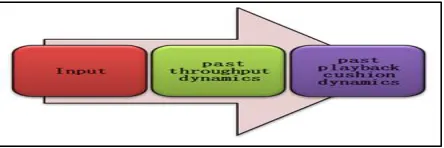
Figure 1: Input Base for Random Video Streaming
Our structure of an Enhanced algorithm for On Demand Video that operates as a standalone application, which implies that it doesn't require cross-layer information nor any coordination or backing from the network. The only information utilized as information is the past throughput elements, and the cushion level elements, which can both be monitored by the streaming customer itself [11-13]. There is a chance for uncertainty in the existing methods that influence cross-layer information that can significantly improve both the performance and effectiveness of video applications. In any case, the sending of such systems is regularly risky because of the necessary communication with the lower layers of the convention stack or the necessary help from the network foundation. All things considered, the exact modularization of the Open Systems Interconnection reference model and the start to finish plan standard were among the variables that made ready for the achievement of the Internet. A significant objective when creating ERRBWS was to get an adaptable methodology that can be parameterized to help a wide scope of performance prerequisites that correspond to various cooperative arrangements and plans of action, just as differing QoE necessities and expectations of the video streaming [7-8] clients Applications. For instance, ERRBWS can resolve the exchange offs between the measure of playback interruptions, the continuity of the video quality, and the maximization of the video quality in different manners, controlled by its configuration parameters. To wrap things up, ERRBWS was intended to help an assortment of network environments. It can be changed in accordance with proficiently operate over a steady and quick committed wired connection, or presented to an exceptionally fluctuating low throughput in a bustling wireless node. While offering a high level of adaptability, the parameterization of the displayed algorithm is straightforward and instinctive enough to improve the sending and to empower its integration into different streaming solutions. At last, ERRBWS has a low computational unpredictability which helps to decrease the vitality consumption and increment its common sense since some diversion gadgets supporting video don't have the computational intensity of PCs or advanced mobile [5-10] phones.
2. EXISTING VIDEO STREAMING ALGORITHMS
The following are few recently used algorithms in research. These algorithms have been taken as existing algorithms for comparison with our research.2.1 Additive Increase Multiplicative Decrease (AIMD) Algorithm
A video streaming system should adjust to those dynamic conditions and tailor the standard of the transmitted piece stream to possible data measure. Antiquated clog dismissing plans like TCP's additive-increase/multiplicative decrease (AIMD) cause mammoth motions in transmission rates that corrupt the tactile movement nature of the video stream [1]. AMID uses, that a network with two sources implementing the same binomial control algorithm.
2.2 Real Time Best Action Search (RTBAS) Algorithm To adjust the bit rate bolstered the band expansiveness state of the system for top quality with less buffering video streaming conveyance [11]. A timeframe algorithmic best-activity search algorithmic program is used to get a problematic goal for the more drawn out term steps thought to keep away from long calculation time. To fulfill the need of the timeframe search, an essential issue is to decrease the quest length for each state to an appropriate cost. Therefore, for this, we tend to utilize little search profundity D to conjure the pursuit algorithmic program [17]. The optimal video streaming process with multiple links is formulated as a Markov Decision Process (MDP). The reward function is designed to consider the quality of service (QoS) requirements for video traffic [4], such as the start-up latency, playback fluency, average playback quality, playback smoothness and wireless service cost. To solve the MDP in Real-time, Min Xing el al, [17] proposed an adaptive, best-action search algorithm to obtain a sub-optimal solution.
2.3 LDA Algorithm
LDAA is an unadulterated end-to-end system and doesn't require any alterations in the system foundation or the fundamental system protocol[16]. It depends on RTT estimation to quantify current system conditions and viably adjust to the elements of the system. The framework put forth in [14-15] is flexible. Using the frame-work, optimized packet schedules can be computed at the sender or receiver. The authors have also presented simplified methods to compute approximately optimized policies that require low computational complexity.
3. PROPOSED WORK
5085 3.1 MINIMUM DELAY ADAPTIVE WIRELESS STREAMING
ALGORITHM FOR LOW-DELAY LIVE STREAMING. Our design of MDAWS is a novel prediction-based adaptation algorithm for low-delay streaming. One of the main objectives of the adaptation logic is to maximize the QoE. In the following, we define QoE as the quadruplet. The four QOE enhances the live latency, number of skipped fragments, number of quality transitions, average video quality. We utilize the term video quality to allude to the video distortion, which is typically an inward function of the video bit rate. As expressed previously, it is important to consider these variables jointly since optimizing any one parameter individually prompts poor QoE. Our methodology is to heuristically maximize the average video quality as a function of the triplet: live latency, number of skipped portions and number of quality transitions, which we define as an operating point. Since the duration of the streaming session is not known ahead of time (the client might quit the session rashly), the quantity of skipped portions and the quantity of quality transitions are communicated in relative terms: the fraction of skipped sections and the fraction of fragments that outcome in a transition. The operating point might be defined by the client, the operating framework, the client programming, or the substance provider. It might rely upon various elements, for example, the nature of the video, the client setting, the provider's business model, and so on.
∆ Target live latency
Σ∗∈[0,1]
(MDAWS) MINIMUM DELAY ADAPTIVE WIRELESS STREAMING input parameter controlling the quantity of skipped sections Σ
Ω∗∈ [0, 1]
(MDAWS) MINIMUM DELAY ADAPTIVE WIRELESS STREAMING input parameter controlling the quantity of quality transitions Ω
Tmax Maximum prediction horizon in seconds
Table1: Notation for MINIMUM DELAY ADAPTIVE WIRELESS STREAMING
The objective of (MDAWS) MINIMUM DELAY ADAPTIVE WIRELESS STREAMING is to maximize the average video quality as a function of the operating point, defined by the triplet (∆, Σ, Ω). The input parameters controlling the arrived at operating point are: (i) the objective latency ∆, (ii) Σ∗∈ [0, 1], which controls the fraction of skipped sections, and (iii) Ω∗∈ [0, 1], which is an upper bound on the (relative) number of quality transitions. The yield of the algorithm is the representation for the following section to be downloaded. The methodology use throughput predictions and prediction error estimations to register the probability that the download of portion i in quality j will be finished before its playback deadline. Computation of is described in algorithm 1. For instance accept that is given.The chance for downloading the portion i. first, (MDAWS) MINIMUM DELAY ADAPTIVE WIRELESS STREAMING identifies the highest representation j ′ with the end goal that the probability for missing the playback deadline is limited by Σ∗, i.e. is ≤ Σ ∗. If no representation satisfies this condition or the download achievement probabilities can't be processed (e.g., on the grounds that the streaming session has recently begun or after a period of zero throughputs), j′ is set to 0.In the subsequent advance, (MDAWS) MINIMUM DELAY
ADAPTIVE WIRELESS STREAMING figures Ω(t), the fraction of sections that were played in a different quality than their ancestor. If Ω (t) > Ω∗,and j′ > j←, where j← is the representation of the last effectively downloaded portion i←<i, representation j← is chosen in request to anticipate Ω(t) from further exceeding the upper bound Ω∗. The pseudo code for the described algorithm is exhibited in Algorithm 1.
Algorithm 1: (MDAWS) MINIMUM DELAY ADAPTIVE WIRELESS STREAMING
MDAWS Input:
MDAWSInput: ∑∗ ∗
MDAWSInput: ∈ * | | +
MDAWSInput: ∈ * | | +
Output:∗
Require: ( ) if ∈ * | | +then
∗
( ) else
(* + * ∈ * | | +| ∑∗|+) if ( ) ∗then
∗
else
∗ ( )
The intuition for letting MDAWS switch to a lower representation, regardless of whether the upper bound on the quality transitions is surpassed, is that preventing quality abatement can significantly increase the quantity of skipped sections. According to a huge scale investigation of client commitment (time before the client quits a streaming session), it is in every case preferable to drop video quality will lead to poor streaming. Starting another streaming session at time t0, the client decides which fragment i0 to download first and in which representation. After the download, the clients delay the playback until the playback deadline in request to completely benefit from the configured objective latency ∆. Starting with the most up to date available section maximizes the download achievement probability (there is additional time until the playback deadline), yet increases the initial delay (the client needs to wait longer after the download). Conversely, taking a more established fragment whose playback deadline minimizes the initial delay given that the download can be finished in time.
3.2 ENHANCED RANDOM RANGE BASED WIRELESS STREAMING ALGORITHM
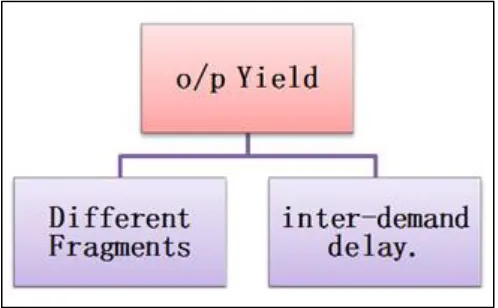
5086 Figure 2: Yield base for random video streaming
We accept that the algorithm is invoked at time i immediately after the download of portion i − 1 has been finished. In request to efficiently adjust the video quality to the throughput dynamics the algorithm takes two kinds of input: (i) past throughput dynamics, and (ii) past playback cushion dynamics.
0 < α1, . . . , α5 ≤ 1
Safety margins for throughput estimation
0 ≤ Bmin Minimum level thresholds 0 < Blow Low buffer level thresholds 0 < Bhigh and high buffer level thresholds Btar = [Blow, Bhigh] Target buffer interval
Bopt = 0.25 (Blow +
Bhigh) Optimum buffer level
>0 Duration of the time interval for computing βmin
>0 Duration of the time interval for throughput. averaging
Table 2: Basic Notations for ERRBWS
Yet, considerably, more importantly, they are required to stabilize the support level in the middle of the objective interval when they chose existing algorithms doesn’t actually coordinate the network throughput, which is the typical scenario since the set of the available representations is finite. The operation of ERRBWS will be clearly stated in algorithm 2 .The last is communicated as the maximum cradle level Bdelay, above which the download of the following fragment will not be started. The reason for the inter-demand delays is twofold. On the one hand, they are required to bind the support level from above if we previously arrived at the highest representation. ERRBWS can be configured using the following set of parameters: 0 ≤ Bmin<Blow<Bhigh, ∆β>0, ∆t>0, 0 <α1, . . . , α5 ≤ 1. They will be described in more details in the following. Toward the start of a streaming session, the algorithm consistently chooses the least representation for the first section to be downloaded. The benefit of this methodology is that it minimizes the pre-buffering delay . The disadvantage is, that the first seconds of the video might be downloaded at a lower quality than what can be sustained by the network. In request to mitigate this impact, we introduce a Quick start stage toward the beginning of the streaming
session, with the objective to increase the video quality in an increasingly aggressive way. In the following, we first describe the operation of the algorithm during the stage which pursues the Quick start stage, which we call the Enhanced stage.
Algorithm 2: ERRBWS ERRBWS Input: ( )
ERRBWS Input: ( )
ERRBWS Input:( ( ( ) ) ⌊ ⌋)
ERRBWS Output:
1. staticfast_start := true 2.
3. 4. iffast_start 5.
6 ( ( ) ) ( ( ) )
⌊ ⌋
7. ( )then
8. if ( ) then
9. if ( )then 10.
11.elseif ( ) then 12.if ( )then 13.
14.else
15.if ( )then 16.
17.if ( ) then 18.
19.else
20. fast_start :=false 21. if ( ) then 22.
23.else if ( ) then 24.if then 25.
26.else if ( ) then 27.if
28. ( )then 29. ( ( ) ) 30.else
31.if
32. ( )then 33. ( ( ) )
34.else 35.
4. EXPERIMENTAL RESULTS
5087 Figure 3: Comparison Chart of Buffer Level.
The Figure 3 comparison chart of Buffer Level demonstrates the different values of LDAA and the Enhanced Random Range Based Wireless Streaming Algorithm MDAWS. This chart shows the Time (Sec) in X axis and Buffer Ratio in Y axis. The LDAA value starts from 0.09 to 0.3 and the Enhanced Random Range Based Wireless Streaming Algorithm MDAWS values starts from 0.04 to 0.22. The Enhanced Random Range Based Wireless Streaming Algorithm MDAWS values provide the better results than the LDAA because their buffer level process is filtered in proposed algorithm (MDAWS) but LDAA algorithm is not controlled into buffer level ratio. So the LDAA processed high level of buffer level values compare with Proposed MDAWS.
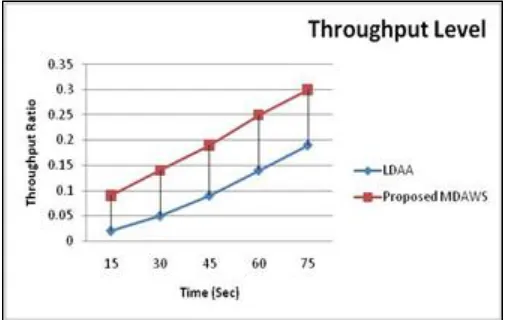
Figure 4: Comparison Chart of Throughput Level
The Figure 4 comparison chart of Throughput Level demonstrates the different values of LDAA and the Enhanced Random Range Based Wireless Streaming Algorithm MDAWS. This chart shows the Time (Sec) in X axis and Throughput Ratio in Y axis. The LDAA value starts from 0.02 to 0.19 and the Enhanced Random Range Based Wireless Streaming Algorithm MDAWS values starts from 0.09 to 0.3. The Enhanced Random Range Based Wireless Streaming Algorithm MDAWS values provide the great results than the LDAA because their throughput level is better in proposed algorithm (MDAWS) but LDAA is not satisfied into a
throughput level ratio. So the LDAA processed low level of throughput values compare with Proposed MDAWS.
Figure 5: Comparison Chart of Mean Representation
The Figure 5 comparison chart of Mean Representation demonstrates the different values of LDAA and the Enhanced Random Range Based Wireless Streaming Algorithm MDAWS. This chart shows Summarization(∑) the in X axis and Mean Representation in Y axis. There is no change in each level value of LDAA is 0.01 and the Enhanced Random Range Based Wireless Streaming Algorithm MDAWS values start from 0.022 to 0.029. The Enhanced Random Range Based Wireless Streaming Algorithm MDAWS values provide the great results than the LDAA. Because their existing values are represented in low level of value (0.01) in mean value representation process.
Figure 6: Comparison Chart of Mean Representation
5088 Figure 7: Comparison Chart of Mean Representation
The Figure 7 comparison chart of Mean Representation demonstrates the different values of LDAA and the Enhanced Random Range Based Wireless Streaming Algorithm MDAWS. This chart shows Summarization(∑) the in X axis and Mean Representation in Y axis. The LDAA value starts from 0.027 to 0.04 and the Enhanced Random Range Based Wireless Streaming Algorithm MDAWS values starts from 0.035 to 0.05. The Enhanced Random Range Based Wireless Streaming Algorithm MDAWS values provide the great results than the LDAA. Their results are exposed into proposed algorithm is reached into highest mean representation value process but their existing values are not related into the mean value representation process.
Figure 8: Comparison Chart of Mean Representation
The Figure 8 comparison chart of Mean Representation demonstrates the different values of LDAA and the Enhanced Random Range Based Wireless Streaming Algorithm MDAWS. This chart shows Summarization(∑) the in X axis and Mean Representation in Y axis. The LDAA value starts from 0.043 to 0.08 and the Enhanced Random Range Based Wireless Streaming Algorithm MDAWS values starts from 0.05 to 0.1. The Enhanced Random Range Based Wireless Streaming Algorithm MDAWS values provide the great results than the LDAA. Their results are exposed into two variations of process. First one, the proposed algorithm values are separately increased into mean representation
process but their Existing LDAA values are not continued into mean representation process.
4.2 ENHANCED ALGORITHM FOR VIDEO ON DEMAND ALGORITHM DESCRIPTION
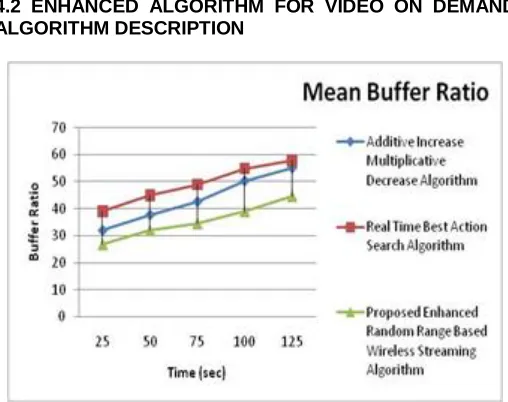
Figure 9: Comparison chart of Mean Buffer Ratio
The Figure 9Comparison chart of mean buffer ratio shows the values of existing and Enhanced Random Range Based Wireless Streaming Algorithm method. Additive Increase Multiplicative Decrease Algorithm, Real Time Best Action Search Algorithm and Enhanced Random Range Based Wireless Streaming Algorithm method shows different values while comparing. Time (sec) is represented in X axis and mean buffer ratio in Y axis. The Enhanced Random Range Based Wireless Streaming Algorithm method gives the good results than the existing method. Additive Increase Multiplicative Decrease Algorithm values are starts from 31.9 to 55.23, Real Time Best Action Search Algorithm values starts from 39 to 58 and Enhanced Random Range Based Wireless Streaming Algorithm method values are starts from 26.77 to 44.56. Because their Mean Buffer Ratio level process is filtered in proposed algorithm (Enhanced Random Range Based Wireless Streaming Algorithm) but their existing algorithms (Additive Increase Multiplicative Decrease Algorithm, Real Time Best Action Search Algorithm) are not controlled into Mean Buffer Level ratio. So the Existing algorithms are processed high level of Mean Buffer Level values compare with proposed algorithm (ERRBWS).
5089 The Figure 10 Comparison chart of re-buffering time shows
the values of existing and Enhanced Random Range Based Wireless Streaming Algorithm method. Additive Increase Multiplicative Decrease Algorithm, Real Time Best Action Search Algorithm and Enhanced Random Range Based Wireless Streaming Algorithm method shows different values while comparing. Time (sec) is represented in X axis and buffering ratio in Y axis. The Enhanced Random Range Based Wireless Streaming Algorithm method gives the good results than the existing method. Additive Increase Multiplicative Decrease Algorithm values are starts from 0.682 to 0.75, Real Time Best Action Search Algorithm values starts from 0.8 to 0.91 and Enhanced Random Range Based Wireless Streaming Algorithm method values are starts from 0.41 to 0.57. Because their Re-Buffer Time Ratio level process is filtered in proposed algorithm (Enhanced Random Range Based Wireless Streaming Algorithm) but their existing algorithms (Additive Increase Multiplicative Decrease Algorithm, Real Time Best Action Search Algorithm) are not controlled into Re-Buffer Time Level ratio. So the Existing algorithms are processed high level of Mean Buffer Level values compare with proposed algorithm (ERRBWS).
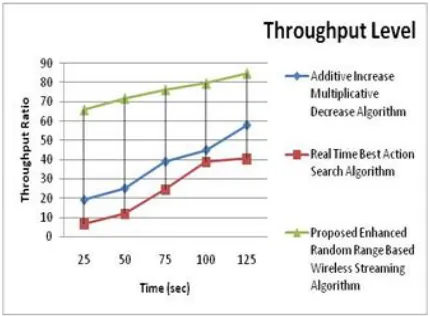
Figure 11: Comparison chart of Throughput Level
The Figure 11 Comparison chart of throughput level shows the values of existing and Enhanced Random Range Based Wireless Streaming Algorithm method. Additive Increase Multiplicative Decrease Algorithm, Real Time Best Action Search Algorithm and Enhanced Random Range Based Wireless Streaming Algorithm method shows different values while comparing. No of segment is represented in X axis and throughput ratio in Y axis. The Enhanced Random Range Based Wireless Streaming Algorithm method gives the good results than the existing method. Additive Increase Multiplicative Decrease Algorithm values are starts from 19 to 58, Real Time Best Action Search Algorithm values starts from 6.77 to 40.56 and Enhanced Random Range Based Wireless Streaming Algorithm method values are starts from 66 to 85. The proposed algorithm (ERRBWS) values provide the great results than the existing algorithms because their Throughput level process is better in proposed algorithm (Enhanced Random Range Based Wireless Streaming Algorithm) but their existing algorithms (Additive Increase Multiplicative Decrease Algorithm, Real Time Best Action Search Algorithm) are not satisfied into Throughput Level ratio. So the Existing algorithms are processed low level of
Throughput Level values compare with proposed algorithm ERRBWS.
Figure 12: Comparison chart of Quality Ratio
The Figure 12 Comparison chart of quality ratio shows the values of existing and Enhanced Random Range Based Wireless Streaming Algorithm method. Additive Increase Multiplicative Decrease Algorithm, Real Time Best Action Search Algorithm and Enhanced Random Range Based Wireless Streaming Algorithm method shows different values while comparing. Time(sec) is represented in X axis and quality ratio in Y axis. The Enhanced Random Range Based Wireless Streaming Algorithm method gives the good results than the existing method. Additive Increase Multiplicative Decrease Algorithm values are starts from 55 to 72, Real Time Best Action Search Algorithm values starts from 33 to 50.76 and Enhanced Random Range Based Wireless Streaming Algorithm method values are starts from 75 to 92.06.
5. CONCLUSION
5090 platform. We present the setting and the outcomes for the
performance evaluation of ERRBWS, performed using an imitated IEEE 802.11a WLAN cell.
6 REFERENCES
[1] Kumar, S.; Sarkar, A.; Sur, A. A Resource Allocation Framework for Adaptive Video Streaming over LTE. J. Netw. Comput. Appl.
2017, 97, 126–139,
doi:10.1016/j.jnca.2017.08.015.
[2] Wu, J.; Yuen, C.; Cheng, B.; Wang, M.; Chen, J. Energy-Minimized Multipath Video Transport to Mobile Devices in Heterogeneous Wireless Networks. IEEE J. Sel. Areas Commun. 2016,
34, 1160–1178,
doi:10.1109/JSAC.2016.2551483.
[3] Abbas, N.; Hajj, H.; Dawy, Z.; Jahed, K.; Sharafeddine, S. An optimized approach to video traffic splitting in heterogeneous wireless networks with energy and QoE considerations. J. Netw. Comput. Appl. 2017, 83, 30–49, doi:10.1016/j.jnca.2017.01.008.
[4] Wu, J.; Cheng, B.; Wang, M.; Chen, J. Energy-Efficient Bandwidth Aggregation for Delay-Constrained Video over Heterogeneous Wireless Networks. IEEE J. Sel. Areas Commun. 2017, 35, 30–49, doi:10.1109/JSAC.2016.2632599. [5] Wu, J.; Cheng, B.; Yuen, C.; Shang, Y.; Chen, J.
Distortion-Aware Concurrent Multipath Transfer for Mobile Video Streaming in Heterogeneous Wireless Networks. IEEE Trans. Mob. Comput.
2015, 14, 688–701,
doi:10.1109/TMC.2014.2334592.
[6] Petrangeli, S.; Wu, T.; Wauters, T.; Huysegems, R.; Bostoen, T.; Turck, F.D. A Machine Learning-Based Framework for Preventing Video Freezes in HTTP Adaptive Streaming. J. Netw. Comput. Appl. 2017, 94, 78–92, doi:10.1016/j.jnca.2017.07.009.
[7] Hwang, J.; Lee, J.; Yoo, C. Eliminating Bandwidth Estimation from Adaptive Video Streaming in Wireless Networks. Signal Process. Image Commun. 2016, 47, 242–251, doi:10.1016/j.image.2016.06.013.
[8] Zhao, M.; Gong, X.; Liang, J.; Wang, W.; Que, X.; Cheng, S. Qoe-Driven Cross-Layer Optimization for Wireless Dynamic Adaptive Streaming of Scalable Videos over Http. IEEE Trans. Circuits Syst. Video Technol. 2015, 25, 451–465, doi:10.1109/TCSVT.2014.2357094. [9] Taha, M.; Lloret, J.; Canovas, A.; Garcia, L.
Survey of Transportation of Adaptive Multimedia Streaming service in Internet. Netw. Protoc. Algorithms 2017, 9, 85–125, do:10.5296/npa.v9i1-2.12412
[10] Taha, M.; Garcia, L.; Jimenez, J.M.; Lloret, J. SDN-based throughput allocation in wireless networks for heterogeneous adaptive video streaming applications. In Proceedings of the 13th International Wireless Communications and Mobile Computing Conference (IWCMC 2017), Valencia, Spain, 26–30 June 2017.
[11] Liu, Y.; Liu, J.; Song, J.; Argyriou, A. Scalable 3D Video Streaming over P2P Networks with Playback Length Changeable Chunk Segmentation. J. Vis. Commun. Image Represent. 2015, 31, 41–53, doi:10.1016/j.jvcir.2015.05.012.
[12] S. Chikkerur, V. Sundaram, M. Reisslein, and L. J. Karam, ―Objective video quality assessment methods: a classification, review, and performance comparison,‖ IEEE Transactions on Broadcasting, vol. 57, no. 2, pp. 165–182, 2011. [13] L. De Cicco, S. Mascolo, and V. Palmisano,
―Feedback control for adaptive live video streaming,‖ in Proceedings of the 2nd Annual ACM Multimedia Systems Conference, MMSys'11, pp. 145–156, USA, February 2011. [14] S. R. Gulliver and G. Ghinea, ―The perceptual
and attentive impact of delay and jitter in multimedia delivery,‖ IEEE Transactions on Broadcasting, vol. 53, no. 2, pp. 449–458, 2007. [15] H. Chaari, K. Mnif, and L. Kamoun, ―An overview
of quality assessment methods of video transmission over wireless networks,‖ in Proceedings of the 2012 16th IEEE Mediterranean Electrotechnical Conference, MELECON 2012, pp. 741–744, Tunisia, March 2012.
[16] Bernd Girod, Mark Kalman, Yi J. Liang, Rui Zhang ―Advances In Channel-Adaptive Video Streaming‖ ICIP,c 2002 IEEE.