O R I G I N A L R E S E A R C H
Developing a Preliminary Conceptual Framework
for Guidelines on Inclusion of Patient
Reported-Outcome Measures (PROMs) in Clinical
Quality Registries
This article was published in the following Dove Press journal: Patient Related Outcome Measures
Rasa Ruseckaite Ashika D Maharaj Karolina Krysinska Joanne Dean Susannah Ahern
Department of Epidemiology and Preventive Medicine, Monash University, Melbourne, Victoria, Australia
Purpose: Patient-centred and value-based health-care organisations are increasingly
recog-nising the importance of the patient perspective in the measurement and evaluation of health outcomes. This has been primarily implemented using patient-reported outcome measures (PROMs). Clinical quality registries (CQRs) are specifically designed to improve direct clinical care, benchmark health-care provision and inform health service planning and policy. Despite CQRs having incorporated the patient perspective to support the evaluation of health-care provision, no evidence-based guidelines for inclusion of PROMs in CQRs exist. This has led to substantial heterogeneity in capturing and reporting PROMs within this setting. This publication is thefirst in a series describing the development of evidence-informed guidelines for PROMs inclusion within CQRs in Australia.
Methods: This study consisted of three components: 1) a literature review of existing
evidence of guidelines, enablers, barriers, and lessons learnt of PROMs use within the CQRs setting; 2) a survey of Australian CQRs to determine current practices for PROMs use and reporting; and 3) development of a preliminary conceptual framework for PROMs inclusion in CQRs.
Results: Content analysis of the literature review and survey of 66 Australian registries
elicited eight categories for the conceptual framework. The framework covers eight compo-nents: rationale, setting, ethics, selection of PROMs, administration, data management, statistical methods, feedback, and reporting.
Conclusion:We developed a preliminary conceptual framework, which classifiedfindings,
from both the literature and the survey, into broad categories ranging from initial develop-ment to outcome dissemination providing the structure for developdevelop-ment of guidelines in the next phase of this project, engaging national and international leaders in health-related quality of life research, clinicians, researchers, patient advocates and consumers.
Keywords:quality of life, registry, outcomes, patient voice
Introduction
Patient-reported outcome measures (PROMs) are standardized, validated question-naires designed to assess patients’ perceptions of their own physical and mental status and well-being.1There are numerous PROMs, differing in the constructs they assess, the wording and nature of the questions asked, the number of questions asked, and how the answers are scored.2,3 Many such measures were originally Correspondence: Rasa Ruseckaite
Department of Epidemiology and Preventive Medicine, Monash University, Melbourne, Victoria 3004, Australia Tel +61 3 9903 0437
Email [email protected]
Patient Related Outcome Measures
Dove
press
open access to scientific and medical research
Open Access Full Text Article
Patient Related Outcome Measures downloaded from https://www.dovepress.com/ by 118.70.13.36 on 26-Aug-2020
designed for assessing treatment effectiveness in the con-text of clinical trials, but are now being used more widely to assess patient-reported outcomes (PROs) in clinical practice.
Clinical quality registries (CQRs) are organizations, which systematically monitor the quality of health care within specific clinical domains by routinely collecting, analyzing and reporting health-related information.4,5 They use predefined indicators designed to assess variation across structural, process and outcome measures to bench-mark quality of care. CQRs have received increasing attention as a means of improving quality and reducing the cost of health and medical care, through identifying variations in clinical practice and care, and assessing the uptake of effective treatment.6
CQRs have existed for many years, but have expanded significantly in the last decade to monitor clinical out-comes and facilitate evidence-based clinical practice. Emilsson et al4 recently reviewed 103 CQRs and con-cluded that Swedish quality registries contain comprehen-sive clinical data that provide an important source for assessment and development of quality of care and research. The Dutch Institute for Clinical Auditing in the Netherlands, established in 2011, facilitates the develop-ment and maintenance of national outcomes registries around various medical conditions.7Acute stroke registries have been established in Sweden, Germany, Canada, Australia, and many other countries.8–11
In Australia, the number of known CQRs collecting clinical data has been growing and the scope of coverage has increased.12
PROMs are increasingly being introduced into CQRs in Australia, providing a personal perspective on the expectations and impact of treatment.5 For example, the Victorian Orthopaedic Trauma Outcomes Registry13 and the Prostate Cancer Outcomes Registry –Victoria14 both collect and report PROs at a time of clinical stability. The Australian Arthroplasty Clinical Outcomes Registry reports pre- and post-operative PROs for primary and revision procedures15 and the Australian Breast Device Registry16captures PROs to monitor the long-term perfor-mance of breast devices, collects PROs at 1, 2, 5 and 10 years after procedure.
Including PROMs in CQRs offers numerous advantages.17 First, incorporation of the patient voice helps keep outcome measurements of care patient-centered. Further, symptom bur-den, quality of life (QoL), and satisfaction with care are dynamic variables that cannot be recreated accurately through
retrospection; they are essentially lost if not captured“in the moment.”For this reason, routine, systematic, and longitudi-nal collection of PROs is recommended and should be a standard of clinical practice.18,19Serial collection of PROs in CQRs can improve understanding of the trajectory of an individual patient’s symptom burden and QoL over the course of disease or treatment, to inform clinicians of the variability between patients and to provide information on the value that the individual patient places on their health status.17
Although some registries have included the collection of PROs as part of their current practice, widespread adoption of PROs as a key component in CQRs is yet to occur. Successful PROM implementation in CQRs includes many challenges and, therefore, requires clinical, operational, and analytic resources and expertise.20Thus, evidence-based guidelines to guide successful PROM implementation are critically important to assure mean-ingful PROs data collection, use, interpretation, and reporting. Presently, evidence-based guidelines for the inclusion of PROs do not exist and anecdotal evidence suggests substantial heterogeneity in the capture and reporting of PROMs in this setting. Clear guidelines are needed to support ethical, effective, and transparent use of PRO data collected across all CQRs.21In particular, guide-lines should address when PRO data must be shared promptly with the treating clinician, as in the case of a safety signal, and ensure that adequate training is pro-vided to physicians who are reviewing the PRO data.
This publication is the first in a series describing the development of evidence-informed guidelines for PROs inclusion within CQRs in Australia. The aims of this study were to 1) conduct a literature review of publications on existing guidelines, enablers, barriers and lessons learnt for PROMs inclusion in CQRs; 2) conduct a survey of Australian CQRs to understand current practices for PROMs inclusion and reporting; and 3) summarize the results as a preliminary framework which will ultimately inform the development of the guidelines.
Materials and Methods
Literature Review
An extensive literature review was conducted in MEDLINE and Embase databases as they are the most widely searched databases for health-related topics, and have comprehensive coverage and capture of the content of health services research. Further documents were iden-tified via Google and Google Scholar. The search was
Patient Related Outcome Measures downloaded from https://www.dovepress.com/ by 118.70.13.36 on 26-Aug-2020
limited to the English language, and included full peer-reviewed abstracts from 2000 to 2018. Studies were included if they met at least one of the following criteria: 1) they clearly described guidelines or recommendations for PROMs inclusion and reporting in the registry setting; 2) they presented challenges and lessons regarding PROMs collection in the registry setting; 3) they demonstrated the impact of PROMs collection on patient outcomes in the registry setting. Research publications arising from regis-try and/or PROMs data analyses were excluded from this review. The returned search results were screened for duplicates, irrelevant articles, conference abstracts, and commentaries.
Survey of Australian Registries
A cross-sectional 32-question online survey was distribu-ted to registry managers, coordinators and data custodians of identified CQRs in Australia. Survey questions were based on the results of the literature review and discus-sions with registry managers at Monash University. The survey consisted of the following three areas: 1) tion on type, coverage and size of the registry; 2) informa-tion on collecinforma-tion of PROs, rainforma-tionale, instrument type, mode and frequency of administration, rate of complete-ness and storage of the PRO data; and 3) analysis, report-ing and impact of PROs. A copy of the survey was delivered to each registry via Qualtrics Survey Software between July 2018 and September 2018.
A list of registries and contact details of their man-agers, coordinators and data custodians was generated through a web-based search of the grey literature using the following key words: registries, clinical, Australia, Victoria, Queensland, Western Australia, South Australia, New South Wales, Tasmania and Northern Territory. All clinical quality, device, procedure and drug registries were eligible for inclusion in the study.
An implied consent process was utilized to recruit potential survey participants. Each potential participant was provided an invitation letter with an explanation of the study, instructions on how to complete the survey and a unique hyperlink of the survey. Follow-up e-mails and telephone calls were made to respondents to clarify responses where necessary.
Conceptual Framework
According to Miles and Huberman,22a conceptual frame-work is a visual or written product that “explains, either graphically or in narrative form, the main things to be
studied-the key factors, concepts, or variables and the pre-sumed relationships among them”. Although there is no standard methodology for constructing a conceptual frame-work, most researchers rely on an approach that combines multiple sources of data.23Content analysis of the literature review and survey has been used to elicit the categories for our conceptual framework. The framework will be used as the supporting structure to facilitate both the grouping of attributes to be considered when developing guidelines for PROM use as well as ensure all aspects of PROM imple-mentation in the registry setting are covered.
Data Analysis
Findings from the Literature
A data extraction form was developed to extract informa-tion from the identified articles relevant to the PROMs (study detail, rationale, setting, ethics, instruments, admin-istration, data management, statistical methods, feedback, and reporting). Search results were summarized by themes to fulfil the aims of the review.
Survey
All clinical registries in Australia identified through the grey literature were invited to participate. A sample size calculation was deemed unnecessary given the study was primarily descriptive. Data were analyzed and reported using frequencies, means/medians and standard deviations (SD)/interquartile ranges (IQR) as appropriate. Data ana-lysis was undertaken using the STATA 14 package. Where open-ended questions were used, response data were clas-sified into key themes and subthemes for descriptive ana-lysis and reporting.
Results
Review of the Literature
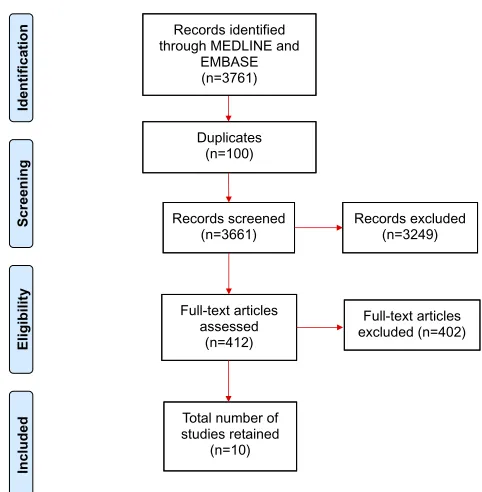
The search strategy yielded 3761 publications (Figure 1). Their titles and abstracts were screened according to the inclusion criteria, specifically focusing on lessons learnt, advantages and disadvantages, guidelines and recommen-dations for PROMs inclusion in CQRs. Of these, 3661 references were reviewed and full copies of 412 articles were retrieved. The screening of full texts resulted in retaining 10 papers.
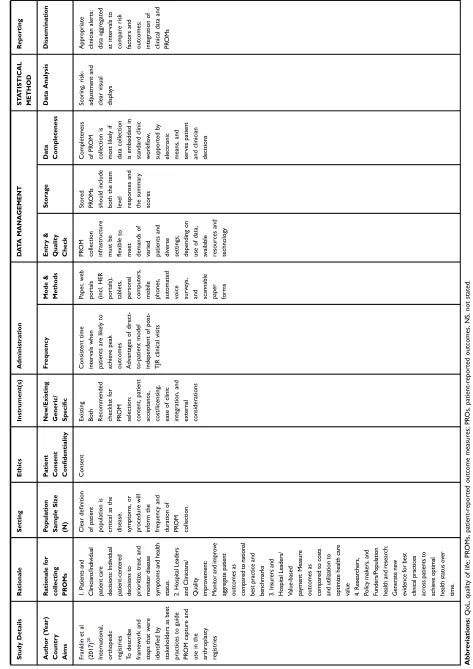
The review found four papers on guidelines and recom-mendations for the collection and use of PROMs in regis-tries. Breckenridge et al24 presented a summary of expert recommendations for PROs collection within renal regis-tries in Europe. Rolfson et al,25 Franklin et al26, and
Patient Related Outcome Measures downloaded from https://www.dovepress.com/ by 118.70.13.36 on 26-Aug-2020
Franklin et al20presented a series of recommendations and developed a framework for selection, administration, and analysis of PROs by arthroplasty registries internationally. There were six individual registry studies on PROs col-lection: three from the US,27–29two from the UK,30,31and one from Australia.32 There were two studies on cancer registries,30,32 a study on PROs in the management of chronic spinal pain,31 three studies on surgery registries: spine surgery,27joint arthroplasty,29and an unselected surgi-cal patients registry.28
Rationale for Collecting PROs Data
In general, the rationale for PROs data collection reported in all individual registry studies and review/guidelines and recommendations reflects the definition of PROMs as tools to measure the patient’s perception of their own physical and mental status and well-being. Franklin et al20 in their framework to guide collection and use of PROMs in learning health-care systems, based on orthopedic regis-tries, identified key stakeholders to whom PROMs pro-vided valuable information; patients and clinicians, hospital leaders and clinicians, insurers and hospital lea-ders, as well as researchers, policy makers and funders
(Table 1). The purposes of PROs collection focused on
their value in tracking the patient recovery process to improve services and to develop interventions in particular
clinical domains, such as surgery,27,28 spinal osteopathy services,31cancer,30,32and total joint arthroplasty.29
Settings for PROs Data Collection
In general, studies included in the review either provided inclusion and exclusion criteria to identify suitable sub-groups of participating patients, or alternatively, PROs were collected or planned to be collected from all patients in the registry. Numbers of included patients ranged from 30 to 60 in a lung cancer registry32 to over 44,000 unse-lected surgical patients.28 Guidelines for PROs data col-lection in arthroplasty registries indicated that in some situations representative data may be obtained from using only a subsample of patients. When PROMs are used for quality improvement, all patients should be assessed. In contrast, a sample of patients may be adequate for research purposes when it is a random, unbiased sample that has a sufficient number of patients for analysis and drawing of conclusions.25This is supported by other literature stating that PROs data may be collected from a representative sample of patients if a registry has 100% patient coverage33 and a random and unbiased sample could be selected for research purposes based on power-based sam-ple size calculations.25 However, when assessing all patients in the registry, considerations need to be given to patient characteristics, such as their age, gender, socio-economic and mental health status, language, cultural bar-riers, health literacy, and other patient factors.34
Ethics and Confidentiality
All individual registry studies, except for one,27 reported using a written consent or opt-in procedure. This approach was also recommended by the guidelines for PROs data collection,20,25,33 while Breckenridge et al24indicated the general “need to consider the legal, data protection and consent constraints of participating [in registry] countries” (p. 1612). An advantage of the written consent procedure is an increase in patient involvement and a better under-standing of the advantages of PROs data collection.20
Instruments
All studies and guidelines indicated the use of existing PROMs, both generic and disease-specific tools. In some cases, e.g., total joint arthroplasty registries, use of several disease-specific PROMs measuring discrete outcomes, such as positive (e.g., pain relief, improved function) and negative outcomes (e.g., implant failure, persistent pain) was recommended.33Franklin et al20proposed a checklist for PROMs selection based on five criteria: 1) PROM
Screening
Include
d
Eligibility
Identi
fi
cation
Records identified through MEDLINE and
EMBASE (n=3761)
Duplicates (n=100)
Records screened (n=3661)
Records excluded (n=3249)
Full-text articles assessed
(n=412)
Full-text articles excluded (n=402)
Total number of studies retained
(n=10)
Figure 1Flow chart in PRISMA consort diagram of the screening and selection of studies.
Patient Related Outcome Measures downloaded from https://www.dovepress.com/ by 118.70.13.36 on 26-Aug-2020
T able 1 Characteristics of Included Studies (N=10) on Capturing Patient-Repor ted Outcomes Measur es in Clinical Registries Study Details Rationale Setting Ethics Instrument(s) Administration D A T A MANA GEMENT ST A TISTICAL METHOD Reporting Author (Y ear) Countr y Aims Rationale for collecting PR OMs P opulation Sample Siz e (N) P atient Consent Con fi dentiality Ne w/Existing Generic/ Speci fi c F requency Mode & Methods Entr y & Quality Check Stora g e Data Completeness Data Analysis Dissemination Individual registr y studies Ashle y et al (2011) 30 UK, ca n cer reg istr y To d escribe te chnical de ve lopment o f the ele ctr onic PR OMs fr om can cer sur vi vors syst em, for linki ng PR OM s w ith clinica l data in ca ncer re gi st ri e s To im pr o ve u n d er st an di n g o f ca nc er su rviv or s ’ e xp er ien ces and outcome s to inf o rm dev e lo pm e n t an d ta rg et ed pr o vi si o n o f suppor t servi ces an d in terv en ti o n s. Non-metastatic bre ast, color ectal and pr ostate cancer patients NS Written informed consent Existing Both ≤ 6, 9, and 15 months post-diagnosis Online Via unique ID and passwo rd to log in and complete PR OMs Within the registr y Extent of
missing responses record
ed in the electr onic system Summar y statistics NS Azad et al (2016) 27 USA, spine surger y registr y T o detail the methodology of constructing an integrated electr onic health record system to collect QoL metrics and demonstrate the effect of data collection on routine clinical wor k fl ow . To determine value of surgical care All ne w patients after spine surger y 791 NS Existing Both 3, 6, and 12 months post-operativ e
Online, integrated electr
onic
health record (EHR) system
Electr onic entr y Within the registr y 98% NS Via clinician-facing dashboar d ( Continued )
Patient Related Outcome Measures downloaded from https://www.dovepress.com/ by 118.70.13.36 on 26-Aug-2020
T able 1 (Continued). Study Details Rationale Setting Ethics Instrument(s) Administration D A T A MANA GEMENT ST A TISTICAL METHOD Reporting Author (Y ear) Countr y Aims Rationale for collecting PR OMs P opulation Sample Siz e (N) P atient Consent Con fi dentiality Ne w/Existing Generic/ Speci fi c F requency Mode & Methods Entr y & Quality Check Stora g e Data Completeness Data Analysis Dissemination Helsten et al (2016) 28 USA, unselected surgical patient registr y T o describe methods of Ser vices Fo llowing Y earlong Surgical Outcomes Sur ve ys (SA TISFY -SOS) registr y, which combines perioperativ e PR OMs with granular electr onic data to track patients ’ postoperativ e trajectories. To track patient recov er y after surgery and to answ er how the pr esence or absence of reported postoperativ e complications might impact QoL and functional recovery after surgery All patients
attending assessment center 44,081
Consent Existing Both Baseline (enr olment), 30 da ys, and 1-y ear postoperative ly Online, mail, or
telephone. Ifa
patient
did
not
respond
to
initial e-mail, reminders sent
on da y 2 and 4 after the fi rst contact Via unique ID Aggr egate data stored
on adedicated resear
ch database ser ver 30-da y sur vey (62% response rate), 1-y ear sur vey (71%) NS NS Moloczij et al (2018) 32 Australia ,lung ca ncer re gi st ry To d es cr ib e th e desig n and structur e of a study to de ve lop an dp ilo tt e sta P R O fr am ew or k to syste m atica lly and longit u d ina lly coll ect PR O d ata fr o m a cohor t o f lung cance r p atient s at ac o m p re h e n si ve cance r centr e . To pr ovide important information that ha ve potential to translate to meaningful serv ice impr ov ement Patients with lung cancer selected for the
pilot 30–
60 Opt-in Existing Disease-speci fi c Baseline, 2, 6, and 12 months Paper , online Manually entered and check ed REDCap/ Micr osoft Access database T o be analyzed Summar y statistics NS
Patient Related Outcome Measures downloaded from https://www.dovepress.com/ by 118.70.13.36 on 26-Aug-2020
Morris et al (2016) 31 UK, spinal osteopath y ser vice registr y T o report the feasibility of implementing routine registr y data collection and sustaining a high rate of data captur e within a secondar y care spinal osteopath y ser vice, using the Spine T ango Conser vative registr y data collection tool with multiple PR OMs. To pr ovide important indicators of tr eatment effect All patients 349 Consent Existing Both Baseline, end of 1st tr eatment cycle, beginning of 2nd tr eatment cycle, discharge Clinic. Paper By data entr y/ analysis staff K ept in spr eadsheets and patients notes 55 − 90% Summar y statistics NS Ra n a (201 6) 29 US A , joint ar th ro p las ty reg is try To d e sc ri b e o n e ho spita l ’ s e xp e ri e nc e in b u ilding an d m ainta in in g an el ec tr o n ic P R O M da tab as e fo r ap ra ct ic eo f6 b oa rd-ce rti fi ed o rth o p ed ic su rg eo ns . To impr ov e delivery of health car e , including quality of car e. Primar y and rev ision hip , knee, and shoulder arthr oplasties >4500 Informed consent to allow use of data in future resear ch Existing Both Preo perativ e (baseline), postoperativ e 6 w eeks, 3 months, 1, 2 and 5 years Electr onic tablet + email Database Electr onic PR OM database Baseline (91% response rate), post 6 w eeks (60%), 12 months (70%) Summar y statistics Patients; and
surgeons: graphically present patients
’ PR OM data at their follow-up of fi ce
visit. (Continued
)
Patient Related Outcome Measures downloaded from https://www.dovepress.com/ by 118.70.13.36 on 26-Aug-2020
T able 1 (Continued). Study Details Rationale Setting Ethics Instrument(s) Administration D A T A MANA GEMENT ST A TISTICAL METHOD Reporting Author (Y ear) Countr y Aims Rationale for collecting PR OMs P opulation Sample Siz e (N) P atient Consent Con fi dentiality Ne w/Existing Generic/ Speci fi c F requency Mode & Methods Entr y & Quality Check Stora g e Data Completeness Data Analysis Dissemination Re vie ws, Guidelines and Recommendations Brec k enridge et al (2015) 24 Eur ope, renal
registries To
describe the main points learned fr om a consensus meeting on how to routinely collect PR OMs in renal registries in Eur ope. PR OMs: to hi ghlight re le vant symptoms/ cha n ges in sy mp tom s, p romote pa tient engag ement in tr eat m en t, im pr ov e p atient outc om es , inform pa tients ’ choice o f tr eatme n t, and as sess qua lity of ca re acr oss differ e nt hospitals . PREMs: to impr ov e qua lity in cl inical se rv ic e s. All patients on
renal replacement therap
y
N/A
Consider
ethics/
consent/data protection Existing Both At least annually; pr eferably not during dialysis Unassisted self-r eport; no clear pre ference for paper/ w eb-based NS NS NS NS NS Rolfson et al (2016) 25 International, joint arthr oplasty
registries To
describe the W orking Gr oup recommendations for selection, administration, and analysis of PR OMs by arthr oplasty registries. To pr ovide important information that matters to patients. All – for quality impr ov ement a sample – for resear ch purposes Informed consent Existing Both Pre-and post-joint replacement as determined Paper -and electr onic based. In clinic Enter ed in an electr onic form Registr y Missing values should be reported per item Pr opensity scor es, regr ession, risk adjustment Clinicians
Patient Related Outcome Measures downloaded from https://www.dovepress.com/ by 118.70.13.36 on 26-Aug-2020
Franklin
et
al
(2013)
33
[Re
vie
w]
International,
total
joint
arthr
oplasty
registries To
rev
ie
w
curr
ent
PR
O
use
by
existing
national
re
gistries,
challenges
to
integrating
PR
Os
in
national
registries,
lessons
fr
om
national
registries
that
ha
ve
integrated
PR
Os,
and
suggestions
to
guide
future
adoption
of
PR
Os.
To
quantify
optimal
outcomes
fr
om
total
joint
arthr
oplasty
pr
ocedur
es
as
de
fi
ned
by
the
patient,
as
a
measur
e
of
positiv
e
outcomes
(eg,
pain
relief
and
impr
ov
ed
function)
and
as
a
mark
er
of
risk
for
negative
outcomes
(eg,
persistent
pain
or
higher
risk
for
implant
failur
e).
All
total
joint
arthr
oplasty
patients
or
a
repr
esentative
subset
of
patients
if
100%
registr
y
cove
rage
Consent
Existing Both
Pre-ar
ranged
times
Advantages
of
direc
t-to-patient
model
independent
of
clinical
visits
Electr
onic,
computer
-adapted measur
es
ar
e
pre
ferable.
Data infrastructure and
data
collection procedur
es
must
support
a
complete
and
accurate
database.
Data infrastructur
e
and
data
collection procedur
es
must
support
a
complete
and
accurate
database.
Data infrastructure and
data
collection procedur
es
must
support
a
complete
and
accurate database.
NS
NS (Continued
)
Patient Related Outcome Measures downloaded from https://www.dovepress.com/ by 118.70.13.36 on 26-Aug-2020
T able 1 (Continued). Study Details Rationale Setting Ethics Instrument(s) Administration D A T A MANA GEMENT ST A TISTICAL METHOD Reporting Author (Y ear) Countr y Aims Rationale for collecting PR OMs P opulation Sample Siz e (N) P atient Consent Con fi dentiality Ne w/Existing Generic/ Speci fi c F requency Mode & Methods Entr y & Quality Check Stora g e Data Completeness Data Analysis Dissemination Franklin et al (2017) 20
International, orthopedic registries To
describe frame wor k and steps that w ere identi fi ed by stak eholders as best practices to guide PR OM captur e and use in the arthr oplasty registries 1. Patie n ts an d Cl inicians /Indivi d u al patient car e de cisions: Indivi d u al pa tient-cente red de cisions to priorit iz e ,t re at, and monit or d ise ase sy m p to m s an d h e al th st at u s. 2. Hospi tal Le aders an d Clinicia ns/ Qua lity im pr ov eme n t: Monitor and impr ov e aggr ega te p at ient outc om es as compa red to na tional be st practi ce and be nchmarks 3. In sur ers and H o spit al Le aders/ Va lu e -b as e d pa yme n t: Meas ur e outc om es as compa red to cost s an d u tiliz ation to opti mize healt h car e va lue 4. Rese ar che rs, P olicy ma ke rs, and Funders/P o pulation he alth and re sear ch: Generate ne w evidence for b es t cl inical p ractice s acr o ss patie n ts to achie ve opt imal he alth status ov er ti me . Clear de fi nition of patient population is critical as the disease, symptoms, or pr ocedure will inform the fr equency and duration of PR OM collection. Consent
Existing Both Recommended checklist
for
PR
OM
selection: content,
patient
acceptance, cost/licensing, ease
of clinic integration, and external considerations Consistent time inter vals when patients ar e lik ely to achie ve peak outcomes Advantages of direc t-to-patient model independent of post-TJR clinical visits Paper , we b portals (incl. HER
portals), tablets, personal computers, mobile phones, automated voice sur
vey
s,
and scannable paper forms
PR
OM
collection infrastructure must
be fl exible to meet demands of varied patients and diver se settings; depending on use of data,
available resour
ces and technology Stor ed PR OMs should include both the item le vel responses and the summar y score s Completeness of PR OM collection is most lik ely if data collection is embedded in standar d clinic w ork fl ow , supported by electr onic means, and ser ves patient and clinician decisions Scoring, risk-adjustment and clear visual displa ys Appr opriate clinician alerts; data aggr egated at inter vals to compar e risk factors and outcomes; integration of clinical data and PR OMs Abbre viations: QoL, quality of life; PR OMs, patient-rep orted outcome measur es; PR Os, patient-r eported outcomes, NS, not stated.
Patient Related Outcome Measures downloaded from https://www.dovepress.com/ by 118.70.13.36 on 26-Aug-2020
content: items specific to single condition and/or treat-ment; or to assess global health status, 2) patient accep-tance: language and cultural appropriateness for users; literacy level appropriate for users, 3) costs, licensing: proprietary with use fees or publicly available, 4) ease of clinic integration: number of items, administration time, and patient burden; valid across multiple modes of admin-istration (electronic, paper or oral), and 5) external con-siderations: legacy or concurrent benchmarks available to guide interpretation; mandates for specific measures; legacy inclusion in disease-specific registries (p. 7).
Mode and Methods for PROMs Administration The timing, frequency, and duration of PROs data collec-tion depend on the individual disease, its symptoms and available treatments within the patient population. In gen-eral, registries collected data at pre-arranged times, which usually reflected critical times in the recovery process.20 The typical data collection points were before the proce-dure (e.g., arthroplasty25), at baseline (i.e., time of proce-dure or diagnosis), and follow-up (at least annually). PROs data collection at baseline was not always available due to the nature of condition or disease (e.g., trauma).
The registries reported using a wide range of methods of data collection: paper, web-based (via computer, tablet, mobile phone applications), and telephone. Some registries collected data using one method only, e.g., online27,30 or paper questionnaires.31
Other registries offered (or tested feasibility of) several data collection options to participants.28,32 In general, although there is a movement towards electronic data collection; it has been recommended that registries remain flexible and respond to the needs of particular groups of patients, as some populations may prefer specifically paper or web-based questionnaires.20 The available infrastruc-ture and setting of the registry will also determine the mode and method of data collection.20
Direct-to-patient PROMs administration, i.e., collect-ing data directly from patients at their homes, was suggested as an alternative to collecting data during follow-up visits to clinicians’ offices or services.20,33 Timing of clinical visits often vary depending on need and doctor’s preference, and direct-to-patient data col-lection allows assessments at pre-determined times, which are independent of scheduled visits. In addition, this mode of data collection minimizes the burden to clinical staff.
Data Management, Storage and Completeness Data were stored in electronic databases, such as REDCap,32 or in spreadsheet and patients notes.31 The reported data completeness varied across individual registry studies, over time, data collection methods, and administration time points. For instance, there was 98% QoL assessment com-pletion via a computer survey in a spine surgery registry.27 The volume of data captured by a secondary care spinal osteopathy service registry using a paper PROM increased from 55% to 90% over 2011–2015.31For unselected surgical patients, the 30-day PROM response rate was 62% (73% mail, 19% telephone and 8% e-mail) and 71% for the 1-year survey (78% mail, 8% telephone and 13% e-mail).28Some registries used electronic options to monitor the complete-ness of the entered data.30In a feasibility study of registry data collection, Morris et al31identified common threats to the process of data collection and proposed measures to tackle the problem of incomplete data.
Statistical Methods and Data Reporting
Where reported, the majority of registries provided summary statistics to clinicians or in peer-review publications. Franklin et al20 stressed that meaningful interpretation of PROMs requires application of refined risk-adjustment methods.
Only two studies provided information on feedback and reporting: a surgical registry provided real-time access to patient data27and an arthroplasty registry produced an annual report, including PROs data analyses and results, which is distributed to patients, primary care providers, and insurance carriers.29A framework to guide PROs data collection and reporting stressed the usefulness of consis-tent measures scored in real-time and that trends over time for clinicians facing treatment decisions.20 It also sug-gested the use of appropriate clinician alerts based on registry PROs assessments (e.g., depression scores), aggre-gation of data at certain intervals, and integration of PROs and clinical data.
Survey Results
We identified 66 Australian registries through the grey literature review, internet, and through contact with the national Registry Special Interest Group, a peer-support group for researchers and clinicians managing or operating registries. Of these, 35 (52%) registries responded, 22 (33%) were followed-up by phone and confirmed they do not collect PROs, while we were unable to contact the remaining nine (14%) registries. Nineteen (29%) registries confirmed that they collected PROs (Table 2).
Patient Related Outcome Measures downloaded from https://www.dovepress.com/ by 118.70.13.36 on 26-Aug-2020
Table 2 Survey Responses for the Registries Who Collect PROMs in Australia (N=19)
Survey Question N (%)
Registry Information
Type of the registry
Condition/disease 11 (57.9)
Procedure 6 (31.6)
Drug/device 2 (10.5)
Population coverage
<20% 8 (42.1)
20–39% 2 (10.5)
40–59% 1 (5.3)
60–79% 4 (21.1)
>80% 4 (20.1)
Mean (SD) years registries operating 8.9 (6.2) Mean (SD) years registries collecting PROMs 7.4 (6.3)
PROMs COLLECTION
Rationalea
Quality of care and safety improvement 13 (68.4) Monitoring outcomes of care 13 (68.4)
Population health studies 6 (31.6)
Measuring burden of disease 6 (31.6) Shared decision making and patient-centered care 4 (21.1) Other (clinical trials, measuring quality indicators) 6 (31.6)
Consent model
Opt-out model–part of the registry 14 (73.7) Opt-in (written-informed)–separate from the registry 3 (15.8) Opt-in (written-informed)–part of the registry 2 (10.5)
Instrument typea
Generic 13 (68.4)
Disease/condition specific 13 (68.4) Performance/process measures (patient reported
experience measures)
3 (5.8)
How the instrument were chosen?a
Practical/clinical utility 14 (73.7)
Reliability and validity of the instrument 12 (63.2)
Based on global standards 9 (47.4)
Availability and cost 8 (42.1)
Length of time required to complete 8 (42.1) On recommendations of others 5 (26.4)
Style of the instrument 1 (5.3)
Developed a new instrument 1 (5.3)
Patient population
All 15 (78.9)
Specific 4 (21.1)
How routinely PROMs are captured?a
At multiple occasions 15 (78.9)
At baseline 12 (63.2)
At single time point 4 (21.1)
(Continued)
Table 2(Continued).
Survey Question N (%)
Mode of administrationa
Postal 11 (57.9)
Telephone call 10 (52.6)
On paper, given to the patient (e.g., in clinic) 6 (31.6)
Via email 4 (21.1)
SMS with/without a link to an email 1 (5.3)
How is the PROMs data collected?
Directly from electronic patient responses 9 (47.4) By dedicated data collectors 7 (36.8)
By clinicians 3 (15.8)
Where is the PROMs data stored?
As a part of the main registry 15 (78.9)
On a stand-alone platform 2 (10.5)
Other 2 (10.5)
Completeness at baseline
<50% 5 (26.3)
>70% 5 (26.3)
Not described 9 (47.3)
Completeness at other time points
<50% 2 (10.5)
50–70% 2 (10.5)
70–90% 6 (31.6)
>90% 3 (15.8)
No known 6 (31.6)
Missing data handling
Proportion of missing data is unknown 9 (42.1) Exclude missing data from the analysis 7 (36.9) Use imputation models to replace missing data 3 (15.8)
Major challenges related to PROMs collectiona
Cost of data collection 10 (52.6)
Data completeness issues 8 (42.1)
Timing of administration 7 (36.8)
Integration with other outcome measures 4 (21.1)
Consent issues 2 (10.5)
Other 3 (15.8)
REPORTING AND IMPACT OF PROMs
How PROMs are reported?a
In aggregated form 15 (78.9)
Benchmarking reports (between sites) 8 (42.1) Others–a for publications, or yet to report 6 (31.8)
Used for comparisons 2 (10.5)
At individual level 1 (5.3)
To whom PROMs are reported?a
Conferences and forums 10 (52.6)
Health services 9 (47.4)
Peer-reviewed publication and journals 8 (42.1)
(Continued)
Patient Related Outcome Measures downloaded from https://www.dovepress.com/ by 118.70.13.36 on 26-Aug-2020
The most frequently reported reasons for those who do not collect PROs included budgetary restrictions and lack of resources for data collection. Some of the registries reported they would be considering the inclusion of PROs in the future.
Eleven (58%) registries that collected PROs were con-dition-related (e.g., arthritis, trauma, stroke, lupus, prostate cancer, multiple myeloma, various ophthalmic conditions, etc.). Another six (32%) were procedure-based registries (e.g., bone marrow transplant, cardiac outcomes, spine surgery, joint replacement) and the remaining two (11%) were device registries (breast device and bariatric surgery). The average duration of data collection from registries who collect PROs was 8.9 (6.2) years, with eight (42%) covering more than 60% of the patient population. On average, the registries had collected PROs for 7.4 (6.3) years at the time of the survey.
In terms of rationale for PROs inclusion, monitoring outcomes and quality of care and safety improvement was mentioned by 13 (68%) of the registries, followed by measuring burden of the disease and population health studies. The opt-out approach as a part of the existing registry data collection was the most frequently used con-sent model in 14 (74%) registries.
Equal numbers of registries (13, 68%) used generic or disease-/condition-specific instruments. Only five (26%) registries collected generic instruments, while the other four (21%) collected disease/condition only specific instru-ments. The most frequently reported generic instruments included EuroQol-5 Dimensions (EQ5D), Short Health Survey (SF12), Health Assessment Questionnaire (HAQ) and Patient Health Questionnaire (PHQ). Only one registry developed a new instrument.
The instruments were chosen based on their practical/ clinical utility in 14 (74%) registries, followed by reliability
and validity of the instrument as per published evidence in 12 (63%) registries. Other choices were based on global standards (9, 47%) (e.g., International Consortium for Health Outcomes Measurement) and availability and cost of the instrument in 8 (42%) registries.
The majority (15, 79%) of registries collected PROs from all the patients, and at multiple occasions. Twelve (63%) registries collected PROs at baseline. Eleven (58%) registries collected PROs responses via post, 10 (53%)–by telephone, andfive (26%) employed multiple data collec-tion modes. PROs were imported from electronic patient responses by nine (47%) registries. Data completeness var-ied between 70-90% for six (32%) of the registries. To maximize PROs data completeness rates, some registries made follow-up calls and regular mail-outs to patients or trained data collection staff.
The proportion of missing data was unknown in eight (42%) registries, whereas others excluded missing data from the analysis or used imputation models to replace missing data. The reason for the missing data was not reported. The cost of PROs data collection was the most frequently (10, 53%) reported challenge related to the data collection, followed by PROMs data completeness issues, timing of administration or integration with other outcome measures.
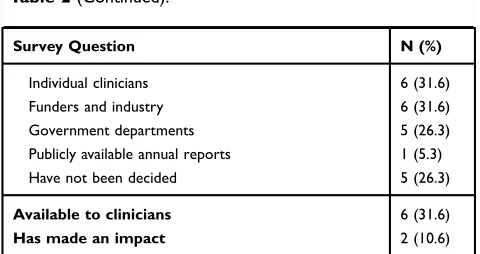
Most of the registries (15, 79%) reported their PROs data in aggregated form (e.g., annual reports or peer-reviewed publications), eight (42%) used the data as part of their benchmarking activities and only one registry reported the data back to patients. In terms of data analy-sis, PROs data were analyzed descriptively. Other methods included linear, logistic and survival analyses. Six (32%) registries stated that their data were available to clinicians, and only two (11%) said that PROs data had made an impact on patients by changing hospital practices, improved approaches to patient management, and devel-opment of an education program for specific groups.
Conceptual Framework
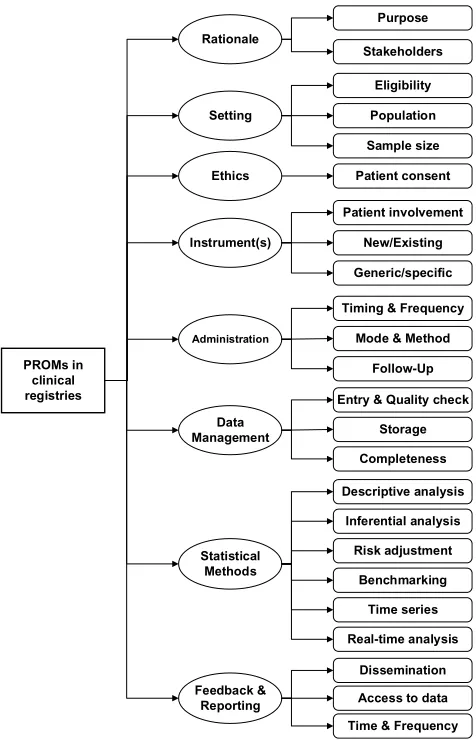
Based on thefindings from the literature and results from the survey results we developed a preliminary conceptual framework to guide development for PROs inclusion in CQRs (Figure 2).
The framework includes eight components (rationale, setting, ethics, instrument, administration, data manage-ment, statistical methods, and feedback and reporting) con-taining 24 sub-components. Rationale is divided into two sub-components: purpose of PROs data collection in the
Table 2(Continued).
Survey Question N (%)
Individual clinicians 6 (31.6)
Funders and industry 6 (31.6)
Government departments 5 (26.3)
Publicly available annual reports 1 (5.3)
Have not been decided 5 (26.3)
Available to clinicians 6 (31.6)
Has made an impact 2 (10.6)
Note:a
Multiple response options were possible.
Patient Related Outcome Measures downloaded from https://www.dovepress.com/ by 118.70.13.36 on 26-Aug-2020
registry and stakeholders from whom data will be collected and/or reported (i.e., patients, clinicians, health-care ser-vices. Setting consists of three sub-components: eligibility of the sample, description of the population for which PROs will be captured and sample size (i.e., all patients in the registry vs a defined sub-group). Considerations taken into account will include language and cultural barriers, literacy and education, non-response rates, patient refusal, and other patient factors.
Ethics includes one sub-component covering patient consent-related issues (e.g., opt-in vs opt-out approach). Instrument(s) consists of three sub-components: patient involvement (e.g., development of a new or abbreviated measure, validity testing and evaluation of the measure), determining the instrument to be used for capturing PROs (i.e., whether a new instrument is needed), and whether the instrument should be generic or condition/ disease specific.
PROMs administration covers the following three aspects: timing and frequency (e.g., determining a suitable baseline), mode and method (i.e., electronic, phone or pen and paper) and follow-up methodology.
Data managements consist of three sub-components: entry and quality check of the PROs data (i.e., determining data entry methods and algorithms for validity checks), storage (i.e., platform, portal, security, and data access) and data completeness.
Statistical methods are divided into six sub-components: descriptive analysis, inferential analysis, risk adjustment, benchmarking, time series and real-time analysis. These will overview potential data analyses and methodologies for the PRO data analyses.
The last component of the framework is called“feedback and reporting”and consists of the following three parts: dis-semination of PROs results (i.e., alerts to clinicians, reports, and publications), data access policies (i.e., for research and industry) and time and frequency of regular reporting.
Discussion
Over the past eight years, there has been a 42% increase in the number of CQRs in Australia.12 New registries were developed to monitor surgical procedures, specific cancers, critical care services, and existing registries have increased patient and hospital coverage. While increasing number of CQRs capture PROs with outputs that are generally used for benchmarking purposes, assess quality assurance and undertake research, our study results suggest that in Australia the use of PROMs in registries is less mature, and may be supported by the development of a conceptual framework and evidence-based guidelines.3,35
Findings of our survey warrant further discussion. Initial registry information collected showed that although the surveyed registries had been operating for nearly 10 years, just over 50% had greater than 50% of all the eligible patients included in the registry, with only four of the 19 registries having >80% of the registry population captured. This highlights the barriers to collecting CQR information more broadly within the Australian setting relating to resource constraints, burdensome ethics and governance requirements, and lack of national leadership.36 The ongoing Commonwealth development of a draft National Strategy for CQRs, currently undergoing national consulta-tion, is urgently needed.
The majority of the PROs collection for Australian registries has been for monitoring the quality and out-comes of patient care, with fewer using PROs to monitor
PROMs in clinical registries
Rationale
Administration
Instrument(s) Setting
Data Management
Statistical Methods
Feedback & Reporting
Purpose
Ethics Patient consent
New/Existing
Generic/specific
Timing & Frequency
Mode & Method
Follow-Up Eligibility
Population
Sample size
Entry & Quality check
Storage
Completeness
Descriptive analysis
Dissemination
Access to data
Time & Frequency Stakeholders
Patient involvement
Inferential analysis
Risk adjustment
Benchmarking
Time series
Real-time analysis
Figure 2Conceptual framework for patient-reported outcome inclusion in clinical registries.
Patient Related Outcome Measures downloaded from https://www.dovepress.com/ by 118.70.13.36 on 26-Aug-2020
the burden of disease and other population health stu-dies. This highlights the role of PROs as a valuable source of information to support patient-centered care and continuity of care from one setting to the next.37 This focus on the clinical utility of routine collection of PROMs is also evidenced by the survey results showing PROs collection across all registry participants, and at multiple time points per patient. Routinely collected PROs may provide aggregate information regarding the quality of care for particular patient cohorts, particularly when the information is benchmarked against other health services and risk adjusted for patient factors, such as socio-economic status, demographic variables and comorbidities. PROM can also be used for compara-tive effeccompara-tiveness analysis to evaluate an intervention.38
In the past PROMs were mainly collected for clinical trial studies.39Compared to clinical trials, a major limita-tion to CQRs is their limited capacity to obtain baseline data, which is often hampered by recruitment timing and processes. For example, eligible patients are only identified post-event (e.g., trauma), outside the health-care setting (e.g., cancer where recruitment time frames might be reliant on the reporting time frames to cancer agencies), or post-procedure (e.g., non-elective emergency surgery).38 Baseline PROs are possible where registry recruitment pro-cesses fall within the health setting providing the initial consultation pre-procedure. This does assume that staff at the hospital are invested in the registry and take responsi-bility for the administration and collection, of at least the initial PROM. The best method of PROMs administration may be dependent on the characteristics of the population. For example, prostate cancer patients are generally older, and telephone administration remains a favored and effec-tive method of administration, whereas young trauma patients prefer an electronic means of communication.14,40 Where there is high variability in characteristics within a registry population, e.g., broad age range, a number of different methods of administration may be required to obtain and maintain a high PROM response rate.
PRO data collection can be laborious and could be asso-ciated with high costs and patient burden.38 Clinical trials recruit to afinite sample population that is homogenous with limited follow-up time frames. In comparison, cost and administration burden is of particular importance to CQRs that generally aim to recruit whole patient populations on an ongoing basis. For example, the bariatric surgery registry recruits approximately 19,000 patients each year.41 Appropriateness of the PROMs may be dependent on
whether the outcome measure of interest is relevant across the whole population or to a defined sub-group. CQRs inclu-sion criteria are often broader than a population required for a clinical trial. Unlike clinical trials, the purpose of registry data is not to provide proof of an intervention’s efficacy. Registry data describe the outcomes of proven therapies in non-experimental, clinical settings.31Depending on the out-comes to be measured, the decision to include the whole registry population may affect the choice between generic and specific instruments, and ultimately, the PROs which will be measured.
Similar to population-level clinical data collection, there is a risk of poor PRO data completeness and missing data, which may affect the validity of the resulting analy-sis. New technologies are increasingly being deployed to increase data capture at minimal marginal costs; however, these are not without their own issues.42
The most significant finding from our study is the limited ways in which PROs are currently being analyzed, reported and used in Australia. Only one registry responded that they provided PROs feedback at the indi-vidual level, despite the evidence that PROs are most valuable when they are used to support individual clinical care interactions.43 Disappointingly, PROs are used for benchmarking of health service performance in less than 50% of the surveyed CQRs and are reported back to participating clinicians in 30% of registries. It is not sur-prising that only two of the 19 respondents stated that PRO data collection within a CQR has made an impact.
The development of a conceptual framework and sub-sequent guideline for PROMs in CQRs will be of great value in the Australian, and potentially international, con-text. Despite a relatively small number of registries col-lecting PROs in Australia, there is growing interest to capture PROs in both registry and clinical practice set-tings. However, the results from our survey suggest that their value and impact to clinicians, patients, and the broader health system could be improved. In particular, the implementation of PROMs at the aggregate level for system-level quality improvement and transparency is in its early stages of development. Therefore, an important next step is developing guidelines for including PROMs in registries to build efforts to describe how PROs would best be used in comparative effectiveness research.44,45 This work requires close engagement with clinicians and patients to understand the appropriate use of PROMs, treatment processes and outcomes.
Patient Related Outcome Measures downloaded from https://www.dovepress.com/ by 118.70.13.36 on 26-Aug-2020
Importantly, we hope that encouraging registry custo-dians to consider all elements of the framework before data collection commences will result in a clear rationale for PRO data collection, including analysis and reporting of the data. The guidelines for PROMs in CQRs may also lead to higher uptake and better use of PROMs. In addition, considering issues of data completeness and how these can be mitigated through utilizing multiple data collection methodologies should ensure high quality of the PROs data collected and their usefulness for analysis. Involving patients at the forefront of the development of PROs collec-tion and throughout the process will ensure maximizacollec-tion of their important contribution to monitoring care and outcomes.46On the other hand, certain types of instruments (e.g., SF-12 or EQ-5D) pose the question whether all the patient-administered measures truly reflect the patient voice due to limited patient involvement in their development process, and the generic nature of these instruments which may limit their appropriateness for all conditions.47,48
A main strength of this study was conducting a survey of Australian clinical registries which clearly identified com-mon issues related to PROs data collection and reporting, which reflect issues reported in the literature. On the other hand, the study does have some limitations. Due to stringent inclusion criteria for the literature review, some papers might have been missed. Despite a range of registry studies existing that describe the implementation of PROMs, the literature review found a paucity of registry publications that focused on experiences distilled from PROM imple-mentation, which could inform future practice.
Next steps will involve developing a set of guidelines that will be determined by an expert panel in a consensus process using a Delphi approach.49 A list of preliminary statements for the guidelines will be based on thefindings from the literature review and the survey. The statements will be combined according to the conceptual framework themes shown inFigure 1. As part of the Delphi process, a series of online surveys will be conducted to consult key domestic and international stakeholders to achieve a consensus in what are considered guidelines and recom-mendations for PROs inclusion in CQRs.
Conclusion
We developed a preliminary conceptual framework, which classifiedfindings, from both the literature and the survey, into broad categories ranging from initial development to outcome dissemination providing the structure for develop-ment of guidelines in the next phase of this project. The
framework covers eight components: rationale, setting, ethics, selection of PROM, administration, data manage-ment, statistical methods, feedback, and reporting. The proposed framework will guide future PROM implementa-tion efforts to assure that complete PROs are captured at the correct time, along with data on the associated risk factors. This will facilitate generating meaningful information to serve diverse registries. In addition, this framework will provide basis for the development of the guidelines enga-ging national and international leaders in QoL research, researchers, clinicians, patient advocates, and consumers.
Acknowledgments
We acknowledge Professor Belinda Gabe and Professor Sue Evans for their contribution to the survey design. The abstract of this paper was presented at the 25th Annual Conference of the International Society for Quality of Life Research as a poster presentation with interim findings. The poster’s abstract was published in “Poster Abstracts” in Quality of Life Research:https://doi.org/10.1007/s11136-018-1946-9.
Ethics Approval and Consent to
Participate
Ethics approval for the survey was obtained from Monash University Human Research Ethics Committee (Melbourne, Australia). Participation in the study was voluntary and answering the survey questions was deemed to imply consent.
Disclosure
The authors report no conflicts of interest in this work.
References
1. Black N. Patient reported outcome measures could help transform healthcare.BMJ.2013;346:f167. doi:10.1136/bmj.f1164
2. Klose K, Kreimeier S, Tangermann U, Aumann I, Damm K. Patient- and person-reports on healthcare: preferences, outcomes, experiences, and satisfaction - an essay. Health Econ Rev. 2016;6(1):18. doi:10.1186/ s13561-016-0094-6
3. Williams K, Sansoni J, Morris D, Grootemaat P. Patient-Reported Outcome Measures: Literature Review. Sydney: ACSQHC;2016. 4. Emilsson L, Lindahl B, Koster M, Lambe M, Ludvigsson JF. Review
of 103 Swedish healthcare quality registries.J Intern Med.2015;277 (1):94–136. doi:10.1111/joim.2014.277.issue-1
5. Wilcox N, McNeil JJ. Clinical quality registries have the potential to drive improvements in the appropriateness of care. Med J Aust. 2016;205(10):S27–S29. doi:10.5694/mja15.00921
6. Lannin NA, Anderson C, Lim J, et al. Telephone follow-up was more expensive but more efficient than postal in a national stroke registry. J Clin Epidemiol. 2013;66(8):896–902. doi:10.1016/j.jclinepi.2013. 03.005
7. The Dutch institute for clinical auditing. Available from:https://dica.nl/. Accessed December 5, 2019.
Patient Related Outcome Measures downloaded from https://www.dovepress.com/ by 118.70.13.36 on 26-Aug-2020
8. Brandal A, Eriksson M, Glader EL, Wester P. Effect of early sup-ported discharge after stroke on patient resup-ported outcome based on the Swedish Riksstroke registry. BMC Neurol. 2019;19(1):40. doi:10.1186/s12883-019-1268-8
9. Cadilhac DA, Kilkenny MF, Levi CR, et al. Risk-adjusted hospital mortality rates for stroke: evidence from the Australian Stroke Clinical Registry (AuSCR). Med J Aust. 2017;206(8):345–350. doi:10.5694/mja16.00525
10. Corbalan R, Bassand JP, Illingworth L, et al. Analysis of outcomes in ischemic vs nonischemic cardiomyopathy in patients with atrial
fibrillation: a report from the GARFIELD-AF registry. JAMA Cardiol.2019. doi:10.1001/jamacardio.2018.4729
11. Smith EE, Fang J, Alibhai SM, et al. Derivation and external validation of a scoring system for predicting fracture risk after ischemic stroke in a Canadian cohort. JAMA Neurol. 2019;76:925. doi:10.1001/ jamaneurol.2019.1114
12. Hoque DE, Ruseckaite R, Lorgelly P, McNeil JJ, Evans SM. Cross-sectional study of characteristics of clinical registries in Australia: a resource for clinicians and policy makers.Int j Qual Health Care. 2018;30(3):192–199. doi:10.1093/intqhc/mzx196
13. Ekegren CL, de Steiger R, Edwards ER, et al. Using patient-reported outcomes to predict revision arthroplasty following femoral neck frac-ture: enhancing the value of clinical registries through data linkage. Int J Environ Res Public Health. 2019;16(8):1325. doi:10.3390/ ijerph16081325
14. Hoque DME, Earnest A, Ruseckaite R, et al. A randomised con-trolled trial comparing completeness of responses of three methods of collecting patient-reported outcome measures in men diagnosed with prostate cancer. Qual Life Res. 2018. doi:10.1007/s11136-11018-12061-11137
15. Churches T, Naylor J, Harris I. Arthroplasty Clinical Outcomes Registry National (ACORN) Annual Report 2017. Sydney: Whitlam Orthopaedic Research Centre;2018.
16. Vishwanath S, Ng N, Cooter R, et al. Establishing patient-reported outcome measures for the Breast Device Registry. ANZ J Surg. 2019;89(3):266–267. doi:10.1111/ans.2019.89.issue-3
17. Gliklich RE, Dreyer NA. Registries for evaluating patient outcomes: a user’s guide. 3rd edition. Two volumes. (Prepared by the Outcome DEcIDE Center [Outcome Sciences, Inc., a Quintiles company] under Contract No. 290 2005 00351 TO7.). AHRQ Publication No.13(14)-EHC111. Rockville (MD): Agency for Healthcare Research and Quality; April2014. Available from:http://www.effec tivehealthcare.ahrq.gov/ehc/products/420/1897/registries-guide-3rd-edition-vol-1-140430.pdf. Accessed December 5, 2019.
18. Ahern S, Evans SM, Hopper I, Earnest A. Clinical quality registries for clinician-level reporting: strengths and limitations.Med J Aust. 2018;208(7):323. doi:10.5694/mja2.2018.208.issue-7
19. de Groot S, van der Linden N, Franken MG, et al. Balancing the optimal and the feasible: a practical guide for setting up patient registries for the collection of real-world data for health care decision making based on Dutch experiences. Value Health. 2017;20 (4):627–636. doi:10.1016/j.jval.2016.02.007
20. Franklin P, Chenok K, Lavalee D, et al. Framework to guide the collection and use of patient-reported outcome measures in the learn-ing healthcare system.EGEMS.2017;5(1):17.
21. Gemmen E, Tomaszewski EL. Collecting PROs in patient registries: the need for and potential impact of providing PRO data to the treating physician– and when. Poster at the International Society for Pharmacoeconomics and Outcomes Research (ISPOR). 19th Annual International Meeting June2014; Montreal, Canada. 22. Miles M, Huberman A.Qualitative Data Analysis: An Expanded !
sourcebook. London: Sage;1994.
23. Eton DT, Shevrin DH, Beaumont J, Victorson D, Cella D. Constructing a conceptual framework of patient-reported outcomes for metastatic hormone-refractory prostate cancer. Value Health. 2010;13(5):613–623. doi:10.1111/j.1524-4733.2010.00702.x
24. Breckenridge K, Bekker HL, Gibbons E, et al. How to routinely collect data on patient-reported outcome and experience measures in renal registries in Europe: an expert consensus meeting.Nephrol Dialysis Transplant.2015;30(10):1605–1614. doi:10.1093/ndt/gfv209 25. Rolfson O, Bohm E, Franklin P, et al. Patient-reported outcome
measures in arthroplasty registries Report of the Patient-Reported Outcome Measures Working Group of the International Society of Arthroplasty Registries Part II. Recommendations for selection, administration, and analysis. Acta Orthop.2016;87(Suppl 1):9–23. doi:10.1080/17453674.2016.1181816
26. Franklin PD, Lewallen D, Bozic K, Hallstrom B, Jiranek W, DC A. Implementation of patient-reported outcome measures in US total joint replacement registries: rationale, status, and plans.J Bone Joint Surg Am.2014;96(Supplement 1):104–109. doi:10.2106/JBJS.N.00328 27. Azad TD, Kalani M, Wolf T, et al. Building an electronic health record
integrated quality of life outcomes registry for spine surgery.J Neurosurg Spine.2016;24(1):176–185. doi:10.3171/2015.3.SPINE141127 28. Helsten DL, Ben Abdallah A, Avidan MS, et al. Methodologic
con-siderations for collecting patient-reported outcomes from unselected surgical patients.Anesthesiology.2016;125(3):495–504. doi:10.1097/ ALN.0000000000001217
29. Rana AJ. Building a patient-reported outcome metric database: one hospital’s experience. J Arthroplasty. 2016;31(6):1151–1154. doi:10.1016/j.arth.2016.03.017
30. Ashley L, Jones H, Thomas J, et al. Integrating patient reported out-comes with clinical cancer registry data: a feasibility study of the electronic Patient-Reported Outcomes From Cancer Survivors (ePOCS) system.J Med Internet Res.2013;15(10):e230. doi:10.2196/ jmir.2764
31. Morris S, Booth J, Hegarty J. Spine Tango registry data collection in a conservative spinal service: a feasibility study.Eur Spine j.2016;25 (9):2984–2992. doi:10.1007/s00586-016-4697-8
32. Moloczij N, Gough K, Solomon B, et al. Development of a hospital-based patient-reported outcome framework for lung cancer patients: a study protocol. Health Qual Life Outcomes. 2018;16 (1):10. doi:10.1186/s12955-017-0837-z
33. Franklin PD, Harrold L, Ayers DC. Incorporating patient-reported outcomes in total joint arthroplasty registries: challenges and opportunities. Clin Orthop Relat Res. 2013;471(11):3482–3488. doi:10.1007/s11999-013-3193-2
34. Schamber EM, Takemoto SK, Chenok KE, Bozic KJ. Barriers to completion of patient reported outcome measures. J Arthroplasty. 2013;28(9):1449–1453. doi:10.1016/j.arth.2013.06.025
35. Thompson CJ, Morris D, Sansoni JE, Capell JT, Williams K.Patient Reported Outcome Measures: An Environmental Scan of the Australian Health Care Sector. Wollongong: Australian Health Services Research Institute;2016.
36. Ahern S, Evans S, Hopper I, Zalcberg J. Towards a strategy for clinical quality registries in Australia. Aust Health Rev. 2018. doi:10.1071/AH17201
37. Clinical Oncology Society of Australia. Implementing monitoring of patient-reported outcomes into cancer care in Australia. 2018. Available from:https://www.cosa.org.au/media/332504/cosa_pros_ think_tank_report_final.pdf.Accessed December 5, 2019.
38. Ahern S, Ruseckaite R, Ackerman IN. Collecting patient-reported out-come measures.Intern Med J.2017;47(12):1454–1457. doi:10.1111/ imj.13633
39. Weldring T, Smith SM. Patient-reported outcomes (PROs) and patient-reported outcome measures (PROMs).Health Serv Insights. 2013;6:61–68. doi:10.4137/HSI.S11093
40. Gabbe BJ, Sutherland AM, Hart MJ. Population-based capture of long term functional and quality of life outcomes following major trauma –the experiences of the Victorian State Trauma Registry. J Trauma.2010;69(3):532–536. doi:10.1097/TA.0b013e3181e5125b 41. Bariatric Surgery Registry Sixth Annual Report: 2017/18. Monash
University;2018.
Patient Related Outcome Measures downloaded from https://www.dovepress.com/ by 118.70.13.36 on 26-Aug-2020
42. Gomes M, Gutacker N, Bojke C, Street A. Addressing missing data in patient-reported outcome measures (PROMS): implications for the use of PROMS for comparing provider performance.Health Econ. 2016;25(5):515–528. doi:10.1002/hec.v25.5
43. Wheat H, Horrell J, Valderas JM, Close J, Fosh B, Lloyd H. Can practitioners use patient reported measures to enhance person centred coordinated care in practice? A qualitative study.Health Qual Life Outcomes.2018;16(1):223. doi:10.1186/s12955-018-1045-1 44. Basch E, Abernethy AP, Mullins CD, et al. Recommendations for
incorporating patient-reported outcomes into clinical comparative effectiveness research in adult oncology. J Clin Oncol. 2012;30 (34):4249–4255. doi:10.1200/JCO.2012.42.5967
45. Reeve BB, Wyrwich KW, Wu AW, et al. ISOQOL recommends mini-mum standards for patient-reported outcome measures used in patient-centered outcomes and comparative effectiveness research. Qual Life Res.2013;22(8):1889–1905. doi:10.1007/s11136-012-0344-y
46. Wiering B, de Boer D, Delnoij D. Patient involvement in the devel-opment of patient-reported outcome measures: a scoping review. Health Expectations. 2017;20(1):11–23. doi:10.1111/hex.2017.20. issue-1
47. Coons SJ, Rao S, Keininger DL, Hays RD. A comparative review of generic quality-of-life instruments. PharmacoEconomics. 2000;17 (1):13–35. doi:10.2165/00019053-200017010-00002
48. Payakachat N, Ali MM, Tilford JM. Can the EQ-5D detect mean-ingful change? A systematic review.PharmacoEconomics.2015;33 (11):1137–1154. doi:10.1007/s40273-015-0295-6
49. Rowe G, Wright G. The Delphi technique: past, present, and future prospects - introduction to the special issue. Technol Forecast Soc Change. 2011;78(9):1487–1490. doi:10.1016/j. techfore.2011.09.002
Patient Related Outcome Measures
Dove
press
Publish your work in this journal
Patient Related Outcome Measures is an international, peer-reviewed, open access journal focusing on treatment outcomes specifically relevant to patients. All aspects of patient care are addressed within the journal and practitioners from all disciplines are invited to submit their work as well as healthcare researchers and patient support groups.
The manuscript management system is completely online and includes a very quick and fair peer-review system. Visit http://www. dovepress.com/testimonials.php to read real quotes from published authors.
Submit your manuscript here:http://www.dovepress.com/patient-related-outcome-measures-journal
Patient Related Outcome Measures downloaded from https://www.dovepress.com/ by 118.70.13.36 on 26-Aug-2020