R E S E A R C H A R T I C L E
Open Access
Nurses
’
knowledge, perceived barriers,
and practices regarding cancer pain
management: a cross-sectional study from
Palestine
Haneen A. Toba
1, Ahmad M. Samara
1and Sa
’
ed H. Zyoud
2,3*Abstract
Background:Accurate knowledge and good pain evaluation and documentation practices should be present for efficient pain management. In this study, we aimed to assess the knowledge and practices of nurses relating to the management of cancer pain in Palestine, and to determine the barriers to efficient pain control in cancer patients. Methods:A cross-sectional survey took place at 8 hospitals across Northern West Bank. A convenience sample of 220 Nurses working in governmental and private hospitals in West Bank/Palestine was studied. For that purpose, a questionnaire was developed to assess knowledge, practices, perceived barriers, and delaying processes relating to cancer pain management (CPM).
Results:In total, 220 questionnaires were completed with a response rate of 88%. Participants’mean age was 30. 34 years. Overall, 69.5% worked in governmental hospitals, 26.8% worked in the private sector and the remainder worked in both governmental and private sectors. The correct response rate to questions that assess knowledge relating to cancer pain control was calculated and a mean knowledge score was found to be 5.1 with a standard deviation of 2.1. A relationship between the knowledge score and the sample characteristics was made and showed that males scored significantly higher (p= 0.001) than females with median scores of 6 [4–7] and 5 [3–6] for males and females, respectively. Inadequate pain assessment (76.8%), insufficient knowledge of pain control (70.5%) and strict regulation on opioid use (69.5%) were the most frequently perceived barriers. Nurses reported that they would assess pain on every round and check all items related to pain assessment. Contacting the physician for the prescription of opioids was cited as the main delaying process by 56.4% of participants.
Conclusions:This study allowed us to recognise the knowledge deficit and the barriers to effective management. On the other hand, the analysis has shown good pain documentation practices among nurses. Those knowledge deficits demonstrate the need for more education about CPM. The improvement of coordination and communication between physicians and nurses seems to play a crucial role in CPM, as contacting physicians was cited as the most delaying process in CPM by nurses.
Keywords:Cancer pain, Nurses, Knowledge, Practices, Perceived barriers, Palestine
© The Author(s). 2019Open AccessThis article is distributed under the terms of the Creative Commons Attribution 4.0 International License (http://creativecommons.org/licenses/by/4.0/), which permits unrestricted use, distribution, and reproduction in any medium, provided you give appropriate credit to the original author(s) and the source, provide a link to the Creative Commons license, and indicate if changes were made. The Creative Commons Public Domain Dedication waiver (http://creativecommons.org/publicdomain/zero/1.0/) applies to the data made available in this article, unless otherwise stated.
* Correspondence:[email protected];[email protected]
2
Poison Control and Drug Information Center (PCDIC), College of Medicine and Health Sciences, An-Najah National University, Nablus 44839, Palestine
3Department of Clinical and Community Pharmacy, College of Medicine and
Background
Cancer patients will experience pain at some time or
other. This pain can be due to the cancer’s direct
dam-age to the body or from the treatment. Overall, 92.5% of 174 cancer patients who were admitted to a pain man-agement unit suffered from pain that was described as
more than moderate despite previous treatment [1]. The
low pain control quality was attributed to the
under-dosage of medications, insufficient intake schedul-ing, and hesitancy towards using a strong opioid [1,2].
A Jordanian study including 200 Jordanian nurses has shown that these nurses have knowledge gaps concern-ing pain management, which negatively impact the
qual-ity of pain control in cancer patients [3]. Nurses’
knowledge about opioids’role in pain management was
also reported as low by a study conducted in Italy, highlighting their irrational fear of the opioids’potential
to result in addiction or respiration inhibition [4]. In
Korea, another study demonstrated poor knowledge and
improper practices among physicians and nurses [5].
Barriers to the adequate management of cancer pain according to an Israeli study were the inadequate assess-ment of pain and outcomes of treatassess-ment, insufficient
knowledge among health professionals, physicians’ poor
attitude towards prescribing opioids, and reluctance to take opioids by patients. Interestingly, nurses’reluctance to the administration of opioids and their concerns relat-ing to excessive regulation were not cited as common barriers to adequate pain control [6].
In Palestine, cancer is reported as the second leading cause of death (14.2%), with cases usually being diagnosed in a late stage, leading to a greater load on patients and healthcare staff, and a poorer quality of life for patients
[7], which was found to be low among Palestinian cancer
patients [8]. Additionally, nurses play an essential role in cancer pain management but nursing education curricu-lum remain lacking in basic pain management principles
[9]. To the best of our knowledge, cancer pain
manage-ment (CPM), in terms of knowledge, practices and per-ceived barriers among Palestinian nurses, has never been targeted by research. The aim of our study was to demon-strate how each of these groups of obstacles contributes to the problem of cancer-related pain management in Palestine and the need to improve clinical practices and education, as well as related policies. In the current study, we described the knowledge and practices of nurses relat-ing to the management of cancer pain in Palestine and highlighted some barriers that could prevent the adequate control of pain among cancer patients. By evaluating the knowledge, practices and perceived barriers relating to the management of cancer-related pain among nurses work-ing with cancer patients, it will be easier to identify and develop educational resources and training programs for palliative care; it will also emphasise the importance of
communication and consultation between healthcare professionals.
Methods Study design
The study was conducted using a cross-sectional survey design.
Study setting and participants
This study took place between May and September 2017 at 8 hospitals (7 governmental and 1 private) in Northern West Bank. Nurses responsible for the care of cancer pa-tients were eligible to participate. Institutional Review Board approval was granted by 8 participating hospitals
(Al Watani/Nablus, Tubas (Turkish), Jenin (Khalil
Suliman), Tulkarm (Thabit Thabit)), Salfit (Yasser Arafat), Nablus (Rafidia), Qalqiliya (Darwish Nazal) and An-Najah National University Hospital).
Sample size and sampling technique
The estimated number of nurses licensed by the Pales-tinian Nursing Association who worked at the surveyed hospitals and were responsible for cancer patients in
their practice was around 500 [10]. Accordingly, the
sample size of 218 was calculated by using Raosoft sam-ple size calculator [11], after setting the indicator per-centage at 0.50, the margin of error at 5%, and the confidence interval at 95%. A convenience sample of 250 nurses in governmental and private hospitals in West Bank/Palestine was identified during the study period. In order to minimise erroneous results and to avoid drop-out, we increased the target sample size to 250 nurses.
Inclusion and exclusion criteria
Inclusion criteria demands that the hospital in which the participant works admits and treats cancer patients, and that the participant is an active part of the treatment process for such patients. The exclusion criteria, on the other hand, rule out those who are not allowed to make decisions or write orders in the management of cancer patients such as students and those in training. After collecting the data, those who did not complete all items of the questionnaire were also excluded.
Instruments and measures
The second section included a set of 14 true or false questions to test the participants’knowledge [5] regard-ing the principles of managregard-ing cancer pain and differen-tiating it from other causes of pain, analgesic drug properties, non-pharmacological pain management, cal-culating opioid dose and routes of administration, the proper timing of assessment after administering the opi-oid, safety profile of opioid analgesics, tolerance develop-ment to opioids and the prevalence of refractory cancer pain. Subsequently, a knowledge score was calculated by allocating one point for each correctly answered ques-tion of the 14 knowledge quesques-tions and adding these points up. Higher knowledge score means better know-ledge. Permission to use the questionnaire tool for this study was obtained from Professor Yeol Kim via per-sonal email.
In addition, statements of agreement questions were used in the third and fourth sections. The third section was regarding the perceived barriers in dealing with can-cer patients. Questions about perceived barriers were separated into three groups: patient-, medical staff-, and health-care system-related barriers. The forth section in-cluded questions regarding pain assessment and docu-mentation practices and enquired about the occasions of pain assessment in cancer patients, aspects of pain assessed, and whether nurses documented pain after every assessment practice in the patient file.
The last section investigated the perceptions regarding the most delaying process in opioid administration. Four options were listed for the participants to choose from: administration of opioid to the patient, getting to the pharmacy to obtain the opioid, contacting the physician for an opioid prescription, or the delaying process is dif-ficult to recognize.
The questionnaire was developed initially in English, and then translated into Arabic before being offered to the participants (see Additional file1: English and Arabic ver-sion of the instrument). Face and content validity of the final questionnaire was discussed and judged by three ex-pert’s academicians in the related field for assessing the completeness, appropriateness, meaning of terms, logical sequence of the statements, and organization and the ac-curacy. Some questions were modified as recommended. The developed questionnaire was initially piloted among fifteen nurses before the start of the study to evaluate clar-ity, and time considerations; only minor modifications were needed. Internal consistency reliability for knowledge scale was good, with Cronbach’sα= 0.771.
Data analysis
Descriptive analyses were implemented to describe the characteristics of participants and their answers to ques-tions related to knowledge, practices and the perception of barriers. The relationship between knowledge score
and participants characteristics was also obtained. Statis-tical analyses were performed using SPSS version 21.0. Statistics that present the data include frequencies and percentages, mean ± standard deviation (SD), or median with interquartile range as appropriate. Data were ana-lysed using the Kruskal-Wallis and Mann-Whitney U tests atp< 0.05. Internal consistency reliability for know-ledge scale was tested via Cronbach’s alpha coefficient.
Results
Sample characteristics
In total, 250 questionnaires were distributed and 220 were completed with a response rate of 88%. They had a mean age of 30.34 years (SD = 8.1), with a mean experience in cancer patient treatment of 5 years. Male participants comprised 47.7% of all respondents. Palestine was the country of education for most of the participants (94.5%), with 69.5% working in governmental hospitals, 26.8% working in the private sector and the remainder working
in both governmental and private sectors. Table1 shows
the demographic data and characteristics of participants.
Knowledge of cancer pain management
As shown in Table2, the rate of correct responses to ques-tions that assess knowledge relating to CPM was calcu-lated; the mean knowledge score was 5.1 with a standard deviation of 2.1. The analysis showed that knowledge def-icit was the highest in the question about opioid rescue dose (Opioid rescue dose equals 25% of the basal daily re-quirement of opioid?) with a correct response rate of 12.3%, and the question about opioid risk of addiction (Opioids as analgesics have a high risk of addiction?) with a correct response rate of 14.1%. A high rate of correct re-sponses was seen in the question about the fastest route for the onset of action of opioids (The IV route for opioid administration has the fastest onset of action?) with a cor-rect response rate of 75.5% and the question about differ-entiation of certain causes of pain which require specific treatment, with a correct response rate of 72.7%.
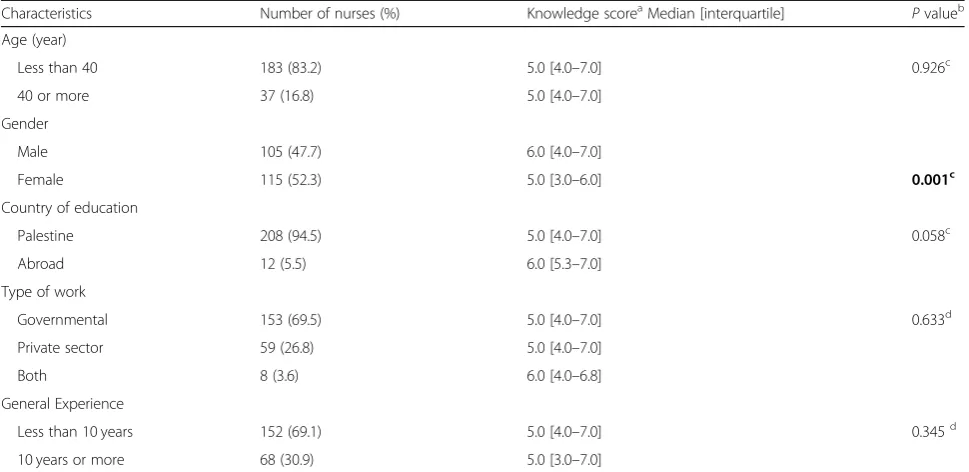
Table 1 shows the association between the knowledge
score and the participants’characteristics. The only
fac-tor that showed a significant difference in knowledge
score is gender (p= 0.001) with a median score
[inter-quartile range] of 6.0 [4.0–7.0] and 5.0 [3.0–6.0] for
males and females, respectively.
Perceived barriers for cancer pain management
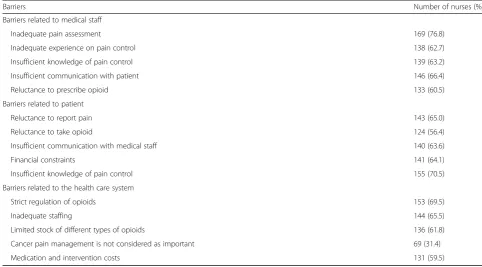
Table 3 demonstrates the most important barriers to
Pain assessment practices and documentation
Participants rated their training adequacy in CPM as ex-cellent (9.5%), good (42.7%), poor (19.1%) and very poor
(28.6%). As shown in Table4, more than half of the
par-ticipating nurses would assess the pain on every round (57.7%). Additionally, nurses reported checking all aspects of pain during assessment with severity being the most
frequently assessed item. Furthermore, 85.9% of the nurses reported that they document pain assessment.
Perceptions regarding the most delaying process in opioid administration
Table5shows the perceptions regarding the most
delay-ing process in opioid administration. Contactdelay-ing the
Table 1Relationship between knowledge score and characteristics of participants
Characteristics Number of nurses (%) Knowledge scoreaMedian [interquartile] Pvalueb Age (year)
Less than 40 183 (83.2) 5.0 [4.0–7.0] 0.926c 40 or more 37 (16.8) 5.0 [4.0–7.0]
Gender
Male 105 (47.7) 6.0 [4.0–7.0]
Female 115 (52.3) 5.0 [3.0–6.0] 0.001c
Country of education
Palestine 208 (94.5) 5.0 [4.0–7.0] 0.058c Abroad 12 (5.5) 6.0 [5.3–7.0]
Type of work
Governmental 153 (69.5) 5.0 [4.0–7.0] 0.633d Private sector 59 (26.8) 5.0 [4.0–7.0]
Both 8 (3.6) 6.0 [4.0–6.8] General Experience
Less than 10 years 152 (69.1) 5.0 [4.0–7.0] 0.345d 10 years or more 68 (30.9) 5.0 [3.0–7.0]
a
Knowledge Score was a range of 0–14, high score reflects more knowledge about cancer pain management)
b
Thep-value is bold where it is less than the significance level cut-off of 0.05
c
Statistical significance of differences calculated using the Mann–Whitney U test
d
Statistical significance of differences calculated using the Kruskal–Wallis test
Table 2Rate of correct answers about knowledge of cancer pain management
Questiona Number of nurses (%)
1.“You should not trust patient’s subjective reports of pain”(F) 104 (47.3) 2.“You should differentiate certain cause of pain which needs specific treatment (i.e. cord compression)”(T) 160 (72.7) 3.“Prescribing a few different types of NSAIDs will increase the analgesic efficacy and decreased adverse effect”(F) 73 (33.2) 4.“Pethidine can be prescribed for chronic cancer pain safely”(F) 67 (30.5) 5.“Opioid analgesics have a high risk of addiction”(F) 31 (14.1) 6.“The effect of immediate release oral opioid can be assessed at 1 h after administration”(T) 83 (37.7) 7.“Opioid analgesics do not have a ceiling effect”(T) 44 (20.0) 8.“Tolerance for opioid-induced sedation develops within a few days”(T) 87 (39.5) 9.“For painful bone metastasis, radiotherapy can alleviate the pain or help to reduce the amount of analgesics”(T) 90 (40.9) 10.“Opioid-induced respiratory suppression is common”(F) 43 (19.5) 11.“Celiac plexus block is effective for treating cancer pain at upper abdomen”(T) 58 (26.4) 12.“Opioid rescue dose equals 25% of the basal daily requirement of opioid”(F) 27 (12.3) 13.“The IV route for opioid administration has the fastest onset of action”(T) 166 (75.5) 14.“Refractory cancer pain rarely occurs with a percent that does not exceed 5% of cancer patients”(F) 94 (42.7) Mean score, Mean (SD) 5.1 (2.1)
a
physician for the prescription of opioids was cited as the most delaying process during CPM by 56.4% of the par-ticipants, followed by obtaining opioids from the phar-macy (15%) and finally the administration of opioids to patients (5%). The causes of delaying processes are diffi-cult to recognize by 23.6% of participants.
Discussions
Our study aimed to assess CPM in terms of knowledge, practices and perceived barriers among Palestinian nurses. Therefore, a questionnaire was developed and distributed with a very good response rate (88%), which can be attributed to many factors including the relatively short duration needed to complete the questionnaire
and the nature of the request to complete the survey on the spot.
Our analysis has shown that nurses in Palestine have fair knowledge regarding cancer pain control, with a mean knowledge score of 5.1 out of 14, with knowledge deficits mainly regarding opioid rescue dose calculation, opioids risk of addiction, opioid-induced respiratory sup-pression, ceiling effect of opioids and utilization of other modalities, such as celiac plexus block. These results were consistent with previous studies which have shown that nurses had the least correct answers for questions asking about the administration of opioids and opioid physical dependency, and have also highlighted know-ledge deficits in the physiology and pharmacology of
pain [13,27–30]. Although the main areas of knowledge
deficits are consistent with those of the Korean study, the knowledge scores were lower than those achieved by Korean nurses in that study (mean knowledge score
among nurses = 9 out of 14, SD = 2.5) [5]. Male nurses
scored significantly higher than female nurses.
Table 3Perceived barriers for cancer pain management (N= 220)
Barriers Number of nurses (%)
Barriers related to medical staff
Inadequate pain assessment 169 (76.8) Inadequate experience on pain control 138 (62.7) Insufficient knowledge of pain control 139 (63.2) Insufficient communication with patient 146 (66.4) Reluctance to prescribe opioid 133 (60.5) Barriers related to patient
Reluctance to report pain 143 (65.0) Reluctance to take opioid 124 (56.4) Insufficient communication with medical staff 140 (63.6) Financial constraints 141 (64.1) Insufficient knowledge of pain control 155 (70.5) Barriers related to the health care system
Strict regulation of opioids 153 (69.5) Inadequate staffing 144 (65.5) Limited stock of different types of opioids 136 (61.8) Cancer pain management is not considered as important 69 (31.4) Medication and intervention costs 131 (59.5)
Table 4Pain assessment and documentation practices (N= 220)
Type of practice Number of nurses (%) Occasion of pain assessment
Every round 127 (57.7) On selected occasions 75 (34.1) On rare occasions 18 (8.2) Items checked during pain assessment
Location 150 (68.2) Quality 130 (59.1) Related factor 112 (50.9) Severity 170 (77.3) Timing 88 (40.0) Documentation of pain assessment 189 (85.9)
Table 5The most common perceptions of delays in cancer pain management (N= 220)
Causes of delays Number of nurses (%) Administration of opioid to patient 11 (5.0)
Moreover, the study participants pointed out important barriers which prevent an adequate control of cancer-related pain, such as the inadequate pain assessment by medical staff, which may be due to inadequate knowledge, an under-estimation of the patients’complaint of pain [31], or
inad-equate communication and listening to patients [32].
Surprisingly, this shows discordance with the self-assessment of practices in pain assessment and documentation. Close
discordance was found in a previous study [6]. Inadequate
knowledge of pain control was highlighted as the most com-monly encountered patient-related barrier and the strict regulation of opioid use as the most commonly encountered barrier related to the health care system. As barriers to the appropriate treatment of pain can vary based on the stand-point, they are considered from the patient’s, physician’s, or institution’s standpoint, multidisciplinary initiatives should be considered to improve pain management, which may in-clude awareness and education programs in order to change attitudes towards pain treatment [33].
Participants tended to document pain assessment fre-quently, which is consistent with the previous findings where nurses were reported to have better skills for assessing pain, compared to physicians and pharmacists [5,30]. The perception of factors that contributed to the delay in the opioid administration process has shown that contacting the physician was the most delaying process which may reflect insufficient coordination be-tween healthcare professionals. Other sources of delay in the process of cancer pain management might exist be-sides the three processes which were proposed in our question, considering the significant percentage (23.6%) of participants who found difficulty in recognizing the delaying process which may need further investigation.
Strengths and limitations
To the best of our knowledge, this is the first study to be
conducted in Palestine which is concerned with nurses’
knowledge and practices, as well as the perceived barriers relating to the management of cancer pain. The strengths of this study were its relatively large sample size and mul-ticentre design. However, this study has some limitations. Firstly, the study used a convenience sample and thus re-sults may not represent all nurses in Palestine. Secondly, closer monitoring for nursing practices is needed in order to accurately assess the actual practices in CPM. Lastly, this study is cross-sectional, where the causal relationship with the determinants could not be ascertained.
Conclusions
In conclusion, after analysing the experiences of a sample of nurses who are currently working or previously worked in CPM, we were able to recognise the knowledge deficit with a very low mean knowledge score and the barriers to effective management. On the other hand, the analysis has
shown good pain documentation practices among nurses. Those knowledge gaps demonstrate the need for various methods of education on CPM. Educating patients and caregivers about pain management is also important, as the insufficient knowledge of pain control was the most encountered patient-related barrier according to our study. The improvement of coordination and communica-tion between physicians and nurses seems to play a crucial role in CPM, as contacting physicians was cited as the most delaying process in CPM by nurses.
Additional file
Additional file 1:Study questionnaires. This is the final English and Arabic versions of the questionnaire that was used to obtain data that helps to assess the knowledge and practices of nurses relating to the management of cancer pain, and to determine the barriers to efficient pain control in cancer patients. (DOCX 29 kb)
Abbreviations
CPM:Cancer pain management; IRB: Institutional review board; SD: Standard deviation
Acknowledgments
Not applicable
Funding
None
Availability of data and materials
The datasets used and/or analyzed during the current study are available from the corresponding author on reasonable request.
Authors’contributions
HT and AS conceived and carried out the study, prepared and analyzed data, and drafted the manuscript. SZ conceptualised and designed the study; coordinated, supervised, and analysed the data; critically reviewed the manuscript and the interpretation of the results; and assisted in the final write-up of the manuscript. All authors read and approved the final manuscript.
Ethics approval and consent to participate
Ethical approval was granted by the Institutional Review Board (IRB) at An-Najah National University, and permission to interview the nurses was granted from the Palestinian Ministry of Health and director of each hospital. All participants provided verbal consent to participate in the survey and their participation and attendance was voluntary.
Consent for publication
Not applicable
Competing interests
The authors declare that they have no competing interests.
Publisher’s Note
Springer Nature remains neutral with regard to jurisdictional claims in published maps and institutional affiliations.
Author details
1Department of Medicine, College of Medicine and Health Sciences,
An-Najah National University, Nablus 44839, Palestine.2Poison Control and
Drug Information Center (PCDIC), College of Medicine and Health Sciences, An-Najah National University, Nablus 44839, Palestine.3Department of
Received: 23 February 2018 Accepted: 17 May 2019
References
1. Schug SA, Zech D, Dorr U. Cancer pain management according to WHO analgesic guidelines. J Pain Symptom Manag. 1990;5(1):27–32. 2. Grant M, Rivera LM, Alisangco J, Francisco L. Improving cancer pain
management using a performance improvement framework. J Nurs Care Qual. 1999;13(4):60–72.
3. Omran S, Al Qadire M, Ali NA, Al Hayek MF. Knowledge and attitudes about pain management: a comparison of oncology and non-oncology Jordanian nurses. Nurs Health. 2014;2(4):73–80.
4. Bernardi M, Catania G, Lambert A, Tridello G, Luzzani M. Knowledge and attitudes about cancer pain management: a national survey of Italian oncology nurses. Eur J Oncol Nurs. 2007;11(3):272–9.
5. Jho HJ, Kim Y, Kong KA, Kim DH, Choi JY, Nam EJ, Choi JY, Koh S, Hwang KO, Baek SK, et al. Knowledge, practices, and perceived barriers regarding cancer pain management among physicians and nurses in Korea: a nationwide multicenter survey. PLoS One. 2014;9(8):e105900.
6. Sapir R, Catane R, Strauss-Liviatan N, Cherny NI. Cancer pain: knowledge and attitudes of physicians in Israel. J Pain Symptom Manage. 1999;17(4):266–76. 7. Khleif M, Dweib A. Palliative care and nursing in Palestine, 2015. J Palliat
Care Med. 2015;S4:3.
8. Abu Farha NH, Khatib MT, Salameh H, Zyoud SH. Cancer-related post-treatment pain and its impact on health-related quality of life in breast cancer patients: a cross sectional study in Palestine. Asia Pac Fam Med. 2017;16:7.
9. Grant M, Ferrell B, Hanson J, Sun V, Uman G. The enduring need for the pain resource nurse (PRN) training program. J Cancer Educ. 2011;26(4):598–603. 10. Ministry of Health, Palestinian Health Information Center. Health Annual
Report, Palestine 2016. 2017.\https://www.site.moh.ps/Content/Books/ ZxRcynmiUofNqt66u4CrHRgmJR6Uv7z77srjjIEAho6xnz5V3rgLTu_ RhO7xf2j2VusNiIvWkjwp84yXHLdGleB97gKrHHI5iZ9oPJ25owGEN.pdf. Accessed 14 Jan 2017.
11. Raosoft. Sample Size Calculator. 2004.http://www.raosoft.com/samplesize. html. Accessed 20 Apr 2016.
12. Ferrell B, McCaffery M. Knowledge and attitudes survey regarding pain. 2014. http://prc.coh.org/Knowldege%20%20&%20Attitude%20Survey%207-14%20(1).pdf. Accessed 2 Apr 2017.
13. Manwere A, Chipfuwa T, Mukwamba MM, Chironda G. Knowledge and attitudes of registered nurses towards pain management of adult medical patients: a case of Bindura hospital. Health Sci J. 2015;9(4):3.
14. Eftekhar Z, Mohaghegh MA, Yarandi F, Eghtesadi-Araghi P, Moosavi-Jarahi A, Gilani MM, Tabatabeefar M, Toogeh G, Tahmasebi M. Knowledge and attitudes of physicians in Iran with regard to chronic cancer pain. Asian Pac J Cancer Prev. 2007;8(3):383–6.
15. Gallagher R, Hawley P, Yeomans W. A survey of cancer pain management knowledge and attitudes of British Columbian physicians. Pain Res Manag. 2004;9(4):188–94.
16. Ger LP, Ho ST, Wang JJ. Physicians' knowledge and attitudes toward the use of analgesics for cancer pain management: a survey of two medical centers in Taiwan. J Pain Symptom Manage. 2000;20(5):335–44.
17. Von Roenn JH, Cleeland CS, Gonin R, Hatfield AK, Pandya KJ. Physician attitudes and practice in cancer pain management. A survey from the eastern cooperative oncology group. Ann Intern Med. 1993;119(2):121–6. 18. Yanjun S, Changli W, Ling W, Woo JC, Sabrina K, Chang L, Lei Z. A survey on
physician knowledge and attitudes towards clinical use of morphine for cancer pain treatment in China. Support Care Cancer. 2010;18(11):1455–60. 19. Zhang Q, Yu C, Feng S, Yao W, Shi H, Zhao Y, Wang Y. Physicians' practice, attitudes toward, and knowledge of Cancer pain Management in China. Pain Med. 2015;16(11):2195–203.
20. Bernardi M, Catania G, Tridello G. Knowledge and attitudes about cancer pain management: a national survey of Italian hospice nurses. Cancer Nurs. 2007;30(2):E20–6.
21. Hollen CJ, Hollen CW, Stolte K. Hospice and hospital oncology unit nurses: a comparative survey of knowledge and attitudes about cancer pain. Oncol Nurs Forum. 2000;27(10):1593–9.
22. Howell D, Butler L, Vincent L, Watt-Watson J, Stearns N. Influencing nurses' knowledge, attitudes, and practice in cancer pain management. Cancer Nurs. 2000;23(1):55–63.
23. McMillan SC, Tittle M, Hagan S, Laughlin J, Tabler RE. Knowledge and attitudes of nurses in veterans hospitals about pain management in patients with cancer. Oncol Nurs Forum. 2000;27(9):1415–23.
24. O'Brien S, Dalton JA, Konsler G, Carlson J. The knowledge and attitudes of experience oncology nurses regarding the management of cancer-related pain. Oncol Nurs Forum. 1996;23(3):515–21.
25. Rushton P, Eggett D, Sutherland CW. Knowledge and attitudes about cancer pain management: a comparison of oncology and nononcology nurses. Oncol Nurs Forum. 2003;30(5):849–55.
26. Vortherms R, Ryan P, Ward S. Knowledge of, attitudes toward, and barriers to pharmacologic management of cancer pain in a statewide random sample of nurses. Res Nurs Health. 1992;15(6):459–66.
27. Yildirim YK, Cicek F, Uyar M. Knowledge and attitudes of Turkish oncology nurses about cancer pain management. Pain Manag Nurs. 2008;9(1):17–25. 28. Cindy Czaplinski RNM, Debra Harris RNM. Pain attitudes and knowledge
among RNs, pharmacists, and physicians on an inpatient oncology service. Clin J Oncol Nurs. 2007;11(5):687.
29. Alnajar MK, Darawad MW, Alshahwan SS, Samarkandi OA. Knowledge and attitudes toward Cancer pain management among nurses at oncology units. J Cancer Educ. 2017.
30. Xue Y, Schulman-Green D, Czaplinski C, Harris D, McCorkle R. Pain attitudes and knowledge among RNs, pharmacists, and physicians on an inpatient oncology service. Clin J Oncol Nurs. 2007;11(5):687–95.
31. Samara AM, Toba HA, Zyoud SH. Physicians’knowledge, perceived barriers, and practices regarding cancer pain management: a cross-sectional study from Palestine. Appl Cancer Res. 2018;38(1):15.
32. Prandi C, Garrino L, Mastromarino P, Torino F, Vellone E, Peruselli C, Alvaro R. Barriers in the management of cancer-related pain and strategies to overcome them: findings of a qualitative research involving physicians and nurses in Italy. Ann Ist Super Sanita. 2015;51(1):71–8.