Original Research Article
Assessment of factors influencing health care service utilization
in rural area of Bangladesh
M. Hasan Howlader, M. Ashfikur Rahman*, M. Imtiaz Hasan Rahul
INTRODUCTION
It is widely established that good health is one of the most essential indicators of human development. So, facilitating proper health service is a prerequisite for furthering human development and without giving proper health care services, human development is not possible. But, ensuring proper health care service and utilizing the remaining health services is the most complex behavioral phenomenon.1 Therefore, health care service utilization is an important issue to be discussed in the public health
domain. In the public health context, it is very significant to examine the factors that affect health-seeking behavior and health services utilization from individual to community level.2 Inequalities in access to health care services has been taken considerable attention by various scholars in the present public health research sphere.3 WHO pointed out that providing at least basic health services for the poor and underprivileged without any barriers ensuring, physical accessibility or acceptability of services universally is meant to be health services utilization.4
ABSTRACT
Background: Access to health care services is one of the important preconditions for ensuring good health that is influenced by many socio-demographic characteristics of the individual population as well as policy interventions. The main objective of this study was to identify the factors that determine healthcare service utilization in rural area of Bangladesh.
Methods: A cross-sectional descriptive study was carried out in the Rangpur union of Dumuria Upazila of Khulna division in Bangladesh. Data were collected from 195 household heads administering a structured questionnaire. The study applies principal component analysis (PCA) for determining the factors that affect health care services utilization.
Results: Need factors (chronic diseases, disability, child sickness, and old aged parents) play the pivotal role to utilize the health care services. The second important factor that contributes to access to health care services is enabling factors consisting of income, distance to the nearest health care center, health cards/health insurance, land ownership, types of latrine use, and membership in a community group. The predisposing factors i.e. age, sex, religion, occupation and education have the least significant role in utilizing health care services.
Conclusions: Utilization of health care services depends mostly on the perception and attitudes of people towards disease and disability. So, policy interventions should be taken to raise awareness among people along with regular monitoring of the activities of health care providers.
Keywords: Access, Health care services and utilization, Need factors Development Studies Discipline, Khulna University, Khulna, Bangladesh
Received: 24 June 2019 Accepted: 06 August 2019
*Correspondence: M. Ashfikur Rahman, E-mail: [email protected]
Copyright: © the author(s), publisher and licensee Medip Academy. This is an open-access article distributed under the terms of the Creative Commons Attribution Non-Commercial License, which permits unrestricted non-commercial use, distribution, and reproduction in any medium, provided the original work is properly cited.
But still, in developing countries, people have less access to proper health care services comparing to developed countries it is thus prime challenges for developing countries to ensure adequate health services for all its citizens particularly for the underprivileged without any differentiation.5
In Bangladesh, there exist well-arranged three tires of primary health care services, i.e. Upazila Health Complex (UHC) at the sub-district level, union health and family welfare centres (UHFWC) at the union (collection of few villages) levels and community clinic (CC) at the village level.6 But due to a lack of proper management and adequate facilities, these services are not reached to the marginalized people. Health care services utilization largely depends on some circumstantial and social factors that determine the extent of health service utilization.
In this current study, socio-economic and demographic factors were analyzed with the help of the Andersen– Newman behavioral model which is very common and widely accepted to examine the factors related to health services utilization. Previous study by Li et alpointed out that need factors played a significant contribution to the use of existing health services utilization than enabling or predisposing factors in China whereas in Korea predisposing and need factors influence to receive existing health services than that of enabling factors.7,8 The main rationale of conducting the study is the growing inequalities of health services utilization particularly in developing countries like Bangladesh where the poor people are likely to be faced disparities in entertaining health services. Previous studies in Pakistan, Uganda, Korea, Nigeriaand also many other developing countries found that health disparities in utilization of health care service is responsible for worsening the overall health status of the disadvantaged.8-11 So, the present was undertaken to determine the factors that affect health care services utilization in rural area.
METHODS
Setting
Following a cross-sectional research design, this study was conducted in the Rangpur Union of Dumuria Upazila under Khulna Zilla from March 1 to March 31, 2018. It is a rural area where more than 80 percent of residents are economically dependent on agriculture. This area was selected purposively among the 14 unions of Dumuria Upazila. The people of this union are heavily reliant on the UHC, CC and UHFWC for the emergency health care services. Besides, people of this area also utilize traditional healing practices. The transportation system for reaching in the health care centers include van, rickshaw, boat, motorcycle, easy bike as the roads are narrow and without brick or concrete. In order to get major surgical interventions and physical check-ups for critical diseases, people have to go to the divisional cities.
Participants
The adult residents aged 18 years and above of both sexes who have visited at least once in UHC or CC for any primary health care service during January 1 to February 28, 2018 were considered for the study subject. There were 4105 people of the above criteria visited in these two places. So, the study population was 4105 comprising 3284 males and 821 females. Using the formula of Taro-Yamane (1967) 195 samples was determined with 7% confidence interval (margin of error).12 Two data collectors visited the households of people having the above criteria and explained the study aim and assured them that their identity would be kept confidential. Their verbal consent was sought before the collection of data. So, the people who gave verbal consent to participate in the study were interviewed using a pre-structured questionnaire. The questionnaire was pre-tested before the actual data collection begun and was approved by the development studies discipline of Khulna University. The completeness of the questionnaire was checked just immediately after the interview.
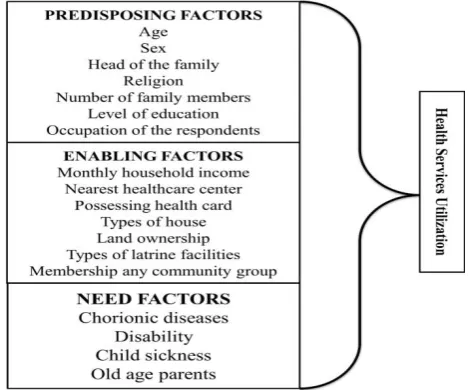
Figure 1: Conceptualization of factors affecting health care service utilization.
Conceptualization of the factors with variables
which stimulate to take action as an urgent basis i.e. chronic diseases perceived self-health disability, children's sickness, old aged parents, etc.).8,14,15
To conventionalize the model in the Bangladeshi context some exceptional variables like (membership of a community or political groups, land ownership, latrine use) are introduced newly. The factors with variables are delineated in (Figure 1).
Statistical analysis
The study applied two major analytical methods to assess the factors. First, frequency and principal component analysis (PCA) was run to determine the most contributing factors of utilizing the existing health care services.
When the data contains different measurement attributes PCA is an appropriate method to orthogonal transform of the raw dataand need to reduce the variables to explain the association or to determine which variables explain the relationship PCA is used.11 When the correlation matrix is not enough to describe the relationship then PCA is suitable to expose the findings. Generally, the factors with greater eigenvalues denote the maximum numbers are likely to be extracted. The Eigenvalue lies (0 to 1).11 In this study, Eigenvalue has been presented through a scree plot, whose horizontal Y-axis directs the number of components and their Eigenvalue in vertical X-axis. An Eigenvalue of 1 simply carries the meaning that the variables describe at least an average volume of the variance, while a factor with less than 1 Eigenvalue means the variables are not well acknowledged with an average amount to elucidate the variance.16
The Kaiser-Meyer-Olkin (KMO) and Bartlett’s test of Sphericity were considered where the value of KMO remains (0 to 1). A value of 0 denotes that the correlation is likely to be unsuitable whereas the value adjacent to 1 means the correlations are fair and trustworthy for the factors. Kaiser recommends the value greater than (0.50) can take as considerable if the value obtained below (0.5) researcher suggested going further enumerate more data set or reconsider the determined variables.17 To examine the communalities in the extraction phase is important. Because it represented by the sum of the squared loadings for a variable across factorswith a range of (0 to 1) and value close to 1 means that all of the variances in the estimated model is explained by the factors (variables).16 Factor loadings demonstrated the correlation between the factors and the original variables which then means factor loading with higher value means the factors have strong influences of the variable on the factors and closely associated with the factors.11 The range of factor loadings remain (-1 to +1), and the value close to zero represents lack of association, whereas the value near to (-1 to +1) indicates strong and fair associations.11 However, the
negative value exerts the opposite direction between the variables.
RESULTS
Table 1 demonstrates the socio-demographic characteristics corresponding to factors of health care utilization of the participants. The age of the respondents was (25 to 77) with an average of(49.42±9.18) years.15 Majority of the households (77.9%) were male-headed whereas 22.1% female-headed household's participants participated in the data acquisition. Most household (73.8%) had at least four or five family members. Among the entire participants, (39.0%) were just completed the primary level of education, while still (35.4%) didn’t own any formal education in the lifetime. Farmer profession (39.5%) dominate over the other professions. In terms of, enabling factors, (75.9%) household didn’t have any health insurance or health cards while than half of the household income was in the range (5000 to 10000 BDT), further, 75.4% household had less than half acre arable land on their own.8 As for need factors, (51.8%) participants answered that they had no chronic illness, but respondents with at least one chronic illness accounted for (20.0%). Large majority of the households (90.3%) had not any kind of disability. Slightly more than one-third (36.4%) households had children suffering from illness and 22.6% families had old aged parents suffering from different aged diseases (Table 1).
rotation sums of squared loadings value is quite sound and interpretative. The first factor obtained the highest variance (17.558%) but after rotation it has slightly decreased at (16.880%), second factors explained (9.222%-8.313%), third factors (8.215%-8.098%), four
factors (7.515%-7.984%), five acquired (7.177%-6.905%), six obtained (6.000%-6.738%), and last seven factors attained (5.691%-6.459%). It is obvious that after rotation the value of factors (4, 6, and 7) increased (Table 2).
Table 1: Socio-demographic characteristics of the participants.
Variables Categories N (%)
Predisposing factors
Age Mean (±SD) 49.42 (±9.18)
Sex Male 152 (77.9)
Female 43 (22.1)
Head of the family Husband 185 (94.9)
Wife 10 (5.1)
Religion Islam 4 (2.1)
Hindu 191 (97.1)
Number of family members
>3 23 (11.8)
4-6 144 (73.8)
Above 7 28 (14.4)
Level of education
Illiterate 69 (35.4)
Primary 76 (39.0)
Secondary 35 (17.9)
Higher secondary 8 (4.1)
Graduate 7 (3.6)
Occupation of the respondents
Unemployed 9 (4.6)
Day labour 37 (19.0)
Service holder 10 (5.1)
Housewife 29 (14.9)
Business 33 (16.9)
Farmer 77 (39.5)
Enabling factors
Monthly income (BDT) in Rs.
≥5000 5 (2.6)
5001-10000 101 (51.8)
10001-15000 72 (36.9)
15001-20000 12 (6.2)
≤20001 5 (2.6)
Distance to the nearest healthcare center
0-1 km 7 (3.6)
2-3 km 95 (48.7)
3-4 km 65 (33.3)
Above 5 km 28 (14.4)
Health card/insurance Yes 47 (24.1)
No 148 (75.9)
Types of house Rudimentary 151 (77.4)
Cement/Tin 44 (22.6)
Land ownership
Less than 0.50 Acre 147 (75.4)
1-Acre 38 (19.5)
Above 2-Acre 10 (5.1)
Types of latrine facilities Traditional septic latrine 162 (83.1)
Flush toilets 33 (16.9)
Membership any community group No 142 (72.8)
Yes 53 (27.2)
Need factors
Chronic diseases Yes 39 (20.0)
No 101 (51.8)
Disability Yes 19 (9.7)
No 176 (90.3)
Child sickness Yes 71 (36.4)
No 124 (63.6)
Old aged parents Yes 44 (22.6)
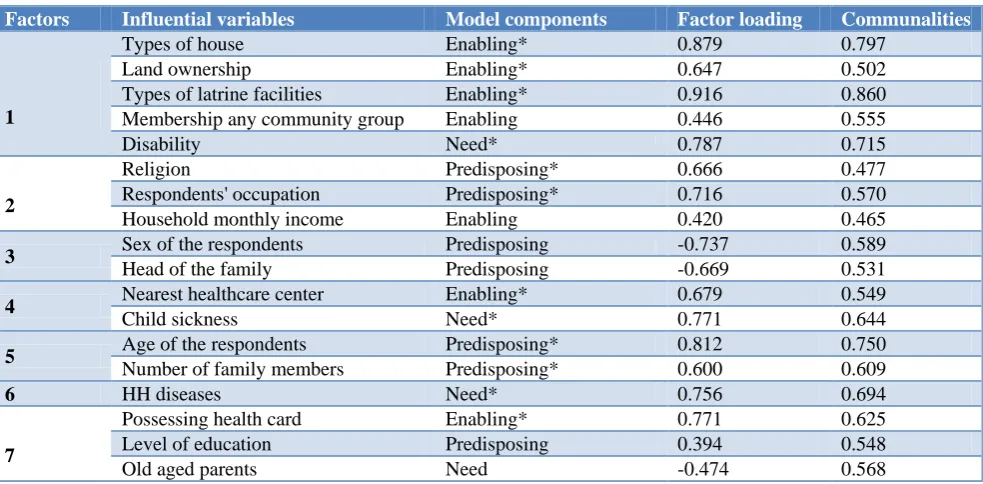
Table 2: Factors, influential variables, and their factor loading and communalities.
Factors Influential variables Model components Factor loading Communalities
1
Types of house Enabling* 0.879 0.797
Land ownership Enabling* 0.647 0.502
Types of latrine facilities Enabling* 0.916 0.860
Membership any community group Enabling 0.446 0.555
Disability Need* 0.787 0.715
2
Religion Predisposing* 0.666 0.477
Respondents' occupation Predisposing* 0.716 0.570
Household monthly income Enabling 0.420 0.465
3 Sex of the respondents Predisposing -0.737 0.589
Head of the family Predisposing -0.669 0.531
4 Nearest healthcare center Enabling* 0.679 0.549
Child sickness Need* 0.771 0.644
5 Age of the respondents Predisposing* 0.812 0.750
Number of family members Predisposing* 0.600 0.609
6 HH diseases Need* 0.756 0.694
7
Possessing health card Enabling* 0.771 0.625
Level of education Predisposing 0.394 0.548
Old aged parents Need -0.474 0.568
Kaiser-Meyer-Olkin measure of sampling adequacy 0.663; Chi-Square: 685.303; Sig. 0.000; Total variance explained by 7 factors: 61.34%. *The value acheived score above (0.5) of PCA in both two forms communalites and after rotation (factor loading).
Table 3: The relative importance of the model components.
Model component No. of variables No of influence variables by factor leadings Rank
N (%)
Predisposing 7 4 (57.14) III
Enabling 7 5 (71.43) II
Need 4 3 (75) I
Figure 2: Screen plot.
The scree plot exerts here, horizontal Y-axis directs the number of components and their Eigenvalue in vertical axis-X. It is worth pointing out that at least seven factors are stood above the determined Eigenvalue (1). The first factors achieved (3.160) eigenvalue and the value of the
rest of stay somewhere lie between (1 to above) (Figure 2).
The obtained results of this study demonstrate that each of the components of the model is correlated with the outcome variables of the household’s health services utilization. However, need (3 out of 4=75%) factors were comparatively important factors while enabling (5 of 7=71.43%) and the least important predisposing (4 of 7=57.14%) simply (need>enabling>predisposing) (Table 3).
DISCUSSION
The strength of this carried out research is that the variables of three model components are found significantly associated, which is evident by the higher factor loadings recorded with the KMO value above (0.663) which means the model is appropriately fitted having high significant value (p<0.000).7 Further, most of the communality’s values are above (0.50 or 0.60).
the highest significant factor loadings. Of the seven predisposing variables four variables are derived with high factor loadings value. Very similar studies conducted in Europeand Chinahad found similar results where sex, age, number of a family member, level of education and occupation are significantly associated with health service utilization.7,18-21 However, the present study had not found any association of individual sex, level of education, family head with utilizing the health services which they need. This is to be the possible reasons of the social context where most of the rural people of Bangladesh are not aware of their health condition or needs. As a result, these factors didn't observe as the possible factors to utilize health services. It is evident from many studies that sexis responsible for preferring health-seeking behavior.22 But as a patriarchal society, in Bangladesh to some extent women are not free to go anywhere for taking health service for their own or for family members. Alike some previous studies, in this study, enabling factors like types of house, land ownership, types of latrine facilities, proximity of healthcare centers and possessing health card are found significantly associated with the health services utilization.11,23,24 Proximity to reach the health center is positively associated factors utilizing the existing health services.
In terms of need factors, due to chronic diseases, disability and child sickness people were urgently contacted to doctors for getting services that are consistent with some previous studies that chronic diseaseis associated to health care service utilization.7,25 Based on the findings it is alarming that still a large portion of people of Bangladesh are out of proper medical facilities. Possibly this is due to the low economic establishment, education, accessibility to information regarding health services, along with poor awareness persist among rural people. People living in the rural area till believe some traditional methods (i.e. traditional healer, talisman, amulet, and jhar-fuk) for healing any illness.
The main strength of this study is; the data which this study denotes here is primary data so there is no way to be biased for presenting the real picture. Further, most of the used variables or factors in this study effectively elucidated the way of health services utilization.
This study was conducted in a village only as a result, it may not be possible to generalize for the entire rural context of Bangladesh is its significant limitation.
CONCLUSION
Utilization of health care services largely depends on the perception and attitudes of people towards disease or illness. But it is also conditioned to the ability to purchase or avail the healthcare services with economic viability as well as social and physical accessibility to health care
facilities. So further measures should be taken to uplift the socioeconomic conditions of rural people, improve the communication system, set up available health centers within the shortest possible distance by the local government authority in line with national efforts.
ACKNOWLEDGEMENTS
The authors of this research work are greatly indebted to the people of the Rangpur union of Dumuria Upazila of Khulna division in Bangladesh for their cordial assistance during data collection.
Funding: No funding sources Conflict of interest: None declared
Ethical approval: The study was approved by the Development Studies Discipline, Khulna University, Bangladesh
REFERENCES
1. Chakraborty N, Islam MA, Chowdhury RI, Bari W, Akhter HH. Determinants of the use of maternal health services in rural Bangladesh. Health Promotion International. 2003;18(4):327-37. 2. Rahman M, Islam MM, Islam MR, Sadhya G, Latif
MA. Health service seeking behavior and factors associated with underutilization of public health care facilities in a rural area of Bangladesh. Int J Pharmacy Teaching Pract. 2011;2(3):108-16. 3. Kuo T, Torres-Gil FM. Factors affecting utilization
of health services and home-and community-based care programs by older Taiwanese in the United States. Res Aging. 2001;23(1):14-36.
4. Gulliford M, Figueroa-Munoz J, Morgan M, Hughes D, Gibson B, Beech R, et al. What does' access to health care' mean? J Health Services Res Policy. 2002;7(3):186-8.
5. Peters DH, Garg A, Bloom G, Walker DG, Brieger WR, Rahman MH. Poverty and access to health care in developing countries. Ann New York Acad Sci. 2008;1136(1):161-71.
6. Islam A, Biswas T. Health system in Bangladesh: Challenges and opportunities. Am J Health Res. 2014;2(6):366-74.
7. Li YN, Nong DX, Wei B, Feng QM, Luo HY. The impact of predisposing, enabling, and need factors in utilization of health services among rural residents in Guangxi, China. BMC Health Services Res. 2016;16(1):592.
8. Kim HK, Lee M. Factors associated with health services utilization between the years 2010 and 2012 in Korea: using Andersen's behavioral model. Osong Public Health Res Perspectives. 2016;7(1):18-25.
10. Bakeera SK, Wamala SP, Galea S, Peterson S, Pariyo GW. Community perceptions and factors influencing utilization of health services in Uganda. Int J Equity Health. 2009;8(1):25.
11. Oladipo JA. Utilization of health care services in rural and urban areas: a determinant factor in planning and managing health care delivery systems. African Health Sci. 2014;14(2):322-33. 12. Yamane, Taro. Statistics: An Introductory Analysis,
2nd Edition, New York: Harper and Row, 1967. 13. Andersen R. A behavioral model of families' use of
health services. Research Ser. 1968;25:11-111. 14. Jahangir E, Irazola V, Rubinstein A. Need, enabling,
predisposing, and behavioral determinants of access to preventative care in Argentina: analysis of the national survey of risk factors. PLoS One. 2012;7(9):e45053.
15. Jang Y, Chiriboga DA, Allen JY, Kwak J, Haley WE. Willingness of Older Korean‐American Adults to Use Hospice. J Am Geriatrics Society. 2010;58(2):352-6.
16. Walker JT, Maddan S. Statistics in criminology and criminal justice. Jones & Bartlett Learning; 2019. 17. Kaiser HF. A note on the equamax criterion.
Multivariate behavioral research. Multivariate Behavioral Res. 1974;9(4):501-3.
18. Lundegren N, Axtelius B, Isberg PE, Akerman S. Analysis of the perceived oral treatment need using Andersen's behavioural model. Community Dental Health. 2013;30(2):102-7.
19. Hoebel J, Starker A, Jordan S, Richter M, Lampert T. Determinants of health check attendance in adults: findings from the cross-sectional German Health Update (GEDA) study. BMC Public Health. 2014;14(1):913.
20. Gong Y, Yin X, Wang Y, Li Y, Qin G, Liu L, et al. Social determinants of community health services utilization among the users in China: a 4-year cross-sectional study. PloS one. 2014;9(5):e98095. 21. Elwell-Sutton TM, Jiang CQ, Zhang WS, Cheng
KK, Lam TH, Leung GM, et al. Inequality and inequity in access to health care and treatment for chronic conditions in China: the Guangzhou Biobank Cohort Study. Health Policy Planning. 2012;28(5):467-79.
22. Doherty DT, Kartalova‐O'Doherty Y. Gender and self‐reported mental health problems: predictors of help seeking from a general practitioner. Br J Health Psychol. 2010;15(1):213-28.
23. Oliveira LS, Almeida LG, Oliveira MA, Gil GB, Alcione Brasileiro Oliveira C, Medina MG, et al. Access to primary health care in a sanitary district of Salvador. Ciencia Saude Coletiva. 2012;17(11):3047-56.
24. Girma F, Jira C, Girma B. Health services utilization and associated factors in jimma zone, South west ethiopia. Ethiopian J Health Sci. 2011;21(3).
25. Chan MF, Wong FK. The risk factors for hospital re‐admission in medical patients in Singapore. Health Social Care Community. 2014;22(5):488-96.