http://www.ijcmph.com pISSN 2394-6032 | eISSN 2394-6040
Original Research Article
Profile of tuberculosis cases attending a directly observed treatment
short-course centre in North Kerala
Manju Thandayan Lakshmanan*, Jayasree Anandabhavan Kumaran,
Varsha S. Kumar, Shwetha Suresh
INTRODUCTION
Tuberculosis (TB) is a specific infectious disease caused by Mycobacterium tuberculosis. The disease mainly affects lungs leading to pulmonary tuberculosis. It can also affect other organs in the body like intestine, meninges, bones and joints, lymph glands, skin causing extra-pulmonary tuberculosis.1
TB remains a worldwide public health problem despite the fact that the causative organism was discovered more than 100 years ago, and that highly effective drugs and
vaccines are available.1 In 2017, there were an estimated 10 million people who fell ill with TB worldwide. Of this estimated 10 million cases, only 6.4 million were detected and notified in 2017. The total number of deaths from TB came up to 1.6 million in 2017 (including 0.3 million people with HIV).2
To reduce the incidence and prevalence of TB in India, our country had introduced National Tuberculosis Control Program (NTP) in 1962, followed by the Revised National Tuberculosis Control Program (RNTCP) in 1993-1996, directly observed treatment short-course
ABSTRACT
Background: Tuberculosis (TB) is a worldwide public health problem. India has the highest TB burden in the world. India accounted for a quarter of global incident TB cases, 24% of multi drug resistance (MDR) TB cases and highest TB mortality rate in 2017. Thus it is important to understand the profile of TB patients. The objective of the study was to assess the profile of TB cases attending a directly observed treatment short-course (DOTS) center in North Kerala.
Methods: A retrospective record based, descriptive study was done in the DOTS center of Government Medical College Kannur, in North Kerala, to assess the profile of TB patients who attended the centre from January 2015 to July 2018. Details of 548 patients were collected from the record maintained at DOTS center. Data was entered in Microsoft Excel and analysed using Epi info7 software.
Results: The age group of 21-60 years was most affected. 68.53% of the patients were males. 45.62% of patients had extra-pulmonary TB (EPTB). Among the pulmonary TB patients, 74.27% tested positive for acid fast bacilli. Among cases of EPTB, most common type was TB lymphadenitis (40.8%) followed by tuberculous pleural effusion (22.4%). 87.59% of TB patients were started on category I treatment under DOTS.
Conclusions: In our study, affected population was mostly males and those in productive age group. This is the group that has maximum chances of exposure to TB patients. 45.62% patients had EPTB. Total number of cases is on the rise each year, with maximum cases in 2018.
Keywords: Tuberculosis, DOTS, Pulmonary TB, Extra pulmonary TB, Profile of TB Department of Community Medicine, Government Medical College, Kannur, Kerala, India
Received: 30 September 2019
Revised: 16 November 2019
Accepted: 18 November 2019
*Correspondence:
Dr. Manju Thandayan Lakshmanan, E-mail: [email protected]
Copyright: © the author(s), publisher and licensee Medip Academy. This is an open-access article distributed under the terms of the Creative Commons Attribution Non-Commercial License, which permits unrestricted non-commercial use, distribution, and reproduction in any medium, provided the original work is properly cited.
chemotherapy (DOTS) strategy in 1997 and subsequently the WHO released Stop TB strategy in 2006, which India adopted in 2007. Next, the WHO launched the “End TB” strategy, which was adopted by the World Health Assembly in May 2014. The adoption of end TB strategy has a vision of a world free of TB and a goal to end the TB epidemic. The core of this strategy was DOTS. DOTS is a strategy to ensure cure by providing the most effective medicine and confirming that it is taken.
In spite of all these efforts, India is still the country with the highest TB burden in the world, in terms of absolute number of incident cases that occur each year. India accounts for a quarter of the estimated global incident TB cases in 2017. As per the Global TB report 2017, the estimated incidence of TB in India was approximately 28 lakhs accounting for about one-fourth of the world’s TB cases. Incidence of HIV-TB co-infection cases was found to be around 87,000.3
Besides the disease burden, TB also causes a huge socio-economic burden to India. One reason for this is that TB primarily affects people in their most productive years of life. While two-thirds of the cases are males, TB takes disproportionately larger toll among young females. It was observed that TB kills more women in reproductive age group than all causes of maternal mortality combined. HIV increases a person’s susceptibility to tuberculosis infection, and in turn, TB increases the morbidity and mortality in HIV infected persons.1 With such being the current status of TB in our country, this study attempts to understand the changing profile of TB patients, over a period of three and a half years, in a district of Northern Kerala.
Objectives
The objective of the study was to assess the profile of TB cases attending a DOTS center in North Kerala.
METHODS
This is a retrospective; record based, descriptive study done in the DOTS center of Government Medical College Kannur in North Kerala, to assess the profile of TB patients who attended the tertiary care centre from January 2015 to July 2018.
Inclusion criteria
The study population included all patients with tuberculosis who attended the DOTS center during the period.
The study population came to a total of 548 patients. The details of patients were collected from the record maintained at the DOTS center. The data collected was coded and entered in Microsoft Excel spread sheet and analysed using Epi info7 software. The results were
expressed in terms of frequencies, proportions and percentages.
RESULTS
A total of 548 patients were included in the study. The age group of the study population ranged from 8 months to 87 years. Majority of the population belonged to the age group of 21-60 years (63.86%). Among the study population, majority were males (68.53%).
Out of the total 548 TB patients, 294 (53.65%) had pulmonary TB, 250 (45.62%) had extra-pulmonary TB and the remaining 4 (0.73%) patients had both. The results of sputum smear examination for the presence of acid fast bacilli (AFB) among the pulmonary TB patients are given in Figure 1.
Figure 1: AFB reports of the pulmonary TB patients (n=294).
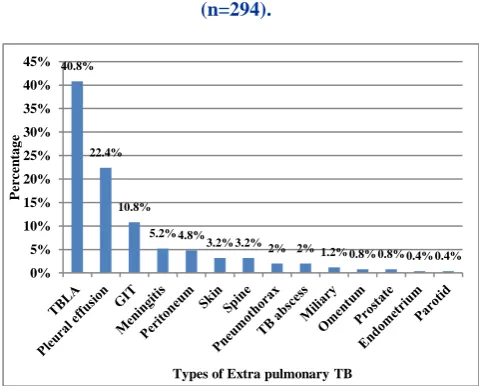
Figure 2: Types of extra-pulmonary TB among study population (n=250).
Figure 2 shows the different types of extra-pulmonary TB (EPTB) observed in the study population. The most common type of EPTB observed was TB lymphadenitis (TBLA) (40.8%), followed by tuberculous pleural
74.27%
25.73%
0.00% 10.00% 20.00% 30.00% 40.00% 50.00% 60.00% 70.00% 80.00%
AFB positive AFB negative
Per
ce
n
ta
g
e
AFB report
40.8%
22.4%
10.8%
5.2% 4.8% 3.2% 3.2%
2% 2% 1.2% 0.8% 0.8% 0.4% 0.4% 0%
5% 10% 15% 20% 25% 30% 35% 40% 45%
P
er
ce
n
tage
effusion (22.4%) and gastrointestinal TB (10.8%). It accounted for 102, 56 and 27 patients respectively.
Majority of the total TB patients, i.e. 485 patients (87.59%), were started on category I treatment under DOTS. The remaining 63 patients (12.41%) were on category II treatment. There were a total of 3 cases of HIV-TB co-infection, with 1 case each in the years 2015, 2016 & 2018. There were no such cases in 2017.
Figure 3: Distribution of TB patients each year (n=548).
Figure 3 shows the distribution of TB patients each year. The maximum number of cases has been reported in 2018 (up to July) - 144 cases, followed by 2016 - 142 cases. In all the years, the number of cases of pulmonary TB was more than extra-pulmonary TB, except in the year 2016, when EPTB cases were more in number. Every year, there has been one patient with both pulmonary and EPTB. In all the years studied, the number of cases was more among males than females.
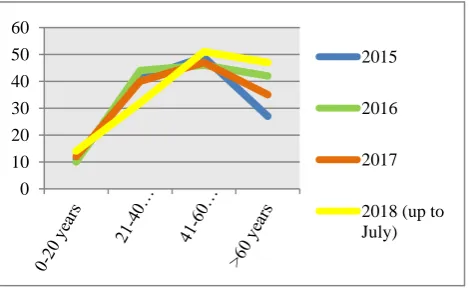
The distribution of TB patients according to the age shows a similar pattern each year. With a vast majority of cases occurring after 20 years of age, a significant peak in number of cases occurs between 41-60 years of age, each year. Figure 4 shows the age distribution of TB patients every year.
Figure 4: Age distribution of TB patients every year (n=548).
DISCUSSION
Our study showed that majority of the patients belonged to the age group 21-60 years (63.86%), with a significant peak in number of cases occurring between 41-60 years of age. This was similar to a study conducted in Calicut by Mohandas et al in 2013.4 Studies conducted in Congo, Turkey, Lucknow & UP showed a major proportion of patients ranging between 21 and 40 years of age.5-8 Whereas, in a study done in Nepal, more extremes of age group were found to be involved.9
Majority of our study population were males (68.53%), making the male: female ratio as 2.17. This was again found similar to the study conducted in Calicut, where the male: female ratio was 2.01.4 Several other studies conducted within and outside India, also showed a male preponderance. In contrast, studies done in Bangladesh, Lucknow & Uttar Pradesh had more of affected females than males.7,8,10
Tuberculosis can involve any organ system in the body. While pulmonary tuberculosis is the most common presentation, extra-pulmonary tuberculosis is also an important clinical problem. Worldwide, it is estimated that between 10 to 25% of TB infections which occur are extra-pulmonary in nature. These estimates are varied because there are certain factors, often specific to certain regions of the world that make extra-pulmonary infections more likely. Extra-pulmonary TB is especially common in people living with HIV and in children. Therefore, it is much more common in countries with a high HIV prevalence (such as South Africa) and in countries where a lot of children are infected with TB.11 In our study, we had more of pulmonary TB cases as compared to extra-pulmonary TB. The PTB: EPTB ratio calculated was 1.17. A similar trend was observed in many other studies from different parts of the world, as well as from different parts of India. However, in a study done by Ngama et al in Congo, the number of EPTB patients exceeded the number of patients with PTB.5
The most common form of extra-pulmonary TB is lymph node TB. TB bacilli often infect the lymph nodes in the neck. Pleural TB, TB of the bone and the joint, TB of the central nervous system andabdominal TB are other forms of EPTB.11 In our study as well, TB lymph node was seen to be the most common form of EPTB, followed by pleural TB. In various studies conducted in Bangladesh, Nepal & Turkey, similar findings were observed with lymph nodes being the most commonly affected extra-pulmonary site of TB. Similar findings were also observed in various studies conducted in South India, like in Calicut & Tamil Nadu. In contrast to this, studies conducted in Lucknow and western UP, in North India, showed the main site of EPTB to be pleura and skin respectively.
Tuberculosis is the leading cause of death among HIV infected individuals. There is 16-27 times greater risk of
68
61
77
88
59
80
56 55
1 1 1 1
0 10 20 30 40 50 60 70 80 90 100
2015 2016 2017 2018(upto
July)
Pulmonary Extra-pulmonary Both
0 10 20 30 40 50 60
2015
2016 2017
contracting TB in people living with HIV than among those without HIV infection.12 In our study, there were 3 patients with HIV-TB co-infection (0.005%). Similar result was observed in the study done in Calicut, where
the co-infection rate was calculated to be 0.003%.4 While observations in Maharashtra and Lucknow showed higher rates of 10.9% and 6.88% respectively.13,7
Table 1: Comparison of the profile of TB patients across the globe.
Sl.
No Place
Duration of
study Author
No. of patients
Predominant age group affected
Male: Female ratio
PTB: EPTB
Main site of EPTB
HIV co- infection (%)
1 Bangladesh 2015-2016 Raza et al10 112 15-34 years 0.806 1.16 Lymph node -
2 Nepal 2003-2006 Sreeramareddy et al9 474
<25 years and
60-70 years 1.56 1.27
Lymph node
16/79 (20.2)
3 Turkey 2010-2014 Sunnetcioglu
et al6 411 21-40 years 1.16 1.02
Lymph
node 0.01
4 Congo 2010-2011 Ngama et al5 708 21-40 years 1.42 0.97 - -
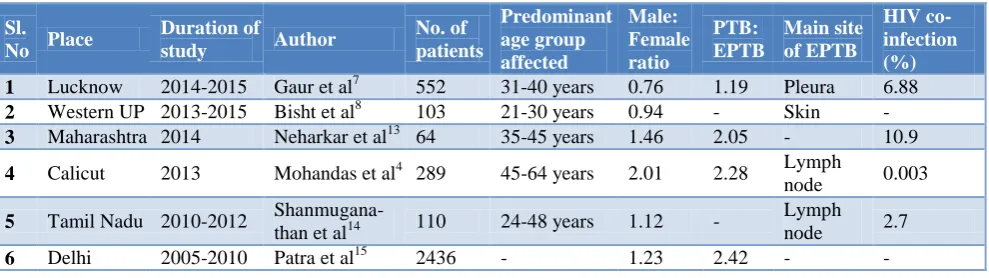
Table 2: Comparison of the profile of TB patients in different parts of India.
Sl.
No Place
Duration of
study Author
No. of patients
Predominant age group affected
Male: Female ratio
PTB: EPTB
Main site of EPTB
HIV co-infection (%)
1 Lucknow 2014-2015 Gaur et al7 552 31-40 years 0.76 1.19 Pleura 6.88
2 Western UP 2013-2015 Bisht et al8 103 21-30 years 0.94 - Skin -
3 Maharashtra 2014 Neharkar et al13 64 35-45 years 1.46 2.05 - 10.9
4 Calicut 2013 Mohandas et al4 289 45-64 years 2.01 2.28 Lymph
node 0.003
5 Tamil Nadu 2010-2012 Shanmugana-
than et al14 110 24-48 years 1.12 -
Lymph node 2.7
6 Delhi 2005-2010 Patra et al15 2436 - 1.23 2.42 - -
CONCLUSION
Our study concludes that majority of the population belonged to the productive age group of 21-60 years and majority were males. Pulmonary TB was seen to be more common than extra-pulmonary TB and lymph nodes were the most common site for extra- pulmonary TB. Among the cases of pulmonary TB, most of the cases were sputum positive. These findings point to the active spread of sputum positive TB among the community as it is the males in the working age group who have contracted the disease. Based on these results, it would be more effective if the TB elimination activities could be initiated with increased focus on the productive age group. Also, emphasis on respiratory hygiene should be emphasised among them. The number of TB cases is on the rise with maximum number of cases in our study being reported in 2018 (up to July). This can be partly attributed to the improved notification of TB cases. Thus, our TB control activities need to be strengthened with improved strategies to detect TB and prevent its spread.
ACKNOWLEDGEMENTS
I extend my sincere gratitude to the HOD, the whole staff and the interns of the Department of Community Medicine, Government Medical College, Kannur.
Funding: No funding sources Conflict of interest: None declared
Ethical approval: The study was approved by the Institutional Ethics Committee
REFERENCES
1. Park K. Park‟s textbook of preventive medicine. 25th edition. Jabalpur: m/s Banarsidas Bhanot; 2019: 188-190.
2. Medicine LS of H& T. WHO Global TB Report 2018 urges action from political leaders - expert comment_LSHTM. 2019. Available at: https://www.lshtm.ac.uk/newsevents/news/2018/wh o-global-tb-report-2018-urges-action-political-leaders-expert-comment. Accessed on 16 February 2019.
3. Kanabus A. TB in India _ Elimination, Private Care, TB burden, NSPs. Information about Tuberculosis. 2019. Available at: https://www.tbfacts.org/tb-india/ Accessed on 03 April 2019.
4. Mohandas B, Pawar AT, John A, Kumar D. Treatment outcome of tuberculosis patients treated under DOTS in Calicut. Int J Community Med Public Heal. 2017;4(5):1479-82.
Lubumbashi (DR Congo). Pan Afr Med J. 2014;17:70.
6. Sunnetcioglu A, Sunnetcioglu M, Binici I, Baran AI, Karahocagil MK, Saydan MR. Comparative analysis of pulmonary and extrapulmonary tuberculosis of 411 cases. Ann Clin Microbiol Antimicrobials. 2015;14(1):34.
7. Gaur PS, Bhaskar R, Singh S, Saxena P, Agnihotri S. An International Open access peer reviewed journal Incidence and Clinical profiles of Pulmonary and Extra-Pulmonary Tuberculosis patients in North Indian population : A hospital based Retrospective study Article Information : ABSTRACT : Int J Res Dev Pharm Life Sci. 2017;6(5):2773-8.
8. Bisht M, Agrawal R, Mohan N, Kumar P. Clinicopathological spectrum of extrapulmonary tuberculosis in a tertiary care centre of Western Uttar Pradesh with review of literature and special emphasis on the rare sites involved Table 1 : Showing the site specific distribution of EPTB. Indian J Pathol Oncol. 2016;3(4):721-6.
9. Sreeramareddy CT, Panduru K V, Verma SC, Joshi HS, Bates MN. Comparison of pulmonary and extrapulmonary tuberculosis in Nepal- a hospital-based retrospective study. BMC Infect Dis. 2008;8:8.
10. Raza AKMM, Islam MR, Nahar M, Ahmed Z. The Epidemiological Aspects of Tuberculosis Patients in a Tertiary Care Medical College Hospital of Bangladesh. J Pulm Respir Med. 2017;7:389.
11. Muller A. TB Online - Extrapulmonary TB. 2016. Available at: http://www.tbonline.info/posts/ 2016/3/31/extrapulmonary-tb/ Accessed on 16 February 2019.
12. WHO _ Tuberculosis and HIV. World Health Organiszation. 2019. Available at: https://www.who. int/hiv/topics/tb/about_tb/en/ Accessed on 25 February 2019.
13. Neharkar NS, Nagaokar A. Health profile of DOTS-registered tuberculosis cases in a tertiary care hospital. Int J Med Sci Public Health. 2015;4:910-5. 14. Shanmuganathan A, Srinivasan R, Thilagavathy G,
Satishkumar D, Sidduraj C, James B. Determination of Sites Involved, HIV Co - Infection & Utility of Diagnostic Modalities in EPTB. J Clin Diagnostic Res. 2013;7(8):1644-6.
15. Patra S, Lukhmana S, Smith KT, Kannan AT, Satyanarayana S, Enarson DA, et al. Profile and treatment outcomes of elderly patients with tuberculosis in Delhi, India: implications for their management. Transactions Royal Society Trop Med Hygiene. 2013;107(12):763-8.