Open Access
Research
On the origin of life in the Zinc world. 2. Validation of the hypothesis
on the photosynthesizing zinc sulfide edifices as cradles of life on
Earth
Armen Y Mulkidjanian*
1,2and Michael Y Galperin*
3Address: 1School of Physics, Universität Osnabrück, D-49069 Osnabrück, Germany, 2A.N. Belozersky Institute of Physico-Chemical Biology,
Moscow State University, Moscow, 119991, Russia and 3National Center for Biotechnology Information, National Library of Medicine, National
Institutes of Health, Bethesda, MD 20894, USA
Email: Armen Y Mulkidjanian* - [email protected]; Michael Y Galperin* - [email protected] * Corresponding authors
Abstract
Background: The accompanying article (A.Y. Mulkidjanian, Biology Direct 4:26) puts forward a detailed hypothesis on the role of zinc sulfide (ZnS) in the origin of life on Earth. The hypothesis suggests that life emerged within compartmentalized, photosynthesizing ZnS formations of hydrothermal origin (the Zn world), assembled in sub-aerial settings on the surface of the primeval Earth.
Results: If life started within photosynthesizing ZnS compartments, it should have been able to evolve under the conditions of elevated levels of Zn2+ ions, byproducts of the ZnS-mediated photosynthesis.
Therefore, the Zn world hypothesis leads to a set of testable predictions regarding the specific roles of Zn2+ ions in modern organisms, particularly in RNA and protein structures related to the procession of
RNA and the "evolutionarily old" cellular functions. We checked these predictions using publicly available data and obtained evidence suggesting that the development of the primeval life forms up to the stage of the Last Universal Common Ancestor proceeded in zinc-rich settings. Testing of the hypothesis has revealed the possible supportive role of manganese sulfide in the primeval photosynthesis. In addition, we demonstrate the explanatory power of the Zn world concept by elucidating several points that so far remained without acceptable rationalization. In particular, this concept implies a new scenario for the separation of Bacteria and Archaea and the origin of Eukarya.
Conclusion: The ability of the Zn world hypothesis to generate non-trivial veritable predictions and explain previously obscure items gives credence to its key postulate that the development of the first life forms started within zinc-rich formations of hydrothermal origin and was driven by solar UV irradiation. This concept implies that the geochemical conditions conducive to the origin of life may have persisted only as long as the atmospheric CO2 pressure remained above ca. 10 bar. This work envisions the first Earth biotopes as photosynthesizing and habitable areas of porous ZnS and MnS precipitates around primeval hot springs. Further work will be needed to provide details on the life within these communities and to elucidate the primordial (bio)chemical reactions.
Reviewers: This article was reviewed by Arcady Mushegian, Eugene Koonin, and Patrick Forterre. For the full reviews, please go to the Reviewers' reports section.
Published: 24 August 2009
Biology Direct 2009, 4:27 doi:10.1186/1745-6150-4-27
Received: 15 July 2009 Accepted: 24 August 2009
This article is available from: http://www.biology-direct.com/content/4/1/27
© 2009 Mulkidjanian and Galperin; licensee BioMed Central Ltd.
Background
Energetic aspects of the origin of life
The problem of origin of life on Earth (abiogenesis) remains one of the central and most intractable problems of modern biology. The current hypotheses cluster either around the "replication first" paradigm or the "metabo-lism first" concept, see [1-10] for consideration of the con-troversy between the two concepts. The "replication first" paradigm implies that formation of the first replicating entities preceded the origin of metabolism. This concept has grown from the so-called heterotrophic theory of abi-ogenesis that can be traced to Oparin, who had suggested that formation of complex proteinaceous complexes could proceed spontaneously under the conditions of reducing primordial atmosphere [11,12]. The Oparin's proposal, which was the first detailed scenario of abiogen-esis, found an experimental confirmation. It has been shown later that simple building blocks, such as amino acids and carbohydrates, indeed, could build up from inorganic compounds under the conditions imitating the reduced primeval atmosphere, provided that external energy was delivered in the form of electric discharges or UV light [13-16]. The modern successors of Oparin's hypothesis are various RNA World scenarios, where the first RNA-like molecules are seen as capable both of self-reproduction and simple metabolism and thus preceding both proteins and DNA [17-33]. The "replication first" concept has been further supported by isolation and char-acterization of RNA enzymes (ribozymes) with different catalytic activities (see [27,29,31,34,35] and references therein). In addition, oligonucleotides of up to 30–50 units could be obtained in abiogenic systems from chem-ically activated monomers (e.g. nucleoside 5'-phos-phorimidazolides [36]) when either polynucleotide chains [36-38] or mineral surfaces [39-44] were used as polymerization templates.
Still, the heterotrophic theory of abiogenesis has encoun-tered certain problems. Oparin's initial model implied that primordial atmosphere was reducing, dominated by methane and hydrogen gas [11,12]. However, according to the current views, the primordial atmosphere was more oxidized and similar to those of modern Mars and Venus,
where CO2 still makes 95% of the atmosphere with N2
and H2 being present in small amounts [45-53]. In a CO2 -dominated atmosphere, any primordial (bio)chemistry
could not start unless CO2 was reduced to organic
mole-cules capable of participating in pre-biological syntheses (see [16] and references therein). Straightforward attempts to achieve abiogenic syntheses of amino acids or
nucleobases with CO2-dominated gas mixtures so far
proved unsuccessful [16,54].
The alternative "metabolism first" concept implies that emergence of the first replicators was preceded by
estab-lishment of self-sustaining cycles of chemical reactions that could produce increasingly complex organic com-pounds (see [10,55] for recent surveys). Currently, there are two detailed evolutionary scenarios representing the "metabolism first" concept. Wächtershäuser envisioned "two-dimensional" primordial metabolic cycles driven by oxidation of iron monosulfide (FeS) into iron disulfide (FeS2, pyrite) and confined to the mineral surfaces at the sea floor [56-61]. Besides the involvement of FeS clusters in a variety of anaerobic enzymes, consideration of FeS/
FeS2 metabolism had an added benefit of accounting for
the key role of sulfur in cell metabolism. Russell and co-workers [62-71], in turn, have suggested that the first met-abolic cycles started inside porous chimneys of the deep-sea alkaline hydrothermal vents. It has been suggested that such compartmentalized structures consisting of FeS could offer three-dimensional reaction space and provide a framework for the emergence of the first cells [64].
From the viewpoint of energetics, any hypothesis of abio-genesis has to indicate explicitly the energy source(s) that could account for the (i) formation of reduced carbon compounds and (ii) primordial polymerization reactions. Therefore, it might be useful to compare the available sce-narios of abiogenesis with respect to the underlying energy mechanisms. When considering the field from this point of view, it transpires that the proponents of the "rep-lication first" scenarios, and in particular of the RNA World concept, just do not focus on primordial energetics and leave all options open (see e.g. [16]). Instead, more emphasis is put on understanding the chemistry of the primeval syntheses and the mechanisms of information processing in primordial replicating cycles [17-33].
In contrast, proponents of the "metabolism first" concept explicitly address the energetics problem. Several papers by Wächtershäuser proposed a detailed chemical mecha-nism where oxidation of FeS to FeS2 at the sea floor was used to drive the reduction of either CO2 or CO [56-61]. Indeed, the free energy of the redox transition of FeS to FeS2, at least under some conditions, is sufficient to drive the reduction of CO2. Unfortunately, so far, all attempts
to yield measurable CO2 reduction at the expense of FeS
oxidation reaction under simulated "primordial" condi-tions have failed (see [72] and references therein). The reason for this failure, as discussed in detail by Schoonen and co-workers [72], is that for redox reactions, favorable thermodynamics alone is not sufficient. In addition, the redox potential of the electron donor has to be lower than that of the electron acceptor. To drive CO2 reduction at an appreciable rate, one needs a reducing agent with a redox potential that is lower than the redox potential of the
CO2/formate redox pair, whereas the reducing potential
has been reported, albeit at unphysiologically high tem-peratures [59]. However, CO is not a major atmospheric constituent and probably never was one. In the atmos-pheres of Mars and Venus it is present in trace amounts. Instead, as argued by Schoonen and co-workers, it could arise in primordial settings predominantly via CO2
reduc-tion; the reduction of CO2 to CO is, however, even less
thermodynamically favorable than the reduction of
CO2to formic acid [72]. Regarding the energetics of the
primeval polymerization, Wächtershäuser speculated that ionic binding of the primordial building blocks to the FeS surfaces might facilitate their interaction and even make the synthetic reactions thermodynamically favorable [56-58].
In the most recent of the scenarios put forward by Russell and co-workers, hydrogen and hydrocarbons were pro-duced below the sea floor in the complex "serpentiniza-tion" reactions and then brought to the surface by hydrothermal fluids (see [71] and references therein). Considering the primeval polymerization reactions inside the porous, compartmentalized bodies of hydrothermal vents, these authors suggested that the pH gradient across
the inorganic membranes of these compartments, between the alkaline hydrothermal fluids and the more acidic primordial ocean, could have served as the energy source for primeval syntheses [70,71], by analogy with the transmembrane proton gradients on the membranes of modern bacterial cells. However, coupling of the trans-membrane proton gradient to synthetic reactions – even in most primitive bacteria – is performed by a sophisti-cated enzyme machinery which seems to be evolutionar-ily recent [73]. Therefore it remains unclear whether and how such coupling could have occurred in the inorganic systems.
The concept of the photosynthetic origin of life in the Zinc world
A few scholars have invoked the solar radiation as a poten-tial source of energy for the origin of life (see e.g. [74-85]). However, the idea of driving the abiogenesis directly by solar energy has not won much support, despite the Sun being by far the most powerful energy source on this planet [16,45,86]. The limited acceptance of this idea is probably due to several factors. First, only short-length UV quanta carry enough energy to drive primeval organic syn-theses in the absence of enzymes [75]. These quanta were available on the primordial Earth: in the absence of the ozone shield, the UV component of the solar light was by 2–3 orders of magnitude stronger than now [87,88]. However, the same UV quanta would cause photo-disso-ciation of organic compounds. Therefore, most scholars considered the UV irradiation of the primordial Sun to be a hazard for the first life forms and suggested searching for life origins at the sea floor (see e.g. [87]). Second, as the energy of UV quanta could be utilized for the synthetic reactions in many different ways, there has been no con-sensus on the particular mechanisms involved. For exam-ple, considering the ways of CO2 fixation, Mauzerall and
co-workers advocated the idea of CO2 photo-reduction to
formaldehyde in the presence of dissolved ferrous hydrox-ide [83,89,90], while other authors have argued that sev-eral naturally occurring minsev-erals possess the properties of broad-band semiconductors and could perform abiogenic photosynthesis [81,91-93]. Further, since there are several minerals with this capacity, different authors advocated participation of different minerals in the primordial (photo)syntheses. Bard and co-workers [92,93], and, more recently, Senanayake and Idriss [94] studied the
photosynthesis on the surface of TiO2 (anatase/rutile),
Halmann and co-workers tested the CO2 photo-reduction
by diverse minerals getting a high outcome with WO3
(wolframite) [81], while Schoonen and co-workers inves-tigated MnS (alabandite [95]) and ZnS (sphalerite [96]). Last but not least, no detailed – and hence testable – sce-nario of light-driven abiogenesis has been suggested so far.
Energy diagrams for FeS, ZnS, and MnS as potential donors of photo-excited electrons (left column) and for the biologically relevant electron acceptors (right column)
Figure 1
Energy diagrams for FeS, ZnS, and MnS as potential donors of photo-excited electrons (left column) and for the biologically relevant electron acceptors (right column). The Highest Occupied Molecular Orbital
(HOMO) level in the valence bands of each semiconductor is shown by a darker color than the respective Lowest Unoc-cupied Molecular Orbital (LUMO) level in the conduction band. The picture is based on data from references [72,99,122,262,264].
The first such detailed scenario has been put forward in the accompanying article [97]. This scenario centers on the role of zinc sulfide (ZnS) as a compound that uniquely combines several traits that could be decisive for the emergence of life on Earth. Among others, the argu-ments included ZnS crystals being, on the one hand, extremely efficient photo-catalysts capable of reducing
CO2 and other organic compounds with a quantum yield
of up to 80% [96,98-103] and, on the other hand, com-mon constituents of the hydrothermal vent systems typi-cally coating those that eject fluids with the temperature in the 200 – 300°C range [104-106]. The Zinc world hypothesis suggests that, as long as the atmospheric pres-sure at the surface of primordial Earth remained above ca. 10 bar, porous ZnS formations could build up in the direct reach of UV-rich sun beams, because the tempera-ture of liquid water in hot springs could remain above 200°C even in sub-aerial settings. In this "Zn world", the energy of light could be used (i) for the abiogenic, ZnS-mediated photosynthesis of diverse organic compounds, (ii) for the selection of most photochemically stable of them, and (iii) for driving the surface-catalyzed polymer-ization reactions (see [97] for details). This ZnS-mediated photosynthesis, however, would gradually decline with the drop in atmospheric pressure below 10 bar, with the ZnS-coated surfaces persisting only around deep-sea hydrothermal vents, which continue to extrude hot, Zn-rich fluids up to these days. The hypothesis further envi-sions that after the submergence of the Zn-rich forma-tions, sub-aerial biotopes had to cope with the impact of
the generally abundant Fe2+ ions. Iron, unlike zinc, is
redox-active, so that the first life forms had to undergo major changes to adjust to the iron-containing, redox-active environment.
Approaches to validation of evolutionary hypotheses
Obviously, experimental verification of this (or any other) evolutionary scenario would prove extremely difficult, if not impossible. However, as noted by Wächtershäuser [107], validation of such concepts could be accomplished through rigorous application of Karl Popper's principles of testing scientific theories [108,109]. These tests include (i) consideration of the experimental evidence, (ii) the relation of the hypothesis to earlier theories in the field, (iii) falsification tests, and (iv) demonstration of the explanatory power of the hypothesis. Popper described the falsification tests as follows: "The purpose of this last kind of test is to find out how far the new consequences of the theory – whatever may be new in what it asserts – stand up to the demands of practice, whether raised by purely scientific experiments, or by practical technological applications. Here too the procedure of testing turns out to be deductive. With the help of other statements, previously accepted, certain singular state-ments – which we may call 'predictions' – are deduced from the theory; especially predictions that are easily testable or
applica-ble. From among these statements, those are selected which are not derivable from the current theory, and more especially those which the current theory contradicts. Next we seek a decision as regards these (and other) derived statements by comparing them with the results of practical applications and experiments. If this decision is positive, that is, if the singular conclusions turn out to be acceptable, or verified, then the theory has, for the time being, passed its test: we have found no reason to dis-card it. But if the decision is negative, or in other words, if the conclusions have been falsified, then their falsification also fal-sifies the theory from which they were logically deduced" (quoted from ref. [109]). As noted by Yarus and col-leagues [25], falsification tests are especially important when hypotheses cannot be experimentally proven in principle, as in the case of evolutionary scenarios. Several falsification tests are then required, since multiple con-firmed predictions would enhance the plausibility of the initial idea [25].
In the accompanying article [97], the available evidence for the Zn world hypothesis was considered, the underly-ing physical and chemical mechanisms were analyzed, and the suggested scenario was compared to other con-cepts of the origin of life. Here, in continuation of this analysis, we formulate and check a set of predictions that follow from the Zn world hypothesis. We also address the explanatory power of the hypothesis and discuss how the suggested concept could eventually be experimentally tested.
Results
Falsification tests of the Zinc world concept
As noted by Popper, predictions stemming from the tested hypothesis must be logically uncoupled from the premises on which the hypothesis had been based [109]. The Zn world hypothesis is based on the three key premises, namely (i) the experimentally demonstrated ability of ZnS crystals and nanoparticles to photoreduce
CO2 with a high quantum yield [96,99-103,110], (ii) the
need of metal-rich hydrothermal settings for the emer-gence of first organisms [45,47,62,63,65-67,111-114] and the frequent coating of such settings by ZnS [104,115-117], and (iii) the unique photostablity of polynucle-otides that could imply their emergence in the presence of UV light as a selective factor [33,78,118-121]. Since all these premises are either physico-chemical or geological, it seemed worthwhile to focus here on the biological pre-dictions stemming from this hypothesis. A specific trait of the Zn world would be the constantly elevated
concentra-tions of Zn2+ ions. Indeed, upon reduction of CO
2 by photo-excited electrons, the negative charge of these elec-trons is compensated by protons coming from the water [99,122], according to the equation:
where ZnS* is the photo-excited state of a ZnS crystal, see Fig. 1. The resulting accumulation of positive charges in the illuminated ZnS crystals leads to their disruption and to the release of Zn2+ ions, i.e. photo-corrosion. Photo-corrosion cannot be completely prevented even by apply-ing efficient electron donors (so-called hole scavengers, see the accompanying article [97] for details and refer-ences). It remains the main obstacle in the practical appli-cations of ZnS in photoelectric devices, so that the less photo-corrosive TiO2 is routinely used [122,123]. A simi-lar photo-corrosion should have taken place within the primeval illuminated ZnS compartments and caused their
enrichment in Zn2+ ions. An environment with
continu-ously elevated Zn2+ content is geochemically unusual.
Generally, Zn2+ ions form poorly soluble salts with such widespread anions as phosphate, carbonate and sulfide,
which is why the concentration of free Zn2+ in modern
seawater is less than 2 nM [104]. The concentration of
Zn2+ ions in primordial anoxic waters should have been
lower than now because of the poor solubility of ZnS, the
predominant Zn2+ source in the ancient ocean [124]. The
available estimates of Zn2+ content in primordial waters are in the range of 10-15-10-12 M [124-126].
Hence, if we could find evidence of the emergence of life
in Zn2+-rich habitats, the Zn world hypothesis could be
considered confirmed in its key postulate. Indeed,
because the Zn2+ ions should be continuously removed by
precipitation, an elevated Zn2+ content would be expected to persist only at the continuously photosynthesizing ZnS surfaces, i.e. both the ZnS surfaces and photosynthesis (as a sink for electrons) are required. Thus, any evidence of the origin of life in a primeval Zn2+-rich milieu is, at the same time, evidence of ZnS-mediated abiogenic photo-synthesis at the primordial Earth. Such evidence could be obtained by examining properties of modern prokaryotic and eukaryotic cells: those RNA and protein molecules that stem from the Zn world could retain certain traits
from their emergence in Zn2+-rich settings owing to the
principle of chemistry conservation. As discussed in more detail elsewhere [8], this principle, which is implicitly acknowledged by natural scientists, entails that the organ-ismal chemistry can retain information about ancient environmental conditions (see e.g. [45]). Apparently, post-modification of metabolic pathways in response to environmental changes is often either not possible or evo-lutionarily less probable than simply maintaining the "ancient" intrinsic chemical milieu. For example, the cell cytoplasm is highly reduced even in those organisms that inhabit oxygenated environments. The reduced state of the cytoplasm indicates that the first cells have evolved – and the principal biochemical pathways have been estab-lished – before the atmosphere became oxygenated (which was due to the activity of cyanobacteria at 2 – 2.5 Ga [127]). The principle of chemistry conservation can be
applied to reconstruction of primordial environmental conditions even in those cases when no reliable geological evidence is available.
The Zn world concept suggests that the environment that housed the first life forms was enriched in Zn2+ ions. Then the Zn2+ ions, released upon photosynthesis, could act with the polymers at the ZnS surface. The latter inter-action could be thermodynamically favorable since the polymer molecule could potentially provide several coor-dinating bonds for a Zn2+ ion (which can form up to 6 of them [128]). However, to use all these bonding modali-ties, the Zn2+ ion had either to induce folding of the poly-mer around itself (see [129]) or to bind several polypoly-mer molecules together. Those RNA and protein molecules that succeeded in trapping Zn2+ ions, in turn, could get selective advantage either as more stable or as catalytically active ones. These Zn-containing polymers would then be likely preserved in the course of evolution and could show up in the modern cells.
Based on these arguments, we have made a set of specific predictions related to the occurrence of Zn in modern organisms. In the subsequent sections, we test these pre-dictions one by one. In order to avoid potential biases, we relied, wherever possible, on data extracted from the pub-lished literature and the publicly available databases. This testing turned out to be fairly complicated. Zn2+ ions are spectroscopically elusive: unlike other biologically-rele-vant transition metals, such as Fe, Cu, and Mn, zinc has no characteristic spectral signatures either in optical (UV-vis-ible) or in EPR spectra (see [130] and references therein). Therefore, analysis of the Zn content of biopolymers can-not rely on spectroscopy, which is, generally, the method of choice in bioinorganic chemistry. Instead, presence of
a bound Zn2+ ion in a biopolymer has to be revealed
either by methods of analytical chemistry (see e.g. [131,132]), or from structural data, or from functional measurements, e.g. of the catalytic activity in the presence of different metal ions (see [133,134] and references therein), or by bioinformatics approaches [135].
We would like to emphasize that the Zn world concept contrasts a variety of models that center around the role of iron in the emergence of life, either as Fe2+ ions in solution [77,83,89,90,136], or as iron sulfide [56-58,60-64,67,68,71,137,138]. Therefore, while analyzing the data, we specifically looked at the content of iron and other transition metals that are essential for life (hereafter "essential metals" [128]).
The presence of Zn2+ in modern RNAs
The Zn world scenario implies that the first RNA-like oli-gomers emerged within the illuminated ZnS
RNA molecules either as structural elements or catalytic cofactors.
Occurrence of Zn the RNA structures
The idea of modern RNA structures retaining the Zn2+ ions that were trapped by the first RNA molecules emerging in the zinc-rich habitats leads to the prediction no. 1: Known RNA structures should be enriched with Zn2+ as compared to
other transition metals. To check this, we have turned to the solved RNA-containing structures, available in the Protein Data Bank (PDB, [139,140]) and Nucleic Acid Database [141,142].
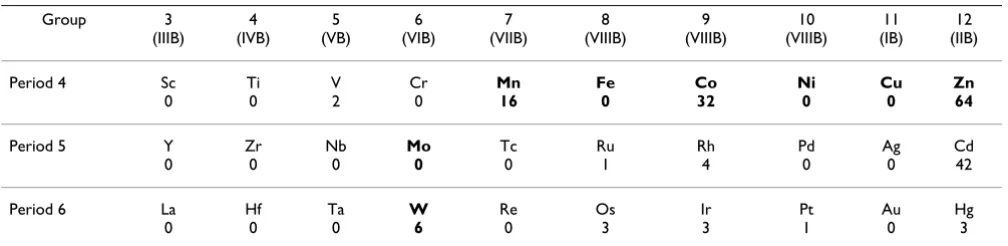
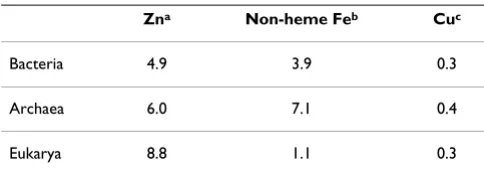
A comparison of the transition metal content in the avail-able RNA-containing structures, as listed in the MERNA (Metals in RNA) database [143,144], is presented in Table 1 (these data represent transition metal atoms located at the distance of no more than 6 Å from any atom that is part of the RNA molecule). RNA-containing structures from the PDB include such essential metals as Zn, Mn and Co, with Zn seen in 64 structures, more than any other transition metal. The relatively large number of Co-con-taining structures is due to the routine use of cobalt (III) hexamine as a standard stabilizing reagent which mimics hydrated magnesium [145]. Manganese atoms are seen in 16 structures, whereas no Fe atoms in the vicinity of RNA molecules have been reported. Our own further analysis, which used a shorter cut-off of 3 Å, has shown that the majority of these metal atoms interact not with RNA proper but with the side chains of various RNA-bound proteins. Still, in some cases we could find transition metal atoms that interacted directly with nucleotides, namely Zn in the PDB entries 1NLC, 1S03, 1YXP, 1D9F, Mn in the PDB entries 1EHZ, 1N35, 1Y3O, 2G81, and so on. The certain scarcity of these interactions is due to the poor binding of metal cations to RNA and, accordingly, the poor selectivity of such binding. Therefore transition metal atoms are usually seen in those structures that were crystallized from solutions that contained the respective salts. In the absence of added Zn or Mn salts, Mg atoms,
which are present in standard crystallization media, bind in the respective positions (as could be judged from the comparative analysis of the RNA structures that were crys-tallized several times, with different divalent cations (see e.g. [146]). Thus, a separate question that, generally, deserves clarification is the nature of the divalent metal
atoms that are bound by the RNA-protein complexes in
vivo. We have tackled this question while trying to clarify the origin of Cd atoms in the RNA-containing structures. The presence of Cd in 42 RNA-containing structures, as reported in the MERNA database (Table 1), was intriguing since Cd is not an essential metal. We have checked the Cd-containing structures and found out that 41 of them represent different ribosomal structures which were crys-tallized in the presence of CdCl2 [147,148]; CdCl2 was apparently used to improve the crystal stability (Dr. Gul-nara Yusupova, personal communication). The remaining Cd-containing structure shows a complex of the hammer-head ribozyme with substrate RNA that was crystallized in
the presence of 25 mM of CdSO4 [149]. For the 41
struc-tures related to the large ribosomal subunit, we could ten-tatively infer the nature of the metal ions that were
replaced by the added Cd2+ ions. Ramakrishnan and
co-workers have recently crystallized the whole bacterial ribosome with bound tRNA and mRNA under physiolog-ical conditions, with Mg2+ as the only divalent ion used upon preparation [150]. This structure contains dozens of Mg2+ ions, a few Zn2+ ions, and no Cd2+ ions. Apparently the Cd2+ ions in the 41 ribosomal structures occupied the
loci that are normally occupied by either Mg2+ or Zn2+
ions. Since Ramakrishnan and co-workers crystallized the ribosome without adding Zn salts to the crystallization medium [150], the Zn atoms seen in that structure should be the retained native ones. These data show that, indeed, Zn atoms are found in RNA molecules and RNA-protein complexes much more often than any other transition metal atoms.
Table 1: Transition metal content in RNA structures.
Group 3 (IIIB) 4 (IVB) 5 (VB) 6 (VIB) 7 (VIIB) 8 (VIIIB) 9 (VIIIB) 10 (VIIIB) 11 (IB) 12 (IIB)
Period 4 Sc
0 Ti 0 V 2 Cr 0 Mn 16 Fe 0 Co 32 Ni 0 Cu 0 Zn 64
Period 5 Y
0 Zr 0 Nb 0 Mo 0 Tc 0 Ru 1 Rh 4 Pd 0 Ag 0 Cd 42
Period 6 La
0 Hf 0 Ta 0 W 6 Re 0 Os 3 Ir 3 Pt 1 Au 0 Hg 3
Role of Zn in the RNA catalysis
The metal ions that were trapped by primeval RNA poly-mers could serve as catalytic centers. This consideration leads to the prediction no. 2: There should be ribozymes with Zn-dependent catalytic activities.
The detailed catalytic mechanisms of natural ribozymes have been studied only in few cases (see [35,151-155] for recent comprehensive reviews). RNA molecules are sur-rounded by a shell of diverse cations that stabilize the neg-ative charges of the backbone phosphate groups. Generally, the metal specificity of ribozymes is low, because of weaker, as compared to proteins, cation
bind-ing, so Mg2+ ions, which are always present in large
amounts as stabilizers, can seemingly occupy any metal-binding site. Therefore, the exact chemical nature of the catalytically-relevant metal ions is often difficult to deter-mine. In most cases, the catalytic activity of ribozymes could be restored by several divalent cations, e.g. by Mg2+, Zn2+, Mn2+, Cd2+, Pb2+. In some cases, however, only par-ticular ions, e.g. Zn2+ [156,157] or Mn2+ [158,159] were found to be functional. Taking into account that Cd and Pb do not belong to the essential metals [128], the availa-ble data (see e.g. [35,151-155,160-167]) indicate that the transition metals that can be relevant for natural RNA catalysis are, in the first line, Zn and Mn.
Summarizing the RNA-related predictions, it is worth not-ing that Fe has not been reported either as a structural con-stituent of RNA molecules or as a metal that is important for the RNA catalysis. The striking absence of iron atoms in the vicinity of natural RNA molecules is likely to be due to the danger of the RNA cleavage by hydroxyl radicals that could be produced in the presence of redox-active Fe2+/Fe3+ ions [168-170]. Accordingly, it seems reasonable to suggest that early evolution of RNA proceeded in habi-tats that were enriched in Mg, Zn and Mn, but not in iron.
Traces of the Zn2+-rich environment in the evolutionarily old proteins
Occurrence of Zn the oldest protein folds
The same logics as used above to suggest the possibility of stabilization of the early RNA folds by photosynthetically
released Zn2+ ions is applicable to the first proteins,
which, owing to the more versatile chemistry, could bind metal ions even tighter than RNA molecules do [128].
Zn2+-mediated protein folding has indeed been reported,
see e.g. [171,172]. Hence, it is possible to formulate the prediction no. 3: Zn2+ ions should be associated with the
evo-lutionarily oldest protein folds.
Yang and colleagues recently checked the distribution of fold superfamilies (FSF) among 174 complete genomes [173]. Of 1294 FSFs only 49 were reported to be present in all Archaea, Bacteria and Eukarya with known complete genomes. It seems reasonable to assume that these FSFs
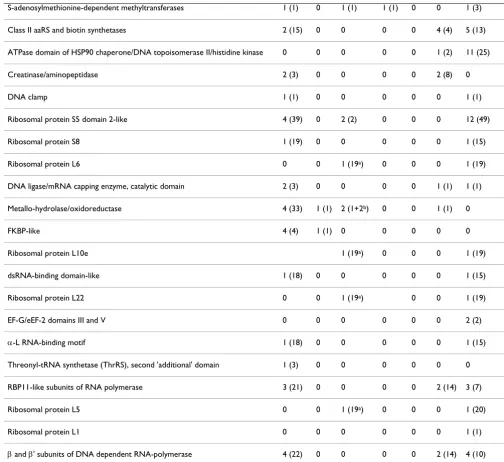
are among the evolutionarily oldest ones. Table 2 con-tains data on metals associated with these 49 FSFs [174]. Because of certain elusiveness of zinc (see above), we have checked the metal content in those representatives of these 49 FSF whose structures could be found in the PDB. Zinc atoms were found in representatives of 37 FSFs. Cad-mium atoms were present in the representatives of 21 FSFs. Again, since Cd is not an essential metal [128], Cd
atoms most likely occupy the sites where Mg2+ or Zn2+
ions are normally bound (see above and [175]). Iron atoms were associated only with representatives of three FSFs. Manganese has been found in representatives of 19 FSFs, whereas Mg atoms were present in all FSFs except for one. These data support the idea that formation and stabi-lization of the oldest protein folds have occurred in the settings that were rich in Mg, Zn and Mn, but not in Fe.
Occurrence of Zn in the proteins with the oldest functions
The Zn world concept, as well as some other evolutionary scenarios (see [28] and references therein) imply that the first enzymes could have emerged to overtake the catalytic functions from ribozymes. An up-to-date list of the known catalytic activities of ribozymes can be found in ref. [29]. In the absence of proteins or organic cofactors, ribozymes, especially the artificial ones, can catalyze breakdown and formation of diverse covalent bonds, as well as group transfer reactions by employing acid-base catalysis which often proceeds in a metal-assisted way (see the discussion above and refs. [29,35,151-155,176]). The first enzymes can be expected to have had similar catalytic activities. If the first enzymes emerged in the Zn-rich
envi-ronments, one could expect involvement of Zn2+ ions in
the oldest enzymes, particularly those that catalyze the formation and breakdown of covalent bonds and the group transfer reactions. This consideration leads to the prediction no. 4: The enzymes with evolutionarily "oldest" functions, including catalysis of formation and breakdown of chemical bonds, should depend on zinc.
Zerkle and co-workers recently analyzed biogeochemical signatures, trying to reconstruct changes in the enzyme metal content in the course of evolution [125]. Their reconstruction showed that 37% of metalloenzymes that could be timed to the "very early life" were Zn-dependent with their relative fraction dropping to 19% in modern organisms. The fraction of Mn-dependent enzymes remained almost constant (10% versus 9%), while the fraction of iron-dependent enzymes increased from 18% to 34%. These data [125] indicate that presumed evolu-tionarily oldest functions were largely performed by Zn-containing enzymes.
Table 2: Occurrence of metal atoms in the representatives of the 49 fold superfamilies that are common to Bacteria, Archaea and Eukarya
Name Zn Fe Cd Ni Cu Mn Mg
S13-like H2TH domain 3 (38) 0 0 0 0 0 3 (18)
S15/NS1 RNA-binding domain 1 (18) 0 0 0 0 0 1 (17)
Anticodon-binding domain of a subclass of class I aminoacyl-tRNA synthases 5 (21) 0 0 0 0 0 1 (2)
Ribosomal protein L11, C-terminal domain 0 0 0 0 0 0 1 (4)
5' to 3' exonuclease, C-terminal subdomain 2 (3) 0 0 0 0 2 (2) 2 (2)
Ribosomal protein S7 1 (18) 0 0 0 0 0 1 (15)
Translation proteins SH3-like domain 0 0 3 (57a) 0 0 0 1 (19)
Ribosomal protein L14 0 0 1 (19a) 0 0 0 1 (19)
Nucleic acid-binding proteins 15 (59) 0 2(1+19a) 1 (1) 1 (1) 4 (10) 10 (50)
Translation proteins 1 (6) 0 1 (19a) 0 0 0 8 (40)
EF-Tu/eEF-1α/eIF2-γ C-terminal domain 1 (6) 0 0 0 0 0 4 (18)
ValRS/IleRS/LeuRS editing domain 2 (7) 0 0 0 0 0 1 (2)
Metallo-dependent hydrolases 9 (50) 2 (9) 2 (4) 2 (32) 1 (2) 2 (2) 2 (4)
HAD-like 1 0 0 1 0 0 14 (35)
Ribosomal proteins L15p and L18e 0 0 2 (38a) 0 0 0 2 (38)
PIN domain-like 2 (3) 0 0 0 0 2 (2) 2 (2)
NAD(P)-binding Rossmann-fold domains 13 (89) 0 3 (7) 2 (2) 1 (1) 7 (14) 11 (20)
Initiation factor IF2/eIF5b, domain 3 0 0 0 0 0 0 1 (1)
Ribosomal protein S2 1 (18) 0 0 0 0 0 1 (15)
Class I glutamine amidotransferase-like 3 (4) 0 1 (2) 1 (4) 0 1 (10) 5 (5)
Nucleotidylyl transferase 8 (24) 0 1 (6) 0 0 2 (2) 9 (15)
Adenine nucleotide α hydrolases-like 8 (24) 0 1 (6) 0 0 3 (3) 13 (34)
FAD/NAD(P)-binding domain 1 (1) 0 0 0 0 1 (2) 2 (3)
P-loop containing nucleoside triphosphate hydrolases 18 (45) 0 3 (13) 2 (2) 0 8 (12) 108 (455)
Anticodon-binding domain of Class II aaRS 2 (15) 0 0 0 0 0 1 (4)
Actin-like ATPase domain 2 (3) 0 1 (1) 0 0 1 (1) 7 (38)
Ribonuclease H-like 8 (43) 0 3 (3+19a) 0 0 8 (15) 10 (76)
analyzed the involvement of transition metals as cofactors in different enzyme classes according to the enzyme descriptions in the International Union of Biochemistry and Molecular Biology (IUBMB) Enzyme Nomenclature, as documented, among others, in the ExporEnz database [177,178]. Since we needed specific information on met-als as catalysts, and not just as structural elements, we searched the MACiE (Mechanism, Annotation and Classi-fication in Enzymes) database [179,180] and its recently described Metal-MACiE supplement, a database of
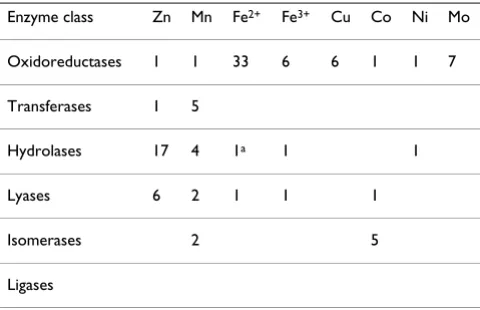
metal-based reaction mechanisms [181,182]. Andreini and co-workers [181] compared metal-containing enzymes listed in these databases with metal-containing proteins in the PDB and showed that the relative occurrence of catalytic metals in Metal-MACiE matched well that in the PDB. Table 3 shows the presence of metal cofactors in different groups of enzymes listed in Metal-MACiE database (com-plemented by information from the MACiE database to distinguish between Fe2+ and Fe3+).
S-adenosylmethionine-dependent methyltransferases 1 (1) 0 1 (1) 1 (1) 0 0 1 (3)
Class II aaRS and biotin synthetases 2 (15) 0 0 0 0 4 (4) 5 (13)
ATPase domain of HSP90 chaperone/DNA topoisomerase II/histidine kinase 0 0 0 0 0 1 (2) 11 (25)
Creatinase/aminopeptidase 2 (3) 0 0 0 0 2 (8) 0
DNA clamp 1 (1) 0 0 0 0 0 1 (1)
Ribosomal protein S5 domain 2-like 4 (39) 0 2 (2) 0 0 0 12 (49)
Ribosomal protein S8 1 (19) 0 0 0 0 0 1 (15)
Ribosomal protein L6 0 0 1 (19a) 0 0 0 1 (19)
DNA ligase/mRNA capping enzyme, catalytic domain 2 (3) 0 0 0 0 1 (1) 1 (1)
Metallo-hydrolase/oxidoreductase 4 (33) 1 (1) 2 (1+2b) 0 0 1 (1) 0
FKBP-like 4 (4) 1 (1) 0 0 0 0 0
Ribosomal protein L10e 1 (19a) 0 0 0 1 (19)
dsRNA-binding domain-like 1 (18) 0 0 0 0 0 1 (15)
Ribosomal protein L22 0 0 1 (19a) 0 0 1 (19)
EF-G/eEF-2 domains III and V 0 0 0 0 0 0 2 (2)
α-L RNA-binding motif 1 (18) 0 0 0 0 0 1 (15)
Threonyl-tRNA synthetase (ThrRS), second 'additional' domain 1 (3) 0 0 0 0 0 0
RBP11-like subunits of RNA polymerase 3 (21) 0 0 0 0 2 (14) 3 (7)
Ribosomal protein L5 0 0 1 (19a) 0 0 0 1 (20)
Ribosomal protein L1 0 0 0 0 0 0 1 (1)
β and β' subunits of DNA dependent RNA-polymerase 4 (22) 0 0 0 0 2 (14) 4 (10)
Fold superfamily names are from the SCOP database [174]; metal content is from the Protein Data Bank [140]. The figures show the non-redundant numbers of hits, the figures in parentheses show the total number of hits (see text for details).
a – Proteins of the large ribosomal subunit, whose crystals were soaked in CdCl2 during sample preparation ([147,148], 19 different PDB entries). b – Cd-substituted Zn-dependent metallo-beta-lactamase [175].
As follows from Table 3, Fe, Cu and Mo are catalytically active in oxidoreductases (which catalyze electron transfer
reactions), whereas Zn2+ ions are the predominant metal
cofactors in hydrolases (which catalyze breaking of chem-ical bonds with the involvement of a water molecule) and lyases (which catalyze breaking of various chemical bonds by means other than hydrolysis and oxidation). For trans-ferases (which catalyze transfer of functional groups from one molecule to another), the preferred metal cofactor was Mn. Only few hits were obtained for isomerases, with a preference for Co as a cofactor. As seen in Table 3, no transition metal hits were obtained for ligases (which cat-alyze joining of two molecules by forming a new chemical bond), although, according to the MACiE database, some ligases depend on Mg2+ ions. Since the number of hits in the Metal-MACiE database was small for transferases, iso-merases and ligases, the survey of these enzyme classes was expanded by extracting additional data from BRENDA (BRaunschweig ENzyme DAtabase, [183-185]). BRENDA is manually curated and contains a wealth of information on the properties of various enzymes, includ-ing presence of metals and their likely functions [183,184]. In the case of transferases, the involvement of Zn2+ ions as cofactors seemed to be less specific than of Mn2+; in the vast majority of cases, both Zn2+ and Mn2+ ions could be functionally replaced by other divalent cat-ions such as Mg2+, Ni2+ or Co2+. Involvement of Fe2+ ions in the catalysis by transferases appeared to be limited to their ability to replace Mg2+, Mn2+, Zn2+, Ni2+ or Co2+ ions; Fe2+ ions were routinely reported to be the least efficient catalysts in the series. The list of metal-dependent isomer-ases shows non-specific utilization of several divalent cat-ions such as Mg2+, Mn2+, Co2+, Zn2+, or Ni2+. In many cases, the highest enzyme activity, as compared to other cations, was reported with Mn2+ or Co2+ ions, similarly to
the data in Table 3. Specific involvement of iron has been shown only for lysine 2,3-aminomutase, where a FeS redox cluster is involved in electron exchange with the cat-alytic site [186]. Ligases generally use divalent cations, such as Mg2+, Co2+, Zn2+, or Mn2+. No evidence of specific catalytic activity of Fe in ligases could be obtained from the BRENDA database.
It is noteworthy that only two transition metals, namely Zn and Mn, are found in the representatives of all six enzyme classes [181]. Zn is by far the most abundant cat-alytic transition metal in hydrolases and lyases, whereas Mn seems to be involved in transferases and, together with Co, in isomerases. In transferases, isomerases and ligases, the pattern of the transition metal use, with a non-specific need for a divalent cation as catalyst, resembles the catalytic preferences of ribozymes (see above). The Fe2+ ions, with few exceptions, are not used in catalysis outside the oxidoreductases.
Altogether, data on metal content of proteins are consist-ent with the notion that the early evolution of enzymes could have proceeded in habitats that were enriched in Mg, Zn, and Mn, but depleted of Fe.
The elevated Zn2+ content inside modern cells
If life emerged in the environments that had relatively high levels of Zn2+ ions [97], the primordial life forms, which lacked the tools to alter their ionic content [187],
should have had high Zn2+ levels as well. In accordance
with chemical continuity principle, the ionic content of the primordial environments should be conserved inside modern cells. This leads to the prediction no. 5: The total amount of Zn2+ in the live cell should be elevated as compared
to the levels of other essential transition metals.
Early studies on the total Zn content in several bacteria produced values of ~0.03% of the dry weight, much higher than for any other transition metal except for Fe [188]. The content of Zn, as compared to Fe, was some-what smaller in Escherichia coli, but 2–3 times higher in
Micrococcus roseus and Bacillus cereus [188]. The data for E. coli were recently confirmed by inductively coupled plasma mass spectrometry analysis of whole-cell lysates,
yielding values of ~200 μM for Zn and 200–300 μM for
Fe, depending on the growth conditions [189]. The total Zn content in the human body tissues is, on average, somewhat higher than that of Fe, 3–5 mg versus 2.5–5 mg/100 g of tissue (the data were obtained from tissue samples that had been washed from blood; the amount of other transition metals was much lower [190]). It is
note-worthy that although cells contain comparable total
amounts (100–300 μM) of Fe [191,192] and Zn (see
[193] and references therein), the concentrations of free
(labile) ions differ dramatically, with the free Fe2+/Fe3+ Table 3: Metal dependence of the enzyme catalytic activities.
Enzyme class Zn Mn Fe2+ Fe3+ Cu Co Ni Mo
Oxidoreductases 1 1 33 6 6 1 1 7
Transferases 1 5
Hydrolases 17 4 1a 1 1
Lyases 6 2 1 1 1
Isomerases 2 5
Ligases
The numbers of enzymes with particular transition metals as catalytic cofactors are from the MACiE database [179,180], and its recently described Metal-MACiE supplement [181,182], see text for details.
a – Peptide deformylase, where the Fe atom is functionally replaceable
concentration of ~10 μM [191,192] and free Zn2+ present only in picomolar amounts [130,193]. These data indi-cate that intracellular Zn levels are tightly controlled; they also suggest that modern cells are more limited in Zn than in Fe.
Modern sea water contains somewhat more iron, (about 5 nM of mostly Fe3+) than Zn2+ (< 2 nM), see [104] and Table 1 in the accompanying article [97]. Hence, com-pared to the composition of sea water, Zn appears to be the transition metal that is concentrated to the highest extent in the cell. As noted by Williams and Fraústo da Silva, the primeval anoxic ocean must have contained Fe2+ ions, which are more soluble than Fe3+ ions. The available estimates of Fe2+ content in primordial waters are in the range of 10-6-10-5 M, compared to the estimate of 10-15-10 -12 M for Zn2+ ions [124-126]. Hence, the intracellular Zn
concentration of 100–300 μM reflects a very efficient scav-enging of Zn2+ ions and is consistent with the idea that the emergence of first life forms indeed occurred in very spe-cial, Zn2+-rich environments.
The metallome of the Last Universal Common Ancestor
While the idea that life originated – and the first RNA and protein molecules evolved – in Zn2+-rich settings appears to be compatible with the available data, it does not explicitly state whether these Zn2+-rich settings played any direct role in the formation of the first cells. Although it is hard to make any specific and verifiable predictions for these matters, in this section we try tracing the possible roles of Zn2+ ions at the times of the Last Universal Com-mon Ancestor of all living cellular organisms (LUCA).
All cellular life forms belong to one of the three main branches of the Tree of Life, Bacteria, Archaea, or Eukarya [194]. The conservation of a set of essential genes between the three domains of life has been considered as evidence in favor of the existence of the LUCA, see [195-197] for reviews. Some researchers view LUCA as a consortium of replicating entities which shared a common gene pool [195]. Alternatively, representatives of the LUCA were sug-gested to be full-fledged organisms comparable to mod-ern prokaryotes [198,199]. There are also numerous possible variants between these two extreme visions of the LUCA. The infrequency of inter-domain transfer of genes responsible for information processing [200-203] might indicate that these genes, at least at the LUCA stage, already formed constant genetic cores of the first organ-isms. At the same time, the easily spreading metabolic genes could form a common pool of transferable opera-tional genes [200], such that the organisms, depending on their metabolic requirements, could acquire the necessary tools from a common gene pool. The universal conserva-tion of membrane-embedded subunits of the general pro-tein secretory pathway [204] and the F- and A/V-type ATP
synthases [205] has been considered as an indication that the LUCA was already a membrane-encased life form [206]. Its membranes, however, had to be permeable to enable the exchange of genes, proteins and metabolites [73]. The recent modeling by Szathmáry and co-workers showed that "collective" metabolism, with different repli-cators contributing different metabolites to the common pool, could be a pre-condition for the viability of the whole consortium and its resistance to parasites [207].
Koonin and Martin have argued that the LUCA consortia might have dwelled in networks of iron-sulfur inorganic compartments ("bubbles") of hydrothermal chimneys [138]. As discussed in the accompanying article [97], this model fits nicely into the Zn world concept, provided that the deep-see chimneys built of FeS are replaced by "spongy" ZnS precipitates encircling the sub-aerial hot springs. Precipitation of ZnS at the sites of geothermal activity should have led to continuous formation of new, empty compartments, so that the more competitive con-sortia could overcome others by "moving in" first. As argued elsewhere [73,138,208], such a scheme implies an extensive (gene) exchange between the members of one consortium, but not between dwellers of different, physi-cally discrete inorganic compartments. It therefore resolves a major conundrum between the notion of exten-sive gene mixing that is considered a major feature of early evolution [195] and the requirement of separately evolv-ing units for the Darwinian selection.
To what extent the conclusions on primordial bioinor-ganic chemistry that we have drawn from the data on metal content in modern cells could be related to the LUCA? The intracellular Zn2+ concentration of 10-3–10-4 M is a feature that is shared by representatives of all there domains [188-190,209]. The simplest way to explain this remarkable trait is by assuming that the LUCA still lived in Zn-rich habitats. An alternative explanation would assume that the Zn content of LUCA was low and then independently increased in all three major lineages,
responding e.g. to the elevation of environmental Zn2+
level from 10-12-10-15 M in the anoxic ocean up to 10-9 M after its oxygenation [124-126]. The latter possibility, however, appears unlikely. The high total Zn content in cells is contributed not by free Zn2+ ions, which are scarce [130,193], but by large number of Zn-binding proteins mostly involved in processing of RNA and DNA. These proteins are widespread in all three domains of life and their Zn-binding motifs (in particular, so called "zinc fin-gers") are homologous [210]. Therefore it appears unlikely that these Zn-binding motifs could independ-ently develop in different lineages. Since the ligand chem-istry of these binding sites is specifically tuned to prefer
Zn2+ over other transition metal ions [211,212], it is
metal, e.g. iron, and only later adapted to binding zinc. It also appears implausible that selective Zn-enrichment of LUCA's interior could be accomplished by powerful ion pumps capable of maintaining the huge Zn gradient between the LUCA's interior and the surrounding Zn-depleted, anoxic waters. As argued elsewhere, the LUCA should have had primitive membranes [73,138,187,206] that could not hold the required Zn concentration gradi-ent of > 108; even the modern membranes can hardly do that. Thus, the most parsimonious explanation of the high cellular content of Zn in representatives of all three domains of life is by suggesting that the LUCA thrived in Zn-rich habitats that apparently were in the ionic equilib-rium with the LUCA's interior.
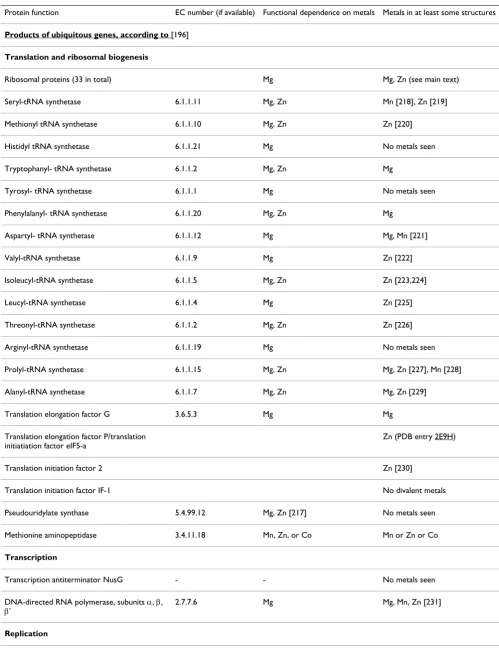
It is tempting therefore to make prediction no. 6: The pro-teins that could be attributed to LUCA should be enriched in Zn. The problem of the LUCA-specific protein set has been addressed by several authors, see [197] for a review. After completion of the first microbial genomes, a "minimal" set of genes shared by these genomes was deduced; it has been speculated that these genes made the genome of the LUCA [213,214]. With increasing number of sequenced genomes, the set of genes shared by all genomes kept shrinking; it has become clear that with just ~50 such genes it would not be possible to build a full-fledged organism [196,215]. Accordingly, it is now believed that the metabolism of the LUCA was carried out by opera-tional genes that are not necessarily conserved in all genomes [216]. However, a small set of genes that are shared by all known genomes is still believed to form the core of the LUCA's genome [196,197,215]. The products of these ubiquitous genes and their metal affinities are listed in Table 4 [217-238] and show a notable preference for Zn and Mg as metal cofactors. Iron was found only in some structures of a single protein family (YgjD/Gcp/ QRI7) of obscure function that was originally reported to have O-sialoglycoprotein endopeptidase activity, later identified as an apurinic endonuclease, and recently shown to be essential for genome maintenance in Archaea and Eukarya [234,239,240]. These data indicate that pro-teins likely to be present in the LUCA – and, hence, the LUCA itself – existed in a Zn-rich environment. As dis-cussed above, since the equilibrium Zn concentration in the primordial oceans must have been extremely low [124-126], a Zn rich environment could persist only due to some steady geochemical reaction leading to continu-ous release of Zn2+ ions, such as abiogenic photosynthesis.
Summarizing the preceding part of the Results, Zn-rich habi-tats appear to have shaped the primeval biochemistry by favoring the emergence of Zn-stabilized protein and RNA folds, as well as Zn-dependent enzymatic reactions. Seem-ingly, the development of the first life forms proceeded in the Zn-rich settings up to the stage of the LUCA.
Testing the Explanatory Power of the Zn world concept
The Zn world concept offers an entirely new look at many aspects of the primeval evolution and biochemistry. Tracking all the facts that could be explained by the Zn world concept better than by other hypotheses on the ori-gin of life is beyond the scope of this paper. In particular, we anticipate that this concept will provide a framework for many observations related to the biochemistry of zinc. Here we consider only those explanations that clearly sep-arate the suggested concept from other hypotheses of abi-ogenesis. Besides, we try focusing on the phenomena that until now did not have acceptable explanations.
Energetics of abiogenesis
The Zn world concept explains how both the reduction of
CO2 and the primeval biosyntheses could be driven by
solar energy (see the accompanying article [97] for details). Other hypotheses on the origin of life either do not consider the energetics of abiogenesis explicitly (het-erotrophic origin of life/RNA World) or, as the above dis-cussed concepts of Wächtershäuser [56-61] and of Russell and co-workers [62-71], suggest mechanisms that do not seem to be plausible from the physical or (bio)chemical viewpoints (see [72] and the Background section above).
Photostability of polynucleotides
As discussed in the accompanying article [97], (poly)nucleotides, especially those building Watson-Crick pairs, are uniquely photostable (see also [33,120,121]). The Zn world concept explains this unique photostability by the role of the UV light not only as an energy source, but also as a selective factor during the first evolutionary steps. The unique photostability of (poly)nucleotides finds no explanation in any other hypothesis on the origin of life.
The zinc paradox
Table 4: Association of essential divalent metals and the products of ubiquitous genes.
Protein function EC number (if available) Functional dependence on metals Metals in at least some structures
Products of ubiquitous genes, according to [196]
Translation and ribosomal biogenesis
Ribosomal proteins (33 in total) Mg Mg, Zn (see main text)
Seryl-tRNA synthetase 6.1.1.11 Mg, Zn Mn [218], Zn [219]
Methionyl tRNA synthetase 6.1.1.10 Mg, Zn Zn [220]
Histidyl tRNA synthetase 6.1.1.21 Mg No metals seen
Tryptophanyl- tRNA synthetase 6.1.1.2 Mg, Zn Mg
Tyrosyl- tRNA synthetase 6.1.1.1 Mg No metals seen
Phenylalanyl- tRNA synthetase 6.1.1.20 Mg, Zn Mg
Aspartyl- tRNA synthetase 6.1.1.12 Mg Mg, Mn [221]
Valyl-tRNA synthetase 6.1.1.9 Mg Zn [222]
Isoleucyl-tRNA synthetase 6.1.1.5 Mg, Zn Zn [223,224]
Leucyl-tRNA synthetase 6.1.1.4 Mg Zn [225]
Threonyl-tRNA synthetase 6.1.1.2 Mg, Zn Zn [226]
Arginyl-tRNA synthetase 6.1.1.19 Mg No metals seen
Prolyl-tRNA synthetase 6.1.1.15 Mg, Zn Mg, Zn [227], Mn [228]
Alanyl-tRNA synthetase 6.1.1.7 Mg, Zn Mg, Zn [229]
Translation elongation factor G 3.6.5.3 Mg Mg
Translation elongation factor P/translation initiatiation factor eIF5-a
Zn (PDB entry 2E9H)
Translation initiation factor 2 Zn [230]
Translation initiation factor IF-1 No divalent metals
Pseudouridylate synthase 5.4.99.12 Mg, Zn [217] No metals seen
Methionine aminopeptidase 3.4.11.18 Mn, Zn, or Co Mn or Zn or Co
Transcription
Transcription antiterminator NusG - - No metals seen
DNA-directed RNA polymerase, subunits α, β,
β'
2.7.7.6 Mg Mg, Mn, Zn [231]
DNA polymerase III, subunit β 2.7.7.7 Mg Mg [232]
Clamp loader ATPase (DNA polymerase III, subunit γ and τ)
2.7.7.7. Mg Mg, Zn [233]
Topoisomerase IA 5.99.1.2 Mg No metals seen
Repair and Recombination
5'-3' exonuclease
(including N-terminal domain of PoII)
3.1.11.a Mg Mg
RecA/RadA recombinase - - Mg
Chaperone function
Chaperonin GroEL 3.6.4.9 Mg Mg
O-sialoglycoprotease/apurinic endonuclease 3.4.24.57 Zn [239] Mg, Fe [234]
Nucleotide and amino acid metabolism metabolism
Thymidylate kinase 2.7.4.9 Mg Mg
Thioredoxin reductase 1.8.1.9 - No metals seen
Thioredoxin - Zn [235]
CDP-diglyceride-synthase 2.7.7.41 Mg No entries
Energy conversion
Phosphomannomutase 5.4.2.8 Mg Mg, Zn [236]
Catalytic subunit of the membrane ATP synthase 3.6.1.34 Mg Mg
Proteolipid subunits of the membrane ATP synthase
3.6.1.34 - No metals seen
Triosephosphate isomerase 5.3.1.1 - No metals seen
Coenzymes
Glycine hydroxymethyltransferase 2.1.2.1 Mg No metals seen
Secretion
Preprotein translocase subunit SecY - - Zn [237]
Signal recognition particle GTPase FtsY - - Mg
Miscellanous
Predicted GTPase - - No metal ligands in the structures
Additional ubiquitous gene products from ref. [215]
DNA primase (dnaG) 2.7.7.- - Zn [238]
S-adenosylmethionine-6-N', N'-adenosyl (rRNA) dimethyltransferase (KsgA)
2.1.1.48 Mg No metals seen
Transcription pausing, L factor (NusA) - - No metals seen
The lists of ubiquitous genes were extracted from refs. [196,215]. The data on metal dependence were taken from the BRENDA database [185], the presence of metals was as listed in the Protein Data Bank [140] entries. According to the BRENDA database [185], the enzymatic activity of most Mg-dependent enzymes could be routinely restored by Mn. As concentration of Mg2+ ions in the cell is ca. 10-2 M, whereas that of Mn2+ ions is
ca. 10-6 M, the data on the functional importance of Mn were not included in the table.
Table 4: Association of essential divalent metals and the products of ubiquitous genes. (Continued)
Zn as cofactor in all these enzymes has been considered enigmatic, especially taking into account the low levels of Zn in the seawater [124,128]. Moreover, while prevalence of Zn in certain types of enzymes could be attributed to
the catalytic properties of Zn2+ ions, their ubiquitous
involvement as structural elements [128,210,243] had no explanation at all. This paradoxical prevalence of Zn ions can now be explained by the shaping – and folding – of first proteins in Zn-rich habitats.
Summarizing this section, we can conclude that the Zn world concept offers a single parsimonious explanation for a set of diverse observations that have not been ration-alized so far.
Discussion
In this work, we made six non-trivial biological predic-tions stemming from the idea of the origin of life in Zn-rich settings. Specifically, we predicted that Zn2+ ions would be preferentially associated with ancient RNA and protein molecules, including ribozymes and those enzymes that catalyze evolutionarily old reactions. These predictions were tested using publicly available data, obtained in studies that had no apparent bias towards Zn. The results of these tests revealed that modern cells con-tain surprisingly high levels of Zn, which is mostly bound to its constituent molecules, DNA, RNA and proteins. The most parsimonious explanation of these observations seems to be that, indeed, the first life forms evolved in a Zn-rich environment.
In addition, following the Popper's principles, we have tested the Zn world concept by considering the ability of this concept to provide explanations for obscure facts that other theories either ignore or cannot explain. The fact that the Zn world concept has successfully passed all these tests makes it a serious contender for the title of a syncretic concept of the origin of life.
Zinc world: No country for old iron?
Some of the results obtained in the course of this work were rather unexpected, for example, the almost complete absence of the Fe atoms in the evolutionarily oldest pro-tein folds (Table 2) and in putative propro-teins of the LUCA (Table 4). The apparent absence of correlation between
nucle-otide-based cofactors such as NAD(P)H, FMN, FAD, see the accompanying article [97] and references therein) by enzymes of those energy-converting systems that eventu-ally replaced the ZnS-mediated photosynthesis. This time pattern is in agreement with the results of the above dis-cussed analysis of the changes in biogeochemical signa-tures through time [125], where the relative fraction of Zn-dependent enzymes decreased in the course of evolu-tion, whereas the fractions of the Fe- and Cu-dependent enzymes have increased. The importance of redox enzymes must have further increased with the oxygena-tion of Earth habitats, such that the total content of Fe in modern organisms is compatible with that of Zn.
Zinc world: Metals and first biotopes
Testing the predictions on metal binding by RNA and pro-tein molecules also revealed a notable presence of Mn atoms in RNA structures and the oldest protein folds. This presence of Mn might be not accidental. Manganese is unique in at least two respects:
a) Mn2+ ions are typical constituents of hydrothermal fluids [259,260]. In experiments that modeled the high-pressure conditions at hydrothermal vents, MnS precipitated at the same rate as ZnS, i.e. much slower than sulfides of Fe and Cu [259]. Hence, one can expect that the sulfides of Zn and Mn could precipitate at approximately the same distance from the orifices of the primeval sub-aerial hot springs and could form mixed ZnS/MnS haloes around them, as found in the ancient volcanogenic metal sulfide (VMS) deposits where the haloes of neighboring vents intersect and join into networks [105,261].
b) MnS is the only other transition metal sulfide – besides ZnS – that can photoreduce CO2 albeit, seem-ingly, with a lower quantum yield (see Fig. 1 and refs. [95,262]). The band gap of MnS is smaller than that of ZnS, about 3–3.5 eV versus 3.2–3.9 eV (see Fig. 1 and [262-264]). Because of the smaller band gap, MnS can photoreduce CO2 by using visible light.
Hence, photoactive formations that contained MnS in addition to ZnS could use for photosynthesis not only the UV quanta, but also the visible light (up to ca. 450 nm), which could increase the productivity of the first photo-synthetic communities. In addition, because of its lower scattering, visible light could penetrate deeper into the porous interior of the photosynthetic edifices. We would like to note that the possible supportive role of Mn in the Zn world did not follow from the premises of the original hypothesis [97], but transpired during its testing.
The Zinc world concept provides a plausible answer to the question why some transition metals are essential for
liv-ing organisms while others are not. The less frequent – as compared to Zn and Mn – usage of other transition metals as cofactors can be explained by their scarcity in the set-tings that hosted the first life forms. Generally, hydrother-mal fluids contain not only Zn2+, Mn2+ and Fe2+ ions, which we have discussed so far, but also notable amounts of Pb, Cu, Ni, Co and some other metals, with exact com-position varying depending on location [104-106,260]. These metals are also found, in variable amounts, in the ancient VMS deposits (see [261,265] for reviews and the accompanying article [97] for further details and refer-ences). However, the only metal sulfides that can
photore-duce CO2 are ZnS and MnS (see [95,99,122,262,264]).
Other transition metals, if present as substantial impuri-ties in the ZnS/MnS settings, would function as energy traps for the photo-excited electrons (see Fig. 1 and ref. [264]) and decrease the quantum yield of the abiogenic photosynthesis. Hence, the exact metal content of sulfide precipitates, most likely, could vary at different spots of primeval hydrothermal activity depending on (i) the chemical composition of the underlying crust, (ii) the temperature of hydrothermal fluids and (iii) their pH value (as it varies nowadays, see [104-106,260]). How-ever, only those precipitates made of ZnS and MnS could photosynthesize, support the first organisms, and, hence, be inhabited. Accordingly, if we consider a particular tran-sition metal ion, the probability of its recruitment for some primeval biochemical task could be proportional to its concentration at a particular habitat multiplied by the number of potential "recruiters", i.e. the life forms present. As a result, some photosynthetically inert transi-tion metals became involved only occasionally (e.g. Co, see Table 3 and ref. [266]) or upon later evolutionary steps (as Fe, see discussion above), whereas others failed to attain any essential biological function (e.g. Pb).
The suggested concept might also explain why aluminum, although widespread in the Earth crust and soil, has not been recruited for biochemical tasks. The sulfides of alu-minum, as well as of titanium, are unstable in water. Therefore aluminum does not precipitate at the spot of hydrothermal activity but becomes dissolved in water and apparently comes down later, far away from the hydro-thermal orifices [267]. The absence of aluminum among essential metals, when combined with the importance of sulfur for biochemistry, appears to discount those models of abiogenesis that envision the origin of life in clays (see [268] and references therein) since clays are aluminum silicates that, unlike hydrothermal sulfide precipitates, do not contain sulfur.
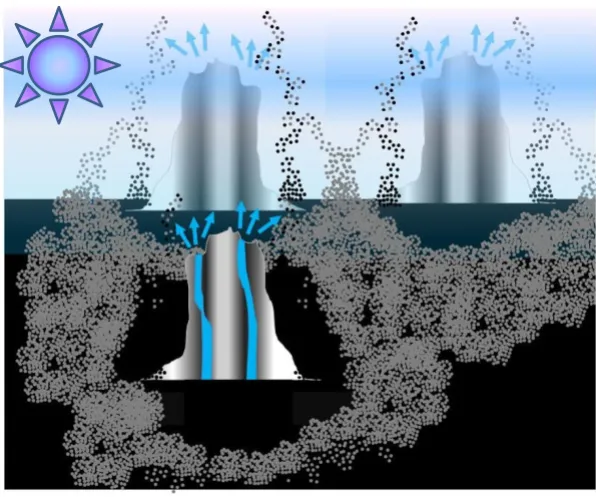
prime-val hot springs. These networks of joined rings at the spots of geothermal activity, a kind of primeval "Yellowstone Park" realm, could represent the first Earth biotopes (see Fig. 2).
Decline and fall of the Zinc world
We can only speculate on the sequence of events that fol-lowed the drop in the atmospheric pressure below 10 bar and the gradual decay in the delivery of hot, Zn-rich hydrothermal fluids to the illuminated settings. An obvi-ous consequence of these developments was gradual van-ishing of illuminated ZnS surfaces and cessation of abiogenic photosynthesis.
As suggested in the accompanying article [97], ZnS-dependent communities should have been functionally stratified, just as the modern phototrophic communities are (see [45,269] and references therein). If so, the inhab-itants of different ZnS strata would encounter vastly differ-ent levels of UV irradiation and evolve under differdiffer-ent selective pressures. In particular, those inhabiting upper, light-exposed layers would need some protection from the damaging UV light. Such protection could be pro-vided by UV-absorbing porphyrins and/or chlorins (pre-cursors of chlorophylls). Being attached to proteins, these rings could convert the UV quanta, after absorbing them
directly or getting them from nearby aromatic amino acids, into harmless red quanta [270]. In response to the demise of the ZnS-mediated photosynthesis, the life forms in the upper layers could use their chlorin-contain-ing proteins to catalyze light-driven separation of electric charges [270] and thus become capable of reducing such compounds as e.g. NAD(P)H, which could then convey the electrons to metabolic chains. Sequence and structural analyses showed that modern photochemical (photosyn-thetic) reaction centers could have emerged from dimeri-zation of the ancestral simpler chlorin-carrying membrane proteins [270-275], which, in turn, could function as UV-protectors of primordial cells [270]. Hal-mann and colleagues [81] noted the similarity between physical mechanisms of the chlorophyll-based and semi-conductor-based photosyntheses, which both include light-induced charge separation followed by the stabiliza-tion of the reduced states, as shown in Fig. 3. This figure also shows that if we focus on the photosynthesis by ZnS nanoparticles, even the sizes of the abiogenic and bio-genic photochemical devices match each other. In addi-tion, the same reaction of sulfide/sulphur oxidation is used to re-fill the photo-generated electron vacancies (holes) in the most primitive, homodimeric photochemi-cal reaction centers of green sulfur bacteria [276,277]. The disadvantage of the modern protein-based photoreaction
A schematic representation of interweaved haloes made of porous ZnS/MnS (shown as aggregates of grey spheres) around the sub-aerial, hydrothermal hot springs
Figure 2