R E V I E W
Open Access
Fermented liquid feed for pigs: an ancient
technique for the future
Joris AM Missotten
1*, Joris Michiels
2, Jeroen Degroote
2and Stefaan De Smet
1Abstract
Fermented liquid feed is feed that has been mixed with water at a ratio ranging from 1:1.5 to 1:4. By mixing with water, lactic acid bacteria and yeasts naturally occurring in the feed proliferate and produce lactic acid, acetic acid and ethanol which reduces the pH of the mixture. This reduction in pH inhibits pathogenic organisms from developing in the feed. In addition, when this low pH mixture is fed, it reduces the pH in the stomach of pigs and prevents the proliferation of pathogens such as coliforms andSalmonellain the gastrointestinal tract. For piglets, the use of fermented liquid feed offers the possibility of simultaneously providing feed and water, which may facilitate an easier transition from sow’s milk to solid feed. Secondly, offering properly produced fermented liquid feed may strengthen the role of the stomach as the first line of defense against possible pathogenic infections by lowering the pH in the gastrointestinal tract thereby helping to exclude enteropathogens. Finally, feeding fermented liquid feed to pigs has been shown to improve the performance of suckling pigs, weaner pigs and growing-finishing pigs. In this review, current knowledge about the use of fermented liquid feed in pig diets will be discussed. This will include a discussion of the desirable properties of fermented liquid feed and factors affecting fermentation. In addition, advantages and disadvantages of fermented liquid feed will be discussed including its effects on gastrointestinal health, intestinal pH and the types of bacteria found in the gastrointestinal tract as well as the effects of fermented liquid feeds on pig performance.
Keywords:Fermented liquid feed,Lactobacillusspp, Pigs, Probiotics, Yeasts
Introduction
Liquid feeding involves the use of a diet prepared either from a mixture of liquid food industry by-products and conventional dry materials, or from dry raw materials mixed with water. By definition fermented liquid feed is feed that has been mixed with water, at a ratio ranging from 1:1.5 to 1:4, for a period long enough to reach steady state conditions. If there is almost no time be-tween mixing and feeding or the period for fermentation is too short to reach steady state conditions, the term li-quid feed or non-fermented lili-quid feed is used [1].
By mixing with water, lactic acid bacteria and yeasts nat-urally occurring in various feed ingredients proliferate and produce lactic acid, acetic acid and ethanol which reduces the pH of the mixture [2]. This reduction in pH inhibits pathogenic organisms from developing in the feed [3]. In addition, when this low pH mixture is fed, it reduces the
pH in the stomach of pigs and prevents the proliferation of pathogens such as coliforms and Salmonella from developing in the gastrointestinal tract [2].
The interest in the fermentation of feed for improving the performance of piglets and pigs increased dramatic-ally after the announcement of the ban in the European Union on the use of antibiotics as antimicrobial growth promoters for swine. The potential of fermented liquid feed, as an alternative to the use of growth promoting antibiotics has been discussed in four recent reviews [1,2,4,5]. In this review, recent information about the use of fermented liquid feed in pigs will be provided.
Production of fermented liquid feed
Fermented liquid feed can be produced by fermenting a complete feed or by fermentation of the grain fraction and then mixing the fermented grain with other ingredi-ents in order to formulate a complete diet [1]. Ferment-ing complete feeds is the easiest way to produce fermented liquid feed but this method can be associated with some problems. The fermentation process can
* Correspondence:[email protected] 1
Laboratory for Animal Nutrition and Animal Product Quality, Department of Animal Production, Ghent University, Ghent, Belgium
Full list of author information is available at the end of the article
cause a loss of essential nutrients such as vitamins and amino acids especially synthetic amino acids which may have been added to the feed [6-9]. Therefore, some au-thors advocate fermentation of the grain fraction only instead of the complete feed [7,8,10-14]. The fermented grain fraction may be used to make a range of diets, so that“phase feeding”can be implemented using the same fermented grain. Grains are also a more consistent prod-uct to ferment, compared with a complete feed contain-ing multiple contain-ingredients [8]. In addition, fermentation of cereals often results in a more rapid fermentation as ce-reals have a lower buffering capacity than compound feeds [2].
In order to successfully control the development of pathogenic organisms, fermented liquid feed must con-tain adequate amounts of lactic acid [15]. Lactic acid production can arise from spontaneous fermentation or by inoculating the feed with a culture of lactic acid bac-teria prior to fermentation. Spontaneous fermentation is most often conducted using batch fermentation. In batch fermentation, the feed and water mixture is fer-mented without replacement of a portion of the fermen-ted liquid feed [11]. The advantages of this system is that fermentation is easier to control and if undesirable fermentation occurs, it is only one batch of feed that is ruined [8,16]. However, batch fermentation can take sev-eral days in order to produce a quality fermented liquid feed. In addition, under commercial farm conditions, it is difficult to run a batch feeding system because it is virtually impossible to clean and sterilize the system at every filling [4].
Beal et al. [17] concluded that spontaneous fermenta-tion is not a reliable system to obtain a safe and palat-able final product since variations in the pattern of fermentation occur. In addition, other studies have shown that uncontrolled/spontaneous fermentation re-sults in higher concentrations of both acetic acid and biogenic amines which adversely affect the palatability of fermented liquid feed diets [8,9]. Therefore, spontaneous fermentation is not advisable. However, should it be ne-cessary to use spontaneous fermentation, the quality of spontaneously fermented liquid feed can be improved by the addition of copper to the fermentation medium which speeds up lactic acid production [18].
The quality of fermented liquid feed can also be im-proved by the inoculation of the feed with lactic acid bacteria that rapidly produce high concentrations of lac-tic acid [8,19-21]. Inoculation is parlac-ticularly valuable when fermenting only the grain fraction, considering that the production of lactic acid should be higher to compensate for the dilution and buffering effects of the other feed components when incorporated into a complete feed [7]. Bacterial strains to be used as inocu-lants for production must have a high capacity for lactic
acid production and should be active against enteric pathogens [15]. Therefore, a considerable amount of re-search has been conducted to select beneficial strains of lactic acid bacteria for fermented liquid pig feed pro-duction [20,21]. For example, Missotten et al. [21] tested 146 strains of bacteria for their ability to control Salmonella. Bacterial species often used for inoculating feed to produce fermented liquid feed areLactobacillus plantarumandPediococcusspp. [1].
Another technique for ensuring adequate production of lactic acid is a technique known as ‘back slopping’ [22]. In this technique, fresh feed and water are mixed with material from a previously successful fermentation which acts as an inoculum for the new mixture [23]. This allows for the gradual selection of lactic acid bac-teria and an accelerated fermentation [23]. Compared with batch fermentation which takes several days to pro-duce a quality fermented liquid feed, fermented feeds produced by back slopping can be fed within a few hours. However, Brooks [7] pointed out the possibility that this may result in the development of a microflora dominated by yeasts. Abundant yeast growth can have either negative or positive effects on the nutritive value of fermented feeds depending on the strains present.
Plumed-Ferrer et al. [24] showed that maintaining 25% residual liquid in the tank to inoculate the fresh liquid feed added to the tank was sufficient to maintain a proper fermentation. Moran et al. [12] found that there was no advantage to keeping more than 20% of the fer-mented wheat when performing fermentation. There-fore, although a residual retention of 50% is mostly commonly used, it seems that a lower proportion can be used with 20% being the lowest percentage which still ensures desirable feed characteristic when using back slopping.
Factors affecting the quality of fermented liquid feed
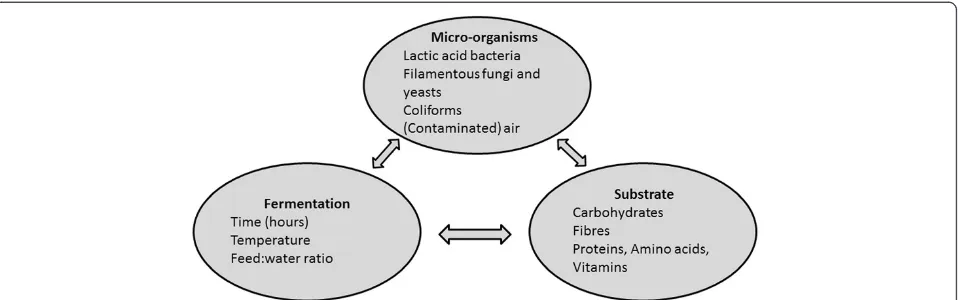
Factors affecting the quality of fermented liquid feed are displayed in Figure 1. Factors affecting the quality of the final end product include the types of micro-organisms initially present, substrate quantity and quality as well as various fermentation parameters [1,2,25,26].
The amount of lactic acid bacteria naturally present on the feed or the amount of lactic acid bacteria added to the feed, determine the extent of lactic acid production. The faster this production, the faster the drop in pH and the faster pathogenic bacteria such asSalmonella spp. or Escherichia colican be reduced [1].
pentosaceus tend to be the most abundant lactic acid bacteria strains present in fermented liquid feed [31].
Olstorpe et al. [31] reported that the composition of the bacterial species in fermented liquid feed changes during the fermentation process. They showed thatPediococcus pentosaceuswas the dominant population at the beginning of a spontaneous fermentation, but after 3 days of con-tinuous fermentation, Lactobacillus plantarum became the dominant population. This was also observed in in-oculated fermented liquid feed where the lactic acid bacteria strain used to inoculate the feed did not remain the dominant lactic acid bacteria strain in the fermented liquid feed [1,32].
The population diversity of yeasts present in fermen-ted liquid feed is very high and deserves further investi-gation [29,31]. In fermented liquid feed produced with wet wheat distillers’grains, whey or tap water, the dom-inant yeast species tended to be Pichia galeiformis, Pichia membranifaciens and Pichia anomala respect-ively. In a more recent study, Olstorpe et al. [33] found another Pichia species, namelyPichia fermentans, to be the most abundant yeast species present, independent of the lactic acid bacteria culture used to inoculate the fer-mented liquid feed. However, Gori et al. [29] found that Candida milleriandKazachstania bulderiwere the pre-dominant yeast species found in fermented liquid feed samples obtained from 40 Danish farms with an average contribution of 58.4 and 17.5% to the total yeast count.
The amount of yeast present can affect the quality of fermented liquid feed. Both positive and negative effects have been reported when the fermentation is dominated by yeasts depending on the stains of yeast present [1]. Yeasts have the ability of binding enterobacteria to their surface, thereby blocking the binding of these bacteria to the gut epithelium [34]. Therefore, high concentrations of yeasts in the fermented liquid feed may be beneficial. For example, Jensen and Mikkelsen [19] reported an in-verse relationship between the concentration of yeast
and enterobacteria in the gastrointestinal tract of pigs. In contrast, a high concentration of yeast can result in the production of “off-flavours” and taints due to the production of compounds such as acetic acid, ethanol and amylic alcohols which make the feed less palatable [8,35].
Plumed-Ferrer and von Wright [36] indicated that the addition of weak acids during fermentation can success-fully reduce the growth of yeasts without interfering with lactic acid bacteria development. Acids that showed good results were formic acid, potassium sorbate and benzoic acid. The addition of these acids may help to re-duce problems (e.g. loss of energy, rere-duced palatability, foaming) resulting from excessive yeast growth. A draw-back to yeast production can be the production of acetic acid,‘off-flavours’ and ethanol, which may diminish the palatability as well as the dry matter and energy content of the feed [19].
Other parameters such as fermentation temperature, the interval between and the degree of back slopping (partial replacement of fermented liquid feed by fresh li-quid feed in continuous fermentation) and the feed to water ratio used can also have an effect on the fermenta-tion characteristics of the fermented liquid feed [8].
The effect of different temperatures on the quality of fer-mented liquid feed was studied by Jensen and Mikkelsen [19]. They reported that fermentation of feed at tempera-tures above 20°C did not provide any advantage over producing fermented liquid feed at 20°C. At 20°C, the coli-form count was barely above the detection limit of 3 log10
CFU/g fermented liquid feed. However, the authors did stress that the temperature needs to be at least 20°C if the required pH at feeding is to be lower than 4.5. This is be-cause enteric pathogens, such as E. coli and Salmonella spp., do not tolerate pH values below 4.5 [37].
reduction of these bacteria was much shorter at 30°C compared with 20°C. Therefore, although the minimal temperature for obtaining optimal fermented liquid feed is a temperature of 20°C, a temperature of 30°C is preferable since it allows a more rapid production of lactic acid and a more rapid exclusion of any entero-pathogens [16].
Adding cold water to the system should also be avoided with back slopping. For example, adding water immedi-ately from the tap (5-7°C) will cold-shock the system. This could cause the induction of cold-shock protein formation in enteropathogens and this can protect them and allow them to persist for a longer duration in the feed [38,39]. Furthermore, cold-shock inhibits the growth of lactic acid bacteria and allows yeasts to become dominant [39].
The feed to water ratio used for the production of li-quid feed or fermented lili-quid feed can fluctuate between 1:1.5 and 1:4. From the overview given by Plumed-Ferrer and Von Wright [4] and Niba et al. [25], it appears that the most common slurry given to pigs involves a feed to water ratio between 1:2 and 1:3.
Desirable characteristics for fermented liquid feed
Van Winsen et al. [3] described the desirable characteris-tics for fermented liquid feed as having a pH below 4.5, lactic acid bacteria concentrations above 9 log10 CFU/
mL, lactic acid concentrations above 150 mmol/L and acetic acid and ethanol concentrations below 40 and 0.8 mmol/L, respectively. Beal et al. [38] reported that in order to prevent the growth of Salmonella spp., liquid feed needs to contain at least 75 mmol/L of lactic acid. Beal et al. [38] and Brooks et al. [8] reported that in order to reduce the concentration of enterobacteria, the concentration of lactic acid should be higher than 100 mmol/L. This concentration of lactic acid can have a beneficial effect on feed intake, daily gain and feed effi-ciency [40].
Although Van Winsen et al. [3] set the upper limit of acetic acid at 40 mmol/L, other authors indicated that a acetic acid concentration above 30 mmol/L could already negatively affect the palatability of fermented liquid feed [7,8,16]. However, Canibe et al. [41] reported that piglets fed fermented liquid feed with added acetic acid at levels up to 120 mmol/L showed no negative effects on body weight gain.
Effect of fermented liquid feed on the microbes in the gastrointestinal tract
The composition of the microbial population in the gastrointestinal tract can be altered by the use of fermen-ted liquid feed. The most common change is an increase in the concentration of lactic acid bacteria particularly in the stomach and small intestine [6]. Moran et al. [12], re-ported that the ratio of lactic acid bacteria to coliform
bacteria in the lower gut of the pigs weaned using fermen-ted liquid feed was shiffermen-ted in favour of lactic acid bacteria, while in piglets fed dried feed, this ratio was shifted in favour of the coliforms.
The magnitude of the change can be affected by the fermentation conditions. For example, Canibe and Jensen [6] found no differences in the number of lactic acid bac-teria present in the distal small intestine of growing pigs when the gastro-intestinal content was incubated at 37°C (Table 1). However, at an incubation temperature of 20°C (same as production temperature for the fermented feed), the proportions of lactic acid bacteria in the stomach and distal small intestine were significantly higher in growing pigs fed fermented liquid feed compared with dried feed or liquid feed.
Another significant change in the microbial population in the gastrointestinal tract is an increase in the number of yeast cells (see Table 1). As noted earlier, yeasts have the ability of binding enterobacteria to their surface, thereby blocking the binding of these bacteria to the gut epithelium [34].
The increase in lactic acid bacteria and yeast cells seems to be an excellent strategy to achieve a reduction of enter-opathogens such asSalmonellaspp. and E. coli.Recently, Canibe and Jensen [2] reviewed the value of fermented li-quid feed in reducing enteric diseases in pigs. From sur-veillance studies, it is clear that fermented liquid feed reduced the incidence ofSalmonellaspp. [42-45].
Effect of fermented liquid feed on pH in the gastrointestinal tract
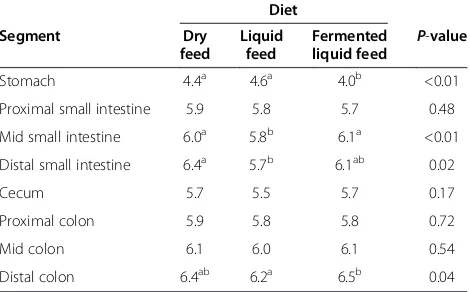
The results obtained in a study by Canibe and Jensen [6] indicate the changes in pH in the different segments of the gastrointestinal tract when pigs are fed fermented li-quid feed, lili-quid feed or dried feed (Table 2). The most dramatic change is a decrease in the pH in the stomach. The stomach is an important barrier against pathogens [46] and lowering the pH may strengthen this barrier and prevent coliform scours [47], especially in newly weaned piglets which are often incapable of producing sufficient amounts of gastric acid [48]. In addition, Radecki et al. [49] suggested that a lower gastric pH may allow better proteolytic activity in the stomach thus improving the growth of pigs fed diets containing fermented liquid feed.
In contrast to the stomach, the pH in the small intes-tine of piglets fed fermented liquid feed is often higher than in piglets fed dried feed or liquid feed [6,19,50,51]. This may be related to an increased secretion of pancre-atic juice, stimulated by the low pH and high lactic acid concentrations in the fermented liquid feed [4,19].
Advantages of feeding fermented liquid feed
Kil and Stein [5] have identified fermented liquid feed as one of the most effective feeding strategies to replace the use of antibiotic growth promotors. Beneficial ef-fects have been observed with suckling pigs, weaner pigs and growing-finishing pigs. The magnitude of the improvement is related to the level of pathogens present in a given swine operation.
The new born pig has a sterile gut and acquires its characteristic flora through contact with its mother and the environment [52]. According to Kenny et al. [53], the period immediately after birth may be the most im-portant window for establishing a potentially beneficial bacterial community, which can result in life-long, stable associations also called bacterial ‘imprinting’. Feeding sows fermented liquid feed influenced the bacterial gut
population of their offspring [54]. Piglets from sows fed fermented liquid feed had lower coliform counts in their feces compared with piglets from sows fed non-fermented liquid feed or dry diets. In addition, the lactic acid bacteria counts were higher in the feces of piglets from sows fed fermented liquid feed compared with other piglets. This may be an indication that using the correct probiotic strain for producing the fermented li-quid feed may result in microbial imprinting of the pig-lets’ microflora and therefore it may be possible to develop a bacterial population which is resistant to ad-verse ecological shifts at times like weaning.
Missotten et al. [1] presented a summary of several in vivo trials performed with dry feed, liquid feed or fer-mented liquid feed and their effect on the performance
Table 1 Microbial counts [log10CFU/g sample] along the gastrointestinal tract of pigs fed either dry feed, liquid feed
or fermented liquid feed (feed to water ratio 1:2.5, back slopping with 50% retention at 20°C)
Diet
Segment Dry feed Liquid feed Fermented liquid feed P-value
Lactic acid bacteria (20°C)
Stomach <5.4 (3)a 7.9b 9.0c <0.01
Distal small intestine <6.3 (5)a <6.5 (3)a 7.2b 0.01
Caecum <6.0 (5) <6.2 (2) <6.6 (2) 0.21
Mid colon <6.1 (5) <6.3 (3) <6.3 (4) 0.34
Lactic acid bacteria (37°C)
Stomach 8.8 8.7 8.9 0.35
Distal small intestine 8.2 8.6 8.4 0.41
Caecum 8.7ab 9.0a 8.3b 0.04
Mid colon 9.2a 9.2a 8.5b 0.01
Enterobacteria
Stomach 3.8a 5.7b <3.2 (4)c <0.01
Distal small intestine 5.5a 6.6b <4.1 (3)c <0.01
Caecum 5.9a 6.3a 5.0b 0.02
Mid colon 6.2a 6.6a 4.7b <0.01
Yeasts (20°C)
Stomach <3.4 (2)a 3.7a 5.4b <0.01
Distal small intestine <3.4 (3)a 3.9b 7.0c <0.01
Caecum <3.2 (2) <3.3 (1) <5.1 (1) 0.07
Mid colon <3.2 (3)a <3.3( 1)a <4.6 (1)b 0.03
Yeasts (37°C)
Stomach <3.3 (4)a <3.6 (2)a 4.2b 0.03
Distal small intestine <4.0 (3) 3.6 4.5 0.08
Caecum <3.9 (2) <3.4 (3) <3.6 (3) 0.59
Mid colon <3.7 (3) <3.3 (4) <3.4 (2) 0.69
Values in brackets indicate the number of samples with values below detection levels. The approximate detection levels (log10cfu/g) were as follows: stomach:
lactic acid bacteria, 5; enterobacteria, 3; yeasts, 3. Small intestine, caecum and colon: lactic acid bacteria, 6; enterobacteria, 4; yeasts, 3.“<”indicates that some observations from which the mean was calculated had values below detection levels. When no colonies were detected, the detection limit was applied to make the calculations. Therefore some values are lower than actually reported.
a,b,c
of weaner pigs. This confirmed the conclusions made earlier by Jensen and Mikkelsen [19]. In a summary of 4 trials comparing fermented liquid feed with dry feed they reported a 22.3% improvement in weight gain and a 10.9% improvement in feed efficiency.
A benefit associated with feeding diets in a liquid form is the fact that weaner pigs are provided with water and feed simultaneously [7,39,55,56]. In this way, the piglets do not need separate learning for feeding and drinking behaviours [48,55]. Barber [57] indicated that while some pigs may find a drinker within a few minutes of entering a pen, other pigs may take more than 24 h which is of a sufficient duration to induce symptoms of dehydration.
The results obtained by Russell et al. [55] demonstrate that the dry matter intake of the newly weaned pig can be increased by providing fermented liquid feed. When piglets are offered fermented liquid feed with different dry matter percentages (14.5 to 25.5%), they maintain their dry matter intake by increasing their total volumet-ric intake. The dry matter concentration of the diet also had no effect on weight gain or feed efficiency [58]. All of these studies support the theory that the pig will limit the intake of water not originating from liquid feed or fermented liquid feed (e.g. from nipple drinkers) to maximize feed intake [59]. Therefore, the total volumet-ric intake of dry matter and water will be comparable when the same diet is fed in liquid or dry form [58].
Since weaner pigs often have a higher dry matter intake when fed liquid feed or fermented liquid feed than when fed dry diets, when formulating diets to be used as fermen-ted liquid feed, care should be taken to formulate on the basis of realistic estimates of dry matter intake. Otherwise, the piglets will consume too much of nutrients such as
proteins which can depress feed utilization and ultimately depress dry matter intake [39] or cause protein-induced diarrhoea [7]. Brooks [7] pointed out that the fermentation of a nutritionally balanced feed will improve performance only if it increases feed intake or improves gut health. If in-take is unaffected, it may well be that the biochemical changes produced by fermentation will produce a diet that is less nutritionally balanced.
The benefits obtained from feeding fermented liquid feed to growing-finishing pigs are not of the same mag-nitude as those obtained with weaner pigs [1]. Jensen and Mikkelsen [19] summarized the results of 9 in vivo trials comparing the performance of pigs fed dry feed and liquid feed and reported a 4.4% improvement in weight gain and a 6.9% improvement in feed efficiency with liquid feed. Although the improvements in per-formance obtained with growing-finishing pigs are not as great as those obtained with weaner pigs, there may be benefits in terms of carcass quality. Feeding fermen-ted liquid feed has been shown to shift the conversion of tryptophan in the hind gut towards the production of in-dole instead of skatole resulting in a reduction in the concentration of skatole in the backfat of fattening boars and thus reduce boar taint [60]. Obviously, this benefit is only available under circumstances where intact males are used for finishing.
One explanation for the improvements in performance observed with fermented liquid feed is the control of pathogenic organisms [2]. However, another explanation may be an increase in nutrient digestibility. Although the results obtained when feeding fermented liquid feed are not straightforward, on average they seem to indicate a trend towards improved digestion [61-64]. This may be inherent to the fermentation processes, where there is a thin line between the formation of organic acids and activation of endogenous enzymes (e.g. phytase) in cereal grains which may increase digestibility and availability of certain nutrients [39,65].
Fermentation of diets for 72 h (30-35°C) increased the ileal digestibility of crude protein, crude fibre and neu-tral detergent fiber and the total tract digestibility of crude protein in growing-finishing pigs [66]. One of the reasons suggested for the improved protein digestibility in pigs fed fermented liquid feed is related to the de-crease in gastric pH [67]. A low gastric pH stimulates proteolytic activity in the stomach and slows the rate of gastric emptying which allows more time for digestion in the stomach to take place.
Significant improvements in the ileal digestibility of or-ganic matter, nitrogen, and calcium have been reported in fermented liquid feed compared with dry feed [67]. A possible explanation for these increases is that feeding fermented liquid feed alters the morphology of the gastrointestinal tract [11]. Scholten et al. [11] reported
Table 2 The pH along the gastrointestinal tract of pigs fed either dry feed, liquid feed or fermented liquid feed (feed to water ratio 1:2.5, back slopping with 50% retention at 20°C; n = 5)
Diet
Segment Dry
feed
Liquid feed
Fermented liquid feed
P-value
Stomach 4.4a 4.6a 4.0b <0.01
Proximal small intestine 5.9 5.8 5.7 0.48
Mid small intestine 6.0a 5.8b 6.1a <0.01
Distal small intestine 6.4a 5.7b 6.1ab 0.02
Cecum 5.7 5.5 5.7 0.17
Proximal colon 5.9 5.8 5.8 0.72
Mid colon 6.1 6.0 6.1 0.54
Distal colon 6.4ab 6.2a 6.5b 0.04
a,b
Means within rows with a different superscripts are significantly different (P< 0.05).
that pigs fed fermented liquid feed had significantly greater villus length and a greater villus/crypt ratio, both characteristics that are associated with increased digest-ive capacity.
It has also been shown that fermentation of feed can cause mobilization of phosphorus from phytate by acti-vation of endogenous grain phytase [67]. As a result, Lyberg et al. [67] reported a higher ileal digestibility of phosphorus in pigs fed fermented liquid feed compared with dry feed (30 vs. 48%).
Another advantage of fermenting feed is the possibility of reducing the content of various antinutritional factors contained in feeds [2]. Chiang et al. [68] fermented a rapeseed meal based diet and reported a 17% reduction in isothiocyanates after 1 day of fermentation and a 68% reduction after 3 days of fermentation. Fermentation of beans for 96 h reduced the concentration of antinutri-tional factors such asα-galactosides, phytate, trypsin in-hibitor, tannins and saponins [69]. This was also seen in the study of Egounlety and Aworh [70] for fermentations of soybean, cowpea and groundbean. However, during the soybean fermentation the trypsin inhibitor increased slightly.
Reductions in the amount of dust in pig barns during handling and feeding have been reported with fermented liquid feeding [1]. Such a reduction not only improves the environment for pigs and workers but can help to exacerbate the impact of respiratory diseases on pig performance.
Disadvantages of fermented liquid feeding
Although there are many advantages to the use of fermen-ted liquid feed, there are also disadvantages. Liquid feeding is sometimes associated with the development of diseases such as haemorrhagic bowel syndrome, gastric torsion, gastrointestinal tympany and gastric ulcers [1,7]. In addition, the fermentation process can cause a loss of es-sential nutrients from the feed especially synthetic amino acids deliberately added to the feed [6-9]. For example, the production of biogenic amines, such as cadaverine can occur as a result of decarboxylation of synthetic L-lysine, [8,9]. Biogenic amine formation causes an irreversible loss of amino acids for the pig [71,72]. The impact of this loss can be reduced by fermentation of the grain fraction only rather than the complete feed. Finally, if the feed is not properly fermented, a high concentration of yeast can re-sult in the production of “off-flavours” and taints due to the production of compounds such as acetic acid, ethanol and amylic alcohols which make the feed less palatable [8,37].
Conclusions
Feeding fermented liquid feed to pigs has been shown to improve the performance of suckling pigs, weaner pigs
and growing-finishing pigs. By reducing the pH in the stomach of pigs, feeding fermented liquid feed prevents the proliferation of pathogens such as coliforms and Salmonellafrom developing in the gastrointestinal tract. Additional benefits from liquid feeding include an in-crease in nutrient digestibility, improved intestinal morphology, a reduction in the content of various anti-nutritional factors in feeds and a reduction in dust levels in swine barns. However, liquid feeding is sometimes asso-ciated with the development of diseases such as haemor-rhagic bowel syndrome, gastric torsion, gastrointestinal tympany and gastric ulcers. In addition, the fermentation process can cause a loss of essential nutrients from the feed especially synthetic amino acids. Finally, if the feed is not properly fermented, a high concentration of yeast can result in the production of“off-flavours”and taints due to the production of compounds such as acetic acid, ethanol and amylic alcohols which make the feed less palatable. On balance, the use of fermented liquid feed appears to be a cost effective alternative to the use of antibiotic growth promoters.
Competing interests
The authors declare they have no competing interests.
Authors’contribution
JAMM carried out the literature study and drafted the manuscript. JM, JD and SDS critically evaluated the manuscript. All authors read and approved the final manuscript.
Author details 1
Laboratory for Animal Nutrition and Animal Product Quality, Department of Animal Production, Ghent University, Ghent, Belgium.2Department of Applied Biosciences, Ghent University, Valentin Vaerwyckweg 1, B-9000 Ghent, Belgium.
Received: 15 September 2014 Accepted: 12 January 2015 Published: 20 January 2015
References
1. Missotten JAM, Michiels J, Ovyn A, De Smet S, Dierick NA. Fermented liquid feed for pigs. Arch Anim Nutr. 2010;64:437–66.
2. Canibe N, Jensen BB. Fermented liquid feed–microbial and nutritional aspects and impact on enteric diseases in pigs. Anim Feed Sci Technol. 2012;173:17–40.
3. Van Winsen RL, Urlings BAP, Lipman LJA, Snijders JMA, Keuzenkamp D, Verheijden JHM, et al. Effect of fermented feed on the microbial population of the gastrointestinal tracts of pigs. Appl Environ Microbiol. 2001;67:3071–6. 4. Plumed-Ferrer C, Von Wright A. Fermented pig liquid feed: nutritional,
safety and regulatory aspects. J Appl Microbiol. 2009;106:351–68. 5. Kil DY, Stein HH. Invited review: management and feeding strategies to
ameliorate the impact of removing antibiotic growth promotors from diets fed to weanling pigs. Can J Anim Sci. 2010;90:447–60.
6. Canibe N, Jensen BB. Fermented and non-fermented liquid feed to growing pigs: effect on aspects of gastrointestinal ecology and growth performance. J Anim Sci. 2003;81:2019–31.
7. Brooks PH. Fermented liquid feed for pigs. CAB Rev. 2008;3, n° 073:18. 8. Brooks PH, Beal JD, Niven S, Demečková V. Liquid feeding of pigs II.
Potential for improving pig health and food safety. In: Animal Science Papers and Reports. Presented at the Conference: Effect of Genetic and Non-genetic Factors on Carcass and Meat Quality of Pigs; 24–25 April 2003; Siedlce, Poland, vol. 21(Suppl 1). 2003. p. 23–39.
10. Pedersen AO, Maribo H, Jensen BB, Hansen ID, Aaslyng MD. Fermented grain in liquid feed for heavy pigs. In: Report No. 547. Copenhagen: The National Committee for Pig Production, Danish Bacon and Meat Council; 2002. 11. Scholten RHJ, van der Peet-Schwering CMC, den Hartog LA, Balk M, Schrama
JW, Verstegen WMA. Fermented wheat in liquid diets: effects on gastrointestinal characteristics in weanling piglets. J Anim Sci. 2002;80:1179–86.
12. Moran CA, Scholten RHJ, Tricarico JM, Brooks PH, Verstegen MWA. Fermentation of wheat: effects of back slopping different proportions of pre-fermented wheat on the microbial and chemical composition. Arch Anim Nutr. 2006;60:158–69.
13. Canibe N, Højberg O, Badsberg JH, Jensen BB. Effect of feeding fermented liquid feed and fermented grain on gastrointestinal ecology and growth performance in piglets. J Anim Sci. 2007;85:2959–71.
14. Canibe N, Jensen BB. Fermented liquid feed and fermented grain to piglets-Effect on gastrointestinal ecology and growth performance. Livest Sci. 2007;108:198–201.
15. Van Winsen RL, Lipman LJA, Biesterveld S, Urlings BAP, Snijders JMA, Van Knapen F. Mechanism ofSalmonellareduction in fermented pig feed. J Sci Food Agr. 2000;81:342–6.
16. Brooks PH. Liquid feeding as a means to promote pig health. In: London Swine Conference - Maintaining Your Competitive Edge, 9–10 April 2003; London. 2003. p. 83–103.
17. Beal JD, Niven SJ, Brooks PH, Gill BP. Variation in short chain fatty acid and ethanol concentration resulting from the natural fermentation of wheat and barley for inclusion in liquid diets for pigs. J Sci Food Agr. 2005;85:433–40. 18. Beal JD, Niven SJ, Campbell A, Brooks PH. The effect of copper on the death
rate ofSalmonellla typhimuriumDT104: 30 in food substrates acidified with organic acids. Lett Appl Microbiol. 2003;38:8–12.
19. Jensen BB, Mikkelsen LL. Feeding liquid diets to pigs. In: Garnsworthy PC, Wiseman J, editors. Recent Advances in Animal Nutrition. Nottingham, UK: Nottingham University Press; 1998. p. 107–26.
20. Missotten JAM, Michiels J, Goris J, Herman L, Heyndrickx M, De Smet S, et al. Screening of two probiotic products for use in fermented liquid feed. Livest Sci. 2007;108:232–5.
21. Missotten JAM, Goris J, Michiels J, Van Coillie E, Herman L, De Smet S, et al. Screening of isolated lactic acid bacteria as potential beneficial strains for fermented liquid pig feed production. Anim Feed Sci Technol. 2009;150:122–38.
22. Salovaara H. Lactic acid bacteria in cereal-based products. In: Salminen S, Von Wright A, editors. Lactic Acid Bacteria: Microbiology and Functional Aspects. 2nd ed. New York, US: Marcel Dekker; 1998. p. 115–37. 23. Nout MJR, Rombouts FM, Havelaar A. Effects of accelerated natural lactic
fermentation of infant food ingredients on some pathogenic microorganisms. Int J Food Microbiol. 1989;8:351–61.
24. Plumed-Ferrer C, Kivelä I, Hyvönen P, Von Wright A. Survival, growth and persistence under farm conditions of aLactobacillus plantarumstrain inoculated into liquid pig feed. J Appl Microbiol. 2005;99:851–8. 25. Niba AT, Beal JD, Kudi AC, Brooks PH. Potential of bacterial fermentation as
a biosafe method of improving feeds for pigs and poultry. Afr J Biotechnol. 2009;8:1758–67.
26. Choct M, Selby EAD, Cadogan DJ, Campbell RG. Effect of liquid feed ratio, steeping time, and enzyme supplementation on the performance of weaner pigs. Aust J Agr Res. 2004;55:247–52.
27. Plumed-Ferrer C, Llopis M, Hyvönen P, Von Wright A. Characterization of the microbial community and its changes in liquid piglet feed formulations. J Sci Food Agr. 2004;84:1315–8.
28. Pedersen C, Johnsson H, Lindberg JE, Roos S. Microbiological characterization of wet wheat distillers’grain, with focus on isolation of Lactobacilli with potential as probiotics. Appl Environ Microbiol. 2004;70:1522–7.
29. Gori K, Bjørklund MK, Canibe N, Pedersen AØ, Jespersen L. Occurrence and identification of yeast species in fermented liquid feed for piglets. Microb Ecol. 2011;61:146–53.
30. Hong TTT, Passoth V, Lindberg JE. Bacterial diversity at different sites of the digestive tract of weaned piglets fed liquid diets. Asian Austral J Anim. 2011;24:834–43.
31. Olstorpe M, Lyberg K, Lindberg JE, Schnürer J, Passoth V. Population diversity of yeasts and lactic acid bacteria in pig feed fermented with whey, wet wheat distillers’grains, or water at different temperatures. Appl Environ Microbiol. 2008;74:1696–703.
32. Geary TM, Brooks PH, Beal JD, Campbell A. Effect on weaner pig performance and diet microbiology of feeding a liquid diet acidified to
pH 4 with either lactic acid or through fermentation withPediococcus acidilactici. J Sci Food Agr. 1999;79:633–40.
33. Olstorpe M, Axelsson L, Schnürner J, Passoth V. Effect of starter culture inoculation on feed hygiene and microbial population development in fermented pig feed composed of cereal grain mix with wet wheat distillers’ grain. J Appl Microbiol. 2010;108:129–38.
34. Mul AJ, Perry FG. The role of fructo-oligosaccharides in animal nutrition. In: Garnsworthy PC, Cole DJA, editors. Recent Advances in Animal Nutrition. Nottingham, UK: Nottingham University Press; 1994. p. 54–79.
35. Moran CA. Development and benefits of liquid diets for newly weaned pigs. In: PhD Thesis. Plymouth, England: University of Plymouth; 2001.
36. Plumed-Ferrer C, Von Wright A. Antimicrobial activity of weak acids in liquid feed fermentations, and its effects on yeasts and lactic acid bacteria. J Sci Food Agr. 2011;91:1032–40.
37. Merrell DS, Camilli A. Acid tolerance of gastrointestinal pathogens. Curr Opin Microbiol. 2002;5:51–5.
38. Beal JD, Niven SJ, Campbell A, Brooks PH. The effect of temperature on the growth and persistence ofSalmonellain fermented liquid pig feed. Int J Food Microbiol. 2002;79:99–104.
39. Brooks PH, Beal JD, Niven S. Liquid feeding of pigs I. Potential for reducing environmental impact and for improving productivity. In: Animal Science Papers and Reports. Presented at the Conference: Effect of Genetic and Non-genetic Factors on Carcass and Meat Quality of Pigs; 24–25 April 2003; Siedlce, Poland, vol. 21(Suppl 1). 2003. p. 7–22.
40. Roth FX, Kirchgessner M. Organic acids as feed additive for young pigs: Nutritional and gastrointestinal effects. J Anim Feed Sci. 1998;7:25–33. 41. Canibe N, Pedersen AØ, Jensen BB. Impact of acetic acid concentration of
fermented liquid feed on growth performance of piglets. Livest Sci. 2010;133:117–9.
42. Tielen MJM, Van Schie FW, Van der Wolf PJ, Elbers ARW, Koppens JMCC, Wolbers WB. Risk factors and control measures for subclinical salmonella infection in pig herds. In: Bech-Nielsen S, Nielsen JP, editors. Proceedings of the Second International Symposium on Epidemiology and Control of Salmonella in Pork. Copenhagen, Denmark: Federation of Danish Pig Producers and Slaughterhouses; 1997. p. 32–5.
43. Lo Fo Wong DMA, Dahl J, Wingstrand A, Van der Wolf PJ, Von Altrock A, Thorberg BM. A European longitudinal study inSalmonellaseronegative and seropositive-classified finishing pig herds. Epidemiol Infect. 2004;132:903–14. 44. Van der Wolf PJ, Bongers JH, Elbers ARW, Franssen FMMC, Hunneman WA, Van
Exsel ACA, et al.Salmonellainfections in finishing pigs in the Netherlands: bacteriological herd prevalence, serogroup and antibiotic resistance of isolates and risk factors for infection. Vet Microbiol. 1999;67:263–75.
45. Van der Wolf PJ, Wolbers WB, Elbers ARW, Van der Heijden HMJF, Koppen JMCC, Hunneman WA, et al. Herd level husbandry factors associated with the serologicalSalmonellaprevalence in finishing pig herds in the Netherlands. Vet Microbiol. 2001;78:205–19.
46. Lallès J-P, Bosi P, Smidt H, Stokes CR. Weaning–a challenge to gut physiologists. Livest Sci. 2007;108:82–93.
47. Easter RA, Cole DJA, Haresign W, Garnsworthy PC. Acidification of diets for pigs. In: Recent Developments in Pig Nutrition 2. Nottingham, UK: Nottingham University Press; 1993. p. 256–66.
48. Partridge GG, Gill BP, Garnsworthy PC, Cole DJA. New approaches with pig weaner diets. In: Recent Advances in Animal Nutrition. Nottingham, UK: Nottingham University Press; 1993. p. 221–48.
49. Radecki SV, Juhl MR, Miller ER. Fumaric and citric acids as fed additives in starter pig diets: effect on performance and nutrition balance. J Anim Sci. 1988;66:2598–605.
50. Mikkelsen LL, Jensen BB. Performance and microbial activity in the gastrointestinal tract of piglets fed fermented liquid feed at weaning. J Anim Feed Sci. 1998;7:211–5.
51. Mikkelsen LL, Jensen BB. Effect of fermented liquid feed on the activity and composition of the microbiota in the gut of pigs. Pig News Inform. 2000;21(Suppl N):59–66.
52. Konstantinov SR, Awati AA, Williams BA, Miller BG, Jones P, Stokes CR, et al. Post-natal development of the porcine microbiota composition and activities. Environ Microbiol. 2006;8:1191–9.
53. Kenny M, Smidt H, Mengheri E, Miller B. Probiotics–Do they have a role in the pig industry. Animal. 2011;5:462–70.
55. Russell P, Geary T, Brooks P, Campbell A. Performance, water use and effluent output of weaner pigs fed ad libitum with either dry pellets or liquid feed and the role of microbial activity in the liquid feed. J Sci Food Agr. 1996;72:8–16.
56. Brooks PH, Tsourgiannis CA. Factors affecting the voluntary feed intake of the weaned pig. In: Pluske JR, Le Dividich J, Verstegen MWA, editors. Weaning the Pig, Concepts and Consequences. Wageningen, The Netherlands: Wageningen Academic Publishers; 2003. p. 81–116. 57. Barber J. The rationalisation of drinking water supplies for pig housing.
In: PhD Thesis. Plymouth, England: Polytechnic South West; 1992. 58. Geary TM, Brooks PH, Morgan DT, Campbell A, Russell PJ. Performance of
weaner pigs fedad libitumwith liquid feed at different dry matter concentrations. J Sci Food Agr. 1996;72:17–24.
59. Yang TS, Howard BE, McFarlane WV. Effects of food on drinking behaviour of growing pigs. Appl Anim Ethol. 1981;7:259–70.
60. Kjeldsen H. Practical experience with production and slaughter of entire male pigs. In: INRA, Paris, France, Les Colques NO 60. p. 137–44. 61. Pedersen C, Stein HH. Effects of liquid and fermented liquid feeding on
energy, dry matter, protein and phosphorus digestibility by growing pigs. Livest Sci. 2010;134:59–61.
62. Jørgensen H, Sholly D, Pedersen AØ, Canibe N, Bach Knudsen KE. Fermentation of cereals–Influence on digestibility of nutrients in growing pigs. Livest Sci. 2010;134:56–8.
63. Bruininx EMAM, Binnendijk GP, Zandstra T, Heetkamp MJW, van der Peet-Schwering CMC, Gerrits WJJ. Performance and energy metabolism in restrictively fed weanling pigs are not affected by feed in either fermented cereals or their end-products. J Anim Phys Anim Nutr. 2010;94(Suppl E):355–65. 64. Cho JH, Zhang ZF, Kim IH. Effects of fermented grains as raw cereal
substitutes on growth performance, nutrient digestibility, blood profiles, and fecal noxious gas emission in growing pigs. Livest Sci. 2013;154:131–6. 65. Brooks PH. The potential of liquid feeding systems. In: Lyons TP, Cole DJA,
editors. Concepts in Pig Science, The 1stAnnual Turtle Lake Pig Science Conference. 1999. p. 81–98.
66. Hong TTT, Lindberg JE. Effect of cooking and fermentation of a pig diet on gut environment and digestibility in growing pigs. Livest Sci. 2007;109:135–7. 67. Lyberg K, Lundh T, Pedersen C, Lindberg JE. Influence of soaking,
fermentation and phytase supplementation on nutrient digestibility in pigs offered a grower diet based on wheat and barley. Anim Sci. 2006;82:853–8. 68. Chiang G, Lu WQ, Pioa XS, Hu JK, Gong LM, Thacker PA. Effects of feeding
solid-state fermented rapeseed meal on performance, nutrient digestibility, and intestinal morphology of broiler chickens. Asian Austral J Anim. 2010;23:263–71.
69. Shimelis EA, Rakshit SK. Influence of natural and controlled fermentations on alpha-galactosides, anti-nutrients and protein digestibility of beans (Phaseolus vulgaris L.). Int J Food Sci Technol. 2008;43:658–65. 70. Egounlety M, Aworh OC. Effect of soaking, dehulling, cooking and
fermentation withRhizopus oligosporuson the oligosaccharides, trypsin inhibitor, phytic acid and tannins of soybean (Glycine maxMerr.), cowpea (Vigna unguiculataL. Walp) and groundbean (Macrotyloma geocarpa
Harms). J Food Eng. 2003;56:249–54.
71. Dierick NA, Vervaeke IJ, Decuypere JA, Henderickx HK. Influence of the gut flora and of some growth-promoting feed additives on nitrogen metabolism in pigs. I: Studies in vitro. Livest Prod Sci. 1986;14:161–76.
72. Dierick NA, Vervaeke IJ, Decuypere JA, Henderickx HK. Influence of the gut flora and of some growth-promoting feed additives on nitrogen metabolism in pigs. II: Studies in vivo. Livest Prod Sci. 1986;14:177–93.
doi:10.1186/2049-1891-6-4
Cite this article as:Missottenet al.:Fermented liquid feed for pigs: an ancient technique for the future.Journal of Animal Science and Biotechnology20156:4.
Submit your next manuscript to BioMed Central and take full advantage of:
• Convenient online submission
• Thorough peer review
• No space constraints or color figure charges
• Immediate publication on acceptance
• Inclusion in PubMed, CAS, Scopus and Google Scholar
• Research which is freely available for redistribution
![Table 1 Microbial counts [log10 CFU/g sample] along the gastrointestinal tract of pigs fed either dry feed, liquid feedor fermented liquid feed (feed to water ratio 1:2.5, back slopping with 50% retention at 20°C)](https://thumb-us.123doks.com/thumbv2/123dok_us/416240.1534712/5.595.62.539.112.488/table-microbial-counts-gastrointestinal-fermented-liquid-slopping-retention.webp)