DOCTORATE IN PROFESSIONAL STUDIES
GROWING WORK BASED LEARNING IN EUROPE
BARBARA LIGHT - 9532999 MODULE DPS 5180
CONTENTS PAGE NO.
Index of figures 3
Summary 4
Chapter 1 Introduction 5
Chapter 2 Methodology 12
Chapter 3 The DEWBLAM Ecology 21
Chapter 4 Growing Work Based Learning 29
Chapter 5 Competence and knowledge 50
sites
Chapter 6 Overview and conclusions 58
Bibliography 73
List of appendices 77
INDEX OF FIGURES PAGE
1. Table of DEWBLAM members 7
2. The 10 Action Research Indicators and case study data 15
3. Personal complex role 18
4. Discourse transference 24
5. The “Ba” in DEWBLAM 25
6. DEWBLAM architecture 27
7. Enhanced DEWBLAM architecture 28
8. DEWBLAM complexities and tensions 29
9. Stages in DEWBLAM wbl developments 31
10.Co-creating knowledge with the SMEs 34
11.Definitions of wbl 36
12.Distinctive features of wbl 40
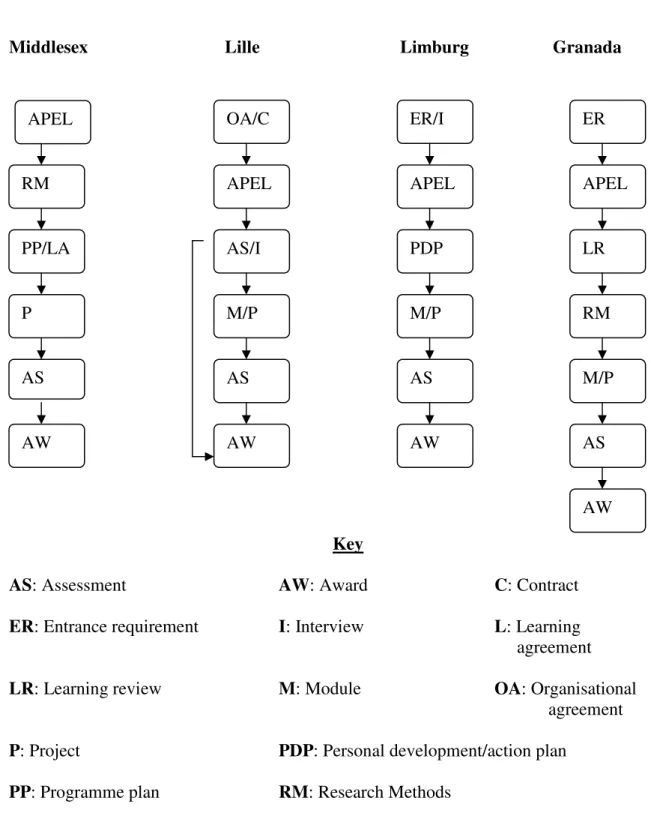
13.Comparative chart of wbl programmes 47 14.Achievements and level 5 descriptors 65
SUMMARY
This doctoral project is a case study of how work based learning began to grow in Europe through the conceptualisation and development of a common European work based learning platform in a pan-European partnership. The partnership, known as DEWBLAM (Developing European Work Based Learning Approaches and Methods), was established in order to introduce higher education institutions to work based learning, enabling them to pilot their own programmes relevant to local needs and situations. The project was framed within European protocols, such as the Bologna Process that aims to modernise and transform different national higher education systems into a transparent and
comparable European system.
The methodological approach is interpretative and constructivist, enabling me to theorise the how and why of events, and allowing theories to emerge from the data. I use an explanatory case study, which is retrospective as the DEWBLAM project has ended and no further intervention is possible, test validity through action research indicators, and draw relatable inferences.
I analyse the multi-layered ecology of the DEWBLAM project, identifying how changing postmodern epistemologies and internal/external environments affected the partnership, highlighting the need to establish a meta-narrative and drawing on my previous
professional practice to support my role in facilitating the processes of knowledge creation. I then critically analyse the definitions and distinctive features of work based learning that were collectively conceptualised, referencing these within current thinking, and raising concerns at these definitions as job-related competences.
I consider the case for meshing academic and work based knowledge with competence to form the concept of competentknowledge and analyse the bounded relationships of
universities and the work place, proposing new ways of engagement that allow multi-directional knowledge flows.
Finally, I give an overview of the doctoral project outcomes, evaluate the potential impact of DEWBLAM, highlighting the contribution to knowledge and local knowledge economies made by the platform and the ensuing pilot programmes. I reflect on my achievements and on my own practice, and conclude by recommending that, inter alia,
the expert practitioners at Middlesex University need to contribute more to informing current debates on new European educational realities, in order to avoid the prevalence of too narrow interpretations of work based learning.
CHAPTER 1 – INTRODUCTION
Project context
The concept of work based learning (wbl) is only now slowly starting to become part of European higher education discourse and practice. It is often highly contested and resisted by regional polities and by academic institutions and their practitioners, despite major changes that are occurring at national levels through the implementation of the Bologna Process1 that aims to establish comparability and transparency of national higher educational frameworks within the European Higher Education Area (EHEA) by 2010. Although no direct reference was made to work based learning methodologies, the Bologna Declaration of 1999 stated that credits should be obtainable in non-HE contexts such as lifelong learning, thereby opening accreditation and work based opportunities. The Bergen Communiqué (May, 2005), issued by the European Ministers for Higher Education, stated that progress was sought in developing flexible learning paths, including procedures for the recognition of prior learning and, where possible, non-formal and innon-formal learning that would both enable access to and be elements of higher education programmes. More recently, the London Communiqué (May, 2007) implicitly referenced wbl by urging further development of curriculum innovation in partnership with employers.
Whilst on the one hand, national legal frameworks for modernising higher education are being, or have been, introduced across Europe, concomitantly there remains a significant gap between the realities of legislative and institutional implementation. According to the European Universities Association (EUA) in its recent appraisal2 of the state of play presented to the ministerial summit in May 2007, the majority of institutions support concepts of lifelong learning, but the implementation into mainstream provision is complex and still marginal in strategic institutional development.
In the UK, higher education institutions (HEIs) remain independent and in ownership of their awards, but in the NARIC National Action Plan for Recognition of overseas
qualifications3, HEIs have expressed concerns over some elements of the European Credit Transfer System (ECTS) that has been embraced across Europe as the credit standard and will be implemented by 2010. These concerns have been referred to the European Commission and an ECTS review has commenced in 2007. Both this report and the UK National Report4 on the Bologna Process (2005-2007), however, focus mainly on undergraduate students attending universities, with minimal reference to employed adult work based learning programmes despite their increasing availability across the UK.
1 See www.dfes.gov.uk/bologna for further information on the Bologna Process and for the Bergen 2005
and London 2007 Ministerial communiqués
2
Trends V report - see www.eua.be for further information
3
National Recognition Information Centre – recent undated report on DFES Bologna website
Within this envelope of European protocols and agreements, of national legislative frameworks, and of regional and institutional implementation and resistances, lies the collaborative project I initiated in 2001. Over a two year-period – supported by a bid from Middlesex University’s Academic Initiatives Fund - I presented the wbl models used by Middlesex University and those I developed specifically for the SME5 sector to HE institutions in Italy, Germany and Belgium. These were received with interest and also scepticism on the part of some academics who thought that wbl programmes did not constitute university-level education. The initial link with Italy had come about through prior contacts with the Middlesex International Office, and links with Germany were made through Italy – during my first visit to Germany, the prospective Belgian partner attended my presentation and invited me to visit Limburg. I carefully nurtured these crucial early contacts with institutional high-level executives and employers’/employees’ organisations – visiting several times and hosting a return visit - and was thus able to influence their decisions to participate in a partnership that could potentially cause fundamental changes to their educational systems. The three partner representatives already had experience in European projects such as developing credit transfer systems, so were well positioned to understand the potential significance of work based learning. In 2003, after I had made two unsuccessful applications on behalf of Middlesex
University to the European Union for funds - turned down by the British Socrates fund evaluators as being yet another training project - I considered that the proposal to implement work based learning across Europe was too significant to be allowed to fail. Therefore, I persuaded Middlesex University to take the political decision to request the University of Florence, as a southern European institution, to act as project coordinator, which they agreed to do on the basis that they needed to implement work based learning as part of new European lifelong learning initiatives. This bid was successful, and the DEWBLAM (Developing Work Based Learning Approaches and Methods) partnership was founded and supported through the European Union Socrates Grundtvig fund with the aim of developing a common work based learning platform and implementing differing pilot programmes specific to the single partner contexts6.
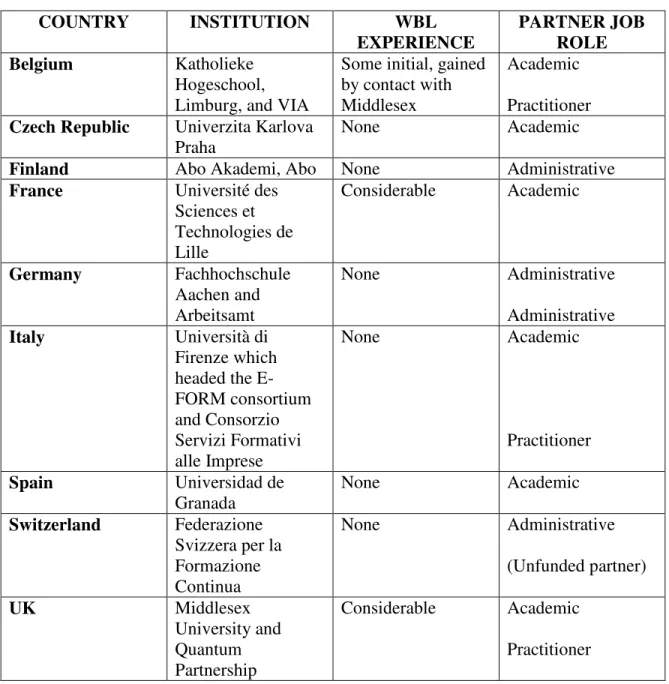
The partnership was highly complex and diverse (see figure 1 below) - constituted firstly by Middlesex University and the Belgian, German and Italian partners, with the Czech, Finnish, French, and Spanish institutions7 invited to join in order to have a mix of old/newer universities and the right political composition comprising all the parts of the Union, as demanded by European Union funding regimes. Southern European projects were also more likely at that time to gain funding, hence the decision to coordinate the project from Florence. Most were motivated to participate in the partnership because of the need to implement flexible learning as part of the Bologna Process, whilst Middlesex and Lille were keen to widen their networks and seek new business. The partnership was characterised by:
5 Small and Medium Enterprise
6 See appendix 1 for the summary of the project funded from 2003-2006 7 Selected through the first partners’ personal contacts
• being a partnership of mainly higher education institutions plus four private research or employers’ organisations
• having individual, highly specific fields of operation, yet applying a collaborative and democratic approach
• operating within diverse cultural, linguistic, economic, and socio-political domains
• having a wide range of needs and pre-understanding of wbl
• being purposefully designed to create common knowledge of wbl and to apply variations relevant to the single higher education institutions
Figure 1 - Table of DEWBLAM members
COUNTRY INSTITUTION WBL EXPERIENCE PARTNER JOB ROLE Belgium Katholieke Hogeschool, Limburg, and VIA
Some initial, gained by contact with Middlesex
Academic Practitioner Czech Republic Univerzita Karlova
Praha None Academic
Finland Abo Akademi, Abo None Administrative
France Université des
Sciences et Technologies de Lille Considerable Academic Germany Fachhochschule Aachen and Arbeitsamt None Administrative Administrative Italy Università di Firenze which headed the E-FORM consortium and Consorzio Servizi Formativi alle Imprese None Academic Practitioner Spain Universidad de Granada None Academic Switzerland Federazione Svizzera per la Formazione Continua None Administrative (Unfunded partner) UK Middlesex University and Quantum Partnership Considerable Academic Practitioner
Whilst the partners’ pre-understanding of the theory and practice of work based learning was extremely limited or non-existent (apart from France and the UK), the Italian, Belgian, and German representatives respectively had acquired significant experience in ECTS, in the Tuning projects8, and in promoting and implementing the Bologna Process. This facilitated their intellectual openness towards wbl discourse, added to the
partnership knowledge base, and additionally helped to frame the DEWBLAM project within European protocols. However, the differences in role type (academic,
organisational practitioner, or administrative with European project experience) and experiences, had an initial negative impact on the development of concepts and, ultimately, in the implementation of work based learning elements or programmes, necessitating frequent guidance workshops. A more coherent initial selection on the basis of academic/work sector and role may have helped to minimise some of the
developmental problems that were experienced throughout this project.
The project focused in the first year on research into the existence of any national wbl practices and into the legal and institutional barriers and opportunities that might prevent or encourage wbl applications. In the second year, the common European wbl platform was drafted and developed, enabling the partners to initiate planning their pilot
programmes. The final year focused on piloting the programmes and on the
dissemination of findings to external audiences through local events and a final European conference and publication of papers.
Doctoral project aim
This doctoral project aims to analyse the collaborative process of developing a common
European work based learning platform in the highly complex DEWBLAM partnership, and to scrutinise the ensuing definitions of work based learning.
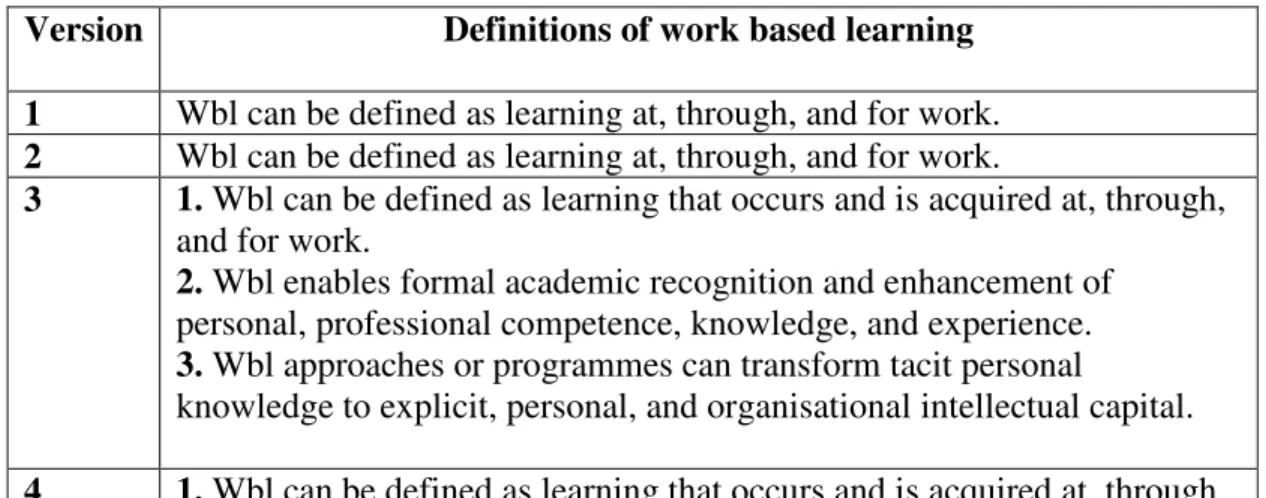
For the purposes of this report, I begin with the definition of work based learning as
learning at, through, and for work9 that was used initially for writing the project bid, and
trace the transformation this definition undergoes when confronted and challenged by emerging European understandings and practices10.
To achieve this, I will firstly situate DEWBLAM in a postmodern context, then analyse the process, the platform definitions, the role of practice or work based knowledge, the relationships between work and universities, and finally, consider the impact that DEWBLAM might have on local knowledge and learning economies.
8 Group of universities engaged in ongoing projects to identify convergences in educational structure and
programmes – for an example, see: www.unideusto.org
9 This definition has also been in common use at Middlesex University 10 See chapter four
Doctoral project boundaries
This doctoral project is a study of the DEWBLAM partnership and its processes and outcomes. It is not a study of the detailed partner situations as they implemented wbl approaches with varying degrees of success, as these are neither within the scope of this doctoral project, nor are they my story to tell. However, for the purpose of clarification, and to provide a personal background contextualising my significant role in leading this innovation (as a knowledgeable partner through my consultancy, Quantum Partnership, and through representing Middlesex University), I will refer to relevant aspects of my own wbl pilot programme implementation and also to previous experiences emanating from my work on professional learning with the SME sector.
The DEWBLAM project is bounded in time (it ended in 2006), and my recent investigations into progress on pilot implementations reveal that Finland has since developed a credit based module for SME entrepreneurs, whilst the German academics still refuse to take ownership of the platform and develop work based programmes. In order to distinguish between the two projects, I will hereafter refer to the DEWBLAM project and to my doctoral project as such.
Methodological approach
This doctoral project is presented as a retrospective case study of the partnership and of
its processes. The partnership was constituted in order to research work based learning methodologies, to collaboratively develop a common work based platform, and to implement individual pilots that either contained elements or were full work based programmes. However, as the partnership had not deliberately designed, engaged in, nor referred to its work as action research, this research better fits a case study paradigm.
Relevance of this project to my doctoral programme and personal professional practice
The principal theme in my doctoral programme is that of creating knowledge within collaborative learning partnerships. In my review of previous learning (DPS 4520), I analysed my role as an independent knowledge professional engaged in developing management and linguistic programmes for a range of organisations in Italy over many years, and also identified how I managed complexity and change both personally and professionally. After my return to the UK in 1991, I took a Master’s degree in sociology and set up a consultancy engaging in research and development projects for the voluntary sector, local government, and local business associations. Through this work, I began collaborating with the National Centre for Work Based Learning Partnerships
(NCWBLP) at Middlesex University, before joining the Centre on a part-time basis in 1999.
I have been a long-standing professional practitioner in transforming knowledge in the work place – consistently mapping my training programmes to situated real-world contexts and externalising participants’ own experiences and knowledge to aid the learning process - well before I had even heard the words “work based learning” or become an academic. Today, my practice is an amalgam of academic and work based - placing me in a unique position in the Centre as an insider/outsider capable of
understanding the importance of both loci in knowledge transformation processes, although this can cause concomitant problems of conflicting loyalties. This intellectual and practice-based position, together with my previous experience in initiating and leading projects for a range of clients, and my development work with the Small and Medium Enterprise (SME) sector, has enabled me to initiate and lead the complex DEWBLAM partnership and facilitate collaborative knowledge creation.
The programme planning module (DPS4521) helped to identify prior experiential learning themes that I could claim credits for and provided the rationale for this doctoral project. The initial purpose was to establish a European work based learning partnership with Middlesex practice at the core, but it became clear in the process of writing the bids that this would be unacceptable to the European Commission, to the partners, and to Middlesex itself. However, the core objectives remained, that is: developing
autochthonous work based models, transforming the knowledge required to do so, and extending the critical community of wbl practitioners.
The claim for the recognition and accreditation of learning11 demonstrated how I had extended my professional practice and contributed to knowledge bases from 1995 onwards in areas such as:
• strategic organisational development
• informing local government policy strategies
• development of collaborative partnerships and networks
The contracts for strategic organisational development required considerable diplomacy, careful, ethical management and an inter-disciplinary knowledge base. For example, in one case I had to review the procedures and structures of a failing voluntary organisation to help it improve its standards and meet public funding criteria, requiring me to manage multiple demands and stakeholders and to minimise ensuing conflict and resentment. In another sensitive case, I had to review a failing organisational department and
recommend improvements, without being aware of a hidden agenda to close it.
The links between my previous practice and the DEWBLAM project are profound. My intellectual growth has been enhanced through working at Middlesex University and I have been able to ground this in practice over several years of delivering work based management programmes to SME managers, where practice based knowledge was developed in short-term partnerships. Ultimately, this experience, together with my previous experience of initiating and managing projects, enabled me to found the complex and culturally diverse European partnership.
Personal engagement with the DEWBLAM project
My engagement with the DEWBLAM project has been multi-faceted, directly and indirectly influencing change in multiple loci, that is: in SME sector organisations, in HEIs, and ultimately in their economies. The three principal ways in which I have engaged with this project are as follows:
1. Firstly, my role in founding the European partnership has been pivotal – it would not have existed at all without my idea and drive to create it. I have been leading the DEWBLAM project from its inception, innovating and facilitating change across the partnership, providing scientific advice and guidance, and playing a lead role in creating a new community of wbl practitioners. I have introduced work based learning methodologies directly to Italian, German, and Belgian institutions, and this has cascaded to Spain, Finland, and the Czech Republic. I have facilitated collaborative knowledge creation sessions and initiated and managed the development of the common wbl platform.
2. I have facilitated the creation of knowledge in the European partnership, drawing on my previous practice, and engaged further with the SME sector through the development and delivery of an accredited Diploma in Work Based Studies (Management).
3. In my role as Middlesex representative, I have engaged with European protocols and definitions, introducing the NCWBLP to these in order to enhance our understanding and to begin to consider ways of compliance, and have publicly disseminated emerging results of the DEWBLAM project to highlight some of the issues in European higher education that might be applicable in the UK context. Through my engagement with the DEWBLAM project, I have contributed to the development of the Middlesex University Doctorate by Public Works that draws on the Lille model of work based learning, and to the Centre for Excellence bid that included a section on DEWBLAM.
Conclusion
This chapter has introduced the DEWBLAM project and contextualised my doctoral project within a macro- European framework and a micro-framework of my professional work based practice. I was able to found DEWBLAM, to deal with and unravel its
complexities, and to be a major contributor to its successes through my experience gained as an academic practitioner at Middlesex University and a work based practitioner
working extensively with the SME sector. This case study is the story of how work based learning was grown in Europe through the DEWBLAM project, but it is also the story of my own personal learning and development that enables me to be a doctoral candidate.
CHAPTER 2 – METHODOLOGY
Introduction
The stated aim of the DEWBLAM project was to “develop work based learning
approaches and models within differing local European cultural and institutional contexts through the creation of a European network of university and non-university partner institutions …defining a common core of … approaches and good practice … (in order) to facilitate access to higher education qualifications for adult employed learners and disadvantaged groups” 12.
It was purposefully designed as a change project to “introduce work based learning practices (that) implement changes in the way HEIs conceive their role and organisation towards adult and continuing education… and establish new links between high-level professional experience, vocational training, and academic knowledge” 13.
Although these change processes fit into action research paradigms, the partnership did not deliberately and consciously design an action research project. For this reason, and principally because the DEWBLAM project has now ended and no further intervention is possible, I am using a case study approach that retrospectively analyses context, content,
and processes against a framework of local, national or international understandings, theories, and practices.
As a partnership, we collectively owned both the data and theories we produced relating to the common platform, whilst individual institutions owned the subsequent contextual implementations – again fitting action research paradigms, However, as a researcher, I am also telling the DEWBLAM story from a historical perspective, so in this sense, I am generating theory and researching from outside, whilst still having been an involved participant.
Research focus
The long-term aim of the DEWBLAM project lies outside this case study, as it was nothing less than effecting significant changes to the ways in which knowledge and academic programmes are conceived across the partnership. However, it has already challenged existing epistemologies and proposed new paradigms of learning, causing some conflict within institutions and within the partnership as change was resisted. The project objectives14 were to:
• enable access to HE programmes through accreditation of prior and experiential learning (APEL)
12 See appendix 1
13 DEWBLAM project description – innovation section - see appendix 3 p.17 14 For full description, see appendix 3 p.17
• develop culturally located European models of flexible wbl systems
• incorporate these into ECTS/ECAS frameworks
• establish training programmes and tools for educators
• incorporate wbl in HE and contribute to creating knowledge in the work place
• promote equality of opportunity and lifelong learning
• generate a European-wide wbl debate and network
Now, at project conclusion, with the objectives achieved and presented to the European Commission for verification, these are merely a starting point for the real challenge of growing and embedding the initial work based learning approaches in the single contexts. Over the past three years, the partners have matured in their understanding and practices of work based learning, initially helped by my guidance and theoretical inputs. However, the long-term impact on their institutions and on their knowledge and learning economies cannot now be determined, but as European discourses continue to emphasise flexible lifelong learning and the employability agenda, the partner institutions will find themselves at the forefront of learning innovations by virtue of the knowledge that has been created through this project.
Given the many clusters of knowledge generation and practice within such a rich,
complex picture, I have decided to focus on the most important substantive uniting thread and catalyst that enabled the partnership to collaboratively and singly generate and transform knowledge, and to achieve its objectives. Therefore, the overall research question will:
• inquire into the process of developing a common European work based learning platform
To achieve this, I will:
• frame the project within a postmodern meta-narrative
• critically analyse the complexity and tensions of the DEWBLAM partnership
• critically analyse the processes of collaborative knowledge generation
• evaluate and frame the platform definitions within current thinking
• identify contributions to current understandings of the polarity of academic and work based knowledge and learning
Methodological approach
As I have no prior positivist hypothesis to prove or disprove, nor do I have theoretical preconceptions or espoused notions here (Armsby, 2000), the most appropriate
methodology for this inquiry is one of phenomenological, interpretative constructivism, enabling me to contextualise and construct theories that arise from the actions,
contradictions, and processes of change (Zuber-Skeritt, 1997), and to include pertinent aspects of human interactions (Cohen et al, 2000). The way in which knowledge emerging from the process of developing the common platform was articulated is
consonant with the concept of iterative living theory (Whitehead & McNiff, 2006), whereby theories generated from within practice influence new practices that lead to further new theories and new practices - this same concept also extends to the SME programmes. Whilst this methodology is implicit in the DEWBLAM project, my doctoral project uses a case study approach, which is not longitudinal, but does have chronological sequences as shown in figure 2 on page 15 below.
Statistical research is irrelevant to this study, and therefore I use qualitative research allowing me to more freely theorise the how and why of particular events and processes;
to analyse the dynamics of change and cognition; to incorporate a sense of the holistic ecology; to narrate the journey; and also to identify and analyse the collaborative
construction of meanings (Cassell & Symon, 1995) within a commonly negotiated work based learning linguistic domain (Gammack & Stephens, 1995:74).
Methods
My overarching research approach is a case study, using the main data collection techniques of participant observer, reflective practice, and documentary analysis.
I have not included a specific literature review, as I have integrated and refer to literature throughout this doctoral project to support or critique my findings and analyses.
Yin (2002:13) defines a case study as an “empirical inquiry that investigates a
contemporary phenomenon within its real-life context, especially when the boundaries between phenomenon and context are not clearly evident”. This definition matches my choice of an explanatory case study combining methods that will explain the project contextual conditions, events, and substantive issues which are intricately linked and highly pertinent to the study, and will also generate theory that may be relevant and useable in other contexts (Gorad & Taylor, 2004).
Hartley (1995) posits the importance of developing theoretical frameworks within case studies, in order to lift them from bounded descriptions of unique issues to ideas about events that are of wider significance. Whilst the DEWBLAM project itself is bounded, its theories and products go beyond its confines and are potentially applicable and relatable to a wide range of situations. My justifications for using a case study are several:
• it serves to gain a holistic overview of the project ecology
• it helps in understanding behavioural and systemic changes, whilst potentially influencing but not directly manipulating these
• it permits a range of methods without “hard and fast rules” (Lee, 1999:55), such as those I have used in this project: observation, textual analysis, literature review and a small sample of questionnaires
• the context and data are retrospectively analysed and interpreted and no dynamic intervention or participation is now possible - learning and knowledge generated
can be cascaded into new situations, but can no longer be tested within the same common or individual contexts
• a case study explains causal links, describes processes and contexts, illustrates certain topics, and also explores a situation that has multiple but not a single set of outcomes (Yin, 2002; Hartley, 1995)
• it will enable me to evaluate the DEWBLAM project - its potential impact as well as its failures; to analyse its methodologies, epistemologies, and its interactions; and ultimately to reference it within current debates on types and sites of
knowledge generation
• finally, it enables me to identify and propose ideas that have emerged from the project, but that may have wider significance
Case study test through action research indicators
Criticism (Cohen et al, 2000) of case study as being too biased and specific to check reliability and validity, and concomitantly incapable of allowing generalisation, resonates here. The DEWBLAM partnership project - its objectives, dynamics, processes, contexts, discourses and outcomes are all unique and, therefore, neither replicable nor open to analytic generalisation (Yin, 2002). However, retrospective analysis enables the
identification of discernible patterns, and the in-depth explanation of this case study and its visible outcomes allow “relatability” on the part of the reader to other situations. In order to provide some testing of the project validity, I have used two key principles of action research as defined by Jameson & Hillier (2003: 20, 21):
• firstly, decision making was reached mainly by democratic consensus
• secondly, the common processes were participative, emanicapatory, democratic, and clearly made “a difference as (they took) place, (enabling) reflection,
challenge and the implementation of change”.
I have also summarised the authors’ ten generic action research indicators in Figure 2 below, showing how the processes of the DEWBLAM project can be crosschecked against these and against the case study data for validity. It should be noted that whilst the design and data of the DEWBLAM project match these indicators, my doctoral project was retrospective, and, therefore, better suited to a case study approach.
Figure 2 - The 10 action research (AR) indicators, DEWBLAM & case study data
AR INDICATORS DEWBLAM CASE STUDY DATA
Identification of issues and improvements/change needed Identification of need to implement wbl in HE programmes according to Bologna process
Partners identified, project funds obtained, and contracts signed
Decide on possible field of action and barriers
Decision to conduct
contextual research in each partner institution, identify barriers, create a common core of work based learning principles through the wbl platform and guidelines, and develop wbl pilots
Initial data from national and institutional situations researched and collated
Devise general plan of action
3-year detailed work plan devised
Discussed and agreed at first general steering meeting
Break plan into specific steps
Plan broken down into year by year actions allocated to partners
Meetings and actions agreed and timetabled Commence action Commenced 2003 (and
completed 2006)
Seminars on wbl theories and practice held. Initial research into potential wbl pilots. Community web site established
Monitor action and identify possible changes required
Changes identified and implemented eg: enhanced focus on common platform and pilots
6-monthly monitoring reports produced. Frequent e-communication. Platform drafted
Revise general plan to
incorporate changes General focus remained but greater shift towards implementations in
individual contexts
Gradual pilot development and implementation Move towards action plan
goal with ongoing monitoring/revisions
Monitoring on-going progress and finance
Internal reporting to co-ordination meetings and external annually to EU Maintain records of
decisions
All decisions taken collectively
Recorded in minutes and electronically distributed Evaluate outcomes and
process using research data generated
Evaluated annually, with final dissemination
conference and report to EU Commission end of year 3
Platform completed. 3 wbl pilots successfully developed and implemented. Guidelines to programme development completed. European conference held. All
financial and project reports submitted for external evaluation by the European Commission
Validity and reliability
Internal validity ensures that the research data can be examined and logically sustained, whilst external validity enables the data to be applied to other situations. Whilst this is a case study that focuses mainly on identifying and codifying the processes applied to achieving a common knowledge base, thereby ensuring internal validity, it is also potentially a unique situation which would not necessarily occur in a similar or
comparable way, given a different set of partners, parameters, dynamics, or objectives. Does this fact, therefore, make this case study invalid and unreliable? Yes, if one is looking to replicate context and data in another situation for external validity. No, if it is considered that this is a qualitative study, using unique data produced from within the project by all partners according to their own understandings and needs, and then validated through local applications of common principles. Indeed, data could not be
exactly replicated, as one of the core objectives of the DEWBLAM project was the
differentiation of local solutions according to local requirements.
However, locating the emerging ideas, rather than the data, in a wider sphere is a test of
validity by inference. One of the significant aspects of this study supporting the notion of relatability is the development of the common work based learning platform and related pilot programmes, that are aimed both at internal consumption by the partners and at dissemination to a wider audience, thereby enabling the testing of key processes and products, and a measure of generalisability and transferability (Lee, 1999).
Validity can be further tested through the notion of ecological validity that “includes the major features of the context in which the phenomenon of interest is found” (ibid:152). In this study, the macro/micro external and internal contexts and epistemologies are significant factors of analysis and are an integral part of the research, having contributed both to instigating and influencing the course of the project – without these there would be little meaning.
Additionally, the use of multiple sources and participants fit the notion of construct validity (Yin, 2002). Triangulation comes from the documentation produced during the project (Forster, 1995) and also by confrontation of the generated ideas with current thinking, as throughout this doctoral project I will draw on literature to support or refute the theories and definitions emerging from our work and practices.
Personal position as researcher
An ethnographic approach is particularly appropriate here, as it demands both the participation of the observer within the social setting and the interpretation of observer experiences (Zuber-Skerritt, 1997). As a partner participant in the DEWBLAM project, I was an insider but, concomitantly, I am now an outsider observer as I try to make sense of what happened. It is difficult to remain objective when fully engaged in the process – episodes of contestation can be particularly emotive and subjective - but as the project
has now concluded, I am in a better position to reflect and critique my own praxis, in addition to analysing the processes under scrutiny.
My previous experience of research (see chapter one) in a variety of often difficult and contradictory situations has informed my ethnographic approach to this doctoral project, where I grapple with conflicting epistemologies and analyse the multiple and contested processes of creating a common narrative and of generating common knowledge in such a diverse partnership. As noted in the introductory chapter, my professional practice is embedded in organisational research and development and also in academia as a work based practitioner – this dual role itself can at times lead to inner conflict and divided loyalties as I consider the merits of organisational and academic knowledge, and I need to remain highly reflexive and aware of my subjective constructions throughout (Armsby, 2000) in order to resolve this conflict. The multiplicity of roles during this project – researcher/participant, adviser/leader/facilitator and employee/self-employed – at times constituted a hindrance in deciphering the most appropriate approach to take in changing situations but, concomitantly, the varied background of experiences helped in dealing with problems or conflicts.
In my role of organisational consultant - particularly in my work with SMEs - I acquired deep learning of facilitating dynamic knowledge transformation processes that generated new situated, practice based and theoretical knowledge. This pre-understanding of work based learning programmes in practice, together with my academic practice at Middlesex University, has significantly underpinned my engagement with the DEWBLAM project, where I was a leader, a “scientific adviser” on wbl, and also a learner. The level of pre-understanding that I brought to this project informed my initial position of strength and, therefore, I felt I had less to learn and more to impart – this inhibited me from immersing myself more fully in European perspectives on education and knowledge until the latter part of the project when the partners had matured in their understandings and required less guidance. My personal position is, therefore, a highly complex one where I directly facilitated or indirectly influenced change in three contexts, illustrated in figure 3 below.
Figure 3 – Personal complex role
Context 1 – Middlesex University
New EU partners Enhanced EU reputation Influence
Context 2 – DEWBLAM
HE institutions New systems & policies New epistemologies
Knowledge of wbl theories
& practice Influence New programmes
New European communities
of practice New wbl professionals
Impact on economies New client groups
Context 3 – The SME practitioners
Personal Development Professional development Self-esteem
Influence
New reflective practice Awards Systems & organisational development
Ethics
In introducing epistemological and practice-based change, a key question is whether this is ethical. Given that the DEWBLAM project operated within the new European
educational agenda that has direct impact on national/local economic and social situations and needs, change was not a choice - it was inevitable. However, this does not mean that change was willingly accepted – several partner institutions indeed fiercely resisted it – and my role at times was that of a catalyst and a pawn, bringing change where it was not wanted. It is, therefore, less a question of whether change is ethical, rather more one of engaging stakeholders and adapting to suit individual situations.
The complexity of my involvement with the project (see figure 3 above) demonstrates the levels of inter-relatedness with people, practices, and processes, each of which have their own set of values. Cultural sensitivities, values, and differences are acknowledged and discussed throughout the text and indeed form an important part of this research. The small sample of questionnaires used protects anonymity, and whilst I may refer to minutes of meetings, I have deliberately not included them in appendices as they often reflected individual thought processes, were collectively owned by the partnership and are, therefore, not in the public domain. Other documents used are already public, published, or held on personal copyright.
Conclusion
As the DEWBLAM context is retrospective, and there is no possibility to design a fresh project, a case study seems to be the most appropriate method. To summarise, this case study will:
• examine the ecology within which the project developed
• critically analyse the complexity, issues, and tensions of the partnership through the processes of collaborative knowledge generation
• analyse how work based learning was grown through the development of the common European work based learning platform and the effect this had on epistemologies
• evaluate the potential significance of the DEWBLAM project on local learning economies
• link understandings of the polarity of academic and work based learning emerging from the project to current thinking and practices
CHAPTER 3 – THE DEWBLAM ECOLOGY
Introduction
The European Union agenda for developing a globally competitive knowledge economy is forcing radical educational change through programme modularisation and through an increasing focus on learners gaining competences for employment, and, as a
consequence, higher education institutions are being obliged to shift their traditional perceptions that knowledge is exclusively generated within the academy to
acknowledging that knowledge might also be located in the work place15. The new socio/economic and political background to the DEWBLAM project was introduced in chapter one, and in this chapter I will focus on analysing the project ecology against changing epistemologies.
The knowledge revolution
The context that best helps to position DEWBLAM’s struggles is that of the new postmodern reality, and a key issue underlying the project discourses has been that of modernity versus the postmodern, consonant with the struggle between the traditionally conceived knowledge domains of the Enlightenment and those now being constructed and legitimated through performativity. Lyotard (1984) has argued that the modernity characterised by dominant Western discourses of science, progress, and rationality and the educational systems to support these, is losing relevance in this era of plural truths, uncertainty and rapid changes. Indeed, knowledge itself is becoming increasingly commodified (Edwards, 1998) and performative16, where knowledge is valued as to its saleability and utility (rather than its “truth”) and is legitimated through its capacity to enhance and induce performance in the work place (Edwards & Usher, 2000).
In the European arena, these new constructs are visible as higher education begins to comply with EU protocols and to engage with the new realities of knowledge. This is occurring at national implementation levels and also at local levels as national and European funding strands become more focused on lifelong learning competencies and employability – fully corroborated by the aims of DEWBLAM that had to match European funding parameters.
As knowledge epistemologies were quietly and subtly transformed through developing the common work based platform and individualised pilot programmes, a revolution has taken place within the DEWBLAM partner institutions; but this transformation has even now not been fully and consciously fore-grounded. Although discourses have
increasingly focused on notions of competence, engagement with the paradigm shift in knowledge epistemologies was often unwilling - demonstrated particularly by strong
15 See discussions in chapter 5
academic opposition to work based learning in the German (Aachen) and Czech (Prague) partner institutions, despite the presence of high-level champions in the executive.
Indeed, perhaps this unease was prescient given the far-reaching impact that postmodern epistemologies might have on higher education – a theme that is further discussed in chapter five.
Other partners experienced different degrees of opposition. For example, despite initial difficulties but ultimately driven by pragmatic local economic and social needs, Granada successfully developed and implemented in conjunction with industrial partners a pilot award in “Subtitling for the Deaf and Audio-description for the Blind” that offered both “traditional” and innovative wbl pathways (see appendix 4). The universities of Florence and Abo both struggled to identify appropriate wbl pilots as their institutions preferred to maintain their existing tested programmes without experimenting with new approaches. Despite the fact that both countries have legislated to allow the use of APEL
procedures17, this remains underused and “relatively ineffectual” (Adams, 2006:39) – a picture replicated across Europe, where APEL is used mainly for entry into existing academic programmes, if at all.
More favourable conditions prevailed for other partners such as the University of Lille, which has been operating work based learning degrees for over ten years. Indeed, France has been in the forefront of modernising its higher education system through legislation (from 1985-2002), allowing full awards through the demonstration of life and work experiences and competences, as well as enabling differentiated entry to taught degrees through accreditation18. Belgium has also moved rapidly towards allowing APEL and wbl in university programmes, and Limburg was able to draw on my early advice and
guidance, developing a degree in social care with part exemption through APEL in the first year of the project (see appendix 5). The UK HET19 system allows independence for universities, so wbl and APEL practices are varied and acceptable, although not currently enshrined in legislation. However, to some extent, despite twelve years of awarding degrees in work based learning, the NCWBLP has suffered from similar non-acceptance of its epistemology from colleagues across the university. Even here, much still needs to be done in order for work to be fully recognised as a locus where knowledge is
independently generated, as well as being a potential recipient of academic knowledge transfer.
As the workplace becomes constituted as a “..discursive domain…of thought and
action..” (Edwards & Usher, 2000: 43) where knowledge is produced and legitimated by the worker as researcher, knower, and learner, universities risk being sidelined if they continue to “favour some forms of knowing and marginalise others” (Barnett, 1999:14) in a one-dimensional approach that ignores the knowledge of the work place. Work based learning programmes can be seen as going some way to recognising the validity of the work place as a site of learning and knowledge, but the need remains to explore ways of meshing academic and work based knowledge into programmes of transformative
17 Devolved to regional governments in the case of Italy
18 APEL system known as VAE - Validation des Aquis de l’Éxperience
learning that transcend both APEL processes and tick-box assessments of professional competences such as those used in vocational programmes (see chapter five for a fuller discussion).
The need for a meta-narrative
Against this postmodern background of diverse multiple realities and epistemologies, compounded by the differing cultures, practices, and pre-understandings of partner representatives, it was vital to establish a common discourse and a common domain in order to move the project forward and to create the transformative knowledge required to implement work based learning approaches. Discourse is never singular, as a variety co-exists in any situation, nor even equal in power relations (Edwards and Usher, 2000), but it is through amalgamation or convergence that domains are contested and constructed. Initially, the discourse of the work based approaches coined by Middlesex University was pre-eminent, supported to some extent by that of the University of Lille. A clear example of this can be seen in the common wbl platform I first drafted in late 2004 (see appendix 12), that was naturally closely aligned to the Middlesex model, but later editions changed with increasing focus on competences as Middlesex wbl discourse became less dominant, and new common understandings of wbl were negotiated.
In the European partnership, multiple narratives textualised and contextualised the differing practices specific to each institution and nation, therefore it was challenging to construct a meta-narrative that could be individually relevant to and owned by all its constituent members and yet act as a common domain. Influencing factors included:
• national legislation
• academic/work knowledge, pre-understanding and practices
• institutional, cultural, and individual discourses
• languages
• traditions
• social practices
Through negotiated understanding of work based learning epistemologies and practices (the meta-narrative), the partnership established common ground and common domains expressed in the project aims. This was a dynamic and painstaking process using the media of meetings, seminars, and web communications during which the partners represented their individual realities, and I had a significant role in influencing the construction of both the common domain and the initial meta-narrative through holding seminars and workshops on work based learning. With growing partnership maturity, the emerging narratives were often vigorously contested (see chapter four) and, in some cases, the validity of institutional academic approaches to knowledge was questioned when confronted with the new possibilities: for example, the obduracy of the Aachen Fachhochschule compounded by the State Ministry for Education in refusing to accept or pilot wbl, preferring to maintain a traditional focus. The culmination, or product, was the jointly developed, dynamic European common wbl platform; however, in order to make
individual and localised constructs of meaning (Weick, 1995) that informed the wbl pilots.
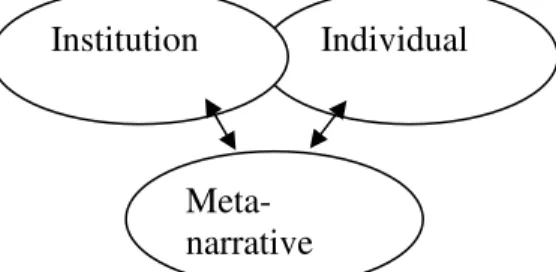
The bilateral process of transference (shown in figure 4 below) of individual/institutional internal understandings and discourse to and from the common domain affected not only the meta-narrative, but is also likely to affect internal discourses in the future as partners gain experience and knowledge through the common domain and through their
contextualised practices.
Figure 4 – Discourse transference
Extending this concept to Middlesex, it can be seen that work based discourse journeys continuously between stakeholders, thereby allowing a multiplicity of meanings that are constructed by the owners (the National Centre for Work Based Learning Partnerships and the university), by its operators (academics and students), and by its audiences (other academics, regulatory bodies, readers, researchers, other higher education institutions, and organisations). However, the new knowledge generated by this process often remains tacit, only becoming converted to explicit when it is consciously fore-grounded into reviews, or enhanced/new materials are developed as reactions to institutional or business demands. The recent hard-won executive decision to transform the NCWBLP into an Institute for Work Based Learning will significantly inform and change current
discourses - and perhaps even epistemologies - as its development plan shifts the centre of gravity towards greater engagement with industry in knowledge-generating
partnerships and in work-force development. This strongly echoes the trend discussed above of viewing knowledge as valuable for its performativity or structural capital and for its saleability as a product (Edvinsson & Malone, 1998).
The internal environment
The external environment in which DEWBLAM operated has already been extensively discussed and, whilst this could not be influenced, the internal conditions could be. In order for learning and knowledge creation to occur across challenging “positional differences” (Lee & Boud, 2003:195), conditions needed to be created that were shared, democratic, dialectical, and non-threatening and that allowed the emergence of
relationships - although these were not always positive, particularly during meetings Individual
Institution
Meta-narrative
when some representatives considered their budget allocation was incommensurate with their perceived input (not minuted).
To understand how the internal environment enabled the transformation of knowledge, I have adapted the concept of the four Ba20 - originating, interacting, cyber and exercising – that Nonaka & Konno (1998) had amalgamated with the phases of the SECI21
knowledge conversion model:
• Originating (socialisation phase) where emotions and mental models are
shared
• Interacting (externalisation phase) where joint meanings and concepts are
created and knowledge transformation commences
• Cyber (combination phase) a virtual and collaborative environment where
existing and new knowledge is combined
• Exercising (internalisation phase) where an individual iteratively learns and
creates knowledge through active participation
Whilst Nonaka and Konno’s concept is presented as a static deterministic model with ordered linear progression, for DEWBLAM, the process of knowledge creation was a more dynamic, iterative, and chaotic spiral represented in figure 5 below. Here, new knowledge was transformed continuously through application in different ways and in specific contexts, and then transferred back to the cyber core (community web site) enabling the development of different meanings, mental models, understanding, and further learning.
Figure 5 – The “Ba” in DEWBLAM
Key: O: originating; I: interacting; C: cyber; E: exercising; OICE: continuous interaction
During the first project phase, the partners shared their mental models of work based learning and their external operating conditions in meetings and on the web (O + C), these were transformed (I) and rapidly combined with new knowledge and active participation (C + E). With the growth of maturity, there was continuous, and at times,
20 Coined by Japanese philosopher Kitaro Nishida
21 Socialisation, Externalisation, Combination, Internalisation - developed by Nonaka & Takeuchi (1995)
O + C
I C + E
seemingly chaotic interaction (OICE), as knowledge was generated in separate sites, filtered back to the centre where it was scrutinised, and added to, before being applied in the single contexts 22. Above all, the “ba” was our shared interactive physical/virtual space, evolving as partners contributed their own contexts.
The learning partnership
In order to enable collaborative learning and knowledge creation, the partnership needed to be democratic and dialectical and neither a locus of power nor merely a conduit for transmitting existing information. As dependence on established paradigms and on my “mentorship” diminished through “reflective conversation” (Schoen, 1991:295),
concomitantly parity grew and meanings were differentiated and challenged, leading to joint construction of new theories. Throughout this 3-year project, I have been viewed as founder and expert, and considerable anger was expressed on several occasions during meetings when it was felt that my commitment was not as full as expected. However, I thought at the time that it was important to stand back and allow the partners the
opportunity to “fully engage their own knowledgeability” (Wenger, 1998:10), to develop their own practices at an early stage without interferences or bias, and to freely form a community of European work based practice – of which I remain a part.
On retrospective reflection, perhaps this style of facilitative leadership was more effective in my workshops with the SME participants where practitioners were already frequently knowledgeable and experienced, but not so appropriate where people felt they needed extensive mentoring. The question here is whether a democratic approach is right in an early team-learning situation. Certainly initially, information was transmitted to the partnership in order to create a knowledge baseline and the project co-ordinator relied heavily on my steering and advice, so I was leading an immature team from the front, but once this first phase had been completed, the team needed to be enabled rather than led. The Diploma in Work Based Studies (Management) 23 I developed as my project pilot (see appendix 6:5), posited that an effective leader provided vision, objectives, feedback, support, and rewards/recognition and also that a mature team held experience, was independent, motivated to achieve, and was willing to take responsibility. Both these sets of characteristics are consonant with the DEWBLAM partnership, and I think that it was right to enable team learning through back-grounding my own experience and knowledge – perhaps it was just too early before the team was sufficiently mature.
Although meanings and values were initially aligned to the dominant discourse, when these were differentiated in each individual reality and were owned by the stakeholders (people and institutions), then “economies of meaning” (Wenger, 1998:197) emerged that were identified by systems of relative values, of ownership, and of legitimation. These economies at times harmonised with the common meanings generated by the new
community of practice, but conflict also occurred as highlighted above and, for example,
22 See figure 2 in chapter two and also chapter four
when the Belgian partners were perceived to withhold the knowledge generated through their wbl programme.
The complexity of the DEWBLAM relationships where each partner operated within a unique, discrete system of principles, and processes, yet was linked to a holistic meta-system of collaborative knowledge creation and learning, can be conceptualised through Senge’s (1993) model of organisational systems thinking. By actively co-creating within our community of practice and enabling “inventive participation” (Wenger, 1998:10), knowledge, learning, and the building of shared vision were participatory and not prescriptive. At times, however, this dynamic shared process conflicted with other espoused personal, institutional, or national visions and mental models, requiring significant inventiveness and will to overcome them. The dialectical and dialogic approach to building the shared vision enabled the partnership to work and learn as a team, whilst mastery - or learnedness and capability - was gradually acquired through the “continual clarifying and deepening of personal vision and the focusing of energies” (Senge, 1993:7).
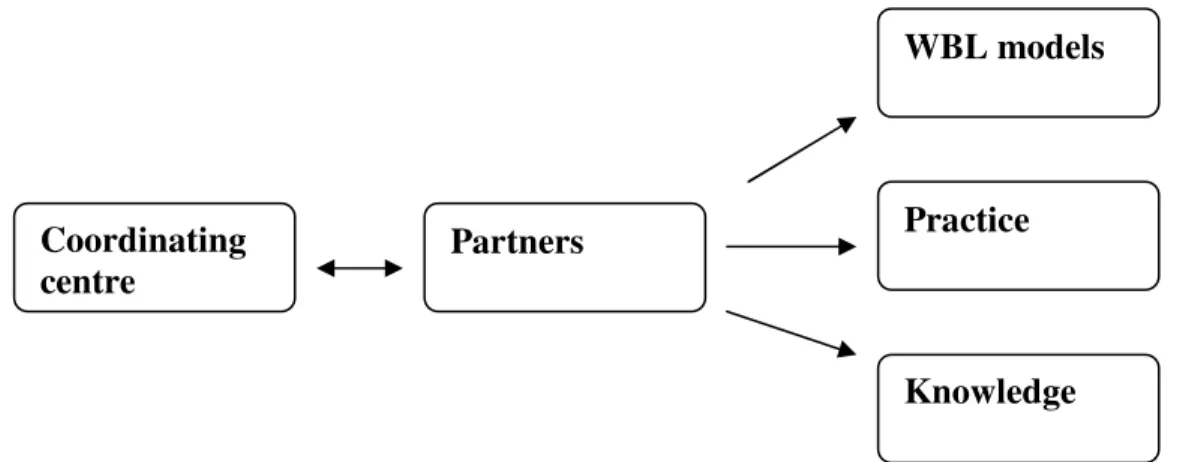
The DEWBLAM architecture
Almost to the end of the three-year project, the central coordinating structure received mainly partial and unidirectional knowledge that was always filtered by the individual partners as visualised in figure 6 below:
Figure 6 – DEWBLAM architecture
This was a key weakness, with concomitant risk that much of the knowledge generated could not easily be utilised or shared, and ultimately has hindered the identification of further opportunities for the whole partnership. Strategy needed to be defined in a clearer way, perhaps by developing a knowledge map with domains, links, and segments (Tissen
Coordinating centre Partners Knowledge Practice WBL models
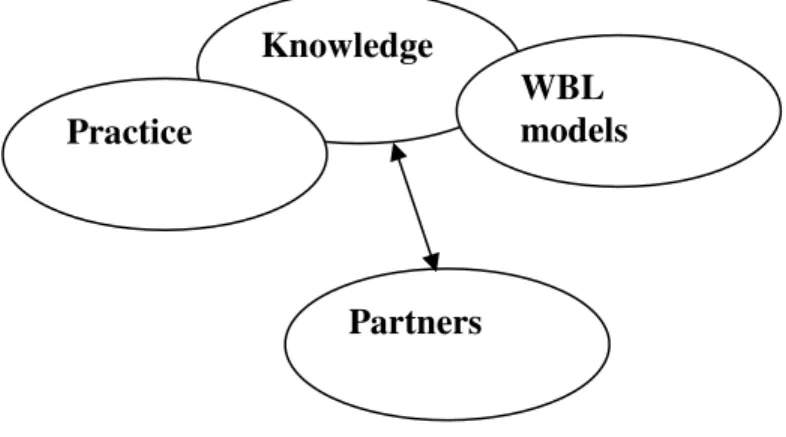
et al, 1998) that could emerge from the basis of the common wbl platform. Additionally, in order for knowledge to be transformed into a spiral that could be shared, transferred, and amplified (Nonaka & Takeuchi, 1995), it needed to be at the centre (as shown in
figure 7 below) together with practice and wbl models, thus becoming part of a more dynamic process engendering and leveraging change, rather than remaining as a static, locally relevant product.
Figure 7 – Enhanced DEWBLAM architecture
Increased use of the community web site eventually led to the enhanced sharing of knowledge and practice, so that the model in figure 7 above is more representative of the final structure, but the lack of coherent and transparent systems during the project
encouraging greater knowledge sharing was a distinct collective failure.
Conclusion
This chapter has explored the project ecology, setting the DEWBLAM partnership within a background of shifting and contested epistemologies, relating some of the
pre-conditions and contexts within which each partner operated, highlighting the need for a meta-narrative, and identifying the internal partnership conditions and architecture. Understanding these external and internal contexts will help to clarify the processes of creating knowledge analysed in the next chapter.
Knowledge
Partners Practice
WBL models
CHAPTER 4 – GROWING WORK BASED LEARNING IN THE PARTNERSHIP
Introduction
This chapter focuses on the complexity of the DEWBLAM partnership and the three significant aspects of creating knowledge: on the process, on textual analysis of the result - the common work based learning platform - and on the application in the separate
contexts. I will also critically analyse those aspects of the development of the Certificate and Diploma in Work Based Studies (Management) that formed my initial work based learning practice and that can be inferred as relevant to the European project.
Complexities and tensions
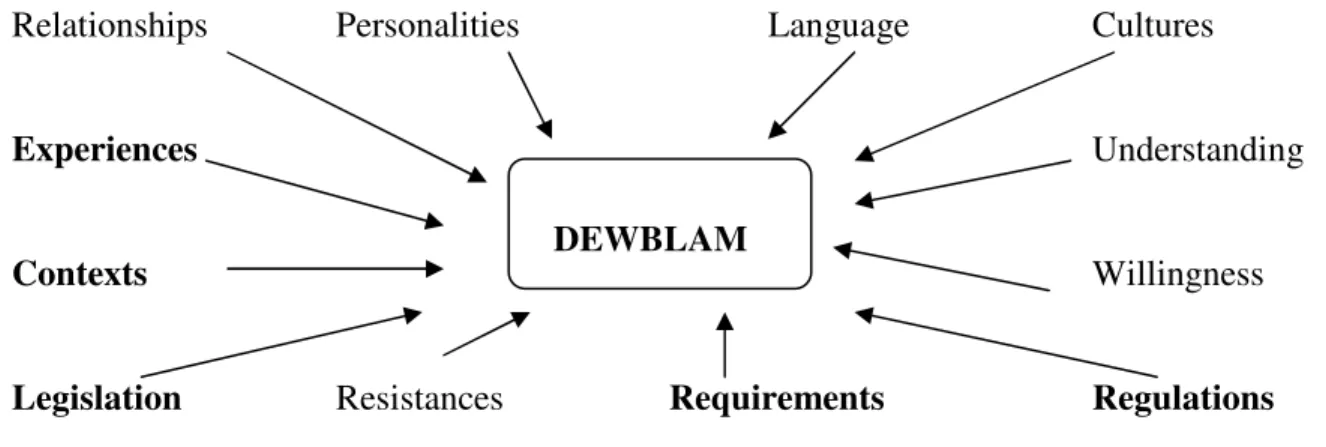
It will already have become apparent that the DEWBLAM context was fraught with complexities and tensions affecting each partner institution and the project as a collective entity - linguistic and cultural diversity were potentially divisive; resistance to the new unknown of work based learning grew; and local, national, and European legislation was often at variance.
Figure 8 below represents both the complexity and the main tensions of the DEWBLAM context, as these are inter-dependent (with the overt in bold).
Figure 8 – DEWBLAM complexities and tensions
Relationships Personalities Language Cultures
Experiences Understanding
Contexts Willingness
Legislation Resistances Requirements Regulations
Relationships and personalities – partners needed to supersede barriers of personality, nationality, language, culture, and attachment to the local, although this was not easy as highlighted earlier. Interaction, or social learning, combined with intellect and the exchange of experiences, knowledge, and information helped in the processes of
knowledge creation (Tissen et al, 1998), but these interactions were often tense, and small alliances were formed by project end, detracting from the holistic “ba”.
Language and cultures – eight native languages were spoken by the 13 partner
organisations (Czech, Dutch, English, French, German, Italian, Spanish, Swedish24) with English as the first and German as the second officially registered language for
communication, but these differences of national and organisational culture and identity expressed through languages, systems, behaviours, and attitudes had to be back-grounded in order to reach common understanding and a collective identity through the use of the meta-narrative.
Experiences and understanding initially differed widely but by project end some partners had gained direct experience by implementing programmes that either contained elements of learning based in the work place or used professional competency
frameworks. However, all partners were able to grow in understanding through
contributing to conceptualising the common platform and the guidelines for developing wbl programmes.
Willingness, requirements, and resistances – all partner representatives were personally willing to participate in the project but in several cases (Italy, Finland, and Germany), the respective institutions posed resistances. For example, academics at the Fachhochschule Aachen – despite some executive support, involvement with European modularisation, and winning a national prize for innovation (February, 2005) through its participation in the DEWBLAM project - continued to resist the implementation of a work based learning programme, questioning the validity and legitimacy of research and learning occurring outside of the academy. There might possibly have been less
resistance had an influential academic represented the university, rather than a member of the administrative staff.
Contexts, regulations, and legislation significantly impacted on acceptance or
resistance to wbl. In the German example, despite European agreements and national law that allows for wbl, the state of Rheinland-Westphalia refused to permit Aachen
University to implement wbl programmes. In other national contexts, wbl is allowed but may still be seen as too innovative (see chapter 1).
The process of developing work based knowledge in the European partnership Nonaka & Takeuchi (1995) identify three key characteristics of knowledge creation: the use of figurative or symbolic language, the sharing of personal knowledge, and the use of ambiguity and redundancy. The language used during the DEWBLAM project was that of academia and current business usage, but although there was a definitive shift from “pure imagination…(to)… logical thinking” (ibid:16) moving from initial ideas to practical implementation, it would have been difficult to find common symbolism, given
the diversity of the partnership. The second characteristic of sharing personal knowledge has been an essential part of the process of knowledge creation, supporting the authors’ contention that an individual’s personal knowledge is transformed into organisational knowledge and can be the starting point for new knowledge. Ambiguity and redundancy, understood as conditions that enable new ways of thinking to emerge from chaos or the creation of “common cognitive ground” (ibid:18), resonate with the DEWBLAM process which seemed to be endlessly chaotic as numerous and often repetitive discussions took place before the common work based learning platform provided a focal point and enabled the development of some pilot programmes.
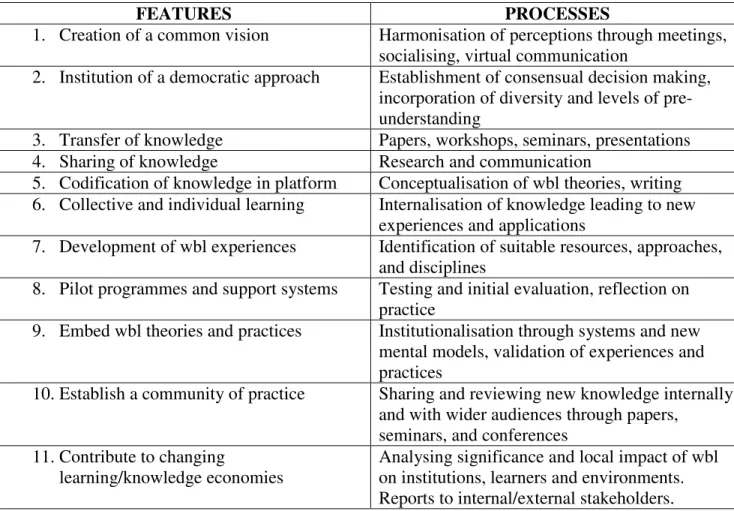
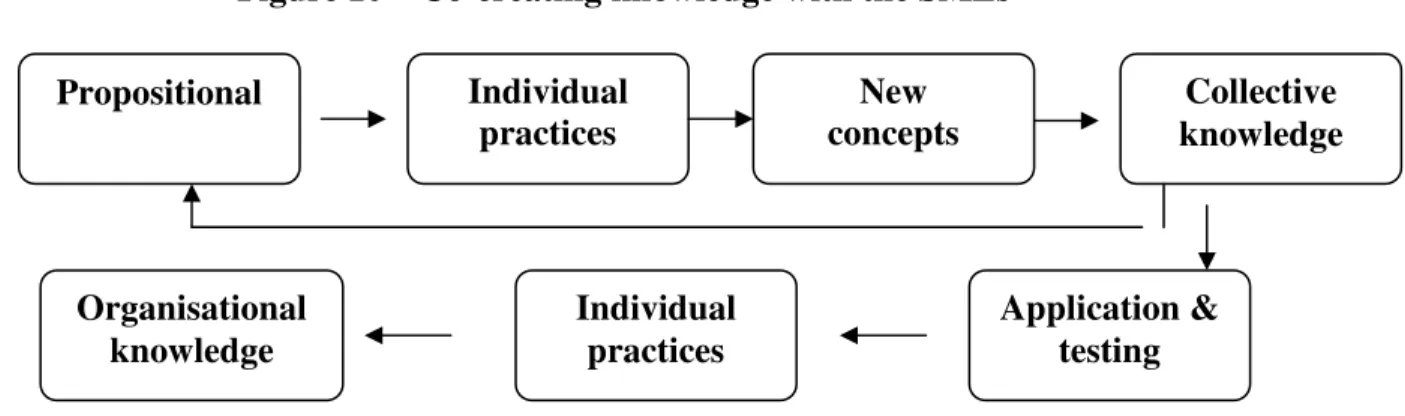
Several parallels can be drawn from developing work based learning in the DEWBLAM partnership (shown in figure 9 below) with the SME process described in the next section (see also figure 10 p.34), as knowledge was transferred, collectively generated, applied and tested in individual contexts, collectively and separately re-conceptualised and codified in the platform, then embedded and codified in different programmes and systems:
Figure 9 – Stages in DEWBLAM work based learning developments
FEATURES PROCESSES
1. Creation of a common vision Harmonisation of perceptions through meetings, socialising, virtual communication
2. Institution of a democratic approach Establishment of consensual decision making, incorporation of diversity and levels of pre-understanding
3. Transfer of knowledge Papers, workshops, seminars, presentations 4. Sharing of knowledge Research and communication
5. Codification of knowledge in platform Conceptualisation of wbl theories, writing 6. Collective and individual learning Internalisation of knowledge leading to new
experiences and applications
7. Development of wbl experiences Identification of suitable resources, approaches, and disciplines
8. Pilot programmes and support systems Testing and initial evaluation, reflection on practice
9. Embed wbl theories and practices Institutionalisation through systems and new mental models, validation of experiences and practices
10.Establish a community of practice Sharing and reviewing new knowledge internally and with wider audiences through papers,
seminars, and conferences 11.Contribute to changing
learning/knowledge economies
Analysing significance and local impact of wbl on institutions, learners and environments. Reports to internal/external stakeholders.