Persistent link: http://hdl.handle.net/2345/3180
This work is posted on eScholarship@BC,
Boston College University Libraries.
Boston College Electronic Thesis or Dissertation, 2013
Copyright is held by the author, with all rights reserved, unless otherwise noted.
"From Coursework to Classroom: "
Learning to Teach History to Bilingual
Students
Boston College
Lynch School of Education
Department of Teacher Education, Special Education, and Curriculum
and Instruction
Language, Learning, and Literacy
“FROM COURSEWORK TO CLASSROOM:”
LEARNING TO TEACH HISTORY TO BILINGUAL STUDENTS
Dissertation
by
LAURA SCHALL-‐LECKRONE
Submitted in partial fulfillment of the requirements for the degree of Doctor of Philosophy
August 2013
© copyright by LAURA CARRIE SCHALL-LECKRONE 2013
Abstract
FROM COURSEWORK TO CLASSROOM: LEARNING TO TEACH HISTORY TO BILINGUAL STUDENTS
Laura Schall-Leckrone
Dissertation Advisor: Maria Estela Brisk
This qualitative research study examined how student teachers and novice history teachers learn to teach adolescent bilingual learners (BLs) from coursework to the classroom. The purpose of the study was to investigate to what extent five participants drew upon social justice-oriented pre-service preparation when they taught history to bilingual students in secondary schools in the Greater Boston area. More specifically, this study examined how participants scaffolded history instruction for BLs and taught the language of history to BLs. Classroom data—observation videotapes, interviews, lesson plans, and teaching materials— were analyzed using the Sheltered Immersion Observation Protocol (SIOP) (Echevarría, Vogt & Short, 2008) and Lucas and Villegas’s framework for Linguistically Responsive Teachers (LRT) (2011) to assess trends in how individual participants, student teachers, and novice teachers scaffolded instruction. An analytical framework was created based on systemic functional linguistics (SFL) description of key genres of secondary history (Coffin, 1997, 2006; Martin & Rose, 2008) to understand how participants taught the language of history. Findings of this study suggest that as participants gained classroom experience, they increasingly implemented
instructional scaffolds aligned with classroom activities to engage students in rigorous content instruction. Yet participants did not consistently teach language demands of history. Based on study results, I suggest outcomes for early phases of a continuum of teacher learning related to teaching history to BLs. I also propose a framework for teaching the language of history that draws from SFL-informed genre pedagogy (Coffin, 1997, 2006; Gibbons, 2009; Rose & Martin,
2012; Schleppegrell, 2005), and I propose a model for language and content teacher preparation specific to history but also applicable to other secondary content areas. A key argument that this dissertation advances is that secondary history teachers need coherent, consistent, and
coordinated support from pre-service coursework to student teaching to full-time teaching to learn to teach BLs. Implications of this study can inform teachers, teacher educators, and
researchers who seek to improve opportunities for adolescent BLs to receive equitable access to rigorous content instruction and to develop specific literacy skills that could serve as a
This dissertation is dedicated to the memory of my mentor, Dr. Arlene Dannenberg, whose life, leadership in the field of bilingual education in Massachusetts, extraordinary
ACKNOWLEDGEMENTS
I received overwhelming support, encouragement, and many kindnesses throughout my experience in the Boston College (BC) doctoral program. I am especially grateful to Dr. María Estela Brisk, my dissertation advisor, who pushed me forward, provided an inspiring, world-class role model, introduced me to SFL, and opened her home to me. Dr. Patrick McQuillan guided and encouraged me throughout my doctoral experience. He served as a role model both as a researcher and teacher educator. I am immensely grateful to him for the chance to
collaborate on the ELL study in his history methods class, for co-authoring my first publication, and reminding me all systems, especially human ones, need balance. Dr. Marilyn Cochran-Smith provided support and encouragement all through my experiences in the teacher education
program, asked hard questions, and reminded me to consider my role in the research. I am grateful for all that I have learned from her and her work. Dr. Audrey Friedman shared insights on teacher development, teaching, literacy, life, and many kindnesses.
My dear friend, Dr. Annie Homza, provided support, advice, and encouragement both professional and personal throughout my experience at BC. A special thank you to Dr. Susan Bruce for sharing her videotape analysis protocols with me. I also appreciate the wisdom and many kindnesses of Professors Mariela Páez, Dennis Shirley, Patrick Proctor, Curt Dudley-Marling, Rebecca Lowenhaupt, Lauri Johnson, and David Scanlan. Fran Loftus and Melita O’Malley enabled me to observe student teachers and very kindly provided “home team support” by attending my presentations at AERA conferences in New Orleans and Vancouver. I am fortunate so many individuals took an interest in nurturing my growth as a doctoral student, researcher, and teacher educator.
I also am grateful for BC friends, Christina Pavlak, for collaborating with me on the study in the secondary bilingual methods class, which influenced this study, and Tracy Drysdale, Catherine Michener, and Kevin O’Connor, for support, friendship, collaboration, and inspiration throughout the doctoral program.
I am also immensely grateful for the research assistantships through BC’s Title III professional development grant, which supported the design and data collection for this study and to the Faculty Award Committee at the Lynch School, who supported the writing of this dissertation with a Fellowship.
As is typical in academia, with this project I stand on the shoulders of giants. I am indebted to Dr. Tamara Lucas, who provided helpful feedback in her review of an AERA paper on a preliminary study that led to this investigation and encouraged me to follow study
participants into their early teaching experiences. Dr. Keith Barton also reviewed a later AERA paper and shared copies of his work, which enlarged my understanding of research in history education.
I also am indebted to scholars working with SFL-informed genre pedagogy at other colleges and universities in U.S. contexts, who provided inspiration by example, generously shared their work with me, and graciously supported and encouraged my efforts: James Nagle, Luciana de Oliveira, Meg Gebhard, and Pat Paugh.
I received constant support and unwavering encouragement from my family and friends: my husband, Tom, who has seen me through an undergraduate thesis, master’s thesis, now a dissertation, and everything in between; my mom, my first and best teacher; my dad, for his unconditional, generous support, which always has enabled me to pursue my dreams; my son, Jacob, for all manner of tech support and especially for sneaking up behind me, rubbing my
shoulders, and saying, “That’s enough. Time to save and stop working.” My daughter, Hannah, surrounded me with inspirational art and lavished me with lavender products. I especially appreciate her unique sense of style and occasion. I am enormously grateful to my older brother, Gary, my mindfulness guide; the Ecker Women, the dynasty of teachers in my family, all role models of perseverance, courage, and fun; and Anne, Nora, Michelle, and Henry, whose friendship, brilliance, passion, and creative ways of living have inspired, sustained, and
comforted me through all my pursuits, intellectual and otherwise, for over twenty-five years; and my dear friend, Julie, who continues to meet me half-way.
My friends at the Hudson Public Library provided constant encouragement and a quieter, neater, and better-furnished room in which to write, and especially, Tina, for the
mother-daughter book group. Hudson friends Denise, Glenda, and Karen provided welcome respites over a glass of wine or cup of tea and helped care for my children.
I am especially indebted to the five participants in this study: Sarah, Cammie, Olivia, Victoria, and Susana, and all my students from Bed-Stuy to BC, who have taught me more than I could ever teach them.
TABLE OF CONTENTS Acknowledgements
List of Figures and Tables
INTRODUCTION: A CONFLUENCE OF FACTORS INTENSIFIES THE NEED
TO PREPARE HISTORY TEACHERS TO WORK WITH BILINGUAL LEARNERS 1
CHAPTER TWO: A REVIEW OF THE LITERATURE 17
Part 1: Teaching the language of history through genre pedagogy 17
Part 2: Preparing history teachers to teach bilingual learners 26
CHAPTER THREE: STUDYING TEACHER LEARNING “FROM COURSEWORK
TO THE CLASSROOM” 56
CHAPTER FOUR: A TALE OF TWO (PRELIMINARY) STUDIES 78
Part 1: Preparing history teachers to work with bilingual learners: Study of an ELL
infusion in a history methods class 80
Part 2: Preparing content teachers to scaffold instruction and to “think complexly”
about instruction: Study in a secondary bilingual methods course 91
CHAPTER FIVE: HOW STUDENT TEACHERS SCAFFOLDED INSTRUCTION
AND TAUGHT THE LANGUAGE OF HISTORY TO BILINGUAL LEARNERS 114
Susana- Tenth-grade world history student teacher 116
Victoria- Ninth-grade humanities student teacher 124
Olivia- Eighth-grade social studies student teacher 134
CHAPTER SIX: HOW NOVICE TEACHERS SCAFFOLDED INSTRUCTION
AND TAUGHT THE LANGUAGE OF HISTORY TO BILINGUAL LEARNERS 147
Cammie- First-second year sheltered English immersion history teacher 150
Sarah- Second-third year mainstream ninth-grade history teacher 169
CHAPTER SEVEN: BEYOND VOCABULARY: IDENTIFYING AND
TEACHING THE LANGUAGE OF HISTORY 185
Part 1: A developmental perspective on learning to teach history to bilingual learners 187 Part 2: How student and novice history teachers scaffolded instruction for bilingual
learners 193
Part 3: A framework for identifying and teaching the language of history 202
Part 4: Toward a robust model to prepare history teachers to teach language 216
BIBLIOGRAPHY 229
APPENDICES 250
Appendix A: Semi-structured Interview Protocol Appendix B: Videotape Analysis Protocol
Appendix C: Protocol for Analyzing How Participants Taught Language
LIST OF FIGURES
Figure 2.1 How Prior Research Frames This Study of How History Teachers 26
Learn to Teach BLs
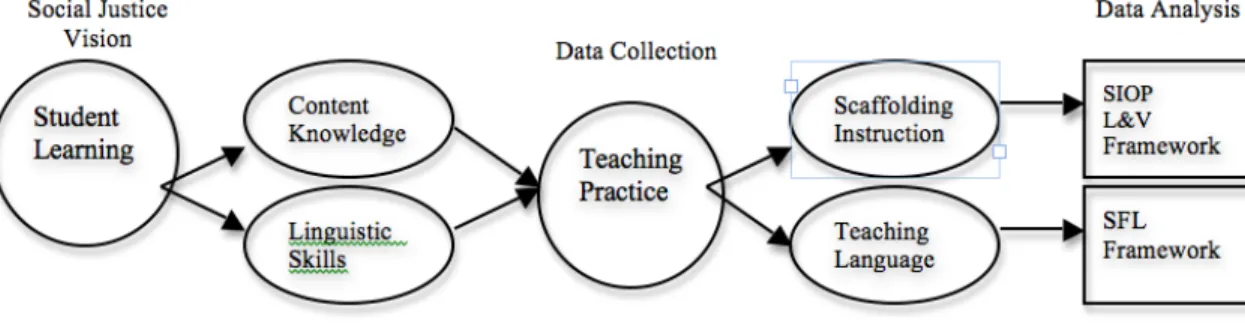
Figure 3.1 How a Social Justice Vision of Student Learning Guided the Research Design 58
Figure 3.2 A Timeline of Participant Observations 62
Figure 7.1 Three Phases of Teacher Development 187
Figure 7.2 Outcomes of Three Phases of Development of History Teacher Candidates 188
Figure 7.3 Consequences of Mongols’ Invasion of Baghdad 209
Figure 7.4 Model of Content and Language Teacher Preparation: History 217
LIST OF TABLES
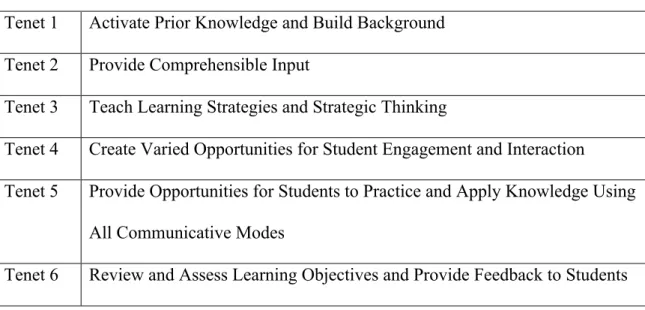
Table 2.1 SIOP Tenets of Effective Instruction 36
Table 3.1 Observation Data from Student Teachers and Novice History Teachers 63
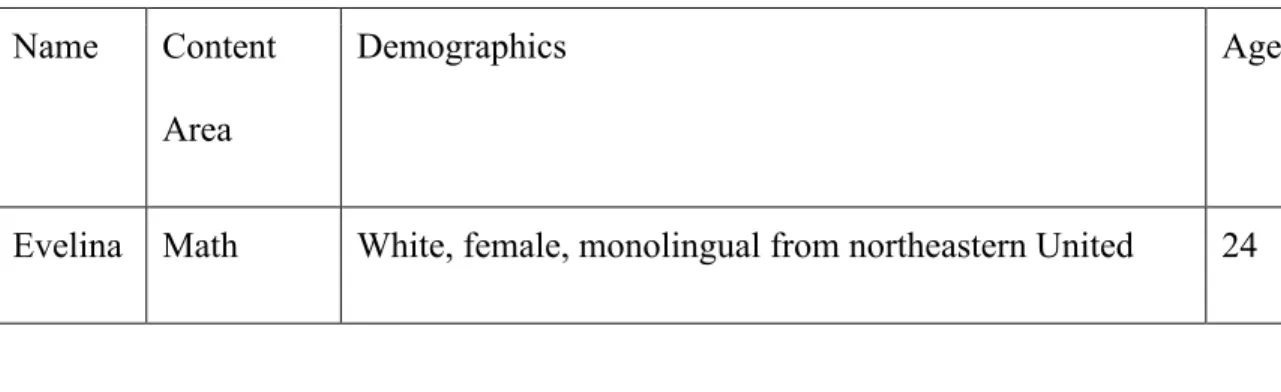
Table 3.2: Cross-section of Research Participants 66
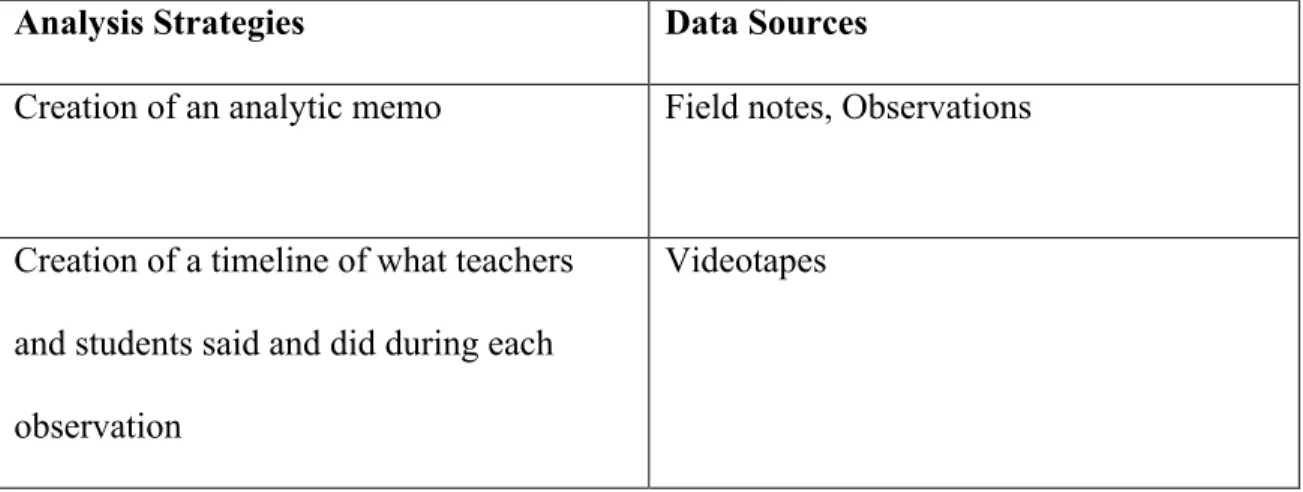
Table 3.3: Alignment of Research Questions, Analysis Strategies, and Data Sources 70
Table 4.1: Focus Students 99
Table 4.2: Research Methods 101
Table 4.3: Matrix for Evaluating the Complexity of Participant Thinking 102
Table 7.1: How Student and Novice History Teachers Scaffold Instruction for BLs 194
Table 7.2: Framework for Teaching Key History Genres 203
Table 7.3: A Simple Formula for Expressing Cause and Effect 210
Table 7.4: A Simple Formula for Constructing Opinion Statements 214
Introduction: A Confluence of Factors Intensifies the Need to Prepare History Teachers to Work with Bilingual Learners 1
While the number of children from linguistically diverse backgrounds increases in urban, suburban, and rural schools throughout the nation, teachers who are
unprepared to teach them still predominate in the U.S. teaching force (Bunch, 2010; Lucas & Grinberg, 2008). “Record-high immigration” and high birth rates among immigrant families within the last decade have contributed to remarkable growth in the school-age population of bilingual children in “nontraditional immigrant states” like Nevada, North Carolina, Georgia, and Nebraska as well as “traditional immigrant destinations” such as border states, urban areas, and populous states like New York, California, and Texas (Capps et al., 2005; Pandya, Batalova, McHugh, 2011, p. 11). In 2008, approximately 10.9 million children in the United States spoke a language other than English at home, representing an estimated 21% of the school-age population (National Center for Education Statistics, 2011). It is projected that students who speak another home language will constitute 40% of K-12 students by 2030 (Lucas &
Grinberg, 2008). Within a burgeoning population of bilingual learners (BLs), the number of adolescent BLs enrolling in schools is increasing at an even faster rate than younger BLs (Capps et al, 2005). These older students are less likely to receive English-as-a-second language or bilingual instruction than their elementary-age counterparts (Ruiz-de-Velasco & Fix, 2000). As Páez (2009) noted:
Immigrant students who arrive in the middle and high school years encounter less support for language and literacy learning in schools and more complex
academic content in school systems that are emphasizing rigorous, standards-based curricula and high stakes testing for all students. (p. 168)
In brief, adolescent BLs encounter less time and support to develop requisite academic English to meet higher standards (Lucas & Grinberg, 2008; Ruiz-de-Velasco & Fix, 2000). Schools have limited capacity, and more specifically, a critical shortage of mainstream teachers adequately equipped to teach adolescent BLs (Lucas & Grinberg, 2008). All educators must be prepared to teach adolescents BLs in mainstream
secondary classrooms to provide older learners equitable access to rigorous, standards-based instruction. However, there is a paucity of educational research to guide
secondary educators who teach older BLs and those who prepare them to teach (Faltis, 1999; Garcia & Godina, 2004; Walqui, 2000). Not only do elementary-age BLs
encounter more time and support to learn academic English (Páez, 2009), they also receive the preponderance of research attention (Harklau, 2000); comprehensive empirical studies of teaching and learning for adolescent and immigrant BLs are rare (Faltis & Wolfe, 1999; Suárez-Orozco, Suárez-Orozco & Todorova, 2008). Programs of research focused on the preparation of secondary educators are urgently needed so that effective educational approaches for adolescent BLs can be better understood and therefore more broadlydisseminated and applied (Faltis &Wolfe,1999; Garcia & Godina, 2004; Harklau, 2000; Walqui, 2000). This study aims to contribute to addressing this need by examining how student teachers and novice history teachers learn to teach adolescent BLs from pre-service coursework in a teacher education program to their early teaching practice in secondary schools.
these students speak another language—not English learners. While many BLs are proficient in English, they may not be fluent in discipline-specific academic English prerequisite to success in mainstream secondary content classes (Zwiers, 2005; 2008). Various research studies refer to BLs as English language learners (ELLs), English learners (ELs), English as-a-Second Language (ESL) students, Limited English Proficient (LEP) students, language minority (LM) students, and English as speakers of other languages (ESOL) students among other labels. The label “ESL students,” is a common misnomer for this group. English may not be a second language; it could be a third language, or if the student is being raised bilingually, it may be difficult to determine a language of dominance. English is used in certain contexts and another language in others. Our inability to agree on a common term of reference is perhaps indicative of a research target that is imbued with political, cultural, and social import, undergoing rapid change, and, thus far, has received inadequate attention.2
Disproportionately high dropout rates for BLs
Even though BLs represent the “fastest-growing population in U.S. schools . . . in all other respects they are being left behind” (Alliance for Excellent Education, 2007, p.1). Within the current U.S. education climate in whichthe standards movement has culminated in a federal testing regime that relies on standardized assessments to measure student, school, district, and state performance, the vast majority of BLs score at or below basic levels of academic proficiency (Francis, Rivera, Lesaux, Kieffer, & Rivera, 2006). Within the U.S. “Race to the Top” hyper-accountability context, adolescent BLs, in particular, may face insurmountable pressure to simultaneously learn English and academic content in English to pass high-stakes exams prerequisite to
high school graduation (Beykont, 2002). At no time in our nation’s history is a high school diploma more critical to the future prospects of children, since “three quarters of all jobs . . . require some postsecondary education” (Harklau, 2000, p. 36, cited in U.S. Department of Labor, 1991). Yet dropout rates remain disproportionately high among adolescent immigrants and U.S. born BLs (Suárez-Orozco & Suárez-Orozco,
2008;Walqui, 2000). According to the 2000 Census, immigrant youth accounted for 8% of all youth nationwide, but approximately 25% of school dropouts (Fry, 2003).
Moreover, 80% of BLs did not graduate from high school after five years in a large urban district in Texas, whose high-stakes accountability system provided the template for the No Child Left Behind (NCLB) legislation of 2001 (McNeil, Coppola, Radigan, Vasquez & Heilig, 2008). The academic achievement of adolescent BLs lags behind native English-speaking peers on virtually all education measures (Seeking Effective Policy for ELLs, 2007). First, it is urgent to consider why many adolescent BLs fail to thrive in mainstream secondary schools, and second, what can be done about this alarming scenario as the future of the increasingly linguistically diverse children of our nation may hang in the balance.
Inclusion megatrend
In the current “inclusion megatrend,” an increasing number of BLs are rapidly placed into inclusive mainstream classes with teachers who have received little to no preparation to teach them (Lucas, 2011; Lucas & Grinberg, 2008). Coincident with the high stakes accountability culture of U.S. schools is a mounting political climate of “English-only” policies, epitomized by ballot referenda in California, Arizona, and Massachusetts, where voters eliminated bilingual programs (Brisk, 2006). Further, due
to costs associated with specialized language instruction, shortages of trained teachers, and recent influxes of BLs in non-traditional immigrant destinations without sound bilingual or ESL programs, BLs often are placed directly into mainstream classes (Lucas & Grinberg, 2008). To complicate matters further, many schools have
accelerated the process of moving BLs from specialized programming into mainstream classes in response to heightened pressures of yearly testing brought about by NCLB (Beykont, 2002; Brisk, 2006; Lucas & Grinberg, 2008). In addition, although the vast majority of BLs in the United States speak Spanish, over 400 languages are spoken by students in U.S. schools (Ramsay & O’Day, 2010), so on a practical level, schools lack capacity to provide native language support to students from low-incidence language groups. Nationwide, fewer program options currently exist for bilingual students to learn academic content in their native language (Lucas & Grinberg, 2008) despite evidence that students who continue to develop first language skills in bilingual
programs outperform students in English-only programs on academic achievement tests in English (Ramírez, 1992, cited by Brisk, 2006; Páez, 2009).
Immersion in restrictive mainstream settings that preclude native language instruction has had dire consequences for some adolescent BLs (Coulter & Smith, 2006; Uriarte & Tung, 2009). For instance, a large-scale mixed methods study of student outcomes during the three years following the elimination of bilingual
education in Massachusetts found that high school dropout rates in the Boston Public Schools nearly doubled, middle school dropout rates tripled, and “the proportion of ELs enrolled in substantially separate special education classes more than doubled” (Uriarte & Tung, 2009 p. 6). In a comparatively small qualitative study of a comprehensive high
school, other researchers found that bilingual education “contributed to the . . . marginalization of immigrant students and their teachers” (Coulter & Smith 2006, p. 309). Whether one regards the decrease in bilingual programs as a step toward desegregation or as a misguided political attack with harmful consequences for
children, an escalating number of mainstream teachers now are charged with providing content instruction to BLs due to a confluence of demographic, political, and financial trends (Beykont, 2002; Reeves, 2006). Expanding the circle of educators who interact with BLs holds the potential of increasing access to academic content (Adger & Peyton, 1999). However, this potential will remain unmet if teachers do not possess requisite dispositions, knowledge, and skills associated with setting high standards for BLs and enabling them to reach them (Clayton, 2008, Walqui, 2006). Currently, “mainstream content classrooms in many US schools do not represent a promising atmosphere” for BLs’ language or content development (Bunch, 2006, p. 285).
Given the aforementioned developments, secondary content teachers must be equipped to teach BLs in pre-service and ongoing teacher education. Although there is no consensus on what constitutes good teaching, researchers have identified a requisite knowledge base for general education teachers. Effective teachers understand how children learn, create classroom communities, use varied assessments, possess deep content and pedagogical content knowledge and, reflect on and continually advance their practice (Feiman-Nemser, 2001; Lucas, Villegas & Freedson-Gonzalez, 2008; Shulman, 1987). In addition, to be effective with BLs, researchers suggest content teachers need to develop sociolinguistic consciousness, value linguistic diversity, and learn about BLs’ backgrounds and proficiencies (Lucas & Villegas, 2011). They also
must understand and apply key principles of second language learning (Lucas, Villegas & Freedson-Gonzalez, 2008; Lucas & Villegas, 2011); have some familiarity with how languages work (Wong-Fillmore & Snow, 2005); employ strategies for scaffolding content instruction (Echevarria, Vogt & Short, 2008; Lucas & Villegas, 2011;Walqui, 2006); and teach language demands of their content area (Anstrom & DiCerbo, 1998a; Anstrom & DiCerbo, 1998b; Anstrom & DiCerbo, 1999; de Jong & Harper, 2005; Lucas & Villegas, 2011). As Schleppegrell (2004) argues, teachers need a rich
understanding of the “linguistic challenges of schooling” because “in the absence of an explicit focus on language, students from certain social class backgrounds continue to be privileged and others … disadvantaged . . . perpetuating the obvious inequalities that exist today” (p. 3).
Academic literacy is key to school success for BLs
Academic language is a second language for many students (De Oliveira, 2011), who more readily acquire the sort of informal speech used outside a school context (Bunch, 2006). Academic language is defined as specialized vocabulary, grammar, language functions, and discourse patterns used to “acquir[e] new knowledge and skills, interac[t] around a topic and impar[t] information” (Bailey, 2007, pp.10-11).For adolescent BLs to achieve school success, they must become proficient in academic language (Zwiers, 2005). However, there is no “single, monolithic English” for academic purposes (Hyland, 2009, p .ix). Content areas create, disseminate, and evaluate knowledge differently, and “these differences are instantiated in their use of language” (Shanahan & Shanahan, 2008, p. 48). Since each academic discipline has a specialized knowledge-base and configures language in its own unique way, to demonstrate academic literacy, students must develop proficiency in the academic language of multiple
subject areas. Along similar lines, researchers studying the adolescent literacy crisis define academic literacy as follows:
[R]eading, writing, and oral discourse for school. . . . [that] varies from subject to subject [and] requires knowledge of multiple genres of text, the purposes for text use, and text media. [It is] influenced by students’ literacies in contexts outside of school [as well as their] personal, social, and cultural experiences. (Short & Fitzsimmons, 2007, p. 2)
To demonstrate academic literacy, students must read, write, and speak in the varied discipline-specific ways that knowledge is presented in different academic content areas (Hyland, 2009; Schleppegrell, 2004). In other words, literacy is dependent upon context, but academic literacy must be taught and learned in schools. Moreover, as students advance through school, the language and literacy skills associated with particular content areas become increasingly specialized (De Oliveira, 2011).
Developing academic literacy skills is key to school success for BLs and many other students (Short & Fitzsimmons, 2007). Current U.S. national standards—the Common Core State Standards (CCSS)—which have been adopted in 48 states,
demand that students demonstrate high levels of literacy in varied academic disciplines (Santos, Darling-Hammond, Cheuk, 2012). According to the CCSS, students must “be proficient in reading complex information text in a variety of content areas” and adapt to the demands of audience, task, and purpose when reading, writing, speaking, and listening within specific disciplines for college and career readiness (CCSS, 2010, p. 4). The heightened literacy demands placed on BLs by CCSS require immediate and innovative teacher education responses (Santos, Darling-Hammond, Cheuk, 2012;
Schall-Leckrone & McQuillan, forthcoming). More specifically, teachers must be equipped to teach the language and literacy demands of different content areas to linguistically diverse student populations (Anstrom & DiCerbo, 1998a; Anstrom & DiCerbo, 1998b; Anstrom & DiCerbo, 1999). Indeed, one widely used performance assessment of teaching candidates now measures readiness to teach academic language and literacy skills
(http://aacte.org/Programs/Teacher-Performance-Assessment-Consortium-TPAC/teacher-performance-assessment-consortium.html).In fact, all teachers must be prepared to teach vocabulary, language features, and discourse practices of academic disciplines, since BLs must learn language and content simultaneously in and through English to succeed in school (Lucas, Villegas & Freedson-Gonzalez, 2008).
Academic literacy in history/social studies
The “umbrella term” social studies represents an array of school subjects including “history, geography, economics, civics, sociology, psychology, and
philosophy” (De Oliveira, 2012, p. 147). History, a key component of social studies,3 is
particularly challenging for BLs and struggling readers (Schleppegrell & de Oliveira, 2006) because historical concepts are typically situated in abstract vocabulary and complex language structures “quite different from [everyday] language” (Schleppegrell, Greer & Taylor, 2008, p. 176). For instance, history textbooks contain intangible
concepts, figurative language, and complicated linguistic features like
nominalizations— when a verb becomes a noun and key concepts are compressed into the subject or object position of another verb (for example, taxation without
representation led to revolution) (De Oliveira, 2010; Schall-Leckrone & McQuillan, 2012). In addition, original and secondary sources are written in a continuum of genres from those organized by time like biographical recounts to increasingly abstract genres like historical arguments, which are organized rhetorically (Coffin, 1997; Coffin, 2006; Martin & Rose, 2008; Schall-Leckrone & McQuillan, 2012). BLs and many other students may lack requisite background knowledge to decipher history texts and make sense of history lectures (De Oliveira, 2011).
Additional factors further exacerbate the challenges of learning history. Because social studies is not “tested” in the required accountability metrics of NCLB, time spent on social studies— particularly in schools that serve urban youth in high poverty
districts— has been greatly reduced (Burroughs, Groce & Webeck, 2005; De Oliveira, 2011, Weistheimer & Surtaam, 2010). Instruction in social studies and the arts has been replaced by an intensive focus on reading, writing, and mathematics to boost student performance on standardized tests (Westheimer & Surtaam, 2010). Burroughs and her colleagues (2005) noted, “fifty percent of principals of schools with large minority [populations] reported decreased time for social studies” (p. 14, citing the Council for Basic Education). To complicate matters further, despite efforts to promote inquiry-based, student-centered approaches in teacher education programs, history teachers continue to be socialized to see certain practices such as teacher-dominated instruction as customary, effective, and appropriate (Barton & Levstik, 2004; Schall-Leckrone & McQuillan, 2012). On a related note,history teachers feel pressed by content coverage demands since learning standards for secondary U.S. and world history courses
2004). Now more than ever, Theodore Sizer’s observation thirty years ago that “high school history is the most difficult subject to teach well” seems to ring true (Sizer, 2004, cited by de Oliveira, 2011, p. 18). To summarize, urban youth currently receive less history instruction, and what they do get, often appears in a “stand and deliver” format that does little to help them develop proficiency in the academic language, literacy, and thinking skills associated with history.
Given this disheartening scenario, efforts to train history teachers to engage adolescent BLs in student-centered instruction and study their effectiveness are urgently needed. The purpose set forth by the National Council for the Social Studies (2010) represents an instructional ideal that should guide history teachers (and the programs that seek to prepare them):
Young people develop the ability to make informed and reasoned decisions for the public good as citizens of a culturally diverse, democratic society in an interdependent world. (p. 3)
This purpose for social studies education seems especially relevant in an increasingly ethnically and linguistically diverse nation, where as of 2011 minority newborns outnumber whites (http://www.census.gov/newsroom/releases/
archives/population/cb12-90.html), and “social networking” takes the form of
individuals communicating via electronic devices in the privacy of their homes. Social studies education offers a setting in which to re-imagine the future of our American history as a diverse, inclusive nation that protects individual civil liberties while embracing E Pluribus Unum, that we are “better together” (Putnam, 2000). Some believe teaching social studies through a constructivist, experiential and activist
approach has the potential to promote “active and intelligent participation in American [society]” (Rugg, 1930, p. viii) and close the civic engagement gap that exists for poor, minority, and immigrant students (Levinson, 2005). Along these lines, this study is guided by a social justice vision for student learning in history with two foci: providing equitable opportunities for academic achievement and promoting the development of specific literacy skills that could prepare students for engaged citizenship, so they may act as change agents in their own lives, near, and distant communities (Coffin, 1997; Schall-Leckrone & McQuillan, 2012).
An explicit focus on teaching the language and genres of history can offer students a means to access historical content and develop targeted literacy skills while laying a foundation for advanced study and active participation in democratic society (Schall-Leckrone & McQuillan, 2012; Schleppegrell, Greer & Taylor, 2008). Academic literacy in history and specifically, abilities to tell a compelling story, interpret texts, debate key events, and craft persuasive arguments could enhance the academic
prospects, employability, and civic engagement of adolescent ELs as they come of age in U.S. society (Coffin, 1997, 2006; Schall-Leckrone & McQuillan, 2012).Learning language and literacy skills associated with history, however, can challenge any student, but for BLs the challenge is more arduous since they must develop English proficiency concurrently with content learning (Schall-Leckrone & McQuillan, 2012). Moreover, a predominantly white, monolingual teaching force may not realize the complexity historical language poses for BLs (Bunch, 2010; de Jong & Harper, 2005). Before history teachers can teach language-specific demands of history, they must have some understanding of second language learning and language features of historical
discourse (Schall-Leckrone &McQuillan, 2012). Further, secondary teachers need to develop a repertoire of scaffolding techniques that enable BLs to actively engage in rigorous content instruction in mainstream settings as they acquire proficiency in academic English (Echevarria, Vogt & Short, 2008; Lucas, Villegas & Freedson-Gonzalez, 2008; Walqui, 2006). Finally, history teachers must be able to analyze and teach conceptual, language, and literacy demands of history tasks and texts (De Oliveira, 2011; Fang & Schleppegrell, 2008). Adolescent ELs can access content and develop academic literacy when history teachers develop lessons in which linguistic skills and content knowledge intertwine in authentic and engaging contexts that offer rich opportunities for BLs to interact (Omaggio, 2001; Verplaetse, 2008).
Purpose of this study
How student and novice history teachers learn to scaffold instruction and teach the language of history to BLs is a complex, multi-faceted topic that has not been analyzed in depth. While a small body of research has investigated professional developmentaimed at preparing experienced history teachers to teach reading and writing to linguistically diverse students (De Oliveira, 2011; de Oliveira &
Schleppegrell, 2006; Schleppegrell, Achugar & Oteiza, 2004; Schleppegrell, Greer & Taylor, 2008), few studies have focused on dispositions, knowledge, and skills
inexperienced history teachers need to work with BLs (Schall-Leckrone & McQuillan, 2012). In this study, I followed three student teachers and two novice history teachers, who completed coursework intended to prepare them to teach BLs within the teacher education program at Boston College, into secondary schools in the greater Boston area. To understand how participants scaffolded instruction and taught language,
multiple data sources were collected from teaching settings. I videotaped classroom observations, took field notes, and collected lesson plans and all relevant teaching materials. Post-observation interviews were conducted and digitally recorded. The purpose of this study was to investigate to what extent student and novice history teachers drew upon pre-service preparation when they taught history to bilingual students in urban secondary schools. Specifically, I sought to answer the following overarching research question and related sub-questions:
• What happens when student teachers and novice teachers, who completed
pre-service coursework intended to prepare them to work with bilingual learners (BLs), teach history or social studies in secondary classrooms?
Sub-questions:
• To what extent do they scaffold instruction for BLs?
• To what extent do they teach the language of history to BLs?
Using data from classroom settings, I analyzed how student teachers and novice history teachers planned and implemented instruction for BLs, and more specifically, to what extent they drew upon their pre-service preparation to scaffold instruction and teach language demands of history.
The results of this study are important because I investigate an aspect of teacher education that has not been studied before: the preparation of history teachers to work with BLs “from coursework to the classroom.” Implications of this study can provide guidance to teachers, teacher educators, and researchers, who aim to improve learning opportunities for adolescent BLs to receive equitable access to content instruction and to develop specific literacy skills that could enable them to act as change agents in their
own lives. My hope is that greater understanding of how secondary content teachers draw upon pre-service preparation in their early teaching experiences can inform educators who seek to elevate the academic trajectories and improve the life chances of bilingual youth.
Organization of this Dissertation
This dissertation is organized into seven chapters. The first chapter provides the rationale, purpose, and significance of the study by introducing a confluence of factors that have intensified the need to prepare history teachers to work with bilingual
learners. The second chapter outlines this study’s theoretical framework, which is based upon genre pedagogy informed by Systemic Functional Linguistics (SFL) (Coffin, 1997; Coffin, 2006; Martin & Rose, 2008; Rose & Martin, 2012). In the second part of this chapter, I also review conceptual and empirical research related to preparing history teachers to work with BLs. The third chapter describes the qualitative design that guided this study of teacher learning from pre-service coursework to early teaching practice. The fourth chapter introduces two preliminary studies that influenced this investigation: a study of an ELL infusion in a history methods course and a second study in a secondary bilingual methods course that examined the dynamic tension between mastering particular instructional strategies and thinking complexly about teaching BLs (Bartolomé, 1994). The fifth chapter presents my analysis of how student teachers scaffolded instruction and taught the language of history, and the sixth chapter presents a similar analysis of novice history teachers. In the seventh and final chapter, I describe a developmental perspective on learning to teach history to BLs, and more specifically, outcomes for three initial phases of teacher development: coursework
experiences, student teaching, and early years of teaching. I also present trends in how student and novice history teachers scaffolded instruction for BLs. In addition, I propose a genre-based framework for teaching the language of history that combines systemic functional linguistic (SFL) description of historical discourse (Coffin, 1997; 2006) with analysis of vignettes (tasks and texts) from secondary history classrooms. I also propose a model of teacher education intended to prepare secondary content teachers to develop requisite pedagogical knowledge and skills to integrate language and content instruction. Finally, I conclude with the implications of this study for teaching, teacher education, and further research.
Chapter 2: Review of the Literature
We are better off when children learn to care about the needs of others and when they learn to analyze, discuss, and act on important social issues in
thoughtful, caring, and informed ways. (Westheimer & Surtaam, 2010, p. 592)
To support this study, I built on several relevant bodies of theoretical and empirical work. In the first part of this chapter, I introduce the theory of language that serves as the theoretical framework for the study: SFL informed genre-based literacy pedagogy (hereafter referred to as genre pedagogy). In brief, genre pedagogy provides a set of linguistic resources teachers can use to equalize educational opportunities for linguistically diverse students in schools (Rose & Martin, 2012) and that students can take up to demonstrate ways of knowing that are critical to individual achievement and engaged citizenship (Coffin, 1997, 2006). The second part of the chapter reviews literature related to preparing history teachers to work with BLs, and more specifically, empirical and conceptual research on teacher preparation, instructional practices for working with BLs in general, and teaching history to BLs in particular. Because no prior studies have examined history teacher learning related to working with BLs from “coursework to the classroom,” it is appropriate to review literature from an array of epistemological paradigms to situate this study, such as conceptual studies, empirical studies, and pedagogical manuals.
Part 1: Teaching the language of history through genre pedagogy
The over-arching goal of genre pedagogy is “to make the distribution of knowledge in schools more equitable” (Rose & Martin, 2012, p. 6). The idea is that educational outcomes can be democratized by explicitly teaching the language used
in schools to construct and present knowledge (Rose & Martin, 2012). Genre pedagogy as implemented by the Sydney School is informed by systemic functional linguistics (SFL).
SFL is a socio-cultural theory of language, which focuses on authentic use of language for a specific social purpose and audience in a particular cultural context (Gebhard, Willett, Caicedo & Piedro, 2011; Halliday, 1993). In brief, the intended function of a text largely shapes language choice (Derewianka, 1990; Fang & Schleppegrell, 2008; Martin & Rose, 2008). In line with this perspective, Gebhard (2010) explained:
[SFL] offer(s) teachers and students a contextual basis for critically analyzing how language varies in relation to who is communicating with whom, what they are communicating about, and the modes through which they are interacting. (p.798, citing Halliday, 1996)
In other words, students and teachers consider who is saying what to whom, how they are saying it, and for what purpose. Accordingly, SFL provides a lens through which to examine linguistic features of the increasingly specialized texts of upper
elementary, intermediary, and secondary schools. The focus in SFL informed genre pedagogy is on how academic disciplines use language in particular ways to construct knowledge (Schleppegrell, 2004). More specifically, students are taught typical language structures that constitute genres within content areas to interpret and create effective texts (Derewianka, 1990). In SFL, “genres are recognizable types of texts that have a particular purpose (Schleppegrell, 2005, p. 5). As Martin and Rose further elaborate, “Genres are . . . recurrent configurations of meaning . . . that enact social
practices of a given culture” (Martin & Rose, 2008, p. 6). Genres, from a functional perspective, are identified by recurrent linguistic patterns and understood by the ways in which they accomplish a particular purpose within a social context.
Nearly thirty years ago, educational linguists in Sydney, Australia began developing SFL informed genre pedagogy to prepare teachers to teach academic literacy skills to aboriginal and immigrant school children (Derewianka, 1990; Gebhard, 2010; Gibbons, 2003; Halliday, 1993). In the United States, there are a couple of established and several emerging programs of research influenced by the Sydney School to equip teachers with SFL-based strategies to make language demands of school reading and writing tasks apparent to students (Brisk, Hodgson-Drysdale & O’Connor, 2011; Brisk & Zisselsberger, 2011; Gebhard, 2010; Nagle & MacDonald, 2012; Pavlak, 2013; Schleppegrell, 2004). Educational linguists
associated with the Sydney School have described historical discourse within schooling using SFL (Coffin, 1997, 2006; Martin & Rose, 2008). Building on Coffin’s analysis of linguistic features of key genres of secondary school history (1997, 2006), some researchers have used SFL as a resource to prepare teachers to teach linguistically diverse students language and literacy skills associated with history in U.S. contexts (Schall-Leckrone & McQuillan, 2012, Schleppegrell & De Oliveira, 2006; Schleppegrell, Greer & Taylor, 2008).
Coffin (1997) described a cline of key genres in secondary school history as a pathway through which learners progress as they develop linguistic resources, first to construct the past as story and then later as an argument (see p. 203). Based on Coffin’s work, Martin & Rose (2008) added the notion that this pathway could serve
as the basis for developing “a spiral curriculum” (see p. 138-9). That is, learners can be taught a continuum of genres from those organized by time, such as historical recounts to increasingly abstract genres like historical arguments, which are organized rhetorically (Coffin, 1997, 2006; Martin & Rose, 2008). To reiterate, genres enact social purposes (Martin & Rose; Schleppegrell, 2005); the family of history genres has evolved as a means to “record, explain, and debate the
past”(Martin & Rose, p. 99). There are recognizable, recurrent language patterns that constitute history genres, which can be identified, taught, and learned (Derewianka, 1990). Key history genres include narrative genres, explanatory genres, and arguing genres (Coffin, 2006). A historical narrative might recount the sea passage of an African slave to the American South. An historical explanation might explain causes and consequences of the Civil War. In an historical argument, the Civil Rights
Movement might be interpreted as the fulfillment of aspirations of the Reconstruction Era. Coffin (2006) argues that the focus of instruction tends to be on historical
narratives between the ages of eleven to thirteen, historical explanations from ages fourteen to sixteen, and historical interpretations or arguments from ages sixteen to eighteen (see p. 47). Moreover, she asserts that mastering literacy skills associated with “each genre plays an important role in scaffolding students” toward developing the increasingly abstract language and thinking associated with creating historical arguments based on interpretation (p. 138).
Narrative genres, which typically are organized chronologically, align with the metaphor of history as story. For instance, in a personal recount, the author uses first person to narrate an event that happened within a time sequence. An
autobiographical recount, also written in first person, tells a life story over a longer time period. Both types of recounts consist of “I statements” and temporal
conjunctions: “then,” “first,” “next,” and connectors with time markers such as “in 1976” (Martin & Rose, 2008). A biographical recount shifts to third person and narrates an event in someone else’s life. Similarly, a biography is the story of someone’s life over a longer period of time. In the preceding genres, there are specific, named participants, and one event leads to another in a temporal sequence (Martin & Rose, 2008). With an historical recount, named participants are replaced by groups of people. For instance, “the first wave of … Indochine boat people came to Australia . . . between 1976 and 1981” (Martin & Rose, p. 105). Historical recounts chronicle events. In summary, narrative genres are accomplished through usage of past tense, prepositional phrases and connectors of time, movement from specific to general participants, and doing processes (action). Overall, historical narratives answer the question: What happened?
With historical accounts and explanations, chronological organization shifts toward organization by rhetoric. Beyond packaging events over time, historians, including textbook writers, explain what caused or resulted from events (Martin & Rose, 2008). Accordingly, historical accounts operate according to a subtle cause-effect structure; one event either is preceded by or follows another. To realize cause,
evaluative language is used in noun phrases and verbs. For example, “The Howard government’s unwillingness to apologise” might be the subject of a sentence and verbs like “argued” or “sparked” are used (see Martin & Rose, p. 115). With an historical explanation, the cause-effect structure, use of rhetoric and evaluative language are more
apparent. Two types of explanatory genres are constructed according to the rhetoric of cause and effect. With factorial explanations, various causes precipitate a subsequent event. In consequential explanations, multiple effects result from a precipitating factor (Coffin, 2006; Martin & Rose, 2008). In an historical explanation, the author might outline various reasons why a group behaved in the way that it did. The purpose is to explain why past events happened by examining causes and consequences. Linguistic features of an explanation include generalized participants like nominalizations and causal processes that express relationships of causation or determination, such as “influenced, brought about, or affected, led to, resulted in, created, or caused” (see Coffin, 2006, p. 124). Explanatory genres answer two types of questions: Why did it happen? And, what was the result?
Genres of argumentation are organized rhetorically (Coffin, 2006; Martin & Rose, 2008). For instance, in an exposition, a thesis is argued with claims supported by evidence. In a challenge (or anti-exposition), an argument that counters conventional wisdom is set forth to attack an established position. A discussion is more nuanced; multiple interpretations are entertained with claims and evidence provided to support conflicting interpretations. Since arguments are based on rhetoric, associated language usage is most abstract. Connectors (mortar terms) linked with reasoning are employed like: “therefore,” “on one hand,” “on the other,” and so on. The purpose is to present evidence that advances an argument, promotes a position, or establishes an
interpretation of events. Usage of first person is typically not appropriate, since the author is disassociated from the claims he or she makes, which are meant to stand on
their own merit based on the evidence provided. An historical argument typically answers the question: what is your judgment of what happened?
How can BLs and other students develop proficiency in ways of knowing associated with these genres of history? SFL informed genre pedagogy is enacted through a teaching and learning cycle with these phases: building knowledge of the field/modeling, joint construction, and independent construction (see Derewianka, 1990, pp. 6-9; Gibbons, 2009; Pavlak, 2013; Rose & Martin, 2012). First, the teacher introduces models (or mentor texts) and discusses their purpose, structure, and
linguistic features with students. Next, the teacher and students jointly construct a text in the chosen genre. After analyzing exemplars and co-constructing texts in the genre, students independently construct a text in the given genre following process-writing steps. Teaching language structures associated with genres of history through a teaching and learning cycle can enhance active reading and writing skills for BLs and many other students (Fang & Schleppegrell, 2008; Rose & Martin, 2012;
Schleppegrell, 2005).
Clearly, language and content are inextricably linked in the construction of knowledge (Gibbons, 2009). “People use history in a variety of ways and for a variety of purposes” (Barton & Levstik, 2004, p. x). At a basic level, learning history is about understanding “what happened” and “why things happened” (Martin & Rose, 2008, p. 135). At a more complex level, students might recognize that historians employ particular linguistic resources when writing history to construct an account of why things happened in history. The goal of social justice-oriented history instruction is
not merely to transmit content but to empower students to critically examine how history is constructed. As Coffin (1997) explained:
Historical texts may resolve differences by construing the past as a simple line of narration… contemporary narrative practices (in school history) tend not to teach students to render visible the part played by gender, class, age, and ethnicity in reconstructing the past… texts will be written and read without a conscious understanding of the writer’s role in ascribing significance . . . .As a social practice, then, the narrative has the potential to produce compliant subjects. On the other hand, [narrative] also has the potential to produce subjects with the discursive means to challenge ‘naturalized’ worldviews. This will depend on whether the constructed nature of the historical narrative is revealed [and] . . . whether students are provided with a set of tools for recognizing, and if desired, resisting and challenging a particular ideological encoding of the past. (p. 215)
In other words, when authors narrate history, they decide how to tell the story; some stories are told and others are left out. Accordingly, reading history involves more than “decoding and comprehending” historical texts (Moje, 2008, p. 99). In teaching functional language patterns that construe history genres, students can acquire a set of linguistic tools to analyze historical narratives and “to resist and challenge a particular ideological encoding of the past” (Coffin, 1997, p. 215). Similarly, students can learn to tell a compelling story when they are guided through the
that chronicle events in their own lives or others (Derewianka, 1999). As Schall-Leckrone and McQuillan (2012) concluded:
When students grasp how history is constructed and how language can reveal knowledge, all students might develop the language resources to write their own stories into the unfolding historical narrative of their nation to drive progress toward more inclusive, pluralistic societies. (p.12, emphasis in original)
In addition, as BLs come of age in American society, developing proficiency in genres of argumentation can provide them with language resources to interrogate history and confront social problems. As Coffin observed:
The acquisition of lexico-grammatical resources for persuading and positioning constructs a social subject able to argue issues of power and control. (1997, p. 227)
In summary, genre pedagogy that draws from SFL can be used to teach academic literacy skills of history to empower students to interpret texts, form an opinion, and take a stand: skills that fuel engaged citizenship (Schall-Leckrone & McQuillan, 2012). However, there is a learning curve associated with mastering the terms and analytical moves of SFL and using it in teaching practice (Schall-Leckrone & McQuillan, 2012; Schleppegrell & De Oliveira, 2006). Content teachers may lack requisite background knowledge in language (Wong-Fillmore & Snow, 2005); history teachers, in particular, may feel pressed to cover substantial content and struggle with implementing efficient ways to integrate language instruction (Schall-Leckrone & McQuillan, forthcoming). Along these lines, benefits and challenges of existing methods of teaching bilingual
learners history, and the theory attached to them, will be reviewed in the second part of this chapter.
Part 2: Preparing history teachers to teach bilingual learners
Several related bodies of research literature frame this study of how history teachers learn to teach BLs from “coursework to classroom:” conceptual and empirical studies of teacher preparation in general, studies of teacher preparation and
instructional approaches for working with BLs in particular, and, most specifically, studies of how to teach history (or social studies) to linguistically diverse students. Figure 2.1 shows the order in which I consider relevant literature, starting with the outer frame and working toward the center to home in on the focus of my study. Figure 2.1: How prior research frames this study of how history teachers learn to teach BLs Teaching BLs History Teacher Preparation Preparing to Teach BLs
I begin with a brief review of conceptual and empirical research that considers how teachers implement teacher preparation from teacher education programs in their early teaching practice. Next, I analyze research literature focused on teacher preparation and instructional approaches related to working with BLs. Finally, I center on empirical studies on teaching history to bilingual students, including studies that describe the language demands of history and how to teach them. This synthesis of extant literature suggests teacher educators can (and should) prepare history teachers to scaffold
instruction for BLs and teach academic language and literacy skills associated with history to BLs.
From teacher preparation to teaching practice
My study of how student and novice history teachers learn to teach bilingual students seems to fill a fairly unique niche. Few research studies bridge the gap between teacher preparation and teaching practice to examine how teachers enact pre-service preparation in early teaching experiences (Cochran-Smith, et al., 2009;
Grossman et al, 2000; Stairs, 2010). For this reason, to ground this study, I cast a wide net and review both conceptual pieces (Feiman-Nemser, 2001; Levstik & Barton, 2004) and single studies (Cochran-Smith et al, 2009; Grossman, et al., 2000; Stairs, 2010) that describe aspects of teacher learning spanning pre-service teacher education through early years of teaching practice. Although this body of work does not strictly pertain to history education or preparing to teach BLs, it offers relevant insights about teacher learning from “coursework to the classroom.” Overall, researchers concerned with the earliest phases of becoming a teacher emphasize realistic expectations for pre-service preparation, the role of context in early years of teaching, and the influence of teachers’
prior experiences as students on their practice (Feiman-Nemser, 2001; Lortie, 1975). As Britzman (1991) observed, “The story of learning to teach begins . . . much earlier than the time one first decides to become a teacher” (p. 3).
Feinman-Nemser (2001) examines the continuum of learning to teach from teacher education through early years of practice. She notes, “The typical pre-service program is a weak intervention compared with the influence of teachers’ own schooling ” (p. 1014). For this reason, she argues sustained attention to teacher learning from pre-service to induction to professional development programs should be at the center of all educational reform efforts. Similar to Cochran-Smith (2010), Feiman-Nemser (2001) envisions a multi-faceted practice for reform-minded teachers, who engage in student-centered practices as “practical intellectuals, curriculum developers, and generators of knowledge in practice” (p. 1015). However, Feiman-Nemser (2001) concedes there is a danger that teacher education programs cram too much into pre-service programs because of perceived failings of induction and professional development programs.
Still, Feiman-Nemser (2001) identifies a comprehensive agenda for teacher learning during pre-service preparation. This is the time to “form visions of what is possible and desirable in teaching to inspire and guide . . . professional learning and practice” (Feiman-Nemser, 2001, p.1017). However, aspiring teachers may mistakenly believe they know more than they actually do about teaching and learning because of experiences observing teaching as students, which can interfere with embracing reform-minded teaching practices (Lortie, 1975). Accordingly, Feiman-Nemser (2001)
recommends that prospective teachers analyze pre-existing beliefs to prevent misconceptions from filtering new ideas. In addition, prospective teachers need to
develop subject matter knowledge for teaching, both pedagogical content knowledge and an epistemology of the content area— what and how scholars working in the field “know.” Moreover, they need to develop the ability to learn about students and how culture (and language) influence learning (see Villegas & Lucas, 2002). Feiman-Nemser (2001) suggests teachers should develop a basic repertoire of teaching strategies consisting of curriculum materials and varied models of instruction and assessment. In addition, they need to develop the inclination and skill to reflect on their practice in an ongoing fashion. Overall, pre-service programs can lay a foundation for continued teacher learning when there is conceptual coherence throughout the program and a “sequence of integrated learning opportunities” (Feiman-Nemser, 2001, p.1023; also see McQuillan, Welch & Barnatt, 2012).
The findings of three empirical studies (Cochran-Smith, et al., 2009; Grossman, et al., 2000; Stairs, 2010) align with Feiman-Nemser’s (2001) description of important learning outcomes for new teachers. In a longitudinal study, Grossman and her
colleagues (2000) found that teacher education can provide a vision of ideal practice, a repertoire of instructional strategies, and skills for reflective practice. Based on
classroom observations, interviews, and document analysis, these researchers studied how new teachers drew upon pre-service preparation in writing instruction in their first three years of practice. Generally, they found teachers used instructional techniques they learned during teacher education classes. Even if teachers failed to apply concepts learned during teacher education in their first year, they might do so in their second or subsequent years. Teachers retained important concepts from graduate school even when trying out antithetical practices, for instance valuing student voice in writing even
when using a rigidly scripted writing program. The researchers observed that the curriculum materials available to first-year teachers “dramatically influence[d]” their practice (Grossman, et al., 2000, p.654). For this reason, they recommend that teacher education programs provide opportunities for aspiring teachers to practice using “packaged” curricula they may encounter as beginning teachers (Grossman, 2000, p. 655). Overall, context (school setting, available curriculum materials, and so on) influenced the degree to which participants in this study drew upon their pre-service preparation to teach writing.
Also interested in contextual factors that influence how teachers enact pre-service preparation, Stairs (2010) conducted a five-year case study of four white, middle class teachers working in an urban high school. Her study asked: “What does learning to teach urban high school English look like over time”(Stairs, 2010, p. 43)? Relying upon interviews, classroom observations, and document analysis, such as syllabi, lesson plans, and reflections, Stairs conducted “cross-case analysis to determine points of convergence and divergence in the four teachers’ experiences” (p.47), and then situated her analysis within Feiman-Nemser’s (2001) theory of a continuum of teacher learning. Although she found each teacher had a unique story, there were certain commonalities in their learning. During the pre-service phase, aspiring teachers analyzed pre-existing beliefs and solidified new visions that were “rooted in social justice and equity” (Stairs, 2010, p. 48). Social justice beliefs seemed to manifest in their early years of teaching as they focused on enacting responsive curriculum and instruction. For instance, one teacher, who used Hamlet as a core text to teach college-bound BLs how to write a literary research paper, provided students with contemporary
language translations of the text, modeled how to write a thesis statement, provided native language support and guided writing practice. Stairs (2010) concluded that teacher preparation must be designed for the urban contexts in which teachers practice. Then, novice teachers seem more likely to “enact their beliefs and learning . . . even several years after graduation” (Stairs, 2010, p.57). This encouraging conclusion must be understood in the context of the parameters of the study, based on a sample of only four, who were recruited precisely because they were exemplary student teachers.
As part of a larger research program, Cochran-Smith et al. (2009) examined how prospective teachers who attended a teacher education program with an explicit social justice mission understood and enacted their preparation in early teaching experiences. Interviews revealed what participants said about their social justice preparation whereas classroom observations revealed what they did about student learning in practice. Participants’ understandings of social justice teaching practice centered on four themes: first and foremost, student learning; second, building respectful, caring relationships with students and families; third, advocating for students; and finally, “recognizing inequities” in the current educational system and acting as agents for change (Cochran-Smith, et al., 2009, p. 356). Overall, participants “saw the work of teaching for social justice as implicitly linked to improving pupils’ learning and life chances” (Cochran-Smith, et al, 2009, p. 362). Three focal teachers implemented effective teaching practices such as using original historical sources, entertaining multiple perspectives, and engaging students in respectful dialogue, all promising enactments of social justice beliefs. However, researchers were somewhat disappointed that participants connected their social justice preparation to practice
aimed at promoting individual achievement within existing educational constraints, but generally did not question inequities of the system (a broader goal of the teacher education program); they attributed this finding to the novice status of participants.
What prevents teachers from enacting all aspects of pre-service preparation? Barton and Levstik (2004)—experienced history teacher educators—provide a thoughtful analysis of what impedes history teachers from putting pre-service
preparation into practice. To begin, although content knowledge is considered key to teaching practice (Shulman, 1987), many history teachers lack sufficient understanding of the interpretive nature of history. In addition, even history teachers with
sophisticated disciplinary knowledge may fail to put that knowledge into practice when they teach. Similar to Feiman-Nemser (2001), Barton and Levstik (2004) note the brief amount of time history educators spend in pre-service preparation in comparison with “12 or more years . . . watching [history] teachers perform . . . daily tasks . . . and develop[ing] an image of teaching that revolves around teacher control and the coverage of textbook information” (p. 251). In brief, teachers may be exposed to a variety of pedagogical practices and still fail to use them in their own teaching,
especially in secondary history classrooms where “predominant social practices” center on covering the curriculum and maintaining control (Barton & Levstik, 2004, p. 252). To change traditional pedagogical practices in history education, these researchers contend that history teachers must be motivated by a higher purpose for student learning: “to contribute to a participatory, pluralistic democracy” (Barton & Levstik, 2004, p. 259). Coverage and control, Barton and Levstik maintain (2004), are
A brief synthesis
On the whole, this body of work suggests that teachers exposed to social justice teacher preparation can enact responsive and effective teaching practices in the earliest phases of their teaching career (Cochran-Smith, et al., 2009; Stairs, 2010). Expectations for new teachers, however, must be tempered by understanding of inherent challenges of simultaneously learning to teach and teaching in particular contexts (Cochran-Smith, et al., 2009; Feiman-Nemser, 2001; Grossman, et al, 2000; Stairs, 2011). Finally, the influences of prior experiences as students and social/institutional norms in teaching should be recognized and examined, particularly in history education, so aspiring teachers are more likely to connect their teaching to a social justice purpose and enact reform-minded teaching practices (Feiman-Nemser, 2001; Barton & Levstik, 2004).
Preparing content teachers to work with BLs
Social justice oriented teacher education programs recognize the imperative of preparing teachers to work with diverse learners (Cochran-Smith, 2010; Westheimer & Surtaam, 2010). Given the increased likelihood that BLs will be placed directly into mainstream classrooms (Lucas, 2011; Lucas & Gringberg, 2008), a more general focus on preparing culturally responsive teachers (Villegas & Lucas, 2002) is shifting to heightened research attention on preparing linguistically responsive teachers: teachers who “draw on students’ linguistic resources and help them develop academic . . . English” (Lucas & Villegas, 2011, p. 56). Still, there is a paucity of empirical research on equipping content teachers to work with BLs (Lucas, 2011; Lucas & Grinberg, 2008; Lucas & Villegas, 2011). Even fewer studies examine the preparation of history teachers to work with linguistically diverse students (Schleppegrell & De Oliveira,