FOSTERING THE PROFESSIONAL DEVELOPMENT OF SAUDI FEMALE STUDENTS: IMPLICATIONS FOR EDUCATORS IN APPAREL AND TEXTILES PROGRAMS IN
SAUDI ARABIA
by
SARAH G. ALZAHRANI
M.S., Kansas State University, 2012
AN ABSTRACT OF A DISSERTATION
submitted in partial fulfillment of the requirements for the degree
DOCTOR OF PHILOSOPHY
Department of Apparel, Textiles, and Interior Design College of Human Ecology
KANSAS STATE UNIVERSITY Manhattan, Kansas
Abstract
Today, home economics in Saudi Arabia, in particular, apparel and textiles programs (AT) typically emphasize two major areas: apparel design and textile science. However, AT programs in Saudi Arabia need to evolve to help students take advantage of new job
opportunities in the apparel retail sector. Establishing an apparel merchandising track in AT programs in Saudi Arabia will provide women with better preparation to succeed in the industry. Until recently, most female graduates of home economics programs in Saudi Arabia were
prepared for teaching positions.
The purpose of this study was to develop an apparel merchandising program for the AT discipline in Saudi Arabia. Qualitative data were collected in three phases to examine the focal points of choosing the new curricula: (a) the nature of the subject matter, (b) the nature of society, and (c) the nature of individuals. In Phase 1, the content of the top apparel
merchandising programs in the US was examined to explore the nature of the subject matter. In Phase 2, the perceptions of industry professionals in Saudi Arabia were explored by interviewing 21 human resource managers and apparel store managers. Finally, the AT students’ needs to succeed in the apparel industry were examined by interviewing 17 female students. The data were analyzed by utilizing the word-based technique as well as comparing and contrasting responses to each question. The findings for all three phases were combined and compared to identify the knowledge and skills that need to be added to the new apparel merchandising track for AT discipline in Saudi Arabia.
Results of the study indicated that all three phases reported the importance of considering hard skills, or content and process knowledge, and soft skills, or professional attitude and skills,
knowledge, mathematics, as well as professional skills (e.g., communication, commitment, teamwork, English language, lifelong learning, and experience) are found to be essential for the success of Saudi women in the apparel retail industry. For AT educators in Saudi Arabia, this knowledge and skills have to be addressed in the apparel merchandising program.
FOSTERING THE PROFESSIONAL DEVELOPMENT OF SAUDI FEMALE STUDENTS: IMPLICATIONS FOR EDUCATORS IN APPAREL AND TEXTILES PROGRAMS IN
SAUDI ARABIA by
SARAH G. ALZAHRANI
M.S., Kansas State University, 2012
A DISSERTATION
submitted in partial fulfillment of the requirements for the degree
DOCTOR OF PHILOSOPHY
Department of Apparel, Textiles, and Interior Design College of Human Ecology
KANSAS STATE UNIVERSITY Manhattan, Kansas
2015
Approved by: Major Professor
Copyright
SARAH G. ALZAHRANIAbstract
Today, home economics in Saudi Arabia, in particular, apparel and textiles programs (AT) typically emphasize two major areas: apparel design and textile science. However, AT programs in Saudi Arabia need to evolve to help students take advantage of new job
opportunities in the apparel retail sector. Establishing an apparel merchandising track in AT programs in Saudi Arabia will provide women with better preparation to succeed in the industry. Until recently, most female graduates of home economics programs in Saudi Arabia were
prepared for teaching positions.
The purpose of this study was to develop an apparel merchandising program for the AT discipline in Saudi Arabia. Qualitative data were collected in three phases to examine the focal points of choosing the new curricula: (a) the nature of the subject matter, (b) the nature of society, and (c) the nature of individuals. In Phase 1, the content of the top apparel
merchandising programs in the US was examined to explore the nature of the subject matter. In Phase 2, the perceptions of industry professionals in Saudi Arabia were explored by interviewing 21 human resource managers and apparel store managers. Finally, the AT students’ needs to succeed in the apparel industry were examined by interviewing 17 female students. The data were analyzed by utilizing the word-based technique as well as comparing and contrasting responses to each question. The findings for all three phases were combined and compared to identify the knowledge and skills that need to be added to the new apparel merchandising track for AT discipline in Saudi Arabia.
Results of the study indicated that all three phases reported the importance of considering hard skills, or content and process knowledge, and soft skills, or professional attitude and skills,
knowledge, mathematics, as well as professional skills (e.g., communication, commitment, teamwork, English language, lifelong learning, and experience) are found to be essential for the success of Saudi women in the apparel retail industry. For AT educators in Saudi Arabia, this knowledge and skills have to be addressed in the apparel merchandising program.
Table of Contents
List of Figures ... xii
List of Tables ... xiii
Acknowledgements ... xiv
Chapter 1 - Introduction ... 1
Purpose and Justification ... 4
Definition of Terms ... 6
Apparel merchandising: ... 6
Organization of Dissertation ... 7
Chapter 2 - Literature Review ... 9
Women across Cultures ... 9
Women’s Education and Development ... 10
Educational opportunities for Saudi women ... 11
Employment opportunities for Saudi women ... 13
New employment opportunities for Saudi women ... 16
Saudi women in the apparel retail industry. ... 17
The Apparel Retail Industry in Saudi Arabia ... 20
The Home Economics Discipline ... 23
The apparel and textiles program at King Abdulaziz University... 24
Skills Needed for the Global Apparel Retail Industry ... 26
ITAA Meta-Goals ... 29
Theoretical Framework ... 30
Critical feminist theory ... 30
Critical theory ... 30
Feminist theory ... 31
Critical feminist theory ... 32
Theoretical perspective on curriculum, postmodernity ... 34
Sample and Procedure ... 44 Phase 1 ... 44 Phase 2 ... 45 Phase 3 ... 46 Instruments ... 48 Phase 1 ... 48 Phase 2 ... 48
Human resource managers and apparel store managers interview questions. ... 49
Phase 3 ... 49
Apparel and textiles student interview questions... 50
Data Analysis ... 50
Phase 1 ... 50
Coding Procedure of Phase 1 ... 54
Phase 2 and 3 ... 56
Trustworthiness ... 58
Chapter 4 - Results ... 62
Phase 1 ... 62
Missions of the Top Fashion Marketing Schools (TFMS) ... 69
Required courses at the Top Fashion Marketing Schools (TFMS) ... 72
Sequencing of courses at the Top Fashion Marketing Schools (TFMS) ... 75
Phase 2 ... 76
1) Over time, the apparel retail industry has become a new working environment for Saudi women ... 79
- Lack of understanding of the retail industry ... 79
- Challenges of working in the Saudi apparel retail industry... 81
2) Characteristics needed to succeed in the apparel retail industry ... 84
- Developing a strong personality ... 85
- Having career goals ... 86
- The need for balancing duties at work and home ... 87
- The need for a transportation system ... 95
Phase 3 ... 96
1) A need to appreciate and understand AT as a major exists among the students ... 97
- Students’ felt they had few options in selecting a major ... 98
- Students lacked an understanding of the reasoning for basic course requirements in the AT major ... 100
- A need for changing the social perspective of inferiority of women working in the apparel retail industry exists. ... 101
2) Students’ need to learn business knowledge to succeed in the Saudi apparel retail industry ... 102
- Students need further skills in operating small businesses ... 102
- Competencies required in managing apparel retail stores needs to be addressed ... 103
3) Students need to learn soft skills to foster professional development and growth ... 103
4) A demand exists for creating two specializations (apparel merchandising and apparel design) as part of the Saudi AT major ... 106
- Inconsistency between the title and the content of AT programs in Saudi Arabia. ... 106
- A need for in-depth and updated knowledge ... 107
- A need to learn through hands-on learning experiences ... 108
5) An interest in promoting comradery among students is warranted ... 108
Chapter 5 - Discussion ... 110
Phase 1 ... 110
Consistency in labeling AT programs ... 111
Equal attention for hard and soft skills offered in AT programs ... 112
Phase 2 ... 112
Phase 3 ... 116
Overview of the Three Phases of the Study ... 120
Conclusions ... 125
Recommendations for Future Research ... 125
Limitations ... 127
Courses Descriptions ... 133
References ... 139
Appendix A - Letter of Consent... 149
Appendix B - Interview Questions for Human Resource Managers ... 152
Appendix C - Interview Questions for Apparel Store Managers ... 154
List of Figures
Figure 1. A Diagram of the Study ... 43
Figure 2. Clothing, Apparel, and Fashion Term Frequencies among TFMS ... 70
Figure 3. Marketing, Merchandising, and Business Term Frequencies among TFMS ... 71
List of Tables
Table 1. Brands Operated by Alhokair Group, Alshaya Group, Rubaiyat, Al-SawaniGroup, and
Alfuttaim ... 21
Table 2. The Initial Code for Phase 1 ... 53
Table 3. The Refined Code for Phase 1 ... 54
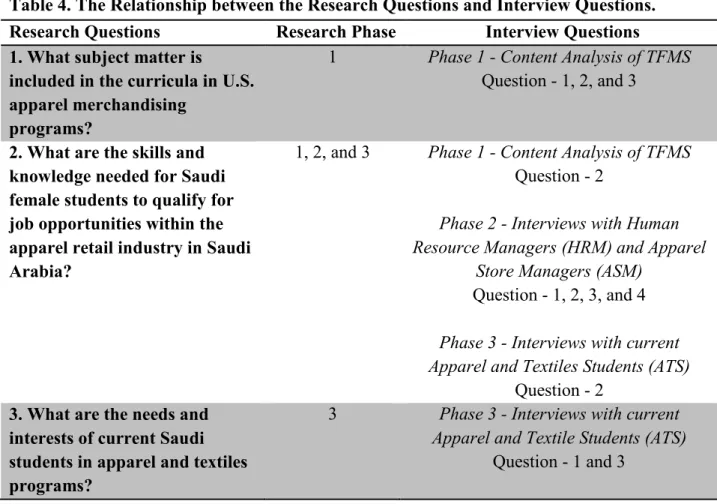
Table 4. The Relationship between the Research Questions and Interview Questions. ... 60
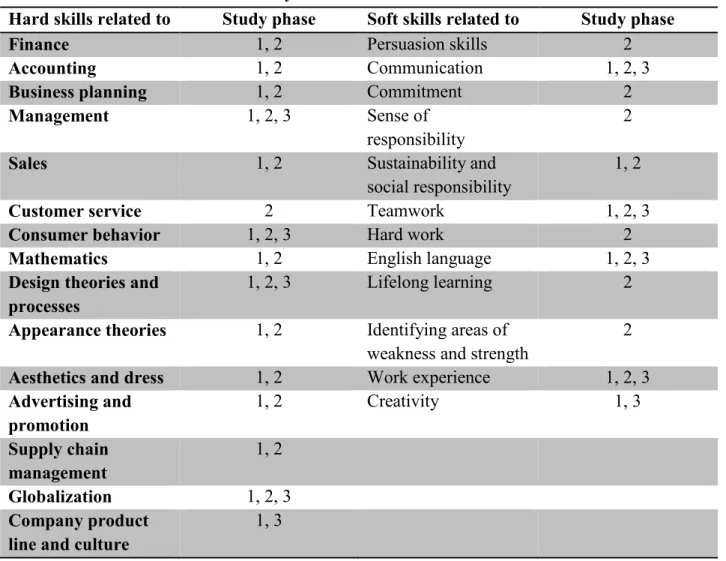
Table 5. Skills Identified in the Study Phases... 61
Table 6. Summary of the Top Fashion Marketing Schools ... 68
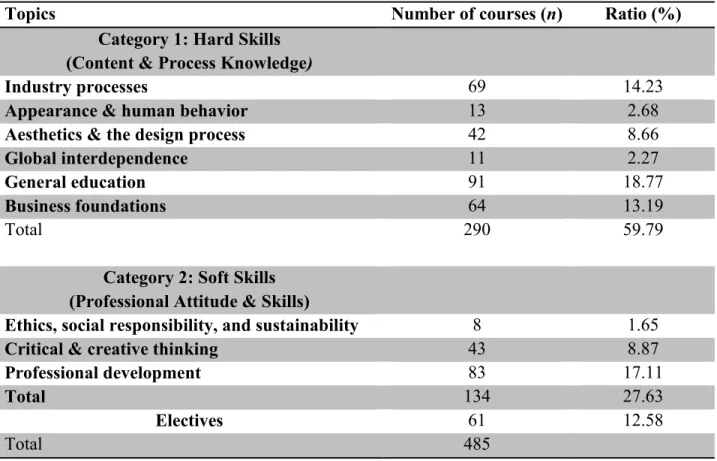
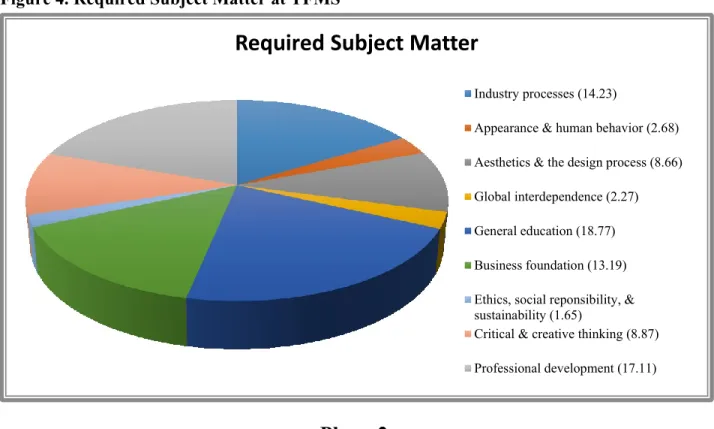
Table 7. Required Subject Matter at TFMS ... 74
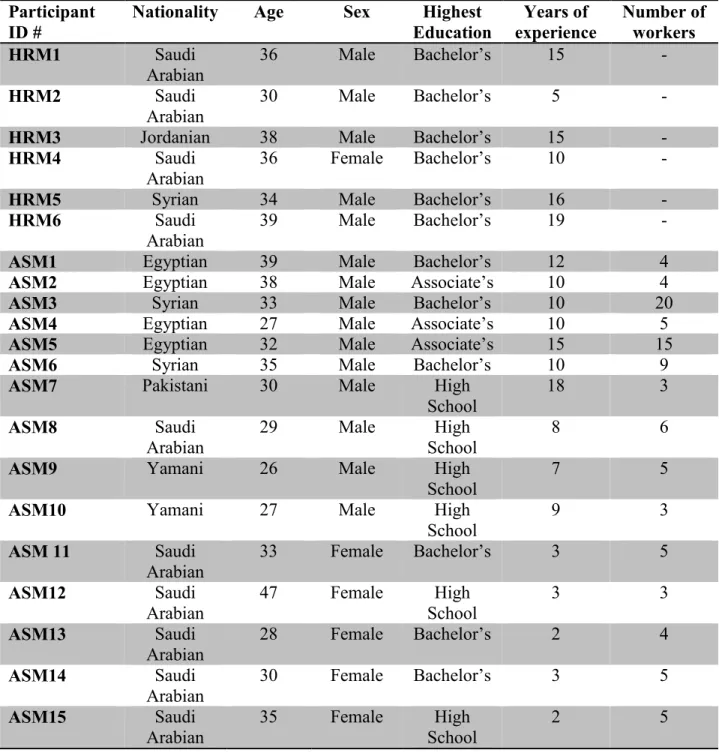
Table 8. Demographic Summary of Human Resource Managers and Apparel Store Mangers ... 78
Table 9. Important Subject Matters Identified by Industry Professionals ... 92
Acknowledgements
I would like to acknowledge the support of my major professor, Dr. Joy Kozar, who has helped me do this work. Her advocacy of my pursuits has increased my confidence as a scholar. I will be forever in her debt for her time and her conversation. I would also like to thank my other committee members: Dr. Kim Hiller-Connell, Dr. Ji Hye Kang, Dr. Jeong-Hee Kim, and
Professor Deborah Canter. I thank them for their enthusiasm, support, and time taken to read this project. I would also thank the College of Human Ecology, and specifically, the Dean Office for supporting my doctoral study through the Doctoral Dissertation Research Award. Their
contribution was significant to this work.
I am also incredibly grateful for the contribution of the 38 participants in this study. I thank them for the privilege of getting to know them, for their time, and for their thoughtful responses. Without their contribution, this work would not have been possible. I also would like to thank Mr. Mojahed Aljuaid (Operation Manager, Arabian Centers) and Mr. Essam Albar (Operation Manager, Red Sea Mall, Jeddah City) for facilitating the interviews with apparel store managers. I would also like to thank Dr. Hanan Bukhari, Associate Dean in the College of Art and Design, for her encouragement and support. I would also like to thank Dr. Thana Alsarhan, Department Head of Fashion Design Department in the College of Art and Design, for assigning an assistant, Susan, who helped me by providing a suitable place in the department to meet with students. I thank Susan for being in touch daily until I am done with all my work, collecting data in Saudi Arabia. I also would like to thank Dr. Maha Dabbagh, Department Head of Apparel and Textile Department in the College of Home Economic, for facilitating by setting a time and place to conduct interviews with apparel and textile students in the College of Home Economic.
Finally, I would like to thank my family. To my husband, Ahmed, thank you for your support and affirmation of my own personal values and passion. I simply would never have pursued this adventure without your encouragement. I would like to thank my parents for their support and praying for my success. I also would like to thank my children for being patient through my learning journey.
Chapter 1 - Introduction
Women’s participation in the Saudi Arabian workforce is only 14.4%, with the
unemployment rate for Saudi female college graduates at 54% (AMEinfo, 2010; Saudi Central Department of Statistics & Information, 2010). Unfortunately, for women in Saudi Arabia, the restricted opportunities to earn a higher education contribute to the high unemployment rate among women. The Saudi Arabian Ministry of Higher Education restricts the areas of studies women are allowed to pursue. They are limited to majors in teaching, home economics,
language, mathematics, and the sciences (e.g., physics, chemistry, biology, and social sciences). As a result of this and other restrictions regarding women’s work, the demand for positions in allowed fields is greater than the actual number of jobs available for women in Saudi Arabia (Alausami, 2010).
To reduce the unemployment rate among Saudi women, a number of government policies have been recently introduced. The retail sector specifically witnessed the implementation of several government policies in this respect (Khashoggi, 2014). In 2011, the Saudi government passed a law to replace salesmen, mostly from other countries, with local saleswomen in retail stores selling beauty products and clothing to women. As a result, the Ministry of Labor
mandated that all employees in retail stores selling products for women be female. However, the Ministry of Labor has not yet addressed the complaints of the retailers; namely, that it is difficult for them to find well-trained women to fill these positions. Because of their failure to comply with this feminization law, the Ministry of Labor’s inspection campaign between July and November 2013 closed 514 out of 1,173 Saudi women’s clothing stores (AsiaNews, 2013).
The Saudi government is now pushing to replace foreign salesmen with Saudi women in its apparel stores to accommodate the large number of unemployed Saudi females; however, this
is being done without properly preparing women to succeed in the industry. Thus, this study aims to empower Saudi women in the apparel retail industry through education by establishing an apparel merchandising track for the apparel and textiles discipline in Saudi Arabia. To empower women in general, critical feminist theory focuses on specific problems women encounter, such as the high unemployment rate, and works to provide solutions.
Critical feminist theory (CFT) is centered on understanding how women can become empowered and how women can change dominant societal patterns by asking how cultural structures shape women’s lives (Saxe, 2012). CFT involves the construction of alternative visions for a “good,“ or more equal, society. Given the diversity of experiences, interests, and resources as well as the commanding support for concrete strategies that reinforce women’s liberation, a good society cannot be generalized. This vision needs to focus on particular issues that implicate both material and ideological concerns, rather than hypothesizing some universal utopian program. A standard practice for CFT is to begin with concrete experiences, integrate these experiences into theory, and then rely on the theory for a deeper understanding of these experiences (Carspecken, 1996). Rhode (1990) claims that the strength of CFT is that it allows not just an understanding of women’s experiences but that it also works to develop concrete responses to those experiences. This study is a response to previous studies that report a lack of business knowledge among Saudi women in the field of apparel and textiles (Alwan, 2013; Alzahrani, 2012). The current study, guided by critical feminist theory, is intended to examine Saudi women’s experiences further by interviewing Saudi female students in apparel and textiles programs to develop an apparel merchandising track.
The home economics program in Saudi Arabia provides Saudi women with employment opportunities within the education field and inspires them to establish their own business in
apparel production. However, the home economics program in Saudi Arabia does not necessarily prepare women to be successful in this industry because the curriculum focuses on basic textile science and apparel design skills and knowledge (Alzahrani, 2012). To educate Saudi women better so that they succeed in the apparel retail industry, apparel and textile curricula need to evolve. The Home Economics College needs to expand by integrating business disciplines and establishing an apparel merchandising track option. Currently, apparel and textiles students in Saudi Arabia choose from specializations in apparel design and textile science.
The early educational system in the US was dominated by a focus on subject matter; all curricula decisions centered on past knowledge, such as history, religion, mathematics, and language. Later during the nineteenth century, American educators came to recognize that society was another important source for making curriculum decisions. At the turn of the twentieth century, under the influence of John Dewey, American educators considered the
individual as a basisfor curriculum choices. Currently, the focal point of subject matter still has a strong impact on the curricula of American schools. Postmodernity educators consider these three focal points (subject matter, society, and the individual) together in an attempt to bring them into an appropriate balance for developing curricula (Ornstein & Hunkins, 2009). Thus, this study considers these three focal points as well, with the aim of facilitating an appropriate
balance between the subject matter, society expectations, and individual (student) needs when constructing the apparel merchandising track in Saudi Arabia.
Coupled with the high unemployment rate among college female graduates in Saudi Arabia, the societal shift regarding women’s work and a lack of professional development opportunities for women requires academicians to respond and update college curricula to meet today’s students’ needs and societal and industry standards. An apparel merchandising track
within the apparel and textiles discipline in Saudi Arabia is warranted. Establishing an apparel merchandising track will better prepare Saudi women for new careers in the apparel industry and will allow them a third option when choosing to study in the apparel and textiles discipline.
Purpose and Justification
The purpose of this study is to develop an apparel merchandising program for the apparel and textiles discipline in Saudi Arabia. This new program will enhance female students’ success in the apparel retail industry. As part of this study, three focal points were examined to construct the apparel merchandising curriculum: (a) the nature of the subject matter, or in this study, the content of current apparel merchandising programs in the US; (b) the nature of society, or in this study, the perceptions of industry professionals in Saudi Arabia; and (c) the nature of individuals, or in this study, the needs for Saudi Arabian apparel and textiles students to succeed in the
apparel industry.
Adding an apparel merchandising track to prepare Saudi women for new careers in the apparel industry is necessary, particularly due to the new law that is now replacing non-Saudi men working in apparel stores with Saudi women. The high unemployment rate among college female graduates and the societal shift regarding women’s work signal the need for an evolution of the apparel and textiles discipline in Saudi Arabia. Most importantly, while responding to these societal changes, the apparel and textiles discipline must consider students’ needs and interests. By incorporating the apparel merchandising track within apparel and textiles programs, there will be several contributions to Saudi society: (a) empowering women in the retail industry, (b) fostering the professional development of Saudi females in this field, and (c) providing apparel and textile students a third option which when choosing to study in the apparel and textile discipline besides apparel design and textile science.
Qualitative research was conducted to answer the questions of this study. In the study’s first phase, the required subject matter of current apparel and textiles merchandising programs in the US was examined to explore the inherent logic of the apparel merchandising major. A content analysis was conducted utilizing the websites of the top fashion schools in the US to provide a foundation for this study. In the second phase, interviews were conducted to examine Saudi human resource managers’ and apparel store managers’ perspectives on the skills and knowledge needed for Saudi women to be qualified for job opportunities within the apparel retail industry. In the third phase, interviews were conducted with current apparel and textiles students in Saudi Arabia. The aim of interviewing current students is to build an understanding of their perspectives on the skills and knowledge needed to succeed in the apparel retail industry as well as their own needs and interests. In order to design a four-year plan with course descriptions for apparel merchandising students in the apparel and textiles program in Saudi Arabia, this three-phase study was guided by the following three research questions:
1. What subject matters are required as part of apparel merchandising programs at Western universities?
2. What are the skills and knowledge needed for Saudi female students to be qualified for job opportunities within the apparel retail industry in Saudi Arabia?
3. What are the needs and interests of current Saudi students in apparel and textiles programs?
Data in this study was inductively analyzed by utilizing the word-based technique: word repetition and key-word-in-contexts as well as by comparing and contrasting responses to each interview question, using the constant comparison strategy (Gay & Airasion, 2003). The findings of each phase were compared and contrasted to the findings of the other phases. Similarities and
differences were addressed. The focus was on the knowledge and skills that need to be included in the new apparel merchandising track for the apparel and textiles discipline in Saudi Arabia. Knowledge and skills identified among the three phases were included in the new apparel merchandising program.
Definition of Terms
A more thorough explanation for the following definitions is included in Chapter 2.
Apparel merchandising: Merchandising is a major segment of marketing.
Merchandising is “the process through which products are obtained (designed, developed, or bought for resale) and promoted to the point of sale” (Wolfe, 2003, p. 56). A merchandiser has a responsibility to create the right blend with the right product, the right quantity, the right place, the right time, the right price, and the right appeal. Although all companies that deal with apparel goods do merchandising to some extent, retailing concentrates almost entirely on the
merchandising functions of planning, buying, and selling. Thus, it is common to refer to retailing as an apparel merchandising field (Wolfe, 2003).
Critical feminist theory: When critical and feminist theories intersect, the result is a theory that identifies, critiques, and seeks to change inequities and discrimination, particularly those that are based on sex and gender (Baxter & Braithwaite, 2008). Critical feminist theories are interested in understanding how women become empowered and how they can change dominant patterns and their underlying ideologies by asking how cultural structures shape women’s lives (Saxe, 2012).
Critical theory: Critical social theory is concerned with issues of power and justice and the ways that the economy, matters of race, class, gender, ideologies, discourses, education,
religion, social institutions, and cultural dynamics interact to construct and shape a social system (Kincheloe & McLaren, 2011).
Feminist theory: Feminist theory is the theory of gender that is comprised by the social definition of masculinity and femininity in a specific culture at a specific historical moment. Feminist theory is centered on the patriarchal system, which reflects the interests, perspectives, and experiences of men. Feminist theory, with all of its different disciplines, aims to question women’s subordination to men (Pinar, Reynolds, Slattery, & Taubman, 1995).
Organization of Dissertation
In this chapter, the current study, the related research questions, the purpose and justification, and the definitions of terms have been outlined. In the next chapter, background information related to women across cultures and their access to education and job training are discussed. Educational and employment opportunities for Saudi women, particularly in the apparel retail industry, are also reported in Chapter 2. An overview of the home economics discipline as well as the skills needed for the academic preparation of students for apparel retail positions are discussed. This discussion is followed by a description of the theoretical
framework, critical feminist theory, and post-modern theory in education. Chapter 3 presents the methodology of this study, including sample and data collection procedures, instruments, and data analysis of the three phases of this study. It also includes the trustworthiness of the study. Chapter 4 presents the major findings of this study, organized by each phase, to answer the three research questions noted above. Chapter 5 includes a summary of findings, discussions, and implications about the results of the current study as well as limitations and recommendations for future research. Chapter 6 presents the outcomes of this study, including the four-year
curriculum plan for the apparel merchandising track in Saudi Arabia and course descriptions for each course included in the program.
Chapter 2 - Literature Review
As a part of this chapter, gender challenges that women face across cultures are discussed. The role of educating women is explored; then, the focus shifts to addressing the educational opportunities available for Saudi women. Current employment opportunities as well as new employment opportunities in the apparel industry for Saudi women are also addressed. This chapter provides a background on the apparel industry in Saudi Arabia and the current experiences of Saudi women in this industry. Next, this chapter briefly examines the history of home economics in the Western world and compares it to the home economics program in Saudi Arabia. More specifically, this chapter includes an examination of apparel and textiles programs in Saudi Arabia. Subsequently, the skills needed for the global apparel industry as well as the meta-goals of the International Textiles and Apparel Association (ITAA) are illustrated. Finally, this chapter discusses critical feminist theory and post-modern theory in education as the
theoretical framework for this study. Most importantly, the discussion of the three focal points for curriculum development is included.
Women across Cultures
Women across cultures differ in the gender challenges they face. In Western nations such as the United States, workplace discrimination and reproductive rights are primary issues. On the other hand, women in less developed nations are often faced with issues that are directly relate to the survival of their families, such as the availability of clean water and other issues regarding racism and economic exploitation (Burn, 2005). In Western nations, societal pressure has led to the adoption of policies and rules to promote gender equality. These policies have led to
and boys have equal opportunities to learn (Croxford, 2000). In contrast, in less developed societies, the United Nations still works to ensure that girls have the same opportunities as boys to enroll in secondary schools (United Nations, 2012).
Cheung and Chan (2007) concluded that gender inequality in education and employment is a result of cultural traits. They found that regions with high-power distance, high masculinity, and low individualism need strong reasons to motivate people to change the education system. Cheung and Chan (2007) defined high-power distance as “the degree of inequality of power between a person at a higher level and a person at a lower level” (p. 161); high masculinity as “the extent to which the goals of men dominate those of women” (p. 162); and low individualism as “the relative importance of individual goals compared with group or collective goals” (p. 162). Issues such as gender inequality in these societies need greater attention in order for progress to occur.
Although women worldwide live in different cultures and face different issues, there are many cross-cultural similarities in the gender challenges women face. In many societies, women do not have the resources to live independently from men and/or to leave situations of abuse. By and large, women worldwide live in patriarchal societies where men hold the highest status in the family and family members are legally dependent on fathers/husbands (Burn, 2005). Chowdhury (2009) stated that any feminist movement could be connected to the earlier Western liberal feminism movement to help counter economic, social, and political forces. As such, these Western feminist theories may provide insights for this study.
Women’s Education and Development
A strong educational foundation is essential to the success of women and their
Nations Secretariat reports that achieving the Millennium Development Goals1 (MDGs) greatly
depends on women’s empowerment and their equal access to education (United Nations, 2012). Economically, women with more schooling participate in greater numbers in the labor force, and they are able to earn more for their families and society. Additionally, women’s education increases the income of women and leads to growth in gross domestic product (GDP) (Goldin & Reinert, 2007). In fact, countries with lower levels of national wealth tend to have more men enrolled in higher education than women. According to the United Nations (2012), 45 countries with an average per capita GDP of $5,200 had more men in higher education than women while women outnumbered men in 94 countries where the per capita GDP averaged $16,500.
The importance of women’s education is not limited to economic development but is connected to social development as well; women who attend school are less likely to be married early. Marriage delay leads to decreased fertility rates and lower infant and maternal mortality rates (Goldstein & Kenney, 2001). Additionally, women’s education has a cognitive benefit for women that includes increasing their ability to make decisions related to the health and education levels of all family members.
Educational opportunities for Saudi women
Over the last 40 years, the Saudi government has succeeded in building an educational infrastructure that has led to an increase in school and university enrollment. Saudi Arabia has invested large amounts of money on its public education system; yet, this has not resulted in an equal increase in women’s participation in the workforce. The public system of women’s
1 The Millennium Development Goals are eight international development goals that were established in 2000. All United Nations member states at that time and other international organizations have committed to saving lives and improving life conditions for other people around the world by focusing on three areas: human capital,
education in Saudi Arabia is segregated by gender. It was only in the late 1950s and early 1960s when the first school for females was established in Saudi Arabia. In the early 1980s, education was available to all Saudi women including higher education (Almunajjed, 2009). However, the public education system treats males and females differently due to the gender-based
expectations of the Saudi society. At the primary, middle, and secondary levels, the curriculum at women’s public schools is dominated by religious studies and Arabic language with foreign language, science, and mathematics lagging behind. Additionally, the curriculum at women’s schools lacks fieldwork, teamwork, and innovative research based on evaluation and
brainstorming (Alarabiya, 2011).
For women in Saudi Arabia, the restricted opportunities to earn a higher education contribute to the high rate of unemployment among women. The Ministry of Higher Education restricts the areas of study women are allowed to pursue, limiting them to fields in teaching, home economics, language, mathematics, and sciences. All Saudi universities have set rules that prevent women from pursuing degrees in fields available for men, such as engineering,
architecture, agriculture, earth science, marine science, and Islamic law. Although the population of Saudi men and women is nearly equal (50% and 49% respectively), there is an imbalance in the labor market (Almunajjed, 2009). One cause for this imbalance is that most females graduate in the fields of education and social services. The increasing number of female graduates in Saudi Arabia and the lack of government employment opportunities contribute to the high unemployment rates of female university graduates.
According to Alroogy (2009), Saudi universities should restrict the number of students in majors given the competitiveness of finding employment upon graduation. Moreover, women
should be allowed to major in disciplines that further prepare them for work in the private sector. AlMunajjed (2009) reports that:
[G]irls curricula at all school levels have not been seriously revised for more than 20 years and textbooks have not been updated. Without the introduction of new information that reflects developmental changes in society, the curriculum is not providing students with the necessary skills to enhance their overall education and to find jobs (AlMunajjed, 2009, p. 12).
Alroogy (2009) suggests that universities should re-educate female college graduates by offering diplomas that would qualify them to work in the private sector. Universities should also develop their curricula to enhance work skills, such as responsibility, decision making,
leadership, English language, and other technology skills. As a response to Alroogy and other researchers, this study aims to establish an apparel merchandising track in apparel and textiles programs in Saudi Arabia to qualify Saudi women for employment in the private sector of the apparel industry.
Employment opportunities for Saudi women
A recent study revealed that Saudi Arabia is one of the last countries to integrate women into the workplace besides Qatar, Oman, and other non-Arab countries (e.g., Ecuador, Bolivia, Botswana, and Rwanda). In these non-Arab countries, there is a gap of around 22% between males and females in the workplace (Al Arabiya News, 2012). In 2007, the active workforce in Saudi Arabia comprised 8.2 million people; 85.6% were men. Saudi women’s participation in the workplace was only 5.4% in 1992; in 2009, only 14.4% of the workforce was women
While there has certainly been an increase in Saudi women’s participation in the job market, it is still weak. Most women in Saudi Arabia work within the field of education in either teaching, administration, or support staff. According to the Ministry of Labor, 52% of the workforce in elementary, middle, and high schools and 44% of the workforce in colleges and universities is comprised of women. Besides education, Saudi women also often work in medicine. According to the Ministry of Labor, women in the medical fields account for 31% of the total female workforce in Saudi Arabia (Alharbi, 2010). Saudi women work in the medical sector as physicians, allied health personnel, administrative personnel, custodians, and
messengers.
Saudi women also work in several government ministries including the Ministry of Civil Service, the Ministry of Culture and Information, the Ministry of Labor, the Ministry of Interior, the Ministry of Economy and Planning, and the Ministry of Finance. As compared to men, Saudi women in these ministries work in lower ranking positions restricted to menial tasks, such as filing paperwork and other secretarial duties. Some Saudi women also work in other government positions including rehabilitation, elderly care, the Saudi Central Department of Statistics & Information, prison services, customs services, and the General Presidency of Sacred Mosque and Prophet’s Mosque (Alsinedi, 2007). Similar to women’s work in the ministries, women’s work in these departments is limited to departments separate from men and typically in lower ranking positions without much power or authority. Thus, education, medicine, lower ranking positions in ministries, and some banking industries are the primary employment opportunities available to Saudi women.
In the private sector, women are estimated to comprise only 2% of total workers. Saudi women work in the private sector in many fields with the most prominent being education and
medicine. These facilities are owned by individuals and have different rules regarding salaries and work hours as compared to government-owned facilities. Women in the private sector also work in the banking industries, the marketing and services sectors, and the non-profit sector. The two major entrepreneurial opportunities for women in the Saudi Arabian private sector are in beauty salons and apparel production workshops. Women in these two fields do not have to wait to secure employment, as is the case with governmental jobs, and do not have to endure
complicated rules set by the Ministry of Labor. One of these rules, for instance, is that women who ask for permission to own a restaurant or laundromat cannot establish this work unless they provide male representatives since they may be mixing with men. Male representatives are responsible for handling government required paperwork and meeting with male clientele. As expected, being required to have a male representative is a significant obstacle that Saudi women encounter while working in the private sector, especially in large businesses. The Ministry of Labor requires a woman to provide a male representative who represents her in all transactions, giving him complete power to control her money under the protection of the law. However, in apparel production workshops and beauty salon establishments, women are allowed to control their money without a male representative. Thus, they can retain financial power to invest their money in savings accounts.
Alzahrani (2012) reported a lack of business knowledge among Saudi female
entrepreneurs who operate in the apparel production sector. Alzahrani interviewed Saudi female entrepreneurs who have been successfully employed in garment production for five or more years. As part of the findings, the Saudi female entrepreneurs reported filing paperwork, the conflict between roles at work and home, a changing marketplace, and lack of management skills as business obstacles. Moreover, it was found that Saudi women seek more advanced positions in
apparel design, product development, and business management. The participants revealed a need for education in management and business-related topics. They viewed a lack of
management and accounting skills and training as significant obstacles impacting their overall success (Alzahrani, 2012). As such, an outcome of the current study is to develop an apparel merchandising curriculum that concentrates on developing students’ skills in these areas.
New employment opportunities for Saudi women
Currently in Saudi Arabia, many efforts have been established to reduce the high unemployment rate among female college graduates. The Saudi government has taken many steps aimed at promoting women’s advancement in the labor market. This movement has been called the feminization movement of apparel stores. In its first phase, starting in July 2011, Saudi women were allowed to work in lingerie stores after years of non-Saudi men operating such establishments (Anderson, 2012). Six months later, the second phase of the feminization movement of apparel stores started and Saudi women were granted permission to work in cosmetics stores as well (Chuch, 2012). By the end of 2012, Saudi women began filling all positions in stores selling abayas, the traditional black cloak worn by women (Allam, 2012). At the beginning of 2014, the Ministry of Labor launched the third phase of the feminization
movement of apparel stores to include retail stores selling women’s fragrances, handbags, shoes, socks, clothes, and fabrics, as well as stores selling mother-care products. It is now mandatory for all apparel stores selling women’s apparel and beauty products to employ only Saudi women or face the penalty of being closed by the Ministry of Labor (Khashoggi, 2014). However, many Saudi women are not yet qualified to work in the apparel retail sector. The lack of knowledge and skills needed to succeed in the apparel retail industry is an obstacle that Saudi women encounter when working in this industry. This phenomenon is discussed in further detail below.
Saudi women in the apparel retail industry.
To avoid the consequences of not complying with the requirements of the Ministry of Labor regarding hiring only Saudi females, large retail companies train Saudi females or collaborate with a training firm. One of these companies is Alshaya International Trading Company, a retail franchise for Western brands in the Middle East and North Africa. Recently, Alshaya signed an agreement with the Human Resources Development Fund on behalf of the Ministry of Labor to qualify young men and women to work in the retail industry. The
agreement states that Alshaya International Trading Company will train and assign Saudi citizens of both sexes in the company’s retail stores. In return, the Human Resources Development Fund has agreed to pay 50% of the salaries of Saudi employees in Alshaya Company stores for the first two years (“Alshaya,” 2008). Alshaya International Trading Company has established a seven-week retail-training program for Saudi women only. The training includes both practical and theoretical training with the aim of equipping applicants with the skills and experiences necessary for success. Saudi women study the principles of fashion retailing, customer service, salesmanship, store operations, and visual merchandising. In addition, Saudi women are trained in areas of professional development, such as communication skills and problem solving. As a part of the program, Saudi women must also participate in in-store training. Following
completion of the course, Saudi women who can successfully fulfill the requirements are assigned to Alshaya International Trading Company stores with the support of the Human Resources Development Fund.
The Alshaya Company and other large companies have the resources and capabilities to organize and manage a training program to qualify and prepare Saudi females for the retail industry; however, other small businesses and retail stores cannot afford such training programs.
Consequently, these small businesses are more likely to end up closing for not complying with the requirements of the Ministry of Labor in hiring Saudi females. Moreover, the training programs only last a few weeks, meaning that applicants are more likely to be hired for lower or middle ranking positions with limited income opportunities.
Within apparel retail stores, Saudi women work as buyers, cashiers, and store managers, however, as Alolmai (2013) reported, more employment opportunities should be created for women including higher-ranking and leadership positions. Saudi women must be qualified for such positions and need to be familiar with the processes of the apparel industry. Current curricula in post-secondary apparel and textiles programs in Saudi Arabia lack such content. Additionally, Saudi females need to have a professional attitude and skills necessary to succeed in the apparel retail industry. When Ghaith Azzam, a brand manager for La Vie En Rose (owned by Fewaz Alhokair Group), was asked about replacing foreign salesmen with Saudi women, he said that it is a good to hire Saudi women in apparel stores, but they need to be prepared. Colleges and universities must prepare young women to operate successful apparel retail stores in Saudi Arabia (Abu-Nasr, 2011).
The apparel merchandising major typical in most Western apparel and textiles baccalaureate programs is currently not offered to Saudi female students. Unfortunately,
educators in apparel and textiles programs in Saudi Arabia have not yet considered the large and available employment opportunities for Saudi females in the apparel retail sector. Apparel and textiles departments in Saudi Arabia within home economics colleges focus primarily on textile science and apparel design but not merchandising. According to AlMunajjed (2009), curricula at all school levels have not been seriously revised and updated for a long time. In fact, female
graduates of apparel and textiles programs are more likely to end up teaching in primary, middle, or high schools.
Saudi females who enter the retail sector with only a few weeks of training are not capable of performing job functions successfully. A study conducted by Alwan in 2013, a recently established regional coalition of experienced and emerging leaders from 17 countries across the Middle East and North Africa, surveyed 100 Saudi women between the ages of 18 and 36. An analysis of the data collected revealed that 42% of the participants reported that they had no knowledge about what retail work comprises. The participants explained that the lack of awareness of what the retail sector actually is and family pressures and expectations are their main concerns when working in the retail sector. The participants reported that their families are often resistant to women working in apparel the retail sector. The reason of that is the adhering of Islamic teachings that prevent women working unless the separation between men and women in the workplace is ensured. Thus, the participants emphasized the role of media in portraying success stories as well as benefits of working in the retail sector to encourage families to support women in the apparel retail sector. Most importantly, Saudi women in this study reported a need to understand what retail work includes (Alwan, 2013). Consequently, establishing an apparel merchandising track within apparel and textiles programs in Saudi Arabia will help in training women and preparing them to work in the retail industry.
Educating Saudi women on topics related to retail work, such as apparel retailing, buying, consumer behavior, the structure of the apparel industry, and forecasting, is essential in
providing women with the confidence they need to apply for work in apparel retail industry positions that are currently available in Saudi Arabia. Moreover, educating Saudi women in a formal way, such as in the university setting, is more likely to convince women’s families of the
importance of their work in the apparel industry. The legitimacy of the educational system and its outcomes as compared to the training programs that last a few weeks within some of the apparel retail companies foster this viewpoint change. The Saudi apparel retail industry is one of the fastest growing markets in the Arab region, especially in the women’s and children’s
segments (“Kingdom’s Clothing,” 2014). The industry is expected to accommodate a large number of Saudi women if these women are able to meet the requirements of the jobs available. The following is an overview of the apparel retail industry in Saudi Arabia.
The Apparel Retail Industry in Saudi Arabia
The apparel retail industry is one of the fastest growing markets in Saudi Arabia
(“Kingdom’s Clothing,” 2014). It includes large indoor malls and outdoor markets. Competition among competitors is very high. Finding a segment of the market whose needs are not being met is also difficult, but doing so has a high profit potential in this country where shopping is a popular pastime. The apparel industry has grown rapidly over the last several years as a result of a young population and the increase of purchasing power (Ali, 2008).
In terms of clothing style in Saudi Arabia, Western dress is most common, especially among the young people. Since the discovery of a sizable oil reserve in the country in 1938, Saudi Arabia has experienced large-scale economic shifts, rapid industrialization and
modernization, and increased contact with the West (Long, 2005; Wilson, 2004). With this came an adoption of Western branded fashions, primarily sold through international retail chains (Sanghvi, 2010). Although Saudi women wear abayas on top of their clothes, they take off the abayas when they are ensured separation from men. Underneath the abaya, Saudi women have been influenced by Western fashions for many years, including dresses of varying lengths, trousers, and T-shirts.
The main retail franchisers for Western and European brands in Saudi Arabia are the Alshaya International Trading Company, the Fawaz Alhokair Group, the Alsawani Group, the Rubaiyat Company for Industry and Trade, and Alfuttaim (Samadi, 2008). Combined, these companies represent 142 American and European brands sold in the Saudi marketplace. See Table 1 for further information about these firms.
Table 1. Brands Operated by Alhokair Group, Alshaya Group, Rubaiyat, Al-SawaniGroup, and Alfuttaim
Franchiser Brands Operated
Alhokair Group
ZARA Home LC Waikiki Banana
Republic Wallis Women’s Secret Steve Madden
Flormar GAP U.S. Polo
ASSN Quiz Lasenza Nine West
FG4 kids Marks &
Spencer New Look Camaieu La Vie en Rose Parfois
BLU Origem Promode Lipsy Oysho Primadonna
IKKS F & F Desigual Eclipse Celio Uterque
The Children’s
Place
Springfield Gerry Weber Dynamite Clarks Pedro
Okaidi Gelco Superdry Monsoon Spring Six
ZARA Tiffosi Miss Selfridge ADL Beya I am
Topshop Mango Cortefiel ANOTAH Charles &
Keith
Aldo
Topman SuiteBlanco Massimo
Dutti FG4 London Viss Accessorize
Alshaya Group
American
Eagle River Island Jack Wills Top Shop Perkins Dorthy Miss Selfridge
Pink Justice Milano La senza Debenhams BHS
H&M Payless Express Wear house COS Victoria’s
Secret
Coast Next Mother Care SARAR Harvey
Foot Locker Evans Oasis Wallis Claire’s Topman Muji
Rubaiyat Armani Dolce &
Gabbana GF Ferre Kenzo Prada Lanvin
Emporio
Armani Armani jeans Balenciaga Ermenegildo Zegna Just Cavalli Loro Piana
Gucci Rykiel Enfant Bottega
Veneta Giorgio Armani Just Cavalli Underwear Armani Junior Sonia
Al-Sawani Group
Max & Co Courir Marina
Rinaldi Marella Osim Levis
Triumph Sfera XOXO Replay Butt Barclay United Colors
of Benetton
The Wall G2000 Guess La Perla Go Sport Derchy
Max Mara Penny Black Esprit
Alfuttaim Guess Esprit Ted Baker Reebok bebe Gaudi
Vince Camuto Intersport Billabong Marks &
Spencer
Saudi businessmen generally have sufficient capital to invest in a business, but they try to avoid the risk of establishing new concepts or ideas, especially in the case of small or mid-sized firms (Ali, 2008). Being a franchiser for a foreign brand is commonplace in Saudi Arabia, especially for US and European brands. Over the past 10 years, the number of franchisers has increased in Saudi Arabia, the largest market in the Middle East. Saudi Arabia is a suitable market for franchising with high income and purchasing power, a country with half of its population under the age of 15, a strong infrastructure, and many international and local banks (Ali, 2008).
As noted previously, women lack the appropriate training and skills necessary to succeed in such a competitive market. Establishing an apparel-merchandising track in apparel and textiles programs will help better prepare Saudi women for careers in today’s apparel industry. To
examine this issue further, a brief historical overview of the home economics discipline in both the US and Saudi Arabia is discussed.
The Home Economics Discipline
At the turn of the 20th Century, the home economics discipline was developed in the West
in response to the growing need to educate women. With societal changes and evolving job opportunities for women, home economics in the Western world has been continually updated to meet the needs of its students. In 1968, Ruth Hoeflin, a leader in the field, reasoned that
education has to be appropriate to the times, change with the times, and change with the needs of students and society. Even then, academic professionals in the discipline felt responsible for and challenged by helping to solve many societal problems facing women, including those related to low-income and unemployment (Hoeflin, 1968).
Today, home economics in Saudi Arabia includes programs in apparel and textiles, food and nutrition, and housing and home management among others. In particular, apparel and textiles programs typically emphasize two major areas: apparel design and textile science. However, as noted previously, apparel and textiles programs in Saudi Arabia need to evolve to help students take advantage of new job opportunities in the apparel retail sector. Establishing an apparel-merchandising track in apparel and textiles programs in Saudi Arabia will provide women with better preparation to succeed in the industry. Until recently, most female graduates of home economics programs in Saudi Arabia were prepared for teaching positions. As recent as 2007, 93% of female university graduates in the home economics discipline, including apparel
and textiles, went into teaching positions (AlMunajjed, 2010). The following section provides an in-depth examination of the current apparel and textiles programs at King Abdulaziz University, a large, well-known, prominent university in Saudi Arabia. Students interviewed as part of this study are currently enrolled in the apparel and textiles programs at this institution.
The apparel and textiles program at King Abdulaziz University
King Abdulaziz University (KAU) is one of 25 public universities distributed geographically in Saudi Arabia. These universities are linked to the Ministry of Higher
Education with a high level of independence in both administrative and academic scopes. KAU was founded in 1967 in Jeddah, Saudi Arabia, as a private university by a group of businessmen. Later in 1971, King Abdulaziz University was converted to a public institution. The main
campus is in Jeddah with satellite campuses in the cities of Tabuk, Rabigh, Al-Kamel, and Khulays, and four branch campuses in Jeddah. Over time, enrollment has grown to more than 49,000 students in 24 colleges, which includes more than 160 academic departments and more than 120 graduate programs offering many specializations (King Abdulaziz University, 2012).
KAU was the first university in Saudi Arabia that allowed women to be taught in classrooms. While still segregating men and women, KAU allows women to pursue degrees in most colleges in separate facilities from men. Women are not allowed to pursue degrees in the Marine Sciences College; Meteorology, Environment, and Arid Land Agriculture College; and Earth Science. Two apparel and textiles departments exist at KAU: one in the College of Home Economics and one in the College of Art and Design. Students in these two colleges are female only as male students are not allowed to pursue degrees within the Home Economics or Art and Design Colleges.
The Bachelor’s degree in Apparel and Textiles in both colleges requires the completion of a four-year plan; 128 credits are required to earn a degree in both colleges. In the Home Economics College at the main campus, apparel and textiles students need to complete 36 credits in general education including math, physics, chemistry, biology, psychology, statistics, and English. Students need to complete 14 credits in Arabic language and Islamic culture, 18 credits of major electives and free courses, and 60 major or professional credits. Major courses are centered on apparel design, textile science, apparel construction and sewing, and two courses in apparel marketing. Courses are offered in different formats including lectures and labs with projects that students can work on under instructor supervision.
In the Arts and Design College at the branch campus, apparel and textiles students must complete 27 credits in general education including math, physics, chemistry, biology, statistics, and English. Additionally, students must complete 12 credits in Arabic language and Islamic culture, 15 credits of major electives and free courses, and 74 major or professional credits. Major courses are centered on apparel design, textile science, apparel construction and sewing, interior design, and graphics with one course in apparel marketing (King Abdulaziz University, 2012).
Overall, although both programs offer various courses related to apparel design and textiles, the apparel and textiles program in the Home Economics College focuses on enhancing students’ knowledge of textile science. Conversely, the apparel and textiles program in the College of Arts and Design focuses on enhancing students’ knowledge of and skills related to apparel design. What both of these programs lack, however, are concentrations in the area of apparel merchandising and retailing, which, noted previously, is one of the fastest growing sectors of the Saudi marketplace today. Given the lack of business knowledge among Saudi
women in the apparel industry field, establishing an apparel-merchandising track in apparel and textiles programs in Saudi Arabia is essential. The apparel-merchandising major prepares women to meet the requirements of job opportunities available to them and empowers them in the
apparel industry by offering the necessary training and skills needed to succeed. These specific skills are further discussed in the next section.
Skills Needed for the Global Apparel Retail Industry
Previous literature has shown that successful professionals in the apparel retail industry possess both hard and soft skills. Hard skills are those tangible, technical, cognitive skills that can be measured, such as typing, writing, accounting, and the ability to use software programs (Investopedia, 2012). Hard skills are reflected in one’s knowledge, practice, and aptitude (Robles, 2012). Soft skills are those intangible, nontechnical, practical, personal skills that determine a person as a leader, negotiator, and facilitator. Soft skills are subjective talents that people demonstrate in their occupations, including effective communication, conflict
management, human relations, presenting, and team building (Investopedia, 2012). A number of studies have been conducted to determine hard, technical skills, and soft, nontechnical skills that are needed for the workplace. An early study by Heitmeyer and Grise (1992) identified the technical skills and knowledge that retailers perceived as important for college students desiring a career in fashion merchandising. As part of their study, retailers rated skills related to inventory management, buying, and salesmanship as essential. In addition, retailers valued knowledge of the relationship between price and quality as well as factors influencing consumers’ purchasing decisions and behavior. Similarly, Donnellan (1996) analyzed the qualifications and academic preparation necessary to succeed in a retail management career. Specifically, Donnellan showed that retailers value management and
leadership qualities in their employees, particularly skills that facilitate interaction with people, such as communication and supervisory skills. Donnellan also showed that skills related specifically to merchandising and management functions were essential for retailers.
Other recent studies emphasized soft skills and their importance in the current workplace. Robles (2012) reported that students need to exhibit mastery of hard skills to be interviewed for a job, but more importantly, they need soft skills to maintain and advance in their careers. Soft skills identified in previous studies include effective communication, team building, leadership, time management, decision-making, and organization (Robles, 2012; Sahni, 2011). Robles (2012) suggested that educators consider both the technical or hard skills and soft skills when preparing students to enter the workplace. Robles also reported that although soft skills are important to recognize and improve, hard skills are critical on the job as well.
With increasing competition in the global market, scholars have also studied and discussed the skills and knowledge that retail managers must possess. Javidan, Teagarden, and Bowen (2010) identified three characteristics that reflect a global mindset: intellectual,
psychological, and social capital. For example, intellectual capital is the ability to understand how one’s business works at the global level. Knowing how the industry operates worldwide, how global consumers behave, how to piece together multiple scenarios with many parts, and/or how culture, history, political, and economic systems of different parts of the world are similar or dissimilar is reflective of intellectual capital. Psychological capital is about being receptive to new ideas and experiences. It is essential to have a passion for diversity, a thirst for adventure, and self-assurance. Social capital is the capacity for building trusting relationships with people who are diverse in their backgrounds and characteristics. It is important for mangers in the global market to be able to engage and connect emotionally with people from other parts of the
world, bring together divergent views, and listen to what is said and what is not said (Javidan, Teagarden, & Bowen, 2010; Tonidandel, Braddy, & Fleenor, 2012).
Other literature identified effective learning activities that assist apparel and textile students in participating and mastering the skills necessary to be successful in the global market. For instance, LeHew and Meyer (2005) argued that the business model for courses and activities within the curriculum of apparel and textiles undergraduate programs is not adequate to prepare students for the apparel and textiles industry. LeHew and Meyer reported that the apparel and textile curricula should go beyond improving profitability and satisfying target markets in order to help students understand their roles in improving global conditions. LeHew and Meyer
suggested learning activities such as debating current issues in the apparel and textiles industry to encourage students to seek out and understand the multidimensionality of issues within the industry.
Similarly, Carpenter and Fairhurst (2005) argued that traditional methods of instruction limit instructors’ ability to help students acquire a working knowledge. According to Carpenter and Fairhurst, skills desired by retailers such as critical thinking, teamwork, and problem solving need to be exercised in real world situations where learning is facilitated through the problem-based learning method. This method includes several steps: developing a clear definition of the problem, analyzing the problem, identifying how the problem could be solved, collecting more information about the suggested solution, and synthesizing and summarizing all the information gathered in order to solve the problem.
Other literature reports the need for including technology into apparel and textile courses. Foster (2005) emphasized the importance of incorporating industry-based software into apparel merchandising curricula. Cone and Perry (2002) developed a course in which apparel marketing
students used the Internet to design a product, develop its prototype, present it for manufacturing, and advertise the product domestically and internationally. This hands-on experience helped provide students with skills in sourcing and advertising online that they will likely need in real work situations. Other literature has focused on the role of multi-national, team-based
collaboration in preparing apparel and textiles students for the global apparel industry. This strategy of teaching allows the students to learn about different cultures and fosters professional development, including skills related to communication, teamwork, and time management (Karpove, Jacobs, Lee, & Andrew, 2011; LeHew and Meyer, 2005).
In addition, the International Textiles and Apparel Association (ITAA), the primary professional organization for scholars in the apparel and textiles discipline, provides a general framework of the knowledge, skills, and behaviors that students in the discipline should possess to perform competently and ethically in the industry. These meta-goals are outlined in the following section.
ITAA Meta-Goals
In 2006–2007, ITAA members approved several meta-goals or core competencies for voluntary use by member institutions for curriculum planning and review. Based on this
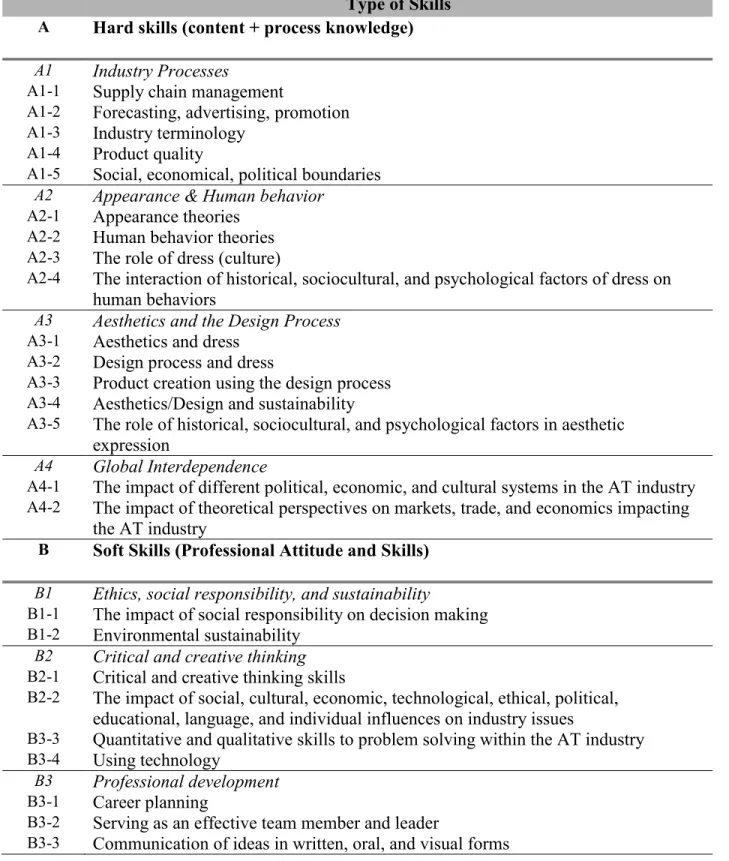
initiative, a graduate of a four-year baccalaureate apparel and textiles program should be able to demonstrate proficiency in two primary areas: content and process knowledge (e.g., industry processes, appearance and human behavior, aesthetics and design, and global interdependence) and professional attitude and skills (e.g., ethical and social responsibility, sustainability, critical and creative thinking, and professional development).
The ITAA meta-goals can be utilized as a foundation for the development of apparel and textiles programs. Apparel and textiles educators can build upon these general recommendations
provided by ITAA after examining their current content, the needs of the local market, and the students’ perspectives. As such, the findings of previous studies on skills needed to succeed in the apparel industry combined with the ITAA meta-goals provides a foundation for this study in developing an apparel-merchandising program in Saudi Arabia. To do this, the current study examines the hard and soft skills needed to succeed in the industry as well as the experiences of current students in the College of Home Economics and the College of Art and Design. Further theoretical underpinnings used to guide this study are outlined below.
Theoretical Framework
Two theoretical perspectives provide a foundation for this study: critical feminist theory in the field of women’s studies and postmodernity theory in the field of education.
Critical feminist theory
To understand critical feminist theory, two broader groups of theories, critical theory and feminist theory, are briefly discussed.
Critical theory
Critical social theory is concerned with issues of power and justice and the ways in which the economy and matters of race, class, and gender as well as, ideologies, discourses, education, religion, social institutions, and cultural dynamics interact to construct and shape a social system (Kincheloe & McLaren, 2011). The ideology of critical social theory is criticism, meaning that critical social theory has the function of unmasking the incorrect rationalizations of past or present injustices, such as the ideology that women are inferior to men or that people of color are inferior to white people, and proposing alternative practical ways for deconstructing these
Feminist theory
Feminist theory is the theory of gender that is comprised by the social definitions of masculinity and femininity within a specific culture at a specific historical moment. Feminist theory is also centered on the patriarchal system, which reflects the interests, perspectives, and experiences of men as the societal norm. Feminist theory, with all of its different disciplines, aims to question women’s subordination to men. Feminists have developed a wide range of theories to understand gender oppression over many years with the goal of affecting change. Acker (1987) and Dominelli (2002) reported three theories of feminism that have been developed to analyze women’s oppression: liberal feminism, radical feminism, and socialist feminism.
Martin (2002) reported that although both feminist theory and critical theory have been developed separately, both focus on economic and social inequality. Alvesson and Willmott (1996) provided a list of common interests between feminist theory and critical theory: (a) both are concerned with the reification and dichotomization of concepts such as male and female, rationality and emotionality, objectivity and subjectivity, and competition and cooperation; (b) both feminists and proponents of critical theory have explored the ways managerial interests have been represented as the interests of all subordinated groups; (c) both examine the domination of instrumental reasoning over material concerns, such as meeting people’s economic needs for survival; and (d) both critique hegemony by focusing on discourses,
communication, and text analysis to explore the patriarchal system. Additionally, there is another area of commonality between critical and feminist theories, which is actually the major limitation of both foundations; while both inquiries share a commitment to system change, neither offers a generally accepted solution to the problem of how to achieve or realize change. Alvesson and