Sino-Indian Economic Ties since 1988: Progress,
Problems, and Prospects for Future Development
Yuan, Jingdong
Veröffentlichungsversion / Published Version Zeitschriftenartikel / journal article
Zur Verfügung gestellt in Kooperation mit / provided in cooperation with: GIGA German Institute of Global and Area Studies
Empfohlene Zitierung / Suggested Citation:
Yuan, J. (2016). Sino-Indian Economic Ties since 1988: Progress, Problems, and Prospects for Future Development.
Journal of Current Chinese Affairs, 45(3), 31-71. https://nbn-resolving.org/urn:nbn:de:gbv:18-4-9961
Nutzungsbedingungen:
Dieser Text wird unter einer CC BY-ND Lizenz (Namensnennung-Keine Bearbeitung) zur Verfügung gestellt. Nähere Auskünfte zu den CC-Lizenzen finden Sie hier:
https://creativecommons.org/licenses/by-nd/3.0/deed.de
Terms of use:
This document is made available under a CC BY-ND Licence (Attribution-NoDerivatives). For more Information see:
Current Chinese Affairs
China aktuell
Topical Issue: Non-Traditional Security in Sino–Indian Relations Guest Editor: Sebastian Biba
Yuan, Jingdong (2016),
Sino–Indian Economic Ties since 1988: Progress, Problems, and Prospects for Future Development, in: Journal of Current Chinese Affairs, 45, 3, 31–71. URN: http://nbn-resolving.org/urn/resolver.pl?urn:nbn:de:gbv:18-4-9961 ISSN: 1868-4874 (online), ISSN: 1868-1026 (print)
The online version of this article and the other articles can be found at: <www.CurrentChineseAffairs.org>
Published by
GIGA German Institute of Global and Area Studies, Institute of Asian Studies and Hamburg University Press.
The Journal of Current Chinese Affairs is an Open Access publication.
It may be read, copied and distributed free of charge according to the conditions of the Creative Commons Attribution-No Derivative Works 3.0 License.
To subscribe to the print edition: <[email protected]>
For an e-mail alert please register at: <www.CurrentChineseAffairs.org>
The Journal of Current Chinese Affairs is part of the GIGA Journal Family, which also includes Africa Spectrum, Journal of Current Southeast Asian Affairs and Journal of Politics in Latin America: <www.giga-journal-family.org>.
Sino–Indian Economic Ties since 1988:
Progress, Problems, and Prospects for
Future Development
Jingdong YUAN
Abstract: This article takes stock of the evolution of bilateral eco-nomic ties between China and India since the early 1990s. It analyses the factors that have contributed to the expansion of this important aspect of their relationship, but also highlights the obstacles, in par-ticular the politico-strategic variables, to further expansion of eco-nomic ties, including investments. It argues that while both Beijing and New Delhi recognise the importance of trade and investment in their relationship, future growth in bilateral economic ties depends on how the two countries can successfully deal with issues such as trade imbalance, market access, infrastructure, and regulatory environment. But more importantly, Beijing and New Delhi must seriously address each other’s security concerns, including those areas that affect their perceptions of economic security and consequently their policies towards bilateral and regional cooperation.
Manuscript received 21 July 2015; accepted 4 April 2016
Keywords: China, India, trade, investment, security–economics nexus
Dr. Jingdong Yuan is an associate professor and acting director of the Centre for International Security Studies at the University of Syd-ney, where he is also an academic member of the China Studies Cen-tre. Professor Yuan specialises in Asia-Pacific security, Chinese de-fence and foreign policy, Sino–Indian relations, and global and re-gional arms control and non-proliferation issues.
Introduction
Since Indian prime minister Rajiv Gandhi’s historical visit to China in 1988, bilateral relations have undergone significant changes. While territorial disputes, the Tibet issue, and threat perceptions continue to cast a shadow over full normalisation of relations between Asia’s two ancient civilisations – both rising powers in the region, a relatively bright spot in this otherwise complex and tenuous relationship is the expansion and, more important, the future prospects of economic ties. Indeed, over the past two and a half decades, much progress has been made in the area of two-way trade, albeit emerging from a rather low starting point. However, in recent years, bilateral trade has stag-nated and growing frictions over trade imbalance, market access, and security considerations have become serious obstacles to the future expansion of the economic dimension of bilateral relations. An area that could and should benefit both countries has yet to live up to the expectations of, or meet the targets set by, the two governments.
Given the size of the two rapidly growing economies, with a combined population of more than 2.5 billion people, much can be gained through the expansion of trade and investment. Greater eco-nomic interaction and interdependence is often believed to have a positive impact on interstate relations. However, in the China–India case, the economics–security nexus tends to be more complex. While much can be gained through expansion of trade and investment, and indeed the political leadership at the national and subnational levels have in general promoted growth in economic ties, their unresolved territorial disputes, India’s concerns over Chinese intentions in South Asia, and the long-standing Sino–Pakistani strategic relationship have limited the scope and depth of bilateral cooperation. I argue that until and unless Beijing and New Delhi can fundamentally address the security dimension of their relationship, bilateral economic ties will be affected by political as well as economic considerations.
This article takes stock of the evolution of bilateral economic ties between China and India since the early 1990s and analyses the fac-tors that have contributed to the expansion of this important aspect of their relationship but also highlights the obstacles – in particular, the politico-strategic variables – to further expansion of economic ties, including investments. The article examines Sino–Indian eco-nomic ties at the bilateral and, to some extent, subregional levels (such as the Bangladesh–China–India–Myanmar Economic Corridor,
or BCIM-EC, formerly known as the Kunming Initiative) and seeks to understand the rationale and dynamics behind the progress and problems in an effort to assess the future prospects of an important aspect of Sino–Indian relations in the coming decades.
The Economics–Security Nexus and
Sino–Indian Relations
The past quarter of a century has witnessed significant growth in Sino–Indian trade, albeit from a very low starting point. Investment flows, though, have remained small compared to both countries’ inward and outward FDI volumes. Overall, Sino–Indian economic ties have developed even as their political relationship from time to time has experienced setbacks and occasional tensions. At the same time, economic security considerations have also increasingly factored into Sino–Indian trade and investment, especially in recent years, as Beijing has aggressively pursued a policy of opening up new markets, cornering resources, and expanding economic influence, while New Delhi seeks to protect its domestic industry, gain market access for its niche sectors, and guard against external intrusion into its sphere of influence (Tellis, Tanner and Keough 2011; Chadda 2014). While both China and India have benefitted from globalisation since the late 1970s and early 1990s, respectively, by gradually opening up to the outside world, expanding trade, and drawing in investment, as Asia’s two rising powers with growing ambitions and unresolved disputes they are also conscious of relative gains, dependence and vulnerabil-ity, and the economic foundation of military power and securvulnerabil-ity, al-beit with asymmetrical threat perceptions and different priorities (Fang 2014).
This article seeks to address a number of questions affecting Si-no–Indian economic ties. First, what accounts for the growth in bi-lateral trade and, to some extent, investment in bibi-lateral relations? Second, what are the key impediments, political-diplomatic, bureau-cratic-institutional, as well as economic, to expanding bilateral trade and investment? And third, how and to what extent has economic interdependence had a positive effect on security and, hence, been conducive to improving overall bilateral relations – or, in the China– India case, why has the impact of the former on the latter remained rather limited? If anything, threat perceptions, competition and
rival-ry, and the fundamental concern over national power tip the scales towards security rather than towards common economic gains; in-deed, at times, this comes at the cost of potential economic coopera-tion. To explore these questions, the article will use the economics– security nexus as the prism through which developments in Sino– Indian economic ties over the past quarter century are reviewed and analysed.
The economics–security nexus is a critical factor in Sino–Indian relations. Essentially, two broad questions are often posed: first, whether or not, and to what extent, growing bilateral economic inter-dependence reduces interstate conflicts; and second, to what extent security considerations slow down and impede expansion of econom-ic ties from wheconom-ich both countries could potentially gain. There is a growing literature in international relations theory on the former question, while the latter has been receiving more attention from scholars and policymakers alike in recent years (Goldstein and Mans-field 2012; Aggarwal and Govella 2013; Pempel 2013). Clearly, in the Sino–Indian case, growing economic ties over the past quarter of a century have been conducive to the gradual normalisation of bilateral relations. Nevertheless, security considerations can account for some of the difficulties in bilateral trade and investment.
Economic security in an era of globalisation refers to a state’s ability to enhance its overall economic performance and competitive-ness, reduce vulnerability in the areas of resources and energy sup-plies, and prevent dominance of critical sectors by foreign entities. This requires a combination of industrial policy and government intervention that enables the state to benefit from growing economic interaction and integration through trade and investment facilitation and active participation in the global marketplace. Critics point out that advocates of economic security, while recognising the liberal international economic system of comparative advantage and accept-ing certain risks as a condition, nonetheless hold strong mercantilist views and are more concerned with relative gains. Such perspectives, in turn, could impose limitations on the scope and scale of interna-tional cooperation (Cheung and Gill 2013; Cable 1995; Kahler 2004; Grieco 1988).
The notion of economic security also relates to the concept of geoeconomics, which was popularised in the 1990s after the end of the Cold War but has its roots in seventeenth-century mercantilism.
Geoeconomics describes how economic phenomena can both be the consequence of and further enhance national power, in the process changing the overall geopolitical order at the regional and interna-tional level. Some now suggest that geoeconomics is increasingly trumping geopolitics in the absence of war (Baru 2012; Beeson 2015). The critical issue here is how states can apply economic power to advance national interests, which in turn informs and supports eco-nomic diplomacy. There is a strong linkage between ecoeco-nomic per-formance and security that can reinforce each other. In essence, eco-nomic security then involves
safeguarding the structural integrity and prosperity-generating cap-abilities and interests of a politico-economic entity in the context of various externalized risks and threats that confront it in the in-ternational economic system. (Dent 2010: 244)
In such a context, market access, techno-nationalism, protection of critical and sensitive domestic industries, reliable and affordable en-ergy supplies, and so on, in contrast to the principles of free trade and laissez-faire, become the critical ingredients of economic security, also called the economics–security nexus (Ostry and Nelson 1995; Mas-tanduno 1998; Tellis, Szalwinski, and Wills 2016).
In the context of Sino–Indian relations, the economics–security nexus is a particularly useful prism through which some of the bilat-eral trade and investment issues can be understood. While expanding economic ties have benefitted both countries over the past two and a half decades and, in fact, leaders in Beijing and New Delhi have sought to further promote their development, security and relative power have often been factored into economic decisions. For in-stance, perennial and worsening trade deficits deeply concern New Delhi as these are perceived to both reflect unequal terms of trade between the two countries as China primarily exports manufactured goods to India while India’s exports to China are largely composed of raw materials. What is often characterised as “securitisation” of eco-nomic issues also affects New Delhi’s decisions on Chinese invest-ments and subregional cooperation if these are perceived to result in strategic sectors being exposed to Chinese access, influence, and con-trol (Ravenhill 2013).
Sino–Indian Economic Ties since the 1980s
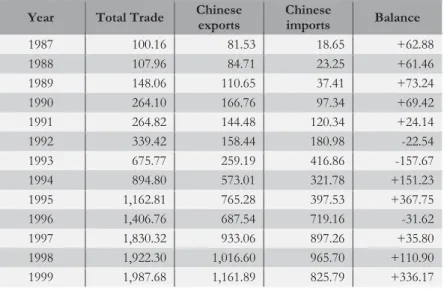
In December 1988, Indian prime minister Rajiv Gandhi made a his-toric visit to China, the first such visit by an Indian prime minister in 34 years. One of the key decisions that the leaders of the two coun-tries reached was that, given that territorial disputes could not be resolved in the near term, Beijing and New Delhi should nonetheless set aside their differences in order to explore expanding ties in other areas, of which trade became one of the top priorities. Also in that year, the two countries set up the India–China Joint Economic Group on Economic Relations and Trade, Science, and Technology (JEG). Bilateral trade experienced significant growth in the 1990s. In 1990 it was only USD 264 million; by 2000, however, it had reached USD 2.9 billion. In 1995 two-way trade passed the USD 1 billion mark for the first time (see Table 1). Overall, bilateral trade grew by an average of 30 per cent annually during the 1990s (Dolla 2011: 134; Li 2004: 49; Wang 2009: 336).
Table 1. China’s Trade with India, 1987–1999 (in million USD)
Year Total Trade Chinese
exports Chinese imports Balance 1987 100.16 81.53 18.65 +62.88 1988 107.96 84.71 23.25 +61.46 1989 148.06 110.65 37.41 +73.24 1990 264.10 166.76 97.34 +69.42 1991 264.82 144.48 120.34 +24.14 1992 339.42 158.44 180.98 -22.54 1993 675.77 259.19 416.86 -157.67 1994 894.80 573.01 321.78 +151.23 1995 1,162.81 765.28 397.53 +367.75 1996 1,406.76 687.54 719.16 -31.62 1997 1,830.32 933.06 897.26 +35.80 1998 1,922.30 1,016.60 965.70 +110.90 1999 1,987.68 1,161.89 825.79 +336.17 Source: Wang 2009: 337.
Despite lack of progress in border negotiation, bilateral economic ties – especially two-way trade – continued to experience rapid growth.
Growth in bilateral trade had been facilitated by the overall im-provement in Sino–Indian relations in political and diplomatic spheres. Beijing and New Delhi set up a joint working group (JWG) on border negotiation in 1989. In 1993 and 1996, China and India signed two important agreements on military confidence-building measures in the border regions. President Jiang Zemin visited India in 1996, the first-ever visit of a Chinese head of state to India (Sidhu and Yuan 2001). Between 1996 and 2005, China’s trade with India grew at twice its average annual global trade growth rate. China’s rapid economic development came with growing demands for raw materials, such as iron ore, which is a major export item for India. At the same time, India’s economic reform and trade liberalisation policy in the early 1990s had also resulted in the country’s expanding trade with the outside world, including with China. China’s accession into the World Trade Organization (WTO) in 2011 also expanded its overseas export markets significantly, and this included India (Basu 2001; Zhang et al. 2015). When Chinese President Hu Jintao visited India in 2006, the two countries signed the Bilateral Investment Pro-motion and Protection Agreement and set a target of USD 40 billion in trade for 2010. Cooperation also expanded to include energy, agri-culture, education, and technology (Gentleman 2006; Chu 2006).
The 2007–2008 global financial crisis and the overall economic recession only temporarily affected bilateral trade, with 2009 experi-encing a 25 per cent decline, to USD 38.6 billion. However, it soon recovered and reached USD 55.6 billion in 2010. Bilateral trade peaked in 2011 at USD 74 billion, before declining two years in a row to USD 66.57 billion in 2012 and USD 65.49 billion in 2013. While India ranked as China’s eighth-largest trading partner in 2011, for the past three years, it has not been among the top ten. The downward trend was reversed in 2014, when bilateral trade climbed back to USD 71.6 billion, which was still USD 15 billion below Brazil, Chi-na’s tenth-ranked trading partner in that year (China Daily USA 2015). The USD 100 billion target for 2015 set by the two governments has yet to be achieved, but estimates suggest two-way trade could cross the USD 80 billion mark (Press Trust of India 2015; Xinhua 2016).
Sino–Indian trade is primarily composed of Chinese exports of manufactured goods such as electrical machinery, iron and steel, or-ganic chemicals, power equipment, and nuclear reactors, and Indian exports of resource-based items such as minerals (iron ore, slags),
copper, cotton, mineral fuel, and other raw materials (Mohanty 2014; Karackattu 2013: 7). For instance, in the 2014/2015 Indian fiscal year, the top five Chinese exports to India were valued at USD 36 billion, constituting approximately 54 per cent of the total (USD 66.7 billion); India’s top five exports to China, on the other hand, totalled USD 6.5 billion, almost 60 per cent (Livemint 2015). Over the past decade, Chinese coal power equipment exports have constituted 60 per cent of India’s orders. In 2011 Reliance Power signed a USD 5 billion Memorandum of Understanding (MoU) with a consortium of Chinese state banks to finance building over 16 GW of coal power in India. China would also set up power equipment service centres in the industrial parks that had been agreed to during President Xi’s September 2014 visit to India (Hannam 2015). Meanwhile, the share of technology in bilateral trade has experienced slow but steady growth, led by the two countries’ technology firms in their efforts to make inroads into each other’s markets. These include Indian com-panies such as Infosys and Satyam Computers, while Chinese firms from ZTE to Haier and Huawei Technologies have set up branches in India (Dolla 2011: 135).
Several factors have contributed to the steady growth in Sino– Indian economic ties. First and foremost, both Chinese and Indian leaders recognise the importance of trade and economic ties in the overall bilateral relationship and have made considerable efforts to promote them. Economic cooperation often features in joint state-ments and declarations issued in the wake of Sino–Indian summit meetings. High-level official visits are often accompanied by entou-rages of business executives and concluded with major business agreements and/or MoUs. With rapid growth in bilateral economic ties and what is seen as the generally comparable nature of the two economies, the term “Chindia” came into fashion – albeit only briefly – to highlight what the two countries could achieve together (Engardio 2007). Chinese Premier Zhu Rongji, during his 2002 visit to India, captured this mood in a speech he delivered at Infosys, a top Indian software company. According to Zhu,
It is widely recognised around the world that India is number one in software exports and China is number one in hardware. To-gether we can become the world’s number one. (Ollapally 2014: 345)
Likewise, Chinese President Xi Jinping refers to China and India as the “world’s factory” and “world’s back office,” respectively, and emphasises that together the two can contribute to global economic growth (Nair 2014).
Indian prime minister Vajpayee’s 2003 visit to China represents a watershed event in bilateral relations. Not only had the two countries decided to move border negotiation to a higher level by appointing special representatives in recognition of the political significance of settling their territorial disputes, the visit also was marked by the two countries’ prioritisation of further expanding bilateral economic ties. A large entourage of Indian business executives accompanied the Indian prime minister. Of Vajpayee’s three important speeches deliv-ered during his visit, two were given at business venues, including one in Shanghai on the subject of IT and potential Indo-Chinese coopera-tion. A number of trade agreements were signed during the visit. Specifically, the two countries designated Changgu in Sikkim and Renqinggang in the Tibetan Autonomous Region as venues for bor-der trade and agreed to use Nathu La as the pass for entry and exit to facilitate cross-border trade (Narayanan 2003; Kurian 2005; Roy 2006). However, border trade grew slowly, with an accumulated total of only USD 1.55 million from 2006 to 2011. In 2012 there was much progress: close to USD 1.23 million in border trade within that year. In 2014, it grew to USD 1.59 million. Significant impediments remain, especially the lack of all-weather infrastructure and restric-tions on the number of items that can be traded (Subba 2013; CRI 2015). The two countries also actively explored the potential for re-gional economic cooperation, including the subrere-gional Kunming Initiative, which aimed to improve communication, travel, trade, and investment links among China, India, Bangladesh, and Myanmar (Ren 2003).
Another contributing factor is the institutionalisation of eco-nomic ties. Over the years, a number of bilateral institutional mecha-nisms have been set up to facilitate trade and investment, and to gen-erally promote economic ties between the two countries. During Vajapayee’s visit in 2003, it was agreed in the joint Declaration on Principles for Relations and Comprehensive Cooperation that the two sides would
set up a Joint Study Group (JSG) composed of officials and eco-nomists to examine the potential complementarities between the
two countries in expanded trade and economic cooperation. (Min-istry of External Affairs, Government of India 2003)
The JSG recommended setting up a joint task force (JTF) to
study in detail the feasibility of, and the benefits that may derive from, the China–India regional trade arrangements and also give recommendations regarding its content. (Sharma 2014: 734)
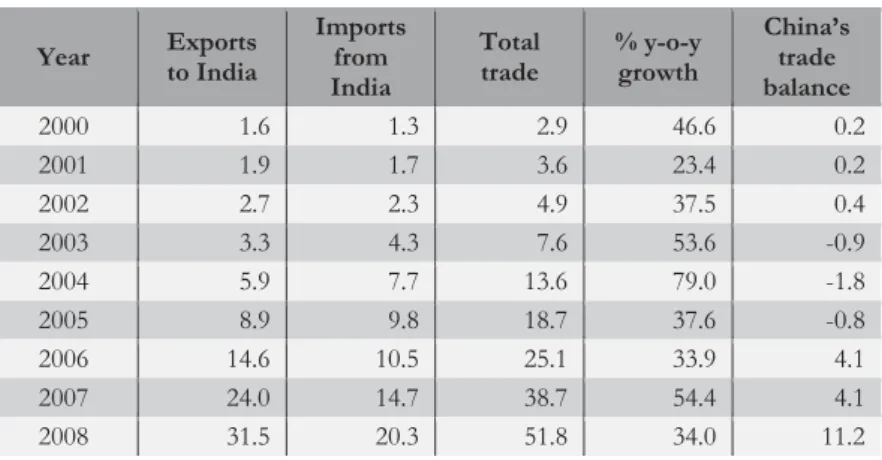
Table 2. China’s Trade with India, 2000–2008 (in billion USD)
Year Exports to India Imports from India Total trade % y-o-y growth China’s trade balance 2000 1.6 1.3 2.9 46.6 0.2 2001 1.9 1.7 3.6 23.4 0.2 2002 2.7 2.3 4.9 37.5 0.4 2003 3.3 4.3 7.6 53.6 -0.9 2004 5.9 7.7 13.6 79.0 -1.8 2005 8.9 9.8 18.7 37.6 -0.8 2006 14.6 10.5 25.1 33.9 4.1 2007 24.0 14.7 38.7 54.4 4.1 2008 31.5 20.3 51.8 34.0 11.2
Sources: General Administration of Customs, People’s Republic of China, various years; Embassy of India in Beijing, various years.
During Chinese state councillor Tang Jiaxuan’s visit to New Delhi in October 2004, the Chinese side proposed a free trade agreement (FTA) between the two countries. Subsequently, when Chinese prem-ier Wen Jiabao visited India in April 2005, he announced that India and China had decided to institute a joint feasibility study on a poten-tial FTA (Ministry of External Affairs, Government of India 2003). Prior to Wen’s visit, the Chinese ambassador indicated that the Chi-nese side was very interested in signing an FTA with India and this could significantly boost bilateral trade as the two countries were projected to become the world’s largest economies by 2050 (Asia
Times 2005). Other institutions include joint working groups on trade,
agriculture, and energy. In December 2010, the two countries agreed to set up the India–China Strategic and Economic Dialogue (SED). The first SED took place in Beijing on 26 September 2011. The latest round was held in March 2014, also in Beijing. Over 80 bilateral
agreements, MoUs, protocols on trade, investment, finance, civil aviation, and other topics have been signed between the two coun-tries over the past few decades (Indian Embassy in Beijing 2015).
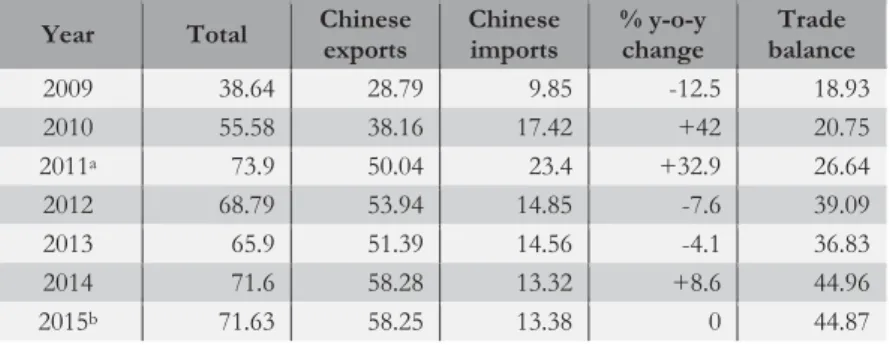
Table 3. China’s Trade with India, 2009–2014 (in billion USD)
Year Total Chinese
exports Chinese imports % y-o-y change Trade balance 2009 38.64 28.79 9.85 -12.5 18.93 2010 55.58 38.16 17.42 +42 20.75 2011a 73.9 50.04 23.4 +32.9 26.64 2012 68.79 53.94 14.85 -7.6 39.09 2013 65.9 51.39 14.56 -4.1 36.83 2014 71.6 58.28 13.32 +8.6 44.96 2015b 71.63 58.25 13.38 0 44.87
Source: Ministry of Commerce,PRC, various years.
a
The Economic Times 2012.
b
Hindustan Times 2016.
With the two countries’ combined global trade volume totalling USD 4.6 trillion (in 2012), Sino–Indian trade has been sluggish despite the fact that both economies have sustained 7 per cent or higher growth rates over the past decade. India’s trade with China constitutes 7.9 per cent of its total while for China, India accounts for less than 2 per cent of its overall trade. At the same time, economic frictions have surfaced in recent years. India’s trade deficit reached USD 36.8 billion in 2013 and a staggering USD 44.9 billion in 2014. Some Chinese scholars attributed the sharp increases in Indian deficits to New Delhi’s restrictions on iron ore exports to China. However, Indian analysts suggest that this is only part of the story. For instance, it is pointed out that while Indian iron ore exports to China have declined in re-cent years, overall Indian exports have dropped much more steeply; this means that China has been buying less from India. For instance, in 2014, while India was not among the top ten trading partners of China, it ranked ninth as the latter’s export destination. Indeed, New Delhi has been pressing China to open up its market, especially for Indian IT, pharmaceuticals, and agriproducts, as well as increased Chinese investment to reduce the deficit (Singhal 2015; The Economic Times 2015c).
Given the sizes of their economies, strong growth potentials, and the low percentage of bilateral trade in their respective global trade, there is significant potential for growth. To explore opportuni-ties for further economic cooperation, Beijing and New Delhi have undertaken a number of initiatives. The two countries have set up an SED and five working groups on infrastructure, energy, environmen-tal protection, policy coordination, and high technology. Three rounds of dialogue have been held since 2011 (KPMG and IMC 2013; Panda 2014). The two governments have also set up a joint study group to examine all trade-related issues, including trade imbal-ance. Meanwhile, Indian states and Chinese provinces are also begin-ning to explore economic opportunities at the substate level. An ini-tial meeting of Indian chief ministers and Chinese provincial gover-nors was held in Shanghai in mid-May 2015 (Mishra 2012; Rana 2015).
When Prime Minister Modi visited China in May 2015, the two sides signed deals worth USD 22 billion in an effort to boost bilateral trade and overall economic ties. Topping the deals is Bharti Airtel, the Indian telecoms group, which will receive USD 2.5 billion in credit lines from Chinese banks. Given the difficulty of competing with China in the manufacturing sector, to address the deficit issue New Delhi is turning to those sectors where it enjoys relative com-parative advantage. Five sectors are targeted: information technology, pharmaceuticals, textiles, agricultural products, and tourism, with special emphasis among those on pharmaceuticals and tourism, where India sees a potential Chinese market (Mallet and Hornby 2015; Srivastava 2015). A recent study suggests that some of India’s top exported products in its overall trade have not been able to gain access to the Chinese market. For instance, pharmaceutical products have been one of India’s top exports globally, but Indian drug com-panies face considerably lengthy procedures to get approval – three years as compared to one year in the United States for similar clear-ance (Karackattu 2013: 24).
Tourism is an area with development potential. More than 100 million Chinese tourists went abroad in 2013, but only 160,000 visited India. More than a decade ago, when the Sino–Indian direct flight route was opened, there was a lot of fanfare to celebrate the occasion. Years later, there is still only one direct flight between Beijing and Delhi (Air China), and no direct flights between Shanghai and
Mum-bai, the commercial hubs of the two countries (Martin 2015). Indeed, to attract Chinese tourists, India has launched a promotional cam-paign, the “Glimpse of India,” in 12 Chinese cities. In 2012, 600,000 Indian tourists visited China, nearly six times the number of Chinese visitors to India. New Delhi is seeking to change that (McLaughlin 2014). During his visit to China, Modi announced at Tsinghua Uni-versity that the Indian government had decided to “extend electronic tourist visas to Chinese nationals” in the hopes of boosting visits by Chinese tourists and to “strengthen people-to-people ties.” The years 2015 and 2016 have been respectively designated as “Visit India” and “Visit China” years (Haidar 2015). Another area with potential for development is higher education. The number of Indian students in China has risen to 13,500, making India among the top ten countries sending students to study in China. Most of them are enrolled in clinical medical courses. There are reportedly also talks between Bei-jing and Delhi on mutual degree recognition. Just a decade ago, only 765 Indian students were studying in China. However, this remains a relatively low number considering that more than a quarter million Indian students study abroad (The Economic Times 2015a).
Bilateral Investments and Services Sector
Despite growth in bilateral trade over the years, the investment level remains very low. Accumulated Chinese FDI to India is approximate-ly USD 800 million, representing about 0.4 per cent of all inflows of FDI into India, between 2000 and 2013 totalling USD 200 billion (Venu 2015). According to the Indian press, in 2013 China invested USD 100 billion in other countries, making it the third-largest source of outbound FDI. However, its accumulated investment in India between 2000 and 2014 amounts to only USD 410 million, well be-hind the USD 22 billion from the United Kingdom, USD 17 billion from Japan, USD 13 billion from the Netherlands, and USD 1.9 bil-lion from Spain. (This is all even including the USD 1.2 bilbil-lion in-vestment from Hong Kong.) By comparison, between 2005 and 2012, China invested more than USD 25 billion in the ten members of the Association of Southeast Asian Nations (ASEAN) (The
Eco-nomic Times 2014b; Chaturvedi 2014).
As of March 2012, there were 166 Indian companies operating in China, with most located on China’s rich East Coast and in the
tech-nology industries, such as IT/software and pharmaceuticals. These companies had been drawn to China both because of Beijing’s rela-tively open economy and attractive tax incentives and because of New Delhi’s more restrictive policies on investment at home. Infosys and Wipro, for instance, have followed a low-cost expansion strategy, taking advantage of their competitive edge in programming talent to carve themselves a niche in the growing Chinese market (TJSIAD 2012).
India’s major software companies (Tata Consultancy Services, Infosys Technologies, Satyam Computer Services, and Wipro Tech-nologies) have invested in China, and some of them have also devel-oped collaborative projects with their Chinese counterparts (Zhang and Zhang 2006: 10). Tata Communications has entered into a part-nership with China Telecom Global to offer live coverage of sports events in China, a market potential of USD 2.57 billion. Infosys Technologies began its China operation in 2003 with an investment of USD 5 million. It planned to recruit 6,000 employees and build two development centres in Shanghai and Hangzhou. It has also stated that it will invest USD 125–150 million to set up its own cam-pus in Shanghai, the largest such investment outside of India. Wipro Ltd intends to open a third China delivery centre in the Northeast city of Dalian. India’s ICICI Bank is to open a new branch in Shang-hai (Areddy 2015; TJSIAD 2012). Elsewhere, Bharti Airtel Ltd, a top Indian telecommunications carrier, is teaming up with China Mobile Ltd on growing fourth-generation (4G) mobile data services. Mean-while, Huawei, another Chinese telecom giant, which has had busi-ness in India for 15 years, recently announced it would open up a research and development centre with a USD 170 million investment, the company’s largest R&D centre outside of China (The Times of India
2015b; Reuters 2015a, 2015b).
Increasingly, joint ventures and partnerships have become an ef-fective approach to overcoming investment barriers, in addition to the wholly owned foreign enterprise model. Long-term strategy, local knowledge, local sourcing and employment, and a willingness to be open and transparent in business practices have proven to be the winning tactics of gaining trust, consolidating a foothold, and ex-panding business. Huawei, for instance, has made every effort to hire locals and source as many local components as possible. Of its more than 6,000 employees in India, 95 per cent are local hires. Huawei has
built large R&D and service centres in India, including a 5,000-seat one in Bangalore. Likewise, India’s Tata Consultancy Services (TCS), the IT arm of the Tata Group, found its way into China through collaboration with the government to provide IT service training. Of its 3,000 employees in China, 97 per cent are local hires (Swanson 2014a).
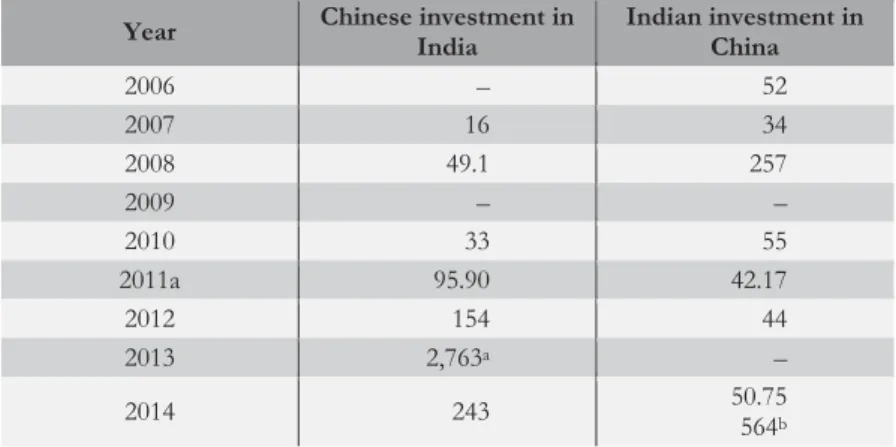
Table 4. Bilateral Investment (in million USD)
Year Chinese investment in
India Indian investment in China 2006 – 52 2007 16 34 2008 49.1 257 2009 – – 2010 33 55 2011a 95.90 42.17 2012 154 44 2013 2,763a – 2014 243 50.75 564b
Source: Embassy of India, Beijing, China (n.d.).
aThrough Dec 2013 (cumulative, China’s non-financial investment in India). bThrough 2014 Indian investment in China (cumulative).
Increasing Chinese investment to India has been recognised as one way to address the trade imbalance issue. An MoU on cooperation on industrial parks in India was signed by the two countries in June 2014 to compensate for India’s growing trade deficits (The Times of India
2014). Subsequently, during President Xi Jinping’s first official visit to India in September 2014, China pledged USD 20 billion to develop the infrastructure of two industrial parks (in Maharashtra and Guja-rat) over the next five years. There had been speculation prior to Xi’s arrival that China was to invest a whopping USD 100 billion to out-number Tokyo’s USD 35 billion, which had been promised during Prime Minister Modi’s earlier visit to Japan. Analysts at the time dis-missed that USD 100 billion as an unrealistic figure (Mallet and Hornby 2015; Pandey 2014; Gupta and Wang 2014). The two coun-tries’ commerce ministers signed a five-year trade and economic de-velopment plan that aims to promote sustainability and address trade
imbalance, including access to Chinese markets for Indian pharma-ceutical and agricultural goods. Also under discussion were a possible USD 50 billion future Chinese investment in modernising India’s railway systems and a possible USD 50 billion for India’s infrastruc-ture development (Nataraj and Sekhani 2014). China and India are likely to cooperate on railways, where India’s out-of-date system could benefit from China’s experiences in developing the country’s national high-speed rails networks. The Modi government has recent-ly approved 100 per cent FDI in India’s high-speed rail system. An action plan was signed during Modi’s visit to China, which includes cooperation in the following areas: the speed-raising of existing routes (Chennai–Bengaluru–Mysore), a high-speed rail (Delhi–Nag-pur sector or Delhi–Chennai route), railway station re-development, heavy-haul training, and the establishment of a “railway university” (Ministry of External Affairs 2015; The Economic Times 2014a; Aneja 2014a; Mahajan 2014). The Chinese side, not surprisingly, is pushing to start a pilot project covering part of the route from New Delhi to Chennai, in what one Chinese feasibility study has suggested could eventually become a mega USD 36 billion bullet train project (Miglani 2015).
The Modi government is eager to attract more Chinese invest-ment. When Modi was the chief minister of Gujarat, the state’s rela-tively more liberal policy on foreign investment was credited for the reported USD 500 million investment in green energy and in a power-equipment-manufacturing facility by Tebian Electrical Apparatus Stock Company, an energy-equipment manufacturer based in Xin-jiang (Swanson 2014a). Karnataka’s chief minister, Siddaramaiah, accompanied Modi on his May 2015 visit to China; analysts have suggested that Karnataka could be the next state to host Chinese industrial parks. Haryana and Uttar Pradesh are other Indian states interested in hosting similar industrial parks or zones. The Indian side pledges to create a more open environment for foreign investments, including from Chinese companies (Basu 2015; Reuters 2014; Krish-nan 2014). Some analysts have projected that Chinese investment into India will total USD 30 billion between now and 2025, given the growing trade between the two countries, and with it, the necessity of manufacturing goods and developing infrastructure in India (The
Times of India 2014). Xiaomi, an up-and-coming Chinese cell phone
executives have pledged to invest and undertake research and devel-opment in a fast-growing market currently dominated by Samsung Electronics and Micromax, a local firm. It recently launched its Mi 4i phone in New Delhi, which is specially designed for India. It also plans to invest in Indian tech start-ups, as the world’s third-largest smartphone company expands its markets outside of China, with the goal of becoming the number one handset brand in India by 2020 (Lee 2015; Carsten 2015; Mozur and Rai 2015). China’s Alibaba is reportedly planning to buy a stake worth approximately USD 550 million in India’s One97 Communications Ltd, a major investment for Alibaba in India’s fast-growing online business (Barria 2015).
Soon after Prime Minister Modi’s 2015 visit to China, the Indian national security advisor, Ajit Doval, gave the green light to the Bank of China to open up a branch in Mumbai. This is part of the reform that New Delhi has undertaken to encourage foreign banks to expand their business in India. Currently, a single branch of just one Chinese bank, the Industrial and Commercial Bank of China, operates in India (Mumbai) (The Economic Times 2015b; Basu Indrajit 2013). In July 2015, India’s Ministry of Home Affairs approved a 19-month-old proposal from Huawei, China’s telecommunications giant, to set up a unit in Tamil Nadu, a state in Southeast India near Sri Lanka. How-ever, separate security clearance is required for foreign nationals to be appointed top executives and the company is expected to reserve top technical positions for Indian nationals (Sharma 2015). In recent years, India has also sought to attract investment from Chinese prov-inces, including those in its Western interior. China’s accumulated outward foreign investment was already an impressive USD 660 bil-lion by 2014, and Beijing has set its target to increase it to USD 1.25 trillion over the next decade; New Delhi sees an opportunity in this, particularly in attracting Chinese investment into its industrial parks (Aneja 2014b).
It is often suggested that the level and scope of investment in other countries reflects the investing country’s confidence in the host country’s overall investment environment, potential for economic growth, and long-term stable political relationship. Growing econom-ic interdependence, of wheconom-ich investment is a good indeconom-icator, also can have a stabilising impact on interstate relations, including in terms of conflicts and war (Mansfield and Pollins 2003). The fact that the level of Sino–Indian investment has remained low can be attributed to a
number of reasons, including legal, infrastructural, commercial, and security considerations. Infrastructure remains a major factor that can deter prospective investors, including Chinese ones. Chronic power failure and lack of good roads impede foreign investment into India
(The Times of India 2015a). Security concerns are another impediment
to investment. The Indian Air Force recently imposed a ban on the use of handsets manufactured by Xiaomi. It has been suggested that security concerns have led the Modi government to grant Japan the contract to build a high-speed rail (Roy 2015). At the same time, Chi-nese companies neither are familiar with nor receive the services that Western and Japanese companies enjoy, given those companies’ longer history of doing business in India. But, fundamentally, Chinese investment typically goes to resources and raw materials sectors, which are critical commodities that China seeks to exploit and import (Martin 2014). At the same time, Indian investment encounters issues of intellectual property protection as well as regulatory clarity.
India’s bureaucratic red tape continues to be a major inhibiting factor in attracting FDI. One example is the involvement of the Shanghai Urban Construction Group Corporation (SUCGC), which in 2012 won a contract to build part of a 9.37-kilometre-long subway tunnel in downtown New Delhi in partnership with Larsen & Toubro, India’s largest engineering and construction company. How-ever, for months in 2013, the work was stalled pending approval by India’s railway bureau. Obtaining visas for SUCGC’s employees pre-sented another problem (Swanson 2014a). India’s labour laws and visa requirements for foreign nationals also impose significant bu-reaucratic hurdles for doing business in the country. Chinese staff working on projects in India, for instance, are required to renew their work visas every three months and this must be done through Indian visa offices in China (Anonymous 1 2015).
Bangladesh–China–India–Myanmar Economic
Corridor (BCIM-EC)
Beijing and New Delhi are also exploring new avenues for economic cooperation through regional and subregional arrangements. China has been an observer member of the South Asian Association Re-gional Cooperation (SAARC) since 2005, while India was granted observer status in the Shanghai Cooperation Organisation (SCO) in
the same year. Both organisations seek to strengthen regional eco-nomic cooperation although neither has made significant progress so far. It is at the subregional and transregional levels, however, that Beijing in recent years has taken the initiative to push for greater connectivity to enable future infrastructural developments and eco-nomic cooperation. In Indonesia in 2013, President Xi Jinping pro-posed the concept of a “Twenty-First Century Maritime Silk Road” that would start from Fujian’s Quanzhou, run through the Strait of Malacca, continue to Kolkata and across the northern Indian Ocean, then go on to connect Nairobi all the way to Europe. Together with the “Silk Road Economic Belt” (which Xi proposed during his visit to Kazakhstan), the concept of “One Belt, One Road” represents the ambition of the Xi–Li government to expand economic cooperation with the relevant countries, which combined have a total population of 4.4 billion and a GDP of USD 21 trillion – respectively, 63 per cent and 29 per cent of the global total. In 2013 China’s trade with these countries amounted to more than USD 1 trillion, approximately a quarter of China’s total foreign trade (Global Asia 2015; Zhu 2014: 13). Beijing has committed USD 40 billion for the Silk Road Fund and has invited India to join the undertaking. New Delhi has yet to decide whether it should join. Part of the hesitance is concern over Chinese intentions, as some in India suspect the “Maritime Silk Road” of being an economic version of the “String of Pearls” scheme. Nevertheless, Indian participation in the project would po-tentially help it draw much-needed investment (Nataraj 2015).
The BCIM Forum for Regional Cooperation has evolved from the Kunming Initiative, a Track-II activity that originated from a conference on regional cooperation and development between China, India, Myanmar, and Bangladesh that was held in in Kunming, the capital city of Yunnan Province, in 1999. The idea was to re-establish the old overland connection between China and India through My-anmar and Bangladesh by developing road, rail, and air transport links to facilitate flows of goods, investment, and people (Hussain 2014). The BCIM represents 9 per cent of the world’s landmass and 40 per cent of its population. Due to various reasons, the initiative moved slowly. In 2012 the combined foreign trade of the four countries was USD 4.73 trillion, about 13 per cent of the global total, while intrare-gional trade between the four countries accounted for about 5 per cent, in comparison to the 35 per cent accounted for by
intra-ASEAN trade. There are more than 440 million people living in the subregion covered by the BCIM: India’s Northeast, China’s Yunnan, Bangladesh, and Myanmar (Chen and Liu 2013). The idea behind the BCIM is to fully exploit the comparative advantages of the four countries, focus on the three types of connectivity – transport, trade, and people – through infrastructure development, resource explora-tion, market access, and reduction of non-tariff barriers – so that all would benefit from and work toward subregional economic integra-tion (Rahman 2014). Writing in The Daily Star, a Bangladeshi news-paper, the Chinese ambassador pointed out the BCIM’s important location at the intersection of the “Economic Belt along the Silk Road” and the “Maritime Silk Road,” with the potential of combining the China–ASEAN FTA, India–ASEAN FTA, and the intra-ASEAN FTA into the world’s largest free trade area (Li 2014).
In 2012 the BCIM Business Council was established by the four countries’ most eminent national trade associations. During Chinese premier Li Keqiang’s visit to India in May 2013, the two countries noted
the progress made in promoting cooperation under the BCIM (Bangladesh, China, India, Myanmar) Regional Forum. Encour-aged by the successful BCIM Car Rally of February 2013 between Kolkata and Kunming, the two sides agreed to consult the other parties with a view to establishing a Joint Study Group on strength-ening connectivity in the BCIM region for closer economic, trade, and people-to-people linkages and on initiating the development of a BCIM Economic Corridor. (Ministry of External Affairs 2013)
The BCIM Economic Corridor would allow the four countries to exploit and benefit from the existing complementarity in their respec-tive natural endowments, especially in energy, transport, and trade (Sahoo and Bhunia 2014). Already, China’s Yunnan Province is team-ing up with India’s West Bengal in promotteam-ing business opportunities, and seeking to be the engine of the BCIM-EC. This follows a similar partnership between Guizhou Province and Andhra Pradesh in a USD 3.5 billion project in the Kakinada Special Economic Zone located in Andhra Pradesh (Aneja 2015b). To a great extent, India’s Northeast, as a landlocked, isolated, and less developed area, would benefit from infrastructural development, greater exposure to trade, and the development of its rich natural resources. However, for
dec-ades, chronic insurgency, corruption, and political instability, along with security considerations, have basically meant that economic development in this region has never been given sufficient attention by New Delhi. The BCIM offers the prospect of changing that, but significant obstacles still need to be overcome (Bhattacharjee 2015).
However, for all intents and purposes, the BCIM remained on the drawing board for 14 years after it was conceived, until very re-cently, when it finally got recognition from New Delhi as a potentially critical part of its Look East Policy. It has now moved from the by-and-large Track-II format to an official forum endorsed by all four governments (although China and Myanmar have from the very be-ginning had more official involvement in the undertaking than have India and Bangladesh). The Singh–Li Joint Statement of May 2013 and the first intergovernmental study group meeting held in Kunming in December 2013 may have signalled the beginning of the next phase, but there remains considerable hesitance and reluctance on India’s part regarding this subregional cooperation initiative, for a number of reasons. It is concerned that opening up its Northeastern states to border transportation routes and trade may have security implications. Indeed, while infrastructural development in India’s Northeast could benefit from Chinese funds, New Delhi has so far been rather reticent on this and is not in favour of reviving the old Burma/Stilwell Road for security reasons. Updating the 312-kilo-metre portion of the Burma Road linking India’s Northeast and Chi-na’s Yunnan Province through northern Myanmar could cut trans-portation costs between China and India by 30 per cent. At the same time, the sheer power of China’s economy means any such subre-gional arrangement could be dominated by China and it is less clear what, if any, benefits will be gained by India’s less developed North-east (Sahoo and Bhunia 2014; Anand 2014; Uberoi 2013; Basu Pratnashree 2013).
Meanwhile, New Delhi is also part of and has great stakes in the Bay of Bengal Initiative for Multi-Sectoral and Technical Cooperation (BIMSTEC) that connects India’s Northeast region (NER) to Myan-mar, Bangladesh, Nepal, Bhutan, Thailand, and Sri Lanka. BIMSTEC was established in June 1997 and aims to promote cooperation among members in various sectors such as trade, energy, technology, transport, among others, and serves as a bridge between South and Southeast Asia. From a geopolitical standpoint, and given the
eco-nomic complementarity, New Delhi would prefer the BIMSTEC over the BCIM, with the former also serving important interests of India’s “Look East” policy. Over the past five years, BIMSTEC trade with India has sustained a faster growth rate than that between the BCIM and India, although the BCIM’s share of trade with India remains larger than BIMSTEC’s. It is because of the slow progress in the BIMSTEC that the Indian government has begun attaching more importance to the BCIM (Sharma and Rathore 2015; Juergens 2014). With two intergovernmental JSG meetings already having been held, the four countries have agreed to focus on the following seven areas: connectivity; energy; trade; finance and investment; human develop-ment and poverty alleviation; sustainable developdevelop-ments; and people-to-people contacts. Initial estimates put the total costs of BCIM pro-jects at USD 22 billion (Vaid and Maini 2015).
Recent reports suggest that New Delhi may have finally decided it is time to overcome and manage some of the strategic concerns that had kept India from fully embracing the BCIM. With Modi now pushing an “Act East” policy as a replacement for the previous “Look East” policy, the potential benefits that the BCIM-EC can bring to India’s NER in economic development, peace, and stability seem increasingly promising. The 2,800-kilometre Kunming–Kolkata four-lane highway is nearly ready, with only 200 kilometres on the Indian side of the border left to be completed. Once open, this will greatly enhance the connectivity between the four countries, facilitat-ing trade, investment, and the development of resources in this land-locked subregion (Hariharan 2015; Aneja 2015a). However, whether this will be realised is predicated on India’s assessments of the overall benefits and potential risks. China is likely to dominate whatever final economic arrangement agreed upon should the BCIM-EC move forward. At the same time, allowing Chinese inroads into India’s NER and access to the Bay of Bengal might enhance only Beijing’s geostrategic interests, potentially at the cost of India’s security inter-ests. Indeed, New Delhi remains wary of China’s growing economic presence in South Asia as Beijing actively pursues its “Maritime Silk Road” strategy (Uberoi 2014; Anderson and Ayres 2015).
Challenges and Prospects for Sino–Indian
Trade and Investment
The challenges that China and India face in their economic relations can be explained through the economic-security prism or the eco-nomics–security nexus. Ironically, this is an area that should allow the two countries, given the complementary structures of their econom-ies and their growing trade and investment teconom-ies, to benefit from com-parative advantage, to further their economic interdependence and therefore raise the cost of conflict, and to bring about mutual gains – corresponding exactly to the two governments’ top priorities. How-ever, this apparent win-win scenario has yet to materialise. Bilateral trade turnovers, while growing steadily over the years, remain dispro-portionately low compared to those of China’s top ten trading part-ners. China’s total foreign trade in 2014 stood at USD 4.3 trillion, of which Sino–Indian trade accounted for only USD 71.6 billion, a dis-mal 1.6 per cent. There are multiple reasons, both political and eco-nomic, that explain the limitations and slow pace of what could have been much larger volumes of trade and investment. First, strategic mistrust or even rivalry, along with unresolved issues ranging from territorial disputes to China’s special relationship with Pakistan to the Tibet issue, will continue to impede the pace and scope of bilateral economic ties. Even where purely economic matters are concerned, the much-touted Sino–Indian complementarity, where China’s manu-facturing prowess (hardware) and India’s information edge (software) combined to present a rosy picture of Chindia, is now under serious reconsideration in both geopolitical and economic terms. A closer examination of the bilateral economic structure reveals the fact that the relations between these two emerging economic giants are as much competitive as they are complementary. In some areas, compe-tition can become even more intensified as the two countries contin-ue on their development trajectories. Competition for energy, for example, has already become an area of concern in terms of security for both countries (Mallet 2005).
At the same time, the two countries are likely also locked in competition for capital and resources while their respective compara-tive advantages do not automatically translate into expanded trade opportunities, largely because of bureaucratic impediments, security concerns, and cultural barriers. For instance, major Chinese
telecom-munications firms such as Huawei and ZTE have been banned from bidding for contracts to supply GSM (global system for mobile communications) lines in India’s northern and eastern zones, because Indian national security officials are concerned that “Chinese telecom equipment can be used for spying or [be] infected with malware” (The
Economic Times 2010). Meanwhile, China’s own ambition to become a
software power means it is reluctant to cede market access to the Indian software industry even though the latter has gained significant prestige globally. Indeed, more than 70 per cent of India’s software service exports go to Western markets but only 10 per cent is sold to China (Huang 2011).
As discussed before, one of the major obstacles in Sino–Indian economic ties is the perennial trade imbalance where India sustains significant, and growing, deficits. According to New Delhi, the more the two countries trade, the more deficits it seems India will suffer. A constant complaint from the Indian side is the flooding of the Indian market with cheap Chinese goods. From low-value products such as toys to higher-value consumer goods like electronics, Chinese im-ports have been a major problem for small Indian businesses. For instance, Chinese solar panels sell at half the price of Indian-made ones and take up approximately 60 to 70 per cent of the Indian solar market share (Upadhyay 2015). The Modi government is seeking to gain more market access to China and to attract Chinese investment to India to address the trade imbalance issue.
If there is to be a future for an India–China bilateral trade rela-tionship, then the worrying issue of the trade deficit has to be ad-dressed,
said Rajeev Kher, Indian commerce secretary, on the eve of Modi’s visit to China (Sen 2015).
Chronic trade imbalance has already led New Delhi to take dras-tic measures. India is already imposing a 21 per cent duty on power equipment imported from China, an issue raised at the recent meeting of the Joint Economic Group, along with investment, trade remedies, and other matters (Srivastava 2012). India is also raising the import duty on steel, the goal of which is to stem cheap supplies from China and Russia (Reuters 2015c; Sharma 2014: 740). Between 1995 and 2011, India initiated 147 anti-dumping cases against China (while China had only four against India), 120 of which ended in Chinese products being hit by penalties. In effect, every fourth anti-dumping
case from India is directed towards China. One study comments: “No other country worldwide is targeted by its trading partner as frequently as China by India” (Vandenbussche and Viegelahn 2012: 2). New Delhi is asking the Chinese side to invest in India to manu-facture these products as a way to provide job opportunities in India but earn profits for Chinese companies (Deccan Herald 2015). The Federation of Indian Export Organisations (FIEO) has also come out proposing to sign a free trade agreement with China to boost Indian exports. However, Indian manufacturing industry lobbying groups, such as the Federation of Indian Chambers of Commerce and Indus-try (FICCI), are opposed to such an arrangement, believing the fur-ther reduction of tariffs would harm Indian industry (The Economic
Times 2014; Anderson and Geiger 2010). It has been pointed out that
China remains much more competitive than India in manufacturing and therefore any further reduction in tariffs would only result in greater Chinese exports to India (Huchet 2008). Indeed, cheap Chi-nese imports are viewed by some in India as a “slow killer,” a threat to India’s manufacturing industry, and the country’s National Security Council has projected that by the 2014/2015 fiscal year “75 per cent of Indian manufacturing will depend on imports from China.” At the same time, Indian companies, even those in the more competitive sectors such as pharmaceuticals and IT technology, find it difficult to penetrate China’s market (Singh 2011). Even in pharmaceuticals, the sector where India should have a comparative advantage, an anomaly exists whereby India, which produces one-third of the world’s medi-cines in the form of generic drugs, has to rely on China, as more than 80 per cent of the raw materials for these drugs come from there (Kannan 2014).
However, analysts point out that India’s paranoia about its trade deficit with China misses an important point: India typically runs deficits with most of its trading partners (16 out of 25) simply be-cause it does not produce enough goods to meet domestic market demands. In fact, India’s deficit as a percentage of bilateral trade with some countries is much higher than it is with China, which was ap-proximately 55 per cent in the 2013/2014 fiscal year. By comparison, it is 90, 83, and 62 per cent, respectively, vis-à-vis Iraq, Switzerland, and Australia. Indeed, some argue that Indian imports of Chinese consumer goods help raise people’s living standards while Chinese capital goods at lower prices allow Indian businesses that depend on
importing machinery and power equipment to use the savings else-where to grow jobs and the Indian economy (Palit 2014; Swanson 2014b).
Numerous obstacles exist to India and China developing a bilat-eral strategic relationship, which is a key factor in facilitating trade and investment expansion. These are political-strategic, including territorial, disputes, the Tibet issue, the China–India–Pakistan triangle – especially Beijing’s continuing support of Islamabad, and the US fac-tor. On the economic front, India has yet to recognise China’s market status even though India itself is much less open with its numerous non-tariff barriers. New Delhi remains reluctant to negotiate an FTA with Beijing, even though a joint feasibility study was concluded in 2007. Formal negotiation has yet to begin and there is a lack of con-sensus, largely due to uncertainty about the likely negative impacts on those sectors that are most vulnerable to competition as a result of significant reduction or even elimination of tariffs. As the two mar-kets open up to each other, there are bound to be major disruptions, and the two countries need to set up dispute resolution and contin-gent protection measures. There are widespread concerns in India that an FTA would benefit China much more than it would India, as the lowering of tariffs would allow for massive inflows of Chinese-made goods into the Indian market, aggravating the trade imbalance problem (Yu, Shen, and Wang 2014; Yang 2013).
There is deep and mutual distrust between the two countries, es-pecially among the security analysts, and it is more prevalent in India. Among the Chinese and Indian people there is insufficient mutual understanding. A 2014 Pew Global Poll suggests approximately 30 per cent of the Chinese hold a favourable view of India, and vice versa, while more than 50 per cent of people in both countries have a favourable view of the United States. The Confucius Institutes in India, meant to promote Chinese language and culture, have yet to play a meaningful role, due to security concerns and disputes over teaching methods (Pew Research Center 2014; Martin 2014). Despite growing economic ties, India’s understanding of China and vice versa remains shallow, misconstrued, and at times misguided by ignorance and stereotypical perceptions. Neither country has made any serious attempt to address these perceptual problems. For instance, only a few Indian journalists are based in China (The Economist 2014).
In recent years, especially since the Xi Jinping–Li Keqiang ad-ministration and the Modi government came into power in 2013– 2014, significant efforts have been made to expand economic ties, through liberalisation of some of the restrictions and incentives to attract capital. This is in response to the chronic trade imbalance in Sino–Indian trade and the existing market barriers in both countries. However, realising the potential and making investment work still requires a whole set of policies that must be implemented in both countries to provide the regulatory and facilitating environments. In general, from national leaders (and increasingly local ones as well) to business communities, there is consensus that if managed well, and if certain perennial issues such as the trade imbalance can be properly handled and addressed, there is no reason why Sino–Indian economic ties cannot grow further, given the size of their economies and their rising middle classes. Several factors are at play.
First, there is significant commitment from both sides to further developing bilateral economic ties, as economic development remains a top priority for both Beijing and New Delhi. In China, the goals set for the two “Hundred Years” (2021 to mark the 100th anniversary of the CCP, 2049 to mark the 100th anniversary of the founding of the PRC) require balanced and sustainable economic growth. The 2007– 2008 global financial crisis and economic recession have greatly af-fected Chinese exports to their traditional markets as a result of de-clining consumer demands. This has forced Beijing to make adjust-ments, including seeking new markets as well as encouraging domes-tic consumption. For the Modi government, the promise of econom-ic growth was key to the BJP’s winning the 2014 Indian elections, and New Delhi has all the incentives to attract investment and promote “Make in India.” It is not surprising that recent China–India summits have placed significant emphasis on promoting Sino–Indian economic ties (Sharma 2014). For instance, during Prime Minister Modi’s 2015 visit to China, 24 agreements worth a total of USD 22 billion were signed. In the joint statement released after Premier Li Keqiang’s 2013 state visit to India, both sides reiterated the USD 100 billion trade turnover target for 2015 and committed themselves to address-ing the trade imbalance and cooperation in IT, finance and bankaddress-ing, and industrial parks.
Second, the sizes of the two economies and their growing middle classes provide potential future markets for goods, services, and
in-vestment opportunities. India’s economic reform began in 1991 and within years bilateral trade crossed the USD 1 billion mark (1995). Although it has experienced significant slowdown in the past few years, the growth rate of India’s economy is poised to rival, perhaps even overtake, China’s in the coming years, and that could lead to an expanding market and growing demands for consumer goods (Zhong and Kala 2015). Chinese power equipment already accounts for over 60 per cent of Indian orders, and Chinese telecommunications and smartphone manufacturers are also expanding their market shares in India. Chinese consumer goods remain competitive in India. How-ever, as China continues to pursue economic reforms and expand its service sector, India’s IT sectors, pharmaceutical makers, and finan-cial services could also tap into China’s market. The complementary nature of the two economies is conducive to further expansion of bilateral economic ties (Chaudhury 2015).
Third, in recent years, economic ties between China and India have expanded to include subnational and subregional interactions. The BCIM-EC, when fully operating, could inject much-needed en-ergy into India’s NER and China’s southwestern provinces, both landlocked, while at the same time connecting Bangladesh and Myan-mar, as well as China and India, in order that the subregion’s rich resources be explored and flows of trade, investment, and people-to-people contacts be facilitated, turning the BCIM-EC into an import-ant intersection in the “One Road, One Belt” initiative. The transpor-tation connectivity will greatly reduce the time and cost of doing business between the two countries and assist development in each country’s less developed regions. Meanwhile, India’s states and Chi-na’s provinces are also beginning to explore areas of cooperation, in particular where the latter could provide financial resources to assist infrastructure development and form economic partnerships. Indeed, recent years have seen growing interactions between Indian state chief ministers and Chinese provincial leaders, and the establishment of sister-city arrangements. There is also a proposal for an annual forum of subnational leaders of the two countries (Maini 2015).
Fourth, a free trade agreement between these fast-growing econ-omies could also unleash tremendous market growth in both coun-tries. Chinese analysts suggest that a free trade agreement between the two countries could significantly enhance bilateral relations, strength-en the strategic partnership, and bstrength-enefit the two emerging economies
in many positive ways, including promoting growth in trade and in-vestment, deepening economic reform and restructuring to be more open and competitive in the global economy, and reducing poverty in the relatively poor and underdeveloped regions of both countries, not to mention enhancing mutual political trust, improving the manage-ment of bilateral disputes, and cooperating in non-traditional security areas such as energy, food, health, and terrorism, among others (Yang 2013; Yu, Shen, and Wang 2014).
Conclusion
Sino–Indian trade has experienced a significant expansion since the late 1980s. From a mere USD 100 million in 1987, it has grown to over USD 70 billion today. Despite the lack of, or slow progress in, border negotiation, and notwithstanding occasional standoffs in the disputed territories along the Line of Actual Control, the two coun-tries have managed to promote trade, encourage investment, and seek economic cooperation with one another. Although in the past few years, marked by the overall global and domestic economic slow-down, bilateral trade has not grown at a speed originally targeted, Beijing and New Delhi remain committed to reaching USD 100 bil-lion, although that target – originally set for 2015 – has been missed. At the same time, the two governments have also sought to address the issue of trade imbalance through investment and market access. However, there are significant obstacles that must be overcome be-fore Sino–Indian economic ties can ascend. There are signs that cau-tious optimism is called for, but getting there requires that Beijing and New Delhi seriously address each other’s security concerns, including those areas that affect their perceptions of economic security and, consequently, their policies toward bilateral and regional cooperation.
The trade imbalance, which has increased rapidly since 2008 and whereby India is incurring an ever-growing deficit, is a major imped-iment to the further expansion of bilateral trade, as New Delhi ab-hors the thought that more trade means more deficit for India, whose manufacturing industries cannot compete with China’s, while its rela-tively more competitive sectors such as IT, services, and pharmaceu-ticals have gained only limited access to Chinese markets. At the same time, there has been little change in the composition and terms of trade between the two countries – China is exporting manufactured