Seton Hall University
eRepository @ Seton Hall
Seton Hall University Dissertations and Theses(ETDs) Seton Hall University Dissertations and Theses
Spring 3-21-2018
The Internationalization of Teacher Education
Faculty in Two Global Cities: A Case Study of Two
Universities in New York and Hong Kong
Maribel Roman
Follow this and additional works at:https://scholarship.shu.edu/dissertations
Part of theHigher Education Commons,International and Comparative Education Commons, and theTeacher Education and Professional Development Commons
Recommended Citation
Roman, Maribel, "The Internationalization of Teacher Education Faculty in Two Global Cities: A Case Study of Two Universities in New York and Hong Kong" (2018).Seton Hall University Dissertations and Theses (ETDs). 2499.
The Internationalization of Teacher Education Faculty in Two Global Cities: A Case Study of Two Universities in New York and Hong Kong
by Maribel Roman
Submitted in partial fulfillment of the requirements for the degree Doctorate of Philosophy
Department of Education Leadership, Management and Policy Seton Hall University
ABSTRACT
With the increasing integration of the world economy, nations are under growing pressure to compete internationally, resulting in a need to re-shape national education systems to train a multi-cultural workforce capable of competing globally. Consequently, the imperative to internationalize must focus on the preparation of teachers. This research study examined the internationalization of teacher education faculty through case studies of two universities: one in New York and one in Hong Kong. The main purpose is twofold: (1) to compare the extent to which, and the ways in which teacher education faculty in the two settings have internationalized the content of their courses and the pattern of their professional networks; and (2) to identify, based upon a theoretical framework developed by Blackburn and Lawrence (1995), the predictors of the extent and patterns of faculty internationalization. Internationalization has been conceived as study abroad, faculty joint or collaborative research across national borders, international internships, faculty and student exchanges and curricular development (Knight, 2004).
The study was shaped by two research questions: (1) How do teacher education faculties at the two case sites differ in terms of the extent and patterns of the internationalization as reflected in the content of their courses and the composition of their professional networks? and (2) What factors combine to explain both the extent and pattern of internationalization of course content and professional networks? To address these research questions, quantitative data was gathered through a survey of teacher education faculty at each of the two sites: Hong Kong and New York. The outcome variable of interest included three dimensions of internationalization: integration of international content, integration of international student networking opportunities,
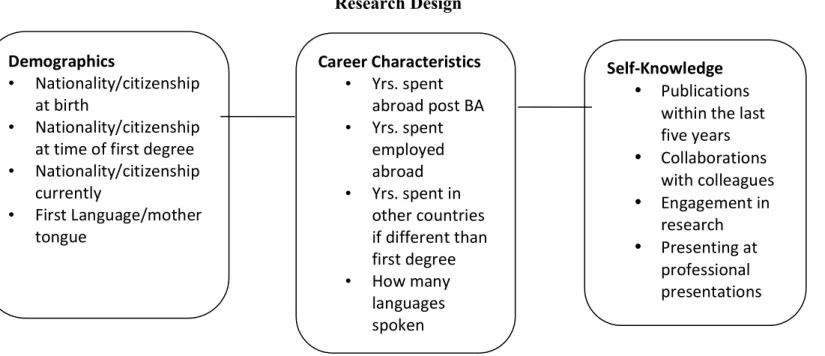
examined: demographics (nationality at birth and throughout schooling/profession), career characteristics (international mobility), and self-knowledge (perception of international research and engagement). To facilitate analysis, indexes of each of the three dimensions of internationalization were constructed based on survey items. Basic descriptive statistics, including measures of central tendency, of both the outcome and independent variables were generated to answer the first research question. Logistic regression analysis was used to test a predictive model of the determinants of each dimension of the outcome variable.
The results of this study showed that the faculty of Hong Kong University as compared to that of Queens College perceive themselves as being more internationally savvy, as they have more experience and engagement in the research, professional presentations, collaborations, and publishing in international settings. However, although HKU teacher education faculty are internationalized in their professional networks, they are no more likely than QC teacher education faculty to internationalize the content of their teacher education programs. Based on these results, we draw implications and recommend directions for future research.
Keywords: Internationalization, teacher education, teacher education faculty, international curriculum, higher education, New York, Hong Kong
ACKNOWLEDGEMENT
First and foremost, I would like to give praise and thanks to God, for His blessings throughout my research work and for giving me the strength, knowledge, and ability to persevere and complete my thesis satisfactorily. To Him be all the glory, for without His blessings, this achievement would not have been possible.
I would like to express my sincere gratitude to my advisor Dr. Martin Finkelstein for the continuous support of my Ph.D. study and related research, for his patience, motivation, and immense knowledge. His guidance helped me throughout my research and the writing of this thesis. I also want to thank the rest of my thesis committee, Dr. Joseph Stetar and Dr. Ming Fai Pang, for their insightful comments and encouragement.
I want to thank my friends and colleagues, Dr. James Daly and Dr. Gerald Ruscingno, for their insight, support, and mostly their friendship. I am also grateful to my friends Kory Mellon, Omayra Arocho, Vivienne Carr, Lucy Vazquez and in particular, I am grateful to my comay, Mayra Colon, for her love and support along the journey.
Lastly, but most importantly, I would like to thank my family, especially my eternal cheerleader, my mother, Valentina Mercado, who believed in me, supported me, and encouraged me. Mom, thank you for loving and supporting me unconditionally. Much gratitude to my late dad, Santiago Roman, who would tell me, “Maribel tu eres inteligente” any time I would doubt myself. Pops, I miss you so much, but I know you are always with me and share my accomplishment. I also want to thank my sisters, Belkis, Maria, Angela, Lourdes, and Carmen for their moral and emotional support. Last, but not the least, much gratitude to the love of my life, my son Andrew, who unknowingly inspires me to do things above my imagination.
TABLE OF CONTENTS
COPYRIGHT PAGE ... ii
APPROVAL PAGE ... iii
ABSTRACT ... iv
ACKNOWLEDGEMENT ... vi
LIST OF TABLES ... x
LIST OF FIGURES ... xi
CHAPTER 1: INTRODUCTION ... 1
Statement of Problem and Significance ... 1
Purpose of this Study ... 8
Research Questions ... 9
Defining Internationalization ... 9
Definitions of Terms ... 11
Summary ... 11
Outline of Study ... 12
CHAPTER 2: REVIEW OF LITERATURE ... 14
International Students ... 15
Aspects of Internationalization ... 20
Teacher Education Overview ... 22
Internationalization in Teacher Education ... 24
Characteristics and What Defines Internationalization ... 28
Rationales for Internationalization of Curriculum ... 31
Integration of International Perspectives into the Curriculum ... 34
Strategies for Internationalizing Curriculum ... 37
Internationalization of Higher Education and Global Integration ... 40
Higher Education and Internationalization ... 45
Conceptual Framework ... 51
Research Design ... 54
Research Participants ... 53
Data Sources ... 55
Data Collection ... 56
The Dependent Variables: Dimensions of Faculty Internationalization ... 56
The Independent Variables: Determinants of Faculty Internationalization ... 59
Data Analysis ... 61
Limitations of Study ... 63
Methodology Summary ... 64
CHAPTER 4: RESULTS AND FINDINGS ... 65
Sample Characteristics Response Rate ... 65
Career Characteristics of Survey Respondents ... 67
Self Knowledge Characteristics of Survey Respondents ... 68
Levels of Internationalization ... 69
Research Question 1 ... 70
Research Question Factors Shaping Internationalization ... 72
Research Question 2 ... 72
Integration of International Content ... 74
Integration of International Student Networking Opportunities ... 74
Faculty Research and Professional Networks Abroad ... 75
Summary of Findings ... 77
CHAPTER 5: CONCLUSION AND RECOMMENDATIONS ... 79
Overview of the Study ... 79
Restating Research Problem ... 79
Overview of Research Methodology ... 80
Major Findings of the Research ... 81
Recommendations ... 84
Recommendations for Future Studies ... 86
Appendix A: Survey Instrument ... 108 Appendix B: Report on the Relationship to the Full List of Indicators in Tables 7 and 8 ... 110 Appendix C: Respondents Career Characteristics ... 132 Appendix D: Institutional Review Board Approval Letters ... 132
LIST OF TABLES
Table 3.1. Indicators of Internationalization ... 57
Table 3.2. Independent Variables ... 60
Table 3.3. Components of the Indexes of Three Determinants of Internationalization ... 62
Table 4.1. Survey Response Rates ... 66
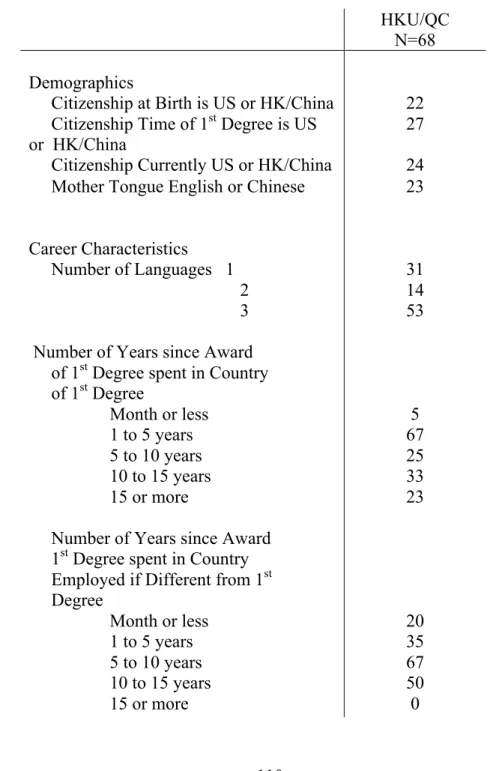
Table 4.2. Distribution of Respondents by Citizenship/Nationality, Mother Tongue, and Language Spoken ... 67
Table 4.3. Mobility Since First Degree ... 68
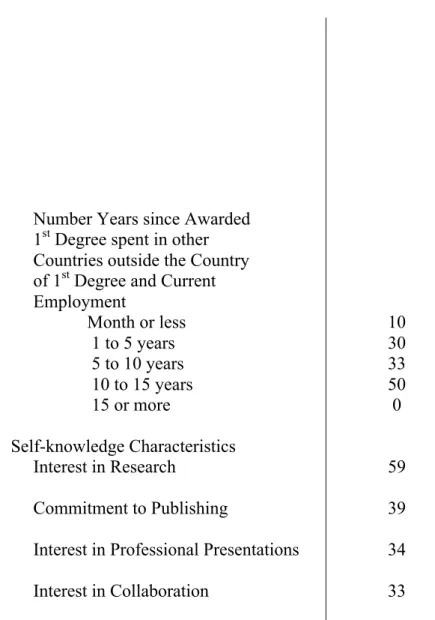
Table 4.4. Percent Reporting Various Research or Professional Characteristics Related to Self-Knowledge ... 69
Table 4.5. Descriptive Statistics for Index Scores of Dependent Variable ... 70
Table 4.6. Descriptive Statistics for Dependent Variables ... 71
Table 4.7. Results of Independent t test for RQ 1 ... 71
Table 4.8. Omnibus Tests of Model Coefficients ... 73
Table 4.9. Variables in the Equation ... 74
Table 4.10. Omnibus Tests of Model Coefficients ... 75
Table 4.11. Variables in the Equation ... 75
Table 4.12. Omnibus Tests of Model Coefficients ... 76
LIST OF FIGURES
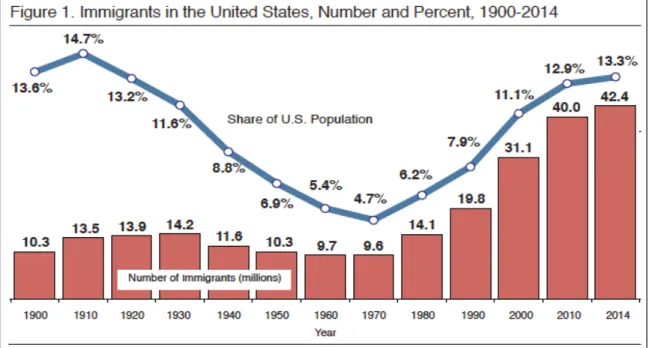
Figure 1.1. Number of immigrants living in the U.S. 1900-2014 Source: (copyright Centre for Immigration Studies). ... 1 Figure 3.1. Conceptual framework. ... 53
CHAPTER 1: INTRODUCTION Statement of Problem and Significance
National boundaries in the United States are becoming more porous through immigration, technology, business, and cultural exchanges. According to the Centre for Migration Studies, the foreign-born population grew by 13.3 million or about 1.1 million per year from 1900 to 2014.
Figure 1.1. Number of immigrants living in the U.S. 1900-2014. (Source: Centre for Immigration Studies ©).
Immigrants now constitute 13.3% of the national population. However, the U.S. is not the only country with an increasing immigrant population. Russia’s immigrant population is at 19% of their national population; Germany’s is 20%; Canada’s is at 28%, the Persian Gulf’s is at 75%, and United Arab Emirates’ is at 80% of their national population (UN World Population Policies, 2015). As national boundaries become more porous through immigration, technology,
new knowledge and skills to succeed in this changing environment. Cultural and international knowledge will be necessary for Americans to comprehend a world of competitiveness and diverse cultural differences.
Americans will need to recognize their own cultural uniqueness and develop a high level of cultural knowledge in dealing with more traditional cultures simply to succeed in promoting U.S. worldviews. The new global economy requires that individuals be multicultural in
understanding and better informed about international issues, yet students in the United States are multi-culturally uninformed (Bell-Rose & Desai, 2005). According to the 2003 National Association of Foreign Student Advisers (NAFSA) Association of International Educators Report (NAFSA, 2003), for the completion of secondary education, the requirements often include only minimal course work in international studies, such as world history, geography, political science, and area studies, and some states require none at all. Because of this, many students only have the most basic knowledge of the geography and culture of world regions. The American Council on Education also concluded in their study that the K-12 education curriculum only contains minimal courses in international topics (ACE, 1999). A report by Carol M.
Barker, former Senior Associate for Carnegie Corporation of New York and presently the Vice President of Program at the Nellie Mae Foundation, at a meeting convened by Carnegie
Corporation of New York concluded that “American students’ knowledge of the world remains limited and that baseline data, assessment and dissemination of new approaches and sustained commitment to implementation required for institutionalization in schools do not yet exist” (Barker, 2000). This is partly because K-12 education in the United States consists of models of citizenship focused primarily on the acquisition of knowledge of and values necessary for
participation in the American system (Kerr, 1999; Heyl & McCarthy, 2003; Bell-Rose & Desai, 2005).
With the changing economic, social, political and educational opportunities and
conditions in nations around the world, it is imperative that schools respond. For Americans to sustain and build on their current successes, they need to understand their relationship with the rest of the world (Schneider, 2003). According to the Carnegie Corporation of New York report,
Education for International Understanding and Global Competence,
Although the U.S. is now the world’s preeminent military and economic power, and the reach of its political and popular culture is global, it cannot control events and remains vulnerable to faraway developments. Because of our global reach and the openness and diversity of our society, we are perhaps even more easily affected by international and global phenomena than small and remote nations. Nothing is therefore foreign to us even though we live and compete in a world of differences. Understanding our place in that world and the cultural, social, political and economic variations of which that world is comprised presents a tremendous challenge for education as we enter the twenty-first century. (Barker, 2000)
A very basic requirement is one that addresses both knowledge and skill. Students need to know about global trends and changes, with an ability to analyze the consequences of these trends and changes. Also, students need to be aware of the movement of people within and across borders and its effect on education, the threat of globalization perceived by traditional societies, and the economic instability and opportunities resulting from changes in resource exploration and delivery. Students need to examine the consequences of electronic
communication systems that evolve more quickly than many people seem able to absorb and embrace.
And yet, America’s schools have historically focused on recommendations issued by the Committee of Ten, appointed at the meeting of the National Educational Association in 1892 (Hayes-Jacobs, 2010). The American school system is built on a model that was designed to meet the challenges of a society shifting from an agricultural economy to an industrial economy, yet it is the model we are using today to prepare young people for the 21st century. Teaching practices rooted in the transmission of knowledge through a top-down approach, relying on textbook readings, lectures and mechanical memorization do not mirror the dynamic and
technologically rich world that young people today will enter. “Although we have had a century of fascinating innovation, experimentation, and exciting ideas since the committee issued its report, the artifacts speak. Simply by picking up a school catalogue or guide one can see clearly that the Committee of Ten reigns” (Hayes-Jacobs, 2010, p. 9). Society has simply outgrown the model of the 19th century.
The traditions of schooling, so tied to lecture and text, of limited critical thinking and marginal emphasis on examining the status quo or of generating knowledge, seem unlikely to be of continued value. New conceptions of education are needed to prepare our young people for this new world.
As schools prepare for a more globalized society, one of the many actions needed is to examine the preparation of teachers. Prospective teachers need the skills and bodies of
knowledge to address the changes that come with a more global society. There is a content need. In order to effectively guide their own students, pre-service candidates need to know about the
over time and across continents. That history needs to include an understanding of the historic interplay between customs, cultures, and societies. The development of various political models, and their stability or lack thereof needs to be known. Prospective teachers must also have a sense of the essential role played by religion in the establishment of patterns of belief and behavior that so often bind people together, but which can divide them into fearful and hated combatants. Geography and the impact of location on development are also important to know. From resources to weather to suitability for transportation, prospective teachers must be
knowledgable in this area (Kerr, 1999; Heyl & McCarthy, 2003; Bell-Rose and Desai, 2005). The need for a more global consciousness is real in many venues but even more so in large cities with global financial centers that depend on economic growth and development and having a workforce that is cosmopolitan and capable of functioning on the world stage. In the United States, New York is considered a global city (GFCI 2010). Four of New York cities’ five boroughs ranked among the nation’s twenty most diverse countries. Queens ranks first with 48.5% foreign-born, Brooklyn third with 37.8%, Bronx 17thwith 31.8%, and Manhattan seventh with 28.7% foreign-born. Staten Island did not rank within the top twenty but still has a
significant foreign-born population at 20.9% (U.S. Census Bureau, 2007).
New York does not stand alone in requiring a particular international pedigree for its citizens. The same global knowledge will be necessary for people in other metropolises to comprehend an increasingly global world. This is true for Hong Kong. Like London and New York, Hong Kong can be considered a global city. According to the Global Financial Centers Index (GFCI, 2010), the Asian financial market is changing, with Hong Kong moving from fourth to third place behind London and New York, and it is now considered a real contender to become a global financial center. “Hong Kong remains a strong financial center and is in third
place in all industry sector sub-indices, except insurance, and in all areas of competitiveness” (GFCI, 2010). The index for measuring global cities was not size alone. Instead, it measured “how much sway a city has over what happens beyond its own borders – its influence on and integration with global markets, culture and innovation” (GFCI 2010). It is presumed that Hong Kong is the most likely Asian city to emerge as a global financial city assisted by a strong regulatory system and a well-skilled financial services workforce. Although China’s domestic market for financial services is likely to grow rapidly and is attracting investment from firms around the world, Shanghai is still lagging Hong Kong as a truly global city, ranking in sixth place (GFCI, 2010). Hong Kong and Singapore are also in the top ten global cities. In joining London and New York as cities of global financial centers, Hong Kong will more likely require its citizens to be more internationally knowledgeable than most places. Hong Kong is undergoing a major education reform focused considerably on the need to develop global citizens.
This study will focus on two global cities, New York and Hong Kong, both with strong financial centers and a need to stay competitive in the global market. Although these two cities rank in the top four among global financial centers and global competitiveness (GFCI, 2010), they are very different in demographics. Unlike New York, Hong Kong is not a multicultural city. With a population of 94.9% Chinese, 2.1% Japanese, and a small percentage of other, the population of Hong Kong has two official written languages, Chinese and English (Government of Hong Kong, 2018). New York, however, is a pot of multiculturalism. With 64.4% born in New York, 11.7% born in a different state, and 21.6% foreign-born, the people of New York speak many languages, with 71.4% speaking English only, and 28.6% speaking a language other than English. New York’s population is diverse in ethnicity with 67.8% white and the rest
ethnicities (U.S. Census Bureau, 2007). So how do demographics affect the globalization efforts and global competitiveness of these two cities? Is New York, a multicultural city, keeping pace with globalization? Where does Hong Kong stand in their efforts to develop global citizens?
Economic growth, development and improved living standards are considered to be directly linked to the state of education (Cobb, 1999). Hong Kong and New York will need to internationalize teacher preparation programs to prepare students better to be more culturally and internationally knowledgeable. Globalization not only brings many changes and challenges to our society generally, but specifically to the field of education. Educators today must not only become versed in world affairs, but they also need to help their students adopt a global
perspective and build the skills required to interact effectively in our rapidly changing world (Schneider, 2003). This raises the question of how K-12 teachers, who have primarily been educated under a different paradigm, can be prepared for this challenge? Success will require a transformation in much of both what and how we teach and how we prepare teachers.
Institutions of higher education are the primary source of training teachers; therefore, it is their responsibility to provide graduates with the knowledge and experience necessary to help them infuse global knowledge in their K-12 classrooms. Faculty members in teacher preparation programs are responsible for producing the content. Therefore, faculty must be prepared to teach more than just pedagogical and subject area content knowledge. Faculty must have a strong understanding of multiculturalism and the skills to succeed in this changing global environment and still have the skills to design lessons that assist their students in learning the content, skills, and values of instruction. Additionally, faculty, need to care enough about global issues to use their knowledge and skills to bring about conditions that address current social problems. A recent study on Scholars in the Changing American Academy (Cummings & Finkelstein, 2011)
looked at how well-positioned the new generation of U.S. faculty are to contribute to the newly globalized academic profession. The results are troubling: new faculty are as likely as senior faculty to report English as their first language (85%) and no more likely (12%) to report experiences teaching abroad or in a different language. Even more troubling is the fact that newly entering faculty members are less likely to report that their research is international in scope or orientation than their senior colleagues (35% versus 44% among senior faculty). Only 33% of research-active U.S. faculty reported collaborating in international research with
colleagues and only 5% reported publications co-authored with colleagues in foreign countries. In addition, U.S. faculty only rank fourth (17%) in the percentage of courses taught abroad. Also, U.S. faculty still ranked last among the fourteen countries in the percentage of articles published in a foreign country at only 7% (Finkelstein, 2011; O’Hara, 2009). However, an important factor in publishing is that many major publishing centers are in the United States.
A contributing factor to this troubling situation is the structure of academic careers in the U.S. The tenure system may make it difficult for new faculty to internationalize their teaching or research, especially if it involves going abroad. Nonetheless, the data suggest that there is no evidence of a great generational increase in international outlook.
Purpose of this Study
Teacher education is emerging as an essential element to improving education. The American Council on Education (ACE, 1999), speaking for the leadership of higher education, has called for moving the education of teachers to the center of the higher education agenda. A new generation of teacher education faculty members that can contribute to the newly globalized academic profession is a vital source for national growth in a global economy. Hong Kong,
recently underwent a major educational reform with an emphasis on liberal studies and globalization (Progress Report Education Reform 2, 2003). However, in New York, a
multicultural city, much has been written about the need for internationalization of the school curriculum and creating global citizens, but no major reforms or changes have taken place (Blum, 2006). There are initiatives in place like the High School for Global Citizenship
(HSGC), a small school in Brooklyn, which aims at creating a democratic community of active learners who understand the connections between their own lives and international events (Theroux, 2007). Therefore, for this study, the focus will be on these two global cities and assessing the extent to which and the ways in which they have sought to internationalize the preparation of their teaching force (Khalideen, 2006).
Research Questions
Based on its stated purpose, this study collected data to answer the following research questions:
(1) How do teacher education faculty at the two case sites differ in terms of the extent and patterns of the internationalization as reflected in the content of their courses and the composition of their professional networks?
(2) What factors combine to explain both the extent and pattern of internationalization of course content and professional networks?
Defining Internationalization
To do a meaningful comparison of teacher education faculty in New York in terms of internationalization in comparison to teacher education faculty in Hong Kong, it is important to define internationalization. Internationalization of education can have many definitions and mean different things to different people, which affects the different ways in which institutions
of higher education implement internationalization. Internationalization has been conceived as study abroad, faculty joint or collaborative research across national borders, international internships, faculty and student exchanges, and curricular development (Knight, 2004). After a careful review of the literature on internationalization, we adopted a focus on internationalization as the reformulation of instructional content in teacher preparation programs (Khalideen, 2006). In Chapter Two, the literature review will elaborate on various elements of internationalization of content such as rationales, strategies for internationalizing content, and finally, what defines and characterizes internationalized content. Based on the review, I adopt for my study the definition of internationalization as “the process of integrating an international, intercultural, or global dimension into the purpose, functions or delivery of post secondary education” (Knight, 2004, p 7.) For this study, the key elements for measuring internationalization are the integration of international content, integration of international student professional networks, and faculty research and professional networks abroad. The integration of international content will be measured by the course content, course topics, and specialized courses with an emphasis on the integration of politics, economic, and cultural/ social context (Khalideen, 2006; Odgers & Giroux, 2006; Qiang, 2003). The integration of international student networking opportunities will be measured by analysis of teaching practices including assigned readings, course
illustrations, international students serving as cultural resources, sharing faculty experiences from working in other nations, and the use of technology for international collaborations. Faculty research and professional networks abroad that place faculty as the link between curriculum and the students and will be measured by faculty experiences including joint research, joint
Definitions of Terms
Globalization - a process that affects environmental resources, culture(s) including people’s well-being, political systems, national sovereignty, national security, agriculture, public health/health care, economic systems/international trade, transportation, information
technology/communication, education, and global governance. The primary result of this process has been the integration of capital, technology, information and people across national borders (Schneider, 2003). It is defined as the process of international integration, which is arising from the interchange of views around the globe.
Internationalization - “the process of integrating an international, intercultural, or global dimension into the purpose, functions, or delivery of post-secondary education” (Knight, 2004, p. 7); it is defined as a process of generalizing so that one product or services can be handled in multiple languages and cultural conventions without the need for re-design.
Politics, economic and cultural social context – in line with the definition of
globalization and according to Qiang (2003), Odgers and Grioux (2006), and Khalideen (2006), frameworks for internationalization will include topics of political systems, national security, public health, economic systems/international trade, global governance, education in different nations, and discussion of ways in which people of different cultures interpret their own life experiences and those of others.
Summary
With the increasing integration of the world economy, nations are increasingly under pressure to compete internationally, which directly translates into increasing pressure to re-shape national education systems to train a multi-cultural workforce capable of competing globally.
This research study examined the internationalization of teacher education faculty through case studies of two universities, one in New York and one in Hong Kong.
Outline of Study
This study consists of five chapters. Chapter One describes the relevance and
significance of the study and the problem it addresses. It also outlines the study’s purpose and defines internationalization for the purpose of this study. Lastly, it defines terms unique to the study or those with multiple possible definitions.
Chapter Two includes a review of the relevant literature on the aspects of
internationalization of higher education and an overview of teacher education practices. It also includes a review of the relevant literature on the aspects of internationalization of teacher education and the key elements to measuring internationalization. Chapter Two ends with a review of the literature on the characteristics of internationalization, the rationale for internationalization of content, and the different perspectives and strategies to integrate international topics into the curriculum.
Chapter Three covers the research methodology used in the study. It thus describes the conceptual framework, observed sample, the data collection and survey instrument employed, and the process of data collection and analysis. It also lists the indicators for internationalization and the guiding research questions. Lastly, it describes the limitations of the study.
Chapter Four describes the findings of the study. It explains the outcome of the research by providing descriptive data on the sample, the patterns of internationalization of each
Chapter Five summarizes and interprets the findings. It also makes recommendations relevant to teacher education faculty in the areas of internationalization of curriculum and professional networks and offers some ideas for further research.
CHAPTER 2: REVIEW OF LITERATURE
The purpose of this study is to examine the internationalization of teacher education faculty through two global case studies. These case study sites are situated in universities in Hong Kong and New York. In this chapter, literature is detailed pertaining to how
internationalization has led to highly porous borders and how this is affecting higher education institutions.
In the context of the research question and purpose, this literature review will address internationalization’s latest trends in education and what defines internationalization of content and curriculum. First, it will look at where we are today in higher education internationalization, and specifically how it applies to teacher education. Second, it will address various components of internationalization of content such as rationales for internationalization, integration of an international dimension into the curriculum and strategies for internationalizing content.
This will be done under the headings of: (1) international students, (2) aspects of
internationalization of higher education, (3) teacher education overview, (4) internationalization in teacher education, (5) characteristics and what defines internationalization, (6) rationales for internationalization of curriculum, (7) integration of international perspectives into the
curriculum, (8) strategies for internationalizing curriculum, (9) internationalization of higher education and global integration, and (8) higher education and internationalization. The data collected for these sections were retrieved through a strategic search of online international publications through Google Scholar.
Search terms included, but were not limited to: internationalization, internationalization higher education, internationalization teacher education, internationalization curriculum,
and global integration, measuring internationalization, characteristics of internationalization, internationalization universities, internationalization definitions, teacher education, and
perspectives of internationalization. Most of these terms were uncovered from a search of scholarly articles dating from 2014 onwards. The first section of discussion is international students, as it is this body of the student population that has inspired trends toward
internationalization in higher education (Knight et al., 2015). International Students
According to Goodwin and Nacht (1991), the presence of international students is often highlighted as a major indicator of university campus’ internationalization. During the past few years, most the flow of international students has been from developing countries to
industrialized countries (Perkins & Neumayer, 2014). A UNESCO report highlighted that over 1,000,000 foreign students traveled abroad to attend higher education institutions throughout the world. It is also highlighted that one-third of these students went to the United States. The other leading countries were France, Germany, the United Kingdom, Australia, and Canada (Killick, 2008).
Blackburn and Lawrence (1995) originally argued that the cultural diversity assist internationalizes the host university campus, and the international students add to the local community and economy, a sentiment that has been repeatedly found in the more recent
literature (Leask, 2016). It is also estimated that in the United States, international students bring almost $7 million into the economy annually (Soria & Troisi, 2014). The Canadian education center network highlighted that the value of international students can never be overemphasized, stating that about 200,000 international students come to Canada annually and that they bring about $4 billion to the Canadian economy (Scott et al., 2015). Moreover, Goodwin and Nacht
(1991) stated that usually the international students usually pay full or double tuition, which financially benefits the universities and colleges.
The presence of international students has been seen as vital to the intellectual health of universities (Choudaha, Chang, & Kono, 2014). This is especially important at the graduate level, where the presence of international students has ensured the sustainability of some
academic programs, especially in science and engineering (Alves et al., 2015; Nonis & Hudson, 2015). International students enrich the university campuses and the quality of programs, as well as serve as ambassadors when they return home (Parkes & Griffiths, 2008). They bring with them their cultural viewpoints such as values, beliefs, patterns of behavior, and ways of learning and thinking (Newsome & Cooper, 2016). They enrich the intellectual and social life of the campus, often being very influential in the internationalization of the academic and community environment (Lee & Ciftci, 2014).
Another benefit is the potential for long-term commercial, trade, and diplomatic links with other countries (Barratt, Chawla-Duggan, Lowe, Nikel, & Ukpo, 2006). But often, the input that international students could have on a campus is largely ignored (King & Gardiner, 2015). Faculty needs to learn to use the human resources available to them (Schneider & Burn, 1999). Departments need to develop ways to take advantage of the perspectives and expertise of these students (Quaye & Harper, 2014). Blackburn and Lawrence (1995), in their discussion of a study on the importance of international students in university programs, highlight several ways that faculty can get to know their students early in the course, to include their experiences in the classroom activities:
3) include international students without making them feel different; 4) enquire as to what languages are spoken in the class;
5) ask about different teaching strategies the students may have encountered, especially abroad, and ask which styles work best for them; and
6) share their international experience and linguistic background, if appropriate (p. 82). Blackburn and Lawrence (1995) suggest that the international flavor should reach beyond the campus and impact the community, especially in the K-12 school systems. A program
designed by the University of Alberta does just that. It offers a “Bridges: Student Speakers for Global Awareness” program whereby international and Canadian students with significant international experience are afforded the opportunity to share their experiences and views of global issues within the schools (Mandal et al., 2014). In addition, this program provides opportunities for students to develop their public speaking and presentation skills, as well as interpersonal skills (Mok & Cheung, 2011).
The goal of the program is to help break through stereotypes and educate students about other cultures and global issues (Anderson, 2015). Students involved in this program are
provided off-campus speaking opportunities, such as elementary schools, senior care homes, community organizations and post-secondary classrooms (Reitz, Curtis, & Elrick, 2014). They also participate in a training program to help prepare them for these opportunities (Reitz et al., 2014). The students develop presentations on a variety of themes that can include regional or country-specific information or discussion of various relevant issues as seen from another perspective (Reitz et al., 2014). In this way, the students can share their experiences and stories in the community, show how local and international issues are connected, provide more realistic
pictures of the country they are speaking about, and encourage other students to take advantage of overseas opportunities (Quezada, 2010; Reitz et al., 2014).
There are several issues related to international students that need to be addressed by individual universities (Knight, 2015). Admission procedures at Canadian institutions are typically slower than such countries as the United States, Australia, and the United Kingdom (Coates & McCormick, 2014). There need to be adequate staffing, clear policies and the use of technology to speed this up (Verbik, 2015). Some institutions in Canada have made some of the following changes:
1) a single point of contact for international students (Coates & McCormick, 2014); 2) making international students a priority (Coates & McCormick, 2014);
3) sending acceptances by fax or courier (Houshmand, Spanierman, & Tafarodi, 2014); 4) providing greater human resources to the admissions office (Parkes & Griffiths,
2008);
5) developing a way to track international students through their campus computerized information system (Parkes & Griffiths, 2008);
6) publishing and distributing admission material much earlier than previously and developing expeditious admission processes (Zhou & Zang, 2014);
7) issuing two letters of admission; one for visa application purposes and another
detailing the academic prerequisites that the student must meet (Zhou & Zang, 2014); 8) providing an international application form and accepting faxed and online admission
applications (Wilkins & Huisman, 2015);
10)providing human resource training so that competent and skilled people are available to assist international students in their application process (Glass & Westmont, 2014). International students need knowledgeable and caring people who can help them as they attempt to wade through the necessary paperwork, achieve financial stability, develop a support network, learn to be successful in a new culture and educational environment, and often a new language (Poyrazli, 2015). There is often a great deal of inward and outward pressure on students to succeed (Poyrazli, 2015). Students also need orientation as they prepare to return home
(Poyrazli, 2015). The experience of living in a new country has changed them, but they may not even be conscious of the change (Robertson, Holleran, & Samuels, 2015). Their perspectives and understanding may become different, including their perception of their home country
(Robertson et al., 2015). Transition to their home country and culture will not be as easy as they might think (Mok & Cheung, 2011). Those who work with students also should remember that students from different areas of the world may have different needs, and graduate and
undergraduate students’ situations and concerns may vary greatly (Robertson et al., 2015). One concern that was mentioned frequently was the need to avoid “ghettoizing” the students by placing them in circumstances, especially housing accommodations, that keep them separated from the mainstream of students (Drazan, Cooke, & Eglash, 2016). International students would benefit from opportunities to mix with non-international students, be it in the residences or in student lounge areas to become integrated into campus life (Drazan et al., 2016). A number of areas need to be evaluated to be sure that universities are sufficiently meeting the needs of international students (Alonso & Lombardo, 2016). These would include arrival and departure assistance and orientation, academic and financial advising, accommodation, peer and
community support, work and internship opportunities, personal counseling, and social integration (Alonso & Lombardo, 2016).
To conclude this section, it is clear that recently published literature is calling for ethical practices in attracting international students to university campuses (Thomson & Esses, 2016). Internationalization should not be solely for the gain of the institution and its country (Thomson & Esses, 2016). To attract international students, universities must be sensitive and conscious of the needs of both the students and their countries (Parkes & Griffiths, 2008).
Aspects of Internationalization
There are two aspects to the internationalization of higher education according to Teichler (1999; 2004; 2009). The first one is physical border crossing (Teichler, 2009). The movement of students, scholars, and ideas across national boundaries was a prominent feature of twelfth and thirteenth century Europe (Hallavant & Ruas, 2014). Communities of international scholars formed as a result at several prominent universities (Wildavsky, 2010, 17-18). This mobility significantly subsided after the fifteenth century until the latter half of the twentieth century (Hollifield, Martin & Orrenius, 2014). In the last several decades there has been a significant increase in the cross-border flow of students, scholars, and ideas as well as global growth in higher education enrolment with a fifty-three percent increase between 2000 and 2007 in overall higher education enrollments (Albatch, 2009; Hollifield et al., 2014).
The second aspect of internationalization of higher education is a newer trend which goes beyond border crossing mobility and cooperation (Teichler, 2009) including the
internationalization of substance and functions of higher education (Khoo, Taylor, & Andreotti, 2016). This includes the internationalization of teaching, research, and service mission of higher
provides access to many (Khoo et al., 2016). According to Altbach (2009), the “massification” of higher education globally will mean a movement away from elite to more widely accessible models. These models bring access to all by bringing international content and perspective into learning, research, and outreach for all students and faculty in their home institutions (Altbach, 2015). This aspect of internationalization is a movement towards integrating international perspectives into the core activities and curriculum and moving away from just the
internationalization of some activities (Altbach, 2015). It is a movement towards developing long-term relationships on equal terms and creating policies of internationalization (Altbach, 2015).
Many developing countries in the world now depend upon the internationalization of higher education institutions for promoting social awareness and global connectedness for their institutions (Rui, 2014). A prime example of this is China, who over the past decades has used internationalization in higher education as a means of transforming the Chinese education system into one of the largest and most promising in the world (Rui, 2014). Both aspects of
internationalization have helped promote these new trends in China, suggesting that when a country deems internationalization as a core part of the curriculum within its higher education institutions, it can benefit enormously from both the physical influx of foreign students and the wealth of knowledge that they bring (Rui, 2014). However, to take advantage of this benefit means that advancements are needed in how higher education staff are trained within the context of internationalization. The following section is an overview of teacher education and how this relates to teacher quality in an internationalized world.
Teacher Education Overview
Teacher education has a historical connection to the production of teachers for a specific locale governed by professional accreditation authorities that graduate students on the basis of having knowledge of state-based curriculum requirements (Quezada, 2014). This paradigm brings challenges to the movement towards internationalizing teacher education practices, adding to the already existing debates over teacher quality (Quezada, 2014). Quality of teachers and teaching are among the most important factors shaping the learning and growth of students (Ingersoll, 2007). The two most prominent viewpoints over teacher quality are that 1) poor quality training and inadequate government certification standards result in poor teacher quality and poor student performance and, in contradiction, 2) “entry into teaching occupation already is plagued by unusually restrictive and unnecessarily rigid bureaucratic entry barriers” (Ingersoll 2007, pg. 2).
Researching teacher education can be difficult (Darling-Hammond, 2016). This difficulty was made evident in a study by Darling-Hammond (2016), who used the five AERA presidential addresses over the last fifty years as landmarks to trace the evolution of research on teaching and teacher education, as well as look at some critical impacts that the research had on policy and practice related to teacher education and teacher evaluation. In the discussion,
Darling-Hammond (2016) showed how these addresses reflected both progress as well as challenges at the time that they were delivered. Following a major presidential address, the education research community has, and will in the future, influence future research within the educational
community. Darling-Hammond (2016) also argues that these speeches are a physical trace of key influences on the quality of teacher preparation, assessment of teaching effectiveness, and
It is also suggested that the growth of internationalization within education has been influenced by government and globalization trends (Darling-Hammond, 2016). In a similar study published the following year, Darling-Hammond (2017) described teacher education in
jurisdictions around the world, and how they too have been influenced by political undercurrents. However, the core arguments for the research study revolve around an examination of teacher education policies in Australia, Canada, Finland, and Singapore (Darling-Hammond, 2017). Each of these four countries has exhibited expansion within its education systems that accompany global trends, suggesting that aspects of internationalization are also being influenced by political motives (Darling-Hammond, 2017). Forzani (2014) argues that these movements are indicative of a shift from practice-based teacher education, to competency-based teacher education over the last hundred years or so. Forzani (2014) argues that, in recent years, a small but growing strand of research has investigated ways of focusing teachers’ professional education on core and high-leverage practices of teaching.
Other debates on teacher education focus on what kinds of subject matter and how much pedagogical preparation of these do prospective teachers need (Mok & Chan, 2016; Wilson, Floden & Ferrini-Mundy, 2001). Researchers have found problems with the typical subject matter knowledge of prospective teachers, even those who have completed majors in academic disciplines (Mok & Chan, 2016). Pedagogical preparation refers to the courses that prospective teachers take in areas as instructional methods, learning theories, foundations of education, and classroom management (Ingersoll, Merrill, & May, 2014).
To conclude, the content for these focus areas can vary widely, and there is still on-going debate in need of further research as to which aspects of pedagogical preparation are most
critical (Ingersoll et al., 2014; Wilson et al., 2001). The following section looks into what internationalization has meant for teacher education.
Internationalization in Teacher Education
Internationalization of higher education takes on diverse forms, such as the delivery of programs offshore; bringing foreign students into institutions; forming branch campuses; building partnerships and collaborations with overseas institutions; mobility of students and scholars across national borders; and the most recent integration of intercultural and global dimensions into curricula (Knight, 2003; 2015). Teacher education occupies an interesting and uncertain place in the movement towards internationalization because of the historical
connection to the production of teachers for a specific locale governed by professional accreditation authorities that graduate students on the basis that they have knowledge of state-based curriculum requirements (Duong & Chua, 2016). At the same time, the same
“...professional accreditation authorities require graduates to be prepared for the social, cultural, ethnic, linguistic and religious diversity of contemporary student populations, while State systems and their curriculum frameworks refer consistently to the preparation of students for a globalized work and labor force” (Parkes & Griffiths, 2008, p.1).
Because of the accreditation requirements of prospective teachers, teacher education programs do not have the flexibility to expose their students to globally focused courses (Keith & Van Belle, 2014). Richard Lambert, in a study of undergraduate programs in nearly 50 colleges and universities, found that education majors have less exposure to internationally focused courses (Lambert, 1989). So what exactly is the integration of an international
diverse forms, it is important to define and select for this study the key elements to measuring internationalization.
What can be determined from internationalization and teacher education is that both are essential in combination to negotiate critical differences for social justice given the global transformations of the last two decades argues Watt (2016). This comes after advances in technology, increased student and faculty mobility, and other economic factors (Watt, 2016). Watt (2016) grounds his argument in the drastic amount of negative attention currently being received by Muslims in Western nations. By educating the masses in the new trends and knowledge gained by internationalization, racism could be diminished through the growth of education as a whole (Watt, 2016).
Watt (2016) argues that there is a trend of viewing Muslims through a reductive lens, despite there being no essentialized, unified Islamic world about which the rest of the human species can make complicated generalizations, and yet this appears to be occurring through a lack of general knowledge. Fixed meanings have proliferated through discursive contexts of schooling, society, and mainstream media, which is why Watt (2016) argued that teacher candidates need to be attentive to processes that have the potential to mitigate this negative imagery, which can then be handed down to students. One of the easiest means of achieving this outcome is to expand individual, national, and international contexts of subject areas related to specific social injustices (Watt, 2016).
As education overhaul has been achieved before, with studies such as Quezada and Cordeiro (2016) citing past examples pertaining to the Council for the Accreditation of Educator Preparation. Over the last decade, changes have been made to introduce international contexts to the standard North American curriculum, but this has also been promoted through
nongovernmental organizations and foundations that allow for students and teachers to broaden their international opportunities (Quezada & Cordeiro, 2016). These new opportunities also present areas of advancement in curriculum through experience in foreign countries (Quezada & Cordeiro, 2016).
Just as internationalization in education has been promoted by teachers traveling abroad for semesters, the influx of foreign-born families has also prompted the necessity for
internationalization in teacher education (Apple, 2017). In the 2007 census, more than 10 percent of the United States population—roughly 38 million people—were identified as foreign born, with first-generation individuals now being one in every eight persons in the country, with 80 percent of these individuals coming from Latin America and Asia (Apple, 2017). Figures are similar for neighboring countries, such as Canada (Apple, 2017). Therefore, Apple (2017) argues that now is the essential time to introduce international and globalized educational curriculum for both prospective teachers and students alike.
The generalization of studies across national contexts as limited was prevalent up until as recently as a decade ago. This may be one of the limiting factors in measuring
internationalization. Knight et al. (2015) argued that the reason it is so difficult to determine the direction of influence is that schools and colleges of education have been the least
internationalized units in American university campuses. It was only relatively recently that interest around issues of internationalization and globalization of teacher education emerged, resulting in a standing committee on Global Diversity and a Topical Action Group on the Internationalization of Teacher Education at AACTE and the establishment of a goal for JTE to attract and publish more international research on teacher education (Knight et al., 2015).
Unlike the last ten years of research and prior, most major publications and journals are now accepting international contributions on teacher education, as there is now a perception of significant value in these studies (Knight et al., 2015). The recognition that international research can contribute to U.S. teacher education has occurred at a time when researchers such as Knight et al. (2015) are questioning whether teacher preparation programs should prepare teachers for multiple settings and types of students, or whether the direction should be for more specific types of settings and students. In other words, we are questioning the generalizability of teacher
education, which was the reason for initially limiting research on teacher education to national settings.
Knight et al. (2015) state:
When teacher preparation programs placed the majority of their students in nearby schools that mirrored the demographics and features of their field experience settings, the goal of matching the features of teacher preparation programs to target contexts was achieved without the conscious intervention of teacher educators. However, now that the demand for teachers is in settings unlike those in which they are being prepared, consideration of context specificity in teacher preparation and professional development is of utmost importance. Much of the need has been for preparation for urban settings. Other recent phenomena related to supply and demand issues and budget cuts for education have also resulted in teacher preparation programs preparing teachers for out-of-state settings that may differ considerably from the in-state contexts where previous graduates remained. For example, teachers prepared by Penn State University are increasingly taking teaching positions in states where demand is higher than in Pennsylvania. Tailoring features of a program to reflect demands of a specific setting is
difficult when there are multiple, varied target contexts. It is with this dilemma in mind that the internationalization of teacher education and research in international contexts plays an important role. (p.3)
To conclude this section, it is clear that the research on internationalization and education is new, meaning that a wealth of research is needed for the fullest understanding of the influence on teacher education. This study will contribute to the growing body of research in this field. However, limitations also exist in the extent to which internationalization has been defined and characterized, making studies such as this somewhat more complex. The following section continues with this discussion.
Characteristics and What Defines Internationalization
According to Qiang (2003), higher education can no longer be viewed in a strictly national context. Therefore, a broader definition of internationalization, which embraces the entire functioning of higher education and not merely a dimension or aspect of it, or the actions of some individuals which are part of it, is needed (Cabrera & Le Renard, 2015). The definition most widely used was recommended by Knight (2004), who stated that internationalization “is interpreted and used in different ways in different countries and by different stakeholders” (p. 6). Knight (2015) defined internationalization as “the process of integrating an international and intercultural dimension into the teaching, research and service functions of the institution” (p. 7). Nilsson’s (2000) definition incorporated the international and intercultural and the development of knowledge and skills, and more specifically, it included performance objectives. Knight (2004) defined it as “a curriculum which gives international and intercultural knowledge and abilities, aimed at preparing students to perform (professional and emotionally) in an
Internationalization of curriculum has been developed based on different rationales and using different strategies (Hawawini, 2016). Nevertheless, Freedman (1998) stated that “sound international curriculum needs to be designed with an eye toward social transformation,
constructivist principles of learning interdisciplinary content and diverse modes of
representation” (p.50). Freedman (1998) added that “curriculum must reflect the complexities of global existence and be based on visual as well as textual and numerical cultural carriers” (p.50). Internationalized curriculum will include socio-cultural and disciplinary contexts. According to Freedman (1998) when internationalizing curriculum or content, one must think of culture as being local and global as well as national and include in the curriculum various forms of international visual culture that influence global knowledge.
Published in a special edition of the International Higher Education journal, an article by Beelen and Jones (2015) argued that recent discussions of internationalization within higher education are being beaten down by the constant introduction of new terms and definitions. This trend has been highly criticized; however, Beelen and Jones (2015) understand the importance of clarifying the concept of internationalization at home, but continue to urge researchers to not introduce any additional new terms to the study. This comes at a time when Beelen and Jones (2015) also proposed a new definition of internationalization at home, but claim that defining it does not guarantee its implementation, as there are still fundamental challenges to overcome in the redefinition of internationalization.
Beelen and Jones (2015) argue that the concept of internationalization at home plays a useful role in certain contexts, such as emphasizing efforts on mobility, as well as all of the benefits that this new-found mobility will allow for both domestic and foreign students.
a relatively small proportion of the student body, and internationalization at home is a convenient term to designate internationalization activities aimed at the whole student body, despite it not being technically as all-engrossing at it appears. Despite the clarity of definition, Beelen and Jones (2015) argue that internationalization has become an item in the educational policies of the European Union’s member states, with some countries such as the Netherlands already
implementing internationalization into the higher education institutions, despite having no clear meaning behind the term. They state:
With the attention on internationalization at home increasing, it is all the more important that the concept is understood clearly, and shared understanding is not simply assumed the original definition of internationalization at home, dating from 2001, was not very helpful: ‘Any internationally related activity with the exception of outbound student and staff mobility,’ The confusion centers around the overlap between internationalization at home and internationalization of the curriculum as it has developed as a concept,
particularly in Australia and the United Kingdom… Internationalization of the
curriculum, on the other hand, refers to dimensions of the curriculum regardless of where it is delivered. In this sense it may include mobility for the students that choose that option, or it can refer to curriculum for transnational or other forms of cross-border education. (Beelen & Jones, 2015, p. 12 - 13)
Even when the conceptual fog lifts and concepts are cemented in home nations, a big challenge remains: supporting academics so that they can capture intended internationalization in learning outcomes, plan assessment and design learning environments that enable students to achieve intended learning outcomes. The real challenge is to contextualize internationalized
and assessment. For this, they need support from both educational and internationalization experts. When the new definition is finally developed, it will, hopefully, contribute to reaching a common understanding of internationalization at home, which may assist in this challenging task (Beelen & Jones, 2015).
To conclude this section, clearly issues remain in the clear definition of
internationalization. However, broad strokes can be made regarding what internationalization means for higher education institutions, as well as how it appears in practice. The following section continues with this theme in justifying internationalization within the curriculum.
Rationales for Internationalization of Curriculum
There is a need to internationalize education, but Clifford and Montgomery (2015) ask, what is the rationale for an internationally oriented curriculum as the most effective tool to internationalize teacher education programs? Internationalization means different things to different people, which results in great variation in curricular initiatives implemented under its aegis (Clifford & Montgomery, 2015). International education has been defined and
operationalized as study abroad, faculty joint (i.e., cross-border) research, international internships, faculty and student exchanges and curricular development (Knight, 2004). These activities provide a human development element important to internationalization; however, this definition does not generate internationally-oriented curricula (Clifford & Montgomery, 2015). This study will focus specifically on the internationalization of curriculum.
Internationalization of curriculum should incorporate topics concerning conditions in nations around the world that prepare teachers to adjust to and contribute to a rapidly changing world (Kahn & Agnew, 2017). Khalideen (2006) agreed with this sentiment and put curriculum as the main vehicle for internationalizing higher education to raise global consciousness.
According to Khalideen, for internationalizing curriculum to be visible, one must place “curriculum as the vehicle to achieve this goal” (p.1). Although there are many diverse rationales for internationalizing curriculum, some of the most frequently recognized rationales put curriculum in the center of internationalizing higher education (Gopal & Zha, 2015). According to Odgers and Giroux (2006), researchers place the curriculum at the center of any attempt to internationalize higher education, with “curriculum being the primary vehicle for accomplishing internationalization” (p. 4). Ellingboe (1998) stated that “internationalizing curriculum improves, enhances, and benefits higher education, according to many leading scholars who have written about the urgency to interject comparative and international perspectives into many of the disciplines taught at colleges and universities” (p.198).
In internationalizing the curriculum, Khalideen (2006) suggested “that a framework for internationalizing the curriculum must consider how power, politics and ethics within the university context impinge on curriculum reform” (p. 5). Historically, the most common
framework applied has been political and economic (Leask, 2014). The political framework has always been in existence with international education and is seen as a “beneficial tool for foreign policy especially with respect to national security and peace among nations” (Knight, 2004, p.17). The economic framework is important to institutions of higher education with some countries considering the marketing of higher education to the international market as the export of goods (Leask, 2014).
The framework for internationalizing the curriculum must include politics and economic dimensions, but places the emphasis on academic and cultural social dimensions as rationales (Gopal & Zha, 2015; Qiang, 2003. Odgers and Giroux (2006) agreed with Gopal and Zha (2015)
Odgers and Giroux (2006) argued that it is not contacts between individuals and groups coming from different cultures that necessarily lead to culture learning or appreciation but that “one must have a consciousness of the experience, and well-planned curricula provide the constructs for such a consciousness to develop” (p. 6). According to Sarles (1998), students in the United States have been “socialized to their own culture by osmosis as well as by education, although studies indicate they have great cognitive gaps in understanding their own country” (p.136). Sarles (1998) stated that students from the United States “also need to know about the vastly different ways in which people of different cultures interpret their own life experiences and those of others” (p.136). In this changing global world, the students from the United States will
progressively work more with people in other countries (De Wit, 2015). To ease successful interactions and mutual understanding, students from the United States will need a deeper awareness of who they are, and who others are (De Wit, 2015). Lastly, there is the academic framework for internationalizing the curriculum, and this assumes that the quality of higher education is enhanced with the internationalizing of teaching, research, and service (Knight, 2004).
Overall, the frameworks for internationalizing the curriculum differ slightly by scholar, but most agreed that an internationally-oriented curriculum and an increase of international area studies courses are the main vehicles for internationalizing higher education (Urban & Palmer, 2014). According to Knight (2004), developing internationalized curriculum and content
provides the tools for developing the appropriate competencies in the faculty so that they become more internationally knowledgeable and inter-culturally skilled. Mestenhauser (1998) stated that much of what is seen in international education in the United States is “minimalist, instrumental, introductory, conceptually simple, disciplinary-reductionist and static” and that “there is an