SECOND LANGUAGE ACQUISITION ON
KNOWLEDGE TRANSFER
IN
SOCIAL LEARNING DAYAKNESE BAKATI' RARA IN 3T REGION
Priska Vasantan1), Blasius Manggu2), Dedy3), Panra4)
1STIM Shanti Bhuana, Bengkayang
2STIM Shanti Bhuana, Bengkayang
3 STIM Shanti Bhuana, Bengkayang
4 STIM Shanti Bhuana, Bengkayang
Abstract
In the globalization era, there are various forms of modern life, in Indonesia, especially in Bengkayang. It is still found an isolated and disadvantaged village named Tampe village which is located far from residential city Bengkayang.The research was conducted in Indonesian language, English, technology, and so forth, so the research funded by theDirektorat Riset dan Pengabdian Masyarakat Diirektorat Jenderal Penguatan Riset dan Pengembangan Kementerian Riset, Teknologi, dan Pendidikan Tinggi Anggaran 2018 Research Contract no.115 / SP2H / LT / DRPM / 2018using grounded theory method, a method that greatly influences sociological perspectives on human activities in terms of talking and communicating.The data collecting was conducted by observing three children of Dayaknese Bakati’ Rara 11-14 years old. They are 5th grader at SDN 15 Tampe Atas.The results of this study have been used as a language for childhood.However, it is known that these three children are unfavorable influences on knowledge transfer in social learning.
Keywords:3T area, second language acquisition, knowledge transfer.
1. PRELIMINARY
Indonesia has thousands kinds of culture which are obtained from various tribes that live in the Indonesian archipelago. One tribe which is highlighted by the author on this research is Dayaknese Bakati' Rara residing in Tampe Atas, Bengkayang, one of the regency in West Kalimantan located in the area of 3T (Front border, Outermost and Underdeveloped). The dayaknese is well-known on their spirit of communal life which their individual lifestyle.
According to Sugianto (2017), the development of capitalism in the Western world and also in Indonesia cannot be in harmony to the traditional mindset of communal societies. It
is alleged that this communal society does not have the competitive spirit of the capitalists because in general, the communal societies have a collective ownership spirit that appears in their local wisdom both from the way of learning, ways of thinking, daily habits, etc. ( Vasantan , 2016 , 2018). On the other hand, in Manggu's (2017) study, the allocation of village funds in village development did not bring about a significant development for improving the standard of living of the villagers, because this was closely related to the non-capitalism mindset. Therefore, the mindset and local wisdom of the community also greatly influenced the second language acquisition conducted in this study.
West Kalimantan is one of the provinces in Indonesia which is inhabited by diverse Dayaknese tribes with a variety of traditions, knowledge and technology. According to Alloy, Albertus and Istiyani (2008), one of the diversity of Dayaknese tribes in West Kalimantan is the existence of Dayaknese languages which are estimated more than 400s kinds of languages which are as a last frontier that fortifies local wisdom from the extinction of the Dayaknese native language. But on the other hand, Indonesia as a united state has a policy in the use of Indonesian language as a united language which has a direct and indirect effect on marginalizing the existing the native languages. Indonesian is used in everyday life both formal learning (school, campus) in the form of tacit and explicit knowledge which influences the changes in attitudes and thoughts (basic modalities) of the speakers that the use of native languages is considered as backwardness and underdevelopment that will be a cause of Dayaknese languages extinction in the future. However, if examined more closely, hundreds of Dayaknese languages in West Kalimantan also create difficulties for different tribes in terms of communication so that the second language used is Indonesian Language as a bridge communication and knowledge transfer between Dayaknese tribes in a region .
Background
The main reason for this research was the the existence of a group of Dayaknese tribes in Tampe Atas who were allegedly still using Dayaknese language especially Bakati' Rara as the first language and Indonesian Language as a second language. This study aims to determine the relationship of second language acquisition with knowledge transfer in the social learning of Tampe Atas community which is a border area and 3T area.
Knowledge transfer in learning is very important as a person's success factor in receiving knowledge so that it can have an impact on the economy of the community. The higher the level of education of the community, the higher the standard of living of the
community as in the big cities such as Sintang and Pontianak which are also located in the province of West Kalimantan. These cities have several universities so that the people get the higher education and it directly impact on their mindset in improving living standards by starting from the way of entrepreneurship, the types of job. Thus, the authors hope that the results of this study can be used as a reference for the importance of the role of language as a tool of knowledge transfer in social learning.
Theoretical basis Language acquisition
The beginning of the study of language acquisition originated from Tiedemann in 1787, as the era evolved in 1877, Charles Darwin studied the development of his child's language so that the study of language acquisition was increasingly widespread today. Stephen Krashen, a linguist with research contributions on the acquisition of second languages, in his book entitled Encyclopedia of Linguistic said that the acquisition of languages is different from learning but the acquisition of language is a process of mastering and developing the first language, second and so on. According to the Conscience Hypothesis ( Innatesness Hypothesis ) by Noam Chomsky (1972) said that basically every human baby has a special capacity for language skills that other creatures do not have. Chomsky also argued that the process of acquiring the first language is also supported by the language acquisition tool ( Language Acquisition Device / LAD) that has been owned by the birth baby. According to Stephen Krashen (1981), language acquisition can be obtained formally (in school) and informal (environment).
Second Language Acquisition
Among the researchers there are differences in perceptions of the meaning of the term acquisition of this language. Noam Chomsky assumes that the term language acquisition is only intended for the first language because the language is innate to humans since birth, while the term that is suitable for the second language is learning. In contrast to Rod
Ellis's view that assuming that second language acquisition can refer to any language (second language, third language, etc.). Stephen Krashen (1982), a figure of modern linguistics also argues that the term language acquisition can be used for the first language and can be embedded in a second language.Therefore, Krashen divides into two concepts about the core differences in language learning, namely as follows:
a. Acquiring
Language (Language Acquisition)
This language acquisition process naturally which involves people around their environment. The result of this process is to gain the language skills verbally without theoretical guidance.
b. Language Learning ( Language Learning )
This learning is practiced in schools and is focused in written form so that the structure, rules of language can be understood, but there is a high probability that learners do not understand how to communicate correctly and they focus on
their study in memorizing
ways.
A person's social learning process is closely related to the process of knowledge transfer in everyday life both naturally and formal education through the language used.
2. RESEARCH METHODS
This study uses a qualitative method of Grounded Theory (GT) which is strongly influenced by the sociological perspective on human activities in terms of speaking and communicating with the principles of meaning, language and thought. Data collection method is through observation and in-depth interviews with participants based on the theories held by researchers. Two sources of theory are used, namely, first, this theory comes from generalizing one concept in and estimating without generalization from existing theories. Second, the theory is obtained from the generalization of substance theory that collaborates conversations with the whole theory so that carefulness is needed in capturing
information obtained from the field. The way a person speaks can show their abilities and strengths. (Simmons, 2010)
In its development, the implementation of the GT method applies " learning by doing ", which is learning to know concepts based on theory while researching. The research instrument used was interviews which is conducted by the researcher as knowledge transfer that related to the exploration on the issues and research topics. It can not be conducted by any other approach. The analysis used in this study is grounded theory by having more in-depth analysis and the development of concepts from the existing phenomena. The method used in this analysis is to write verbatim transcripts from the interviews and then make observations based on the transcripts. The process is called open coding that identifies potential themes based on the results of interviews. Then it is processed in vivo coding process , which identifies the categories of objects of the research.
2.1 Research Participants
The participants of this study were 3 children native to the Dayaknese Bakati' Rara tribe who were 5th grader of the elementary school (11-14 years) and some children whose age around 11-14 years as a comparison.
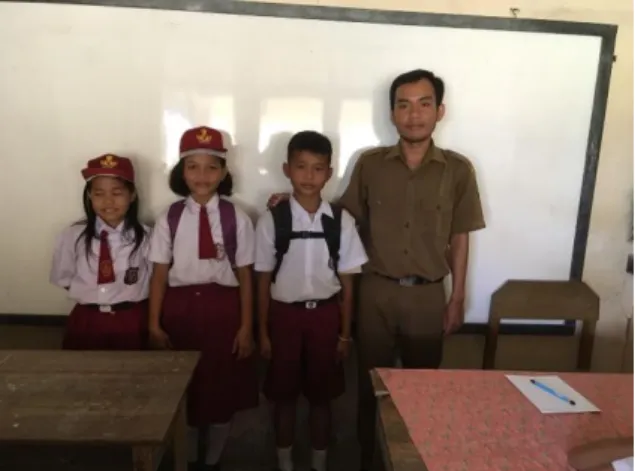
Fig. 1 The Participant and Their Teacher Primary data obtained from semi-structured and collected interviews to achieve saturation of data found. The initial question was carried out based on two questions, namely the process of acquiring a second language and knowledge transfer for the second language obtained.
Data consists of the results of participant's Indonesian language skills. The results of interviews were transcribed in written form that made the analysis process became easier. The analysis process begins by selecting important sentences ( sorting ), giving codes to important words ( coding ) and comparing words.
2 .2 Data Collection Process
The process of collecting data in this study was carried out by in-depth observation and interviews. This data collection activity is carried out in two methods, namely observation and interview.
In the observation and interview activities, this study involved three types of participants, namely as follows:
a. A group of children who study at SDN 15 Tampe Atas. They are as a comparison group and divided into 3 groups, namely:
1) Children aged 11-14 years
2) Children aged 8-10 years
3) Children aged 3-7 years
b. The three participants have been chosen based on the criteria of the native speaker of the Dayaknese Bakati' Rara tribe in Tampe Atas. Their ages are 11-14 years who are in the 5th grader of elementary school as the main participant of the study.
c. The core family of the three participating children in point b) as supporting research participants.
Context
The context in this study is the way of second language acquisition toward the knowledge transfer in the social learning process on 5th grader of elementary school in SDN 15 Tampe Atas.
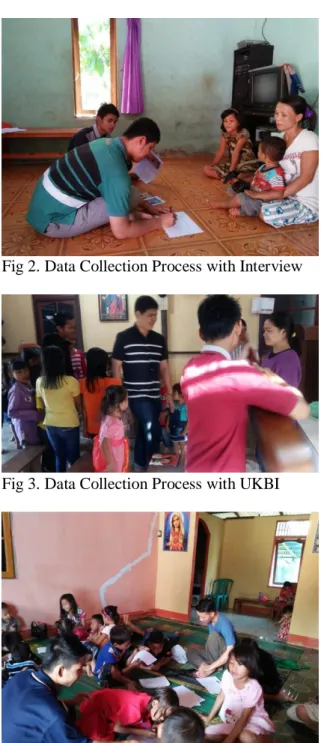
Fig 2. Data Collection Process with Interview
Fig 3. Data Collection Process with UKBI
Fig 4. Data Collection Process with UKBI 3. RESEARCH RESULT
At first, the village of Tampe Atas was a village that was difficult to reach by outside communities due to inadequate roads. The village of Tampe Atas is inhabited by the Dayaknese Bakati’ Rara tribe. Around the 1960s, the Banyadu Dayaknese tribe began to enter this village for improving their living
standards. After all these years, some people have intermarried between the Dayaknese Bakati’ Rara and Dayaknese Banyadu which occupy the outermost locations of the village of Tampe. However, there are still Dayaknese Bakati' Rara tribes that are still classified as indigenous tribes of Tampe Atas. SDN 15 Tampe Atas is located at the back of the native Bakati' Rara’s residence which has students from various areas around Tampe village and consists of 2 tribes namely Dayaknese Bakati' Rara and Dayaknese Banyadu tribes.
Bakati 'Rara Language which is the first language is rarely used by their children today because the language which is used in everyday life is the second language, Indonesian, both in formal learning and everyday life. On the occasion of interviews from parents, it can be seen that in their daily lives they have used Indonesian to their children because they considered that Indonesian is a united language and mastering Indonesian will help their children in learning in school as a means of knowledge transfer . From the results of observations and in-depth interviews, there are several factors that influence the acquisition of Indonesian as a second language, as follows:
a. The process of acquiring the second language of children in Tampe village started when they were young so they could already use it before entering the elementary level.
Indonesian as a second language in SDN 15 Tampe children has been obtained since childhood and was taught directly by his parents in order to prepare their children for learning process at school, so it will make knowledge transfer easier in the teaching and learning process. It is also proved that the various languages with different dialects and educational levels are owned by parents greatly influences the development and acquisition of second languages.The various languages that affect the acquisition of this language can be distinguished as follows:
1) The variety of languages based on
oral or written
Tampe Village, located in Bengkayang, is an underdeveloped
area and it relate to the quality of language. From the results of the visit and observation to SDN 15 Tampe, it can be found a lack of literacy culture among students. This is because the library condition is very minimal. It is a new library. There are not many book can be found there. The books only consist of text books. There is no story books are provided which can be used to attract the children’s interest in reading. This give a big influence in the language they used in writing form and oral language.
2) The variety of languages based on the
speaker
The lack of education awareness and the low level of the economy of the community causes the acquisition of second language to students is also very minimal so that what is obtained by students is a language with a language structure that is not standard or may also be in accordance with their dialect.
b. The determinants of a second language acquisition are as follows:
1) Family factor
The family has an important role in the process and the quality of the second language acquisition as follows:
a) Education level of parents
The higher the level of education of the parents, the easier and the better quality of the language taught to their children because they read more books, make writing in assignments, etc. By reading books, writing and so on, the more acquired linguistics both in terms of grammar and vocabulary are used so that they can teach their children better. b) The level of awareness of
parents about the importance of education
Some parents in Tampe are less aware of the importance of
education for their children so that it influences the transfer of language to their children. They assume that their children can adequately communicate with the language they have. It causes mastering language skills and the process of acquiring a second language is very minimal and greatly affects their economic situation. Likewise, this is the reason for some students of SDN 15 Tampe who refuse to continue school because they think it is better to make money and or assume that no school can still support themselves from nature such as dompeng(looking for illegal gold) and so on. c) The level of the family economy
Related to point b), the awareness of parents about education that is very minimal influences parents' perspective in choosing a job. Some students decide not to go to school anymore because parents who think the school is not important and / or the time used by the school can be used to make money, and or that the child does not want to go to school, etc. This causes a decline in families who are self-employed or owning land because of several reasons, namely the first, if the land is sold, it will get enough money so that it can be used to fulfill basic needs or buy vehicles. If you want to work in the garden, you can help by working in the garden or other jobs as laborers. Second, there is the inability of entrepreneurship because the level of education that is owned is low so it often fails in business.
2) School factor
The quality of schools greatly influences the teaching and learning process in schools as well as the
process of knowledge transfers in lessons that are not maximal. But recently, SDN 15Tampe experienced a considerable increase in the learning process such as an increasing in the discipline of teaching time so that the children's learning process was in accordance with the school curriculum. However, it should be noted that there are also minimal infrastructure in this school, so that the researchers hope that through reading books given by the researcher as a sign of gratitude can help the learning process of children such as providing motivation to learn and read, improve knowledge of good Indonesian, English and Mathematics.
3) Environmental factor
The environment has a very large influence in the process of acquiring language. In their daily lives, children play and communicate in the Banyadu language, Bakati language and Indonesian language in the same time. They used to mixed the three languages so that the first and second languages used are not standardized either from their vocabulary and grammar.
c. The second language acquisition process affects knowledge transfer .
Indonesian language which is a unitary language must be used in entire of Indonesia, so that Indonesian language skills in the teaching and learning process have an important role in the world of education. Based on the results of research from UKBI measurements of SDN 15 Tampe students and STIM Shanti Bhuana students, it can be concluded that the process of acquiring a second language (Indonesian) greatly influences knowledge transfer in the learning process because basically the teaching material and language used are Indonesian. If a student’s ability in Indonesian is minimal, the process of hearing, responding to rules, reading, writing and speaking will affect knowledge transfer. This can be proven from the results of
after Indonesian learning process , which are as follows:
a. The results of the UKBI test before the course for STIM Shanti Bhuana students were 98% of students not passing the test b. The results of the UKBI test after the course of 98% of students who did not pass the initial test were 24 students from 78 students so that the non-graduated procedure was 30.8%
From the above results, it can be concluded that their course of study Indonesian subject both spoken and written language diversity provided can improve the quality of the language.
REFERENCE