Doctor of Nursing Practice Final Manuscripts Theses and Dissertations Spring 5-23-2020
Reducing the Rate of Falls in Hospice Patients: A Fall Prevention
Reducing the Rate of Falls in Hospice Patients: A Fall Prevention
Pilot Program
Pilot Program
Allison FloydUniversity of San Diego, [email protected]
Follow this and additional works at: https://digital.sandiego.edu/dnp
Part of the Adult and Continuing Education Commons, Nursing Commons, and the Other Medicine and Health Sciences Commons
Digital USD Citation Digital USD Citation
Floyd, Allison, "Reducing the Rate of Falls in Hospice Patients: A Fall Prevention Pilot Program" (2020). Doctor of Nursing Practice Final Manuscripts. 109.
https://digital.sandiego.edu/dnp/109
This Doctor of Nursing Practice Final Manuscript is brought to you for free and open access by the Theses and Dissertations at Digital USD. It has been accepted for inclusion in Doctor of Nursing Practice Final Manuscripts by an authorized administrator of Digital USD. For more information, please contact [email protected].
Hahn School of Nursing and Health Science DOCTOR OF NURSING PRACTICE
Reducing the Rate of Falls in Hospice Patients: A Fall Prevention Pilot Program
by
Allison Margaret Floyd, MSN, RN, PHN
A Doctor of Nursing Practice Portfolio presented to the
FACULTY OF THE HAHN SCHOOL OF NURSING AND HEALTH SCIENCE UNIVERSITY OF SAN DIEGO
In partial fulfillment of the requirements for the degree DOCTOR OF NURSING PRACTICE
May 01, 2020
Sharon Boothe-Kepple, PhD, MSN, FNP-C, PHN (Chickasaw), Faculty Advisor Jacqueline Copeland, DNP, MSN, APRN, FNP-C, Clinical Mentor
Project Abstract
Abstract Title: Reducing the Rate of Falls in Hospice Patients: A Fall Prevention Pilot Program
Background and Evidence Problem: As the population ages, there is an increase in the incidents of falls. Falls are the predominant cause of both nonfatal and fatal injuries among adults aged 65 years and older (Bergen et al., 2016). Extensive research has been conducted in fall prevention in hospitals, skilled nursing, and rehabilitation units. End-of-life care in a hospice setting presents a greater challenge in risk identification and prevention of falls. A local hospice had 457 falls between July 2018 to mid-March 2019 with a lack of consistent, detailed, fall education and documentation.
Evidence-Based Practice Intervention: Utilizing the American Geriatrics Society/British Geriatrics Society Fall Prevention Guidelines (American Geriatrics Society, 2011) and the Center of Disease Control and Prevention’s Stopping Elderly Accidents, Deaths, & Injuries (STEADI) Initiative [Stevens & Phelan, 2013], the project leader created and implemented an evidence-based, multifactorial, multidisciplinary fall prevention program within the hospice setting. The anticipated measurable impact is to reduce fall rates and increase nursing fall prevention documentation in hospice care. During the course of this project, hospice teams adopted a higher standard of fall assessment, documentation, and intervention tactics. The effectiveness and cost benefit analysis may serve as a model for other hospice facilities and may be considered for registered nurse (RN) and licensed vocational nurse (LVN) curricula,
continuing education, and hospice certification.
PICO: Among hospice patients greater than 60 years of age living in the home/hospice setting, does implementing a multidisciplinary and multifactorial fall prevention program, compared to
current fall risk interventions, result in reduced rate of falls by 30% and increased nurse knowledge and documentation intervention compliance by 90% in 3 months?
Project Process: Three 1-hour, in-person educational presentations were completed for the pilot teams. Additional one-on-one sessions and a recorded presentation documented compliance. A validated pre- and post-test served as a final confirmation of the pilot teams’ fall prevention knowledge, techniques, and required documentation. The final stage of the project was comprised of a 90-day follow-up fall-rate report and audit of nursing fall-documentation compliance.
Outcomes Achieved: The fall rate during the study period was reduced by 31.8%. The pre- and post-test results did not appear to be statistically significant. Initial analysis of documentation improvement was minimal during this first phase of the pilot program.
Conclusions and Implications for Nursing Practice: Research indicates 30 million older adults (65 years of age and older) fall each year resulting in approximately 30,000 deaths (Bergen et al., 2016; Centers for Disease Control and Prevention, 2019). Hospice patients are particularly vulnerable due to comorbid conditions. Falls of elderly patients result in substantial medical costs, premature death, and preventable pain and suffering. Many of these falls can be averted. Fall prevention is essential and can best be accomplished utilizing a multifactorial and
multidisciplinary approach to assess fall risk and to implement evidence-based preventive strategies (Eckstrom et al., 2016; McKenzie et al., 2017).
Reducing the Rate of Falls in Hospice Patients: A Fall Prevention Pilot Program
Falls in the Elderly Population
As the population ages, there is an increase in the incidents of falls. According to Bergen et al. (2016), falls are the predominant cause of both nonfatal and fatal injuries among adults aged 65 years and older. These injuries result in increased medical costs, advancement of death, and avoidable suffering, and may be ameliorated by education, training, and documentation. The phenomenon of elderly falls in medical facilities is well documented and analyzed; however, falls occurring in end-of-life hospice settings are not well-studied. Research is further
confounded by the lack of consensus as to what constitutes a fall. According to the World Health Organization (WHO), a fall is “defined as an event which results in a person coming to rest inadvertently on the ground or floor or other lower level” (WHO, 2018, p. 1). Falls can occur from a sitting, standing, or supine position, whether assisted or unassisted.
Background & Evidence of the Problem
The Centers for Disease Control and Prevention (CDC, 2019) reported 27,000 older adults in the United States died in 2014 due to falls. The incidence of falls increased with age. While women were 4% more likely to fall than men, individuals between 75 and 84 years of age were 3% higher than among persons aged 65 to 74 years, regardless of gender (Bergen et al., 2016). The fall rates for individuals aged 85 years or older increased an additional 6%. In 2014, there were 29 million falls of community-dwelling (independent living) older adults with an estimated 33,000 fall-related deaths in 2015 (Bergen et al., 2016; CDC, 2019). Fall deaths in 2015 increased by 6,000 as compared to the previous year.
In 2017, California experienced 2,259 fall-related deaths of adults over 60 years of age (California Department of Public Health (CDPH), Safe and Active Communities Branch, 2019a).
San Diego County documented 317 fall-related deaths. Of the 53 counties in California, San Diego rated fourth highest at a rate of 48.1 per 100,000 population (CDPH, Safe and Active Communities Branch, 2019a). In 2014, San Diego County had the highest fall rate resulting in hospitalization in California (CDPH, Safe and Active Communities Branch, 2019b).
Besides human suffering, falls have an economic consequence. Hoffman et al. (2017) estimated total annual Medicare expenditures relating to falls ranged between $9 million and $18 billion. However, they admitted other study methodology could produce annual expenditures as high as $28 billion, or more than half of the cost of Medicare expenditures for treating diabetes. Similarly, Florence et al. (2018) estimated 2011 fall-related expenditures for Medicare totaled $28.9 billion.
In 2013, the CDC estimated that falls among older adults cost the U.S. health care system $34 billion in direct medical costs (as cited in John Hopkins, 2015). Other estimates from the CDC reported annual costs exceeding $50 billion per year for non-fatal falls (as cited in Florence et al., 2018).
Extensive research has been conducted in fall prevention in hospitals, skilled nursing facilities, and rehabilitation units. Although these entities are staffed with trained professionals and adhere to strict safety protocols, they still experience an unacceptable number of patient falls. End-of-life care in a hospice setting presents a greater challenge in risk identification and prevention of falls. Inaccurate data handicaps effective prevention programs during this
important phase of an individual’s life. Documentation by hospice nurses is thwarted by
unreliable family and patient self-reporting. The lack of a standardized and universally-accepted definitions of fall, injury and other concepts make it difficult for accurate documentation,
and patients often lack the education, awareness, and training necessary to avert falls. Medical providers, nurses, and pharmacists typically have a narrow scope of involvement in fall assessment when addressing the issue individually (Eckstrom et al., 2016).
One hospice in San Diego county (SDH) experienced 457 patient falls between July 2018 to March 2019, with an average fall rate of 3.43 per 1,000 patient care days. Of these falls, 199 resulted in injuries (44%). Because of the nature of hospice, possible deaths from falls were not tabulated. From September 2018 through February 2019, there was an average fall rate of 6.35 (Team A) and 3.56 (Team B) per 1000 patient care days, averaging 4.955 fall rate per 1,000 patient care days for the two teams. A preliminary audit of electronic health record (EHR) standards was a part of the study construction. In addition, while utilizing the company’s standards of practice (SOP), the fall report compliance documentation included compliance of approximately 80% for the admission nurses and approximately 40% for case
managers/registered nurses (RNs). Since this hospice did not employ a structured fall prevention program, they specifically requested an analysis and creation of an effective educational program supported by robust documentation protocols. Input from the Quality Control Department
suggested improvement was needed in the areas of nurse education, caregiver training, and verification. The department also planned to revise the SOP regarding fall reporting and
suggested the nurses use the original SOP with detailed changes as a teaching guideline. Further, the hospice team could benefit from identifying and implementing various tools to make the fall prevention program more effective. The axiom “if you cannot measure it, you cannot improve it” was relevant for this clinical project.
Evidence-Based Intervention & Benchmark Evidence-Based Literature Review
The following search engines were utilized in the identification and review of relevant literature: CINAHL, PubMed, Cochrane, Ovid, and Google Scholar. Preliminary search was accomplished by utilizing the following key words: hospice, palliative care, falls, fall risks, fall risk factors in the elderly, etiology of falls, fall prevention, fall risk assessment, fall prevention programs, strategies for preventing falls, terminally-ill, end-of-life, elderly falls,
interdisciplinary teams, and validated fall knowledge tests. The initial search produced 34 articles with the majority having been conducted more than 5 years ago. There was a dearth of recent material relating to hospice care as opposed to hospital settings. A total of 17 articles were chosen to support fall interventions and only six articles addressed hospice care. Each article was rated using John Hopkin’s Model of Five Levels of Evidence (Dang & Dearholt, 2017).
In one summary of guidelines drawn from literature review, the Panel on Prevention of Falls in Older Adults and the American Geriatrics Society/British Geriatrics Society (AGS/BGS) [American Geriatrics Society, 2011] recommended a multifactorial intervention for older adults who were at risk for falls including a detailed preliminary screening regime. A hospice nurse’s role was particularly efficacious in assessing environmental hazards, patient balance, strength and gait training, medications, postural hypotension, and other medical conditions before intervention. To achieve effective outcomes, a direct intervention into the identified risk is initiated after a comprehensive risk factor assessment. An emerging body of evidence supported the efficacy of exercise and resistance training as a benefit to balance and gait. Coordination training was an important part of a multicomponent intervention to prevent falls in older adults (American Geriatrics Society, 2011). In another literature review, Kowalski (2016) found that, in
addition to exercise, physical therapy played in an important role in strength and mobility and suggested a resultant reduction in patient falls. Realistically, not all hospice patients would benefit from these modalities and would have to be assessed on a case-by-case basis.
Tricco et al. (2017) conducted a systematic review and meta-analysis of 283 randomized control trials (RCT), compared fall prevention interventions, and supported a multi-factorial approach for fall prevention. The authors further suggested that efforts be placed on
implementing patient-level strategies such as education, patient reminders, and clinician quality improvement interventions. The morbidity and complexity of falls in older adults had been established and was essential in determining effective interventions to modify risk fall factors (e.g., balance, gait, medication side-effects; Guirguis-Blake et al., 2018).
The CDC developed Stopping Elderly Accidents, Deaths, & Injuries (STEADI) Initiative; the first large-scale educational program created specifically to assist health care providers in protecting older patients from falls (Sarmiento & Lee, 2017). Stevens and Phelan (2013) confirmed that there were gaps in fall prevention knowledge among primary health care providers and that STEADI Initiative was designed to help practitioners incorporate fall prevention techniques into their clinical practice. As a large-scale initiative, The STEADI Initiative focused on the macro problem of falls of adults over the age of 65 years. Although useful, it did not specially address problems associated with end-of-life patients as a sub-group. Likewise, Casey et al. (2017) was informative as a pilot program utilizing STEADI; however, it excluded all hospice and non-ambulatory patients for the purpose of enhancing the feasibility of their project.
Utilizing the AGS/BGS fall prevention guidelines, Eckstrom et al. (2016) combined elements of The STEADI Initiative to introduce and assess fall prevention strategies. Participants
were comprised of practitioners in medicine, nursing, pharmacy, and social work from multiple medical settings, including home health services. This was the first study “to explicitly train and coach clinical teams inter-professionally” (p. 1705) utilizing AGS/BGS falls prevention
strategies. The same research subjects and data were further evaluated from a different approach. McKenzie et al. (2017) confirmed that interprofessional teams benefited from training that included collaboration with community-based practices. Interprofessional falls prevention education included medical providers who diagnosed medical disorders that increased the risk of falls, pharmacists who identified pharmacological adverse effects, and nurses who could assess all fall risks (McKenzie et al., 2017).
A non-experimental, qualitative study of 62 diverse hospice team members was the first study to address patient safety incidents from an interdisciplinary hospice team’s point of view (Smucker et al., 2014). Although not a comprehensive review of patient safety, it focused on inadequate pain management as a causative factor in falls. The most significant contributing factor besides pain was end-of-life patients being left unattended (Smucker et al., 2014). A high incidence of falls occurred during patients’ attempts to independently ambulate, thus
complicating interventions to prevent falls. Schonwetter et al. (2010) suggested that hospice patients were a distinct sub-population of patients who might require a new approach to fall prevention. Ishøy and Steptoe (2011) stated,
There is a need for a systematic analysis of fall episodes in an end-of-life care setting including their circumstances and consequences, as well as a debate in a broader palliative care forum concerning the implementation of a targeted attempt to deal with fall prevention. (p. 75)
Kowalski (2017) performed a literature review of seven studies noting the absence of focus on the hospice population. This analysis concluded that the accuracy of determining fall risks required “assessments beyond the fall risk assessment scales” (p. 169). Actual steps of prevention must be implemented after identifying fall risks. To achieve this, Allan-Gibbs (2010) “called for education of nurses, patients, and family members, to prevent falls and injuries among oncology patients” (as cited in Kowalski, 2017, p. 167). The predictors of falls in the oncology patient group were similar to the risk assessments of other hospice patients (Kowalski, 2017). Despite the lack of hospice studies, there was sufficient evidence to conclude that a multidisciplinary and multifactorial approach to fall risk assessment/education was favored and more effective in reducing falls and fall-related injuries.
Fall Risk Assessment Tool
Various methods can be employed to determine the potentiality of patient falls. SDH utilized the validated, Missouri Alliance for Home Care-10 (MAHC-10) fall risk assessment tool. The MAHC-10 meets Outcome and Assessment Information Set (OASIS-C) guide manual and criteria, including multifactorial consideration, standardized review, and validation (Calys et al., 2012). The efficacy of fall assessment tools used in a hospice setting suggested that MAHC-10, among others, was a valid negative-predictive indicator (Patrick et al., 2016).
Description of Evidence-based Project, Facilitators, and Barriers
SDH is entirely an outpatient hospice service provider. The project leader assessed the current process of SDH fall safety protocols and baseline fall rate statistics. The fall prevention team consisted of the Doctor of Nursing Practice student (project leader), SDH’s director of education, the information and technology (IT) manager, four RNs from the education department, and one manager from the one of the pilot teams. SDH utilized the MAHC-10 to
determine the patient’s risk of falling score prior to the commencement of this pilot project. Those assessed at-risk of falling and with a score of 4 or higher were more likely to be classified as fallers, with a sensitivity of 96.9% and specificity of 13.3% (Calys et al., 2012). While this was an essential tool to use, the company was not adequately using the score as a teaching indicator. Assisted by the fall prevention team, the project leader created and implemented a multidisciplinary, 1-hour pilot fall prevention program to reduce falls in the hospice care setting. The project leader utilized information found through a literature review of evidence-based fall prevention strategies and the CDC’s STEADI Initiative as a resource guide. As a tool for the nurses, the fall prevention team rewrote the SOP and titled it a teaching guide. The project leader also developed a new care plan template with 58 evidenced-based nursing interventions and seven nursing goals to be used as a new fall-risk care plan. See Figure 1 for the care plan template.
Only two out of six teams were chosen for this pilot and selected based upon the highest incidence of reported falls within a 6-month period. In attempt to assuage the concerns of any judgmental conclusions drawn from these statistics, team members were advised the high incidence of falls might be due to peculiar populations, including demographics. The teams provided care to two different regions in southern California. Team A covered regions of Lake Elsinore, Wildomar, Murrieta, Temecula, Sun City, Menifee, Canyon Lake, Fallbrook, and Escondido. Team B covered Mira Mesa, Scripps Ranch, Rancho Bernardo, Poway, Ramona, and Julian. Baseline and acquired knowledge were measured utilizing the Fall Prevention Knowledge Test (FPKT), a validated, 11-item, written, pre-education/post-education test (Table 2; Dykes et al., 2019). The FPKT was administered to the RNs and LVNs. Administration of the test was accomplished utilizing a virtual scan bar and the attendee’s individual cellphones. The test was
graded by a proprietary, electronic program and rechecked manually. During the following 3 months, the project leader identified patients solely by an assigned number for privacy and HIPAA compliance. Thereafter, the project leader reviewed the fall risk charting of previous fall incidents and recorded the number and specific interventions used prior to and after the fall event.
Indispensable facilitators and unavoidable barriers were evidenced during this project. The pilot was positively impacted by the contributions and guidance of the director of education, the falls prevention team, the quality improvement department (QI) and IT manager. The patients and their caretakers were the ultimate contributors. As the project evolved, input from nurse practitioners (NPs), RNs, physicians, LVNs, certified aides, social workers, and chaplains were considered. There were no participating pharmacists.
Inherent in self-reporting, barriers were anticipated. Family members might not be willing to disclose mishaps for which they may feel responsible. The impending death of a loved one produces natural, emotional conflict, grief, and anxiety. The patient’s fear of death, pain, confusion, and rapidly declining health during the dying process not only negatively affects the patient’s ability to comply, but also adversely affects the caregiver’s attention and retention of safety protocols. Therefore, it was incumbent for hospice nurses to be well trained and possess the ability to effectively convey safety information to the attendants. The lack of stringent safeguards and supervision, which would otherwise be present in a medical facility, were typically outside the control of hospice managers. Although not a barrier in this instance, an organization’s EHR might not be compatible in changing pre-set documentation. Other barriers included individual bias about death and dying, lack of knowledge, and lack of time to educate caregivers and patients. Nurses and team members might be reluctant to embrace accurate
reporting due to concerns of being graded or negatively compared to others. Just as they must encourage caregivers to accurately report falls, there needed to be a culture of trust in which the reporting falls was encouraged. Various additional barriers needed to be addressed. Psychosocial considerations must be weighed whenever a perceived outsider was introducing potential
changes in roles and responsibilities. Strong leadership appeared to be a necessary element of compliance.
Established Benchmarks
California and national fall statistics for the years 2016 through 2018 served as an approximate target to establish benchmarks. However, fall data and documentation from SDH during prior years provided a more realistic benchmark for the project. According to Strategic Healthcare Programs [SHP], fall rates varied from 2.7 to 2.75 per 1,000 patient days in
California and 2.97 to 3.2 on a national basis (T. Nikitina, personal communication, September 24, 2019). SDH’s fall rates prior to project implementation for the two pilot teams were 6.35 and 3.56 per 1,000 patient care days.
Evidence-Based Practice Question
Does implementing a multidisciplinary and multi-factorial fall prevention program compared to current fall risk interventions, result in reduced rate of falls by 30% and increased nurse knowledge and documentation intervention compliance by 90% at the end of 3 months among hospice patients greater than 60 years of age living in the home/hospice setting?
Project Plan Process Evidence-based Practice (EBP) Project Model
The Iowa Model guided the design of this evidence-based practice (EBP) project in that it required organizing multiple areas of planning, research, testing, and validation necessary for
completion. Although a simple model, it was not simplistic. It was robust in its cross-references and easily modified. By identifying the organization’s clinical problem and establishing its priority, the leader developed a multidisciplinary team to help compile relevant research
literature, critique and evaluate pertinent studies, and pilot a change process (Titler et al., 2001). SDH’s existing fall rate might have been reflective of knowledge and documentation issues. If the results reflected a positive outcome, the facility and its members would be encouraged to adopt these protocols into their ongoing program.
Augmenting the Iowa Model, Kirkpatrick’s four levels of training evaluation assisted in measuring behavioral changes and determining measurable outcomes (Kirkpatrick &
Kirkpatrick, 2016). Although this was not an evidence-based model, many of the protocols were either adopted or utilized to produce a qualitative result.
In the 1950s, Kirkpatrick developed a multi-level training evaluation. In 2016, two of his relatives expanded the model (Kirkpatrick & Kirkpatrick, 2016). These four levels were designed to measure effectiveness of various educational settings. Level I measured the participant’s satisfaction and professional relevance. Level II measured the methods and trainer’s
effectiveness. Level III assessed staff compliance and behavioral changes; this proved to be the most essential aspect of the project and all efforts underscored the importance of the medical staff to prioritize fall prevention. Lastly, Level IV determined the causal relationship between the training and the results. Although training was limited, it was specifically designed to have an immediate effect. This project prioritized Levels III and IV as they were the most appropriate for this pilot.
Project Development and Implementation Timelines
Success of this EBP project was dependent upon adherence to a succinct and detailed timeline. Table 1 provides more information regarding project management.
Project Approval
This project was implemented solely through the University of San Diego (USD) and SDH. USD’s Institutional Review Board (IRB) required an abstract submission prior to
commencement of the project and was approved in May 2019. After sustained communication and collaboration with the director of education at SDH, the project commenced.
Stakeholder Identification
This EBP was highly dependent upon the guidance and direction of process stakeholders. They include RNs/LVNs, SDH’s director of education, and the fall prevention team. Lines of communication were robust and included multiple meetings and regular emails. Although scheduling conflicts made in-person meetings challenging, it was determined that face-to-face support was important.
This fall prevention project included a vast number of outcome stakeholders.
Theoretically, every patient and family member had an ultimate interest in the success of this project. Concurrently, the RNs/LVNs had a real and intimate interest in the safety, health, and comfort of their patients. NPs and physicians, as health care providers, had a professional interest in the successful results of this project. The administrative outcome stakeholders at SDH
included the director of education (clinical mentor) and the chief medical officer. The QI team and the fall prevention team took ownership of the results of this endeavor. Finally, the USD faculty advisor was involved in the process and outcome of this collaborative effort. A final
presentation was given at the conclusion of the project with results and recommendations for preventing falls and the role of accurate documentation.
Anticipated Project Outcomes
Although SDH recorded patient falls, they did not have a formal fall risk program or a consistent method of documentation. This project was designed to achieve short-term (ST) and long-term (LT) outcomes. Falls and patient census were captured monthly. ST goals for this pilot project included reducing fall rates by at least 30% during the first 3 months through education, fall assessment, and prevention techniques. One month after initial education, the project leader communicated with the pilot group to share insights.
LT goals were designed and limited to be achieved within 3 months. RN/LVN
knowledge, competence, and documentation was anticipated to reach 90% when compared with 1-month pre-project measurement. LT fall rates were estimated to be reduced by 30%.
Process Indicator Data Monitoring
The 1-hour training class provided evidence-based techniques to identify risks, prevent falls, and train patients and caregivers. According to Dykes et al. (2018), nurses’ knowledge of fall prevention is limited. The follow-up test and review of documentation served as the
concurrent process indicator and relied solely upon nurses’ EHR documentation of fall prevention training (FPT). Monitoring the EHR measured nurse compliance and assessed the effectiveness of patient/caregiver adherence.
Outcome Indicator Monitoring
Nurses were assured that the FPKT assessment was neither judgmental nor would the results be shared with other participants, but purposely done to avoid stigmatization. The team members were advised that the program’s purpose was to reduce falls in the hospice setting by
training patients and caregivers in the solutions, techniques, and hazards surrounding falls at home during the end stage of life. The ultimate outcome was to reduce fall rates measured by the standard of 1,000 patient care days and audited monthly by the QI team. A measurable reduction of falls at SDH was the long-term goal to be achieved by educating patient and caregivers in FPT. Accurate reporting was essential for problem identification, caregiver compliance, and potential interventions involving future care. SDH identified and expressed a need for improved nursing documentation, utilizing their existing EHR.
Pilot Results and Evaluation Data Analysis
Data were measured at three levels. Nurse fall prevention knowledge was graded by a study-validated pre/post program test to ensure knowledge of relevant and current hazards, techniques, and solutions; scored as a percentage of correct answers. An unannounced, pre class test measured the extent of basic knowledge of fall identification and prevention. The post class test measured current knowledge relevant to the program.
Fall rates were monitored monthly and measured utilizing a rate per 1,000 patient care days, providing the most accurate data throughout the enterprise. Due to the varying patient conditions and environments, merely counting patient falls would produce anomalies upon which conclusions could not be accurately determined.
SDH requested assistance in improving overall documentation for their nurses.
Mandatory reporting compelled the medical staff to confirm that they had utilized fall prevention techniques with every patient visit and caregiver interaction. The Joint Commission (2015) stated that “systematic reporting and analysis of fall incidents are important components of a falls prevention program” (p. 1). Based upon issues identified in the initial assessment, customized
interventions for each patient needed to be established utilizing a multi-disciplinary comprehensive geriatric assessment (American Geriatric Society, 2018).
Pre and Post Test Results
To promote staff compliance and to alleviate concerns of negative comparison, both pretests and posttests were administered and graded anonymously. Identification was limited to team assignment and type of staff (i.e., RN, LVN). Nineteen staff members completed the pretest (15 RNs, 4 LVNs) while 18 staff members completed the posttest (14 RNs, 4 LVNs). An
independent samples t-test examined responses to the validated test of 11 questions of varying complexity and word structure. The scores on the pretest survey (M = 5.7894, SD = 1.084) were compared with the posttest survey (M = 6.33, SD = 1.328). There were no significant statistical differences between the results of the pretest and posttest scores (t = 1.368, p > .05). No
supportable conclusions could be drawn regarding the efficacy of the tests or educational program and would require further study. In addition, the review of the team’s educational level did not reflect a significant difference (t = 0.109, p > .05). Although this was a limited pilot study, it was meaningful to conduct a perfunctory analysis of the test and in no way meant to diminish its validity. Furthermore, no educational materials upon which this test was designed were utilized in the pilot educational sessions.
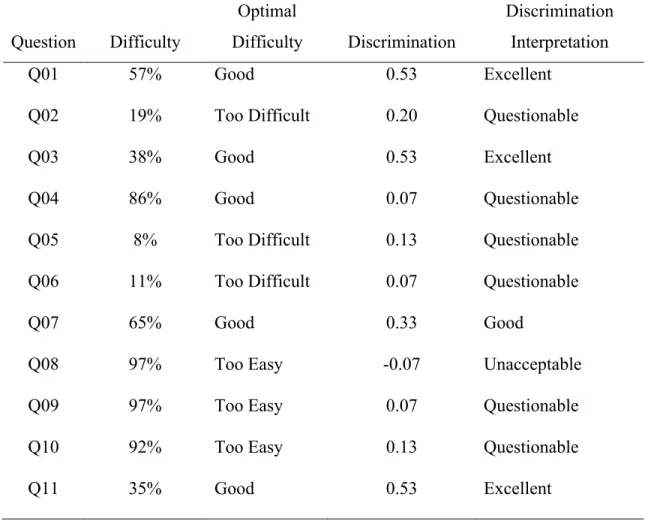
An item analysis of the FKPT (see Table 3) reflected that only four questions possessed value in retaining (i.e., Questions 1, 3, 7, 11), while seven questions may benefit from refined wording or review.
Reduction of Falls
The project leader reviewed 3 months of falls data from August through October, 2019. Patients in the home setting and in residential care facilities for the elderly (RCFE) were
included in the pilot. An important distinction of home-hospice versus RCFE highlights that family member caregivers are typically not semi-professional caretakers and that facilities may be better equipped and safeguarded for disabled individuals. Therefore, RCFEs may be better suited to identify risks. Nevertheless, data were included for both settings because of the
environmental and population similarities. Skilled nursing facilities were excluded from this pilot as the focus was on the home and home-like hospice settings.
There was a total of 51 falls during the study (Team A = 30 falls, Team B = 21 falls). Of the 51 incidents, 29 were repeat falls (12 patients) and 22 were single falls. In other words, 34 patients experienced documented 51 falls (18 females, 16 males). This study did not analyze repeat falls as compared to initial falls as both created susceptibility to injury. Due to the limited sample size of this pilot project, analysis of repeat falls would confound the results and otherwise complicate useful conclusions.
Team A’s fall rate at the end of the pilot program was 4.7 per 1,000 patient care days. Team B’s fall rate was 2.2 per 1,000 patient care days. The average fall rate per 1,000 patient care days for the two teams was 3.45 and reflected a marked improvement. Meeting the arbitrary and ambitious goal of 30%, the actual fall rate represented a 31.8% reduction. A two-sample t-test of proportion was utilized and found a significant reduction in falls after intervention (z = 3.25, p < .001). Analysis did not detect any differential based upon age or gender (t = 1.314, p > .05; Figure 2).
Fall Care Plan Template Implementation
The results of this EBP project rendered mixed results. Neither age nor gender demonstrated any remarkable difference. Team documentation reflected a decrease in goal adherence under some circumstances, yet a remarkable increase in others. For example, an
absence of goals in pre-fall documentation was noticeably high in 19 fall subjects and improved documentation in 9 post falls. It was surmised that goals became more pertinent subsequent to falls. Statistical analysis was thwarted from the limited number of participants and timeframe; these numbers were easily skewed by the potentiality of outliers. Interventional analysis proved to be complicated due to the fact that pre-study institutional standards were not sufficiently emphasized to enable a meaningful comparison. Generally, interventions were employed more post falls.
While the template cannot provide every aspect of important documentation, it allowed augmentation to describe with more specificity interventional techniques. In that regard, there was an observational improvement in documentation that did not lend itself to measurement in this study.
Conclusions Cost-Benefit Analysis
The cost benefit analysis was challenging to calculate in this project. The costs incurred by SDH was primarily overhead, staff salary, wages, and benefit compensation. No additional staff was necessary for this project. During the testing, education, and follow-up meetings, the pilot team members were diverted from their regularly assigned duties and responsibilities creating an indirect cost to SDH. However, the immediate financial and personal benefit of fall prevention and associated medical costs would be realized by the patients and their families.
The hospice’s financial benefit was not immediately obvious. Typically, patient falls in medically-supervised facilities present a potential financial liability that could be quantified. However, these liabilities are not ordinarily present when hospice care is in the patient’s or family’s home without professional employee supervision. Insurance companies and Medicare
appreciate the financial savings associated with fall avoidance. Certainly, patients and families wish to preserve their assets from preventable medical expenditures.
The actual monetary cost-benefit to SDH is unknown. Spetz et al. (2015) recognize that fall prevention programs in different scenarios will cost more than potential cost savings. The benefit analysis had to center around the patient, not only in medical cost savings, but also their psychological wellbeing and reduction of suffering. Falls in older patients often hasten their death, but not before causing preventable pain. It is the goal and function of every hospice to provide compassionate, meaningful care and to assure the best quality of life during the end-of-life. Therefore, it is essential that hospice care organizations adopt an effective fall prevention program and create an industry best standard. In part, hospices compete on the basis of safety and patient satisfaction. See Table 4 and Table 5 for further estimated cost/benefit analysis.
Anticipated Project Impact
Utilizing Kirkpatrick’s (2016) four levels of training evaluation, the anticipated project’s measurable impact was to assess a change in behavior (Level III) and a change in targeted outcomes (Level IV); the project was designed to increase nursing compliance of fall prevention documentation, prevention techniques, and to reduce patient fall rates during hospice care. Goal achievement was dependent upon the hospice team adoption of strategies and communication with the patients and caregivers who must utilize the fall prevention tools and protocols. During the course of this project, hospice teams were encouraged to adopt a higher standard of fall assessment, documentation, and intervention tactics.
Observations and Recommendations
Researchers should be cautious when drawing any conclusions from a limited
complicated and confounded as a result of the lack of consensus of what constitutes a reportable fall; therefore, falls may be underreported.
The project underscored the importance of continued education. As such, the education, testing, and reporting compliance enforcement should be repeated on a quarterly basis. In doing so, legacy employees receive reinforcement while the facility is assured of capturing new hires quickly. Consideration should be given to a random selection of facility teams/team members. The two teams chosen from the total of 6 teams were due to the higher incidence of reported falls and therefore, the lack of enthusiasm of the two teams may have resulted from perceived
stigmatization. The assumed responsibility of falls on premises not supervised by professional personnel created the risk of imputed liability. The hospice setting presented significant limitations over which nurses lacked control.
The FPKT presented unanticipated challenges. There were no validated fall-study tests identified for the hospice setting and therefore, the FPKT designed for hospital settings was utilized. The application of this test might not have been transferable and consideration should be given to further industry research. More appropriate, validated, fall prevention tests should be developed for the hospice population. Although the FPKT could be considered for future projects, the educational program objects should be more closely aligned with any knowledge test.
The success of any project requires interpersonal skills and strong leadership. While SDH possessed both, there was some perceived trepidation as a result of an outsider’s involvement. Sufficient time and effort were necessary to develop trust, acceptance, and willingness to participate.
The preliminary fall care-plan template should be disseminated to all hospice teams at SDH and a robust continuing education should be mandated for all facility members. Input and further amendments should be encouraged from team leaders. Limiting future fall risk is dependent upon continued focus and emphasis on reporting.
The further development and improvement in virtually all aspects of this project cannot be overstated and will be a priority for researchers and industry stakeholders. From the
standpoint of the University, more emphasis on the end-of-life care and its unique challenges and requirements would be invaluable.
Implications for Clinical Practice/Sustainability
Despite limited statistical outcomes as expected with a small sample size, the program should continue so as to allow sufficient time to consider complex cohorts. San Diego residents are from differing cultures, socioeconomic backgrounds, and family structures. This is an emotional period for families and patients and the concept of prevention may not resonate with some. What may be unsuccessful in one population or family unit may be beneficial in another. Literature suggested that sustainability would rely upon a multidisciplinary approach. SDH could benefit from an early adopter or champion, such as the QI supervisor, to carry through the
developing principles. The QI team and the IT department must collaborate on proposed modifications of the EHR and develop the capacity for an efficient audit. Importantly, this project revealed the essential role of leadership. In order for the adoption of any new ideas, roles, or responsibilities to be successful, facility leaders must incorporate them into their value and mission statements and enthusiastically support the project.
Sustainability requires dissemination of ideas. This project can serve as the basis for nursing continuing education units and, given the potential institutional cost savings, future USD students may consider a funded graduate research study or a grant application.
A Nurse’s Thoughts
End-of-life patients have a diminishing quality of life. Injuries as a result of falls negatively impact hospice patients, cause preventable pain, and often hasten death. Fall prevention is essential and can best be accomplished utilizing a multifactorial and
multidisciplinary approach to assess fall risk and to implement evidence-based preventive strategies. Although nurses should be mindful not to be disruptive of the dying process, they should incorporate all steps to prevent unnecessary harm and injury resulting from a fall.
References
Allan-Gibbs, R. (2010). Falls and hospitalized patients with cancer. Clinical Journal of Oncology Nursing,14(6), 784-792. https://doi.org/10.1188/10.cjon.784-792
American Geriatrics Society. (2011). Summary of the updated American Geriatrics
Society/British Geriatrics Society clinical practice guideline for prevention of falls in older persons. Journal of the American Geriatric Society, 59(1), 148-157.
https://doi.org/10.1111/j.1532-5415.2010.03234.x
Bergen, G., Stevens, M. R., & Burns, E. R. (2016). Falls and fall injuries among adults aged ≥65 years — United States, 2014. Morbidity and Mortality Weekly Report,65(37), 993-998. https://doi.org/10.15585/mmwr.mm6537a2
California Department of Public Health, Safe and Active Communities Branch. (2019a). Death 2017 census. http://www.stopfallscalifornia.org/wp-content/uploads/2019/03/EpiCenter-Falls-Data-3-8-19.pdf
California Department of Public Health, Safe and Active Communities Branch. (2019b). Non-fatal hospitalization 2014 census.
http://www.stopfallscalifornia.org/wp-content/uploads/2019/03/EpiCenter-Falls-Data-3-8-19.pdf
Calys, M., Gagnon, K., & Jernigan, S. (2012). A validation study of the Missouri Alliance for Home Care fall risk assessment tool. Home Health Care Management & Practice,25(2), 39-44. https://doi.org/10.1177/1084822312457942
Casey, C. M., Parker, E. M., Winkler, G., Liu, X., Lambert, G. H., & Eckstrom, E. (2017). Lessons learned from implementing CDC’s STEADI Falls Prevention Algorithm in primary care. The Gerontologist,57(4), 787-796. https://doi.org/10.1093/geront/gnw074
Centers for Disease Control and Prevention. (2019). WISQARS: Fatal injury reports, national, regional, and state, 1981 -2017. https://webappa.cdc.gov/sasweb/ncipc/mortrate.html Dang, D., & Dearholt, S. (2017). Johns Hopkins nursing evidence-based practice: model and
guidelines (3rd ed). Sigma Theta Tau International
Dykes, P. C., Bogaisky, M., Carter, E. J., Duckworth, M., Hurley, A. C., Jackson, E. M., Khasnabish, S., Lindros, M. E., Lipsitz, S. R., Scanlan, M., Yu, S. P., Bates, D. W., & Adelman, J. S. (2018). Development and validation of a fall prevention knowledge test. Journal of the American Geriatrics Society,67(1), 133-138.
https://doi.org/10.1111/jgs.15563
Eckstrom, E., Neal, M. B., Cotrell, V., Casey, C. M., McKenzie, G., Morgove, M. W.,
DeLander, G. E., Simonson, W., & Lasater, K. (2016). An interprofessional approach to reducing the risk of falls through enhanced collaborative practice. Journal of the
American Geriatrics Society,64(8), 1701-1707. https://doi.org/10.1111/jgs.14178 Florence, C. S., Bergen, G., Atherly, A., Burns, E., Stevens, J., & Drake, C. (2018). Medical
costs of fatal and nonfatal falls in older adults. Journal of the American Geriatrics Society,66(4), 693-698. https://doi.org/10.1111/jgs.15304
Guirguis-Blake, J. M., Michael, Y. L., Perdue, L. A., Coppola, E. L., & Beil, T. L. (2018). Interventions to prevent falls in older adults. Journal of American Medical
Association,319(16), 1705-1716. https://doi.org/10.1001/jama.2017.21962
Hoffman, G. J., Hays, R. D., Shapiro, M. F., Wallace, S. P., & Ettner, S. L. (2017). The costs of fall-related Injuries among older adults: Annual per-faller, service component, and patient out-of-pocket costs. Health Services Research,52(5), 1794-1816.
Ishøy, T., & Steptoe, P. (2011). A multicenter survey of falls among Danish hospice patients. International Journal of Palliative Nursing, 17(2), 75-79.
https://search.ebscohost.com.sandiego.idm.oclc.org/login.aspx?direct=true&db=rzh&AN =104843533&site=ehost-live
John Hopkins Medicine. (2015, April 22). Falls cost U.S. hospitals $34 billion in direct medical Costs. https://www.johnshopkinssolutions.com/newsletters/falls-cost-u-s-hospitals-30-billion-in-direct-medical-costs/
Kirkpatrick, J. D., & Kirkpatrick, W. K. (2016). Kirkpatrick's four levels of training evaluation. ATD Press
Kowalski, S. L. (2016). Physical therapy and exercise for hospice patients. Home Healthcare Now,34(10), 563-568. https://doi.org/10.1097/nhh.0000000000000468
Kowalski, S. (2017). Fall reduction interventions for hospice patients. Home Healthcare Now,35(3), 166-170. https://doi.org/10.1097/nhh.0000000000000506
McKenzie, G., Lasater, K., Delander, G. E., Neal, M. B., Morgove, M., & Eckstrom, E. (2017). Falls prevention education: Interprofessional training to enhance collaborative
practice. Gerontology & Geriatrics Education,38(2), 232-243. https://doi.org/10.1080/02701960.2015.1127809
Patrick, R. J., Slobodian, D., Debanne, S., Huang, Y., & Wellman, C. (2016). The predictive value of fall assessment tools for patients admitted to hospice care. The
British Medical Journal Supportive & Palliative Care,7(3), 341-346. https://doi.org/10.1136/bmjspcare-2015-001070
Sarmiento, K., & Lee, R. (2017). STEADI: CDC's approach to make older adult fall prevention part of every primary care practice. Journal of Safety Research,63, 105-109.
https://doi.org/10.1016/j.jsr.2017.08.003
Schonwetter, R. S., Kim, S., Kirby, J., Martin, B., Henderson, I. (2010). Etiology of fall among cognitively intact hospice patients. Journal of Palliative Medicine, 13(11), 1353-1363. https://doi.org/10.1089/jpm.2010.0140
Smucker, D. R., Regan, S., Elder, N. C., & Gerrety, E. (2014). Patient safety incidents in home hospice care: The experiences of hospice interdisciplinary team members. Journal of Palliative Medicine,17(5), 540-544. https://doi.org/10.1089/jpm.2013.0111
Spetz, J., Brown, D. S., & Aydin, C. (2015). The economics of preventing hospital falls. The Journal of Nursing Administration, 45(1), 50-57.
https://doi.org/10.1097/nna.0000000000000154
Stevens, J. A., & Phelan, E. A. (2013). Development of STEADI. Health Promotion Practice,14(5), 706-714. https://doi.org/10.1177/1524839912463576
The Joint Commission. (2015). Preventing falls and fall-related injuries in health care
facilities. Sentinel Alert Event, (55), 1-5. https://www.jointcommission.org/sea_issue_55/ Titler, M. G., Kleiber, C., Steelman, V. J., Rakel, B. A., Budreau, G., Everett, L. Q., Buckwalter,
K. C., Tripp-Reimer, T., & Goode, C. J. (2001). The Iowa Model of evidence-based practice to promote quality care. Critical Care Nursing Clinics of North America, 13(4), 497-509. https://doi.org/10.1016/S0899-5885(18)30017-0
Tricco, A. C., Thomas, S. M., Veroniki, A. A., Hamid, J. S., Cogo, E., Strifler, L., Khan, P. A., Robson, R., Sibley K. M., MacDonald, H., Riva, J. J., Thavorn, K., Wilson, C., Holroyd-Leduc, j., Kerr, G. D., Feldman, F., Majumdar, S. R., Jagal, S. B., Hui, W., & Straus, S.
E. (2017). Comparisons of interventions for preventing falls in older adults: A systematic review and meta-analysis. Journal of American Medical Association,318(17), 1687-1699. https://doi.org/10.1001/jama.2017.15006
United States Department of Labor, Bureau of Statistics. (2019). Employer costs for employee compensation for the regions, December 2018: Southwest Information Office.
https://www.bls.gov/regions/southwest/news-release/employercostsforemployeecompensation_regions.htm World Health Organization. (2018). Falls.
Table 1
Project Development and Implementation Timeline
Intervention/Activities Persons Involved Estimated Time Frame
Meeting with Dr. Copeland regarding potential project within SDH
DNP Student
Dr. Copeland February 2019
Brainstorm meeting for fall prevention within SDH and formation of Falls Prevention Team
DNP Student Dr. Copeland
Debra Henning, RN February 2019
Research current literature regarding falls DNP Student January 2019- March 2019
Review of the EHR DNP Student March-April 2019
Meeting with Dr. Copeland and completing Power Point presentation for Key
Stakeholders
DNP Student
Dr. Copeland March 2019
Key Stakeholder Presentation (the Fall Prevention Team)
DNP Student Dr. Copeland
Fall Prevention Team April 2019
Formation of Fall Prevention Program
DNP Student Dr. Copeland
Dr. Kepple April 2019-June 2019
Validated knowledge test review, selection, and approval
DNP Student
Intervention/Activities Persons Involved Estimated Time Frame Letter of acceptance from Dr. Jacqueline
Copeland
DNP Student
Dr. Copeland April 2019
USD IRB submission and acceptance DNP Student Dr. Kepple May 2019
Pilot Fall Prevention Program (minimum of 3 different one-hour educational in-services to selected teams) and provide validated pre- and post-test fall knowledge to nurses
DNP Student Dr. Copeland
Falls Prevention Team
The Elizabeth Hospice’s RNs/LVNs, certified aides, social workers, and chaplains
July 2019
Implementing new educational tab within EHR (for 3 months)
DNP Student Dr. Copeland
Falls Prevention Team IT Department
July- October 2019
Collect data
DNP Student Dr. Copeland
Fall Prevention Team
IT Department July- November 2019
Organize and analyze data
DNP Student Dr. Kepple
Dr. Agan November 2019-January 2020
Dissemination of results to Fall Prevention Team and other staff members (Last Key Stakeholder Presentation)
DNP Student Dr. Copeland
Fall Prevention Team Pertinent employees
Intervention/Activities Persons Involved Estimated Time Frame Presentation to USD cohort and USD
faculty
DNP Student
USD Faculty and students March 2020
Manuscript submission for graduation and publication consideration
DNP Student
Table 2
Fall Prevention Knowledge Test (FPKT) by Dykes et al. (2016)
Question Answer
1 Bedside nurses know their patients and are better than a standardized screening scale at identifying patients likely to fall.
False 2 The 3-step fall prevention process comprises 1) screening for fall
risks, 2) developing a customized fall prevention plan, 3) completing fall prevention documentation.
False
3 A 75-year-old man with a history of recent falls and osteoporosis is admitted for severe abdominal pain. He is at greater risk for injury if he falls because of his age.
False
4 A common reasons why hospitalized individuals fall is that their fall prevention plan is not followed.
True 5 Falls can be prevented in patients who are susceptible to falling
because of physiological problems by providing a safe environment (e.g. clear path to bathroom, room free of clutter, good footwear).
False
6 Patient engagement in fall prevention means that the nurse completes the fall risk assessment and prevention plan and then teaches the patient about their personal fall risk factors and prevention plan.
False
7 All hospitals are different, so they should develop their own fall risk assessment forms.
False 8 A fall risk screening scale identifies individuals who are likely to fall
because they have on or more physiological problems.
True 9 When nurses communicate with patients about their risk of injury if
they fall, this improves the likelihood that patients will follow their personalized fall prevention plan.
True
10 Patients at low risk for falls do not require a fall prevention plan. False 11 Bed and chair alarms should be activated for all patients who screen
positive for being at a high risk of falling.
Table 3 Item Analysis of FPKT Question Difficulty Optimal Difficulty Discrimination Discrimination Interpretation Q01 57% Good 0.53 Excellent
Q02 19% Too Difficult 0.20 Questionable
Q03 38% Good 0.53 Excellent
Q04 86% Good 0.07 Questionable
Q05 8% Too Difficult 0.13 Questionable
Q06 11% Too Difficult 0.07 Questionable
Q07 65% Good 0.33 Good
Q08 97% Too Easy -0.07 Unacceptable
Q09 97% Too Easy 0.07 Questionable
Q10 92% Too Easy 0.13 Questionable
Table 4
Cost/Benefit Analysis
Resources Cost Description
Education $1,120 Pre and post-test and class 1 hour at $35/hour (average) X 32 team members* QI team and
supervision involvement
$1,200 Minimum of 2 hours/month X 3 months X 4
QI Team members at $50/hour (estimated)
Monthly meetings $990
8 project team members (est. $280) +
minimum of 1 QI team members (est. $50) X 1-hour X 3 months**
IT and EHR access $450
IT manager ($75/hour) X 2 hours/month X 3 months (EHR costs unknown—technical assistance may be included with
subscription)
Director of Education $2,400 Assistance collaboration and supervision
($400/hour) X 2 hours/month X 3 months
Benefit costs $5,423
Additional benefits and compensation costs for Western Region is 29.6%***
Home modification vendors, occupational therapists and physical therapists
Per patient
Identification, purchase, feasibility, and installation of DME will vary between patients. These items used to prevent slip/trip falls, assisted lifting, patient room convenience, commode usage, grab bars, etc.
May be covered by Medicare Part C,
supplemental insurance, or other insurance coverage.
Total cost $15,011.57
*Training will be scheduled during normal work hours to eliminate overtime
**Time allocated to actual caregiver training cannot be assessed at this time. However, it should be minimal if it is incorporated in current duties, including documentation. ***United States Department of Labor Bureau
of Statistics, March 2019 adjustment + 0.05%
Table 5
Benefit and Cost Rationale
Benefit Cost Rationale
Preventing unnecessary pain, suffering of the patient, and family stress
No monetary value
Goal is to reduce patient suffering and maintain quality of life.
A fall-related injury medical costs to patient
$30,931/per patient
Goal of reducing fall rate/injury falls by 30% results in potential medical cost savings of $30,931/per patient (Kowalski, 2016; Spetz, Brown, & Aydin, 2015)
Reducing fall rates will assist in hospice
recertification
Unknown monetary value
The Joint Commission reevaluates this organization
Reduction of liability and expenses associated with lawsuits
Unknown monetary value
Medical providers’ costs for defending lawsuits and obtaining malpractice insurance may be reduced
Figures Included in Manuscript Figure 1
Figure 2
Fall Rate Pre and Post Intervention
0 1 2 3 4 5 6 7 Pre Post F al ls p er 1,000 P at ie n t C ar e D ays Team A Team B