Budiman Darmowidjojo, et al eJKI Vol. 6 No. 2, Agustus 2018
REVIEW ARTICLE
Subclinical Thyroid Dysfunction:
Diagnosis and Management
Budiman Darmowidjojo1*, Lucia Dwi Antika21Department of Internal Medicine, Faculty of Medicine Universitas Indonesia – Cipto Mangunkusumo Hospital, Jakarta, Indonesia
2 Metabolic Disorder, Cardiovascular and Aging Research Center, Indonesian Medical Education and Research Institute, Faculty of Medicine Universitas Indonesia, Jakarta, Indonesia.
*Corresponding author:[email protected] Received 24 May 2018; Accepted 16 August 2018
DOI: 10.23886/ejki.6.8951.
Abstract
Thyroid glands play a critical role in fetal brain development during pregnancy and in the regulation of growth and metabolic function after development. Thyroid dysfunction has become a common clinical problem nowadays and the incidence is increasing each year. However, the ideal approach for adequate diagnosis and management of thyroid dysfunction still becomes a debate among endocrinologists. Several guidelines for thyroid dysfunction management have been established by various group of experts, mostly focused on thyroid nodules. Subclinical hyperthyroidism (SH) and subclinical hypothyroidism is considered as a laboratory than a clinical diagnosis. In order to achieve compliance with accepted protocols, an appropriate interpretive reports should be an integral part of the investigation of both SH and subclinical hypothyroidism. The medications of anthytiroid drugs, radioactive iodine, and surgery are considered as treatments for SH. Whereas oral levothyroxine treatment is chosen as a therapy for subclinical hypothyroidism. Taken together, diagnosis and management of both SH and hypothyroidism need regular monitoring of thyroid function. Even though expert panels already released various guidelines for the diagnosis and management of thyroid dysfunction, each patient should be assessed individually to determine the most suitable treatment. Until adequate data are available, clinical judgment was combined with patient’s preferences to improve best practice.
Keywords: subclinical hyperthyroidism; subclinical hypothyroidism; Graves’ disease.
Disfungsi Tiroid Subklinis: Diagnosis dan Tatalaksana
Abstrak
Kelenjar tiroid berperan penting dalam perkembangan otak janin selama masa kehamilan dan regulasi pertumbuhan serta fungsi metabolisme pada masa pertumbuhan. Dewasa ini, gangguan tiroid menjadi masalah kesehatan di masyarakat seiring meningkatnya kasus tiroid setiap tahunnya, namun diagnosis dan manajemen penanganan penyakit gangguan tiroid masih menjadi perdebatan di kalangan ahli endokrin. Pedoman manajemen program pengendalian penyakit tiroid telah ditetapkan oleh kelompok ahli dengan fokus kepada masalah nodul tiroid. Hipertiroidisme subklinis (HS) dan hipotiroidisme subklinis lebih dikenal sebagai diagnosis laboratorium daripada diagnosis klinis. Untuk mencapai kesesuaian dengan protokol yang berlaku, maka suatu interpretasi yang tepat merupakan bagian yang penting dari evaluasi HS dan hipotiroidisme subklinis. Terapi dengan obat antitiroid, pemberian yodium radioaktif, atau operasi merupakan pilihan terapi untuk HS. Sedangkan pengobatan levotiroksin oral merupakan terapi pilihan untuk hipotiroidisme subklinis. Dianosis dan tatalaksana HS dan hipotiroidisme subklinis memerlukan pemantauan fungsi tiroid secara teratur. Meskipun kesepakatan ahli sudah mengeluarkan berbagai pedoman untuk diagnosis dan tatalaksana disfungsi tiroid, setiap pasien tetap harus dinilai secara individual untuk menentukan tatalaksana yang paling tepat. Sebelum data terkumpul lengkap diperlukan kombinasi antara penilaian klinis dan pilihan tatalaksana oleh pasien untuk memberi hasil yang terbaik.
Introduction
Thyroid glands play a critical role in fetal brain development during pregnancy and in the regulation of growth and metabolic function after development. Thyroid dysfunction has become a common clinical problem nowadays but the incidence is increasing each year. At present the concept of subclinical thyroid disease is common and its management remains debatable. To update proper diagnosis and management of subclinical thyroid dysfunction, the American Association of Clinical Endocrinologist (AACE) and American Thyroid Association (ATA) joined together to hold a consensus development conference which aims to compile the clinical practice guideline for management of thyroid disease. That practice recommendations are nowadays used by the clinicians as a guideline for thyroid disease examination.
Subclinical Hyperthyroidism
Subclinical hyperthyroidism (SH) occurs when thyroid-stimulating hormone (TSH) serum levels are very low and hardly detectable with a normal free thyroxine (T4), total triiodothyronine (TT3), and free triiodothyronine (FT3) levels. Its prevalence is approximately 1% in the population and is commonly found in elderly groups. Majority of patients suffering from this disease experiences no
clinical symptoms, thus laboratory evaluation are an essential prerequisite for diagnosing SH.1,2
A review of guidelines by various panel experts
classifies SH into two categories depending on the
severity. Patients with Grade 1 mild SH have a low but still detectable TSH serum levels (i.e 0.1–0.39 mIU/L), whereas patients showing low TSH serum level less
than 0.1 mIU/L are classified as Grade 2 severe SH.
The prevalence of SH varies with the TSH level cutoff
used to define it. European Thyroid Association (ETA)
use a TSH cutoff of a 0.39 mIU/L as upper limit of Grade 1 SH, meanwhile ATA/AACE had developed the guidelines that suggested TSH cutoff of a 0.5 mIU/L.1,2
Diagnosis of Subclinical Hyperthyroidism
Three essential steps are required to
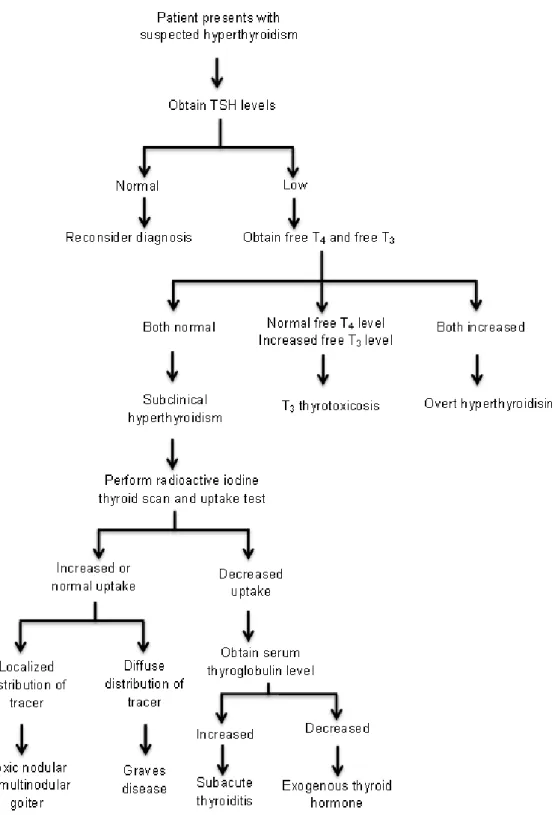
diagnose SH. (Figure 1) At first, the diagnosis of
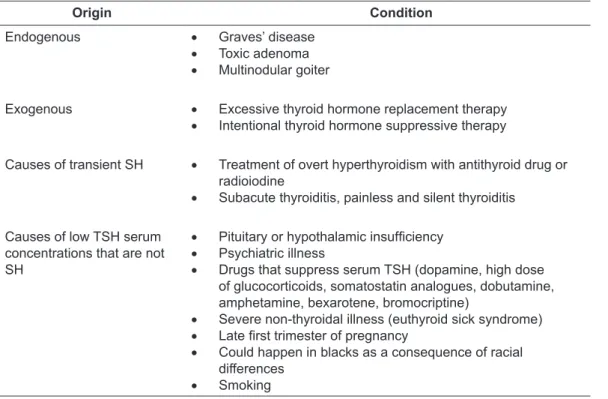
persistent SH need to be established, initially by the screening of TSH serum level. When serum TSH level is low, FT4 and FT3 are measured. Once the diagnosis has been set up, the next step is to establish the etiology of SH. A radioiodine uptake, thyroid ultrasonography and scan, and TSH-receptor antibodies examination could be performed to determine the etiology to start the treatment. Etiology and differential diagnosis of SH as seen in Table 1. The last step is to determine the risks associated with SH and appropriate treatment1
Table 1.Etiology and Differential Diagnosis of Subclinical Hyperthyroidism1
Origin Condition
Endogenous • Graves’ disease
• Toxic adenoma
• Multinodular goiter
Exogenous • Excessive thyroid hormone replacement therapy
• Intentional thyroid hormone suppressive therapy
Causes of transient SH • Treatment of overt hyperthyroidism with antithyroid drug or radioiodine
• Subacute thyroiditis, painless and silent thyroiditis Causes of low TSH serum
concentrations that are not SH
• Pituitary or hypothalamic insufficiency • Psychiatric illness
• Drugs that suppress serum TSH (dopamine, high dose of glucocorticoids, somatostatin analogues, dobutamine, amphetamine, bexarotene, bromocriptine)
• Severe non-thyroidal illness (euthyroid sick syndrome)
• Late first trimester of pregnancy
• Could happen in blacks as a consequence of racial differences
Budiman Darmowidjojo, et al eJKI Vol. 6 No. 2, Agustus 2018
Figure 1. Algorithm for Evaluation of Suspected Subclinical Hyperthyroidism3 Complications of Subclinical Hyperthyroidism
Thyroid dysfunction in patient suffering SH tends to be stable, however there is possibilities of few patient progress to overt hyperthyroid or else revert to the euthyroid state. TSH concentration suppression can be used as an indication of subtle progress to overt hyperthyroidism. The TSH levels turn to normal state, occurred in 20–50% of
patients with Grade 1 SH, thus the progression to overt hyperthyroidism is really uncommon. Grade 2 patients, in contrast, more commonly progress to overt hyperthyroidism. Every year, 5-8% of Grade 2 SH patients may progress to overt hyperthyroidism.1
Etiology of SH may predict the course of progression. However, in case of Graves’ disease - an autoimmune disorder associated with
hyperthyroidism - it has been complicated to predict the developed hyperthyroidism, compared with the patient with toxic multinodular goiter. Patients with Graves’ disease are more likely to experience remission or progression, rather than having persistent SH. On the other side, patients with SH caused by multinodular goiter, which is commonly living in a relatively low iodine intake’s areas, tend to have stable thyroid dysfunction. However, progression to overt hyperthyroidism frequently occurs in Grade 2 SH caused by toxic multinodular
goiter in iodine-deficiency areas, especially after
supplementation with iodine or exposure to an iodine-containing medication.1
Symptoms of Hyperthyroidism and Quality of Life
SH results in a variety of symptoms and signs, which are palpitations, tremble, anxiety, heat intolerance, excessive sweating, and reduced exercise tolerance. All of these conditions can decrease a patient’s quality of life, particularly in young patient. Adrenergic symptoms may be
improved with cardio-selective β-blocker agents or
antithyroid drugs.1
Dementia or Cognitive Impairment. Thyroid hormone is known as a pivotal regulator in fetal brain development and have a critical role in maintaining biological function after development. The evidence on risk of dementia in SH remain controversial. Large prospective studies alongside
with long-term follow-up cases is needed to confirm
the association between dementia and cognitive impairment with SH.1,4,5
Cardiovascular and Mortality Risk. While it is well-known that overt hyperthyroidism have a correlation with cardiovascular dysfunction, SH effect on the heart is minimally understood. SH may induce several cardiovascular effects including increased average heart rate, left ventricular mass
- specifically septal and posterior wall thickness,
and the greater risk of atrial arrhythmia as well. In addition, it also reduces heart rate variability.1 Some
studies have reported that substitutive therapy with L-thyroxine was associated with improved echocardiographic parameter and heart maximal workload, while other studies proved otherwise.1,6
Osteoporosis and Fractures. Thyroid hormone play a pivotal role in bone development and is regarded as the factor to stimulate osteoclastic bone resorption. Several reports have demonstrated the link between bone
fracture and osteoporosis in the presence of overt hyperthyroidism. The duration and other factors determine the likelihood of developing bone loss in SH. Adults with Grade 2 SH have a greater risk of losing up to 20% of bone mineral density due to excessive bone resorption activity led by overt hyperthyroidism.7-9 Therefore, Grade 2 SH patients
who have risk factors for bone loss (e.g elderly and postmenopausal) should be further assessed.1
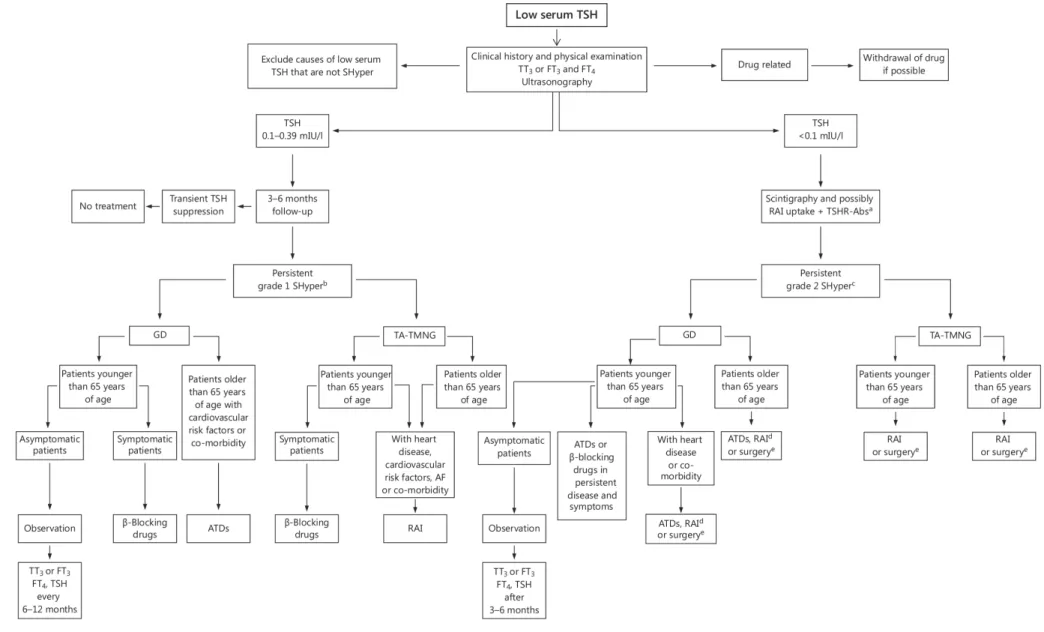
Treatment for Subclinical Hyperthyroidism (SH) There are some controversial on when to treat SH, possibly due to the lack of promising intervention studies. Nevertheless, ATA/AACE and ETA developed their own guidelines on when to consider treatment for SH based on available evidences (Figure 2).1 Elderly age >65 years with
TSH <0.1mU/L should be treated while those who have TSH level 0.1-0.5 mU/L is considered for having treatment. As for individual age <65 years with heart disease and/or osteoporosis and/or hyperthyroid symptoms (TSH <0.1 mU/L) need to be treated, those with TSH 0.1-0.5 mU/L also considering treatment. Adults age <65 years with menopause and/or asymptomatic considered for treatment regarding their low serum TSH level.
Existing treatments for SH includes antithyroid drugs, radioactive iodine, and surgery. Antithyroid medication available – methimazole - should be started on a lower starting dose and the side effects should be monitored. Treatment with radioactive iodine and surgery should be followed with thyroid hormone replacement (levothyroxine). Recommendations on Biochemical and Morphological Diagnosis of Endogenous SH
1. Initial test for SH diagnosis could be done by performing serum TSH measurement. Confronted with the low serum TSH level, thyroid hormones (FT4 and TT3 or FT3) should be examined.
2. TSH assay is carried out to assess the severity of SH and to distinguish Grade 1 (serum TSH: 0.1–0.39 mIU/L) from Grade 2 SH (TSH <0.1 mIU/L).
3. Causes of transient TSH or subnormal TSH serum not associated with SH, such as administration of drugs, pituitary or
hypothalamic insufficiency, psychiatric
illness, and non-thyroidal illness, should be investigated.
4. Patients with an initial subnormal serum TSH with thyroid hormone levels within or at the
Budiman Darmowidjojo, et al eJKI Vol. 6 No. 2, Agustus 2018
upper limit of the normal range should be retested within 2–3 months because SH is interpreted as persistently subnormal TSH concentration.
Recommendations on Biochemical and Morphological Diagnosis of Endogenous SH (Establish Etiology of SH)
1.
Scintigraphy and possibly a 24-hour thyroidradioactive iodine uptake test could be performed in nodular goiter with Grade 2 SH to guide clinicians in the choice of treatment.
2.
Ultrasonography with color flow doppler can behelpful in those who suffering SH and nodular goiter.
3.
Measurement of TSH-receptor antibody levels can confirm the etiology ofautoimmune-induced hyperthyroidism. Furthermore, TSH-receptor autoantibodies can identify autoimmunity in nodular glands because approximately 17% of patients living in
iodine-deficient areas with scintigraphic criteria for
toxic multinodular goiter may be positive for TSH receptor autoantibodies.
Recommendations on Biochemical and Morphological Diagnosis of Endogenous SH (Establish Appropriate Treatment)
Computed tomography (CT) assessment without contrast or magnetic resonance imaging is done to evaluate airway compression in patients with large multinodular goiter and compressive symptoms and signs.
Recommendations on Clinical Evaluation of Patients with Endogenous SH Before Treatment
1. Electrocardiography (ECG), holter ECG, and doppler echocardiography are recommended to assess cardiac rhythm.
2. Bone mineral density and possibly bone turn over markers should be checked in selected patients with Grade 2 SH patients with risk factor for osteoporosis, including elderly and postmenopausal women.
Recommendations on Treatment of Endogenous SH in Elderly Patients with SH and Low or Undetectable TSH
Treatment of SH is recommended in patients older than 65 years with Grade 2 SH to avoid the risks associated with untreated Grade 2 SH. The management of symptomatic and asymptomatic treatment for Grade 1 SH patients older than 65
years – more over those who have metabolic and cardiovascular disorders - may be considered to
avoid the risk of atrial fibrillation.
Recommendations on Treatment of Endogenous SH in Young Patients with SH and Low or Undetectable TSH
1. Grade 2 SH patient younger than 65 years is suggested to treat in order to improve the quality of life and can attenuate the high risk of progression of these patients. Symptomatic patients can be treated with cardioselective
β-blocking agents and/or therapies directed
toward the thyroid dysfunction. The dosage of
β-blocking agent can be guided by heart rate
control.
2. Treatment of patients with Grade 2 SH in patients with cardiovascular risk factors or comorbidities.
3. Treatment in young asymptomatic patients with relatively low but detectable TSH is not recommended. These patients should be monitored without treatment due to low risk in overt hyperthyroidism, the possibility of spontaneous remission of SH, and the poor evidence of adverse health outcomes.
4. Observation is recommended in Grade 1 SH
patients, lack of ultrasonographic findings of
thyroid abnormalities, a normal radionuclide thyroid scan, normal heart rate on ECG, normal BMD, and no cardiovascular or skeletal risks. 5. Serum TSH, free T4, and TT3 or free T3 should
be evaluated every 6–12 months in untreated SH patients with persistent subnormal TSH, or as soon as the clinical picture shows any changes.
Recommendations on Treatment of Endogenous SH According to Etiology
1. Antithyroid medication should be the first treatment option in young patient with Grade 2 SH caused by Graves’ disease and elderly patients suffering Grade 1 SH with Graves’ disease. Some observations demonstrated Graves’ disease has been exemption in 20-40% patients following 12-18 months antithyroid therapy. Radioactive iodine should be considered in the condition of antithyroid drugs are not tolerated, relapse occur suddenly, and in patients with cardiac disease.
2. Antithyroid medication or radioactive iodine treatment are recommended for Grade 2 hyperthyroidism patients with Graves’ disease
older than 65 years. In some cases, those treatments could be applied for patients at high risk of adverse cardiac events.
3. Either radioactive iodine therapy or surgery should be the preference in SH patients older than 65 years due to multinodular goiter or toxic adenoma due to their persistent SH. Moreover, patients with Grade 2 SH may progress to overt hyperthyroidism after excessive iodine intake. In cases where radioactive iodine is not feasible (e.g. elderly nursing home patients suffer from incontinent, patients with severe goiter, or those with depression), lifelong low-dose antithyroid drugs is possible to be given. 4. Surgery is recommended in patients with
large goiter, symptoms of compression, concomitant hyperparathyroidism, or suspicion of thyroid malignancy. Total thyroidectomy is the treatment of choice in the absence of associated conditions or factors, making Grade 2 SH patients poor candidates for radioactive iodine treatment.
Recommendations to Avoid Adverse Effects of Treatment of Endogenous SH
1. Low dose of methimazole (5–10 mg/daily) should be used to rapidly restore euthyroidism in patients with SH. Prior to that, a decent information about the potential adverse effects of methimazole should be informed to the patients. A complete baseline blood count
and liver profile should be obtained before
methimazole therapy.
2. The goal of therapy with radioiodine should be to obtain a euthyroid state with or without levothyroxine treatment.
3. Pretreatment with methimazole before radioactive iodine or surgery might be considered in patients older than 65 years with cardiovascular disease and in patients with greater risk of complications due to worsening of hyperthyroidism. Although there are no
data supporting this suggestion, however, improvement of radioactive iodine activity within 10-15% should be considered after pretreatment with antithyroid drugs to maintain
its efficacy.
4. Patients at high risk of graves’ ophthalmopathy
progression should be identified before
radioactive iodine. Steroid prophylaxis is recommended in patients with clinically overt eye disease and in smokers.
5. According to the American College of Cardiology/American Heart Association, the
first-line treatment of atrial fibrillation and
heart failure is recommended for patients with thyroid dysfunction. Such treatment restored euthyroidism in patients since cardiovascular drugs are generally unsuccessful while thyroid hormone excess persist. Treatment of SH with
antithyroid drugs should be the first-line therapy in elderly with Grade 2 SH and atrial fibrillation
and/or heart failure to obtain spontaneous conversion to sinus rhythm.
6. The American Heart Association suggests an anticoagulation with an international normalized ratio (INR) of 2.0–3.0, instead of thromboembolism, for patients with SH and
atrial fibrillation.
7. A periodic follow-up after radioactive iodine
should be performed during the first year and
then annually to assess normalization of thyroid function or the development of hypothyroidism. 8. Following the radioactive iodine or surgery,
levothyroxine therapy is given at a replacement doses.
9. Either near-total or total thyroidectomy is recommended for graves’ disease patients to avoid the risk of recurrences after partial thyroidectomy. In case of a solitary autonomous nodule, lobectomy and isthmus resection is
sufficient. Total or subtotal thyroidectomy should
be performed in patients with toxic multinodular goiter, with a recurrence rate of <1%.
Budiman Darmowidjojo, et al
146
eJKI V
ol. 6 No. 2,
Agustus 2018
Figure 2. ETA Algorithm for The Management of Subclinical Hyperthyroidism. a TSHR-Abs = TSH-receptor autoantibodies. b Grade 1 subclinical
hyperthyroidism. c Grade 2 subclinical hyperthyroidism. d radioactive iodine (RAI) in patients with recurrences or if ATDs are not tolerated. e surgery
Subclinical Hypothyroidism
Subclinical hypothyroidism – or so-called mild hypothyroid or preclinical hypothyroidism – is characterized by a persistent increased of TSH levels despite normal serum level of free T4 and T3 in patients with or without any hypothyroid symptoms. Its prevalence varies between 4 and 10% among population.10 Subclinical hypothyroidism is
categorized as mildly increased TSH levels (4.0-10.0 mU/L) and severely increased TSH value (>10 mU/L) according to the elevation in the serum TSH level.
Serum TSH level above 10 mIU/L are considered as severe subclinical hypothyroidism even in normal level of free T4. Mild subclinical hypothyroidism, which account for 90% cases, described as elevated TSH level below 10 mIU/L.
ETA defined normal range of TSH is 0.4–4.4 mIU/L.
On the other hand, ATA/AACE have different reference value, which is 0.5-4.5 mIU/L.10-12
Measurement of both serum TSH and FT4, along with thyroid peroxidase antibodies, should be repeated after 2 to 3 months interval to investigate the initial raised serum TSH. The measurement is done to patients with positive antithyroid peroxidase
or thyroglobulin antibodies, and to those with a hypoechoic or an in homogenous echo pattern on thyroid ultrasonography.
Many cases of SH are left untreated because the condition is still considered normal. However, recent studies have shown that subclinical hypothyroidism may have harmful effects. Patients with subclinical hypothyroidism may progress towards overt hypothyroidism, while others resolve spontaneously or remain unchanged. In
consequence, the benefit effects of its diagnosis
and management remains unclear.10
Multiple factors may lead to the transient increase in TSH. Normally, the lowest TSH levels is found in the afternoon. TSH reaches its peak concentration, approximately 30% higher than afternoon, during evening and night. Thus, serial measurements must be obtained at the same time of the day to represent non-bias TSH baseline. Serum FT4 also need to be measured to exclude hypothyroidism.8 Besides its
circadian fluctuations, TSH levels may vary with age.
TSH values slightly increased in elderly, especially people aged over 80 years old. It is considered as physiology part of aging.10
Table 2. Etiology of Subclinical Hypothyroidism10
Persistent
Transient
• Autoimmune thyroiditis (Hashimoto’s disease)
• Germline loss of function mutation in TSH receptor
• Subacute or painless thyroiditis
• Withdrawal of levothyroxine
• Various treatment (e.g. lithium therapy, amiodarone therapy)
• Obesity
• Depression
• Following vigorous exercise
• Irregular sleep pattern
• Night shift working
Hashimoto’s disease, an autoimmune thyroiditis, is widely known as the most common cause of persistent subclinical hypothyroidism by increasing antithyroid antibodies. Also, there are several causes of transient subclinical hypothyroidism (Table 2). Hence, it is important to exclude the transient etiologies before performing the diagnosis of subclinical hypothyroidism.10
Autoimmune thyroiditis is the most frequent cause of subclinical hypothyroidism, therefore measurement of circulating antithyroglobulin antibodies (TgAb) and/or antithyroid peroxidase antibodies (TPOAb)
is needed to confirm the diagnosis of autoimmune
thyroiditis. The use of ultrasonography may help.
Hypoechoic or inhomogenous thyroid echo pattern may present before circulating autoantibodies.10
Who need treatment?
Only a few of subclinical hypothyroidism patients have clinical symptoms, such as dry skin, forgetfulness, slower thinking, muscle weakness, greater improvement in tiredness, muscle cramps, feeling colder, having deeper and hoarser voice, and more constipation. Out of all symptoms, a
study found that the most significant one is extreme
fatigue and exhaustion. Therefore, subclinical hypothyroidism patients with symptoms may get
Budiman Darmowidjojo, et al eJKI Vol. 6 No. 2, Agustus 2018
Mood disturbance/mental health. Patients with subclinical hypothyroidism may experience memory impairment and mood-swing. Some data indicates that the symptoms improved after treatment with levothyroxine. However, it may only be applied in young patient, not in patients aged over 65 years receiving the same drug treatment.10
Goiter and thyroid cancer. Subclinical hypothyroidism is slightly related with goiter, especially in children. Increasing TSH levels also enhanced the risk of thyroid cancer. However, it is still unproven whether levothyroxine therapy may decrease the risk of thyroid cancer.10
Obesity. It is well known that hypothyroidism may induce obesity. Furthermore, weight gain is associated with an increase of TSH levels. However, no data available suggested whether levothyroxine may improve patients with obesity-related elevation of TSH serum levels or not.10
Diabetes Mellitus. The prevalence of thyroid dysfunction is about 10% in patient with type 1 diabetes mellitus (T1DM), meanwhile the number of subclinical hypothyroidism and serum thyroid autoantibody concentration is as high as 30%. In result, TSH levels of T1DM patient should be yearly monitored.10 Meanwhile, T2DM may induces
subclinical hypothyroidism and other thyroid problems.13
Dyslipidemia. Subclinical hypothyroidism
patients with dyslipidemia would benefit from levothyroxine therapy. However, lipid profile rarely
reaches normal with levothyroxine therapy in those patients. Even, greater improvement can be seen
in lipid profile in the condition of pre-treatment
serum TSH levels >10 mU/L.10,14
Cardiovascular system. Subclinical hypothyroidism is associated with changes of functional cardiac abnormalities including left ventricular diastolic dysfunction and resting and exertional systolic function reduction. Several reports also shown the correlation of hypothyroidism on vascular abnormalities such as endothelial dysfunction, arterial stiffness, and
atherosclerosis. Unfortunately, not enough good evidences available on levothyroxine therapy effect
to cardiovascular profile.10
Younger adults (<65-70 years). A trial of levothyroxine replacement therapy to normalize serum TSH level should be considered for younger patients (<65 years); serum TSH <10 mU/L) with symptoms suggestive of hypothyroidism even though the evidence for improvement in mental function with levothyroxine treatment in subclinical hypothyroidism in younger individuals is still lacking. In patients with diabetes mellitus, different approach should be considered. Serum TSH in patients with T1DM should be monitored every year. While in patients with type 2 diabetes mellitus and an unexplained change in glycemic control, serum TSH and FT4 should be measured regularly. Levothyroxine therapy of subclinical hypothyroidism is able to reduce the level of both total and LDL cholesterol, even though normalization of serum lipids is rarely achieved. In asymptomatic condition, replacement therapy with levothyroxine is recommended for younger patients with serum TSH >10 mU/L.
Elderly patient. Subjects aged 80–85 years
with elevated serum TSH ≤10 mU/L should be
carefully followed with a wait-and-see strategy to avoid hormonal treatment.6,10
Treatment for Subclinical Hypothyroidism Oral levothyroxine is considered as treatment of choice for hypothyroidism, whilst others, i.e. liothyronine is not recommended. For patients without cardiac disease, a weight-related dose of levothyroxine - approximately 1.5 µg/kg/day (e.g. 75 or 100 µg/day for a woman, 100 or 125 µg/day for a man) - should be used. A small starting dose of levothyrocine i.e. 25 or 50 µg daily is recommended for elderly patients or those with cardiac disease. The dose of levothyroxine should be increased by 25 µg/day every 14–21 days until a full replacement dose is reached.6,10
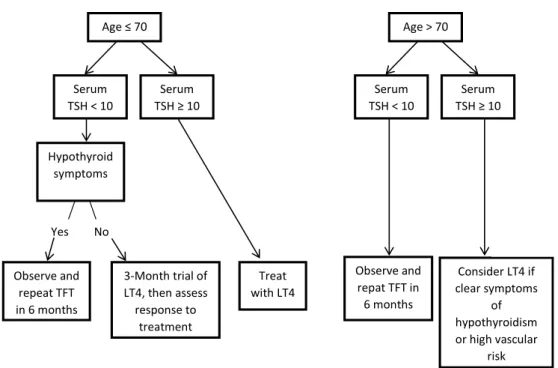
Figure 3. ETA Algorithm Recommendation on Management of Subclinical Hypothyroidism10
Levothyroxine should be taken on an empty stomach. It is recommended to consume this drug either in the morning, an hour before eating, at bedtime, or 2 hours or more after eating. Medications interfering with levothyroxine absorption -such as the consumption of calcium and iron salts or proton pump inhibitors- should be avoided, or taken at least 4 hours following levothyroxine ingestion.10
Re-examination of TSH should be done 2 months following initial levothyroxine therapy with the dosage adjustment made accordingly. In adults, serum TSH levels should be lower than the reference range (0.4–2.5 mU/L). Meanwhile, treatments for subclinical hypothyroidism should be individualized, gradual, and closely monitored in elderly patients. For exceptions, higher treatment of TSH within 1–5 mU/L is acceptable for elderly patients aged 70-75 years. 10
Treatment should be reviewed 3-4 months after a serum TSH reached the reference range in patients with mild subclinical hypothyroidism (TSH <10 mU/L) who have been started on levothyroxine for symptoms attributed to subclinical hypothyroidism. In case of levothyroxine causes no improvement in symptoms, the treatment need to be stopped. No further examination is required in asymptomatic patients in case their thyroid function
has normalized following an initially abnormal serum TSH result.10
In subjects who have subclinical hypothyroidism but in whom medication is not initiated yet, re-examination of thyroid function
should be done every 6 months for the first 2 years
and then yearly thereafter.10
Conclusion
Our review defined that SH and hypothyroidism
is considered as a laboratory than a clinical diagnosis. In order to achieve compliance with accepted protocols, an appropriate interpretive reports should be an integral part of the investigation of both SH and hypothyroidism. The medications of anthytiroid drugs, radioactive iodine, and surgery are considered as treatments for SH. Whereas oral levothyroxine treatment is chosen as a therapy for subclinical hypothyroidism. Taken together, diagnosis and management of both SH and hypothyroidism need regularly monitoring of thyroid function. Even though expert panels already released various guidelines for the diagnosis and management of thyroid dysfunction, each patient should be assessed individually to determine the most suitable treatment. Until adequate data are available, clinical judgment was combined with patient’s preferences to improve best practice.
Age ≤ 70 Serum TSH < 10 Serum TSH ≥ 10 Hypothyroid symptoms Observe and repeat TFT in 6 months 3-Month trial of LT4, then assess response to treatment Treat with LT4 Observe and repat TFT in 6 months Consider LT4 if clear symptoms of hypothyroidism or high vascular risk Yes No Age > 70 Serum TSH < 10 Serum TSH ≥ 10
Budiman Darmowidjojo, et al eJKI Vol. 6 No. 2, Agustus 2018
References
1. Biondi B, Bartalena L, Cooper DS, Hegedus L, Laurberg P, Kahaly GJ. The 2015 European thyroid association guidelines on diagnosis and treatment of endogenous subclinical hyperthyroidism. Eur Thyroid J. 2015;4:149-63.
2. Bahn Chair RS, Burch HB, Cooper DS, Garber JR, Greenlee MC, Klein I, et al. American Thyroid Association, American Association of Clinical Endocrinologist. Hyperthyroidism and other causes of thyrotoxicosis: management guidelines of the American Thyroid Association and American Association of Clinical Endocrinologists. Endocr Pract. 2011;17(3):e1-65.
3. Donangelo I, Braunstein GD. Update on subclinical hyperthyroidism. Am Fam Physician. 2011;83(8):933-8. 4. Gan EH, Pearce SHS. The thyroid in mind: cognitive
function and low thyrotropin in older people. J Clin Endocrinol Metab. 2012;97(10:3438-49.
5. Parsaik AK, Singh B, Roberts RO, Pankratz S, Edwards KK, Geda YE, et al. Hyperthyroidism and risk of mild cognitive impairment in elderly persons – a population based study. JAMA Neurol. 2014;71(2):201-7. 6. Cappola AR, Fried LP, Arnold AM, Danese MD, Kuller
LH, Burke GL, et al. Thyroid status, cardiovascular risk, and mortality in older adults: the cardiovascular health study. JAMA. 2006;295(9):1033-41.
7. Basset J, Williams G. The molecular actions of thyroid hormone in bone. Trends Endocrinol Metab. 2003;14:356-64.
8. Harvey C. O’Shea O, Scott A, Robson H, Siebler T, Shalet S, et al. Molecular mechanisms of thyroid hormone effects on bone growth and function. Mol Genet Metab. 2002;75:17-30.
9. Stevens D, Harvey C, Scott A, Williams A, Jackson D,
O’Shea O, et al. Thyroid hormone activates fibroblast
growth factor receptor-1 in bone. Mol Endocrinol. 2003;17:1751-66.
10. Pearce SHS, Brabant G, Duntas LH, Monzani F, Peeters RP, Razvi S, Wemeau JL. 2013 ETA guideline: management of subclinical hypothyroidism. Eur Thyroid J. 2013;2:215-28.
11. Garber JR, Cobin RH, Gharib H, Hennesey JV, Klein I, Mechanick JI, et al. American Association of Clinical Endocrinologists and American Thyroid Association Taskforce on Hypothyroidism in Adults. Clinical practice guidelines for hypothyroidism in adults: co-sponsored by the American association of Clinical Endocrinologists and The American Thyroid Association. Endocr Pract. 2012;18(6):e1-45.
12. Gharib H, Tuttle RM, Baskin HJ, Fish LH, Singer PA, McDermott MT. Consensus statement: subclinical thyroid dysfunction: a joint statement on management from the American Association of Clinical Endocrinologists, The American Thyroid Association, and The Endocrine Society. J Clin Endocrinol Metab. 2005;90(1):581-5.
13. Han C, He X, Xia X, Li Y, Shi X, San Z, et al. Subclinical hypothyroidism and type 2 diabetes: a systematic review and meta-analysis. PLoS ONE. 2015;10(8):e0134233.
14. Asranna A, Taneja RS, Kulshreshta B. Dyslipidemia in subclinical hypothyroidism and the effect of
thyrozine on lipid profile. Indian J Endocrinol Metab.