Effects of initial and ongoing trust in IT outsourcing: A bilateral perspective
Jae-Nam Lee
a,1, Byounggu Choi
b,*
aKorea University Business School, Anam-Dong, Seongbuk-Gu, Seoul 136-701, Republic of Korea
bCollege of Business Administration, Kookmin University, 861-1, Jeungreung-Dong, Seongbuk-Gu, Seoul 136-702, Republic of Korea
1. Introduction
Outsourcing has been heavily discussed in the past two decades. According to an IDC report, the global outsourcing market reached US$340 billion in 2007, and it is expected to increase to US$509 billion by 2012, with an annual growth rate of 8.4%. Given such growth, IT outsourcing warrants attention. However, there have been few reports about its successful ROI. Thus, the major issue facing both service providers and client organizations is the pressure to exhibit its value. Therefore, the best way to meet this challenge is to further improve the quality of the relationship of the service providers and the client organizations based on trust[1].
Because today’s outsourcing contracts are often very complex, it is difficult to include all rules and agreements in the contract. Furthermore, interactions between the participants often go beyond rules and exceptions: they depend on intangible factors that cannot be easily captured in a contract, such as trust, commitment, and interdependency. As increasing attention has been focused on building a flexible relationship between the participants; thus trust has become a core need for successful outsourcing.
Trust is important from the start to the final stages of outsourcing. But though interest in trust has been noted, the outsourcing literature has produced only a few theoretical models to support our understanding of the evolution of trust, the role of trust, and the consequence of trust in the relationship. Also, prior studies generally used cross-sectional surveys when studying the change in trust over time; these do not show trust evolves. Moreover, only limited research has addressed the outsourcing relationship from the perspectives of both participants. However, an understanding of both parties is important because a successful outcome is determined bybothorganizations[17].
We built a theoretical model about the change of trust over time in an outsourcing relationship, suggesting four major concepts: initial trust, initial distrust, ongoing trust, and ongoing distrust in the context of IT outsourcing; we constructed the model by synthesizing material discussed in the body of the literature on inter-organiza-tional relation management, organizainter-organiza-tional learning, and outsour-cing. The proposed model and its hypotheses were tested using two-stage survey data collected from service providers and receivers at the beginning and middle of outsourcing projects in Korea. 2. Theoretical development
Trust determines the nature of many buyer–seller relation-ships, especially in establishing partnerships and strategic alliances [3]. There are always trust-related elements that are A R T I C L E I N F O
Article history:
Received 19 March 2010
Received in revised form 17 November 2010 Accepted 22 January 2011
Available online 1 March 2011 Keywords:
IT outsourcing Initial trust and distrust Ongoing trust and distrust Knowledge sharing Outsourcing success Bilateral perspective Two-stage survey PLS A B S T R A C T
Much has been written about the need for trust in outsourcing relationships, but the literature has produced only a few theoretical models that explain the process that helps it evolve. We proposed a theoretical model by distinguishing ongoing beliefs, such as ongoing trust and distrust, from initial perceptions, such as initial trust and distrust, in the context of IT outsourcing, and then explored empirically how these interacted with one another the knowledge sharing experience between the participants, thus leading to a successful experience from both the outsourcer and the service provider. The model and its hypotheses were tested using two-stage survey data collected from IT outsourcing projects. Our results showed that the ongoing trust and distrust between the receiver and provider were crucial in attaining benefits and that the outcome was also affected by the perceptions of the participants at the initial stage of the outsourcing process. We also found that knowledge-sharing experience between the parties moderated the impact of initial trust or distrust on the ongoing trust or distrust in different ways: the change in the service provider’s initial perceptions were apparently more visible and positive than those of the service receiver’s, although both initial perceptions tended to be cognitively consistent. These results helped us understand how trust evolves over time in an outsourcing relationship, and enabled us to explore the different viewpoints of the service provider and receiver.
ß2011 Elsevier B.V. All rights reserved.
* Corresponding author. Tel.: +82 2 910 4551; fax: +82 2 910 4519. E-mail addresses:[email protected](J.-N. Lee),[email protected] (B. Choi).
1
Tel.: +82 2 3290 2812; fax: +82 2 922 7220.
Contents lists available atScienceDirect
Information & Management
j o u r n a l h o m e p a g e : w w w . e l s e v i e r . c o m / l o c a t e / i m0378-7206/$ – see front matterß2011 Elsevier B.V. All rights reserved. doi:10.1016/j.im.2011.02.001
intangible and not well defined in any contract. Relationships based on a formal contract and rooted in trust strengthen the bond between clients and their service providers. There is also evidence showing that outsourcing projects in the 1990s shifted from contractual to trust-based relationships. Thus, forming effective trust-based relationships has been perceived as a key predictor of outsourcing success[10].
However, a trust-based relationship does not always generate the best outsourcing relationships: we believed that trust was necessary but not sufficient to ensure success. Nevertheless, a better understanding of trust is crucial for the success of the project. For this reason, we explored the change in trust in outsourcing relationships over time and its impact on outsourcing success.
A number of studies have tried to explain trust in outsourcing through correlation analysis among trust-related variables or between trust-related variables and outsourcing success. However, these studies have not conceptualized and defined the evolving process of trust over time, presumably because the results have small business implications[18]. Part of the problem in these studies was that they did not distinguish trust from other similar constructs such as cooperation and confidence. Despite the various theories pertinent to trust, such associal exchange theoryandsocial network
theory, there are few integrative ideas that have provided an
in-depth analysis of the change of trust, which requires a differentiation among factors contributing to trust and its outcomes.
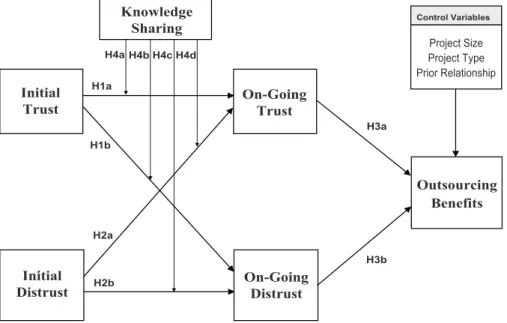
With these motivations, our study started by proposing an outsourcing relationship trust model to provide a better under-standing of how trust evolves over time and its impact on outsourcing benefits as shown inFig. 1.
2.1. Distinction between initial belief and ongoing belief
Trust is a widely studied constructs in the social exchange literature. It plays a critical role in the development of long-term relationships as well as in facilitating exchange relationships. This is perceived as a dynamic process since the parties mutually demonstrate their trustworthiness through specific sequential interaction. Thus it should be considered as process-oriented rather than an outcome- or input-oriented concept. This dynamic nature of trust is the key premise for the distinction between initial trust and ongoing trust[11].
Trust can be considered as having two parts, relational vs. dispositional.Relational trust pertains to the relationships in the
dyad[21], while dispositional trust refers to an individual trait that reflects one partner’s expectation about the actions of the other[6]. Thus relational trust is probably based on experience and interaction rather than an individual trait. Another important implication is that inter-organizational trust describes the extent to which organiza-tional members have a collectively held trust orientation towards their partner. This collective held trust helps explain how inter-organizational trust can prevail despite the continuous turnover of different personnel in the firms. Moreover, a collectively held trust makes it possible to analyze trust at the organizational level.
According to Krishnan et al., inter-organizational trust is relational and collectively oriented. Such a form of trust is probably based on experience and interaction with a partner who has been influenced by an organizational culture. Hence, it is dynamic, due to the time factor and historical element involved. However, there are obviously dynamic effects that occur at the first meeting of both parties. These are not drawn from experience or a prior history of interaction.
Thus we decided to add a construct termedinitial trust. Because trust is a set of expectations shared by a group in the organization, we posited that initial trust involves the willingness to trust others without prior knowledge of their background[14]. Thus it is not based on any prior experience but on an assumption that being a member of the organization is enough to assess the trustworthi-ness of an individual; i.e., it isone party’s positive belief that the other party would perform actions that will result in beneficial outcomes
without any firsthand information and experience of the other party.
However, unlike initial trust,ongoing trustis dynamic whether it is in a new or ongoing relationship; i.e., it is likely to be modified over time due to experiences and interactions with partners. Thus, ongoing trust is the positive belief of a party in an exchange relationship about a partner’s reliability and integrity; they result from
observing actual interactions.
2.2. Trust and distrust
Though many researchers have described trust as crucial to inter-organizational relationships, few have considered the effects of distrust[13]. Distrust can be viewed as negative expectations towards other partners [20]. Initial distrust refers to the unwillingness of one party to trust other parties. Similarly, ongoing distrust is the belief that the other party’s actions will lead to unacceptable outcomes. In the context of our study,
[()TD$FIG]
Outsourcing
Benefits
Initial
Trust
Initial
Distrust
On-Going
Trust
On-Going
Distrust
Knowledge
Sharing
H3a H3b H1a H1b H2a H2b Project Size Project Type Prior Relationship Control Variables H4a H4b H4c H4dongoing distrust is defined asnegative beliefs with respect to the other party’s reliability and integrity which are generated from the experiences gained through actual interaction.
Therefore, this study proposes four major concepts with separate and distinct constructs at two different timeframes: initial trust and distrust, and ongoing trust and distrust.
2.3. Hypotheses development
2.3.1. Relations between initial trust and ongoing trust/distrust
We considered initial trust as an important antecedent for building ongoing trust and distrust. Interaction between the client and service provider organizations requires initial trust (otherwise no contract would be executed). When people have positive mutual feelings, they are likely to interact well[12]. Moreover, it has been shown in some experiments that trust is robust over time and the relationship between parties will be reciprocal, under-stood, and ultimately successful. Organizations generally expect to find a relatively consistent level of initial trust in establishing and developing organizational relationships. Thus the following hypotheses were formulated:
H1a. Initial trust has a positive impact on the level of ongoing trust.
H1b. Initial trust has a negative impact on the level of ongoing distrust.
2.3.2. Relations between initial distrust and ongoing trust/distrust
Because of suspicions and doubts about other people, disposi-tion to initial distrust should negatively influence an organizadisposi-tion’s perception of a new environment[15]. Consequently, the negative belief will compound and negatively affect ongoing trust and positively influence ongoing distrust. Based on this premise, we posited that of initial distrust leads to negative expectations. Thus, our hypotheses were:
H2a. Initial distrust has a negative impact on the level of ongoing trust.
H2b. Initial distrust has a positive impact on the level of ongoing distrust.
2.3.3. Impacts of ongoing trust/distrust on outsourcing benefits
Generally, success may be reflected by the degree to which predefined objectives are realized. In most outsourcing cases, outsourcing benefits are strategic, economic, and technological. Such objectives therefore include the outsourced system’s efficiency, user and business satisfaction with the outsourced systems, service quality, cost reduction, etc. Outsourcing relation-ships based on ongoing trust enable participants to achieve outsourcing benefits and create a relatively sustainable competi-tive advantage[16]. To gain these advantages, the parties should enhance their ongoing trust and reduce their ongoing distrust. We thus proposed the following hypotheses:
H3a. Ongoing trust has a positive impact on the level of out-sourcing benefits.
H3b. Ongoing distrust has a negative impact on the level of out-sourcing benefits.
2.3.4. The impact of knowledge sharing experience as a moderator
We believed that high initial trust would lead to high subsequent ongoing trust. However, since our study took a dynamic view, it would also be true that the client and service
organizations will probably have different levels of trust for each other as time goes by, because ongoing trusting and distrusting are both a function of initial beliefs and a function of episodes noted during the interaction process.
Knowledge sharing, leading to increased trust, is an ongoing phenomenon[2]. Repeated inter-group exchanges thus generate trust, and eventually facilitate more effective interactions and better relationships. In the outsourcing context, knowledge sharing is a trust-based relationship since both the client organization and the service provider are brought together in intimate interaction with substantial interdependency and consequent vulnerability[8]. Thus knowledge sharing involves an element of risk taking – willingness of the parties involved to open a dialog on their needs, experience, and even trade secrets. Thus, the higher the level of knowledge sharing for risk taking between the client and the service provider organizations, the more willingness they desire to create for better outsourcing relationships[5]. Therefore, it is possible that the actual knowledge sharing experience between a client organization and its service provider moderates the relationships between initial trust/ distrust and subsequent ongoing trust/distrust. This lead to: H4a. The degree of knowledge sharing has a moderating effect on the relationship between initial trust and ongoing trust.
H4b. The degree of knowledge sharing has a moderating effect on the relationship between initial trust and ongoing distrust. H4c. The degree of knowledge sharing has a moderating effect on the relationship between initial distrust and ongoing distrust. H4d. The degree of knowledge sharing has a moderating effect on the relationship between initial distrust and ongoing trust.
2.3.5. Different perspectives between the service receiver and provider
At the start of an outsourcing episode, the service receiver is generally concerned about the quality of the selected service provider (i.e., is this the best choice?) and the perceived switching cost if a change must be made[22]. On the other hand, although the service provider experiences mixed feelings of initial trust and distrust, its perception of the potential risks and costs of the relationship is lower than that of the service receiver. Thus, initial perceptions are more important to the service receiver than to the service provider. We hypothesized:
H5a. The impacts of initial trust on ongoing trust and distrust will be stronger from the perspective of the service receiver than that of the service provider.
H5b. The impacts of initial distrust on ongoing trust and distrust will be stronger from the perspective of the service receiver than that of the service provider.
3. Research methodology
We adopted a field survey method with a confirmatory analysis as our approach. The model was empirically tested using a two-stage survey of IT outsourcing projects. The data used were gathered from 148 service providers and receivers over a six month interval. The unit of analysis was the outsourcing relationship between a customer and a service provider. We focused on the bilateral perception of the outsourcing relationship from the perspectives of both the service provider and the receiver.
3.1. Development of measures
After developing the research framework, a series of personal interviews with IT outsourcing professionals were conducted to
assess the external validity of our model. Then a questionnaire was prepared based on the previous literature and the suggestions made in the interviews. When developing the measurement instrument, a multiple-item method was used with each item measured on a five-point Likert scale from ‘strongly disagree’ to ‘strongly agree’. The survey instrument was developed either by adapting existing measures, e.g., for, knowledge sharing and
outsourcing success, or by converting the definitions of the
constructs into a questionnaire format, e.g.,initial trust/distrust
andongoing trust/distrust.
For outsourcing benefits, eight items developed by Grover et al.
[7]were used to measure strategic, economic, and technological benefits. Knowledge sharing was measured using an instrument adapted from Bock et al.[4]; it originally measured two types of knowledge (implicit and explicit) but we refined this due to the comments of outsourcing professionals during our interviews.
There has been little empirical research on initial and ongoing trust/distrust and the studies that we could find were either conceptual or small-scale. Thus, we had to develop measures for them. We therefore used a cognition-based stream to conceptual-ize initial trust[19], while a psychology perspective was adopted to develop the measure of initial distrust. Thus the initial trust was measured by first impression and reputation. Initial distrust was measured by suspicion from a psychology perspective, assuming that people are not usually honest, benevolent, competent, and predictable. Finally, ongoing trust measures were based on the notion of knowledge-based trust that develops over time as an organization gathers experience about its partner. Ongoing distrust was measured by assessing the extent to which one partner believed that the other was not beneficial.
To account for extraneous sources of variation in outsourcing benefits, we incorporatedoutsourcing project size,project type, and
prior outsourcing relationshipas control variables. The importance
and length of outsourcing relationship between the service provider and receiver may differ depending on the size of the outsourcing project as measured by the actual amount stated in the contract. We also controlled for outsourcing project types that we are classified into application development, application maintenance, network installation/maintenance, data center operation, system integration, facility management, consulting service, and other. In addition, since the existence of prior outsourcing relationship between a client organization and a service provider is likely to affect the outsourcer’s speed in gaining benefits, we controlled for the time-length of prior relationship to eliminate any potential spurious effect of time in the prior relationship. The survey instrument originally developed was refined through extensive pretesting, as summarized inAppendix A.
3.2. Sample and data collection
The measures used in the study are shown inAppendix B. In order to ensure consistency between the Korean and original English version of the instrument, a backward translation procedure was adopted (the material was translated from English into Korean and
vice versa, versions were compared, and discrepancies were
resolved). As soon as the instrument had been refined, survey data were collected in two phases that were 6 months apart.
In Phase 1, separate surveys were conducted for the service provider and receiver; these measured the initial trust and initial distrust. In Phase 2, six months later, we attempted to contact the same respondents from the service provider and receiver in follow-up surveys.
More specifically, in the first survey of Phase 1, the data were collected from the service receiver using a self-administered questionnaire. The sampling frame for service receivers came primarily from 2000 large firms identified in the Book of Listed Firms in Korea as of 2004. Then 250 IT service providers were
removed from the sample. Before the questionnaires were farmed out, the researcher made phone calls to each of the 1750 firms to explain the research objective and to obtain permission to distribute questionnaires in their firms. Out of the 1750 firms, 535 firms were willing to participate. Thus, the survey question-naire was mailed to the corporate level, top IS executives of the service receiver’s firms; they were asked to select their most recent outsourcing project and answer questions about that specific one and its service provider and then to answer questions about their initial trust and distrust towards the selected service provider. A total of 455 service receivers responded to this first survey, resulting in a response rate of about 85%. Most of the respondents provided the name and address of their vendor representative who they believed was most knowledgeable about their relationship. Of the 455 respondents, 75 did not indicate their vendors’ information and 40 responses had to be discarded due to incomplete data. Thus a total of 340 responses could be used in the second survey to match responses for the service provider in Phase 1. Then the questionnaire for the service provider was addressed to each representative of the 340 providers. Just as in the Phase 1, each vendor’s representative was asked to answer the questions as described in the cover letter. Out of the 340 distributed questionnaires, 232 responses were received from vendor repre-sentatives, providing a response rate of about 68%. Out of these 232 responses, 17 were eliminated because of missing data. Thus, at the end of Phase 1, we had a total of 215 responses from the service provider and 340 from the receiver.
In Phase 2, after six months, two follow-up surveys were requested; they adopted the same procedures as in Phase 1. The IS executives for the service receiver were asked not to answer questions directly if they pertained to the outsourcing benefits and the degree of knowledge sharing (in order to avoid subject bias). They were also asked to obtain answers indirectly to questions about ongoing trust and distrust from their subordinates. Out of the 340 requested surveys, 205 were received, but 16 had to be eliminated due to incomplete data. Thus, 189 valid responses could be used for our final analysis. Out of the 195 distributed questionnaires sent to the service provider, 162 responses were received. Because of 14 incomplete responses that were eliminat-ed, 148 could be used for our final analysis.
However, since this study focused on the bilateral perception of the outsourcing relationship from the perspectives of the service provider and receiver, the same size of responses for both should be used for a fairer comparison, especially when testingH5aand
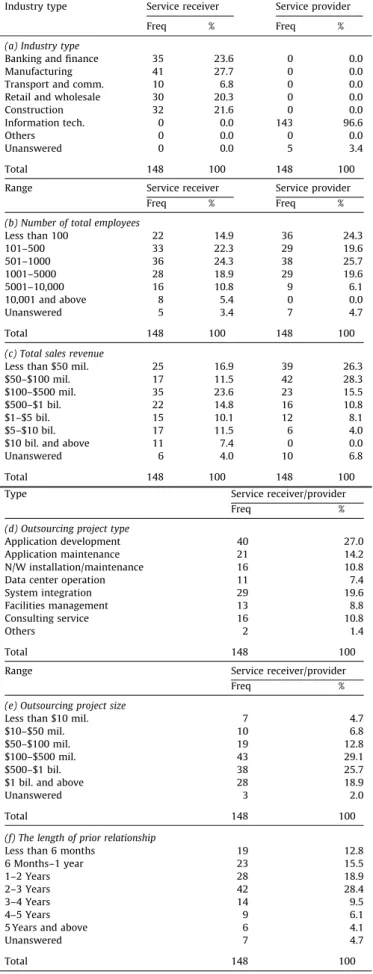
H5b, so we decided to use 148 matched responses from the client and service provider. Table 1 shows the summary of the respondents’ characteristics in terms of industry type, number of employees, total sales revenue, outsourcing project size, project types, and length of prior relationship.
In order to test for response bias, the respondents and non-respondents were first compared for both the service provider and the receiver in terms of two organizational features: total sales volume and number of employees. Second, we compared early-returned questionnaires to late-early-returned ones in terms of their total sales and number of employees for the service provider and receiver in both phases. The analyses indicated that there were no significant mean differences between the respondents and non-respondents or between early and late non-respondents of both partners at a significance level of 0.05.
4. Analysis and results
4.1. Analysis method
A Partial Least Squares (PLS) method was chosen to examine the proposed model and its hypotheses for the following reasons: first,
it is suitable for assessing theories in the early stages of development. Second, it requires minimal demands on sample size as opposed to other SEM techniques. Due to the large-scale survey and the complex data collection process of eliciting participation of the service providers and receivers, the size of the sample for the final analysis was acceptable at a modest level, making the PLS appropriate for testing our model. We used PLS-Graph version 3.00 for analyzing the models.
4.2. Measurement model
Following the recommended two-stage analytical procedures, a confirmatory factor analysis was conducted to assess the measurement model, and then the structural relationship was examined. This approach was intended to show that our results were based on accurate and desirable representation of the reliability of the indicators in the measurement model.
To validate the model, three types of validity of the instrument were assessed: content, convergent, and discriminant.
Content validityexamines the representativeness and
compre-hensiveness of the items used to create a scale by assessing the process by which scale items were generated, interviewing practitioners, and pilot-testing the instrument.
Convergent validitywas assessed by examining at the composite
reliability and extracting the average variance (AVE) from the measures. We decided to use a threshold reliability of 0.7 for the reliable construct. As shown inTable 2, our composite reliability values for the service provider ranged from 0.92 to 0.96, whereas they are 0.91–0.96 for the service receiver. For the AVE, a score of 0.5 indicates its acceptable level. The average variances extracted by our measures were very satisfactory at 0.60 or above for the service provider and 0.66 or above for the service receiver. The loadings and thet-values of the measures for both the service provider and the receiver in our research model were all significant on their path loadings at the level of 0.01, as expected. Finally, the discriminant validity of our instrument was verified by examining the square root of the AVE.
As shown in Table 3, the square root of the AVE for each construct on models of the service provider and receiver were greater than the correlations between it and all other constructs. Also, the results of the inter-construct correlations exhibited that each construct shared a larger variance with its own measures than with others. All in all, these results suggest that the measurement models for both participants were strongly supported by the data gathered and thus ready for further analysis.
In addition, the multicollinearity of the measurement model was verified using the Variance Inflation Factor (VIF). The results show that the values of VIF for constructs were acceptable: 1.18– 1.71 for the service receiver, and 1.03–1.52 for the service provider. The results suggest that multicollinearity is not a serious problem for the model from the perspectives of both the participants.
4.3. The structural model
With adequate measurement models and an acceptable level of multicollinearity, the hypotheses proposed in our study were tested using PLS. The significance of all paths in each model was tested using the bootstrap procedure with resampling of 500.
4.3.1. Service receiver’s perspective
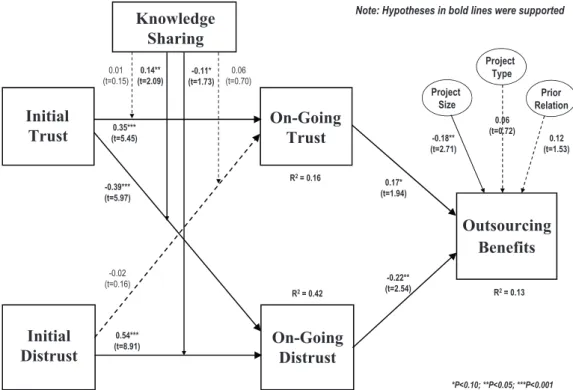
Fig. 2shows the results based on the point of view of theservice
receiver; it includes the path loadings,t-values of the paths, andR
-square values. Seven out of 10 of the hypothesized paths were found to be significant at different levels. A service receiver’s
Table 1
Profile of the sample.
Industry type Service receiver Service provider
Freq % Freq %
(a) Industry type
Banking and finance 35 23.6 0 0.0
Manufacturing 41 27.7 0 0.0
Transport and comm. 10 6.8 0 0.0
Retail and wholesale 30 20.3 0 0.0
Construction 32 21.6 0 0.0
Information tech. 0 0.0 143 96.6
Others 0 0.0 0 0.0
Unanswered 0 0.0 5 3.4
Total 148 100 148 100
Range Service receiver Service provider
Freq % Freq %
(b) Number of total employees
Less than 100 22 14.9 36 24.3 101–500 33 22.3 29 19.6 501–1000 36 24.3 38 25.7 1001–5000 28 18.9 29 19.6 5001–10,000 16 10.8 9 6.1 10,001 and above 8 5.4 0 0.0 Unanswered 5 3.4 7 4.7 Total 148 100 148 100
(c) Total sales revenue
Less than $50 mil. 25 16.9 39 26.3
$50–$100 mil. 17 11.5 42 28.3
$100–$500 mil. 35 23.6 23 15.5
$500–$1 bil. 22 14.8 16 10.8
$1–$5 bil. 15 10.1 12 8.1
$5–$10 bil. 17 11.5 6 4.0
$10 bil. and above 11 7.4 0 0.0
Unanswered 6 4.0 10 6.8
Total 148 100 148 100
Type Service receiver/provider
Freq %
(d) Outsourcing project type
Application development 40 27.0
Application maintenance 21 14.2
N/W installation/maintenance 16 10.8
Data center operation 11 7.4
System integration 29 19.6
Facilities management 13 8.8
Consulting service 16 10.8
Others 2 1.4
Total 148 100
Range Service receiver/provider
Freq %
(e) Outsourcing project size
Less than $10 mil. 7 4.7
$10–$50 mil. 10 6.8
$50–$100 mil. 19 12.8
$100–$500 mil. 43 29.1
$500–$1 bil. 38 25.7
$1 bil. and above 28 18.9
Unanswered 3 2.0
Total 148 100
(f) The length of prior relationship
Less than 6 months 19 12.8
6 Months–1 year 23 15.5
1–2 Years 28 18.9
2–3 Years 42 28.4
3–4 Years 14 9.5
4–5 Years 9 6.1
5 Years and above 6 4.1
Unanswered 7 4.7
perception of initial trust was found to be positively associated with ongoing trust (
b
= 0.35; p<0.001) and ongoing distrust negatively (b
= 0.39; p<0.001), as expected. Hence, H1a andH1bwere supported. Initial distrust was found to be significantly related to ongoing distrust (
b
= 0.54; p<0.001) but did not significantly impact ongoing trust. As a result, H2a was not supported whileH2bwas.Our results showed that knowledge sharing played a significant moderating role for the relationship between initial trust and ongoing distrust (
b
= 0.14; p<0.05) as well as between initialdistrust and ongoing distrust (
b
= 0.11; p<0.1), which sup-portedH4band theH4c. However, it did not have a significant effect on the service receiver’s perceived relationships between initial and ongoing trust and between initial distrust and ongoing trust, indicating lack of support forH4aandH4d.Finally, as expected, ongoing trust (
b
= 0.17; p<0.1) and ongoing distrust (b
= 0.22;p<0.05) were significantly associat-ed with the outsourcing benefits. Thus, the results supportassociat-edH3aandH3b. Ongoing trust/distrust and control variables accounted for about 13% variance of outsourcing success from the service
Table 2
Results of PLS factor analysis.
Construct Item Service receiver Service provider
CRa
AVEa
Loading CRa
AVEa
Loading
Initial trust INTRU1 0.95 0.82 0.90** 0.93 0.78 0.92**
INTRU2 0.96** 0.92** INTRU3 0.79** 0.76** INTRU4 0.96** 0.92**
Initial distrust INDTR1 0.91 0.72 0.91**
0.96 0.85 0.89**
INDTR2 0.85**
0.94**
INDTR3 0.83** 0.93**
INDTR4 0.80** 0.94**
Ongoing trust TRUST1 0.96 0/81 0.93** 0.95 0.78 0.92**
TRUST2 0.85** 0.87** TRUST3 0.93** 0.84** TRUST4 0.85** 0.92** TRUST5 0.93** 0.87**
Ongoing distrust DISTRU1 0.95 0.84 0.88**
0.92 0.76 0.79**
DISTRU2 0.94** 0.94**
DISTRU3 0.89** 0.79**
DISTRU4 0.95**
0.95**
Knowledge sharing KNOSH1 0.92 0.74 0.84**
0.93 0.77 0.88** KNOSH2 0.89** 0.90** KNOSH3 0.85** 0.83** KNOSH3 0.86** 0.89**
Outsourcing benefits OUTBE1 0.94 0.66 0.78**
0.92 0.60 0.79** OUTBE2 0.81** 0.75** OUTBE3 0.76** 0.66** OUTBE4 0.84** 0.82** OUTBE5 0.85** 0.91** OUTBE6 0.79** 0.81** OUTBE7 0.86** 0.79** OUTBE8 0.81** 0.63**
aCR stands for composite reliability and AVE is average variance extracted. **
p<0.001.
Table 3
Correlations between constructs.
Construct Mean S.D. 1 2 3 4 5 6
(a) Correlations for service receivers
1 Initial trust 3.20 0.81 0.91 2 Initial distrust 3.07 0.74 0.06 0.85 3 Ongoing trust 2.64 0.80 0.39*** 0.02 0.90 4 Ongoing distrust 3.12 0.79 0.33*** 0.51*** 0.12 0.92 5 Knowledge sharing 3.61 0.89 0.49*** 0.23*** 0.23*** 0.04 0.86 6 Outsourcing benefits 3.27 0.92 0.37*** 0.01 0.21*** 0.29*** 0.33*** 0.81
(b) Correlations for service providers
1 Initial trust 3.29 0.76 0.88 2 Initial distrust 3.09 0.86 0.20** 0.92 3 Ongoing trust 2.86 0.79 0.43*** 0.46*** 0.88 4 Ongoing distrust 3.05 0.87 0.01 0.20* 0.06 0.87 5 Knowledge sharing 3.52 0.85 0.09 0.02 0.14 0.02 0.88 6 Outsourcing benefits 3.24 0.85 0.27*** 0.08 0.38*** 0.02* 0.28*** 0.78 The shade numbers in the diagonal row are square roots of the average variance extracted; S.D. stands for standard deviation.
*p<0.10. **
p<0.05. ***
receiver’s perspective. Out of the three control variables, we found that the project size had a significantly negative impact on outsourcing benefits.
4.3.2. Service provider’s perspective
The proposed model was then tested using the data collected from the service providers as shown in Fig. 3. Out of the 10 proposed hypotheses, 8 were supported. The effect of the service provider’s perception of initial trust was significantly related to its ongoing trust (
b
= 0.33;p<0.001), but it had insignificant effecton ongoing distrust. Thus,H1awas supported whileH1bwas not. Initial distrust had a significant negative impact on ongoing trust (
b
= 0.40; p<0.001) and a positive effect on ongoing distrust (b
= 0.24;p<0.001). Hence,H2aandH2bwere supported.Out of the four hypotheses related to knowledge sharing,H4a,
H4c, andH4dwere supported. The service provider’s degree of knowledge sharing was found to be statistically significant to the relationship between initial trust and ongoing trust (
b
= 0.11;p<0.1), between initial distrust and ongoing distrust (
b
= 0.12;p<0.1), and between initial distrust and ongoing trust (
b
= 0.13;[()TD$FIG]
Outsourcing
Benefits
Initial
Trust
Initial
Distrust
On-Going
Trust
On-Going
Distrust
Knowledge
Sharing
Project Size Project Type Prior Relation 0.33*** (t=5.20) 0.04 (t=0.32) -0.40*** (t=7.45) 0.24*** (t=2.88) 0.40*** (t=5.77) -0.21*** (t=2.88) R2= 0.36 R2= 0.17 R2= 0.25 -0.14** (t=2.12) 0.06 (t=0.93) 0.01 (t=0.74) 0.11* (t=1.71) (t=0.03)0.00 (t=1.89)-0.12* (t=1.99)0.13** *P<0.10; **P<0.05; ***P<0.001 Note: Hypotheses in bold lines were supportedFig. 3.Results of PLS run for service providers.
[()TD$FIG]
Outsourcing
Benefits
Initial
Trust
Initial
Distrust
On-Going
Trust
On-Going
Distrust
Knowledge
Sharing
Project Size Project Type Prior Relation 0.35*** (t=5.45) -0.39*** (t=5.97) -0.02 (t=0.16) 0.54*** (t=8.91) 0.17* (t=1.94) -0.22** (t=2.54) R2= 0.16 R2= 0.42 R2= 0.13 -0.18** (t=2.71) 0.06 (t=0.72) 0.12 (t=1.53) 0.01 (t=0.15) (t=2.09)0.14** (t=1.73)-0.11* (t=0.70)0.06 *P<0.10; **P<0.05; ***P<0.001 Note: Hypotheses in bold lines were supportedFig. 2.Results of PLS run for service receivers.
J.-N. Lee, B. Choi / Information & Management 48 (2011) 96–105 102
p<0.05). However, knowledge sharing had no effect on the relationship between initial trust and ongoing distrust, soH4bwas not supported. Our results showed that knowledge sharing activities with a client organization play a critical role in changing the service provider’s initial belief in a positive way.
Finally, the level of achieving outsourcing benefits is signifi-cantly affected by both on-the degrees of ongoing trust (
b
= 0.40;p<0.001) and distrust (
b
= 0.21; p<0.001) from the service provider’s viewpoint, explaining about 25% of the variance of outsourcing success. Thus, the results supportH3aandH3band suggest that developing higher level of ongoing trust and lower degree of ongoing distrust is crucial to ensure a successful outsourcing project from the service provider’s standpoint. Like the service receiver, only one control variable (project size) negatively influenced the degree of outsourcing benefits from the perspective of the service provider.4.3.3. Comparison of the different perspectives
The testing results of our model revealed the different aspects of the service receiver and provider. In order to testH5aandH5b, we compared path coefficients in two different structural models. The comparison between them was carried out using Keil et al.’s [9]statistical procedure. Thus, H5a was tested by statistically comparing the path coefficients of the relationships between initial trust and ongoing trust and between initial trust and ongoing distrust for the service receiver with the corre-sponding path coefficients for the service provider. However, since the service provider’s initial trust did not have any impact on ongoing distrust, it seemed that the impact of initial trust on ongoing distrust was stronger based on the perspective of the service receiver than that of the service provider without any statistical comparison. On the other hand, it was necessary to compare the path coefficient of the relationship between initial trust and ongoing trust because they were both significant. In fact, the path coefficient between initial trust and ongoing trust for the service receiver was significantly stronger than the corresponding path coefficient in the service provider’s model (t= 47.1; p<0.001). Therefore, the effect of initial trust on ongoing trust and distrust was much stronger based on the perspective of the service receiver than the service provider, providing support forH5a.
Second, the service receiver’s initial distrust did not affect ongoing trust, while the two had a significant effect on the perspective of the service provider. Thus, the strength of the relationship between initial distrust and ongoing trust was stronger based on the perspective of the service receiver than that of the service provider. However, due to the significant relationship between initial distrust and ongoing distrust in both models, a statistical comparison between them was needed. The service receiver’s path coefficient between initial distrust and ongoing distrust was significantly stronger than the corresponding coefficient of the service provider’s structural model (t= 46.1;
p<0.001). Thus, the result indicates that H5b is partially supported.
5. Discussion and implications
5.1. Discussion of findings
Our study supported most of its hypotheses. The ongoing trust and distrust that affect outsourcing benefits from the service receiver’s side also influence that of the provider. Also, initial trust and distrust with knowledge sharing activities from both perspectives were found as important determinants of both ongoing trust and distrust, which lead to successful or unsuccessful outsourcing.
Since the dynamic nature of trust requires a better understand-ing of success, we separated participants’ beliefs into four factors:
initial trustvs.initial distrustandongoing trustvs.ongoing distrust.
Our results, based on the bilateral perception of the outsourcing relationship from the perspectives of the service provider and receiver showed that both ongoing trust and distrust had significant impact on attaining benefits from the outsourcing projects but the role of initial trust and distrust as antecedents of ongoing trust and distrust apparently is different: the initial perception is retained whether it is positive or negative.
However, our results suggest an interesting difference between the attitudes of the partners. With respect to the initial trust, the service receiver considers initial trust to be a significant factor in its perception of both ongoing trust and distrust, while the service provider considers it to be important only for the ongoing trust. On the other hand, a service provider felt that, its initial distrust significantly influenced both its ongoing trust and its distrust, though a service receiver’s initial distrusting belief was not significantly associated with the ongoing trust.
In changing from the initial perception to ongoing belief, the degree of knowledge sharing between participants plays an important role. Outsourcing requires effective knowledge sharing; this is vital for efficient overall performance and in increasing the level of initial trust while weakening any initial distrust. Our study showed that from the start knowledge sharing was perceived as a critical success factor in the relationship.
More specifically, for the service receiver, the level of knowledge sharing moderated the relationships between initial trust and ongoing distrust and between initial distrust and ongoing distrust. For the provider, it had significant impact on most relationships between the types of trust, except for that between initial trust and ongoing distrust.
5.2. Implications of the findings
Our results have several implications. Academically, the model first highlighted the dynamic nature of trust and we validated their relationships and interaction effects with knowledge sharing experience and also their impacts on the benefits of outsourcing. Second, we conceptualized and validated the evolution of an outsourcing relationship from both the service provider and the receiver’s perspectives. Finally, we adopted a two-stage data-gathering approach for studying the change in trust over time.
From the managerial perspective, the role of ongoing trust and distrust is significant in understanding the success of IT out-sourcing initiatives. Fostering an environment that encourages ongoing positive belief is critical for success. One way to do this is to form appropriate favorable expectations from the start of the outsourcing relationship by increasing initial trusting belief and minimizing initial distrusting belief. Outsourcing based on the premise of knowledge sharing would draw both the provider and the receiver together in a shared vision and provide a common goal.
5.3. Limitations
There were several limitations in our study: first, the modest sample size might be of concern, because it could lead to self-selection bias and cause instability of the parameter estimates. Consequently, our results should be carefully interpreted before they are generalized. However, a certain loss of sample size is inevitable, especially when collecting longitudinal data from multiple sources. Second, due to the nature of longitudinal studies, we should note some unexpected threats to internal validity, such as maturation, history, and mortality. Although we tried to minimize their impact, this could be another concern. However,
the 6 months duration of our study seems short to minimize the threats. Finally, the results of our study may include regional bias. 6. Conclusion
To the best of our knowledge, this was the first study to conceptualize and empirically validate the change in trust over time and its impact on outsourcing success. Our study also contributed by classifying initial perception into initial trust and initial distrust and ongoing belief into ongoing trust and ongoing distrust as emergent constructs leading to successful outsour-cing. Moreover, our study focused on the bilateral perspectives of the service provider and receiver and adopted a two-stage methodological approach. This provided a deeper insight that helped reveal the degree of asymmetry of initial trust/distrust and ongoing trust/distrust as well as knowledge sharing between the parties in an outsourcing project. Understanding such asymmetries could minimize conflict and avoid the eventual termination of relationship, thereby leading to more successful outsourcing. The two-stage approach allowed us to examine not only the initial perceptions and ongoing beliefs but also the changes that take place from early to later stages of the outsourcing relationship.
Acknowledgements
The authors are grateful to the Chief-Editor, Edgar H. Sibley, for providing constructive comments and editing the paper thorough-ly. This work was supported by the National Research Foundation of Korea Grant funded by the Korean Government
(KRF-2009-327-B00207). This work was also supported by the research program 2011 of Kookmin University in Korea.
Appendix A. Pre-test and pilot test
Since some of measures were not based on previously validated instruments, it is necessary to have several rounds of pre- and pilot tests. Before distribution, the survey was finalized with several rounds of pre-tests to ensure the clarity of the question items and the preciseness of the language used. Rigorous steps were taken to ensure the reliability and validity of the questionnaire. Pre-tests were conducted with seven academics and five practitioners to test the wording, the ease with which the questionnaire could be answered, the appropriateness of the question sequence, and the consistency in meaning. The pre-tests also helped to validate the scales for the survey items.
A pilot test was then conducted with ten managers in service providers and 10 managers in service receivers in Korea. The interviewees included a manager who had control over operating outsourcing projects, teams, or divisions from each service provider and the CIO or representative in-charge of the firm’s IT department for each service receiver. A factor analysis was conducted. Then, the reliability of the instrument was assessed using Cronbach’s alphas. The resulting alpha values ranged from 0.89 to 0.93 for the service provider and from 0.91 to 0.94 for the service receiver, which were acceptable for pilot tests. The final questionnaire items are listed in
Appendix B. Multiple phases of instrument development resulted in significant refinement and restructuring of the survey instrument, and also established the initial face validity of the measures.
Appendix B. Measures used for the service receiver and provider.
Measures for customer Measures for vendor
A. Customer’s initial trust A. Vendor’s initial trust
Before working together with this service provider, Before working together with this service receiver,
1. We think that it is well known 1. We think that it is well known
2. We think that it has a good reputation in the market 2. We think that it has a good reputation in the market 3. We heard of its good ethical standards 3. We heard of its good ethical standards
4. We heard that it treats its clients fairly 4. We heard that it treats its vendors fairly
B. Customer’s initial distrust B. Vendor’s initial distrust
Before working together with this service provider, Before working together with this service receiver,
1. We think that it is not usually honest with its clients 1. We think that it is not usually honest with its vendors 2. We think that it is not usually benevolent to its clients 2. We think that it is not usually benevolent to its vendors 3. We think that its employees are not usually competent 3. We think that its employers are not usually competent 4. We think that its actions are not usually predicable 4. We think that its actions are not usually predicable
C. Customer’s ongoing trust C. Vendor’s ongoing trust
After working together with this service provider, we realized After working together with this service receiver, we realized
1. It makes beneficial decisions for us under any circumstances 1. It makes beneficial decisions for us under any circumstances 2. It is willing to provide assistance to us without exception 2. It is willing to provide assistance to us without exception 3. It reliably provides pre-specified support in the contract 3. It reliably provides pre-specified support in the contract
4. It cares about us 4. It cares about us
5. It is sincere at all times 5. It is sincere at all times
D. Customer’s ongoing distrust D. Vendor’s ongoing distrust
After working together with this service provider, we realized After working together with this service receiver, we realized,
1. It does not usually act in the interest of its clients 1. It does not usually act in the interest of its vendors 2. It is unwillingly to provide assistance to its clients 2. It is unwillingly to provide assistance to its vendors 3. It does not always try to keep its promises 3. It does not always try to keep its promises
4. It is usually dishonest 4. It is usually dishonest
E. Customer’s knowledge sharing E. Vendor’s knowledge sharing
With this service provider, we share With this service receiver, we share
1. Know-how about work experience 1. Know-how from work experience
2. Each other’s know-where and know-whom 2. Each other’s know-where and know-whom 3. Each other’s success and failure stories 3. Each other’s success and failure stories 4. Expertise obtained from education and training 4. Expertise obtained from education and training
F. Outsourcing benefits F. Outsourcing benefits
References
[1] T.R. Adler, The swift trust partnership: a project management exercise investi-gating the effects of trust and distrust in outsourcing relationships, Journal of Management Education 29 (5), 2005, pp. 714–737.
[2] S. Bandyopadhyay, Knowledge sharing and cooperation in outsourcing pro-jects: a game theoretic analysis, Decision Support Systems 43 (2), 2007, pp. 349–358.
[3] M. Becerra, R. Lunnan, L. Huemer, Trustworthiness, risk, and the transfer of tacit and explicit knowledge between alliance partners, Journal of Management Stud-ies 45 (4), 2008, pp. 691–713.
[4] G.W. Bock, B. Zmud, Y.G. Kim, J.N. Lee, Behavioral intention formation in knowledge sharing: examining the roles of extrinsic motivators, social–psy-chological forces and organizational climate, MIS Quarterly 29 (1), 2005, pp. 87– 111.
[5] S. Chowdhury, The role of affect- and cognition-based trust in complex knowledge sharing, Journal of Managerial Issues 17 (3), 2005, pp. 310–326.
[6] N. Ferres, J. Connel, A. Travaglione, Co-worker trust as a social catalyst for constructive employee attitudes, Journal of Managerial Psychology 19 (6), 2004, pp. 608–622.
[7] V. Grover, M.J. Cheon, J.T.C. Teng, The effect of service quality and partnership on the outsourcing of information systems functions, Journal of Management Infor-mation System 12 (4), 1996, pp. 89–116.
[8] T.R. Holcomb, Toward a model of strategic outsourcing, Journal of Operations Management 25 (2), 2007, pp. 464–481.
[9] M. Keil, B.C.Y. Tan, K.K. Wei, T. Saarien, A cross-cultural study on escalation of commitment behavior in software projects, MIS Quarterly 24 (2), 2000, pp. 299– 325.
[10] C. Koh, S. Ang, D.W. Straub, IT outsourcing success: a psychological contract perspective, Information Systems Research 15 (4), 2004, pp. 356–373. [11] S.Y.X. Komiak, I.A. Benbasat, Two-process view of trust and distrust building in
recommendation agents: a process-tracing study, Journal of the Association for Information Systems 9 (12), 2008, pp. 727–747.
[12] M. Koufaris, W. Hampton-Sosa, The development of initial trust in an online company by new customers, Information & Management 41 (3), 2004, pp. 377– 397.
[13] R. Krishnan, X. Martin, N. Noorderhaven, When does trust matter to alliance performance? Academy of Management Journal 49 (5), 2006, pp. 894–917. [14] J.N. Lee, M.Q. Huynh, R. Hirschheim, An integrative model of trust on IT
out-sourcing: examining a bilateral perspective, Information Systems Frontiers 10 (2), 2008, pp. 145–163.
[15] N. Levina, J. Ross, From the vendor’s perspective: exploring the value proposition in IT outsourcing, MIS Quarterly 27 (3), 2003, pp. 331–364.
[16] R.J. Lewicki, E.C. Tomlinson, N. Gillespie, Models of interpersonal trust develop-ment: theoretical approaches, empirical evidence, and future directions, Journal of Management 32, 2006, pp. 991–1022.
[17] J.Y. Mao, J.N. Lee, C.P. Deng, Vendors’ perspectives on trust and control in offshore information systems outsourcing, Information & Management 45, 2008, pp. 482– 492.
[18] C.L. Maria, R.L. Purvis, G.E. McCray, W. Leigh, Trust-building mechanisms utilized in outsourced IS development projects: a case study, Information & Management 41 (4), 2004, pp. 509–528.
[19] D.H. McKnight, V. Choudhury, C. Kacmar, Developing and validating trust mea-sures for e-commerce: an integrative typology, Information Systems Research 13 (3), 2002, pp. 334–359.
[20] D.H. McKnight, V. Choundhury, C. Kacmar, The impact of initial consumer trust on intentions to transact with a web site: a trust building model, Journal of Strategic Information Systems 11, 2002, pp. 297–323.
[21] P.A. Saparito, C.C. Chen, H.J. Sapienza, The role of relational trust in bank-small firm relationships, Academy of Management Journal 47 (3), 2004, pp. 400–410. [22] D. Whitten, R.L. Wakefield, Measuring switching costs in IT outsourcing services,
Journal of Strategic Information Systems 15 (3), 2006, pp. 219–248.
Jae-Nam Leeis an Associate Professor in the Business
School of the Korea University in Seoul, Korea. He was formerly on the faculty of the Department of Informa-tion Systems at the City University of Hong Kong. He holds MS and PhD degrees in MIS from the Graduate School of Management of the Korea Advanced Institute of Science and Technology (KAIST) in Seoul. His research interests are IT outsourcing, knowledge management, information security management, e-commerce, and IT deployment and impacts on organi-zational performance. His published research articles appear in MIS Quarterly, Information Systems Research, Journal of MIS, Journal of the AIS, Communications of the AIS, IEEE Transactions on Engineering Management, European Journal of Information Systems, Communica-tions of the ACM, Information & Management, and others. He has presented several papers at the ICIS, HICSS, ECIS, DSI and IRM Conferences, and serves on the editorial boards of MIS Quarterly, Information Systems Research, Pacific Asia Journal of the AIS, and Electronic Commerce Research and Applications.
Byounggu Choiis an Associate Professor at the College
of Business Administration of the Kookmin University in Seoul, Korea. He was formerly on the faculty of the School of Information Technologies at the University of Sydney. He held his MS and PhD degrees in Manage-ment Information Systems from the Korea Advanced Institute of Science and Technology (KAIST) in Seoul. He received his BS degree in Statistics from the Korea University. His research interests are knowledge management, e-commerce, and business value of IT. His papers have been published in the Journal of MIS, IEEE Transactions on Engineering Management, Infor-mation & Management, Omega, and others. He has presented several papers at the ICIS, HICSS, and PACIS Conferences.
Appendix B (Continued)
Measures for customer Measures for vendor
2. We have enhanced our IT competency 2. Our customer has enhanced IT competency
3. We have increased access to skilled personnel 3. Our customer has increased access to skilled personnel
4. We have enhanced the economies of scale in human resources 4. Our customer has enhanced the economies of scale in human resources 5. We have enhanced the economies of scale in technological resources 5. Our customer has enhanced the economies of scale in technological resources 6. We have increased control of IS expenses 6. Our customer has increased control of IS expenses
7. We have reduced the risk of technological obsolescence 7. Our customer has reduced the risk of technological obsolescence 8. We have increased access to key information technologies 8. Our customer has increased access to key information technologies