A STUDY ON ADMINISTRATORS’ PERCEPTIONS OF THE OPTIONAL FLEXIBLE YEAR PROGRAM: SCHOOL IMPROVEMENT EFFORT IN A RURAL
TEXAS SCHOOL DISTRICT
A Dissertation by
MELANIE ARRINGTON ROGERS
Submitted to the Office of Graduate and Professional Studies of Texas A&M University
in partial fulfillment of the requirements for the degree of DOCTOR OF PHILOSOPHY
Chair of Committee, Mario S. Torres, Jr. Committee Members, Lynn M. Burlbaw
Jean Madsen Jia Wang
Head of Department, Fredrick Nafukho
August 2015
Major Subject: Educational Administration Copyright 2015 Melanie Arrington Rogers
ii ABSTRACT
The purpose of this exploratory study was to examine how administrators from a single, rural school district in southeast Texas experienced the implementation of a reform policy, the Optional Flexible Year Program (OFYP), during 2007 through 2012. Detailed interviews were conducted with six district administrators responsible for OFYP implementation in both the elementary and junior-senior high schools, as well as the central office within the district.
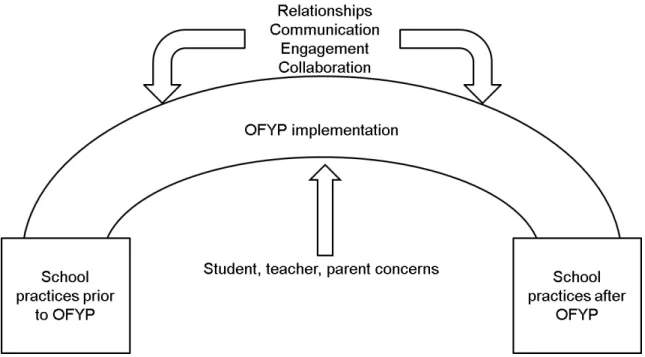
The research was guided by a single question: what were the perceptions and recollections of the Springhill ISD school leaders responsible for implementation of the Optional Flexible Year Program (OFYP)? Through purposeful selection, participants completed in-depth interviews aimed at studying the real-life contexts of their experiences. Analysis of participant responses revealed four major themes: (a) engagement, (b) communication, (c) collaboration, and (d) relationships.
The findings of this study suggest that effective education reform implementation requires a data-driven approach taking into consideration the unique needs of the local district and accompanying stakeholders. Implications for leadership, policy, and additional research are discussed as state and national leaders continue to improve policy aimed at reforming our nation’s schools.
ACKNOWLEDGEMENTS
I wish to thank the many individuals who have supported and encouraged me as I made this journey through my doctoral studies. I express my gratitude to my committee chair, Dr. Mario S. Torres, for his guidance, support, and encouragement. Thank you for always being available to share your expertise and provide assistance.
I also acknowledge my committee members for their support. Your assistance and encouragement enabled to reach my goal. My sincere thanks to: Dr. Lynn Burlbaw, Dr. Jean Madsen, and Dr. Jia Wang.
I would also like to thank the research participants interviewed for this study. Thank you for your time and support of this project.
Most importantly, I want to acknowledge the constant positive encouragement and many sacrifices that my parents, husband and children have made in order for me to accomplish this dream. I love you all very much and appreciate your patience, love, and support. I could not have done this without each of you.
iv TABLE OF CONTENTS Page ABSTRACT……… ii ACKNOWLEDGEMENTS……… iii TABLE OF CONTENTS……… iv LIST OF TABLES……….. vi
LIST OF FIGURES……… vii
CHAPTER I INTRODUCTION……… 1
Statement of the Problem………... 2
Purpose of Study……… 6
Significance of Study………. 7
Theoretical Framework……….. 8
Operational Definitions……….. 9
CHAPTER II LITERATURE REVIEW……… 11
Introduction……… 11
Theoretical Framework……….. 12
Brief History of School Reform………. 24
Obstacles to School Reform………... 33
Strategies for Reducing School Dropouts……….. 35
Summary……… 39
CHAPTER III METHODOLOGY……… 40
Introduction……… 40
Research Design………. 41
Data Collection………... 42
Data Analysis………. 50
Limitations and Assumptions……… 55
Background and Role of the Researcher……… 56
Summary……… 57
CHAPTER IV FINDINGS……… 58
Major Themes……… 58
Summary……… 84
CHAPTER V DISCUSSION AND CONCLUSION……… 86
Introduction……… 86
Summary and Interpretation of Findings……… 90
Recommendations and Implications for Future Research and Practice…. 100 Study Limitations……… 104 Conclusion……….. 106 REFERENCES……… 108 APPENDIX A………. 125 APPENDIX B………. 126 APPENDIX C………. 130
vi
LIST OF TABLES
Page
Table 1. Twelve Principles of Change……… 23
Table 2. TAKS Scores for Springhill ISD……….. 43
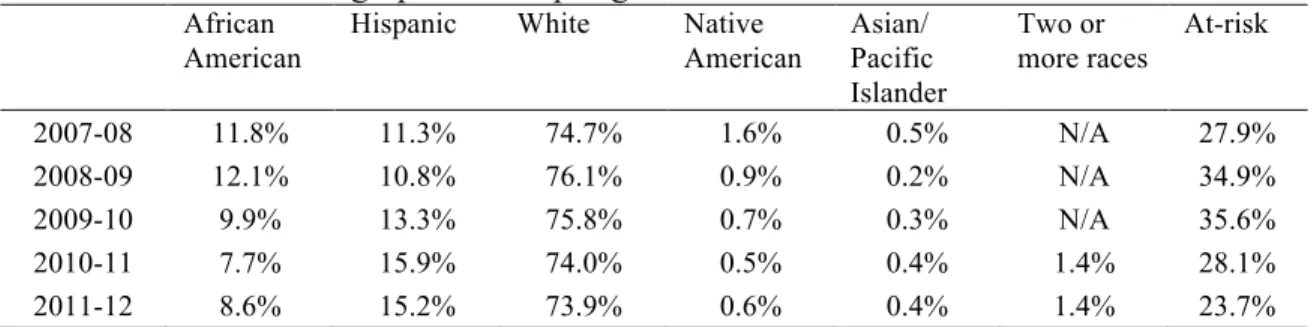
Table 3. Student Demographics for Springhill ISD……… 43
Table 4. Participant Characteristics……… 47
LIST OF FIGURES
Page
Figure 1. Example matrix………. 53
1 CHAPTER I INTRODUCTION
“People do not resist change; people resist being changed” – Richard Beckhard, 1999
Today, more than ever, a quality education is a prerequisite for success. At the same time, the population of the United States is increasingly diverse, and the composition of American classrooms reflects these changes. Schools are becoming more complex in every dimension: ethnicity, race, immigrant status, class, gender, and ability (Armstrong, Henson, & Savage, 2009). Consequently, in response to ever-increasing accountability standards, educators are under tremendous pressure to ensure all students become high achievers (Sleeter, 2005). The challenge of providing high-quality education for all students has generated a plethora of reform efforts, such that school reform has become integral to schooling itself (Tyack & Cuban, 1995).
Recently, the No Child Left Behind (NCLB) Act of 2001 prompted renewed national attention to school accountability and challenged states to better address the needs of all students. In response to the mandate of NCLB (2001) to close achievement gaps, the Optional Flexible Year Program (OFYP) was authorized in 2003 by the 78th Texas Legislature (Texas Education Code, §29.0821). The OFYP was designed for at-risk students—those who have not performed satisfactorily on the Texas Assessment of Knowledge and Skills (TAKS) or are unlikely to be promoted to the next grade level (see Appendix A for a complete list of at-risk criteria for Texas). This program provides the opportunity for a reduced number of school days for students who satisfactorily meet
all core courses (i.e., math, science, reading, and social studies), TAKS, and attendance requirements.
Many educational reforms are implemented each year, yet local administrators often lack understanding of policy implementation. Without clear guidance on how to bridge the divide between policy and practice, educational reforms founder and students suffer. This study was designed to further understanding of the implementation process at the local level by gathering data from school district administrators responsible for implementing reform. Schram (2003) contends qualitative research is fundamentally interpretive. This qualitative study is not an endeavor intended to reach a definitive answer. Rather, it is a search to explore the multiple interpretations of information provided by the participants. Therefore, the use of an exploratory study was selected to examine how local administrators experienced OFYP implementation in a single Texas public school district during 2007 through 2012. To understand the details of this process, this study specifically focused on the recollections and perceptions of the administrators involved in implementation. This exploratory study was conducted within a theoretical framework that utilized systems theory, especially the concept of learning organizations, capacity building theory, and policy implementation theory.
Statement of the Problem
Over the years, public schools have been subject to several large-scale reform efforts legislated by federal and state policymakers in response to public demand for improved student achievement. Several of these reform efforts have been brought about by education professionals and researchers while others have been legislated in response
3
to public perception and calls for reform. Within the last several decades, public schools have weathered numerous reform efforts legislated by federal and state policymakers in response to public sentiment calling for changes in education that would lead to increased student achievement. For this reason, this study focused on the challenges school leaders face when implementing policies created to enhance test performance for historically underachieving students by examining their perceptions and recollections of that time period.
Taking an in-depth approach to examining perceptions of a school reform idea after decades of highly politicized school improvement agendas is both appropriate and timely. In 1983, reports such as A Nation at Risk (1983) pointed out inequities in and among groups of students that brought about political and parental demands for reform of public schools. The Goals 2000: Educate America Act of 1994 attempted to provide resources for state and local efforts to implement systemic reform. The ambitious reforms called for by NCLB (2001) increased the rigor of required assessments, yet failed to provide a clear, realistic path for implementing the necessary changes. NCLB (2001) focused on individual student performance but neglected the fundamental role of teachers in successful implementation (Fullan, 2003). Additionally, in spite of the urgency of reform policies passed to meet the goals of NCLB, a reduction in at-risk student numbers has not been achieved; in fact, at-risk numbers have increased (Balfanz & Legters, 2004).
Consequently, school leaders continue to struggle with closing the achievement gap while complying with the stringent accountability standards created by NCLB
(2001). The results of these reform efforts have raised emotions both in and out of the public education arena. As the world has become smaller, more and more focus has been cast on America’s ability to remain competitive in a precarious international environment. Elmore (2000) argued that the key to America’s educational disparities is large scale educational improvement, yet also acknowledged that public education has been unable to effectively accomplish this through the last twenty-five years of standards-based reform, which was considered the solution to America’s educational woes. Instead, a major overhaul is required in the way that school leadership is defined and practiced, as current leaders lack the capacity to implement the systemic changes that are required by standards-based reform.
Well-intentioned efforts to reform American education have included several research-based comprehensive plans to reorganize entire schools, including such models as the New American Schools, Core Knowledge Schools, Accelerated Schools, Success for All, the Edison Project, and Goals 2000 (Fuhrman, Elmore, & Massell, 1993; Sizer, 1984; Slavin & Madden, 1998). Millions of federal dollars have been allocated to states to develop school improvement plans to ensure that all students attain high levels of success (Fuhrman et al., 1993). Unfortunately, these goals have not been realized, public skepticism has continued to grow, and the pendulum of education reform continues to swing.
Tyack and Cuban (1995) argue that reform initiatives have promised to reinvent schooling’s methods and structures, “but in practice their reforms have often resembled shooting stars that spurted across the pedagogical heavens, leaving a meteoric trail in the
5
media but burning up and disappearing in the everyday atmosphere of schools” (p. 11). More recent education reform has neglected to spotlight the local school district as an agent of reform (Marsh, 2000). McLaughlin and Talbert (2006) suggest that this oversight is due to “districts’ dismal track record in carrying out or sustaining school reform which leads some policymakers and reformers to conclude that while the district is part of the reform problem it should not be part of the solution” (p. 4).
Implementation of reform policy at the local level may result in intentional or unintentional change in the intent of the legislation. On the other hand, the local district can be a very active agent of change, adept at implementing new policy initiatives and using them to their advantage. McLaughlin and Talbert (2006) argue that the local school district is the most important unit of change in the reform process. Alternatively, research by Fullan (2003) found that classroom teachers are the true agents of educational change.
The Optional Flexible Year Program (OFYP) is a reform policy that allows Texas school districts a route to rearrange the traditional school schedule and reallocate resources based on the needs of individual students. Although many reform efforts are undertaken at the state and federal levels, OFYP is unique in that it does not provide direction in curricula but, instead, opens the door for Texas districts to redesign the structure of the school calendar. Knowing that successful educational reform requires a multifaceted approach shared among all stakeholders, this study was guided by the following question: What are the recollections and perceptions of the school leaders who were involved in the implementation process of OFYP?
Description of the Optional Flexible School Year Program
The Optional Flexible Year Program (OFYP) was passed by the Texas Legislature in 2003 as Senate Bill 346. Senator Steve Ogden authored the bill. As part of Education Code, §29.0821, this program targets students who did not or who are likely not to perform satisfactorily on the state assessment (TAKS), or who are likely not to be promoted to the next grade level. This group of students is labeled “at-risk.” A complete list of at-risk criteria for Texas can be found in Appendix A. The Optional Flexible Year Program has grown from 17 participating districts in 2004 through 2005 to a high of 217 in 2010 through 2011. In the last year of the study (2012-2013), 107 school districts were approved to implement OFYP.
Purpose of Study
The purpose of this exploratory study was to gather administrators’ insights into the five-year implementation process of a school reform (i.e., OFYP) designed to help at-risk students within a single rural Texas school district. A single research question guided this research: What were the perceptions and recollections of the school leaders who were involved in the implementation of the Optional Flexible Year Program (OFYP)? This exploratory study investigated how one local school district’s unique circumstances influenced implementation of policy. The intent of this study was to explore the implementation process as experienced by school leaders within a specific context during an implementation event. Successful reform implementation depends on teacher and administrator cooperation and commitment. Embedded in the multitude of
7
reform efforts are the individual experiences of local school leaders and staff who contemplate and interpret information.
Therefore, the perceptions and recollections of school leaders responsible for implementation were carefully collected and analyzed. Specifically, the dynamic and continuous processes of learning, reflecting, and reorganizing were the focus of this study (Brookfield, 1995; Hall & Hord, 2006; Schön, 1983, 1987). Chapter II will present a review of the current literature regarding school reform. Chapter III describes the methodology employed. Chapter IV presents the findings of the study and analyses of the data collected. Chapter V discusses the implications of this research on future policy implementation in the context of school reform.
Significance of Study
Texas has invested heavily in school reforms aimed at improving state-assessment test scores among racial and ethnic minorities. Although test scores among Hispanic and black students have risen, substantial gaps remain between minorities and white students (Marzano, 2003; Reeves, 2003; Schmoker, 2004). State legislators created the OFYP policy to address at-risk student achievement. Prior studies have not identified how school leaders at the local level take top-down reform policy and implement if effectively into their organization. Day (2002) identified some challenges that school leaders face when implementing school reform, but fails to address proactive steps that administrators as they consider local district characteristics that will influence implementation.
Additionally, research on top-down reforms suggests the need for capacity-building efforts at the local level but does not go far enough in providing guidance for local administrators on how to strategically plan for the multifaceted endeavor of implementing change in a school district (Schuttloffel, 2000; Kolderie, 2008). As no formal process exists to examine the ground-level experiences of individual educators charged with implementing OFYP and other reforms, this study adds to the existing literature by closely analyzing the detailed recollections of school administrators personally involved with OFYP implementation. These school leaders’ insights provide useful information for optimizing similar school reform efforts.
The results of this study will be widely beneficial. Texas legislators advocating for educational reform will gain increased understanding of the challenges associated with implementing policy changes at the school district level. Teachers and administrators may use the insights gleaned from this research to optimize the implementation of OFYP and other reform policies. Districts that chose not to participate in the OFYP can benefit from the results of this study as it can reveal a look at the inner workings of how this reform policy was received, interpreted, and implemented. It can give educational leaders in non-participating districts valuable information on which to base future decisions when considering the possibility of applying to the OFYP, or other optional reform policies.
Theoretical Framework
This exploratory study was conducted within a theoretical framework utilizing systems theory, especially the concept of learning organizations, capacity building
9
theory, and policy implementation theory. Systems theory describes interactions that take place between an organization and its environment, specifically a learning organization. This theory allowed consideration of the multiple variables that influence policy implementation within a school. Likewise, capacity building theory, which examines the ability of the people within an organization to accrue new knowledge and skills was determined to be a good fit for this study since it explored how the school leaders experienced the process of implementation. The impact of school leadership on policy implementation is noted in existing literature as critical to successful school reform (Fullan, Cuttress, & Kilcher, 2005; Hall & Hord, 1984; Hord, Rutherford, Huling-Austin, & Hall, 1987; Leithwood, Day, Sammons, Harris, & Hopkins, 2006; Sailor, 2009). Therefore, implementation theory provides a solid foundation for this study since the process administrators were asked to recall was their lived experiences of the implementation process.
Operational Definitions
Exploratory Study: A method of qualitative research that intends to explore the research question(s), determine the nature of the problem, and does not intend to offer final and conclusive solutions to existing problems (Saunders, 2007).
No Child Left Behind (NCLB) Act of 2001: Standards-based education reform legislation that reauthorized the Elementary and Secondary Education Act (1965). This legislation made federal school funding dependent upon satisfactory student performance on statewide academic assessment tests.
Optional Flexible Year Program (OFYP): Students who attend schools that participate in OFYP may be approved for early dismissal at the end of the school year, provided they meet the following criteria: 1) pass all core classes with 70% or better, 2) receive satisfactory scores on TAKS Texas Education Code, §29.0821. Texas Assessment of Knowledge and Skills (TAKS): Texas state standardized tests used
in grades 3-11 to assess reading, writing, math, science, and social studies skills required under Texas education standards during years 2003 through 2011. At-risk Students: Under §29.081d of the Texas Education Code, this includes all
students under 26 years of age who are “at risk of dropping out of school” and meet the criteria found in Appendix A.
11 CHAPTER II LITERATURE REVIEW
Introduction
The purpose of this chapter is to provide background and context for studying the recollections and perceptions of administrators in the study district during the implementation process of the Optional Flexible Year Program. Since this study investigates the perceptions and recollections of school leaders implementing a reform policy, this chapter will explore the history of school reform efforts in order to contextualize the era of high-stakes accountability that characterizes current reform efforts both in Texas and across the United States. Obstacles to reform and a discussion of failed reform efforts will add to the review of the literature in order to demonstrate where the Optional Flexible Year Program fits into the broad picture of school reform. Finally, several gaps in existing literature will be identified related to the role of local administrators in implementing educational reform policies.
Many politicians, citizens, and stakeholders expect American public schools to correct perceived social and educational problems. Some see school reform strictly in terms of higher standardized test scores, others define reform as restructuring efforts, and still others think that successful reform is about improving fundamental student cognitive skills (Brooks, 2005). Day (2002) reported that although the particular content, direction, and pace differ regionally, all school reforms share five common factors:
1) They are proposed because governments believe that by intervening to change the conditions under which students learn, they can accelerate improvements, raise standards of achievement, and somehow increase economic competitiveness 2) They address implicit worries of governments concerning a perceived fragmentation of personal and social values in society
3) They challenge teachers’ existing practices, resulting in periods of at least temporary destabilization
4) They result in an increased workload for teachers
5) They do not always pay attention to teachers’ identities—arguably central to motivation efficacy, commitment, job satisfaction and effectiveness. (p. 679) School reform is a perennial issue in American civil discourse, and each new reform effort promises equity, high achievement, and greater opportunity for students. However, much of the educational system has failed to adapt to the changing world characterized by technological innovation, leaving students inadequately prepared to compete in the new global society (Elmore, 2002; Fullan, 2003; Friedman, 2006; DuFour, Eaker, & Karhanek, 2004; Leithwood, Louis, Anderson, & Wahlstrom, 2004; Schmoker, 2004). Therefore, school reform remains an issue that needs further exploration.
Theoretical Framework
This exploratory study was conducted within a theoretical framework utilizing systems theory, especially the concept of learning organizations, capacity building theory, and policy implementation theory. Systems theory framed the analysis of the
13
school district as a single open system. Organizational learning concepts guided the data collection an interpretation of participants’ experiences using ongoing feedback from parents, teachers, students, and fellow administrators to optimize the OFYP implementation process. Capacity building efforts were also explored in the interviews as key components of reform. The most important aspect of the theoretical framework was policy implementation theory, which guided interpretation of data gathered regarding administrators’ experiences with OFYP implementation. These theories were selected for the framework of this study because they address the multiple variables that may influence that complex and often ambiguous process of reform policy implementation. Furthermore, these theories provide a solid foundation for exploring the nuances of participants’ experiences.
Systems Theory
Systems theory describes intra-organizational interactions and interactions between an organization and its environment (Von Bertalanffy, 1950, 1968). According to Shafritz, Ott, and Jang (2005), “systems theory views an organization as a complex set of dynamically intertwined and interconnected elements, including its inputs, processes, outputs, and feedback loops, and the environment in which it operates and with which it continuously interacts” (p. 476). Although systems theory was originally developed to explain biological phenomena, it has successfully been applied to social science problems as well (Luhmann, 2013). The central notion of systems theory regarding social sciences is the holistic rather than atomistic view of society. Luhmann (2013) has even asserted that communities instead of individuals are the building blocks of society.
Although a small part of a much larger bureaucracy, each local school is a complete system and its organizational culture determines the success of policy implementation. Schools are open systems, interdependent with their larger environments (Lunenberg, 2010). Schools are not closed systems because they are not autonomous and self-regulating. Open systems consist of five elements: inputs, transformation processes, outputs, feedback, and the environment (Scott, 2008). This study specifically explored the transformation process of implementing reform in an open system.
Learning Organizations
Senge (2006) asserted that five disciplines are essential for learning organizations: (a) team learning, (b) shared organizational vision, (c) individual mastery, (d) mental modeling, and (e) systems thinking. Senge suggests that systems thinking is the ability to see interrelationships rather than isolated parts of an organization, calling this the “fifth discipline.” Senge identifies the learning organization as a place “where people continually expand their capacity to create the results they truly desire, where new and expansive patterns of thinking are nurtured, where collective aspiration is set free, and where people are continually learning how to learn together” (Senge, 2006, p. 3). This “dynamic complexity” is utilized in this study as the understandings, relationships, and decision-making processes that occur within a group during policy implementation are examined.
Organizational learning is crucial for the success of system-wide reform efforts (Fullan, 2011; Honig, 2007; Resnick & Hall, 1998). Organizational learning can be
15
simply defined as the process that individuals within an organization go through to learn, grow, and change that ultimately transforms the organization as a whole. It is not only the learning of individuals, but also the transformational process that takes place within the organization as a result of the experiences and actions of the individuals. By developing a shared set of goals, individuals within an organization take an active role in building the capacity for change (Mitchell & Sackney, 2000). For educational organizations, staff must work together to make the organization more effective, such as aligning the curriculum, implementing policy, and evaluating resources as a team. System-wide improvement is the result of pursuing organizational goals within the norms of the existing social structure of a given school district (Copland, 2003). School reform must work within the confines of this social structure, where innumerable factors exist which may limit the feasibility of some reform efforts. Organizational culture continues to be recognized as a significant contributor to organizational improvement efforts (Schein, 2004). An open systems approach to organizational improvement combines the elements of human resources, structure, politics, and culture. In this study, organizational learning concepts guided interview questions about the relationships among participants and stakeholders, as well as the decision-making processes that occurred among administrators during OFYP implementation.
Improvement in classroom instruction has historically been the most difficult type of reform to accomplish, in part because, meaningful reform is most likely to occur as a result of internal changes rather than changes imposed from outside policymakers (Tyack & Cuban, 1995). Teachers learn best from one another, and may motivate each
other to sustain positive reform efforts (Schmoker, 2004). Therefore, professional learning communities are the most promising strategy for lasting, sustainable school reform efforts Schmoker, 2004). Other researchers have suggested that organizational learning may be the key for successful system-wide reform efforts (Fullan, 2003; Honig, 2007; Resnick & Hall, 1998; Supovitz, 2006).
Organizational learning theory, “asserts that organizations improve when leaders gain expertise, share knowledge, plan actions, conduct evaluations, gather evidence, make sense of data, and identify best practices” (Huber, 1991; Senge, 2006; Supovitz, 2006). Likewise, Wenger (1998) argued that “within organizations, as participants engage in the pursuit of shared enterprises, learning results in practices that reflect both the pursuit of the enterprise, as well as the attendant social relations” (Copland, 2003, p. 379). School reform must work within the confines of the organizational hierarchy, which can lead to additional challenges.
Learning organizations can be defined as, “organizations capable of improving their performance by creating new ways of working and developing the new capabilities needed for that work” (Resnick & Hall, 1998, p. 101). In schools, learning organizations are comprised of teachers and administrators who work together to improve teaching and learning within their local school. Multiple “nested” learning communities at the local and state levels should be “built around the core belief that ability is learnable through effort and that an active, self-regulated approach to professional growth produces high levels of achievement over time” (Resnick & Hall, 1998, p. 102). School reform must
17
work within the confines of the organizational hierarchy, which can lead to additional challenges.
Borrowing core aspects of a systems theory approach, learning organizations utilize the human relation and group interaction aspects to building a strong organizational culture and climate. Sustainable reform must change the daily routines of schools to the extent that they become the “new normal” for schools instead of another fad of educational reform. By empowering teachers and administrators to work autonomously as well as together to practice continuous improvement and change, learning organizations may also lead to balancing top-down command with bottom-up independence. To achieve this balance, schools can use learning communities to create a supportive, capacity building role.
How local school districts interpret and implement reform policies aimed at school improvement can vary greatly. Some warn that too much attention is focused on broad, systemic reform at the expense of actual change takes place at the classroom level (Kolderie, 2008). Kolderie suggested that forcing reform through political avenues is why so little measurable change occurs. Instead, bottom-up approaches that focus on building the capacity of the organization are more likely to bring about meaningful change (Schmoker, 2004). Therefore, reform efforts that are top-down in their approach using predetermined standards of success may be set up for failure due to lack of capacity.
Capacity Building Theory
Capacity, as it relates to schools, can be defined as “the collective power of the full staff to improve student achievement school-wide” (Newmann, King, & Youngs, 2000, p. 261). Building capacity in schools involves the integration of teachers’ knowledge, skills, and dispositions, professional community, program coherence, technical resources; and principal leadership (Newman, et al., 2000). School capacity building greatly depends upon the existence of common goals clearly communicated among teachers and staff (Newmann et al., 2000). Conversely, lack of a shared vision, caused by frequent educator turnover or underemphasized professional development, limits school capacity building.
Multiple characteristics of individuals within the school can influence school capacity, such as commitment to policy implementation, knowledge base, instructional skill, and planning efficacy (Cohen et al., 2007; Fullan, 2011). Since the main goal of capacity building within schools is improvement in student achievement, the process nearly always involves capital investment and accruement of new knowledge and skills. By expanding the conditions and opportunities for collaborative learning efforts, schools can build capacity that will lead to empowerment and inclusion for stakeholders (Harris, 2001, p. 261).
Assessment of staff knowledge and skills is essential for successful implementation (Clark & Estes, 2002). Educational leaders must create a culture that values continual improvement and that holds individuals accountable for performance (Elmore, 2002; DuFour, Eaker, & DuFour, 2005). An analysis of the policy
19
implementation research indicates individual interpretations of a policy as well as the capacity of the organization are especially important in how the policy is carried out.
Policies directed at educational reform have provided momentum and legal precedence in attempts to correct deficits, inequities, and problems that continue to plague today’s public schools. Structural reform may not always produce changes in teaching practice, or student achievement (Elmore, 1995). Factors such as shared norms and teachers’ knowledge and skills influence the success of reform, and these factors, can be heavily influenced by capacity.
Many experts argue that the root problem with the current public educational system has not yet been addressed by previous reform efforts (Wolk, 2011). While the current organization of schools remains mostly static, increasing accountability standards, changing student demographics, and demanding global standards have led to a situation in which the current capacity of public schools is woefully unprepared (DuFour et al., 2004; Elmore, 2002, 2004; Friedman, 2005; Fullan, 2003; Leithwood et al., 2004; Reeves, 2003; Reigeluth & Garfinkle, 1994; Schmoker, 2004; Simmons, 2007; Tyack & Cuban, 1995).
“Capacity-building requires different tools and different approaches to producing, sharing, and using knowledge than those traditionally used throughout this century” (Darling-Hammond, 1993, p. 752). Although capacity-building can look different for every school, the intent is that positive, tangible results will occur. In terms of policy implementation, capacity refers to the knowledge, skills, and abilities available to those responsible for implementing policies (Spillane, 1999; Firestone, 1989). School
capacity is influenced by various factors. School size, practitioners’ will, knowledge base, instructional skill, and planning efficacy all influence the effective implementation of policy (Bardach, 1977; Cohen et al., 2007; Yin, 2009).
It is difficult to take a policy from the national level to the state level to the local level. When a policy is implemented at the local level, policy makers at the national and state level cannot mandate that local level constituents will carry out the vision effectively (Spillane & Thompson, 1997). Therefore, it is vital that all stakeholders be involved in the planning process for implementing reform policies. Involvement increases stakeholders’ confidence in themselves, their colleagues, and the school to promote professional development (Mitchell & Sackney, 2000). Local capacity in schools needs to be developed and led by trusted, committed leaders within the schools.
It is important to understand the nature of policy implementation, especially from the perspective of those charged with carrying it out within an organization. According to research, successful implementation is crucial to obtaining the desired results as well structuring the ability to sustain the reform over time (Fixsen, Naoom, Blase, Friedman, & Wallace, 2005; Fullan, 2005; Hargreaves & Fink, 2006; Lambert, 2003; Mourshed, Chijioke, & Barber, 2011). Policy implementation requires that the actors possess some background knowledge of the policy, an understanding of the rationale for implementation, and access to specific implementation resources.
As such, policy implementation is not a defined process, but instead, one that is influenced by perspective of the individual or organization implementing the policy (Pressman & Wildavsky, 1973, 1984). Reforms requiring major changes in existing
21
patterns of individual and organizational behavior should be implemented slowly and through a process of mutual adaptation, or capacity building (Pressman & Wildavsky, 1973, 1984). Since reform efforts are critical to effectively moving organizations forward, it is important that research continues to search for and analyze the processes involved in this phenomenon.
Policy Implementation Theory
The study of policy implementation provides the crux of the theoretical framework for this study. While systems theory, organizational learning theory, and capacity building theory provide support for this study, theory from the field of policy implementation lends insight into how this study of administrators’ perceptions and recollections is relevant in advancing research on implementing reform policies like OFYP. Policy change takes place in increments, sometimes slight change at a time, and other times dramatic shifts, all continuously influenced by the power of the status quo (Hall, 1993). First-order change consists of routine adjustments to existing policies. Second-order change is characterized by policy change driven by a shared goal. Finally, third-order change is driven by transformation of the goals themselves (Hall, 1993).
Organizations generally select first-, second-, or third-order policy changes given their organizational capacity and understanding of the problems faced. Policy instrument selection is dependent on maintaining or challenging the status quo (Hall, 1993). An organization’s understanding of the structure of a policy also influences the level of policy undertaken. Most policies are chosen by bureaucrats on behalf of society, and therefore bureaucratic professional norms and paradigms constitute the language and
culture of policy making (Hall, 1993). Given the fact that many public policies have a multitude of effects on society, change can be risky.
Additional literature on policy implementation falls into contrasting perspectives: bottom-up approaches and top-down approaches (Garn, 1999; Matland, 1995; McLaughlin, 1987; Schofield, 2004). A third perspective has also emerged that focuses on a sociocultural approach to policy implementation (Sutton & Levinson, 2001). This third perspective considers the negotiations and relationships at the micro-level of the organization’s culture in order to analyze policy more effectively.
The process of carrying out the intentions of policy makers characterizes top-down approaches to policy implementation (Mazmanian & Sabatier, 1981; Van Meter & Van Horn, 1975). Regarding educational reform policy, school leadership is a critical factor in successfully implementing change (Hall & Hord, 1984). This finding developed from earlier research they conducted in the 1970’s on the value of innovation in schools, which led to the development of the Concerns-Based Adoption Model (CBAM). Reforms are frequently introduced in schools but inadequately tested, leading administrators to believe the reforms were ineffective (Hall & Hord, 1984). This conclusion may be mistaken because implementation rather than the reform itself may be the problem (Hall & Hord, 1984). The process of change is critical to reform success, not just the design and protocol of the new policy. A change facilitator who leads the change effort may improve reform success. In the case of schools, the change facilitator could be a principal, superintendent, director, or any staff member who is tasked with leading a change initiative. Twelve principles of change that can help school
23
administrators implement reform (Table 1) guided data collection, analysis, and interpretation in this study.
Table 1 Twelve Principles of Change Principles of Change (Hall & Hord, 2011) 1. Change is a process, not an event
2. There are significant differences in what is entailed in development and implementation of an innovation
3. An organization does not change until the individuals within it change 4. Innovations come in different sizes
5. Interventions are the actions and events that are key to the success of the change process 6. There will be no change in outcomes until new practices are implemented
7. Administrator leadership is essential to long-term change success 8. Mandates can work
9. The school is the primary unit for change 10. Facilitating change is a team effort
11. Appropriate interventions reduce resistance to change 12. The context for the school influences the process of change
In summary, the theoretical framework of this research is built upon a
combination of systems theory, particularly the concept of learning organizations, as well as capacity building and policy implementation theories. This study focused on a single local school district as an open system and explored the transformation processes undergone during a five-year reform implementation. Organizational learning concepts were utilized to explain how the school district practiced ongoing stakeholder feedback regarding implementation success. Capacity building efforts were also examined as key
components of reform. The most important aspect of the theoretical framework was policy implementation theory, which guided interpretation of data gathered regarding administrators’ experiences with implementing the district-wide reform. In the following section, a brief outline of school reform history will be presented and current challenges of reform efforts will be discussed.
Brief History of School Reform
Since its inception in the 19th century, the American public school system has struggled with educational iniquities. Many reform movements have sought to close the achievement gap and provide equal access to educational opportunity for all students. Current school reform is the culmination of decades of school improvement policy efforts beginning with the landmark Supreme Court decision in Brown v. Board of Education of Topeka (1954), which abolished the practice of race-segregated public schools. After the ruling, individual states were responsible for implementing desegregation, a slow process that only gained momentum after the passage of the Civil Rights Act of 1964.
First Wave of Reform
Under the Johnson administration, federal involvement in education policy dramatically increased. In 1965, the Elementary and Secondary Education Act (ESEA) was passed, an important and groundbreaking piece of legislation that poured millions of federal dollars into public education, yet also created a larger bureaucracy more beholden to political interests (Wong, 2008). Before the passage of the ESEA (1965), state and local governments controlled public education. To comply with the ESEA’s
25
directive to address achievement gaps, many states mandated basic skills instruction and minimum competency testing (Cohen, et al., 2007). These mandates “acknowledged and attempted to address differences in abilities, ethnicities, and socioeconomic backgrounds” (Bennett & Hansel, 2008, p. 225). Another important piece of legislation that was passed during this first wave of reform was the Education for All Handicapped Children, now called the Individuals with Disabilities Act of 1975. This act put safeguards in place to ensure that children with disabilities receive educational and other related services.
Towards the end of this period, public school funding inequities were argued and decided in a federal court decision. In 1971, Rodriguez v. San Antonio Independent School District found that public school funding in Texas discriminated against students living in poor school districts. In 1973, the courts reversed the Rodriguez decision in order to allow the Texas legislature to address the funding inequities (Funkhouser, 1990). An attempt was made to address these inequities when The Equal Educational Opportunity Act was passed by the Texas legislature in 1979. This act established the first state mandated testing program for students called the Texas Assessment of Basic Skills (TABS), which was in place from 1980 through 1985.
This first wave of reform paved the way for future reform efforts. Politics was already a key ingredient in the mix as attempts continued to make the educational system more equitable and effective. The creation of the plethora of federal programs aimed at improving education fully incorporated special interest groups and bureaucratic involvement into the states’ job of providing educational services to children. Public
awareness about education was also increased due to media attention as Americans were beginning to compare existing educational standards of U.S. students to those around the world.
Second Wave of Reform
As time went on, reform focused more on student achievement and began to emphasize the need for accountability. Although federal money increasingly financed public education, states were still primarily responsible for addressing achievement gaps and providing high-quality education to all students. In 1983, the National Commission on Excellence in Education (NCEE) published A Nation at Risk, considered the origin of today’s standards-based education reforms (Jorgensen & Hoffmann, 2003). This report revealed a steep decline of American student achievement on national and international scales and called for the creation of a core curriculum and standardized testing (NCEE, 1983). The consequent public outcry prompted policy makers to pass the Improving America’s Schools Act of 1994, which reauthorized ESEA and put school reform back in the national spotlight.
In Texas, this standards-based movement in Texas was spearheaded by Ross Perot, an influential businessman at the time. Perot was called upon by then Texas Governor Clements, and then by Governor White, to help develop educational policy reforms for Texas. He suggested basing school reform on a business model saying, “…nuke the [Texas] system and rebuild it from the ground up, teaching all students the same material at the same pace” (Rutkowsky & McNeil, 2001, p.75). Heavily influenced by Perot’s involvement, Texas legislators implemented major changes.
27
A statewide curriculum was written and adopted in 1984 called the Essential Elements. Other sweeping changes, some very controversial, were also put into place, which included: (a) the requirement that high school students had to make a 70 or better in high school courses, (b) the “no pass, no play” rule, (c) the requirement for teachers to pass a proficiency test, (d) changes to the statewide testing program that included basic skills testing at odd-numbered grade levels with the Texas Assessment of Minimum Skills (TEAMS), and (e) the requirement for high school students to pass an “exit level” test.
Then, in 1990, policy makers began revising testing requirements. The Texas Assessment of Academic Skills (TAAS) was introduced to replace TEAMS. The TAAS test was intended to focus on higher order skills and problem solving, rather than just basic skills. In addition, the Goals 2000: Educate America Act of 1994 allocated federal funds for all students, not just those at-risk and disadvantaged. When states failed to meet the student achievement objectives outlined in this legislation, federal accountability standards were subsequently created with the passage of NCLB (2001).
The second wave of reform began focusing more on student achievement. Accountability was part of the new formula for success. Politically, the second wave reforms alienated many teachers, sending the message that they were not competent based on their credentials alone. The “no pass, no play” rule led to loopholes being created within the system (e.g. special education placements). Again, in comparing the U.S. educational standards to the rest of the world, America was still playing catch up. As the interactions of power players, stakeholders, and authority figures interacted
within the multiple layers of the educational bureaucracy, control for decisions and access to resources drove the policy-making machine to continue creating programs and reform legislation aimed at improving education. However, states alone could not produce desired results. This led to the next and current wave of reform – federal accountability.
School Reform Today
The third wave of reform was marked by the introduction of the TAKS test (Texas Assessment of Knowledge and Skills) in 1999 and the STAAR (State of Texas Assessment of Academic Readiness) in 2012. The new cornerstones for education became accountability, local control, parental involvement, and funding what works. Rod Paige, U.S. Secretary of Education at the time said, “[The stated focus of NCLB] is to see every child in America – regardless of ethnicity, income, or background – achieve high standards” (U.S. Department of Education, 2003).
The introduction of NCLB (2001), recently reauthorized in 2013, marked a massive transfer of power from local school districts and states to the federal government. No longer tangentially involved, mostly in the form of funding, NCLB (2001) put the federal government in charge of the details of public education. Schools across the country have developed standards for student achievement in response to NCLB (2001). Intended to better address students’ learning needs and inequalities within the educational system, results have offered little in the way of exactly how schools can ensure that all students meet these standards.
29
According to Wong, (2008), this ambitious legislation “elevated performance-accountability to the nationwide agenda that applied to all students and all schools” (p. 24). Although still heavily reliant on local districts and states for program implementation, NCLB (2001) radically constrained teachers and administrators by altering the school system from process-oriented to output-oriented. Teachers and administrators are under tremendous pressure to improve test scores. Many teachers are frustrated as they are forced to teach content that will appear on tests and the teaching of “standards” instead of “kids”.
Top-down reforms such as NCLB (2001) create uniform accountability standards but, unlike bottom-up or grassroots reforms, do not generate much stakeholder buy-in and commitment. Local grassroots reforms are idiosyncratic as program changes vary from school to school, and these reforms lack the uniformity of top-down efforts. Incongruence between federal policy and the realities of the local school environment have hindered many potentially successful reforms (Schuttloffel, 2000). Kolderie (2008) suggested that politicians focus too much on systemic reform at the expense of actual change at the classroom level. To correct this, Kolderie (2008) encouraged more capacity building bottom-up approaches. As the results of top-down reforms continue to be analyzed and evaluated to determine their success, a brief discussion of Texas assessments follows to provide additional context for the role of OFYP in the study district.
Review of Texas State Assessment Tests
In 1979, the Texas state legislature passed the Equal Educational Opportunity Act to address educational inequities and established the first state mandated testing program for students, Texas Assessment of Basic Skills (TABS; Funkhouser, 1990). TABS exams tested reading, writing, and math abilities of third-, fifth-, and ninth-grade students. Texas Assessment of Minimum Skills (TEAMS) replaced TABS in 1985, when the Essential Elements statewide curriculum was adopted (Kuehlem, 2004).
Throughout the 1980s, several controversial reforms were implemented including the “no pass, no play” rule, proficiency test requirements for teachers, and exit exam requirements for high school students. In 1990, the Texas Assessment of Academic Skills (TAAS) replaced TEAMS. The TAAS test focused on higher-order skills and problem solving, rather than just basic skills (Kuehlem, 2004). The Texas Assessment of Knowledge and Skills (TAKS) replaced the TAAS in 1999, and TAKS was recently replaced by State of Texas Assessment of Academic Readiness (STAAR) in 2012.
Reform Results
The process of school reform has become a political game. There is now greater involvement of non-traditional stakeholders, those outside the school and legislative walls, with greater access to information about the business of schooling. Educational leaders must now be skilled politicians in order to manage a school. “Educational reformers may have wanted to wipe the institutional slate clean and start again, but that has rarely happened. Instead, reforms have tended to layer, one on top of another.” (Tyack & Cuban, 1995). The political interactions that drive policy making are
31
accomplished through power. And although policy can create conditions for effective practices, it has limited control over how implementation decisions are made, particularly at the local level.
Federal initiatives such as the No Child Left Behind legislation have attempted to force reform through implementing accountability measures. Reports such as A Nation at Risk in 1983 prompted political and parental demands for reform in public schools. Initiatives at the federal level such as these tended to result in top-down reforms. Around the same time, there were also reform efforts initiated through education professionals and through professional organizations that led to bottom-up reform efforts such as site-based management and professional learning communities. The 1990’s brought attempts to correct the resulting fragmentation with the development of systemic reform approaches.
The Goals 2000: Educate America Act of 1994 offered funding to states who had plans in place that addressed the act’s goals which were aimed at initiating systemic reform in local schools. In essence, this type of top-down legislation attempted to provide support for bottom-up reform initiatives (O’Day, Goetz, & Floden, 1995). This created a “leadership dilemma” according to Supovitz (2006) as the two approaches had to reach a compromise. Top-down reforms bring forced uniform accountability standards but questionable commitment from stakeholders while bottom-up reforms generate greater buy-in and commitment but suffer from a lack of uniformity as resulting program changes vary from school to school.
Policies with no evaluative criteria built in may be well-intentioned, but if there is no evidence of positive or negative effects, they are useless. Hess (2004) argues that status quo reformers run our nation’s schools and only support reform if it does not require any significant changes. Through a constant recycling of various reform ideas, nothing ever really changes, serving only as momentary distractions from a broken system.
Schuttloffel (2000) argues that predictions of failure can be made in school reform efforts because of a “lack of congruence” between individual school
circumstances and policies. If the “congruence” between individual schools (capacity) and policy is not established, instruction will not improve and achievement will not increase. Berliner and Biddle (1995) argue that “many programs intended to ‘improve’ our schools turn out to have little detectable effect, or worse, end up creating serious problems for educators and students” (p. 173).
Importance of Local School Districts
Several authors consider the local school district the central unit of change in educational reform and school improvement (Elmore, 1995; Hightower, 2002; Leithwood et al., 2004; Snyder, 2002; Togneri & Anderson, 2003). All school district staff—school board members, central office staff, superintendents, campus leadership, and campus staff—are responsible for receiving, interpreting, and implementing federal and state policies in the interest of the district’s students (Massell, 2000). Specifically, district leaders are the key players in interpreting and implementing reform efforts, especially in schools with low-performing at-risk student groups (Elmore & Burney,
33
1999; Fullan, 1993; Supovitz, 2006). Therefore, the local district should be examined when evaluating reform efforts.
Obstacles to School Reform
Fundamental change is difficult to sustain in any large organization, and school reform continues to face formidable internal and external obstacles. Three such obstacles will be discussed to illustrate the difficulty in implementing school reform.
Classroom Realities Limit Reform
Perplexed by the endless criticism of many highly educated and dedicated teachers, Kennedy (2005) examined how the realities of classroom management limit meaningful reform. Teachers work within the relatively rigid structure of the school day, “simultaneously orchestrating time, materials, students, and ideas” (p. 2). Due to the immaturity of the student body, schools are inherently noisier and characterized by more disruptions than many other work environments. These distractions limit teachers’ ability to think deeply about and thoughtfully implement best practices (Kennedy, 2005). In their thorough review of public school reform, Tyack and Cuban (1995) concluded that improvement of classroom instruction has been the most intransigent problem for reformers. They predicted that meaningful reform most often occurred because of internal changes rather than changes imposed from outside policymakers (Tyack & Cuban, 1995). Teachers learn best from one another, and therefore professional learning communities have been the most promising strategy for lasting, sustainable school reform efforts (Schmoker, 2004).
Political Climate Limits Reform
Reform can only occur with public support, but unfortunately many reforms are “largely symbolic activities engaged in to demonstrate visible concern for student performance” (Elmore, 2002, p. 24). That is, the “public relations value” of a given reform may overshadow the purported student benefits (Hess, 1999). Accordingly, school leaders often prefer to implement high visibility reform with low relative controversy—even if student benefits are minimal—rather than a low-visibility high-controversy reform. The goal of such low-impact policies is not improved student achievement but to “reassure the community and enhance their professional reputations” (Hess, 1999, p. 107). Unfortunately, such a controversy-adverse political climate leads to implementation of “many programs intended to ‘improve’ our schools [which] turn out to have little detectable effect, or worse, end up creating serious problems for educators and students” (Berliner & Biddle, 1995, p. 173).
Teachers’ Experiences Can Limit Reform
The accountability system created by NCLB (2001) holds individual schools accountable for student performance, yet offers few practical strategies for how schools can help all students meet the new standards. Under intense pressure to improve test scores, teachers and administrators have lost much autonomy, as curricula are increasingly rigid and prescribe daily minute requirements for many subjects. The loss of classroom control frustrates many teachers (Day, 2002).
Standards imposed from external sources such as federal mandates like NCLB (2001) have led to a degree of disenchantment and loss of morale among teachers and
35
other education professionals (Day, 2002). The increasingly severe limits on teacher autonomy have challenged teachers’ personal and professional identities. Day (2002) stipulated that the results-driven education model creates conflict between “entrepreneurial” identity, concerned with meeting externally created standards, and “activist” identity, concerned with improving student learning. Day (2002) argued that the overwhelming emphasis on accountability measures and high-stakes testing “may in the long term diminish teachers’ capacity to raise standards” (p.686).
In a two-year study of professional development models of urban schools, Newmann et al. (2000) found that the five elements of school capacity were teachers’ knowledge, skills, and dispositions, professional community, program coherence, technical resources, and principal leadership. School capacity building greatly depends upon the existence of common goals clearly communicated among teachers and staff (Newmann et al., 2000). Conversely, lack of such a shared vision, caused by frequent educator turnover or underemphasized professional development, limits school capacity building (Newmann et al., 2000). Taken together, these studies highlight the importance of teacher involvement in reform creation, establishment, and implementation.
Strategies for Reducing School Dropouts
Students who dropout of school share one of four characteristics: disrupt school, chronically struggle academically, are bored with the process, and quietly dropout (Bowers & Sprott, 2012a, 2012b). The majority of dropouts are quiet dropouts, those students who are uninvolved either in academic or extracurricular activities. (Bowers, Sprott, & Taff, 2013). Existing research supports the use of fifteen strategies for
preventing students from dropping out of school: 1) Active learning; 2) after-school opportunities; 3) alternative schooling; 4) career and technology education; 5) early childhood education; 6) early literacy development; 7) educational technology; 8) family engagement; 9) individualized instruction; 10) mentoring/tutoring; 11) professional development; 12) safe learning environments; 13) school-community collaboration; 14) service-learning; and 15) systemic renewal (National Dropout Prevention Center, 2014). Effective reform efforts share several commonalities. The most effective programs target individual students or small groups of students, rather than whole classes or grades, and were implemented in high schools (Freeman & Simonsen, 2014). Ineffective interventions included high school exit exams and isolating high risk high school students (Freeman & Simonsen, 2014). However, most literature on this topic to date has not been empirical (Lehr, Hansen, Sinclair, & Christenson, 2003; Prevatt & Kelly, 2003).
Evidence of early identification of drop-out risk factors was not found in the empirical literature. “Further guidance is needed to guide schools and policymakers in the integration of these practices in the most efficient and effective manner” (Freeman & Simonsen, 2014, p. 46) and the present study addresses this gap in the literature by gathering in-depth information regarding the experiences of school administrators who implemented the success initiative OFYP, discussed below.
Optional Flexible Year Program
Over the years, especially following the passage of NCLB (2001), the Texas state legislature has created several compensatory educational programs aimed at minimizing
37
the achievement gaps among racial and socioeconomic groups and reducing dropout rates. Schools could use these tools to help at-risk students in more focused ways. These include tutorial and mentoring services, life skills programs for student parents, after-school and summer intensive mathematics and science instruction programs, the optional extended year program, the optional flexible school day program, and the optional flexible year program (Texas Education Code, §§ 29.0821-29.099).
The Optional Flexible Year Program (OFYP) is one of the most recent additions to the Texas Education Code, but has already been implemented in 78 school districts (Texas Education Agency, 2014). School districts participating in OFYP may modify their instructional calendars by up to ten days, shortening the school year to 170 days for all students except those with failing TAKS scores or ineligible for promotion to the next grade level. This allows the school district to provide intensive services to at-risk students, who must be given at least 180 instructional days per year. This is a cost-effective way to provide individualized instruction, because tutoring can be prohibitively expensive and therefore strategies that can make use of in-school instruction time are ideal (Heinrich et al., 2014). Many school districts use OFYP strictly as an incentive program, permitting early dismissal at the end of the school year for students who pass their classes and TAKS tests. However, OFYP is also considered a success initiative because it can also be used to provide struggling students with more individualized instructional opportunities that are otherwise unavailable during a regular school day. OFYP boosts school involvement and therefore targets the largest group of potential dropouts, the so-called “quiet” dropouts (Bowers & Sprott, 2013).
OFYP could be categorized as an academic-only intervention, as opposed to a programs that also incorporate behavioral, attendance, study still, and/or school organizational strategies (Freeman & Simonsen, 2014; Lever et al., 2004). Although not multi-dimensional, academic-only strategies have been found effective for lowering dropout rates (Meyer, 1984, Mezuk, 2009; Ramirez, Perez, Valdez, & Hall, 2009; Somers & Piliawsky, 2004). One successful multi-component intervention was similar to OFYP in several respects, emphasizing student-teacher relationships, individualized instruction, and provided attendance incentives (Furstenberg & Neumark, 2007). A limited amount of research has been conducted to ascertain the success of OFYP, but informal feedback from educators is overall quite positive. In a recent analysis of TAKS scores of 300 fifth graders, students in an OFYP district outperformed those in a 180-day instructional year school district in mathematics, reading and science (Longbotham, 2012). Commenting on the improvement in TAKS scores after implementing OFYP in her school district, one teacher noted that, “Having teachers and administrators have high expectations and really focusing on individual needs … has paid off. The teachers worked extremely hard this year and it showed in student performance” (Kelly, 2010, p. 1).
Numerous research studies have examined districts that successfully implemented reforms that improved at-risk student achievement (Hightower, 2002; Massell & Goertz, 2002; McLaughlin & Talbert, 2006; Snyder, 2002; Togneri & Anderson, 2003). Most dropout prevention guides do not address integration of practices or discuss comprehensive implementation strategies (Mac Iver & Mac Iver, 2010). Few