TECHNIQUES AND INSTRUMENTATION
The digital operating room and the surgeon
Philippe R. Koninckx&Assia Stepanian&
Leila Adamyan&Anastasia Ussia&Jacques Donnez& Arnaud Wattiez
Received: 10 April 2012 / Accepted: 8 May 2012 / Published online: 26 June 2012
#Springer-Verlag 2012
Abstract The “word digital operating room” aims to inte-grate the images, information, and work flow available in the hospital and in the operating theater. In addition, it can dis-tribute and record information while adding intelligence. The understanding of a digital operating room thus is highly var-iable. Whereas digital operating rooms are rapidly being in-corporated in the hospitals, the clinical validation of improved quality of surgery is limited. The proven and expected useful-ness of image distribution in one OR (routing and switching) or outside the OR (broadcasting), of integrating information, of image and video registration, and of intelligence, is reviewed with the perspective of quality and safety of surgery. It is expected that the digital OR will contribute to the learning and teaching and to the quality of surgery. Especially, the introduction of intelligence will be a major step forward. It remains important however that we, endoscopic surgeons, remain closely involved in shaping and orienting this future.
Keywords Digital operating room . Integrated operating room . Routing and switching . Broadcasting . Video registration . Quality of surgery
Introduction
In the last 25 years, we witnessed the explosive develop-ment of endoscopic surgery and its accompanying tech-nological innovation. The introduction of lightweight cameras was followed by improved lens systems and better images and equipment. During the same period, diagnostic imaging such as ultrasound, MRI, and CAT scan was developed together with interventional radiology and image guidance systems. Simultaneously, the develop-ment of IT technology revolutionized communication in and between hospitals.
Philippe R. Koninckx is a professor emiritus.
P. R. Koninckx
University of KU Leuven, Leuven, Belgium
P. R. Koninckx University of Oxford, Oxford, UK
P. R. Koninckx
Università Cattolica del Sacro Cuore, Rome, Italy
L. Adamyan
Moscow State University, Moscow, Russia
P. R. Koninckx (*) Vuilenbos 2,
3360 Bierbeek, Belgium e-mail: [email protected]
P. R. Koninckx
Gruppo Italo Belga, Heilig Hart, Leuven, Belgium
A. Ussia Villa del Rosario, Rome, Italy
A. Stepanian
Academia of Women’s Health, Atlanta, GA, USA
J. Donnez
Université Catholique de Louvain, Woluwe,
Brussels, Belgium
A. Wattiez
The developments in these three different areas of mini-mal invasive surgery, imaging, and IT technology occurred simultaneously but were not or poorly coordinated, since they involved different fields of medicine and different expertise in industry. In the hospitals, this resulted in a separate development of operating theater equipment, of medical imaging systems and of digital patient records. Moreover, even within an operating theater, the develop-ment of the different equipdevelop-ment occurred independently, e.g., anesthesia machines, towers for endoscopic surgery, electrosurgery units, etc. The operating theaters subsequent-ly had to change in order to accommodate ordersubsequent-ly this various equipment and its cables into ceiling mounted booms. Operating theaters dedicated to minimal invasive surgery were developed. Radiology developed proprietary software to capture, interpret, diagnose, track, store, and recover images (the radiology information systems), and surgical information systems were developed. That these developments occurred separately is evidenced by the wide array of standards as health level 7, digital imaging and communications in medicine, picture archiving and commu-nication system (PACS), Health Insurance Portability and Accountability Act, and clinical document architecture. Si-multaneously, the individual manufacturers of operating theater equipment started the integration of their equipment. Only recently, the fast growing possibilities of integration of all these different technologies, standards, and equipment to enhance the quality and safety of surgery were realized. Introduction of intelligence will be the next step.
Digital operating room (DOR) is a much used but poorly defined word, varying from routing and switching over broadcasting, video registration, and photo documentation to integration and emerging intelligence. The usefulness of these features to improve quality and/or safety of patient care or to improve teaching and training has been poorly addressed. Indeed, a PubMed search for“digital operating room”or“integrated operating room”found a limited num-ber of engineering articles [1–4] and two marginally rele-vant articles [5, 6]. Reality however is that many of us actually are already working in a digital OR whereas search engines generate numerous hits spanning advertisement by industry and hospitals, a few blogs, and one PhD on eco-nomic aspects [7]. The fast introduction of this new tech-nology triggered this article in order to generate reflection as a basis to help with clinical validation.
The different aspects of a digital operating room
The word digital operating room aims to the integrate all images, information, and work flow available in the hospital and in the operating theater. “All information available everywhere at any moment” sounds well, but practical
considerations force limitation and choices. The emphasis varies when used by hospital administration, by the IT department, or by surgeons. For the latter, quality of surgery, outcome for the patient, and teaching are the most important.
Image and video distribution in one operating theater (also called“routing and switching”)
From the beginning of endoscopic surgery, we realized for reasons of ergonomy that it was useful to have a separate screen for the surgeon and the assistant surgeon and prefer-ably to have a third screen for the third assistant. We rapidly realized that it could be nice to display two images side by side on two screens, e.g., when placing a ureter stent under laparoscopic control or when performing simultaneously a laparoscopy and a coloscopy or ultrasound.
The basic DOR thus permits to display the images from the different image sources in the operating room to any of the available screens. This seems fairly evident for images from the endoscopic or overview camera. It is less obvious for radiology and ultrasound images and even less for the images available from PACS (with previous exams such as X-rays or MRI). In addition, versatility and integration often is an issue when plugging in a new device, e.g., a second endoscopic camera for combined laparoscopic and cysto-scopic exam or for hysterocysto-scopic resection under laparo-scopic or ultrasound guidance.
Image and video distribution obviously adds versatility and makes our life easier by avoiding excessive crowding of cables around the operating theater by the additional devi-ces. Indirect advantages for sterility, for the OR personnel, for the organization, and the work flow will result. For the quality of surgery, however, the advantage is limited, since there is little difference between the images of two endo-scopic towers shown side by side and the same images shown on screens in a digital OR with image and video distribution.
Image and video distribution of images from one OR to the outside world (often called broadcasting)
have the impression that broadcasting is no longer a techni-cal issue. We do have to realize however that broadcasting of life surgery together with audio generally has to be well planned beforehand and organized each time again. Even in the rare occasions that the infrastructure of broadcasting is structurally available, this holds true only for one or two dedicated operating rooms and still requires technicians to get it functional.
The use and the usefulness of broadcasting with bidirec-tional sound for training and teaching varies with its ease of use. It will be used more readily when it is as easy to be used by the surgeon as making a phone call. It moreover should be available from every operating theater. This would permit direct supervision and teaching of surgery from another operating room, from any screen in the hospital, and ideally from any computer or smartphone at distance. This would also permit to make live surgery more widely available through the Internet, eventually to selected and targeted audiences. The recent initiative of the AAGL to broadcast interventions on a regular basis is a nice example of this. Conversely, this will equally permit the surgeon to ask for advice any time he needs this even outside the hospital. This is expected to improve teaching, learning, supervision, help, and thus quality of surgery.
Important is the availability of bidirectional audio since teaching and learning is highly dependent on interactivity as is supervision and asking for advice. When considering Internet broadcast to multiple targeted audiences, other ways of asking questions will be necessary, e.g., written questions by mail or SMS to a moderator.
Empowering the surgeon
Settings of insufflation, light fountain, laser, or electro sur-gery are chosen before sursur-gery or during sursur-gery by the theater nurse or the surgeon. That the surgeon, while being sterile, can change settings himself, or can make a phone call, is nice to have. It might decrease the nursing need, but finally it will not affect much the quality of surgery performed.
The surgeon is responsible and needs to stay in control. Offering more information to the surgeon by displaying information of devices can be helpful. Sometimes, this may prevent mistakes such as “forgetting” that the initial Verres needle insufflation was done up to 25 mm for safety reasons. Additional information risks however generate in-formation overload. The surgeon indeed is already doing surgery with two hands and with up to four pedals (for bipolar coagulation, for monopolar cutting and coagulation, and for a laser) which requires attention and information processing. In addition, he has to control the assistant, who is responsible for framing the image. Especially during live surgery, the problem of information overload is realized
since in addition the surgeon has to explain the surgery and to answer questions. The brain processing for this gets sharply worse in a nonfamiliar operating theater with a new assistant requiring increased attention. Those used to do live surgery realize that all these factors add up and that specific experience is required to manage the massive amount of information.
To give more information to the surgeon might therefore not be the right direction because of the risk of overload of information. On the contrary, what is needed is facilitating control by making the information intelligent. Examples can be very simple as preventing/warning that the irrigation bottle will be empty or that the aspiration bottle will be full. The importance of prediction is evident when these simple problems happen at the same moment a bleeding occurs. When the intraperitoneal pressure would be available to the anesthetist, he would understand immediately why ventila-tion is difficult when the surgeon or nurse did forget to decrease the higher insufflation pressure used for inducing the pneumoperitoneum. A nice example of intelligence en-hancing safety is the indication of fluid loss during hystero-scopic surgery. The examples also emphasize the absence of communication or intelligence between different devices.
Video registration and photo documentation
Selected clips and images were shown at congresses and workshops. We all know, however, how much time and effort was spend to generate nice clips or images; even today, we often struggle to edit clips in the absence of a dedicated service to help us. What the surgeon needs is an easy way to control registration himself so that with a little training, video clips can be taken which need little or no editing afterwards.
It might be surprising that the pictures taken 20 years ago with a photo camera were of better quality than those taken today with a video camera. Indeed, the resolution of video cameras is only 640 × 480 pixels and even in HD only 1,920×1,080 which corresponds to 0.3 and 2 megapixels, respectively. This indeed is a low resolution in comparison with the picture of the widely available 10-megapixel photo camera. Especially when needed to be enlarged, surgical pictures of better quality would be an advantage. Photo documentation of surgery and integration of pictures in the operating report is considered a step forward since one picture tells more than 1,000 words and since it facilitates reviewing and sharing the data of surgery. Ideally, these pictures should be incorporated in a hard copy or in the electronic patient file and thus in the IT system of the hospital. Without integration in a report, isolated pictures have to be reviewed separately which is time consuming.
to review an intervention which can be useful when faced with a complication. It permits to debrief an operation afterwards which can improve surgery as Doyen described more than 100 years ago. Medicolegally, it can be an ad-vantage for the surgeon, who can prove that surgery was performed meticulously without recognizable mistakes. Sur-gery can even be shown to have been so difficult that an error of judgment becomes understandable and that a com-plication does not necessarily mean a lack of precaution. Systematic video registration of complete interventions at high resolution however has the drawback of generating prohibitively large data files (some 2–5 GB/hour for a normal video camera) making registration of entire inter-ventions impractical and expensive. Medical video regis-tration thus has to integrate the possibilities of low quality recording for registration of entire procedures and of high quality recording which can be limited to selected clips.
Fundamental to the discussion of video registration is storage and life cycle management. A full discussion is beyond the scope of this article, but high quality recording and retrieval of all procedures is unrealistic emphasizing the need for dedicated solutions.
What is the future and what do we need?
The digital OR with video distribution in the OR is nice to have but has limited added value for the quality of surgery. The clinical value of image and video distribu-tion in the OR and outside the OR comprises teaching, supervision of surgery, and asking for advice during surgery. The usefulness depends largely on the ease of implementation by the surgeon. When an entire operating theater complex is interconnected, several additional new applications emerge. Bringing together the videos of all ceiling cameras facilitates management of patient flow since the responsible can “see” when an operation is finished and when a room is cleaned. Showing all anes-thesia monitors facilitates supervision by a senior, some-thing similar to the central monitoring of delivery rooms. Most important is that showing the operation image to a screen in another OR greatly facilitates continuous super-vision of juniors, while it permits to ask for advice without the necessity of the other surgeon to come phys-ically to OR. It is difficult to demonstrate that this improves the quality of surgery, but it seems self-evident that with increased supervision, the risk of near accidents and accidents will decrease. Experience has demonstrated the importance of “keeping continuously an eye”on the surgery performed by a junior. The reality in surgery, however, is that most senior surgeon is not always assisting or physically present. He is called in
when the junior feels the necessity, i.e., often after the accident happened or was nearly missed or more simply when a plane of cleavage was missed. When distribution of all surgical images would be made available to all monitors in the entire hospital supervision, training and quality control obviously would get a new dimension. This is even more obvious when these video images would also be available outside the hospital, e.g., to a senior surgeon at home.
In order to understand the difficulty of video distribution, we should be aware that the image quality degrades when transported over more than 12 m thus requiring intermittent amplification. Internet signals have the advantage of being transported at light speed virtually without loss of quality provided a sufficient bandwidth is available. In addition, delay of video signals can become an issue especially when used for surgery.
Photo documentation of surgery is important, espe-cially when incorporated into the patient hospital file as an operation report with images. This indeed facilitates subsequent review and transfer of information and saves time.
The benefits and advantages of video registration of entire interventions have been discussed in detail previ-ously [8]. It should be realized however that systematic registration of entire interventions is realistic only when a high compression limits the size of the files while keeping the quality of the image reasonable.
Discussion and conclusions
The meaning of digital operating room varies from basic image and video distribution in the OR to a tool that can improve teaching, that will help to prevent accidents, and that will improve the quality of surgery. This will be the way forward since it will benefit the patient while decreasing the cost for society.
Before discussing each item in detail, we have to realize that the needs of so-called excellent or expert surgeons which we witness during meetings are different from the needs of less experienced surgeons. We indeed demonstrated
experimentally using standardized nephrectomy in rabbits that for an experienced surgeon, the quality of the image when using a 2-, 3-, 5-, or 10 -mm scope was of little importance. For the less experienced surgeon however, the quality of the surgery and the incidence of accidents [9] are strongly affected by the quality of the image which varies with the definition of detail, e.g., high definition, and the field of vision. It was suggested that experienced surgeons, while doing surgery at high magnification on a small field, have in their head at all times a 3D image of the entire pelvis. This is emphasized by the fact that all surgeons intermittently zoom out during surgery for reorientation and by the fact that often juniors have a difficulty to orient during surgery. Therefore, for training and for less expert surgeons, it is expected that the quality of image and an overview image might be an advantage. The equally valid conclusion that with experience we can do with less empha-sizes the importance for training.
Manipulation of bowels often occurs outside the field of vision of the camera. Lesions therefore can occur unnoticed, as we described with small bowel perforations diagnosed after a couple of days only. Obviously, a direct image and/or a registration permitting subsequent review would be help-ful. Review of the video recordings of intervention is helpful for the early diagnosis of complications, as we observed at several occasions, while a thorough analysis of a complica-tion is the best guide to prevencomplica-tion in the future [10]. A more widely use of debriefing surgery would permit to identify and prevent near missers, as demonstrated for aviation.
We are at the beginning of the introduction of intelligence and of features that help the surgeon to improve the quality of his surgery. This however obviously requires that com-puting power is brought to the operating theater. Local computing might do; drawing in the computing power of data centers will be better. The same holds true for video registration which obviously requires dedicated recording tools. Central recording, storage, and retrieval are likely to be superior to the individual CD. The wide introduction however will require debate and consensus on ownership of the tape and of other medicolegal issues of recording.
That image and video distribution in and outside the hospital is useful for training and education and for the quality of surgery will become clear when this will be always and everywhere available when decided by the sur-geon. Live surgery as evidenced by the large audiences at meetings indirectly confirms the importance. When image and video distribution would always be available, without necessitating a setup for transmission, it is expected to be used widely for training students and registrars, for super-vision, and for giving advice. The lower the effort to imple-ment image and video distribution to any video screen in or even outside the hospital, the more it will be used for direct supervision and advice. When the supervisor has to come
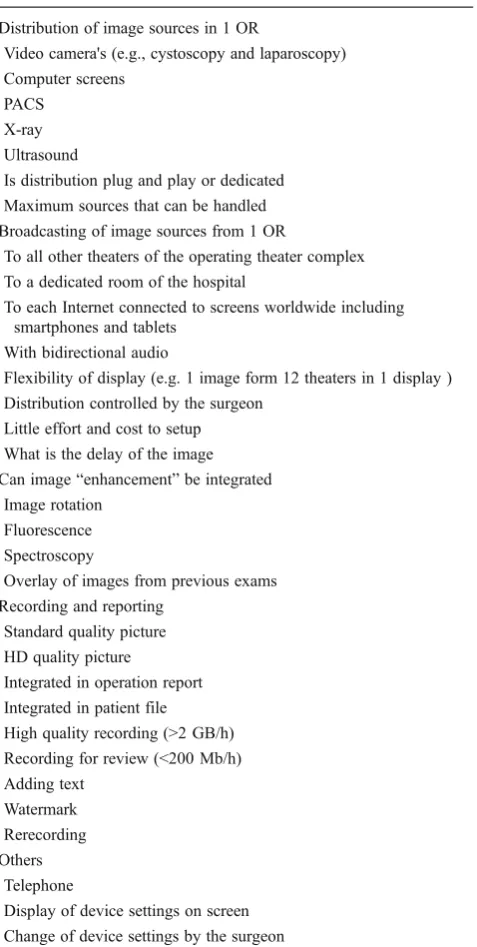
Table 1 What a digital OR can bring to the surgeon
Distribution of image sources in 1 OR
Video camera's (e.g., cystoscopy and laparoscopy) Computer screens
PACS X-ray Ultrasound
Is distribution plug and play or dedicated Maximum sources that can be handled Broadcasting of image sources from 1 OR
To all other theaters of the operating theater complex To a dedicated room of the hospital
To each Internet connected to screens worldwide including smartphones and tablets
With bidirectional audio
Flexibility of display (e.g. 1 image form 12 theaters in 1 display ) Distribution controlled by the surgeon
Little effort and cost to setup What is the delay of the image Can image“enhancement”be integrated
Image rotation Fluorescence Spectroscopy
Overlay of images from previous exams Recording and reporting
Standard quality picture HD quality picture
Integrated in operation report Integrated in patient file High quality recording (>2 GB/h) Recording for review (<200 Mb/h) Adding text
Watermark Rerecording Others
Telephone
physically to the OR, he will be asked less readily if not slightly too late. The same holds true when advice can be asked easily at a greater distance, e.g., to a senior surgeon at home during the night or to experts anywhere in the world. In conclusion, the word digital OR is used for varying implementations, some of which are expected to improve training, prevent accidents, and improve quality of surgery. This is expected to happen when image and video distribu-tion will become always available and as easy as making a phone call in the entire hospital and to selected targeted audiences through the Internet. Anything (any format) from anywhere (all image sources) to everywhere (also outside the hospital even on smart phones) is a reality in the near future. Systematic video recording (at high compression) with central storage and retrieval together with photo docu-mentation in the patient record is a reality. We begin to witness the development of tools that further improve image quality. Especially when experience is less, this can pensate for our lack of 3D vision. This will bring com-puting power to the operating theater to improve or modify images in order to visualize and recognize struc-tures that today are difficult to identify, such as nerves and ureters. The digital operating theater with its integra-tion and distribuintegra-tion of intelligent informaintegra-tion thus is expected to improve the quality of surgery and indirectly lower the cost for society.
Acknowledgments We do thank Dr. Karina Mailova from Moscow for reviewing this manuscript.
Disclosures PK is the chief medical officer at eSATURNUS NV, Romeinse straat, Haasrode, Belgium.
Conflict of interest The authors report no conflicts of interest. The authors alone are responsible for the content and writing of the paper.
References
1. Voruganti AK, Mayoral R, Vazquez A, Burgert O (2010) A modular video streaming method for surgical assistance in operat-ing room networks. Int J Comput Assist Radiol Surg 5(5):489–499 2. Inamura K, Lemke HU (2007) Technology and its clinical appli-cation in the field of computer-assisted radiology and surgery. Biomed Imaging Intervent J 3(3):e41
3. Korb W, Bohn S, Burgert O, Dietz A, Jacobs S, Falk V et al (2006) Surgical PACS for the digital operating room. Systems engineering and specification of user requirements. Stud Health Technol Infor-matics 119:267–272
4. Ratib OM, Horii SC (eds) (2005) Workflow in the operating room: review of arrowhead 2004 seminar on imaging and informatics. 05 Feb 15; San Diego, CA
5. Buzink SN, van Lier L, de Hingh IH, Jakimowicz JJ (2010) Risk-sensitive events during laparoscopic cholecystectomy: the influ-ence of the integrated operating room and a preoperative checklist tool. Surg Endosc 24(8):1990–1995
6. Chiu JC, Maziad AM, Rappard G, Thacker JT, Liu B, Documet J (2010) Evolving minimally invasive spine surgery: a surgeon's perspective on technological convergence and digital OR control system. Surg Technol Int 19:211–222
7. Anderson T, Tranzén R, Odén M (2006) Valuation of a digital operating room in the public health care sector. Gotheborg Uni-versity, School of economics
8. Koninckx PR (2008) Videoregistration of surgery should be used as a quality control. J Minim Invasive Gynecol 15(2):248–253 9. Molinas CR, Cabral CR, Koninckx PR (1999) Effect of the
diam-eter of the endoscope and of surgeon training on the duration and quality of laparoscopic surgery in a rabbit model. J Am Assoc Gynecol Laparosc 6(4):447–452