Available Online at www.ijpret.com 313
INTERNATIONAL JOURNAL OF PURE AND
APPLIED RESEARCH IN ENGINEERING AND
TECHNOLOGY
A PATH FOR HORIZING YOUR INNOVATIVE WORKA REVIEW OF PCA AND LDA METHODSFOR FACE RECOGNITION
JAYASHRI R. DHAGE1, PRASHANT L. PAIKRAO2
1. Electronics Engineering Department, M.Tech. in Electronics System and Communication, Government College of Engineering Amravati. 2. Electronics Engineering Department, Assistant Professor, Government College of Engineering Amravati.
Accepted Date: 05/03/2015; Published Date: 01/05/2015
\
Abstract:Face recognition systems play a vital role in many applications of computer vision and image processing including surveillance, biometrics and security. An automated face authentication system has been an active research subject for several decades. A face authentication system consists of two face processing tasks, such as face detection and face recognition. The original input image has a very high dimension, so a dimensionality reduction technique is usually applied before a classification task is performed. Eigenface method using Principle Component Analysis (PCA) is one of the most popular methods for face recognition. This algorithm has several advantages; one is reducing the image dimension, and the other is providing a compact feature for representing a face image. By applying PCA for dimension reduction before Linear Discriminant Analysis (LDA) for classification, a new algorithm is developed which is called Fisherface algorithm. Sir R. A. Fisher had successfully classified the flowers by using the concept of LDA. Hence this algorithm is called Fisherface algorithm as it uses LDA to classify the different face images into different classes. This algorithm is insensitive to extreme variation in lighting and facial expression. Finally Euclidean distance vector concept is used to recognize face from available database.
Keywords: LDA, PCA, Eigenface, Fisherface
Corresponding Author:MS. JAYASHRI R. DHAGE
Access Online On:
www.ijpret.com
How to Cite This Article:
Available Online at www.ijpret.com 314
INTRODUCTION
Human face recognition is currently an active research area in a Computer Vision Community. Many papers have been published in recent years as it has wide application in the fields like criminal identification, security and surveillance systems. Early commercial services like Google Goggles, Google Glass for object recognition, automatic face tagging in Facebook, Microsoft Photo Gallery face recognition. All these services need a face recognition system in non ideal condition like light intensity variation and facial expression variation.
PCA gives very good results in the field of compression but is not good technique for the purpose of classification. However, PCA (a feature extraction method) can be used for recognition purpose when data samples are less in number (no need of classification). PCA is not ideal for classification purpose since it is too sensitive to undesirable changes in illumination and facial expression. In order to build a face recognition system which is unaffected by undesirable changes in illumination and facial expression we need a method which supports classification. LDA is one of the most popular method in face recognition system. LDA (a feature extraction method) is derived from the idea presented by Fisher in 1936. Fisher used LDA method to classify flowers. LDA has successfully been used in many statistical pattern recognition problems. This technique maximizes the ratio of the determinant of between-class scatter matrix and within-class scatter matrix.
Available Online at www.ijpret.com 315
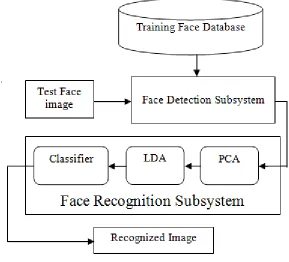
Fig. 1 Typical Architecture Face Recognition system
In today’s world with ever increasing population, increasing crowds at public places such as railway station, bus stands banks etc. pose very serious security threat to civilian life. There arises a need to secure day to day public life. This security to civilians can be provided by suitable biometric face recognition system. Out of many biometric identification systems such as iris recognition, finger print recognition etc., the face recognition system shows good implementation ability. Moreover people do publically accept to take their photograph at places where security is required.
I. origin
During 1964 and 1965, Woody Bledsoe along with Helen Chan Wolf and Charles Bisson had started working on automated facial recognition. They worked on using computers for facial recognition. As funding for their work was provided by unnamed intelligence agency, that did not allow much publicity, so little of their work is publically available. In 1966 Bledsoe stated the following difficulty while working on face recognition problem.
Available Online at www.ijpret.com 316 variability in these quantities. Correlation or pattern matching method which is often used by researcher on unprocessed optical data, is certain to fail when there is great variability. This happens because two images of the same person with variation have low Correlation between them.
Further this work was continued at the Stanford Research Institute primarily by Peter Hart in 1966. After observing that the computer consistently outperformed humans in face recognition Peter Hart said that “It really worked”. The same system have been developed by many other Universities including University of Bochum in Germany, University of southern California in USA, Massachusetts Institute of Technology and the University of Maryland around 1997.United States Army Research Laboratory funded the system developed by Bochum University. Software belonging to that system was sold as ZN-Face. Customer of that software was Deutsche Bank and various airport operators.
II. Eigen face
For the first time in 1987 Sirovichi and Kirby showed that PCA could be used to extract basic features of face images from a collection of face images[9]. PCA, also known as KL Transform is generally used for pattern recognition task. They also stated that PCA and KL transform generally have application in analysis of signals in time domain. They demonstrated that any particular face can be economically presented in terms of best co-ordinate system known as `Eigenpicture'.
Matthew Turk and Alex Pentland expanded the above work and developed the Eigen- face Method for the purpose of face recognition in 1990[8]. Their work is particularly based on information theory approach, in which face images are decomposed into small set of characteristic feature images called as `Eigenfaces'. Face Recognition is performed by projecting a test face image into subspace evaluated by Eigenfaces and then classifying the face by comparing the position of test face image in that subspace with the position of known face image in training set. They achieved face recognition under widely varying conditions like straight on view, 45 degree view and profile view. Face recognition system, they have adapted outperformed other face recognition schemes available at that time in terms of speed, simplicity, sensitivity to small or gradual changes in face images. Covariance of N-tuple vector of image vectors is given by (1).
𝐶 = 1
𝑁 𝑠𝑖− 𝑚 𝑠𝑖 − 𝑚
𝑇 =
𝑁
𝑖=1 𝐴𝐴𝑇 (1)
Available Online at www.ijpret.com 317
𝑚 = 1
𝑁 𝑠𝑖
𝑁
𝑖=1 (2)
Where 𝐴 = [𝛷1, 𝛷2, 𝛷3, … … . , 𝛷𝑁] [refer (1)] and each face image in training set differs from
mean image by vector given by 𝛷𝑖 = 𝑠𝑖− 𝑚. High dimensional space is represented by low
dimension space by calculating Eigen values of 𝐴𝑇𝐴 (i.e N number of eigen values ) matrix
rather than 𝐴𝐴𝑇matrix given in (1). N number of Eigen values of 𝐴𝑇𝐴 matrix is nothing but the
N largest Eigen values of 𝐴𝐴𝑇matrix. By keeping K best Eigen values( generally largest among N)
and corresponding Eigen vector , each face image sample in training set and test face image can be represented by linear combination best K Eigen vectors. Euclidean distance between test face image and training face image gives matching percentage based on which recognition procedure can be performed.
Mark Richardson in 2009 stated that, PCA is a technique which uses mathematical tools to transform a number if possibly correlated variable into smaller number of variable named as principle components[10]. According to Richardson the origin of PCA lies in multivariate data analysis and is an important result derived from applied linear algebra. PCA is generally a first step in data analysis task. It also has wide range of applications other than face recognition, e.g. de-noising signals, blind source separation and data compression. PCA uses vector space to reduce the dimension of large data set by mathematically projecting the original data set in such a way that the many variable present in data set can be converted to a few variables. Reduced dimension of data allows to spot similar pattern in data.
III. fisherface
Linear Discriminant Analysis (LDA) , a statistical method often used for dimensionality reduction and classification. Sir R. A. Fisher published a paper in 1936 on the topic “The use of multiple measurements in taxonomic problems”, in which he used LDA method to classify the flowers.
Available Online at www.ijpret.com 318 Main objective of Fisherface method adopted in [1] is to maximize the ratio of between class scatter matrix (𝑆𝑏) to within class scatter matrix (𝑆𝑤). Between class scatter matrix 𝑆𝑏 and
within class scatter matrix 𝑆𝑤 are given by (3) and (4) respectively.
𝑆𝑏 = 𝑐𝑖=1𝑁𝑖(𝑚 − 𝑚𝑖 )(𝑚 − 𝑚𝑖 )𝑇 (3)
𝑆𝑤 = (𝑠𝑘 − 𝑚 )(𝑚𝑖 − 𝑚𝑖 )𝑇
𝑠𝑘∈𝑆𝑖
𝑐
𝑖=1 (4)
𝑚𝑖
used in (3) and (4) is mean of all the sample in class 𝑆𝑖 and 𝑁𝑖 is number of samples in class
𝑆𝑖 . Optimal projection 𝑉𝑜𝑝𝑡 can be selected to maximizes the ratio of determinant of between
class scatter matrix (𝑆𝑏) and within class scatter matrix (𝑆𝑤), if and only if 𝑆𝑤 follows non-singularity condition.
𝑉𝑜𝑝𝑡 = arg max|𝑉𝑇𝑆𝑏𝑉|
|𝑉𝑇𝑆
𝑤𝑉| (5)
= 𝑣1, 𝑣2, 𝑣3, 𝑣3, … . . , 𝑣𝑚
𝑉𝑜𝑝𝑡in (5) is obtained by set of generalized eigen vector of 𝑆𝑏 and 𝑆𝑤 corresponding to m largest
eigen values given by 𝑣𝑚 𝑖 = 1,2,3 … … . . 𝑚}.
i.e. 𝑆𝑏𝑣𝑖 = 𝜆𝑖𝑆𝑤𝑣𝑖 (6)
Value of m can go up to c-1 (c is number of classes ). Number of sample in training is
generally smaller than the number pixel present in an image which leads to singular 𝑆𝑤.
Because of this singularity problem , V will be selected such that 𝑆𝑤of projected samples
becomes zero. In order to avoid this singularity problem 𝑉𝑜𝑝𝑡 is selected in the following way
𝑉𝑜𝑝𝑡𝑇 = 𝑉𝑓𝑙𝑑𝑇 𝑉𝑝𝑐𝑎𝑇 (7)
Where 𝑉𝑝𝑐𝑎 = arg max |𝑉𝑇𝑆𝑡𝑉| (8)
𝑆𝑡 is given by covariance matrix C in (1) and 𝑆𝑡 = 𝑆𝑏+ 𝑆𝑤
𝑉𝑓𝑙𝑑 = arg max
|𝑉𝑇𝑉𝑝𝑐𝑎𝑇 𝑆𝑏𝑉𝑝𝑐𝑎𝑉|
|𝑉𝑇𝑉
𝑝𝑐𝑎𝑇 𝑆𝑤𝑉𝑝𝑐𝑎𝑉| (9)
Available Online at www.ijpret.com 319 matrix using PCA are equal to optimal discriminant vectors derived in the original space using LDA. This small size problem occurs whenever the number of sample is smaller than dimension of single sample, then sample scatter matrix may become singular. Because of this execution of LDA may encounters computational diffculties.
A novel Gabor-Fisher classifier( GFC) for a face recognition was introduced by Chengjun Liu, Harry Wechsler in 2002[5]. In this paper, first augmented Gabor feature vectors are derived from the Gabor wavelet representation of face images. These Gabor feature are then applied to enhanced Fisher linear discriminant analysis (EFLD). Novelity of their work is concealed in developing GFC for solving multiclass problem. They compared the result of combination of GFC and Eigen face with the combination of GFC and Fisher face. Sixty two features have been used to get 100 percent accuracy by GFC on 6000 FERET frontal faces of 200 subjects. Gabor feature exhibits desirable characteristics of spatial locality and orientation selectivity, which gives the biological relevance and computational properties of it.
In 2005, Xiao-Yuan Jing, Chen Lu, and David Zhang propose an uncorrelated Fisherface approach (UFA) to improve the Fisherface method in these two area i.e. Face and Palm print Recognition [4]. They showed Experimental results on different image databases demonstrate that UFA outperforms the Fisherface method and the uncorrelated optimal discrimination vectors (UODV) method.
For the hardware implementation of face recognition system, there is a need of an algorithm which consume less memory and is computationally less intensive [3]. This can be done by reducing feature per person. In order to fulfill this requirement Tomoaki Takano, Yohei Fukumizu and Hironori Yamauchi in 2009 proposed a Gabor Pseudo Fisher classifier (GPFC). Basically GPFC is based on GFC but difference between GPFC and GFC lies in the way the two calculates fisherfaces. They have used Generic database instead of gallery database , which is generally used for calculating Fisherfaces. The traditional Fisherface method needs several gallery images per person, while GPFC method needs only one gallery image per person. As it calculates Fisher face in Generic database at one time only, it reduces a computational cost.
Available Online at www.ijpret.com 320 global geometric structure of images in transformed low dimensional space by emphasizing discriminant information. In this paper authors have proposed LFDE method which combines the advantage of both the approaches. This method finds a local structure of data as well as extracts discriminant information for pattern representation and classification. In other words they have considered local within class scatter and between class scatter of the samples in their proposed method.
In 2010, Seiyed Mohammad Seyedzade, Sattar Mirzakuchaki, Amir Tahmasbi try to Combine Symlet decomposition method, fuzzy integral and Fisher Face algorithm for face recognition[1]. They have proposed their work in three sections.
1. First they have used wavelet transform to extract intrinsic facial feature. Wavelet transform is capable of multiresolution decomposition.
2. The result of wavelet decomposition are further operated upon by LDA to calculate Corresponding Fisherfaces.
3. Finally fuzzy integration is used as a last step in order to obtain perfect match.
The low frequency band and the high frequency band components performed different roles is the classification task. The low frequency components contribute to the global description while the high frequency components contributes to finer details required in the identification task
IV. observation
Eigenface method is not complex and computationally less intensive whereas Fisherface method is complex and computationally intensive. Both Eigenface and Fisherface methods performs very well , when test image is exactly similar to one of the training image. But Eigenface method proves to be insufficient when there is a change in illumination and facial expression. Both Eigenface and Fisherface are feature extraction methods but as Eigenface does not support classiffcation (which is of prime importance while recognizing faces) when the number of samples in the data base are very large we need to turn our attention to Fisherface approach for such data bases.
ACKNOWLEDGMENT
Available Online at www.ijpret.com 321 to thank all teachers and staff memberof Electronics and Telecommunication Department for directly or indirectly extending their help to complete this task.
REFERENCES
1. Seyed Mohammd Seyedzade, Sattar Mirzakuchaki, Amir Tahmasbi, “Using Symlet
Decomposition Method, Fuzzy Integral and Fisherface Algorithm for Face Recognition”, Second International Conference on Computer Engineering and Applications, IEEE DOI 10.1109/ICCEA.2010.173,2010.
2. Cheng-Yuan Zhang, Qiu-Qi Ruan “Face Recognition Using L-Fisherfaces”, Journal Of
Information Science And Engineering 26,1525-1537, 2010.
3. Tomoaki Takano, Yohei Fukumizu and Hironori Yamauchi, “Face Recognition System using
Gabor Pseudo Fisherface Method for Embedded LSI Applications”, International Workshop on Nonlinear Circuits and Signal Processing,NCSP'09, Waikiki, Hawaii, March 1-3, 2009.
4. Xiao-Yuan Jing, Chen Lu, and David Zhang, “An Uncorrelated Fisherface Approach for Face
and Palmprint Recognition", Springer-Verlag Berlin Heidelberg,ICB2006, LNCS 3832, pp. 682 687, 2005.
5. Chengjun Liu , Harry Wechsler, “Gabor Feature Based Classi_cation Using the Enhanced
Fisher Linear Discriminant Model for Face Recognition”, IEEE Trans. Image Processing,11, no. 4, pp. 467-476, 2002.
6. Li-Fen Chen, Hong-Yuan Mark Liao, Ming-Tat Ko,Ja-Chen Lin, Gwo-Jong Yu , “A new
LDA-based face recognition system which can solve the small sample size problem", Pattern Recognition Society. Published by Elsevier Science Ltd,1713-1726, 2000.
7. P. N. Belhumeur, J. P. Hespanha, and D. J. Kriegman, “Eigenfaces vs. Fisherfaces:
Recognition using class specific linear projection”, IEEE Transactions on Pattern Anal- ysis and Machine Intelligence, vol. 19, pp. 711720, July 1997.
8. M. Turk and A. Pentland, “Eigenface for Face Recognition”, Journal Of Cognitive
Neuro-science, vol 3,NO 1, 1991.
9. L. Sirovich, M. Kirby, “Low-dementional procedure for the characterization of human faces”
,Journal of Optical Society of America, vol 4,NO 3,march 1987.