Table of Contents
About This Journal ii-iv
Editorial 1-4
Peer Reviewed Articles
The Power of Integration: Challenges in Researching
Pentecostal/Charismatic Spirituality 5-21
Rev Dr Angelo Cettolin
The Phenomenon of Disenfranchised Grief Experienced by Those
Bereaved by Suicide: A Contemporary Pastoral Response 22-38
Ps Astrid Staley
Trust and Tithing: The Relationships between Religious Social Capital
and Church Financial Giving 39-55
Dr Darin Freeburg
Creative Tensions Inherent within Contemporary Ministry 56-70
Dr Adrian Turner Pastoral Reflection
Two Decades of Leadership: Learning that I am Still Learning 71-78
Ps Rohan Dredge Student Article
‘Care’ Fullness 79-94
Ps Mike Keating
Theses/Dissertation Listing
2015 95-97
Book Reviews 98-116
About This Journal
Editorial Board
The Editorial Board of the Journal of Contemporary Ministry is comprised of:
Professor Emeritus Gary D.
Bouma, AM - Monash University;
Chair of Harvest Bible College Academic Board; Sociologist; prolific author.
Rev Dr Peter Carblis - Conjoint
lecturer for University of Newcastle; former principal Tabor NSW, Australia.
Rev Prof Darren Cronshaw Professor of Missional Leadership and Head of Research ACOM (SCD); Pastor and Mission Catalyst – Researcher for Baptist Union of Victoria, Australia.
Rev Dr Kevin Giles - Published
author; retired Anglican minister; adjunct lecturer for Harvest Bible College, Australia.
Rev Dr David Jakobsen - Academic
Dean, Danish Pentecostal Bible College, Denmark.
Rev Dr Julie Ma - Research Tutor in
Missiology, Oxford Centre for Mission Studies, UK.
Rev Dr Cheryl McCallum -
Principal, Eastern College Australia, Melbourne.
Dr Soong-Chan Rah – Milton B.
Engebretson Professor of Church Growth and Evangelism, North Park Theological Seminary, Chicago, USA.
Rev Dr Michelle Sanders - Adjunct
Editorial Team
The Editorial Team of the Journal of Contemporary Ministry is comprised of:
Dr Jon Newton - (Head of Research & Dean of Postgraduate Studies,
Harvest Bible College), Editor.
Ms Kerrie Stevens – (College Librarian, Harvest Bible College;
Secretary, Australian and New Zealand Theological Library Association [ANZTLA]), Theses/Dissertation List Compiler, Journal Manager.
Ps Astrid Staley - (Adjunct faculty, Harvest Bible College; Doctoral
candidate, Melbourne School of Theology), Section Editor for Pastoral Reflections and Student Articles, Layout Editor.
Rev Dr Clayton Coombs - (Academic Dean, Planetshakers College),
Book Review Editor.
The Journal of Contemporary Ministry will act as a place for reporting research and discussing issues related to contemporary ministry, including related theological and biblical questions.
Its goals are to:
o Stimulate informed discussion regarding issues faced by contemporary Christian churches and ministries worldwide;
o Encourage research, including empirical research, into diverse forms and contexts of contemporary ministry and the practical, theological and biblical issues that arise from ministry practice;
o Enable students and graduates in postgraduate Ministry programs to speak to a wider audience;
The Journal of Contemporary Ministry will provide a specific forum for Harvest Bible College research students and faculty, and other interested people, to publish the results of their research.
It will also provide a potential publishing venue for paper presenters at Harvest’s annual research conference.
The Journal of Contemporary Ministry will contain these kinds of material:
o Peer-reviewed articles based on scholarly research (empirical or theological) into diverse forms and contexts of contemporary ministry, and the practical, theological and biblical issues that arise from ministry practice;
o Pastoral reflections and articles that contribute viewpoints, based on personal experience or theological reflection, on contemporary ministry issues. These may be responses to articles from the Journal;
o Book reviews and/or notes of new publications related to contemporary ministry;
o Articles contributed by postgraduate students, which would also be refereed but may not come up to the level required in the first category;
o A list of recent doctoral research theses completed on contemporary ministry relevant to this journal’s focus.
The material we invite covers such topics as:
o Results of empirical research into aspects of contemporary Christian ministry, e.g. youth ministry, children’s ministry, pastoral counselling, pastoral leadership, intercultural ministry;
o Theological and biblical reflection on issues that have arisen from the practices of contemporary Christian churches and ministries, e.g. manifestations of the Spirit, worship styles, leadership culture, interfaith matters, political and social engagement, etc;
o Underlying theological questions that lie behind Christian ministry issues, e.g. the role of women’s ministry in local churches, ethnic identity, ordination, apostleship;
o Proposals for new expressions or forms of Christian ministry based on social analysis, e.g. how to reach specific sub-cultures.
For further information, please visit the journal website
Editorial
Christian Critical Thinking and Contemporary Ministry
In our first issue of this journal, I emphasized the need to assess and support our hunches about ministry and church life with proper research. It is too easy for ministers and lay people alike to “jump on bandwagons” and naively accept the reports or strategies for ministry they hear at conferences from “big name” speakers or worse, second-hand versions of these. Not that such speakers are deceitful or wrong but it’s too easy to generalize from personal experience, especially if it’s the experience of successful ministry, and overlook the unique circumstances involved.
Many years ago the Enlightenment philosopher Immanuel Kant wrote: “To criticism everything must submit.” This was part of the Enlightenment view that all legitimate thinking must be justified before the bar of human reason alone. For many such thinkers, reason was in a struggle with tradition and revelation, especially the Bible and the teachings of the Christian church. Christians always found Kant’s line of thinking hard to swallow because they trust the Bible as a source of truth and wisdom. However, the advent of postmodernism has also cast deep doubt over the whole Enlightenment project and its faith in reason. Postmodernists are more likely to insist that there is no unadulterated form of human reason; we all see things from a particular perspective and our judgement is skewed by the kind of person we are (Male/female, black/white, etc). So all criticism must begin from a starting point that is not neutral (maybe even a tradition!); this applies to the study of theology and ministry as much as any other discourse.
So where does this leave Christians? And what are the implications for the study of contemporary ministry?
Second, we need to develop what the Bible calls “discernment.” Paul calls on his readers to “test everything” (1Thess. 5:21) and to “weigh” the words of prophets (1Cor. 14:29). 1 John calls on its readers to “test the spirits to see whether they are from God” (1Jn. 4:1). John praises the Ephesian church for testing would be apostles (Rev. 2:2) and calls on the believers in Thyatira not to uncritically accept the words of prophets (Rev. 2:20-23).
In other words, the Bible does not endorse a Christian thought that is unthinking or uncritical. When we hear claims about ministry, therefore, we have the right, even the duty, to assess those claims. We need to ask for evidence before we accept a particular line of thinking about ministry.
And third, we need to apply ourselves to study/research and ask questions, including questions that have not been asked before or for which we have a fresh approach. This is what the Journal of Contemporary Ministry is all about: reasoned, evidence-based conclusions that do not reject criticism as such, but come from a stance of faith in God.
A year has gone by and we are publishing Issue 2 of the Journal of Contemporary
Ministry. I have learned so much about journals, journal articles, and editing over the
last two years. I’ve also been blessed and encouraged by readers of our first issue and by the number of new authors who are submitting material to us.
As I reflect on the submissions to the first two issues, the papers presented at the Harvest Research Conference and research projects being undertaken by our new DMin candidates, a few points stand out:
1. There remains so much more research to do. Just when we think it has all been said and done, we find that there come new questions, new perspectives, new ways of looking at old issues and brand new issues as well.
2. There are new voices emerging into the scholarly study of Christian ministry. They are not always as experienced or skilled as the learned “old men” but they have fresh insights to bring to the table.
3. People are finding creative ways of researching topics that might have seemed impossible, or inappropriate, in the past.
4. It takes a lot of effort and thought to produce a quality research article. For every article published in this journal, there are at least as many, which have not reached the standard expected (yet), or are still being developed, or were never started, even though someone had a great idea and even presented it somewhere. Even the papers at the Harvest Research Conference mostly do not become articles in this or any journal, for example.
Let me introduce our authors for this issue and their articles.
Rev Dr Angelo Cettolin is a senior lecturer in theology and ministry and Dean of Faculty at Eastern College Australia. Earlier in his career, he practised law and he has over thirty years of Christian ministry experience as a church planter, senior pastor, missions team leader, and Bible college teacher. He has served in various leadership roles with Australian Christian Churches/AOG, where he holds ordained ministry credentials. He has been a church development consultant and recently embarked on planting a new inner city church in Melbourne, Australia where he is co-lead pastor with his wife Robbie. His article “The Power of Integration: Challenges in researching Pentecostal/Charismatic spirituality” is based on the research he did for his Doctor of Ministry with the Australian College of Theology. In this article, Cettolin probes common ideas about the current state of Pentecostal spirituality in Australia, looking for real evidence about what has happened. He also discusses the issues involved in doing such research into an area as “nebulous” as spirituality.
Pastor Astrid Staley is an adjunct lecturer at Harvest and finalising her doctoral
studies at Melbourne School of Theology in the area of Postvention care of those bereaved by suicide. Astrid has published a comprehensive pastoral resource, The Pastor’s Handbook: A Complete Theological & Practical Response to Suicide, Entering the
World of the Suicide & the Bereaved. She has also developed Suicide Prevention,
Intervention & Postvention Care workshops based on nationally recognized best practice, which are delivered Australia-wide and overseas to Christian audiences. Her article “The Phenomenon of Disenfranchised Grief Experienced by Those Bereaved by Suicide: A Contemporary Pastoral Response” addresses a “hot button” topic. It’s a real challenge to the church to face the pastoral issues raised by this rampant problem in many countries, not least Australia.
Dr Darin Freeburg is an assistant professor in the School of Library and
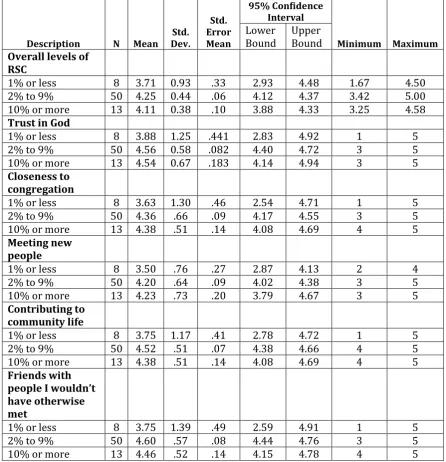
Information Science at the University of South Carolina, USA. He has an MA in Theology and a PhD in Communication and Information. In his research, he applies principles of Knowledge Management and Information Behaviour to churches in an effort to understand the characteristics of religious knowledge and how churches can be creators, rather than simply disseminators of this knowledge. His article “Trust and Tithing: The Relationships Between Religious Social Capital and Church Financial Giving” explores another issue that pastors find it hard to talk about - money! This article is grounded in strong quantitative research and, while technical in detail, leads to some interesting conclusions, which have the potential to enhance church life and ministry.
Rev Dr Adrian Turner serves as a Relationship Manager with Compassion
Australia and is an adjunct lecturer with Harvest. He has over forty years’ experience in pastoral ministry, including church planting, senior pastor, and other ministry roles. His article “Creative Tensions Inherent within Contemporary Ministry”, based on research he undertook for his Doctor of Ministry with the Australian College of Theology, explores some of the dynamics of seeking to lead people to transformation within local churches.
Our pastoral reflection for this issue comes from the pastor of one of Melbourne’s
corporate work, which continues today. In 2009, Rohan accepted the Senior Ministers position at Careforce Church (now Discovery Church) and has led that community through generational transition and cultural change. His pastoral reflection is based on those years of Christian ministry experience.
Our outstanding student paper for this issue has also been written by an experienced pastor. Pastor Mike Keating is currently the lead minister of a medium sized yet growing church in Kelmscott Western Australia, having spent over 25 years serving in various roles within the Assemblies of God including State Vice President for a decade. He wrote this essay on “‘Care’ Fullness” as part of his MA studies with Harvest in “The Minister’s Personal Development”. As a pastor, he wrestles with the dangers to the emotional health of Christian ministers in western countries.
We are fast building two important resources for readers and students in the area of contemporary ministry: book reviews and lists of relevant theses from around the globe. Reading these sections of our journal will help you keep abreast of developments in this and related fields of enquiry.
I commend all the contents of this issue to you as discerning readers.
In closing, I also want to thank my editorial team - Kerrie Stevens, Astrid Staley, and Clayton Coombs - for all their effort in making Issue 2 happen.
The Power of Integration: Challenges in Researching
Pentecostal/Charismatic Spirituality
Rev Dr Angelo Cettolin
DMin(ACT); GDipBus(Org Dyn); BTh(ACT); BLaw(UTas)
Contact:
Abstract
Introduction
Researchers can be ambivalent about the right methodology to adopt in dealing with ‘non-tangibles’ such as spirituality. I faced this issue in a research project aimed at determining the basic essentials of spirituality among Pentecostal pastors in the
Assemblies of God in Australia (AOG), now called Australian Christian Churches (ACC). My
basic starting premise was that recent change was occurring with regard to the pastors’ own spirituality. The goal of the research was to try and understand what was happening, what was influencing any change, and what the ensuing effects might be.
One objective was to help senior pastors evaluate the strengths and deficiencies of their own spirituality with a view to assisting them to develop a dynamic, mature and relevant spirituality in their own lives and churches. The focus was deliberately on Pentecostal spirituality and its defining features (beliefs, behaviours, and practices). It was necessary to determine what is meant by spirituality, by Pentecostal spirituality and whether the spirituality in the AOG/ACC had changed and if so, in what way.1 There was no consistent understanding regarding the essential characteristic features of Pentecostal spirituality and little research had been done within the AOG/ACC as to any possible developments. The aim was to bring clarity to what has often been a confusing and misunderstood subject area that has only recently begun to attract the attention of scholars. 2
Christian Spirituality
Despite the considerable variety of forms displayed in the Christian tradition, there are still certain norms of genuine spirituality with boundaries and limitations. These are found primarily in the Scriptures and the early church creeds. There are a number of common underlying themes and features of genuine Christian spirituality:
First, it is not an optional extra as though some people are “spiritual” and others are
not. It is how people express their faith in one way or another. All the various forms of “spirituality” deal with a person’s relationship with God, and as such are very “personal,” although this does not mean private or individualistic (Edgar 2004, p. 15). “Spirituality” has simply become the contemporary word of choice for expressing how we live with God in this world (Thompson 1995, pp. 6-7).
Secondly, it is more than a mode or type of relating to God and it refers to the
working of the Holy Spirit within believers to make them more like Christ (2Cor. 3:18). For Christians, “spirituality” is the sphere in which the Holy Spirit has direct influence. The suffix “-ity” expresses a state or condition of being spiritual, of being indwelt and guided by the Holy Spirit (Toon 1989, p. 13). It is the encounter of the self with God and one’s personal response to the God who calls (Johnson 1988, pp. 46, 65). It is based in the love and grace of God rather than human ability. Talents and capacities are important but the initiative and emphasis lies with God (Eph. 2:8) (Edgar 2004, p. 15).
Thirdly, it is focused on the triune God, who is Father, Son, and Holy Spirit. An
1 The research indirectly reflected on broader issues such as possible changes in church structure, on
historical comparisons and on the practices of church members, but these were not the specific foci of the project.
2 See D Min thesis for full explanation of the research and its outcomes:
The bibliography is found at:
activity is a Christian exercise because of the content rather than the method. The key issue is the intention or the focus involved, rather than simply the technique (Edgar 2004, p. 15). “Spirituality” involves the human response but is always guided by the Spirit to the revelation of God in Jesus Christ (Toon 1989, p. 17).
Fourth, “spirituality” finds its characteristics from the Christian belief that humans
are capable of entering a relationship with a God who is both transcendent as well as indwelling the human heart. However, this self-transcendence is a gift of the Spirit who establishes a life-giving relationship with God in Christ within a believing community (Sheldrake 1991, pp. 52-53).
Fifth, the term “spirituality” also relates to its outworking in the way one behaves
and relates to the external world. It is about how Christians follow the Holy Spirit’s guidance and how they respond to his action upon their spirit (Toon 1989, p. 17). It is not simply for the “interior life”, but as much for the body as for the soul, and is directed to the implementation of both the commandments of Christ to love God and our neighbor (Wakefield 1990, pp. 361-362). A robust spirituality will also be connected to ethics. Mulholland, therefore, defines spiritual formation as “a process of being conformed to the image of Christ for the sake of others” (Mulholland 1993, p. 12). It does not refer to just a privatized experience but it involves the whole of life.
Sixth, a helpful working definition of spirituality in the Christian context is that of a
“lived experience,” one that actualizes a fundamental dimension of being human, the spiritual dimension (Albrecht 1999, p. 23). As Paul the apostle said, “If we live by the Spirit, let us also walk in the Spirit” (Gal. 5:25).
Finally, Russell Spittler characterizes “spirituality” as referring to the cluster of acts
and sentiments that are informed by the beliefs and values of a specific religious community. “Liturgy” describes what people do when assembled for worship and “theology” defines systematized and usually written reflections on the religious experience. By contrast, “spirituality” focuses on people’s pietistic habits. The elasticity of the term comes from the wide variety in which worshippers express themselves (1983, p. 1096). However, these particular definitions are too restrictive. Liturgical acts and theological beliefs are actually helpful in measuring various expressions of spirituality. In Pentecostal spirituality, as in a number of other traditions, there is, in fact, a close connection between liturgy, theology, and spirituality.
My analysis of ‘Christian spirituality’ concluded that it implies more than simply a universal human religious experience or quest — it is a descriptive term for the work of the Holy Spirit. It is the attraction to things of the Spirit rather than earthly things and the conscious living of a Christian way of life. It mainly relates to the interior dimension but cannot be separated from its outworking in the external world. Although “spirituality” is a descriptive term of the process and working of the doctrine of sanctification, it also has a wider scope. Although doctrinal theology, particularly of
sanctification, both forms and informs spirituality, equally spirituality gives shape and
Pentecostalism
A distinctive Pentecostal spirituality is generally acknowledged but there appears to be no consistency in understanding its characteristic features. The term ‘Pentecostal’ is commonly used to refer to those who are committed to traditional or classical Pentecostal beliefs. Of particular importance to them is a crisis-type ‘second blessing’ experience after conversion, often referred to as ‘the baptism in the Holy Spirit,’ which is evidenced by speaking in tongues. From the 1960s until recent times, the term ‘Charismatic’ was used of those who held to the same ‘second blessing’ experience but generally chose to remain within their churches. Since the 1980s, evangelicals of the ‘Third Wave’ movement, while they do not classify themselves as either Pentecostal or Charismatic, hold to the validity of the gifts of the Spirit but do not require a climactic second blessing experience evidenced by speaking in tongues. Finally and more recently, the term ‘Charismatic’ or ‘Neo-Pentecostal’ has often also been used to describe those that hold to the validity and use of the gifts of the Spirit for today but do not mandate the requirement of speaking in tongues to validate their experience of the Spirit. AOG/ACC pastors and their churches have been influenced by all four streams and approaches and proponents of all these approaches are represented within their churches.
Pentecostal spirituality shares in a basic Christian experience and many of its aims, values and features are not in themselves unusual in other Christian traditions. Pentecostal characteristics, such as visions, dreams, healings, and so forth have appeared before in the history of Christian spirituality through the ages (Albrecht 1999, p. 23). However, Pentecostal spirituality does bring a unique emphasis on the initiative and work of the Spirit in the believer (Ferguson et al. 1998, p. 657).
When the Pentecostal movement emerged at the turn of the 20th century it stressed
the experience of the Holy Spirit, in particular, the experience of being “baptized in the
Holy Spirit” and speaking in tongues. By the turn of the new millennium, however, AOG/ACC pastors seemed to be playing down features of historic or classical Pentecostalism and were moving towards more Charismatic and mainline denominational forms of spirituality. It appeared as if the forces of institutionalisation were at work and influencing the pastors’ expressions of their Pentecostal spirituality.3
The Research Question
The research accordingly sought to identify what was emerging in the pastors’ beliefs and practices in contrast with earlier Pentecostal spirituality. It was hoped that insights would emerge as to how the pastors might continue to be faithful to the Pentecostal movement’s historic radical approach and still develop a mature and relevant spirituality for this day and age. The project was pursued from a researcher’s perspective but also as a Pentecostal minister-practitioner seeking to inform and assist fellow pastors in their ministry.
After defining the meaning of the terms ‘spirituality’, and ‘Christian spirituality’ the nature of global ‘Pentecostal spiritualities’ were explored and clarified. I then sought to
3 The ACC/ACC seemed to be under the impact of what the pioneering German sociologist Max
discover whether the pastors’ spirituality had changed from early Pentecostal spirituality; and what were the reasons for and the consequent effect of the changes.
My hypothesis was that the pastors’ spirituality was changing with both beneficial and detrimental results, with:
o less emphasis on Pentecostal/charismatic experiences and practices;
o increasingly mainline (non-Pentecostal) forms of private devotional practices being
used;
o a decrease in classic Pentecostal practices in church services;
o a growing involvement in community services and outreach;
o classical Pentecostal beliefs and attitudes often being downplayed;
o increasingly ‘Charismatic’ and ‘Third Wave’, beliefs and approaches being
embraced.
Measuring Pentecostal Spirituality
Spirituality of whatever type, including Pentecostal, can be empirically seen and measured by a range of indicators. It involves gathering and measuring the information in a scientifically verifiable way. My research looked at the various manifestations and different phenomena of Pentecostal spirituality that can be observed and measured. These include rituals, beliefs, behaviours, habits, attitudes, Scripture use, cognitive allegiance, satisfaction levels, accounts, stories, testimonies, experiences, emotions, consequences, results, and out-workings in life. None of these can adequately measure an individual’s relationship with God, but they are observable features that point to the way in which people seek to relate to God. A measurement instrument was designed to align with the various features discovered about Pentecostal spirituality, which was derived from the surveys, from personal interviews, field observations and from a thorough review of the literature including primary source documents.
There is some subjective element in this approach and some reliance on what people actually report. This can generate some problems as there are always strong desirability factors. People often affirm what others expect them to say or say more than they actually do perform or really believe. This was minimised by using an appropriately designed Likert-type scale.4
The Research Participants and Data Collection
This was used to measure the pastors’ current attitudes to certain of the phenomena of Pentecostal spirituality. It did not, however, seek to measure the exact frequencies of pastors’ current practices and it was not possible to compare these frequencies with those of past practices.
Senior AOG/ACC pastors were invited to participate in a survey on their spiritual practices accessible by way of a website where participants could post their responses with anonymity. Data was also collected from a second survey from questionnaires posted to key denominational leaders about Pentecostal Spirituality. Interviews were also conducted with some key ministers about their responses to the survey results and their views on Pentecostal spirituality in general. My personal observations supplemented this data and provided the possibility for integrated research employing both qualitative and quantitative techniques. This facilitated a portrait of the pastors’ own Pentecostal spirituality and provided incidental information about practices and beliefs in their churches. Together, these varying approaches added to and
complemented the findings to enable clearer interpretations of the data.
Quantitative data derived from the survey was one aspect of the methodology used to test the hypothesis.5
Pastors were invited to give information on their spiritual experiences over the previous twelve months. The survey was designed to include the various manifestations and different aspects of the phenomena of Pentecostal spirituality that can be observed and measured. The aspects referred to above were placed into five specific categories to create a measurement tool with questionnaires:
Of the 604 senior pastors who were emailed, a total of 135 participated. While the response rate of 22.35% was statistically low, the senior pastors share a very similar demographic. Great care was also taken in the design of the survey with its simplicity of structure, clear explanatory information, easy accessibility, simple operation of a web-based survey poll, no financial cost to the respondent, and assurance of anonymity. All these helped provide a high possibility of a representative sample with this group (Babbie 1998, p. 262).
1) Experiences and Practices (EXPRA); 2) Private Devotional Practices (PRIDEV); 3) Church Services and Practices (CHSERV);
4) Community Service and Outreach (COMOUT); and 5) Beliefs and Attitudes (BEATT).6
These measures were specifically chosen as best reflecting the essential features of Pentecostal spirituality derived from my widespread survey of the literature and also from my own extensive experience of Pentecostalism. Not every question in the survey related exclusively to Pentecostal spirituality and some items, particularly in the Private Devotional Practices Index, related to areas that share common features with other forms of Christian spiritualities. The opinions of experienced Pentecostal ministers were sought as to whether the items in the survey were relevant.
A number of indices or scales were developed for different aspects of the beliefs and practices that related to each of the above five categories. The scores for each question of those that selected either ‘frequently’ or ‘quite often’ (or ‘strongly agree’ or ‘agree’) were calculated. The average scores of the questions in the five different indices were calculated in each category to give an index average score. The purpose was to determine the extent to which each of these areas was affirmed, or otherwise, by the pastors.7
Once the data from the survey was obtained and collated, ministers who held or had held significant leadership positions in the ACC (including National and State Executives, National Department Leaders and other senior positions) were invited to provide their reflections and comments on the results and on Pentecostal spirituality in general. This was to get at the survey’s quantitative material in more depth, to obtain information that the survey was not able to uncover and also to verify interpretations
5 The survey is a PHP script called Advanced Poll 2.0.3, which runs on a web server based on a script
from
configured not to record the IP address of respondents, ensuring the survey was anonymous.
6 Further information on thesis research project and its results can be found at:
7 Details of the survey instrument with questionnaires and results can be found in the research
project’s appendix:
and conclusions attributed to the data.
Eighteen key ministers agreed to be part of the study. Some were followed up, subsequent to the receipt and collation of their written responses, with further interviews where clarification of their comments was needed. This process in comparing the data from the qualitative and quantitative studies ensured that these methods thoroughly and adequately measured the phenomena in question.
The Data and Results
The survey was not able to capture all the diversity of practices or details on Pentecostal spirituality but covered the most observed and familiar beliefs and practices. However, the questionnaires and/or interviews conducted were able to supply qualitative and anecdotal information to supplement and clarify the survey statistics. Some of the pastors interviewed also provided general reflections on early Pentecostal spirituality comparing current practices of Pentecostal spirituality with their recollections of the past. Three of these ministers were over 60 years of age, and one over 70 years.8
The Research Methodology
This was a piece of social research consisting of a systematic observation of the life experiences of the pastors with the aim to find and understand patterns (Babbie 1998, p. 1). In my view, the best approach would be the combination of both quantitative and qualitative approaches. The quantitative data was subjected to statistical analysis to facilitate interpretation and the hypothesis was tested and evaluated for its tenability using both quantitative and qualitative data.
In more recent years, scientific methods of inquiry have been criticised on the grounds that observation cannot be totally objective or neutral, for in a societal context, values are likely to be introduced in the observation process (Isaac & Michael 1997, p. 1). ‘Measures do not encompass the whole of an event … not everything about human beings can be understood by measurement, or in laboratories’ (Joubish, Khurram, Ahmed, Fatima & Haider 2011, p. 2086).
Consequently, most scholars generally now agree that both quantitative and qualitative approaches are needed. It was realised that no one methodology can provide all the answers and insights. Burns explains:
There is more than one gate to the kingdom of knowledge. Each gate offers a different perspective, but no one perspective exhausts the realm of ‘reality’.... Since both quantitative and qualitative research, are concerned with observation and recording of the real world they are both clearly empirical (2000, pp. 11, 14).
The Qualitative Approach
This research method allowed me to approach the pastors in their context and to reflect their language and ethos. As it relied on qualitative principles and methods, it
8 The study of spiritual experiences has been the subject of considerable debate. Some argue that
was at times more impressionistic, reflecting the role of subjective judgment in generating the data. It involved exploring the attitudes and the opinions of the pastors. Using the structured and semi-structured interview allowed a deeper exploration into the reality of the pastors’ own spirituality. It further provided scope for them to volunteer information enabling the discussion to be set in a wider context. This qualitative information also assisted in the interpretation of the quantitative data from the survey.
As little quantitative data was found on historical Pentecostal spirituality to enable specific comparisons to be made a more impressionistic approach as to what was currently happening was adopted. The qualitative research approach provided the flexibility needed to explore this spirituality so that important variables could be identified (Leedy 1997, p. 109). The pastors’ thoughts, feelings, and perceptions were important and the meanings they attached were the basis for their behaviour. Only participant observation, questionnaires, and interviews would permit access to these individual meanings. The concern in the qualitative aspects of research was not only for the objective truth but also truth as the pastors as informants perceived it (Burns 2000, p. 338).
The study also involved judgments made by me as an observer and participant, having spent considerable time in the Pentecostal scene enabling me to provide an insider’s perspective. Common patterns were sought for, as were discrepancies and inconsistencies. The content as relayed was taken at face value without presuppositions as to what the particular nature of any specific individual’s spirituality should be. At times, the report was presented in a more narrative and descriptive style with the hope that it would be of particular benefit to practitioner pastors.
The Quantitative Approach
By contrast, the quantitative approach started with the hypothesis, which was then tested. The relevant variables of Pentecostal spirituality were identified and put into categories and standardised data was collected from the senior pastors. The data was analysed to determine whether the original hypothesis could be supported or not, and then general conclusions made (Leedy 1997, p. 105).
The Likert-type rating scale, originally developed by Rensis Likert (1932), is one of the most accepted methods of measuring attitudes. Subsequent research has generally confirmed that this method is quite reliable and a valid instrument for the measurement of people’s attitude and the direction they are heading. A set of attitude statements were selected to which the participant pastors were asked to indicate their agreement or disagreement to each along a five-point or longer scale. No assessments are used to rank the statements. It is assumed for example, that all subjects will perceive ‘strongly agree’ as being more favourable towards the attitude statement than ‘moderately agree’ and ‘agree’ (Burns 2000, p. 559). The items on the rating scale are all considered approximately equal in attitude or value loading. The participant pastors responded with varying degrees of intensity on a scale varying between extremes of ‘frequently’ to ‘never’ for most of the questions and ‘strongly agree’ to ‘strongly disagree’ in five of the questions. The scores of the position responses are then added, to yield an attitude score (Isaac & Michael 1997, p. 148).
measured with a strong possibility that it is a valid and reliable measure. The disadvantage of the Likert-type method is that it ranks individuals in terms of the favourableness of their attitude but provides no basis for quantifying how much more favourable one is than another, nor for measuring the amount of change after some experience. It was also necessary to be cautious about the level of reliability and validity, as these are self-report measures and the pastors may give socially acceptable answers or misinterpret questions.
Although the data is easier to analyse statistically, there is a tendency for Likert-type scales to be subject to distortion. The pastors could potentially avoid extreme response categories and gravitate towards the middle of the scale, perhaps to make them look less extreme; or agree with statements as presented, or try to portray themselves in a more favourable light. Care was taken, however, in the inferences made from the scores, realising that they merely summarise the verbalised attitudes that the subjects are willing to express in this specific test situation (Burns 2000, pp. 560-564). Ensuring the questionnaires in the survey were simplified in structure and anonymous assisted in reducing the possibility of distortion.
The survey was designed to derive as much data as possible about potential trends in the pastors’ Pentecostal spirituality across a 12 months period and to generally describe what existed at that time. It surveyed their current attitudes (predispositions to react to the phenomena) in relation to Pentecostal spirituality. ‘The rating provides an index of the emotive scores of the affective component of each statement’9
Integration
(Burns 2000, pp. 555-556). It must be understood that the survey results were not being used to measure the numerical quantity of occurrences in Pentecostal practices and beliefs or to make direct mathematical comparisons to earlier years.
As the responses of individual pastors and general conversations in observation may have been distorted by various factors, reliance was not made on one method only. In my view, the best way to determine the reliability and validity was by an interaction of the quantitative and qualitative data, often called ‘triangulation’ or ‘integration’.10
Quantitative and qualitative research approaches represent the two ends of the research continuum. They differ in terms of their epistemological assumptions, theoretical frameworks, methodological procedures, and research methods. Having been viewed not only as competitive, but also incompatible, research paradigms for some decades, they are now considered as alternative strategies for research (Yilmaz
If different methods of assessment or investigation produce the same results, the data are likely to be valid (Burns 2000, p. 390). The more the methods contrast with each other, the greater confidence we can have in the results (p. 419). If the outcomes of the survey in this study corresponded to those of my observational study of the Pentecostal phenomena, including the responses and comments of the key ministers, one could be more confident about the findings.
9 As attitudes are usually assumed to influence behaviour, attitude surveys are often used in both
qualitative and quantitative research and in the triangulation process.
10 More researchers now use the term ‘integration’ as ‘triangulation’ can lead to misconception as
2013, p. 123). Both ‘qualitative and quantitative methods ... are legitimate tools of research and can supplement each other, providing alternative insights into human behaviour. One method is neither better nor poorer than the other’ (Burns 2000, p. 391). Leedy says ‘many research studies would be greatly enhanced if a combined approach were used’ (1997, pp. 107-108).
The Survey Results
Analytic induction, while the study was going on, enabled the hypothesis to be tested and expanded, allowing my research position to evolve in response to emerging insights. At the start, I had an impression that change was occurring within the AOG/ACC movement’s Pentecostal spirituality but subsequent investigations revealed that the situation was more complex and required the development of more sophisticated indices. The results from these are presented below.11
Experiences and Practices: Survey Questions 3 - 17
To collate and measure the Pentecostal experiences and practices of pastors in the AOG/ACC, fifteen items were combined to form an Experiences and Practices (EXPRA) Scale. Analysis of the frequencies provides evidence of the contemporary importance for AOG/ACC pastors of Pentecostal experiences. The approach taken was to assume these to be normal human responses to the perception of God. All are indicators of a personal relationship with God (although not all are distinctly Pentecostal).
Firstly, some definitions or explanations of terms: ‘Praying in tongues’ is an experience central to beliefs in the AOG/ACC. Glossolalia has been defined as prayer focused directly to God generally in a humanly unintelligible language. As a paranormal experience, it is viewed as normative within Pentecostalism. Most AOG/ACC attendees would support the view that glossolalia is a supernatural gift, although subject to the speaker’s control, which gives the ability to speak in an unknown but genuine language intended for the purpose of prayer (Poloma 1989, pp. 27-28, 36-39). Roger Stronstad says, that for Pentecostals, ‘tongues is normative for their experience just as it was normative in the experience of the apostolic churches recorded in Acts’ (1995, p. 16).12
‘Prophecy’, may be defined as a gift of the Spirit by which a person speaks in the name of God giving an exhortation, encouragement, reporting a vision, providing illumination or interpreting a message in tongues. It may be given in a public church service or as a personal prophecy privately to an individual. It may involve what the person believes are specific directions or guidance from God or personal confirmation of biblical truths.
The experience of ‘falling under the power’, also called ‘being slain in the Spirit’ or ‘resting in the Spirit’, occurs when a person falls, often backwards, when one or more people ‘lay hands’ on the person in prayer; this is also attributed to the power of the Holy Spirit. Some practices, such as receiving answers to prayer or ‘feeling led’ by God to perform a specific action are not distinctively Pentecostal, but share common features
11 The answers to the Ministerial Information section (questions 1 and 2) reveal that 78% of the
pastors had less than 100 people in their churches, while 63% are in churches of 200 or less. The movement’s statistics indicated the current average size of an AOG church is 168 constituents. Fifty-nine per cent of all AOG/ACC churches had less than 100 constituents while 3.74% are over 500 with only 1.93% with over 1,000 people (Kerr 2002, pp. 1-3). This helps to support my contention that the survey provided a representative sample of AOG/ACC churches and senior pastors (Cettolin 2006).
12 See Frank D. Macchia’s treatment of the significance of tongues, in ‘The Struggle for Global
closely related to Pentecostal experience and nurture their manifestation.
Significantly, all of the 113 pastors (100%) who responded to the question about praying in tongues indicated they had done so regularly. Ninety-two percent indicated they ‘received a definite answer’ when had prayed. Early AOG (Pentecostal) spirituality was characterized by a strong emphasis on praying in tongues. When it came to having ‘given a public prophecy in church’, fewer pastors (64%) indicated they had done this. Thirty-four percent had done so only occasionally. Even less (43%) indicated they had ‘given a prophecy privately to another person’. Forty-seven percent had ‘occasionally’.
The variance of public prophecy compared to private praying in tongues was considered in Margaret Poloma’s North American study, which showed the relative openness of pastors to the manifestation of prophecy to have institutional consequences not just individual ramifications. Prophecy is seen as a gift for the church in general and not simply personal spiritual experience. More than Spirit baptism and glossolalia, these ‘paranormal leadings can be institutionally dangerous’ and cause serious problems of order in a service. This causes some pastors to be wary of some Pentecostal expressions in public with the result that they may attempt to keep a lid on expressions that have given Pentecostalism its distinctiveness (1989, p. 77).
Sixty percent of the pastors reported they have ‘felt led’ by God to perform a specific action. Less than 13% had ‘fallen under the power of the Spirit’. Only 10% indicated they had ‘expressed holy laughter’. However, 69 % had ‘heard God speak by personal confirmation of scripture’. A mere 14% testify to having often ‘received a miraculous healing’ (but 60% occasionally). Only 15% have often ‘heard God speak through a vision or dream’, 54% have occasionally but 27% hardly ever and 4%, never. Only 3% indicated often experiencing ‘a demonic deliverance’ although 33% had occasionally, 44% hardly ever have and 20%, never. The figures on this question may be skewed by variations in interpretation as to whether the question is asking if the pastor personally received deliverance or was involved in ministering deliverance to someone. In either case, they seem to indicate that a substantial number of pastors have limited experience in this area. Accounts of early Pentecostal spirituality including in the AOG had reasonably frequent references to deliverance ministry. 13
With regard to more general spiritual experiences, a high 94% indicated they have ‘had a deep sense of God’s presence’. Sixty-six percent indicated they have ‘had a personal encounter with God’. By contrast, only 10% of pastors often had a personal experience of having ‘given a message in tongues in church’ but 41% indicated they had occasionally, with a large 38%, hardly ever and 11%, never. By contrast, the reflections of the older key AOG ministers recall regular messages in tongues in early Pentecostal services. Finally, 29% had ‘danced with joy before the Lord’.
The results of the AOG/ACC pastors’ Experiences and Practices (EXPRA) show a varied picture. Some individual experiences, like praying in tongues had high-frequency scores. All the pastors indicated they practiced this either frequently or quite often. However, the EPRA Index measuring all the responses in this category reveals an overall average of only 45% (of either ‘frequently’ or ‘quite often’). Experiences such as: giving a prophecy privately to another person, falling under the power, holy laughter, receiving miraculous healing, hearing God speak through a vision or dream,
13 See the literature review of early Pentecostal publications such as the Evangel in my doctoral
experiencing a demonic deliverance, giving a message in tongues in church and dancing with joy before the Lord, all have lower than the Index’s average frequencies. Practices that are more frequent and well above 50% are: praying in tongues, receiving a definite answer to prayer, giving a prophecy in church, feeling led by God to perform a specific action, hearing God speak by personal confirmation of scripture, having a deep sense of God’s presence and having a personal encounter with God. Overall, it appears less than half of the practices in this Index have reasonably strong frequencies for AOG/ACC pastors but more than half are less than average in frequency.14
Private Devotional Practices: Survey Questions 18 - 26
When integrated with the other qualitative data, the indication is that AOG/ACC pastors are moving away from a number of key Pentecostal practices that form a major part of early classical AOG (Pentecostal) spirituality.
These nine items focus on the pastors’ own private devotional practices as part of the expression of their spirituality. These were measured by the frequency of spending time in certain activities and combined into a single PRIDEV index. These could not be termed exclusively Pentecostal practices. Ninety-eight percent of the pastors who responded indicated they had spent significant time in ‘private bible reading’. Ninety-four percent spent time in ‘intentional private prayer’. Eighty-eight percent spent time in ‘biblical meditation’. Sixty-four percent indicated they ‘read devotional literature’. Sixty- seven percent ‘made use of tapes, CDs, DVDs or videos’. With regard to fasting, 22% responded they did so regularly and 59% did so occasionally. Nevertheless, 19% hardly ever fast and 1% never have. Pastors taking the time to go ‘on a prayer retreat’ is an area of concern. Only 6% go at least quite often, 42% indicate they go occasionally and it may be a concern that 42% admit they hardly ever go, with 11% indicating they never do. Sixty percent indicated they often ‘made time to reflect on their life and directions’. A significant number indicated they do so only occasionally (37%) or hardly ever (4%). Journaling was not that popular with only 36% indicating they ‘kept a personal devotional journal’.
The PRIVDEV Index of Private Devotional Practices measured an average figure of
59% of the overall responses to ‘frequently’ and ‘quite often’ in this category. The areas that indicated low scores (under 50%) and in my view need improvement, are biblical fasting, going on a prayer retreat and keeping a prayer journal. Areas that showed scores higher than 50% were time spent in private bible reading, intentional prayer, biblical meditation, reading devotional literature and making time to reflect on life and directions. It must be conceded that areas like journaling and reflecting on life and directions have no available historical data for comparison and so our information provides an impressionistic view of any development. These practices are generally regarded as widely accepted aspects of Christian spirituality and the frequencies in the Index may be indicating a trend towards more mainline practices. Certainly, from the
EXPRA and PRIVDEV figures, there appears to be a focus on the more activist practices
than the more reflective practices and forms. The challenge here is for AOG/ACC pastors to integrate both aspects in their lives.
Church Services and Practices: Survey Questions 27 - 38
This category sought to measure the frequency of various Pentecostal practices
14 Although not all these practices were clearly identified as part of early AOG/ACC (Pentecostal)
within the pastors’ churches. ‘Tongues and interpretation’ may be seen as a particular manifestation or one form of ‘prophecy’. One person speaks aloud in tongues in a service and another delivers the ‘interpretation’ in a known human language. The glossolalic message is an indication that God has a prophetic word for the congregation. Silence follows while the congregation waits for someone to interpret. The more common form of prophecy is where a person may simply deliver a prophetic word (without waiting for a glossolalic utterance to come from another member). Glossolalia may also be used as a means of corporate praise and worship where people pray or sing aloud in tongues while others at the same time pray or sing in English. This requires no interpretation as it is viewed as simply an acceptable congregational prayer or worship form.
From my observations and interviews, it is clear that some Pentecostals are embarrassed by manifestations such as ‘falling under the power’ and question whether they are truly of the ‘Spirit’ or the ‘flesh’. Some believe it is genuine, but usually due to high suggestibility. ‘Dancing in the Spirit’ usually refers to spontaneous dancing by the congregation mostly in the same spot (and without partners) and is viewed as a biblical part of corporate worship like praying or singing together. Old classical Pentecostals see dancing in the Spirit as something that occurs when the Spirit takes over a person, leading them to dance in a more trance-like state and they often regard the former ‘Charismatic’ form of dancing as really done ‘in the flesh’.
Only 22% of pastors indicated that ‘tongues and interpretation’ were practiced regularly in their church. A significant 51% said it was only occasional but a considerable 24%, hardly ever and 3%, never. This appears to be in contrast to accounts given by older ministers of early Pentecostal church services where messages in ‘tongues and interpretation’ were a regular feature of church life. ‘Prophecies’ fared better with 58% saying they often took place in their church services, 37% occasionally and 5%, hardly ever. ‘Singing in the Spirit’ had a significant 71% indicating this took place often. ‘Praying in tongues’ was similar with 70% saying it occurred regularly in their church with 25% affirming it occurred only occasionally and 5%, hardly ever.
Forty-seven percent indicated ‘testimonies of miracles’ often occurred in their church services (with 48% occasionally). ‘Testimonies of divine healing’ were a little less, with 40% indicating they often occurred (54% occasionally). Forty-one percent of pastors said ‘testimonies of personal salvation’ often occurred in their church services. A low 25% indicated that ‘dancing in the Spirit’ often occurred in their church. For ‘falling under the power of the Spirit’, 34% of pastors indicated this often happened in their church (48% indicated it occurred only occasionally).
With regard to ‘altar calls/prayer for baptism in the Holy Spirit’, 59% indicated this regularly occurred in their church, 38% said it happened occasionally and 4% said it hardly ever occurred. This seems to indicate a significant support for the experience of the classical AOG doctrine of the baptism of the Holy Spirit. All 106 respondents to question 35 indicated that ‘altar calls/prayer for healing occurred in their church (90% often and 10%, occasionally). The results show pastors supporting AOG/ACC doctrine and belief that healing is a normal experience. Eighty-two percent indicated ‘altar calls/prayer for salvation’ occurred.
The CHSERV Index in relation to Church Services and Practices measured twelve
Index that may be of concern were tongues and interpretation, testimonies of miracles, of divine healing and of personal salvation, dancing in the Spirit, and falling under the power of the Spirit. Areas above 50% were prophecies, singing in the Spirit, altar calls/ prayer for the baptism in the Holy Spirit, healing and salvation and praying in tongues. Overall the Index appears to show change away from the regular occurrences of these Pentecostal spirituality practices in AOG/ACC church services, which is significant as /AOGACC senior pastors have the key responsibility to determine the direction of church services.
Community Service and Outreach: Questions 39 – 43
This category sought to measure the aspect of spirituality that relates to outward mission and service. Sixty percent of pastors regularly speak ‘to a non-church person about Christ’, 38% do so occasionally and 2%, hardly ever. Over half the pastors had often ‘prayed for a specific person to receive Christ’; for a significant 45% this occurs only occasionally with it hardly ever for 10%. Often ‘inviting a non-church person to church’, scored a little lower at 45%. Those who often served ‘in a church outreach or community welfare program’ were again well over half (57%). Those who often ‘served in a community service, social action or welfare not connected to the church’, was significantly low at 20%, (with 28% occasionally, a large 40% hardly ever have, and 13% never).
The COMOUT Index for this section measured the above five items, which came to
an average of 48%. Three items in this index measured over 50%. Two items were well below 50%: inviting a non-church person to a church service and for serving in a community service or social action or welfare unconnected with the church. My research thesis showed that apart from information on the Good News Hall in the Depression years there is not much data on Pentecostal social outreach ministry (Chant 1984, pp. 48-51; 96-97). With the lack of record in Pentecostal publications and other accounts, one could reasonably infer that social welfare ministry was not a strong aspect of early AOG (Pentecostal) spirituality. Data from the views of the key AOG/ACC ministers showed a mixed picture but generally indicates more involvement by pastors in these areas now than previously.
Beliefs and Attitudes: Questions 44 - 50
These questions deal with the beliefs and attitudes of AOG/ACC pastors as a measure of (Pentecostal) spirituality. A high 97% of pastors agreed with the statement, ‘in general I feel very positive about my church’, a low 3% were neutral or unsure and only one respondent disagreed with the statement. Again a high 94% agreed that in general they felt ‘very positive about being a pastor’, only 4% neutral or unsure and one respondent disagreeing. Almost all the respondents agreed with the statement that, ‘over the past year I have grown in my faith’, with only one respondent neutral or unsure.
The BEATT index, as an average of the total items, measured 69%. If question 46, in
cent strongly agreed and 16% agreed with 20% neutral or unsure about this, indicating that 40% of senior pastors appear to be unsure or neutral about a cardinal doctrinal belief of the AOG/ACC. Only 60% of pastors either disagreed (35%) or strongly disagreed (25%) with the statement. This is despite the fact that AOG/ACC pastors must have this experience of speaking in tongues before being ordained. Of the 135 pastors who responded to question 50, that ‘speaking in tongues is necessary as evidence of Spirit Baptism’, 77% either strongly agreed (30%) or agreed (47%) with 13% neutral or unsure, 10% disagreed with only one respondent strongly disagreeing. Again, it appears nearly one-quarter (24%) have some uncertainty or disagreement with the denominational doctrinal position. The difference between the responses to questions 46 and 50, may indicate that some AOG/ACC pastors, particularly those from neo-Pentecostal backgrounds, are doing their own reinterpretation of ‘initial evidence’ in Article 5:13 of the United Constitution of the AOG National General Conference and/or they may be simply reiterating the accepted doctrinal position.
Seventy-five percent of pastors either strongly agreed (26%) or agreed (49%) that, ‘speaking in tongues should be a requirement for leadership in the church’, 12% were neutral or unsure, 11% disagreed and 2% strongly disagreed (question 48). However, with question 49, only 5% strongly agreed and 16% agreed that ‘speaking in tongues should be a requirement for church membership/partnership’. Nearly 80% of the 120 pastors who responded to this would probably not insist it be a requirement for membership (19% were neutral or unsure, 48% disagreed with 31% strongly disagreeing).
The emphasis on altar calls for healing and baptism in the Spirit seem as strong as ever but there was a decline in the exercise of spiritual gifts such as public messages in tongues and prophecy and visions and dreams, which may be institutionally problematic. The increase in congregational sizes may also make pastoral control over exercise of these gifts difficult. Despite this, AOG/ACC pastors still appear to be emphasizing the importance of affective aspects of Pentecostal spirituality within an organization that has come out of humble beginnings to become one that is institutionally modern and reaching the middle class.
Conclusion
One must be tentative about drawing conclusions based on the survey data alone, but we can be more confident when it is integrated with the information from the qualitative data of the key denominational ministers and older ministers I interviewed and my own observations over a number of years. This study was not simply a general essay made after a brief field visit. Considerable time was spent in the empirical world of the Pentecostal scene collecting and reviewing data. As a qualitative researcher my natural tendency was to become involved in the study. However, when applying the quantitative methods, I sought to be more detached. In my view, an integrated qualitative and quantitative approach enhanced the research.
The research showed that experiences were important in the birthing, development and renewal of Pentecostal spirituality as a form of Christian spirituality. Data collected from AOG/ACC pastors in Australia showed that experiences of the presence of the Spirit of God are still important today but there is some development in their spirituality with a varied picture emerging.
expected, partly because of an increasingly literary society in Australia and the continual influence of Evangelical theology (Jagelman 1998, p. 36). There also appears to be a change of emphasis with regards to experiencing the immanent presence of the Spirit of God. There is a movement away from the more classical spiritual expressions such as messages in tongues or prophecy by individuals, to the more corporate and controlled spiritual expressions, such as combined singing in the Spirit and community praise and worship in church services.
Overall, there is less emphasis on the classical expressions of Pentecostal experiences and practices over recent years. Pastors still pray regularly in tongues during private devotions but also frequently use more mainline (non-Pentecostal) forms of devotion. In the worship services, there is a clear decrease in classical Pentecostal practices. However, there is a positive growing involvement by AOG/ACC churches in community services and outreach. As far as the classical Pentecostal beliefs and attitudes are concerned, pastors and increasingly adopting ‘Charismatic’ and ‘Third Wave’ beliefs and approaches. The convergence of evidence indicates Pentecostal spirituality is changing for AOG/ACCpastors and their churches, with less emphasis on, and perhaps even marginalization of, the ‘supernatural’ gifts of the Spirit. At the same time, paradoxically the influence of the Charismatic renewal and ‘Third Wave’ movements appear to be revitalizing a classical Pentecostal denomination enabling it to better engage people in current Western culture.
Bibliography
Albrecht, D. E. (1999). Rites in the Spirit: A Ritual Approach to Pentecostal/Charismatic
Spirituality. Journal of Pentecostal Theology Supplement Series, 17. J. C. Thomas,
R. D. Moore & S. J. Land (Eds.). Sheffield: Land, Sheffield Academic Press.
Anderson, A. (2004). An Introduction to Pentecostalism: Global Charismatic Christianity, Cambridge: Cambridge University Press.
Babbie, E. (1998).The Practice of Social Research. Belmont, CA: Wadsworth Publishing Company.
Berkhof, L. (1949). Systematic Theology. (4th ed.). Grand Rapids, MI: Wm. B. Eerdmans Publishing Co.
Burns, R. B. (2000). Introduction to Research Methods. (4th ed.). Frenchs Forest, NSW: Langman, Frenchs Forest.
Cettolin, A. U. (2006). AOG Pentecostal Spirituality in Australia: A Comparative Study of the Phenomenon of Historic Spirituality and its Contemporary Developments
within the Assemblies of God in Australia. (Doctoral dissertation). Australian
College of Theology, Sydney, NSW.
Chant, B. (1984). Heart of Fire: The Story of Australian Pentecostalism. (Rev. ed.). Unley Park, SA: The House of Tabor.
Edgar, B. (2004). ‘Spirituality: Sacred and Secular’. Working Together, 2, 14-15.
Isaac, S., & M. B. (1997). Handbook in Research and Evaluation: A Collection of Principles, Methods, and Strategies Useful in the Planning, Design, and Evaluation of Studies in
Education and Behavioural Sciences. San Diego, CA: Educational and Industrial
Testing Services.
Jagelman, I. (1998) ‘Church Growth: Its Promise and Problems for Australian Pentecostalism’. Australian Pentecostal Studies, 1 Mar, 27-40.
Johnson, B. C. (1988). Pastoral Spirituality. Philadelphia: Westminster Press.
Joubish, M. F., Khurram, M. A., Ahmed, A. F., Syeda T., & Haider, K. (2011). Paradigms and Characteristics of a Good Qualitative Research. World Applied Sciences Journal, 12 (1), 2082-2087.
Leedy, P. D. (1997). Practical Research: Planning and Design. (6th ed.). Upper Saddle River, NJ: Merrill, Prentice-hall.
Likert, R. (1932). A Technique for the Measurement of Attitudes. NY: McGraw-Hill.
Macchia, F. D. (1999). ‘The Struggle for Global Witness: Shifting Paradigms in Pentecostal Theology’, in The Globalization of Pentecostalism: A Religion Made To
Travel. M. W. Dempster, B. D. Klaus & P. Douglas, (Eds.). Carlisle, UK: Pegnum
Books International. pp. 8-29.
Mulholland, M. R. (1993). Invitation to a Journey: A Road Map for Spiritual Formation. Downers Grove IL: Inter-Varsity Press.
Poloma, M. M. (1989). The Assemblies of God at the Crossroads: Charisma and
Institutional Dilemmas. Knoxville, TN: University of Tennessee Press.
Sheldrake, P. (1991). Spirituality and History. London: SPCK.
Siddiqui, N., & Fitzgerald, J. A. (2014). ‘Elaborated integration of qualitative and quantitative perspectives in mixed methods research: A profound enquiry into the nursing practice environment’. International Journal of Multiple Research
Approaches 8 (2), 137-147.
Spittler, R. P. (1983). ‘Suggested Areas for Further Research in Pentecostalism’.
PNEUMA: The Journal of the Society for Pentecostal Studies, 5 Fall, 39.
Stronstad, R. (1995). Spirit, Scripture and Theology: A Pentecostal Perspective. Baguio City, Philippines: Asia Pacific Theological Seminary Press.
Thompson, M. J. (1995). Soul Feast: An Invitation to the Christian Spiritual Life. Louisville, KY: Westminster John Knox Press.
Toon, P. (1989). What is Spirituality and Is It For Me? London: Daybreak.
VandeCreek, L., Bender, H., & Jordan, M. R. (1994). Research in Pastoral Care and
Counselling: Quantitative and Qualitative Approaches. Decatur, GA: Journal of
Pastoral Care Publications Inc.
Wakefield, G. S. (ed). (1990). Dictionary of Christian Spirituality. London: SCM Press. Weber, M. (1947). The Theory of Social and Economic Organization. NY: Free Press.
Yilmaz, K. (2013). ‘Comparison of Quantitative and Qualitative Research Traditions: epistemological, theoretical, and methodological differences’. European Journal of
The Phenomenon of Disenfranchised Grief Experienced by
Those Bereaved by Suicide: A Contemporary Pastoral
Response
Ps Astrid Staley
DMinCand(ACT); MA(Min)(HBC); BA(Min)(HBC)
Contact:
Abstract
For each completed suicide, many lives are forever changed and indications are that subsequent generations feel the impact. This is a sure guarantee that in the course of pastoral ministry life, caregivers will confront at least one, if not several suicide-bereaved people.
The question arising is, how do we respond pastorally into this area? Historically, pastoral responses toward those left to navigate the aftermath of such a tragedy have not been in the main compassionate. Instead, suicide death has invoked violent responses from those mandated to provide comfort and hope, consequently leaving the bereaved at risk to disenfranchised grief.
Introduction
Pastoral responses toward suicide-bereaved people have historically been less than compassionate, thereby leaving those left to navigate life in the aftermath of such a tragedy at risk to disenfranchised grief. Contemporary pastoral responses still tainted with historical legacies toward the suicide act, along with an inadequate understanding of the multifarious issues involved in the life of one who has died by suicide and unique challenges faced by the bereaved in the event of such a tragedy, put those bereaved by suicide at risk of disenfranchised grief. This discussion is committed to raising awareness in the mind of a pastoral caregiver of some of these issues, and in so doing influencing pastoral responses toward greater empathy.
This paper will firstly define disenfranchised grief along with some of its contributing factors. Secondly, I embark on a historical overview of pastoral responses to a person who has died by suicide and those bereaved by suicide and finally, articulate outcomes from a quantitative study of contemporary pastoral responses to suicide prevention, intervention, and postvention training. The hypothesis of the research was that raising awareness of the unique challenges faced by suicide death in the mind of a pastoral caregiver would prove to be a positive avenue to influencing pastoral responses toward greater empathy, thus eliminating any potential for the bereaved experiencing disenfranchised grief.
Defining Disenfranchised Grief and its Contributors
At the 1985 Thanatology Conference in New York, in a conference paper simply entitled “Disenfranchised Grief,” Kenneth Doka, a highly respected and prolific contributor in bereavement studies, formalized the term ‘disenfranchised grief’ to encapsulate the grief experience. The impetus for Doka’s paper was narratives of people’s loss. The common denominator that emerged from these narratives was the
absence of “social support for their losses” (Doka 2008, p. 224). The absence of social
support in their darkest hour sent a clear message to the bereaved experiencing variegated losses,1
grief that results when a person experiences a significant loss and the resultant grief is not openly acknowledged, socially validated, or publically mourned ... although the individual is experiencing a grief reaction, there is no social recognition that the person has the right to grieve or a claim for social sympathy or support (2008, p. 224).
that they were not ‘entitled to grieve.’ The following definition of this phenomenon, one that is widely accepted (Stoebe et. al. 2008; Kelley 2010), emerged from Doka’s observation of loss-narratives. Disenfranchised grief is
Disenfranchised grief brings into f