Nervous System
Neuron
Nerve Circuit
PNS
Brain
Role of nervous system
▪ To transmit information rapidly
▪ Information sent as electrical impulses
through a nerve circuit
▪ Nerve circuit consists of neurons passing
electrical messages to each other
▪ Electrical impulse is the way neuron
The Neuron
▪ Nerve: a group of
neurons bundled together
▪ Neuron: nerve cell
▪ Mature neurons lose
ability to undergo cell division
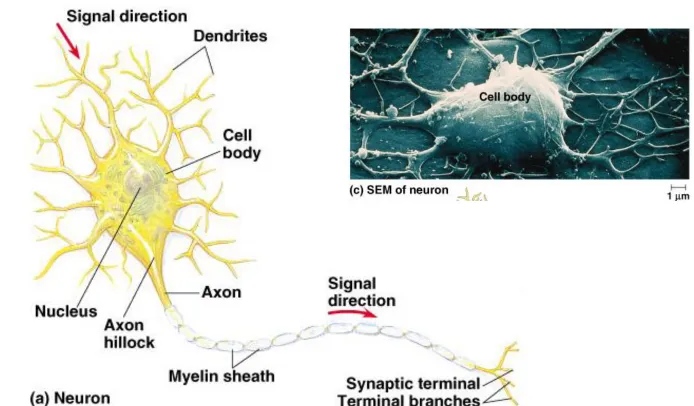
Components of a neuron
Components of a neuron
Component Description Function
Cell body Contain nucleus & organelles
Carries out basic cell functions
Dendrites
Multiple short, branched
extensions
Receives input from other neurons
Axon Single long
extension
Myelin Sheath
▪ Myelin sheath (lipid) insulates the axon
▪ Not found on other parts of the neuron
Fig. 48.2a
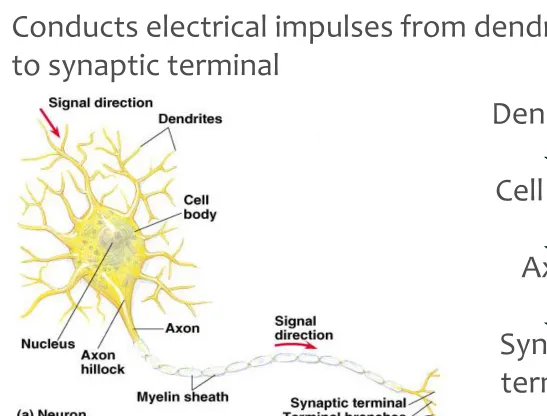
Dendrites
Cell body
Axon
Synaptic terminal
Neuron Function
▪ Conducts electrical impulses from dendrite
Neuron Function
▪ Electrical impulse is sent from the axon of
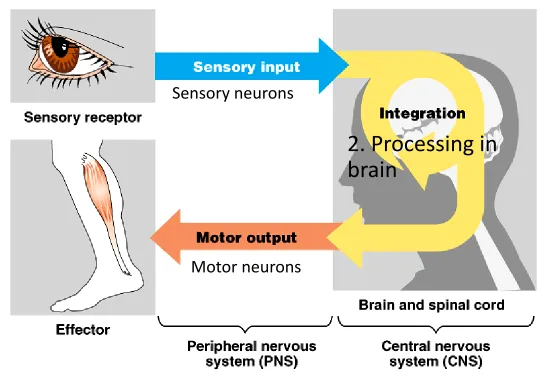
The Basic Nerve Circuit
1. Detection of stimulus
2. Processing in brain
3. Response in other part of body
Fig. 48.1
Sensory neurons
The Basic Nerve Circuit
2. Processing
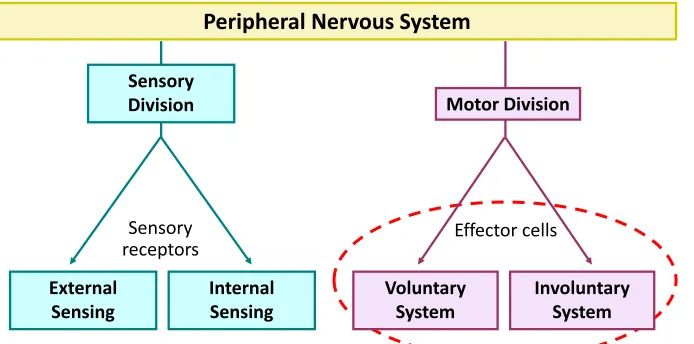
Central Nervous System Brain and Spinal Cord
Peripheral Nervous System
1. Sensory Input 3. Motor Output
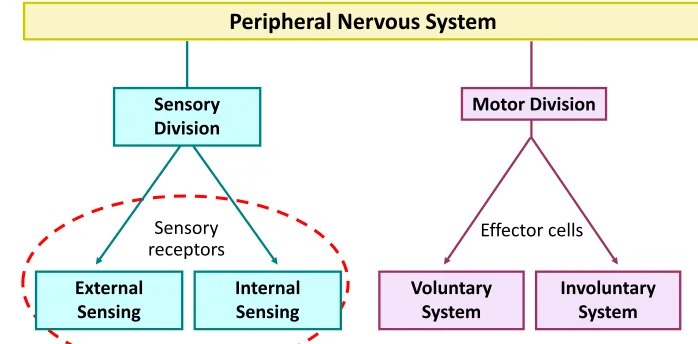
Effector cells
Involuntary muscle Voluntary muscle
Motor Neurons
External Senses Internal Senses
Sensory receptors
Components of the Nerve Circuit
Function Description Components
Sensory Input Detect stimulus Sensory receptors Sensory neurons
Processing Analyze
information Brain & spinal cord (CNS)
Motor Output
Response in body
Simplest type of nerve circuit
▪ Reflex
▪ rapid, involuntary responses to stimuli
▪ Processing of the stimulus
▪ doesn’t happen in the brain ▪ occurs in the spinal cord
▪ processing of stimulus is faster
▪ body responds automatically without “thinking”
Examples of reflexes
http://medicalimages.allrefer.com/large/moro-reflex.jpg https://encrypted-tbn0.gstatic.com/images?q=tbn:ANd9GcTT-1Ol3RyXhrbfL1Ijw7e61q7G-NfX__N4ICwOQQQ0QI01CuJ8
▪ Withdrawal (nociceptive) reflex
▪ Knee-jerk (patellar) reflex
▪ Gag (pharyngeal) reflex
▪ Blink (corneal) reflex
Peripheral Nervous System (PNS)
▪ Composed of all the neurons that
communicate between the body and the
central nervous system (brain & spinal cord)
▪ Relays information:
Organization of the PNS
Fig. 48.17
Peripheral Nervous System
Types of senses
▪ Sensing the external environment
▪ Eyes: vision
▪ Ears: hearing, equilibrium ▪ Nose: smell
▪ Tongue: taste
▪ Skin: touch, temperature
▪ Sensing the internal environment
Sensory Receptors
▪ Detect a specific type of stimulus
Examples Stimuli External Internal
Mechanoreceptors Pressure, movement
Skin,
muscles, ears
Blood vessels, stomach, lungs, bladder
Photoreceptors Light Eyes
Chemoreceptors Chemicals Nose, mouth Arteries Thermoreceptors Temperature Skin Organs
Organization of the PNS
Fig. 48.17
Peripheral Nervous System
Effector Cells
▪ Carries out body’s response to a stimulus ▪ Voluntary system: sends signals to skeletal
muscles
▪ Involuntary system: sends signals to smooth
Central Nervous System (CNS)
▪ Composed of the brain and spinal cord
▪ Protected by bone: skull and spine (vertebral
column)
▪ Surrounded by cerebrospinal fluid (CSF):
▪ Shock absorber (cushioning) ▪ Transports chemicals
Anatomy of the Brain
▪ 2 hemispheres
▪ 4 lobes
Left
hemisphere
Right
Brainstem
▪ connects brain to spinal cord
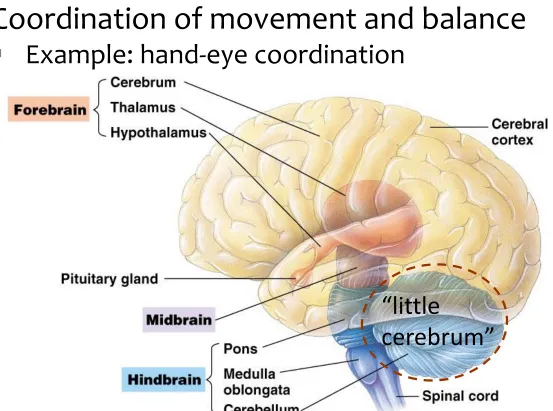
Cerebellum
▪ Coordination of movement and balance
▪ Example: hand-eye coordination
Fig. 48.20
“little
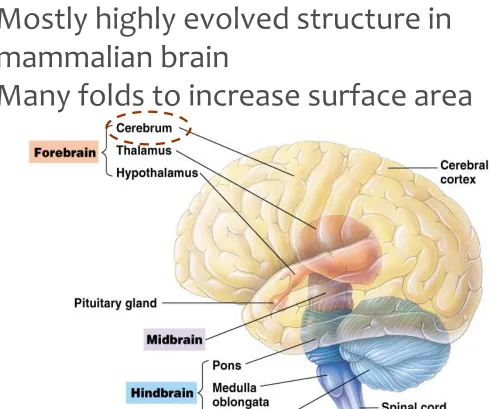
Anatomy of the Brain
▪ Mostly highly evolved structure in
mammalian brain
▪ Many folds to increase surface area
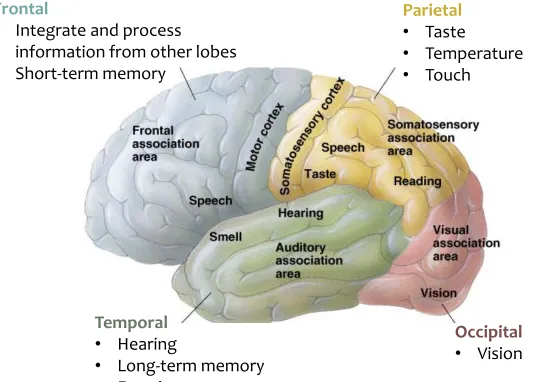
4 Lobes of the Cerebrum
Fig. 48.24b
Frontal
• Integrate and process
information from other lobes
• Short-term memory
Temporal
• Hearing
• Long-term memory
Neurological Disorders
Parkinson’s Disease
▪ Progressive degenerative disorder of the CNS
▪ Cause: inability to adequately produce a
chemical (neurotransmitter) needed in impulse conduction
▪ Major symptoms:
▪ Tremors
▪ Muscle rigidity / Stiffness ▪ Stooped posture
▪ Slow movements
Alzheimer’s Disease
▪ Progressive degenerative brain disease
▪ Neurons deteriorate
Cortex
▪ Motor skills
▪ Ability to control
the five senses
▪ Ability to retain
Hippocampus
▪ Formation of new
memories (amnesia)
▪ Retrieval of
Due to large number of brain cell death, ventricles grow
Symptoms
▪ A form of dementia that causes problems
with memory, thinking and behaviour
▪ Difficulty forming new memories ▪ Disorientation
▪ mood and behavior changes
▪ deepening confusion about events, time and
place
▪ unfounded suspicions about family, friends and
What is Multiple Sclerosis?
▪ Multiple = many
▪ Sclerosis = scars
▪ Axons demyelinated
▪ Axon withers
▪ No electrical impulse
▪ Lost myelin replaced
with scar tissue:
▪ Blocks formation of new
myelin
▪ Slows down electrical
signals
Cause
▪ Idiopathic (no definite cause)
▪ Suspected to be an autoimmune disease
▪ Immune system views myelin sheath as foreign
and attacks